

Active learning narrows achievement gaps for underrepresented students in undergraduate science, technology, engineering, and math
Open accessThe DOI matches its Crossref record; 72 of the 75 references it cites were found in a registry or an index, and 3 are not checked yet; 19 of the 44 sources its claims cite were checked for support.
Abstract
We tested the hypothesis that underrepresented students in active-learning classrooms experience narrower achievement gaps than underrepresented students in traditional lecturing classrooms, averaged across all science, technology, engineering, and mathematics (STEM) fields and courses. We conducted a comprehensive search for both published and unpublished studies that compared the performance of underrepresented students to their overrepresented classmates in active-learning and traditional-lecturing treatments. This search resulted in data on student examination scores from 15 studies (9,238 total students) and data on student failure rates from 26 studies (44,606 total students). Bayesian regression analyses showed that on average, active learning reduced achievement gaps in examination scores by 33% and narrowed gaps in passing rates by 45%. The reported proportion of time that students spend on in-class activities was important, as only classes that implemented high-intensity active learning narrowed achievement gaps. Sensitivity analyses showed that the conclusions are robust to sampling bias and other issues. To explain the extensive variation in efficacy observed among studies, we propose the heads-and-hearts hypothesis, which holds that meaningful reductions in achievement gaps only occur when course designs combine deliberate practice with inclusive teaching. Our results support calls to replace traditional lecturing with evidence-based, active-learning course designs across the STEM disciplines and suggest that innovations in instructional strategies can increase equity in higher education.
Verified 2026-11-22 · 3 references not checked yet
Overview
CoChat Summary
TL;DR
This systematic review and individual-participant-data meta-analysis found that active learning reduced achievement gaps for underrepresented/minoritized students in undergraduate STEM courses. Across the analyzed studies, gaps in exam scores and passing rates were smaller in active-learning than in traditional lecturing, with the largest gap reductions seen in high-intensity active learning.
Key findings
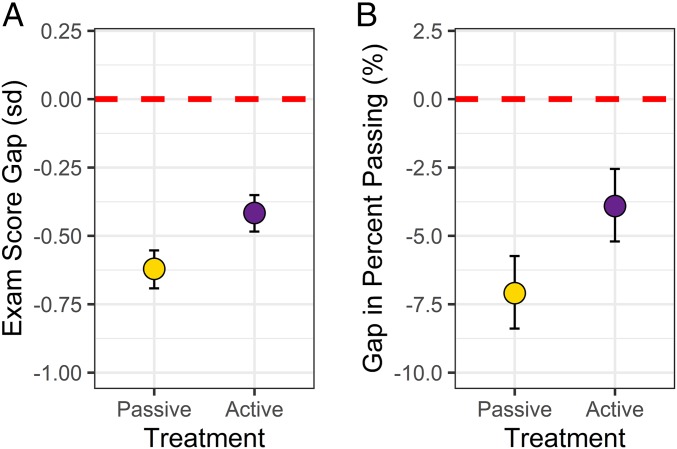
- In identical or formally equivalent exams, the standardized achievement gap between MGS and non-MGS students was −0.62 SDs in traditional lecturing and −0.42 SDs with active learning, a 33% reduction in the gap.
- For passing rates, the gap was −7.1% with traditional lecturing and −3.9% with active learning, a 45% reduction in the gap.
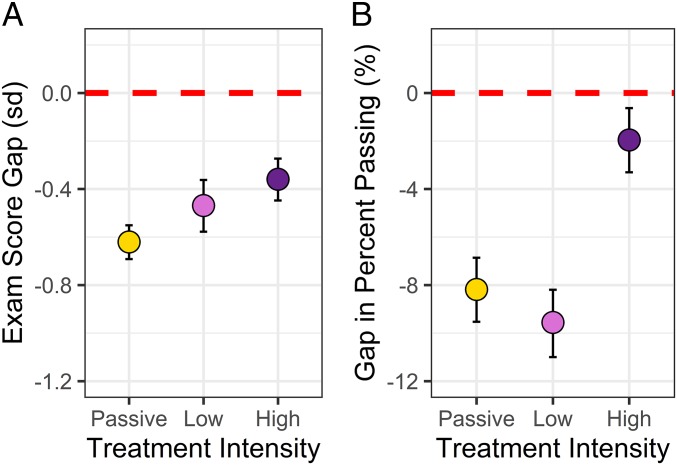
- Gap reductions were stronger with high-intensity active learning: exam-score gaps were −0.48 SDs for low-intensity vs −0.36 SDs for high-intensity; passing-rate gaps were −9.6% for low-intensity vs −2.0% for high-intensity.
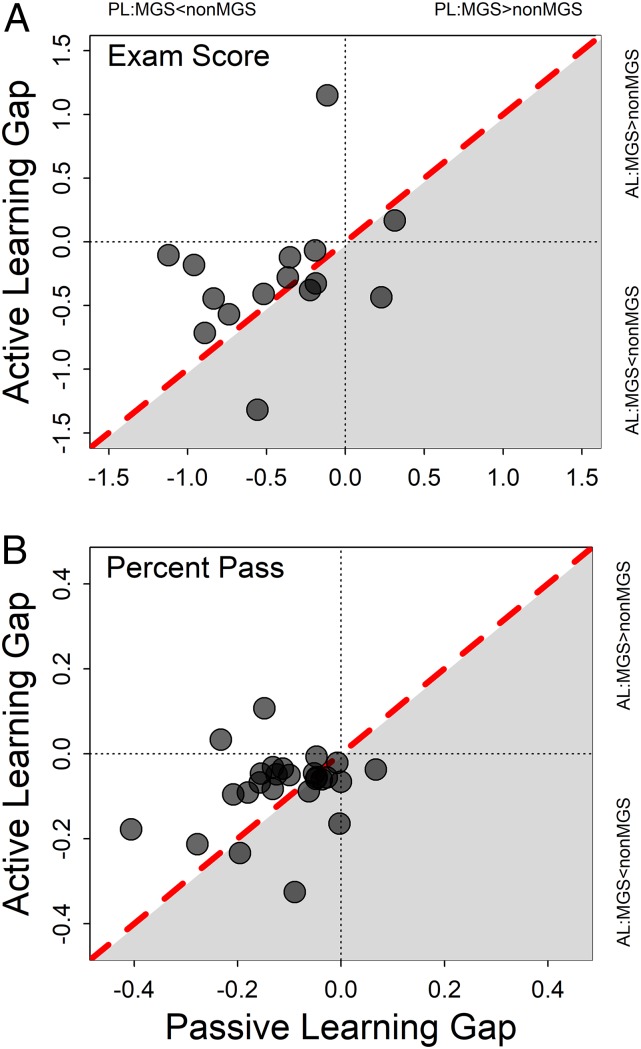
- In the study-level breakdown, 10 of 15 studies with exam-score data showed disproportionate gains for MGS students under active learning, and 15 of 26 studies with failure-rate data showed disproportionate reductions in failure rates for MGS students.
Methods
- Systematic review plus individual-participant-data (IPD) meta-analysis comparing undergraduate STEM courses taught with traditional lecturing vs active learning in the same course and institution.
- Literature search covered studies published or completed from January 1, 2010 to June 30, 2016; the final analysis included 41 studies with disaggregated data by MGS status.
- Final datasets: 9,238 student records from 15 studies for exam scores and 44,606 student records from 26 studies for failure rates; analyses used hierarchical Bayesian multilevel models with section random effects and sensitivity analyses.
Limitations
- The paper states that the conclusions are “tempered by the limitations of the study’s sample size”: only 41 studies had data for students from MGS, which also made moderator analyses hard to interpret.
- The paper says data on the type of active learning were “poorly resolved” because studies often did not report quantitative details of course interventions.
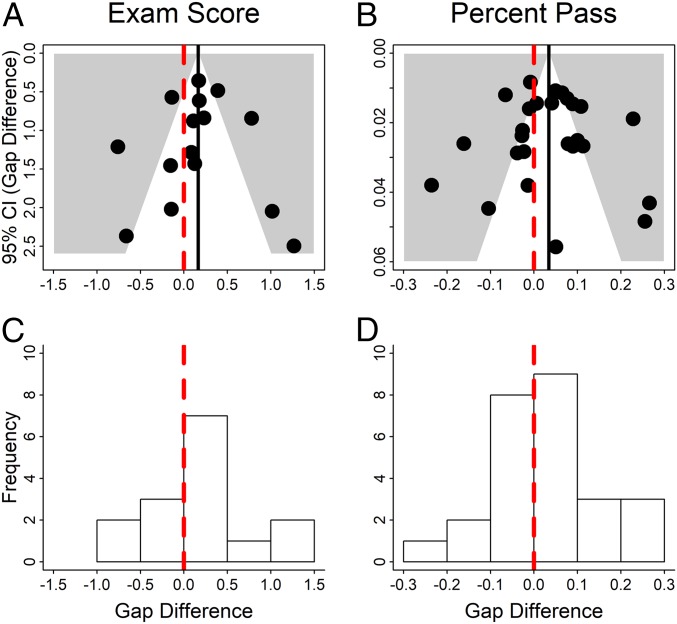
- The paper notes possible sampling bias in instructor/institution type, overrepresentation of research-intensive institutions, and underrepresentation of teaching-intensive institutions and community colleges.
- Evident from the text: the meta-analysis depends on studies that met specific coding and data-sharing criteria, so the findings may not generalize to STEM courses or settings not represented in the included studies.
Model-written summary. Check it against the paper before relying on it.
Integrity signals
Registry
Cites
Statistics
Figures
Verification
Claims the paper makes
16 Valid · 1 Not valid · 10 Not checked · 59 Own results and interpretations
The cited sources support only part of this claim — read each source’s verdict below.
In the paper
“Course grades in most STEM courses are largely driven by performance on examinations, even in active-learning courses that offer many nonexam points (39).”
§ Active learning narrows achievement gaps for underrepresented students in undergraduate science, technology, engineering, and math > Discussion
What the sources say
- Partly supportedcites [39] Freeman S., Haak D., Wenderoth M. P., Increased course structure improves performance in introductory biology. CBE Life Sci. Educ. 10, 175– 186 (2011). 21633066 PMC3105924 sourceExperimental — accuracy not yet measured
The Methods section (“Exam Impact on Final Course Grade”; page unavailable) says the authors intended exams to remain the primary determinant of grades even when many nonexam points were available. Table 4 in the Results shows that exam points strongly predicted final grades across the introductory biology sections studied. The paper does not establish that this holds in most STEM courses. (LLM, conf=0.88)
plainstates an association- Asserted: passes — The authors put it forward as true.
- Checkable: passes — It can be checked against evidence.
- Load-bearing: passes — The paper’s conclusions depend on it.
- Based: passes — The paper gives a reason why it holds.
- Partly supported
The cited sources support only part of this claim — read each source’s verdict below.
In the paper
“All students benefit from classroom cultures that promote self-efficacy, identity as a scientist, and sense of belonging in STEM (58)”
§ Active learning narrows achievement gaps for underrepresented students in undergraduate science, technology, engineering, and math > Discussion
What the sources say
- Partly supportedcites [58] Trujillo G., Tanner K. D., Considering the role of affect in learning: Monitoring students’ self-efficacy, sense of belonging, and science identity. CBE Life Sci. Educ. 13, 6– 15 (2014). 24591497 PMC3940464 sourceExperimental — accuracy not yet measured
The paper’s sections on self-efficacy, sense of belonging, and science identity link each to student learning or persistence, and its discussion of teaching considers how classroom experiences shape these factors. Its focus is undergraduate biology, however; it does not establish that all students benefit from such classroom cultures across STEM. The indexed passages provide section labels but no page numbers. (LLM, conf=0.82)
plainstates a cause- Asserted: passes — The authors put it forward as true.
- Checkable: passes — It can be checked against evidence.
- Load-bearing: unclear — It is unclear whether the paper’s conclusions depend on it.
- Based: passes — The paper gives a reason why it holds.
- Partly supported
The cited sources support only part of this claim — read each source’s verdict below.
In the paper
“students in active-learning course designs that reduced or eliminated achievement gaps have reported an increased sense of community and self-efficacy compared to their peers in the lecture-intensive version of the same course (22, 23).”
§ Active learning narrows achievement gaps for underrepresented students in undergraduate science, technology, engineering, and math > Discussion
What the sources say
- Partly supportedcites [22] Eddy S. L., Hogan K. A., Getting under the hood: How and for whom does increasing course structure work? CBE Life Sci. Educ. 13, 453– 468 (2014). 25185229 PMC4152207 sourceExperimental — accuracy not yet measured
In Methods and Results (Study 3, Factor 2; page unavailable), students in the moderate-structure course were twice as likely to report a stronger sense of classroom community than those in the low-structure course. The Introduction mentions self-reported self-efficacy in prior active-learning research, but says that research did not compare students in versions of the same course. This paper therefore does not support the claimed same-course self-efficacy comparison. (LLM, conf=0.88)
- Not matchedcites [23] Ballen C. J., Wieman C., Salehi S., Searle J. B., Zamudio K. R., Enhancing diversity in undergraduate science: Self-efficacy drives performance gains with active learning. CBE Life Sci. Ed. 16, ar56 (2017). PMC5749958 29054921
We don’t have this paper’s reference list.
plainstates an association- Asserted: passes — The authors put it forward as true.
- Checkable: passes — It can be checked against evidence.
- Load-bearing: unclear — It is unclear whether the paper’s conclusions depend on it.
- Based: passes — The paper gives a reason why it holds.
- Partly supported
Every source the paper cites for this claim was checked and supports it.
In the paper
“Our data on type of active learning are also poorly resolved, because publications still routinely fail to report quantitative data on the nature of course interventions, such as records from classroom observation tools (e.g., ref. 61 and SI Appendix, Table S12).”
§ Active learning narrows achievement gaps for underrepresented students in undergraduate science, technology, engineering, and math > Discussion
What the sources say
- Supportedcites [61] Eddy S. L., Converse M., Wenderoth M. P., PORTAAL: A classroom observation tool assessing evidence-based teaching practices for active learning in large science, technology, engineering, and mathematics classes. CBE Life Sci. Educ. 14, ar23 (2015). PMC4477739 26033871 source
The citation appears as an example of a classroom observation tool, not as evidence that publications routinely omit quantitative intervention data. The Abstract identifies PORTAAL as a classroom observation tool for assessing active-learning practices, which supports that use of the citation. (LLM, conf=0.91)
plainstates a cause- Asserted: passes — The authors put it forward as true.
- Checkable: passes — It can be checked against evidence.
- Load-bearing: unclear — It is unclear whether the paper’s conclusions depend on it.
- Based: passes — The paper gives a reason why it holds.
- Supported
Every source the paper cites for this claim was checked and supports it.
In the paper
“larger gaps are correlated with faculty who have a fixed mindset, which interprets intelligence as innate and immutable and is therefore exclusion or selection-oriented (44).”
§ Active learning narrows achievement gaps for underrepresented students in undergraduate science, technology, engineering, and math > Discussion
What the sources say
- Supportedcites [44] Canning E. A., Muenks K., Green D. J., Murphy M. C., STEM faculty who believe ability is fixed have larger achievement racial achievement gaps and inspire less student motivation in their classes. Sci. Adv. 5, eaau4734 (2019). 30793027 PMC6377274 source
The Results report that racial achievement gaps in STEM courses were nearly twice as large with fixed- versus growth-mindset faculty. The Introduction defines a fixed mindset as treating intelligence and ability as innate and largely unchangeable, and describes judging students as low-ability and encouraging them to drop difficult courses—supporting the paraphrase 'exclusion or selection-oriented.' (LLM, conf=0.88)
plainstates an association- Asserted: passes — The authors put it forward as true.
- Checkable: passes — It can be checked against evidence.
- Load-bearing: unclear — It is unclear whether the paper’s conclusions depend on it.
- Based: passes — The paper gives a reason why it holds.
- Supported
30 more claims
Create a free account to see all 86 claims and every source verdict.
- It may state two separate claims as one. 30
- Probably not a substantial claim. 36
Claims other papers make about this one
Each is checked against this paper’s own text: does it say what the citing paper says it does?
The source backs part of the claim, not all of it — or backs it for a different population, condition or comparison.
In the citing paper
“These perceptions, along with a likely reduction in stress and anxiety (see Figure 4), could benefit students from underrepresented groups and may thus reduce the achievement gap among underrepresented minorities”
From Two-Stage Final Exams: An Assessment Strategy for Enhanced Collaborative Learning and Reduced Student Stress (2026) · cites this paper as Theobald et al., 2020
Experimental — accuracy not yet measured
Citations
Cites
Preferred Reporting Items for Systematic Reviews and Meta-Analyses: the PRISMA statement
Moher, D., Liberati, A., Tetzlaff, J., Altman, D. G., & for the PRISMA Group (2009) · BMJ · doi:10.1136/bmj.b2535 · Cited by 83,823
Preferred reporting items for systematic reviews and meta-analyses: the PRISMA Statement.
(2009) · PubMed Central · Cited by 44,859
Preferred reporting items for systematic reviews and meta-analyses: The PRISMA statement
Moher, D., Liberati, A., Tetzlaff, J., Altman, D. G., & the PRISMA Group* (2009) · Annals of Internal Medicine · doi:10.7326/0003-4819-151-4-200908180-00135 · Cited by 37,554
PRISMA-P Group, Moher, D., Shamseer, L., Clarke, M., Ghersi, D., Liberati, A., Petticrew, M., Shekelle, P., & Stewart, L. A. (2015) · Systematic Reviews · doi:10.1186/2046-4053-4-1 · Cited by 26,223 · cited 2×
“The protocol for this study, presented in the PRISMA-P format (66) and including annotations regarding modifications that occurred during the course of the research, is available in SI Appendix, SI Materials and Methods.”
Capital in the Twenty-First Century
Piketty, T. (2014) · doi:10.4159/9780674369542 · Cited by 14,437
Data Analysis Using Regression and Multilevel/Hierarchical Models
Gelman, A., & Hill, J. (2006) · doi:10.1017/cbo9780511790942 · Cited by 13,597
Active learning increases student performance in science, engineering, and mathematics
Freeman, S., Eddy, S. L., McDonough, M., Smith, M. K., Okoroafor, N., Jordt, H., & Wenderoth, M. P. (2014) · Proceedings of the National Academy of Sciences · doi:10.1073/pnas.1319030111 · Cited by 9,787 · cited 6×
“Can interventions in courses themselves—meaning, changes in how science is taught—reduce achievement gaps and promote retention in STEM? A recent metaanalysis concluded that, on average, active learning in STEM leads to higher examination scores and lower failure rates for all students, compared to all students in the…”
InfluentialSelf-citation(2000) · Cited by 9,198
A threat in the air: How stereotypes shape intellectual identity and performance
Steele, C. M. (1997) · American Psychologist · doi:10.1037/0003-066x.52.6.613 · Cited by 6,770 · cited 1×
“Equally important, inclusive teaching emphasizes treating students with dignity and respect (52), communicating confidence in students’ ability to meet high standards (53), and demonstrating a genuine interest in students’ intellectual and personal growth and success (54, 55).”
BackgroundGeneral methods for monitoring convergence of iterative simulations
Brooks, S. P., & Gelman, A. (1998) · Journal of Computational and Graphical Statistics · doi:10.1080/10618600.1998.10474787 · Cited by 6,045
Research works printed but not linked: 9
- Reardon S. F., “The widening achievement gap between the rich and the poor: New evidence and possible explanations” in Whither Opportunity? Duncan G. J., Murnane R. J., Eds. (Russell Sage Foundation, New York, 2011), pp. 91– 115.
- National Student Clearinghouse Research Center, High School Benchmarks 2019: National College Progression Rates (National Student Clearinghouse, Herndon, VA, 2019).
- Chen X., STEM Attrition: College Students’ Paths Into and Out of STEM Fields (National Center for Education Statistics, Washington, DC, 2013).
- Vygotsky L. S., Mind in Society (Harvard University Press, Cambridge, MA, 1978).
- Kaufmann E., Reips U.-D., Merki K. M., Avoiding methodological biases in meta-analysis. Z. Psychol. 224, 157– 167 (2016).
- Ginder S. A., Kelly-Reid J. E., Mann F. B., Enrollment and Employees in Postsecondary Institutions, Fall 2015 (National Center for Education Statistics, Washington, DC, 2017).
- Reed J. G., Baxter P. M., Using Reference Databases. The Handbook of Research Synthesis and Meta-Analysis, Cooper H., Hedges L. V., Valentine J. C., Eds. (Russell Sage Foundation, New York, 2009), pp. 73– 101.
- Rothstein H., Hopewell S., Grey Literature. The Handbook of Research Synthesis and Meta-Analysis, Cooper H., Hedges L. V., Valentine J. C., Eds. (Russell Sage Foundation, New York, 2009), pp. 103– 125.
- White H. D., Scientific Communication and Literature Retrieval. The Handbook of Research Synthesis and Meta-Analysis, Cooper H., Hedges L. V., Valentine J. C., Eds. (Russell Sage Foundation, New York, 2009), pp. 51– 71.
Cited by
Items 801–900 of 1,369
Hanauer, D. I., Zhang, T., Graham, M., & Hatfull, G. F. (2025) · CBE—Life Sciences Education · doi:10.1187/cbe.24-02-0078 · Cited by 3
“Hence, terms such as Person excluded because of their ethnicity or Race—PEER (Asai, 2020) or Minoritized groups in STEM—MGS (Theobald et al. , 2020) have been proposed, which place the blame of underrepresentation on systemic discrimination and make clear the need for enhancing equity and inclusion in an effort to div…”
Four Sobering Realities About Teaching Evaluation and Strategies to Address Them
Tobiason, G., & Lavine, A. S. (2025) · Change The Magazine of Higher Learning · doi:10.1080/00091383.2025.2442888 · Cited by 1
Cooper, K. M., Brownell, S. E., Schussler, E. E., Downing, V. R., Gin, L. E., McDonald, K., Nesse, R. M., Busch, C. A., England, B. J., Grigler, L., et al. (2025) · AJP Advances in Physiology Education · doi:10.1152/advan.00147.2024 · Cited by 2
Shi, L., Abdullah, T., Aronowitz, T. B., Cheng, A. L., Eisenhower, A., Fleming, R., Lindsay, A. C., Tandale, D., Torres, M. I., & Rokop, M. E. (2025) · Journal of Racial and Ethnic Health Disparities · doi:10.1007/s40615-025-02358-0 · Cited by 1
Equitable faculty hiring: development and implementation of teaching faculty hiring rubrics
Arevalo, E., Sato, B. K., Lo, S. M., & Wilton, M. (2025) · Frontiers in Education · doi:10.3389/feduc.2025.1560813 · Cited by 3
Harris, C., Bruin, J. E., Mullally, M., Doria, M., Siddiqi, S., Pullin, A., Salmaso, N., Rizo, H., & Thomson, R. M. (2025) · FACETS · doi:10.1139/facets-2024-0122 · Cited by 3
Holland, T., & Yu, B. (2025) · International journal on innovations in online education · doi:10.1615/intjinnovonlineedu.2025057387 · Cited by 2
Breaking confirmatory spells by implementing research-integrated CUREs
Vriezen, J. A. C. (2025) · Journal of Microbiology and Biology Education · doi:10.1128/jmbe.00114-25 · Cited by 1
“Implementation of CUREs increased after a publication by Handelsman (18) due to its educational benefit: so much so that studies by Freeman (9) and Theobald (10) indicate that the benefit of active learning is indisputa ble.”
Bradley, L. J., Meyer, K. E., Kerr, M. S., Maddux, S. D., Heck, A. J., Reeves, R., & Handler, E. (2025) · Anatomical Sciences Education · doi:10.1002/ase.70066 · Cited by 2
Attendance and learning platforms in college course success
Chang, I. (2025) · Active Learning in Higher Education · doi:10.1177/14697874251347189 · Cited by 2
“The active learning environment improves silent student participation of the content in a large general chemistry course (Obenland et al., 2012), and diminished achievement gaps in STEM underrepresented groups (Theobald et al., 2020).”
Beimel, D. (2025) · Studies In Educational Evaluation · doi:10.1016/j.stueduc.2025.101484 · Cited by 2
Dickson, B. A., Woolford, D. G., Samuels, B. M., & Kotsopoulos, D. (2025) · Journal of Statistics and Data Science Education · doi:10.1080/26939169.2025.2539237 · Cited by 4
“This impact can be seen in recent research where, for example, Theobald et al. (2020) found that when instruction was changed from a traditional to an active learning approach in undergraduate STEM courses, pass rates and achievement improved for all students, and students from low-income…”
Silber, R. E., Secco, R. A., & Silber, E. A. (2025) · Social Sciences · doi:10.3390/socsci14080456 · Cited by 2
Nadile, E. M., Winton, M. R., Mohammed, T. F., Collins, J. P., Brownell, S. E., & Cooper, K. M. (2025) · AJP Advances in Physiology Education · doi:10.1152/advan.00186.2024 · Cited by 1
Righting My Relationship With Teaching Mathematics: A Critical Reflection
Kostiuk, J. (2025) · IGI Global eBooks · doi:10.4018/979-8-3373-5337-1.ch001 · Cited by 1
The Teaching Philosophy Rubric (TPR): A Reflection Tool for Teaching Statements
Heim, A. B., & Holt, E. A. (2025) · College Teaching · doi:10.1080/87567555.2025.2549329 · Cited by 1
Imamura, J. L., Mau, T. L., Wildy, E. L., Povich, J., de Haan, P. J., Hazlehurst, J. A., Herrlinger, T. J., & Winters, J. M. (2025) · Journal of Microbiology and Biology Education · doi:10.1128/jmbe.00015-25 · Cited by 4
“For example, implementing active learning reduces failure rates and improves academic outcomes for all students (46), but disproportionately benefits those from underrepresented groups (26, 27, 47).”
InfluentialMinding the gender gap in advanced STEM courses: effects of student preparedness and activity level
Ram, I., Shwartz, A., & Roll, I. (2025) · Instructional Science · doi:10.1007/s11251-025-09748-1 · Cited by 3
“…relating to submissions or course viewing is not associated with the gap, future learning analytics work with more meaningful traces may help identify which components of active learning are associated with a gap reduction, as suggested by the active learning literature (Theobald et al., 2020).”
Bostrom, A., van den Broek, K. L., Böhm, G., Grünzner, M., Felipe-Rodriguez, M., Fian, L., Stevens, S. E., Abdeljaoued, A., Budhiraja, V., Carratta, G., et al. (2025) · Microplastics and Nanoplastics · doi:10.1186/s43591-025-00141-w · Cited by 4
“Given the acknowledged value of activity-based education [58],research activity-based strategies to introduce early career scientists to convergent research warrant broader attention.”
A Paired-Course Comparison of Supplemental Instruction and Traditional Tutoring
Gilman, S. E. (2025) · Journal of Peer Learning · doi:10.21061/jopl.122 · Cited by 3
Beyond named methods: A typology of active learning based on classroom observation networks
Sundstrom, M., Gambrell, J., Green, C., Traxler, A. L., & Brewe, E. T. (2026) · Physical Review Physics Education Research · doi:10.1103/ylsr-968q · Cited by 7
“…that active learning methods, where students engage in interactions with their peers and co-construct their understanding [1, 2], promote conceptual development and improve the odds of student success more than traditional, lecture-based teaching methods in introductory level science courses [3–5].”
Moran, M. J., Jean, K., Graham, B., Suchman, E., Popichak, K. A., McLean, J., & Mehaffy, C. (2025) · Journal of Microbiology and Biology Education · doi:10.1128/jmbe.00150-25 · Cited by 1
“Implementation of ALPs in the STEM classroom increases student learning and performance (4–10) and is a key component of inclusive pedagogy that supports learning of all students in the STEM classroom (6, 11–14).”
Understanding the Current Mentorship Capabilities of Teaching Assistants for Engineering Courses
Ewert, N. G., & Kittur, J. (2025) · IEEE Transactions on Education · doi:10.1109/te.2025.3614155 · Cited by 1
“Additionally, another meta-analysis discovered a decrease in the achievement gap for underrep-resented students taking active learning STEM classes [32].”
Evaluating online class participation in higher education: a scoping review and a proposed framework
Hoo, H.-T., Ho, R., Chen, G., Tan, M., Goh, S. L., & Teo, N. (2025) · Learning Research and Practice · doi:10.1080/23735082.2025.2567279 · Cited by 2
Chamberlain, D., & Faulconer, E. K. (2025) · Active Learning in Higher Education · doi:10.1177/14697874251385801 · Cited by 1
Science practices in the general chemistry laboratory: hits, misses, and near misses
Stephenson, N. S., Dahlberg, C. L., Huỳnh, T., Duffy, E. M., Hunter, K., Spring, L., Worline, E., Weaver, J., & Bolland, K. (2026) · Chemistry Education Research and Practice · doi:10.1039/d5rp00272a · Cited by 1
Greene, C., McPeek, S. J., Mitchem, L. D., Clark, A. B., Formica, V. A., Philson, C. S., & Costello, R. A. (2025) · Ecology and Evolution · doi:10.1002/ece3.72493 · Cited by 1
Al‐Badri, G., Davila, Y. C., & Castorina, A. (2025) · Anatomical Sciences Education · doi:10.1002/ase.70161 · Cited by 1
Ehsanzadeh, . J., Dwyer, E., Barzegar, M., & Hamidi, H. (2025) · BMC Research Notes · doi:10.1186/s13104-025-07584-7 · Cited by 5
“Unlike corpus methods, which involve active analysis and discovery, lecture-based instruction relies on repetition and recall drills, leading to superficial encoding and rapid forgetting—especially evident in the meaning-recall VLT at T3 [9, 11].”
Salahudeen, M. S., Baker, W., & Douglas, T. (2025) · American Journal of Pharmaceutical Education · doi:10.1016/j.ajpe.2025.101912 · Cited by 4
Barry, A., Cahill, G. A., & Noonan, G. (2025) · Physics Education · doi:10.1088/1361-6552/ae24d7 · Cited by 3
“Additionally, active learning has been shown to promote educational equity, narrowing achievement gaps across gender and socio-economic groups (Theobald et al 2020), while also cultivating critical thinking, collaborative problem-solving, self-efficacy, and student motivation (Hernández-de-menéndez…”
Inviting Conversations in Discipline‐Based Science Education
Svoboda, J., Sevian, H., & Dusen, B. V. (2025) · Science Education · doi:10.1002/sce.70045 · Cited by 3
Baldock, B. L., & White, G. W. (2025) · Journal of Chemical Education · doi:10.1021/acs.jchemed.5c00227 · Cited by 2
Uribe, D. F., García-Galán, R., Ortiz‐Marcos, I., & Rodríguez‐Rivero, R. (2025) · Applied Sciences · doi:10.3390/app152312830 · Cited by 2
“TCs define the critical functions that enable progression within a learning system [45], while active learning methodologies structure the mechanisms through which these functions can be achieved in practice [57,72].”
Active Learning as an Element of Formative Assessment in the Undergraduate Biology Classroom
Agovic, M. (2025) · The American Biology Teacher · doi:10.1525/abt.2025.87.9.539 · Cited by 1
Fernandez, J., & Baynosa, B. (2025) · Psychology and Education A Multidisciplinary Journal · doi:10.70838/pemj.500704 · Cited by 1
Zhuang, M., Kirby, C. K., Stoltzfus, J. R., Krueger, K., Liu, J., Mias, G. I., & Parkin, K. (2025) · Journal of Science Education and Technology · doi:10.1007/s10956-025-10281-6 · Cited by 3
“Challenges in online attendance may particularly jeop-ardize the retention of first-generation students, students with disabilities, and students from other underrepresented communities (Madaus et al., 2021; Theobald et al., 2020).”
Mathematics Graduate Teaching Assistants’ Conceptions of Equity and Equitable Teaching
Yu, F., Beisiegel, M., Milbourne, H., & Kocabas, S. (2026) · International Journal of Research in Undergraduate Mathematics Education · doi:10.1007/s40753-025-00287-1 · Cited by 1
Ebbs, E. T., Barredo, A., Whitehurst, A., & Harris, S. E. (2026) · Journal of Microbiology and Biology Education · doi:10.1128/jmbe.00147-25 · Cited by 1
“…experiences (CUREs) are well-established in the biology education literature as effective tools for enhancing student learn ing outcomes (SLOs) (1), strengthening critical and quantitative reasoning skills (2), reducing affective barriers to learning (3, 4), and narrowing achievement gaps (5).”
Towards an Integrated Educational Practice: Application of Systems Thinking in STEM Disciplines
Castañeda-Burciaga, S., Guirette-Barbosa, O. A., Salazar, M. A. R., Celaya-Padilla, J. M., Torres, C. G. L., Durán-Muñoz, H., Cruz-Domínguez, O., Aguado, M. H. I. C., Reyes-Sánchez, J. D. J., Macías, J. V., et al. (2026) · Systems · doi:10.3390/systems14010097 · Cited by 3
“It should be noted that active learning and inclusive strategies have been shown to reduce performance gaps, especially for underrepresented students, promoting equity in STEM higher education [25,46].”
Impact of the Pedagogy of Successive Questioning on Chemistry Learning
Zeineddine, M. N., Hammoud, J., Karaki, L., & Sakr, S. (2025) · Chemia, Dydaktyka, Ekologia, Metrologia · doi:10.2478/cdem-2025-0009 · Cited by 1
“Subsequent individual-participant meta-analysis shows that active learning also narrows achievement gaps and reduces failure rates across STEM courses [20].”
Griffin, C. R. (2026) · Education Sciences · doi:10.3390/educsci16020194 · Cited by 1
Inclusive Education in the Biosciences: What do we mean and how can we achieve it?
Hubbard, K. E. (2026) · Current Opinion in Physiology · doi:10.1016/j.cophys.2026.100906
The Fourth Credit Hour: How do we Teach in Biology Discussion Sections?
Mueller, L. O., Bamrah, M., Petrie, K. L., Tour, E., McDonnell, L., Lo, S. M., & Meaders, C. L. (2026) · CBE—Life Sciences Education · doi:10.1187/cbe.25-08-0185 · Cited by 1
“…persists despite the accumulation of evidence from meta-analyses over the past decade demonstrating that active and collaborative learning practices are more effective and support all students’ learning, in particular students from underserved groups (Freeman et al. , 2014; Theobald et al. , 2020).”
Algae Quest: Evaluation of a Context Based and Active Learning Activity for Primary School Students
de Silva, A. P., Johnston, J., Marr, P. C., et al. (2026) · Journal of Chemical Education · doi:10.1021/acs.jchemed.5c01154 · Cited by 1
Thormodsæter, R. S., Ballen, C. J., Fagbodun, S., Foster‐Hartnett, D., García‐Ojeda, M. E., Gonsar, N., Henning, J. A., Robnett, R. D., Sanders, T., Wainman, J. W., et al. (2026) · CBE—Life Sciences Education · doi:10.1187/cbe.25-04-0055 · Cited by 1
“…from peers (Hurtado and Ruiz Alvarado, 2012, 2015; Koo, 2021; Salehi et al. , 2021; Park et al. , 2022), large class sizes (Ballen et al. , 2018), outdated teaching methods (Theobald et al. , 2020), or the reliance on high-stakes, multiple-choice exams (Stanger-Hall, 2012; Zakariya et al. , 2022).”
Breaking the case: Integrating a blended learning approach in a first-year forensic science module
Snasdell, A., Anyogu, A., & Ahmed-Ali, M. (2026) · Science & Justice · doi:10.1016/j.scijus.2026.101425 · Cited by 1
Akman, J., Bitting, K. S., & Merricks, J. A. (2026) · Journal of Experiential Education · doi:10.1177/10538259261421544 · Cited by 3
“When educators implement explicit strategies to bolster students ’ self-ef fi cacy, identity, and sense of belonging, they observe positive effects on STEM persistence (Estrada et al., 2016; Theobald et al., 2020; Walton & Cohen, 2011).”
Not simply “active”: identifying types of active-learning tasks in introductory biology
Jackson, B. D., Donham, C., & Andrews, T. C. (2026) · Journal of Microbiology and Biology Education · doi:10.1128/jmbe.00284-25 · Cited by 2
“We considered total time because it facilitates comparisons that readers might want to make to previous studies that have considered the proportion of class given to active learning (10, 25).”
Su, H., Li, X., & Zhao, J. (2026) · Education and Information Technologies · doi:10.1007/s10639-026-13897-2 · Cited by 1
“Prior studies (Theobald et al., 2020 ) have documented that realistic learners are less engaged in lecture-based discourse, a finding that our data substantiate.”
Rangel, T., Idsardi, R., & Hulett, B. (2026) · The journal of college science teaching · doi:10.1080/0047231x.2026.2639358 · Cited by 1
Co-Creation Strategies for Equitable Open Education: A Framework for Diversity and Inclusion
Alvarez-Icaza, I., Usart-Rodríguez, M., Torres-Sánchez, P., & Martínez-Briones, B. J. (2026) · Journal of Interactive Media in Education · doi:10.5334/jime.1038
Lv, P., Chen, J., Chen, X., Wang, X., Xu, X., & Li, J. (2026) · BMC Medical Education · doi:10.1186/s12909-026-09102-0 · Cited by 1
“This aligns with existing literature suggesting that active, simulation-based learning fosters deeper student involvement and professional competency development [4, 8].”
ВИКОРИСТАННЯ АКТИВНИХ МЕТОДІВ НАВЧАННЯ СТУДЕНТІВ В УНІВЕРСИТЕТАХ США, ПІВНІЧНОЇ ТА ЗАХІДНОЇ ЄВРОПИ
Дейниченко, Г. В., & Дейніченко, Т. І. (2025) · Теорія та методика навчання та виховання · doi:10.34142/23128046.2025.59.08 · Cited by 1
Remembering what you did: Episodic memory for self-actions
Mazor, M., Seghezzi, S., & Manohar, S. (2026) · Neuroscience & Biobehavioral Reviews · doi:10.1016/j.neubiorev.2026.106725 · Cited by 2
“…may also explain some of the superiority of “ active learning ”— learning regimes in which exposure to new information is interleaved with and mediated by students ’ decisions and actions — over traditional, passive learning (Prince, 2004; Theobald et al., 2020; Yannier et al., 2021).”
Liberal Ideologies in Academic STEM: How Faculty Can (Re)produce Racial Inequities
Russo‐Tait, T., & Rodgers, A. J. (2026) · Critical studies of education · doi:10.1007/978-981-96-9136-4_2 · Cited by 1
Colón, C., & Bayne, G. U. (2026) · Critical studies of education · doi:10.1007/978-981-96-9136-4_11 · Cited by 1
Morales, C. (2026) · Journal of Microbiology and Biology Education · doi:10.1128/jmbe.00137-26 · Cited by 1
“Environmental load also has equity implications (11, 13, 17–20).”
InfluentialDu, P., Li, X., & Xian, X. (2026) · Frontiers in Psychology · doi:10.3389/fpsyg.2026.1901610 · Cited by 2
“…teaching reform emphasizes support, feedback, and participation, requiring universities to attend not only to what is taught but also to whether students develop sustainable learning capacities through course learning (Freeman et al., 2014; Stains et al., 2018; Theobald et al., 2020).”
Valtiņš, K., Araignon, C., Puertas, E., & Stathopoulou, E. (2026) · Pedagogy Culture and Society · doi:10.1080/14681366.2026.2708190 · Cited by 1
“…assessment tasks, many educational approaches now encourage students to work together, investigate real-world situations, develop practical solutions, reflect on their experiences and actively engage with issues that have a social or civic impact (Freeman et al. 2014; Theobald et al. 2020).”
Gao, C., Gates, A. E., & Rivera, L. M. (2026) · Social Psychology of Education · doi:10.1007/s11218-026-10264-4 · Cited by 1
“…that adopt tra - ditional pedagogical approaches (e.g., lecture-based instruction, drill-and-practice) often pose barriers for URG students by providing limited support for the development of positive STEM-related social cognitions (Asai, 2020 ; Park-Taylor et al., 2022 ; Theobald et al., 2020 ).”
InfluentialUma abordagem de ensino ativo em um experimento de eletrólise
Arini, G. S., Santos, I. V. D. S., & Torres, B. B. (2021) · Química Nova na Escola · doi:10.21577/0104-8899.20160244 · Cited by 2
A Diversity, Equity, and Inclusion (DEI) Task Force within a Mechanical Engineering Department
Roberts, D. P., & Carpick, R. W. (2021) · ASEE Annual Conference & Exposition · doi:10.18260/1-2--36577 · Cited by 1
Active learning and STEM education: Who is active? Who is learning?
Yee, S. P., & Rogers, K. C. (2022) · School Science and Mathematics · doi:10.1111/ssm.12517 · Cited by 1
Orr, M. R., & Kirkegaard, A. (2022) · Bulletin of the Ecological Society of America · doi:10.1002/bes2.2006 · Cited by 1
Nascimento, J. O. D. S., Santana, C. S., Andrade, F. D. O., et al. (2022) · Revista de Ensino de Bioquímica · doi:10.16923/reb.v20i1.989 · Cited by 1
Survey on Research in University Mathematics Education at ICME 14
Bosch, M., Hochmuth, R., Kwon, O. N., et al. (2021) · European Mathematical Society Magazine · doi:10.4171/mag/42 · Cited by 1
Can Gender and Major Explain College Students’ Performance in Business Statistics?
Ngamsiriudom, W., Devkota, M. L., & Menon, M. K. (2022) · American Business Review · doi:10.37625/abr.25.2.253-269 · Cited by 1
“While math skills among boys and girls tend to be similar at the elementary and secondary school levels, the differences in attitudes toward the field result in more boys than girls pursuing careers in math-intensive fields in college (Theobald et al., 2020).”
BackgroundDeveloping territory for active learning
Marder, M. P. (2022) · Proceedings of the National Academy of Sciences · doi:10.1073/pnas.2217999119 · Cited by 3
“M. Stains et al., Anatomy of STEM teaching in North American universities.”
BackgroundInfluentialContextualizing Problem-Based Learning: An Overview of Research and Practice
Rehmat, A. P., Glazewski, K. D., & Hmelo‐Silver, C. E. (2022) · Oxford University Press eBooks · doi:10.1093/oxfordhb/9780199841332.013.24 · Cited by 4
Györkös, J., Blonder, R., Delouis, A. F., Javornik, J., & Petridis, K. (2022) · University of Maribor, University Press eBooks · doi:10.18690/um.3.2022 · Cited by 2
Andrikopoulos, D., Aroso, N., & ESMAE/IPP-CESEM, R. D. A. 5. (2022) · University of Maribor, University Press eBooks · doi:10.18690/um.3.2022.1 · Cited by 1
Active Learning Techniques to Enhance Conceptual Learning in Greek Mythology
Sansom, S. A., Clary, T., & Aslan, C. (2022) · The Classical World · doi:10.1353/clw.2022.0025 · Cited by 3
Pain Overview: Classification, Conceptual Framework, and Assessment
Duarte, N., García‐Pedraza, J. Á., & Santos, M. (2022) · University of Maribor, University Press eBooks · doi:10.18690/um.3.2022.24 · Cited by 2
Smith, W., Voigt, M., Martinez, A. E., Rasmussen, C. L., Funk, R., Webb, D. C., & Ström, A. (2022) · Advances in mathematics education · doi:10.1007/978-3-031-14175-1_18 · Cited by 1
Shultz, S. P., & Buck, A. N. (2023) · Journal of Biomechanics · doi:10.1016/j.jbiomech.2023.111463 · Cited by 1
Brawner, C. E., Brent, R., Manning, J., Orr, M., Mobley, C., & Horne, K. (2023) · Journal of Women and Minorities in Science and Engineering · doi:10.1615/jwomenminorscieneng.2023043053 · Cited by 2
Implementation Of Active Learning Using Card Game Model In Increasing Learning Motivation
Salam, R., Purnomo, A. C., Rachmani, A. R., et al. (2022) · doi:10.1109/iccit55355.2022.10118625 · Cited by 1
“that exist in themselves, such as toughness, independence, creativity, and being able to compete with other nations [1] [2].”
BackgroundVerble, R., Richards‐Zawacki, C. L., & Young, V. K. H. (2023) · Integrative and Comparative Biology · doi:10.1093/icb/icad063 · Cited by 1
Reimagining Higher Education Pedagogy: Building an Active Understanding of the Research Process
Cockerham, D. (2023) · Educational communications and technology: issues and innovations · doi:10.1007/978-3-031-25102-3_24 · Cited by 2
Charles, E. S., Adams, R., Lenton, K., & Dugdale, M. (2023) · Education and Training in Optics and Photonics · doi:10.1117/12.2666794 · Cited by 1
Tolhurst, B. A., White, R. L., Friscia, A. R., Berg, M. J., Pernetta, A. P., & Crooks, N. (2023) · Journal of Perspectives in Applied Academic Practice · doi:10.56433/jpaap.v11i2.532 · Cited by 2
Just Mathematics: Getting Started Teaching Postsecondary Math for Social Justice
İnce, K. (2023) · Journal of Humanistic Mathematics · doi:10.5642/jhummath.cjxy2106 · Cited by 2
MacArthur, K. R., & Dobie, T. E. (2023) · PRIMUS · doi:10.1080/10511970.2023.2248973 · Cited by 1
Rezi, M., Quintana, J., Dominic, W., & Darius, L. (2023) · Journal International Inspire Education Technology · doi:10.55849/jiiet.v2i1.445 · Cited by 8
Restructuring Classes Can Level the Playing Field
Wright, K. (2023) · Physics · doi:10.1103/physics.16.153 · Cited by 1
Students’ experiences of game-based learning to foster self-directed learning
Bunt, B. J., White, L., & Petersen, N. T. (2023) · NWU self-directed learning series · doi:10.4102/aosis.2023.bk426.04 · Cited by 1
Tangcheewinsirikul, S., Takkinsatian, P., Yenjabog, P., Sirimongkolchaiyakul, O., & Prempraparn, P. (2023) · BMC Medical Education · doi:10.1186/s12909-023-04757-5 · Cited by 2
“…a meta-analysis of 225 studies found that active learning, which includes in-class discussion, improves learner concept inventories and exam performance [13] compared with the traditional learning styles, which have demonstrated an exam failure rate that is 1.5 times that of active learning [14].”
BackgroundInfluentialAssessing Community College Biology Student Perceptions of Being Called on in Class
Alvares, S. M., Shlichta, J. G., McFarland, J., & Theobald, E. J. (2023) · CBE—Life Sciences Education · doi:10.1187/cbe.23-05-0068 · Cited by 3
“Many studies support the connection between student participation at four-year institutions and a deeper understanding of concepts, higher grades, and positive impacts on student learning and participation (Gasiewski et al., 2012; Eddy et al., 2015; Knight et al., 2016; Theobald et al ., 2020).”
BackgroundSelf-citationTowards Developing Scalable Assessments of Higher-Order Learning
Sealfon, C. D. (2023) · Computer-supported collaborative learning/The Computer-Supported Collaborative Learning Conference · doi:10.22318/cscl2023.978554 · Cited by 2
Syihabuddin, A. A., Nursyamsiyah, S., & Putra, D. W. (2023) · Jurnal Pendidikan Islam · doi:10.47134/pjpi.v1i1.28 · Cited by 12
“Pengembangan pembelajaran saat ini memerlukan penanaman pendekatan pembelajaran yang inovatif untuk mendorong tingkat kreativitas siswa yang tinggi dan memfasilitasi lingkungan yang kondusif untuk peningkatan kemampuan penalaran siswa (Guo, 2020; Nortvig, 2018; Theobald, 2020).”
BackgroundWallace, A., Barosh, T., Brisch, E., Laybourn, P. J., & Balgopal, M. M. (2023) · Journal of Microbiology and Biology Education · doi:10.1128/jmbe.00087-23 · Cited by 1
“They provide ample opportunity for deliberate practice and inclusive engagement, components of the “heads and hearts” hypothesis posed to explain the variation in active learning impacts on the performance of minoritized students (3).”
BackgroundMarcroft, T. A., Rasmussen, C. L., & Kelley, S. T. (2022) · The journal of college science teaching · doi:10.1080/0047231x.2022.12290692 · Cited by 1
Ávila, M. M., & Guajardo‐Flores, D. (2023) · World Engineering Education Forum - Global Engineering Deans Council (WEEF-GEDC) · doi:10.1109/weef-gedc59520.2023.10343829 · Cited by 1
“As a result, underrepresented students in science, technology, engineering, and math (STEM) fields may face greater challenges in closing achievement gaps [13].”
BackgroundChuenchomnakjad, S., Promseenong, P., & Sema, P. (2024) · Journal of Technical and Engineering Education · doi:10.14416/j.ftee.2024.04.03 · Cited by 1
Moving Towards Data-Driven Departmental DEI
Roberts, D. P., Carpick, R. W., & Bargatin, I. (2024) · ASEE Annual Conference & Exposition · doi:10.18260/1-2--41780 · Cited by 1
Kaw, A. K., Yalçin, A., Gomes, R. B., et al. (2024) · ASEE Annual Conference & Exposition · doi:10.18260/1-2--40477 · Cited by 1
Ungraded Classrooms: A Pattern for Learning in Engineering Modeled after Expert Practitioners
Lingwall, B. N., & Andrea Surovek (2024) · ASEE Annual Conference & Exposition · doi:10.18260/1-2--44551 · Cited by 1
Ramoni, M. O., Chinana, J., Shurley, T., & Hollar, K. A. (2024) · ASEE Annual Conference & Exposition · doi:10.18260/1-2--42277 · Cited by 2
“This issue is more pronounced with Native American students, who are generally quiet in the classroom [29, 30, 31] given their cultural upbringing.”
BackgroundAnand, M., Sabuncu, A. C., & Abel, C. (2024) · ASEE Annual Conference & Exposition · doi:10.18260/1-2--42391 · Cited by 1
Metadata
- Authors
- Theobald, E. J., Hill, M. J., Tran, E., Agrawal, S., Arroyo, E. N., Behling, S., Chambwe, N., Cintrón, D. L., Cooper, J. D., Dunster, G., Grummer, J. A., Hennessey, K., Hsiao, J., Iranon, N., Jones, L., Jordt, H., Keller, M., Lacey, M. E., Littlefield, C. E., Lowe, A., Newman, S., Okolo, V., Olroyd, S., Peecook, B. R., Pickett, S. B., Slager, D. L., Caviedes-Solis, I. W., Stanchak, K. E., Sundaravardan, V., Valdebenito, C., Williams, C. R., Zinsli, K., & Freeman, S.
- Affiliations
- University of Washington (US)
- Institute for Systems Biology (US)
- Shoreline Community College (US)
- Corresponding author
- Theobald, Elli J.
- Freeman, Scott
- ORCID
- Theobald, Elli J.
- Agrawal, Sweta
- Behling, Shawn
- Chambwe, Nyasha
- Cintrón, Dianne Laboy
- Cooper, Jacob D.
- Dunster, Gideon
- Grummer, Jared A.
- Hennessey, Kelly
- Hsiao, Jennifer
- Jones, Leonard
- Jordt, Hannah
- Littlefield, Caitlin E.
- Lowe, Alexander
- Olroyd, Savannah
- Peecook, Brandon R.
- Pickett, Sarah B.
- Slager, David L.
- Caviedes-Solis, Itzue W.
- Stanchak, Kathryn E.
- Williams, Claire R.
- Zinsli, Kaitlin
- Freeman, Scott
- Venue
- Proceedings of the National Academy of Sciences
- Publisher
- National Academy of Sciences
- Published
- 2020-03-09
- Volume
- 117
- Issue
- 12
- Pages
- 6476-6483
- ISSN
- 0027-8424 (ISSN-L)
- 1091-6490
- PMC
- PMC7104254
- OpenAlex
- W3009483010
- Cited by
- 1,387
- References
- 75
- Citations by year
- 2026: 210 · 2025: 222 · 2024: 272 · 2023: 236 · 2022: 233 · 2021: 154 · 2020: 60
- FWCI
- 258.89
- Type
- journal article
- Language
- en
- Open access
- hybrid
- doi.org
- Licence
- Locations
- Proceedings of the National Academy of Sciences (publishedVersion, cc-by-nc-nd)
- Europe PMC (PubMed Central) (publishedVersion, cc-by-nc-nd)
- PubMed Central (publishedVersion, cc-by-nc-nd)
- PubMed (publishedVersion)
- Funders
- University of Washington College of Arts and Sciences (NA)
- Topics
- Social Sciences › Education › Innovative Teaching Methods
- Social Sciences › Education › Higher Education Research Studies
- Social Sciences › Psychology › Developmental and Educational Psychology › Innovative Teaching and Learning Methods
- Keywords
- active learning, achievement gap, underrepresented students, STEM education, traditional lecturing, course design, student failure rates, test scores, higher education equity, inclusive pedagogy, deliberate practice
- MeSH terms
- Achievement, Educational Measurement, Engineering, Humans, Mathematics, Minority Groups, Science, Students, Technology, United States, Universities, Problem-Based Learning
About these checks
Registry, retraction, Cites and statistics results are computed, not judged, with one exception: a printed reference that no index lists is read once by a model before it counts as a citation error. Claims are extracted by a model and kept only when their quote appears verbatim in the text; each cited source is then checked, with a model’s help, for whether it says what the claim relies on. Those verdicts can be wrong — read the claim’s quote and the cited source before relying on one.
The claim verdicts this report counts are experimental: their accuracy is not yet measured.
A language model drew the claims from the paper on 2026-10-10, under version 3 of the claim definition (model deepseek-v4.1-flash, prompt extract-v3).
A second model labelled each claim on 2026-10-10 (model jev-1.13-20260917, definition revision gold-guideline-v0.2).
Cited sources are checked with a language model’s help (gpt-6-sol).
Statistics and arithmetic are recomputed, not judged.
Confidence bands are shown only for fields calibrated on our annotated test set. None is calibrated yet, so no band is shown.
What counts as a claim ›How we measure confidence ›How we check this ›
Are you an author, or do you see a problem with this page? Request a review
Data sources
Bibliographic data: Semantic Scholar, OpenAlex, Crossref.
Contains information from the Semantic Scholar Academic Graph Datasets, made available under the ODC Attribution License (ODC-BY 1.0).
Semantic Scholar’s data is described in: Kinney, R., et al. (2023). The Semantic Scholar Open Data Platform. arXiv:2301.10140.
