

Active learning narrows achievement gaps for underrepresented students in undergraduate science, technology, engineering, and math
Open accessThe DOI matches its Crossref record; 72 of the 75 references it cites were found in a registry or an index, and 3 are not checked yet; 19 of the 44 sources its claims cite were checked for support.
Abstract
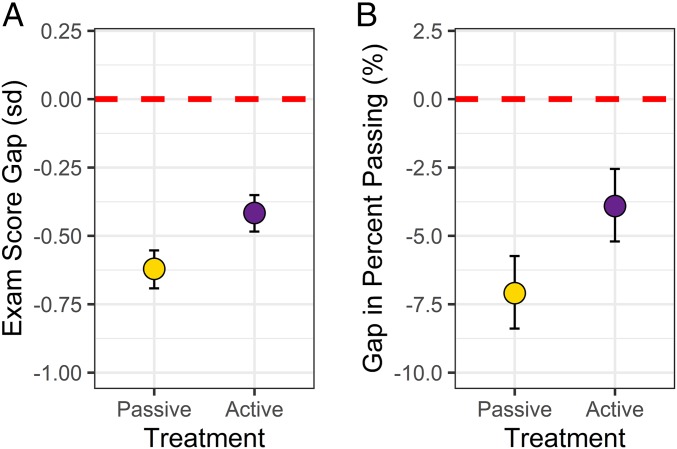
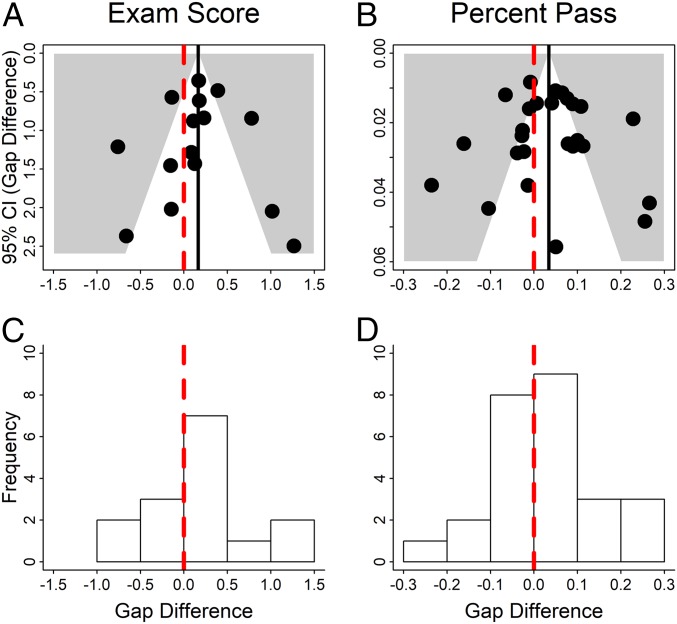
We tested the hypothesis that underrepresented students in active-learning classrooms experience narrower achievement gaps than underrepresented students in traditional lecturing classrooms, averaged across all science, technology, engineering, and mathematics (STEM) fields and courses. We conducted a comprehensive search for both published and unpublished studies that compared the performance of underrepresented students to their overrepresented classmates in active-learning and traditional-lecturing treatments. This search resulted in data on student examination scores from 15 studies (9,238 total students) and data on student failure rates from 26 studies (44,606 total students). Bayesian regression analyses showed that on average, active learning reduced achievement gaps in examination scores by 33% and narrowed gaps in passing rates by 45%. The reported proportion of time that students spend on in-class activities was important, as only classes that implemented high-intensity active learning narrowed achievement gaps. Sensitivity analyses showed that the conclusions are robust to sampling bias and other issues. To explain the extensive variation in efficacy observed among studies, we propose the heads-and-hearts hypothesis, which holds that meaningful reductions in achievement gaps only occur when course designs combine deliberate practice with inclusive teaching. Our results support calls to replace traditional lecturing with evidence-based, active-learning course designs across the STEM disciplines and suggest that innovations in instructional strategies can increase equity in higher education.
Verified 2026-11-22 · 3 references not checked yet
Overview
CoChat Summary
TL;DR
This systematic review and individual-participant-data meta-analysis found that active learning reduced achievement gaps for underrepresented/minoritized students in undergraduate STEM courses. Across the analyzed studies, gaps in exam scores and passing rates were smaller in active-learning than in traditional lecturing, with the largest gap reductions seen in high-intensity active learning.
Key findings
- In identical or formally equivalent exams, the standardized achievement gap between MGS and non-MGS students was −0.62 SDs in traditional lecturing and −0.42 SDs with active learning, a 33% reduction in the gap.
- For passing rates, the gap was −7.1% with traditional lecturing and −3.9% with active learning, a 45% reduction in the gap.
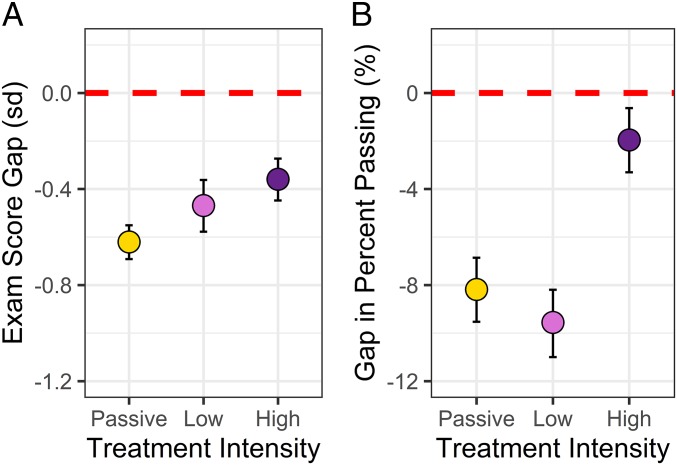
- Gap reductions were stronger with high-intensity active learning: exam-score gaps were −0.48 SDs for low-intensity vs −0.36 SDs for high-intensity; passing-rate gaps were −9.6% for low-intensity vs −2.0% for high-intensity.
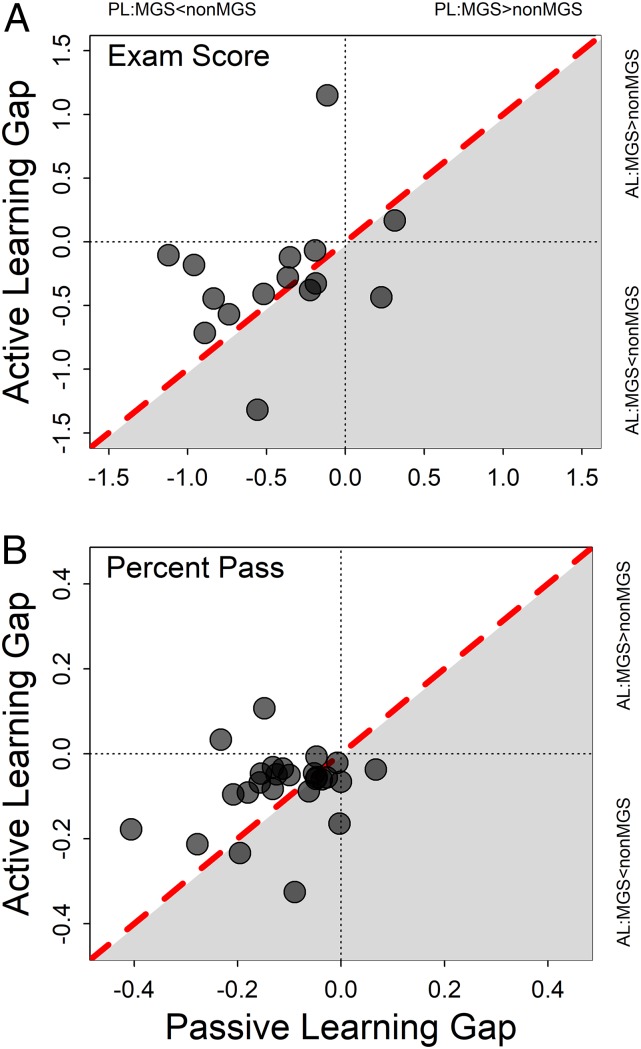
- In the study-level breakdown, 10 of 15 studies with exam-score data showed disproportionate gains for MGS students under active learning, and 15 of 26 studies with failure-rate data showed disproportionate reductions in failure rates for MGS students.
Methods
- Systematic review plus individual-participant-data (IPD) meta-analysis comparing undergraduate STEM courses taught with traditional lecturing vs active learning in the same course and institution.
- Literature search covered studies published or completed from January 1, 2010 to June 30, 2016; the final analysis included 41 studies with disaggregated data by MGS status.
- Final datasets: 9,238 student records from 15 studies for exam scores and 44,606 student records from 26 studies for failure rates; analyses used hierarchical Bayesian multilevel models with section random effects and sensitivity analyses.
Limitations
- The paper states that the conclusions are “tempered by the limitations of the study’s sample size”: only 41 studies had data for students from MGS, which also made moderator analyses hard to interpret.
- The paper says data on the type of active learning were “poorly resolved” because studies often did not report quantitative details of course interventions.
- The paper notes possible sampling bias in instructor/institution type, overrepresentation of research-intensive institutions, and underrepresentation of teaching-intensive institutions and community colleges.
- Evident from the text: the meta-analysis depends on studies that met specific coding and data-sharing criteria, so the findings may not generalize to STEM courses or settings not represented in the included studies.
Model-written summary. Check it against the paper before relying on it.
Integrity signals
Registry
Cites
Statistics
Figures
Verification
Claims the paper makes
16 Valid · 1 Not valid · 10 Not checked · 59 Own results and interpretations
The cited sources support only part of this claim — read each source’s verdict below.
In the paper
“Course grades in most STEM courses are largely driven by performance on examinations, even in active-learning courses that offer many nonexam points (39).”
§ Active learning narrows achievement gaps for underrepresented students in undergraduate science, technology, engineering, and math > Discussion
What the sources say
- Partly supportedcites [39] Freeman S., Haak D., Wenderoth M. P., Increased course structure improves performance in introductory biology. CBE Life Sci. Educ. 10, 175– 186 (2011). 21633066 PMC3105924 sourceExperimental — accuracy not yet measured
The Methods section (“Exam Impact on Final Course Grade”; page unavailable) says the authors intended exams to remain the primary determinant of grades even when many nonexam points were available. Table 4 in the Results shows that exam points strongly predicted final grades across the introductory biology sections studied. The paper does not establish that this holds in most STEM courses. (LLM, conf=0.88)
plainstates an association- Asserted: passes — The authors put it forward as true.
- Checkable: passes — It can be checked against evidence.
- Load-bearing: passes — The paper’s conclusions depend on it.
- Based: passes — The paper gives a reason why it holds.
- Partly supported
The cited sources support only part of this claim — read each source’s verdict below.
In the paper
“All students benefit from classroom cultures that promote self-efficacy, identity as a scientist, and sense of belonging in STEM (58)”
§ Active learning narrows achievement gaps for underrepresented students in undergraduate science, technology, engineering, and math > Discussion
What the sources say
- Partly supportedcites [58] Trujillo G., Tanner K. D., Considering the role of affect in learning: Monitoring students’ self-efficacy, sense of belonging, and science identity. CBE Life Sci. Educ. 13, 6– 15 (2014). 24591497 PMC3940464 sourceExperimental — accuracy not yet measured
The paper’s sections on self-efficacy, sense of belonging, and science identity link each to student learning or persistence, and its discussion of teaching considers how classroom experiences shape these factors. Its focus is undergraduate biology, however; it does not establish that all students benefit from such classroom cultures across STEM. The indexed passages provide section labels but no page numbers. (LLM, conf=0.82)
plainstates a cause- Asserted: passes — The authors put it forward as true.
- Checkable: passes — It can be checked against evidence.
- Load-bearing: unclear — It is unclear whether the paper’s conclusions depend on it.
- Based: passes — The paper gives a reason why it holds.
- Partly supported
The cited sources support only part of this claim — read each source’s verdict below.
In the paper
“students in active-learning course designs that reduced or eliminated achievement gaps have reported an increased sense of community and self-efficacy compared to their peers in the lecture-intensive version of the same course (22, 23).”
§ Active learning narrows achievement gaps for underrepresented students in undergraduate science, technology, engineering, and math > Discussion
What the sources say
- Partly supportedcites [22] Eddy S. L., Hogan K. A., Getting under the hood: How and for whom does increasing course structure work? CBE Life Sci. Educ. 13, 453– 468 (2014). 25185229 PMC4152207 sourceExperimental — accuracy not yet measured
In Methods and Results (Study 3, Factor 2; page unavailable), students in the moderate-structure course were twice as likely to report a stronger sense of classroom community than those in the low-structure course. The Introduction mentions self-reported self-efficacy in prior active-learning research, but says that research did not compare students in versions of the same course. This paper therefore does not support the claimed same-course self-efficacy comparison. (LLM, conf=0.88)
- Not matchedcites [23] Ballen C. J., Wieman C., Salehi S., Searle J. B., Zamudio K. R., Enhancing diversity in undergraduate science: Self-efficacy drives performance gains with active learning. CBE Life Sci. Ed. 16, ar56 (2017). PMC5749958 29054921
We don’t have this paper’s reference list.
plainstates an association- Asserted: passes — The authors put it forward as true.
- Checkable: passes — It can be checked against evidence.
- Load-bearing: unclear — It is unclear whether the paper’s conclusions depend on it.
- Based: passes — The paper gives a reason why it holds.
- Partly supported
Every source the paper cites for this claim was checked and supports it.
In the paper
“Our data on type of active learning are also poorly resolved, because publications still routinely fail to report quantitative data on the nature of course interventions, such as records from classroom observation tools (e.g., ref. 61 and SI Appendix, Table S12).”
§ Active learning narrows achievement gaps for underrepresented students in undergraduate science, technology, engineering, and math > Discussion
What the sources say
- Supportedcites [61] Eddy S. L., Converse M., Wenderoth M. P., PORTAAL: A classroom observation tool assessing evidence-based teaching practices for active learning in large science, technology, engineering, and mathematics classes. CBE Life Sci. Educ. 14, ar23 (2015). PMC4477739 26033871 source
The citation appears as an example of a classroom observation tool, not as evidence that publications routinely omit quantitative intervention data. The Abstract identifies PORTAAL as a classroom observation tool for assessing active-learning practices, which supports that use of the citation. (LLM, conf=0.91)
plainstates a cause- Asserted: passes — The authors put it forward as true.
- Checkable: passes — It can be checked against evidence.
- Load-bearing: unclear — It is unclear whether the paper’s conclusions depend on it.
- Based: passes — The paper gives a reason why it holds.
- Supported
Every source the paper cites for this claim was checked and supports it.
In the paper
“larger gaps are correlated with faculty who have a fixed mindset, which interprets intelligence as innate and immutable and is therefore exclusion or selection-oriented (44).”
§ Active learning narrows achievement gaps for underrepresented students in undergraduate science, technology, engineering, and math > Discussion
What the sources say
- Supportedcites [44] Canning E. A., Muenks K., Green D. J., Murphy M. C., STEM faculty who believe ability is fixed have larger achievement racial achievement gaps and inspire less student motivation in their classes. Sci. Adv. 5, eaau4734 (2019). 30793027 PMC6377274 source
The Results report that racial achievement gaps in STEM courses were nearly twice as large with fixed- versus growth-mindset faculty. The Introduction defines a fixed mindset as treating intelligence and ability as innate and largely unchangeable, and describes judging students as low-ability and encouraging them to drop difficult courses—supporting the paraphrase 'exclusion or selection-oriented.' (LLM, conf=0.88)
plainstates an association- Asserted: passes — The authors put it forward as true.
- Checkable: passes — It can be checked against evidence.
- Load-bearing: unclear — It is unclear whether the paper’s conclusions depend on it.
- Based: passes — The paper gives a reason why it holds.
- Supported
30 more claims
Create a free account to see all 86 claims and every source verdict.
- It may state two separate claims as one. 30
- Probably not a substantial claim. 36
Claims other papers make about this one
Each is checked against this paper’s own text: does it say what the citing paper says it does?
The source backs part of the claim, not all of it — or backs it for a different population, condition or comparison.
In the citing paper
“These perceptions, along with a likely reduction in stress and anxiety (see Figure 4), could benefit students from underrepresented groups and may thus reduce the achievement gap among underrepresented minorities”
From Two-Stage Final Exams: An Assessment Strategy for Enhanced Collaborative Learning and Reduced Student Stress (2026) · cites this paper as Theobald et al., 2020
Experimental — accuracy not yet measured
Citations
Cites
Preferred Reporting Items for Systematic Reviews and Meta-Analyses: the PRISMA statement
Moher, D., Liberati, A., Tetzlaff, J., Altman, D. G., & for the PRISMA Group (2009) · BMJ · doi:10.1136/bmj.b2535 · Cited by 83,823
Preferred reporting items for systematic reviews and meta-analyses: the PRISMA Statement.
(2009) · PubMed Central · Cited by 44,859
Preferred reporting items for systematic reviews and meta-analyses: The PRISMA statement
Moher, D., Liberati, A., Tetzlaff, J., Altman, D. G., & the PRISMA Group* (2009) · Annals of Internal Medicine · doi:10.7326/0003-4819-151-4-200908180-00135 · Cited by 37,554
PRISMA-P Group, Moher, D., Shamseer, L., Clarke, M., Ghersi, D., Liberati, A., Petticrew, M., Shekelle, P., & Stewart, L. A. (2015) · Systematic Reviews · doi:10.1186/2046-4053-4-1 · Cited by 26,223 · cited 2×
“The protocol for this study, presented in the PRISMA-P format (66) and including annotations regarding modifications that occurred during the course of the research, is available in SI Appendix, SI Materials and Methods.”
Capital in the Twenty-First Century
Piketty, T. (2014) · doi:10.4159/9780674369542 · Cited by 14,437
Data Analysis Using Regression and Multilevel/Hierarchical Models
Gelman, A., & Hill, J. (2006) · doi:10.1017/cbo9780511790942 · Cited by 13,597
Active learning increases student performance in science, engineering, and mathematics
Freeman, S., Eddy, S. L., McDonough, M., Smith, M. K., Okoroafor, N., Jordt, H., & Wenderoth, M. P. (2014) · Proceedings of the National Academy of Sciences · doi:10.1073/pnas.1319030111 · Cited by 9,787 · cited 6×
“Can interventions in courses themselves—meaning, changes in how science is taught—reduce achievement gaps and promote retention in STEM? A recent metaanalysis concluded that, on average, active learning in STEM leads to higher examination scores and lower failure rates for all students, compared to all students in the…”
InfluentialSelf-citation(2000) · Cited by 9,198
A threat in the air: How stereotypes shape intellectual identity and performance
Steele, C. M. (1997) · American Psychologist · doi:10.1037/0003-066x.52.6.613 · Cited by 6,770 · cited 1×
“Equally important, inclusive teaching emphasizes treating students with dignity and respect (52), communicating confidence in students’ ability to meet high standards (53), and demonstrating a genuine interest in students’ intellectual and personal growth and success (54, 55).”
BackgroundGeneral methods for monitoring convergence of iterative simulations
Brooks, S. P., & Gelman, A. (1998) · Journal of Computational and Graphical Statistics · doi:10.1080/10618600.1998.10474787 · Cited by 6,045
Research works printed but not linked: 9
- Reardon S. F., “The widening achievement gap between the rich and the poor: New evidence and possible explanations” in Whither Opportunity? Duncan G. J., Murnane R. J., Eds. (Russell Sage Foundation, New York, 2011), pp. 91– 115.
- National Student Clearinghouse Research Center, High School Benchmarks 2019: National College Progression Rates (National Student Clearinghouse, Herndon, VA, 2019).
- Chen X., STEM Attrition: College Students’ Paths Into and Out of STEM Fields (National Center for Education Statistics, Washington, DC, 2013).
- Vygotsky L. S., Mind in Society (Harvard University Press, Cambridge, MA, 1978).
- Kaufmann E., Reips U.-D., Merki K. M., Avoiding methodological biases in meta-analysis. Z. Psychol. 224, 157– 167 (2016).
- Ginder S. A., Kelly-Reid J. E., Mann F. B., Enrollment and Employees in Postsecondary Institutions, Fall 2015 (National Center for Education Statistics, Washington, DC, 2017).
- Reed J. G., Baxter P. M., Using Reference Databases. The Handbook of Research Synthesis and Meta-Analysis, Cooper H., Hedges L. V., Valentine J. C., Eds. (Russell Sage Foundation, New York, 2009), pp. 73– 101.
- Rothstein H., Hopewell S., Grey Literature. The Handbook of Research Synthesis and Meta-Analysis, Cooper H., Hedges L. V., Valentine J. C., Eds. (Russell Sage Foundation, New York, 2009), pp. 103– 125.
- White H. D., Scientific Communication and Literature Retrieval. The Handbook of Research Synthesis and Meta-Analysis, Cooper H., Hedges L. V., Valentine J. C., Eds. (Russell Sage Foundation, New York, 2009), pp. 51– 71.
Cited by
Items 301–400 of 1,369
Hallinger, P. (2023) · Interdisciplinary Journal of Problem-based Learning · doi:10.14434/ijpbl.v17i2.35761 · Cited by 21
Manzanares, M. C. S., Sánchez, R. M., & Ochoa-Orihuel, J. (2021) · Electronics · doi:10.3390/electronics10212620 · Cited by 15
Consequences of Endorsing the Individual Learning Styles Myth: Helpful, Harmful, or Harmless?
Yan, V. X., & Fralick, C. M. (2022) · Monographs in the psychology of education · doi:10.1007/978-3-030-90792-1_6 · Cited by 19
McAlpin, J. D., Ziker, J. P., Skvoretz, J. V., Couch, B. A., Earl, B., Feola, S., Lane, A. K., Mertens, K., Prevost, L. B., Shadle, S. E., et al. (2022) · International Journal of STEM Education · doi:10.1186/s40594-022-00364-w · Cited by 17
Course letter grades and rates of D, W, F grades can introduce variability to course comparisons
James, N. M. (2022) · Chemistry Education Research and Practice · doi:10.1039/d2rp00150k · Cited by 12
Implementing the learning assistant model in European higher education
Odden, T. O. B., Lauvland, A., Bøe, M. V., & Henriksen, E. K. (2023) · European Journal of Physics · doi:10.1088/1361-6404/acb39e · Cited by 15
“Despite having little exposure to interactive engagement methods (IEMs) as either students themselves or TAs in other courses, interviewed LAs expressed general buy-in to IEM-based pedagogy. More specifically, they expressed appreciation for the discussion-based tasks, feeling that they promoted student learning and a…”
BackgroundInfluentialExploring Chinese STEM college students’ expectations of effective online courses
Lin, X. Y., Luan, L., & Dai, Y. (2023) · International Journal of Chinese Education · doi:10.1177/2212585x231188977 · Cited by 22
“Additionally, this strategy may reduce inequities and close achievement gaps for disadvantaged students in STEM disciplines, thereby promoting fairness and inclusivity in higher education (Theobald et al., 2020).”
BackgroundFarrar, V. S., Aguayo, B.-Y. C., & Caporale, N. (2023) · CBE—Life Sciences Education · doi:10.1187/cbe.23-03-0041 · Cited by 15
“Instructors can also employ active learning in the large lecture setting, an approach that has been shown to improve student performance (Theobald et al. , 2020).”
BackgroundDonis, K., Aikens, M. L., Swamy, U., Delgado, M., Gillespie, M., Graves, P., & Eddy, S. L. (2024) · Journal of Chemical Education · doi:10.1021/acs.jchemed.3c01137 · Cited by 13
Full, R. J., Bhatti, H. A., Jennings, P., Ruopp, R., Jafar, T., Matsui, J., Flores, L., & Estrada, M. (2021) · Integrative and Comparative Biology · doi:10.1093/icb/icab187 · Cited by 11
“Students best learn through a constructivist approach that promotes active learning (Papert 1999; Freeman et al. 2014; Theobald et al. 2020).”
Zewail‐Foote, M., & Gonzalez, M. (2023) · Journal of Chemical Education · doi:10.1021/acs.jchemed.2c00341 · Cited by 11
Active Learning, Living Laboratories, Student Empowerment, and Urban Sustainability
Nansen, C. (2024) · Sustainability · doi:10.3390/su16103902 · Cited by 23
Horne, L., Manzanares, A. D., Atalan-Helicke, N., Vincent, S. G., Anderson, S. W., & Romulo, C. L. (2024) · Journal of Environmental Studies and Sciences · doi:10.1007/s13412-024-00929-x · Cited by 11
“Furthermore, drawing is an active learning activity (i.e., one that requires students to actively play a role in their learning rather than passively absorbing information); active learning approaches have reduced the achievement gap in previous studies (Theobald et al. 2020).”
The impact of learning assistant facilitation practices on student in-the-moment learning
Maggiore, N. M., Powers, K. P., Lwanga, K. L., & Caspari‐Gnann, I. (2024) · International Journal of STEM Education · doi:10.1186/s40594-024-00506-2 · Cited by 13
“In STEM courses, student-centered active learning leads to improved learning outcomes (Freeman et al., 2014; Theobald et al., 2020) as well as increased positive student attitudes towards learning (Flaherty, 2020; Mooring et al., 2016).”
BackgroundNarla, A. V., Edwards, M. M., Bullard, E. M., Petrie, K. L., & Heinrichsen, E. T. (2024) · Journal for STEM Education Research · doi:10.1007/s41979-024-00135-y · Cited by 12
“…activities and fostering SoB reduce the equity gap in STEM, while SoB and meaningful community interactions are essential to ensuring the retention of USMs in remote STEM classes (Fink et al., 2020, 2023; Hansen et al., 2024; Shortlidge et al., 2024; Theobald et al., 2020; White et al., 2020).”
Clapson, M. L., Schechtel, S., Davy, E. C., & Durfy, C. S. (2024) · Education Sciences · doi:10.3390/educsci14121273 · Cited by 14
“…courses signi fi cantly improves student outcomes, most noted in students with lower academic achievement levels [11] and underrepresented groups [12]. in other undergraduate chemistry courses significantly improves student noted in students with lower academic achievement levels [11] and…”
Next Steps after Poor General Chemistry I Performance and STEM Degree Completion
McCarren, E. M., & Adams, G. M. (2024) · Journal of Chemical Education · doi:10.1021/acs.jchemed.4c01013 · Cited by 9
Basu, P., Malik, D. J., & Graunke, S. S. (2025) · PLoS ONE · doi:10.1371/journal.pone.0318882 · Cited by 12
“To better understand the impact of PLTL pedagogy on previously reported student success [22,34–36], we have collected data from 1996 through 2019 on 19,911 students.”
Shields, G. C., & Feller, S. E. (2020) · International Journal of Quantum Chemistry · doi:10.1002/qua.26370 · Cited by 10
Metzger, K. J., & Via, Z. (2022) · The American Biology Teacher · doi:10.1525/abt.2022.84.6.342 · Cited by 13
“Examining ways to meaningfully support students in STEM.”
BackgroundInfluentialKing, S. M. (2022) · Journal of Chemical Education · doi:10.1021/acs.jchemed.2c00862 · Cited by 13
Hartono, H., Widiyati, E., & Anwar, C. (2023) · Studies in English Language and Education · doi:10.24815/siele.v10i1.26021 · Cited by 29
Students explain evolution by natural selection differently for humans versus nonhuman animals
de Lima, J., & Long, T. M. (2023) · CBE—Life Sciences Education · doi:10.1187/cbe.21-06-0145 · Cited by 13
“Multiple recent meta-analyses have shown that instructional models that incorporate active learning improve student learning gains broadly (Freeman et al. , 2014; Shi et al. , 2020; Theobald et al. , 2020; Bredow et al. , 2021).”
BackgroundSumber Daya Teknologi Terhadap Pelaksanaan Kurikulum di Era Digital
Hasanbasri, H., Algusyairi, P., Nurhayuni, N., et al. (2023) · AL-MIKRAJ Jurnal Studi Islam dan Humaniora · doi:10.37680/almikraj.v4i1.4181 · Cited by 9
Taghipour, S., Nia, A. E., Hokmabadi, H., & Yahia, E. M. (2023) · International Journal of Biological Macromolecules · doi:10.1016/j.ijbiomac.2023.129055 · Cited by 10
Mathematical Biology: Expand, Expose, and Educate!
Lee, S., & Clinedinst, L. (2020) · Bulletin of Mathematical Biology · doi:10.1007/s11538-020-00796-x · Cited by 8
Mind the gap: how a large-scale course re-design in economics reduced performance gaps
Miller‐Cotto, D., & Schunn, C. D. (2020) · The Journal of Experimental Education · doi:10.1080/00220973.2020.1805717 · Cited by 10
“Active learning, in particular, has been a central focus in reforms designed to increase engagement and inclusion and has demonstrated promising results for URMs (Theobald et al., 2020).”
Moore, M. E., Naganathan, A., Blumer, S. L., et al. (2020) · Journal of Microbiology and Biology Education · doi:10.1128/jmbe.v21i3.2203 · Cited by 9
Every Tool in the Toolbox: Pursuing Multilevel Institutional Change in the DeLTA Project
Andrews, T. C., Brickman, P., Dolan, E. L., & Lemons, P. P. (2021) · Change The Magazine of Higher Learning · doi:10.1080/00091383.2021.1883974 · Cited by 11
Resource Letter RP-1: Race and physics
Rosa, K., Blue, J., Hyater-Adams, S., Cochran, G. L., & Prescod-Weinstein, C. (2021) · American Journal of Physics · doi:10.1119/10.0005155 · Cited by 12
Assessment for Learning as a Driver for Active Learning and Learner Participation in Mathematics
Mahlambi, S. B. (2021) · International Journal of Educational Methodology · doi:10.12973/ijem.7.3.473 · Cited by 21
Bennett, A. B. (2021) · International Journal of Mathematical Education in Science and Technology · doi:10.1080/0020739x.2021.1961033 · Cited by 10
“…traditional lecture approaches (Freeman et al., 2014; Lugosi & Uribe, 2020), particularly for underrepresented groups in STEM (Laursen et al., 2014; Theobald et al., 2020), the feasibility of implementing interactive strategies is often challenged by faculty and instructors (Le et al., 2018;…”
BackgroundDo Introductory Courses Disproportionately Drive Minoritized Students Out of STEM Pathways?Preprint
Hatfield, N. J., Brown, N. P., & Topaz, C. M. (2022) · doi:10.31235/osf.io/3gqps · Cited by 9
Active Learning Strategies for Biodiversity Science
Chodkowski, N., O’Grady, P., Specht, C. D., & Zamudio, K. R. (2022) · Frontiers in Education · doi:10.3389/feduc.2022.849300 · Cited by 10
“To characterize the transformation of these courses from traditional lecture courses (lectures without active learning before this framework was implemented) to active learning courses (after implementation of this framework), we will collect course observation data using the Classroom Observation Protocol for Undergr…”
BackgroundInfluentialCraig, B., & Hsu, J. L. (2024) · Active Learning in Higher Education · doi:10.1177/14697874241230992 · Cited by 16
“…classes) can increase student learning, decrease differences in performance across different demographics of students, and promote student persistence and retention (Armbruster et al., 2009; Chi & Wylie, 2014; Freeman et al., 2014; Haak et al., 2011; Kvam, 2000; Theobald et al., 2020).”
Drumm, B. T., Bree, R., Griffin, C. S., & O’Leary, N. (2024) · Advances in Physiology Education · doi:10.1152/advan.00257.2023 · Cited by 8
Pai, G., Silberberg, E., & Wamba, N. (2024) · Journal for STEM Education Research · doi:10.1007/s41979-024-00127-y · Cited by 14
Funkhouser, J. A., Gregory, M., & Sanz, C. (2024) · BioScience · doi:10.1093/biosci/biae060 · Cited by 9
“Active learning is one example of inclusive pedagogy that has been shown to be an effective strategy for narrowing the achievement gaps of minoritized students (Preszler 2009 , Haak et al. 2011 , Theobald et al. 2020 ) and increasing retention in science (Harris et al. 2020b ).”
BackgroundThe Evolution of Active Learning in Response to the Pandemic: The Role of Technology
Maldonado-Trapp, A., & Bruna, C. (2024) · Advances in experimental medicine and biology · doi:10.1007/978-3-031-61943-4_16 · Cited by 13
Campbell, E. C., Christensen, K. M., Nuwer, M., Ahuja, A., Boram, O., Liu, J., Miller, R., Osuna, I., & Riser, S. C. (2024) · Journal of Geoscience Education · doi:10.1080/10899995.2024.2384338 · Cited by 10
Finding peers “like me”: Student strategies for increasing belonging and flourishing in STEM
Chaffee, R., Björklund, P., Braverman, C., Gupta, P., Hammerness, K. M., Daly, A. J., MacPherson, A. C., Adams, J. D., Abouelkheir, M., Francis, J., et al. (2025) · Journal of Applied Developmental Psychology · doi:10.1016/j.appdev.2025.101758 · Cited by 17
El‐Thalji, I. (2025) · Education Sciences · doi:10.3390/educsci15040430 · Cited by 36
Tiny Earth CURE Demonstrates Equitable Benefits for U.S. College Science Students
Miller, S., Hernandez, P. R., Du, W., Lee, H., Maldonado, N., Maldonado, N., Sandoval, P. J., Young, G. R., Handelsman, J., Handelsman, J., et al. (2025) · CBE—Life Sciences Education · doi:10.1187/cbe.23-06-0117 · Cited by 14
“CUREs are grounded in active learning, which has long been known to enhance the performance and retention of all students and is especially beneficial to students from HECs (Hake, 1998; Haak et al. , 2011; Schwartz et al. , 2011; Freeman et al. , 2014; Hood et al. , 2020; Theobald et al. , 2020a).”
Danlami, K. B., Zakariya, Y. F., Balarabe, B., et al. (2025) · Frontiers in Psychology · doi:10.3389/fpsyg.2025.1577912 · Cited by 8
A bibliometric exploration of research in mathematics education (2020–2024)
Чкана, Я. О., Мартиненко, О. В., Юрченко, А. О., Gorovoy, I., & Семеніхіна, О. В. (2025) · Eurasia Journal of Mathematics Science and Technology Education · doi:10.29333/ejmste/16561 · Cited by 18
“Over the past five years, Theobald et al. (2020) and Kuhfeld et al. (2020) publications have been the most cited, with 546 and 464 citations, respectively.”
Clapson, M. L., Bannard, G., Daliaho, G., Hong, J., Davy, E. C., Pitsiaeli, J., Durfy, C. S., & Schechtel, S. (2025) · RSC Sustainability · doi:10.1039/d5su00554j · Cited by 12
Psychotherapy in pain management: New viewpoints and treatment targets based on a brain theory
Moss, R. A., & North Mississippi Regional Pain Consultants, 4. E. B. (2020) · AIMS neuroscience · doi:10.3934/neuroscience.2020013 · Cited by 9
“[175] in relation to science, technology, engineering, and mathematics courses, active learning is grounded in constructivist theory which proposes that humans learn by actively using new information and experiences to modify their existing models of how the world works.”
BackgroundDistinct factors predict use of active learning techniques by pre-tenure and tenured STEM faculty
Indorf, J. L., Benabentos, R., Daubenmire, P. L., Murasko, D. M., Hazari, Z., Potvin, G., Kramer, L., Marsteller, P., Thompson, K. V., Cassone, V. M., et al. (2021) · Journal of Geoscience Education · doi:10.1080/10899995.2021.1927461 · Cited by 13
“We know that ALTs can narrow achievement gaps for underrepresented students in STEM disciplines and increase their academic performance (Starr et al., 2020; Theobald et al., 2020).”
BackgroundAlmeida, K. H. (2021) · Journal of Chemical Education · doi:10.1021/acs.jchemed.1c00401 · Cited by 9
Latulipe, C., Tadimalla, S. Y., Maher, M. L., Frevert, T. K., Mejias, M., Payton, J., Rorrer, A. S., Fiore, J., Kwatny, G., Rosen, A. L., et al. (2022) · IEEE Frontiers in Education Conference (FIE) · doi:10.1109/fie56618.2022.9962586 · Cited by 8
“There is mounting evidence that active learning is beneficial for all students, but leads to especially significant gains for students from marginalized groups [15].”
BackgroundHow do digital textbook platforms promote active learning in undergraduate biology courses?
Metcalf, L. E., Bernacki, M. L., & Bernacki, L. E. (2022) · Journal of Research in Science Teaching · doi:10.1002/tea.21845 · Cited by 13
Using CREATE and Scientific Literature to Teach Chemistry
Perla, A. A., Hollar, S. M., Muzikar, K. A., & Liu, J. M. (2023) · Journal of Chemical Education · doi:10.1021/acs.jchemed.2c00781 · Cited by 11
Critical Pedagogy in Practice in the Computing Classroom
Mayhew, E. J., & Patitsas, E. (2023) · ACM Technical Symposium on Computer Science Education (SIGCSE) · doi:10.1145/3545945.3569840 · Cited by 15
“Centering students’ motivations, especially how computing can benefit a students’ community, is shown to improve students’ motivation and sense of belonging, especially for those from marginalized backgrounds [15, 31, 37, 43].”
BackgroundTeaching Mammalogy in the 21st century: advances in undergraduate education
Flaherty, E. A., Lanier, H. C., Varner, J., Duggan, J., Beckmann, S., Yahnke, C. J., Erb, L. P., Patrick, L. E., Dizney, L. J., Munroe, K. E., et al. (2023) · Journal of Mammalogy · doi:10.1093/jmammal/gyac121 · Cited by 14
Students Need More than Content Knowledge To Counter Vaccine Hesitancy
Lee, S. W., & Tran, S. (2023) · Journal of Microbiology and Biology Education · doi:10.1128/jmbe.00047-23 · Cited by 10
Kraft, A., Atieh, E. L., Shi, L., & Stains, M. (2024) · International Journal of STEM Education · doi:10.1186/s40594-024-00478-3 · Cited by 19
“…techniques with methodologically rigorous research bases supporting their effectiveness” (Missett & Foster, 2015, p. 97) and are a subset of active learning practices that have been shown to improve student learning outcomes (Freeman et al., 2014; Rahman & Lewis, 2020; Theobald et al., 2020).”
MethodRios, J. (2024) · The Journal of Mathematical Behavior · doi:10.1016/j.jmathb.2024.101148 · Cited by 11
Goodwin, E. C., Gin, L. E., Aeschliman, A., Afoakwa, A. K., Allred, B. A., Avalle, S. T., Bell, A., Berkheimer, J., Brzezinski, H., Campos, R., et al. (2024) · CBE—Life Sciences Education · doi:10.1187/cbe.23-07-0137 · Cited by 13
“Active learning has been shown to be disproportionately beneficial at mitigating achievement gaps (Theobald et al. , 2020).”
BackgroundImproving Undergraduate Epidemiology Education: An Example Using Instructional Teams
Brown, H. E., & Cox, J. (2020) · American Journal of Epidemiology · doi:10.1093/aje/kwaa181 · Cited by 10
Ridley, D. R., Ngnepieba, P., & de Silva, A. D. (2021) · SN Social Sciences · doi:10.1007/s43545-021-00154-1 · Cited by 8
Birney, L., Evans, B. R., Kong, J., Solanki, V., Mojica, E. E., Scharff, C., Kaoutzanis, D., & Kondapuram, G. (2021) · Journal of Curriculum and Teaching · doi:10.5430/jct.v10n4p47 · Cited by 10
Bistulfi, G. L. (2021) · Journal of Higher Education Theory and Practice · doi:10.33423/jhetp.v21i11.4665 · Cited by 11
An investigation of students' views on decolonising the science curriculum
Williams, N. A., & Benjamin, A. (2022) · Compass Journal of Learning and Teaching · doi:10.21100/compass.v15i1.1258 · Cited by 9
Hye-In, V., & Kadandale, P. (2022) · CBE—Life Sciences Education · doi:10.1187/cbe.21-09-0240 · Cited by 11
Bastyr, C., Johnson, C., Lakhan, R., & Wainman, J. W. (2022) · Journal of Chemical Education · doi:10.1021/acs.jchemed.1c01279 · Cited by 8
Self-efficacy curriculum and peer leader support in gateway college mathematics
Morris, P. A., Agbonlahor, O., Winters, R., & Donelson, B. (2022) · Learning Environments Research · doi:10.1007/s10984-022-09424-y · Cited by 14
Characterizing students’ peer–peer questions: frequency, nature, responses and learning
Tiffany, G., Grieger, K., Johnson, K., & Nyachwaya, J. M. (2023) · Chemistry Education Research and Practice · doi:10.1039/d2rp00146b · Cited by 13
Shultz, M. (2022) · Journal for Research in Mathematics Education · doi:10.5951/jresematheduc-2020-0306 · Cited by 11
Rios, J. (2023) · International Journal of Research in Undergraduate Mathematics Education · doi:10.1007/s40753-023-00230-2 · Cited by 16
“The literature has generally considered active learning to be an equitable teaching approach in post-secondary STEM education (Laursen et al., 2014; Theobald et al., 2020).”
Karch, J. M., Maggiore, N. M., Pierre‐Louis, J. R., Strange, D., Dini, V., & Caspari‐Gnann, I. (2024) · Science Education · doi:10.1002/sce.21874 · Cited by 10
Supriya, K., Mead, C., Anbar, A. D., Caulkins, J. L., Collins, J. P., Cooper, K. M., LePore, P. C., Lewis, T., Pate, A., Scott, R. A., et al. (2021) · bioRxiv (Cold Spring Harbor Laboratory) · doi:10.1101/2021.03.29.437480 · Cited by 8
Bayer, A., Bruich, G. A., Chetty, R., & Housiaux, A. (2020) · National Bureau of Economic Research · doi:10.3386/w26961 · Cited by 12
“Active learning also reduces achievement gaps for women and students from disadvantaged backgrounds in STEM fields (e.g., Lorenzo, Crouch, and Mazur 2006, Haak, HilleRisLambers, Pitre, and Freeman 2011; Theobald et al. 2020).”
Lima, R. M., Villas-Boas, V., Soares, F., Carneiro, O. S., Ribeiro, P. J. G., & Mesquita, D. (2024) · European Journal of Engineering Education · doi:10.1080/03043797.2024.2313541 · Cited by 12
“Such a teaching and learning process gains importance as research suggests that active learning approaches, can enhance learning (Bonwell and Eison 1991; Prince 2004) and reduce failure and dropout rates in engineering courses and the STEM area (Freeman et al. 2014; Theobald et al. 2020).”
Engaging classroom observation: A brief measure of active learning in the college classroom
Young, C., Mitchell-Yellin, B., & Randall, G. K. (2024) · Active Learning in Higher Education · doi:10.1177/14697874241229421 · Cited by 9
“Yet, as has been demonstrated (Theobald et al., 2020), active learning is known to “raise all boats” in the classroom; all students benefit with increased learning based on active learning teaching strategies designed by classroom instructors (Betti et al., 2022; Miller et al., 2021).”
Eslami, M., Denaro, K., Collins, P., Sumarsono, J. M., Dennin, M. B., & Sato, B. K. (2024) · PLoS ONE · doi:10.1371/journal.pone.0301331 · Cited by 12
“Previous studies have examined the extent to which a syllabus can be learner-centered [22, 28] as well as the positive impacts of learner-centered pedagogy on minoritized students in reducing opportunity gaps [14].”
BackgroundMethodInfluentialA Working Framework to Address Diversity, Equity, and Inclusion in Undergraduate Medical Education
Jiang, K., Blumer, J., Zaveri, N. T., Schneid, S. D., Lee, E. M., Szarek, J. L., Kruidering, M., Quesnelle, K. M., & Lee, M. W. (2024) · Medical Science Educator · doi:10.1007/s40670-024-02065-1 · Cited by 10
“For instance, active learning-based pedagogies that intentionally incorporate inclusive teaching have a superior impact on performance gaps compared to corresponding lecture-based sessions that lack an active learning component [5, 9].”
BackgroundAllen, T. S., Arriola, P. E., Breitenberger, C. A., Klyczek, K. K., Marrs, K. A., Matzner, S. L., Miller, K. G., Powell‐Coffman, J. A., & Thatcher, M. (2024) · CBE—Life Sciences Education · doi:10.1187/cbe.24-02-0042 · Cited by 12
“These strategies include active learning pedagogy (Theobald et al. , 2020), course-based undergraduate research experiences (Rodenbusch et al. , 2016), emotion regulation activities (Rozek et al. , 2019), and social-belonging interventions (Walton et al. , 2023).”
Perceived Inequities in STEM Classes Make Them Feel Competitive
Tatapudy, S., Boukouzis, K., Kayal, I. S., Socko, R., Rajesh, M., & Theobald, E. J. (2025) · CBE—Life Sciences Education · doi:10.1187/cbe.24-02-0084 · Cited by 9
“Active learning strategies provide a structure for doing this and have been shown to reduce inequities in STEM outcomes (Wenderoth et al. , 2007; Freeman et al. , 2014; Theobald et al. , 2020).”
Self-citationCormas, P. C., Gould, G., Nicholson, L., Fredrick, K. C., & Doan, S. (2021) · BioScience · doi:10.1093/biosci/biab050 · Cited by 10
Hounshell, A. G., Farrell, K. J., & Carey, C. C. (2021) · Education Sciences · doi:10.3390/educsci11080382 · Cited by 9
We Can’t Fail Again: Arguments for Professional Development in the Wake of COVID-19
Walsh, L. L., Bills, R. J., Lo, S. M., Walter, E. M., Weintraub, B. E., & Withers, M. D. (2022) · Journal of Microbiology and Biology Education · doi:10.1128/jmbe.00323-21 · Cited by 7
Durham, M. F., Colclasure, B. C., & Brooks, T. D. (2022) · CBE—Life Sciences Education · doi:10.1187/cbe.22-03-0049 · Cited by 11
“…most evidence supporting their role in student success (Freeman et al. , 2014), including benefits for underrepresented students, such as reducing the achievement gap (Theobald et al. , 2020), improving science self-efficacy (Ballen et al. , 2017), and increasing retention (Estrada et al. , 2016).”
Mohr, B. J., Souilem, O., Abdussamad, A. M., et al. (2022) · Laboratory Animals · doi:10.1177/00236772221129976 · Cited by 7
“To promote higher levels of learning, all courses were delivered predominantly using active learning approaches.(29) We built in sustainability and growth by designing and delivering activities as ‘Educate the Educator’, aka ‘Train the Trainer’, courses.”
MethodPrunuske, A. J., Evans‐Anderson, H. J., Furniss, K. L., Goller, C., Mirowsky, J. E., Moore, M. E., Raut, S. A., Swamy, U., Wick, S., & Wolyniak, M. J. (2022) · Discover Education · doi:10.1007/s44217-022-00023-w · Cited by 12
Maxwell, M. C., Snyder, J. J., Dunk, R. D. P., Sloane, J. D., Cannon, I., & Wiles, J. R. (2023) · BMC Research Notes · doi:10.1186/s13104-023-06338-7 · Cited by 11
“These calls have been in response to a large and growing body of evidence affirming that active learning is more effective and equitable than traditional lecture [2, 3].”
BackgroundProblematics of Contemporary Problems and Cultural Poverty Challenges
Rahman, R., Hakis, H., Syahputra, D., & Yakir, J. (2023) · Journal International Dakwah and Communication · doi:10.55849/jidc.v2i2.190 · Cited by 8
Student Preferences for Active Learning and Their Beliefs, Experiences, and Knowledge
Shilling, T., Thayer, J., Coria‐Navia, A., & Ferguson, H. (2023) · Teaching and Learning in Communication Sciences & Disorders · doi:10.30707/tlcsd7.2.1690393489.74901 · Cited by 11
Moving Up Without Losing Your Way: The Ethical Costs of Upward Mobility
Geron, T. (2020) · Harvard Educational Review · doi:10.17763/1943-5045-90.4.676 · Cited by 7
Teaching Through the Student Lens: Qualitative Exploration of Student Evaluations of Teaching
Caldwell, D., Johnson, C., Moore, A. K., Moore, A., Poush, M., & Franks, A. M. (2024) · American Journal of Pharmaceutical Education · doi:10.1016/j.ajpe.2024.100672 · Cited by 15
Costabile, M., Birbeck, D., & Aitchison, C. (2024) · International Journal of Science Education · doi:10.1080/09500693.2024.2314010 · Cited by 13
“Active learning approaches have also been shown to benefit underrepresented and marginalised minority groups (Ballen et al., 2017; Braun et al., 2018; Lugosi & Uribe, 2022; Sandrone et al., 2021; Tharayil et al., 2018; Theobald et al., 2020; Williams & O’Dowd, 2021).”
Sbeglia, G. C., & Nehm, R. H. (2024) · Evolution · doi:10.1093/evolut/qpae026 · Cited by 9
The case for metacognition support in a flipped STEM course
Clark, R. M., Guldiken, R., Kaw, A. K., & Uyanik, O. (2024) · International Journal of Mechanical Engineering Education · doi:10.1177/03064190241255113 · Cited by 11
Apkarian, N., Voigt, M., Hagman, J. E., Tremaine, R., Street, C., Martinez, A. E., & Guglielmo, J. (2024) · International Journal of Research in Undergraduate Mathematics Education · doi:10.1007/s40753-024-00242-6 · Cited by 10
“A recent meta-analysis (Theobald et al., 2020) suggests that active learning instructional practices can narrow the racial opportunity gap in STEM courses; however, Johnson and colleagues (2020) found that active learning instruction in Abstract Algebra courses introduced a gendered performance…”
Griffin, S. E., Steiger, J., Tulloch, A. G., et al. (2024) · New Directions for Community Colleges · doi:10.1002/cc.20637 · Cited by 7
Improving the Representation of Undergraduate Women in Cybersecurity: A Literature Review
Selma-Housein, E., & Plancher, B. (2025) · ACM Technical Symposium on Computer Science Education (SIGCSE) · doi:10.1145/3641554.3701811 · Cited by 9
Promoting Conceptual Learning Using Scaffolded Activities That Incorporate Interactive Simulations
Ajayan, P., Cao, R., & Eichler, J. F. (2025) · Education Sciences · doi:10.3390/educsci15050566 · Cited by 13
Basche, A., Krupek, F. S., Chatterjee, N., & Speth, C. A. (2021) · Natural sciences education · doi:10.1002/nse2.20058 · Cited by 13
Exploring Shifts in Student Attitudes Toward Group Exams in College Calculus: The Case of Dane
Dobie, T. E., & MacArthur, K. R. (2021) · International Journal of Research in Undergraduate Mathematics Education · doi:10.1007/s40753-021-00148-7 · Cited by 9
Real-Time Interaction Tools in Virtual Classroom Systems
Bakonyi, V., Illés, Z., & Szabó, T. (2022) · Lecture notes in electrical engineering · doi:10.1007/978-981-16-8892-8_47 · Cited by 7
Two Truths and a Lie: Introduction to Deception Detection
Davidyan, J. Y., Huels, B., & Gissel, J. L. (2022) · Issues in Accounting Education · doi:10.2308/issues-2021-054 · Cited by 8
Metadata
- Authors
- Theobald, E. J., Hill, M. J., Tran, E., Agrawal, S., Arroyo, E. N., Behling, S., Chambwe, N., Cintrón, D. L., Cooper, J. D., Dunster, G., Grummer, J. A., Hennessey, K., Hsiao, J., Iranon, N., Jones, L., Jordt, H., Keller, M., Lacey, M. E., Littlefield, C. E., Lowe, A., Newman, S., Okolo, V., Olroyd, S., Peecook, B. R., Pickett, S. B., Slager, D. L., Caviedes-Solis, I. W., Stanchak, K. E., Sundaravardan, V., Valdebenito, C., Williams, C. R., Zinsli, K., & Freeman, S.
- Affiliations
- University of Washington (US)
- Institute for Systems Biology (US)
- Shoreline Community College (US)
- Corresponding author
- Theobald, Elli J.
- Freeman, Scott
- ORCID
- Theobald, Elli J.
- Agrawal, Sweta
- Behling, Shawn
- Chambwe, Nyasha
- Cintrón, Dianne Laboy
- Cooper, Jacob D.
- Dunster, Gideon
- Grummer, Jared A.
- Hennessey, Kelly
- Hsiao, Jennifer
- Jones, Leonard
- Jordt, Hannah
- Littlefield, Caitlin E.
- Lowe, Alexander
- Olroyd, Savannah
- Peecook, Brandon R.
- Pickett, Sarah B.
- Slager, David L.
- Caviedes-Solis, Itzue W.
- Stanchak, Kathryn E.
- Williams, Claire R.
- Zinsli, Kaitlin
- Freeman, Scott
- Venue
- Proceedings of the National Academy of Sciences
- Publisher
- National Academy of Sciences
- Published
- 2020-03-09
- Volume
- 117
- Issue
- 12
- Pages
- 6476-6483
- ISSN
- 0027-8424 (ISSN-L)
- 1091-6490
- PMC
- PMC7104254
- OpenAlex
- W3009483010
- Cited by
- 1,387
- References
- 75
- Citations by year
- 2026: 210 · 2025: 222 · 2024: 272 · 2023: 236 · 2022: 233 · 2021: 154 · 2020: 60
- FWCI
- 258.89
- Type
- journal article
- Language
- en
- Open access
- hybrid
- doi.org
- Licence
- Locations
- Proceedings of the National Academy of Sciences (publishedVersion, cc-by-nc-nd)
- Europe PMC (PubMed Central) (publishedVersion, cc-by-nc-nd)
- PubMed Central (publishedVersion, cc-by-nc-nd)
- PubMed (publishedVersion)
- Funders
- University of Washington College of Arts and Sciences (NA)
- Topics
- Social Sciences › Education › Innovative Teaching Methods
- Social Sciences › Education › Higher Education Research Studies
- Social Sciences › Psychology › Developmental and Educational Psychology › Innovative Teaching and Learning Methods
- Keywords
- active learning, achievement gap, underrepresented students, STEM education, traditional lecturing, course design, student failure rates, test scores, higher education equity, inclusive pedagogy, deliberate practice
- MeSH terms
- Achievement, Educational Measurement, Engineering, Humans, Mathematics, Minority Groups, Science, Students, Technology, United States, Universities, Problem-Based Learning
About these checks
Registry, retraction, Cites and statistics results are computed, not judged, with one exception: a printed reference that no index lists is read once by a model before it counts as a citation error. Claims are extracted by a model and kept only when their quote appears verbatim in the text; each cited source is then checked, with a model’s help, for whether it says what the claim relies on. Those verdicts can be wrong — read the claim’s quote and the cited source before relying on one.
The claim verdicts this report counts are experimental: their accuracy is not yet measured.
A language model drew the claims from the paper on 2026-10-10, under version 3 of the claim definition (model deepseek-v4.1-flash, prompt extract-v3).
A second model labelled each claim on 2026-10-10 (model jev-1.13-20260917, definition revision gold-guideline-v0.2).
Cited sources are checked with a language model’s help (gpt-6-sol).
Statistics and arithmetic are recomputed, not judged.
Confidence bands are shown only for fields calibrated on our annotated test set. None is calibrated yet, so no band is shown.
What counts as a claim ›How we measure confidence ›How we check this ›
Are you an author, or do you see a problem with this page? Request a review
Data sources
Bibliographic data: Semantic Scholar, OpenAlex, Crossref.
Contains information from the Semantic Scholar Academic Graph Datasets, made available under the ODC Attribution License (ODC-BY 1.0).
Semantic Scholar’s data is described in: Kinney, R., et al. (2023). The Semantic Scholar Open Data Platform. arXiv:2301.10140.
