

Information Systems and Developing Countries: Failure, Success, and Local Improvisations
Open accessThe DOI matches its Crossref record; 53 of the 53 references it cites were found in a registry or an index.
Abstract
The article develops the design-actuality gaps model to explain why many information systems in developing countries fail totally or partially.
Overview
CoChat Summary
## TL;DR
The paper argues that many information systems in developing countries fail totally or partially, and proposes a contingency-theory-based model of “design-actuality gaps” to explain why. It identifies two high-risk gap types—country context gaps and hard-soft gaps—and also discusses constraints on local improvisation.
## Key findings
- The paper states that, alongside successes, “many information systems in developing countries can be categorized as failing either totally or partially.”
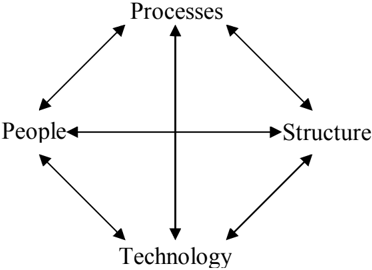
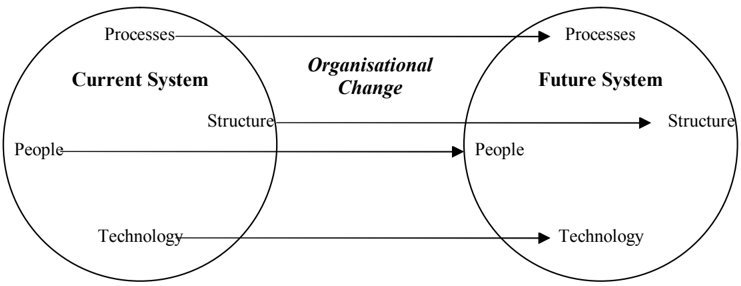
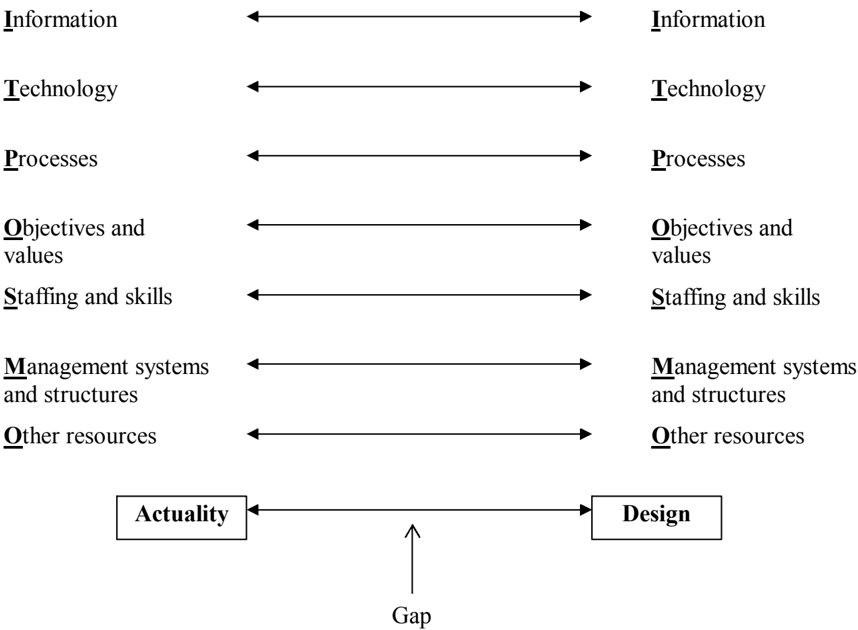
- It develops the notion of “design-actuality gaps,” defined as “the match or mismatch between IS designs and local user actuality.”
- The model highlights two “high-risk archetypes” affecting IS in developing countries: “country context gaps” and “hard-soft gaps.”
- The model is also presented as useful for explaining “the constraints that exist to local IS improvisations in developing countries.”
## Methods
- The paper is a journal article that develops a conceptual model “drawing on contingency theory.”
- The abstract does not specify a dataset, sample, or number of cases; the text only says the article presents “evidence” about IS in developing countries.
- The main analysis appears to be conceptual/theoretical, using the model to interpret IS cases and to refine IS theory.
## Limitations
- The paper does not report a specific sample size, case count, or empirical dataset in the provided text; this limits what can be assessed from the excerpt.
- The abstract does not state formal limitations or boundary conditions of the model beyond noting its focus on developing countries and local user actuality.
- The evidence base is not described in the provided text, so the scope of the claims cannot be independently evaluated from the excerpt alone.
Model-written summary. Check it against the paper before relying on it.
Integrity signals
Registry
Cites
Statistics
Figures
Verification
Claims the paper makes
0 Valid · 0 Not valid · 0 Not checked · 3 Own results and interpretations
A result the paper reports from its own data — it cites no other source for it, so there is none to check. The quote shows it is in the paper.
In the paper
“This article presents evidence that-alongside the successes-many information systems in developing countries can be categorized as failing either totally or partially.”
plain- Asserted: passes — The authors put it forward as true.
- Checkable: passes — It can be checked against evidence.
- Load-bearing: passes — The paper’s conclusions depend on it.
- Based: passes — The paper gives a reason why it holds.
A conclusion the paper draws from its own results — it cites no other source for it, so there is none to check. The quote shows it is in the paper.
In the paper
“The model draws on contingency theory in order to advance the notion of design-actuality gaps: the match or mismatch between IS designs and local user actuality.”
plainstates a possible cause- Asserted: passes — The authors put it forward as true.
- Checkable: passes — It can be checked against evidence.
- Load-bearing: passes — The paper’s conclusions depend on it.
- Based: passes — The paper gives a reason why it holds.
- Rests on an assumption not shown here.
- It may state two separate claims as one. 1
Claims other papers make about this one
Each is checked against this paper’s own text: does it say what the citing paper says it does?
In the citing paper
“This suggests that adoption can be seen as simply the first and perhaps least problematic phase in the drive towards the integration of an innovation into the health system. The greater risk is that of ‘sustainability failure’ [25, 26]”
From Beyond pilotitis: taking digital health interventions to the national level in China and Uganda (2017) · cites this paper as [26]
Citations
Cites
Task-Technology Fit and Individual Performance
Goodhue, D. L., & Thompson, R. L. (1995) · MIS Quarterly · doi:10.2307/249689 · Cited by 6,006 · cited 1×
“IS implementation models drawing on this theme have involved e t between “tool”/“technology” and “task” ( Goodhue & Thompson, 1995; Agarwal & Sinha, 1996), or between multiple factors (Scott Morton, 1991; Southon et al., 1997).”
MethodSoftware Engineering Economics
Boehm, B. W. (2001) · Pioneers and Their Contributions to Software Engineering · doi:10.1007/978-3-642-48354-7_5 · Cited by 5,981
Thompson, V. A., & March, J. G. (1966) · American Sociological Review · doi:10.2307/2090830 · Cited by 3,351
The Concept of Fit in Strategy Research: Toward Verbal and Statistical Correspondence
Venkatraman, N. (1989) · The Academy of Management Review · doi:10.2307/258177 · Cited by 2,367
Suchman, L. A. (1987) · Cited by 2,279
The Concept of Fit in Strategy Research: Towards Verbal and Statistical Correspondence
Venkatraman, N. V. (1988) · DSpace@MIT (Massachusetts Institute of Technology) · Cited by 2,037
Improvising Organizational Transformation Over Time: A Situated Change Perspective
Orlikowski, W. J. (1996) · Information Systems Research · doi:10.1287/isre.7.1.63 · Cited by 1,952
Management strategies for information technology
(1990) · Long Range Planning · doi:10.1016/0024-6301(90)90040-b · Cited by 1,033
Shaping technology/building society
(1993) · Choice Reviews Online · doi:10.5860/choice.30-3774 · Cited by 939
The corporation of the 1990s: Information technology and organizational transformation
(1993) · Futures · doi:10.1016/0016-3287(93)90030-w · Cited by 886
Research works printed but not linked: 19
- Avgerou, C. 2000. The multiple rationalities of information systems development. In Information ? ows, local improvisations and work practices. Proceedings of the IFIP WG9.4 Conference 2000. Cape Town: IFIP.
- Avgerou C., 2000, Information technology in context, 1
- Bijker W. E., 1992, Shaping tech-nology/building society, 1
- Butler R., 1991, Designing organizations
- Goonatilake, L., Maizza-Neto, O., and Jayawardene, P. 2000. Enhancing enterprise competitiveness in developing countries through the promotion of management information and benchmarking tools. In Information ? ows, local improvisations and work practices. Proceedings of the IFIP WG9.4 Conference 2000. Cape Town: IFIP.
- IFIP WG9.4. 2000. Information ? ows, local improvisations and work practices. Proceedings of the IFIP WG9.4 Conference 2000. Cape Town: IFIP.
- Jayasuriya R., 1995, Medinfo ’95, 1603
- Korac-Boisvert N., 1995, Information Infrastructure and Policy, 4, 131
- Macias-Chapula, C. A. 2000. Issues learned, challenges and opportunities to implement a library automation project at Mexico’s General Hospital. In Information ? ows, local improvisations and work practices. Proceedings of the IFIP WG9.4 Conference 2000. Cape Town: IFIP.
- Calitz, A. P. 2000. Transforming work practices with IT. In Information ? ows, local improvisations and work practices. Proceedings of the IFIP WG9.4 Conference 2000. Cape Town: IFIP.
- Oyomno G. Z., 1996, Global information technology and socio-economic development, 19
- Puri, S. K., Chauhan, K. P. S., and Admedullah, M. 2000. Prospects of biological diversity information management. In Information ? ows, local improvisations and work practices. Proceedings of the IFIP WG9.4 Conference 2000. Cape Town: IFIP.
- Silva L. O., 2000, Outsourcing as an improvisation. In Information ? ows, local improvisations and work practices. Proceedings of the IFIP WG9.4 Conference 2000
- Walsham G., 2000, Information technology in context, 291
- Wynn, E. and deLyra, J. 2000. A strange attractor in the chaos of global IS development. In Information ? ows, local improvisations and work practices. Proceedings of the IFIP WG9.4 Conference 2000. Cape Town: IFIP.
- Cain P., 2001, Reinventing government in the information age, 135
- Kenny C., 2001, The Internet and economic growth in LDCs. Draft paper
- Kitiyadisai, K. 2000. The implementation of IT in reengineering the Thai Revenue Department. In Information ? ows, local improvisations and work practices. Proceedings of the IFIP WG9.4 Conference 2000. Cape Town: IFIP.
- Mundy D., 2001, Reinventing government in the information age, 271
Cited by
Items 901–1,000 of 1,386
Afolayan, G. E. (2015) · IGI Global eBooks · doi:10.4018/978-1-4666-9461-3.ch084 · Cited by 2
Knowledge Management for Smart Tourism: an exploratory survey in Abruzzo region
Cifolelli, S., Ziruolo, A., & Berardi, M. (2022) · European Conference on Knowledge Management · doi:10.34190/eckm.23.1.391 · Cited by 3
“How useful do you think the introduction and dissemination of the DMS have been to allow the individual ITR Office to create and offer tourist experiences with high added value?”
InfluentialUsing Moodle to Teach Computer Literacy to First-Time Computer Users: A UNAM Case Study
Mwatilifange, S., & Mufeti, T. K. (2022) · Springer eBooks · doi:10.1007/978-3-031-11578-3_4 · Cited by 2
Cocaj, H. (2022) · International Journal of Information and Communication Technology Education · doi:10.4018/ijicte.315613 · Cited by 3
“IT has gained an important role in everyday life by making our lives easier and provides us with more efficient and effective ways to do our work (Heeks, 2002; Schwalbe, 2015).”
BackgroundICT4D and Critical Data Studies: A Joint Research Agenda
Masiero, S. (2022) · International Conference on Information and Communication Technologies and Development (ICTD) · doi:10.1145/3572334.3572388 · Cited by 5
“Finally, a design-related data injustice is also identified in digital identity, calling into action the concept of design-reality gaps [24].”
BackgroundMultidimensional design‐reality gaps in ICT in education projects in the Samoan aidscape
Tsujita, M. (2023) · Development Policy Review · doi:10.1111/dpr.12744 · Cited by 2
Prinsloo, T., & Adebesin, F. (2023) · IFIP advances in information and communication technology · doi:10.1007/978-3-031-50154-8_7 · Cited by 2
ANTECEDENTS OF THE DIGITAL DIVIDE AT THE MACRO LEVEL
Harfouche, A., & Robbin, A. R. (2011) · AIS Electronic Library (AISeL) · Cited by 2
Government Policies and ICT Growth in Developing Countries: An Extended Design- Actuality Framework
Baqir, M. N., Palvia, P., & Nemati, H. (2009) · Journal of the Association for Information Systems · Cited by 2
Quimno, V., Imran, A., & Turner, T. (2015) · UNSWorks (UNSW Sydney) · Cited by 2
Alaiad, A., & Zhou, L. (2015) · AIS Electronic Library (AISeL) · Cited by 4
Mahapatra, R., & Sahoo, R. R. (2015) · Journal of the Association for Information Systems · Cited by 2
Ahmed, M. A. (2012) · Philosophy of engineering and technology · doi:10.1007/978-94-007-3879-9_9 · Cited by 6
Totolo, A., Renken, J., & Sey, A. (2015) · Evidence Based Library and Information Practice · doi:10.18438/b8np5f · Cited by 2
“…history of Africa’s lack of adoption and use of ICTs (Rice, 2003, Totolo, 2011), lack of ICT skills (Bose, 2004; Gyamfi, 2005), lack of ICT policy (Heeks, 2002), and ICT access issues (Grand et al., 2010; Lekoko & Morolong, 2007), is being challenged by the new developments which show positive…”
InfluentialVirkar, S. (2014) · Public administration and information technology · doi:10.1007/978-3-319-05963-1_9 · Cited by 3
Park, K. R., & Li, B. (2017) · IFIP advances in information and communication technology · doi:10.1007/978-3-319-59111-7_27 · Cited by 5
“This is often associated with what Heeks [22] referred to as “sustaina-bility failure”, in which IS initiatives were initially successful in developing countries but subsequently abandoned after a short period of time.”
InfluentialReliability information to support decision making for e-government projects
Turan, F. M., Aikhuele, D. O., & Johan, K. (2017) · International Conference on Communication and Information Processing (ICCIP) · doi:10.1145/3162957.3162991 · Cited by 2
“These initiatives achieved different levels of success, and only a very limited percentage of the e-government systems in developing countries are successful cases, while the rest are either total or partial failures [8].”
State of the Art of Information Systems Failure Managements
Alduraywish, Y. A., Xu, Y., & Salonitis, K. (2017) · Advances in transdisciplinary engineering · doi:10.3233/978-1-61499-792-4-509 · Cited by 2
“Success/Fail of information systems is the range of change between the current situation "As Is" and the visualization into the project's design "To Be" of those information systems [15] [16].”
Nubukpo, K., Temple, L., & Alexandre, C. (2020) · Technologie et innovation · doi:10.21494/iste.op.2020.0515 · Cited by 8
How Information System Project Stakeholders Perceive Project Success
Kolasa, I., & Modrzejewska, D. (2020) · Advances in intelligent systems and computing · doi:10.1007/978-3-030-52249-0_36 · Cited by 2
Towards a process framework to guide the development of ICT4D programs: a South African perspective
Fouche, L. L., Grobbelaar, S. S. S., & Bam, W. G. (2022) · Information Technology for Development · doi:10.1080/02681102.2022.2123442 · Cited by 4
“…within the development of ICT4D and involves designing technology suitable for the cultural, environmental and economic context in which the technology will be implemented (Heeks, 2002; Heeks, 2010; Johri & Pal, 2012; Mozelius et al., 2009; van Reijswoud, 2009; van Reijswoud, 2009; Vaughan, 2011).”
Blaya, J. A. (2008) · Cited by 3
Geographical Information Systems in the Global South
Sala, S., & Dendena, B. (2015) · The International Encyclopedia of Digital Communication and Society · doi:10.1002/9781118767771.wbiedcs089 · Cited by 2
An Exploratory Study of the benefits and inhibitors of Digital Libraries in Iraq
Fezaa, B. (2019) · Research Online (Edith Cowan University) · doi:10.13140/rg.2.2.36025.42086 · Cited by 2
ELeRS: A Framework For Scoping E-Learning Research In Healthcare
Land, L. P. W., RAY, P. K., & Watson, E. (2007) · Journal of the Association for Information Systems · Cited by 2
The fragility of knowledge societies: ambiguity, cost reduction and access in developing countries
Mansell, R. (2005) · London School of Economics and Political Science Research Online (London School of Economics and Political Science) · Cited by 2
ICT4D Donor Agencies and Networks
Uimonen, P., & Hellström, J. (2015) · The International Encyclopedia of Digital Communication and Society · doi:10.1002/9781118767771.wbiedcs042 · Cited by 2
“It may have been related to the initially weak evidence base, that is, early ICT4D interventions showed limited impact and there were perhaps too many “failed” projects (Avgerou, 2010; Dodson et al. 2013; Heeks 2002), which were attributed to technocentric interventions and evaluations.”
Role of information and communication technology (ICT): Women's empowerment in rural Bangladesh
Laizu, Z. (2014) · Murdoch University Research Portal · Cited by 3
Moens, N. P., Broerse, J. E. W., Bunders, J., et al. (2008) · International Journal of Information Systems and Change Management · doi:10.1504/ijiscm.2008.019288 · Cited by 2
Taylor, L. (2013) · Sussex Research Online (University of Sussex) · Cited by 2
Akeel, H. (2013) · Research Repository (University of Gloucestershire) · Cited by 2
Akingbade, A. (2012) · University of Twente Research Information · doi:10.3990/1.9789061643425 · Cited by 13
Electronic Government Adoption Model Among Business Organizations in Jordan
Al-zu'bi, M. I. S. (2012) · UUM Electronic Theses and Dissertation [eTheses] (Northern University of Malaysia) · Cited by 8
Agyei-Bekoe, E. (2013) · Cited by 6
Kumar, R. (2010) · SSRN Electronic Journal · doi:10.2139/ssrn.1554159 · Cited by 2
Mapping out the transition toward information societies: social nature, growth, and policies
Hilbert, M. (2012) · University of Southern California Digital Library · doi:10.25549/usctheses-c3-122978 · Cited by 6
An instrument to assess information systems succes in developing countries
Mukassa, S. P. (2012) · University of Groningen research database (University of Groningen / Centre for Information Technology) · Cited by 2
Trends of Factors and Theories in Health Information Systems Acceptance
Sezgın, E., & Özkan, S. (2016) · IGI Global eBooks · doi:10.4018/978-1-4666-9978-6.ch085 · Cited by 9
Seles, A. (2016) · Archives and Records · doi:10.1080/23257962.2016.1216402 · Cited by 2
A co-creation design framework to support elderly rural women in refining an ICT platform
Smith, R. (2019) · UpSpace Institutional Repository (University of Pretoria) · Cited by 3
The Adoption of e-business Technologies and Processes in Nigerian Small Business Enterprises.
Olayinka, O. (2020) · doi:10.46289/buse2048 · Cited by 8
Analysis of Capacity Levels around Health Information Use: District Level Case Study from Nepal
Dahal, A. (2019) · NORA - Norwegian Open Research Archives · Cited by 2
Atinaf, M., Molla, A., & Anteneh, S. (2021) · arXiv (Cornell University) · doi:10.48550/arxiv.2108.09748 · Cited by 2
“Some ICT4D projects fail (Heeks, 2002) and/or lack critical resilience properties (Heeks & Ospina, 2018).”
Dasuki, S. I. (2012) · Brunel University Research Archive (BURA) (Brunel University London) · Cited by 6
Policy design: Perspectives of innovation from Digital BangladeshPreprint
Zaman, H. (2021) · Research Square · doi:10.21203/rs.3.rs-897241/v1 · Cited by 4
“While there may be a positive correlation between the level of e-Government advancement and the income status of a country, nancial resources and sophisticated infrastructure are not the only factors driving e-Government adoption (Heeks, 2002).”
Tolera, A., Oljira, L., Dingeta, T., Abaerei, A. A., & Roba, H. S. (2022) · Research Square · doi:10.21203/rs.3.rs-1362306/v1 · Cited by 2
IT Project Governance and Stakeholder Conflict Resolution
Johnstone, D. (2010) · Open Access Victoria University of Wellington | Te Herenga Waka (Figshare) · doi:10.26686/wgtn.17009915 · Cited by 2
“Another difficulty is the timing of evaluation – what may seem successful today, could be regarded as a failure tomorrow (Heeks, 2002), and success at one point in time may only be loosely related to success at another point in time (Markus, Axline, Petrie, & Tanis, 2000).”
Getao, K. W., & Wausi, A. N. (2008) · Information Technology for Development · doi:10.1002/itdj.20112 · Cited by 2
Digital Connectivity and the Sdgs: Conceptualising the Link Through an Institutional Resilience LensPreprint
Madon, S., & Masiero, S. (2024) · SSRN Electronic Journal · doi:10.2139/ssrn.4845405 · Cited by 2
Nyame‐Asiamah, F. (2013) · Brunel University Research Archive (BURA) (Brunel University London) · Cited by 5
Ming, J. (2016) · International Conference on Information and Communication Technologies and Development (ICTD) · doi:10.1145/2909609.2909628 · Cited by 1
“Moreover, technological solutions cannot be made in a vacuum and even the most carefully designed solution can fall into the same implementation traps as the cheap, paper-based partograph, not fully bridging the “design—reality gap” [9].”
Richardson, J. W., & Lee, J. (2014) · Emerald Group Publishing Limited eBooks · doi:10.1108/s1479-367920140000025004 · Cited by 1
Benson, L. (2021) · Journal of Public Administration and Governance · doi:10.5296/jpag.v11i1.18040 · Cited by 1
Impact Assessment of E-Governance Projects-A Select Case of E-Mitra in South Rajasthan
Goswami, S. (2022) · Management Dynamics · doi:10.57198/2583-4932.1105 · Cited by 1
“Some researchers also analyzed that despite initial success of e-govemment projects often fail either totally or partially in achieving their objectives (Heeks, 2002,2003a).”
Strand, C., & Hatakka, M. (2022) · IFIP advances in information and communication technology · doi:10.1007/978-3-031-19429-0_25 · Cited by 1
Choi, H., & Park, M. J. (2023) · Technology Analysis and Strategic Management · doi:10.1080/09537325.2023.2222188 · Cited by 1
“Heeks (2002) design-reality gap theory delves into the issue.”
Valbø, B., & Sanner, T. A. (2023) · The Electronic Journal of Information Systems in Developing Countries · doi:10.1002/isd2.12302 · Cited by 1
“This has been problematized in terms of design-reality gaps (Heeks, 2002), failure to build sufficient local capacity to maintain and nurture technology interventions (Sanner et al., 2014), lack of institutionalization (Sahay et al., 2010), problematic incentive structures (Sanner & S æ bø, 2014)…”
BackgroundAkida, R., & Kandiri, J. (2024) · Journal of Public Policy & Governance · doi:10.53819/81018102t5309 · Cited by 3
Karathanasopoulou, K. N., Alexandropoulou, C., Panagiotopoulos, I. E., & Dimitrakopoulos, G. J. (2023) · Congress in Computer Science, Computer Engineering, and Applied Computing (CSCE) · doi:10.1109/csce60160.2023.00167 · Cited by 3
Malasowe, B. O., Okpor, M. D., & Edim, E. B. (2024) · Advances in Multidisciplinary & Scientific Research Journal Publication · doi:10.22624/aims/v10n1p5 · Cited by 1
Marjuni, N. F., & Shaikh, J. M. (2024) · ASEAN Journal on Science and Technology for Development · doi:10.61931/2224-9028.1560 · Cited by 1
Babirye, D., & Anderson, R. (2025) · ACM Journal on Computing and Sustainable Societies · doi:10.1145/3707638 · Cited by 2
“All of the researchers had a strong understanding of the complexity of the training process, contradicting an early critique of Heeks [28] of a “design-actuality” gap.”
Lubis, A., Siregar, D., & Pane, A. A. (2025) · Journal of Lifestyle and SDGs Review · doi:10.47172/2965-730x.sdgsreview.v5.n02.pe04057 · Cited by 1
“The success of this model is illustrated through case studies of similar initiatives in other regions (Heeks, 2002).”
Lata, S. (2025) · IGI Global eBooks · doi:10.4018/979-8-3693-8427-5.ch008 · Cited by 1
Bridging the digital divide: ICT empowerment of rural women in Karnataka toward 2030 SDGs
Preetham, K. (2025) · Multidisciplinary Reviews · doi:10.31893/multirev.2025ss0402 · Cited by 1
“The study investigates the four main revenue divisions of Karnataka: Bengaluru, Mysuru, Vijayapura, and Kalburgi.”
InfluentialJoshi, A., Sekar, S., & Das, S. (2026) · Acta Psychologica · doi:10.1016/j.actpsy.2026.106204 · Cited by 2
GenAI and Digital Inclusion: Application Creativity of GenAI in Marginalized Communities
Lin, J. C.-Y., Lee, J. Y.-H., & Tu, Y.-J. (2026) · Information Systems Frontiers · doi:10.1007/s10796-026-10713-7 · Cited by 2
“As Heeks (2002) notes, designers frequently assume a baseline level of user competence, leading to design–actuality gaps−mismatches between how systems advertisements that are both novel and context-specific when provided with product features and customer data as prompts (Kshetri et al., 2024), an…”
Almaden, C. R. C. (2026) · Digital Policy Regulation and Governance · doi:10.1108/dprg-12-2025-0467 · Cited by 2
Rakhimzhanova, K., Kirichok, O., Kodasheva, G., Mkrtchyan, A. A., Посаднєва, О., Gryvko, S., & Zakharkina, L. S. (2026) · Banks and Bank Systems · doi:10.21511/bbs.21(2).2026.13 · Cited by 1
“Research on public-sector digitalization has evolved from case-based assessments of design-reality mismatches in administrative information systems (Heeks, 2002) toward whole-of-govern-ment frameworks integrating institutional, regulatory, and infrastructural dimensions of digital state capacity…”
Vision and Strategic Information Systems Planning in the UK HE Sector
Hayward, J. (2013) · UKAIS · Cited by 1
Chilimo, W. L., & Ngulube, P. (2009) · Unisa Institutional Repository (University of South Africa) · Cited by 1
Notice of Retraction Study on path evolution and strategy of e-government in China
Guo, L. (2011) · IEEE International Conference on Emergency Management and Management Sciences · doi:10.1109/icemms.2011.6015778 · Cited by 1
RetractedAwokola, J. A., Emuoyibofarhe, O. J., Awokola, B. I., Alamu, F. O., Awokola, E. O., & Akomolafe, O. (2014) · Journal of information engineering and applications · Cited by 1
Khaifi, K. A., & Berger, H. (2011) · AIS Electronic Library (AISeL) · Cited by 1
The Unintended Consequence: The Symbiotic Relationship between ICT and a National Transition
Nemati, H., & Latif, A. (2012) · IGI Global eBooks · doi:10.4018/978-1-4666-0882-5.ch706 · Cited by 1
Hasan, M. M. (2015) · International Conference on Information and Communication Technologies and Development (ICTD) · doi:10.1145/2737856.2737886 · Cited by 1
“These problems not only led many projects to be delayed and over budget, but also caused serious user’s dissatisfaction [2, 3].”
BackgroundMobile democracy discourse in a Turkish experiment
Törenli, N., Kıyan, Z., & Yüksel, H. (2012) · International Journal of Electronic Governance · doi:10.1504/ijeg.2012.047442 · Cited by 1
Risk Factors of the Partner Relationship between Open Source ERP Editors and IT Services Companies
Diop, B., Pascot, D., Mbibi, S. M. A., & Banag, L. C. (2013) · International Business Research · doi:10.5539/ibr.v6n9p44 · Cited by 1
“…an abandoned initiative); (2) partial failure (i.e., the main objectives are not met or there are significant adverse consequences); (3) success (i.e. the main objectives of most stakeholder groups are being met or although these groups have not suffered to undesirable consequences) (Heeks, 2002).”
Kealy, A., & Stapleton, L. (2010) · IFAC Proceedings Volumes · doi:10.3182/20101027-3-xk-4018.00030 · Cited by 5
Lagzian, M. (2007) · International Conference on Theory and Practice of Electronic Governance · doi:10.1145/1328057.1328156 · Cited by 4
“Thus, the previous studies explain a number of efforts that have conceptualized the challenges associated to different phases of developing E-government which are: ‘Factor model’ and ‘ITPOSMO model’ proposed by [4][5], E-governance Maturity Model (EMM) proposed by [12], an evaluative framework of Egovernment convergen…”
Change management as a critical sustainability factor to prevent failure of e-government initiatives
Lessa, L., & Saravanan, D. (2014) · International Conference on Theory and Practice of Electronic Governance · doi:10.1145/2691195.2691232 · Cited by 1
A Development Impact Assessment on the Use of ICT (Mobile Phone) in Rural Areas of Bangladesh
Ashraf, M. (2015) · International Journal of Information Communication Technologies and Human Development · doi:10.4018/ijicthd.2015010101 · Cited by 1
IS-Supported Managerial Control for China’s Research Community: An Agency Theory Perspective
Tian, W., Vogel, D., Ma, J., & Gu, J. (2010) · Journal of Global Information Management · doi:10.4018/jgim.2010100104 · Cited by 2
“is that the interests or goals of multiple stakeholders related to E-government projects should be given attention in keeping with results of E-government cases (Dada, 2006; Gil-Garcia et al., 2007; Heeks, 2002; Krishna & Walsham, 2005; Ndou, 2004).”
BackgroundResultInfluentialAn ethnographic assessment of electronic cash transfers in Ghana's remote rural north
Krah, E., & de Kruijf, J. G. (2013) · doi:10.1145/2517899.2517910 · Cited by 1
“More particularly, anthropology can help bridge the gap between technology design and use [26], which is very probably one of the core reasons that so many ICTD projects so far have not been as effective as they could have been [33, 22, 13, 14, 15].”
Nielsen, S. K., & Svejvig, P. (2013) · International Journal of Services Technology and Management · doi:10.1504/ijstm.2013.054195 · Cited by 1
“This is supported by a study in a developing country where failure, success and local improvisations are considered [Heeks, (2002), p.”
Social representations of community multimedia centres in Mozambique
Vannini, S. (2014) · reroDoc Digital Library · Cited by 5
Wireless Sensing for Development: An Integrated Design Approach
Kabashi, A. H., Walker, K. P., Underwood, J., et al. (2009) · International Conference on Next Generation Mobile Applications, Services and Technologies (NGMAST) · doi:10.1109/ngmast.2009.61 · Cited by 1
“Many implementations have been carried out addressing different problems in different areas, while major questions about success, failure and improvisation are yet to get solid answers [1].”
The missing H in ICTD: Lessons learned from the development of an agricultural decision support tool
Knoche, H., Rao, P., & Huang, J. S. (2010) · Infoscience (Ecole Polytechnique Fédérale de Lausanne) · Cited by 1
Guo, J., & Gao, J. (2009) · International Conference on Management and Service Science (MASS) · doi:10.1109/icmss.2009.5302612 · Cited by 1
Importance of Participant Characteristics in Software Systems Design In the Informal Sector.
Chepken, C. K. (2014) · Cited by 1
Tsietsi, T. M., & Roodt, M. (2014) · Cited by 1
eGovernment capacity building through knowledge transfer and best practice development in Bangladesh
Imran, A., Gregor, S. D., & Turner, T. (2009) · ANU Open Research (Australian National University) · Cited by 1
Shaping the Evolution of the Health Information Infrastructure in Zimbabwe
Matavire, R., Chidawanyika, H., Braa, J. A., Nyika, P., & Katiyo, J. (2013) · Journal of Health Informatics · doi:10.12856/jhia-2013-v1-i1-73 · Cited by 2
“These shape its actual trajectory in practice and research suggests that the result is a high rate of unmet expectations [19][27].”
Analysing sector specificity regarding ICT and broadband usage by SMME businesses
Christine, M. (2007) · South African Journal of Information and Communication · doi:10.23962/10539/19783 · Cited by 1
Akther, F., & Georgsen, M. (2010) · Cited by 1
Omambia, S. M., Odhiambo-Otieno, G. W., Mwaura, W., et al. (2016) · International Journal of Sciences: Basic and Applied Research · Cited by 1
Managing Knowledge for Enhancing the Participants through Organizational Learning and Leadership
Saito, M. (2011) · IGI Global eBooks · doi:10.4018/978-1-60960-783-8.ch507 · Cited by 1
Managing Seven Dimensions of ICT4D Projects to Address Project Challenges
Potnis, D. D. (2016) · Advances in human and social aspects of technology book series · doi:10.4018/978-1-5225-0556-3.ch010 · Cited by 1
MIS for Rural Self-Employment Programmes in Gujarat
Madon, S. (2009) · Palgrave Macmillan UK eBooks · doi:10.1057/9780230250499_7 · Cited by 1
Learning from Failure: Braving the Multifaceted Challenges to E-Government Development
Salem, F., & Jarrar, Y. F. (2010) · IGI Global eBooks · doi:10.4018/978-1-61520-789-3.ch031 · Cited by 1
“For example, Heeks categorized success and failure in government information systems into total failures, partial failures and successes (Heeks, 2002).”
Metadata
- Authors
- Heeks, R.
- Corresponding author
- Heeks, Richard
- ORCID
- Heeks, Richard
- Venue
- The Information Society
- Publisher
- Informa UK Limited
- Published
- 2002-03
- Volume
- 18
- Issue
- 2
- Pages
- 101-112
- ISSN
- 0197-2243 (ISSN-L)
- 1087-6537
- OpenAlex
- W2136941206
- Semantic Scholar
- dd6c8931d276f258d356e65416018725912d2dbd
- Cited by
- 1,390
- References
- 53
- Citations by year
- 2026: 71 · 2025: 42 · 2024: 37 · 2023: 41 · 2022: 49 · 2021: 60 · 2020: 58 · 2019: 72 · 2018: 39 · 2017: 70 · 2016: 81 · 2015: 114 · 2014: 95 · 2013: 97 · 2012: 97
- FWCI
- 34.02
- Type
- journal article
- Language
- en
- Open access
- Licence
- other-oa
- Locations
- The Information Society (publishedVersion)
- Research Explorer (The University of Manchester) (publishedVersion, other-oa)
- Topics
- Physical Sciences › Computer Science › Information Systems › ICT in Developing Communities
- Social Sciences › Business, Management and Accounting › Management Information Systems › Information Systems Theories and Implementation
- Social Sciences › Economics, Econometrics and Finance › Economics and Econometrics › ICT Impact and Policies
- Keywords
- contingency theory, IS success factors
About these checks
Registry, retraction, Cites and statistics results are computed, not judged, with one exception: a printed reference that no index lists is read once by a model before it counts as a citation error. Claims are extracted by a model and kept only when their quote appears verbatim in the text; each cited source is then checked, with a model’s help, for whether it says what the claim relies on. Those verdicts can be wrong — read the claim’s quote and the cited source before relying on one.
A language model drew the claims from the paper on 2026-10-10, under version 3 of the claim definition (model deepseek-v4.1-flash, prompt extract-v3).
A second model labelled each claim on 2026-10-10 (model jev-1.13-20260917, definition revision gold-guideline-v0.2).
Statistics and arithmetic are recomputed, not judged.
Confidence bands are shown only for fields calibrated on our annotated test set. None is calibrated yet, so no band is shown.
What counts as a claim ›How we measure confidence ›How we check this ›
Are you an author, or do you see a problem with this page? Request a review
Data sources
Bibliographic data: Semantic Scholar, OpenAlex, Crossref.
Contains information from the Semantic Scholar Academic Graph Datasets, made available under the ODC Attribution License (ODC-BY 1.0).
Semantic Scholar’s data is described in: Kinney, R., et al. (2023). The Semantic Scholar Open Data Platform. arXiv:2301.10140.
