

Information Systems and Developing Countries: Failure, Success, and Local Improvisations
Open accessThe DOI matches its Crossref record; 53 of the 53 references it cites were found in a registry or an index.
Abstract
The article develops the design-actuality gaps model to explain why many information systems in developing countries fail totally or partially.
Overview
CoChat Summary
## TL;DR
The paper argues that many information systems in developing countries fail totally or partially, and proposes a contingency-theory-based model of “design-actuality gaps” to explain why. It identifies two high-risk gap types—country context gaps and hard-soft gaps—and also discusses constraints on local improvisation.
## Key findings
- The paper states that, alongside successes, “many information systems in developing countries can be categorized as failing either totally or partially.”
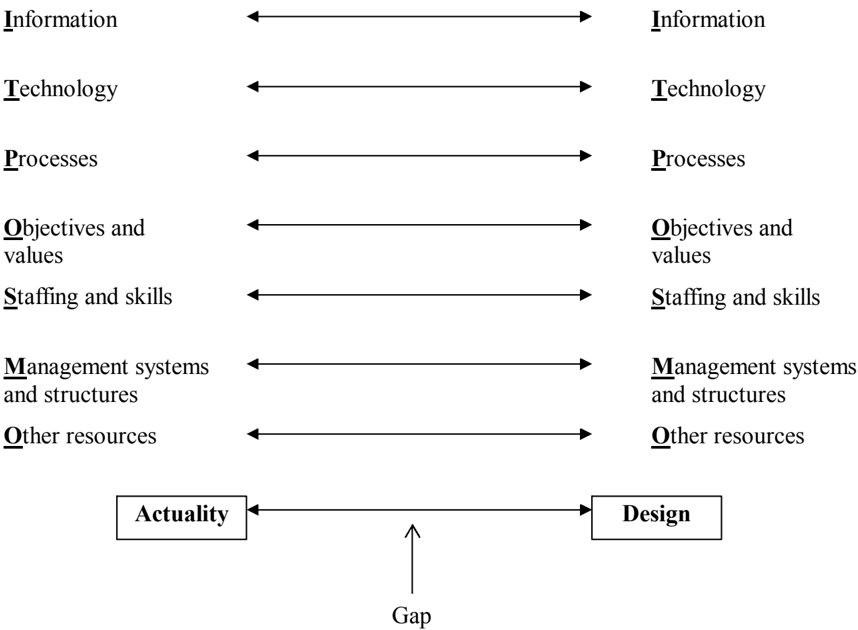
- It develops the notion of “design-actuality gaps,” defined as “the match or mismatch between IS designs and local user actuality.”
- The model highlights two “high-risk archetypes” affecting IS in developing countries: “country context gaps” and “hard-soft gaps.”
- The model is also presented as useful for explaining “the constraints that exist to local IS improvisations in developing countries.”
## Methods
- The paper is a journal article that develops a conceptual model “drawing on contingency theory.”
- The abstract does not specify a dataset, sample, or number of cases; the text only says the article presents “evidence” about IS in developing countries.
- The main analysis appears to be conceptual/theoretical, using the model to interpret IS cases and to refine IS theory.
## Limitations
- The paper does not report a specific sample size, case count, or empirical dataset in the provided text; this limits what can be assessed from the excerpt.
- The abstract does not state formal limitations or boundary conditions of the model beyond noting its focus on developing countries and local user actuality.
- The evidence base is not described in the provided text, so the scope of the claims cannot be independently evaluated from the excerpt alone.
Model-written summary. Check it against the paper before relying on it.
Integrity signals
Registry
Cites
Statistics
Figures
Verification
Claims the paper makes
0 Valid · 0 Not valid · 0 Not checked · 3 Own results and interpretations
A result the paper reports from its own data — it cites no other source for it, so there is none to check. The quote shows it is in the paper.
In the paper
“This article presents evidence that-alongside the successes-many information systems in developing countries can be categorized as failing either totally or partially.”
plain- Asserted: passes — The authors put it forward as true.
- Checkable: passes — It can be checked against evidence.
- Load-bearing: passes — The paper’s conclusions depend on it.
- Based: passes — The paper gives a reason why it holds.
A conclusion the paper draws from its own results — it cites no other source for it, so there is none to check. The quote shows it is in the paper.
In the paper
“The model draws on contingency theory in order to advance the notion of design-actuality gaps: the match or mismatch between IS designs and local user actuality.”
plainstates a possible cause- Asserted: passes — The authors put it forward as true.
- Checkable: passes — It can be checked against evidence.
- Load-bearing: passes — The paper’s conclusions depend on it.
- Based: passes — The paper gives a reason why it holds.
- Rests on an assumption not shown here.
- It may state two separate claims as one. 1
Claims other papers make about this one
Each is checked against this paper’s own text: does it say what the citing paper says it does?
In the citing paper
“This suggests that adoption can be seen as simply the first and perhaps least problematic phase in the drive towards the integration of an innovation into the health system. The greater risk is that of ‘sustainability failure’ [25, 26]”
From Beyond pilotitis: taking digital health interventions to the national level in China and Uganda (2017) · cites this paper as [26]
Citations
Cites
Task-Technology Fit and Individual Performance
Goodhue, D. L., & Thompson, R. L. (1995) · MIS Quarterly · doi:10.2307/249689 · Cited by 6,006 · cited 1×
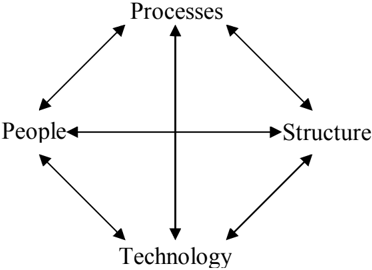
“IS implementation models drawing on this theme have involved e t between “tool”/“technology” and “task” ( Goodhue & Thompson, 1995; Agarwal & Sinha, 1996), or between multiple factors (Scott Morton, 1991; Southon et al., 1997).”
MethodSoftware Engineering Economics
Boehm, B. W. (2001) · Pioneers and Their Contributions to Software Engineering · doi:10.1007/978-3-642-48354-7_5 · Cited by 5,981
Thompson, V. A., & March, J. G. (1966) · American Sociological Review · doi:10.2307/2090830 · Cited by 3,351
The Concept of Fit in Strategy Research: Toward Verbal and Statistical Correspondence
Venkatraman, N. (1989) · The Academy of Management Review · doi:10.2307/258177 · Cited by 2,367
Suchman, L. A. (1987) · Cited by 2,279
The Concept of Fit in Strategy Research: Towards Verbal and Statistical Correspondence
Venkatraman, N. V. (1988) · DSpace@MIT (Massachusetts Institute of Technology) · Cited by 2,037
Improvising Organizational Transformation Over Time: A Situated Change Perspective
Orlikowski, W. J. (1996) · Information Systems Research · doi:10.1287/isre.7.1.63 · Cited by 1,952
Management strategies for information technology
(1990) · Long Range Planning · doi:10.1016/0024-6301(90)90040-b · Cited by 1,033
Shaping technology/building society
(1993) · Choice Reviews Online · doi:10.5860/choice.30-3774 · Cited by 939
The corporation of the 1990s: Information technology and organizational transformation
(1993) · Futures · doi:10.1016/0016-3287(93)90030-w · Cited by 886
Research works printed but not linked: 19
- Avgerou, C. 2000. The multiple rationalities of information systems development. In Information ? ows, local improvisations and work practices. Proceedings of the IFIP WG9.4 Conference 2000. Cape Town: IFIP.
- Avgerou C., 2000, Information technology in context, 1
- Bijker W. E., 1992, Shaping tech-nology/building society, 1
- Butler R., 1991, Designing organizations
- Goonatilake, L., Maizza-Neto, O., and Jayawardene, P. 2000. Enhancing enterprise competitiveness in developing countries through the promotion of management information and benchmarking tools. In Information ? ows, local improvisations and work practices. Proceedings of the IFIP WG9.4 Conference 2000. Cape Town: IFIP.
- IFIP WG9.4. 2000. Information ? ows, local improvisations and work practices. Proceedings of the IFIP WG9.4 Conference 2000. Cape Town: IFIP.
- Jayasuriya R., 1995, Medinfo ’95, 1603
- Korac-Boisvert N., 1995, Information Infrastructure and Policy, 4, 131
- Macias-Chapula, C. A. 2000. Issues learned, challenges and opportunities to implement a library automation project at Mexico’s General Hospital. In Information ? ows, local improvisations and work practices. Proceedings of the IFIP WG9.4 Conference 2000. Cape Town: IFIP.
- Calitz, A. P. 2000. Transforming work practices with IT. In Information ? ows, local improvisations and work practices. Proceedings of the IFIP WG9.4 Conference 2000. Cape Town: IFIP.
- Oyomno G. Z., 1996, Global information technology and socio-economic development, 19
- Puri, S. K., Chauhan, K. P. S., and Admedullah, M. 2000. Prospects of biological diversity information management. In Information ? ows, local improvisations and work practices. Proceedings of the IFIP WG9.4 Conference 2000. Cape Town: IFIP.
- Silva L. O., 2000, Outsourcing as an improvisation. In Information ? ows, local improvisations and work practices. Proceedings of the IFIP WG9.4 Conference 2000
- Walsham G., 2000, Information technology in context, 291
- Wynn, E. and deLyra, J. 2000. A strange attractor in the chaos of global IS development. In Information ? ows, local improvisations and work practices. Proceedings of the IFIP WG9.4 Conference 2000. Cape Town: IFIP.
- Cain P., 2001, Reinventing government in the information age, 135
- Kenny C., 2001, The Internet and economic growth in LDCs. Draft paper
- Kitiyadisai, K. 2000. The implementation of IT in reengineering the Thai Revenue Department. In Information ? ows, local improvisations and work practices. Proceedings of the IFIP WG9.4 Conference 2000. Cape Town: IFIP.
- Mundy D., 2001, Reinventing government in the information age, 271
Cited by
Items 1,001–1,100 of 1,386
Contingency Factors Impacting the Rural Information and Communication Technology Hubs
Govindaraju, P., & Mabel, M. M. (2015) · Advances in human and social aspects of technology book series · doi:10.4018/978-1-4666-8598-7.ch022 · Cited by 2
Knowles, C. L. (2012) · IGI Global eBooks · doi:10.4018/978-1-4666-0882-5.ch705 · Cited by 1
Dasgupta, S. S. (2013) · IGI Global eBooks · doi:10.4018/978-1-4666-3986-7.ch021 · Cited by 1
Capacity Development Initiatives for Grass Roots Communities
Rahman, H. (2013) · IGI Global eBooks · doi:10.4018/978-1-4666-2071-1.ch004 · Cited by 1
ICT for Development (ICT4D) Projects in Developing Countries
Ashraf, M. M., & Malik, B. T. (2010) · Advances in electronic government, digital divide, and regional development book series · doi:10.4018/978-1-60566-388-3.ch009 · Cited by 1
Aqorau, T., Cullen, R. J., Mangal, A., et al. (2017) · Public administration and information technology · doi:10.1007/978-3-319-50972-3_9 · Cited by 1
Tape Mbo'e (TME): A Service-Oriented Method
Grau, I., Cernuzzi, L., & Villafiorita, A. (2013) · Proceedings/Proceedings - International Conference of the Chilean Computer Science Society · doi:10.1109/sccc.2013.28 · Cited by 1
“As a result, the software become non sustainable [1].”
InfluentialGIS Initiatives in Health Management in Malawi: Opportunities to Share Knowledge
Chikumba, P. A., & Naphini, P. (2017) · Lecture notes of the Institute for Computer Sciences, Social Informatics and Telecommunications Engineering · doi:10.1007/978-3-319-66742-3_25 · Cited by 1
Svensson, J. (2018) · Springer eBooks · doi:10.1007/978-981-10-7035-8_43-1 · Cited by 1
Online Payment and Consumers’ Attitude towards Risk reduction strategies in a cash based economy
Iriobe, O. (2018) · Archives of Business Research · doi:10.14738/abr.612.4530 · Cited by 1
Helminen, J., Leão, A. J., Myllynpää, V., et al. (2019) · Communications in computer and information science · doi:10.1007/978-3-030-26630-1_22 · Cited by 1
Ogedebe, P. M., Kvac, E., & Esther, O. (2015) · British Journal of Applied Science & Technology · doi:10.9734/bjast/2016/21675 · Cited by 1
“[18] observes that there is a big difference between ICT implementation and use between developed and developing countries.”
BackgroundAPAKAH MODEL DELONE DAN MCLEAN MAMPU MENJELASKAN KEBERHASILAN SISTEM INFORMASI JKN MOBILE ?
Sugesti, D. E., Hidayati, U., & Sugiarti, S. (2020) · Jurnal Aktual Akuntansi Keuangan Bisnis Terapan (AKUNBISNIS) · doi:10.32497/akunbisnis.v3i1.1973 · Cited by 1
Does the internet deserve everybody?
Elkhatib, Y., Tyson, G., & Sathiaseelan, A. (2015) · Lancaster EPrints (Lancaster University) · Cited by 1
Innovation to Harness Youth Entrepreneurial Potential
Baporikar, N. (2020) · International Journal of Entrepreneurship and Governance in Cognitive Cities · doi:10.4018/ijegcc.2020070103 · Cited by 1
Rajnikant's laptop: Computers and development in popular Indian cinema
Pal, J. (2009) · International Conference on Information and Communication Technologies and Development (ICTD) · doi:10.1109/ictd.2009.5426687 · Cited by 25
IDENTIFYING THE RISKS ASSOCIATED WITH AGILE SOFTWARE DEVELOPMENT: AN EMPIRICAL INVESTIGATION
Elbanna, A. R. (2014) · MCIS · Cited by 6
Six methodological guidelines for organizing inclusive innovation in BOP projects
de Boer, J., Steen, M., & Posthumus, A. L. (2013) · Cited by 1
The Unintended Consequence: The Symbiotic Relationship between ICT and a National Transition
Nemati, H., & Latif, A. (2011) · International Journal of E-Politics · doi:10.4018/jep.2011070102 · Cited by 1
“Given the ambiguity, complexity, and diversity of what constitutes ICT, Heeks (2002) suggested the existence of incongruencies between what policy makers envision as ICT and the actuality of what is ultimately manifested, proposing the “design-actuality gap” framework to understand this…”
A Risk-Based Audit Model for Improving the Success Rates of E-Government Project Implementation
Aikins, S. K. (2016) · IGI Global eBooks · doi:10.4018/978-1-5225-0196-1.ch015 · Cited by 1
The Prospects for eGovernment and eGovernance in Sub-Saharan Africa: A Case Study of Zambia
Nyirenda, J. C., & Cropf, R. A. (2012) · IGI Global eBooks · doi:10.4018/978-1-4666-1776-6.ch003 · Cited by 1
Salem, F., & Jarrar, Y. F. (2011) · IGI Global eBooks · doi:10.4018/978-1-60960-783-8.ch102 · Cited by 1
Wachira, D. (2012) · IGI Global eBooks · doi:10.4018/978-1-4666-1740-7.ch073 · Cited by 1
Meso, P. N., Kaba, B., Mbarika, V. W. A., & McCline, R. L. (2008) · Journal of the American Society for Information Science and Technology · doi:10.1002/asi.20940 · Cited by 2
“…while promoting resource mobilization through increased participation of the labor force in a country’s economic activities (Ayo, Ekong, Tolulope, & Ayodele, 2007; Dutta, 2001; Heeks, 2002; Ho, Kauffman, & Liang, 2007; Madon, 2000; Travica, 2002; Wolcott, Press, McHenry, Goodman, & Foster 2001).”
InfluentialSuccess Factors in Public Access Computing for Development
Gómez, R. (2012) · IGI Global eBooks · doi:10.4018/978-1-4666-1957-9.ch005 · Cited by 1
Mulalu, M. I. (2018) · IGI Global eBooks · doi:10.4018/978-1-5225-7033-2.ch002 · Cited by 1
The Role of Service-Learning in Information Systems Education
Feyt, T., & Mwalemba, G. (2021) · Issues in Informing Science and Information Technology · doi:10.28945/4797 · Cited by 2
Bank, W. (2022) · World Bank, Washington, DC eBooks · doi:10.1596/38169 · Cited by 1
Atinaf, M. (2022) · IFIP advances in information and communication technology · doi:10.1007/978-3-031-19429-0_16 · Cited by 1
Gomera, W. C., & Mramba, N. R. (2023) · African Journal of Science Technology Innovation and Development · doi:10.1080/20421338.2023.2178786 · Cited by 2
“Moreover, more than two-thirds of ICT4D initiatives have failed either completely or partially (Heeks 2002) to deliver.”
InfluentialPRIORITIZING TASKS IN INFORMATION SYSTEM PROJECTS: A NOVEL APPROACH USING VIKOR METHOD
Wicaksono, S. R. (2023) · TEKNOKOM · doi:10.31943/teknokom.v6i2.149 · Cited by 3
“It is important to note that a majority of IS project failures can be attributed to inappropriate project management implementation [7], [10].”
BackgroundRejecting Innovation: How Italian Public Employees are Killing Creativity and Digitalisation
Berardi, M., Ziruolo, A., & Fontana, F. (2023) · European Conference on Knowledge Management · doi:10.34190/eckm.24.1.1305 · Cited by 1
“…among other things, a rethinking of the way in which public services acted, based upon the rapid digitalization of the Italian public sector through Knowledge Management patterns, and thus a rethinking of the “public administration mindset” with a smart governance approach (Heeks, 2002, 2003).”
Evaluation of M-Paspor Application in Indonesia: M-Government Concept Perspective
Nurkumalawati, I., & Salsha, N. D. (2023) · Journal of Social and Political Sciences · doi:10.31014/aior.1991.06.04.459 · Cited by 1
Analyzing Moroccan E-Government status: An Initial Review
Chadli, S. Y., Hassnae, R., & Essabbar, D. (2024) · International Conference on Global Aeronautical Engineering and Satellite Technology (GAST) · doi:10.1109/gast60528.2024.10520787 · Cited by 5
“To the best of our knowledge, a research conducted by Heeks was the first to notice that Information Systems in general [28] and e-government projects particularly [18] fail in developing countries.”
BackgroundBerardi, M., Antonucci, G., Fontana, F., & Ziruolo, A. (2024) · Springer eBooks · doi:10.1007/978-3-031-65766-5_14 · Cited by 1
Case studies of big data applications for IoT
Liu, S. (2025) · Elsevier eBooks · doi:10.1016/b978-0-443-21640-4.00010-7 · Cited by 2
Rizvi, S. A. A., Arif, M., Fiaz, S., Abideen, Z. U., & Noor, S. (2025) · Public Administration Issues · doi:10.17323/1999-5431-2025-0-5-7-27 · Cited by 1
Babb, P., & Chamakiotis, P. (2025) · Information Technology for Development · doi:10.1080/02681102.2025.2488324 · Cited by 1
“…traditional ICT4D literature speaks about successes or failures of digitalization e ff orts in the developing context (e.g. Avgerou & Walsham, 2018; Heeks, 2002), and o ff ers interesting insights, such as whether success/failure of IS implementation is a user adoption issue (e.g. Loudon, 2016), or…”
Development of a community e-portal constellation: Queensland Smart Region Initiative.
Parker, D., Downie, G., & Manville, G. (2012) · UEA Digital Repository (University of East Anglia) · Cited by 4
Technology Solutions for Non-Profit Organizations in Developing Countries
Global, N., & Kazanskaia, A. N. (2025) · doi:10.64357/neya-gjnps-tchtleffimp-11 · Cited by 1
Sengupta, A., Chang, K., Wan, M. P.-H., & Wu, Y. Q. (2014) · AIS Electronic Library (AISeL) · Cited by 2
Virkar, S. (2014) · International Journal of Organizational and Collective Intelligence · doi:10.4018/ijoci.2014010101 · Cited by 1
The Politics of Access to Information
Virkar, S. (2015) · Advances in data mining and database management book series · doi:10.4018/978-1-4666-8505-5.ch012 · Cited by 1
Qureshi, S. (2016) · Cited by 1
Power Exercise in the Institutionalization of an eProcurement System in Indonesian Local Government
Wahid, F. (2017) · IOP Conference Series Materials Science and Engineering · doi:10.1088/1757-899x/185/1/012004 · Cited by 1
“This study is important as it explicates an example of successful eProcurement projects in the context of developing countries, which experience a low success rate in implementing eGovernment initiatives in general [10] and eProcurement programs in particular [11].”
BackgroundA framework for assessing the socio-economic impact of e-governance projects in developing countries
Hatsu, S., & Ngassam, E. K. (2017) · doi:10.1109/ictas.2017.7920648 · Cited by 1
“Unfortunately, this situation seems to be in line with findings from other studies [2; 11; 13].”
ResultDeveloping E-Banking Services for Rural India: Making Use of Socio-Technical Prototypes
Dittrich, Y., Vaidyanathan, L., Gonsalves, T. A., et al. (2017) · IEEE/ACM International Conference on Software Engineering: Companion Proceedings (ICSE-Companion) · doi:10.1109/icse-c.2017.55 · Cited by 1
“The analysis confirms results of other similar sector project deploying ICT that emphasise participation [7].”
Hussain, F., Mostafa, M., & Usmonova, D. (2017) · International Conference on Information and Communication Technologies and Development (ICTD) · doi:10.1145/3136560.3136593 · Cited by 1
IT Enabled Organizational Transformation
Khan, A. Z., & Bokhari, R. H. (2018) · International Conference on Information Management and Engineering (ICIME) · doi:10.1145/3285957.3285994 · Cited by 1
“…multinational companies like IBM [Urso et al., 2012] although addressed strategies and approaches of these companies, however, there is lack of research regarding IT enabled organizational transformation in public sector organizations particularly in developing countries [Heeks, 2002; Hanna, 2009].”
BackgroundGE-government: A Geographic Information Based E-government Citizens’ Adoption Framework
Dennaoui, H., & Kokkinaki, A. I. (2019) · Lecture notes in business information processing · doi:10.1007/978-3-030-11395-7_24 · Cited by 3
de Oliveira, M., Mattedi, A. P., & Seabra, R. D. (2019) · Brazilian Symposium on Human Factors in Computing Systems (IHC) · doi:10.1145/3357155.3358431 · Cited by 1
“No que diz respeito à questão do acesso à tecnologia, destaca-se o trabalho de Heeks [30], que analisa as possíveis causas do alto índice de fracasso na implantação de sistemas, sobretudo, nos países em desenvolvimento.”
BackgroundMbang, E. J., Madukwe, M. C., & Uddin, I. O. (2019) · Path of Science · doi:10.22178/pos.52-4 · Cited by 1
“Generally, lack of research poses constraints to the agricultural sector [30], these constraints constitute serious limitations to the research capacity and research capability of the ministry [6, 14, 24].”
Sahay, J., Sahay, S., & Mukherjee, A. S. (2020) · IFIP advances in information and communication technology · doi:10.1007/978-3-030-64697-4_15 · Cited by 16
Information Communication Technology: A Communication Tool for Women Empowerment
Jha, S. (2021) · International Journal of Current Microbiology and Applied Sciences · doi:10.20546/ijcmas.2021.1001.070 · Cited by 1
“ICTs essentially facilitate the creation, management, storage, retrieval, and dissemination of any relevant data, knowledge, and information that may have been already processed and adapted (8, 9, 10, 11).”
BackgroundRealizing E-Government: Delineating Implementation Challenges and Defining Success
Roman, A. V. (2013) · Advances in electronic government, digital divide, and regional development book series · doi:10.4018/978-1-4666-3691-0.ch006 · Cited by 4
Li, X., Wang, Z., & Lu, Y. (2022) · Libri · doi:10.1515/libri-2021-0004 · Cited by 4
Design and Implementation of Integrated approach for Smart Rural Development
Choudhary, A. (2022) · International Journal of Current Science Research and Review · doi:10.47191/ijcsrr/v5-i4-29 · Cited by 1
Madon, T., & Toyama, K. (2022) · Springer eBooks · doi:10.1007/978-3-030-86065-3_4 · Cited by 1
A Cluster Analysis of Research in Information Technology for Global Development: Where to from here?
Xiong, J., Qureshi, S., & Najjar, L. (2014) · DigitalCommons@UNO · Cited by 1
Alexandre, C., Toillier, A., & Mignon, S. (2022) · Journal of Innovation Economics & Management · doi:10.3917/e.jie.pr1.0127 · Cited by 1
Identifying Risks in IT Projects for Developing Economies
Ra, P., & Lee, O.-K. D. (2015) · Journal of the Association for Information Systems · Cited by 1
ICT Driven Transformation of State-owned Enterprises in a Developing Country
Khan, R. H., Nandhakumar, J., & Constantinides, P. (2015) · Warwick Research Archive Portal (University of Warwick) · doi:10.18151/7217383 · Cited by 3
“Consequently, most of the efforts end up in partial or complete failures (Avgerou and Walsham, 2000; Heeks, 2002; Sahay and Avgerou, 2002).”
InfluentialBukhari, S. W. H., & Zia, Q. (2011) · KTH Publication Database DiVA (KTH Royal Institute of Technology) · Cited by 1
Harfouche, A., & Robbin, A. R. (2012) · RePEc: Research Papers in Economics · Cited by 3
Marco de Gobernanza de TI para empresas PyMEs – SMEsITGF
Garbarino, H. (2014) · UPM Digital Archive (Technical University of Madrid) · doi:10.20868/upm.thesis.31002 · Cited by 1
The Public Value of eGovernment
Scott, M. (2011) · Arrow@dit (Dublin Institute of Technology) · doi:10.13025/17772 · Cited by 3
Wong, L. (2015) · Cited by 1
Owusu, N. Y. A. (2015) · Cited by 2
Family Communication Technology Design in Rural and Low Income Parts of Kenya
Oduor, E. (2015) · Summit (Simon Fraser University) · Cited by 1
베트남의 Ict분야 개발협력 방안 (International Cooperation for ICT Sector Development in Vietnam)Preprint
Kim, J., Kim, J., & Dong‐geun, K. (2015) · SSRN Electronic Journal · doi:10.2139/ssrn.2655388 · Cited by 1
An Open Source Approach to Improving GIS Implementations in Developing Countries
Øverland, J. H. (2010) · NVA (Nasjonalt vitenarkiv) · Cited by 2
Abdullahi, A. A. (2016) · University of Nairobi Research Archive (University of Nairobi) · Cited by 6
Watako, S. (2016) · Cited by 2
Thongsri, N., Shen, L., & Bao, Y. (2019) · arXiv (Cornell University) · doi:10.48550/arxiv.1903.09485 · Cited by 1
“The viewpoints from the developing countries are needed to be studied (Avgerou, 2001; Heeks, 2002).”
THE IMPACT OF E-PROCUREMENT SYSTEM QUALITIES AND TRUST ON END-USER SATISFACTION
Sharabati, M. (2014) · Cited by 1
Phaopeng, P. (2010) · NRCT Data Center · doi:10.14457/nida.the.2010.78 · Cited by 1
Digital Vulnerabilities and the Sustainable Development Goals in Developing Countries
Schia, N. N., & Willers, J. O. (2020) · Encyclopedia of the UN sustainable development goals · doi:10.1007/978-3-319-71059-4_115-1 · Cited by 5
Data Justice in Digital Social Welfare: A Study of the Rythu Bharosa SchemePreprint
Masiero, S., & Buddha, C. (2021) · arXiv (Cornell University) · doi:10.48550/arxiv.2108.09732 · Cited by 5
“This concept follows the idea of design-reality gaps as in Heeks (2002), where ICT4D project failure may result from gaps between the way in which the technology is designed and the reality perceived by recipients.”
Instrumentalization in the Public Smart Bikeshare Sector
Bradshaw, R. (2018) · Maynooth University ePrints and eTheses Archive (Maynooth University) · Cited by 2
Diop, L. (2021) · Scholars' Bank (University of Oregon) · Cited by 1
Kleine, D. (2015) · Wiley eBooks · doi:10.1002/9781118767771.wbiedcs161 · Cited by 1
Almatrooshi, H. (2022) · doi:10.46289/cs12lq29 · Cited by 3
Knowledge economy meets development imaginaries
Artopoulos, A. (2022) · Elsevier eBooks · doi:10.1016/b978-0-12-818630-5.01040-x · Cited by 2
Ghana’s Digital Addressing Design - Reality GulfPreprint
Kubuga, K. K., Ofori, P. P., Abiam, S., Nantogmah, F., & Ayoung, D. A. (2023) · Research Square · doi:10.21203/rs.3.rs-2993597/v1 · Cited by 2
Uwamungu, E., Marara, A. A., Munyaneza, E., & Pinney, J. (2024) · Research Square · doi:10.21203/rs.3.rs-4206008/v1 · Cited by 5
Challa, D. K. (2013) · Unisa Institutional Repository (University of South Africa) · Cited by 5
Cultural Drivers and Barriers to the Adoption of E-government in the Kingdom of Saudi Arabia
Alsowoyegh, G. A. (2012) · Research Explorer (The University of Manchester) · Cited by 6
Kannabiran, G., Kamel, S. H., & Vijayaraghavan, P. (2008) · Journal of the Association for Information Systems
Kannabiran, G., Narayan, P., & Vijayaraghavan, P. (2005) · Journal of the Association for Information Systems
Internet diffusion in the Republic of Serbia
Milošević, B. (2008)
Mashinini, M. J. (2014) · UpSpace Institutional Repository (University of Pretoria)
PERCEPTION OF ICT FIRMS IN KENYA TOWARDS PROPOSED KONZA ICT CITY
Muiruri, K. (2013)
New product development processes for ICT-for-development projects
McAlister, B., & Steyn, J. L. (2012)
Sao, F. M. (2012) · Tuwhera (Auckland University of Technology)
Raza, S. A. (2011) · Research Online (Edith Cowan University)
Njihia, J. (2013) · IGI Global eBooks · doi:10.4018/978-1-60960-839-2.ch002
“However I use the terms in their everyday sense similar to Heeks’ (2002b) notion of western design context vs. developing country usage context in his discussion of IT project failure in developing countries.”
Wamuyu, P. K. (2010) · ResearchSpace (University of KwaZulu-Natal)
Metadata
- Authors
- Heeks, R.
- Corresponding author
- Heeks, Richard
- ORCID
- Heeks, Richard
- Venue
- The Information Society
- Publisher
- Informa UK Limited
- Published
- 2002-03
- Volume
- 18
- Issue
- 2
- Pages
- 101-112
- ISSN
- 0197-2243 (ISSN-L)
- 1087-6537
- OpenAlex
- W2136941206
- Semantic Scholar
- dd6c8931d276f258d356e65416018725912d2dbd
- Cited by
- 1,390
- References
- 53
- Citations by year
- 2026: 71 · 2025: 42 · 2024: 37 · 2023: 41 · 2022: 49 · 2021: 60 · 2020: 58 · 2019: 72 · 2018: 39 · 2017: 70 · 2016: 81 · 2015: 114 · 2014: 95 · 2013: 97 · 2012: 97
- FWCI
- 34.02
- Type
- journal article
- Language
- en
- Open access
- Licence
- other-oa
- Locations
- The Information Society (publishedVersion)
- Research Explorer (The University of Manchester) (publishedVersion, other-oa)
- Topics
- Physical Sciences › Computer Science › Information Systems › ICT in Developing Communities
- Social Sciences › Business, Management and Accounting › Management Information Systems › Information Systems Theories and Implementation
- Social Sciences › Economics, Econometrics and Finance › Economics and Econometrics › ICT Impact and Policies
- Keywords
- contingency theory, IS success factors
About these checks
Registry, retraction, Cites and statistics results are computed, not judged, with one exception: a printed reference that no index lists is read once by a model before it counts as a citation error. Claims are extracted by a model and kept only when their quote appears verbatim in the text; each cited source is then checked, with a model’s help, for whether it says what the claim relies on. Those verdicts can be wrong — read the claim’s quote and the cited source before relying on one.
A language model drew the claims from the paper on 2026-10-10, under version 3 of the claim definition (model deepseek-v4.1-flash, prompt extract-v3).
A second model labelled each claim on 2026-10-10 (model jev-1.13-20260917, definition revision gold-guideline-v0.2).
Statistics and arithmetic are recomputed, not judged.
Confidence bands are shown only for fields calibrated on our annotated test set. None is calibrated yet, so no band is shown.
What counts as a claim ›How we measure confidence ›How we check this ›
Are you an author, or do you see a problem with this page? Request a review
Data sources
Bibliographic data: Semantic Scholar, OpenAlex, Crossref.
Contains information from the Semantic Scholar Academic Graph Datasets, made available under the ODC Attribution License (ODC-BY 1.0).
Semantic Scholar’s data is described in: Kinney, R., et al. (2023). The Semantic Scholar Open Data Platform. arXiv:2301.10140.
