

Information Systems and Developing Countries: Failure, Success, and Local Improvisations
Open accessThe DOI matches its Crossref record; 53 of the 53 references it cites were found in a registry or an index.
Abstract
The article develops the design-actuality gaps model to explain why many information systems in developing countries fail totally or partially.
Overview
CoChat Summary
## TL;DR
The paper argues that many information systems in developing countries fail totally or partially, and proposes a contingency-theory-based model of “design-actuality gaps” to explain why. It identifies two high-risk gap types—country context gaps and hard-soft gaps—and also discusses constraints on local improvisation.
## Key findings
- The paper states that, alongside successes, “many information systems in developing countries can be categorized as failing either totally or partially.”
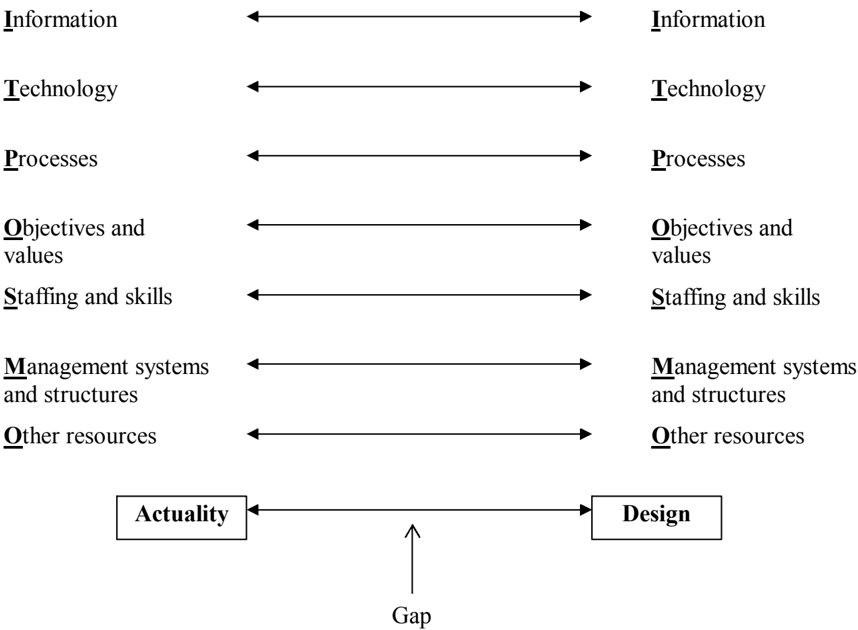
- It develops the notion of “design-actuality gaps,” defined as “the match or mismatch between IS designs and local user actuality.”
- The model highlights two “high-risk archetypes” affecting IS in developing countries: “country context gaps” and “hard-soft gaps.”
- The model is also presented as useful for explaining “the constraints that exist to local IS improvisations in developing countries.”
## Methods
- The paper is a journal article that develops a conceptual model “drawing on contingency theory.”
- The abstract does not specify a dataset, sample, or number of cases; the text only says the article presents “evidence” about IS in developing countries.
- The main analysis appears to be conceptual/theoretical, using the model to interpret IS cases and to refine IS theory.
## Limitations
- The paper does not report a specific sample size, case count, or empirical dataset in the provided text; this limits what can be assessed from the excerpt.
- The abstract does not state formal limitations or boundary conditions of the model beyond noting its focus on developing countries and local user actuality.
- The evidence base is not described in the provided text, so the scope of the claims cannot be independently evaluated from the excerpt alone.
Model-written summary. Check it against the paper before relying on it.
Integrity signals
Registry
Cites
Statistics
Figures
Verification
Claims the paper makes
0 Valid · 0 Not valid · 0 Not checked · 3 Own results and interpretations
A result the paper reports from its own data — it cites no other source for it, so there is none to check. The quote shows it is in the paper.
In the paper
“This article presents evidence that-alongside the successes-many information systems in developing countries can be categorized as failing either totally or partially.”
plain- Asserted: passes — The authors put it forward as true.
- Checkable: passes — It can be checked against evidence.
- Load-bearing: passes — The paper’s conclusions depend on it.
- Based: passes — The paper gives a reason why it holds.
A conclusion the paper draws from its own results — it cites no other source for it, so there is none to check. The quote shows it is in the paper.
In the paper
“The model draws on contingency theory in order to advance the notion of design-actuality gaps: the match or mismatch between IS designs and local user actuality.”
plainstates a possible cause- Asserted: passes — The authors put it forward as true.
- Checkable: passes — It can be checked against evidence.
- Load-bearing: passes — The paper’s conclusions depend on it.
- Based: passes — The paper gives a reason why it holds.
- Rests on an assumption not shown here.
- It may state two separate claims as one. 1
Claims other papers make about this one
Each is checked against this paper’s own text: does it say what the citing paper says it does?
In the citing paper
“This suggests that adoption can be seen as simply the first and perhaps least problematic phase in the drive towards the integration of an innovation into the health system. The greater risk is that of ‘sustainability failure’ [25, 26]”
From Beyond pilotitis: taking digital health interventions to the national level in China and Uganda (2017) · cites this paper as [26]
Citations
Cites
Task-Technology Fit and Individual Performance
Goodhue, D. L., & Thompson, R. L. (1995) · MIS Quarterly · doi:10.2307/249689 · Cited by 6,006 · cited 1×
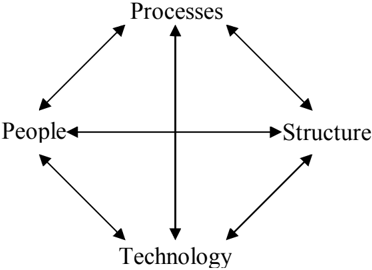
“IS implementation models drawing on this theme have involved e t between “tool”/“technology” and “task” ( Goodhue & Thompson, 1995; Agarwal & Sinha, 1996), or between multiple factors (Scott Morton, 1991; Southon et al., 1997).”
MethodSoftware Engineering Economics
Boehm, B. W. (2001) · Pioneers and Their Contributions to Software Engineering · doi:10.1007/978-3-642-48354-7_5 · Cited by 5,981
Thompson, V. A., & March, J. G. (1966) · American Sociological Review · doi:10.2307/2090830 · Cited by 3,351
The Concept of Fit in Strategy Research: Toward Verbal and Statistical Correspondence
Venkatraman, N. (1989) · The Academy of Management Review · doi:10.2307/258177 · Cited by 2,367
Suchman, L. A. (1987) · Cited by 2,279
The Concept of Fit in Strategy Research: Towards Verbal and Statistical Correspondence
Venkatraman, N. V. (1988) · DSpace@MIT (Massachusetts Institute of Technology) · Cited by 2,038
Improvising Organizational Transformation Over Time: A Situated Change Perspective
Orlikowski, W. J. (1996) · Information Systems Research · doi:10.1287/isre.7.1.63 · Cited by 1,952
Management strategies for information technology
(1990) · Long Range Planning · doi:10.1016/0024-6301(90)90040-b · Cited by 1,033
Shaping technology/building society
(1993) · Choice Reviews Online · doi:10.5860/choice.30-3774 · Cited by 939
The corporation of the 1990s: Information technology and organizational transformation
(1993) · Futures · doi:10.1016/0016-3287(93)90030-w · Cited by 886
Research works printed but not linked: 19
- Avgerou, C. 2000. The multiple rationalities of information systems development. In Information ? ows, local improvisations and work practices. Proceedings of the IFIP WG9.4 Conference 2000. Cape Town: IFIP.
- Avgerou C., 2000, Information technology in context, 1
- Bijker W. E., 1992, Shaping tech-nology/building society, 1
- Butler R., 1991, Designing organizations
- Goonatilake, L., Maizza-Neto, O., and Jayawardene, P. 2000. Enhancing enterprise competitiveness in developing countries through the promotion of management information and benchmarking tools. In Information ? ows, local improvisations and work practices. Proceedings of the IFIP WG9.4 Conference 2000. Cape Town: IFIP.
- IFIP WG9.4. 2000. Information ? ows, local improvisations and work practices. Proceedings of the IFIP WG9.4 Conference 2000. Cape Town: IFIP.
- Jayasuriya R., 1995, Medinfo ’95, 1603
- Korac-Boisvert N., 1995, Information Infrastructure and Policy, 4, 131
- Macias-Chapula, C. A. 2000. Issues learned, challenges and opportunities to implement a library automation project at Mexico’s General Hospital. In Information ? ows, local improvisations and work practices. Proceedings of the IFIP WG9.4 Conference 2000. Cape Town: IFIP.
- Calitz, A. P. 2000. Transforming work practices with IT. In Information ? ows, local improvisations and work practices. Proceedings of the IFIP WG9.4 Conference 2000. Cape Town: IFIP.
- Oyomno G. Z., 1996, Global information technology and socio-economic development, 19
- Puri, S. K., Chauhan, K. P. S., and Admedullah, M. 2000. Prospects of biological diversity information management. In Information ? ows, local improvisations and work practices. Proceedings of the IFIP WG9.4 Conference 2000. Cape Town: IFIP.
- Silva L. O., 2000, Outsourcing as an improvisation. In Information ? ows, local improvisations and work practices. Proceedings of the IFIP WG9.4 Conference 2000
- Walsham G., 2000, Information technology in context, 291
- Wynn, E. and deLyra, J. 2000. A strange attractor in the chaos of global IS development. In Information ? ows, local improvisations and work practices. Proceedings of the IFIP WG9.4 Conference 2000. Cape Town: IFIP.
- Cain P., 2001, Reinventing government in the information age, 135
- Kenny C., 2001, The Internet and economic growth in LDCs. Draft paper
- Kitiyadisai, K. 2000. The implementation of IT in reengineering the Thai Revenue Department. In Information ? ows, local improvisations and work practices. Proceedings of the IFIP WG9.4 Conference 2000. Cape Town: IFIP.
- Mundy D., 2001, Reinventing government in the information age, 271
Cited by
Items 801–900 of 1,386
Critical Factors for Adoption of E-government: Validity of Adoption Model in Indian Context
Shareef, M. A., Archer, N., Sharan, V., & Kumar, V. (2010) · Integrated series on information systems/Integrated series in information systems · doi:10.1007/978-1-4419-6536-3_19 · Cited by 5
“The model addresses and incorporates constructs such as PREL, EMP, PSY, and PPRI based on service quality requirements as observed by a number of e-commerce researchers (Kumar et al. 2006; Loiacono et al., 2002; Parasuraman et al., 1988; Wolfinbarger & Gilly, 2003; Yoo& Donthu, 2001) and perspectives of e-government f…”
Intervention Breakdowns as Occasions for Articulating Mobile Health Information Infrastructures
Matavire, R., & Manda, T. D. (2014) · The Electronic Journal of Information Systems in Developing Countries · doi:10.1002/j.1681-4835.2014.tb00441.x · Cited by 6
“…in information systems EJISDC (2014) 6 , 3, 1-17 The Electronic Journal of Information Systems in Developing Countries www.ejisdc.org 13 projects in developing countries are due to limitations in technological and human infrastructure (Heeks, 2002; Manda and Sanner, 2012; Semaan and Mark, 2011).”
Effect of Icon Styles on Cognitive Absorption and Behavioral Intention of Low Literate Users
Sengupta, A., & Chang, K. T. T. (2013) · Pacific Asia Conference on Information Systems · Cited by 3
Predictors of Effective IS Strategy Implementation: A longitudinal Study of Indian organizations
Kannabiran, G., Sharda, R., Gupta, A., & Wilson, R. L. (2009) · Asia Pacific Business Review · doi:10.1177/097324700900500201 · Cited by 3
“Many authors have highlighted the issues in implementing IS strategies in developing counties (Kanungo et al., 2001; Heeks, 2002: Tarafdar and Vaidya, 2006).”
BackgroundCommunity-oriented spoken web browser for low iiterate users
Mahelaqua, Basson, S. H., Rajput, N., et al. (2013) · Conference on Computer Supported Cooperative Work · doi:10.1145/2441776.2441833 · Cited by 3
“There has been substantial work on low-literate users in terms of understanding their information needs [8,9] and also in terms of studying their adoption of existing Permission to make digital or hard copies of all or part of this work for”
BackgroundDu, Y. (2011) · International Journal of Business and Systems Research · doi:10.1504/ijbsr.2011.038799 · Cited by 3
On the Appropriateness of Incident Management Systems in Developing Countries: A Case from the UAE
Kamoun, F., Werghi, N., & Blushi, M. A. (2010) · Journal of technology management & innovation · doi:10.4067/s0718-27242010000400005 · Cited by 4
“This can be facilitated by using proper tools (such as observations, rich pictures, and prototyping), and by opening the communication channels with those who are closest to the context of implementation and use (Heeks, 2002).”
InfluentialChevers, D. A., Duggan, E. W., & Moore, S. E. (2012) · The Electronic Journal of Information Systems in Developing Countries · doi:10.1002/j.1681-4835.2012.tb00392.x · Cited by 3
“…in developing countries like those in the ESC and particularly those in Jamaica, do not have the fiscal room to absorb costly systems failures (Heeks, 2002), due to financial, human and infrastructure constraints (Avgerou, 2008; Berisso & de Vries, 2010; Qureshi et al., 2009) and have a…”
BackgroundGodfrey, L. (2006) · EnviroInfo · Cited by 3
Dasuki, S. I., & Abbott, P. Y. (2010) · AIS Electronic Library (AISeL) · Cited by 3
Evidence based healthcare planning in developing countries: An Informatics perspective
Ranasinghe, I., Sahama, T. R., & Yaralagadda, P. (2009) · Cited by 3
A Reviews of: “Towards a Sustainable Information Society: Deconstructing WSIS”
Bicknell, D. (2008) · The Information Society · doi:10.1080/01972240802020218 · Cited by 3
“Heeks (2002) illustrates this point in “Information Systems and Developing Countries: Failure, Success, and Local Improvisations,” noting the large disparity that usually exists in developing countries between the scenarios information systems are designed for and the actuality of their implementation, and demonstrati…”
Strategic Value of IT in Private Sector Organizations in a Developing Country: Oman
Ashrafi, R. (2011) · The Electronic Journal of Information Systems in Developing Countries · doi:10.1002/j.1681-4835.2011.tb00332.x · Cited by 5
Unanticipated outcomes and risk: how are they to be considered in Community Informatics
Stillman, L. (2010) · Cited by 3
Kiwana, D., Johansson, B., & Carlsson, S. (2015) · Lecture notes in computer science · doi:10.1007/978-3-319-24315-3_34 · Cited by 3
“When it comes to management and structures organizations in developing country are more hierarchical and more centralized, and in addition the cost of ICTs is higher than in developed countries whereas the cost of labor is lower [24].”
BackgroundMultidimensional Project Metamodel Construction Methodology for a HIS Deployment
Lahboube, F., Roudiès, O., & Souissi, N. (2016) · Lecture notes in electrical engineering · doi:10.1007/978-3-319-30298-0_32 · Cited by 3
Electronic Government Adoption Paradigms
Shareef, M. A., & Dwivedi, Y. K. (2011) · IGI Global eBooks · doi:10.4018/978-1-60960-601-5.ch003 · Cited by 3
"Potential" Barriers to E-Government Implementation in Developing Countries
Hamner, M. P., Taha, D., & Brahimi, S. (2010) · IGI Global eBooks · doi:10.4018/978-1-61520-933-0.ch022 · Cited by 3
An Investigation in IT Projects Failure within Kurdistan Regional Government of Iraq
Bakhtiar, M. M., Nabi, R. M., & Sardasht, M. (2016) · International Journal of Computer Applications · doi:10.5120/ijca2016907734 · Cited by 3
Role of project owner in e-government project sustainability
Anand, A., Seetharaman, P., & Vaidya, S. D. (2016) · Journal of Information Technology Case and Application Research · doi:10.1080/15228053.2016.1255485 · Cited by 3
“Heeks (2002) argues that e-government projects fail because of design-reality gap.”
BackgroundInfluentialFalak, H., & Zaman, T. (2016) · Advances in human and social aspects of technology book series · doi:10.4018/978-1-5225-1944-7.ch009 · Cited by 3
Lupilya, E. C. (2015) · The Korean Journal of Policy Studies · doi:10.52372/kjps30207 · Cited by 8
“Recent literatures on e-government implementation such that of Snellen, 2000; Wimmer et al., 2001; Grabow et al., 2002; Heeks (2002; 2003); Grönlund, 2004; Von, 2005; Shuppan, 2009; Song, 2009) argued that, despite the fact that e-government strategic plan in developing countries fail, their…”
InfluentialAlam, M. M., & Wagner, C. (2011) · Agribusiness and Information Management · doi:10.14771/aim.3.1.4 · Cited by 3
“Hence, prior studies which often discussed success or failure from an IS design and implementation perspective— focusing on professional knowledge and practice—often overlooked the actual conditions of organizational practice in developing countries (Heeks, 2002, Avgerou, 2008).”
Resource Endowments Strategy for Sustainable E-Government
Nurdin, N. (2018) · International Conference on Science and Technology (ICST) · doi:10.1109/icstc.2018.8528680 · Cited by 4
University Students’ Learning Disruption and Affordance in a Contested Learning Environment
Nuraini, S. (2021) · Research in Social Sciences and Technology · doi:10.46303/ressat.2021.23 · Cited by 4
“This situation is relevant to the challenges of online learning described in the work of Heeks (2002).”
InfluentialLessa, L., Negash, S., & Belachew, M. (2016) · IGI Global eBooks · doi:10.4018/978-1-4666-9814-7.ch086 · Cited by 5
The Adoption and Benefits of Agile Software Development Methods in Jamaica
Chevers, D. A., & Whyte, C. C. (2015) · Cited by 4
Improving ICT4D projects with agile software development
Dijkers, J., Overbeek, S. J., & España, S. (2018) · Utrecht University Repository (Utrecht University) · Cited by 3
Who Should Be Blamed For Information System Failure? Integrating Systems Thinking Into IS Education
Huy, V. V., & Chae, B. K. (2004) · AIS Electronic Library (AISeL) · Cited by 3
Mudombi, S. (2014) · Unisa Institutional Repository (University of South Africa) · Cited by 11
Architecture for instrument-centred land administration applications
Hay, G. C. (2013) · Otago University Research Archive (University of Otago) · Cited by 5
Mulwa, J. M. (2015) · Cited by 3
Yogendrarajah, R. (2013) · SSRN Electronic Journal · Cited by 3
Banju, M. K. (2014) · Cited by 3
Innovation@DFID: Crowdsourcing New Ideas at the UK's Department for International DevelopmentPreprint
Schwittay, A., & Braund, P. (2017) · SSRN Electronic Journal · doi:10.2139/ssrn.2999652 · Cited by 3
A strategy to make ICT accessible in rural Zambia: a case study of Macha
van Stam, G. (2013) · Nelson Mandela University Research Repository · Cited by 3
Factors influencing citizen's adoption of e-Government services in Saudi Arabia
Mahroqi, O. A. (2013) · RMIT Research Repository (RMIT University Library) · doi:10.25439/rmt.27575805 · Cited by 8
Kiwanuka, A., Kimaro, H., Senyoni, W., & Thobias, J. (2015) · 2015 IST-Africa Conference · doi:10.1109/istafrica.2015.7190545 · Cited by 2
“Eventually, such projects fail to achieve their ultimate goals [3].”
Ghanbari, H., Ahuja, S., Lee, B., & Gaskin, J. E. (2025) · Information and Organization · doi:10.1016/j.infoandorg.2025.100589 · Cited by 5
Keling, W., Yap, C. S., & Chieng, F. Y. L. (2025) · The Electronic Journal of Information Systems in Developing Countries · doi:10.1002/isd2.70038 · Cited by 11
“…for ICT4D research in developing contexts, as it accounts for both tangible outcomes (e.g., increased market access) and intangible impacts (e.g., community cohesion) while identifying barriers to success, such as infrastructure deficits or low digital literacy (Heeks 2002; Best and Kumar 2008).”
Hu, S., Wang, W., & Jie, Y. (2026) · Sustainability · doi:10.3390/su18021137 · Cited by 3
“In the presence of a strong digital industry (H2), governance acts as a redistributive force; in its absence (NH2), governance risks becoming a “suspended” superstructure that creates administrative barriers rather than inclusion [111].”
Metin, B., Dümer, H. B., & Wynn, M. G. (2026) · Information · doi:10.3390/info17020177 · Cited by 4
Teaching Data Science and Cloud Computing in Low and Middle Income Countries
Shanahan, H. P., Harrison, A., & May, S. T. (2015) · Advanced Techniques in Biology & Medicine · doi:10.4172/2379-1764.1000150 · Cited by 4
“The failure rate for Information Systems projects in LMIC is much higher than in the Developed World [21] and is a more general feature of development projects.”
Jacobs, C., Rivett, U., & Chemisto, M. (2016) · Springer proceedings in business and economics · doi:10.1007/978-3-319-25153-0_6 · Cited by 2
Using Capital Flow Analysis to Understand IS Projects in a Developing Economy
Debay, W. L., Watson, R. T., & Teklu, T. (2013) · Cited by 2
The Adoption Process of Free & Open Source Software (FOSS) in Turkish Public Organizations
Yıldız, M., Öktem, M. K., & Bensghir, T. K. (2010) · IGI Global eBooks · doi:10.4018/978-1-61692-814-8.ch007 · Cited by 2
Chevers, D. A., & Grant, G. G. (2016) · The Electronic Journal of Information Systems in Developing Countries · doi:10.1002/j.1681-4835.2016.tb00567.x · Cited by 3
“In addition, the lower adoption rate was expected in the ESC due mainly to the claim of this region experiencing financial and human constraints (Heeks, 2002; Kimaro, 2006).”
BackgroundOrganizational Capacity Building for Sustainable Health Information Systems: A Case Study from Ghana
Adaletey, D. L. (2016) · Journal of Health Informatics · doi:10.12856/jhia-2015-v3-i2-127 · Cited by 4
Chikumba, P. A., & Chisakasa, G. (2017) · American Journal of Geographic Information System · Cited by 2
Experiences from a Development Project in Kenya – Baselines for Future Climate Information Systems
Helminen, J., Kirongo, B. B., Gaiani, S., et al. (2019) · IFIP advances in information and communication technology · doi:10.1007/978-3-030-18400-1_30 · Cited by 2
Svensson, J. (2020) · Springer eBooks · doi:10.1007/978-981-15-2014-3_43 · Cited by 6
The Legitimacy of a Sharing Economy-Enabled Digital Platform for Socioeconomic Development
Chen, S., Liu, L., & Feng, Y. (2022) · Journal of theoretical and applied electronic commerce research · doi:10.3390/jtaer17040080 · Cited by 6
Guerrero, R. R., Mora, M. G., & Vanegas, C. A. (2024) · XIKUA Boletín Científico de la Escuela Superior de Tlahuelilpan · doi:10.29057/xikua.v12iespecial.12693 · Cited by 2
Design-Reality Gap Analysis of Health Information Systems Failure
Makumbani, H., & Tsibolane, P. (2025) · Procedia Computer Science · doi:10.1016/j.procs.2025.02.199 · Cited by 7
Goes, K. L. D. S., da Silva, J. E., de Souza, T. M., et al. (2025) · Revista de Gestão e Secretariado (Management and Administrative Professional Review) · doi:10.7769/gesec.v16i5.4968 · Cited by 2
Teaching Paper: Curated Resources for Technology and Digital Capacity in Non-Profits
Global, N., & Kazanskaia, A. N. (2025) · doi:10.64357/neya-gjnps-tchtleffimp-tp-02 · Cited by 2
Kang, J. (2014) · ProQuest LLC eBooks · Cited by 3
Culture Collideation in Digital Government
Prastuti, W., Lele, G., & Keban, Y. T. (2020) · doi:10.2991/aebmr.k.200301.005 · Cited by 2
“Transferring technology from developed countries to developing countries or from private to public organizations also causes cultural gaps that need to be overcome (Heeks, 2002).”
BackgroundPOTENTIAL IMPACT OF INFORMATION SYSTEMS TACKLING SDG10 ON THE DIMENSIONS OF HEALTH CARE AND GENDER
FINK, M., Höltl, A., & Brandtweiner, R. (2020) · WIT transactions on ecology and the environment · doi:10.2495/sdp200181 · Cited by 2
“Yet, the reassignment from information systems originally designed for industrialized countries evolved in developing countries during the course of globalization [8].”
InfluentialHoward, G. R. (2020) · Lecture notes in business information processing · doi:10.1007/978-3-030-63396-7_46 · Cited by 2
A COMPARISON IN EDUCATION & TRAINING APPROACHES BETWEEN DEVELOPED & DEVELOPING COUNTRIES
Amaimin, M., Alsulimani, T. S., Lahwal, F., et al. (2021) · Proceedings on Engineering Sciences · doi:10.24874/pes03.04.005 · Cited by 2
Chakwizira, J., Maponya, G., Nhemachena, C., et al. (2010) · Cited by 2
Rangel, M., & Edgar, A. (2009) · ProQuest LLC eBooks · Cited by 2
Manda, T. D. (2015) · IST-Africa Conference (IST-Africa) · doi:10.1109/istafrica.2015.7190580 · Cited by 2
“infrastructure to guide technology implementation and maintenance [10-12].”
Conceptualizing and Implementation of E-government in India
Ray, S. (2010) · Integrated series on information systems/Integrated series in information systems · doi:10.1007/978-1-4419-6536-3_20 · Cited by 3
“basic web publishing through to fully integrated, seamless e-government (Heeks, 2002).”
A case study of IT implementation in public university: its barriers and challenges
Setiawan, I. M. A. (2012) · Cited by 2
Using a Participatory Action Research Approach to Design a Lecture Podcasting System
Mugwanya, R., Marsden, G., Ng’ambi, D., & Traxler, J. M. (2012) · International Journal of Mobile and Blended Learning · doi:10.4018/jmbl.2012040105 · Cited by 7
“Moreover, the Computer supported collaborative work (CSCW) (Maguire, 2001; Grundin & Pruitt, 2003), Information Systems (IS) (Heeks, 2002) and Human Computer Interaction (HCI) (Zimmerman et al., 2007) literature identifies that a common reason why systems fail is because the people who are expected…”
Zarama, G., & Vinck, D. (2008) · Reciis · doi:10.3395/reciis.v2i1.159en · Cited by 4
“Investigations however reveal that, despite all these conception, development and divulgation activities, the new information systems are subject to difficulties and failure (SAUER, 1993; LYYTINEN et al., 1999; HEEKS, 2002; TAYLOR, 2003; GOLDFINCH, 2007).”
Relevance of Information Systems Strategic Planning Practices in E-Business Contexts
Kannabiran, G., & Sundar, S. (2011) · Journal of Electronic Commerce in Organizations · doi:10.4018/jeco.2011010102 · Cited by 2
The assimilation and use of GIS by historians: a sociotechnical interaction networks (STIN) analysis
Suri, V. R. (2011) · International Journal of Humanities and Arts Computing · doi:10.3366/ijhac.2011.0030 · Cited by 2
Alvarado, F. (2009) · Zenodo (CERN European Organization for Nuclear Research) · doi:10.5281/zenodo.6794235 · Cited by 2
Health Information Systems and Democracy: Contributions from the Brazilian Sanitary Movement
Fornazin, M., & Jóia, L. A. (2014) · The Electronic Journal of Information Systems in Developing Countries · doi:10.1002/j.1681-4835.2014.tb00443.x · Cited by 2
Clementson, C. (2012) · Library and Archives Canada (Government of Canada) · Cited by 2
Akçam, B. K., Guclu, A. N., Güler, A., et al. (2012) · Cited by 2
Investigation of Information Communication Technology in Kenyan Primary Education Sector
Mutong, S. M., Esau, M., & Tenge, E. (2014) · Cited by 2
O’Connor, Y., Treacy, S., & O’Donoghue, J. (2014) · IFIP advances in information and communication technology · doi:10.1007/978-3-662-43459-8_23 · Cited by 2
“Despite the contributions of such studies, there still remains a high failure rate of e-health technologies in developing regions [5], due to the lack of adoption [6].”
Significance of 'Contexts' in ICTD Projects: Alignment and Misalignment of Stakeholders' Interests
Fernandez, W. D., & da Silva, A. P. (2016) · Hawaii International Conference on System Sciences (HICSS) · doi:10.1109/hicss.2016.340 · Cited by 5
“promised benefits in developing countries [2-4].”
Ortiz, J. A. (2008) · Cited by 2
Weerawarana, S., Thudugala, K., & Deshapriya, W. (2013) · Journal of E-Government Studies and Best Practices · doi:10.5171/2012.549264 · Cited by 2
Developing an E-Book-Based Learning Platform Toward Higher Education for All
Hori, M., Ono, S., Yamaji, K., Kobayashi, S., Kita, T., & Yamada, T. (2016) · Communications in computer and information science · doi:10.1007/978-3-319-29585-5_35 · Cited by 3
Sabi, H. M., Mlay, S. V., Tsuma, C. K., & Bang, H. N. (2015) · The Journal of Internet Banking and Commerce · doi:10.4172/1204-5357.1000126 · Cited by 2
“Organisations in developing countries expect imported technologies to seamlessly fit within their operational framework but this has often not been the case leading to non-adoption and failed implementations [4-6].”
BackgroundResultKnowledge for a Sustainable World: A Southern African-Nordic contribution
M’kumbuzi, V. R., Ibsen, H., & Halvorsen, T. (2015) · African Minds eBooks · doi:10.47622/9781928331049 · Cited by 5
Afolayan, G. E. (2013) · Advances in electronic government, digital divide, and regional development book series · doi:10.4018/978-1-4666-4900-2.ch020 · Cited by 3
Wachira, D. (2012) · IGI Global eBooks · doi:10.4018/978-1-4666-0324-0.ch022 · Cited by 4
Nurdin, N., Stockdale, R., & Scheepers, H. (2015) · Advances in electronic government, digital divide, and regional development book series · doi:10.4018/978-1-4666-9536-8.ch014 · Cited by 37
“The e-government projects were successfully implemented and used in certain period of time but then abandoned (Heeks, 2002b).”
MethodA Holistic Approach to E-Government
Espinosa, Á., & Al-Maimani, A. S. (2010) · IGI Global eBooks · doi:10.4018/978-1-60566-860-4.ch008 · Cited by 2
Toward E-Government Sustainability
Chung, I. J. (2009) · IGI Global eBooks · doi:10.4018/978-1-60566-282-4.ch041 · Cited by 2
Support Networks for Rural and Regional Communities
Denison, T. (2010) · Advances in semantic web and information systems series · doi:10.4018/978-1-60566-272-5.ch016 · Cited by 2
Etoundi, R. A., Tobie, A. M., & Onana, B. S. M. (2016) · The Electronic Journal of Information Systems in Developing Countries · doi:10.1002/j.1681-4835.2016.tb00553.x · Cited by 2
“Heeks (2002) explains the failure with the notion of “gap” between the system and the requirements of the organization.”
BackgroundDasuki, S. I., & Quaye, A. K. M. (2016) · Americas Conference on Information Systems · Cited by 2
Kunyenje, G., & Chigona, W. (2016) · IST-Africa Week Conference · doi:10.1109/istafrica.2016.7530703 · Cited by 2
“Heeks (2002) classifies failures of IS projects into three categories namely (i) total failure, (ii) partial failure and (iii) sustainability failure.”
A fuzzy-based methodology to assess software usability risk
Kartika, A. D., & Surendro, K. (2016) · doi:10.1109/icoict.2016.7571930 · Cited by 2
“And risk likelihood is assessed by design-reality gap instead of direct assessment proposed by [19][20].”
InfluentialInclusive Innovation in the Private Sector: The Case of East African Tech Start-Ups
Koskinen, K. (2017) · Hawaii International Conference on System Sciences (HICSS) · doi:10.24251/hicss.2017.503 · Cited by 2
Oyelana, A. A., & Thakhathi, D. R. (2015) · Journal of Communication · doi:10.1080/0976691x.2015.11884863 · Cited by 2
“Heeks (2002) cited in Gichoya (2005: 178) describes assessment as an influence that can depend on situations as well as period.”
Nguyen, T. N., Pham, T. C., Santos, E., & Son, H. T. (2018) · The Electronic Journal of Information Systems in Developing Countries · doi:10.1002/isd2.12017 · Cited by 3
“In the public health care domain, there is a plethora of reports on failures of health information system projects (Heeks, 2002; Heeks, 2006; Heeks, Mundy, & Salazar, 1999).”
BackgroundBii, H., & Monica, R. (2019) · International Journal of Library and Information Science · doi:10.5897/ijlis2017.0772 · Cited by 3
Prison Farm Inmates’ Reformation and Rehabilitation
Uddin, I. O., Igbokwe, E. M., & Olaolu, M. O. (2019) · Kriminologija & socijalna integracija : časopis za kriminologiju, penologiju i poremećaje u ponašanju · doi:10.31299/ksi.27.2.3 · Cited by 2
“Information and Communication Technology (ICT) in agriculture has the potential to facilitate greater access to information that drives or supports knowledge sharing (Batchelor 2002; Chapman & Slaymaker 2002; Rao 2007; Heeks 2002; Glendenning & Ficarelli, 2012).”
Knutov, A., & Стырин, Е. М. (2020) · Public administration and information technology · doi:10.1007/978-3-030-37464-8_7 · Cited by 2
Mukherjee, S., & Karmakar, A. K. (2020) · Springer eBooks · doi:10.1007/978-981-15-4206-0_11 · Cited by 2
Beyond Free Lunch: Building Sustainable ICT4D
da Silva, A. P., & Fernandez, W. D. (2013) · ANU Open Research (Australian National University) · Cited by 4
Metadata
- Authors
- Heeks, R.
- Corresponding author
- Heeks, Richard
- ORCID
- Heeks, Richard
- Venue
- The Information Society
- Publisher
- Informa UK Limited
- Published
- 2002-03
- Volume
- 18
- Issue
- 2
- Pages
- 101-112
- ISSN
- 0197-2243 (ISSN-L)
- 1087-6537
- OpenAlex
- W2136941206
- Semantic Scholar
- dd6c8931d276f258d356e65416018725912d2dbd
- Cited by
- 1,390
- References
- 53
- Citations by year
- 2026: 71 · 2025: 42 · 2024: 37 · 2023: 41 · 2022: 49 · 2021: 60 · 2020: 58 · 2019: 72 · 2018: 39 · 2017: 70 · 2016: 81 · 2015: 114 · 2014: 95 · 2013: 97 · 2012: 97
- FWCI
- 34.02
- Type
- journal article
- Language
- en
- Open access
- Licence
- other-oa
- Locations
- The Information Society (publishedVersion)
- Research Explorer (The University of Manchester) (publishedVersion, other-oa)
- Topics
- Physical Sciences › Computer Science › Information Systems › ICT in Developing Communities
- Social Sciences › Business, Management and Accounting › Management Information Systems › Information Systems Theories and Implementation
- Social Sciences › Economics, Econometrics and Finance › Economics and Econometrics › ICT Impact and Policies
- Keywords
- contingency theory, IS success factors
About these checks
Registry, retraction, Cites and statistics results are computed, not judged, with one exception: a printed reference that no index lists is read once by a model before it counts as a citation error. Claims are extracted by a model and kept only when their quote appears verbatim in the text; each cited source is then checked, with a model’s help, for whether it says what the claim relies on. Those verdicts can be wrong — read the claim’s quote and the cited source before relying on one.
A language model drew the claims from the paper on 2026-10-10, under version 3 of the claim definition (model deepseek-v4.1-flash, prompt extract-v3).
A second model labelled each claim on 2026-10-10 (model jev-1.13-20260917, definition revision gold-guideline-v0.2).
Statistics and arithmetic are recomputed, not judged.
Confidence bands are shown only for fields calibrated on our annotated test set. None is calibrated yet, so no band is shown.
What counts as a claim ›How we measure confidence ›How we check this ›
Are you an author, or do you see a problem with this page? Request a review
Data sources
Bibliographic data: Semantic Scholar, OpenAlex, Crossref.
Contains information from the Semantic Scholar Academic Graph Datasets, made available under the ODC Attribution License (ODC-BY 1.0).
Semantic Scholar’s data is described in: Kinney, R., et al. (2023). The Semantic Scholar Open Data Platform. arXiv:2301.10140.
