

Information Systems and Developing Countries: Failure, Success, and Local Improvisations
Open accessThe DOI matches its Crossref record; 53 of the 53 references it cites were found in a registry or an index.
Abstract
The article develops the design-actuality gaps model to explain why many information systems in developing countries fail totally or partially.
Overview
CoChat Summary
## TL;DR
The paper argues that many information systems in developing countries fail totally or partially, and proposes a contingency-theory-based model of “design-actuality gaps” to explain why. It identifies two high-risk gap types—country context gaps and hard-soft gaps—and also discusses constraints on local improvisation.
## Key findings
- The paper states that, alongside successes, “many information systems in developing countries can be categorized as failing either totally or partially.”
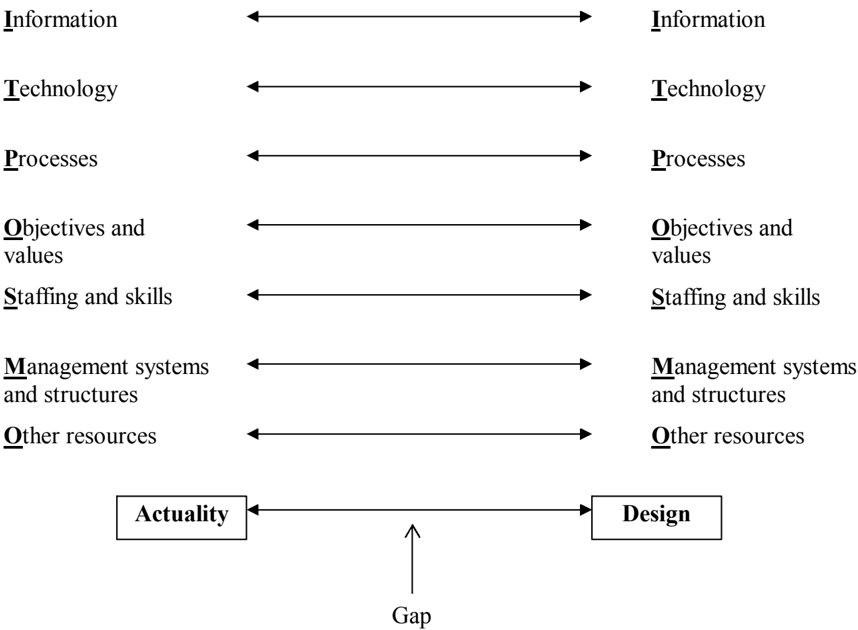
- It develops the notion of “design-actuality gaps,” defined as “the match or mismatch between IS designs and local user actuality.”
- The model highlights two “high-risk archetypes” affecting IS in developing countries: “country context gaps” and “hard-soft gaps.”
- The model is also presented as useful for explaining “the constraints that exist to local IS improvisations in developing countries.”
## Methods
- The paper is a journal article that develops a conceptual model “drawing on contingency theory.”
- The abstract does not specify a dataset, sample, or number of cases; the text only says the article presents “evidence” about IS in developing countries.
- The main analysis appears to be conceptual/theoretical, using the model to interpret IS cases and to refine IS theory.
## Limitations
- The paper does not report a specific sample size, case count, or empirical dataset in the provided text; this limits what can be assessed from the excerpt.
- The abstract does not state formal limitations or boundary conditions of the model beyond noting its focus on developing countries and local user actuality.
- The evidence base is not described in the provided text, so the scope of the claims cannot be independently evaluated from the excerpt alone.
Model-written summary. Check it against the paper before relying on it.
Integrity signals
Registry
Cites
Statistics
Figures
Verification
Claims the paper makes
0 Valid · 0 Not valid · 0 Not checked · 3 Own results and interpretations
A result the paper reports from its own data — it cites no other source for it, so there is none to check. The quote shows it is in the paper.
In the paper
“This article presents evidence that-alongside the successes-many information systems in developing countries can be categorized as failing either totally or partially.”
plain- Asserted: passes — The authors put it forward as true.
- Checkable: passes — It can be checked against evidence.
- Load-bearing: passes — The paper’s conclusions depend on it.
- Based: passes — The paper gives a reason why it holds.
A conclusion the paper draws from its own results — it cites no other source for it, so there is none to check. The quote shows it is in the paper.
In the paper
“The model draws on contingency theory in order to advance the notion of design-actuality gaps: the match or mismatch between IS designs and local user actuality.”
plainstates a possible cause- Asserted: passes — The authors put it forward as true.
- Checkable: passes — It can be checked against evidence.
- Load-bearing: passes — The paper’s conclusions depend on it.
- Based: passes — The paper gives a reason why it holds.
- Rests on an assumption not shown here.
- It may state two separate claims as one. 1
Claims other papers make about this one
Each is checked against this paper’s own text: does it say what the citing paper says it does?
In the citing paper
“This suggests that adoption can be seen as simply the first and perhaps least problematic phase in the drive towards the integration of an innovation into the health system. The greater risk is that of ‘sustainability failure’ [25, 26]”
From Beyond pilotitis: taking digital health interventions to the national level in China and Uganda (2017) · cites this paper as [26]
Citations
Cites
Task-Technology Fit and Individual Performance
Goodhue, D. L., & Thompson, R. L. (1995) · MIS Quarterly · doi:10.2307/249689 · Cited by 6,006 · cited 1×
“IS implementation models drawing on this theme have involved e t between “tool”/“technology” and “task” ( Goodhue & Thompson, 1995; Agarwal & Sinha, 1996), or between multiple factors (Scott Morton, 1991; Southon et al., 1997).”
MethodSoftware Engineering Economics
Boehm, B. W. (2001) · Pioneers and Their Contributions to Software Engineering · doi:10.1007/978-3-642-48354-7_5 · Cited by 5,981
Thompson, V. A., & March, J. G. (1966) · American Sociological Review · doi:10.2307/2090830 · Cited by 3,351
The Concept of Fit in Strategy Research: Toward Verbal and Statistical Correspondence
Venkatraman, N. (1989) · The Academy of Management Review · doi:10.2307/258177 · Cited by 2,367
Suchman, L. A. (1987) · Cited by 2,279
The Concept of Fit in Strategy Research: Towards Verbal and Statistical Correspondence
Venkatraman, N. V. (1988) · DSpace@MIT (Massachusetts Institute of Technology) · Cited by 2,038
Improvising Organizational Transformation Over Time: A Situated Change Perspective
Orlikowski, W. J. (1996) · Information Systems Research · doi:10.1287/isre.7.1.63 · Cited by 1,952
Management strategies for information technology
(1990) · Long Range Planning · doi:10.1016/0024-6301(90)90040-b · Cited by 1,033
Shaping technology/building society
(1993) · Choice Reviews Online · doi:10.5860/choice.30-3774 · Cited by 939
The corporation of the 1990s: Information technology and organizational transformation
(1993) · Futures · doi:10.1016/0016-3287(93)90030-w · Cited by 886
Research works printed but not linked: 19
- Avgerou, C. 2000. The multiple rationalities of information systems development. In Information ? ows, local improvisations and work practices. Proceedings of the IFIP WG9.4 Conference 2000. Cape Town: IFIP.
- Avgerou C., 2000, Information technology in context, 1
- Bijker W. E., 1992, Shaping tech-nology/building society, 1
- Butler R., 1991, Designing organizations
- Goonatilake, L., Maizza-Neto, O., and Jayawardene, P. 2000. Enhancing enterprise competitiveness in developing countries through the promotion of management information and benchmarking tools. In Information ? ows, local improvisations and work practices. Proceedings of the IFIP WG9.4 Conference 2000. Cape Town: IFIP.
- IFIP WG9.4. 2000. Information ? ows, local improvisations and work practices. Proceedings of the IFIP WG9.4 Conference 2000. Cape Town: IFIP.
- Jayasuriya R., 1995, Medinfo ’95, 1603
- Korac-Boisvert N., 1995, Information Infrastructure and Policy, 4, 131
- Macias-Chapula, C. A. 2000. Issues learned, challenges and opportunities to implement a library automation project at Mexico’s General Hospital. In Information ? ows, local improvisations and work practices. Proceedings of the IFIP WG9.4 Conference 2000. Cape Town: IFIP.
- Calitz, A. P. 2000. Transforming work practices with IT. In Information ? ows, local improvisations and work practices. Proceedings of the IFIP WG9.4 Conference 2000. Cape Town: IFIP.
- Oyomno G. Z., 1996, Global information technology and socio-economic development, 19
- Puri, S. K., Chauhan, K. P. S., and Admedullah, M. 2000. Prospects of biological diversity information management. In Information ? ows, local improvisations and work practices. Proceedings of the IFIP WG9.4 Conference 2000. Cape Town: IFIP.
- Silva L. O., 2000, Outsourcing as an improvisation. In Information ? ows, local improvisations and work practices. Proceedings of the IFIP WG9.4 Conference 2000
- Walsham G., 2000, Information technology in context, 291
- Wynn, E. and deLyra, J. 2000. A strange attractor in the chaos of global IS development. In Information ? ows, local improvisations and work practices. Proceedings of the IFIP WG9.4 Conference 2000. Cape Town: IFIP.
- Cain P., 2001, Reinventing government in the information age, 135
- Kenny C., 2001, The Internet and economic growth in LDCs. Draft paper
- Kitiyadisai, K. 2000. The implementation of IT in reengineering the Thai Revenue Department. In Information ? ows, local improvisations and work practices. Proceedings of the IFIP WG9.4 Conference 2000. Cape Town: IFIP.
- Mundy D., 2001, Reinventing government in the information age, 271
Cited by
Items 501–600 of 1,386
Idea generation in exploitative and explorative business process redesign techniques
Groß, S., Grisold, T., Mendling, J., & Haase, J. (2024) · Information Systems and e-Business Management · doi:10.1007/s10257-024-00684-0 · Cited by 15
“Aiming for such smaller improvements has been found to be an appropriate strategy for reducing risks and failure rates of projects that involve information systems and organizational change in one way or another (Heeks, 2002 ).”
The value of business intelligence in the context of developing countries.
Petrini, M., & Pozzebon, M. (2003) · European Conference on Information Systems · Cited by 9
Quantitative Analysis of Amartya Sen's Theory
Islam, D., Ashraf, M., Rahman, A., et al. (2015) · International Journal of Information Communication Technologies and Human Development · doi:10.4018/ijicthd.2015070102 · Cited by 9
“Despite our and others previous attempts (Ashraf, Hanisch & Swatman 2007; Heeks 2002, Ashraf et al 2011a; Ashraf et al. 2011b; 2007, Heeks 1998; Mansell & Wehn 1998; Huerta & Sandoval-Almazan 2007), one questions DOI: 10.4018/IJICTHD.2015070102 Copyright © 2015, IGI Global.”
InfluentialEthical trade: issues in the regulation of global supply chains
Heeks, R., & Duncombe, R. A. (2004) · Edward Elgar Publishing eBooks · doi:10.4337/9781845420659.00019 · Cited by 9
Self-citationThe Prospects for eGovernment and eGovernance in Sub-Saharan Africa: A Case Study of Zambia
Nyirenda, J. C., & Cropf, R. A. (2010) · International Journal of Electronic Government Research · doi:10.4018/jegr.2010102003 · Cited by 12
“This idea is supported by Heeks (2002), who argues that the failure of eGovernance in developing countries is due in part to a mismatch between the goals of eGovernance models and other factors such as the technology supporting it, the cultural and political context, means of financing, skill sets, access to technolog…”
Kvasny, L., & Lee, R. L. (2009) · New Media & Society · doi:10.1177/1461444809342767 · Cited by 9
“Heeks (2002) defines the design–actuality gap as the mismatch between the designer’s conceptions and the realities that exist in the context of use.”
Classification of Failure Factors in Information Systems
Gunawardhana, D. N. T., & Perera, C. (2015) · International Journal for Innovation Education and Research · doi:10.31686/ijier.vol3.iss3.339 · Cited by 9
ERP Implementation in a Developing World Context: a Case Study of the Waha Oil Company, Libya
Akeel, H., & Wynn, M. G. (2015) · Research Repository (University of Gloucestershire) · Cited by 9
Three Positives Make One Negative: Public Sector IS Procurement
Alanne, A., Hellsten, P., Pekkola, S., & Saarenpää, I. (2015) · Lecture notes in computer science · doi:10.1007/978-3-319-22479-4_24 · Cited by 14
Project Failure and Its Contributing Factors
Hughes, D. L., Dwivedi, Y. K., Simintiras, A. C., & Rana, N. P. (2015) · SpringerBriefs in information systems · doi:10.1007/978-3-319-23000-9_2 · Cited by 17
Hussain, F., & Brown, S. (2018) · The Electronic Journal of Information Systems in Developing Countries · doi:10.1002/isd2.12055 · Cited by 16
“Secondly, these projects often have little impact on the issues that they are supposed to alleviate (Bada, 2002; Heeks, 2002; Rolland & Monteiro, 2002; Silva, 2002).”
BackgroundHealth information systems implementation: Weaving alliances in East African Community
Senyoni, W. F. (2020) · The Electronic Journal of Information Systems in Developing Countries · doi:10.1002/isd2.12152 · Cited by 13
Rituals in E-Government Implementation: An Analysis of Failure
Dé, R., & Sarkar, S. (2010) · Lecture notes in computer science · doi:10.1007/978-3-642-14799-9_20 · Cited by 11
“Some researchers report that the failure rates in developing countries are quite high, to the extent of more than 80% of projects being total or partial failures [8, 9].”
E-banking: a case study of Askari Commercial Bank Pakistan
Oye, N. D., Shakil, M., & Iahad, N. A. (2011) · Cited by 9
Impact assessment study of computerized services delivery projects from India and Chile
Bhatnagar, S. C. (2007) · Cited by 9
Technology for emerging markets at MSR india
Cutrell, E. B. (2011) · ACM Conference on Computer Supported Cooperative Work (CSCW) · doi:10.1145/1958824.1958827 · Cited by 10
“…ICTD literature is littered with failed projects that crashed up against fundamental problems that could have been predicted if researchers had better understood the context of the people and venue of the area they were working in (and we have learned this firsthand through brutal experience) [6].”
BackgroundModels for Online Computing in Developing Countries: Issues and Deliberations
Jolliffe, B., Poppe, O., Adaletey, D. L., & Braa, J. A. (2014) · Information Technology for Development · doi:10.1080/02681102.2014.902354 · Cited by 12
“In the context of developing country information systems implementations, Heeks (2002) has pointed out that the need for such improvizations is often a direct consequence of design–actuality gaps between the design of systems (most often in the global north) and the contextual realities of their…”
BackgroundAshraf, M., & Hoque, M. R. (2016) · Tékhne · doi:10.1016/j.tekhne.2016.04.003 · Cited by 10
Competing institutional logics in ICT4D education projects: A South American study
Stratton, C., Sholler, D., Bailey, D. E., Leonardi, P. M., & Rodriguez‐Lluesma, C. (2016) · International Conference on Information and Communication Technologies and Development (ICTD) · doi:10.1145/2909609.2909665 · Cited by 11
“[21] Heeks, R. 2006.”
InfluentialConceptualising Design of Learning Management Systems to Address Institutional Realities
Gwamba, G., Mayende, G., Isabwe, G. M. N., et al. (2018) · Advances in intelligent systems and computing · doi:10.1007/978-3-319-73204-6_6 · Cited by 9
Risk Factors in IT Public–Private Partnership Projects
Ghribi, S., Hudon, P., & Mazouz, B. (2019) · Public Works Management & Policy · doi:10.1177/1087724x18823009 · Cited by 9
Kolasa, I., Papaj, T., & Ziemba, E. W. (2020) · Procedia Computer Science · doi:10.1016/j.procs.2020.09.286 · Cited by 11
THE DIFFUSION OF INFORMATION AND COMMUNICATION TECHNOLOGIES IN THE INFORMAL SECTOR IN KENYA
Gikenye, W., & Ocholla, D. N. (2016) · Mousaion South African Journal of Information Studies · doi:10.25159/0027-2639/1665 · Cited by 9
Sundén, S., & Wicander, G. (2006) · Cited by 10
Alomiri, H. (2016) · PEARL (University of Plymouth) · doi:10.24382/1564 · Cited by 15
1SDI ontology and implications for research in the developing world
Georgiadou, Y. (2015) · Cited by 9
Conceptualising Information Culture in Developing CountriesPreprint
Zheng, Y., & Heeks, R. (2019) · SSRN Electronic Journal · doi:10.2139/ssrn.3477383 · Cited by 10
“…has dominated developmental strategies in many countries, to a more holistic understanding; one that is able to combine both arguments for a more information-centric perspective on national development (e.g. Heeks, 2002b) and those for a more socio-cultural-centric perspective (e.g. Walsham, 2001).”
Self-citationAlajmi, M. A. (2014) · The International Information & Library Review · doi:10.1080/10572317.2014.924778 · Cited by 10
“The interpretations could be consistent with Heeks’ (2002) view that failures in the deployment of ISs in developing countries are related to the high opportunity costs of resources.”
BackgroundBrigham, M., & Hayes, N. (2012) · Information Technology for Development · doi:10.1080/02681102.2012.690171 · Cited by 14
“By e-development, we mean the use of information and communication technologies (ICTs) to support development (Avgerou, 2002 ; Heeks, 2002 ).”
BackgroundMethodInfluentialDelina, L. L. (2019) · Climate and Development · doi:10.1080/17565529.2019.1671784 · Cited by 8
“…of the cross-cutting issues that face IG4CD in vulnerable communities in developing countries, and of the need to acknowledge the complex and broader climate-development picture within communities, where CDOs and developing country governments, institutions, and agencies, operate (cf. Heeks, 2002).”
BackgroundGollakota, K., Pick, J. B., & Singh, M. (2020) · Information Technology for Development · doi:10.1080/02681102.2020.1811944 · Cited by 10
“Staff helpfulness is important since use is intermediated (Bailur & Masiero, 2012; Gollakota et al., 2012; Heeks, 2002).”
Smart City Development Innovation Strategy and Challenges for the Government of Jember Regency
Maulana, A., & Haerah, K. (2021) · IOP Conference Series Earth and Environmental Science · doi:10.1088/1755-1315/717/1/012008 · Cited by 8
“…formation of the right integration is very important because the data are collected during the integration phase and used for evaluation purposes [17]. e. Artificial Intelegence (AI) Artificial intelligence (AI) can be defined as a branch of computer science that deals with the automation of…”
BackgroundDesigning ICTs for development. A Delphi study on problem framing, approach, and team composition
Smith, S. W., & Lie, R. (2022) · Information Technology for Development · doi:10.1080/02681102.2022.2128286 · Cited by 12
“Heeks (2002) observed that the context of the designer and the user often di ff ered in physical, cultural, economic, and other ways, which resulted in systems being designed to fi t environments considerably di ff erent from the environments of the end-user.”
Factors influencing indirect adoption of e-Government services: a qualitative study
Kumar, R., Mukherjee, A., & Sachan, A. (2023) · Information Systems and e-Business Management · doi:10.1007/s10257-023-00637-z · Cited by 13
“…divide (both within and outside developing countries) have focused primarily on illustrating the specific technology initiatives and illumi-nating their success or failure (Ahmed 2007; Al-Sobhi and Weerakkody 2010; Heeks 2002; Kumar and Sachan 2017; Rajalekshmi 2007; Sharma and Mishra 2015).”
Technological and Mobility Trends in E-Government
Al-Khouri, A. M. (2013) · Business and Management Research · doi:10.5430/bmr.v2n3p90 · Cited by 12
A Review of e-Government Initiatives in Tanzania: Challenges and Opportunities
Oreku, G. S., & Mtenzi, F. J. (2012) · IGI Global eBooks · doi:10.4018/978-1-4666-0324-0.ch003 · Cited by 11
Public Acceptance of M-Government Services in Developing Countries: The Case of Jordan
Hujran, O., & Migdadi, M. M. (2013) · Advances in electronic government, digital divide, and regional development book series · doi:10.4018/978-1-4666-4090-0.ch011 · Cited by 12
Principles for Conducting Critical Research Using Postcolonial Theory in ICT4D studies
Tsibolane, P., & Brown, I. (2016) · Cited by 18
Role of Information and Communication Technologies in Government Effectiveness
Meydani, E. (2017) · International Conference on Theory and Practice of Electronic Governance · doi:10.1145/3047273.3047311 · Cited by 8
“Heeks [22] categorized failure and success of the ICT systems in developing countries, as follows.”
BackgroundThe Difference of Intention to Use E-government based on National Culture between Vietnam and Korea
Van, H.-T., Kim, B., Lee, S. Y., & Gim, G. Y. (2019) · ACIS International Conference on Software Engineering, Artificial Intelligence, Networking and Parallel/Distributed Computing (SNPD) · doi:10.1109/snpd.2019.8935770 · Cited by 15
“Since the 1950s, there have been many countries that have been applying IT in their procedures and governmental processes (5).”
de Oliveira, M., Mattedi, A. P., & Seabra, R. D. (2021) · Journal of the Brazilian Computer Society · doi:10.1186/s13173-021-00108-8 · Cited by 12
‘You Can’t Cheat the Community Anymore’ : using Mobiles to Improve Water Governance
Hellström, J., & Jacobson, M. (2014) · Cited by 8
Globalization: implications for health information professionals
Murphy, J. (2008) · Health Information & Libraries Journal · doi:10.1111/j.1471-1842.2007.00761.x · Cited by 8
Social innovation: Can it be a strategy for influencing GCC public welfare?
AlSudairi, M. A. T., & Tatapudi, G. V. (2014) · Innovation · doi:10.1080/14479338.2014.11081988 · Cited by 8
“Although e-government is seen as desirable for improving access to services, transparency, and civic involvement, projects aimed at establishing e-government are typically considered difficult and include a large amount of risk (Ciborra, 2005; Heeks, 2002).”
Dennehy, D., Fitzgibbon, M., & Carton, F. (2013) · AI & Society · doi:10.1007/s00146-013-0477-8 · Cited by 9
“…knowledge network stakeholders are often drawn from a Western rationale and bring with them the 'if it works for us, it will work for you' mentality which leads to imposing designs derived from that context which tend to mismatch the realities of organisations in developing countries (Heeks 2002).”
Misaligned Market: The Importance of Industry Context in Technology-Mediated exchanges
Hsiao, R. (2007) · Journal of Global Information Management · doi:10.4018/jgim.2007070104 · Cited by 8
“…studies which suggest that the ineffective adoption of e-marketplace is moderated by national cultural patterns (Bagchi, Hart & Peterson, 2004; Heeks, 2002; Shore & Venkatachalam, 1996) and social context (Avgerou, 2001; Kumar, van Dissel, & Bielli, 1998; Riggins & Mukhopadhyay, 1994).”
An integrative ICT platform for eHealth
Alberts, R., Fogwill, T., Botra, A., & Cretty, M. (2014) · IST-Africa Conference (IST-Africa) · doi:10.1109/istafrica.2014.6880650 · Cited by 8
“However, the still limited availability of infrastructure, specialised technical skills and financial resources impact development of systems [18, 19].”
Rethinking Technology, ICTs and Development: Why it is Time to Consider ICT4D 3.0
Bon, A., & Akkermans, H. (2014) · Data Archiving and Networked Services (DANS) · Cited by 8
Oduor, E., Pang, C., Wachira, C. M., Bellamy, R., Nyota, T., Remy, S. L., Walcott-Bryant, A., Omwanda, W. O., & Mbeya, J. (2019) · Designing Interactive Systems Conference · doi:10.1145/3322276.3322348 · Cited by 11
“Other results that have been reported before but are necessary to reiterate as they affect the use of technology within rural community include duplication of activities using technology and effects of poverty on implementing technology supported solutions in rural communities [7][10][23].”
BackgroundZainab, A. M., Kaur, K., Ramayah, T., et al. (2019) · Malaysian Journal of Library & Information Science · doi:10.22452/mjlis.vol24no2.1 · Cited by 8
“The questionnaire was derived from the literature, mainly from Sundaravej (2010) and Lewis (1995; 2002).”
BackgroundMethodFACTORS AFFECTING CITIZEN READINESS FORE-GOVERNMENT SYSTEMS IN KENYA
Khaemba, S. N., Muketha, G. M., & Matoke, N. M. (2017) · Journal of Research in Engineering and Applied Sciences · doi:10.46565/jreas.2017.v02i02.003 · Cited by 11
“@uqu.edu.sa; 3aagutub@uqu.edu.sa} In a report on world development indicators, the World Bank confirms that e-readiness or the preparedness of a country for adopting e-government can be assessed broadly around the parameters the necessary physical infrastructure.”
Competing Logics: Towards a Theory of Digital Platforms for Socio-economic Development
Masiero, S., & Nicholson, B. (2020) · IFIP advances in information and communication technology · doi:10.1007/978-3-030-65828-1_1 · Cited by 9
“The creation of locally-relevant contents, seen in ICT4D literature as a core strategy for filling design-reality gaps (Heeks, 2002), is sustained by the creation of the “complementary set of modules” that characterise platform ecosystems as described in Tiwana et al. (2010).”
InfluentialE-Government Implementation in Developing Countries: A Neoinstitutional Approach to Explain Failure
Harfouche, A., & Robbin, A. R. (2014) · Lecture notes in information systems and organisation · doi:10.1007/978-3-319-09450-2_26 · Cited by 11
User Participation and the Success of Development of ICT4D project: A Critical Review
Maail, A. G. (2011) · AIS Electronic Library (AISeL) · Cited by 10
Managing the Implementation of E-Government in Malaysia: A Case of E-Syariah
Muhammad, M. R. (2013) · Cited by 14
Mooketsi, B. E., & Chigona, W. (2016) · The Electronic Journal of Information Systems in Developing Countries · doi:10.1002/j.1681-4835.2016.tb00529.x · Cited by 13
“These findings are not surprising as literature shows that planning and management of ICT projects is poorly done in developing countries (Galliers et al. 1998; Heeks, 2002).”
BackgroundResultSustainability of ICTD Projects and Its Influencing Factors: A Comprehensive Literature Review
da Silva, A. P., & Fernandez, W. D. (2016) · Hawaii International Conference on System Sciences (HICSS) · doi:10.1109/hicss.2016.341 · Cited by 18
“after initial successful implementation [2-4].”
InfluentialAgarwal, R., Sedai, A., Ankita, K., Parmar, L., Dhanya, R., Dhimal, S., Sriniwas, R., Gowda, A., Chebbi, P. G., Pushpa, H., et al. (2019) · JMIR Medical Informatics · doi:10.2196/medinform.9291 · Cited by 9
“In fact, the application of information systems to improve access to health care in developing countries has faced many failures related to factors such as mismatch between ICT designs and local user actual needs, system maintenance, upgrades, and repairs [7-9].”
Building Technology Trust in a Rural Agricultural e‐Marketplace: A User Requirements Perspective
Isabirye, N., Flowerday, S., Nanavati, A. A., & von Solms, R. (2015) · The Electronic Journal of Information Systems in Developing Countries · doi:10.1002/j.1681-4835.2015.tb00504.x · Cited by 10
“According to Heeks (2002), in settings where the analysts are far removed from the reality of the users, the existence of design–reality gaps are likely to exist, resulting in applications that do not fit the context of their users.”
A global information technology model: business applications in developing economies (case studies)
Desai, M. S., Desai, K. J., & Ojode, L. A. (2004) · Information Management & Computer Security · doi:10.1108/09685220410563388 · Cited by 8
Rajapakse, J. (2012) · Hawaii International Conference on System Sciences (HICSS) · doi:10.1109/hicss.2012.144 · Cited by 10
“Several researchers have identified cultural issues as one of the reasons for ERP adoption failure in developing countries in Asia [6], [9], [16], [18], [20], [23], [24], [27].”
Healthcare information systems assimilation: the Malaysian experience
Sulaiman, H. B. (2012) · RMIT Research Repository (RMIT University Library) · doi:10.25439/rmt.27586566 · Cited by 18
Njihia, J. (2026) · Warwick Research Archive Portal (University of Warwick) · doi:10.82444/warw.33484723 · Cited by 8
Abstractions for designing and evaluating communication bridges for people in developing regions
Tucker, W. D., & Blake, E. (2010) · ACM Symposium on Computing for Development (ACM DEV) · doi:10.1145/1926180.1926190 · Cited by 8
“Heeks [14] argued that the communication network and/or application designer tacitly assumes that the technical needs and social environment of the end-user are the same as the designer’s, almost certainly entailing a misalignment between design considerations and ICT4D scenario realities.”
InfluentialInvestigating the Potential of Mobile Phones for E-Governance in IndonesiaPreprint
Sri, R. M. H., & Melissa, E. (2012) · SSRN Electronic Journal · Cited by 11
ICTs and Informal Learning in Developing Countries
Foster, C. (2011) · Research Explorer (The University of Manchester) · Cited by 12
Brechtel, M. (2025) · Electronic Markets · doi:10.1007/s12525-025-00818-3 · Cited by 11
“After the coding process, a systematic comparative analysis, also known as gap analysis in IS research (Heeks, 2002) was carried out to identify correlations between mentioned and/or sought after incentives plus already implemented incentive-supporting components by Catena-X.”
Russo, G., Nappo, F., Manzari, A., Cicchini, D., & Santis, S. (2025) · Business Process Management Journal · doi:10.1108/bpmj-04-2025-0455 · Cited by 7
Mobile health evaluation: Taxonomy development and cluster analysis
Yang, A., & Varshney, U. (2022) · Healthcare Analytics · doi:10.1016/j.health.2022.100022 · Cited by 9
Henry, J. V. (2023) · Postdigital Science and Education · doi:10.1007/s42438-023-00429-1 · Cited by 10
How do coffee farmers engage with digital technologies? A capabilities perspective
Hidalgo, F., Birkenberg, A., Daum, T., Bosch, C., & Quiñones-Ruiz, X. F. (2024) · Agriculture and Human Values · doi:10.1007/s10460-024-10574-3 · Cited by 17
“…farming communities has been systematically reported in the social literature on digital agriculture and on Information and Communication Technologies for Development (ICT4D) (Prost et al. 2012; Heeks 2002; Dodson et al. 2013; Contreras-Medina et al. 2020; Rose et al. 2018; Eastwood et al. 2019).”
Technical ICTD - A User Centered Lifecycle
Doerflinger, J., & Gross, T. (2010) · IFIP International Federation for Information Processing/IFIP · doi:10.1007/978-3-642-15476-8_8 · Cited by 11
“However, up to now Mobile HCI methodologies haven’t been utilized appropriately for technical ICTD research which led to a number of failing projects [1][15].”
Involve Users or Fail: An IT Project Case Study from East Africa
Procte, C., & Businge, M. (2013) · International Journal of Information Technology Project Management · doi:10.4018/ijitpm.2013100103 · Cited by 13
Blackburn, G. (2015) · International Journal of Public Administration · doi:10.1080/01900692.2015.1015555 · Cited by 8
“Some of these weaknesses are not uncommon in instances of information systems implementation and subsequent organizational change (Andrews & Johnson 2003; Heeks, 2002; Liebowitz, 1999; Lyytinen & Robey, 1999); thus, it is not surprising to unearth them.”
Machika, P., & Dolley, F. (2018) · South African Journal of Higher Education · doi:10.20853/32-2-1502 · Cited by 8
“…workload (academic and administrative) and streamlining business processes; Universities in sub-Saharan Africa have shown wide and an ever expanding adoption of the LMS. Heeks (2002) contends that many information systems implemented in developing countries are doomed to partial or total failure.”
Ciesielska, M., & Janowski, T. (2019) · IFIP advances in information and communication technology · doi:10.1007/978-3-030-28464-0_26 · Cited by 7
An Empirically-Derived Taxonomy of eGovernment Challenges
Arshad, H., & Asghar, S. (2020) · IEEE Access · doi:10.1109/access.2020.2973126 · Cited by 7
“The countries differ concerning ICT implementation and use [5], [14], [15].”
Lahuerta, M., Syowai, M., Vakil, S., et al. (2020) · PLoS ONE · doi:10.1371/journal.pone.0232104 · Cited by 7
“In low and middle-income countries, the quality of routine data tends to be sub optimal, as health workers are often overburdened and do not have the time nor appropriate training to document the required information accurately [10].”
Student Perceptions of Covid-19 Induced E-Learning in State Universities In Zimbabwe
Mudzingiri, A., Abel, S., & Mafugu, T. (2022) · International Journal of Learning Teaching and Educational Research · doi:10.26803/ijlter.21.10.16 · Cited by 7
“Most students do not have relevant gadgets and struggle to purchase data (Dhanarajan, 2001; Heeks, 2002; Rajesh, 2003).”
The role of stakeholders and their relationships in the sustainability of telecentres
Manh, T. D., Dang, D., Falch, M., et al. (2023) · Digital Policy Regulation and Governance · doi:10.1108/dprg-05-2022-0042 · Cited by 7
Negotiating e-politics: Initiating e-government in a municipal council in Kenya
Klopp, J. M., Marcello, E. M., Kirui, G., & Mwangi, H. (2013) · Information Polity · doi:10.3233/ip-130294 · Cited by 10
“We argue some of these negotiated processes can help reduce the gap between project design and on-the-ground realities, one common cause for failure in e-government initiatives [17].”
Future of e-Government in Pakistan: A Case Study Approach
Arfeen, M. I., & Kamal, M. M. (2014) · AIS Electronic Library (AISeL) · Cited by 9
Strategic Aspects for Successful E-government Systems Design: Insights from a Survey in Germany
Mkude, C. G., & Wimmer, M. A. (2014) · Lecture notes in computer science · doi:10.1007/978-3-662-44426-9_25 · Cited by 7
Wahid, F., & Sein, M. K. (2014) · Hawaii International Conference on System Sciences (HICSS) · doi:10.1109/hicss.2014.527 · Cited by 17
“Implementing eGovernment initiatives in developing countries is seldom straightforward due to various obstacles that have to be overcome [1] [2].”
Singh, S. (2011) · Asia Pacific Business Review · doi:10.1177/097324701100700308 · Cited by 9
“…2001; Bhatnager, 1992; Kanungo, Sadavarti, & Srinivas, 2001; Montealegre, 1998; Pawar, 1992), using tested technologies (Galvas, 1989), managing IT investments (Avgerou, 1998; Heeks, 2002; Kraemer & Dedrick, 2001), and role of consultants in deploying technologies (Palvia, Palvia, & Zigli, 1992).”
A New Set of Questions: ICT4D Research and Policy
Ordóñez, A. (2015) · Springer eBooks · doi:10.1007/978-981-287-381-1_4 · Cited by 7
“As portrayed by Heeks (2009) in the evolution of the research domain from”
BackgroundMethodInfluentialAn evaluation framework for ICT capacity building projects: Action research in Armenia
Lannon, J. (2015) · Information Development · doi:10.1177/0266666915615645 · Cited by 8
“…stakeholders bring their own perspectives, interpretations and context with them, and even if they are located in the developing country ‘‘they will inscribe that context into their information systems designs: inscriptions that will mismatch DC [developing country] actuality’’ (Heeks, 2002:106).”
BackgroundApproaches to Development in M4D Studies: An Overview of Major Approaches
Svensson, J., & Larsson, C. W. (2015) · Advances in electronic government, digital divide, and regional development book series · doi:10.4018/978-1-4666-8502-4.ch002 · Cited by 9
Enterprise system lifecycles in transition and less developed economies within the European Union
da Cunha, P. R., Soja, P., Themistocleous, M., & da Silva, M. M. (2017) · Information Technology for Development · doi:10.1080/02681102.2016.1233857 · Cited by 10
“Instead, it puts forward that there are situation-specific factors for each information system that will determine success and failure, and hence strategies for success (Heeks, 2002).”
Shedid, M., & Russell, K. (2016) · Open Access Institutional Repository at Robert Gordon University (Robert Gordon University) · Cited by 7
Chevers, D. A., Mills, A., Duggan, E. W., & Moore, S. E. (2017) · Journal of Global Information Technology Management · doi:10.1080/1097198x.2017.1321356 · Cited by 10
“There are also additional limitations regarding financial and human resources (Avgerou, 2008; Berisso & de Vries, 2010; Heeks, 2002) with small organizations having less capacity to absorb the cost of failed SPI initiatives (Heeks, 2002).”
BackgroundApproaches to Mobile Health Evaluation: A Comparative Study
Dick, S., O’Connor, Y., & Heavin, C. (2019) · Information Systems Management · doi:10.1080/10580530.2020.1696550 · Cited by 13
“It is likely that individual goals for the project may differ between stakeholders and may lead to discrepancies in what constitutes a “ successful ” intervention (Heeks, 2002).”
BackgroundShrivastava, U., Ofstein, L. F., & Golhar, D. Y. (2021) · Journal of Global Information Management · doi:10.4018/jgim.20211101.oa48 · Cited by 14
“In developing countries, aid projects for providing ICT-based services have failed due to a lack of infrastructure (Heeks, 2002).”
BackgroundInformation Systems in Developing Countries: Opportunities and Challenges
Yigzaw, S. T., Jormanainen, I., & Tukiainen, M. (2021) · Ninth International Conference on Technological Ecosystems for Enhancing Multiculturality (TEEM'21) · doi:10.1145/3486011.3486563 · Cited by 7
“The flow of these resources and artifacts from the developed world have often been due to dominating attitudes in the developing world that all flowing artifacts and gadgets are superior and useful as they are in their origin [17].”
BackgroundResultInfluentialBarriers to Socio-economic Opportunities in Africa: An e-Government Perspective
Potnis, D. D., & Demissie, D. (2009) · Illinois Digital Environment for Access to Learning and Scholarship (University of Illinois at Urbana-Champaign) · Cited by 7
Trustworthiness: A key Factor for Adoption Models of e-Government Services in Developing Countries
Shajari, M., & Ismail, Z. (2012) · Cited by 11
Role of e-learning in capacity building: An Alumni View
Zaheer, M., Jabeen, S., & Qadri, M. M. (2015) · Open Praxis · doi:10.5944/openpraxis.7.1.143 · Cited by 7
“…e-learning is not just restricted to access to the un-privileged but it was also anticipated that it will serve the purpose of providing skillful and purposeful education either through content or through mentoring and developing different social skills among learners (Heeks, 2002; Rajesh, 2003).”
Nurdin, N., Stockdale, R., & Scheepers, H. (2014) · Hawaii International Conference on System Sciences (HICSS) · doi:10.1109/hicss.2014.285 · Cited by 16
Diffusion of Innovation and Capability Theory in the Context of E-Government
Shareef, M. A., Kumar, V., Kumar, U., & Hasin, A. A. (2009) · IGI Global eBooks · doi:10.4018/978-1-60566-659-4.ch011 · Cited by 13
“Several researchers pointed out that due to scarcity of computers; the Internet with competent features like access, speed, and cost; and government supports like call-center, resource-center, and cyber-café, ICT implementation in public projects in several countries— especially developing countries—could not attain t…”
BackgroundInfluentialAdoption and Assessment of Hospital Information Systems: A Study of Hospitals in Jalandhar
Batra, R., & Pall, A. S. (2015) · Asia-Pacific Journal of Management Research and Innovation · doi:10.1177/2319510x15588383 · Cited by 9
“Though HIS promises numerous advantages 206 but its implementation a substantial investment in effort, time and resources (Heeks, 2002, pp. 101–112).”
Background
Metadata
- Authors
- Heeks, R.
- Corresponding author
- Heeks, Richard
- ORCID
- Heeks, Richard
- Venue
- The Information Society
- Publisher
- Informa UK Limited
- Published
- 2002-03
- Volume
- 18
- Issue
- 2
- Pages
- 101-112
- ISSN
- 0197-2243 (ISSN-L)
- 1087-6537
- OpenAlex
- W2136941206
- Semantic Scholar
- dd6c8931d276f258d356e65416018725912d2dbd
- Cited by
- 1,390
- References
- 53
- Citations by year
- 2026: 71 · 2025: 42 · 2024: 37 · 2023: 41 · 2022: 49 · 2021: 60 · 2020: 58 · 2019: 72 · 2018: 39 · 2017: 70 · 2016: 81 · 2015: 114 · 2014: 95 · 2013: 97 · 2012: 97
- FWCI
- 34.02
- Type
- journal article
- Language
- en
- Open access
- Licence
- other-oa
- Locations
- The Information Society (publishedVersion)
- Research Explorer (The University of Manchester) (publishedVersion, other-oa)
- Topics
- Physical Sciences › Computer Science › Information Systems › ICT in Developing Communities
- Social Sciences › Business, Management and Accounting › Management Information Systems › Information Systems Theories and Implementation
- Social Sciences › Economics, Econometrics and Finance › Economics and Econometrics › ICT Impact and Policies
- Keywords
- contingency theory, IS success factors
About these checks
Registry, retraction, Cites and statistics results are computed, not judged, with one exception: a printed reference that no index lists is read once by a model before it counts as a citation error. Claims are extracted by a model and kept only when their quote appears verbatim in the text; each cited source is then checked, with a model’s help, for whether it says what the claim relies on. Those verdicts can be wrong — read the claim’s quote and the cited source before relying on one.
A language model drew the claims from the paper on 2026-10-10, under version 3 of the claim definition (model deepseek-v4.1-flash, prompt extract-v3).
A second model labelled each claim on 2026-10-10 (model jev-1.13-20260917, definition revision gold-guideline-v0.2).
Statistics and arithmetic are recomputed, not judged.
Confidence bands are shown only for fields calibrated on our annotated test set. None is calibrated yet, so no band is shown.
What counts as a claim ›How we measure confidence ›How we check this ›
Are you an author, or do you see a problem with this page? Request a review
Data sources
Bibliographic data: Semantic Scholar, OpenAlex, Crossref.
Contains information from the Semantic Scholar Academic Graph Datasets, made available under the ODC Attribution License (ODC-BY 1.0).
Semantic Scholar’s data is described in: Kinney, R., et al. (2023). The Semantic Scholar Open Data Platform. arXiv:2301.10140.
