

Information Systems and Developing Countries: Failure, Success, and Local Improvisations
Open accessThe DOI matches its Crossref record; 53 of the 53 references it cites were found in a registry or an index.
Abstract
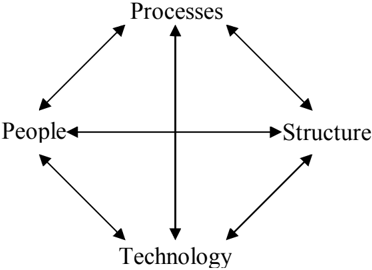
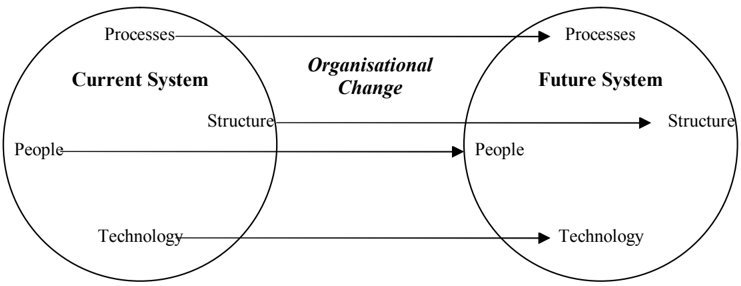
The article develops the design-actuality gaps model to explain why many information systems in developing countries fail totally or partially.
Overview
CoChat Summary
## TL;DR
The paper argues that many information systems in developing countries fail totally or partially, and proposes a contingency-theory-based model of “design-actuality gaps” to explain why. It identifies two high-risk gap types—country context gaps and hard-soft gaps—and also discusses constraints on local improvisation.
## Key findings
- The paper states that, alongside successes, “many information systems in developing countries can be categorized as failing either totally or partially.”
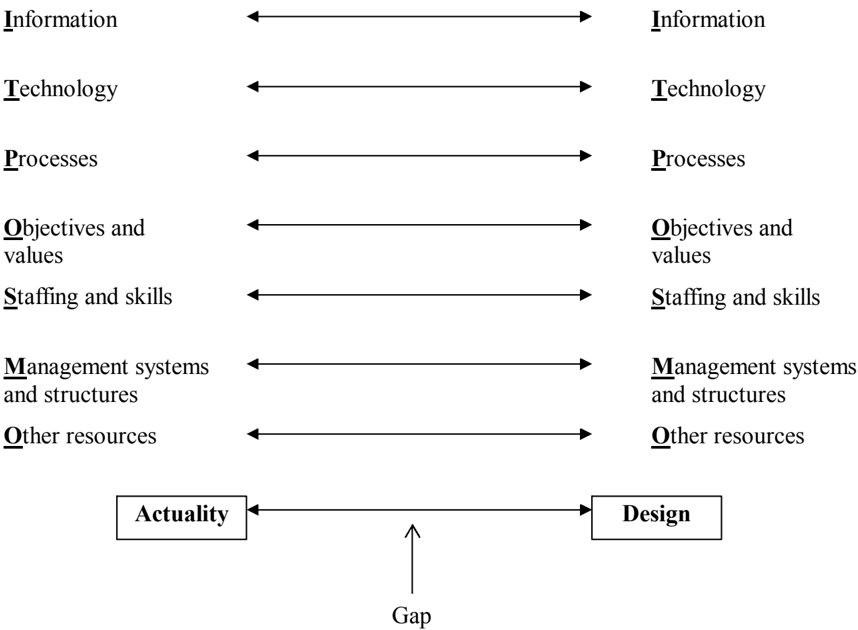
- It develops the notion of “design-actuality gaps,” defined as “the match or mismatch between IS designs and local user actuality.”
- The model highlights two “high-risk archetypes” affecting IS in developing countries: “country context gaps” and “hard-soft gaps.”
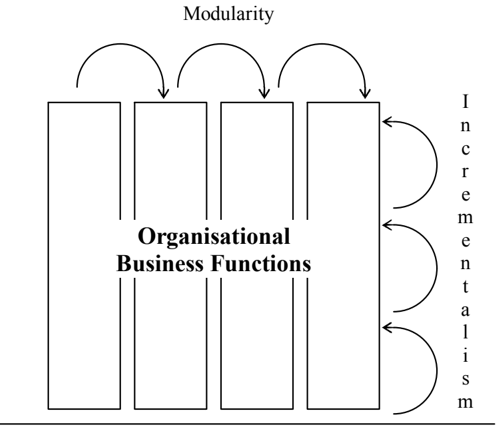
- The model is also presented as useful for explaining “the constraints that exist to local IS improvisations in developing countries.”
## Methods
- The paper is a journal article that develops a conceptual model “drawing on contingency theory.”
- The abstract does not specify a dataset, sample, or number of cases; the text only says the article presents “evidence” about IS in developing countries.
- The main analysis appears to be conceptual/theoretical, using the model to interpret IS cases and to refine IS theory.
## Limitations
- The paper does not report a specific sample size, case count, or empirical dataset in the provided text; this limits what can be assessed from the excerpt.
- The abstract does not state formal limitations or boundary conditions of the model beyond noting its focus on developing countries and local user actuality.
- The evidence base is not described in the provided text, so the scope of the claims cannot be independently evaluated from the excerpt alone.
Model-written summary. Check it against the paper before relying on it.
Integrity signals
Registry
Cites
Statistics
Figures
Verification
Claims the paper makes
0 Valid · 0 Not valid · 0 Not checked · 3 Own results and interpretations
A result the paper reports from its own data — it cites no other source for it, so there is none to check. The quote shows it is in the paper.
In the paper
“This article presents evidence that-alongside the successes-many information systems in developing countries can be categorized as failing either totally or partially.”
plain- Asserted: passes — The authors put it forward as true.
- Checkable: passes — It can be checked against evidence.
- Load-bearing: passes — The paper’s conclusions depend on it.
- Based: passes — The paper gives a reason why it holds.
A conclusion the paper draws from its own results — it cites no other source for it, so there is none to check. The quote shows it is in the paper.
In the paper
“The model draws on contingency theory in order to advance the notion of design-actuality gaps: the match or mismatch between IS designs and local user actuality.”
plainstates a possible cause- Asserted: passes — The authors put it forward as true.
- Checkable: passes — It can be checked against evidence.
- Load-bearing: passes — The paper’s conclusions depend on it.
- Based: passes — The paper gives a reason why it holds.
- Rests on an assumption not shown here.
- It may state two separate claims as one. 1
Claims other papers make about this one
Each is checked against this paper’s own text: does it say what the citing paper says it does?
In the citing paper
“This suggests that adoption can be seen as simply the first and perhaps least problematic phase in the drive towards the integration of an innovation into the health system. The greater risk is that of ‘sustainability failure’ [25, 26]”
From Beyond pilotitis: taking digital health interventions to the national level in China and Uganda (2017) · cites this paper as [26]
Citations
Cites
Task-Technology Fit and Individual Performance
Goodhue, D. L., & Thompson, R. L. (1995) · MIS Quarterly · doi:10.2307/249689 · Cited by 6,006 · cited 1×
“IS implementation models drawing on this theme have involved e t between “tool”/“technology” and “task” ( Goodhue & Thompson, 1995; Agarwal & Sinha, 1996), or between multiple factors (Scott Morton, 1991; Southon et al., 1997).”
MethodSoftware Engineering Economics
Boehm, B. W. (2001) · Pioneers and Their Contributions to Software Engineering · doi:10.1007/978-3-642-48354-7_5 · Cited by 5,981
Thompson, V. A., & March, J. G. (1966) · American Sociological Review · doi:10.2307/2090830 · Cited by 3,351
The Concept of Fit in Strategy Research: Toward Verbal and Statistical Correspondence
Venkatraman, N. (1989) · The Academy of Management Review · doi:10.2307/258177 · Cited by 2,367
Suchman, L. A. (1987) · Cited by 2,279
The Concept of Fit in Strategy Research: Towards Verbal and Statistical Correspondence
Venkatraman, N. V. (1988) · DSpace@MIT (Massachusetts Institute of Technology) · Cited by 2,038
Improvising Organizational Transformation Over Time: A Situated Change Perspective
Orlikowski, W. J. (1996) · Information Systems Research · doi:10.1287/isre.7.1.63 · Cited by 1,952
Management strategies for information technology
(1990) · Long Range Planning · doi:10.1016/0024-6301(90)90040-b · Cited by 1,033
Shaping technology/building society
(1993) · Choice Reviews Online · doi:10.5860/choice.30-3774 · Cited by 939
The corporation of the 1990s: Information technology and organizational transformation
(1993) · Futures · doi:10.1016/0016-3287(93)90030-w · Cited by 886
Research works printed but not linked: 19
- Avgerou, C. 2000. The multiple rationalities of information systems development. In Information ? ows, local improvisations and work practices. Proceedings of the IFIP WG9.4 Conference 2000. Cape Town: IFIP.
- Avgerou C., 2000, Information technology in context, 1
- Bijker W. E., 1992, Shaping tech-nology/building society, 1
- Butler R., 1991, Designing organizations
- Goonatilake, L., Maizza-Neto, O., and Jayawardene, P. 2000. Enhancing enterprise competitiveness in developing countries through the promotion of management information and benchmarking tools. In Information ? ows, local improvisations and work practices. Proceedings of the IFIP WG9.4 Conference 2000. Cape Town: IFIP.
- IFIP WG9.4. 2000. Information ? ows, local improvisations and work practices. Proceedings of the IFIP WG9.4 Conference 2000. Cape Town: IFIP.
- Jayasuriya R., 1995, Medinfo ’95, 1603
- Korac-Boisvert N., 1995, Information Infrastructure and Policy, 4, 131
- Macias-Chapula, C. A. 2000. Issues learned, challenges and opportunities to implement a library automation project at Mexico’s General Hospital. In Information ? ows, local improvisations and work practices. Proceedings of the IFIP WG9.4 Conference 2000. Cape Town: IFIP.
- Calitz, A. P. 2000. Transforming work practices with IT. In Information ? ows, local improvisations and work practices. Proceedings of the IFIP WG9.4 Conference 2000. Cape Town: IFIP.
- Oyomno G. Z., 1996, Global information technology and socio-economic development, 19
- Puri, S. K., Chauhan, K. P. S., and Admedullah, M. 2000. Prospects of biological diversity information management. In Information ? ows, local improvisations and work practices. Proceedings of the IFIP WG9.4 Conference 2000. Cape Town: IFIP.
- Silva L. O., 2000, Outsourcing as an improvisation. In Information ? ows, local improvisations and work practices. Proceedings of the IFIP WG9.4 Conference 2000
- Walsham G., 2000, Information technology in context, 291
- Wynn, E. and deLyra, J. 2000. A strange attractor in the chaos of global IS development. In Information ? ows, local improvisations and work practices. Proceedings of the IFIP WG9.4 Conference 2000. Cape Town: IFIP.
- Cain P., 2001, Reinventing government in the information age, 135
- Kenny C., 2001, The Internet and economic growth in LDCs. Draft paper
- Kitiyadisai, K. 2000. The implementation of IT in reengineering the Thai Revenue Department. In Information ? ows, local improvisations and work practices. Proceedings of the IFIP WG9.4 Conference 2000. Cape Town: IFIP.
- Mundy D., 2001, Reinventing government in the information age, 271
Cited by
Items 601–700 of 1,386
Success and Failure of Local E-Government Projects: Lessons Learned from Egypt
AbdelSalam, H. M. E.-S., Reddick, C. G., & Kadi, H. A. E. (2012) · IGI Global eBooks · doi:10.4018/978-1-4666-1740-7.ch010 · Cited by 19
Exploring the situated context of knowledge management in e-government development
Huang, H., Yeo, B., & Trauth, E. M. (2006) · International Journal of Advanced Media and Communication · doi:10.1504/ijamc.2006.009735 · Cited by 7
“Heeks (2002, 2004) emphasised the importance of understanding context and inscription within e-government systems to support accommodation between such systems and their contexts.”
A foggy desert: Equitable information flow for a fogwater system in southwest Morocco
Dodson, L. L. (2014) · CU Scholar (University of Colorado Boulder) · Cited by 13
The Roles of intermediaries in the adoption of E-Government services in Saudi Arabia
Al‐Sobhi, F. (2011) · Brunel University Research Archive (BURA) (Brunel University London) · Cited by 17
A theoretical model for telemedicine : social and value outcomes in Sub-Saharan Africa.
Kifle, M. (2006) · DiVA (Stockholm University) · Cited by 9
Rethinking e-government failure: a readiness-based assessment of Indonesia’s digitalization efforts
Rusmini, R., Deliarnoor, N. A., Yuningsih, N. Y., & Sagita, N. I. (2025) · Cogent Social Sciences · doi:10.1080/23311886.2025.2559867 · Cited by 21
“…must be rooted in economic justice and societal stability before institutions such as administration or science can flourish. research conducted by heeks (2002), explains that 80% of e-government projects in developing countries fail because they do not pay attention to socio-economic…”
Kesiapan Mengadopsi Sistim Informasi Pada Rumah Sakit Pemerintah di Kota Padang
Pujani, V., Sermiaty, R., & Kotama, D. T. W. (2019) · Jurnal Nasional Teknologi dan Sistem Informasi · doi:10.25077/teknosi.v5i1.2019.9-16 · Cited by 7
The role of change agents in the adaptation and use of mobile money services in Kenya
Tuwei, D., & Tully, M. (2021) · Journal of African Media Studies · doi:10.1386/jams_00035_1 · Cited by 7
Technology Acceptance Factors for Implementing the E-Government Systems in Saudi Arabia
Amin, S. F., Saad, A. B., & Lajis, A. (2022) · Advances in Internet of Things · doi:10.4236/ait.2022.124008 · Cited by 8
GIS Implementation in Malaysian Statutory Development Plan System
Abdullah, M., Abdullah, A., & Zahari, R. K. (2012) · IGI Global eBooks · doi:10.4018/978-1-4666-2038-4.ch061 · Cited by 6
“(p. 102) Nevertheless, researchers tend to agree that organisational factors are more important than technological ones in ensuring a successful implementation of an information system (Abdullah et al., 2002; Heeks, 2002; Innes & Simpson, 1993; Ramasubramanian, 1999).”
InfluentialLEVERAGING E-GOVERNMENT FOR CITY TRANSFORMATION: A CASE STUDY OF "DIGITAL WUYI"
Xiao-ying, D., Yu, Y., Xin, W., et al. (2012) · Journal of the Association for Information Systems · Cited by 6
E-gov adoption model of the military organization in Indonesia
Wadjdi, A. F., & Budiastuti, D. (2015) · International Conference on Science in Information Technology · doi:10.1109/icsitech.2015.7407780 · Cited by 6
“There are still controversies and gaps [13], [14], [15], [16].”
Improving E-Government Project Management
Aikins, S. K. (2011) · IGI Global eBooks · doi:10.4018/978-1-4666-0086-7.ch003 · Cited by 6
“The likelihood of system failure in its implementation has also been linked to the extent of scale and scope (Pardo & Scholl, 2002; Heeks, 2002; Goldfinch, 2007), as well as the complexity (Melin & Axelson, 2009) of the system.”
O’Connor, Y., Heavin, C., Gallagher, J., & O’Donoghue, J. (2017) · Behaviour and Information Technology · doi:10.1080/0144929x.2017.1280537 · Cited by 6
“2001), cognitive (Kshetri 2008), and political factors (Heeks 2002).”
Software Industry Practice in Africa: Case Study Sudan
Alamdy, S., & Osman, R. (2017) · IEEE Annual Computer Software and Applications Conference (COMPSAC) · doi:10.1109/compsac.2017.218 · Cited by 6
“developing countries as identified in [17-22].”
Hagan, K. A., Lotsu, B. E., Hodowu, E. W., et al. (2022) · World Journal of Advanced Research and Reviews · doi:10.30574/wjarr.2022.13.2.0111 · Cited by 6
Jurado-González, J., & Gómez‐Barroso, J. L. (2022) · Technological and Economic Development of Economy · doi:10.3846/tede.2022.17104 · Cited by 9
Obeng-Amoako, G. O., Nyan, C. P., Clottey, J., et al. (2023) · Campbell Systematic Reviews · doi:10.1002/cl2.1353 · Cited by 6
“Retrieved August 12, 2022, from https://www. groundwater.org/get-informed/basics/wells.html Heeks 2002 Heeks, R. (2002).”
Quimno, V., Imran, A., & Turner, T. (2013) · AIS Electronic Library (AISeL) · Cited by 14
Addressing Data Collection Challenges in ICT for Development Projects
Potnis, D. D. (2015) · International Journal of Information Communication Technologies and Human Development · doi:10.4018/ijicthd.2015070104 · Cited by 6
Barriers for Sustainable e-Participation Process: The Case of Turkey
Karkın, N. (2013) · Public administration and information technology · doi:10.1007/978-1-4614-8462-2_12 · Cited by 11
TRACnet's absorption into the Rwandan HIV/AIDS response
Svoronos, T., Jillson, I. A., & Nsabimana, M. M. (2008) · International Journal of Healthcare Technology and Management · doi:10.1504/ijhtm.2008.020197 · Cited by 6
Harker, N., MYERS, B. J., Fakier, N., Parry, C. D. H., & Carelse, J. (2010) · Drugs Education Prevention and Policy · doi:10.3109/09687630903505519 · Cited by 6
“This highlights the need for future DIS to focus not only on technical functionality, but also on the ‘soft issues’ such as organizational support for the proposed system (Heeks, 2002).”
Issues in the Transition to CIO Role in the Public Sector of Developing Countries
Hussain, B., Turner, T., & Imran, A. (2016) · Proceedings of the ... Annual Hawaii International Conference on System Sciences/Proceedings of the Annual Hawaii International Conference on System Sciences · doi:10.1109/hicss.2016.379 · Cited by 6
“The context of developing countries is a complex web of actors, agencies, and issues, including social, cultural, and political matters together with slow reform processes, which requires an understanding of contextual issues while implementing ICT for development [19-23].”
Cavalheiro, G. M. D. C., & Jóia, L. A. (2016) · Public Administration and Development · doi:10.1002/pad.1753 · Cited by 6
Criteria for Assessing the Success of E-Government Projects
Bouaziz, F., & Chaabouni, J. (2013) · Advances in electronic government, digital divide, and regional development book series · doi:10.4018/978-1-4666-4058-0.ch015 · Cited by 6
Virkar, S. (2010) · IGI Global eBooks · doi:10.4018/978-1-61520-997-2.ch006 · Cited by 6
Information Systems Success: A Review from a Bibliometric Analysis Focus
Martínez, H., Ardila, L. E. B., & Camacho, J. (2012) · IGI Global eBooks · doi:10.4018/978-1-4666-0170-3.ch004 · Cited by 8
Park, K. R. (2017) · Proceedings of the ... Annual Hawaii International Conference on System Sciences/Proceedings of the Annual Hawaii International Conference on System Sciences · doi:10.24251/hicss.2017.312 · Cited by 6
“The high rate of failure in information systems has often been discussed, in particular, 1) in the public sector that drives and manages the majority of ICT initiatives [52], [53], and 2) in the context of developing countries [54], [55].”
Strengthening the Public Sector Accounting Through ICT: The Experience of a Developing Country
Rajib, S. U., Sajib, M. Q. U., & Hoque, M. (2017) · Springer eBooks · doi:10.1007/978-3-319-56523-1_6 · Cited by 8
Vannini, S., Nemer, D., Halabi, A., Sabiescu, A. G., & David, S. (2017) · The Journal of Community Informatics · doi:10.15353/joci.v13i2.3311 · Cited by 6
“Evidence and success stories supporting that ICTs can improve the conditions of underserved communities have been reiterated as models to draw upon (Unwin, 2009; Weigel & Waldburger, 2004), fueling the hype and concealing the many failures the field has seen (Dodson, Sterling, & Bennett, 2013; Heeks, 2002).”
Lessa, L., Anteneh, S., Klischewski, R., et al. (2015) · doi:10.1109/afrcon.2015.7332017 · Cited by 6
“Although it is quite possible for a project to sustain without being successful [11], sustainability is still important for success because unsustainability is a form of failure [9].”
User Interface Design of E-Learning System for Functionally Illiterate People
Rahman, A., & Fukuda, A. (2015) · International Journal of Advanced Computer Science and Applications · doi:10.14569/ijacsa.2015.061118 · Cited by 6
Cadastro Territorial Multifinalitário: dados e problemas de implementação do convencional ao 3D e 4D
Paixão, S. K. S., Nichols, S., & Carneiro, A. F. T. (2012) · Boletim de Ciências Geodésicas · doi:10.1590/s1982-21702012000100001 · Cited by 6
ICT Development in North Korea: Changes and Challenges
Lee, H., & Hwang, J. (2004) · Information Technologies and International Development · doi:10.1162/1544752043971206 · Cited by 11
ERP failure in developing countries: A case study in India
Chatterjee, S. (2015) · IEEE India Conference · doi:10.1109/indicon.2015.7443222 · Cited by 10
“2 with seven dimensions [26].”
Softbridge : a socially aware framework for communication bridges over digital divides
Tucker, W. D. (2009) · Open University of Cape Town (University of Cape Town) · Cited by 9
Sweisi, N. A. (2010) · OpenGrey (Institut de l'Information Scientifique et Technique) · Cited by 11
Abdallah-Ou-Moussa, S., Wynn, M. G., & Kharbouch, O. (2025) · International Journal of Financial Studies · doi:10.3390/ijfs13030124 · Cited by 18
E-Government and Public Trust in Developing Countries: A Systematic Review and Research Agenda
Nyadzi, B. K., & Morris, J. (2026) · International Journal of Public Administration · doi:10.1080/01900692.2025.2597453 · Cited by 24
“The focus on developing countries is critical for several reasons: first, developing countries face unique governance challenges characterized by weaker institutional frameworks, higher corruption levels, and less stable political environments (Heeks, 2002; Janowski, 2015).”
Ngoma, C., Kimaro, H., Igira, F. T., Mukulu, J., Njau, C., Mnaya, A., & Mwaga, W. (2012) · NORA - Norwegian Open Research Archives · Cited by 8
Thomas, V., Kalidindi, B., Waghmare, A., Bhatia, A., Raj, T. D. S., & Balsari, S. (2023) · JMIR Formative Research · doi:10.2196/45250 · Cited by 10
“When the realities of health systems are not considered during the design phase, the ensuing design-reality gap becomes irreconcilable, leading to poor system use and system failure [67].”
Mu, R., & Wang, Y. (2024) · Journal of Organizational Change Management · doi:10.1108/jocm-01-2024-0026 · Cited by 6
Cullen, R. J., & Hassall, G. H. (2013) · Hawaii International Conference on System Sciences (HICSS) · doi:10.1109/hicss.2013.86 · Cited by 5
McDermott‐Levy, R., & Weatherbie, K. (2012) · Public Health Nursing · doi:10.1111/j.1525-1446.2012.01047.x · Cited by 5
Framing 'ICT Access in Rural Africa'
van Stam, G. (2014) · Cited by 6
What can be controlled: actionable ICT4D in the case of Palestine
Nuseibeh, H. Z., Hevner, A. R., & Collins, R. W. (2017) · Information Technology for Development · doi:10.1080/02681102.2017.1357526 · Cited by 6
“Section 2 draws on contingency theory (Avgerou, 2010; Conteh & Ohemeng, 2009; Heeks, 2002) as extended by Sinha and Van de Ven (2005) to build a unified framework that provides a general way to analyze and understand a country’s unique ICT4D situation.”
Designing a Credit Facility for Women Entrepreneurs
Alibhai, A. S., Achew, M. B., Strobbe, F., & Coleman, R. D. (2020) · World Bank, Washington, DC eBooks · doi:10.1596/34013 · Cited by 5
“‐Vendors push foreign solutions not adapted to local realities (Heeks 2002, 2003; Avgerou 2000).”
Ramoshaba, D. J., & Kgarose, M. (2022) · International Journal of Research in Business and Social Science (2147-4478) · doi:10.20525/ijrbs.v11i9.2192 · Cited by 5
“On the other hand, Heeks (2002) and Rajesh (2003) found that students face challenges during online learning and teaching which requires them to develop coping strategies.”
Effectiveness of social media agricultural information on farmer’s knowledge
Pattabhi, S. G., Prashanth, P., Sreenivasulu, M., et al. (2023) · Environment Conservation Journal · doi:10.36953/ecj.11432297 · Cited by 5
Towards an E-Government Enterprise Architecture Framework for Developing Economies
Namagembe, F., Nakakawa, A., Tulinayo, F. P., Proper, H. A., & Overbeek, S. J. (2023) · Complex Systems Informatics and Modeling Quarterly · doi:10.7250/csimq.2023-35.02 · Cited by 9
Medical device management reform, United Republic of Tanzania
Abdallah, A.-K., Haule, S. S. C., Werlein, R., et al. (2024) · Bulletin of the World Health Organization · doi:10.2471/blt.23.290636 · Cited by 5
Wachira, D., Muturi, P. N., & Sirma, J. (2014) · Cited by 5
Effah, J. K., & Abbeyquaye, G. (2014) · The African journal of information systems · Cited by 5
Bii, H., & Gichoya, D. (2006) · The Electronic Journal of Information Systems in Developing Countries · doi:10.1002/j.1681-4835.2006.tb00173.x · Cited by 5
“The conditions that prevailed portray a design reality gap described by Heeks (2002a).”
InfluentialKnowledge-creation in student software-development teams
Shongwe, M. M. (2015) · South African journal of information management · doi:10.4102/sajim.v17i1.613 · Cited by 8
Factors affecting the sustainability of ICT intervention for agricultural development -A review
Wadkar, S. K., Argade, S. D., & Singh, K. (2013) · Agricultural Reviews · doi:10.5958/j.0976-0741.34.3.004 · Cited by 7
“However, many of these ICT interventions have failed, and the sustainability of them is an (unresolved?) problem with few success stories (Heeks, 2002, 2008, Toyama, 2010).”
BackgroundBusca da informação em marketing: a perspectiva da ciência da informação
Henrique, L., & Barbosa, R. R. (2009) · Revista de Administração de Empresas · doi:10.1590/s0034-75902009000200008 · Cited by 20
Constraints of ICT in Lifelong Learning on Disadvantaged Women
Hallberg, D., Hansson, H., & Nilsson, A. G. (2014) · The Electronic Journal of Information Systems in Developing Countries · doi:10.1002/j.1681-4835.2014.tb00437.x · Cited by 8
“Using ICT in lifelong learning is nonetheless a complex matter surrounded by failures (Clemens & Demombynes, 2010; Heeks, 2002).”
BackgroundMoens, N. P., Broerse, J. E. W., & Bunders, J. (2008) · The International Journal of Education and Development using Information and Communication Technology (The University of the West Indies) · Cited by 5
ICIS 2009 PHOENIX UNDERSTANDING NET BENEFITS: A CITIZEN-BASED PERSPECTIVE ON EGOVERNMENT SUCCESS
Scott, M., DeLone, W. H., & Golden, W. (2009) · Cited by 5
Information Technology for Development in Small and Medium-Sized Enterprises
Xiong, J., & Qureshi, S. (2015) · DigitalCommons@UNO · Cited by 5
A Perspective on ICT Diffusion in the Arab Region
Abdallah, S., & Albadri, F. A. (2011) · IGI Global eBooks · doi:10.4018/978-1-60960-048-8.ch001 · Cited by 6
“Heeks (2002) argues that ICT project failures in the developing countries is higher than developed countries, possibly due to lack of technical and human infrastructure.”
The implementation of ERP systems in Iranian manufacturing SMEs
Rezaeian, M., & Wynn, M. G. (2016) · UCL Discovery (University College London) · Cited by 5
Sahay, S., & Mukherjee, A. S. (2017) · IFIP advances in information and communication technology · doi:10.1007/978-3-319-59111-7_40 · Cited by 5
“In the public health sector of LMICs, this problem is especially acute [4].”
Evaluation of Software Quality to Improve Application Performance Using Mc Call Model
Lestantri, I. D., & Rosini, R. (2018) · Journal of Information Systems Engineering and Business Intelligence · doi:10.20473/jisebi.4.1.18-24 · Cited by 5
“Factors that cause software failure include mismatch between design and implementation[2].”
Mungai, P., Jiménez, A., Kleine, D., & Belle, J.-P. V. (2019) · Communications in computer and information science · doi:10.1007/978-3-030-11235-6_17 · Cited by 5
“Farmers – 43% of whom were women, were able to speak to a consultant for agricultural expertise and advice [37].”
BackgroundWhat Motivates ICT4D Champions?
Renken, J. (2019) · IFIP advances in information and communication technology · doi:10.1007/978-3-030-18400-1_25 · Cited by 10
Critical Factors Influencing e-Government Adoption in The Gambia
Bojang, M. B. S. (2021) · Society & Sustainability · doi:10.38157/society_sustainability.v3i1.232 · Cited by 5
“Heeks has argued that 85% of e-Government initiatives in developing countries can either be categorized as total or partial failures (Heeks, 2002).”
BackgroundICT4D evaluation: its foci, challenges, gaps, limitations, and possible approaches for improvement
Yim, M., & Gómez, R. (2021) · Information Technology for Development · doi:10.1080/02681102.2021.1951151 · Cited by 5
“In the early 2000s, Heeks (2002, pp. 101 – 102) presented a typology of information system (IS) projects: “ total failure ” ( “ of an initiative never implemented or in which a new system was implemented but immediately abandoned ” ), “ partial failure ” ( “ in which major goals are unattained or…”
BackgroundInfluentialMinding the Design Reality Gap: An Empirical Evaluation of Telecentre Initiatives in Rural Ghana
Ayoung, D. A., & Abbott, P. Y. (2021) · The International Journal of Information Diversity & Inclusion (IJIDI) · doi:10.33137/ijidi.v5i3.36213 · Cited by 5
Alexandre, C., Toillier, A., & Mignon, S. (2022) · Journal of Innovation Economics & Management · doi:10.3917/jie.pr1.0127 · Cited by 5
A Longitudinal Scientometric Analysis of Research Published in IFIP 9.4 (2002-2013)
Gallivan, M. J., & Tao, Y. Y. (2013) · AIS Electronic Library (AISeL) · Cited by 6
The Implementation of G2B Inter-Organizational Information Systems: A Dialectical Design Perspective
Wiredu, G. O. (2012) · The African journal of information systems · Cited by 6
Omary, Z. D., & Kalinga, E. (2017) · Journal of health informatics in developing countries · Cited by 9
O’Connor, Y., O’Sullivan, T., Gallagher, J., Heavin, C., Hardy, V., & O’Donoghue, J. (2017) · The Electronic Journal of Information Systems in Developing Countries · doi:10.1002/isd2.12011 · Cited by 11
“…broader sociotechnical context for which the IT artefact is being developed and will be evaluated (Avgerou, 2008; Chib, van Velthoven, & Car, 2015; Heeks, 2002) and (2) the design and build approach undertaken to develop an innovative relevant and rigorous IT solution (Niemöller, 2016;…”
InfluentialE-Government Project Design in Developing Countries
Frost, D., & Lal, B. (2018) · IFIP advances in information and communication technology · doi:10.1007/978-3-030-04315-5_12 · Cited by 9
Das, S., & Masiero, S. (2019) · International Conference on Information and Communication Technologies and Development (ICTD) · doi:10.1145/3287098.3287135 · Cited by 5
“What such narratives and observation point to is a structural issue, revealing a gap [14] between how the system is designed and the real access problems from which users are affected.”
Using PESTELMO to Frame HCI Contextual Development in Developing Countries
Mkude, C. G., & Wimmer, M. A. (2019) · IFIP advances in information and communication technology · doi:10.1007/978-3-030-19115-3_27 · Cited by 5
“The notion that information and communication technologies, tools and systems made in developed countries cannot simply be directly applied to developing countries has also been discussed by different scholars (see [4][5][8][11][13]).”
Healthcare Technology Transfer in Sub-Saharan Africa: An Inductive Approach
Marais, R., Grobbelaar, S. S. S., & de Kock, I. H. (2019) · International Journal of Innovation and Technology Management · doi:10.1142/s021987701950055x · Cited by 5
Development Impacts of Free Public Wi-Fi in Johannesburg
Backhouse, J., & Chauke, H. (2020) · Advances in information quality and management · doi:10.4018/978-1-7998-2610-1.ch018 · Cited by 6
Ikwunne, T. A., Hederman, L., & Wall, P. J. (2020) · Lecture notes in computer science · doi:10.1007/978-3-030-60114-0_46 · Cited by 8
Empathetic consultancy: a reflective approach to ICTD.
Bass, J. M. (2009) · Open Access Institutional Repository at Robert Gordon University (Robert Gordon University) · Cited by 5
Success Factors in Public Access Computing for Development
Gómez, R. (2011) · International Journal of Information Communication Technologies and Human Development · doi:10.4018/jicthd.2011040102 · Cited by 6
Lessa, L., Negash, S., & Belachew, M. (2012) · International Conference on Theory and Practice of Electronic Governance · doi:10.1145/2463728.2754302 · Cited by 5
Pscheidt, M. (2011) · Information Technology for Development · doi:10.1080/02681102.2011.568221 · Cited by 6
“The ITPOSMO model (Heeks, 2002) is used here to analyze gaps in several dimensions between IS design and actual reality, i.e. differences between the actuality before IS introduction and the assumptions that guided IS design.”
InfluentialICT for Good: Opportunities, Challenges and the Way Forward
Eshete, B., Mattioli, A., Villafiorita, A., & Weldemariam, K. (2010) · International Conference on the Digital Society · doi:10.1109/icds.2010.58 · Cited by 6
“Unfortunately, several projects reportedly failed before their actual delivery of the intended services to the society (see, e.g., [13], [14], [15]).”
Adoption of E-Government Services in Developing Countries: An Empirical Evaluation
AlAwadhi, S. A., & Morris, A. (2012) · IGI Global eBooks · doi:10.4018/978-1-4666-1740-7.ch007 · Cited by 10
Tucker, W. D. (2015) · Springer eBooks · doi:10.1007/978-1-4471-6618-4_10 · Cited by 6
“8 (Heeks 2002), where a researcher's tacit cultural assumptions can cause disconnect between perceived and actual user needs.”
Mengesha, N. T. (2010) · The African journal of information systems · Cited by 5
Ruxwana, N., Herselman, M. E., Pottas, D., & Ouma, S. (2010) · Health Information Management Journal · doi:10.1177/183335831003900106 · Cited by 8
“HEALTH INFORMATION MANAGEMENT JOURNAL Vol 39 No 1 2010 ISSN 1833-3583 (PRINT) ISSN 1833-3575 (ONLINE) 37 the South African healthcare system is higher than that in other developed countries, due to endemic limitations and problems (Braa & Hedberg 2002; Heeks 2002; Littlejohns, Wyatt & Garcivan 2003; Mbananga, Madale &…”
Challenges and Opportunities in the Integration of HIS : Case Study from Zanzibar
Nyella, E. (2007) · NORA - Norwegian Open Research Archives · Cited by 6
Global Scaling of Health Information Infrastructures: Circulating Translations
Sæbø, J. I. (2013) · NVA (Nasjonalt vitenarkiv) · Cited by 10
Conexiones del desarrollo: Impacto de las nuevas tecnologías de la información
Shapiro, J. P., Berlinski, S., Pinzon, M., Severín, E., Azevedo, V. M. R., Cathles, A., Cristia, J., Crespi, G., Grazzi, M., Savonitto, B., et al. (2011) · doi:10.18235/0005896 · Cited by 5
Velibeyoğlu, K. (2004) · İYTE (İZMİR YÜKSEK TEKNOLOJİ ENSTİTÜSÜ) · Cited by 5
Digital Adoption and Productivity in Rentier Economies: Evidence from the GCC
Shammre, A. S. A. (2025) · Systems · doi:10.3390/systems13111038 · Cited by 5
“Strong governance actively strengthens the core R1 (Adoption → Productivity → Investment) loop by ensuring efficient public investment, fostering competition, and providing a reliable legal environment for firm-level innovation [17,18].”
Navigating Multiple Crises: An Analysis of Digital Transformation in Lebanese Public Administration
Harb, B. (2026) · Administrative Sciences · doi:10.3390/admsci16020069 · Cited by 9
IS Project Escalation in Developing Countries
Brooks, L., & Eke, B. (2010) · Journal of the Association for Information Systems · Cited by 4
Manda, T. D., & Sanner, T. A. (2014) · International Journal of User-Driven Healthcare · doi:10.4018/ijudh.2014010101 · Cited by 5
“…posit that IT initiatives in developing countries often fall apart due to inadequate local human and technical capacity (AbouZah & Boerma, 2005; Heeks, 2002); over reliance on external financial and technical support (AbouZah & Boerma, 2005; Heeks, 2002); weak enabling infrastructure, resource…”
Metadata
- Authors
- Heeks, R.
- Corresponding author
- Heeks, Richard
- ORCID
- Heeks, Richard
- Venue
- The Information Society
- Publisher
- Informa UK Limited
- Published
- 2002-03
- Volume
- 18
- Issue
- 2
- Pages
- 101-112
- ISSN
- 0197-2243 (ISSN-L)
- 1087-6537
- OpenAlex
- W2136941206
- Semantic Scholar
- dd6c8931d276f258d356e65416018725912d2dbd
- Cited by
- 1,390
- References
- 53
- Citations by year
- 2026: 71 · 2025: 42 · 2024: 37 · 2023: 41 · 2022: 49 · 2021: 60 · 2020: 58 · 2019: 72 · 2018: 39 · 2017: 70 · 2016: 81 · 2015: 114 · 2014: 95 · 2013: 97 · 2012: 97
- FWCI
- 34.02
- Type
- journal article
- Language
- en
- Open access
- Licence
- other-oa
- Locations
- The Information Society (publishedVersion)
- Research Explorer (The University of Manchester) (publishedVersion, other-oa)
- Topics
- Physical Sciences › Computer Science › Information Systems › ICT in Developing Communities
- Social Sciences › Business, Management and Accounting › Management Information Systems › Information Systems Theories and Implementation
- Social Sciences › Economics, Econometrics and Finance › Economics and Econometrics › ICT Impact and Policies
- Keywords
- contingency theory, IS success factors
About these checks
Registry, retraction, Cites and statistics results are computed, not judged, with one exception: a printed reference that no index lists is read once by a model before it counts as a citation error. Claims are extracted by a model and kept only when their quote appears verbatim in the text; each cited source is then checked, with a model’s help, for whether it says what the claim relies on. Those verdicts can be wrong — read the claim’s quote and the cited source before relying on one.
A language model drew the claims from the paper on 2026-10-10, under version 3 of the claim definition (model deepseek-v4.1-flash, prompt extract-v3).
A second model labelled each claim on 2026-10-10 (model jev-1.13-20260917, definition revision gold-guideline-v0.2).
Statistics and arithmetic are recomputed, not judged.
Confidence bands are shown only for fields calibrated on our annotated test set. None is calibrated yet, so no band is shown.
What counts as a claim ›How we measure confidence ›How we check this ›
Are you an author, or do you see a problem with this page? Request a review
Data sources
Bibliographic data: Semantic Scholar, OpenAlex, Crossref.
Contains information from the Semantic Scholar Academic Graph Datasets, made available under the ODC Attribution License (ODC-BY 1.0).
Semantic Scholar’s data is described in: Kinney, R., et al. (2023). The Semantic Scholar Open Data Platform. arXiv:2301.10140.
