

Information Systems and Developing Countries: Failure, Success, and Local Improvisations
Open accessThe DOI matches its Crossref record; 53 of the 53 references it cites were found in a registry or an index.
Abstract
The article develops the design-actuality gaps model to explain why many information systems in developing countries fail totally or partially.
Overview
CoChat Summary
## TL;DR
The paper argues that many information systems in developing countries fail totally or partially, and proposes a contingency-theory-based model of “design-actuality gaps” to explain why. It identifies two high-risk gap types—country context gaps and hard-soft gaps—and also discusses constraints on local improvisation.
## Key findings
- The paper states that, alongside successes, “many information systems in developing countries can be categorized as failing either totally or partially.”
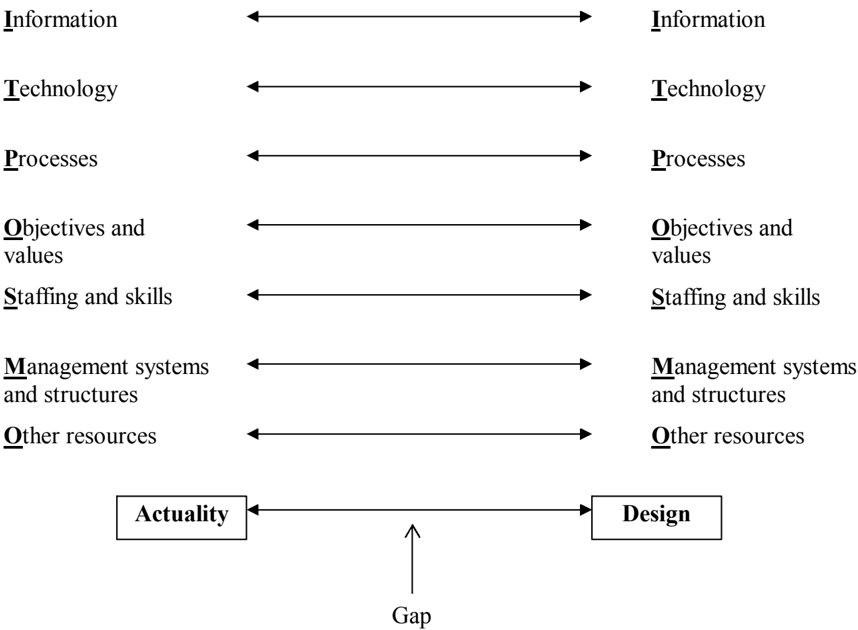
- It develops the notion of “design-actuality gaps,” defined as “the match or mismatch between IS designs and local user actuality.”
- The model highlights two “high-risk archetypes” affecting IS in developing countries: “country context gaps” and “hard-soft gaps.”
- The model is also presented as useful for explaining “the constraints that exist to local IS improvisations in developing countries.”
## Methods
- The paper is a journal article that develops a conceptual model “drawing on contingency theory.”
- The abstract does not specify a dataset, sample, or number of cases; the text only says the article presents “evidence” about IS in developing countries.
- The main analysis appears to be conceptual/theoretical, using the model to interpret IS cases and to refine IS theory.
## Limitations
- The paper does not report a specific sample size, case count, or empirical dataset in the provided text; this limits what can be assessed from the excerpt.
- The abstract does not state formal limitations or boundary conditions of the model beyond noting its focus on developing countries and local user actuality.
- The evidence base is not described in the provided text, so the scope of the claims cannot be independently evaluated from the excerpt alone.
Model-written summary. Check it against the paper before relying on it.
Integrity signals
Registry
Cites
Statistics
Figures
Verification
Claims the paper makes
0 Valid · 0 Not valid · 0 Not checked · 3 Own results and interpretations
A result the paper reports from its own data — it cites no other source for it, so there is none to check. The quote shows it is in the paper.
In the paper
“This article presents evidence that-alongside the successes-many information systems in developing countries can be categorized as failing either totally or partially.”
plain- Asserted: passes — The authors put it forward as true.
- Checkable: passes — It can be checked against evidence.
- Load-bearing: passes — The paper’s conclusions depend on it.
- Based: passes — The paper gives a reason why it holds.
A conclusion the paper draws from its own results — it cites no other source for it, so there is none to check. The quote shows it is in the paper.
In the paper
“The model draws on contingency theory in order to advance the notion of design-actuality gaps: the match or mismatch between IS designs and local user actuality.”
plainstates a possible cause- Asserted: passes — The authors put it forward as true.
- Checkable: passes — It can be checked against evidence.
- Load-bearing: passes — The paper’s conclusions depend on it.
- Based: passes — The paper gives a reason why it holds.
- Rests on an assumption not shown here.
- It may state two separate claims as one. 1
Claims other papers make about this one
Each is checked against this paper’s own text: does it say what the citing paper says it does?
In the citing paper
“This suggests that adoption can be seen as simply the first and perhaps least problematic phase in the drive towards the integration of an innovation into the health system. The greater risk is that of ‘sustainability failure’ [25, 26]”
From Beyond pilotitis: taking digital health interventions to the national level in China and Uganda (2017) · cites this paper as [26]
Citations
Cites
Task-Technology Fit and Individual Performance
Goodhue, D. L., & Thompson, R. L. (1995) · MIS Quarterly · doi:10.2307/249689 · Cited by 6,006 · cited 1×
“IS implementation models drawing on this theme have involved e t between “tool”/“technology” and “task” ( Goodhue & Thompson, 1995; Agarwal & Sinha, 1996), or between multiple factors (Scott Morton, 1991; Southon et al., 1997).”
MethodSoftware Engineering Economics
Boehm, B. W. (2001) · Pioneers and Their Contributions to Software Engineering · doi:10.1007/978-3-642-48354-7_5 · Cited by 5,981
Thompson, V. A., & March, J. G. (1966) · American Sociological Review · doi:10.2307/2090830 · Cited by 3,351
The Concept of Fit in Strategy Research: Toward Verbal and Statistical Correspondence
Venkatraman, N. (1989) · The Academy of Management Review · doi:10.2307/258177 · Cited by 2,367
Suchman, L. A. (1987) · Cited by 2,279
The Concept of Fit in Strategy Research: Towards Verbal and Statistical Correspondence
Venkatraman, N. V. (1988) · DSpace@MIT (Massachusetts Institute of Technology) · Cited by 2,038
Improvising Organizational Transformation Over Time: A Situated Change Perspective
Orlikowski, W. J. (1996) · Information Systems Research · doi:10.1287/isre.7.1.63 · Cited by 1,952
Management strategies for information technology
(1990) · Long Range Planning · doi:10.1016/0024-6301(90)90040-b · Cited by 1,033
Shaping technology/building society
(1993) · Choice Reviews Online · doi:10.5860/choice.30-3774 · Cited by 939
The corporation of the 1990s: Information technology and organizational transformation
(1993) · Futures · doi:10.1016/0016-3287(93)90030-w · Cited by 886
Research works printed but not linked: 19
- Avgerou, C. 2000. The multiple rationalities of information systems development. In Information ? ows, local improvisations and work practices. Proceedings of the IFIP WG9.4 Conference 2000. Cape Town: IFIP.
- Avgerou C., 2000, Information technology in context, 1
- Bijker W. E., 1992, Shaping tech-nology/building society, 1
- Butler R., 1991, Designing organizations
- Goonatilake, L., Maizza-Neto, O., and Jayawardene, P. 2000. Enhancing enterprise competitiveness in developing countries through the promotion of management information and benchmarking tools. In Information ? ows, local improvisations and work practices. Proceedings of the IFIP WG9.4 Conference 2000. Cape Town: IFIP.
- IFIP WG9.4. 2000. Information ? ows, local improvisations and work practices. Proceedings of the IFIP WG9.4 Conference 2000. Cape Town: IFIP.
- Jayasuriya R., 1995, Medinfo ’95, 1603
- Korac-Boisvert N., 1995, Information Infrastructure and Policy, 4, 131
- Macias-Chapula, C. A. 2000. Issues learned, challenges and opportunities to implement a library automation project at Mexico’s General Hospital. In Information ? ows, local improvisations and work practices. Proceedings of the IFIP WG9.4 Conference 2000. Cape Town: IFIP.
- Calitz, A. P. 2000. Transforming work practices with IT. In Information ? ows, local improvisations and work practices. Proceedings of the IFIP WG9.4 Conference 2000. Cape Town: IFIP.
- Oyomno G. Z., 1996, Global information technology and socio-economic development, 19
- Puri, S. K., Chauhan, K. P. S., and Admedullah, M. 2000. Prospects of biological diversity information management. In Information ? ows, local improvisations and work practices. Proceedings of the IFIP WG9.4 Conference 2000. Cape Town: IFIP.
- Silva L. O., 2000, Outsourcing as an improvisation. In Information ? ows, local improvisations and work practices. Proceedings of the IFIP WG9.4 Conference 2000
- Walsham G., 2000, Information technology in context, 291
- Wynn, E. and deLyra, J. 2000. A strange attractor in the chaos of global IS development. In Information ? ows, local improvisations and work practices. Proceedings of the IFIP WG9.4 Conference 2000. Cape Town: IFIP.
- Cain P., 2001, Reinventing government in the information age, 135
- Kenny C., 2001, The Internet and economic growth in LDCs. Draft paper
- Kitiyadisai, K. 2000. The implementation of IT in reengineering the Thai Revenue Department. In Information ? ows, local improvisations and work practices. Proceedings of the IFIP WG9.4 Conference 2000. Cape Town: IFIP.
- Mundy D., 2001, Reinventing government in the information age, 271
Cited by
Items 401–500 of 1,386
ECRM and customers: a case of Askari Commercial Bank, Pakistan
Ahmad, M. S., Rashid, S., & Ehtisham‐Ul‐Mujeeb (2012) · Business Strategy Series · doi:10.1108/17515631211286173 · Cited by 14
“According to Mosad (1995) and Shoniregun (2002), websites are the pre-requisite to providing electronic banking services.”
InfluentialImran, A., & Gregor, S. D. (2005) · ANU Open Research (Australian National University) · Cited by 14
Braa, J. A., & Titlestad, O. H. (2007) · Cited by 18
Adoption and use of computer technology among school principals in Botswana secondary schools
Totolo, A. (2011) · The International Information & Library Review · doi:10.1080/10572317.2011.10762882 · Cited by 26
“Heeks (2002) says, In a very direct sense, failure is also a problem because of the opportunity costs of resource investment in failure, as opposed to success.”
BackgroundPalmer, N. A., & Perkins, D. D. (2012) · Perspectives on Global Development and Technology · doi:10.1163/15691497-12341236 · Cited by 14
Are developing countries ready for first world waste policy instruments
Godfrey, L., & Nahman, A. (2007) · Cited by 14
Development of Health Information System in Zanzibar: Practical Implications
Lungo, J. H., & Igira, F. T. (2008) · Journal of health informatics in developing countries · Cited by 19
Guest editorial: Grand successes and failures in IT: Private and public sectors
Dwivedi, Y. K., Wastell, D. G., Henriksen, H. Z., & Dé, R. (2015) · Information Systems Frontiers · doi:10.1007/s10796-014-9543-0 · Cited by 16
“…Barker and Frolick 2003; Beynon-Davies 1995;1996; Bussen and Myers 1997; Cerpa and Verner 2009; Dwivedi et al. 2013a; Fitzgerald and Russo 2005; Heeks 2002; Kappelman et al. 2006; Lyytinen and Hirschheim 1988; McMaster and Wastell 2004; Nelson 2007; Sauer 1993; Yeo 2002), further progress is…”
BackgroundMoodley, D., Pillay, A. W., & Seebregts, C. J. (2012) · Lecture Notes in Computer Science · doi:10.1007/978-3-642-32355-3_8 · Cited by 13
“Developing countries have unique environments in which limited availability of infrastructure, specialized technical skills and financial resources impact on the development of systems [18] [25].”
Raheem, S., Addo, A., Shaffakat, S., & Lunberry, D. (2024) · The Information Society · doi:10.1080/01972243.2024.2382802 · Cited by 28
“Inclusive design considers these and recognizes users’ needs as changing and situational (Heeks 2002; Whitaker 2020).”
Enacting Openness in ICT4D Research
Loudon, M., & Rivett, U. (2014) · The MIT Press eBooks · doi:10.7551/mitpress/9724.003.0006 · Cited by 16
“In developing countries, the potential for “design-reality gaps” (Heeks, 2002) is particu-”
Effect of different types of knowledge intensive business services on innovation and performance
de Mendoza, M. H., Fernández, L. M. M., & Ortega‐Egea, T. (2024) · Technological Forecasting and Social Change · doi:10.1016/j.techfore.2024.123886 · Cited by 13
Thompson, E. C. (2006) · Current Sociology · doi:10.1177/0011392106058833 · Cited by 18
Jurado-González, J., & Gómez‐Barroso, J. L. (2016) · Information Technology for Development · doi:10.1080/02681102.2016.1155143 · Cited by 15
“Indeed, a critical vision of the way in which the Information Society is being promoted in developing countries can be traced back to early studies (Audenhove, Burgelman, Nulens, & Cammaerts, 1999; Heeks, 2002; Kuriyan, Ray, & Toyama, 2008; Lock-Teng, 2011; Wilson, 2003, to cite just a few).”
Cai, Y., Wang, D., Xia, C., & Wang, C. (2019) · The International Food and Agribusiness Management Review · doi:10.22434/ifamr2018.0088 · Cited by 13
Agbenyegah, A. T., & Dlamini, B. I. (2019) · Journal of Applied Business Research (JABR) · doi:10.19030/jabr.v35i3.10303 · Cited by 13
“In other words, most personal challenges as shown in this study bear similarities to studies in developing countries (Rajesh, 2003; Heeks, 2002; Dhanarajan, 2001).”
A stakeholder analysis of barriers to enterprise system adoption: the case of a transition economy
Soja, P. (2015) · Information Technology and Management · doi:10.1007/s10799-015-0245-1 · Cited by 20
Lemieux, V. L. (2016) · World Bank, Washington, DC eBooks · doi:10.1596/23647 · Cited by 14
Ogunleye, O. S., & Belle, J.-P. V. (2014) · IST-Africa Conference (IST-Africa) · doi:10.1109/istafrica.2014.6880656 · Cited by 13
Donner, J. (2004) · Cited by 13
E-Government Transformation in Tanzania: Status, Opportunities, and Challenges
Lupilya, E. C., & Jung, K. (2015) · The Korean Journal of Policy Studies · doi:10.52372/kjps30106 · Cited by 30
“The customer can be a government services citizen, a business, or even another government entity “Using the Internet and the UN & ASPA, (2002: 1) World-Wide-Web for delivering government information and services to citizens” Kumar et al. (2007) Basically, as a tool to improve services to all (G2C,…”
BackgroundInfluentialFuruholt, B. (2009) · Cited by 16
Sustainability Framework for E-Government Success
Lessa, L. (2019) · International Conference on Theory and Practice of Electronic Governance · doi:10.1145/3326365.3326396 · Cited by 13
“It is quite possible for a project to sustain without being successful [15].”
Content creation and dissemination by-and-for users in rural areas
Agarwal, S. K., Kumar, A., Nanavati, A. A., et al. (2009) · International Conference on Information and Communication Technologies and Development (ICTD) · doi:10.1109/ictd.2009.5426702 · Cited by 13
“This solution doesn't rely on Internet connectivity which is most often not available in the rural areas and most importantly, it allows end-users to directly interact with the services, thus removing the dependence on the kiosk operator.”
InfluentialGarff, P., Dahlin, E. C., Ward, C. J., et al. (2014) · International Journal for Service Learning in Engineering Humanitarian Engineering and Social Entrepreneurship · doi:10.24908/ijsle.v0i0.5146 · Cited by 13
Kwankam, S. Y. (2012) · Bulletin of the World Health Organization · doi:10.2471/blt.12.103770 · Cited by 13
Grunfeld, H. (2011) · Victoria University Research Repository (Victoria University) · Cited by 34
Digital transformations in Indian cities : between paper list and GIS map
Richter, C. (2014) · doi:10.3990/1.9789036536547 · Cited by 18
“The second is between “hard” rational design and “soft” political and behavioral actuality (Heeks, 2002).”
Abbas, R., Michael, K., Davlembayeva, D., Papagiannidis, S., & Pitt, J. V. (2024) · IEEE Transactions on Technology and Society · doi:10.1109/tts.2024.3375431 · Cited by 13
Ndaw, M. F. (2015) · World Bank, Washington, DC eBooks · doi:10.1596/28414 · Cited by 12
Challenges of Educational Technology Adoption in Africa
Ezumah, B. A. (2020) · Springer eBooks · doi:10.1007/978-3-030-53728-9_4 · Cited by 12
Voice-based web access in rural Africa
Gyan, N. B., de Boer, V., Bon, A., van Aart, C. J., Akkermans, H., Boyera, S., Froumentin, M., Grewal, A., & Allen, M. (2013) · ACM Web Science Conference (WebSci) · doi:10.1145/2464464.2464496 · Cited by 12
“In many of such instances, such projects have been shown to always fail [18].”
An assessment of Jordan's e-government maturity: a user-centric perceptive
Hujran, O. (2012) · International Journal of Electronic Governance · doi:10.1504/ijeg.2012.049801 · Cited by 12
Content development and management processes of ICT initiatives in Indian agriculture
Glendenning, C. J., & Ficarelli, P. P. (2011) · Information Development · doi:10.1177/0266666911425193 · Cited by 12
“ICTs essentially facilitate the creation, management, storage, retrieval and dissemination of relevant data, information and knowledge (Batchelor 2002; Heeks 2002).”
BackgroundRebranding Development Communications in Emergent India
Chakravartty, P. (2012) · Nordicom review/NORDICOM review · doi:10.2478/nor-2013-0026 · Cited by 17
“…in the ICTD field has meant that despite the fact that it is widely understood that most e-governance projects in the “developing world” fail (Heeks 2002, 2008), they continue to be celebrated in media and public policy circles for providing state accountability and fairer market access…”
Information technology adoption by principals in botswana secondary schools
Totolo, A. (2007) · Cited by 12
Afande, O. F. (2013) · Cited by 12
Steering E-Government Projects from Failure to Success
Lessa, L., Negash, S., & Belachew, M. (2014) · Advances in electronic government, digital divide, and regional development book series · doi:10.4018/978-1-4666-6296-4.ch011 · Cited by 12
E‐government implementation and monitoring: The case of Rwanda's ‘one‐stop’ E‐government
Bakunzibake, P., Klein, G. O., & Islam, M. S. (2019) · The Electronic Journal of Information Systems in Developing Countries · doi:10.1002/isd2.12086 · Cited by 12
Barriers to ideal transfer of climate change information in developing nations
Lund, B. D. (2019) · IFLA Journal · doi:10.1177/0340035219857751 · Cited by 13
Biometric Identification for Socioeconomic Development in Ghana
Effah, J. K., Owusu‐Oware, E., & Boateng, R. (2020) · Information Systems Management · doi:10.1080/10580530.2020.1732528 · Cited by 16
“However, developing country governments should take into account local contexts to avoid design-actuality gaps (Heeks, 2002b) when negotiating with international donor partners for support.”
BackgroundWyche, S. P. (2021) · Designing Interactive Systems Conference · doi:10.1145/3461778.3462140 · Cited by 14
“These failures have various causes (see [20]), including designers’ limited understanding of the contexts where their interventions will be used [19]; this has been described as the “design-reality gap” [34].”
Customer Service Information System for a Call Center
Kurniali, S., & Titan (2015) · Procedia Computer Science · doi:10.1016/j.procs.2015.07.569 · Cited by 12
Towards Supporting Community Information Seeking and Use
Nnadi, N., & Gurstein, M. B. (2007) · The Journal of Community Informatics · doi:10.15353/joci.v3i1.2388 · Cited by 14
“In developing countries, system designers are hired by governmental or non-profit agencies, and are usually from developed countries (Heeks, 2002).”
Information Systems Deployment in Libyan Oil Companies: Two Case Studies
Akeel, H., Wynn, M. G., & Zhang, S. (2013) · The Electronic Journal of Information Systems in Developing Countries · doi:10.1002/j.1681-4835.2013.tb00418.x · Cited by 12
“Heeks (2002) suggests that ‘information systems cases in developing countries help to elaborate such models and, in so doing, contribute to underlying theory.”
Cavalheiro, G. M. D. C., & Jóia, L. A. (2014) · Information Technology for Development · doi:10.1080/02681102.2014.910634 · Cited by 19
“By the same token, Heeks (2002) points out that the most extreme form of technical cooperation between government agencies of different countries occurs when developed country designers create an e-government application for a developed country context and this application is subsequently…”
Evaluations of the Impact of eHealth Technologies in Developing Countries: A Systematic Review
Blaya, J. A., Holt, B. R., & Fraser, H. (2008) · Cited by 16
Exploring Rural–Urban Education Divide in India
Bandyopadhyay, S., Bardhan, A., Dey, P., & Bhattacharyya, S. (2021) · Springer eBooks · doi:10.1007/978-981-33-6738-8_7 · Cited by 11
The design and evaluation of a photograph-sharing application for rural and urban Kenyan families
Oduor, E., Neustaedter, C., & Hennessy, K. (2016) · Personal and Ubiquitous Computing · doi:10.1007/s00779-016-0930-z · Cited by 13
Designing and Implementing E-Government Projects: Actors, Influences, and Fields of Play
Virkar, S. (2013) · IGI Global eBooks · doi:10.4018/978-1-4666-3640-8.ch007 · Cited by 12
Vannini, S., Rega, I., Sala, S., & Cantoni, L. (2015) · The Electronic Journal of Information Systems in Developing Countries · doi:10.1002/j.1681-4835.2015.tb00486.x · Cited by 17
“…of CMCs in Mozambique and is grounded on the concern of understanding the contextual reality as an essential requisite to guarantee the impact and sustainability of ICT-based interventions for development (Brunello, 2010; Heeks, 2002; Irani et al., 2010; Kleine & Unwin, 2009; Tedre et al., 2006).”
Johansen, J., Noll, J., & Johansen, C. (2021) · African Journal of Science Technology Innovation and Development · doi:10.1080/20421338.2021.1884326 · Cited by 16
“ICT for Development (ICT4D) is a large field [32, 7, 71, 31], and the work in this paper fits particularly in the education part [62, 63], which ICT influences both positively [53] and negatively [61].”
Tinjauan Artificial Intelligence untuk Smart Government
Saluky, S. (2018) · ITEJ (Information Technology Engineering Journals) · doi:10.24235/itej.v3i1.22 · Cited by 27
Halberstadt, J., de Bronstein, A. A., Greyling, J., & Bissett, S. (2022) · Springer eBooks · doi:10.1007/978-3-031-11578-3 · Cited by 21
Supporting participatory livestock feed improvement using the Feed Assessment Tool (FEAST)
Duncan, A. J., Lukuyu, B. A., Mutoni, G., et al. (2023) · Agronomy for Sustainable Development · doi:10.1007/s13593-023-00886-9 · Cited by 11
“Participatory digital tools do not always live up to their promise however (Heeks 2002).”
Mukherjee, A. S., Sahay, S., Kumar, R., Banta, R., & Joshi, N. (2023) · Frontiers in Public Health · doi:10.3389/fpubh.2023.1187069 · Cited by 17
Dasuki, S. I., Ogedebe, P. M., Kanya, R. A., Ndume, H., & Makinde, J. (2015) · International journal of education and development using information and communication technology · Cited by 17
Design for Sustainability: Countering the Drivers of Unsustainability in Development Projects
Meyer, I. A., & Marais, M. A. (2015) · The Journal of Community Informatics · doi:10.15353/joci.v11i3.2768 · Cited by 18
“The vast majority of development projects, and in particular Information and Communications Technology for Development (ICT4D) projects, fail to reach their objectives and only a small number of projects effect change that lasts (Heeks, 2002;Toyama, 2010).”
Sustainability of E-Government project Success: Cases from Ethiopia
Lessa, L., Belachew, M., & Anteneh, S. (2011) · AIS Electronic Library (AISeL) · Cited by 11
Cost and other barriers to public access computing in developing countries
Clark, M., & Gómez, R. (2011) · iConference · doi:10.1145/1940761.1940786 · Cited by 11
Understanding culturally distant end-users through intermediary-derived personas
Meissner, F., & Blake, E. (2011) · South African Institute of Computer Scientists and Information Technologists · doi:10.1145/2072221.2072266 · Cited by 11
“Designers have to bridge cultur al and linguistic gaps when designing for communities with w om they have had relatively little interaction, otherw ise we are likely to create “Western-inspired designs within d eveloping country organisations” [5].”
Ochara, N. M., Kandiri, J., & Johnson, R. (2014) · Information Technology and People · doi:10.1108/itp-09-2013-0167 · Cited by 12
“Thus given the history of failure of IT projects in Africa, especially from a capacity perspective which is linked to colonialism (Berman and Tettey, 2001; Heeks, 2002a), innovations that are introduced in public sector agencies in Africa mostly are characterized as “challenged”.”
BackgroundPotnis, D. D., Adkins, D., Cooke, N. A., et al. (2017) · Proceedings of the Association for Information Science and Technology · doi:10.1002/pra2.2017.14505401080 · Cited by 11
“…fail to sustain (i.e., remain continuously operational), scale (i.e., spread, enhanced, scoped and enlarged heterogeneous networks of technology, people, processes and institutional contexts) or benefit marginalized communities without undesired outcomes (Heeks, 2002; Krishna & Walsham, 2005).”
BackgroundJacobs, M., Boersma, L. J., Swart, R., Mannens, R., Reymen, B. J. T., Körver, F., van Merode, F., & Dekker, A. L. A. J. (2019) · International Journal of Medical Informatics · doi:10.1016/j.ijmedinf.2019.07.008 · Cited by 18
Community Mediation through ICTs: Seeking to Bridge Digital and Community Divides
Bailey, A., & Ngwenyama, O. K. (2016) · The Journal of Community Informatics · doi:10.15353/joci.v12i1.3241 · Cited by 12
Hannouf, M., Assefa, G., & Gates, I. D. (2020) · Environmental Science & Policy · doi:10.1016/j.envsci.2020.05.002 · Cited by 11
Best, M. L., Thakur, D., & Kolko, B. E. (2009) · International Conference on Information and Communication Technologies and Development (ICTD) · doi:10.1109/ictd.2009.5426709 · Cited by 11
“actuality” (Heeks, 2002) or “design-reality” gaps (Heeks, 2003); scenario analysis for long-term sustainability problems (Aichholzer, 2004); economic and anancial sustainability models (Best & Maclay, 2002); and political and institutional models that underline the need for commitment on the part of political leaders…”
BackgroundBeyond being a proxy user: a look at NGOs‘ potential role in ICT4D deployment
Gitau, S., Diga, K., Bidwell, N., et al. (2010) · Cited by 11
Bailey, A., & Ngwenyama, O. K. (2010) · Cited by 11
Mkude, C. G., & Wimmer, M. A. (2015) · Lecture notes in computer science · doi:10.1007/978-3-319-22479-4_4 · Cited by 11
“However, a direct transfer of solutions is cautioned in literature because a country’s context is not necessarily reflected in system designs [5].”
BackgroundThe rise and fall of a dot-com pioneer in a developing country
Effah, J. K. (2014) · Journal of Enterprise Information Management · doi:10.1108/jeim-04-2012-0016 · Cited by 12
An analysis of electronic government research from the perspective of developing countries
Alryalat, M. A. A., Dwivedi, Y. K., & Williams, M. D. (2013) · International Journal of Indian Culture and Business Management · doi:10.1504/ijicbm.2013.056660 · Cited by 13
“Several scholarly studies (Madu, 1989; Bhatnagar, 2002; Heeks, 2002; Dada, 2006) have advocated that information technology is still not an appropriate means of communication in developing countries.”
Extending the unified theory of acceptance and use of technology (UTAUT) model
Rajapakse, J. (2011) · International Conference on Information Systems · Cited by 21
The ethical limits of bungee research in ICTD
Dearden, A., & Tucker, W. D. (2015) · IEEE International Symposium on Technology and Society (ISTAS) · doi:10.1109/istas.2015.7439430 · Cited by 21
Participation in ICT Development Interventions: Who and How?
Thapa, D., & Sæbø, Ø. (2016) · The Electronic Journal of Information Systems in Developing Countries · doi:10.1002/j.1681-4835.2016.tb00545.x · Cited by 16
“The literature on ICT4D is replete with empirical evidence showing that ICT interventions often fail since they are often externally initiated, with very limited involvement from the affected (Heeks, 2002).”
BackgroundThe Economics of ICTs and Global Inequality: Convergence or Divergence for Developing Countries?Preprint
Heeks, R., & Kenny, C. J. (2019) · SSRN Electronic Journal · doi:10.2139/ssrn.3477763 · Cited by 11
Self-citationPublic Sector Reform, E-Government and the Search for Excellence in Africa: Experiences from UgandaPreprint
Guma, P. K. (2012) · SSRN Electronic Journal · doi:10.2139/ssrn.2097101 · Cited by 21
“…strategy (Layne and Lee, 2001; Bonham etal., 2001); IT skills shortage (Ho, 2002; Moon, 2002); financial constraints (Bonham etal., 2001; Ho, 2002; Heeks, 2002); institutional and cultural constraints (Schuppan, 2009); policy-implementation gap (Li 2003); and, the digital-divide (Jaeger and…”
Readily available technologies in low-resource communities: a review and synthesis
Dang, T. L. P., Sadreddin, A., & Ahuja, S. (2023) · Information Technology for Development · doi:10.1080/02681102.2023.2288843 · Cited by 22
Advanced Analytics and Data Management in the Procurement Function: An Aviation Industry Case Study
Altundag, A., & Wynn, M. G. (2024) · Electronics · doi:10.3390/electronics13081554 · Cited by 20
Akingbade, A., Navarra, D. D., & Georgiadou, P. Y. (2009) · Nordic Journal of Surveying and Real Estate Research · Cited by 14
Predictors of student Internet use: data from three developing countries
Fusilier, M. R., & Durlabhji, S. (2008) · Learning Media and Technology · doi:10.1080/17439880701868903 · Cited by 10
“In a practical sense, how can attitudes be improved toward Internet use? A number of authors have advocated local group involvement to foster interest, understanding and a sense of ownership of technology in Indian and other non-Western user contexts (Heeks 2002; Krishna and Walsham 2005; Sriram and Doraiswamy 2006).”
Motivations for enterprise system adoption in transition economies: insights from Poland
Soja, P., & Weistroffer, H. R. (2014) · Enterprise Information Systems · doi:10.1080/17517575.2014.986212 · Cited by 11
“Such research is especially important in the case of transition economies due to the scarcity of studies in that economic setting and because results from highly developed countries may not easily translate to less developed economies (Hoskisson et al. 2000; Heeks 2002).”
Patient Satisfaction as Part of Quality Assurance in E-Health
Lazakidou, A. A., Ilioudi, S., & Tsironi, M. (2012) · International Journal of Reliable and Quality E-Healthcare · doi:10.4018/ijrqeh.2012010101 · Cited by 11
E-governance Readiness: Challenges for India
Sebastian, M. P., & Supriya, K. (2013) · IIM Kozhikode Society & Management Review · doi:10.1177/2277975213496511 · Cited by 12
“Shortage of IT staff in the market is also identified as a major concern (Heeks, 2002).”
BackgroundExamining capability enhancement through mobile phone use: T he case of Southern G hana
Yim, M., & Gómez, R. (2017) · The Electronic Journal of Information Systems in Developing Countries · doi:10.1002/isd2.12013 · Cited by 13
“This reflects unpredictability of uses by ICT consumers that Heeks (2002) and many scholars against technological determinism argued.”
Factors affecting the sustainability of telecentres in developing countries
Thai, D. M., Duong, D., Falch, M., Xuan, C. B., & Thu, T. T. A. (2021) · Telecommunications Policy · doi:10.1016/j.telpol.2021.102265 · Cited by 14
The potential of generative mechanisms for IS research
McGrath, K. (2013) · Brunel University Research Archive (BURA) (Brunel University London) · Cited by 25
de Albuquerque, J. P., Prado, E. P. V., & Machado, G. R. (2011) · Revista de Administração de Empresas · doi:10.1590/s0034-75902011000100006 · Cited by 10
Key Factors Influencing the Adoption of E-government in Iran
Shajari, M., & Ismail, Z. (2011) · doi:10.1109/icic.2011.72 · Cited by 10
“Heeks [ 14 ] has analyzed more than 40 e-Government for development projects in developing/transitional countries and estimates that 35% of these were total failures, while 50% partially failed, and only 15% were successes.”
Design and Usability Testing of an mHealth Application for Midwives in Rural Ghana
Vélez, O. (2011) · ProQuest LLC eBooks · doi:10.7916/d8x354dc · Cited by 14
“These projects are further challenged by shortterm funding mechanisms and failure to provide adequate training and support once foreign experts leave (Heeks, 2002).”
InfluentialMushtaq, U. A., & Hall, K. R. (2009) · IEEE Toronto International Conference Science and Technology for Humanity · doi:10.1109/tic-sth.2009.5444527 · Cited by 15
“In Heeks’ model, participatory design serves as a “reality check” to keep designers grounded in the reality of the users [ 11 ].”
BackgroundInfluentialA Conceptual Framework for Evaluating E Government Systems Success: A Service Ecosystem Approach
Sterrenberg, G. (2017) · Hawaii International Conference on System Sciences (HICSS) · doi:10.24251/hicss.2017.306 · Cited by 11
“At the beginning of the study I proposed that the Heeks success criteria model could be used as a yardstick for determining the coverage of the framework.”
InfluentialImran, A. (2006) · Journal of the Association for Information Systems · Cited by 10
Ahmed, M. A. (2008) · IEEE International Symposium on Technology and Society (ISTAS) · doi:10.1109/istas.2008.4559753 · Cited by 10
“The development organization should try to conceive the project of parliamentary web portal development in such a way that the design-actuality gap [29] is minimized.”
Andersson, A. (2008) · KTH Publication Database DiVA (KTH Royal Institute of Technology) · Cited by 10
Abdullah, Z. S. (2013) · eSpace (Curtin University) · Cited by 21
Future directions for context in ICT4D: A systematic literature review
Pyram, S. (2024) · Information Development · doi:10.1177/02666669241248149 · Cited by 19
Abdallah-Ou-Moussa, S., Wynn, M. G., Kharbouch, O., & Rouaine, Z. (2024) · Administrative Sciences · doi:10.3390/admsci14110282 · Cited by 18
Tavares, A. P. D. S., Jóia, L. A., & Fornazin, M. (2023) · Information Technology for Development · doi:10.1080/02681102.2023.2244459 · Cited by 10
“However, theoretical models are needed to understand why most ICT projects in emerging markets fail (Heeks, 2002).”
Local business environment and firm innovation: evidence from China
Wu, J., Gao, D., Xu, C., & Sun, Y. (2024) · Kybernetes · doi:10.1108/k-01-2023-0164 · Cited by 12
Metadata
- Authors
- Heeks, R.
- Corresponding author
- Heeks, Richard
- ORCID
- Heeks, Richard
- Venue
- The Information Society
- Publisher
- Informa UK Limited
- Published
- 2002-03
- Volume
- 18
- Issue
- 2
- Pages
- 101-112
- ISSN
- 0197-2243 (ISSN-L)
- 1087-6537
- OpenAlex
- W2136941206
- Semantic Scholar
- dd6c8931d276f258d356e65416018725912d2dbd
- Cited by
- 1,390
- References
- 53
- Citations by year
- 2026: 71 · 2025: 42 · 2024: 37 · 2023: 41 · 2022: 49 · 2021: 60 · 2020: 58 · 2019: 72 · 2018: 39 · 2017: 70 · 2016: 81 · 2015: 114 · 2014: 95 · 2013: 97 · 2012: 97
- FWCI
- 34.02
- Type
- journal article
- Language
- en
- Open access
- Licence
- other-oa
- Locations
- The Information Society (publishedVersion)
- Research Explorer (The University of Manchester) (publishedVersion, other-oa)
- Topics
- Physical Sciences › Computer Science › Information Systems › ICT in Developing Communities
- Social Sciences › Business, Management and Accounting › Management Information Systems › Information Systems Theories and Implementation
- Social Sciences › Economics, Econometrics and Finance › Economics and Econometrics › ICT Impact and Policies
- Keywords
- contingency theory, IS success factors
About these checks
Registry, retraction, Cites and statistics results are computed, not judged, with one exception: a printed reference that no index lists is read once by a model before it counts as a citation error. Claims are extracted by a model and kept only when their quote appears verbatim in the text; each cited source is then checked, with a model’s help, for whether it says what the claim relies on. Those verdicts can be wrong — read the claim’s quote and the cited source before relying on one.
A language model drew the claims from the paper on 2026-10-10, under version 3 of the claim definition (model deepseek-v4.1-flash, prompt extract-v3).
A second model labelled each claim on 2026-10-10 (model jev-1.13-20260917, definition revision gold-guideline-v0.2).
Statistics and arithmetic are recomputed, not judged.
Confidence bands are shown only for fields calibrated on our annotated test set. None is calibrated yet, so no band is shown.
What counts as a claim ›How we measure confidence ›How we check this ›
Are you an author, or do you see a problem with this page? Request a review
Data sources
Bibliographic data: Semantic Scholar, OpenAlex, Crossref.
Contains information from the Semantic Scholar Academic Graph Datasets, made available under the ODC Attribution License (ODC-BY 1.0).
Semantic Scholar’s data is described in: Kinney, R., et al. (2023). The Semantic Scholar Open Data Platform. arXiv:2301.10140.
