

Information Systems and Developing Countries: Failure, Success, and Local Improvisations
Open accessThe DOI matches its Crossref record; 53 of the 53 references it cites were found in a registry or an index.
Abstract
The article develops the design-actuality gaps model to explain why many information systems in developing countries fail totally or partially.
Overview
CoChat Summary
## TL;DR
The paper argues that many information systems in developing countries fail totally or partially, and proposes a contingency-theory-based model of “design-actuality gaps” to explain why. It identifies two high-risk gap types—country context gaps and hard-soft gaps—and also discusses constraints on local improvisation.
## Key findings
- The paper states that, alongside successes, “many information systems in developing countries can be categorized as failing either totally or partially.”
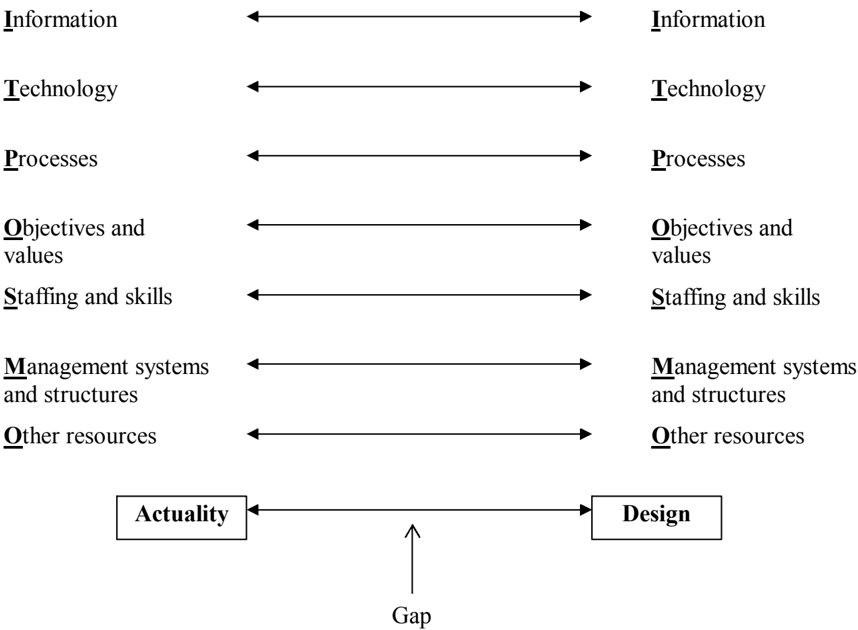
- It develops the notion of “design-actuality gaps,” defined as “the match or mismatch between IS designs and local user actuality.”
- The model highlights two “high-risk archetypes” affecting IS in developing countries: “country context gaps” and “hard-soft gaps.”
- The model is also presented as useful for explaining “the constraints that exist to local IS improvisations in developing countries.”
## Methods
- The paper is a journal article that develops a conceptual model “drawing on contingency theory.”
- The abstract does not specify a dataset, sample, or number of cases; the text only says the article presents “evidence” about IS in developing countries.
- The main analysis appears to be conceptual/theoretical, using the model to interpret IS cases and to refine IS theory.
## Limitations
- The paper does not report a specific sample size, case count, or empirical dataset in the provided text; this limits what can be assessed from the excerpt.
- The abstract does not state formal limitations or boundary conditions of the model beyond noting its focus on developing countries and local user actuality.
- The evidence base is not described in the provided text, so the scope of the claims cannot be independently evaluated from the excerpt alone.
Model-written summary. Check it against the paper before relying on it.
Integrity signals
Registry
Cites
Statistics
Figures
Verification
Claims the paper makes
0 Valid · 0 Not valid · 0 Not checked · 3 Own results and interpretations
A result the paper reports from its own data — it cites no other source for it, so there is none to check. The quote shows it is in the paper.
In the paper
“This article presents evidence that-alongside the successes-many information systems in developing countries can be categorized as failing either totally or partially.”
plain- Asserted: passes — The authors put it forward as true.
- Checkable: passes — It can be checked against evidence.
- Load-bearing: passes — The paper’s conclusions depend on it.
- Based: passes — The paper gives a reason why it holds.
A conclusion the paper draws from its own results — it cites no other source for it, so there is none to check. The quote shows it is in the paper.
In the paper
“The model draws on contingency theory in order to advance the notion of design-actuality gaps: the match or mismatch between IS designs and local user actuality.”
plainstates a possible cause- Asserted: passes — The authors put it forward as true.
- Checkable: passes — It can be checked against evidence.
- Load-bearing: passes — The paper’s conclusions depend on it.
- Based: passes — The paper gives a reason why it holds.
- Rests on an assumption not shown here.
- It may state two separate claims as one. 1
Claims other papers make about this one
Each is checked against this paper’s own text: does it say what the citing paper says it does?
In the citing paper
“This suggests that adoption can be seen as simply the first and perhaps least problematic phase in the drive towards the integration of an innovation into the health system. The greater risk is that of ‘sustainability failure’ [25, 26]”
From Beyond pilotitis: taking digital health interventions to the national level in China and Uganda (2017) · cites this paper as [26]
Citations
Cites
Task-Technology Fit and Individual Performance
Goodhue, D. L., & Thompson, R. L. (1995) · MIS Quarterly · doi:10.2307/249689 · Cited by 6,006 · cited 1×
“IS implementation models drawing on this theme have involved e t between “tool”/“technology” and “task” ( Goodhue & Thompson, 1995; Agarwal & Sinha, 1996), or between multiple factors (Scott Morton, 1991; Southon et al., 1997).”
MethodSoftware Engineering Economics
Boehm, B. W. (2001) · Pioneers and Their Contributions to Software Engineering · doi:10.1007/978-3-642-48354-7_5 · Cited by 5,981
Thompson, V. A., & March, J. G. (1966) · American Sociological Review · doi:10.2307/2090830 · Cited by 3,351
The Concept of Fit in Strategy Research: Toward Verbal and Statistical Correspondence
Venkatraman, N. (1989) · The Academy of Management Review · doi:10.2307/258177 · Cited by 2,367
Suchman, L. A. (1987) · Cited by 2,279
The Concept of Fit in Strategy Research: Towards Verbal and Statistical Correspondence
Venkatraman, N. V. (1988) · DSpace@MIT (Massachusetts Institute of Technology) · Cited by 2,038
Improvising Organizational Transformation Over Time: A Situated Change Perspective
Orlikowski, W. J. (1996) · Information Systems Research · doi:10.1287/isre.7.1.63 · Cited by 1,952
Management strategies for information technology
(1990) · Long Range Planning · doi:10.1016/0024-6301(90)90040-b · Cited by 1,033
Shaping technology/building society
(1993) · Choice Reviews Online · doi:10.5860/choice.30-3774 · Cited by 939
The corporation of the 1990s: Information technology and organizational transformation
(1993) · Futures · doi:10.1016/0016-3287(93)90030-w · Cited by 886
Research works printed but not linked: 19
- Avgerou, C. 2000. The multiple rationalities of information systems development. In Information ? ows, local improvisations and work practices. Proceedings of the IFIP WG9.4 Conference 2000. Cape Town: IFIP.
- Avgerou C., 2000, Information technology in context, 1
- Bijker W. E., 1992, Shaping tech-nology/building society, 1
- Butler R., 1991, Designing organizations
- Goonatilake, L., Maizza-Neto, O., and Jayawardene, P. 2000. Enhancing enterprise competitiveness in developing countries through the promotion of management information and benchmarking tools. In Information ? ows, local improvisations and work practices. Proceedings of the IFIP WG9.4 Conference 2000. Cape Town: IFIP.
- IFIP WG9.4. 2000. Information ? ows, local improvisations and work practices. Proceedings of the IFIP WG9.4 Conference 2000. Cape Town: IFIP.
- Jayasuriya R., 1995, Medinfo ’95, 1603
- Korac-Boisvert N., 1995, Information Infrastructure and Policy, 4, 131
- Macias-Chapula, C. A. 2000. Issues learned, challenges and opportunities to implement a library automation project at Mexico’s General Hospital. In Information ? ows, local improvisations and work practices. Proceedings of the IFIP WG9.4 Conference 2000. Cape Town: IFIP.
- Calitz, A. P. 2000. Transforming work practices with IT. In Information ? ows, local improvisations and work practices. Proceedings of the IFIP WG9.4 Conference 2000. Cape Town: IFIP.
- Oyomno G. Z., 1996, Global information technology and socio-economic development, 19
- Puri, S. K., Chauhan, K. P. S., and Admedullah, M. 2000. Prospects of biological diversity information management. In Information ? ows, local improvisations and work practices. Proceedings of the IFIP WG9.4 Conference 2000. Cape Town: IFIP.
- Silva L. O., 2000, Outsourcing as an improvisation. In Information ? ows, local improvisations and work practices. Proceedings of the IFIP WG9.4 Conference 2000
- Walsham G., 2000, Information technology in context, 291
- Wynn, E. and deLyra, J. 2000. A strange attractor in the chaos of global IS development. In Information ? ows, local improvisations and work practices. Proceedings of the IFIP WG9.4 Conference 2000. Cape Town: IFIP.
- Cain P., 2001, Reinventing government in the information age, 135
- Kenny C., 2001, The Internet and economic growth in LDCs. Draft paper
- Kitiyadisai, K. 2000. The implementation of IT in reengineering the Thai Revenue Department. In Information ? ows, local improvisations and work practices. Proceedings of the IFIP WG9.4 Conference 2000. Cape Town: IFIP.
- Mundy D., 2001, Reinventing government in the information age, 271
Cited by
Items 1,201–1,300 of 1,386
Alibhai, S., Strobbe, F., & Villanger, E. (2018) · World Bank, Washington, DC eBooks · doi:10.1596/1813-9450-8608 · Cited by 2
“Heeks (2002) developed two models for understanding and explaining failure of IS in government organizations, although the models apply more widely to general IS failure.”
BackgroundBusiness intelligence information systems success : a South African study.
Mudzana, T. (2016) · ResearchSpace (University of KwaZulu-Natal)
The Role of Local Bricoleurs in Sustaining Changing ICT4D Solutions
Fruijtier, E., & Senyoni, W. F. (2019) · Communications in computer and information science · doi:10.1007/978-3-030-11235-6_12 · Cited by 1
An Exploratory Study on Co-Locating Voter Registration in Telecentres Case of Malawi
Makoza, F. (2019) · International Journal of Public Administration in the Digital Age · doi:10.4018/ijpada.2019040101
Mooketsi, B. E. (2016) · Open University of Cape Town (University of Cape Town) · Cited by 3
CYBER SECURITY AND DIGITALIZED FINANCIAL SYSTEM: A PARADIGM SHIFT IN GLOBAL MARKET
Mh, A., Hossain, M. S., & Uddin, M. H. (2019) · The Journal of Internet Banking and Commerce
Singh, L., Bishnoi, R., Bihari, B., et al. (2019) · The Indian Journal of Agricultural Sciences · doi:10.56093/ijas.v89i2.87014
“Among modern ICT modes, mobile phone has been most recent and widely accepted mode of delivering information (Mittal and Mehar 2012). Increasing mobile phone based services enhances the availability to knowledge and information in agriculture and meets the increasing information demand of farmers’. mKRISHI® PAWS is hi…”
A guide to apply the Capability Approach in ICT4D based on a systematic literature review
Tshivhase, M. (2019) · UpSpace Institutional Repository (University of Pretoria) · Cited by 1
Hellandendu, M. M.-A. (2019) · Open Access Institutional Repository at Robert Gordon University (Robert Gordon University)
Habib, M. N. (2019) · Cited by 1
Towards a framework to guide the development of ICT4D: A South African Perspective
Coetzee, L. L. (2019) · SUNScholar (Stellenbosch University)
The Pursuit of Sustainable ICT4D: Lessons from Timor-Leste
Silva, A. D., & Fernandez, W. D. (2020) · Hawaii International Conference on System Sciences (HICSS) · doi:10.24251/hicss.2020.276 · Cited by 2
“It occurs when systems are abandoned after their initial successful implementation [2, 36, 80], thus wasting human and financial capital as well as not delivering the promised benefits.”
Grabitz, T., & Scholta, H. (2020) · doi:10.30844/wi_2020_r3-grabitz
“[13]° X X X X X X X X X Heeks [23] X X X X X Ke et al.”
BackgroundInfluentialAgricultural Higher Education and Training in Europe
Movchan, L., & Komisarenko, N. (2019) · doi:10.33422/icate.2019.04.269
A Research Study On Capacity Building for E-District Project Implementation in Delhi
Bhatnagar, H., & Singh, R. (2019) · doi:10.33422/icate.2019.04.268
“Skill gap in the human resources or teams deployed on egovernance projects has remained a detrimental factor in the success or failure of e-governance projects in India and elsewhere (Heeks, 2002).”
ICTs and sustainable community development in the Niger Delta region of Nigeria
Okon, U. A. (2011) · OpenGrey (Institut de l'Information Scientifique et Technique)
Sichinskiy, D., Melnikov, A. V., & Кочергин, Г. А. (2020) · doi:10.2991/aisr.k.201029.019
“…of evaluating information systems and the demand for government systems [4-10], the most significant works have been identified: Richard Heeks [4] in his article "Information Systems and Developing Countries: Failure, Success, and Local Im-provisations" considers the method of systems…”
FACTORS AFFECTING ADOPTION OF DONOR FUNDED ICT PROJECTS IN THE PUBLIC SECTOR IN KENYA
Ndegwa, A. K., Kiriri, P. N., & Achoki, G. (2017) · doi:10.47672/ijpm.103
“For instance Heeks (2003) investigated the success of government ICT projects and partition e-government success in three different categories: Total failure; Partial failure; and Success.”
InfluentialEffectiveness of Mobile-based Advisory to Farmers in Soil and Water Conservation
Singh, L., Bishnoi, R., Bihari, B., et al. (2020)
강, 주. (2011) · Journal of International Development Cooperation · doi:10.34225/jidc.2011.3.167
Developing a model of IS quality and success in Developing countries
Chevers, D. A., Mills, A., & Duggan, E. W. (2012) · CONF-IRM
The Role of Service-Learning in Information Systems Education
Feyt, T., & Mwalemba, G. (2021) · Informing Science and IT Education Conference · doi:10.28945/4747
“ICT projects tend to fail in developing countries due to design - reality gaps, miscommunication and a lack of infrastructure and evidence - based practices (Heeks, 2002; Heeks, 2008; Mwalemba, 2019).”
BackgroundPerpetuating ‘Structural’ Hierarchies - Rethinking Agricultural Extension Practices
Cherupelly, N. K. (2021) · Journal of Emerging Technologies and Innovative Research
Mengesha, N. (2021) · International Journal of Information Systems and Social Change · doi:10.4018/ijissc.2021070105
Grecu, M., & Dicusar, I. (2021) · Pro Publico Bono - Magyar Közigazgatás · doi:10.32575/ppb.2021.1.2
Boundary Spanning and the Support of Digital Entrepreneurs: A Case Study of BahrainPreprint
Alghatam, N. H. (2021) · arXiv (Cornell University) · doi:10.48550/arxiv.2108.09730 · Cited by 3
“Some of these studies highlight the potential of ICTs to contribute to improve the performance of businesses and contribute to economic growth (Heeks 2002; Quinones, Nicholson and Heeks 2013; Chipidza and Leidner 2019).”
Hambatan Pembelajaran Berbasis Web di Indonesia
Solikhatun, I., & Priantinah, D. (2021)
Agile methodology implementation in Lebanon
Rahy, S. (2021) · University of Salford Institutional Repository (University of Salford) · Cited by 3
Nielsen, P. (2021) · IST-Africa Conference (IST-Africa) · Cited by 1
Addressing the Information Systems mindshare Divide in Developing Countries
Ghosh, B. (2009) · Journal of the Association for Information Systems
Usability and Robustness - Barriers and Enablers for Projects Operating in Low-Resource Settings
Indrebø, I. (2013) · BIBSYS Brage (BIBSYS (Norway))
Compartmentalization of E-Governance Practices
Bokad, P. V., Kuchar, P. M., & Satpute, P. V. (2013) · Springer eBooks · doi:10.1007/978-81-322-0746-7_51
“The reality gaps in e-governance projects explained by Heeks (2002–2003) (Heeks 2002) are shown below which supports this fact (Fig.”
Mobile Computing in the Developing World
Martin, A., Kannan, A., Khan, K. K. A., Travis, M. L., & Venkatasamy, P. V. (2021) · Advances in e-business research series · doi:10.4018/978-1-7998-7712-7.ch005
TECHNOLOGICAL SOLUTIONS TO ENCOURAGE CIVIC ENGAGEMENT IN URBAN PLANNING: EXPERTS’ PERSPECTIVES
Kapoor, A., & Singh, D. P. (2021) · Journal of Community Positive Practices · doi:10.35782/jcpp.2021.4.03 · Cited by 2
“The majority of experts think that technology (GIS) will increase the efficiency of ULBs.”
InfluentialKirk, K., McClair, T. L., Dakouo, S. P., Abuya, T., & Sripad, P. (2021) · Journal of Global Health · doi:10.7189/jogh.11.07003-f
Nurdin, N., Stockdale, R., & Scheepers, H. (2019) · IGI Global eBooks · doi:10.4018/978-1-5225-9860-2.ch079
Chutani, S., Aalami, J. R., & Badshah, A. A. (2012) · Wiley eBooks · doi:10.1002/9781119200420.refs
Murphy, J. T., & Carmody, P. (2015) · Wiley eBooks · doi:10.1002/9781118751282.bref
IT Implementation in a Developing Country Municipality
Sanford, C. C., & Bhattacherjee, A. (2009) · Advances in global information management (AGIM) book series · doi:10.4018/978-1-60566-138-4.ch020
Misaligned Market: The Importance of Industry Context in Technology-Mediated Exchanges
Hsiao, R. (2009) · Advances in global information management (AGIM) book series · doi:10.4018/978-1-60566-138-4.ch022
Knowles, C. L. (2013) · IGI Global eBooks · doi:10.4018/978-1-4666-0882-5.ch7.5
Adoption of E-Government Services in Developing Countries: An Empirical Evaluation
AlAwadhi, S. A., & Morris, A. (2012) · IGI Global eBooks · doi:10.4018/978-1-4666-0324-0.ch025 · Cited by 4
Falak, H., & Zaman, T. (2019) · IGI Global eBooks · doi:10.4018/978-1-7998-0423-9.ch017 · Cited by 1
Kawlra, A. (2012) · IGI Global eBooks · doi:10.4018/978-1-4666-1957-9.ch009 · Cited by 1
(2011) · doi:10.1201/b10857-1
Re-Territorialising Governance and the State
Virkar, S. (2019) · IGI Global eBooks · doi:10.4018/978-1-5225-9860-2.ch060
Bonan, I., Coignard, P., Guiet, J. L. L., Bigot, O., Denis, K., Bidet, F., Gautier, A., Egault, J., Peuziat, M. L., Departe, J. P., et al. (2020) · Research Square · doi:10.21203/rs.3.rs-20423/v1
Ali, V. (2014) · doi:10.26686/wgtn.17009135.v1
“Although many IS projects in developing countries have been reported as failures (See Dada, 2006; Heeks, 2001, 2010), there is growing evidence to suggest ICT acts as a driver for development (Cimoli, 2010; Grace, Kenny, Qiang, Liu, & Reynolds, 2004).”
Managing Seven Dimensions of ICT4D Projects to Address Project Challenges
Potnis, D. D. (2020) · IGI Global eBooks · doi:10.4018/978-1-7998-2460-2.ch032
The Unintended Consequence: The Symbiotic Relationship between ICT and a National Transition
Nemati, H., & Latif, A. (2012) · IGI Global eBooks · doi:10.4018/978-1-4666-0966-2.ch020
Virkar, S. (2016) · IGI Global eBooks · doi:10.4018/978-1-4666-9845-1.ch022
Knowles, C. L. (2010) · IGI Global eBooks · doi:10.4018/978-1-61520-799-2.ch005
The Politics of Access to Information
Virkar, S. (2019) · IGI Global eBooks · doi:10.4018/978-1-7998-0417-8.ch012
E-Government Implementation Perspective: Setting Objective and Strategy
Shareef, M. A., Kumar, V., Kumar, U., Chowdhury, A. H., & Misra, S. C. (2012) · IGI Global eBooks · doi:10.4018/978-1-4666-1776-6.ch005
Digital Vulnerabilities and the Sustainable Development Goals in Developing Countries
Schia, N. N., & Willers, J. O. (2021) · Encyclopedia of the UN sustainable development goals · doi:10.1007/978-3-319-95873-6_115
Manda, T. D., & Sanner, T. A. (2015) · IGI Global eBooks · doi:10.4018/978-1-4666-8756-1.ch012
Strategic Information Systems Planning (SISP) Practices in Health Care Sectors of Rwanda
Emmanuel, G. (2019) · Journal of Information Technology and Computer Science · doi:10.25126/jitecs.201943121
“the IS strategy was put in consideration because the development of technology which lead to development in rivalry and innovation dissemination [9].”
IS-Supported Managerial Control for China’s Research Community: An Agency Theory Perspective
Tian, W., Vogel, D., Ma, J., & Gu, J. (2011) · IGI Global eBooks · doi:10.4018/978-1-61350-480-2.ch012
A Review of e-Government Initiatives in Tanzania: Challenges and Opportunities
Oreku, G. S., & Mtenzi, F. J. (2012) · IGI Global eBooks · doi:10.4018/978-1-4666-1740-7.ch040 · Cited by 1
Grönlund, Å., & Gidlund, K. L. (2010) · Gabler eBooks · doi:10.1007/978-3-8349-6343-7_24
Uzoagu, I. F., & Oriji, A. (2022) · British Journal of Education · doi:10.37745/bje.2013/vol10n6pp116
Applying Systems Thinking to Health Information Systems
Koivu, A. M., Aanestad, M., & Shidende, N. (2022) · doi:10.1093/oso/9780198799498.003.0008
Altaf, S., & Iftikhar, M. (2021) · International Journal of Social Studies · doi:10.55627/ijss.01.1.0115
(2023) · Emerald Group Publishing Limited eBooks · doi:10.1108/978-1-80455-143-120231021
Reasons and Factors of Evolution of the Information System in Public Institutions
Khalil, F. C., Kamel, C. A., & Kaspard, J. A. (2022) · GATR Journal of Finance and Banking Review · doi:10.35609/jfbr.2022.7.3(1 · Cited by 1
An Assessment of the Independence Gap in the Zimbabwean ICT Regulatory Framework
Chigwedere, C., Takavarasha, S., & Chisaka, B. C. (2022) · Zimbabwe Conference of Information and Communication Technologies (ZCICT) · doi:10.1109/zcict55726.2022.10045846
“It draws from previous works on ICT regulation and policy performance in developing countries [1], [9], [10].”
BackgroundMethodInfluentialصالح, م. ط. (2023) · مجلة الاسکندریة للبحوث المحاسبیة · doi:10.21608/aljalexu.2023.289144
Quantifying tropical forest biomass
Akingbade, A. (2012) · University of Twente Research Information · doi:10.3990/1.9789061643326 · Cited by 2
Med-asa smart task-volunteer matching system
Wongpinkaew, T. (2020) · Chula Digiverse · doi:10.58837/chula.the.2020.140
Impact of Electronic Government on Human Capital: Dynamics of Interaction
Singh, U. K., & Vlasov, M. (2023) · Lecture notes in information systems and organisation · doi:10.1007/978-3-031-30351-7_32
Identifying Higher Software Engineering Education’s Design-Reality Gaps in Rural India
Spiesberger, P., Bürstmayr, L., Vallon, R., et al. (2023) · MIPRO ICT and Electronics Convention (MIPRO) · doi:10.23919/mipro57284.2023.10159803
If We Build it, Will They Come? Strategies to Advance High Impact, Digital Inclusion EcosystemsPreprint
Ogbo, E., Cutcher‐Gershenfeld, J., Walker, P., & Lawson, C. (2023) · SSRN Electronic Journal · doi:10.2139/ssrn.4533172 · Cited by 1
Cocaj, H. (2023) · Journal of Cases on Information Technology · doi:10.4018/jcit.330127 · Cited by 1
“Duncombe and Heeks (2002) suggest that the role of ICT in enabling information and knowledge is important for social and economic development, as an intermediary market information provider, customers, and suppliers (Duncombe & Heeks, 2002; Zafar, 2022).”
Investments in IS/IT Projects: The Healthcare Sector
Gomes, J., & Rom�ão, M. (2023) · Advances in computational intelligence and robotics book series · doi:10.4018/978-1-6684-9151-5.ch014
(2007) · Edward Elgar Publishing eBooks · doi:10.4337/9781847204196.00029
Karim, F., Laupe, S., Zahra, F., & Latowale, I. (2023) · International Journal of Public Policy and Administration Research · doi:10.18488/74.v10i3.3505 · Cited by 7
“In other countries, 50% have failed partially (Heeks, 2002, 2003).”
Uache, J. J., Nhavoto, J. A., & Mosse, E. L. (2023) · IFIP advances in information and communication technology · doi:10.1007/978-3-031-50154-8_11
Melampaui Kearifan Lokal: Dari Dekolonisasi Teknologi sampai Krisis Iklim Antroposen
Mahaswa, R. K., & Patria, J. (2023) · Penerbit BRIN eBooks · doi:10.55981/brin.901.c717
Frugal Innovation and Digital Effectuation
Khanal, P. (2024) · Open Access Victoria University of Wellington | Te Herenga Waka (Figshare) · doi:10.26686/wgtn.25106312
Uwamungu, E., Marara, A. A., Munyaneza, E., & Pinney, J. (2024) · Research Square · doi:10.21203/rs.3.rs-4207057/v1
Jonathan, H., & Magd, H. A. E. (2024) · Advances in higher education and professional development book series · doi:10.4018/979-8-3693-1698-6.ch002 · Cited by 1
Pandey, J. (2024) · Property Management · doi:10.1108/pm-11-2023-0111
Kimaro, E., Renken, J., Cunnhingham, N., & Heeks, R. (2024) · IFIP advances in information and communication technology · doi:10.1007/978-3-031-66986-6_25
Self-citationDabounou, J., & Hajbi, S. (2024) · Advances in Science, Technology & Innovation/Advances in science, technology & innovation · doi:10.1007/978-3-031-57385-9_3
Jubouri, H. A. A. A. (2024) · Research Square · doi:10.21203/rs.3.rs-4837686/v1
Analysis of the Role of the Knowledge Economy in the Context of Iraq's Fragile State Indicators
Jalab, Z. A., Zahra, S. A., & Rashid, M. K. (2025) · Green Inflation · doi:10.61132/greeninflation.v2i1.182
“Information technology can play a pivotal role in promoting transparency, by providing open government information systems that allow citizens to easily access government information, such as government expenditures and public contract procedures (Heeks, 2002).”
E-Governance Through Enhanced ICT Strategies Insights from Sentiment Analysis
Kulkarni, P. M., Gokhale, P., Tigadi, B. S., et al. (2024) · Lecture notes in networks and systems · doi:10.1007/978-981-97-8537-7_24
Kiwanuka, A., & Nabukenya, J. (2025) · Health Informatics Journal · doi:10.1177/14604582251320287
“19 During the contextualisation process, it is important to identify and mitigate any design-actuality issues, 20 and also appreciate the local setting.”
Bokayev, B., Sadykova, K., & Galy, A. G. (2025) · Bulletin of Turan University · doi:10.46914/1562-2959-2025-1-1-42-54
Drivers and Barriers in Libya’s E-Government Implementation: A Case Study
Shwehdy, A. B. (2025) · Annual International Conference on Digital Government Research · doi:10.59490/dgo.2025.1043 · Cited by 8
Digital bridge: Leveraging ICT for Urban-Rural Governance Advancement
Minj, M. J. (2025) · International Journal of Research Publication and Reviews · doi:10.55248/gengpi.6.0525.1937
Ismawanti, R. (2025) · Jurnal Pengabdian Masyarakat dan Riset Pendidikan · doi:10.31004/jerkin.v4i1.2222
Alexandre, C., Toillier, A., Mignon, S., et al. (2025) · SSRN Electronic Journal · doi:10.2139/ssrn.5418475
Adapting Co-Design for Crisis Contexts: Lessons Learned Engaging Nonprofits
Varghese, D., Seguin, J. P., Tebourbi, M., Bartindale, T., Ratnam, C., Powell, R., Wickes, R. L., & Olivier, P. L. (2025) · Electronics · doi:10.3390/electronics14183720 · Cited by 1
Kessy, A. T. (2025) · Palgrave studies in equity, diversity, inclusion, and indigenization in business · doi:10.1007/978-3-031-94410-9_8 · Cited by 1
Enhancing Program Delivery in Non-Profit Organizations through Technology
Global, N., & Kazanskaia, A. N. (2025) · doi:10.64357/neya-gjnps-tchtleffimp-06
Metadata
- Authors
- Heeks, R.
- Corresponding author
- Heeks, Richard
- ORCID
- Heeks, Richard
- Venue
- The Information Society
- Publisher
- Informa UK Limited
- Published
- 2002-03
- Volume
- 18
- Issue
- 2
- Pages
- 101-112
- ISSN
- 0197-2243 (ISSN-L)
- 1087-6537
- OpenAlex
- W2136941206
- Semantic Scholar
- dd6c8931d276f258d356e65416018725912d2dbd
- Cited by
- 1,390
- References
- 53
- Citations by year
- 2026: 71 · 2025: 42 · 2024: 37 · 2023: 41 · 2022: 49 · 2021: 60 · 2020: 58 · 2019: 72 · 2018: 39 · 2017: 70 · 2016: 81 · 2015: 114 · 2014: 95 · 2013: 97 · 2012: 97
- FWCI
- 34.02
- Type
- journal article
- Language
- en
- Open access
- Licence
- other-oa
- Locations
- The Information Society (publishedVersion)
- Research Explorer (The University of Manchester) (publishedVersion, other-oa)
- Topics
- Physical Sciences › Computer Science › Information Systems › ICT in Developing Communities
- Social Sciences › Business, Management and Accounting › Management Information Systems › Information Systems Theories and Implementation
- Social Sciences › Economics, Econometrics and Finance › Economics and Econometrics › ICT Impact and Policies
- Keywords
- contingency theory, IS success factors
About these checks
Registry, retraction, Cites and statistics results are computed, not judged, with one exception: a printed reference that no index lists is read once by a model before it counts as a citation error. Claims are extracted by a model and kept only when their quote appears verbatim in the text; each cited source is then checked, with a model’s help, for whether it says what the claim relies on. Those verdicts can be wrong — read the claim’s quote and the cited source before relying on one.
A language model drew the claims from the paper on 2026-10-10, under version 3 of the claim definition (model deepseek-v4.1-flash, prompt extract-v3).
A second model labelled each claim on 2026-10-10 (model jev-1.13-20260917, definition revision gold-guideline-v0.2).
Statistics and arithmetic are recomputed, not judged.
Confidence bands are shown only for fields calibrated on our annotated test set. None is calibrated yet, so no band is shown.
What counts as a claim ›How we measure confidence ›How we check this ›
Are you an author, or do you see a problem with this page? Request a review
Data sources
Bibliographic data: Semantic Scholar, OpenAlex, Crossref.
Contains information from the Semantic Scholar Academic Graph Datasets, made available under the ODC Attribution License (ODC-BY 1.0).
Semantic Scholar’s data is described in: Kinney, R., et al. (2023). The Semantic Scholar Open Data Platform. arXiv:2301.10140.
