

Information Systems and Developing Countries: Failure, Success, and Local Improvisations
Open accessThe DOI matches its Crossref record; 53 of the 53 references it cites were found in a registry or an index.
Abstract
The article develops the design-actuality gaps model to explain why many information systems in developing countries fail totally or partially.
Overview
CoChat Summary
## TL;DR
The paper argues that many information systems in developing countries fail totally or partially, and proposes a contingency-theory-based model of “design-actuality gaps” to explain why. It identifies two high-risk gap types—country context gaps and hard-soft gaps—and also discusses constraints on local improvisation.
## Key findings
- The paper states that, alongside successes, “many information systems in developing countries can be categorized as failing either totally or partially.”
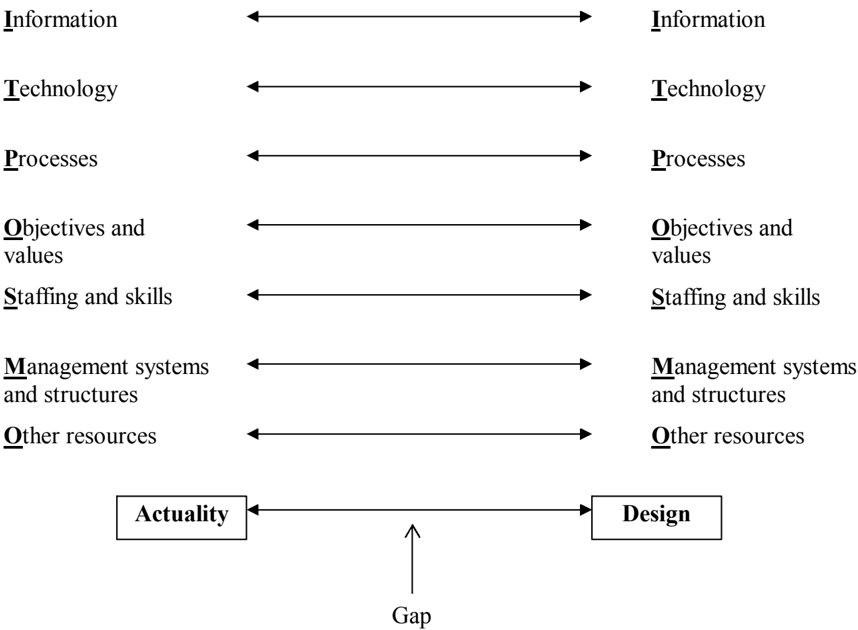
- It develops the notion of “design-actuality gaps,” defined as “the match or mismatch between IS designs and local user actuality.”
- The model highlights two “high-risk archetypes” affecting IS in developing countries: “country context gaps” and “hard-soft gaps.”
- The model is also presented as useful for explaining “the constraints that exist to local IS improvisations in developing countries.”
## Methods
- The paper is a journal article that develops a conceptual model “drawing on contingency theory.”
- The abstract does not specify a dataset, sample, or number of cases; the text only says the article presents “evidence” about IS in developing countries.
- The main analysis appears to be conceptual/theoretical, using the model to interpret IS cases and to refine IS theory.
## Limitations
- The paper does not report a specific sample size, case count, or empirical dataset in the provided text; this limits what can be assessed from the excerpt.
- The abstract does not state formal limitations or boundary conditions of the model beyond noting its focus on developing countries and local user actuality.
- The evidence base is not described in the provided text, so the scope of the claims cannot be independently evaluated from the excerpt alone.
Model-written summary. Check it against the paper before relying on it.
Integrity signals
Registry
Cites
Statistics
Figures
Verification
Claims the paper makes
0 Valid · 0 Not valid · 0 Not checked · 3 Own results and interpretations
A result the paper reports from its own data — it cites no other source for it, so there is none to check. The quote shows it is in the paper.
In the paper
“This article presents evidence that-alongside the successes-many information systems in developing countries can be categorized as failing either totally or partially.”
plain- Asserted: passes — The authors put it forward as true.
- Checkable: passes — It can be checked against evidence.
- Load-bearing: passes — The paper’s conclusions depend on it.
- Based: passes — The paper gives a reason why it holds.
A conclusion the paper draws from its own results — it cites no other source for it, so there is none to check. The quote shows it is in the paper.
In the paper
“The model draws on contingency theory in order to advance the notion of design-actuality gaps: the match or mismatch between IS designs and local user actuality.”
plainstates a possible cause- Asserted: passes — The authors put it forward as true.
- Checkable: passes — It can be checked against evidence.
- Load-bearing: passes — The paper’s conclusions depend on it.
- Based: passes — The paper gives a reason why it holds.
- Rests on an assumption not shown here.
- It may state two separate claims as one. 1
Claims other papers make about this one
Each is checked against this paper’s own text: does it say what the citing paper says it does?
In the citing paper
“This suggests that adoption can be seen as simply the first and perhaps least problematic phase in the drive towards the integration of an innovation into the health system. The greater risk is that of ‘sustainability failure’ [25, 26]”
From Beyond pilotitis: taking digital health interventions to the national level in China and Uganda (2017) · cites this paper as [26]
Citations
Cites
Task-Technology Fit and Individual Performance
Goodhue, D. L., & Thompson, R. L. (1995) · MIS Quarterly · doi:10.2307/249689 · Cited by 6,006 · cited 1×
“IS implementation models drawing on this theme have involved e t between “tool”/“technology” and “task” ( Goodhue & Thompson, 1995; Agarwal & Sinha, 1996), or between multiple factors (Scott Morton, 1991; Southon et al., 1997).”
MethodSoftware Engineering Economics
Boehm, B. W. (2001) · Pioneers and Their Contributions to Software Engineering · doi:10.1007/978-3-642-48354-7_5 · Cited by 5,981
Thompson, V. A., & March, J. G. (1966) · American Sociological Review · doi:10.2307/2090830 · Cited by 3,351
The Concept of Fit in Strategy Research: Toward Verbal and Statistical Correspondence
Venkatraman, N. (1989) · The Academy of Management Review · doi:10.2307/258177 · Cited by 2,367
Suchman, L. A. (1987) · Cited by 2,279
The Concept of Fit in Strategy Research: Towards Verbal and Statistical Correspondence
Venkatraman, N. V. (1988) · DSpace@MIT (Massachusetts Institute of Technology) · Cited by 2,037
Improvising Organizational Transformation Over Time: A Situated Change Perspective
Orlikowski, W. J. (1996) · Information Systems Research · doi:10.1287/isre.7.1.63 · Cited by 1,952
Management strategies for information technology
(1990) · Long Range Planning · doi:10.1016/0024-6301(90)90040-b · Cited by 1,033
Shaping technology/building society
(1993) · Choice Reviews Online · doi:10.5860/choice.30-3774 · Cited by 939
The corporation of the 1990s: Information technology and organizational transformation
(1993) · Futures · doi:10.1016/0016-3287(93)90030-w · Cited by 886
Research works printed but not linked: 19
- Avgerou, C. 2000. The multiple rationalities of information systems development. In Information ? ows, local improvisations and work practices. Proceedings of the IFIP WG9.4 Conference 2000. Cape Town: IFIP.
- Avgerou C., 2000, Information technology in context, 1
- Bijker W. E., 1992, Shaping tech-nology/building society, 1
- Butler R., 1991, Designing organizations
- Goonatilake, L., Maizza-Neto, O., and Jayawardene, P. 2000. Enhancing enterprise competitiveness in developing countries through the promotion of management information and benchmarking tools. In Information ? ows, local improvisations and work practices. Proceedings of the IFIP WG9.4 Conference 2000. Cape Town: IFIP.
- IFIP WG9.4. 2000. Information ? ows, local improvisations and work practices. Proceedings of the IFIP WG9.4 Conference 2000. Cape Town: IFIP.
- Jayasuriya R., 1995, Medinfo ’95, 1603
- Korac-Boisvert N., 1995, Information Infrastructure and Policy, 4, 131
- Macias-Chapula, C. A. 2000. Issues learned, challenges and opportunities to implement a library automation project at Mexico’s General Hospital. In Information ? ows, local improvisations and work practices. Proceedings of the IFIP WG9.4 Conference 2000. Cape Town: IFIP.
- Calitz, A. P. 2000. Transforming work practices with IT. In Information ? ows, local improvisations and work practices. Proceedings of the IFIP WG9.4 Conference 2000. Cape Town: IFIP.
- Oyomno G. Z., 1996, Global information technology and socio-economic development, 19
- Puri, S. K., Chauhan, K. P. S., and Admedullah, M. 2000. Prospects of biological diversity information management. In Information ? ows, local improvisations and work practices. Proceedings of the IFIP WG9.4 Conference 2000. Cape Town: IFIP.
- Silva L. O., 2000, Outsourcing as an improvisation. In Information ? ows, local improvisations and work practices. Proceedings of the IFIP WG9.4 Conference 2000
- Walsham G., 2000, Information technology in context, 291
- Wynn, E. and deLyra, J. 2000. A strange attractor in the chaos of global IS development. In Information ? ows, local improvisations and work practices. Proceedings of the IFIP WG9.4 Conference 2000. Cape Town: IFIP.
- Cain P., 2001, Reinventing government in the information age, 135
- Kenny C., 2001, The Internet and economic growth in LDCs. Draft paper
- Kitiyadisai, K. 2000. The implementation of IT in reengineering the Thai Revenue Department. In Information ? ows, local improvisations and work practices. Proceedings of the IFIP WG9.4 Conference 2000. Cape Town: IFIP.
- Mundy D., 2001, Reinventing government in the information age, 271
Cited by
Items 701–800 of 1,386
Qureshi, S. (2013) · Information Technology for Development · doi:10.1080/02681102.2013.840947 · Cited by 4
“The impact of ICTs as conceptualized by Sein and Harindranath (2004) for national development suggests that people will use ICTs to communicate more when given access to the technology through second-order effects and enable the generation of new technology-related businesses and societal change through third-order ef…”
BackgroundInfluentialGregor, S. D., Imran, A., & Turner, T. (2010) · ANU Open Research (Australian National University) · Cited by 4
Amplifying Positive Deviance with ICT: Enabling Community Development and Interdependence
Tucker, W. D. (2017) · IFIP advances in information and communication technology · doi:10.1007/978-3-319-59111-7_18 · Cited by 4
“As with partial success and failures described by Heeks [11], ICT4D efforts can be viewed along a continuum of ’weak’ to ’strong’.”
Tong, L., Ji, H., Zhang, H., Chen, L., & Cheng, X. (2024) · Information Systems Journal · doi:10.1111/isj.12550 · Cited by 9
“Furthermore, assessing the cost-effectiveness and efficiency of governance operations after integrating ICT provides tangible evidence for evaluating its role in optimising resource allocation and operational efficacy in rural governance settings (Heeks, 2002; Mohamed et al., 2020).”
Li, Z. (2025) · Asian Studies Review · doi:10.1080/10357823.2025.2466434 · Cited by 7
“As Heeks (2002) argues, implementing largely uniform technological solutions without considering local contexts can exacerbate existing inequalities, rather than fostering meaningful change.”
Kumar, R. (2010) · IGI Global eBooks · doi:10.4018/978-1-61520-997-2.ch014 · Cited by 4
Electronic banking a e-readiness adoption by Commercial Banks in Pakistan
Sardar, K., & Shamim, S. (2010) · Cited by 7
Introducing Internet-based services in the mountain areas of Nepal: An asset pentagon perspective
Sæbø, Ø., & Thapa, D. (2012) · BIBSYS Brage (BIBSYS (Norway)) · Cited by 4
Manda, T. D., & Sanner, T. A. (2012) · Cited by 4
Does the Internet Deserve Everybody?
Elkhatib, Y., Gareth Tyson, A., & Sathiaseelan, A. (2015) · doi:10.1145/2793013.2793018 · Cited by 5
“l pilot. Yet, it has to be noted that a majority of ICT for Development projects have failed, either partially or totally, in achieving their stated objectives because of poor sustainability planning [5, 9, 10, 3]. This is evident from the sustainability failure of many rural telecenters, e.g. the E-Srilanka programme…”
Lin, C., & Huang, Y. (2013) · The International Technology Management Review · doi:10.2991/itmr.2013.3.1.3 · Cited by 5
“STS has particular relevance to understand hospitals where social and technical issues have been identified as some of the key issues and problems in the implementation of B2B projects.(17) The theory provides the foundation for an investigation of the organizational, social, and technological perspectives (e.”
Debay, W. L., Teklu, T., & Watson, R. T. (2012) · International Conference on Management of Emergent Digital EcoSystems (MEDES) · doi:10.1145/2457276.2457296 · Cited by 4
“ICT development failures in developing economies are categorized as total failure , partially failure and sustainability failure of an initiative that at first succeeds but is then abandoned after a year or so (Heeks, 2002).”
Inward Strategy: An Optimal Solution to Build a Software Industry in Saudi Arabia
Talib, A. H., & Malkawi, M. (2011) · IBIMA Business Review · doi:10.5171/2011.126226 · Cited by 4
“This was achieved by analyzing the situation in Saudi Arabia against the software industry success model for Heeks and Nicholson (2004). In this model, the researchers claim that the existence of the software industry success factors is critical for any country to create a successful software industry.”
InfluentialBridging Worlds: Information Systems Development Through Cross-Cultural Comparison
Rose, J., & Saifullah, M. (2012) · Systemic Practice and Action Research · doi:10.1007/s11213-012-9239-7 · Cited by 4
“However, direct technology transfer, without taking local cultural conditions into account is known to be problematic (Heeks 2002).”
BackgroundKEY FACTORS OF PROCESS MATURITY IN ENGLISH-SPEAKING CARIBBEAN FIRMS
Chevers, D. A. (2014) · LA Referencia (Red Federada de Repositorios Institucionales de Publicaciones Científicas) · Cited by 4
Mobile Phone Ecosystems and the Informal Sector in Developing Countries – Cases from Jamaica
Johnson, S. C., & Thakur, D. (2015) · The Electronic Journal of Information Systems in Developing Countries · doi:10.1002/j.1681-4835.2015.tb00476.x · Cited by 6
“The view that ICT contributes to development in the global south remains contested, especially in instances where innovation was transferred from a developed to a developing context (Avgerou, 2010; Braa et al., 2004; Hayes & Westrup, 2012; Heeks, 2002, 2010).”
Wahid, F. (2011) · Seminar Nasional Aplikasi Teknologi Informasi (SNATI) · Cited by 9
Open Source Software in Health Information Systems: Opportunities and Challenges
Twaakyondo, H. M., & Lungo, J. H. (2008) · Tanzania Journal of Engineering and Technology · doi:10.52339/tjet.v31i1.546 · Cited by 4
Iluyemi, A., & Briggs, J. (2009) · Lecture notes of the Institute for Computer Sciences, Social Informatics and Telecommunications Engineering · doi:10.1007/978-3-642-00413-1_24 · Cited by 4
“Research evidence suggests that north-south technology transfer and eHealth implementations are complex and contentious issues with numerous recorded sustainability failures [8], therefore, the need to understand these contextual issues are deemed important for success [9].”
E-Planning Applications in Turkish Local Governments
Velibeyoğlu, K. (2010) · IGI Global eBooks · doi:10.4018/978-1-61520-929-3.ch022 · Cited by 4
Shidende, N., Aanestad, M., & Igira, F. T. (2016) · Information Technology and People · doi:10.1108/itp-12-2013-0218 · Cited by 5
Attaining E-Democracy Through Digital Platforms in Kenya
Opiyo, R. O., Mwau, B., Mwang’a, K., et al. (2017) · Advances in 21st century human settlements · doi:10.1007/978-981-10-4035-1_14 · Cited by 4
Towards A Curriculum Adaptation Model for IS Undergraduate Education in sub- Saharan Africa
Larsson, U., & Boateng, R. (2011) · Cited by 4
May, E. L., & Abreh, M. K. (2017) · Journal of Education & Social Sciences · doi:10.20547/jess0521705203 · Cited by 4
“Works by Delone and Mclean (2002) broadly point to the diffusion role of context whereas the work of Heeks (2002) specifically promotes environment of occurrence in the developing countries.”
A review: evolution of big data in developing country
Prasetyo, B. E., Aziz, F. S., Faqih, K., Primadi, W., Herdianto, R., & Febriantoro, W. (2019) · Bulletin of Social Informatics Theory and Application · doi:10.31763/businta.v3i1.162 · Cited by 4
“In addition, system development in developing countries is often constrained due to gaps in cultural, economic and systemic contexts with software designers [7], [8].”
Nyame‐Asiamah, F., & Kawalek, P. (2019) · Journal of Global Information Technology Management · doi:10.1080/1097198x.2019.1701356 · Cited by 4
“…where larger budgets are allocated for healthcare information technology (IT) systems development (Murphy et al., 2004; Paul, Ezz, & Kuljis, 2012), the progress of healthcare IT implementation in sub-Saharan African countries has been generally slow (Heeks, 2002; Kimaro & Nhampossa, 2005).”
BackgroundThe influence of risks on the outturn cost of ICT infrastructure network projects
Almarri, K., Boussabaine, H. A., & Nauimi, H. A. (2021) · Construction Innovation · doi:10.1108/ci-05-2020-0079 · Cited by 7
A Lack of Smart Governance in the Public Sector: The Italian Case Study
Berardi, M., & Ziruolo, A. (2021) · Lecture notes in information systems and organisation · doi:10.1007/978-3-030-86858-1_13 · Cited by 4
Digital Transformation in the Nigerian Small Business Sector
Olayinka, O., & Wynn, M. G. (2021) · Advances in e-business research series · doi:10.4018/978-1-7998-7712-7.ch019 · Cited by 4
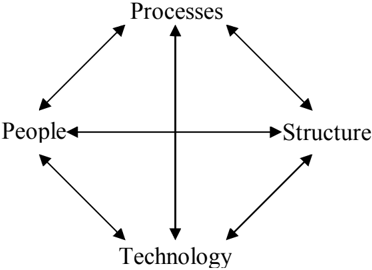
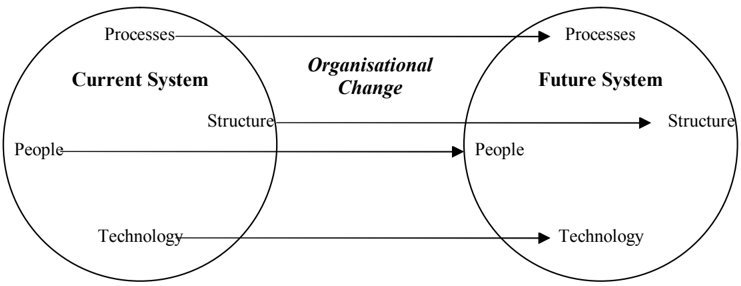
“Heeks (2002), in attempting to explain high rates of failure in technology projects in developing countries, identified people, process, technology and structure as the four change elements that affect technology implementation, but his study also recognised that there are situation-specific…”
BackgroundINOVASI ARTIFICIAL INTELLIGENCE SEBAGAI FINANCIAL ADVISOR KEMENTERIAN KEUANGAN
Wisesa, A. R. (2023) · SWATANTRA · doi:10.24853/swatantra.21.1.01-08 · Cited by 4
On a Mismatch Between Design and Social Change
Toyama, K. (2022) · International Conference on Information and Communication Technologies and Development (ICTD) · doi:10.1145/3572334.3572381 · Cited by 5
“As early as 2002, Heeks highlighted the “design-actuality gaps” behind failures of ICT4D projects [35], and found that perhaps 15% of e-government projects succeed [36].”
I am more than the sum of my parts: an e-waste design fiction
Thomas, V., Brueggemann, M. J., & Feldman, D. (2015) · Advances in computer science research · doi:10.2991/ict4s-env-15.2015.7 · Cited by 6
“In any of those cases, as long as I’m not amongst the computers that end up abandoned or unused [24], then I should be able to continue working for quite a number of years.”
Singh, M., BURMAN, R. R., Sharma, J. P., et al. (2015) · Indian Research Journal of Extension Education · Cited by 4
From Routine to Revolt: Improving Routine Health Data Quality and Relevance by Making Them Public
Nguyen, T. N., & Nielsen, P. (2017) · IFIP advances in information and communication technology · doi:10.1007/978-3-319-59111-7_45 · Cited by 4
“Several attempts have been made to break out of the vicious data use cycle (see for example Nutley and Reynolds [1], Braa, Heywood [2], Rhoads and Ferrara [3]).”
InfluentialSustainability of the Rural ICT Project: a Case Study of aAQUA e-Agriservice, Maharashtra, India
Wadkar, S. K., Singh, K., Mohammad, A., & Argade, S. D. (2017) · International Conference on Theory and Practice of Electronic Governance · doi:10.1145/3047273.3047302 · Cited by 5
“This lack of understanding has led to many failures of ICT4D projects reported in the literature (Heeks, 2002).”
BackgroundA resistance to change perspective on nonusers of telecenters
Gollakota, K., & Pick, J. B. (2019) · The Electronic Journal of Information Systems in Developing Countries · doi:10.1002/isd2.12127 · Cited by 4
“Lack of trust in the provider of the telecenter (Bailur & Masiero, 2012; Heeks, 2002), an unsuitable location (Colle, 2005; Kuriyan & Toyama, 2007), or perceptions of high cost negatively influence usage (Hsieh, Rai, & Keil, 2008; Hsieh, Rai, & Keil, 2011; Mao & Karuga, 2010).”
Antonucci, G., Berardi, M., Ziruolo, A., & Fontana, F. (2022) · Electronic Journal of Knowledge Management · doi:10.34190/ejkm.20.3.2603 · Cited by 5
“…a rethinking of the way in which public services acted, based upon the rapid digitalization of the Italian public sector through Knowledge Management patterns, and thus a rethinking of the “public administration mindset” with a smart governance approach (Governo Italiano, 2022; Heeks, 2002, 2003).”
Palvia, P., Nemati, H., & Baqir, M. N. (2009) · NC Digital Online Collection of Knowledge and Scholarship (The University of North Carolina at Greensboro) · Cited by 6
Panchard, J. (2007) · Infoscience (Ecole Polytechnique Fédérale de Lausanne) · Cited by 4
Migration of Legacy Information System based on Business Process Theory
Atsa, E. R., Abessolo, A. G., & Simo, B. J. (2011) · International Journal of Computer Applications · Cited by 4
Dennehy, D., & Fitzgibbon, M. (2012) · IFAC Proceedings Volumes · doi:10.3182/20120611-3-ie-4029.00009 · Cited by 4
“Heeks (2002) calls this the ‘design-reality gap’.”
Zarama, G., & Vinck, D. (2008) · Reciis · doi:10.3395/reciis.v2i1.159pt · Cited by 5
Software for national level vaccine cold chain management
Anderson, R., Lloyd, J., & Newland, S. (2012) · International Conference on Information and Communication Technologies and Development (ICTD) · doi:10.1145/2160673.2160699 · Cited by 5
“Heeks has focused on challenges of deploying large scale systems in developing regions [8] and in health systems [9].”
Mengesha, N. T. (2010) · Information Technologies and International Development · Cited by 5
Kealy, A., & Stapleton, L. (2015) · IFAC-PapersOnLine · doi:10.1016/j.ifacol.2015.12.060 · Cited by 4
Fu, X., & Polzin, C. (2010) · Palgrave Macmillan UK eBooks · doi:10.1057/9780230276123_17 · Cited by 6
Peering into the Black Box: A Holistic Framework for Innovating at the Intersection of ICT & Health
Bellows, B., Bhandari, A., Ibrahim, M., & Sandhu, J. S. (2008) · IGI Global eBooks · doi:10.4018/978-1-59904-949-6.ch067 · Cited by 8
“Heeks (2002) highlighted a “design-actuality gap,” which he defined as the match or mismatch between information systems designs and local user reality.”
Building a HIS supervision metamodel
Lahboube, F., & Souissi, O. R. N. (2016) · International Conference on System of Systems Engineering · doi:10.1109/sysose.2016.7542956 · Cited by 4
Healthcare Information Systems (HIS) Assimilation Theory
Sulaiman, H. B., & Wickramasinghe, N. S. (2018) · Healthcare delivery in the information age · doi:10.1007/978-3-319-72287-0_18 · Cited by 4
Critical issues in assimilation of healthcare information systems
Sulaiman, H. B., & Wickramasinghe, N. S. (2010) · RMIT Research Repository (RMIT University Library) · Cited by 7
Software Project Work in an African Context: Myths, Maps and Messes
Adamu, M. S. (2020) · Australian Conference on Human-Computer Interaction (OzCHI) · doi:10.1145/3441000.3441071 · Cited by 5
“across boundaries, and of the oversimplifcation of the potentials of technology to socio-cultural and economic development [3, 15].”
BackgroundWahid, F. (2013) · Springer eBooks · doi:10.1007/978-1-4614-7540-8_43 · Cited by 4
Moodley, G. (2005) · SUNScholar (Stellenbosch University) · Cited by 8
Addressing the vulnerability of children through information systems: a South African case study
Byrne, E. (2004) · South African Institute of Computer Scientists and Information Technologists · doi:10.5555/1035053.1035058 · Cited by 4
Skelton, C. (2014) · Digital Archive @ GSU · doi:10.57709/5808497 · Cited by 7
Lungo, J. H. (2008) · NVA (Nasjonalt vitenarkiv) · Cited by 9
Micro-enterprises and inclusive innovation: a study of the Kenyan mobile phone sector
Foster, C. (2013) · Research Explorer (The University of Manchester) · Cited by 5
The Geopolitical Arrays of Digital Transformation in Uganda: Discourse, Homogeneity, and Territory
Gallagher, M. S., & Najjuma, R. (2025) · Postdigital science and education · doi:10.1007/978-3-031-99378-7_14 · Cited by 6
Li, J., Jana, S. R., & Biswas, B. (2025) · The Electronic Journal of Information Systems in Developing Countries · doi:10.1002/isd2.70046 · Cited by 3
“…the model tends to assume direct and linear causality between SYQ and organizational performance, which may not hold in governance settings where intermediary variables such as structural arrangements, bureaucratic culture, or political will play a crucial role (Petter et al. 2013; R. Heeks 2002).”
Ngowi, N., Kissoka, G., & Pastory, P. (2025) · Cogent Social Sciences · doi:10.1080/23311886.2025.2592974 · Cited by 5
“…equity, transparency, as well as digital connectivity and accessibility. nonetheless, it is also suggested that the design and implementation of ict platforms must extensively ensure the citizens’ inclusion alongside the needs behaviour and the user’s capacity (Bwalya & Mutula, 2014; heeks, 2002).”
Health information systems in extreme contexts: Using mobile phones to fight AIDS in Uganda
Njuba, L., Gómez, J. E., Herrera, A., & Camacho, S. (2024) · The Electronic Journal of Information Systems in Developing Countries · doi:10.1002/isd2.12314 · Cited by 7
“This research focuses on the effectiveness of e-health interventions, especially mobile phone reminders (m-health), to improve treatment adherence in HIV patients in the Global South.”
BackgroundInfluentialTeknologi dan Kearifan Lokal untuk Adaptasi Perubahan Iklim
Mahaswa, R. K., Patria, J., Wihardjaka, A., Harsanti, E. S., Apriyana, Y., Estiningtyas, W., Dariah, A., Dewi, E. R., Siagian, A. M., Heryani, N., et al. (2023) · Penerbit BRIN eBooks · doi:10.55981/brin.901 · Cited by 8
Méhat, Y., Sagot, S., Ostrosi, E., & Deuff, D. (2024) · Algorithms · doi:10.3390/a17060232 · Cited by 5
Ayodele, O., Plantinga, P., Sanchez-Bentacourt, D., Dlamini, S., & Dlamini, N. (2025) · Systems · doi:10.3390/systems13020125 · Cited by 19
Rahmatullah, R., Habibi, A., Khaeruddin, K., Yaqin, L. N., Alharmali, T. M., Fauzee, M. S. O., & Mahat, J. (2025) · Discover Sustainability · doi:10.1007/s43621-025-01645-4 · Cited by 61
“By focusing on a single province (South Sulawesi), a thorough grasp of how system quality, information quality, service quality, use, user satisfaction, and net benefits interact in this context [38, 50].”
Utvik, V. A., Sæbø, J. I., Amarakoon, P., & Nielsen, P. (2025) · Information Technology for Development · doi:10.1080/02681102.2025.2531494 · Cited by 4
“In practice, digital innovation has been about "transferring" technology from industrialized contexts to development contexts, to recognizing the misalignment between the design of the technologies and the realities of the use context, also known as design-reality gaps (Heeks, 2002).”
Crowdsourcing ICTD Best Practices
Ciaghi, A., & Villafiorita, A. (2012) · Lecture notes of the Institute for Computer Sciences, Social Informatics and Telecommunications Engineering · doi:10.1007/978-3-642-29093-0_16 · Cited by 3
“Most projects fail or have low to zero impact on the target communities [27, 28].”
Totolo, A. (2014) · The International Information & Library Review · doi:10.1080/10572317.2014.932168 · Cited by 3
“Heeks (2002) goes on to say that total failure is when an initiative never gets implemented or it is implemented and then abandoned, and partial failure is when an initiative does not achieve the major goals or it results in undesirable outcomes.”
BackgroundInfluentialBuilding a Cost Effective Network for E-learning in Developing Countries
Williams, E. E., & Eyo, E. (2011) · Computer and Information Science · doi:10.5539/cis.v4n1p53 · Cited by 3
ICT AS AN ENABLER FOR SOCIO-ECONOMIC DEVELOPMENT IN SOUTH AFRICA
Marais, D. (2009) · Cited by 3
Case-based reasoning system for predicting the sustainability of a telecentre
Ayoung, D. A., Sigweni, B., & Abbott, P. Y. (2015) · International Conference for Internet Technology and Secured Transactions · doi:10.1109/icitst.2015.7412072 · Cited by 3
“The total outcome is compared with the "Likely Outcomes" table (see [29]) to determine the degree of success or failure.”
E-readiness assessment for e-govemment in Sudan
Elamin, R., & Abushama, H. (2016) · doi:10.1109/sgcac.2016.7458005 · Cited by 3
Planning without Impacts: Assessing ICT Policies in Peru
Mansilla, E. V. (2016) · Studies in media and communications · doi:10.1108/s2050-206020160000012011 · Cited by 3
Inclusive Innovation, Development and Policy: Four Key Themes
Saha, A. (2016) · IDS Bulletin · doi:10.19088/1968-2016.184 · Cited by 3
Greenhalgh‐Spencer, H., & Jerbi, M. (2017) · Policy Futures in Education · doi:10.1177/1478210317712087 · Cited by 3
“There are many scholars who have foregrounded the mismatch or gap between the use of ICT and other digital technologies to address educational gaps in localities with a lack of digital infrastructure (Bhuasiri et al., 2012; Gunawardhana and Perera, 2015; Heeks, 2002; Soja and da Cunha, 2015).”
BackgroundThe Challenges of the IS/IT Projects in the Healthcare Sector
Gomes, J., & Rom�ão, M. (2018) · International Journal of Applied Research on Public Health Management · doi:10.4018/ijarphm.2019010105 · Cited by 6
Ouahiba, B., Djiar, K. A., & Lagati, M. (2019) · International Journal of E-Planning Research · doi:10.4018/ijepr.2019100104 · Cited by 3
Colusso, L. F., & Densmore, M. (2020) · interactions · doi:10.1145/3414221 · Cited by 3
Lee, O.-K. D., Namayanja, J., & Xu, P. (2020) · Pacific Asia journal of the Association for Information Systems · doi:10.17705/1pais.12301 · Cited by 3
“, immaturity of project management (PM) practices, social and political inefficiency, cultural diversity, and financial weakness (e.g. Abbasi & Al-Mharmah, 2000; Heeks, 2002; Muscatello & Parente, 2006; Rasmy et al., 2005; Walton & Heeks, 2011; Wang et al., 2007), extant project risk management theories and practices…”
InfluentialSamoilenko, S. V., & Osei-Bryson, K.-M. (2021) · European Journal of Information Systems · doi:10.1080/0960085x.2021.1992306 · Cited by 5
“The complexity of the ICT4D problem space has been noted by various researchers who examined the challenges faced by a range of ICT4D initiatives (Avgerou, 2010; Heeks, 2002).”
InfluentialImproving E-Government Project Management
Aikins, S. K. (2012) · IGI Global eBooks · doi:10.4018/978-1-4666-1740-7.ch065 · Cited by 3
Herold, S., & Sawada, M. (2012) · IGI Global eBooks · doi:10.4018/978-1-4666-2038-4.ch014 · Cited by 3
Criminal factions and ICT-Mediated financial inclusion in Brazilian favelas: the role of context
Jóia, L. A., & Giarelli, S. (2023) · Information Technology for Development · doi:10.1080/02681102.2023.2215718 · Cited by 5
“This is a point stressed by Sen (2014) as one of the main reasons for failures in ICT4D projects is the lack of involvement of local people in the choice and implementation process of solutions designed for them (Avgerou, 1998, 2010; Gigler, 2004; Heeks, 2002; Kleine & Unwin, 2009).”
Improvisation in Turbulent Environments: An Exploratory Case Study of a Rescue Projects Organization
Sumbal, M. S., Ahmed, A., Tariq, A., Raziq, M. M., & Tariq, B. (2024) · Project Management Journal · doi:10.1177/87569728241267736 · Cited by 4
“One of the earliest studies by Heeks (2002) asserted that multinational companies transfer IT and information systems from headquarters (developed countries) to subsidiaries (developing countries), where employees experience a gap between the usage and design of the system.”
Understanding local social processes in ICT4D research
Zamani, E. D., & Andrade, A. D. (2024) · Information Technology for Development · doi:10.1080/02681102.2024.2389610 · Cited by 3
Ngacho, C., Obegi, F., & Sirma, J. (2014) · Cited by 3
Managing It Infrastructure For Information Society Development. The Albanian Case
Kordha, E., Gorica, K., & Ahmetaj, L. (2011) · RePEc: Research Papers in Economics · Cited by 3
From Base Map to Inductive Mapping—Three Cases of GIS Implementation in Cities of Karnataka, India
Richter, C. (2017) · Elsevier eBooks · doi:10.1016/b978-0-12-409548-9.09688-3 · Cited by 4
An Exploration of the Integration Challenges Inherent in the Adoption of ICT in an Education System
Meyer, I. A., Marais, M. A., Ford, M., et al. (2017) · IFIP advances in information and communication technology · doi:10.1007/978-3-319-59111-7_38 · Cited by 3
“These include a focus on alternative approaches to solution design, such as addressing the design-reality gap [3, 15, 16], participatory design methods (e.g., [17, 18]), frugal technology design [19], or design for resource constraints [13].”
BackgroundEvaluating state of information systems failure in developing countries using ITPOSMO model
Alduraywish, Y. A., Xu, Y., & Salonitis, K. (2017) · International Conference on Automation and Computing (ICAC) · doi:10.23919/iconac.2017.8082032 · Cited by 3
“Heeks model (Desing Design-reality gaps dimensions) [19]”
Alhazemi, A. A. (2017) · International Journal of Heritage, Tourism, and Hospitality · doi:10.21608/ijhth.2017.30207 · Cited by 4
“This brief section is focused on those factors that have been identified by researchers to play some unique and special role in hindering the adoption of HRIS in developing countries Ceriello and Freeman (1999), Hagood and Friedman (2002), (Heeks, 2002).”
InfluentialInformation Systems Education for Development: A Typology of ICT4D Pedagogies
Mwalemba, G. (2019) · IFIP advances in information and communication technology · doi:10.1007/978-3-030-19115-3_28 · Cited by 3
Andersen, L. B. (2019) · Development in Practice · doi:10.1080/09614524.2019.1607824 · Cited by 3
“But there is also growing appreciation among researchers and practitioners alike, that no matter how well a project is designed and managed, the complex interplay between actors in and around that project will inevitably produce unforeseen challenges which can only be negotiated as they occur (Maclay 2015; Heeks 2002).”
Global Goods Software for the Immunization Cold Chain
Brunette, W., Larson, C., Jain, S., Langford, A., Low, Y. Y., Siew, A., & Anderson, R. (2020) · ACM SIGCAS Conference on Computing and Sustainable Societies (COMPASS) · doi:10.1145/3378393.3402278 · Cited by 5
“In addition to works looking at the positive steps towards scaling, it is important to consider the obstacles to taking systems to scale, which is addressed in a barriers literature by authors such as Heeks [15, 16].”
BackgroundSmart Villages – Geospatial Technology in Albanian Alps
Imeraj, G., & Çiço, B. (2020) · International Conference on Computing, Networking, Telecommunications & Engineering Sciences Applications (CoNTESA) · doi:10.1109/contesa50436.2020.9302856 · Cited by 4
“The future work proposed by relevant researches mentioned above, described as possible follow-up works for tackling the unresolved problems are: Increased Education on ICT to enhance rural life through its applications [5] [9] [7]; Uses of ICT & GIS based services in Weather forecasts, climatic data analysis, and Agro…”
InfluentialDeploying Design Science Research in Graduate Computing Studies in South Africa
Ponelis, S. R., Renaud, K., Venter, I. M., et al. (2015) · Journal of the Association for Information Systems · Cited by 3
Alam, M. S., & Brooks, L. (2014) · Lecture notes in computer science · doi:10.1007/978-3-662-44426-9_9 · Cited by 6
“Notably about 85% of E-governance projects have been failed in the context of developing countries [17].”
Alexander, P. M., & Phahlamohlaka, L. J. (2005) · South African Institute of Computer Scientists and Information Technologists · doi:10.5555/1145675.1145679 · Cited by 5
Metadata
- Authors
- Heeks, R.
- Corresponding author
- Heeks, Richard
- ORCID
- Heeks, Richard
- Venue
- The Information Society
- Publisher
- Informa UK Limited
- Published
- 2002-03
- Volume
- 18
- Issue
- 2
- Pages
- 101-112
- ISSN
- 0197-2243 (ISSN-L)
- 1087-6537
- OpenAlex
- W2136941206
- Semantic Scholar
- dd6c8931d276f258d356e65416018725912d2dbd
- Cited by
- 1,390
- References
- 53
- Citations by year
- 2026: 71 · 2025: 42 · 2024: 37 · 2023: 41 · 2022: 49 · 2021: 60 · 2020: 58 · 2019: 72 · 2018: 39 · 2017: 70 · 2016: 81 · 2015: 114 · 2014: 95 · 2013: 97 · 2012: 97
- FWCI
- 34.02
- Type
- journal article
- Language
- en
- Open access
- Licence
- other-oa
- Locations
- The Information Society (publishedVersion)
- Research Explorer (The University of Manchester) (publishedVersion, other-oa)
- Topics
- Physical Sciences › Computer Science › Information Systems › ICT in Developing Communities
- Social Sciences › Business, Management and Accounting › Management Information Systems › Information Systems Theories and Implementation
- Social Sciences › Economics, Econometrics and Finance › Economics and Econometrics › ICT Impact and Policies
- Keywords
- contingency theory, IS success factors
About these checks
Registry, retraction, Cites and statistics results are computed, not judged, with one exception: a printed reference that no index lists is read once by a model before it counts as a citation error. Claims are extracted by a model and kept only when their quote appears verbatim in the text; each cited source is then checked, with a model’s help, for whether it says what the claim relies on. Those verdicts can be wrong — read the claim’s quote and the cited source before relying on one.
A language model drew the claims from the paper on 2026-10-10, under version 3 of the claim definition (model deepseek-v4.1-flash, prompt extract-v3).
A second model labelled each claim on 2026-10-10 (model jev-1.13-20260917, definition revision gold-guideline-v0.2).
Statistics and arithmetic are recomputed, not judged.
Confidence bands are shown only for fields calibrated on our annotated test set. None is calibrated yet, so no band is shown.
What counts as a claim ›How we measure confidence ›How we check this ›
Are you an author, or do you see a problem with this page? Request a review
Data sources
Bibliographic data: Semantic Scholar, OpenAlex, Crossref.
Contains information from the Semantic Scholar Academic Graph Datasets, made available under the ODC Attribution License (ODC-BY 1.0).
Semantic Scholar’s data is described in: Kinney, R., et al. (2023). The Semantic Scholar Open Data Platform. arXiv:2301.10140.
