

Information Systems and Developing Countries: Failure, Success, and Local Improvisations
Open accessThe DOI matches its Crossref record; 53 of the 53 references it cites were found in a registry or an index.
Abstract
The article develops the design-actuality gaps model to explain why many information systems in developing countries fail totally or partially.
Overview
CoChat Summary
## TL;DR
The paper argues that many information systems in developing countries fail totally or partially, and proposes a contingency-theory-based model of “design-actuality gaps” to explain why. It identifies two high-risk gap types—country context gaps and hard-soft gaps—and also discusses constraints on local improvisation.
## Key findings
- The paper states that, alongside successes, “many information systems in developing countries can be categorized as failing either totally or partially.”
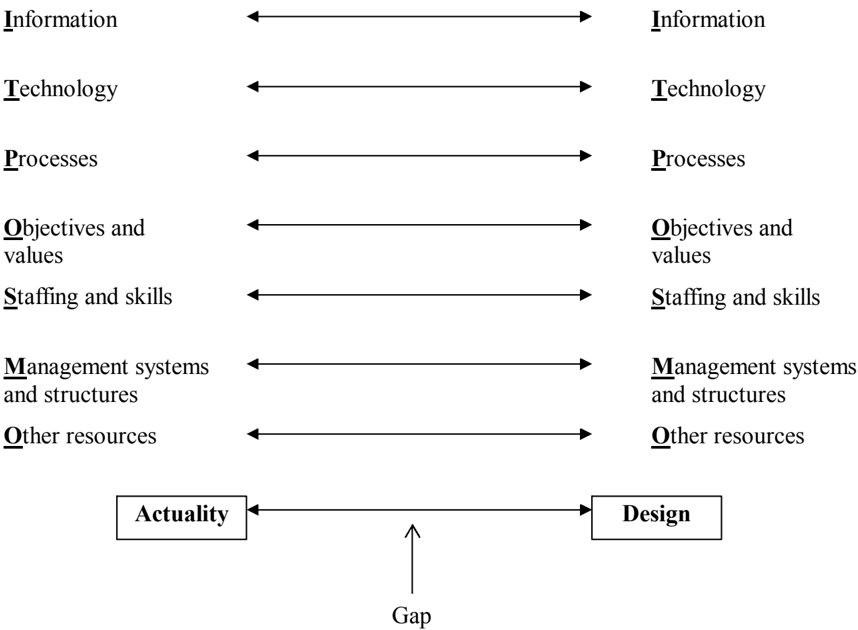
- It develops the notion of “design-actuality gaps,” defined as “the match or mismatch between IS designs and local user actuality.”
- The model highlights two “high-risk archetypes” affecting IS in developing countries: “country context gaps” and “hard-soft gaps.”
- The model is also presented as useful for explaining “the constraints that exist to local IS improvisations in developing countries.”
## Methods
- The paper is a journal article that develops a conceptual model “drawing on contingency theory.”
- The abstract does not specify a dataset, sample, or number of cases; the text only says the article presents “evidence” about IS in developing countries.
- The main analysis appears to be conceptual/theoretical, using the model to interpret IS cases and to refine IS theory.
## Limitations
- The paper does not report a specific sample size, case count, or empirical dataset in the provided text; this limits what can be assessed from the excerpt.
- The abstract does not state formal limitations or boundary conditions of the model beyond noting its focus on developing countries and local user actuality.
- The evidence base is not described in the provided text, so the scope of the claims cannot be independently evaluated from the excerpt alone.
Model-written summary. Check it against the paper before relying on it.
Integrity signals
Registry
Cites
Statistics
Figures
Verification
Claims the paper makes
0 Valid · 0 Not valid · 0 Not checked · 3 Own results and interpretations
A result the paper reports from its own data — it cites no other source for it, so there is none to check. The quote shows it is in the paper.
In the paper
“This article presents evidence that-alongside the successes-many information systems in developing countries can be categorized as failing either totally or partially.”
plain- Asserted: passes — The authors put it forward as true.
- Checkable: passes — It can be checked against evidence.
- Load-bearing: passes — The paper’s conclusions depend on it.
- Based: passes — The paper gives a reason why it holds.
A conclusion the paper draws from its own results — it cites no other source for it, so there is none to check. The quote shows it is in the paper.
In the paper
“The model draws on contingency theory in order to advance the notion of design-actuality gaps: the match or mismatch between IS designs and local user actuality.”
plainstates a possible cause- Asserted: passes — The authors put it forward as true.
- Checkable: passes — It can be checked against evidence.
- Load-bearing: passes — The paper’s conclusions depend on it.
- Based: passes — The paper gives a reason why it holds.
- Rests on an assumption not shown here.
- It may state two separate claims as one. 1
Claims other papers make about this one
Each is checked against this paper’s own text: does it say what the citing paper says it does?
In the citing paper
“This suggests that adoption can be seen as simply the first and perhaps least problematic phase in the drive towards the integration of an innovation into the health system. The greater risk is that of ‘sustainability failure’ [25, 26]”
From Beyond pilotitis: taking digital health interventions to the national level in China and Uganda (2017) · cites this paper as [26]
Citations
Cites
Task-Technology Fit and Individual Performance
Goodhue, D. L., & Thompson, R. L. (1995) · MIS Quarterly · doi:10.2307/249689 · Cited by 6,006 · cited 1×
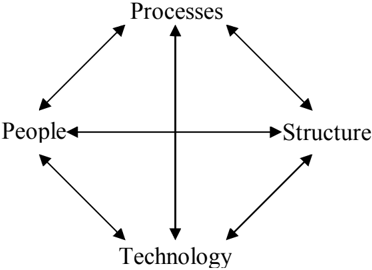
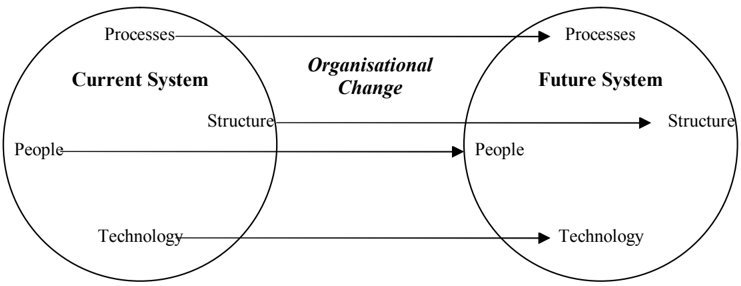
“IS implementation models drawing on this theme have involved e t between “tool”/“technology” and “task” ( Goodhue & Thompson, 1995; Agarwal & Sinha, 1996), or between multiple factors (Scott Morton, 1991; Southon et al., 1997).”
MethodSoftware Engineering Economics
Boehm, B. W. (2001) · Pioneers and Their Contributions to Software Engineering · doi:10.1007/978-3-642-48354-7_5 · Cited by 5,981
Thompson, V. A., & March, J. G. (1966) · American Sociological Review · doi:10.2307/2090830 · Cited by 3,351
The Concept of Fit in Strategy Research: Toward Verbal and Statistical Correspondence
Venkatraman, N. (1989) · The Academy of Management Review · doi:10.2307/258177 · Cited by 2,367
Suchman, L. A. (1987) · Cited by 2,279
The Concept of Fit in Strategy Research: Towards Verbal and Statistical Correspondence
Venkatraman, N. V. (1988) · DSpace@MIT (Massachusetts Institute of Technology) · Cited by 2,037
Improvising Organizational Transformation Over Time: A Situated Change Perspective
Orlikowski, W. J. (1996) · Information Systems Research · doi:10.1287/isre.7.1.63 · Cited by 1,952
Management strategies for information technology
(1990) · Long Range Planning · doi:10.1016/0024-6301(90)90040-b · Cited by 1,033
Shaping technology/building society
(1993) · Choice Reviews Online · doi:10.5860/choice.30-3774 · Cited by 939
The corporation of the 1990s: Information technology and organizational transformation
(1993) · Futures · doi:10.1016/0016-3287(93)90030-w · Cited by 886
Research works printed but not linked: 19
- Avgerou, C. 2000. The multiple rationalities of information systems development. In Information ? ows, local improvisations and work practices. Proceedings of the IFIP WG9.4 Conference 2000. Cape Town: IFIP.
- Avgerou C., 2000, Information technology in context, 1
- Bijker W. E., 1992, Shaping tech-nology/building society, 1
- Butler R., 1991, Designing organizations
- Goonatilake, L., Maizza-Neto, O., and Jayawardene, P. 2000. Enhancing enterprise competitiveness in developing countries through the promotion of management information and benchmarking tools. In Information ? ows, local improvisations and work practices. Proceedings of the IFIP WG9.4 Conference 2000. Cape Town: IFIP.
- IFIP WG9.4. 2000. Information ? ows, local improvisations and work practices. Proceedings of the IFIP WG9.4 Conference 2000. Cape Town: IFIP.
- Jayasuriya R., 1995, Medinfo ’95, 1603
- Korac-Boisvert N., 1995, Information Infrastructure and Policy, 4, 131
- Macias-Chapula, C. A. 2000. Issues learned, challenges and opportunities to implement a library automation project at Mexico’s General Hospital. In Information ? ows, local improvisations and work practices. Proceedings of the IFIP WG9.4 Conference 2000. Cape Town: IFIP.
- Calitz, A. P. 2000. Transforming work practices with IT. In Information ? ows, local improvisations and work practices. Proceedings of the IFIP WG9.4 Conference 2000. Cape Town: IFIP.
- Oyomno G. Z., 1996, Global information technology and socio-economic development, 19
- Puri, S. K., Chauhan, K. P. S., and Admedullah, M. 2000. Prospects of biological diversity information management. In Information ? ows, local improvisations and work practices. Proceedings of the IFIP WG9.4 Conference 2000. Cape Town: IFIP.
- Silva L. O., 2000, Outsourcing as an improvisation. In Information ? ows, local improvisations and work practices. Proceedings of the IFIP WG9.4 Conference 2000
- Walsham G., 2000, Information technology in context, 291
- Wynn, E. and deLyra, J. 2000. A strange attractor in the chaos of global IS development. In Information ? ows, local improvisations and work practices. Proceedings of the IFIP WG9.4 Conference 2000. Cape Town: IFIP.
- Cain P., 2001, Reinventing government in the information age, 135
- Kenny C., 2001, The Internet and economic growth in LDCs. Draft paper
- Kitiyadisai, K. 2000. The implementation of IT in reengineering the Thai Revenue Department. In Information ? ows, local improvisations and work practices. Proceedings of the IFIP WG9.4 Conference 2000. Cape Town: IFIP.
- Mundy D., 2001, Reinventing government in the information age, 271
Cited by
Items 1,101–1,200 of 1,386
ICT in regional networks in the field of culture and development cooperation
Abugessaisa, I., & Sivertun, Å. (2009) · Journal of the Association for Information Systems
Ali, V. (2014) · Open Access Victoria University of Wellington | Te Herenga Waka (Figshare) · doi:10.26686/wgtn.17009135 · Cited by 4
Mohapatra, S., & Singh, R. P. (2011) · Springer eBooks · doi:10.1007/978-1-4614-2428-4_1
Institutional Intervention in SMEs ICT Adoption:A Network Perspective
AlFadhel, S., Brown, D. H., & Lewis, P. J. (2011) · Journal of the Association for Information Systems
Vinck, D., & Zarama, G. (2014) · ENS Éditions eBooks · doi:10.4000/books.enseditions.3375 · Cited by 1
Harfouche, A., & Aoun, G. (2008) · MCIS
MORE THAN HOPE AND GOOD INTENTIONS: DEPLOYING ICT PROJECTS AT THE EDGE OF DEVELOPMENT
da Silva, A. P., & Fernandez, W. D. (2011) · Journal of the Association for Information Systems
An exploration of the theories that explain the failure of information technology adoption in africa
Totolo, A. (2005) · Conference on Information Technology Education · doi:10.1145/1095714.1095806
Kawlra, A. (2011) · International Journal of Information Communication Technologies and Human Development · doi:10.4018/jicthd.2011070102
“…wider relevance lies in going beyond narrow technological determinist views of ICT and development towards one that views technology as both facilitating and enhancing capabilities (Castells, 2000; Fukada-Parr, 2003; Grunfeld, 2009; Gurumurthy, 2008; Heeks, 2002, 2009; James, 2004; Sen, 1999).”
DIGITAL ICLUSIOTHROUGH LOCALISM
Plantinga, P. (2009) · Cited by 1
Muhuro, P., Kang’ethe, S. M., & Rembe, S. (2014) · Mediterranean Journal of Social Sciences · doi:10.5901/mjss.2014.v5n11p139
Exploring the dimensions of project sustainability: a case study of an ICT4D project
Zoysa, M. R. D., & Letch, N. (2013) · International Journal of Services Technology and Management · doi:10.1504/ijstm.2013.054201
“The failure to sustain ICT projects has been highlighted as an issue that afflicts developing nations in particular (Heeks, 2002).”
Public Administration and Information and Communication Technologies
Virkar, S. (2014) · International Journal of Public Administration in the Digital Age · doi:10.4018/ijpada.2014040103
A Risk-Based Audit Model for Improving the Success Rates of e-Government Project Implementation
Aikins, S. K. (2014) · International Journal of Public Administration in the Digital Age · doi:10.4018/ijpada.2014070104 · Cited by 2
Galina, I. (2012) · Aslib Journal of Information Management · doi:10.1108/ap.2012.27664aaa.001
Riyadh, A. N., & Finnegan, P. (2010) · AIS Electronic Library (AISeL)
Alam, M. M., & Wagner, C. (2013) · Journal of the Association for Information Systems
Auguste, M. S. C. (2011) · OpenGrey (Institut de l'Information Scientifique et Technique) · Cited by 3
ACCEPTANCE OF CLINICAL DATA REPOSITORIES BY GENERAL PRACTITIONERS
Ortiz-Fournier, L. V., Ramaswamy, M., Márquez-Martínez, E., & Rivera-Vázquez, J. (2012) · Issues in Information Systems · doi:10.48009/1_iis_2012_264-274
“…lack of utilization of information technology has been attributed to a perceived gap between information systems design and users understanding and actuality on matters pertaining to: hardware, software, objectives and values of the organizations, structures and other relater resources [11].”
Worku, Y. (2009) · Unisa Institutional Repository (University of South Africa)
The perception of the role of IS in an emerging country: The case of Botswana
Ayalew, Y., Renken, J., Grand, B., et al. (2011)
Leveraging ICT deployment & integration in a public organization aged 176 years: a greek case study
Hatzikou, M., & Agiovlasitis, I. P. (2009)
Towards an effective IT governance structure for organizations in developing economies
Samuwai, J., Prasad, A., & Heales, J. (2012) · QUT Business School
KYUNGUTI, E. M., Student, M., & Makau, G. (2014) · Cited by 2
Sustainability Criteria Model: A Field Study of ICT4D Project
Nawi, H. S. A., Syufiza, N., Shukor, A., et al. (2013)
DIGITAL ICLUSIOTHROUGH LOCALISM
Plantinga, P. (2009)
Seven Seven ANALYSING OF SECTOR SPECIFICITY REGARDING ICT AND BROADBAND USAGE BY SMME BUSINESSES
Pierson, J., Baelden, D., Lievens, B., et al. (2008)
BARRIERS TO INFORMATION TECHNOLOGY PROJECT SUCCESS IN SAUDI ARABIAN PUBLIC ORGANIZATIONS
Almajed, A. I., & Mayhew, P. J. (2014) · Cited by 1
SYSTEMS IN DEVELOPING COUNTRIES: A CASE STUDY FROM TANZANIA
Kimaro, H. (2006)
Mwangi, W. (2015) · Science Journal of Business and Management · doi:10.11648/j.sjbm.20150306.15 · Cited by 1
Determinants of Process Maturity in English-speaking Caribbean Firms
Chevers, D. A. (2013) · CONF-IRM
Fatores-chave do processo de maturidade nas empresas caribenhas de língua inglesa
Chevers, D. A. (2014) · Revista de Administração de Empresas · doi:10.1590/s0034-759020140307 · Cited by 4
Gender Dimensions of Information Communication Technologies For DevelopmentPreprint
Khan, A. (2011) · SSRN Electronic Journal · doi:10.2139/ssrn.1829989
Adoption Of E-banking In Context Of A Developing Country, Pakistan
Mohammad, M. (2009)
Minnaar, J. R. (2015) · SUNScholar (Stellenbosch University)
Meeting the methodological challenges of context and subjectivity in information systems research
Njihia, J. (2006) · University of Nairobi Research Archive (University of Nairobi)
Anantakrishnan, G., & Jones, E. C. (2018) · International Supply Chain Technology Journal · doi:10.20545/isctj.v4i02.141
Rural Broadband Expansion in the United States: Citizen Perception as a Social ProcessPreprint
Nafus, D., & Mainwaring, S. D. (2010) · SSRN Electronic Journal
Dumela, S. S. (2014) · University of the Witwatersrand, Johannesburg Institutional Repository on DSpace (University of the Witwatersrand, Johannesburg)
Project Management Processes and Practice
Hughes, D. L., Dwivedi, Y. K., Simintiras, A. C., et al. (2015) · SpringerBriefs in information systems · doi:10.1007/978-3-319-23000-9_4
Park, J., 김병준, & Hong, S. G. (2015) · The e-Business Studies · doi:10.15719/geba.16.2.201504.237
E-business in the university sector: A case study from Libya
Bakeer, A., & Wynn, M. G. (2015) · The Marketing Review · doi:10.1362/146934715x14503490536064
“The SCALE model also adds to existing academic literature in this field, building on the earlier models of Zuboff (1988), Heeks (2002), DTI (2003), Harmon (2009), and the various stage models of e-business advancement (McKay and Marshall, 2004).”
InfluentialEditorial - DOI: 10.3395/reciis.v7i2.826pt
Convidados, E. (2013) · Reciis · doi:10.3395/reciis.v7i2.826pt
Pulido, R. (2015) · UPM Digital Archive (Technical University of Madrid) · doi:10.20868/upm.thesis.39672
A Contextual Framework for EGOV Adoption in SADC
Chikerema, T., Mavetera, N., & Jantjies, M. (2016) · International Conference on Theory and Practice of Electronic Governance · doi:10.1145/2910019.2910072
“Similarly the design-reality gaps alluded to by [14] are not a result of infrastructural problems because they do exist in some countries where they have no such problems.”
BackgroundTechnology validation for e-trial systems
Algharibi, A. J. H. (2016) · University of Birmingham Institutional Research Archive (University of Birmingham)
Information needs of rural farmers in Kedah: A case study of Pusat Internet Desa (PID)
Hussein, H. A. (2016) · UUM Electronic Theses and Dissertation [eTheses] (Northern University of Malaysia)
Han Ei, C. H. E. W. (2012) · ProQuest LLC eBooks · Cited by 1
Globalization and Relevant Strategy for E-Commerce
Shareef, M. A., Dwivedi, Y. K., Williams, M. D., & Singh, N. (2010) · IGI Global eBooks · doi:10.4018/978-1-60566-412-5.ch010 · Cited by 1
Godfrey, L. (2011) · Cited by 1
Shareef, M. A., Dwivedi, Y. K., Williams, M. D., & Singh, N. (2010) · IGI Global eBooks · doi:10.4018/978-1-60566-412-5.ch009
International Organizations, E-Government and Development
Ventrone, O. (2009) · IGI Global eBooks · doi:10.4018/978-1-60566-254-1.ch003
E-Commerce Diffusion: Critical Factors Affecting Diffusion of E-Commerce
Shareef, M. A., Dwivedi, Y. K., Williams, M. D., & Singh, N. (2011) · IGI Global eBooks · doi:10.4018/978-1-60566-412-5.ch005
Realizing E-Government: Delineating Implementation Challenges and Defining Success
Roman, A. V. (2015) · IGI Global eBooks · doi:10.4018/978-1-4666-8358-7.ch096 · Cited by 1
Helseinformasjonssystemer i utviklingsland - Bruk av DHIS2 i en mHealth løsning i Zambia
Bremnes, J. A. S. (2015) · NORA - Norwegian Open Research Archives
Evaluating the Relevance of Information Systems Strategic Planning Practices in E-Business Contexts
Kannabiran, G., & Sundar, S. (2013) · IGI Global eBooks · doi:10.4018/978-1-4666-3622-4.ch002
Aid Assisted Parliamentary Website Initiatives in Developing Countries
Ahmed, M. A. (2011) · IGI Global eBooks · doi:10.4018/978-1-61350-329-4.ch016
Successfully Playing Games of Tax Compliance
Virkar, S. (2016) · Advances in psychology, mental health, and behavioral studies (APMHBS) book series · doi:10.4018/978-1-4666-9989-2.ch012
SOA Governance Considerations for Successful Project Management
Koumaditis, K., & Themistocleous, M. (2015) · Advances in IT personnel and project management · doi:10.4018/978-1-4666-7473-8.ch012
Wang, Y., & Greasley, A. (2012) · Advances in e-business research series · doi:10.4018/978-1-4666-1619-6.ch006
Ezumah, B. A. (2012) · IGI Global eBooks · doi:10.4018/978-1-4666-0134-5.ch017 · Cited by 2
An Explorative Study of Dynamic Influences on ICT-Led Developmental Impact at Community Level
Ashraf, M., Hanisch, J., & Swatman, P. A. (2009) · IGI Global eBooks · doi:10.4018/978-1-60566-713-3.ch003
“Unfortunately, little emphasis has been given to understanding the impact side (for example, users’ willingness and capacity to acquire/use services) compared with implementing the project (Ashraf, Hanisch & Swatman, 2006; Heeks, 2002).”
Gunilla Bradley’s ‘Good Society’ and Structuration Theory: An Exploratory Excursus
Stillman, L., & Denison, T. (2010) · IGI Global eBooks · doi:10.4018/978-1-60960-057-0.ch005
Success Factors for Public Access Computing: Beyond Anecdotes of Success
Gómez, R. (2011) · IGI Global eBooks · doi:10.4018/978-1-60960-771-5.ch009
Virkar, S. (2015) · Advances in electronic government, digital divide, and regional development book series · doi:10.4018/978-1-4666-9536-8.ch012
Critical Analysis of the Roles of Actors in the Deployment of Software
Sekgweleo, T. (2015) · Advances in human resources management and organizational development book series · doi:10.4018/978-1-4666-8524-6.ch007
E-Commerce Adoption in Developing Countries
Shareef, M. A., Dwivedi, Y. K., Williams, M. D., & Singh, N. (2010) · IGI Global eBooks · doi:10.4018/978-1-60566-412-5.ch007 · Cited by 1
The Performance of Chinese Commercial Bank: Evidence from EVA approach
Xu, W., & Lee, S. (2015) · The e-Business Studies · doi:10.15719/geba.16.2.201504.221
Athanasopoulou, L., Demakos, C. B., & Voudouri, A. P. (2021) · International Journal For Research In Business Management And Accounting · doi:10.53555/bma.v1i3.1679
“DeRouin R., Fritzsche B. & Salas E. (2005), “E-learning in Organizations”, Journal of Management, 31, 920, doi: 10.1177/0149206305279815 Heeks Ritchard (2002), “Information Systems and Developing Countries: Failure, Success and Local Improvisations”, The Information Society, 18, 101-112,…”
InfluentialOtchere, P. A. (2016) · DalSpace (Dalhousie University)
Botchway, E. A., Yeboah-Boateng, E. O., & Kwofie, T. E. (2015) · arXiv (Cornell University) · doi:10.48550/arxiv.1609.01823
The decision making process of your company is really integrated
Pulido, R., Brun, A., & Sánchez, Á. G. (2014)
Re-Territorialising Governance and the State
Virkar, S. (2016) · Advances in geospatial technologies book series · doi:10.4018/978-1-5225-0937-0.ch007
MANAGEMENT AND ORGANISATIONS SUPPORT INFORMATION SYSTEMS
Boateng, R. (2009)
Benefits and challenges of E-government at the Kenya Anti-Corruption Commission
Odinga, P. A. (2010)
Virkar, S. (2016) · International series on computer entertainment and media technology · doi:10.1007/978-3-319-49407-4_3 · Cited by 1
A Low-resource Aware Framework for ICT Service Development in Rural Africa
Bon, A., Gordijn, J., & Akkermans, H. (2016) · VU Research Portal
Affordance and Habitus: Understanding Land Records E-services in Bangladesh
Brooks, L., & Alam, M. S. (2017) · IFIP advances in information and communication technology · doi:10.1007/978-3-319-59111-7_25
Sustainability of the aAQUA e-Agriservice: A Case Study of Maharashtra, India
Wadkar, S. K., Singh, K., Mohammad, A., Kadian, K. S., & Malhotra, R. K. (2017) · IFIP advances in information and communication technology · doi:10.1007/978-3-319-59111-7_42
“This lack of understanding has led to many failures of ICT4D projects reported in the literature (Heeks, 2002).”
Chambers, N. A. (2013) · Digital Commons-DePaul (DePaul University)
Ng'ethe, G. G. (2016) · Open University of Cape Town (University of Cape Town)
Mulalu, M. I. (2017) · Advances in geospatial technologies book series · doi:10.4018/978-1-5225-3440-2.ch003
A Systematic Literature Review on ICTD Research by IS Community
Ramadani, L. (2017) · Jurnal Nasional Teknologi dan Sistem Informasi · doi:10.25077/teknosi.v3i2.2017.255-268
Argumentation in participant-driven photo interviews: A case in ICT for development in Mozambique
Ascaniis, S. D., Vannini, S., & Cantoni, L. (2017) · Semiotica · doi:10.1515/sem-2015-0137
“This so-called “design-reality gap” (Heeks 2002) defines a lack of consideration of the socio-cultural peculiarities of ICT4D initiatives, and is considered to cause breakdowns and closures of projects (Heeks 2002).”
InfluentialTegenaw, G. S., & Bekele, H. (2018) · Asian Journal of Computer and Information Systems · doi:10.24203/ajcis.v6i1.5122.g2738 · Cited by 1
Jha, B. (2017) · Current Advances in Agricultural Sciences(An International Journal) · doi:10.5958/2394-4471.2017.00045.4
ICT AND SOCIO-ECONOMIC TRANSFORMATION: THE EXPERIENCE OF NIGERIA
Jiboku, J. O. (2018) · Journal of International Social Research · doi:10.17719/jisr.20185537223
“…is exactly meant by the terms ‘information’ and ‘knowledge’ is seldom specified in the ICT and development texts showing a lack of conceptualisation of the contested nature of knowledge and the existence of various knowledge systems and practices (Heeks, 2002:101-112; Kraemer, et.al 2009:66-73).”
Akoh, B. (2017) · IFIP advances in information and communication technology · doi:10.1007/978-3-319-74310-3_4 · Cited by 1
“Heeks [9] argued that only one-fifth of technology projects in industrialized countries succeeded at the time.”
BackgroundEvaluating and planning information systems in the public sector: The case of Korea
Cha, Y. U., & Park, M. J. (2018) · Information Development · doi:10.1177/0266666918780956
The Impact of the contextual factors on the success of e-government in Lebanon: Context-System Gap
Chamas, B., & Hassan, A. (2017) · Bradford Scholars (University of Bradford)
Hatzikou, M., & Agiovlasitis, I. P. (2010) · Zenodo (CERN European Organization for Nuclear Research) · doi:10.3217/jucs-016-08-1102
From Sustainable to Continuously Adaptive Information Systems
Asah, F. N., Chikumba, P. A., Kaasbøll, J., et al. (2018) · IST-Africa Week Conference
Current Scenario of the E-Governance Initiatives, and Future Prospects in India
Chinnathurai, P., & Javid, A. (2018) · International Journal of Trend in Scientific Research and Development · doi:10.31142/ijtsrd17062
Metadata
- Authors
- Heeks, R.
- Corresponding author
- Heeks, Richard
- ORCID
- Heeks, Richard
- Venue
- The Information Society
- Publisher
- Informa UK Limited
- Published
- 2002-03
- Volume
- 18
- Issue
- 2
- Pages
- 101-112
- ISSN
- 0197-2243 (ISSN-L)
- 1087-6537
- OpenAlex
- W2136941206
- Semantic Scholar
- dd6c8931d276f258d356e65416018725912d2dbd
- Cited by
- 1,390
- References
- 53
- Citations by year
- 2026: 71 · 2025: 42 · 2024: 37 · 2023: 41 · 2022: 49 · 2021: 60 · 2020: 58 · 2019: 72 · 2018: 39 · 2017: 70 · 2016: 81 · 2015: 114 · 2014: 95 · 2013: 97 · 2012: 97
- FWCI
- 34.02
- Type
- journal article
- Language
- en
- Open access
- Licence
- other-oa
- Locations
- The Information Society (publishedVersion)
- Research Explorer (The University of Manchester) (publishedVersion, other-oa)
- Topics
- Physical Sciences › Computer Science › Information Systems › ICT in Developing Communities
- Social Sciences › Business, Management and Accounting › Management Information Systems › Information Systems Theories and Implementation
- Social Sciences › Economics, Econometrics and Finance › Economics and Econometrics › ICT Impact and Policies
- Keywords
- contingency theory, IS success factors
About these checks
Registry, retraction, Cites and statistics results are computed, not judged, with one exception: a printed reference that no index lists is read once by a model before it counts as a citation error. Claims are extracted by a model and kept only when their quote appears verbatim in the text; each cited source is then checked, with a model’s help, for whether it says what the claim relies on. Those verdicts can be wrong — read the claim’s quote and the cited source before relying on one.
A language model drew the claims from the paper on 2026-10-10, under version 3 of the claim definition (model deepseek-v4.1-flash, prompt extract-v3).
A second model labelled each claim on 2026-10-10 (model jev-1.13-20260917, definition revision gold-guideline-v0.2).
Statistics and arithmetic are recomputed, not judged.
Confidence bands are shown only for fields calibrated on our annotated test set. None is calibrated yet, so no band is shown.
What counts as a claim ›How we measure confidence ›How we check this ›
Are you an author, or do you see a problem with this page? Request a review
Data sources
Bibliographic data: Semantic Scholar, OpenAlex, Crossref.
Contains information from the Semantic Scholar Academic Graph Datasets, made available under the ODC Attribution License (ODC-BY 1.0).
Semantic Scholar’s data is described in: Kinney, R., et al. (2023). The Semantic Scholar Open Data Platform. arXiv:2301.10140.
