

Information Systems and Developing Countries: Failure, Success, and Local Improvisations
Open accessThe DOI matches its Crossref record; 53 of the 53 references it cites were found in a registry or an index.
Abstract
The article develops the design-actuality gaps model to explain why many information systems in developing countries fail totally or partially.
Overview
CoChat Summary
## TL;DR
The paper argues that many information systems in developing countries fail totally or partially, and proposes a contingency-theory-based model of “design-actuality gaps” to explain why. It identifies two high-risk gap types—country context gaps and hard-soft gaps—and also discusses constraints on local improvisation.
## Key findings
- The paper states that, alongside successes, “many information systems in developing countries can be categorized as failing either totally or partially.”
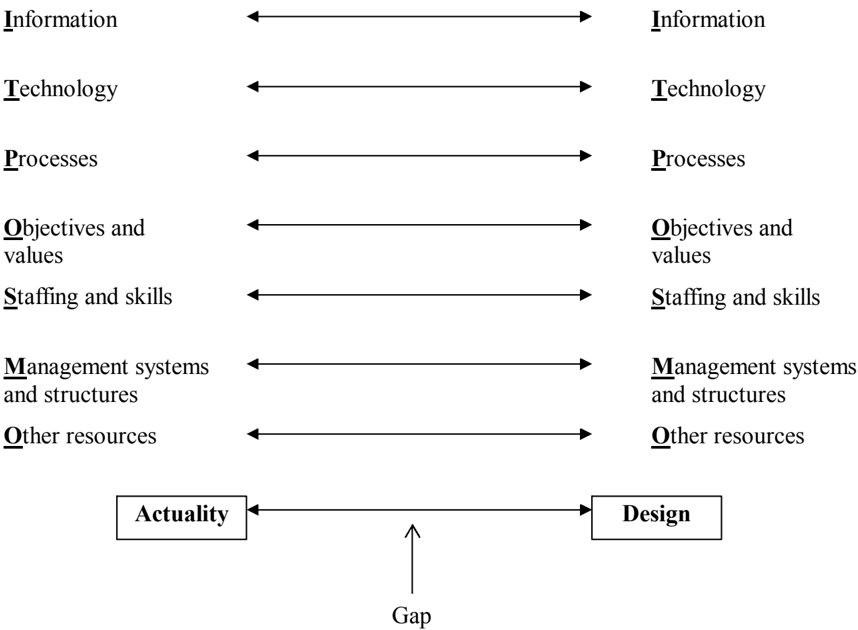
- It develops the notion of “design-actuality gaps,” defined as “the match or mismatch between IS designs and local user actuality.”
- The model highlights two “high-risk archetypes” affecting IS in developing countries: “country context gaps” and “hard-soft gaps.”
- The model is also presented as useful for explaining “the constraints that exist to local IS improvisations in developing countries.”
## Methods
- The paper is a journal article that develops a conceptual model “drawing on contingency theory.”
- The abstract does not specify a dataset, sample, or number of cases; the text only says the article presents “evidence” about IS in developing countries.
- The main analysis appears to be conceptual/theoretical, using the model to interpret IS cases and to refine IS theory.
## Limitations
- The paper does not report a specific sample size, case count, or empirical dataset in the provided text; this limits what can be assessed from the excerpt.
- The abstract does not state formal limitations or boundary conditions of the model beyond noting its focus on developing countries and local user actuality.
- The evidence base is not described in the provided text, so the scope of the claims cannot be independently evaluated from the excerpt alone.
Model-written summary. Check it against the paper before relying on it.
Integrity signals
Registry
Cites
Statistics
Figures
Verification
Claims the paper makes
0 Valid · 0 Not valid · 0 Not checked · 3 Own results and interpretations
A result the paper reports from its own data — it cites no other source for it, so there is none to check. The quote shows it is in the paper.
In the paper
“This article presents evidence that-alongside the successes-many information systems in developing countries can be categorized as failing either totally or partially.”
plain- Asserted: passes — The authors put it forward as true.
- Checkable: passes — It can be checked against evidence.
- Load-bearing: passes — The paper’s conclusions depend on it.
- Based: passes — The paper gives a reason why it holds.
A conclusion the paper draws from its own results — it cites no other source for it, so there is none to check. The quote shows it is in the paper.
In the paper
“The model draws on contingency theory in order to advance the notion of design-actuality gaps: the match or mismatch between IS designs and local user actuality.”
plainstates a possible cause- Asserted: passes — The authors put it forward as true.
- Checkable: passes — It can be checked against evidence.
- Load-bearing: passes — The paper’s conclusions depend on it.
- Based: passes — The paper gives a reason why it holds.
- Rests on an assumption not shown here.
- It may state two separate claims as one. 1
Claims other papers make about this one
Each is checked against this paper’s own text: does it say what the citing paper says it does?
In the citing paper
“This suggests that adoption can be seen as simply the first and perhaps least problematic phase in the drive towards the integration of an innovation into the health system. The greater risk is that of ‘sustainability failure’ [25, 26]”
From Beyond pilotitis: taking digital health interventions to the national level in China and Uganda (2017) · cites this paper as [26]
Citations
Cites
Task-Technology Fit and Individual Performance
Goodhue, D. L., & Thompson, R. L. (1995) · MIS Quarterly · doi:10.2307/249689 · Cited by 6,006 · cited 1×
“IS implementation models drawing on this theme have involved e t between “tool”/“technology” and “task” ( Goodhue & Thompson, 1995; Agarwal & Sinha, 1996), or between multiple factors (Scott Morton, 1991; Southon et al., 1997).”
MethodSoftware Engineering Economics
Boehm, B. W. (2001) · Pioneers and Their Contributions to Software Engineering · doi:10.1007/978-3-642-48354-7_5 · Cited by 5,981
Thompson, V. A., & March, J. G. (1966) · American Sociological Review · doi:10.2307/2090830 · Cited by 3,351
The Concept of Fit in Strategy Research: Toward Verbal and Statistical Correspondence
Venkatraman, N. (1989) · The Academy of Management Review · doi:10.2307/258177 · Cited by 2,367
Suchman, L. A. (1987) · Cited by 2,279
The Concept of Fit in Strategy Research: Towards Verbal and Statistical Correspondence
Venkatraman, N. V. (1988) · DSpace@MIT (Massachusetts Institute of Technology) · Cited by 2,038
Improvising Organizational Transformation Over Time: A Situated Change Perspective
Orlikowski, W. J. (1996) · Information Systems Research · doi:10.1287/isre.7.1.63 · Cited by 1,952
Management strategies for information technology
(1990) · Long Range Planning · doi:10.1016/0024-6301(90)90040-b · Cited by 1,033
Shaping technology/building society
(1993) · Choice Reviews Online · doi:10.5860/choice.30-3774 · Cited by 939
The corporation of the 1990s: Information technology and organizational transformation
(1993) · Futures · doi:10.1016/0016-3287(93)90030-w · Cited by 886
Research works printed but not linked: 19
- Avgerou, C. 2000. The multiple rationalities of information systems development. In Information ? ows, local improvisations and work practices. Proceedings of the IFIP WG9.4 Conference 2000. Cape Town: IFIP.
- Avgerou C., 2000, Information technology in context, 1
- Bijker W. E., 1992, Shaping tech-nology/building society, 1
- Butler R., 1991, Designing organizations
- Goonatilake, L., Maizza-Neto, O., and Jayawardene, P. 2000. Enhancing enterprise competitiveness in developing countries through the promotion of management information and benchmarking tools. In Information ? ows, local improvisations and work practices. Proceedings of the IFIP WG9.4 Conference 2000. Cape Town: IFIP.
- IFIP WG9.4. 2000. Information ? ows, local improvisations and work practices. Proceedings of the IFIP WG9.4 Conference 2000. Cape Town: IFIP.
- Jayasuriya R., 1995, Medinfo ’95, 1603
- Korac-Boisvert N., 1995, Information Infrastructure and Policy, 4, 131
- Macias-Chapula, C. A. 2000. Issues learned, challenges and opportunities to implement a library automation project at Mexico’s General Hospital. In Information ? ows, local improvisations and work practices. Proceedings of the IFIP WG9.4 Conference 2000. Cape Town: IFIP.
- Calitz, A. P. 2000. Transforming work practices with IT. In Information ? ows, local improvisations and work practices. Proceedings of the IFIP WG9.4 Conference 2000. Cape Town: IFIP.
- Oyomno G. Z., 1996, Global information technology and socio-economic development, 19
- Puri, S. K., Chauhan, K. P. S., and Admedullah, M. 2000. Prospects of biological diversity information management. In Information ? ows, local improvisations and work practices. Proceedings of the IFIP WG9.4 Conference 2000. Cape Town: IFIP.
- Silva L. O., 2000, Outsourcing as an improvisation. In Information ? ows, local improvisations and work practices. Proceedings of the IFIP WG9.4 Conference 2000
- Walsham G., 2000, Information technology in context, 291
- Wynn, E. and deLyra, J. 2000. A strange attractor in the chaos of global IS development. In Information ? ows, local improvisations and work practices. Proceedings of the IFIP WG9.4 Conference 2000. Cape Town: IFIP.
- Cain P., 2001, Reinventing government in the information age, 135
- Kenny C., 2001, The Internet and economic growth in LDCs. Draft paper
- Kitiyadisai, K. 2000. The implementation of IT in reengineering the Thai Revenue Department. In Information ? ows, local improvisations and work practices. Proceedings of the IFIP WG9.4 Conference 2000. Cape Town: IFIP.
- Mundy D., 2001, Reinventing government in the information age, 271
Cited by
Items 1,301–1,386 of 1,386
Technology for Collaboration and Networking in Non-Profit Organizations
Global, N., & Kazanskaia, A. N. (2025) · doi:10.64357/neya-gjnps-tchtleffimp-09
Alexandre, C., Toillier, A., den Hertog, P., Mignon, S., & Faure, G. O. (2025) · The Journal of Agricultural Education and Extension · doi:10.1080/1389224x.2025.2559593
“The promotion of digital technologies in developing countries has for a long time followed a linear process of technology transfer (Baelden and Van Auden-hove 2015; Heeks 2002).”
AI, interdisciplinarity and civic engagement: insights from Amsterdam school choice
Tasnim, M., & Ghebreab, S. (2025) · Cambridge Forum on AI Culture and Society · doi:10.1017/cfc.2025.10007 · Cited by 2
Nanda, B. (2018) · Asia Pacific Law & Policy Review · doi:10.55662/aplpr.2018.426
“9- Transportation Facilities in the village [18]”
OSS DRIVEN ORGANIZATION CHANGE IN A DEVELOPING COUNTRY CONTEXT: CASE STUDY FROM THE PUBLIC SECTOR
Mengesha, N. T. (2010) · International Conference on Information Systems
Blogging to express self and social identities, any one?
Nguyen, V., & Fernandez, W. D. (2009) · Journal of the Association for Information Systems
The Role of Top Management in IS Implementation: A Practical Study in Saudi Arabian Universities
Saleh, I. A. (2011) · Journal of the Association for Information Systems
Why Medical Informatics (still) Needs Cognitive and Social Sciences
Declerck, G., & Aimé, X. (2013) · Yearbook of Medical Informatics · doi:10.1055/s-0038-1638837
“Health Information Technology (HIT) adoption rates remain low [6] and complete adoption failures are reported regularly [11-13].”
BackgroundInforming development: Mobile telephony, governments, and local stakeholders in Africa
Cullum, B. T. (2010) · DigitalGeorgetown (Georgetown University Library) · Cited by 2
An Action Research Study: Introducing ICT's in Developing Countries
Børtveit, K. (2014) · BIBSYS Brage (BIBSYS (Norway))
Maiye, A. (2012) · Brunel University Research Archive (BURA) (Brunel University London) · Cited by 3
Assimilation of Healthcare Information Systems (HIS): An Analysis and Critique
Sulaiman, H. B., & Wickramasinghe, N. S. (2011) · Springer eBooks · doi:10.1007/978-1-4614-1536-7_4 · Cited by 1
Teaching Paper: Essential Digital and Emerging Technology Concepts for Non-Profit Practice
Global, N., & Kazanskaia, A. N. (2025) · doi:10.64357/neya-gjnps-tchtleffimp-tp-03
E-governance Parameters Assessment: An AHP Approach
Arora, D. M., & Gupta, A. (2016) · AIMT Journal of Management · doi:10.65301/aimt.2016.6.ii.678
Nzuza, N., & Siebörger, I. (2025) · The African Journal of Information and Communication (AJIC) · doi:10.23962/ajic.i36.24415 · Cited by 3
“More than two decades ago, Heeks (2002) argued that the failure of ICT4D projects was linked to a “design–actuality gap”, where there is a mismatch between the ICTs and the local user context.”
Nyatuka, D. R., Jabin, M. S. R., & Dionne-Morris, L. (2026) · doi:10.2196/preprints.92637 · Cited by 1
Sensing as a Service in the Age of AI from Philosophy of Science Point of View
Eriyadi, M., Imanudin, M. F., Dani, A. A. H., Lubis, F. F., Hidayat, F., & Supangkat, S. H. (2025) · International Conference on ICT for Smart Society (ICISS) · doi:10.1109/iciss66954.2025.11389501
Gómez, R. E. (2026) · SSRN Electronic Journal · doi:10.2139/ssrn.6415241
Domestic Solar Media in Rural Tanzania
Parks, L. (2026) · Duke University Press eBooks · doi:10.1215/9781478062004-007
Opiña, L. B., & Pineda, A. (2026) · Psychology and Education A Multidisciplinary Journal · doi:10.70838/pemj.530708
Medeiros, J. C. (2026) · SSRN Electronic Journal · doi:10.2139/ssrn.6429058
Rocela, F. M. M., & Pineda, A. (2026) · Psychology and Education A Multidisciplinary Journal · doi:10.70838/pemj.530706
Zoa, J. (2026) · Journal of Computer and Communications · doi:10.4236/jcc.2026.143012 · Cited by 1
Muallidin, I. (2026) · Transforming Government People Process and Policy · doi:10.1108/tg-12-2025-0447 · Cited by 2
Wiring the State Back in: Digitalization, Intermediaries, and ICT4D at the Last Mile
Monish, K. (2026) · IFIP advances in information and communication technology · doi:10.1007/978-3-032-19480-0_6
Amuha, M. G., & Masiero, S. (2026) · The Electronic Journal of Information Systems in Developing Countries · doi:10.1002/isd2.70066 · Cited by 3
“This pattern, widely observed in ICT4D literature, reflects a broader trend where externally driven projects, especially when lacking robust institutional embedding, often fail to build sustainable and institutionally resilient systems (Madon 2004; Heeks 2002).”
Zhang, Y. (2026) · Frontiers in Sustainable Development · doi:10.54691/y8wcpd73
“[12] The indicator framework is therefore designed not only for descriptive observation but also for mechanism identification.”
Zoa, J. (2026) · Open Journal of Social Sciences · doi:10.4236/jss.2026.144025
Makaranga, J. T., Moshi, G. C., & Sukums, F. K. (2026) · The Electronic Journal of Information Systems in Developing Countries · doi:10.1002/isd2.70067
“…countries (LMICs) in public healthcare settings, workarounds are not necessarily exceptional and intermittent reactions to isolated system failures but are, in fact, continuous and normalized adapting strategies that are deeply rooted within fragile systems (Heeks 2002; Sahay et al. 2017).”
InfluentialAnalytics and Business Survival—Critical Success Factors and the Demise of HP Bulmer Ltd.
Wynn, M., & Reed, C. (2026) · Analytics · doi:10.3390/analytics5020017
“Heeks [61], for example, identified the concepts of people competencies, process adaptability, and organisational structure as well as technology functionality in determining information systems implementation outcomes.”
Svensson, J. (2026) · Springer eBooks · doi:10.1007/978-981-10-7035-8_43-2
Bi, X., Luo, P., & Liu, T.-L. (2026) · Sustainability · doi:10.3390/su18104630 · Cited by 1
Koskinen, K., Keskinen, P., & Chivuno‐Kuria, S. (2026) · The Electronic Journal of Information Systems in Developing Countries · doi:10.1002/isd2.70069 · Cited by 1
“These shortcomings thus emerge as examples of design-reality gaps (Heeks 2002), the causes of which as well as outcomes in relation to project failures have been established in prior research (e.g., Masiero 2016).”
Patterns of system outsourcing in fragile environments: a case from Afghanistan
Wahaj, H. G., & Vranić, V. (2026) · Social Network Analysis and Mining · doi:10.1007/s13278-026-01602-7
“Heeks ( 2002, 2005 ) highlighted common causes of failure in ICT projects, such as capacity gaps, policy mismatch, and lack of local ownership.”
Solopi, M. (2026) · Information Polity · doi:10.1177/15701255261445218
“For instance, even as digital transformation is often cited as enhancing transparency and access to information on legislative processes and activities (Leston-Bandeira, 2016), it also raises issues of exclusion where the digital divide persist as a reality (Heeks, 2002a, 2002b).”
Digital and AI-Enabled Public Procurement in Smart Cities: A Governance Efficiency Framework
Mkhitaryan, K., HOVHANNISYAN, A., Ordyan, A., Harutyunyan, H. H., & Kirakosyan, E. I. (2026) · Urban Science · doi:10.3390/urbansci10060296 · Cited by 4
Transforming Communities: Leveraging Service Innovation for Social Change
Herutomo, A., & Prasetio, E. A. (2026) · Translational systems sciences · doi:10.1007/978-981-95-8216-7_14
Uwamungu, E., Marara, A. A., Munyaneza, E., Ndahiriwe, J. B., & Pinney, J. (2026) · BMC Medical Informatics and Decision Making · doi:10.1186/s12911-026-03597-9 · Cited by 2
Birahim, S. A. (2026) · Information Polity · doi:10.1177/15701255261456435
AKINREMI, O. (2026) · Advanced Journal of Science Technology and Engineering · doi:10.52589/ajste-pi1f7gmv
e-Tax Filing and Assessment in the Age of Artificial Intelligence (AI): A Case of Bangladesh
Mannan, K. A., Farhana, K. M., & Faruque, C. G. M. O. (2026) · Capital Market and Financial Review · doi:10.64907/xkmf.v6.i2.cmfr.3
LIAISE-CAM: A design framework for small business digitalization in developmental contexts
Goel, H., Ghoshal, A., & Ragavan, S. S. (2026) · Designing Interactive Systems Conference · doi:10.1145/3800645.3813098
AI Digital Platforms, Participatory Governance, and the Digital Divide in Developing Smart Cities
Ahani, S., & Zahiri, M. (2026) · Italian Journal of Planning Practice · doi:10.66428/ijppv16i02a001
“In Nigeria, frequent power outages and limited 4G network coverage make digital services, such as blockchain-based identity systems, unattainable for rural communities, exacerbating regional inequalities (Heeks, 2002).”
Cossa, N. T., Ribeiro, T. D. S., Neto, A. R. S., & Dornelas, J. S. (2026) · The Electronic Journal of Information Systems in Developing Countries · doi:10.1002/isd2.70073
“It also res-onates with critiques in ICT4D literature regarding the risks of supply-driven models and persistent design–reality gaps (Heeks 2002; Madon 2009; Kleine 2009).”
Influential陈, 添. (2026) · Advances in Social Sciences · doi:10.12677/ass.2026.156534
Adesuyi, O. (2026) · American Journal of Artificial Intelligence · doi:10.11648/j.ajai.20261002.11
Genjebo, B., Mamo, Z. C., & Widén, K. (2026) · Architecture · doi:10.3390/architecture6030105
“In contexts where dire socioeconomic realities are core urbanization challenges and different from the mainstream conceptions [14–16], replication of universalized environmentalism risks a “design–reality gap” [17].”
InfluentialDíaz, J., Bustamante-Mora, A., Arango‐López, J., & Villegas, G. (2026) · Systems · doi:10.3390/systems14070724
Staehelin, D., Miscione, G., & Dolata, M. (2026) · Journal of Medical Internet Research · doi:10.2196/82214
“Sociotechnical misfit explains digital health failures better than the inherent properties of technology alone [1,2].”
Staehelin, D., Miscione, G., & Dolata, M. (2026) · Zürcher Hochschule für Angewandte Wissenschaften digital collection (Zurich University of Applied Sciences) · doi:10.21256/zhaw-37052
Ugwu, J. N., Nyamboga, T. O., Oywa, A. I., Mbabazi, A., Muhammad, T., & Ugwu, O. P.-C. (2026) · Frontiers in Sustainable Cities · doi:10.3389/frsc.2026.1881417
Furusa, S. S., & Phahlane, M. M. (2026) · Computers · doi:10.3390/computers15080476
Furusa, S. S., & Phahlane, M. M. (2026) · Computers · doi:10.3390/computers15080490
Afrifa, D. A., & del Valle, A. C. (2026) · Frontiers in Research Metrics and Analytics · doi:10.3389/frma.2026.1815969
“Successful implementation often requires adaptation to local infrastructure, workforce realities, cultural contexts, regulatory systems, and financial constraints (Heeks, 2002).”
Bridging or Widening the Gap: A Study of Artificial Intelligence and the Digital Divide in Jamaica
Waller, L., & Johnson, S. (2026) · Emerald Group Publishing Limited eBooks · doi:10.1108/978-1-83708-376-320261009
Abbas, N., Shahid, M. S., Naheed, K., & Sadiq, S. (2026) · Springer eBooks · doi:10.1007/978-3-032-28051-0_2
Elang, A., Bitjoka, G. B., & Chembo, Y. K. (2026) · IEEE Access · doi:10.1109/access.2026.3729612
“Heeks [23] proposed the ‘‘Design-Reality Gap’’ model in the literature of Information Systems in developing nations, which means that government e-government projects have challenges where the underlying principles of the software design (e.g. universal connectivity) and the deployment environment…”
InfluentialMustapha, B., & Akhlaffou, M. (2026) · doi:10.1109/dtisd69661.2026.11668107
“While several studies have examined the integration of IS in private sector organizations [8], [9], very few empirical studies have examined how locally developed applications are integrated into centralized IS in the public sector, particularly in the context of developing countries [10].”
Digital transformation in the global south: Balancing risks and building resilience
Pyram, S., Trembovelskyi, B., & Mettler, T. (2026) · Government Information Quarterly · doi:10.1016/j.giq.2026.102173 · Cited by 1
E-Government and Women’s Rights: Using Technology to Enhance Legal Empowerment
Begum, N. (2026) · RESEARCH HUB International Multidisciplinary Research Journal · doi:10.31305/rhimrj.2026.v13n08.006
Falkeman, M. (2026) · Lecture notes in computer science · doi:10.1007/978-3-032-35747-2_2
Naatu, S., Suleman, S., Naatu, S., et al. (2026) · doi:10.69739/jtr.v1i2.1997
Klaus, T., & Singh, R. (2026) · SSRN Electronic Journal · doi:10.2139/ssrn.7519173
UPI - DBT Integration under Digital India: Transforming Last-Mile Welfare Delivery Metrics
Kumar, D. V. R. (2026) · International Journal of Research in Social Sciences and Humanities · doi:10.37648/ijrssh.v16i01.017
Kumar, R., & Jha, C. K. (2026) · Lecture notes in networks and systems · doi:10.1007/978-3-032-38809-4_3
Niyonshuti, E., Müller, S. D., Ntiganzwa, J., Umutoniwase, E. M., Uwase, M., Rwubaka, E., Niyitegeka, B., Bivegete, K. N., Sebaganwa, C., Ndabarasa, F. G., et al. (2026) · IFIP advances in information and communication technology · doi:10.1007/978-3-032-30982-2_28
Khumalo, S., Turpin, M., & Matthee, M. C. (2026) · IFIP advances in information and communication technology · doi:10.1007/978-3-032-30982-2_7
Momoh, A. J., Sanner, T. A., & Masiero, S. (2026) · IFIP advances in information and communication technology · doi:10.1007/978-3-032-30942-6_41
Why Adaptive Management Struggles in ICT4D: Accountability, Agency, and Project Governance
Ise, S., & Khene, C. (2026) · IFIP advances in information and communication technology · doi:10.1007/978-3-032-30942-6_2
Boikanyo, K., & Budree, A. (2026) · IFIP advances in information and communication technology · doi:10.1007/978-3-032-30942-6_31
Global-Local Dialectics in Health Information Systems’ Maturity Assessment
Siliadin, K. M. (2026) · IFIP advances in information and communication technology · doi:10.1007/978-3-032-30942-6_18
Achdika, M. S., & Park, K. R. (2026) · IFIP advances in information and communication technology · doi:10.1007/978-3-032-30942-6_27
Frank, J. M., & Salmona, M. (2011) · AIS Electronic Library (AISeL) · Cited by 1
Modelling an information management system for the National Health Insurance Scheme in Ghana
Owusu-Asamoah, K. (2014) · Loughborough University Institutional Repository (Loughborough University)
AN EMPIRICAL EXAMINATION OF THE IMPACT OF ICT ON THE FUNCTIONING OF THE LEBANESE MINISTRY OF FINANCE
Rawas, M. (2013) · DMU Open Research Archive (De Montfort University)
The encounter of new ICT tools and local traditions in rural Samoa
Sao, F. M., & Andrade, A. D. (2013) · Journal of the Association for Information Systems
Liyala, S. (2012) · DMU Open Research Archive (De Montfort University)
Debay, W. L., Teklu, T., & Watson, R. T. (2012) · Journal of the Association for Information Systems
Population Stereotyped Icons: A Study of Agrarian Communities in India
Chua, W. Y., Chang, K., & Wan, M. P.-H. (2015) · AIS Electronic Library (AISeL)
Inclusive Innovation In Governance: Critical Reflections From Botswana
Joshi, S., Belkacem, K., Koulolias, V., et al. (2014) · Journal of the Association for Information Systems
Kurnia, S., Mahbubur, R., Husada, R., & Alhashmi, S. M. (2013) · Pacific Asia Conference on Information Systems · Cited by 3
Metadata
- Authors
- Heeks, R.
- Corresponding author
- Heeks, Richard
- ORCID
- Heeks, Richard
- Venue
- The Information Society
- Publisher
- Informa UK Limited
- Published
- 2002-03
- Volume
- 18
- Issue
- 2
- Pages
- 101-112
- ISSN
- 0197-2243 (ISSN-L)
- 1087-6537
- OpenAlex
- W2136941206
- Semantic Scholar
- dd6c8931d276f258d356e65416018725912d2dbd
- Cited by
- 1,390
- References
- 53
- Citations by year
- 2026: 71 · 2025: 42 · 2024: 37 · 2023: 41 · 2022: 49 · 2021: 60 · 2020: 58 · 2019: 72 · 2018: 39 · 2017: 70 · 2016: 81 · 2015: 114 · 2014: 95 · 2013: 97 · 2012: 97
- FWCI
- 34.02
- Type
- journal article
- Language
- en
- Open access
- Licence
- other-oa
- Locations
- The Information Society (publishedVersion)
- Research Explorer (The University of Manchester) (publishedVersion, other-oa)
- Topics
- Physical Sciences › Computer Science › Information Systems › ICT in Developing Communities
- Social Sciences › Business, Management and Accounting › Management Information Systems › Information Systems Theories and Implementation
- Social Sciences › Economics, Econometrics and Finance › Economics and Econometrics › ICT Impact and Policies
- Keywords
- contingency theory, IS success factors
About these checks
Registry, retraction, Cites and statistics results are computed, not judged, with one exception: a printed reference that no index lists is read once by a model before it counts as a citation error. Claims are extracted by a model and kept only when their quote appears verbatim in the text; each cited source is then checked, with a model’s help, for whether it says what the claim relies on. Those verdicts can be wrong — read the claim’s quote and the cited source before relying on one.
A language model drew the claims from the paper on 2026-10-10, under version 3 of the claim definition (model deepseek-v4.1-flash, prompt extract-v3).
A second model labelled each claim on 2026-10-10 (model jev-1.13-20260917, definition revision gold-guideline-v0.2).
Statistics and arithmetic are recomputed, not judged.
Confidence bands are shown only for fields calibrated on our annotated test set. None is calibrated yet, so no band is shown.
What counts as a claim ›How we measure confidence ›How we check this ›
Are you an author, or do you see a problem with this page? Request a review
Data sources
Bibliographic data: Semantic Scholar, OpenAlex, Crossref.
Contains information from the Semantic Scholar Academic Graph Datasets, made available under the ODC Attribution License (ODC-BY 1.0).
Semantic Scholar’s data is described in: Kinney, R., et al. (2023). The Semantic Scholar Open Data Platform. arXiv:2301.10140.
