

Information Systems and Developing Countries: Failure, Success, and Local Improvisations
Open accessThe DOI matches its Crossref record; 53 of the 53 references it cites were found in a registry or an index.
Abstract
The article develops the design-actuality gaps model to explain why many information systems in developing countries fail totally or partially.
Overview
CoChat Summary
## TL;DR
The paper argues that many information systems in developing countries fail totally or partially, and proposes a contingency-theory-based model of “design-actuality gaps” to explain why. It identifies two high-risk gap types—country context gaps and hard-soft gaps—and also discusses constraints on local improvisation.
## Key findings
- The paper states that, alongside successes, “many information systems in developing countries can be categorized as failing either totally or partially.”
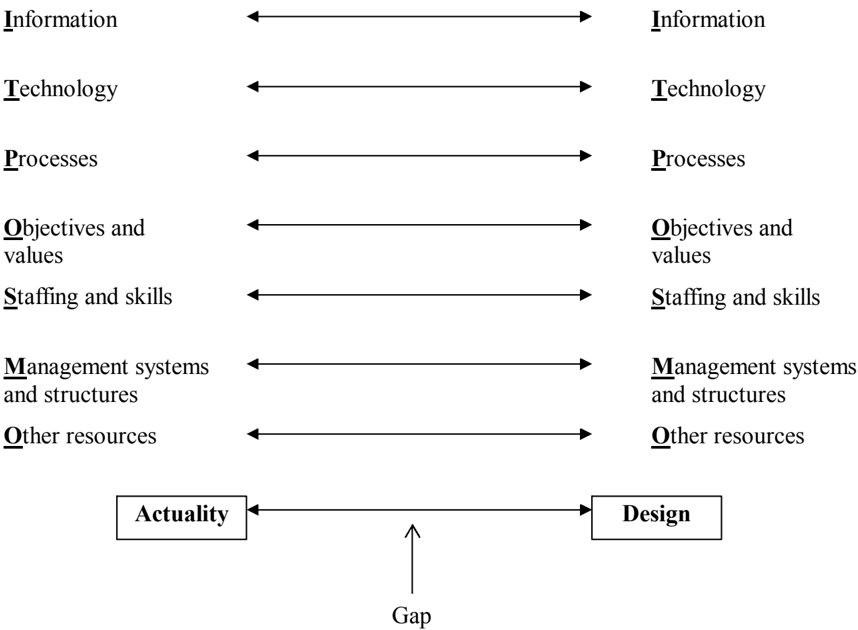
- It develops the notion of “design-actuality gaps,” defined as “the match or mismatch between IS designs and local user actuality.”
- The model highlights two “high-risk archetypes” affecting IS in developing countries: “country context gaps” and “hard-soft gaps.”
- The model is also presented as useful for explaining “the constraints that exist to local IS improvisations in developing countries.”
## Methods
- The paper is a journal article that develops a conceptual model “drawing on contingency theory.”
- The abstract does not specify a dataset, sample, or number of cases; the text only says the article presents “evidence” about IS in developing countries.
- The main analysis appears to be conceptual/theoretical, using the model to interpret IS cases and to refine IS theory.
## Limitations
- The paper does not report a specific sample size, case count, or empirical dataset in the provided text; this limits what can be assessed from the excerpt.
- The abstract does not state formal limitations or boundary conditions of the model beyond noting its focus on developing countries and local user actuality.
- The evidence base is not described in the provided text, so the scope of the claims cannot be independently evaluated from the excerpt alone.
Model-written summary. Check it against the paper before relying on it.
Integrity signals
Registry
Cites
Statistics
Figures
Verification
Claims the paper makes
0 Valid · 0 Not valid · 0 Not checked · 3 Own results and interpretations
A result the paper reports from its own data — it cites no other source for it, so there is none to check. The quote shows it is in the paper.
In the paper
“This article presents evidence that-alongside the successes-many information systems in developing countries can be categorized as failing either totally or partially.”
plain- Asserted: passes — The authors put it forward as true.
- Checkable: passes — It can be checked against evidence.
- Load-bearing: passes — The paper’s conclusions depend on it.
- Based: passes — The paper gives a reason why it holds.
A conclusion the paper draws from its own results — it cites no other source for it, so there is none to check. The quote shows it is in the paper.
In the paper
“The model draws on contingency theory in order to advance the notion of design-actuality gaps: the match or mismatch between IS designs and local user actuality.”
plainstates a possible cause- Asserted: passes — The authors put it forward as true.
- Checkable: passes — It can be checked against evidence.
- Load-bearing: passes — The paper’s conclusions depend on it.
- Based: passes — The paper gives a reason why it holds.
- Rests on an assumption not shown here.
- It may state two separate claims as one. 1
Claims other papers make about this one
Each is checked against this paper’s own text: does it say what the citing paper says it does?
In the citing paper
“This suggests that adoption can be seen as simply the first and perhaps least problematic phase in the drive towards the integration of an innovation into the health system. The greater risk is that of ‘sustainability failure’ [25, 26]”
From Beyond pilotitis: taking digital health interventions to the national level in China and Uganda (2017) · cites this paper as [26]
Citations
Cites
Task-Technology Fit and Individual Performance
Goodhue, D. L., & Thompson, R. L. (1995) · MIS Quarterly · doi:10.2307/249689 · Cited by 6,006 · cited 1×
“IS implementation models drawing on this theme have involved e t between “tool”/“technology” and “task” ( Goodhue & Thompson, 1995; Agarwal & Sinha, 1996), or between multiple factors (Scott Morton, 1991; Southon et al., 1997).”
MethodSoftware Engineering Economics
Boehm, B. W. (2001) · Pioneers and Their Contributions to Software Engineering · doi:10.1007/978-3-642-48354-7_5 · Cited by 5,981
Thompson, V. A., & March, J. G. (1966) · American Sociological Review · doi:10.2307/2090830 · Cited by 3,351
The Concept of Fit in Strategy Research: Toward Verbal and Statistical Correspondence
Venkatraman, N. (1989) · The Academy of Management Review · doi:10.2307/258177 · Cited by 2,367
Suchman, L. A. (1987) · Cited by 2,279
The Concept of Fit in Strategy Research: Towards Verbal and Statistical Correspondence
Venkatraman, N. V. (1988) · DSpace@MIT (Massachusetts Institute of Technology) · Cited by 2,038
Improvising Organizational Transformation Over Time: A Situated Change Perspective
Orlikowski, W. J. (1996) · Information Systems Research · doi:10.1287/isre.7.1.63 · Cited by 1,952
Management strategies for information technology
(1990) · Long Range Planning · doi:10.1016/0024-6301(90)90040-b · Cited by 1,033
Shaping technology/building society
(1993) · Choice Reviews Online · doi:10.5860/choice.30-3774 · Cited by 939
The corporation of the 1990s: Information technology and organizational transformation
(1993) · Futures · doi:10.1016/0016-3287(93)90030-w · Cited by 886
Research works printed but not linked: 19
- Avgerou, C. 2000. The multiple rationalities of information systems development. In Information ? ows, local improvisations and work practices. Proceedings of the IFIP WG9.4 Conference 2000. Cape Town: IFIP.
- Avgerou C., 2000, Information technology in context, 1
- Bijker W. E., 1992, Shaping tech-nology/building society, 1
- Butler R., 1991, Designing organizations
- Goonatilake, L., Maizza-Neto, O., and Jayawardene, P. 2000. Enhancing enterprise competitiveness in developing countries through the promotion of management information and benchmarking tools. In Information ? ows, local improvisations and work practices. Proceedings of the IFIP WG9.4 Conference 2000. Cape Town: IFIP.
- IFIP WG9.4. 2000. Information ? ows, local improvisations and work practices. Proceedings of the IFIP WG9.4 Conference 2000. Cape Town: IFIP.
- Jayasuriya R., 1995, Medinfo ’95, 1603
- Korac-Boisvert N., 1995, Information Infrastructure and Policy, 4, 131
- Macias-Chapula, C. A. 2000. Issues learned, challenges and opportunities to implement a library automation project at Mexico’s General Hospital. In Information ? ows, local improvisations and work practices. Proceedings of the IFIP WG9.4 Conference 2000. Cape Town: IFIP.
- Calitz, A. P. 2000. Transforming work practices with IT. In Information ? ows, local improvisations and work practices. Proceedings of the IFIP WG9.4 Conference 2000. Cape Town: IFIP.
- Oyomno G. Z., 1996, Global information technology and socio-economic development, 19
- Puri, S. K., Chauhan, K. P. S., and Admedullah, M. 2000. Prospects of biological diversity information management. In Information ? ows, local improvisations and work practices. Proceedings of the IFIP WG9.4 Conference 2000. Cape Town: IFIP.
- Silva L. O., 2000, Outsourcing as an improvisation. In Information ? ows, local improvisations and work practices. Proceedings of the IFIP WG9.4 Conference 2000
- Walsham G., 2000, Information technology in context, 291
- Wynn, E. and deLyra, J. 2000. A strange attractor in the chaos of global IS development. In Information ? ows, local improvisations and work practices. Proceedings of the IFIP WG9.4 Conference 2000. Cape Town: IFIP.
- Cain P., 2001, Reinventing government in the information age, 135
- Kenny C., 2001, The Internet and economic growth in LDCs. Draft paper
- Kitiyadisai, K. 2000. The implementation of IT in reengineering the Thai Revenue Department. In Information ? ows, local improvisations and work practices. Proceedings of the IFIP WG9.4 Conference 2000. Cape Town: IFIP.
- Mundy D., 2001, Reinventing government in the information age, 271
Cited by
Items 101–200 of 1,386
Digitalization mechanisms of health management information systems in developing countries
Gebre‐Mariam, M., & Bygstad, B. (2018) · Information and Organization · doi:10.1016/j.infoandorg.2018.12.002 · Cited by 97
Reggi, L., & Gil-García, J. R. (2020) · Government Information Quarterly · doi:10.1016/j.giq.2020.101562 · Cited by 88
“The analysis of local context is widely seen as a crucial component of ex-ante evaluation of ICT policies (Castelnovo & Sorrentino, 2018; Heeks, 2002, 2005).”
BackgroundDeploying Internet banking and e-commerce—case study of a private-sector bank in India
Kannabiran, G., & Narayan, P. C. (2005) · Information Technology for Development · doi:10.1002/itdj.20025 · Cited by 89
“ment of manpower (Aladwadni, 2001; Bhatnager, 1992; Kanungo, Sadavarti, & Srinivas, 2001; Montealegre, 1998; Pawar, 1992), using tested technologies (Galvas, 1989), managing IT investments (Avgerou, 1998; Heeks, 2002; Kraemer & Dedrick, 2001), and role of”
Telemedicine and mobile health with integrative medicine in developing countries
Kamsu-Foguem, B., & Foguem, C. (2014) · Health Policy and Technology · doi:10.1016/j.hlpt.2014.08.008 · Cited by 83
“There is need to explain the constraints that generate some mismatches between Information System designs and local user actuality in developing countries [13].”
Grafting: Balancing Control and Cultivation in Information Infrastructure Innovation
Sanner, T. A., Manda, T. D., & Nielsen, P. (2014) · Journal of the Association for Information Systems · doi:10.17705/1jais.00356 · Cited by 81
“Management of health information system interventions is particularly challenging in less-developed economies (Heeks, 2002, 2006; Littlejohns, Wyatt, & Garvican, 2003) due to cross-national public-private arrangements with divergent agendas, asymmetric power relations, and conflicting time frames.”
BackgroundTelecentre functionality in South Africa: Re-enabling the community ICT access environment
Attwood, H. E., Diga, K., Braathen, E., & May, J. D. (2013) · The Journal of Community Informatics · doi:10.15353/joci.v9i4.3137 · Cited by 62
“Telecentres have many structural components (human, political and technical) which need to support each other in order to create a functional telecentre (Benjamin, 2001a; Heeks, 2002; Proenza, 2002).”
Degenerative outcomes of digital identity platforms for development
Masiero, S., & Arvidsson, V. (2021) · Information Systems Journal · doi:10.1111/isj.12351 · Cited by 89
“In theory, innovation platforms have the potential to fill disjunctures between the design of complements for and the lived reality of people in developing countries, that is, design-reality gaps (Heeks, 2002).”
BackgroundWyche, S. P., Dillahunt, T. R., Simiyu, N., & Alaka, S. (2015) · ACM International Joint Conference on Pervasive and Ubiquitous Computing (UbiComp) · doi:10.1145/2750858.2804249 · Cited by 70
“Reasons for failure include employing a techno-centric, rather than a human-centered design approach and failure to account for lack of electricity, and Internet access in countries’ rural areas [18,37,38].”
Hayes, N., & Rajão, R. (2011) · Information Technology for Development · doi:10.1080/02681102.2010.511701 · Cited by 79
“One strand of the literature that has attended to the role of ICT for development (ICT4D) has pointed to the centrality of social and cultural dimensions in the success and failure of ICT projects (Avgerou & Walsham, 2001; Barrett, Sahay, & Walsham, 2001; Heeks, 2002).”
Leonardi, P. M., Bailey, D. E., Diniz, E. H., Sholler, D., & Nardi, B. A. (2016) · MIS Quarterly · doi:10.25300/misq/2016/40.2.10 · Cited by 79
“Complex societal challenges often involve large numbers of users in multiple settings with varied needs, such that tailoring systems to meet user requirements may prove impossible (Heeks 2002).”
BackgroundAl‐Sobhi, F., Weerakkody, V., & Kamal, M. M. (2010) · Transforming Government People Process and Policy · doi:10.1108/17506161011028786 · Cited by 91
“However, there are differences in the adoption and implementation of e-government within several government organisations at a national and international level ( Heeks, 2002”
The Origins of Failure: Seeking the Causes of Design–Reality Gaps
Masiero, S. (2016) · Information Technology for Development · doi:10.1080/02681102.2016.1143346 · Cited by 85
“Vol. 22, No. 3, 487–502, http://dx.doi.org/10.1080/02681102.2016.1143346 developing nations: this is the case for the theory of design–reality gaps devised by Heeks (2002, 2003).”
InfluentialUsman, U. M. Z., Ahmad, M. N., & Zakaria, N. H. (2019) · International Journal of Enterprise Information Systems · doi:10.4018/ijeis.2019070102 · Cited by 84
Magesa, M. M., & Jonathan, J. (2021) · Information Technology for Development · doi:10.1080/02681102.2021.1991872 · Cited by 110
“Heeks (2002) asserts that today ’ s IS success may be tomorrow ’ s IS failure, and vice versa.”
BackgroundComparison of sub‐Saharan Africa's e‐government status with developed and transitional nations
Mutula, S. M. (2008) · Information Management & Computer Security · doi:10.1108/09685220810893199 · Cited by 58
“in files, loss of data and general inefficiency of operations Holmes (2001) points out that the purpose of e-government is to realize delivery of public services in a much more convenient, customer-oriented, cost-effective, and better way.”
Jiménez, A., Hanoteau, J., & Barkemeyer, R. (2022) · Journal of Business Research · doi:10.1016/j.jbusres.2022.05.070 · Cited by 57
Medical information systems: a foundation for healthcare technologies in developing countries
Clifford, G. D., Blaya, J. A., Hall-Clifford, R., & Fraser, H. S. F. (2008) · BioMedical Engineering OnLine · doi:10.1186/1475-925x-7-18 · Cited by 56
“extremely limited ability to facilitate searches and exchange data with other systems [37,38].”
COMMON-Sense Net: Improved Water Management for Resource-Poor Farmers via Sensor Networks
Panchard, J., Rao, S., Prabhakar, T. V., Jamadagni, H. S., & Hubaux, J. (2006) · International Conference on Information and Communication Technologies and Development (ICTD) · doi:10.1109/ictd.2006.301833 · Cited by 64
“Heeks [30] argues that the failures of information systems”
Developing Countries and ICT Initiatives: Lessons Learnt from Jordan's Experience
Mofleh, S., Wanous, M., & Strachan, P. A. (2008) · The Electronic Journal of Information Systems in Developing Countries · doi:10.1002/j.1681-4835.2008.tb00236.x · Cited by 71
“Heeks (2002; 2003) had previously indicated that in developing countries, 35% of Information System (IS) projects ended with total failures, 50% ended with partial failures and only 15% have succeeded.”
BackgroundKhan, A., & Qutab, S. (2016) · Library Review · doi:10.1108/lr-06-2015-0070 · Cited by 104
No More “Solutionism” or “Saviourism” in Futuring African HCI: A Manyfesto
Adamu, M. S. (2023) · ACM Transactions on Computer-Human Interaction · doi:10.1145/3571811 · Cited by 78
“The reflection identifies with the critical perspective of computing in and beyond developmental frames [49, 56, 75, 83, 92, 120, 177, 184] through to decolonial [15, 35, 36, 104, 157, 175, 182], and pluriversal perspectives of design [70,163].”
BackgroundA ‘sweet spot’ change strategy for a least developed country: leveraging e-Government in Bangladesh
Gregor, S. D., Imran, A., & Turner, T. (2013) · European Journal of Information Systems · doi:10.1057/ejis.2013.14 · Cited by 64
“This gap arises when design stakeholders remain physically and psychologically distanced from the context, and contradiction occurs because of different meanings between users and designers (Heeks, 2002; Silva, 2007).”
Bass, J. M., & Heeks, R. (2011) · The Electronic Journal of Information Systems in Developing Countries · doi:10.1002/j.1681-4835.2011.tb00341.x · Cited by 53
“We turned to the design-reality gap model; a general framework for analysis of change, but one which has been particularly applied to cases involving ICTs in developing countries (Heeks, 2002).”
MethodSelf-citationOpen Development: Networked Innovations in International Development
Smith, M. L., & Reilly, K. (2014) · CERN Document Server (European Organization for Nuclear Research) · Cited by 51
IT Strategy in the Hotel Industry in the Digital Era
Wynn, M. G., & Jones, P. (2022) · Sustainability · doi:10.3390/su141710705 · Cited by 77
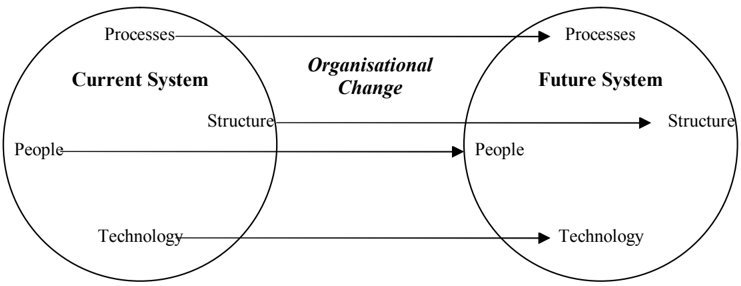
“Other models [26,27] have been used to assess technology implementation, focusing on specific elements of change—the technology itself, but also business processes (which are often reengineered as a result of technology implementation), people skills and competencies (which are impacted both by the…”
E-Government institutionalizing practices of a land registration mapping system
Azad, B., & Faraj, S. A. (2008) · Government Information Quarterly · doi:10.1016/j.giq.2008.08.005 · Cited by 52
EXPLORING THE VALUE OF THE CAPABILITY APPROACH FOR E-DEVELOPMENT
Zheng, Y. (2007) · Cited by 83
Puri, S. K., & Sahay, S. (2003) · Information Technology for Development · doi:10.1002/itdj.1590100305 · Cited by 59
“A key question here is how can the technical knowledge about GIS be meaningfully integrated with scientific knowledge about the application domain (land degradation), and the indigenous knowledge that communities have about nature of land and how it is used?”
Mulungu, K., Kassie, M. B., & Tschopp, M. (2025) · Information Technology for Development · doi:10.1080/02681102.2025.2456232 · Cited by 112
e‐Government Implementation Challenges in Malaysia and South Korea: A Comparative Study
Ramli, R. M. (2017) · The Electronic Journal of Information Systems in Developing Countries · doi:10.1002/j.1681-4835.2017.tb00591.x · Cited by 72
“…addition, this model has most frequently been used in assessing and evaluating gaps in developing countries’ e-government projects (Heeks 2002a 2002b, Hawari & Heeks 2010, Bass & Heeks 2011, Syamsuddin 2011, Baqir et al. 2009) as failure rates in these countries are usually…”
InfluentialDeveloping fundamental capabilities for successful e-government implementation
Shareef, M. A., Archer, N., Kumar, V., & Kumar, U. (2010) · International Journal of Public Policy · doi:10.1504/ijpp.2010.035133 · Cited by 50
“…et al., 2001; Loiacono et al., 2002; Wolfinbarger et al. 2003; Kumar et al. 2006) and perspectives of failure of EG systems in developing countries (Heeks, 2002, 2003; Dada, 2006), and comparing compatibility of extracted quality factors from E-commerce (EC) into EG systems, this research finds…”
E-Health Implementation Challenges in Iranian Medical Centers: A Qualitative Study in Iran
Sharifi, M., Ayat, M., Jahanbakhsh, M., Tavakoli, N., Mokhtari, H., & Wan Ismail, W. K. (2013) · Telemedicine and e-Health · doi:10.1089/tmj.2012.0071 · Cited by 48
Mapping IS failure factors on PRINCE2® stages: an application of Interpretive Ranking Process (IRP)
Hughes, D. L., Dwivedi, Y. K., & Rana, N. P. (2017) · Production Planning & Control · doi:10.1080/09537287.2017.1311431 · Cited by 48
“…seem unable to learn the lessons of failure (Bakker et al., 2013; Birkinshaw and Haas, 2016; Kerzner, 2015; Verner et al., 2008) demonstrating an inability to align the complexities of different stakeholder perspectives (Bryde, 2005; Heeks, 2006) and deliver consistent positive outcomes.”
Baghizadeh, Z., Ćećez-Kecmanović, D., & Schlagwein, D. (2019) · Journal of Information Technology · doi:10.1177/0268396219832010 · Cited by 91
“As Heeks (2002) pointed out, ‘the greater the mismatch, the greater is the risk of failure’ (p. 104).”
BackgroundFraming M4D: The Utility of Continuity and the Dual Heritage of “Mobiles and Development”
Donner, J. (2010) · The Electronic Journal of Information Systems in Developing Countries · doi:10.1002/j.1681-4835.2010.tb00315.x · Cited by 65
“Heeks (2002) argues that many ICT4D projects fail because of broad gaps between the system as designed/intended/imagined and the “actuality” of the context into which it is deployed.”
BackgroundAjani, E. N. (2014) · Journal of Agricultural & Food Information · doi:10.1080/10496505.2013.858049 · Cited by 47
“ICTs essentially facilitate creation, management, storage, retrieval; and dissemination of any relevant data, knowledge, and information that may have been already processed and adapted (Batchelor, 2002; Chapman & Slaymaker, 2002; Heeks, 2002; Rao, 2007).”
Public ICT Innovations: A Strategic Ambiguity Perspective
Ravishankar, M. N. (2013) · Journal of Information Technology · doi:10.1057/jit.2013.18 · Cited by 55
“…such innovations fail to achieve intended objectives owing to highly centralized decision-making bodies, lack of political will, apathy of senior of fi cials, corruption and asymmetries of power (see Heeks, 2002; Heeks and Stanforth, 2007; Kimaro and Sahay, 2007; Sahay et al. , 2009; Bussell, 2012).”
BackgroundAn exploratory study of ERP implementation in Saudi Arabia
Al‐Turki, U. M. (2011) · Production Planning & Control · doi:10.1080/09537287.2010.491490 · Cited by 47
“At the time of the survey conducted by Heeks (2002), it was estimated that one-fifth to one-fourth of IS projects in industrialised countries fall into the total failure category, one-third to three-fifth fall into partial failure category, and only a minority fall into the complete success…”
BackgroundMethodMensah, I. K., & Mi, J. (2017) · International Journal of Public Administration · doi:10.1080/01900692.2017.1405980 · Cited by 63
“Heeks (2002) stated that electronic government is at the center of the current discussion on the modernization of public administration.”
BackgroundBernardi, R., Sarker, S., & Sahay, S. (2019) · MIS Quarterly · doi:10.25300/misq/2019/14187 · Cited by 61
Community Informatics and Information Systems: Can They Be Better Connected?
Stillman, L., & Linger, H. (2009) · The Information Society · doi:10.1080/01972240903028706 · Cited by 57
“This orientation is often predicated on theories of social change (Kubisch 1997), and is associated with community development practice in both developed or developing countries (Rothman and Tropman 1970; Heeks 2002).”
The relevance of content in ICT initiatives in Indian agriculturePreprint
Glendenning, C. J., & Ficarelli, P. P. (2012) · RePEc: Research Papers in Economics · Cited by 71
Kruachottikul, P., Dumrongvute, P., Tea-makorn, P., Kittikowit, S., & Amrapala, A. (2023) · Journal of Innovation and Entrepreneurship · doi:10.1186/s13731-023-00311-1 · Cited by 69
“It solves the problems that persist in developing countries, Thailand especially, of lack of literature, lack of evaluation from key stakeholders, and a design-actuality gap (Abbasi et al., 2022; Heeks, 2002; Kalyanasundaram et al., 2021; Ravi & Janodia, 2022a).”
BackgroundSahni, S., Verma, S. R., & Kaurav, R. P. S. (2024) · Benchmarking An International Journal · doi:10.1108/bij-04-2022-0245 · Cited by 111
A', N. A., Subiyakto, A., Ahlan, A. R., Kartiwi, M., & Putra, S. J. (2016) · International Journal of Business Information Systems · doi:10.1504/ijbis.2016.078908 · Cited by 76
Technology for Development: Understanding Influences on use of Rural Telecenters in India
Pick, J. B., Gollakota, K., & Singh, M. (2013) · Information Technology for Development · doi:10.1080/02681102.2013.837806 · Cited by 45
“On relative advantage , Heeks (2002) reports that traditionally farmers have huge information gaps.”
BackgroundCritical Factors for Successful Implementation of E-governance Programs: A Case Study of HUDA
Goel, S., Dwivedi, R., & Sherry, A. M. (2012) · Global Journal of Flexible Systems Management · doi:10.1007/s40171-013-0021-1 · Cited by 44
“The exact number of failed projects is not certain and depends to some extent on how success is measured (Corner and Hinton 2002; Heeks 2002, 2006; Standish Group 1994).”
BackgroundPalaco, I., Park, M. J., Kim, S. K., & Rho, J. J. (2018) · Evaluation and Program Planning · doi:10.1016/j.evalprogplan.2018.10.015 · Cited by 55
“Other major common issues are due to the differences in their economic structures (e.g., education, culture, agriculture), which lead to social problems related to the lack of access and opportunities to grow and scale productivity (Basu, 2004; Heeks, 2002; Mkude & Wimmer, 2013).”
Hoque, M. R. (2020) · Technology in Society · doi:10.1016/j.techsoc.2020.101254 · Cited by 49
ICT4What? - using the Choice Framework to operationalise the capability approach to development
Kleine, D. (2009) · International Conference on Information and Communication Technologies and Development (ICTD) · doi:10.1109/ictd.2009.5426717 · Cited by 73
“There may be specific reasons why particular projects fail, even some generalisable patterns of failure [1], but the overall degree to which the ICT4D community has to struggle when trying to legitimise its work to funders is astonishing in the context of a general discourse”
McGrath, K. (2016) · MIS Quarterly · doi:10.25300/misq/2016/40.2.12 · Cited by 43
“In practice, outcomes are mixed, socioeconomic development is uneven, and some countries have very poor records with implementing IS innovations (Avgerou 2008; Heeks 2002).”
Heeks, R. (2007) · Information Technologies and International Development · doi:10.1162/itid.2007.3.3.5 · Cited by 43
Self-citationHandbook of Research on E-Planning: ICTs for Urban Development and Monitoring
Silva, C. N. (2010) · Cited by 43
Bagherian, H., & Sattari, M. A. (2022) · Medical Journal of the Islamic Republic of Iran · doi:10.47176/mjiri.36.111 · Cited by 42
Networked learning for agricultural extension: a framework for analysis and two cases
Kelly, N., Bennett, J. M., & Starasts, A. (2017) · The Journal of Agricultural Education and Extension · doi:10.1080/1389224x.2017.1331173 · Cited by 54
“The role of ICT in agricultural extension is both to create connections and ensure their quality (Heeks, 2002).”
BackgroundRen, M. (2019) · The Journal of Chinese Sociology · doi:10.1186/s40711-019-0109-x · Cited by 42
Challenges of online teaching during COVID ‐19: An exploratory factor analysis
Siddiquei, M. I., & Kathpal, S. (2021) · Human Behavior and Emerging Technologies · doi:10.1002/hbe2.300 · Cited by 61
“Even before COVID-19 pandemic, developing countries like India were facing challenges and many obstacles in adopting e-learning (Heeks, 2002).”
BackgroundLinde, J., & Karlsson, M. (2013) · International Journal of Public Administration · doi:10.1080/01900692.2012.757619 · Cited by 57
“…studies of a small number of cases, or regional comparisons focusing on specific groups of countries, seem to have been the preferred choice of research design (cf. Heeks, 2002; Katchanovski & La Porte, 2005; Murphy, 2007; Chatfield & Alhujran, 2009; Gulati et al., 2010; Johnson & Kolko, 2010).”
Should we still be doing ICT4D research?
Masiero, S. (2022) · The Electronic Journal of Information Systems in Developing Countries · doi:10.1002/isd2.12215 · Cited by 63
“To the 16 papers so obtained we have added Heeks (2002) which, while being a research article rather than a landscape paper, introduces a theory (explanation of project failure through design-actuality gaps) that is meant specifically for ICT4D.”
Briggs, A., & Brooks, L. (2011) · The Electronic Journal of Information Systems in Developing Countries · doi:10.1002/j.1681-4835.2011.tb00347.x · Cited by 40
“IS development has been described as problematic and constrained with diverse challenges in developing countries such as Nigeria which has peculiar socioeconomic environments (Heeks, 2002; Avgerou, 2008; Mursu et al., 2000).”
THE INFLUENCE OF E‐GOVERNMENT ON ADMINISTRATIVE DISCRETION: THE CASE OF LOCAL GOVERNMENTS IN EGYPT
Reddick, C. G., Abdelsalam, H. M., & Elkadi, H. (2011) · Public Administration and Development · doi:10.1002/pad.615 · Cited by 40
Political Dividends of Digital Participatory Governance: Evidence from Moscow Pothole Management
Gorgulu, N., Sharafutdinova, G., & Steinbuks, J. (2020) · World Bank, Washington, DC eBooks · doi:10.1596/1813-9450-9445 · Cited by 46
Open Development: A New Theory for ICT4D
Smith, M. L., Elder, L., & Emdon, H. (2011) · Information Technologies and International Development · Cited by 65
A coherent framework for understanding critical success factors of ICT project environment
Subiyakto, A., & Ahlan, A. R. (2013) · International Conference on Research and Innovation in Information Systems · doi:10.1109/icriis.2013.6716733 · Cited by 53
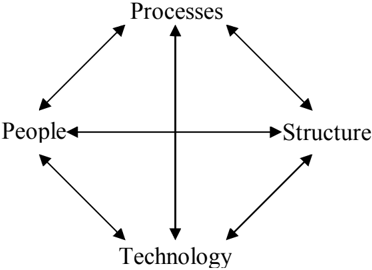
“Researchers formulated these resources, including time, cost, quality [30], technology, people, process and structure [57].”
Development, capabilities and technology : an evaluative framework
Hatakka, M., & Dé, R. (2011) · Dalarna University College Electronic Archive · Cited by 50
The Livelihood Outcomes of ICT Use in Microenterprises: The Case of South Africa
Makoza, F., & Chigona, W. (2012) · The Electronic Journal of Information Systems in Developing Countries · doi:10.1002/j.1681-4835.2012.tb00374.x · Cited by 50
“Additionally, the model can be adapted based on the context being assessed and because it supports an understanding of bigger picture of ICT-related development interventions (DFID, 1999; Heeks, 2002; Duncombe, 2006; Singh et al., 2008).”
MethodDesigning for Sustainability: Key Issues of ICT Projects for Ageing at Home
Meurer, J., Müller, C., Simone, C., Wagner, I., & Wulf, V. (2018) · Computer Supported Cooperative Work (CSCW) · doi:10.1007/s10606-018-9317-1 · Cited by 46
The value of extended networks: Social capital in an ICT intervention in rural Peru
Andrade, A. E. D., & Urquhart, C. (2009) · Information Technology for Development · doi:10.1002/itdj.20116 · Cited by 71
“Even worse, despite a lack of precise figures, the high failure rate of information systems in developing countries is recognized as a fact (Avgerou & Walsham, 2000; Heeks, 2002b).”
InfluentialFuruholt, B., & Sæbø, Ø. (2017) · The Electronic Journal of Information Systems in Developing Countries · doi:10.1002/isd2.12006 · Cited by 54
“Heeks (2002) explained that information system failures typically occurred in developing countries when “ donor funds are withdrawn, key IS staff quit, or senior ‐ level champions move on to another cause.”
BackgroundElectronic records management systems implementation in the Pakistani local government
Henriksen, H. Z., & Andersen, K. V. (2008) · Records Management Journal · doi:10.1108/09565690810858505 · Cited by 57
Performance measurement system: case studies from SMEs in India
Sharma, M. K., & Bhagwat, R. (2007) · International Journal of Productivity and Quality Management · doi:10.1504/ijpqm.2007.013338 · Cited by 37
“This has raised significant concerns about how firms in developing countries could harness the advances in information technologies to improve their productivities and business performance (Heeks, 2002).”
Wireless sensor networking for rain-fed farming decision support
Panchard, J., Rao, S., Sheshshayee, M. S., et al. (2008) · doi:10.1145/1397705.1397714 · Cited by 38
“We opted for all these use cases to be developed in a participatory manner with the local farmers, in order to avoid the common pitfalls associated with the deployment of information systems in developing regions [9].”
A critical review of the role of technology and context in digital health research
Nielsen, P., & Sahay, S. (2022) · Digital Health · doi:10.1177/20552076221109554 · Cited by 58
“24 Digital technologies on their own can do little unless they are linked with their context, involving multiple heterogeneous relationships, including users, practices, institutional rules, industry standards, and other technologies.”
BackgroundWhich Lessons Are Learned? Best Practices and World Bank Rural Telecommunications Policy
Courtright, C. (2004) · The Information Society · doi:10.1080/01972240490507983 · Cited by 37
“If, in addition to this, they extract only those lessons from rural telecommunications experiences that match official World Bank development policies, the resulting programs and projects might well miss their mark and result in not only the waste of valuable resources, but also increased local skepticism regarding th…”
BackgroundGupta, R., Muttoo, S. K., & Pal, S. K. (2017) · Applied Intelligence · doi:10.1007/s10489-017-0917-0 · Cited by 40
“Setting up CSCs is one such task and will be achieved via a public-private partnership [39, 49, 64, 70].”
BackgroundGwaka, L., May, J. D., & Tucker, W. D. (2018) · The Electronic Journal of Information Systems in Developing Countries · doi:10.1002/isd2.12029 · Cited by 45
“Many ICT4D initiatives fail, and one critical aspect has been the mismatch between technology and context (Heeks, 2002; Mamba & Isabirye, 2015; Toyama, 2015).”
An overview of cloud computing in SMEs
Shetty, J. P., & Panda, R. (2021) · Journal of global entrepreneurship research · doi:10.1007/s40497-021-00273-2 · Cited by 66
“Opportunity costs of resources in such countries are never low (Heeks 2002).”
Furuholt, B., & Ørvik, T. U. (2005) · Information Technology for Development · doi:10.1002/itdj.20030 · Cited by 44
“More recent literature (e.g., on TTM: Briggs et al., 2003; de Vreede et al., 2003; Heeks, 2002; on UTAUT: Venkatesh et al., 2003; Avgerou & Madon, 2004) will also provide a valuable foundation for our next research effort.”
BackgroundA Coherent Framework for Understanding the Success of an Information System Project
Putra, S. J., Subiyakto, A., Ahlan, A. R., & Kartiwi, M. (2016) · TELKOMNIKA (Telecommunication Computing Electronics and Control) · doi:10.12928/telkomnika.v14i1.2711 · Cited by 45
“, Atkinson [29] who popularized the triangle success model and Heek [40] with the Leavitt’s diamond model.”
InfluentialNkrumah Gordon, A., & Ebo Hinson, R. (2007) · International Journal of Health Care Quality Assurance · doi:10.1108/09526860710819468 · Cited by 36
Ojo, A. I., & Popoola, S. O. (2015) · Biomedical Informatics Insights · doi:10.4137/bii.s20229 · Cited by 49
Maheswari, R., Azath, H., Sharmila, P., & Gnanamalar, S. S. R. (2019) · IEEE International Conference on Mechatronics System and Robots (ICMSR) · doi:10.1109/icmsr.2019.8835454 · Cited by 42
A Systematic Review of Implementation Challenges in Public E-Procurement
Mohungoo, I., Brown, I., & Kabanda, S. K. (2020) · Lecture notes in computer science · doi:10.1007/978-3-030-45002-1_5 · Cited by 63
“Leaders ’ behavior was associated with the failure of past e-government projects [25, 28].”
BackgroundBati, T. B., & Wasyhun, A. (2020) · The Electronic Journal of Information Systems in Developing Countries · doi:10.1002/isd2.12148 · Cited by 59
“The rest of the article is organized as follows: Section 2 deals with the theoretical framework — Design-Reality Gap Analysis (Heeks, 2002, 2018), an information system evaluation framework employed in the study as a model to frame our data analysis and interpretation.”
BackgroundMethodInfluentialCloud Computing Adoption for Healthcare: An Empirical Study Using SEM Approach
Baral, M. M., & Verma, A. (2021) · FIIB Business Review · doi:10.1177/23197145211012505 · Cited by 42
“As a result, the findings of a study performed in a prospered nation will not apply to the prospering nation (Avgerou, 2001; Effah, 2014; Heeks, 2002; Senyo et al.,”
BackgroundA FCM-Based Dynamic Modeling of ERP Implementation Critical Failure Factors
Ravasan, A. Z., & Mansouri, T. (2014) · International Journal of Enterprise Information Systems · doi:10.4018/ijeis.2014010103 · Cited by 46
Inhibitors and Enablers of Public E-Services in Lebanon
Harfouche, A., & Robbin, A. R. (2012) · Journal of Organizational and End User Computing · doi:10.4018/joeuc.2012070103 · Cited by 40
“…number of e-government implementations has been subject to complete or partial failure suggests that a more conceptual approach to studying information and communication technologies in developing countries is necessary (Avergou & Walsham, 2000; Heeks, 2002, 2003a, 2003b; Walsham & Sahay, 2006).”
Godfrey, L. (2007) · Waste Management · doi:10.1016/j.wasman.2007.06.002 · Cited by 35
“However, research has shown that for information systems to be sustainable, one must understand the underlying motivations or needs of key stakeholders (Heeks, 2002; Lafontaine, 2000; Moussa and Schware, 1992).”
IT innovation for the bottom of the pyramid
Heeks, R. (2012) · Communications of the ACM · doi:10.1145/2380656.2380665 · Cited by 40
Self-citationMosse, E. L., & Sahay, S. (2005) · Information Technology for Development · doi:10.1002/itdj.20017 · Cited by 42
“These include structural issues arising from the intrinsically centralized and fragmented character of health services (Braa & Hedberg, 2002), the existence of multiple and fragmented information systems (Chilundo & Aanestad, 2003) the absence of strategies to sustain the systems after the exit of the donor money and…”
FACTORS AFFECTING E-GOVERNMENT IMPLEMENTATION AND ADOPTION IN THE STATE OF QATAR
Al‐Shafi, S. (2009) · Brunel University Research Archive (BURA) (Brunel University London) · Cited by 51
Smartphone Use, Technology Affordance for Healthcare and Elders' Life Satisfaction
Li, G., Jin, C., Zhao, B., & Wu, B. (2022) · Frontiers in Public Health · doi:10.3389/fpubh.2022.861897 · Cited by 44
“Although it can be difficult to understand why a specific ICT may provide different utility for different individuals, the actors’ role is one of the vital explanations (20, 21).”
The continuity of underperforming ICT projects in the public sector
Sandeep, M. S., & Ravishankar, M. N. (2014) · Information & Management · doi:10.1016/j.im.2014.06.002 · Cited by 41
“It is widely acknowledged that diffusion of such public information and communications technology (PICT) 1 projects is a key driver for inclusive development and better governance [18, 33].”
BackgroundMengiste, S. A. (2010) · Journal of health informatics in developing countries · Cited by 48
Pathak, V., & Deshkar, S. M. (2023) · Sustainability · doi:10.3390/su15097536 · Cited by 49
The persistence of paper: a case study in microfinance from Ghana
Ghosh, I., Chen, J., Ming, J., & Abouzied, A. (2015) · International Conference on Information and Communication Technologies and Development (ICTD) · doi:10.1145/2737856.2738029 · Cited by 40
“In general, when introducing a technological application in a setting that has limited or no technology reach, one must contend with the “designactuality” gap [13]; that is the disparity that may exist between the actual context, and the local users and infrastructure that populates it, and the intended future design.”
BackgroundThe practice of ICT-enabled development
Singh, H., Andrade, A. D., & Techatassanasoontorn, A. A. (2017) · Information Technology for Development · doi:10.1080/02681102.2017.1283284 · Cited by 43
“Some studies have examined the reasons for failure of ICT4D initiatives (Heeks, 2002), while some others have attempted to identify the factors driving success (Pade-Khene, Mallison, & Sewry,”
Improving quality and use of data through data-use workshops: Zanzibar, United Republic of Tanzania
Braa, J. A., Heywood, A., & Sahay, S. (2012) · Bulletin of the World Health Organization · doi:10.2471/blt.11.99580 · Cited by 32
Self‐destructive dynamics in large‐scale technochange and some ways of counteracting it
Chae, B. K., & Lanzara, G. F. (2006) · Information Technology and People · doi:10.1108/09593840610649970 · Cited by 38
Inclusion by Design: Requirements Elicitation with Digitally Marginalized Communities
Faik, I., Sengupta, A., & Deng, Y. (2024) · MIS Quarterly · doi:10.25300/misq/2023/17225 · Cited by 60
Metadata
- Authors
- Heeks, R.
- Corresponding author
- Heeks, Richard
- ORCID
- Heeks, Richard
- Venue
- The Information Society
- Publisher
- Informa UK Limited
- Published
- 2002-03
- Volume
- 18
- Issue
- 2
- Pages
- 101-112
- ISSN
- 0197-2243 (ISSN-L)
- 1087-6537
- OpenAlex
- W2136941206
- Semantic Scholar
- dd6c8931d276f258d356e65416018725912d2dbd
- Cited by
- 1,390
- References
- 53
- Citations by year
- 2026: 71 · 2025: 42 · 2024: 37 · 2023: 41 · 2022: 49 · 2021: 60 · 2020: 58 · 2019: 72 · 2018: 39 · 2017: 70 · 2016: 81 · 2015: 114 · 2014: 95 · 2013: 97 · 2012: 97
- FWCI
- 34.02
- Type
- journal article
- Language
- en
- Open access
- Licence
- other-oa
- Locations
- The Information Society (publishedVersion)
- Research Explorer (The University of Manchester) (publishedVersion, other-oa)
- Topics
- Physical Sciences › Computer Science › Information Systems › ICT in Developing Communities
- Social Sciences › Business, Management and Accounting › Management Information Systems › Information Systems Theories and Implementation
- Social Sciences › Economics, Econometrics and Finance › Economics and Econometrics › ICT Impact and Policies
- Keywords
- contingency theory, IS success factors
About these checks
Registry, retraction, Cites and statistics results are computed, not judged, with one exception: a printed reference that no index lists is read once by a model before it counts as a citation error. Claims are extracted by a model and kept only when their quote appears verbatim in the text; each cited source is then checked, with a model’s help, for whether it says what the claim relies on. Those verdicts can be wrong — read the claim’s quote and the cited source before relying on one.
A language model drew the claims from the paper on 2026-10-10, under version 3 of the claim definition (model deepseek-v4.1-flash, prompt extract-v3).
A second model labelled each claim on 2026-10-10 (model jev-1.13-20260917, definition revision gold-guideline-v0.2).
Statistics and arithmetic are recomputed, not judged.
Confidence bands are shown only for fields calibrated on our annotated test set. None is calibrated yet, so no band is shown.
What counts as a claim ›How we measure confidence ›How we check this ›
Are you an author, or do you see a problem with this page? Request a review
Data sources
Bibliographic data: Semantic Scholar, OpenAlex, Crossref.
Contains information from the Semantic Scholar Academic Graph Datasets, made available under the ODC Attribution License (ODC-BY 1.0).
Semantic Scholar’s data is described in: Kinney, R., et al. (2023). The Semantic Scholar Open Data Platform. arXiv:2301.10140.
