

Information Systems and Developing Countries: Failure, Success, and Local Improvisations
Open accessThe DOI matches its Crossref record; 53 of the 53 references it cites were found in a registry or an index.
Abstract
The article develops the design-actuality gaps model to explain why many information systems in developing countries fail totally or partially.
Overview
CoChat Summary
## TL;DR
The paper argues that many information systems in developing countries fail totally or partially, and proposes a contingency-theory-based model of “design-actuality gaps” to explain why. It identifies two high-risk gap types—country context gaps and hard-soft gaps—and also discusses constraints on local improvisation.
## Key findings
- The paper states that, alongside successes, “many information systems in developing countries can be categorized as failing either totally or partially.”
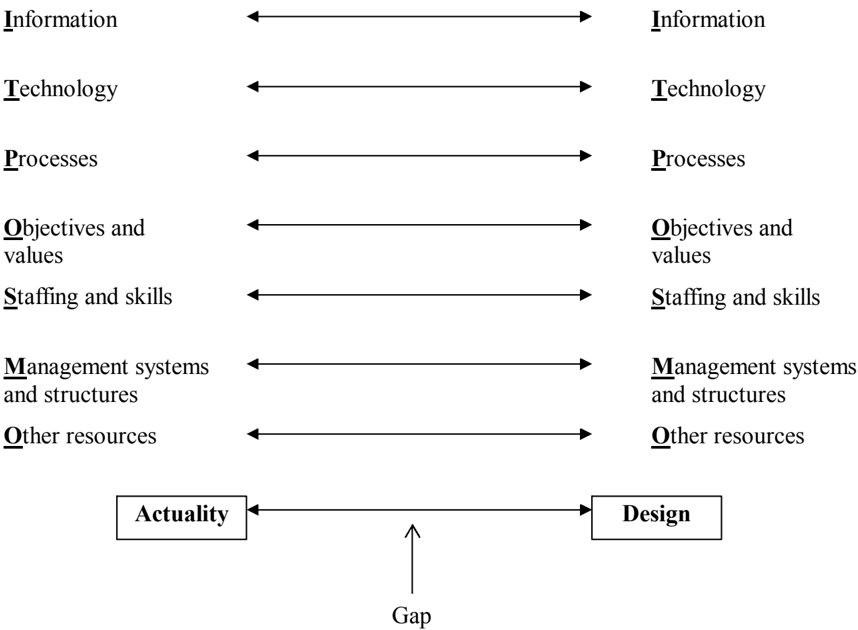
- It develops the notion of “design-actuality gaps,” defined as “the match or mismatch between IS designs and local user actuality.”
- The model highlights two “high-risk archetypes” affecting IS in developing countries: “country context gaps” and “hard-soft gaps.”
- The model is also presented as useful for explaining “the constraints that exist to local IS improvisations in developing countries.”
## Methods
- The paper is a journal article that develops a conceptual model “drawing on contingency theory.”
- The abstract does not specify a dataset, sample, or number of cases; the text only says the article presents “evidence” about IS in developing countries.
- The main analysis appears to be conceptual/theoretical, using the model to interpret IS cases and to refine IS theory.
## Limitations
- The paper does not report a specific sample size, case count, or empirical dataset in the provided text; this limits what can be assessed from the excerpt.
- The abstract does not state formal limitations or boundary conditions of the model beyond noting its focus on developing countries and local user actuality.
- The evidence base is not described in the provided text, so the scope of the claims cannot be independently evaluated from the excerpt alone.
Model-written summary. Check it against the paper before relying on it.
Integrity signals
Registry
Cites
Statistics
Figures
Verification
Claims the paper makes
0 Valid · 0 Not valid · 0 Not checked · 3 Own results and interpretations
A result the paper reports from its own data — it cites no other source for it, so there is none to check. The quote shows it is in the paper.
In the paper
“This article presents evidence that-alongside the successes-many information systems in developing countries can be categorized as failing either totally or partially.”
plain- Asserted: passes — The authors put it forward as true.
- Checkable: passes — It can be checked against evidence.
- Load-bearing: passes — The paper’s conclusions depend on it.
- Based: passes — The paper gives a reason why it holds.
A conclusion the paper draws from its own results — it cites no other source for it, so there is none to check. The quote shows it is in the paper.
In the paper
“The model draws on contingency theory in order to advance the notion of design-actuality gaps: the match or mismatch between IS designs and local user actuality.”
plainstates a possible cause- Asserted: passes — The authors put it forward as true.
- Checkable: passes — It can be checked against evidence.
- Load-bearing: passes — The paper’s conclusions depend on it.
- Based: passes — The paper gives a reason why it holds.
- Rests on an assumption not shown here.
- It may state two separate claims as one. 1
Claims other papers make about this one
Each is checked against this paper’s own text: does it say what the citing paper says it does?
In the citing paper
“This suggests that adoption can be seen as simply the first and perhaps least problematic phase in the drive towards the integration of an innovation into the health system. The greater risk is that of ‘sustainability failure’ [25, 26]”
From Beyond pilotitis: taking digital health interventions to the national level in China and Uganda (2017) · cites this paper as [26]
Citations
Cites
Task-Technology Fit and Individual Performance
Goodhue, D. L., & Thompson, R. L. (1995) · MIS Quarterly · doi:10.2307/249689 · Cited by 6,006 · cited 1×
“IS implementation models drawing on this theme have involved e t between “tool”/“technology” and “task” ( Goodhue & Thompson, 1995; Agarwal & Sinha, 1996), or between multiple factors (Scott Morton, 1991; Southon et al., 1997).”
MethodSoftware Engineering Economics
Boehm, B. W. (2001) · Pioneers and Their Contributions to Software Engineering · doi:10.1007/978-3-642-48354-7_5 · Cited by 5,981
Thompson, V. A., & March, J. G. (1966) · American Sociological Review · doi:10.2307/2090830 · Cited by 3,351
The Concept of Fit in Strategy Research: Toward Verbal and Statistical Correspondence
Venkatraman, N. (1989) · The Academy of Management Review · doi:10.2307/258177 · Cited by 2,367
Suchman, L. A. (1987) · Cited by 2,279
The Concept of Fit in Strategy Research: Towards Verbal and Statistical Correspondence
Venkatraman, N. V. (1988) · DSpace@MIT (Massachusetts Institute of Technology) · Cited by 2,038
Improvising Organizational Transformation Over Time: A Situated Change Perspective
Orlikowski, W. J. (1996) · Information Systems Research · doi:10.1287/isre.7.1.63 · Cited by 1,952
Management strategies for information technology
(1990) · Long Range Planning · doi:10.1016/0024-6301(90)90040-b · Cited by 1,033
Shaping technology/building society
(1993) · Choice Reviews Online · doi:10.5860/choice.30-3774 · Cited by 939
The corporation of the 1990s: Information technology and organizational transformation
(1993) · Futures · doi:10.1016/0016-3287(93)90030-w · Cited by 886
Research works printed but not linked: 19
- Avgerou, C. 2000. The multiple rationalities of information systems development. In Information ? ows, local improvisations and work practices. Proceedings of the IFIP WG9.4 Conference 2000. Cape Town: IFIP.
- Avgerou C., 2000, Information technology in context, 1
- Bijker W. E., 1992, Shaping tech-nology/building society, 1
- Butler R., 1991, Designing organizations
- Goonatilake, L., Maizza-Neto, O., and Jayawardene, P. 2000. Enhancing enterprise competitiveness in developing countries through the promotion of management information and benchmarking tools. In Information ? ows, local improvisations and work practices. Proceedings of the IFIP WG9.4 Conference 2000. Cape Town: IFIP.
- IFIP WG9.4. 2000. Information ? ows, local improvisations and work practices. Proceedings of the IFIP WG9.4 Conference 2000. Cape Town: IFIP.
- Jayasuriya R., 1995, Medinfo ’95, 1603
- Korac-Boisvert N., 1995, Information Infrastructure and Policy, 4, 131
- Macias-Chapula, C. A. 2000. Issues learned, challenges and opportunities to implement a library automation project at Mexico’s General Hospital. In Information ? ows, local improvisations and work practices. Proceedings of the IFIP WG9.4 Conference 2000. Cape Town: IFIP.
- Calitz, A. P. 2000. Transforming work practices with IT. In Information ? ows, local improvisations and work practices. Proceedings of the IFIP WG9.4 Conference 2000. Cape Town: IFIP.
- Oyomno G. Z., 1996, Global information technology and socio-economic development, 19
- Puri, S. K., Chauhan, K. P. S., and Admedullah, M. 2000. Prospects of biological diversity information management. In Information ? ows, local improvisations and work practices. Proceedings of the IFIP WG9.4 Conference 2000. Cape Town: IFIP.
- Silva L. O., 2000, Outsourcing as an improvisation. In Information ? ows, local improvisations and work practices. Proceedings of the IFIP WG9.4 Conference 2000
- Walsham G., 2000, Information technology in context, 291
- Wynn, E. and deLyra, J. 2000. A strange attractor in the chaos of global IS development. In Information ? ows, local improvisations and work practices. Proceedings of the IFIP WG9.4 Conference 2000. Cape Town: IFIP.
- Cain P., 2001, Reinventing government in the information age, 135
- Kenny C., 2001, The Internet and economic growth in LDCs. Draft paper
- Kitiyadisai, K. 2000. The implementation of IT in reengineering the Thai Revenue Department. In Information ? ows, local improvisations and work practices. Proceedings of the IFIP WG9.4 Conference 2000. Cape Town: IFIP.
- Mundy D., 2001, Reinventing government in the information age, 271
Cited by
Items 201–300 of 1,386
Hoq, K. M. G. (2014) · Information Development · doi:10.1177/0266666913515693 · Cited by 42
“Heeks (2002) argued that rural information centres, especially technology based rural centres or telecentres, must attain four kinds of sustainability for being successful in the long run.”
Educational Content Creation and Sharing by Low-Income Visually Impaired People in India
Vashistha, A., Brady, E. L., Thies, W., & Cutrell, E. B. (2014) · ACM Symposium on Computing for Development (ACM DEV) · doi:10.1145/2674377.2674385 · Cited by 40
“The literature in the field of Information and Communication Technologies for Development (ICT4D) contains many examples of external interventions that failed to show sustained technology usage [3, 8, 11, 12, 15].”
"Research Perspectives: Through Whose Eyes? The Critical Concept of Researcher Perspective "
Clarke, R., & Davison, R. M. (2020) · Journal of the Association for Information Systems · doi:10.17705/1jais.00609 · Cited by 72
“, 1999), project failure (Lyytinen & Hirschheim, 1987; Sauer, 1993; Heeks, 2002), and soft”
Gekara, V. O., & Nguyen, X.-V. T. (2020) · Journal of International Logistics and Trade · doi:10.24006/jilt.2020.18.1.049 · Cited by 32
“According to recent research, failure to properly prioritise action prevents any long-term solutions for the technology implementation failure in developing countries (Heeks 2002).”
Herold, S., & Sawada, M. (2012) · International Journal of Applied Geospatial Research · doi:10.4018/jagr.2012040103 · Cited by 36
“Henderson (2004), in examining the pervasive risk of natural disaster faced by developing countries, emphasizes that “conditions of poverty, poor housing, lack of information about disaster risk, poor telecommunications, and inadequate physical infrastructure frequently exacerbate natural disasters,” (p.”
Past and Future of Information Systems
Andersen, K. V., & Vendelø, M. T. (2004) · Butterworth-Heinemann eBooks · Cited by 38
Computing within limits and ICTD
Chen, J. (2015) · First Monday · doi:10.5210/fm.v20i8.6124 · Cited by 43
“For a more detailed survey of ICTD [20, 21, 36, 50, 17].”
Supporting Collaboration with Non-Literate Forest Communities in the Congo-Basin
Vitos, M., Altenbuchner, J., Stevens, M., Conquest, G., Lewis, J., & Haklay, M. (2017) · ACM Conference on Computer Supported Cooperative Work (CSCW) · doi:10.1145/2998181.2998242 · Cited by 36
“Previous studies have estimated that half of attempted projects, conducted under similar circumstances, have been total or partial failures [22, 23].”
ResultUnderstanding the role of technology in reducing corruption: a transaction cost approach
Prasad, A., & Shivarajan, S. (2015) · Journal of Public Affairs · doi:10.1002/pa.1484 · Cited by 35
Strategic Framework for Designing E-Government in Developing Countries
Mkude, C. G., & Wimmer, M. A. (2013) · Lecture notes in computer science · doi:10.1007/978-3-642-40358-3_13 · Cited by 39
“systems guidelines [5, 13, 25], some researchers have specified whether the guidelines are constructed in the context of developing countries.”
InfluentialHatakka, M., Thapa, D., & Sæbø, Ø. (2019) · Information Systems Journal · doi:10.1111/isj.12277 · Cited by 44
“However, if the project does not take a wider perspective, ie, identifying capabilities (what people actually want), there is a risk of a design-reality gap (Heeks, 2002), where the developed capacities do not lead to any broader development goals.”
BackgroundA Comparative Analysis of Strategies for eGovernment in Developing Countries
Imran, A., & Gregor, S. D. (2007) · Journal of Business Systems Governance & Ethics · doi:10.15209/jbsge.v2i3.112 · Cited by 31
Factors affecting the implementation of an electronic document and records management system
Kwatsha, N. (2010) · SUNScholar (Stellenbosch University) · Cited by 55
Woyo, E., Rukanda, G. D., & Nyamapanda, Z. (2020) · Education and Information Technologies · doi:10.1007/s10639-020-10118-2 · Cited by 38
“The failure to achieve the intended outcomes of investing in ICT has motivated a number of studies (Dada 2006; Heeks 2002).”
BackgroundSelf-Presentation of Small Developing Countries on the World Wide Web: A Study of Official Websites
Mohammed, S. N. (2004) · New Media & Society · doi:10.1177/146144804044330 · Cited by 30
“Problems exist even in developing countries where an information infrastructure has been installed, since maintenance is expensive; the failure of such an infrastructure is not uncommon (Heeks, 2002).”
Miyata, M. (2011) · Information Technology for Development · doi:10.1080/02681102.2010.537251 · Cited by 31
“However, little assessment on the impact of e-government projects in LDCs can be found, despite an alarming proportion of ICT projects reported to have failed, or to have not achieved the initial objectives (Heeks, 2002b ).”
BackgroundKhan, A., Masrek, M. N., & Mahmood, K. (2019) · Digital Library Perspectives · doi:10.1108/dlp-12-2017-0046 · Cited by 48
Anchoring Design in Rural Customs of Doing and Saying
Bidwell, N. J. (2009) · Lecture notes in computer science · doi:10.1007/978-3-642-03655-2_75 · Cited by 30
MGNREGA, Power Politics, and Computerization in Andhra Pradesh
Masiero, S., & Maiorano, D. (2017) · Forum for Development Studies · doi:10.1080/08039410.2017.1345785 · Cited by 29
“The link between ICT and accountability may not work as expected, and discrepancies may emerge between technology design and the reality for which systems are tailored (Heeks, 2002).”
BackgroundSoja, P., & Paliwoda‐Pękosz, G. (2013) · Information Systems Management · doi:10.1080/10580530.2013.794606 · Cited by 33
“Using a previous ES benefits framework would have been problematic, as these frameworks typically originate in developed countries and as such may not cover essential conceptual differences between developed and transition economies (Heeks, 2002; Hoskisson, Eden, Lau, & Wright, 2000).”
The Status of Hospital Information Systems in Iranian Hospitals
Jahanbakhsh, M., Sharifi, M., & Ayat, M. (2014) · Acta Informatica Medica · doi:10.5455/aim.2014.22.268-275 · Cited by 34
Wireless sensor networks for marginal farming in India
Panchard, J. (2008) · Infoscience (Ecole Polytechnique Fédérale de Lausanne) · doi:10.5075/epfl-thesis-4172 · Cited by 29
Katz, J. E., & Halpern, D. M. (2013) · International Journal of Public Administration · doi:10.1080/01900692.2012.713286 · Cited by 35
“The literature has also contrasted e-government implementation in developing and developed countries to understand the effect of social, economic, and political variables (Dada, 2006; Heeks, 2002; La Porte et al., 2002).”
Stakeholder Flux: Participation in Technology-Based International Development Projects
Walton, R. (2013) · Journal of Business and Technical Communication · doi:10.1177/1050651913490940 · Cited by 36
“ICTD projects often fail to meet development goals (Heeks, 2002; Maca-pagal, 2010), an outcome so common that it has led to events such as FAIL-Faire, at which ICTD scholars and practitioners meet to share and learn from stories of ICTD project failure.”
BackgroundLu, Y., Lu, Y., Wang, B., Pan, Z., & Qin, H. (2014) · Information Systems and e-Business Management · doi:10.1007/s10257-014-0235-6 · Cited by 31
“Agricultural information systems should deliver valuable information to farmers (Heeks 2002).”
BackgroundSeo, D., Tan, C., & Warman, G. (2018) · Information Technology for Development · doi:10.1080/02681102.2018.1454878 · Cited by 42
The role of design values in information system development for human benefit
Johri, A., & Nair, S. (2011) · Information Technology and People · doi:10.1108/09593841111158383 · Cited by 33
“Its roots can be traced back to the years after India’s independence in 1947 (Misra, 2007), and the equally strong legacy of failure of such ITP 24,3 282 D ow nl oa de d by L a T ro be U ni ve rs ity A t 0 5: 09 0 8 Ju ly 2 01 6 (P T ) programs (Heeks, 2002a, b).”
The Politics of Technology in Africa: Communication, Development, and Nation-Building in Ethiopia
Gagliardone, I. (2016) · Cambridge University Press eBooks · doi:10.1017/9781316823149 · Cited by 82
An analysis of the factors affecting the sustainability of ICT4D initiatives
Marais, M. A. (2011) · Cited by 48
Noor, S., & Hoque, M. (2021) · Indonesian Journal of Social Research (IJSR) · doi:10.30997/ijsr.v2i3.105 · Cited by 28
“However, in the present global context, different research exhibits that there exists a clear digital divide not only in developing countries, but such a divide also exists in developed countries like the USA, UK, Canada, and Japan (Heeks, 2002; Reddick & Turner, 2012).”
Harris, J. (2021) · Journal of Mixed Methods Research · doi:10.1177/15586898211032825 · Cited by 33
“In contrast, in developing countries where reform needs are arguably greater, from the author’s experience, expert interviews are the most consistent source of these data, as physical records and management information systems are often underdeveloped (Avgerou, 2008; Heeks, 2002).”
Towards a framework for the adoption of business intelligence in public sector organisations
Hartley, K., & Seymour, L. F. (2011) · doi:10.1145/2072221.2072235 · Cited by 28
Effah, J. K. (2013) · Information Technology for Development · doi:10.1080/02681102.2013.859115 · Cited by 45
“Therefore, developing-country e-business entrepreneurs need to understand and account for the local institutional enviroment when transfering innovations from the developed world (Avgerou, 2008; Bada, 2002; Heeks, 2002; Walsham & Sahay, 2006).”
BackgroundInfluentialThe silent community: Organizing zones in the digital divide
Ganesh, S., & Barber, K. F. (2009) · Human Relations · doi:10.1177/0018726709104545 · Cited by 39
“It is worth reiterating that failure rates of ICT ventures in the area of development appear to be significant (Heeks, 2002; Keniston & Kumar, 2004).”
BackgroundNyame-Asiamah, F. (2020) · Information Technology for Development · doi:10.1080/02681102.2019.1650326 · Cited by 28
“The study therefore carries implications for academic study of ICT4D projects in Africa.”
BackgroundInfluentialThe Process of Introducing FLOSS in the Public Administration: The Case of Venezuela
Maldonado, E. A. (2010) · Journal of the Association for Information Systems · doi:10.17705/1jais.00240 · Cited by 36
“Third, this migration cannot be considered a single and isolated national project, of the type that has been evaluated in the literature (Heeks, 2002).”
Zisopoulou, K., Zisopoulos, D., & Panagoulia, D. (2022) · Water · doi:10.3390/w14010103 · Cited by 35
Palvia, P., Baqir, M. N., & Nemati, H. (2015) · The Electronic Journal of Information Systems in Developing Countries · doi:10.1002/j.1681-4835.2015.tb00510.x · Cited by 35
“The notion of design-actuality gaps refers to “an assessment of the match or mismatch between local actuality (‘where we are now’) and system design (‘where the design wants to get us’)” (Heeks, 2002).”
BackgroundMethodInfluentialLiu, C. (2015) · Telecommunications Policy · doi:10.1016/j.telpol.2015.08.007 · Cited by 27
Local Adaptations of Generic Application Systems: The Case of Veiling Holambra in Brazil
Pozzebon, M., & van Heck, E. (2006) · Journal of Information Technology · doi:10.1057/palgrave.jit.2000059 · Cited by 25
“In reality, none of these elements were present in the Philippine context, and the IS project failed (Heeks, 2002).”
BackgroundMoens, N. P., Broerse, J. E. W., Gast, L., & Bunders, J. (2010) · Information Technology for Development · doi:10.1002/itdj.20130 · Cited by 31
“Failures are, however, widespread (Heeks, 2002; Krishna & Walsham, 2005) because ICT projects are often not adequately and sensitively molded to the local context.”
Global discourse on ICT and the shaping of ICT policy in developing countries
Hanafizadeh, P., Khosravi, B., & Badie, K. (2018) · Telecommunications Policy · doi:10.1016/j.telpol.2018.09.004 · Cited by 31
The effects of national culture on ERP implementation: a study of Colombia and Switzerland
Murcia, M. A. P., & Whitley, E. A. (2007) · Enterprise Information Systems · doi:10.1080/17517570701504294 · Cited by 29
“In the same way Heeks (2002), and Walsham (2006) argue that the expansion of information systems like ERP from developed to developing countries often fails because of the divergent focus on economic, regulatory requirements and local culture.”
Automating Public Financial Management in Developing CountriesPreprint
Peterson, S. B. (2006) · SSRN Electronic Journal · doi:10.2139/ssrn.902386 · Cited by 44
Building participatory HIS networks: A case study from Kerala, India
Puri, S. K., Sahay, S., & Lewis, J. (2009) · Information and Organization · doi:10.1016/j.infoandorg.2008.06.002 · Cited by 35
“Such developmental approaches inherently lead to ‘‘design-reality” gaps (Heeks, 2002), which impede the realization of the potential of ICTs for addressing identified aims (Avgerou & Walsham, 2000; Sahay & Avgerou, 2002).”
ICT for education projects: a look from behind the scenes
Brunello, P. (2010) · Information Technology for Development · doi:10.1080/02681102.2010.497275 · Cited by 33
“Those stakeholders bring their context with them and, even if located in a developing country, they will inscribe that context into their IS designs: inscriptions that will mismatch DC actuality” (Heeks, 2002, p. 106).”
BackgroundInfluentialFusilier, M. R., Durlabhji, S., & Cucchi, A. (2008) · Journal of Educational Computing Research · doi:10.2190/ec.38.2.c · Cited by 28
“Heeks (2002) pointed out that technology acceptance concepts may need to be adapted to the local context when applied in less developed countries.”
BackgroundAchieving ICT4D Project Success by Altering Context, Not Technology
Diniz, E. H., Bailey, D. E., & Sholler, D. (2014) · Information Technologies and International Development · Cited by 46
Nakate, M. G., Dahl, D., Petrucka, P. M., et al. (2015) · Open Journal of Nursing · doi:10.4236/ojn.2015.512113 · Cited by 26
Choudrie, J., Zamani, E. D., Umeoji, E., & Emmanuel, A. (2017) · Government Information Quarterly · doi:10.1016/j.giq.2017.11.004 · Cited by 37
ICTD state of the union: Where have we reached and where are we headed
Patra, R. K., Pal, J., & Nedevschi, S. (2009) · International Conference on Information and Communication Technologies and Development (ICTD) · doi:10.1109/ictd.2009.5426693 · Cited by 47
A Multidisciplinary Approach to ICT Development
Parmar, V. S. (2009) · Information Technologies and International Development · Cited by 26
Towards Communication and Information Access for Deaf People
Blake, E., Tucker, W. D., & Glaser, M. (2014) · South African Computer Journal · doi:10.18489/sacj.v54i0.236 · Cited by 41
“This is because such approaches assume customers are similarly educated and from the same culture and can express their needs in a language that Computer Science practitioners understand [16].”
Simpson, S. N. Y., Tetteh, L. A., & Agyenim‐Boateng, C. (2020) · Journal of Accounting & Organizational Change · doi:10.1108/jaoc-10-2018-0100 · Cited by 33
The role of records management in ensuring good governance in Africa
Mosweu, O., & Rakemane, D. (2020) · Journal of the South African Society of Archivists · doi:10.4314/jsasa.v53i1.8 · Cited by 25
Wamoto, F. O. (2015) · International Journal of Computer Applications Technology and Research · doi:10.7753/ijcatr0412.1006 · Cited by 25
A structural modelling for e-governance service delivery in rural India
Lal, R. S., & Haleem, A. (2009) · International Journal of Electronic Governance · doi:10.1504/ijeg.2009.024962 · Cited by 25
“Detailed project management Holmes (2001) and Heeks (2001, 2002)”
An Alternative Method for Determining Critical Success Factors of Information System Project
Subiyakto, A., Ahlan, A. R., & Sukmana, H. T. (2014) · TELKOMNIKA (Telecommunication Computing Electronics and Control) · doi:10.12928/telkomnika.v12i3.105 · Cited by 33
“There are three steps followed the prior section: Stage 1: Implementation of the top-down method; authors formulated four project success criteria, namely: efficiency [5],[40],[50]-[51], effectiveness [27],[51], fulfillment of the functional requirements [47],[52], and stakeholder satisfactions [23],[24],[27],[47],[53…”
IT in Pakistan: Threats & Opportunities for eBusiness
Kundi, G. M., & Shah, B. (2009) · The Electronic Journal of Information Systems in Developing Countries · doi:10.1002/j.1681-4835.2009.tb00255.x · Cited by 40
“The availability of physical and legal infrastructure is measured in this study by a construct as used by Heeks (2002) for his study on “critical failure factors that discourage the growth of electronic commerce and information systems in developing countries: failure, success, and local…”
MethodICTs AND SUSTAINABLE DEVELOPMENT: A CAPABILITY PERSPECTIVE
Maiye, A., & McGrath, K. (2010) · Journal of the Association for Information Systems · Cited by 25
eBusiness in Pakistan: Opportunities and Threats
Kundi, G. M., & Shah, B. (2007) · The Journal of Internet Banking and Commerce · Cited by 34
Nhampossa, J. L. (2009) · Cited by 25
Mobilizing Culture for E‐Business in Developing Countries: An Actor Network Theory Account
Effah, J. K. (2012) · The Electronic Journal of Information Systems in Developing Countries · doi:10.1002/j.1681-4835.2012.tb00370.x · Cited by 25
“Because developed world business models embody their own values and practices different from those in the developing world, transporting ICTs to the latter may not be feasible (Avgerou, 1998; Walsham and Sahay, 1999; Heeks, 2002).”
InfluentialGupta, A., Suri, P. K., & Singh, R. K. (2018) · Business Perspectives and Research · doi:10.1177/2278533718800562 · Cited by 36
Becerra-Posada, F., Berwick, D., Bhutta, Z. A., Chowdhury, M., de Savigny, D., Haines, A., Hyder, A. A., Lavis, J. N., Lumbiganon, P., MILLS, A. J., et al. (2005) · LSHTM Research Online (London School of Hygiene and Tropical Medicine) · Cited by 35
Rouibah, K., Dihani, A., & Al-Qirim, N. A. Y. (2020) · Journal of Global Information Management · doi:10.4018/jgim.2020070105 · Cited by 34
“ thatasignificantpercentageofISfailurecanbeattributedtolowlevelofend-useracceptanceanduse particularlyindevelopingcountries(Heeks2002;Amidetal.,2012).”
Management of Information System in Indian SMEs: an exploratory study
Bhagwat, R., & Sharma, M. K. (2006) · International Journal of Enterprise Network Management · doi:10.1504/ijenm.2006.010068 · Cited by 25
“Even, a few studies (Heeks, 2002; Kraemer and Dedrick, 2001) pointed out that the increased IS investment in developing countries have not resulted in adequate returns, with companies facing huge risk of IS failures.”
COVID-19: What does it mean for digital social protection?
Masiero, S. (2020) · Big Data & Society · doi:10.1177/2053951720978995 · Cited by 32
Kirk, K., McClair, T. L., Dakouo, S. P., Abuya, T., & Sripad, P. (2021) · Journal of Global Health · doi:10.7189/jogh.11.07003 · Cited by 35
User-Generated Content Creation and Dissemination in Rural Areas
Agarwal, S. K., Kumar, A., Nanavati, A. A., et al. (2010) · Information Technologies and International Development · Cited by 24
Taylor, L., & Richter, C. (2015) · Springer eBooks · doi:10.1007/978-3-319-21272-2_9 · Cited by 29
Developing capacity through co-design: the case of two municipalities in rural South Africa
Jacobs, C., Rivett, U., & Chemisto, M. (2018) · Information Technology for Development · doi:10.1080/02681102.2018.1470488 · Cited by 33
“…the source of much discussion, with the literary world questioning their real impact (Chaudhuri, 2012; Heeks, 2010; Kamel, Rateb, & El-Tawil, 2009; Siphiwosami et al., 2015), contribution, and sustainability (Avgerou, 2008; Avgerou & Walsham, 2001; Chaud-huri, 2012; Heeks, 2002; Hicks, 2013).”
BackgroundJóia, L. A., & dos Santos, R. P. (2018) · Information Systems Journal · doi:10.1111/isj.12200 · Cited by 42
“To avoid or overcome problems of this nature, Heeks (2002) emphasizes the importance of improvisation, either by adapting the reality of the location to receive and adapt to ICT or by adapting or changing ICT to the reality of the locations.”
Mekonnen, F., Lemma, M., & Knierim, A. (2018) · The Journal of Agricultural Education and Extension · doi:10.1080/1389224x.2018.1524773 · Cited by 27
“However, ICTs potential becomes limited unless their use is matched to the needs, perceptions and expectations of the those who will use them, and the environment in which they are put to use (Heeks 2002).”
BackgroundFactors influencing cloud-computing technology adoption in developing countries
Rahman, S. M., & Hailu, A. (2012) · ProQuest LLC eBooks · Cited by 25
Modeling organizational and information systems for effective strategy execution
Srivastava, A. K., & Sushil, N. A. (2015) · Journal of Enterprise Information Management · doi:10.1108/jeim-09-2013-0071 · Cited by 33
Demystifying the Possibilities of ICT4D in the Mountain Regions of Nepal
Thapa, D., & Sæbø, Ø. (2011) · Hawaii International Conference on System Sciences (HICSS) · doi:10.1109/hicss.2011.142 · Cited by 33
“There is a need to understand the multidimensional opportunities created by the ICT projects [13, 14].”
Recent Models for Collaborative E-Government Processes: A Survey
Gacitúa, R., Hernán Astudillo, R., Hitpass, B., Osorio-Sanabria, M. A., & Taramasco, C. (2021) · IEEE Access · doi:10.1109/access.2021.3050151 · Cited by 23
“However, it is also well-documented that many e-government projects are unsuccessful [3], [4]; indeed, some studies put failure rates near 60% [5].”
BackgroundAn Extended Framework to Investigate ICT Impact on Development at the Micro (Community) Level
Asraf, M. M., Swatman, P. A., & Hanisch, J. (2008) · Journal of the Association for Information Systems · Cited by 23
Parmar, V. S., Keyson, D. V., & de Bont, C. J. P. M. (2009) · Communications of the Association for Information Systems · doi:10.17705/1cais.02425 · Cited by 29
International perspectives and initiatives
Murphy, J. (2007) · Health Information & Libraries Journal · doi:10.1111/j.1471-1842.2007.00704.x · Cited by 30
The new stream of socio-technical approach and main stream information systems research
Ghaffarian, V. (2011) · Procedia Computer Science · doi:10.1016/j.procs.2011.01.039 · Cited by 33
“These types of projects have been frequently observed in health care sector [72-74], and the context of developing countries [75-78].”
Considerations for Improved Mobile Health Evaluation: Retrospective Qualitative Investigation
Dick, S., O’Connor, Y., Thompson, M. J., O’Donoghue, J., Hardy, V., Wu, T.-S. J., O’Sullivan, T., Chirambo, G. B., & Heavin, C. (2020) · JMIR mhealth and uhealth · doi:10.2196/12424 · Cited by 24
“In a developing world context in particular, it is likely that the design-actuality gap [33] is large, so it is imperative that a comprehensive understanding of the social factors influencing mHealth is sought.”
BackgroundGhana’s ICT4AD policy: between policy and reality
Kubuga, K. K., Ayoung, D. A., & Bekoe, S. (2021) · Digital Policy Regulation and Governance · doi:10.1108/dprg-02-2020-0020 · Cited by 22
Alaiad, A., & Zhou, L. (2015) · Hawaii International Conference on System Sciences (HICSS) · doi:10.1109/hicss.2015.104 · Cited by 26
“The lack of understanding is one of the main reasons leading to the failure of most previous IT development [6].”
Nurdin, N., Stockdale, R., & Scheepers, H. (2012) · Electronic Journal of e-Government · Cited by 22
Evaluating the usability of developing countries' e-government sites: a user perspective
Choudrie, J., Wisal, J., & Ghinea, G. (2009) · Electronic Government an International Journal · doi:10.1504/eg.2009.024944 · Cited by 29
“…problem that often arises with developing countries is that there is frequently a mismatch between the current and future systems, due to the large gap in the physical, cultural, economic and various other contexts between the software designers and the place it is being implemented (Heeks, 2002).”
E-Government Implementation Perspective: Setting Objective and Strategy
Shareef, M. A., Kumar, V., Kumar, U., Chowdhury, A. H., & Misra, S. C. (2010) · International Journal of Electronic Government Research · doi:10.4018/jegr.2010102005 · Cited by 30
“After examining several cases of ICT and EG failure, Heeks (2002, 2003) states that a major reason for these failures is the mismatch between the actual capability and the resources required for the new system (ICT).”
Challenges in computerized job search for the developing world
Medhi, I., Menon, G., & Toyama, K. (2008) · CHI Conference Extended Abstracts on Human Factors in Computing Systems (CHI EA) · doi:10.1145/1358628.1358640 · Cited by 23
“The challenges we identified are echoed in the model for evaluating performances of information systems in developing countries proposed by Richard Heeks [3].”
BackgroundFailure of E-Government Implementation: A Case Study of South Sulawesi
Hwang, J., & Syamsuddin, I. (2008) · doi:10.1109/iccit.2008.400 · Cited by 24
“In addition to this problem, Heeks in [ 3 ] states that subjective evaluation can be depend on circumstances such as people, time, and environment.”
InfluentialStrategic Information Systems Planning (SISP) Practices In Health Care Sectors Of Bangladesh
Hoque, M. R., Hossin, M. E., & Khan, W. (2016) · European Scientific Journal ESJ · doi:10.19044/esj.2016.v12n6p307 · Cited by 22
“However, Heeks(2002) argued that ‘failure to learn’ is one of the main issues in the organizations in developing countries.”
Understanding ICT in ICT4D: An Affordance Perspective
Thapa, D., & Hatakka, M. (2017) · Hawaii International Conference on System Sciences (HICSS) · doi:10.24251/hicss.2017.316 · Cited by 31
“The gap in design of ICT artifact and its use in real contexts are seen as one of the explanations [10].”
Digital Innovation: A Research Agenda for Information Systems Research in Developing Countries
Nielsen, P. (2017) · IFIP advances in information and communication technology · doi:10.1007/978-3-319-59111-7_23 · Cited by 33
“Heeks [7] have made a similar argument particularly for ICT4D research with his discussion of design-actuality gaps.”
Best practices for conducting fieldwork with marginalized communities
Potnis, D. D., & Gala, B. (2019) · Information Processing & Management · doi:10.1016/j.ipm.2019.102144 · Cited by 30
Reflections on a Trial Implementation of an E-Learning Solution in a Libyan University
Rhema, A., & Miliszewska, I. (2011) · Issues in Informing Science and Information Technology · doi:10.28945/1405 · Cited by 22
“…they seek to improve their education systems but lack: (1) infrastructure and resources (Andersson & Grönlund, 2009; Dhanarajan, 2001; Gulati, 2008; Heeks, 2002; Rajesh, 2003); (2) well trained and qualified teachers needed to carry out the development and manage the change (Gulati, 2008); (3)…”
The clinic-level perspective on mHealth implementation: a South African case study
Wolff-Piggott, B., Coleman, J., & Rivett, U. (2018) · Information Technology for Development · doi:10.1080/02681102.2016.1233858 · Cited by 21
“This suggests that these services may be in a position to overcome some of the barriers that have impeded the widespread use of non-mobile information systems in developing countries (Heeks, 2002).”
Blogging for ICT4D: reflecting and engaging with peers to build development discourse
Ferguson, J., Soekijad, M., Huysman, M., & Vaast, E. (2013) · Information Systems Journal · doi:10.1111/isj.12010 · Cited by 28
“…development professionals, including donors, non-governmental organisations’ (NGOs) activists, government policy officers, consultants, academics, intended beneficiaries and so forth, who are active in various development aid organisations distributed all over the world (Covey, 1995; Heeks, 2002).”
BackgroundTully, M. (2015) · Information Technologies and International Development · Cited by 21
What matters for financial inclusions? Evidence from emerging economy
Khan, A., Mubarik, M. S., & Naghavi, N. (2021) · International Journal of Finance & Economics · doi:10.1002/ijfe.2451 · Cited by 36
Frugal innovation and digital effectuation for development: the case of Lucia
Khanal, P. B., Aubert, B. A., Bernard, J.-G., Narasimhamurthy, R., & Dé, R. (2021) · Information Technology for Development · doi:10.1080/02681102.2021.1920874 · Cited by 33
“Our examination of Pawan Kumar brings human agency to the fore (Zheng, 2009), and shows how a ‘ con fi dent, competent local improvisation capacity ’ (Heeks, 2002, p. 110) can generate innovation despite environmental barriers.”
Background
Metadata
- Authors
- Heeks, R.
- Corresponding author
- Heeks, Richard
- ORCID
- Heeks, Richard
- Venue
- The Information Society
- Publisher
- Informa UK Limited
- Published
- 2002-03
- Volume
- 18
- Issue
- 2
- Pages
- 101-112
- ISSN
- 0197-2243 (ISSN-L)
- 1087-6537
- OpenAlex
- W2136941206
- Semantic Scholar
- dd6c8931d276f258d356e65416018725912d2dbd
- Cited by
- 1,390
- References
- 53
- Citations by year
- 2026: 71 · 2025: 42 · 2024: 37 · 2023: 41 · 2022: 49 · 2021: 60 · 2020: 58 · 2019: 72 · 2018: 39 · 2017: 70 · 2016: 81 · 2015: 114 · 2014: 95 · 2013: 97 · 2012: 97
- FWCI
- 34.02
- Type
- journal article
- Language
- en
- Open access
- Licence
- other-oa
- Locations
- The Information Society (publishedVersion)
- Research Explorer (The University of Manchester) (publishedVersion, other-oa)
- Topics
- Physical Sciences › Computer Science › Information Systems › ICT in Developing Communities
- Social Sciences › Business, Management and Accounting › Management Information Systems › Information Systems Theories and Implementation
- Social Sciences › Economics, Econometrics and Finance › Economics and Econometrics › ICT Impact and Policies
- Keywords
- contingency theory, IS success factors
About these checks
Registry, retraction, Cites and statistics results are computed, not judged, with one exception: a printed reference that no index lists is read once by a model before it counts as a citation error. Claims are extracted by a model and kept only when their quote appears verbatim in the text; each cited source is then checked, with a model’s help, for whether it says what the claim relies on. Those verdicts can be wrong — read the claim’s quote and the cited source before relying on one.
A language model drew the claims from the paper on 2026-10-10, under version 3 of the claim definition (model deepseek-v4.1-flash, prompt extract-v3).
A second model labelled each claim on 2026-10-10 (model jev-1.13-20260917, definition revision gold-guideline-v0.2).
Statistics and arithmetic are recomputed, not judged.
Confidence bands are shown only for fields calibrated on our annotated test set. None is calibrated yet, so no band is shown.
What counts as a claim ›How we measure confidence ›How we check this ›
Are you an author, or do you see a problem with this page? Request a review
Data sources
Bibliographic data: Semantic Scholar, OpenAlex, Crossref.
Contains information from the Semantic Scholar Academic Graph Datasets, made available under the ODC Attribution License (ODC-BY 1.0).
Semantic Scholar’s data is described in: Kinney, R., et al. (2023). The Semantic Scholar Open Data Platform. arXiv:2301.10140.
