

A single-case experimental evaluation of a new group-based intervention to enhance adjustment to life with acquired brain injury: VaLiANT (valued living after neurological trauma)
Open accessThe DOI matches its Crossref record; 99 of the 100 references it cites were found in a registry or an index, and 1 are not checked yet; 26 of the 108 sources its claims cite were checked for support.
Abstract
Adjustment to life with acquired brain injury (ABI) requires self-identity and behaviour to be updated, incorporating injury-related changes. Identifying and enabling new values-consistent behaviours could facilitate this process. We evaluated the feasibility, acceptability, and preliminary efficacy of VaLiANT, a new group intervention that aims to enhance “valued living” following ABI. We used a non-concurrent multiple baseline single-case experimental design (SCED) with an 8-week follow-up phase and randomization to multiple baseline lengths (5–7 weeks). Eight participants (50% women, aged 26–65; 4 Stroke, 3 Traumatic Brain Injury, 1 Epilepsy) attended eight group sessions with assessments before, during, and after the group. Target behaviour was valued living, assessed weekly by the Valued Living Questionnaire. Secondary outcomes included measures of wellbeing, mood, psychological acceptance, self-efficacy regarding ABI consequences, cognitive complaints, and intervention acceptability. Target behaviour was analysed through visual and statistical analysis while secondary outcome data were analysed via reliable change indices and descriptive statistics. Target behaviour data displayed no convincing patterns of improvement. Reliable improvements were found for most participants on secondary outcomes, particularly subjective wellbeing and anxiety. Intervention delivery was feasible with high acceptability ratings. Further investigation of VaLiANT is warranted, based on the feasibility and acceptability of intervention delivery and signals of efficacy identified across adjustment-related secondary outcomes. © 2021 Informa UK Limited, trading as Taylor & Francis Group.
Verified 2026-11-25 · 1 reference not checked yet
Overview
CoChat Summary
TL;DR
VaLiANT, an 8-week group intervention combining cognitive rehabilitation with Acceptance and Commitment Therapy, was feasible and acceptable for adults with acquired brain injury, but did not convincingly improve the primary target of valued living. Reliable improvements were seen on secondary outcomes, particularly subjective wellbeing and anxiety.
Key findings
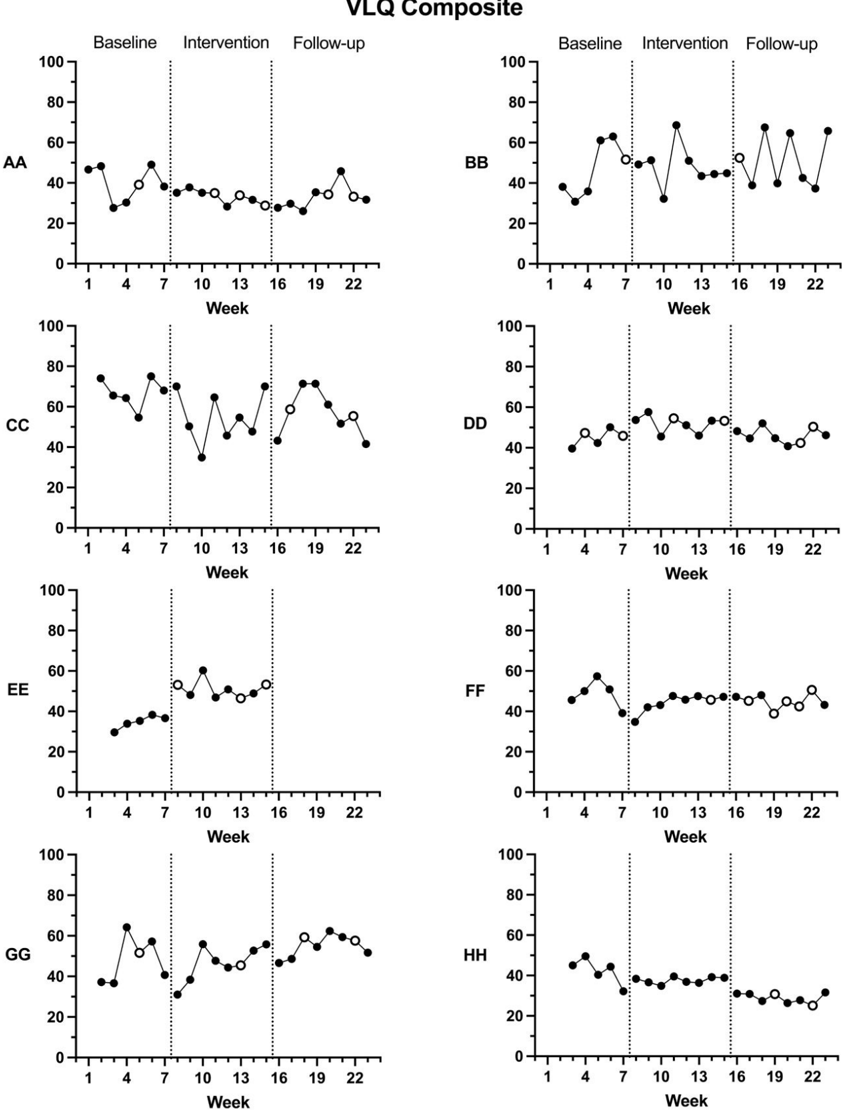
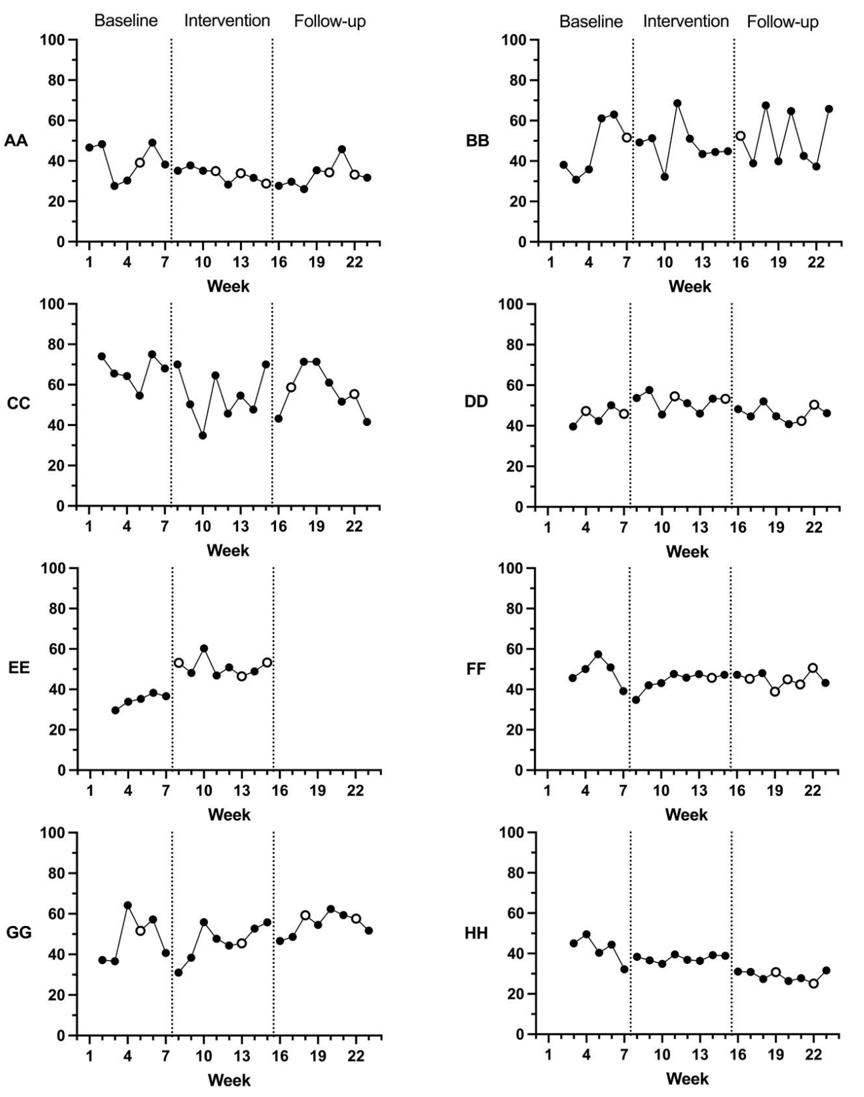
- Target behaviour (valued living, Valued Living Questionnaire) showed no convincing pattern of improvement: visual and statistical analysis (PEM-T, Baseline Corrected Tau) gave limited support, with highly variable data across the eight participants.
- On secondary measures, 6/7 participants (86%) achieved reliable improvement on at least one of six measures at T2 or T3; the highest rates were for anxiety (HADS-A: 83%, 5/6) and mental wellbeing (WEMWBS: 57%, 4/7). One participant (CC) showed reliable deterioration on the SWLS at T2 that persisted at T3.
- All a priori feasibility and acceptability criteria were met: drop-out 12.5% (1/8), session attendance 55/64 (86%), major outcome assessment completion 22/24 (92%), homework completion 60–87.5% per session, treatment fidelity 16/16 (100%) session objectives and 34/36 (94%) content areas delivered, and mean acceptability 8/9 (89%).
- Methodological quality on the RoBiNT scale was 20/30, with external validity met but weaker internal validity.
Methods
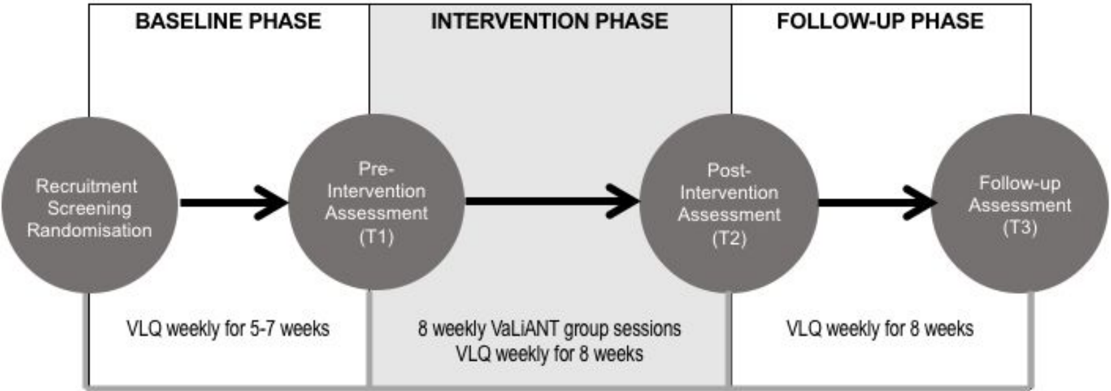
- Non-concurrent multiple baseline single-case experimental design with AB phases plus an 8-week follow-up, replicated across 8 community-dwelling adults with ABI (50% women, aged 26–65; 4 stroke, 3 TBI, 1 epilepsy), randomised to 5-, 6-, or 7-week baseline lengths.
- Intervention: eight weekly two-hour manualised group sessions integrating cognitive rehabilitation and ACT, delivered at La Trobe University Psychology Clinic in two consecutive groups (Feb–Apr and Apr–Jun 2019).
- Analysis: weekly VLQ assessed via visual analysis (level, trend, variability, overlap) and PEM-T; Baseline Corrected Tau also used; secondary outcomes (WEMWBS, SWLS, HADS, EMQ-R, AAQ-ABI, CIQ, TBI-SES) analysed with Reliable Change Indices and Clinically Significant Change at T1 vs T2 and T1 vs T3, with CIQ/TBI-SES described descriptively.
Limitations
- Stated by the paper: RoBiNT ratings indicated weak internal validity (no blinding of participants, clinicians, or assessors; group design meant baselines could end but not commence simultaneously); VLQ validity was questionable due to comprehension difficulties in ABI; secondary outcomes used a pre-post design rather than weekly measurement; all measures were self-report and may be affected by cognitive impairment.
- Evident from the text: the sample was small (8 participants, with only 7 completing all phases) and heterogeneous in injury type and chronicity (8 months to 34 years), and two participants (GG, HH) came from a second group whose dynamics may have differed, which the authors note as a possible source of variability.
Model-written summary. Check it against the paper before relying on it.
Integrity signals
Registry
Cites
Statistics
Figures


Verification
Claims the paper makes
21 Valid · 0 Not valid · 30 Not checked · 190 Own results and interpretations
Every source the paper cites for this claim was checked and supports it.
In the paper
“Missing primary outcome data was handled in line with recommendations by using a multiple imputation approach (Peng & Chen, 2018).”
- Also stated in: § Data Analysis · plain
“Missing primary outcome data was handled in line with recommendations by using a multiple imputation approach (Peng & Chen, 2018).”
§ A single-case experimental evaluation > Data Analysis
What the sources say
- Supportedcites Peng & Chen, 2018 matched to “Handling missing data in single-case studies” (2018) source
The Multiple Imputation section describes the method as providing valid statistical inferences for missing data under the missing-at-random condition. The Abstract and Conclusion illustrate its use for missing data in a single-case study, supporting the citation as a methodological basis for the citing authors’ choice of approach. (LLM, conf=0.86)
plain- Asserted: passes — The authors put it forward as true.
- Checkable: passes — It can be checked against evidence.
- Load-bearing: unclear — It is unclear whether the paper’s conclusions depend on it.
- Based: passes — The paper gives a reason why it holds.
- Also stated in: § Data Analysis · plain
Every source the paper cites for this claim was checked and supports it.
In the paper
“ACT has established efficacy in psychiatric and chronic health conditions (Dindo et al., 2017;Gloster et al., 2020).”
§ A single-case experimental evaluation > Abstract
What the sources say
- Supportedcites Dindo et al., 2017 matched to “Acceptance and Commitment Therapy: A Transdiagnostic Behavioral Intervention for Mental Health and Medical Conditions.” (2017) source
The “Empirical Support for Acceptance and Commitment Therapy” section identifies ACT as an empirically supported treatment for several psychiatric conditions and chronic pain. It also reports meta-analytic evidence of effectiveness across a wide variety of mental and physical health problems. Page numbers are not available in the supplied copy. (LLM, conf=0.92)
- Supportedcites Gloster et al., 2020 matched to “The empirical status of acceptance and commitment therapy: A review of meta-analyses” (2020) source
The Discussion (section 4) says ACT is efficacious across diagnoses of mental disorders and health conditions such as chronic pain. This supports the claim about psychiatric and chronic health conditions. (LLM, conf=0.94)
boostedstates a cause- Asserted: passes — The authors put it forward as true.
- Checkable: passes — It can be checked against evidence.
- Load-bearing: passes — The paper’s conclusions depend on it.
- Based: passes — The paper gives a reason why it holds.
- Supported
The cited sources support only part of this claim — read each source’s verdict below.
In the paper
“Recent evidence indicates that valued living, the extent to which we engage in behaviours that are consistent with our personal values (e.g., about our relationships or work), is strongly associated with better adjustment-related outcomes (e.g.participation and quality of life) in both ABI (Pais et al., 2019) and other chronic health condition populations (Graham et al., 2016;Sheppard et al., 2010”
§ A single-case experimental evaluation > Abstract
What the sources say
- Not matchedcites Pais et al., 2019
An author–year citation the paper’s reference list doesn’t settle. We don’t search these by name.
- Partly supportedcites Graham et al., 2016 matched to “A systematic review of the use of Acceptance and Commitment Therapy (ACT) in chronic disease and long-term conditions” (2016) sourceExperimental — accuracy not yet measured
The Chronic Disease and Long-Term Conditions section says psychological factors explain substantial variation in quality of life and mood, and the Additional information section describes actions consistent with personal values. But the review does not establish that valued living specifically is strongly associated with participation or quality of life in chronic-condition populations. The ABI portion of the citing sentence is attributed to Pais et al., not to this source. (LLM, conf=0.79)
- Not checked — no full text of the sourcecites Sheppard et al., 2010 matched to “A Novel Application of Acceptance and Commitment Therapy for Psychosocial Problems Associated with Multiple Sclerosis” (2010) source
boostedstates an association- Asserted: passes — The authors put it forward as true.
- Checkable: passes — It can be checked against evidence.
- Load-bearing: passes — The paper’s conclusions depend on it.
- Based: passes — The paper gives a reason why it holds.
- Not matched
The cited sources support only part of this claim — read each source’s verdict below.
In the paper
“However, evidence for the efficacy of rehabilitation programs targeting cognition and mood separately remains mixed (Gertler et al., 2015;Lincoln & Flannaghan, 2003;Ponsford et al., 2016;Rogers et al., 2018).”
- Also stated in: § Feasibility and Acceptability · plain
“evidence for the efficacy of rehabilitation programs targeting cognition and mood separately remains mixed (Gertler et al., 2015;Lincoln & Flannaghan, 2003;Ponsford et al., 2016;Rogers et al., 2018).”
§ A single-case experimental evaluation > Abstract
What the sources say
- Not checked — no full text of the sourcecites Gertler et al., 2015 matched to “Non-pharmacological interventions for depression in adults and children with traumatic brain injury” (2015) source
- Partly supportedcites Lincoln & Flannaghan, 2003 matched to “Cognitive Behavioral Psychotherapy for Depression Following Stroke: A Randomized Controlled Trial” (2003) sourceExperimental — accuracy not yet measured
The Abstract describes evidence for psychological treatment of post-stroke depression as inconclusive, and this trial found no significant mood benefit from CBT. That supports the mood-treatment part of the claim, but the paper does not evaluate a separate cognition-focused rehabilitation program. (LLM, conf=0.85)
- Not checked — no full text of the sourcecites Ponsford et al., 2016 matched to “Efficacy of motivational interviewing and cognitive behavioral therapy for anxiety and depression symptoms following traumatic brain injury” (2016) source
plain- Asserted: passes — The authors put it forward as true.
- Checkable: passes — It can be checked against evidence.
- Load-bearing: passes — The paper’s conclusions depend on it.
- Based: passes — The paper gives a reason why it holds.
- Also stated in: § Feasibility and Acceptability · plain
The sources with a verdict support this claim; the rest weren’t checked yet, have no full text we could read, or their verdicts aren’t rated yet.
In the paper
“cognitive impairment can limit appropriate, flexible goal setting and behaviour”
§ A single-case experimental evaluation > Feasibility and Acceptability
What the sources say
- Not checked — no full text of the sourcecites Beadle et al., 2018 matched to “Relationship Between Neurocognitive Function and Self-Discrepancy After Severe Traumatic Brain Injury” (2018) source
- Not checked — no full text of the sourcecites Kutlubaev & Hackett, 2014 matched to “Part II: Predictors of Depression after Stroke and Impact of Depression on Stroke Outcome: An Updated Systematic Review of Observational Studies” (2014) source
- Supportedcites Whyte et al., 2011 matched to “Cognitive Impairment in Acquired Brain Injury: A Predictor of Rehabilitation Outcomes and an Opportunity for Novel Interventions” (2011) source
The Adaptation section says cognitive impairments can inhibit recognizing problems, generating and testing solutions, and carrying out the most effective response. Future Research Directions also describes goal-setting and planning strategies for patients with executive-function impairments. These passages support the claim that cognitive impairment can limit flexible goal setting and behaviour; page numbers are not provided in our copy. (LLM, conf=0.90)
plainstates a cause- Asserted: passes — The authors put it forward as true.
- Checkable: passes — It can be checked against evidence.
- Load-bearing: passes — The paper’s conclusions depend on it.
- Based: passes — The paper gives a reason why it holds.
121 more claims · 3 with their cited sources checked
Create a free account to see all 241 claims and to verify the 6 references still open.
- It may state two separate claims as one. 73
- Probably not a substantial claim. 60
- The quote only partly states this claim. 2
Claims other papers make about this one
Each is checked against this paper’s own text: does it say what the citing paper says it does?
The cited source says what the claim attributes to it.
In the citing paper
“For instance, "Valued Living After Neurological Trauma (VaLiANT) -an 8-week group programme combining elements of cognitive rehabilitation and ACTshowed significant improvements in subjective well-being and anxiety in people with brian injury" (Sathananthan et al., 2022).”
From “It’s knowing that there are other people and they’ve accepted it”: Patients’ experiences of an acceptance and commitment therapy group intervention for people with neurological conditions (2025) · cites this paper as Sathananthan et al., 2022
The cited source says what the claim attributes to it.
In the citing paper
“other studies using this therapeutic model in acquired brain injury have suggested that the HADS is sensitive to change.6,36”
Self-check
Percentages, sums and reported differences re-computed from the paper’s own numbers.
Each contradiction between two passages listed here was confirmed by an independent check.
Rated major: it would touch a result — a value a result rests on, reported and recomputed p-values on opposite sides of the significance level, two passages that conflict with no sign which is right, or a cited work retracted before this paper was published.
In the paper
§ A single-case experimental evaluation > Participant AA
“statistical analysis indicated an improvement in intervention phase data above the decreasing baseline trend (PEM-T = 0.88) and further improvement in follow-up phase data which fell above the decreasing intervention trend (PEM-T = 1.00).”
§ A single-case experimental evaluation > Participant AA
“Statistical analysis indicated deterioration in behaviour during intervention and with further deterioration during follow-up, however both changes were not statistically significant.”
Rated minor: it would not touch a result — a value no result rests on, a p-value that stays on the same side of the significance level, or a conflict that is clerical, resolved elsewhere in the paper, or outside its own findings.
In the paper
§ A single-case experimental evaluation > Abstract
“Better adjustment following ABI is strongly associated with higher subjective wellbeing and lower emotional distress”
§ A single-case experimental evaluation > Feasibility and Acceptability
“Higher subjective wellbeing and emotional distress have been strongly associated with better adjustment following ABI”
Rated minor: it would not touch a result — a value no result rests on, a p-value that stays on the same side of the significance level, or a conflict that is clerical, resolved elsewhere in the paper, or outside its own findings.
In the paper
§ A single-case experimental evaluation > Methodological Quality Ratings
“total score = 20/30; see Appendix B”
§ A single-case experimental evaluation > Additional information
“IV TOTAL 5/14 EV TOTAL 16/16 TOTAL 21/30”
Citations
Cites
The Hospital Anxiety and Depression Scale
Zigmond, A. S., & Snaith, R. P. (1983) · Acta Psychiatrica Scandinavica · doi:10.1111/j.1600-0447.1983.tb09716.x · Cited by 47,139 · cited 1×
“Anxiety and depression were assessed with the 14-item Hospital Anxiety and Depression Scale (HADS; Zigmond & Snaith, 1983), while the 13-item Everyday Memory QuestionnaireRevised (EMQ-R) was used as an index of subjective memory failures (Royle & Lincoln, 2008) with higher scores representing a…”
MethodThe satisfaction with life scale
Diener, E., Emmons, R. A., Larsen, R. J., & Griffin, S. (1985) · Journal of Personality Assessment · doi:10.1207/s15327752jpa4901_13 · Cited by 31,768
The validity of the Hospital Anxiety and Depression Scale
Bjelland, I., Dahl, A. A., Haug, T. T., & Neckelmann, D. (2002) · Journal of Psychosomatic Research · doi:10.1016/s0022-3999(01)00296-3 · Cited by 9,779 · cited 1×
“On each subscale scores below 8 equated to clinical recovery (Bjelland et al., 2002) and participants who remained within this “normal” range throughout the study were excluded from RCI/CSC analysis for that subscale.”
MethodJacobson, N. S., & Truax, P. (1991) · Journal of Consulting and Clinical Psychology · doi:10.1037/0022-006x.59.1.12 · Cited by 7,770
Acceptance and commitment therapy: model, processes and outcomes
Hayes, S. C., Luoma, J. B., Bond, F. W., Masuda, A., & Lillis, J. (2006) · Behaviour Research and Therapy · doi:10.1016/j.brat.2005.06.006 · Cited by 6,587 · cited 2×
“, their values), and by improving acceptance and psychological flexibility towards negative thoughts and emotions that may otherwise prevent valued living (Hayes et al., 2006).”
BackgroundMeasurements of acute cerebral infarction: a clinical examination scale.
Brott, T., Adams, H. P., Olinger, C. P., Marler, J. R., Barsan, W. G., Biller, J., Spilker, J., Holleran, R., Eberle, R., & Hertzberg, V (1989) · Stroke · doi:10.1161/01.str.20.7.864 · Cited by 5,911 · cited 2×
“Sample characterization Stroke severity was classified using the National Institutes of Health Stroke Scale (NIHSS; Brott et al., 1989).”
MethodThe Warwick-Edinburgh Mental Well-being Scale (WEMWBS): development and UK validation
Tennant, R., Hiller, L., Fishwick, R., Platt, S., Joseph, S., Weich, S., Parkinson, J., Secker, J., & Stewart-Brown, S. (2007) · Health and Quality of Life Outcomes · doi:10.1186/1477-7525-5-63 · Cited by 5,031 · cited 3×
“The WEMWBS and SWLS were analysed by determining a clinical cut-off using criteria C from Jacobson and Truax (1991) which utilized psychometric information from a healthy comparison sample (SWLS; Diener et al., 1985; WEMWBS; Tennant et al., 2007).”
MethodCochrane Database of Systematic Reviews
(2008) · Encyclopedia of Public Health · doi:10.1007/978-1-4020-5614-7_436 · Cited by 4,527
International Classification of Functioning Disability and Health (ICF)
Battistella, L. R., & Brito, C. M. M. D. (2002) · Acta Fisiátrica · doi:10.5935/0104-7795.20020003 · Cited by 4,446
International Classification of Functioning, Disability and Health
World Health Organization (2021) · PsycTESTS Dataset · doi:10.1037/t76403-000 · Cited by 3,751
Research works printed but not linked: 96
- 20. Deloitte Access Economics. (2013). The economic impact of stroke in Australia. National Stroke Foundation.
- 27. Gloede, T. D., Halbach, S. M., Thrift, A. G., Dewey, H. M., Pfaff, H., & Cadilhac, D. A. (2014). Long-term costs of stroke using 10-year longitudinal data from the North East Melbourne Stroke Incidence Study. Stroke, 45(11), 3389-3394. https://doi.org/10.1161/STROKEAHA.114.006200 · DOI
- 28. Gloster, A. T., Walder, N., Levin, M. E., Twohig, M. P., & Karekla, M. (2020). The empirical status of acceptance and commitment therapy: A review of meta-analyses. Journal of Contextual Behavioral Science, 18, 181-192. https://doi.org/https://doi.org/10.1016/j.jcbs.2020.09.009 · DOI · Paper page
- 29. Gracey, F., Evans, J. J., & Malley, D. (2009). Capturing process and outcome in complex rehabilitation interventions: A "Y-shaped" model. Neuropsychological Rehabilitation, 19(6), 867-890. https://doi.org/10.1080/09602010903027763 · DOI · Paper page
- 30. Graham, C. D., Gillanders, D., Stuart, S., & Gouick, J. (2015). An acceptance and commitment therapy (ACT)-based intervention for an adult experiencing post-stroke anxiety and medically unexplained symptoms. Clinical Case Studies, 14(2), 83-97. https://doi.org/https://doi.org/10.1177/1534650114539386 · DOI · Paper page
- 31. Graham, C. D., Gouick, J., Krahe, C., & Gillanders, D. (2016). A systematic review of the use of Acceptance and Commitment Therapy (ACT) in chronic disease and long-term conditions. Clinical Psychology Review, 46, 46-58. https://doi.org/10.1016/j.cpr.2016.04.009 · DOI · Paper page
- 33. Hackett, M. L., & Pickles, K. (2014). Part I: frequency of depression after stroke: an updated systematic review and meta-analysis of observational studies. International Journal of Stroke, 9(8), 1017-1025. https://doi.org/10.1111/ijs.12357 · DOI · Paper page
- 34. Hayes, S. C., Luoma, J. B., Bond, F. W., Masuda, A., & Lillis, J. (2006). Acceptance and Commitment Therapy: Model, processes and outcomes. Behaviour Research and Therapy, 44(1), 1-25. https://doi.org/https://doi.org/10.1016/j.brat.2005.06.006 · DOI · Paper page
- 35. Hill, G., Hynd, N., Wheeler, M., Tarran-Jones, A., Carrabine, H., & Evans, S. (2017). Living well with neurological conditions: Evaluation of an ACT-informed group intervention for psychological adjustment in outpatients with neurological problems. The Neuropsychologist, 3, 58-63.
- 36. Honaker, J., & King, G. (2010). What to do about missing values in time-series cross-section data. American Journal of Political Science, 54(2), 561-581. https://doi.org/10.1111/j.1540-5907.2010.00447.x · DOI · Paper page
- 37. Honaker, J., King, G., & Blackwell, M. (2011). Amelia II: a program for missing data. Journal of Statistical Software, 45(7). https://doi.org/10.18637/jss.v045.i07 · DOI · Paper page
- 38. Huckans, M., Pavawalla, S., Demadura, T., Kolessar, M., Seelye, A., Roost, N., Twamley, E. W., & Storzbach, D. (2010). A pilot study examining effects of group-based Cognitive Strategy Training treatment on self-reported cognitive problems, psychiatric symptoms, functioning, and compensatory strategy use in OIF/OEF combat veterans with persistent mild cognitive disorder and history of traumatic brain injury. Journal of Rehabilitation Research and Development, 47(1), 43-60. https://doi.org/10.1682/jrrd.2009.02.0019 · DOI · Paper page
- 39. Jacobson, N. S., & Truax, P. (1991). Clinical significance: a statistical approach to defining meaningful change in psychotherapy research. Journal of Consulting and Clinical Psychology, 59(1), 12-19. https://doi.org/10.1037//0022-006x.59.1.12 · doi:10.1037//0022-006x.59.1.12 · Paper page
- 40. Jacobsson, L. J., Westerberg, M., & Lexell, J. (2010). Health-related quality-of-life and life satisfaction 6-15 years after traumatic brain injuries in northern Sweden. Brain Injury, 24(9), 1075-1086. https://doi.org/10.3109/02699052.2010.494590 · DOI · Paper page
- 41. Jokinen, H., Melkas, S., Ylikoski, R., Pohjasvaara, T., Kaste, M., Erkinjuntti, T., & Hietanen, M. (2015). Post-stroke cognitive impairment is common even after successful clinical recovery. European Journal of Neurology, 22(9), 1288-1294. https://doi.org/10.1111/ene.12743 · DOI · Paper page
- 42. Kimonides, S., Cavuoto, M. G., De Silva, L., & Kinsella, G. J. (2018). The role of subjective cognitive complaints and depressive symptoms in social re-integration following stroke: a mediation explanation in a cross-sectional sample. Topics in Stroke Rehabilitation, 25(7), 514-520. https://doi.org/10.1080/10749357.2018.1489570 · DOI · Paper page
- 43. Krasny-Pacini, A., & Evans, J. (2018). Single-case experimental designs to assess intervention effectiveness in rehabilitation: A practical guide. Annals of Physical and Rehabilitation Medicine, 61(3), 164-179. https://doi.org/10.1016/j.rehab.2017.12.002 · DOI · Paper page
- 50. Lincoln, N. B., & Flannaghan, T. (2003). Cognitive behavioral psychotherapy for depression following stroke: a randomized controlled trial. Stroke, 34(1), 111-115.
- 59. O'Donoghue, E. K., Morris, E. M. J., Oliver, J. E., & Johns, L. C. (2018). ACT for psychosis recovery: A practical manual for group-based interventions using acceptance and commitment therapy. Context Press/New Harbinger Publications.
- 61. Pearson, N. (2009). Advanced clinical solutions for WAIS-IV and WMS-IV: Administration and scoring manual. San Antonio: The Psychological Corporation.
- 64. Pickelsimer, E. E., Selassie, A. W., Sample, P. L., W. Heinemann, A., Gu, J. K., & Veldheer, L. C. (2007). Unmet service needs of persons with traumatic brain injury. The Journal of Head Trauma Rehabilitation, 22(1), 1-13. https://journals.lww.com/headtraumarehab/Fulltext/2007/01000/Unmet_Service_Nee ds_of_Persons_With_Traumatic.1.aspx
- 75. Sheppard, S. C., Forsyth, J. P., Hickling, E. J., & Bianchi, J. (2010). A novel application of acceptance and commitment therapy for psychosocial problems associated with multiple sclerosis: Results from a half-day workshop intervention. International Journal of MS Care, 12(4), 200-206.
- 102. Andrew, N. E., Kilkenny, M., Naylor, R., Purvis, T., Lalor, E., Moloczij, N., & Cadilhac, D. A. (2014). Understanding long-term unmet needs in Australian survivors of stroke. International Journal of Stroke, 9 (A100), 106-112. https://doi.org/10.1111/ijs.12325 · DOI · Paper page
- 103. Anson, K., & Ponsford, J. (2006). Coping and emotional adjustment following traumatic brain injury. Journal of Head Trauma Rehabilitation, 21(3), 248-259. https://www.ncbi.nlm.nih.gov/pubmed/16717502
- 104. Beadle, E. J., Ownsworth, T., Fleming, J., & Shum, D. H. K. (2018). Relationship between neurocognitive function and self-discrepancy after severe traumatic brain injury. Journal of Head Trauma Rehabilitation, 33(5), E42-e50. https://doi.org/10.1097/htr.0000000000000360 · DOI · Paper page
- 105. Bergström, A., Guidetti, S., Tham, K., & Eriksson, G. (2017). Association between satisfaction and participation in everyday occupations after stroke. Scandinavian Journal of Occupational Therapy, 24(5), 339-348. https://doi.org/10.1080/11038128.2016.1245782 · DOI · Paper page
- 106. Bjelland, I., Dahl, A. A., Haug, T. T., & Neckelmann, D. (2002). The validity of the Hospital Anxiety and Depression Scale. An updated literature review. Journal of Psychosomatic Research, 52(2), 69-77. https://doi.org/10.1016/s0022- 3999(01)00296-3 · doi:10.1016/s0022-
- 107. Bogner, J. A., Whiteneck, G. G., MacDonald, J., Juengst, S. B., Brown, A. W., Philippus, A. M., Marwitz, J. H., Lengenfelder, J., Mellick, D., Arenth, P., & Corrigan, J. D. (2017). Test-retest reliability of traumatic brain injury outcome measures: a traumatic brain injury model systems study. The Journal of Head Trauma Rehabilitation, 32(5). https://journals.lww.com/headtraumarehab/Fulltext/2017/09000/Test_Retest_Reliabili ty_of_Traumatic_Brain_Injury.9.aspx
- 108. Bohlmeijer, E. T., Fledderus, M., Rokx, T. A. J. J., & Pieterse, M. E. (2011). Efficacy of an early intervention based on acceptance and commitment therapy for adults with depressive symptomatology: Evaluation in a randomized controlled trial. Behaviour Research and Therapy, 49(1), 62-67. https://doi.org/https://doi.org/10.1016/j.brat.2010.10.003 · DOI · Paper page
- 109. Borek, A. J., Abraham, C., Greaves, C. J., Gillison, F., Tarrant, M., Morgan-Trimmer, S., McCabe, R., & Smith, J. R. (2019). Identifying change processes in group-based health behaviour-change interventions: development of the mechanisms of action in group-based interventions (MAGI) framework. Health Psychology Review, 13(3), 227-247. https://doi.org/10.1080/17437199.2019.1625282 · DOI · Paper page
- 110. Brands, I. M., Wade, D. T., Stapert, S. Z., & van Heugten, C. M. (2012). The adaptation process following acute onset disability: an interactive two-dimensional approach applied to acquired brain injury. Clinical Rehabilitation, 26(9), 840-852. https://doi.org/10.1177/0269215511432018 · DOI · Paper page
- 111. Brassington, L., Ferreira, N. B., Yates, S., Fearn, J., Lanza, P., Kemp, K., & Gillanders, D. (2016). Better living with illness: A transdiagnostic acceptance and commitment therapy group intervention for chronic physical illness. Journal of Contextual Behavioral Science, 5(4), 208-214. https://doi.org/https://doi.org/10.1016/j.jcbs.2016.09.001 · DOI · Paper page
- 112. Brott, T., Adams, H. P., Jr., Olinger, C. P., Marler, J. R., Barsan, W. G., Biller, J., Spilker, J., Holleran, R., Eberle, R., Hertzberg, V., & et al. (1989). Measurements of acute cerebral infarction: a clinical examination scale. Stroke, 20(7), 864-870. https://doi.org/10.1161/01.str.20.7.864 · DOI · Paper page
- 113. Bulté, I., & Onghena, P. (2013). The single-case data analysis package: analysing single-case experiments with R software. Journal of Modern Applied Statistical Methods: JMASM, 12, 450-478. https://doi.org/10.22237/jmasm/1383280020 · DOI · Paper page
- 114. Carroll, E., & Coetzer, R. (2011). Identity, grief and self-awareness after traumatic brain injury. Neuropsychological Rehabilitation, 21, 289-305. https://doi.org/10.1080/09602011.2011.555972 · DOI · Paper page
- 116. Cicerone, K. D., Goldin, Y., Ganci, K., Rosenbaum, A., Wethe, J. V., Langenbahn, D. M., Malec, J. F., Bergquist, T. F., Kingsley, K., Nagele, D., Trexler, L., Fraas, M., Bogdanova, Y., & Harley, J. P. (2019). Evidence-based cognitive rehabilitation: systematic review of the literature from 2009 through 2014. Archives of Physical Medicine and Rehabilitation, 100(8), 1515-1533. https://doi.org/10.1016/j.apmr.2019.02.011 · DOI · Paper page
- 118. de Graaf, J. A., Nijsse, B., Schepers, V. P. M., van Heugten, C. M., Post, M. W. M., & Visser-Meily, J. M. A. (2020). Which approach to measure cognitive functioning should be preferred when exploring the association between cognitive functioning and participation after stroke? Neuropsychological Rehabilitation, Advance online publication. https://doi.org/10.1080/09602011.2020.1769687 · DOI
- 119. De Wit, L., Theuns, P., Dejaeger, E., Devos, S., Gantenbein, A. R., Kerckhofs, E., Schuback, B., Schupp, W., & Putman, K. (2017). Long-term impact of stroke on patients' health- related quality of life. Disabillity Rehabilitation, 39(14), 1435-1440. https://doi.org/10.1080/09638288.2016.1200676 · DOI
- 121. Diener, E., Emmons, R. A., Larsen, R. J., & Griffin, S. (1985). The Satisfaction With Life Scale. Journal of Personality Assessment, 49(1), 71-75. https://doi.org/10.1207/s15327752jpa4901_13 · DOI · Paper page
- 122. Dindo, L., Van Liew, J. R., & Arch, J. J. (2017). Acceptance and Commitment Therapy: a transdiagnostic behavioral intervention for mental health and medical conditions. Neurotherapeutics, 14(3), 546-553. https://doi.org/10.1007/s13311-017-0521-3 · DOI · Paper page
- 123. Doering, B., Conrad, N., Rief, W., & Exner, C. (2011). Living with acquired brain injury: Self-concept as mediating variable in the adjustment process. Neuropsychological Rehabilitation, 21, 42-63. https://doi.org/10.1080/09602011.2010.525947 · DOI · Paper page
- 124. Draper, K., Ponsford, J., & Schonberger, M. (2007). Psychosocial and emotional outcomes 10 years following traumatic brain injury. Journal of Head Trauma Rehabilitation, 22(5), 278-287. https://doi.org/10.1097/01.HTR.0000290972.63753. · doi:10.1097/01.htr.0000290972.63753
- 125. Elliott, M., & Parente, F. (2014). Efficacy of memory rehabilitation therapy: a meta-analysis of TBI and stroke cognitive rehabilitation literature. Brain Injury, 28(12), 1610-1616. https://doi.org/10.3109/02699052.2014.934921 · DOI · Paper page
- 126. Feigin, V. L., Barker-Collo, S., Parag, V., Senior, H., Lawes, C. M., Ratnasabapathy, Y., Glen, E., & group, A. s. (2010). Auckland Stroke Outcomes Study. Part 1: Gender, stroke types, ethnicity, and functional outcomes 5 years poststroke. Neurology, 75(18), 1597-1607. https://doi.org/10.1212/WNL.0b013e3181fb44b3 · DOI · Paper page
- 151. Kratochwill, T. R., Hitchcock, J. H., Horner, R. H., Levin, J. R., Odom, S. L., Rindskopf, D. M., & Shadish, W. R. (2013). Single-Case Intervention Research Design Standards. Remedial and Special Education, 34(1), 26-38. https://doi.org/10.1177/0741932512452794 · DOI · Paper page
- 152. Kutlubaev, M. A., & Hackett, M. L. (2014). Part II: predictors of depression after stroke and impact of depression on stroke outcome: an updated systematic review of observational studies. International Journal of Stroke, 9(8), 1026-1036. https://doi.org/10.1111/ijs.12356 · DOI · Paper page
- 153. Lane, J. D., & Gast, D. L. (2014). Visual analysis in single case experimental design studies: Brief review and guidelines. Neuropsychological Rehabilitation, 24(3-4), 445-463. https://doi.org/10.1080/09602011.2013.815636 · DOI · Paper page
- 154. Large, R., Samuel, V., & Morris, R. (2020). A changed reality: Experience of an acceptance and commitment therapy (ACT) group after stroke. Neuropsychological Rehabilitation, 30(8), 1477-1496. https://doi.org/10.1080/09602011.2019.1589531 · DOI · Paper page
- 155. Ledford, J. R., Lane, J. D., & Severini, K. E. (2018). Systematic use of visual analysis for assessing outcomes in single case design studies. Brain Impairment, 19(1), 4-17. https://doi.org/https://doi.org/10.1017/BrImp.2017. · doi:10.1017/brimp.2017
- 156. Liman, T. G., Heuschmann, P. U., Endres, M., Floel, A., Schwab, S., & Kolominsky-Rabas, P. L. (2012). Impact of low mini-mental status on health outcome up to 5 years after stroke: the Erlangen Stroke Project. Journal of Neurology, 259(6), 1125-1130. https://doi.org/10.1007/s00415-011-6312-6 · DOI · Paper page
- 158. Loetscher, T., Potter, K. J., Wong, D., & das Nair, R. (2019). Cognitive rehabilitation for attention deficits following stroke. Cochrane Database of Systematic Reviews, 2019(11). https://doi.org/10.1002/14651858.CD002842.pub3 · DOI · Paper page
- 159. Majumdar, S., & Morris, R. (2019). Brief group-based acceptance and commitment therapy for stroke survivors. British Journal of Clinical Psychology, 58(1), 70-90. https://doi.org/10.1111/bjc.12198 · DOI · Paper page
- 162. Mellon, L., Brewer, L., Hall, P., Horgan, F., Williams, D., & Hickey, A. (2015). Cognitive impairment six months after ischaemic stroke: a profile from the ASPIRE-S study. BMC Neurology, 15, 31. https://doi.org/10.1186/s12883-015-0288-2 · DOI · Paper page
- 163. Michelson, S. E., Lee, J. K., Orsillo, S. M., & Roemer, L. (2011). The role of values- consistent behavior in generalized anxiety disorder. Depression and anxiety, 28(5), 358-366. https://doi.org/10.1002/da.20793 · DOI · Paper page
- 164. Mole, J. A., & Demeyere, N. (2020). The relationship between early post-stroke cognition and longer term activities and participation: A systematic review. Neuropsychological Rehabilitation, 30(2), 346-370. https://doi.org/10.1080/09602011.2018.1464934 · DOI · Paper page
- 165. Nijsse, B., van Heugten, C. M., van Mierlo, M. L., Post, M. W. M., de Kort, P. L. M., & Visser-Meily, J. M. A. (2017). Psychological factors are associated with subjective cognitive complaints 2 months post-stroke. Neuropsychological Rehabilitation, 27(1), 99-115. https://doi.org/10.1080/09602011.2015.1065280 · DOI · Paper page
- 166. O'Donoghue, E. K., Morris, E. M. J., Oliver, J. E., & Johns, L. C. (2018). ACT for psychosis recovery: A practical manual for group-based interventions using acceptance and commitment therapy. Context Press/New Harbinger Publications.
- 167. Pais, C., Ponsford, J. L., Gould, K. R., & Wong, D. (2019). Role of valued living and associations with functional outcome following traumatic brain injury. Neuropsychological Rehabilitation, 29(4), 625-637. https://doi.org/10.1080/09602011.2017.1313745 · DOI · Paper page
- 168. Pearson, N. (2009). Advanced clinical solutions for WAIS-IV and WMS-IV: Administration and scoring manual. San Antonio: The Psychological Corporation.
- 169. Peng, J., & Chen, L.-T. (2018). Handling missing data in single-case studies. Journal of Modern Applied Statistical Methods: JMASM, 17. https://doi.org/10.22237/jmasm/1525133280 · DOI · Paper page
- 170. Pessoa, L. (2008). On the relationship between emotion and cognition. Nature Reviews Neuroscience, 9(2), 148-158. https://doi.org/10.1038/nrn2317 · DOI · Paper page
- 172. Ponsford, J., Downing, M. G., Olver, J., Ponsford, M., Acher, R., Carty, M., Spitz, G., Id, & Spitz, G. O. h. o. o. (2014). Longitudinal follow-up of patients with traumatic brain injury: Outcome at two, five, and ten years post-injury. Journal of Neurotrauma, 31(1), 64-77. https://doi.org/10.1089/neu.2013.2997 · DOI · Paper page
- 173. Ponsford, J., Lee, N. K., Wong, D., McKay, A., Haines, K., Alway, Y., Downing, M., Furtado, C., & O'Donnell, M. L. (2016). Efficacy of motivational interviewing and cognitive behavioral therapy for anxiety and depression symptoms following traumatic brain injury. Psychological Medicine, 46(5), 1079-1090. https://doi.org/10.1017/S0033291715002640 · DOI · Paper page
- 174. Rabinowitz, A. R., & Levin, H. S. (2014). Cognitive sequelae of traumatic brain injury. Psychiatric Clinics of North America, 37(1), 1-11. https://doi.org/10.1016/j.psc.2013.11.004 · DOI · Paper page
- 175. Radford, K., Say, M., Thayer, Z., & Miller, L. (2010). Making the Most of Your Memory: An Everyday Memory Skills Program. ASSBI Resources, Sydney.
- 176. Ramos-Lima, M. J. M., Brasileiro, I. d. C., Lima, T. L. d., & Braga-Neto, P. (2018). Quality of life after stroke: impact of clinical and sociodemographic factors. Clinics (Sao Paulo, Brazil), 73, e418-e418. https://doi.org/10.6061/clinics/2017/e418 · DOI · Paper page
- 177. Rogers, J., Foord, R., Stolwyk, R. J., Wong, D., & Wilson, P. H. (2018). General and domain-specific effectiveness of cognitive remediation after stroke: Systematic literature review and meta-analysis. Neuropsychology Review, 28, 285-309. https://doi.org/ https://doi.org/10.1007/s11065-018-9378-4 · DOI
- 178. Royle, J., & Lincoln, N. B. (2008). The Everyday Memory Questionnaire -revised: Development of a 13-item scale. Disability and Rehabilitation, 30(2), 114-121. https://doi.org/10.1080/09638280701223876 · DOI · Paper page
- 179. Sander, A. M., Clark, A. N., Arciniegas, D. B., Tran, K., Leon-Novelo, L., Ngan, E., Bogaards, J., Sherer, M., & Walser, R. (2021). A randomized controlled trial of acceptance and commitment therapy for psychological distress among persons with traumatic brain injury. Neuropsychological Rehabilitation, 31(7), 1105-1129. https://doi.org/10.1080/09602011.2020.1762670 · DOI · Paper page
- 180. Schmidt, M. (1996). Rey auditory verbal learning test: A handbook. Western Psychological Services Los Angeles, CA.
- 181. Schönberger, M., Ponsford, J., McKay, A., Wong, D., Spitz, G., Harrington, H., & Mealings, M. (2014). Development and predictors of psychological adjustment during the course of community-based rehabilitation of traumatic brain injury: A preliminary study. Neuropsychological Rehabilitation, 24(2), 202-219. https://doi.org/10.1080/09602011.2013.878252 · DOI · Paper page
- 183. Smout, M., Davies, M., Burns, N., & Christie, A. (2014). Development of the Valuing Questionnaire (VQ). Journal of Contextual Behavioral Science, 3(3), 164-172. https://doi.org/10.1016/j.jcbs.2014.06.001 · DOI · Paper page
- 184. Tate, R. L., Perdices, M., Rosenkoetter, U., McDonald, S., Togher, L., Shadish, W., Horner, R., Kratochwill, T., Barlow, D. H., & Kazdin, A. (2016). The Single-Case Reporting Guideline In BEhavioural Interventions (SCRIBE) 2016: Explanation and elaboration. Archives of Scientific Psychology, 4(1), 10. https://doi.org/https://doi.org/10.2522/ptj.2016.96.7.e1 · DOI · Paper page
- 185. Tate, R. L., Perdices, M., Rosenkoetter, U., Wakim, D., Godbee, K., Togher, L., & McDonald, S. (2013). Revision of a method quality rating scale for single-case experimental designs and n-of-1 trials: the 15-item Risk of Bias in N-of-1 Trials (RoBiNT) Scale. Neuropsychological Rehabilitation, 23(5), 619-638. https://doi.org/10.1080/09602011.2013.824383 · DOI · Paper page
- 186. Tennant, R., Hiller, L., Fishwick, R., Platt, S., Joseph, S., Weich, S., Parkinson, J., Secker, J., & Stewart-Brown, S. (2007). The Warwick-Edinburgh Mental Well-being Scale (WEMWBS): development and UK validation. Health and Quality of Life Outcomes, 5(1), 63. https://doi.org/10.1186/1477-7525-5-63 · DOI · Paper page
- 187. Theadom, A., Starkey, N., Barker-Collo, S., Jones, K., Ameratunga, S., Feigin, V., & Group, B. I. y. R. (2018). Population-based cohort study of the impacts of mild traumatic brain injury in adults four years post-injury. PLOS One, 13(1), e0191655. https://doi.org/10.1371/journal.pone.0191655 · DOI · Paper page
- 188. Thomas, S. A., Drummond, A. E., Lincoln, N. B., Palmer, R. L., das Nair, R., Latimer, N. R., Hackney, G. L., Mandefield, L., Walters, S. J., Hatton, R. D., Cooper, C. L., Chater, T. F., England, T. J., Callaghan, P., Coates, E., Sutherland, K. E., Eshtan, S. J., & Topcu, G. (2019). Behavioural activation therapy for post-stroke depression: the BEADS feasibility RCT. Health Technology Assessment, 23(47), 1-176. https://doi.org/10.3310/hta23470 · DOI · Paper page
- 189. Tombaugh, T. N. (2004). Trail Making Test A and B: Normative data stratified by age and education. Archives of Clinical Neuropsychology, 19(2), 203-214. https://doi.org/https://doi.org/10.1016/S0887-6177(03)00039-8 · DOI · Paper page
- 190. Velikonja, D., Tate, R., Ponsford, J., McIntyre, A., Janzen, S., & Bayley, M. (2014). INCOG recommendations for management of cognition following traumatic brain injury, part V: memory. Journal of Head Trauma Rehabilitation, 29(4), 369-386. https://doi.org/10.1097/htr.0000000000000069 · DOI · Paper page
- 191. Wang, S. B., Wang, Y. Y., Zhang, Q. E., Wu, S. L., Ng, C. H., Ungvari, G. S., Chen, L., Wang, C. X., Jia, F. J., & Xiang, Y. T. (2018). Cognitive behavioral therapy for post- stroke depression: A meta-analysis. Journal of Affective Disorders, 235, 589-596. https://doi.org/10.1016/j.jad.2018.04.011 · DOI · Paper page
- 192. Wersebe, H., Lieb, R., Meyer, A. H., Hoyer, J., Wittchen, H.-U., & Gloster, A. T. (2017). Changes of valued behaviors and functioning during an Acceptance and Commitment Therapy Intervention. Journal of Contextual Behavioral Science, 6(1), 63-70. https://doi.org/https://doi.org/10.1016/j.jcbs.2016.11.005 · DOI · Paper page
- 193. Whelan-Goodinson, R., Ponsford, J., & Schonberger, M. (2009). Validity of the Hospital Anxiety and Depression Scale to assess depression and anxiety following traumatic brain injury as compared with the Structured Clinical Interview for DSM-IV. Journal of Affective Disorders, 114(1-3), 94-102. https://doi.org/10.1016/j.jad.2008.06.007 · DOI · Paper page
- 194. White, O. R., & Haring, N. G. (1980). Exceptional teaching: A multimedia training package.
- 195. Whiting, D. L., Deane, F., McLeod, H., Ciarrochi, J., & Simpson, G. (2020). Can acceptance and commitment therapy facilitate psychological adjustment after a severe traumatic brain injury? A pilot randomized controlled trial. Neuropsychological Rehabilitation, 30(7), 1348-1371. https://doi.org/10.1080/09602011.2019.1583582 30789059 · DOI · Paper page
- 196. Whiting, D. L., Deane, F. P., Ciarrochi, J., McLeod, H. J., & Simpson, G. K. (2015). Validating measures of psychological flexibility in a population with acquired brain injury. Psychological Assessment, 27(2), 415-423. https://doi.org/10.1037/pas0000050 · DOI · Paper page
- 197. Whiting, D. L., Deane, F. P., Simpson, G. K., Ciarrochi, J., & McLeod, H. J. (2018). Acceptance and Commitment Therapy delivered in a dyad after a severe traumatic brain injury: A feasibility study. Clinical Psychologist, 22(2), 230-240. https://doi.org/10.1111/cp.12118 · DOI · Paper page
- 198. Whyte, E., Skidmore, E., Aizenstein, H., Ricker, J., & Butters, M. (2011). Cognitive impairment in acquired brain injury: a predictor of rehabilitation outcomes and an opportunity for novel interventions. The Journal of Injury, Function and Rehabilitation, 3(6), S45-51. https://doi.org/10.1016/j.pmrj.2011.05.007 · DOI · Paper page
- 199. Willer, B., Rosenthal, M., Kreutzer, J. S., Gordon, W. A., & Rempel, R. (1993). Assessment of community integration following rehabilitation for traumatic brain injury. The Journal of Head Trauma Rehabilitation, 8(2), 75-87. https://doi.org/10.1097/00001199-199308020-00009 · DOI · Paper page
- 200. Wilson, K. G., Sandoz, E. K., Kitchens, J., & Roberts, M. (2010). The Valued Living Questionnaire: defining and measuring valued action within a behavioral framework. The Psychological Record, 60(2), 249-272. https://doi.org/10.1007/BF03395706 · DOI · Paper page
- 201. Withiel, T. D., Stolwyk, R. J., Ponsford, J. L., Cadilhac, D. A., & Wong, D. (2020). Effectiveness of a manualised group training intervention for memory dysfunction following stroke: a series of single case studies. Disability and Rehabilitation, 42(21), 3033-3042. https://doi.org/10.1080/09638288.2019.1579260 · DOI
- 202. Withiel, T. D., Wong, D., Ponsford, J. L., Cadilhac, D. A., New, P., Mihaljcic, T., & Stolwyk, R. J. (2019). Comparing memory group training and computerized cognitive training for improving memory function following stroke: A phase II randomized controlled trial. Journal of Rehabilitation Medicine, 51, 343-351. https://doi.org/10.2340/16501977-2540 · DOI · Paper page
- 203. Withiel, T. D., Wong, D., Ponsford, J. L., Cadilhac, D. A., & Stolwyk, R. J. (2020). Feasibility and effectiveness of computerised cognitive training for memory dysfunction following stroke: A series of single case studies. Neuropsychological Rehabilitation, 30(5), 829-852. https://doi.org/10.1080/09602011.2018.1503083 · DOI
- 204. Wolery, M., Busick, M., Reichow, B., & Barton, E. E. (2010). Comparison of overlap methods for quantitatively synthesizing single-subject data. The Journal of Special Education, 44(1), 18-28. https://doi.org/10.1177/0022466908328009 · DOI · Paper page
- 205. Wong, D., Kempnich, C., Bradshaw, J., Grayson, S., Lillywhite, L., O'Shea, M., Kim, J., Stolwyk, R., & Cadilhac, D. A. (2021). Real world implementation of a group-based memory rehabilitation program into stroke services: A knowledge translation evaluation. Topics in Stroke Rehabilitation, 28(6), 410-421. https://doi.org/10.1080/10749357.2020.1838084 · DOI
- 207. Yucesoy-Ozkan, S., Rakap, S., & Gulboy, E. (2020). Evaluation of treatment effect estimates in single-case experimental research: comparison of twelve overlap methods and visual analysis. British Journal of Special Education, 47(1), 67-87. https://doi.org/https://doi.org/10.1111/1467-8578.12294 · DOI · Paper page
- 208. Zigmond, A. S., & Snaith, R. P. (1983). The hospital anxiety and depression scale. Acta Psychiatrica Scandinavica, 67(6), 361-370. https://doi.org/10.1111/j.1600- 0447.1983.tb09716.x · doi:10.1111/j.1600-
Cited by
Morris, E., Johns, L., & Gaudiano, B. (2023) · Psychology and psychotherapy · doi:10.1111/papt.12479 · Cited by 36
Self-citationWong, D. K., Pike, K. E., Stolwyk, R. J., Allott, K., Ponsford, J. L., McKay, A., Longley, W. A., Bosboom, P. R., Hodge, M. A., Kinsella, G., et al. (2023) · Neuropsychology Review · doi:10.1007/s11065-023-09624-0 · Cited by 49
Self-citationN‐of‐1 trials in epilepsy: A systematic review and lessons paving the way forward
Defelippe, V. M., Brilstra, E. H., Otte, W. M., Cross, J. H., O'Callaghan, F. J., GIORGIS, V. D., Poduri, A., Lerche, H., Sisodiya, S. M., Braun, K. P. J., et al. (2024) · Epilepsia · doi:10.1111/epi.18068 · Cited by 16
“…crossovers ( n = 4); and other design aspects ( n = 5), such as temporary treatment withdrawal, 54 trial of treatment without crossovers, 55,56 and two studies in patients with brain injury, which used a multiple baseline design and temporary treatment withdrawal approach 57,58 ( n = 2).”
Patchwood, E., Foote, H., Vail, A., Cotterill, S., Hill, G., The WAterS PCPI Group, & Bowen, A. (2024) · Clinical Rehabilitation · doi:10.1177/02692155241239879 · Cited by 15
“6,36 In conclusion, the co-developed online WAterS group intervention was feasible to deliver to stroke survivors using a trained workforce and had a high adherence rate.”
BackgroundSathananthan, N., Morris, E., Gillanders, D., das Nair, R., Knox, L., & Wong, D. (2025) · Neuropsychological Rehabilitation · doi:10.1080/09602011.2024.2359992 · Cited by 14
“Detailed information on the VaLiANT intervention and pandemic-related methodological changes are described in the trial protocol (Sathananthan, Morris, et al., 2022).”
Self-citationSathananthan, N., Morris, E. M. J., Gillanders, D. T., Knox, L., Dimech-Betancourt, B., Wright, B. J., das Nair, R., & Wong, D. K. (2022) · Frontiers in Rehabilitation Sciences · doi:10.3389/fresc.2021.815111 · Cited by 12
Self-citationMiller, H., Lawson, D., Power, E., das Nair, R., Sathananthan, N., & Wong, D. (2022) · Journal of Contextual Behavioral Science · doi:10.1016/j.jcbs.2022.01.003 · Cited by 10
Self-citationFletcher, K., Wydera, S., Thorpe, N., Radford, K., das Nair, R., Booth, V., & on behalf of the NeRO Programme and Management Team (2023) · Neuropsychological Rehabilitation · doi:10.1080/09602011.2023.2273580 · Cited by 13
“…work is also underway to combine emotional and cognitive interventions into a neuropsychological psychotherapy group, and a recent single-case experimental evaluation (Sathananthan et al., 2022) has reported reliable improvements in emotional wellbeing and anxiety when taking this approach.”
BackgroundSelf-citationMiller, L. R., Divers, R. M., Reed, C., Cherry, J., Patrick, A., & Calamia, M. R. (2023) · Neuropsychological Rehabilitation · doi:10.1080/09602011.2023.2256964 · Cited by 10
“Consistent with prior research (including work using the VLQ) (Pais et al., 2019; Sathananthan et al., 2022), the current study found that physical self-care, family relations, and vocation were the most important life domains among those with TBI enrolled in outpatient rehabilitation programmes.”
Foote, H., Bowen, A., Cotterill, S., Hill, G., Pieri, M., & Patchwood, E. (2023) · Clinical Rehabilitation · doi:10.1177/02692155221144554 · Cited by 7
Tsow, R., Pollock, C. L., Mehta, S., Turcott, A., Kang, R., & Schmidt, J. (2024) · Brain Injury · doi:10.1080/02699052.2024.2327471 · Cited by 7
“A group therapy intervention from Sathananthan et al. (27) enhanced behaviors of valued living, and another by Hoepner and colleagues (28) improved sense of self and identity across participants.”
BackgroundWong, D. K., Miller, H. L., Lawson, D. W., Borschmann, K., Armstrong, A., Sathananthan, N., Kamberis, N., Skaliotis, J., & Power, E. (2024) · Disability and Rehabilitation · doi:10.1080/09638288.2024.2315510 · Cited by 6
“Value-consistent action can serve to maintain and enrich self-concept [3], facilitating adjustment to life after ABI [4].”
Self-citationSathananthan, N., Morris, E. M. J., das Nair, R., Gillanders, D. T., Wright, B. J., & Wong, D. K. (2025) · Neuropsychological Rehabilitation · doi:10.1080/09602011.2025.2476074 · Cited by 8
Self-citationStorey, A., Nash, E., Dempsey, H., McIvor, K., & Zarotti, N. (2025) · Neuropsychological Rehabilitation · doi:10.1080/09602011.2025.2457666 · Cited by 4
“For instance, “Valued Living After Neurological Trauma (VaLiANT) – an 8-week group programme combining elements of cognitive rehabilitation and ACT – showed significant improvements in subjective well-being and anxiety in people with brian injury” (Sathananthan et al., 2022).”
Luck, S. A. M., Moghaddam, N. G., & Dawson, D. L. (2024) · Behavior Therapy · doi:10.1016/j.beth.2024.01.008 · Cited by 8
Brunner, M., Rietdijk, R., Southwell, K., Baker, J., Cooper, S., Avramović, P., Brassel, S., Power, E., Rushworth, N., & Togher, L. (2025) · American Journal of Speech-Language Pathology · doi:10.1044/2024_ajslp-24-00114 · Cited by 4
Humphrey, S., Pike, K. E., Long, B., Ma, H., Bourke, R., Wright, B. J., & Wong, D. K. (2025) · Neuropsychological Rehabilitation · doi:10.1080/09602011.2025.2492753 · Cited by 4
“Interventions that encourage positive growth through fostering a sense of meaning and acceptance may therefore be important for all stroke survivors regardless of treatment type or functional outcome (Sathananthan et al., 2022; Sathananthan, Morris, et al., 2022).”
Self-citationFoote, H., Bowen, A., Cotterill, S., & Patchwood, E. (2025) · Neuropsychological Rehabilitation · doi:10.1080/09602011.2025.2469649 · Cited by 2
Foote, H., Bowen, A., Cotterill, S., & Patchwood, E. (2024) · medRxiv · doi:10.1101/2024.10.08.24315102 · Cited by 2
Lanyon, L., Shiggins, C., Baker, C., Alves-Stein, S., O’Keefe, S., Schneider, E. J., Godecke, E., Radford, K., & Lannin, N. A. (2024) · International Journal of Language & Communication Disorders · doi:10.1111/1460-6984.13106 · Cited by 2
Carrier, S. L., Wong, D., Emery, H., Gertler, P., Simpson, G. K., Zuber, O., Ownsworth, T., McDonald, S., Douglas, J. M., Wearne, T. A., et al. (2026) · Neuropsychological Rehabilitation · doi:10.1080/09602011.2026.2664193 · Cited by 4
Self-citationChew, K. A., Cazanis, A., Hymus, S., Grant, S., Ponsford, J. L., & Gould, K. R. (2026) · Disability and Rehabilitation · doi:10.1080/09638288.2025.2605172 · Cited by 1
Foote, H., Bowen, A., Cotterill, S., & Patchwood, E. (2025) · Neuropsychological Rehabilitation · doi:10.1080/09602011.2025.2579090 · Cited by 3
“…a third-sector workforce without previous ACT expertise, as previous studies of protocolised ACT interventions for stroke survivors have been led by qualified psychologists (Majumdar & Morris, 2019; Rauwenhoff et al., 2022; Sathananthan et al., 2022) or psychological therapists (Niu et al., 2022).”
Carmichael, J. J., Ymer, L., & Ponsford, J. L. (2025) · Neuropsychological Rehabilitation · doi:10.1080/09602011.2025.2487432 · Cited by 1
“…emotional, and behavioral problems simultaneously after ABI (Cattelani et al., 2010; Davies et al., 2024; Exner et al., 2022; Kuppelin et al., 2024; Sathananthan et al., 2022, 2024), the challenge of managing comorbidities remains a long-standing issue in psychiatric treatment and…”
Redefining adjustment after acquired brain injury
Buckland, S., Kaminskiy, E., & Bright, P. (2024) · Brain Injury · doi:10.1080/02699052.2024.2423760 · Cited by 1
“Studies using group work to support social identity, insight, and awareness of how to navigate deficits associated with ABI have been found to be supportive of successful rehabilitation and positive adjustment post ABI (15–17).”
Foote, H., Bowen, A., Cotterill, S., et al. (2024) · medRxiv · doi:10.1101/2024.09.05.24313129 · Cited by 1
Foote, H., Bowen, A., Cotterill, S., & Patchwood, E. (2024) · medRxiv · doi:10.1101/2024.09.05.24313107 · Cited by 1
Patchwood, E., Foote, H., Vail, A., et al. (2023) · medRxiv · doi:10.1101/2023.10.13.23296276 · Cited by 1
“In addition, other studies using this therapeutic model in acquired brain injury have suggested that the HADS is sensitive to change [10, 11].”
BackgroundSamiotis, A., Carmichael, J. J., Carminati, J.-Y. J., Hicks, A. J., Ponsford, J. L., Gould, K. R., & Spitz, G. (2026) · Journal of Clinical and Experimental Neuropsychology · doi:10.1080/13803395.2026.2674222
Foote, H., Bowen, A., Cotterill, S., & Patchwood, E. (2025) · Psychology International · doi:10.3390/psycholint7040100 · Cited by 2
“…injury (including stroke) have measured fidelity of delivery to intervention content using check-lists, either completed by the qualified therapist delivering the session (Rauwenhoff et al., 2022), or by an independent neuropsychologist rating a sub-set of sessions (Sathananthan et al., 2022).”
Karanasiou, M., Coates, R., & Kingston, J. L. (2025) · Neuropsychological Rehabilitation · doi:10.1080/09602011.2025.2488475 · Cited by 1
“Participants from both conditions found the interventions acceptable, with mean ratings ≥ 80%, similar to other ACT-related studies in ABI (e.g., 81% in Gladwyn-Khan & Morris, 2023; 89% in Sathananthan et al., 2022).”
Troeung, L., Raja, T. L. S., Mann, G., Wagland, J., MacLeod, C., & Martini, A. (2024) · BMJ Open · doi:10.1136/bmjopen-2023-080030 · Cited by 3
Rauwenhoff, J. C. C. (2022) · Research Publications (Maastricht University) · doi:10.26481/dis.20221130jr · Cited by 1
Metadata
- Authors
- Sathananthan, N., Dimech-Betancourt, B., Morris, E., Vicendese, D., Knox, L., Gillanders, D., Das Nair, R., & Wong, D.
- Affiliations
- La Trobe University (AU)
- The University of Melbourne (AU)
- University of Edinburgh (GB)
- Institute of Mental Health, University of Nottingham, Nottingham, UK
- Corresponding author
- Wong, Dana
- ORCID
- Venue
- Neuropsychological Rehabilitation
- Publisher
- Informa UK Limited
- Published
- 2021-08-25
- Volume
- 32
- Issue
- 8
- Pages
- 2170-2202
- ISSN
- 0960-2011 (ISSN-L)
- 1464-0694
- OpenAlex
- W3196131585
- Semantic Scholar
- fdd1187cff453076af57ef6f7610df7429defef0
- Cited by
- 31
- References
- 96
- Citations by year
- 2026: 3 · 2025: 9 · 2024: 11 · 2023: 4 · 2022: 4
- FWCI
- 3.42
- Type
- journal article
- Language
- en
- Open access
- green
- doi.org
- Licence
- other-oa
- Locations
- Neuropsychological Rehabilitation (publishedVersion)
- PubMed (publishedVersion)
- Repository@Nottingham (University of Nottingham) (acceptedVersion, other-oa)
- Repository@Nottingham (University of Nottingham) (submittedVersion, cc-by)
- Edinburgh Research Explorer (University of Edinburgh) (submittedVersion, cc-by-nc)
- Funders
- La Trobe University (Sport, Exercise, and Rehabilitation research focus)
- Topics
- Health Sciences › Medicine › Clinical Neurology › Traumatic Brain Injury Research
- Health Sciences › Health Professions › Physical Therapy, Sports Therapy and Rehabilitation › Medical Practices and Rehabilitation
- Social Sciences › Psychology › Experimental and Cognitive Psychology › Cognitive Functions and Memory
- Keywords
- acquired brain injury, valued living, group intervention, stroke, traumatic brain injury, epilepsy, self-efficacy, psychological acceptance, subjective well-being, anxiety, intervention feasibility and acceptability
- MeSH terms
- Anxiety, Brain Injuries, Feasibility Studies, Female, Humans, Male, Surveys and Questionnaires, Self Efficacy, Stroke
About these checks
Registry, retraction, Cites and statistics results are computed, not judged, with one exception: a printed reference that no index lists is read once by a model before it counts as a citation error. Claims are extracted by a model and kept only when their quote appears verbatim in the text; each cited source is then checked, with a model’s help, for whether it says what the claim relies on. Those verdicts can be wrong — read the claim’s quote and the cited source before relying on one.
The claim verdicts this report counts are experimental: their accuracy is not yet measured.
A language model drew the claims from the paper on 2026-10-01, under version 3 of the claim definition (model deepseek-v4.1-flash, prompt extract-v3).
A second model labelled each claim on 2026-10-01 (model jev-1.13-20260917, definition revision gold-guideline-v0.2).
Cited sources are checked with a language model’s help (gpt-6-sol).
Statistics and arithmetic are recomputed, not judged.
Confidence bands are shown only for fields calibrated on our annotated test set. None is calibrated yet, so no band is shown.
What counts as a claim ›How we measure confidence ›How we check this ›
Are you an author, or do you see a problem with this page? Request a review
Data sources
Bibliographic data: Semantic Scholar, OpenAlex, Crossref.
Contains information from the Semantic Scholar Academic Graph Datasets, made available under the ODC Attribution License (ODC-BY 1.0).
Semantic Scholar’s data is described in: Kinney, R., et al. (2023). The Semantic Scholar Open Data Platform. arXiv:2301.10140.
