

The DOI matches its Crossref record; 47 of the 47 references it cites were found in a registry or an index.
Mitochondrial targeting and a novel transmembrane arrest of Alzheimer's amyloid precursor protein impairs mitochondrial function in neuronal cells
Open accessAbstract
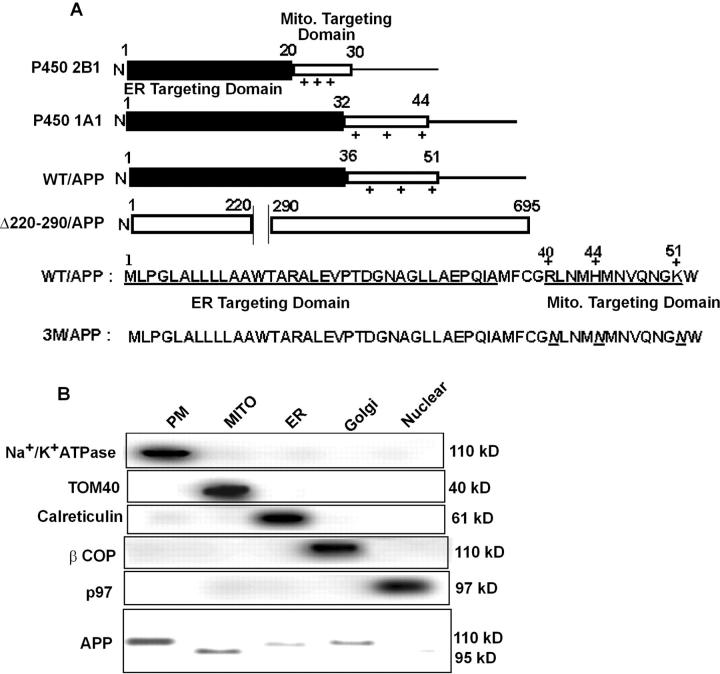
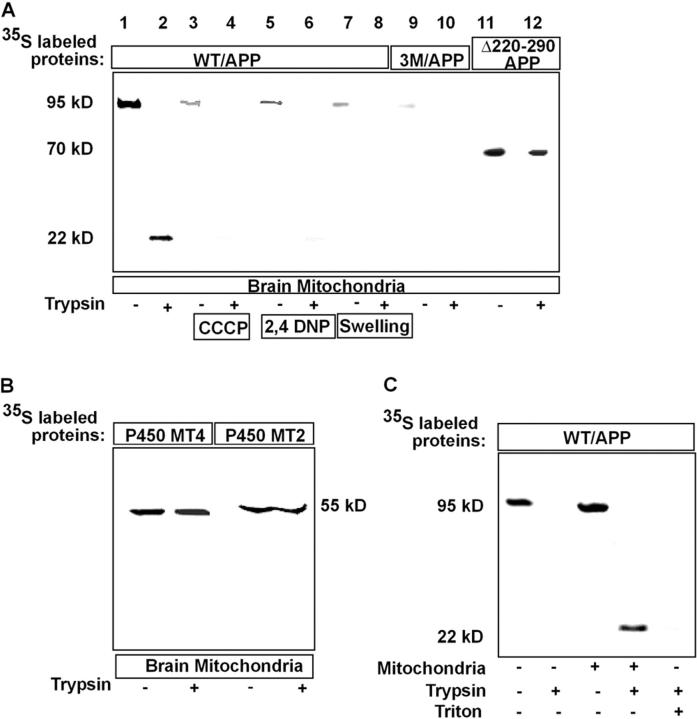
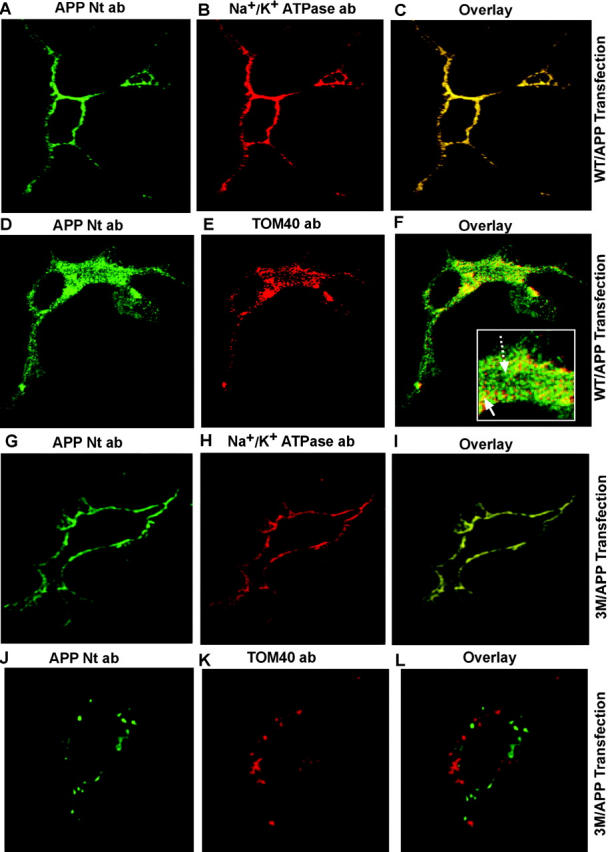
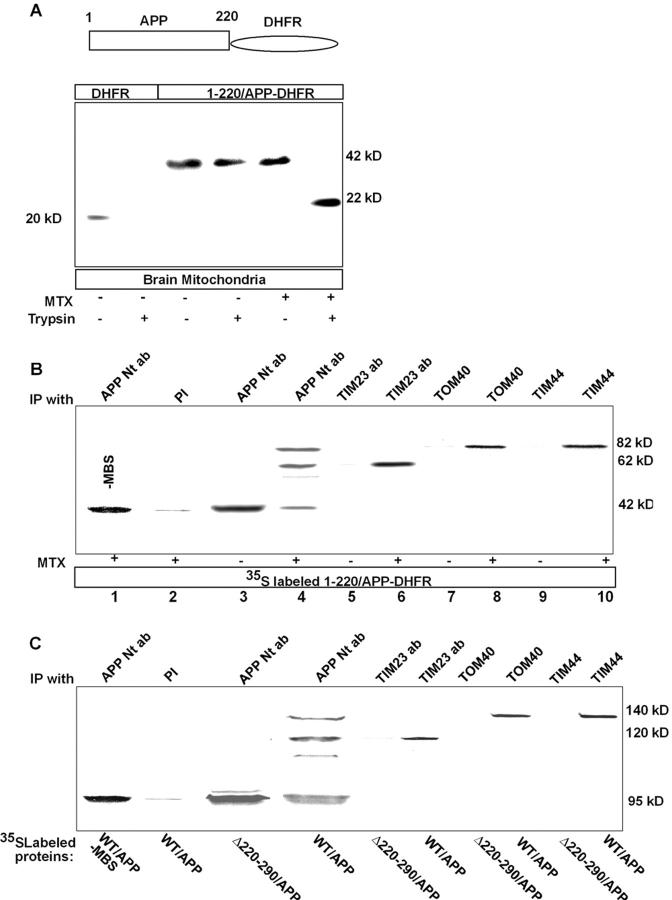
Alzheimer's amyloid precursor protein 695 (APP) is a plasma membrane protein, which is known to be the source of the toxic amyloid beta (Abeta) peptide associated with the pathogenesis of Alzheimer's disease (AD). Here we demonstrate that by virtue of its chimeric NH2-terminal signal, APP is also targeted to mitochondria of cortical neuronal cells and select regions of the brain of a transgenic mouse model for AD. The positively charged residues at 40, 44, and 51 of APP are critical components of the mitochondrial-targeting signal. Chemical cross-linking together with immunoelectron microscopy show that the mitochondrial APP exists in NH2-terminal inside transmembrane orientation and in contact with mitochondrial translocase proteins. Mutational studies show that the acidic domain, which spans sequence 220-290 of APP, causes the transmembrane arrest with the COOH-terminal 73-kD portion of the protein facing the cytoplasmic side. Accumulation of full-length APP in the mitochondrial compartment in a transmembrane-arrested form, but not lacking the acidic domain, caused mitochondrial dysfunction and impaired energy metabolism. These results show, for the first time, that APP is targeted to neuronal mitochondria under some physiological and pathological conditions.
Overview
The claims and statistics of this paper haven’t been checked yet.
Run the check — free, no account needed. It reads the open-access text and checks the sources it cites.
Integrity signals
Registry
Cites
Statistics
Figures
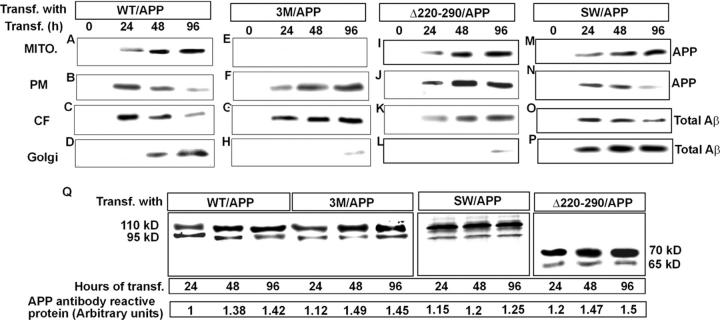
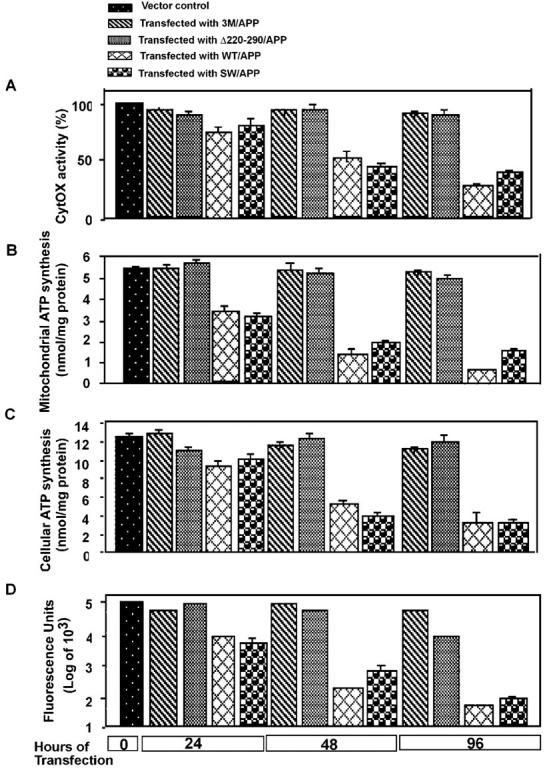
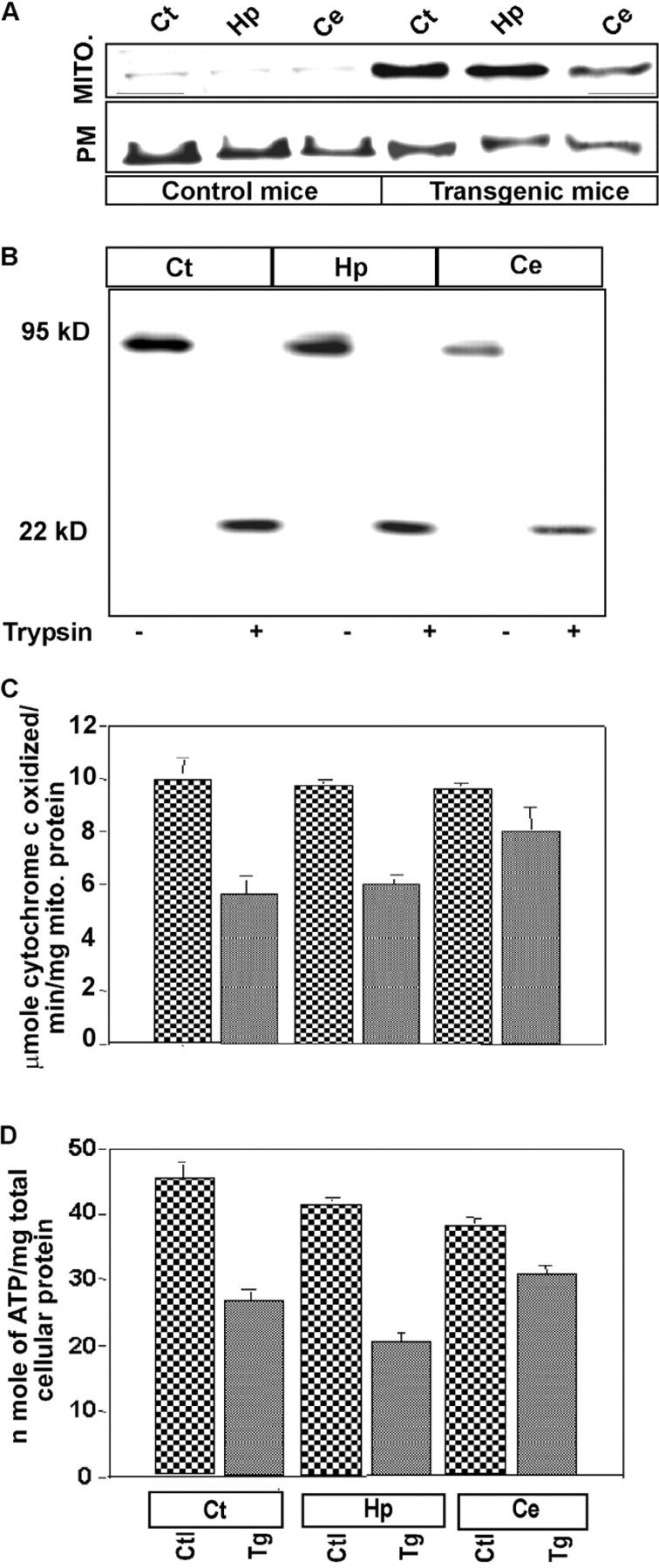
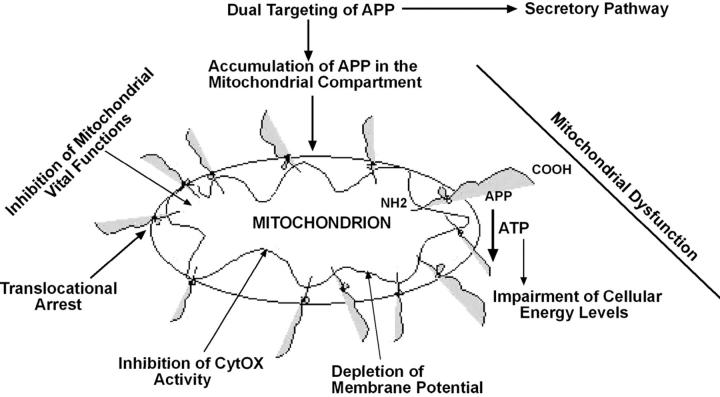
Verification
Claims the paper makes
The claims and statistics of this paper haven’t been checked yet.
Run the check — free, no account needed. It reads the open-access text and checks the sources it cites.
Claims other papers make about this one
Each is checked against this paper’s own text: does it say what the citing paper says it does?
The cited source says what the claim attributes to it.
In the citing paper
“We generated a mutant APP that does not localize to the mitochondria by deleting the mitochondrial targeting domain (residues 40–51) (42). We then compared the protection against mitophagy in Jurkat cells expressing either WT-APP or the mutant (Mut)-APP, which showed decreased localization to the mitochondria of the Jurkat cells than the WT-APP (Figure 3G, H).”
From Alzheimer's Disease–Associated Amyloid-β Precursor Protein Prevents Aging Stress–Induced Mitophagy and Fumarate Depletion to Improve Antitumor Immunity (2025) · cites this paper as [42]
In the citing paper
“accumulating data certainly do suggest APP and Aβ, as well as the entire γ-secretase complex, physically associate with mitochondria and can effect changes in mitochondrial function [58-67].”
From The Alzheimer’s disease mitochondrial cascade hypothesis: progress and perspectives (2014) · cites this paper as [61]
Self-check
Percentages, sums and reported differences re-computed from the paper’s own numbers.
The self-check needs the paper’s full text.
Citations
Cites
Translating cell biology into therapeutic advances in Alzheimer's disease
Selkoe, D. J. (1999) · Nature · doi:10.1038/399a023 · Cited by 1,166
Mitochondrial Dysfunction in Neurodegenerative Diseases
Johri, A., & Beal, M. F. (2012) · The Journal of Pharmacology and Experimental Therapeutics · doi:10.1124/jpet.112.192138 · Cited by 806
Binding of a specific ligand inhibits import of a purified precursor protein into mitochondria
Eilers, M., & Schatz, G. (1986) · Nature · doi:10.1038/322228a0 · Cited by 725
Mitochondrial dysfunction in neurodegenerative diseases
Beal, M. F. (1998) · Biochimica et Biophysica Acta (BBA) - Bioenergetics · doi:10.1016/s0005-2728(98)00114-5 · Cited by 611
Cytochrome oxidase deficiency in Alzheimer’s disease
Parker, W. D., Filley, C. M., & Parks, J. K. (1990) · Neurology · doi:10.1212/wnl.40.8.1302 · Cited by 598 · cited 1×
“…$8.00 The Journal of Cell Biology, Volume 161, Number 1, April 14, 2003 41–54 http://www.jcb.org/cgi/doi/10.1083/jcb.200207030 JCB Article 41 Mitochondrial targeting and a novel transmembrane arrest of Alzheimer’s amyloid precursor protein impairs mitochondrial function in neuronal cells”
BackgroundInfluentialMUTANT GENES IN FAMILIAL ALZHEIMER'S DISEASE AND TRANSGENIC MODELS
Price, D. L., & Sisodia, S. S. (1998) · Annual Review of Neuroscience · doi:10.1146/annurev.neuro.21.1.479 · Cited by 581
γ-Secretase, notch, Aβ and alzheimer's disease: Where do the presenilins fit in?
Sisodia, S. S., & St George-Hyslop, P. H. (2002) · Nature Reviews Neuroscience · doi:10.1038/nrn785 · Cited by 512
Regulation of APP cleavage by α‐, β‐ and γ‐secretases
Nunan, J., & Small, D. H. (2000) · FEBS Letters · doi:10.1016/s0014-5793(00)02076-7 · Cited by 509
A selective defect of cytochrome c oxidase is present in brain of Alzheimer disease patients
Maurer, I. (2000) · Neurobiology of Aging · doi:10.1016/s0197-4580(00)00112-3 · Cited by 475
Selkoe (1999) · doi:10.1038/19866 · Cited by 468
Research works printed but not linked: 1
- 1996, Int. J. Dev. Neurosci., 14, 61
Cited by
Sorted by citations
Mitochondrial Dysfunction and Oxidative Stress in Neurodegenerative Diseases
Lin, M. T., & Beal, M. F. (2006) · Nature · doi:10.1038/nature05292 · Cited by 6,455
Wallace, D. C. (2005) · Annual Review of Genetics · doi:10.1146/annurev.genet.39.110304.095751 · Cited by 3,185
Amyloid Beta: Structure, Biology and Structure-Based Therapeutic Development
Chen, G.-F., Xu, T.-H., Yan, Y., Zhou, Y.-R., Jiang, Y., Melcher, K., & Xu, H. E. (2017) · Acta Pharmacologica Sinica · doi:10.1038/aps.2017.28 · Cited by 1,965
Oxidative stress, mitochondrial damage and neurodegenerative diseases.
Guo, C., Sun, L., Chen, X., & Zhang, D. (2013) · PubMed · doi:10.3969/j.issn.1673-5374.2013.21.009 · Cited by 1,371
Mitochondria dysfunction in the pathogenesis of Alzheimer’s disease: Recent advances.
Wang, W., Zhao, F., Ma, X., Perry, G., & Zhu, X. (2020) · Molecular Neurodegeneration · doi:10.1186/s13024-020-00376-6 · Cited by 1,274
Manczak, M., Anekonda, T. S., Henson, E., Park, B. S., Quinn, J., & Reddy, P. H. (2006) · Human Molecular Genetics · doi:10.1093/hmg/ddl066 · Cited by 1,104
Devi, L., Raghavendran, V., Prabhu, B. M., Avadhani, N. G., & Anandatheerthavarada, H. K. (2008) · Journal of Biological Chemistry · doi:10.1074/jbc.m710012200 · Cited by 1,127
Autophagy and apoptosis dysfunction in neurodegenerative disorders
Ghavami, S., Shojaei, S., Yeganeh, B., Ande, S. R., Jangamreddy, J. R., Mehrpour, M., Christoffersson, J., Chaabane, W., Moghadam, A. R., Kashani, H. H., et al. (2014) · Progress in Neurobiology · doi:10.1016/j.pneurobio.2013.10.004 · Cited by 1,039
Review Article: Genetics of Alzheimer Disease
Bekris, L. M., Yu, C.-E., Bird, T. D., & Tsuang, D. W. (2010) · Journal of Geriatric Psychiatry and Neurology · doi:10.1177/0891988710383571 · Cited by 1,029
Reddy, P. H., & Beal, M. F. (2008) · Trends in Molecular Medicine · doi:10.1016/j.molmed.2007.12.002 · Cited by 975
Mitochondria take center stage in aging and neurodegeneration
Beal, M. F. (2005) · Annals of Neurology · doi:10.1002/ana.20624 · Cited by 957
Mitochondria and Mitochondrial Cascades in Alzheimer’s disease
Swerdlow, R. H. (2018) · Journal of Alzheimer’s Disease · doi:10.3233/jad-170585 · Cited by 850
Devi, L., Prabhu, B. M., Galati, D. F., Avadhani, N. G., & Anandatheerthavarada, H. K. (2006) · The Journal of Neuroscience · doi:10.1523/jneurosci.1469-06.2006 · Cited by 792
Mitochondria, oxidative stress and neurodegeneration
Federico, A., Cardaioli, E., Pozzo, P. D., Formichi, P., Gallus, G. N., & Radi, E. (2012) · Journal of the Neurological Sciences · doi:10.1016/j.jns.2012.05.030 · Cited by 790
The Alzheimer’s disease mitochondrial cascade hypothesis: progress and perspectives
Swerdlow, R. H., Burns, J. M., & Khan, S. M. (2014) · Biochimica et Biophysica Acta (BBA) - Molecular Basis of Disease · doi:10.1016/j.bbadis.2013.09.010 · Cited by 786
“To this end, accumulating data certainly do suggest APP and Aβ, as well as the entire γ-secretase complex, physically associate with mitochondria and can effect changes in mitochondrial function [58-67].”
BackgroundA “mitochondrial cascade hypothesis” for sporadic Alzheimer’s disease
Swerdlow, R. H., & Khan, S. M. (2004) · Medical Hypotheses · doi:10.1016/j.mehy.2003.12.045 · Cited by 758
Mitochondrial dysfunction is a trigger of Alzheimer's disease pathophysiology
Moreira, P. I., Carvalho, C., Zhu, X., Smith, M. A., & Perry, G. (2010) · Biochimica et Biophysica Acta (BBA) - Molecular Basis of Disease · doi:10.1016/j.bbadis.2009.10.006 · Cited by 734
Molecular pathways to neurodegeneration
Bossy-Wetzel, E., Schwarzenbacher, R., & Lipton, S. A. (2004) · Nature Medicine · doi:10.1038/nm1067 · Cited by 740
Mitochondrial Aβ: a potential focal point for neuronal metabolic dysfunction in Alzheimer's disease
Caspersen, C., Wang, N., Yao, J., Sosunov, A., Chen, X., Lustbader, J. W., Xu, H. W., Stern, D., McKhann, G., & Du Yan, S. (2005) · The FASEB Journal · doi:10.1096/fj.05-3735fje · Cited by 738
Mitochondria in health and disease: perspectives on a new mitochondrial biology
Duchen, M. R. (2004) · Molecular Aspects of Medicine · doi:10.1016/j.mam.2004.03.001 · Cited by 747
Hansson Petersen, C. A., Alikhani, N., Behbahani, H., Wiehager, B., Pavlov, P. F., Alafuzoff, I., Leinonen, V., Ito, A., Winblad, B., Glaser, E., et al. (2008) · Proceedings of the National Academy of Sciences · doi:10.1073/pnas.0806192105 · Cited by 693
Reactive Oxygen Species in the Regulation of Synaptic Plasticity and Memory
Massaad, C. A., & Klann, E. (2011) · Antioxidants & Redox Signaling · doi:10.1089/ars.2010.3208 · Cited by 635
Abramov, A. Y., Canevari, L., & Duchen, M. R. (2004) · The Journal of Neuroscience · doi:10.1523/jneurosci.4042-03.2004 · Cited by 587
The Alzheimer’s Disease Mitochondrial Cascade Hypothesis
Swerdlow, R. H., Burns, J. M., & Khan, S. M. (2010) · Journal of Alzheimer s Disease · doi:10.3233/jad-2010-100339 · Cited by 562
“An increasing number of studies report APP and Aβ associate with mitochondria [75,76,77, 78,79,80,81,82].”
BackgroundImpaired mitochondrial biogenesis contributes to mitochondrial dysfunction in Alzheimer’s disease
Sheng, B., Wang, X., Su, B., Lee, H., Casadesús, G., Perry, G. L., & Zhu, X. (2011) · Journal of Neurochemistry · doi:10.1111/j.1471-4159.2011.07581.x · Cited by 545
Mitochondrial Disorders in the Nervous System
DiMauro, S., & Schon, E. A. (2008) · Annual Review of Neuroscience · doi:10.1146/annurev.neuro.30.051606.094302 · Cited by 541
How does diabetes accelerate Alzheimer disease pathology?
Sims-Robinson, C., Kim, B., Rosko, A., & Feldman, E. L. (2010) · Nature Reviews Neurology · doi:10.1038/nrneurol.2010.130 · Cited by 492
Kozłowski, H., Janicka-Kłos, A., Brasuń, J., Gaggelli, E., Valensin, D., & Valensin, G. (2009) · Coordination Chemistry Reviews · doi:10.1016/j.ccr.2009.05.011 · Cited by 481
Proteomic and functional analyses reveal a mitochondrial dysfunction in P301L tau transgenic mice
David, D. C., Hauptmann, S., Scherping, I., Schuessel, K., Keil, U., Rizzu, P., Ravid, R., Dröse, S., Brandt, U., Müller, W. E., et al. (2005) · Journal of Biological Chemistry · doi:10.1074/jbc.m500356200 · Cited by 447
de Paula, V. D. J. R., Radanovic, M., Diniz, B. S., & Forlenza, O. V. (2012) · Sub-cellular biochemistry/Subcellular biochemistry · doi:10.1007/978-94-007-5416-4_14 · Cited by 466
McManus, M. J., Murphy, M. P., & Franklin, J. L. (2011) · The Journal of Neuroscience · doi:10.1523/jneurosci.0552-11.2011 · Cited by 432
Perez Ortiz, J. M., & Swerdlow, R. H. (2019) · British Journal of Pharmacology · doi:10.1111/bph.14585 · Cited by 426
Mitochondrial Diseases of the Brain
Chaturvedi, R. K., & Beal, M. F. (2013) · Free Radical Biology and Medicine · doi:10.1016/j.freeradbiomed.2013.03.018 · Cited by 426
A TOMM40 variable-length polymorphism predicts the age of late-onset Alzheimer's disease
Roses, A. D., Lutz, M. W., Amrine‐Madsen, H., Saunders, A. M., Crenshaw, D. G., Sundseth, S. S., Huentelman, M. J., Welsh-Bohmer, K. A., & Reiman, E. M. (2009) · The Pharmacogenomics Journal · doi:10.1038/tpj.2009.69 · Cited by 391
Pathogenesis, diagnostics, and therapeutics for Alzheimer's disease: Breaking the memory barrier
Tryphena, K. P., Shukla, R., Khatri, D. K., & Vora, L. K. (2024) · Ageing Research Reviews · doi:10.1016/j.arr.2024.102481 · Cited by 438
Monzio Compagnoni, G., Di Fonzo, A., Corti, S., Comi, G. P., Bresolin, N., & Masliah, E. (2020) · Molecular Neurobiology · doi:10.1007/s12035-020-01926-1 · Cited by 378
Reddy, P. H. (2005) · Journal of Neurochemistry · doi:10.1111/j.1471-4159.2005.03530.x · Cited by 367
Nuclear export of proteins and drug resistance in cancer
Turner, J. G., Dawson, J. L., & Sullivan, D. M. (2011) · Biochemical Pharmacology · doi:10.1016/j.bcp.2011.12.016 · Cited by 353
Resveratrol—A boon for treating Alzheimer's disease?
Anekonda, T. S. (2006) · Brain Research Reviews · doi:10.1016/j.brainresrev.2006.04.004 · Cited by 343
β-Amyloid: the key peptide in the pathogenesis of Alzheimer’s disease
Sun, X., Chen, W., & Wang, Y. (2015) · Frontiers in Pharmacology · doi:10.3389/fphar.2015.00221 · Cited by 340
Copper-Dependent Inhibition of Human Cytochrome c Oxidase by a Dimeric Conformer of Amyloid-β1-42
Crouch, P. J., Blake, R., Duce, J. A., Ciccotosto, G. D., Li, Q.-X., Barnham, K. J., Curtain, C. C., Cherny, R. A., Cappai, R., Dyrks, T., et al. (2005) · The Journal of Neuroscience · doi:10.1523/jneurosci.4276-04.2005 · Cited by 327
Mitochondria, calcium and cell death: A deadly triad in neurodegeneration
Celsi, F., Pizzo, P., Brini, M., Leo, S., Fotino, C., Pinton, P., & Rizzuto, R. (2009) · Biochimica et Biophysica Acta (BBA) - Bioenergetics · doi:10.1016/j.bbabio.2009.02.021 · Cited by 335
The mitochondrial serine protease HtrA2/Omi: an overview
Walle, L. V., Lamkanfi, M., & Vandenabeele, P. (2008) · Cell Death and Differentiation · doi:10.1038/sj.cdd.4402291 · Cited by 331
Amyloid‐Beta Interaction with Mitochondria
Pagani, L., & Eckert, A. (2011) · International Journal of Alzheimer’s Disease · doi:10.4061/2011/925050 · Cited by 309
Mitochondrial Approaches for Neuroprotection
Chaturvedi, R. K., & Beal, M. F. (2008) · Annals of the New York Academy of Sciences · doi:10.1196/annals.1427.027 · Cited by 294
Reddy, P. H., Yin, X., Mańczak, M., Kumar, S., Pradeepkiran, J. A., Vijayan, M., & Reddy, A. P. (2018) · Human Molecular Genetics · doi:10.1093/hmg/ddy154 · Cited by 292
RAGE-mediated signaling contributes to intraneuronal transport of amyloid-β and neuronal dysfunction
Takuma, K., Fang, F., Zhang, W., Yan, S., Fukuzaki, E., Du, H., Sosunov, A., McKhann, G., Funatsu, Y., Nakamichi, N., et al. (2009) · Proceedings of the National Academy of Sciences · doi:10.1073/pnas.0905686106 · Cited by 290
Are mitochondria critical in the pathogenesis of Alzheimer's disease?
Reddy, P. H., & Beal, M. F. (2005) · Brain Research Reviews · doi:10.1016/j.brainresrev.2005.03.004 · Cited by 294
Marzia Perluigi, A., Domenico, F. D., & Butterfield, D. A. (2023) · Physiological Reviews · doi:10.1152/physrev.00030.2022 · Cited by 322
Amyloid β-induced Changes in Nitric Oxide Production and Mitochondrial Activity Lead to Apoptosis
Keil, U., Bonert, A., Marques, C. A., Scherping, I., Weyermann, J., Strosznajder, J. B., Müller-Spahn, F., Haass, C., Czech, C., Pradier, L., et al. (2004) · Journal of Biological Chemistry · doi:10.1074/jbc.m405600200 · Cited by 287
Beal, M. F. (2004) · Journal of Bioenergetics and Biomembranes · doi:10.1023/b:jobb.0000041772.74810.92 · Cited by 277
Mitochondrial Aspects of Synaptic Dysfunction in Alzheimer’s Disease
Cai, Q., & Tammineni, P. (2016) · Journal of Alzheimer s Disease · doi:10.3233/jad-160726 · Cited by 281
Umeda, T., Tomiyama, T., Sakama, N., Tanaka, S., Lambert, M. P., Klein, W. L., & Mori, H. (2011) · Journal of Neuroscience Research · doi:10.1002/jnr.22640 · Cited by 270
Amyloid beta, mitochondrial structural and functional dynamics in Alzheimer's disease
Reddy, P. H. (2009) · Experimental Neurology · doi:10.1016/j.expneurol.2009.03.042 · Cited by 266
Nicastrin, Presenilin, APH-1, and PEN-2 Form Active γ-Secretase Complexes in Mitochondria
Hansson, C. A., Frykman, S., Farmery, M. R., Tjernberg, L. O., Nilsberth, C., Pursglove, S. E., Ito, A., Winblad, B., Cowburn, R. F., Thyberg, J., et al. (2004) · Journal of Biological Chemistry · doi:10.1074/jbc.m404500200 · Cited by 256
Esposito, L., Raber, J., Kekonius, L., Yan, F., Yu, G.-Q., Bien-Ly, N., Puoliväli, J., Scearce-Levie, K., Masliah, E., & Mucke, L. (2006) · The Journal of Neuroscience · doi:10.1523/jneurosci.0482-06.2006 · Cited by 254
Amyloid-β as a Modulator of Synaptic Plasticity
Parihar, M. S., & Brewer, G. J. (2010) · Journal of Alzheimer s Disease · doi:10.3233/jad-2010-101020 · Cited by 264
Müller, W. E., Eckert, A., Kurz, C., Eckert, G. P., & Leuner, K. (2010) · Molecular Neurobiology · doi:10.1007/s12035-010-8141-5 · Cited by 243
Mechanisms of Aβ mediated neurodegeneration in Alzheimer's disease
Crouch, P. J., Harding, S.-M. E., White, A. R., Camakaris, J., Bush, A. I., & Masters, C. L. (2007) · The International Journal of Biochemistry & Cell Biology · doi:10.1016/j.biocel.2007.07.013 · Cited by 254
Mitochondrial dysfunction in neurodegenerative diseases and cancer
de Moura, M. B., Santana‐Santos, L., & Houten, B. V. (2010) · Environmental and Molecular Mutagenesis · doi:10.1002/em.20575 · Cited by 247
Reddy, P. H., Mańczak, M., Mao, P., Calkins, M. J., Reddy, A. P., & Shirendeb, U. P. (2010) · Journal of Alzheimer s Disease · doi:10.3233/jad-2010-100504 · Cited by 247
Bossers, K., Wirz, K. T. S., Meerhoff, G. F., Essing, A. H. W., van Dongen, J. W., Houba, P., Kruse, C. G., Verhaagen, J., & Swaab, D. F. (2010) · Brain · doi:10.1093/brain/awq258 · Cited by 230
Pathogenesis of Alzheimer's disease.
Swerdlow, R. H. (2007) · PubMed · Cited by 242
Mitochondria as Potential Targets in Alzheimer Disease Therapy: An Update
Cenini, G., & Voos, W. (2019) · Frontiers in Pharmacology · doi:10.3389/fphar.2019.00902 · Cited by 257
A key role for MAM in mediating mitochondrial dysfunction in Alzheimer disease
Area-Gomez, E., de Groof, A., Bonilla, E., Montesinos, J., Tanji, K., Boldogh, I., Pon, L., & Schon, E. A. (2018) · Cell Death & Disease · doi:10.1038/s41419-017-0215-0 · Cited by 235
Cha, M.-Y., Han, S.-H., Son, S. M., Hong, H., Choi, Y.-J., Byun, J., & Mook‐Jung, I. (2012) · PLoS ONE · doi:10.1371/journal.pone.0034929 · Cited by 236
Mitochondrial Medicine for Aging and Neurodegenerative Diseases
Reddy, P. H. (2008) · NeuroMolecular Medicine · doi:10.1007/s12017-008-8044-z · Cited by 230
Mechanisms of mitochondrial dysfunction and energy deficiency in Alzheimer’s disease
Atamna, H., & Frey, W. H. (2007) · Mitochondrion · doi:10.1016/j.mito.2007.06.001 · Cited by 278
Mitochondrial trafficking and morphology in healthy and injured neurons
Chang, D. T. W., & Reynolds, I. J. (2006) · Progress in Neurobiology · doi:10.1016/j.pneurobio.2006.09.003 · Cited by 235
Aleardi, A. M., Benard, G., Augereau, O., Malgat, M., Talbot, J.-C., Mazat, J., Letellier, T., Dachary-Prigent, J., Solaini, G., & Rossignol, R. (2005) · Journal of Bioenergetics and Biomembranes · doi:10.1007/s10863-005-6631-3 · Cited by 227
Massaad, C. A., Washington, T. M., Pautler, R. G., & Klann, E. (2009) · Proceedings of the National Academy of Sciences · doi:10.1073/pnas.0902714106 · Cited by 223
Amyloid precursor protein processing and bioenergetics
Wilkins, H., & Swerdlow, R. H. (2016) · Brain Research Bulletin · doi:10.1016/j.brainresbull.2016.08.009 · Cited by 228
Toxicity of Amyloid β Peptide: Tales of Calcium, Mitochondria, and Oxidative Stress
Canevari, L., Abramov, A. Y., & Duchen, M. R. (2004) · Neurochemical Research · doi:10.1023/b:nere.0000014834.06405.af · Cited by 227
Alterations in Mitochondrial Quality Control in Alzheimer’s Disease
Cai, Q., & Tammineni, P. (2016) · Frontiers in Cellular Neuroscience · doi:10.3389/fncel.2016.00024 · Cited by 226
Ferreiro, E. B., Oliveira, C. R., & Pereira, C. (2008) · Neurobiology of Disease · doi:10.1016/j.nbd.2008.02.003 · Cited by 218
Dysfunctional Mitochondria and Mitophagy as Drivers of Alzheimer’s Disease Pathogenesis
Chakravorty, A., Jetto, C. T., & Manjithaya, R. R. (2019) · Frontiers in Aging Neuroscience · doi:10.3389/fnagi.2019.00311 · Cited by 225
Mitochondrial Dysfunction: Different Routes to Alzheimer’s Disease Therapy
Picone, P., Nuzzo, D., Caruana, L., Scafidi, V., & Carlo, M. D. (2014) · Oxidative Medicine and Cellular Longevity · doi:10.1155/2014/780179 · Cited by 219
The Alzheimer's disease mitochondrial cascade hypothesis: an update
Swerdlow, R. H., & Khan, S. M. (2009) · Experimental Neurology · doi:10.1016/j.expneurol.2009.01.011 · Cited by 206
The disulfide relay system of mitochondria is connected to the respiratory chain
Bihlmaier, K., Mesecke, N., Terziyska, N., Bien, M., Hell, K., & Herrmann, J. M. (2007) · The Journal of Cell Biology · doi:10.1083/jcb.200707123 · Cited by 210
Mitochondrial and Cell Death Mechanisms in Neurodegenerative Diseases
Martin, L. J. (2010) · Pharmaceuticals · doi:10.3390/ph3040839 · Cited by 213
Swerdlow, R. H. (2011) · Antioxidants and Redox Signaling · doi:10.1089/ars.2011.4149 · Cited by 206
Mitochondria in Neurodegeneration
Lezi, E., & Swerdlow, R. H. (2011) · Advances in experimental medicine and biology · doi:10.1007/978-94-007-2869-1_12 · Cited by 213
Oxidized cholesterol as the driving force behind the development of Alzheimer’s disease
Gamba, P., Testa, G., Gargiulo, S., Staurenghi, E., Poli, G., & Leonarduzzi, G. (2015) · Frontiers in Aging Neuroscience · doi:10.3389/fnagi.2015.00119 · Cited by 180
Degradation of the Amyloid β-Protein by the Novel Mitochondrial Peptidasome, PreP
Falkevall, A., Alikhani, N., Bhushan, S., Pavlov, P. F., Busch, K., Johnson, K. A., Eneqvist, T., Tjernberg, L. O., Ankarcrona, M., & Glaser, E. G. (2006) · Journal of Biological Chemistry · doi:10.1074/jbc.m602532200 · Cited by 202
Molecular links between Alzheimer’s disease and diabetes mellitus
Yang, Y., & Song, W. (2013) · Neuroscience · doi:10.1016/j.neuroscience.2013.07.009 · Cited by 211
Ferreiro, E. B., Resende, R., Costa, R. O., Oliveira, C. R., & Pereira, C. (2006) · Neurobiology of Disease · doi:10.1016/j.nbd.2006.05.011 · Cited by 201
Correia, S. C., Santos, R. X., Carvalho, C., Cardoso, S., Candeias, E., Santos, M. S., Oliveira, C. R., & Moreira, P. I. (2012) · Brain Research · doi:10.1016/j.brainres.2011.12.063 · Cited by 202
Mitochondrial Dysfunction: The First Domino in Brain Aging and Alzheimer's Disease?
Leuner, K., Hauptmann, S., Abdel-Kader, R. M., Scherping, I., Keil, U., Strosznajder, J. B., Eckert, A., & Müller, W. E. (2007) · Antioxidants and Redox Signaling · doi:10.1089/ars.2007.1763 · Cited by 195
Dragicevic, N., Mamcarz, M. B., Zhu, Y., Buzzeo, R. W., Tan, J., Arendash, G. W., & Bradshaw, P. C. (2010) · Journal of Alzheimer s Disease · doi:10.3233/jad-2010-100342 · Cited by 197
Apoptosis-inducing factor: A matter of neuron life and death
Krantic, S. M., Mechawar, N., Reix, S., & Quirion, R. (2007) · Progress in Neurobiology · doi:10.1016/j.pneurobio.2006.12.002 · Cited by 189
Gralle, M., & Ferreira, S. T. (2007) · Progress in Neurobiology · doi:10.1016/j.pneurobio.2007.02.001 · Cited by 202
Bourdenx, M., Koulakiotis, N. S., Sanoudou, D., Bézard, E., Dehay, B., & Tsarbopoulos, A. (2015) · Progress in Neurobiology · doi:10.1016/j.pneurobio.2015.07.003 · Cited by 202
Brain mitochondrial dysfunction as a link between Alzheimer's disease and diabetes
Moreira, P. I., Santos, M. S., Seiça, R. M. F., & Oliveira, C. R. (2007) · Journal of the Neurological Sciences · doi:10.1016/j.jns.2007.01.017 · Cited by 190
Mitochondrial Dysfunction in Aging and Alzheimer's Disease: Strategies to Protect Neurons
Reddy, P. H. (2007) · Antioxidants and Redox Signaling · doi:10.1089/ars.2007.1754 · Cited by 188
Reddy, P. H. (2009) · CNS Spectrums · doi:10.1017/s1092852900024901 · Cited by 192
Fukui, H., Diaz, F., Garcia, S., & Moraes, C. T. (2007) · Proceedings of the National Academy of Sciences · doi:10.1073/pnas.0705738104 · Cited by 185
Dragicevic, N., Copes, N., O’Neal-Moffitt, G., Jin, J., Buzzeo, R. W., Mamcarz, M., Tan, J., Cao, C., Olcese, J., Arendash, G. W., et al. (2011) · Journal of Pineal Research · doi:10.1111/j.1600-079x.2011.00864.x · Cited by 185
Role of Mitochondrial Amyloid-β in Alzheimer's Disease
Chen, J. X., & Yan, S. S. (2010) · Journal of Alzheimer s Disease · doi:10.3233/jad-2010-100357 · Cited by 188
The role of mitochondria in inherited neurodegenerative diseases
Kwong, J. Q., Beal, M. F., & Manfredi, G. (2006) · Journal of Neurochemistry · doi:10.1111/j.1471-4159.2006.03990.x · Cited by 180
Oxidative Stress and Down Syndrome: A Route toward Alzheimer-Like Dementia
Marzia Perluigi, A., & Butterfield, D. A. (2011) · Current Gerontology and Geriatrics Research · doi:10.1155/2012/724904 · Cited by 190
Metadata
- Authors
- Anandatheerthavarada, H. K., Biswas, G., Robin, M.-A., & Avadhani, N. G.
- Affiliations
- University of Pennsylvania (US)
- ORCID
- Avadhani, Narayan G.
- Venue
- The Journal of Cell Biology
- Publisher
- Rockefeller University Press
- Published
- 2003-04-14
- Volume
- 161
- Issue
- 1
- Pages
- 41-54
- ISSN
- 0021-9525 (ISSN-L)
- 1540-8140
- PMC
- PMC2172865
- OpenAlex
- W2132988134
- Cited by
- 571
- References
- 47
- Citations by year
- 2026: 11 · 2025: 12 · 2024: 18 · 2023: 22 · 2022: 16 · 2021: 24 · 2020: 23 · 2019: 18 · 2018: 35 · 2017: 14 · 2016: 27 · 2015: 24 · 2014: 17 · 2013: 24 · 2012: 31
- FWCI
- 13.60
- Type
- journal article
- Language
- en
- Open access
- green
- www.ncbi.nlm.nih.gov
- Licence
- cc-by-nc-sa
- Locations
- The Journal of Cell Biology (publishedVersion)
- PubMed Central (publishedVersion, cc-by-nc-sa)
- PubMed (publishedVersion)
- Funders
- National Institutes of Health (1r01gm034483-01a3)
- National Institute of General Medical Sciences (GM34483)
- Topics
- Life Sciences › Neuroscience › Cellular and Molecular Neuroscience › Alzheimer's disease research and treatments
- Life Sciences › Biochemistry, Genetics and Molecular Biology › Molecular Biology › Mitochondrial Function and Pathology
- Life Sciences › Biochemistry, Genetics and Molecular Biology › Cell Biology › Autophagy in Disease and Therapy
- Keywords
- amyloid precursor protein, APP695, mitochondrial targeting, mitochondrial dysfunction, energy metabolism, Alzheimer's disease, amyloid-beta, mitochondrial translocase, acidic domain, cortical neurons, transgenic mouse model, crosslinking, immunoelectron microscopy
- MeSH terms
- Alzheimer Disease, Amino Acid Sequence, Animals, Brain, Cell Compartmentation, Cells, Cultured, Disease Models, Animal, Energy Metabolism, Humans, Immunohistochemistry, Intracellular Membranes, Mice, Transgenic, Microscopy, Electron, Mitochondria, Molecular Conformation, Neurons, Recombinant Fusion Proteins, Amyloid beta-Protein Precursor, Protein Structure, Tertiary, Protein Transport, Cytochrome-c Oxidase Deficiency, Mice
About these checks
Registry, retraction, Cites and statistics results are computed, not judged, with one exception: a printed reference that no index lists is read once by a model before it counts as a citation error. Claims are extracted by a model and kept only when their quote appears verbatim in the text; each cited source is then checked, with a model’s help, for whether it says what the claim relies on. Those verdicts can be wrong — read the claim’s quote and the cited source before relying on one.
Statistics and arithmetic are recomputed, not judged.
Confidence bands are shown only for fields calibrated on our annotated test set. None is calibrated yet, so no band is shown.
What counts as a claim ›How we measure confidence ›How we check this ›
Are you an author, or do you see a problem with this page? Request a review
