

The DOI matches its Crossref record; 128 of the 131 references it cites were found in a registry or an index; 1 of the 148 sources its claims cite were checked for support.
Fueling thought: Management of glycolysis and oxidative phosphorylation in neuronal metabolism
Open accessAbstract
The brain’s energy demands are remarkable both in their intensity and in their moment-to-moment dynamic range. This perspective considers the evidence for Warburg-like aerobic glycolysis during the transient metabolic response of the brain to acute activation, and it particularly addresses the cellular mechanisms that underlie this metabolic response. The temporary uncoupling between glycolysis and oxidative phosphorylation led to the proposal of an astrocyte-to-neuron lactate shuttle whereby during stimulation, lactate produced by increased glycolysis in astrocytes is taken up by neurons as their primary energy source. However, direct evidence for this idea is lacking, and evidence rather supports that neurons have the capacity to increase their own glycolysis in response to stimulation; furthermore, neurons may export rather than import lactate in response to stimulation. The possible cellular mechanisms for invoking metabolic resupply of energy in neurons are also discussed, in particular the roles of feedback signaling via adenosine diphosphate and feedforward signaling by calcium ions.
Overview
AI snapshot
Written from the paper’s full text.
TL;DR
Yellen reviews how neuronal metabolism acutely balances glycolysis and oxidative phosphorylation during stimulation, arguing that activated neurons increase glucose rather than lactate utilization and that the classical astrocyte-to-neuron lactate shuttle does not provide the primary neuronal energy source during activation. It also outlines unresolved mechanisms controlling glycolysis/oxphos coupling, including ADP/Ca²⁺ signaling and cytosolic NADH redox.
Key findings
- In resting brain, glycolysis and oxphos are near matched: the oxygen–glucose index is ∼5.5 in gray matter versus an ideal stoichiometry of 6, and the brain is ∼2% of body mass but consumes ∼20% of the daily energy budget; neurons account for most (∼80–90%) of the brain’s energy demand.
- During stimulation, there is transient uncoupling: local blood flow increases by ∼50% with commensurate local glucose consumption, but oxygen utilization increases much less, on the order of 5%, reducing OGI to ∼5; lactate rises locally and can be exported with strong stimuli such as seizures.
- Evidence favors direct neuronal glycolysis during activation rather than lactate uptake: stimulation increased glucose metabolism over twofold while lactate metabolism declined in cultured neurons, and neuronal cytosolic NADH/NAD⁺ transients in hippocampal/cortical neurons rise for ∼2–3 min and are blocked by glycolysis inhibition but not by MCT or LDH blockade, suggesting neurons normally export lactate when stimulated.
- The ANLS hypothesis remains controversial: astrocytes are more glycolytic at rest with higher cytosolic NADH/NAD⁺, and lactate shuttling may support resting or ischemic conditions, but the paper states there is no affirmative evidence that astrocyte-to-neuron lactate movement occurs during ordinary brain activation.
Methods
- Review/perspective article, not primary research; it synthesizes biochemical, imaging, genetic, and metabolic literature.
- Discusses studies using cultured neurons and astrocytes, acute brain slices, in vivo rodent cortex/hippocampus, retina, white matter, Drosophila, and human PET/MRS/functional imaging.
- Main analysis is a narrative synthesis organized around two questions: the balance between glycolysis and oxphos in brain cells, and the cellular mechanisms responsible for acute control of glycolysis and oxphos in neurons.
Limitations
- The paper states many caveats for OGI measurements: pentose phosphate pathway and glycogen synthesis can consume glucose without oxygen; stress, stimulus strength, region definition, lactate oxidation in surrounding tissue, and β-adrenergic blockade can affect results; ANLS evidence often argues feasibility rather than direct occurrence.
- The paper states that understanding of oxphos-related mitochondrial signals and the trigger for neuronal glycolysis is incomplete; mechanisms may vary with stimulation degree, glucose/O₂ conditions, and cell type, and more compartment- and cell-specific studies are needed.
- Evident from the text: as a review, it presents no systematic search or meta-analysis and no new primary data; conclusions depend on cited studies with differing preparations and limitations, including glucose analogues with different transport properties, MCT blockers that also affect mitochondrial pyruvate uptake, and culture conditions that may alter metabolic behavior.
Model-written summary. Check it against the paper before relying on it.
Integrity signals
Registry
Cites
Statistics
Figures
Verification
Claims the paper makes
104 Not checked yet · 48 Own interpretation · 6 No basis given · 1 Partly supported · 1 Sources not found · accuracy not yet measured
The cited sources support only part of this claim — read each source’s verdict below.
In the paper
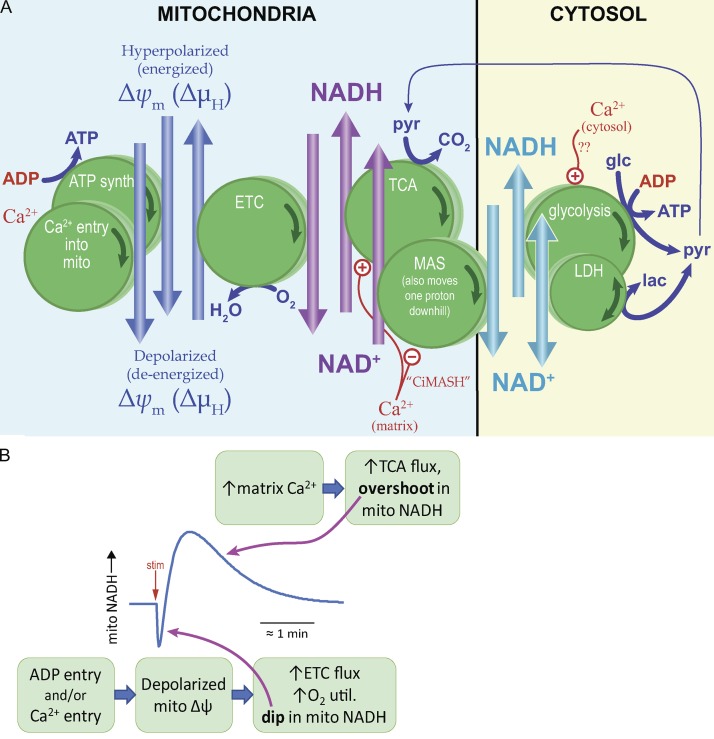
“Upon stimulation of neurons in a brain slice (Kann et al., 2003; Shuttleworth et al., 2003; Kasischke et al., 2004) or individual dissociated neurons (Duchen, 1992), the NAD(P)H signal has a stereotyped response: a rapid dip in fluorescence occurring within the first few seconds that yields in ∼10 s to a prolonged increase above baseline (overshoot) lasting for 2–3 min (Fig. 2 B).”
§ Fueling thought: Management of glycolysis and oxidative phosphorylation in neuronal metabolism > What are the contributors to controlling the balance between glycolysis and oxphos? > ADP and Ca2+ can both depolarize mitochondria
What the sources say
- Not checked yetcites Kann et al., 2003 source
- Partly supportedcites Shuttleworth et al., 2003 sourceExperimental — accuracy not yet measured
Split into 2 atoms — 0 confirmed, 2 partially supported, 0 disputed, 0 misattributed, 0 unverifiable. Expand the claim to see per-atom verdicts.
- Not checked yetcites Kasischke et al., 2004 source
plaindirect- Asserted: passes — The authors put it forward as true.
- Checkable: passes — It can be checked against evidence.
- Load-bearing: unclear — It is unclear whether the paper’s conclusions depend on it.
- Based: passes — The paper gives a reason why it holds.
None of the sources cited for this claim have been checked yet.
In the paper
“the focus will be on neurons which comprise most (∼80–90%) of the energy demand of the brain (Attwell and Laughlin, 2001; Yu et al., 2017).”
§ Fueling thought: Management of glycolysis and oxidative phosphorylation in neuronal metabolism > Definitions > Oxidative phosphorylation (oxphos)
What the sources say
- Not checked yetcites Attwell and Laughlin, 2001 source
- Not checked yetcites Yu et al., 2017
plain- Asserted: passes — The authors put it forward as true.
- Checkable: passes — It can be checked against evidence.
- Load-bearing: passes — The paper’s conclusions depend on it.
- Based: passes — The paper gives a reason why it holds.
None of the sources cited for this claim have been checked yet.
In the paper
“For instance, if the unstimulated tissue in the periphery or even within the stimulated region is capable of oxidative metabolism of the excess lactate (Madsen et al., 1999; Gandhi et al., 2009), then including the contribution from this tissue will normalize the OGI.”
§ Fueling thought: Management of glycolysis and oxidative phosphorylation in neuronal metabolism > What is the balance in brain between glycolysis and oxphos? > Transient uncoupling between glycolysis and oxphos during brain activation
What the sources say
plaindirect- Asserted: passes — The authors put it forward as true.
- Checkable: passes — It can be checked against evidence.
- Load-bearing: unclear — It is unclear whether the paper’s conclusions depend on it.
- Based: passes — The paper gives a reason why it holds.
A conclusion the paper draws from its own results — it cites no other source for it, so there is none to check. The quote shows it is in the paper.
In the paper
“Second, OGI may be exaggerated or suppressed depending on how the stimulated region is defined.”
§ Fueling thought: Management of glycolysis and oxidative phosphorylation in neuronal metabolism > What is the balance in brain between glycolysis and oxphos? > Transient uncoupling between glycolysis and oxphos during brain activation
hedgedconditional- Asserted: passes — The authors put it forward as true.
- Checkable: passes — It can be checked against evidence.
- Load-bearing: unclear — It is unclear whether the paper’s conclusions depend on it.
- Based: passes — The paper gives a reason why it holds.
In the paper
“This is supported by measurements showing local elevation of brain lactate levels with stimulation (Korf and de Boer, 1990; Hu and Wilson, 1997; Mazuel et al., 2017) and even lactate export from the brain (e.g., Duffy et al., 1975, with stronger stimuli such as epileptic seizures).”
§ Fueling thought: Management of glycolysis and oxidative phosphorylation in neuronal metabolism > What is the balance in brain between glycolysis and oxphos? > Transient uncoupling between glycolysis and oxphos during brain activation
What the sources say
- Not checked yetcites Duffy et al., 1975 source
plaindirect- Asserted: passes — The authors put it forward as true.
- Checkable: passes — It can be checked against evidence.
- Load-bearing: unclear — It is unclear whether the paper’s conclusions depend on it.
- Based: passes — The paper gives a reason why it holds.
A conclusion the paper draws from its own results — it cites no other source for it, so there is none to check. The quote shows it is in the paper.
In the paper
“Experiments in support of the ANLS often argue for its feasibility rather than providing direct evidence that it occurs.”
§ Fueling thought: Management of glycolysis and oxidative phosphorylation in neuronal metabolism > What is the balance in brain between glycolysis and oxphos? > The source of neuronal energy during activation
plain- Asserted: passes — The authors put it forward as true.
- Checkable: passes — It can be checked against evidence.
- Load-bearing: unclear — It is unclear whether the paper’s conclusions depend on it.
- Based: passes — The paper gives a reason why it holds.
None of the sources cited for this claim have been checked yet.
In the paper
“This is supported by measurements showing local elevation of brain lactate levels with stimulation (Korf and de Boer, 1990; Hu and Wilson, 1997; Mazuel et al., 2017) and even lactate export from the brain (e.g., Duffy et al., 1975, with stronger stimuli such as epileptic seizures).”
§ Fueling thought: Management of glycolysis and oxidative phosphorylation in neuronal metabolism > What is the balance in brain between glycolysis and oxphos? > Transient uncoupling between glycolysis and oxphos during brain activation
What the sources say
- Not checked yetcites Korf and de Boer, 1990
- Not checked yetcites Hu and Wilson, 1997
- Not checked yetcites Mazuel et al., 2017 source
plaindirect- Asserted: passes — The authors put it forward as true.
- Checkable: passes — It can be checked against evidence.
- Load-bearing: passes — The paper’s conclusions depend on it.
- Based: passes — The paper gives a reason why it holds.
In the paper
“Finally, consistent with stress contributing to the reduced OGI, β-adrenergic blockade by propranolol reduces or eliminates the stimulation-induced change in OGI (Dienel and Cruz, 2016).”
§ Fueling thought: Management of glycolysis and oxidative phosphorylation in neuronal metabolism > What is the balance in brain between glycolysis and oxphos? > Transient uncoupling between glycolysis and oxphos during brain activation
What the sources say
- Not checked yetcites Dienel and Cruz, 2016
plaindirect- Asserted: passes — The authors put it forward as true.
- Checkable: passes — It can be checked against evidence.
- Load-bearing: unclear — It is unclear whether the paper’s conclusions depend on it.
- Based: passes — The paper gives a reason why it holds.
In the paper
“In contrast, the brain’s tricarboxylic acid (TCA) cycle is fed mainly by metabolites derived from circulating glucose, with relatively little intermediate mixing of lactate from the circulation.”
§ Fueling thought: Management of glycolysis and oxidative phosphorylation in neuronal metabolism > What is the balance in brain between glycolysis and oxphos? > Near-stoichiometric utilization of oxygen and glucose in resting brain
What the sources say
- Not checked yetcites Hui et al., 2017 source
plain- Asserted: passes — The authors put it forward as true.
- Checkable: passes — It can be checked against evidence.
- Load-bearing: passes — The paper’s conclusions depend on it.
- Based: passes — The paper gives a reason why it holds.
None of the sources cited for this claim have been checked yet.
In the paper
“The best estimates for the oxygen–glucose index (OGI; OGI = CMRO2/CMRglc) in the resting brain is around ∼5.5 in gray matter (Clarke and Sokoloff, 1994; Hyder et al., 2013), very close to the ideal stoichiometry of 6.”
§ Fueling thought: Management of glycolysis and oxidative phosphorylation in neuronal metabolism > What is the balance in brain between glycolysis and oxphos? > Near-stoichiometric utilization of oxygen and glucose in resting brain
What the sources say
- Not checked yetcites Clarke and Sokoloff, 1994
- Not checked yetcites Hyder et al., 2013 source
hedged- Asserted: passes — The authors put it forward as true.
- Checkable: passes — It can be checked against evidence.
- Load-bearing: passes — The paper’s conclusions depend on it.
- Based: passes — The paper gives a reason why it holds.
- Probably not a substantial claim. 18
- It may state two separate claims as one. 38
None of the sources cited for this claim have been checked yet.
In the paper
“The ANLS hypothesis has been quite controversial for a long time (Chih et al., 2001; Gjedde and Marrett, 2001; Hertz, 2004; Mangia et al., 2011; Dienel, 2012, 2017; Bak and Walls, 2018; Barros and Weber, 2018; see also Dienel [2017] for strong arguments against ANLS at the tissue level).”
§ Fueling thought: Management of glycolysis and oxidative phosphorylation in neuronal metabolism > What is the balance in brain between glycolysis and oxphos? > The source of neuronal energy during activation
What the sources say
plain- Asserted: passes — The authors put it forward as true.
- Checkable: passes — It can be checked against evidence.
- Load-bearing: fails — The paper’s conclusions may not depend on it.
- Based: passes — The paper gives a reason why it holds.
Probably not a substantial claim. The paper’s conclusions may not depend on it.
In the paper
“Recent work on in vivo metabolite fluxes argues that uncoupling between glycolysis and oxidative metabolism is the norm for all organs except the brain (Hui et al., 2017).”
§ Fueling thought: Management of glycolysis and oxidative phosphorylation in neuronal metabolism > What is the balance in brain between glycolysis and oxphos? > Near-stoichiometric utilization of oxygen and glucose in resting brain
What the sources say
- Not checked yetcites Hui et al., 2017 source
hedged- Asserted: passes — The authors put it forward as true.
- Checkable: passes — It can be checked against evidence.
- Load-bearing: passes — The paper’s conclusions depend on it.
- Based: passes — The paper gives a reason why it holds.
Probably not a substantial claim.
A conclusion the paper draws from its own results — it cites no other source for it, so there is none to check. The quote shows it is in the paper.
In the paper
“But the increase in oxygen utilization is much less, on the order of 5%, indicating that the additional glucose consumption is not stoichiometrically matched by oxygen but rather that glucose is metabolized nonoxidatively by glycolysis without oxphos.”
§ Fueling thought: Management of glycolysis and oxidative phosphorylation in neuronal metabolism > What is the balance in brain between glycolysis and oxphos? > Transient uncoupling between glycolysis and oxphos during brain activation
hedgeddirect- Asserted: passes — The authors put it forward as true.
- Checkable: passes — It can be checked against evidence.
- Load-bearing: passes — The paper’s conclusions depend on it.
- Based: passes — The paper gives a reason why it holds.
It may state two separate claims as one.
None of the sources cited for this claim have been checked yet.
In the paper
“Nevertheless, multiple studies exhibit net production of lactate from glucose in activated brain, arguing that glycolysis without oxphos constitutes a component of the reduced OGI (Korf and de Boer, 1990; Hu and Wilson, 1997; Mazuel et al., 2017).”
§ Fueling thought: Management of glycolysis and oxidative phosphorylation in neuronal metabolism > What is the balance in brain between glycolysis and oxphos? > Transient uncoupling between glycolysis and oxphos during brain activation
What the sources say
- Not checked yetcites Korf and de Boer, 1990
- Not checked yetcites Hu and Wilson, 1997
- Not checked yetcites Mazuel et al., 2017 source
plaindirect- Asserted: passes — The authors put it forward as true.
- Checkable: passes — It can be checked against evidence.
- Load-bearing: passes — The paper’s conclusions depend on it.
- Based: passes — The paper gives a reason why it holds.
It may state two separate claims as one.
In the paper
“Other organs readily export the lactate they derive from glucose metabolism, and they readily use circulating lactate for their oxidative metabolism.”
§ Fueling thought: Management of glycolysis and oxidative phosphorylation in neuronal metabolism > What is the balance in brain between glycolysis and oxphos? > Near-stoichiometric utilization of oxygen and glucose in resting brain
What the sources say
- Not checked yetcites Hui et al., 2017 source
plain- Asserted: passes — The authors put it forward as true.
- Checkable: passes — It can be checked against evidence.
- Load-bearing: passes — The paper’s conclusions depend on it.
- Based: passes — The paper gives a reason why it holds.
It may state two separate claims as one.
None of the sources cited for this claim have been checked yet.
In the paper
“With regional stimulation (e.g., of the visual cortex by a flashing checkerboard pattern), positron electron tomography studies reveal that local blood flow increases by ∼50% and that there is a commensurate increase in local glucose consumption.”
§ Fueling thought: Management of glycolysis and oxidative phosphorylation in neuronal metabolism > What is the balance in brain between glycolysis and oxphos? > Transient uncoupling between glycolysis and oxphos during brain activation
plaindirect- Asserted: passes — The authors put it forward as true.
- Checkable: passes — It can be checked against evidence.
- Load-bearing: passes — The paper’s conclusions depend on it.
- Based: passes — The paper gives a reason why it holds.
It may state two separate claims as one.
The paper states this without a source or data behind it here, so there is nothing to check it against. The quote shows it is in the paper.
In the paper
“The expected stoichiometry for this process is that six O2 molecules will be consumed for each glucose molecule.”
§ Fueling thought: Management of glycolysis and oxidative phosphorylation in neuronal metabolism > What is the balance in brain between glycolysis and oxphos? > Near-stoichiometric utilization of oxygen and glucose in resting brain
plain- Asserted: passes — The authors put it forward as true.
- Checkable: passes — It can be checked against evidence.
- Load-bearing: passes — The paper’s conclusions depend on it.
- Based: fails — The paper may give no reason why it holds.
Probably not a substantial claim. The paper may give no reason why it holds.
The paper states this without a source or data behind it here, so there is nothing to check it against. The quote shows it is in the paper.
In the paper
“First, in addition to glycolysis, the pentose phosphate pathway and glycogen synthesis can both result in net utilization of glucose without molecular oxygen, thereby reducing the OGI.”
§ Fueling thought: Management of glycolysis and oxidative phosphorylation in neuronal metabolism > What is the balance in brain between glycolysis and oxphos? > Transient uncoupling between glycolysis and oxphos during brain activation
plaindirect- Asserted: passes — The authors put it forward as true.
- Checkable: passes — It can be checked against evidence.
- Load-bearing: passes — The paper’s conclusions depend on it.
- Based: passes — The paper gives a reason why it holds.
It may state two separate claims as one.
None of the sources cited for this claim have been checked yet.
In the paper
“For instance, the initial demonstration of feasibility was from separately cultured astrocytes and neurons: glutamate application to cultured astrocytes triggers [3H]-2-deoxyglucose (2-DG; [3H]–2-DG) uptake and lactate release, and neurons are capable of consuming lactate as a fuel (Magistretti et al., 1993; Pellerin and Magistretti, 1994).”
§ Fueling thought: Management of glycolysis and oxidative phosphorylation in neuronal metabolism > What is the balance in brain between glycolysis and oxphos? > The source of neuronal energy during activation
What the sources say
- Not checked yetcites Magistretti et al., 1993 source
- Not checked yetcites Pellerin and Magistretti, 1994
plaindirect- Asserted: passes — The authors put it forward as true.
- Checkable: passes — It can be checked against evidence.
- Load-bearing: passes — The paper’s conclusions depend on it.
- Based: passes — The paper gives a reason why it holds.
It may state two separate claims as one.
None of the sources cited for this claim have been checked yet.
In the paper
“Two recent in vivo studies monitored glucose analogue accumulation in somatosensory cortex during whisker stimulation; they used two different glucose analogues and obtained opposite results.”
§ Fueling thought: Management of glycolysis and oxidative phosphorylation in neuronal metabolism > What is the balance in brain between glycolysis and oxphos? > The source of neuronal energy during activation
What the sources say
plaincorrelational- Asserted: passes — The authors put it forward as true.
- Checkable: passes — It can be checked against evidence.
- Load-bearing: passes — The paper’s conclusions depend on it.
- Based: passes — The paper gives a reason why it holds.
It may state two separate claims as one.
- The authors state this as an assumption: Uptake of 2-DG-based tracers and, in some cases, their phosphorylation by hexokinase parallels glucose utilization.
None of the sources cited for this claim have been checked yet.
In the paper
“Glycolysis is one of the most ancient metabolic pathways with a wide variety of allosteric and phosphorylation-based controls (Mulukutla et al., 2010; Icard and Lincet, 2012).”
§ Fueling thought: Management of glycolysis and oxidative phosphorylation in neuronal metabolism > What is the balance in brain between glycolysis and oxphos? > The source of neuronal energy during activation
What the sources say
- Not checked yetcites Mulukutla et al., 2010 source
- Not checked yetcites Icard and Lincet, 2012
plain- Asserted: passes — The authors put it forward as true.
- Checkable: passes — It can be checked against evidence.
- Load-bearing: fails — The paper’s conclusions may not depend on it.
- Based: passes — The paper gives a reason why it holds.
Probably not a substantial claim. The paper’s conclusions may not depend on it. It may state two separate claims as one.
In the paper
“Importantly, this study was done with unstimulated neurons and did not test whether the preferential use of lactate was enhanced by activation as proposed (Bouzier-Sore et al., 2006).”
§ Fueling thought: Management of glycolysis and oxidative phosphorylation in neuronal metabolism > What is the balance in brain between glycolysis and oxphos? > The source of neuronal energy during activation
What the sources say
- Not checked yetcites Bouzier-Sore et al., 2006 source
plain- Asserted: passes — The authors put it forward as true.
- Checkable: passes — It can be checked against evidence.
- Load-bearing: passes — The paper’s conclusions depend on it.
- Based: passes — The paper gives a reason why it holds.
It may state two separate claims as one.
None of the sources cited for this claim have been checked yet.
In the paper
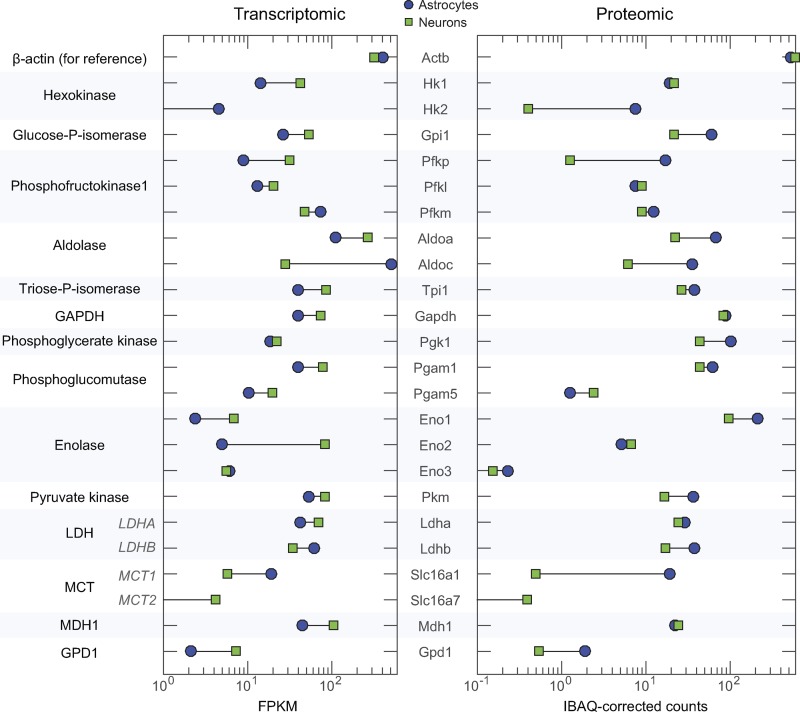
“In vitro glycolytic behavior can change with choice of culture media (Sünwoldt et al., 2017) and astrocyte coculture (Mamczur et al., 2015), but gene expression data from acutely dissociated brain cells indicate that neurons are well equipped for glycolysis, with higher levels of mRNA expression than astrocytes for most glycolytic enzymes (Fig. 1, left).”
§ Fueling thought: Management of glycolysis and oxidative phosphorylation in neuronal metabolism > What is the balance in brain between glycolysis and oxphos? > The source of neuronal energy during activation
What the sources say
plainconditional- Asserted: passes — The authors put it forward as true.
- Checkable: passes — It can be checked against evidence.
- Load-bearing: unclear — It is unclear whether the paper’s conclusions depend on it.
- Based: passes — The paper gives a reason why it holds.
It may state two separate claims as one.
In the paper
“although again, the transporters are both equilibrative, and transcriptomics show comparable levels of MCT1 in both neurons and astrocytes (Fig. 1, left; the proteomics data on the right show an overall deficit of MCTs in neurons, but they are from cells in culture).”
§ Fueling thought: Management of glycolysis and oxidative phosphorylation in neuronal metabolism > What is the balance in brain between glycolysis and oxphos? > The source of neuronal energy during activation
What the sources say
- Not checked yetcites Fig. 1
plain- Asserted: passes — The authors put it forward as true.
- Checkable: passes — It can be checked against evidence.
- Load-bearing: unclear — It is unclear whether the paper’s conclusions depend on it.
- Based: passes — The paper gives a reason why it holds.
It may state two separate claims as one.
In the paper
“Similar experiments using graded neuronal stimulation by NMDA, which produced moderate submicromolar increases in cytosolic calcium, showed that activation increased glucose metabolism over twofold, whereas lactate metabolism declined, consistent with a role for extracellular lactate supporting basal metabolism in neurons but not stimulated activity (Bak et al., 2009).”
§ Fueling thought: Management of glycolysis and oxidative phosphorylation in neuronal metabolism > What is the balance in brain between glycolysis and oxphos? > The source of neuronal energy during activation
What the sources say
- Not checked yetcites Bak et al., 2009 source
hedged- Asserted: passes — The authors put it forward as true.
- Checkable: passes — It can be checked against evidence.
- Load-bearing: passes — The paper’s conclusions depend on it.
- Based: passes — The paper gives a reason why it holds.
It may state two separate claims as one.
In the paper
“Similar experiments using graded neuronal stimulation by NMDA, which produced moderate submicromolar increases in cytosolic calcium, showed that activation increased glucose metabolism over twofold, whereas lactate metabolism declined, consistent with a role for extracellular lactate supporting basal metabolism in neurons but not stimulated activity (Bak et al., 2009).”
§ Fueling thought: Management of glycolysis and oxidative phosphorylation in neuronal metabolism > What is the balance in brain between glycolysis and oxphos? > The source of neuronal energy during activation
What the sources say
- Not checked yetcites Bak et al., 2009 source
plaindirect- Asserted: passes — The authors put it forward as true.
- Checkable: passes — It can be checked against evidence.
- Load-bearing: passes — The paper’s conclusions depend on it.
- Based: passes — The paper gives a reason why it holds.
It may state two separate claims as one.
None of the sources cited for this claim have been checked yet.
In the paper
“Although one specific enzyme for up-regulation of glycolysis, the bifunctional 6-phosphofructo-2-kinase/fructose-2,6-bisphosphatase (isoform PFKFB3), is posttranslationally down-regulated in neurons and thus cannot participate in glycolytic stimulation (Herrero-Mendez et al., 2009; Bolaños, 2016), this rules out only one of many mechanisms that neurons can use to stimulate glycolysis.”
§ Fueling thought: Management of glycolysis and oxidative phosphorylation in neuronal metabolism > What is the balance in brain between glycolysis and oxphos? > The source of neuronal energy during activation
What the sources say
plaindirect- Asserted: passes — The authors put it forward as true.
- Checkable: passes — It can be checked against evidence.
- Load-bearing: unclear — It is unclear whether the paper’s conclusions depend on it.
- Based: passes — The paper gives a reason why it holds.
It may state two separate claims as one.
In the paper
“The NADHCYT transients decrease with inhibition of glycolysis but not of the MAS, indicating that increased neuronal glycolysis upon stimulation is the main cause of the NADHCYT transients.”
§ Fueling thought: Management of glycolysis and oxidative phosphorylation in neuronal metabolism > What is the balance in brain between glycolysis and oxphos? > The source of neuronal energy during activation
What the sources say
- Not checked yetcites Díaz-García et al., 2017 source
hedgeddirect- Asserted: passes — The authors put it forward as true.
- Checkable: passes — It can be checked against evidence.
- Load-bearing: passes — The paper’s conclusions depend on it.
- Based: passes — The paper gives a reason why it holds.
It may state two separate claims as one.
The paper states this without a source or data behind it here, so there is nothing to check it against. The quote shows it is in the paper.
In the paper
“However, neighboring cells are capable of maintaining very different NADHCYT redox, and at rest, the high NADHCYT of astrocytes does not drive neighboring neurons to a correspondingly high level.”
§ Fueling thought: Management of glycolysis and oxidative phosphorylation in neuronal metabolism > What is the balance in brain between glycolysis and oxphos? > The source of neuronal energy during activation
plain- Asserted: passes — The authors put it forward as true.
- Checkable: passes — It can be checked against evidence.
- Load-bearing: unclear — It is unclear whether the paper’s conclusions depend on it.
- Based: unclear — It is unclear why the paper says it holds.
It may state two separate claims as one.
In the paper
“A deliberate review of the evidence with an optimized model concluded that neurons provide about a third of their own lactate/pyruvate during brain activation, with the other two thirds from astrocytes (Hyder et al., 2006).”
§ Fueling thought: Management of glycolysis and oxidative phosphorylation in neuronal metabolism > What is the balance in brain between glycolysis and oxphos? > The source of neuronal energy during activation
What the sources say
- Not checked yetcites Hyder et al., 2006 source
plain- Asserted: passes — The authors put it forward as true.
- Checkable: passes — It can be checked against evidence.
- Load-bearing: passes — The paper’s conclusions depend on it.
- Based: passes — The paper gives a reason why it holds.
Probably not a substantial claim.
- The authors state this as an assumption: Acetate is metabolized only in glia.
A conclusion the paper draws from its own results — it cites no other source for it, so there is none to check. The quote shows it is in the paper.
In the paper
“In essence, the very active malate–aspartate shuttle (MAS) of neurons could transfer reducing equivalents not only from neuronal glycolysis but also from astrocytic glycolysis.”
§ Fueling thought: Management of glycolysis and oxidative phosphorylation in neuronal metabolism > What is the balance in brain between glycolysis and oxphos? > The source of neuronal energy during activation
hedgedconditional- Asserted: passes — The authors put it forward as true.
- Checkable: passes — It can be checked against evidence.
- Load-bearing: fails — The paper’s conclusions may not depend on it.
- Based: fails — The paper may give no reason why it holds.
Probably not a substantial claim. The paper’s conclusions may not depend on it. The paper may give no reason why it holds.
In the paper
“In Drosophila melanogaster, glycolysis appears to be more essential in glial cells than it is in neurons; knockdown of glycolytic enzymes in neurons did not affect the viability or the general behavior of flies, whereas knockdown in glial cells produced noticeable phenotypic changes (Volkenhoff et al., 2015).”
§ Fueling thought: Management of glycolysis and oxidative phosphorylation in neuronal metabolism > What is the balance in brain between glycolysis and oxphos? > The source of neuronal energy during activation
What the sources say
- Not checked yetcites Volkenhoff et al., 2015 source
hedged- Asserted: passes — The authors put it forward as true.
- Checkable: passes — It can be checked against evidence.
- Load-bearing: passes — The paper’s conclusions depend on it.
- Based: passes — The paper gives a reason why it holds.
It may state two separate claims as one.
None of the sources cited for this claim have been checked yet.
In the paper
“the opposite appears to be true: photoreceptors perform aerobic glycolysis and export lactate, which is then oxidized by Müller cells (Hurley et al., 2015; Kanow et al., 2017).”
§ Fueling thought: Management of glycolysis and oxidative phosphorylation in neuronal metabolism > What is the balance in brain between glycolysis and oxphos? > The source of neuronal energy during activation
What the sources say
hedgeddirect- Asserted: passes — The authors put it forward as true.
- Checkable: passes — It can be checked against evidence.
- Load-bearing: passes — The paper’s conclusions depend on it.
- Based: passes — The paper gives a reason why it holds.
It may state two separate claims as one.
In the paper
“Baseline accumulation of the analogue into astrocytes and neurons was similar; upon whisker stimulation in anesthetized rats, uptake into both cell types tended to increase, though only significantly for astrocytes (Chuquet et al., 2010).”
§ Fueling thought: Management of glycolysis and oxidative phosphorylation in neuronal metabolism > What is the balance in brain between glycolysis and oxphos? > The source of neuronal energy during activation
What the sources say
- Not checked yetcites Chuquet et al., 2010 source
plaindirect- Asserted: passes — The authors put it forward as true.
- Checkable: passes — It can be checked against evidence.
- Load-bearing: unclear — It is unclear whether the paper’s conclusions depend on it.
- Based: passes — The paper gives a reason why it holds.
It may state two separate claims as one.
- The authors state this as an assumption: Uptake of 2-DG-based tracers and, in some cases, their phosphorylation by hexokinase parallels glucose utilization.
A conclusion the paper draws from its own results — it cites no other source for it, so there is none to check. The quote shows it is in the paper.
In the paper
“The acute metabolic response to neuronal activity has not been studied.”
§ Fueling thought: Management of glycolysis and oxidative phosphorylation in neuronal metabolism > What is the balance in brain between glycolysis and oxphos? > The source of neuronal energy during activation
plain- Asserted: passes — The authors put it forward as true.
- Checkable: passes — It can be checked against evidence.
- Load-bearing: fails — The paper’s conclusions may not depend on it.
- Based: fails — The paper may give no reason why it holds.
Probably not a substantial claim. The paper’s conclusions may not depend on it. The paper may give no reason why it holds.
A conclusion the paper draws from its own results — it cites no other source for it, so there is none to check. The quote shows it is in the paper.
In the paper
“At present, there are no data to indicate whether there is significant redox exchange between astrocytes and neurons through lactate–pyruvate exchange.”
§ Fueling thought: Management of glycolysis and oxidative phosphorylation in neuronal metabolism > What is the balance in brain between glycolysis and oxphos? > The source of neuronal energy during activation
hedged- Asserted: passes — The authors put it forward as true.
- Checkable: passes — It can be checked against evidence.
- Load-bearing: fails — The paper’s conclusions may not depend on it.
- Based: fails — The paper may give no reason why it holds.
Probably not a substantial claim. The paper’s conclusions may not depend on it. The paper may give no reason why it holds.
None of the sources cited for this claim have been checked yet.
In the paper
“Moderate chemical stimulation produced a strong increase in the labeling of glutamate from labeled glucose and a decrease in the incorporation of label from labeled lactate, inconsistent with significant lactate utilization by neurons during stimulation.”
§ Fueling thought: Management of glycolysis and oxidative phosphorylation in neuronal metabolism > What is the balance in brain between glycolysis and oxphos? > The source of neuronal energy during activation
What the sources say
boosteddirect- Asserted: passes — The authors put it forward as true.
- Checkable: passes — It can be checked against evidence.
- Load-bearing: passes — The paper’s conclusions depend on it.
- Based: passes — The paper gives a reason why it holds.
It may state two separate claims as one.
In the paper
“Consistent with most of the cultured cell studies, in resting brain or in quiescent brain slice astrocytes appear to be more glycolytic than neurons, with higher resting cytosolic NADH/NAD+ (NADHCYT) ratios (Mongeon et al., 2016) that predispose them to higher resting lactate/pyruvate ratios and higher resting lactate levels (Mächler et al., 2016).”
§ Fueling thought: Management of glycolysis and oxidative phosphorylation in neuronal metabolism > What is the balance in brain between glycolysis and oxphos? > The source of neuronal energy during activation
What the sources say
- Not checked yetcites Mächler et al., 2016 source
hedgeddirect- Asserted: passes — The authors put it forward as true.
- Checkable: passes — It can be checked against evidence.
- Load-bearing: passes — The paper’s conclusions depend on it.
- Based: passes — The paper gives a reason why it holds.
It may state two separate claims as one.
In the paper
“Müller cells are deficient in pyruvate kinase, the final enzyme in the glycolytic pathway, and have limited ability to convert glucose to lactate (Lindsay et al., 2014).”
§ Fueling thought: Management of glycolysis and oxidative phosphorylation in neuronal metabolism > What is the balance in brain between glycolysis and oxphos? > The source of neuronal energy during activation
What the sources say
- Not checked yetcites Lindsay et al., 2014 source
plaindirect- Asserted: passes — The authors put it forward as true.
- Checkable: passes — It can be checked against evidence.
- Load-bearing: passes — The paper’s conclusions depend on it.
- Based: passes — The paper gives a reason why it holds.
It may state two separate claims as one.
In the paper
“Furthermore, although in cultured neurons, unlabeled lactate does not diminish the increased utilization of labeled glucose with stimulation, it does reduce labeling from glucose at rest (Bak et al., 2009).”
§ Fueling thought: Management of glycolysis and oxidative phosphorylation in neuronal metabolism > What is the balance in brain between glycolysis and oxphos? > The source of neuronal energy during activation
What the sources say
- Not checked yetcites Bak et al., 2009 source
plaindirect- Asserted: passes — The authors put it forward as true.
- Checkable: passes — It can be checked against evidence.
- Load-bearing: passes — The paper’s conclusions depend on it.
- Based: passes — The paper gives a reason why it holds.
It may state two separate claims as one.
A conclusion the paper draws from its own results — it cites no other source for it, so there is none to check. The quote shows it is in the paper.
In the paper
“In neuronal cell bodies, stimulation leads to enhanced neuronal glucose metabolism,”
§ Fueling thought: Management of glycolysis and oxidative phosphorylation in neuronal metabolism > What is the balance in brain between glycolysis and oxphos? > The source of neuronal energy during activation
plaindirect- Asserted: passes — The authors put it forward as true.
- Checkable: passes — It can be checked against evidence.
- Load-bearing: passes — The paper’s conclusions depend on it.
- Based: fails — The paper may give no reason why it holds.
Probably not a substantial claim. The paper may give no reason why it holds.
In the paper
“But the absence of mitochondria from dendritic spines does make it questionable whether the role of MCTs, which may be inserted into spine membranes together with AMPA receptors (Bergersen et al., 2001), is to support astrocyte-to-neuron movement of lactate rather than efflux of lactate produced by aerobic glycolysis in the spines.”
§ Fueling thought: Management of glycolysis and oxidative phosphorylation in neuronal metabolism > What is the balance in brain between glycolysis and oxphos? > The source of neuronal energy during activation
What the sources say
- Not checked yetcites Bergersen et al., 2001 source
hedgedconditional- Asserted: passes — The authors put it forward as true.
- Checkable: passes — It can be checked against evidence.
- Load-bearing: passes — The paper’s conclusions depend on it.
- Based: passes — The paper gives a reason why it holds.
Probably not a substantial claim.
A conclusion the paper draws from its own results — it cites no other source for it, so there is none to check. The quote shows it is in the paper.
In the paper
“Both the increased O2 consumption and the initial NAD(P)H dip are generally agreed to reflect increased ETC activity upon mitochondrial depolarization,”
§ Fueling thought: Management of glycolysis and oxidative phosphorylation in neuronal metabolism > What are the contributors to controlling the balance between glycolysis and oxphos? > ADP and Ca2+ can both depolarize mitochondria
boosteddirect- Asserted: passes — The authors put it forward as true.
- Checkable: passes — It can be checked against evidence.
- Load-bearing: passes — The paper’s conclusions depend on it.
- Based: passes — The paper gives a reason why it holds.
Probably not a substantial claim.
A conclusion the paper draws from its own results — it cites no other source for it, so there is none to check. The quote shows it is in the paper.
In the paper
“A complication in dissecting the roles of these two avenues for metabolic regulation is that Ca2+ handling is itself metabolically expensive, so elevated [Ca2+] is usually accompanied by an elevation in ADP.”
§ Fueling thought: Management of glycolysis and oxidative phosphorylation in neuronal metabolism > What are the contributors to controlling the balance between glycolysis and oxphos?
plaincorrelational- Asserted: passes — The authors put it forward as true.
- Checkable: passes — It can be checked against evidence.
- Load-bearing: fails — The paper’s conclusions may not depend on it.
- Based: fails — The paper may give no reason why it holds.
Probably not a substantial claim. The paper’s conclusions may not depend on it. The paper may give no reason why it holds. It may state two separate claims as one.
A conclusion the paper draws from its own results — it cites no other source for it, so there is none to check. The quote shows it is in the paper.
In the paper
“Clearly, we do not have a complete understanding of the oxphos-related mitochondrial signals that result from neuronal excitation.”
§ Fueling thought: Management of glycolysis and oxidative phosphorylation in neuronal metabolism > What are the contributors to controlling the balance between glycolysis and oxphos? > ADP and Ca2+ can both depolarize mitochondria
boosted- Asserted: passes — The authors put it forward as true.
- Checkable: fails — It may be too vague to check against evidence.
- Load-bearing: passes — The paper’s conclusions depend on it.
- Based: passes — The paper gives a reason why it holds.
Probably not a substantial claim. It may be too vague to check against evidence.
A conclusion the paper draws from its own results — it cites no other source for it, so there is none to check. The quote shows it is in the paper.
In the paper
“whereas in some myelinated axons, metabolic support from glia may be essential during stimulation.”
§ Fueling thought: Management of glycolysis and oxidative phosphorylation in neuronal metabolism > What is the balance in brain between glycolysis and oxphos? > The source of neuronal energy during activation
hedgedconditional- Asserted: passes — The authors put it forward as true.
- Checkable: passes — It can be checked against evidence.
- Load-bearing: fails — The paper’s conclusions may not depend on it.
- Based: fails — The paper may give no reason why it holds.
Probably not a substantial claim. The paper’s conclusions may not depend on it. The paper may give no reason why it holds.
A conclusion the paper draws from its own results — it cites no other source for it, so there is none to check. The quote shows it is in the paper.
In the paper
“Both of these agents can regulate glycolysis and oxphos rates via multiple mechanisms.”
§ Fueling thought: Management of glycolysis and oxidative phosphorylation in neuronal metabolism > What are the contributors to controlling the balance between glycolysis and oxphos?
plaindirect- Asserted: passes — The authors put it forward as true.
- Checkable: passes — It can be checked against evidence.
- Load-bearing: passes — The paper’s conclusions depend on it.
- Based: fails — The paper may give no reason why it holds.
Probably not a substantial claim. The paper may give no reason why it holds.
In the paper
“This feedforward effect of Ca2+ would increase the rate of matrix NADH production (and thus the NAD(P)H signal) and thereby increase the supply of electrons for the ETC, leading to mitochondrial hyperpolarization (Ivannikov and Macleod, 2013).”
§ Fueling thought: Management of glycolysis and oxidative phosphorylation in neuronal metabolism > What are the contributors to controlling the balance between glycolysis and oxphos? > ADP and Ca2+ can both depolarize mitochondria
What the sources say
- Not checked yetcites Ivannikov and Macleod, 2013
hedgeddirect- Asserted: passes — The authors put it forward as true.
- Checkable: passes — It can be checked against evidence.
- Load-bearing: passes — The paper’s conclusions depend on it.
- Based: passes — The paper gives a reason why it holds.
It may state two separate claims as one.
A conclusion the paper draws from its own results — it cites no other source for it, so there is none to check. The quote shows it is in the paper.
In the paper
“The depolarization and proton movements accompanying ADP or Ca2+ entry will diminish ΔμH and allow the stalled ETC to function again, consuming O2 and matrix NADH (Fig. 2).”
§ Fueling thought: Management of glycolysis and oxidative phosphorylation in neuronal metabolism > What are the contributors to controlling the balance between glycolysis and oxphos? > ADP and Ca2+ can both depolarize mitochondria
plaindirect- Asserted: passes — The authors put it forward as true.
- Checkable: passes — It can be checked against evidence.
- Load-bearing: passes — The paper’s conclusions depend on it.
- Based: passes — The paper gives a reason why it holds.
It may state two separate claims as one.
A conclusion the paper draws from its own results — it cites no other source for it, so there is none to check. The quote shows it is in the paper.
In the paper
“However, there is no affirmative evidence that lactate movement from astrocytes to neurons occurs during the ordinary function of the brain, particularly during brain stimulation.”
§ Fueling thought: Management of glycolysis and oxidative phosphorylation in neuronal metabolism > What is the balance in brain between glycolysis and oxphos? > The source of neuronal energy during activation
plain- Asserted: passes — The authors put it forward as true.
- Checkable: passes — It can be checked against evidence.
- Load-bearing: passes — The paper’s conclusions depend on it.
- Based: fails — The paper may give no reason why it holds.
Probably not a substantial claim. The paper may give no reason why it holds.
In the paper
“However, it is hard to reconcile this with the clear finding by Shuttleworth et al. (2003) that the NAD(P)H overshoot in slices did not disappear with the prolonged elimination of extracellular Ca2+, although the mitochondrial Ca2+ transient did disappear.”
§ Fueling thought: Management of glycolysis and oxidative phosphorylation in neuronal metabolism > What are the contributors to controlling the balance between glycolysis and oxphos? > ADP and Ca2+ can both depolarize mitochondria
What the sources say
- Not checked yetcites Shuttleworth et al., 2003 source
boosted- Asserted: passes — The authors put it forward as true.
- Checkable: passes — It can be checked against evidence.
- Load-bearing: passes — The paper’s conclusions depend on it.
- Based: passes — The paper gives a reason why it holds.
It may state two separate claims as one.
A conclusion the paper draws from its own results — it cites no other source for it, so there is none to check. The quote shows it is in the paper.
In the paper
“ADP can be considered a feedback metabolic signal—energetic costs have been incurred and must be paid for—whereas Ca2+ can function as a feedforward signal to anticipate energetic costs before they are incurred.”
§ Fueling thought: Management of glycolysis and oxidative phosphorylation in neuronal metabolism > What are the contributors to controlling the balance between glycolysis and oxphos?
plaindirect- Asserted: passes — The authors put it forward as true.
- Checkable: passes — It can be checked against evidence.
- Load-bearing: passes — The paper’s conclusions depend on it.
- Based: passes — The paper gives a reason why it holds.
It may state two separate claims as one.
A conclusion the paper draws from its own results — it cites no other source for it, so there is none to check. The quote shows it is in the paper.
In the paper
“Also, for glycolysis and oxphos to run at different rates, there must be slippage or uncoupling at the interface between them: lactate-pyruvate partitioning controlled by the NADHCYT ratio.”
§ Fueling thought: Management of glycolysis and oxidative phosphorylation in neuronal metabolism > What are the contributors to controlling the balance between glycolysis and oxphos?
plaindirect- Asserted: passes — The authors put it forward as true.
- Checkable: passes — It can be checked against evidence.
- Load-bearing: passes — The paper’s conclusions depend on it.
- Based: fails — The paper may give no reason why it holds.
Probably not a substantial claim. The paper may give no reason why it holds.
None of the sources cited for this claim have been checked yet.
In the paper
“Proximally, both produce depolarization (diminution) of the mitochondrial membrane potential (Δψ) and the related mitochondrial proton driving force (ΔμH; Fig. 2 A).”
§ Fueling thought: Management of glycolysis and oxidative phosphorylation in neuronal metabolism > What are the contributors to controlling the balance between glycolysis and oxphos? > ADP and Ca2+ can both depolarize mitochondria
What the sources say
- Not checked yetcites Nicholls and Ferguson, 2002
- Not checked yetcites Salway, 2004
plaindirect- Asserted: passes — The authors put it forward as true.
- Checkable: passes — It can be checked against evidence.
- Load-bearing: passes — The paper’s conclusions depend on it.
- Based: passes — The paper gives a reason why it holds.
It may state two separate claims as one.
A conclusion the paper draws from its own results — it cites no other source for it, so there is none to check. The quote shows it is in the paper.
In the paper
“The shuttle is the primary route for moving reducing equivalents across the mitochondrial inner membrane (because NADH itself does not cross).”
§ Fueling thought: Management of glycolysis and oxidative phosphorylation in neuronal metabolism > What are the contributors to controlling the balance between glycolysis and oxphos? > Partitioning between lactate production and pyruvate oxidation depends on NADHCYT
plaindirect- Asserted: passes — The authors put it forward as true.
- Checkable: passes — It can be checked against evidence.
- Load-bearing: unclear — It is unclear whether the paper’s conclusions depend on it.
- Based: passes — The paper gives a reason why it holds.
It may state two separate claims as one.
A conclusion the paper draws from its own results — it cites no other source for it, so there is none to check. The quote shows it is in the paper.
In the paper
“Both of these effects suggest that elevated NADHCYT by itself can both affect glucose flux through glycolysis and shunt pyruvate toward lactate and away from utilization for oxphos.”
§ Fueling thought: Management of glycolysis and oxidative phosphorylation in neuronal metabolism > What are the contributors to controlling the balance between glycolysis and oxphos? > Partitioning between lactate production and pyruvate oxidation depends on NADHCYT
plaindirect- Asserted: passes — The authors put it forward as true.
- Checkable: passes — It can be checked against evidence.
- Load-bearing: passes — The paper’s conclusions depend on it.
- Based: passes — The paper gives a reason why it holds.
It may state two separate claims as one.
In the paper
“Neurons possess many mitochondria and rely chronically on them as a major source of ATP (Hall et al., 2012),”
§ Fueling thought: Management of glycolysis and oxidative phosphorylation in neuronal metabolism > Some key puzzles to solve
What the sources say
- Not checked yetcites Hall et al., 2012 source
plaindirect- Asserted: passes — The authors put it forward as true.
- Checkable: passes — It can be checked against evidence.
- Load-bearing: passes — The paper’s conclusions depend on it.
- Based: passes — The paper gives a reason why it holds.
It may state two separate claims as one.
A conclusion the paper draws from its own results — it cites no other source for it, so there is none to check. The quote shows it is in the paper.
In the paper
“the most direct evidence argues that upon neuronal stimulation, the classical ANLS hypothesis does not apply and that instead, there is an increase in neuronal glycolysis accompanied by a smaller increase in neuronal oxphos.”
§ Fueling thought: Management of glycolysis and oxidative phosphorylation in neuronal metabolism > Some key puzzles to solve
boosteddirect- Asserted: passes — The authors put it forward as true.
- Checkable: passes — It can be checked against evidence.
- Load-bearing: passes — The paper’s conclusions depend on it.
- Based: unclear — It is unclear why the paper says it holds.
It may state two separate claims as one.
A conclusion the paper draws from its own results — it cites no other source for it, so there is none to check. The quote shows it is in the paper.
In the paper
“First, glycolysis produces NADH at the GAPDH step. This NADH will accumulate in the cell (and ultimately inhibit continued glycolysis) unless it is recycled by one of two recycling routes. The first is LDH: conversion of NADH to NAD+ coordinately with production of lactate from pyruvate; this is the primary mechanism by which cells can perform glycolysis without oxphos, as it deprives mitochondria”
§ Fueling thought: Management of glycolysis and oxidative phosphorylation in neuronal metabolism > What are the contributors to controlling the balance between glycolysis and oxphos? > Partitioning between lactate production and pyruvate oxidation depends on NADHCYT
plaindirect- Asserted: passes — The authors put it forward as true.
- Checkable: passes — It can be checked against evidence.
- Load-bearing: passes — The paper’s conclusions depend on it.
- Based: passes — The paper gives a reason why it holds.
It may state two separate claims as one.
In the paper
“In dentate granule neurons, MCT inhibition led to higher peaks of NADHCYT as well as smaller dips in glucose, suggesting that the elevated NADHCYT also exerted back pressure on glycolysis, presumably on the GAPDH equilibrium (Díaz-García et al., 2017).”
§ Fueling thought: Management of glycolysis and oxidative phosphorylation in neuronal metabolism > What are the contributors to controlling the balance between glycolysis and oxphos? > Partitioning between lactate production and pyruvate oxidation depends on NADHCYT
What the sources say
- Not checked yetcites Díaz-García et al., 2017 source
hedgedconditional- Asserted: passes — The authors put it forward as true.
- Checkable: passes — It can be checked against evidence.
- Load-bearing: passes — The paper’s conclusions depend on it.
- Based: passes — The paper gives a reason why it holds.
It may state two separate claims as one.
A conclusion the paper draws from its own results — it cites no other source for it, so there is none to check. The quote shows it is in the paper.
In the paper
“The mechanisms that are engaged by neuronal excitation can vary with the degree of stimulation and with the environmental conditions of [glucose] and [O2] during experiments, which usually vary from the in vivo condition, and the mechanisms may also vary with cell type.”
§ Fueling thought: Management of glycolysis and oxidative phosphorylation in neuronal metabolism > What are the contributors to controlling the balance between glycolysis and oxphos? > ADP and Ca2+ can both depolarize mitochondria
hedgedconditional- Asserted: passes — The authors put it forward as true.
- Checkable: passes — It can be checked against evidence.
- Load-bearing: fails — The paper’s conclusions may not depend on it.
- Based: fails — The paper may give no reason why it holds.
Probably not a substantial claim. The paper’s conclusions may not depend on it. The paper may give no reason why it holds. It may state two separate claims as one.
A conclusion the paper draws from its own results — it cites no other source for it, so there is none to check. The quote shows it is in the paper.
In the paper
“Because interconversion between pyruvate and lactate by LDH requires coordinate interconversion between NADH and NAD+, and because the rate of glycolysis depends on some form of recycling of NADH to NAD+, the NADHCYT ratio is a key parameter for the uncoupling.”
§ Fueling thought: Management of glycolysis and oxidative phosphorylation in neuronal metabolism > What are the contributors to controlling the balance between glycolysis and oxphos? > Partitioning between lactate production and pyruvate oxidation depends on NADHCYT
plaindirect- Asserted: passes — The authors put it forward as true.
- Checkable: passes — It can be checked against evidence.
- Load-bearing: passes — The paper’s conclusions depend on it.
- Based: passes — The paper gives a reason why it holds.
It may state two separate claims as one.
None of the sources cited for this claim have been checked yet.
In the paper
“fast-twitch muscle, requiring the greatest acute supply of energy, tends to be far more glycolytic and to have fewer mitochondria than the slow-twitch muscle used for postural control (Crow and Kushmerick, 1982; Spriet, 1989).”
§ Fueling thought: Management of glycolysis and oxidative phosphorylation in neuronal metabolism > Some key puzzles to solve
What the sources say
- Not checked yetcites Crow and Kushmerick, 1982
- Not checked yetcites Spriet, 1989
hedgedcorrelational- Asserted: passes — The authors put it forward as true.
- Checkable: passes — It can be checked against evidence.
- Load-bearing: passes — The paper’s conclusions depend on it.
- Based: passes — The paper gives a reason why it holds.
It may state two separate claims as one.
The authors state this as an assumption.
Uptake of 2-DG-based tracers and, in some cases, their phosphorylation by hexokinase parallels glucose utilization.
“Glucose uptake by neurons and astrocytes can be monitored with tracers based on 2-DG, relying on the assumption that uptake of the tracers and (in some cases) their phosphorylation by hexokinase parallels glucose utilization.”
The authors state this as an assumption.
Acetate is metabolized only in glia.
“However, this conclusion depends on the assumption that acetate is metabolized only in glia; a recent study of acetate metabolism in brain slices showed a substantial ability of neurons to metabolize acetate directly, which calls the compartment-specific modeling into question (Rowlands et al., 2017).”
Claims other papers make about this one
Each is checked against this paper’s own text: does it say what the citing paper says it does?
The source backs part of the claim, not all of it — or backs it for a different population, condition or comparison.
In the citing paper
“neuronal activity and glucose utilization have previously been shown to exist in a near 1:1 stoichiometric relationship72”
From APOE4 is Associated with Differential Regional Vulnerability to Bioenergetic Deficits in Aged APOE Mice (2020) · cites this paper as [72]
Experimental — accuracy not yet measuredThe source backs part of the claim, not all of it — or backs it for a different population, condition or comparison.
In the citing paper
“As the two most abundant, and energetically most essential cell types in the brain, neuron and astrocyte are coupled in not only glucose oxidation (Magistretti and Allaman, 2018; Yellen, 2018), but also lipid metabolism (Barber and Raben, 2019).”
From ApoE4 Impairs Neuron-Astrocyte Coupling of Fatty Acid Metabolism (2021) · cites this paper as Yellen, 2018
Experimental — accuracy not yet measuredThe source backs part of the claim, not all of it — or backs it for a different population, condition or comparison.
In the citing paper
“The capacity in performing glycolysis and OXPHOS varies between neuron and astrocyte (Magistretti and Allaman, 2018; Yellen, 2018).”
From ApoE4 Impairs Neuron-Astrocyte Coupling of Fatty Acid Metabolism (2021) · cites this paper as Yellen, 2018
Experimental — accuracy not yet measuredThe cited source says what the claim attributes to it.
In the citing paper
“The high metabolic need of the brain cannot be met by glycolytic activity. Rather, neurons rely on the tricarboxylic acid cycle and oxidative phosphorylation housed in mitochondria to produce ATP [72,120].”
From Mitochondrial Oxidative and Nitrosative Stress and Alzheimer Disease (2020) · cites this paper as [72]
Citations
Cites
Understanding the Warburg Effect: The Metabolic Requirements of Cell Proliferation
Vander Heiden, M. G., Cantley, L. C., & Thompson, C. B. (2009) · Science · doi:10.1126/science.1160809 · Cited by 16,197 · cited 7×
“168:657–669. https:// doi .org/ 10 .1016/ j .cell .2016 .12 .039 Vander Heiden, M.G., L.C. Cantley, and C.B. Thompson.”
BackgroundInfluentialThe Warburg Effect: How Does it Benefit Cancer Cells?
Liberti, M. V., & Locasale, J. W. (2016) · Trends in Biochemical Sciences · doi:10.1016/j.tibs.2015.12.001 · Cited by 5,150 · cited 20×
“Is it through feedback regulation of the glycolytic enzymes by changes in cytosolic ATP, ADP, and AMP or through feedforward regulation by intracellular Ca2+ (and if so, through which of many possible signaling pathways)?”
BackgroundInfluentialZhang, Y., Chen, K., Sloan, S. A., Bennett, M. L., Scholze, A. R., O'Keeffe, S., Phatnani, H. P., Guarnieri, P., Caneda, C., Ruderisch, N., et al. (2014) · The Journal of Neuroscience · doi:10.1523/jneurosci.1860-14.2014 · Cited by 4,875
Interplay between Cortical Spreading Depolarization and Seizures
Kramer, D. R., Fujii, T., Ohiorhenuan, I. E., & Liu, C. Y. (2017) · Stereotactic and Functional Neurosurgery · doi:10.1159/000452841 · Cited by 3,721
Ogawa, S., Tank, D. W., Menon, R., Ellermann, J. M., Kim, S. G., Merkle, H., & Ugurbil, K. (1992) · Proceedings of the National Academy of Sciences · doi:10.1073/pnas.89.13.5951 · Cited by 3,681 · cited 1×
“…allows regional brain activity to be monitored using functional magnetic resonance imaging based on blood oxygenation level–dependent [BOLD] signals; Ogawa et al., 1992), but the mechanisms of fuel use and energy generation in individual brain cells are also exquisitely controlled by both feedback…”
MethodAn Energy Budget for Signaling in the Grey Matter of the Brain
Attwell, D., & Laughlin, S. B. (2001) · Journal of Cerebral Blood Flow & Metabolism · doi:10.1097/00004647-200110000-00001 · Cited by 3,543
Otto Warburg's contributions to current concepts of cancer metabolism
Koppenol, W. H., Bounds, P. L., & Dang, C. V. (2011) · Nature Reviews Cancer · doi:10.1038/nrc3038 · Cited by 3,427
Cell types in the mouse cortex and hippocampus revealed by single-cell RNA-seq
Zeisel, A., Muñoz-Manchado, A. B., Codeluppi, S., Lönnerberg, P., La Manno, G., Juréus, A., Marques, S., Munguba, H., He, L., Betsholtz, C., et al. (2015) · Science · doi:10.1126/science.aaa1934 · Cited by 3,124
Pellerin, L., & Magistretti, P. J. (1994) · Proceedings of the National Academy of Sciences · doi:10.1073/pnas.91.22.10625 · Cited by 2,927 · cited 3×
“201803152 3 For instance, the initial demonstration of feasibility was from separately cultured astrocytes and neurons: glutamate application to cultured astrocytes triggers [3H]-2-deoxyglucose (2-DG; [3H]–2-DG) uptake and lactate release, and neurons are capable of consuming lactate as a fuel (Magistretti et al., 199…”
BackgroundUnderstanding the Intersections between Metabolism and Cancer Biology
Heiden, M. G. V., & DeBerardinis, R. J. (2017) · Cell · doi:10.1016/j.cell.2016.12.039 · Cited by 2,369
Research works printed but not linked: 3
- Clarke, 1994, Circulation and energy metabolism of the brain, 637
- Nelson, 2017, Lehninger Principles of Biochemistry.
- Nicholls, 2002, Bioenergetics 3.
Cited by
Sorted by citations
NAD+ metabolism: pathophysiologic mechanisms and therapeutic potential
Xie, N., Zhang, L., Gao, W. Q., Huang, C., Huber, P., Zhou, X., Li, C. L., Shen, G., & Zou, B. (2020) · Signal Transduction and Targeted Therapy · doi:10.1038/s41392-020-00311-7 · Cited by 1,147
“Both the sufficient glycolysis and the effective oxidation of alcohol require fast reoxidation of NADH to NAD through the coordinated reduction of pyruvate to lactate by LDH or production of ATP by mitochondrial ETC.(213,216)”
Brain Glucose Metabolism: Integration of Energetics with Function
Dienel, G. A. (2018) · Physiological Reviews · doi:10.1152/physrev.00062.2017 · Cited by 911
Neuron-Astrocyte Metabolic Coupling Protects against Activity-Induced Fatty Acid Toxicity
Ioannou, M. S., Jackson, J., Sheu, S.-H., Chang, C.-L., Weigel, A. V., Liu, H., Pasolli, H. A., Xu, C. S., Pang, S., Matthies, D., et al. (2019) · Cell · doi:10.1016/j.cell.2019.04.001 · Cited by 760
Astrocyte-neuron metabolic cooperation shapes brain activity
Bonvento, G., & Bolaños, J. P. (2021) · Cell Metabolism · doi:10.1016/j.cmet.2021.07.006 · Cited by 580
Mitochondrial dysfunction in Parkinson’s disease – a key disease hallmark with therapeutic potential
Henrich, M. T., Oertel, W. H., Surmeier, D. J., & Geibl, F. F. (2023) · Molecular Neurodegeneration · doi:10.1186/s13024-023-00676-7 · Cited by 450
“Mitochondria perform a variety of tasks, including generation of adenosine triphosphate (ATP), Ca 2 + buffering and epigenetic signaling [17–19].”
Metadata
- Authors
- Yellen, G.
- Affiliations
- Harvard University (US)
- Corresponding author
- Yellen, Gary
- ORCID
- Yellen, Gary
- Venue
- Journal of Cell Biology
- Publisher
- Rockefeller University Press
- Published
- 2018-05-11
- Volume
- 217
- Issue
- 7
- Pages
- 2235-2246
- ISSN
- 0021-9525 (ISSN-L)
- 1540-8140
- PMC
- PMC6028533
- OpenAlex
- W2801615083
- Semantic Scholar
- ff7241917ffdf6751decf262f5a2edcbd2217b86
- Cited by
- 371
- References
- 131
- Citations by year
- 2026: 39 · 2025: 46 · 2024: 46 · 2023: 55 · 2022: 49 · 2021: 54 · 2020: 42 · 2019: 28 · 2018: 12
- FWCI
- 4.40
- Type
- journal article
- Language
- en
- Open access
- hybrid
- doi.org
- Licence
- Locations
- The Journal of Cell Biology (publishedVersion, cc-by-nc-sa)
- Europe PMC (PubMed Central) (publishedVersion, cc-by-nc-sa)
- PubMed Central (publishedVersion, cc-by-nc-sa)
- PubMed (publishedVersion)
- Funders
- National Institutes of Health (R01 NS055031, DP1 EB016985, R01 NS102586, R01 GM124038)
- Topics
- Life Sciences › Neuroscience › Cellular and Molecular Neuroscience › Neuroscience and Neuropharmacology Research
- Life Sciences › Biochemistry, Genetics and Molecular Biology › Cancer Research › Cancer, Hypoxia, and Metabolism
- Life Sciences › Biochemistry, Genetics and Molecular Biology › Molecular Biology › Metabolism, Diabetes, and Cancer
- Keywords
- neuronal energy metabolism, aerobic glycolysis, mitochondrial uncoupling, brain energy demand, lactate metabolism, calcium signaling
- MeSH terms
- Adenosine Diphosphate, Animals, Astrocytes, Brain, Calcium, Energy Metabolism, Glucose, Glycolysis, Humans, Neurons, Oxidative Phosphorylation, Lactic Acid
About these checks
Registry, retraction, Cites and statistics results are computed, not judged, with one exception: a printed reference that no index lists is read once by a model before it counts as a citation error. Claims are extracted by a model and kept only when their quote appears verbatim in the text; each cited source is then checked, with a model’s help, for whether it says what the claim relies on. Those verdicts can be wrong — read the claim’s quote and the cited source before relying on one.
A language model drew the claims from the paper on 2026-10-10, under version 3 of the claim definition (model deepseek-v4.1-flash, prompt extract-v3).
A second model labelled each claim on 2026-10-10 (model jev-1.13-20260917, definition revision gold-guideline-v0.2).
Cited sources are checked with a language model’s help (gpt-6-sol).
Statistics and arithmetic are recomputed, not judged.
Confidence bands are shown only for fields calibrated on our annotated test set. None is calibrated yet, so no band is shown.
What counts as a claim ›How we measure confidence ›How we check this ›
Are you an author, or do you see a problem with this page? Request a review
