

Resolvins
Open accessThe DOI matches its Crossref record; 62 of the 62 references it cites were found in a registry or an index.
Abstract
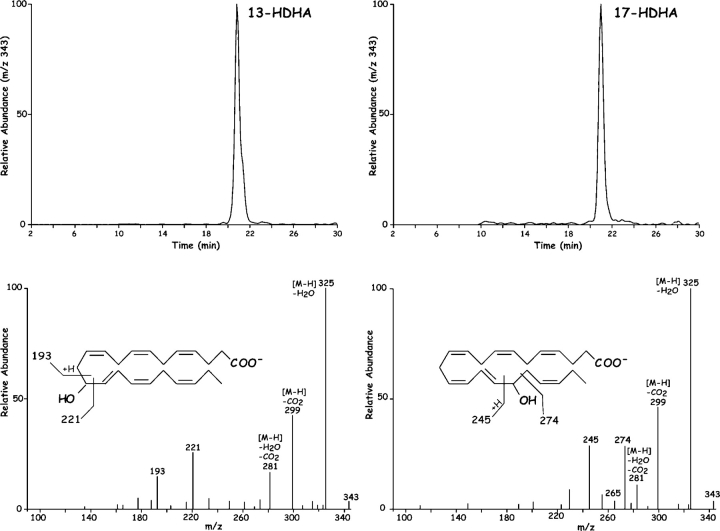
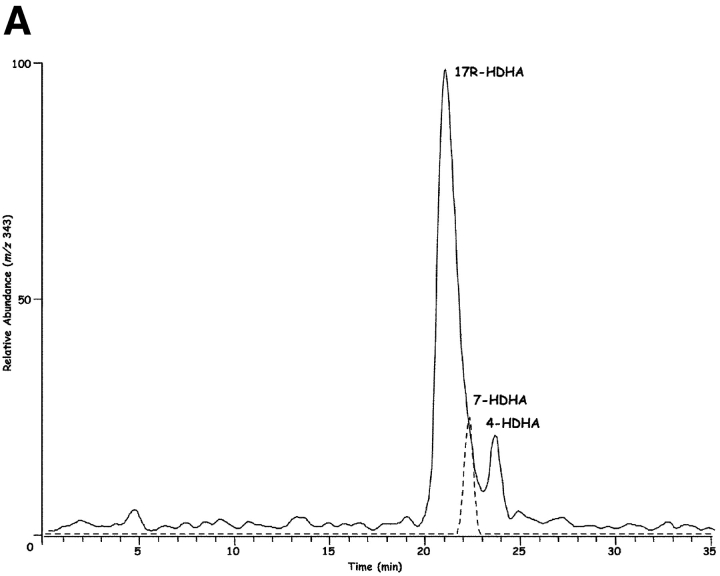
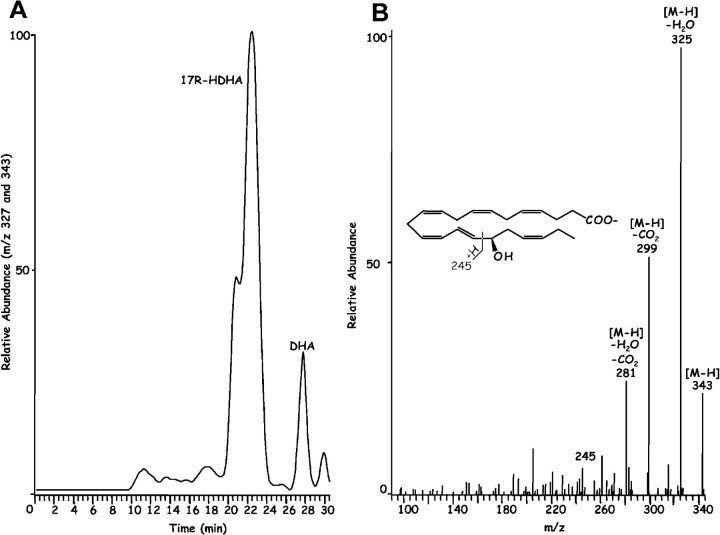
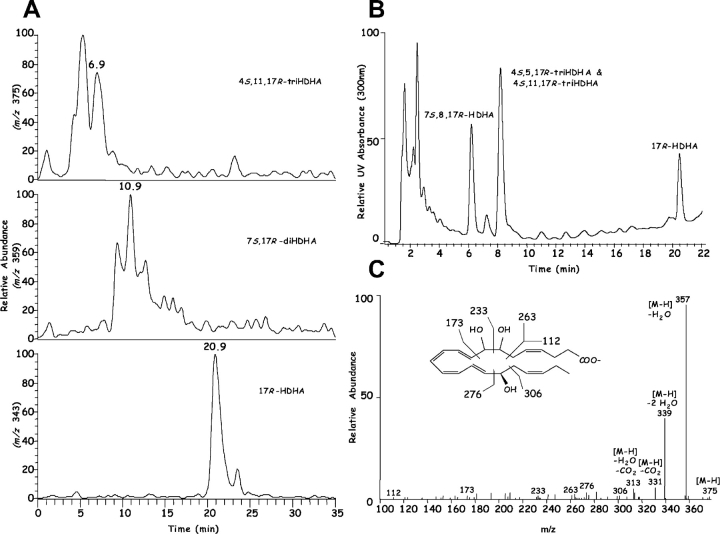
Aspirin (ASA) is unique among current therapies because it acetylates cyclooxygenase (COX)-2 enabling the biosynthesis of R-containing precursors of endogenous antiinflammatory mediators. Here, we report that lipidomic analysis of exudates obtained in the resolution phase from mice treated with ASA and docosahexaenoic acid (DHA) (C22:6) produce a novel family of bioactive 17R-hydroxy-containing di- and tri-hydroxy-docosanoids termed resolvins. Murine brain treated with aspirin produced endogenous 17R-hydroxydocosahexaenoic acid as did human microglial cells. Human COX-2 converted DHA to 13-hydroxy-DHA that switched with ASA to 17R-HDHA that also proved a major route in hypoxic endothelial cells. Human neutrophils transformed COX-2-ASA–derived 17R-hydroxy-DHA into two sets of novel di- and trihydroxy products; one initiated via oxygenation at carbon 7 and the other at carbon 4. These compounds inhibited (IC50 ∼50 pM) microglial cell cytokine expression and in vivo dermal inflammation and peritonitis at ng doses, reducing 40–80% leukocytic exudates. These results indicate that exudates, vascular, leukocytes and neural cells treated with aspirin convert DHA to novel 17R-hydroxy series of docosanoids that are potent regulators. These biosynthetic pathways utilize omega-3 DHA and EPA during multicellular events in resolution to produce a family of protective compounds, i.e., resolvins, that enhance proresolution status.
Overview
The claims and statistics of this paper haven’t been checked yet.
Free: it reads the open-access text and checks the first 5 claims that cite a source we can check. Create a free account to check every claim.
Integrity signals
Registry
Cites
Statistics
Figures



Verification
Claims the paper makes
The claims and statistics of this paper haven’t been checked yet.
Free: it reads the open-access text and checks the first 5 claims that cite a source we can check. Create a free account to check every claim.
Claims other papers make about this one
Each is checked against this paper’s own text: does it say what the citing paper says it does?
The source backs part of the claim, not all of it — or backs it for a different population, condition or comparison.
In the citing paper
“These lipid mediators can selectively stop neutrophil infiltration; increase monocyte recruitment and macrophage phagocytosis; stimulate the expression of genes important for antimicrobial defense; and promote the exit of phagocytes from the inflamed sites [100–103].”
From Transition from inflammation to proliferation: a critical step during wound healing (2016) · cites this paper as [100]
Experimental — accuracy not yet measuredThe source backs part of the claim, not all of it — or backs it for a different population, condition or comparison.
In the citing paper
“Prostaglandin E2 (PGE2) and D2 rapidly initiate the resolution process by inducing the expression of lipid mediators with both anti-inflammatory and pre-resolution functions, e.g., lipoxins [96, 97], resolvins and protectins [98–100], a process known as lipid-mediator class switch [97].”
From Transition from inflammation to proliferation: a critical step during wound healing (2016) · cites this paper as [100]
Experimental — accuracy not yet measuredThe source backs part of the claim, not all of it — or backs it for a different population, condition or comparison.
In the citing paper
“These lipid mediators can selectively stop neutrophil infiltration; increase monocyte recruitment and macrophage phagocytosis; stimulate the expression of genes important for antimicrobial defense; and promote the exit of phagocytes from the inflamed sites [100–103].”
From Transition from inflammation to proliferation: a critical step during wound healing (2016) · cites this paper as [100]
Experimental — accuracy not yet measuredThe source backs part of the claim, not all of it — or backs it for a different population, condition or comparison.
In the citing paper
“These lipid mediators can selectively stop neutrophil infiltration; increase monocyte recruitment and macrophage phagocytosis; stimulate the expression of genes important for antimicrobial defense; and promote the exit of phagocytes from the inflamed sites [100–103].”
From Transition from inflammation to proliferation: a critical step during wound healing (2016) · cites this paper as [100]
Experimental — accuracy not yet measuredThe cited source says what the claim attributes to it.
In the citing paper
“These lipid mediators can selectively stop neutrophil infiltration; increase monocyte recruitment and macrophage phagocytosis; stimulate the expression of genes important for antimicrobial defense; and promote the exit of phagocytes from the inflamed sites [100–103].”
From Transition from inflammation to proliferation: a critical step during wound healing (2016) · cites this paper as [100]
Self-check
Percentages, sums and reported differences re-computed from the paper’s own numbers.
The self-check needs the paper’s full text.
Citations
Cites
Inflammation. Basic principles and clinical correlates
(1989) · Biomedicine & Pharmacotherapy · doi:10.1016/0753-3322(89)90156-x · Cited by 2,393
Leukotrienes and Lipoxins: Structures, Biosynthesis, and Biological Effects
Samuelsson, B., Dahlén, S.-E., Lindgren, J. Å., Rouzer, C. A., & Serhan, C. N. (1987) · Science · doi:10.1126/science.2820055 · Cited by 2,233 · cited 7×
“Like other LO-derived eicosanoids, LXs are potent-local acting in subnanomolar levels with precise stereochemical requirements for evoking their actions (4, 9).”
BackgroundMethodInfluentialSelf-citation(1999) · PubMed · Cited by 2,062
Robbins pathologic basis of disease
Cotran, R. S., Kumar, V., & Collins, T. (1989) · Medical Entomology and Zoology · Cited by 1,944
Lipid mediator class switching during acute inflammation: signals in resolution
Levy, B. D., Clish, C. B., Schmidt, B., Gronert, K., & Serhan, C. N. (2001) · Nature Immunology · doi:10.1038/89759 · Cited by 1,453
Self-citationMarchioli, R., Barzi, F., Bomba, E., Chieffo, C., Di Gregorio, D., Di Mascio, R., Franzosi, M. G., Geraci, E., Levantesi, G., Maggioni, A. P., et al. (2002) · Circulation · doi:10.1161/01.cir.0000014682.14181.f2 · Cited by 1,311
Inducible cyclooxygenase may have anti-inflammatory properties
Gilroy, D. W., Colville-Nash, P. R., Willis, D., Chivers, J., Paul-Clark, M. J., & Willoughby, D. A. (1999) · Nature Medicine · doi:10.1038/9550 · Cited by 1,242
Serhan, C. N., Clish, C. B., Brannon, J., Colgan, S. P., Chiang, N., & Gronert, K. (2000) · The Journal of Experimental Medicine · doi:10.1084/jem.192.8.1197 · Cited by 1,189
Self-citationBlood Levels of Long-Chain n–3 Fatty Acids and the Risk of Sudden Death
Albert, C. M., Campos, H., Stampfer, M. J., Ridker, P. M., Manson, J. E., Willett, W. C., & Ma, J. (2002) · New England Journal of Medicine · doi:10.1056/nejmoa012918 · Cited by 1,146 · cited 3×
“It is noteworthy that both patient groups received aspirin in the GISSI trial while comparing tocopherol versus omega-3 supplementation (20) as did a significant number of participants in the most recent Physician Health study report (18).”
Background
Research works printed but not linked: 1
- De Caterina, R., S. Endres, S.D. Kristensen, and E.B. Schmidt, editors. 1993. N-3 Fatty Acids and Vascular Disease. Springer-Verlag, London. pp. 1–166.
Cited by
Items 901–1,000 of 1,004
Meesawatsom, P., Hathway, G. J., Bennett, A. J., Constantin‐Teodosiu, D., & Chapman, V. (2020) · Journal of Neuroinflammation · doi:10.1186/s12974-020-01997-w · Cited by 28
Lipoxins and synthetic lipoxin mimetics: Therapeutic potential in renal diseases
Andrews, D. C., & Godson, C. (2021) · Biochimica et Biophysica Acta (BBA) - Molecular and Cell Biology of Lipids · doi:10.1016/j.bbalip.2021.158940 · Cited by 29
Effects of Resolvin D1 on Cell Survival and Cytokine Expression of Human Gingival Fibroblasts
Khaled, M., Shibani, N., Labban, N. Y., Batarseh, G., Song, F., Ruby, J. D., & Windsor, L. J. (2013) · Journal of Periodontology · doi:10.1902/jop.2013.120388 · Cited by 30
de Oliveira, J. R., Favarin, D. C., Tanaka, S. C. S. V., Balarin, M. A. S., Teixeira, D. N. S., Levy, B. D., & Rogério, A. D. P. (2015) · BioMed Research International · doi:10.1155/2015/178369 · Cited by 31
“During inflammation, the essential omega-3 fatty acid docosahexaenoic acid (DHA; C22:6) is available for enzymatic transformation into several anti-inflammatory and proresolving mediators, including the class of molecules termed resolvins [18].”
BackgroundActions of SPM in regulating host responses in arthritis
Perretti, M., & Norling, L. V. (2017) · Molecular Aspects of Medicine · doi:10.1016/j.mam.2017.04.005 · Cited by 29
McDaniel, J. C., Szalacha, L. A., Sales, M. A. M., Roy, S., Chaffee, S. M., & Parinandi, N. L. (2017) · Wound Repair and Regeneration · doi:10.1111/wrr.12558 · Cited by 29
“ASA enhances the action of the EPA-derived resolvin species reported to be particularly effective in reducing PMN recruitment to inflamed tissue sites.(22) A general summary of the study design is presented in Figure 1.”
BackgroundEffects of AT-RvD1 on paraquat-induced acute renal injury in mice
Hu, X., Liang, Y., Zhao, H., & Zhao, M. (2018) · International Immunopharmacology · doi:10.1016/j.intimp.2018.12.029 · Cited by 28
A Novel Resolvin-Based Strategy for Limiting Acetaminophen Hepatotoxicity
Patel, S. J., Luther, J., Bohr, S., Iracheta‐Vellve, A., Li, M., King, K. R., Chung, R. T., & Yarmush, M. L. (2016) · Clinical and Translational Gastroenterology · doi:10.1038/ctg.2016.13 · Cited by 28
Li, X., Li, C., Liang, W., Bi, Y.-T., Chen, M., & Dong, S. (2014) · Chinese Medical Journal · doi:10.3760/cma.j.issn.0366-6999.20131104 · Cited by 28
“Recently, it has been recognized that endogenous antiinflammatory lipid mediators, which are short-lived autacoids derived from precursor omega-3 fatty acids, can be generated.(12,13) Protectin D1 (PD1), a new novel member of this group of compounds, is biosynthesized from the ω-3 polyunsaturated fatty acid docosahexa…”
BackgroundMattacks, C. A., Sadler, D., & Pond, C. M. (2004) · Lymphatic Research and Biology · doi:10.1089/1539685042564363 · Cited by 28
Eady, T. N., Khoutorova, L., Anzola, D., Hong, S., Obenaus, A., Mohd‐Yusof, A., Bazan, N. G., & Belayev, L. (2013) · PLoS ONE · doi:10.1371/journal.pone.0077237 · Cited by 27
“In addition to DHA, some novel DHA derivatives, such as neuroprotectin D1 (NPD1), have been associated with reduced inflammation and activation of antiapoptotic pathways, two main mechanisms of injury implicated in ischemic stroke [16,17].”
BackgroundSelf-citationDuality of lipid mediators in host response against Mycobacterium tuberculosis: good cop, bad cop
Dietzold, J., Gopalakrishnan, A., & Salgame, P. (2015) · F1000Prime Reports · doi:10.12703/p7-29 · Cited by 31
Nesman, J. I., Ouyang, C., Luo, X., Ji, R., Serhan, C. N., & Hansen, T. V. (2021) · Organic & Biomolecular Chemistry · doi:10.1039/d0ob02136a · Cited by 27
Self-citationDalli, J., Gómez, E. A., & Jouvene, C. C. (2022) · Biomolecules · doi:10.3390/biom12030353 · Cited by 27
“Among the first described SPM were the eicosapentaenoic acid (EPA) and docosahexaenoic acid (DHA)-derived resolvins, termed as E-series (RvE) and D-series resolvins (RvD), respectively [6,7].”
BackgroundResolution of Inflammation in Retinal Disorders: Briefly the State
Trotta, M. C., Gesualdo, C., Petrillo, F., Lepre, C. C., Corte, A. D., Cavasso, G., Maggiore, G., Hermenean, A. O., Simonelli, F., D’Amico, M., et al. (2022) · International Journal of Molecular Sciences · doi:10.3390/ijms23094501 · Cited by 27
Resolvin D1 modulates periodontal ligament fibroblast function
Zarrough, A., Hastürk, H., Stephens, D. N., Dyke, T. E. V., & Kantarcı, A. (2022) · Journal of Periodontology · doi:10.1002/jper.22-0462 · Cited by 27
The Role of Specialized Pro-Resolving Lipid Mediators in Inflammation-Induced Carcinogenesis
Torres, W., Pérez, J. L., Diaz, M. P., D’Marco, L., Checa-Ros, A., Carrasquero, R., Angarita, L., Gómez, Y., Chacín, M., Ramírez, P., et al. (2023) · International Journal of Molecular Sciences · doi:10.3390/ijms241612623 · Cited by 27
Resolvin E1 as a novel agent for the treatment of asthma
Hisada, T., Ishizuka, T., Aoki, H., & Mori, M. (2009) · Expert Opinion on Therapeutic Targets · doi:10.1517/14728220902865622 · Cited by 29
“Next, PGE2 and PGD2, by inducing the production of key enzymes, gradually promote the synthesis of mediators that have both anti-inflammatory and pro-resolution activities, such as the lipoxins [33,37], resolvins and protectins [14,15,38].”
BackgroundMetabolism and biological production of resolvins derived from docosapentaenoic acid (DPAn-6)
Dangi, B., Obeng, M., Nauroth, J. M., Chung, G. H., Bailey‐Hall, E., Hallenbeck, T., & Arterburn, L. M. (2009) · Biochemical Pharmacology · doi:10.1016/j.bcp.2009.08.001 · Cited by 27
“It has been demonstrated that these resolvins can be produced endogenously by the action of lipoxygenases and cyclo-oxygenases and that the resulting compounds are key physiological modulators of inflammation [7,20,21].”
BackgroundAnti-inflammatory pathways as a host evasion mechanism for pathogens
Aliberti, J., & Báfica, A. L. B. (2005) · Prostaglandins Leukotrienes and Essential Fatty Acids · doi:10.1016/j.plefa.2005.05.018 · Cited by 27
“[26] C.”
BackgroundLipid metabolites in the pathogenesis and treatment of neovascular eye disease
Stahl, A., Krohne, T. U., Sapieha, P. S., Chen, J., Hellström, A., Chew, E. Y., Holz, F. G., & Smith, L. E. H. (2011) · British Journal of Ophthalmology · doi:10.1136/bjo.2010.194241 · Cited by 28
Anti-Inflammatory Diets for Obesity and Diabetes
Sears, B. (2009) · Journal of the American College of Nutrition · doi:10.1080/07315724.2009.10718115 · Cited by 29
Resolvins RvD1 and 17(R)-RvD1 alleviate signs of inflammation in a rat model of endometriosis
Dmitrieva, N., Suess, G., & Shirley, R. (2014) · Fertility and Sterility · doi:10.1016/j.fertnstert.2014.06.046 · Cited by 28
Chattopadhyay, R., Mani, A. M., Singh, N. K., & Rao, G. N. (2018) · Free Radical Biology and Medicine · doi:10.1016/j.freeradbiomed.2018.01.034 · Cited by 27
Okuyama, H., Hamazaki, T., Hama, R., Ogushi, Y., Kobayashi, T., Ohara, N., & Uchino, H. (2018) · Pharmacology · doi:10.1159/000486374 · Cited by 28
Tungen, J. E., Gerstmann, L., Vik, A., Matteis, R. D., Colas, R. A., Dalli, J., Chiang, N., Serhan, C. N., Kalesse, M., & Hansen, T. V. (2018) · Chemistry - A European Journal · doi:10.1002/chem.201806029 · Cited by 28
Self-citationNew Perspectives on Aspirin and the Endogenous Control of Acute Inflammatory Resolution
Morris, T., Stables, M. J., & Gilroy, D. W. (2006) · The Scientific World JOURNAL · doi:10.1100/tsw.2006.192 · Cited by 27
“Keen to uncover the molecular bases for the protective actions of omega-3 PUFA, it was shown in a mouse model of self-resolving inflammation: a dorsal skin pouch model that allows for an accurate measurement of the extent of neutrophil infiltration and most importantly of lipid mediator generation during the resolutio…”
BackgroundLipid Metabolism: An Emerging Player in Sjögren’s Syndrome
Chang, K., Luo, P., Guo, Z., Yang, L., Pu, J., Han, F., Cai, F., Tang, J., & Wang, X. (2025) · Clinical Reviews in Allergy & Immunology · doi:10.1007/s12016-025-09023-8 · Cited by 27
Saito, T., Hasegawa‐Moriyama, M., Kurimoto, T., Yamada, T., Inada, E., & Kanmura, Y. (2015) · Anesthesiology · doi:10.1097/aln.0000000000000892 · Cited by 26
Fraga, V. G., Ferriani, M. D. G. C., Caramelli, P., Sousa, L. P., & Gomes, K. B. (2017) · Journal of Neuroimmunology · doi:10.1016/j.jneuroim.2017.07.005 · Cited by 28
Omega-3 polyunsaturated fatty acids and corneal nerve health: Current evidence and future directions
Britten‐Jones, A. C., Craig, J. P., & Downie, L. E. (2022) · The Ocular Surface · doi:10.1016/j.jtos.2022.10.006 · Cited by 27
Measuring brain docosahexaenoic acid turnover as a marker of metabolic consumption
Klievik, B. J., Tyrrell, A. D., Chen, C. T., & Bazinet, R. P. (2023) · Pharmacology & Therapeutics · doi:10.1016/j.pharmthera.2023.108437 · Cited by 27
Zhao, M., Zheng, Z., Yin, Z., Zhang, J., Qin, J., Wan, J., & Wang, M. (2023) · Pharmacological Research · doi:10.1016/j.phrs.2023.106832 · Cited by 27
Potential role of omega‐3‐derived resolution mediators in metabolic inflammation
White, P. J., & Marette, A. (2014) · Immunology and Cell Biology · doi:10.1038/icb.2013.112 · Cited by 29
Recent advances in the chemistry and biology of stable synthetic Lipoxin analogues
Duffy, C. D., & Guiry, P. J. (2010) · MedChemComm · doi:10.1039/c0md00136h · Cited by 26
Martinez, G., Koury, J. C., Brito, F., Fischer, R. G., Gustafsson, A. K., & Figueredo, C. M. (2013) · Journal of Periodontal Research · doi:10.1111/jre.12104 · Cited by 27
Expression of Resolvin D1 Biosynthetic Pathways in Salivary Epithelium
Leigh, N. J., Nelson, J. W., Mellas, R. E., Aguirre, A., & Baker, O. J. (2014) · Journal of Dental Research · doi:10.1177/0022034513519108 · Cited by 26
“Compounds derived from eicosapentaenoic acid (EPA) are designated as resolvins of the E series, while those formed from the precursor docosahexaenoic acid (DHA) are denoted as resolvins of the D series (Serhan et al., 2002, 2008; Hong et al., 2003).”
BackgroundBlanchard, H. C., Taha, A. Y., Rapoport, S. I., & Yuan, Z. (2015) · Prostaglandins Leukotrienes and Essential Fatty Acids · doi:10.1016/j.plefa.2015.01.002 · Cited by 26
“However, ASA can trigger the synthesis of protective 17-(R)-resolvin D1 in response to inflammatory stress [26] and thus it would be important in the future to quantify this isomer using LC-MS-MS.”
BackgroundMolecular Circuits of Resolution in Renal Disease
Börgeson, E., & Godson, C. (2010) · The Scientific World JOURNAL · doi:10.1100/tsw.2010.120 · Cited by 27
“DHA can be converted in a similar manner by the sequential activation of 15-LO or acetylated COX-2 into 17R-HDHA, which is then transformed by enzymatic epoxidation and 5-LO to form D series resolvins (RvD)[52].”
BackgroundInfluentialFelau, S. M., Sales, L. P., Solis, M. Y., Hayashi, A. P., Roschel, H., de Sá‐Pinto, A. L., ANDRADE, D. C. O. D., Katayama, K. Y., Irigoyen, M. C., Consolim‐Colombo, F. M., et al. (2018) · Frontiers in Immunology · doi:10.3389/fimmu.2018.00336 · Cited by 28
Teopompi, E., Risé, P., Pisi, R., Buccellati, C., Aiello, M., Pisi, G., Tripodi, M. C., Fainardi, V., Clini, E. M., Chetta, A. A., et al. (2019) · Frontiers in Pharmacology · doi:10.3389/fphar.2019.00938 · Cited by 26
Trotta, M. C., Pieretti, G., Petrillo, F., Alessio, N., Hermenean, A. O., Maisto, R., & D’Amico, M. (2019) · Journal of Cellular Physiology · doi:10.1002/jcp.29303 · Cited by 26
“…a D‐series resolvin endogenously derived from the w‐3‐polyunsaturated fatty acid (PUFA) docosahexaenoic acid (DHA) (Serhan, Chiang, & Van Dyke, 2008; Serhan et al., 2002), in a streptozotocin (STZ)‐induced DR, by reducing NOD‐, LRR‐ and pyrin domain‐containing protein 3 (NLRP3) inflammasome…”
BackgroundIs there a case for n-3 fatty acid supplementation in cystic fibrosis?
Cawood, A. L., Carroll, M. P., Wootton, S. A., & Calder, P. C. (2005) · Current Opinion in Clinical Nutrition & Metabolic Care · doi:10.1097/00075197-200503000-00008 · Cited by 26
Do unsaturated fatty acids function as endogenous antibacterial and antiviral molecules?
Das, U. N. (2006) · American Journal of Clinical Nutrition · doi:10.1093/ajcn/83.2.390 · Cited by 26
Nshimiyimana, R., Simard, M., Teder, T., Rodríguez, A. R., Spur, B. W., Haeggström, J. Z., & Serhan, C. N. (2024) · Proceedings of the National Academy of Sciences · doi:10.1073/pnas.2405821121 · Cited by 25
Self-citationChaim, F. H. M., Pascoal, L. B., de Castro, M. M., Palma, B. B., Rodrigues, B. L., Fagundes, J. J., Milanski, M., Lopes, L. R., & Leal, R. F. (2024) · Scientific Reports · doi:10.1038/s41598-024-80051-8 · Cited by 25
Deciphering the role of n-3 polyunsaturated fatty acid-derived lipid mediators in health and disease
Spite, M. R. (2013) · Proceedings of The Nutrition Society · doi:10.1017/s0029665113003030 · Cited by 25
Wu, D., Zheng, S., Li, W., Yang, L., Liu, Y., Zheng, X., Yang, Y., Yang, L.-M., Wang, Q., Smith, F. G., et al. (2013) · Mediators of Inflammation · doi:10.1155/2013/964012 · Cited by 28
“The resolvins (resolution phase interaction products) are a family of lipid mediators derived from both eicosapentaenoic acid (EPA) and docosahexaenoic acid (DHA); they were termed as E series resolvins (RvE) andD series resolvins (RvD), respectively [17].”
BackgroundAlqahtani, S., Xia, L., Jannasch, A., Ferreira, C. R., Franco, J., & Shannahan, J. H. (2021) · Toxicology and Applied Pharmacology · doi:10.1016/j.taap.2021.115730 · Cited by 25
Al‐Beltagi, M., Amrousy, D. M. E., Ashry, H. E., Maher, S., Mohammed, M., & Hasan, S. (2022) · World Journal of Clinical Pediatrics · doi:10.5409/wjcp.v11.i4.330 · Cited by 26
Zhang, J., Liu, S., Ding, W. B., Wan, J., Qin, J., & Wang, M. (2024) · Ageing Research Reviews · doi:10.1016/j.arr.2024.102352 · Cited by 25
Raghavan, R., Laight, D. W., & Cummings, M. H. (2013) · International Journal of Clinical Practice · doi:10.1111/ijcp.12310 · Cited by 25
Resolvins and inflammatory pain
Sommer, C., & Birklein, F. (2011) · F1000 Medicine Reports · doi:10.3410/m3-19 · Cited by 30
“The Serhan laboratory at Brigham and Women’s Hospital at Harvard Medical School discovered resolvins when they were looking for potential endogenous bioactive compounds derived from omega-3 fatty acids [2,5].”
BackgroundMethodNew insights into eicosanoid biosynthetic pathways: implications for arthritis
Kojima, F., Kapoor, M., Kawai, S., & Crofford, L. J. (2006) · Expert Review of Clinical Immunology · doi:10.1586/1744666x.2.2.277 · Cited by 25
Is multiple sclerosis a proresolution deficiency disorder?
Das, U. N. (2012) · Nutrition · doi:10.1016/j.nut.2011.12.016 · Cited by 27
“Synthetic glucocorticoid dexamethasone inhibited both cPLA2 and sPLA2 expression, whereas type IV iPLA2 expression is refractory to its suppressive actions [42,45,46].”
BackgroundBotten, N., Hodges, R. R., Li, D., Bair, J. A., Shatos, M. A., Utheim, T. P., Serhan, C. N., & Dartt, D. A. (2019) · The FASEB Journal · doi:10.1096/fj.201802467r · Cited by 25
Self-citationSynthesis and function of fatty acids and oxylipins, with a focus on Caenorhabditis elegans
Mokoena, N., Sebolai, O. M., Albertyn, J., & Pohl, C. H. (2020) · Prostaglandins & Other Lipid Mediators · doi:10.1016/j.prostaglandins.2020.106426 · Cited by 25
Lipoxin A4 promotes reduction and antibiotic efficacy against Pseudomonas aeruginosa biofilm
Thornton, J. M., Walker, J. M., Sundarasivarao, P. Y. K., Spur, B. W., Rodríguez, A. R., & Yin, K. (2020) · Prostaglandins & Other Lipid Mediators · doi:10.1016/j.prostaglandins.2020.106505 · Cited by 25
Medeiros, F., Mothé, C. G., Águila, M. B., & Mandarim‐de‐Lacerda, C. A. (2005) · Prostaglandins & Other Lipid Mediators · doi:10.1016/j.prostaglandins.2005.09.001 · Cited by 25
Lipoxins: update and impact of endogenous pro-resolution lipid mediators
O'Meara, S. J., Rodgers, K., & Godson, C. (2007) · Springer eBooks · doi:10.1007/112_2006_0606 · Cited by 26
Specialised lipid mediators and their targets
Crean, D., & Godson, C. (2015) · Seminars in Immunology · doi:10.1016/j.smim.2015.05.002 · Cited by 27
“Resolvins, -3 derived lipid mediators [see below] protect against obesitynduced insulin resistance and hepatic steatosis by a mechanism hat involves increased adiponectin [84,85].”
BackgroundLu, Y., Hong, S., Yang, R., Uddin, J., Gotlinger, K. H., Petasis, N. A., & Serhan, C. N. (2006) · Rapid Communications in Mass Spectrometry · doi:10.1002/rcm.2798 · Cited by 25
Self-citationFiorucci, S., Lorenzo, A. D., Renga, B., Farneti, S., Morelli, A., & Cirino, G. (2004) · Journal of Pharmacology and Experimental Therapeutics · doi:10.1124/jpet.104.072843 · Cited by 25
“1264 at A SPE T Journals on N ovem ber 19, 2017 jpet.aspetjournals.org D epi-LXA4, also termed aspirin-triggered LX or ATL (Claria and Serhan, 1995; Serhan and Oliw, 2001; Serhan et al., 2002).”
BackgroundInfluentialProstaglandin Endoperoxide Synthases
Vaught, M., & Marnett, L. J. (2010) · Elsevier eBooks · doi:10.1016/b978-008045382-8.00028-9 · Cited by 25
Eicosanoids and Inflammation: A delicate balance of Pro-Inflammatory and Pro-Resolving mediators
Park, W. H. (2025) · Biochemical Pharmacology · doi:10.1016/j.bcp.2025.117662 · Cited by 24
Otoki, Y., Metherel, A. H., Pedersen, T. L., Yang, J., Hammock, B. D., Bazinet, R. P., Newman, J. W. I., & Taha, A. Y. (2019) · Lipids · doi:10.1002/lipd.12197 · Cited by 24
Resolvin E1 Reduces Tumor Growth in a Xenograft Model of Lung Cancer
Kantarcı, A., Kansal, S., Hastürk, H., Stephens, D. N., & Dyke, T. E. V. (2022) · American Journal Of Pathology · doi:10.1016/j.ajpath.2022.07.004 · Cited by 25
[THE FATTY ACIDS AND RELATIONSHIP WITH HEALTH].
Catalán, J. S., Durán‐Agüero, S., & Torres, J. (2015) · PubMed · doi:10.3305/nh.2015.32.3.9276 · Cited by 31
Song, T., Cho, H.-J., Chang, Y., Choi, K., Jung, A.-R., Youn, M., Shin, M., & Kim, Y. (2015) · Journal of Stroke · doi:10.5853/jos.2015.17.2.168 · Cited by 24
Total synthesis of the anti-inflammatory lipid mediator Resolvin E2
Rodríguez, A. R., & Spur, B. W. (2012) · Tetrahedron Letters · doi:10.1016/j.tetlet.2012.01.136 · Cited by 25
Metabolites derived from omega-3 polyunsaturated fatty acids are important for cardioprotection
Kim, G., Malick, M., Madingou, N., Touchette, C., Bourque-Riel, V., Tomaro, L., & Rousseau, G. (2015) · European Journal of Pharmacology · doi:10.1016/j.ejphar.2015.11.010 · Cited by 24
Comprehensive lipid profiling of bleomycin‐induced lung injury
Saito, K., Tanaka, N., Ikari, J., Suzuki, M., Anazawa, R., Abe, M., Saito, Y., & Tatsumi, K. (2018) · Journal of Applied Toxicology · doi:10.1002/jat.3758 · Cited by 24
Konieczka, P., Barszcz, M., Kowalczyk, P., Szlis, M., & Jankowski, J. (2019) · Veterinary Research · doi:10.1186/s13567-019-0685-4 · Cited by 24
Bashir, S., Sharma, Y., Jairajpuri, D. S., Rashid, F., Nematullah, M., & Khan, F. (2019) · PLoS ONE · doi:10.1371/journal.pone.0223070 · Cited by 26
Kokotou, M. G., Kokotos, A. C., Gkikas, D., Mountanea, O. G., Mantzourani, C., Almutairi, A. S., Lei, X., Ramanadham, S., Politis, P. K., & Kokotos, G. (2020) · Journal of Medicinal Chemistry · doi:10.1021/acs.jmedchem.0c00844 · Cited by 24
Kuzumoto, T., Tanigawa, T., Higashimori, A., Kitamura, H., Nadatani, Y., Otani, K., Fukunaga, S., Hosomi, S., Tanaka, F., Kamata, N., et al. (2021) · PLoS ONE · doi:10.1371/journal.pone.0250862 · Cited by 24
“In mice, DHA is converted to 17(S)-hydroxy-DHA via 12/15-lipoxygenase, an ortholog of the human 15-lipoxygenase, which is further converted to endogenous resolvin D by 5-lipoxygenase [5, 6].”
BackgroundÁcidos graxos poli‐insaturados ômega‐3 e lúpus eritematoso sistêmico: o que sabemos?
Borges, M. C., dos Santos, F. D. M. M., Telles, R. W., Correia, M. I. T. D., & Lanna, C. C. D. (2014) · Revista Brasileira de Reumatologia · doi:10.1016/j.rbr.2013.12.002 · Cited by 36
Dornelles, F. N., Santos, D. S., Dyke, T. E. V., Calixto, J. Β., Júnior, E. L. B., & Campos, M. M. (2009) · Journal of Pharmacology and Experimental Therapeutics · doi:10.1124/jpet.109.155762 · Cited by 24
Effects of omega-3 fatty acids on cancer.
Maclean, C. H., Newberry, S. J., Mojica, W., Issa, A. M., Khanna, P. P., Lim, Y., Morton, S. C., Suttorp, M. J., Tu, W., Hilton, L., et al. (2005) · PubMed Central · Cited by 29
Trevisi, E., Grossi, P., Piccioli-Cappelli, F., Cogrossi, S., & Bertoni, G. (2011) · Italian Journal of Animal Science · doi:10.4081/ijas.2011.e61 · Cited by 28
Butovich, I. A., Lukyanova, S. M., & Bachmann, C. (2006) · Journal of Lipid Research · doi:10.1194/jlr.m600280-jlr200 · Cited by 24
Kidney and Liver Injuries After Major Burns in Rats Are Prevented by Resolvin D2
Inoue, Y., Yu, Y., Kurihara, T., Vasilyev, A., Ibrahim, A. E., Öklü, R., Zhao, G., Nair, A. V., Brown, D., Fischman, A. J., et al. (2015) · Critical Care Medicine · doi:10.1097/ccm.0000000000001397 · Cited by 24
Omega-6/Omega-3 Fatty Acids and Arthritis
Cleland, L. G., James, M. J., & Proudman, S. (2003) · KARGER eBooks · doi:10.1159/000073798 · Cited by 24
Shimizu, T., Saito, T., Aoki‐Saito, H., Okada, S., Ikeda, H., Fukuda, H., Arai, S., Fujiwara, K., Nakajima, Y., Horiguchi, K., et al. (2022) · Institutional Repositories DataBase (IRDB) · doi:10.1096/fj.202100053r · Cited by 23
Miroult, C., Lasserre, J. F., & Toma, S. (2023) · Clinical and Experimental Dental Research · doi:10.1002/cre2.736 · Cited by 23
Yang, Y., Chen, L., Zhang, N., Zhao, Y., Che, H., Wang, Y., Zhang, T., & Wen, M. (2023) · Antioxidants · doi:10.3390/antiox12122079 · Cited by 24
Ren, X., Zhang, J., Fu, X., Ma, S., Wang, C., Wang, J., Tian, S., Liu, S., Zhao, B., & Wang, X. (2015) · Biomedical Chromatography · doi:10.1002/bmc.3620 · Cited by 25
Ritchie, S. A., Heath, D., Yamazaki, Y., Grimmalt, B., Kavianpour, A., Krenitsky, K. F., Elshoni, H., Takemasa, I., Miyake, M., Sekimoto, M., et al. (2010) · BMC Gastroenterology · doi:10.1186/1471-230x-10-140 · Cited by 24
“Although the origin of hPULCFAs, including CRC-446, is currently unknown, they are structurally similar to the fatty acid-derived long-chain hydroxylated resolvins [24-26] and protectins [27-29], which are mediators involved in the resolution of acute inflammation.”
BackgroundConcise syntheses of three ω-3 polyunsaturated fatty acids
Jakobsen, M. G., Vik, A., & Hansen, T. V. (2012) · Tetrahedron Letters · doi:10.1016/j.tetlet.2012.08.009 · Cited by 25
Fish Oil in Rheumatic Diseases
Bhangle, S. D., & Kolasinski, S. L. (2011) · Rheumatic Disease Clinics of North America · doi:10.1016/j.rdc.2010.11.003 · Cited by 26
Holen, E., He, J., Espe, M., Chen, L., & Araujo, P. W. (2015) · Fish & Shellfish Immunology · doi:10.1016/j.fsi.2015.05.017 · Cited by 23
Sorokin, A. V., Yang, Z., Vaisman, B. L., Thacker, S. G., Yu, Z., Sampson, M. L., Serhan, C. N., & Remaley, A. T. (2016) · The Journal of Nutritional Biochemistry · doi:10.1016/j.jnutbio.2016.05.012 · Cited by 25
“The acetylation of COX-2 by ASA inhibits prostaglandin formation but still allows the production of 15R-HETE from arachidonic acid and 17R-HDHA from DHA [7, 14].”
BackgroundResultSelf-citationFirst total synthesis of pro-resolving and tissue-regenerative Maresin sulfido-conjugates
Rodríguez, A. R., & Spur, B. W. (2015) · Tetrahedron Letters · doi:10.1016/j.tetlet.2015.04.131 · Cited by 23
Obrosov, A. A., Coppey, L. J., Shevalye, H., & Yorek, M. A. (2017) · Journal of Neurology & Neurophysiology · doi:10.4172/2155-9562.1000453 · Cited by 24
“Studies in both animals and humans have demonstrated that circulating levels of the resolvins can be increased by dietary supplementation with omega-3 polyunsaturated fatty acids derived from fish oil and resolvin levels can be further enhanced by aspirin [43-46].”
BackgroundSordi, R., Bet, Â. C., Justina, A. M. D., Ramos, G. C., & Assreuy, J. (2020) · European Journal of Pharmacology · doi:10.1016/j.ejphar.2020.173095 · Cited by 23
A High Docosahexaenoic Acid Diet Alters the Lung Inflammatory Response to Acute Dust Exposure
Dominguez, E. C., Heires, A. J., Pavlik, J. A., Larsen, T. D., Guardado, E. S., Sisson, J. H., Baack, M. L., Romberger, D. J., & Nordgren, T. M. (2020) · Nutrients · doi:10.3390/nu12082334 · Cited by 23
“RvD1 is a member of the resolvins family of SPMs that are produced during the resolution phase of inflammation [43,44], and RvD1 has been previously shown to regulate airway inflammation by reducing pro-inflammatory cytokine production and inducing an M2-like macrophage polarization phenotype [27,43–46].”
BackgroundHao, J., Feng, Y., Xu, X. J., Li, L., Yang, K., Dai, G., Gao, W., Zhang, M., Fan, Y., Yin, T., et al. (2022) · Frontiers in Immunology · doi:10.3389/fimmu.2022.917974 · Cited by 23
Biosynthesis, metabolism and function of protectins and resolvins
Demarquoy, J., & Borgne, F. L. (2014) · Clinical Lipidology · doi:10.2217/clp.14.44 · Cited by 27
Vogan, C. L., Maskrey, B. H., Taylor, G. W., Henry, S., Pace-Asciak, C. R., Clare, A. S., & Rowley, A. F. (2003) · Journal of Experimental Biology · doi:10.1242/jeb.00542 · Cited by 23
“, 1999) and aspirin-acetylated COX in terrestrial mammals (Serhan et al., 2002).”
BackgroundA Docosahexaenoic Acid-Derived Pro-resolving Agent, Maresin 1, Protects Motor Neuron Cells Death
Ohuchi, K., Ono, Y., Joho, M., Tsuruma, K., Ogami, S., Yamane, S., Funato, M., Kaneko, H., Nakamura, S., Hara, H., et al. (2018) · Neurochemical Research · doi:10.1007/s11064-018-2556-1 · Cited by 22
Metadata
- Authors
- Serhan, C. N., Hong, S., Gronert, K., Colgan, S. P., Devchand, P. R., Mirick, G., & Moussignac, R.-L.
- Affiliations
- Brigham and Women's Hospital (US)
- Venue
- The Journal of Experimental Medicine
- Publisher
- Rockefeller University Press
- Published
- 2002-10-21
- Volume
- 196
- Issue
- 8
- Pages
- 1025-1037
- ISSN
- 0022-1007 (ISSN-L)
- 1540-9538
- PMC
- PMC2194036
- OpenAlex
- W2162465757
- Cited by
- 1,650
- References
- 62
- Citations by year
- 2026: 40 · 2025: 45 · 2024: 65 · 2023: 61 · 2022: 68 · 2021: 75 · 2020: 101 · 2019: 78 · 2018: 81 · 2017: 81 · 2016: 84 · 2015: 94 · 2014: 100 · 2013: 112 · 2012: 92
- FWCI
- 30.40
- Type
- journal article
- Language
- en
- Open access
- bronze
- doi.org
- Locations
- The Journal of Experimental Medicine (publishedVersion)
- PubMed Central (publishedVersion, cc-by-nc-sa)
- PubMed (publishedVersion)
- Funders
- National Institutes of Health (4r37gm038765-19, DE13499, GM 38765, P01-DE13499)
- National Institute of General Medical Sciences (GM 38765, R01GM038765, R37-GM038765)
- National Institute of Diabetes and Digestive and Kidney Diseases (K01DK060583)
- National Institute of Dental and Craniofacial Research (P01 DE 13499, P01DE013499)
- Topics
- Health Sciences › Nursing › Nutrition and Dietetics › Fatty Acid Research and Health
- Health Sciences › Medicine › Pharmacology (medical) › Inflammatory mediators and NSAID effects
- Life Sciences › Biochemistry, Genetics and Molecular Biology › Biochemistry › Eicosanoids and Hypertension Pharmacology
- Keywords
- resolvins, aspirin, cyclooxygenase-2, docosahexaenoic acid, omega-3 fatty acids, inflammation resolution, microglia, neutrophils, eicosanoid biosynthesis, anti-inflammatory mediators, peritonitis, skin inflammation, leukocyte recruitment
- MeSH terms
- Animals, Aspirin, Biological Factors, Humans, Inflammation, Tumor Cells, Cultured, Signal Transduction, Fatty Acids, Omega-3, Mice
About these checks
Registry, retraction, Cites and statistics results are computed, not judged, with one exception: a printed reference that no index lists is read once by a model before it counts as a citation error. Claims are extracted by a model and kept only when their quote appears verbatim in the text; each cited source is then checked, with a model’s help, for whether it says what the claim relies on. Those verdicts can be wrong — read the claim’s quote and the cited source before relying on one.
Statistics and arithmetic are recomputed, not judged.
Confidence bands are shown only for fields calibrated on our annotated test set. None is calibrated yet, so no band is shown.
What counts as a claim ›How we measure confidence ›How we check this ›
Are you an author, or do you see a problem with this page? Request a review
Data sources
Bibliographic data: Semantic Scholar, OpenAlex, Crossref.
Contains information from the Semantic Scholar Academic Graph Datasets, made available under the ODC Attribution License (ODC-BY 1.0).
Semantic Scholar’s data is described in: Kinney, R., et al. (2023). The Semantic Scholar Open Data Platform. arXiv:2301.10140.
