

Resolvins
Open accessThe DOI matches its Crossref record; 62 of the 62 references it cites were found in a registry or an index.
Abstract
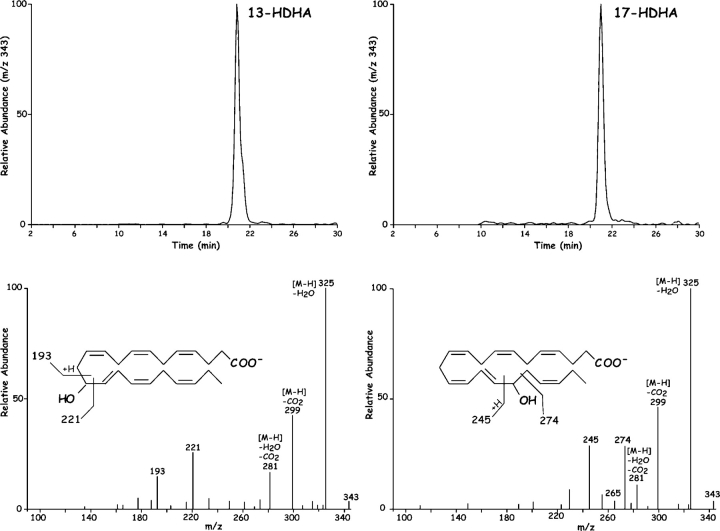
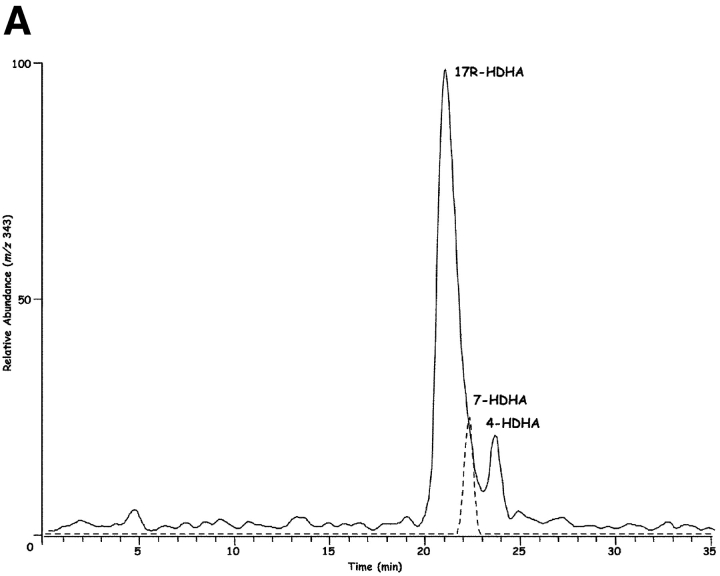
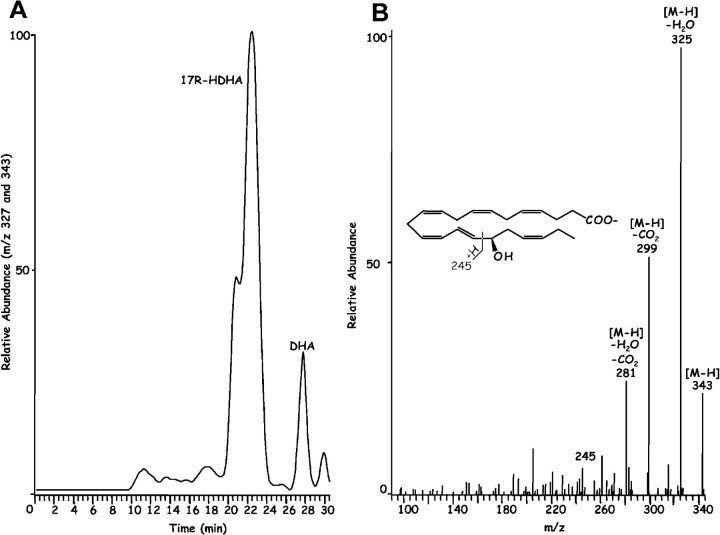
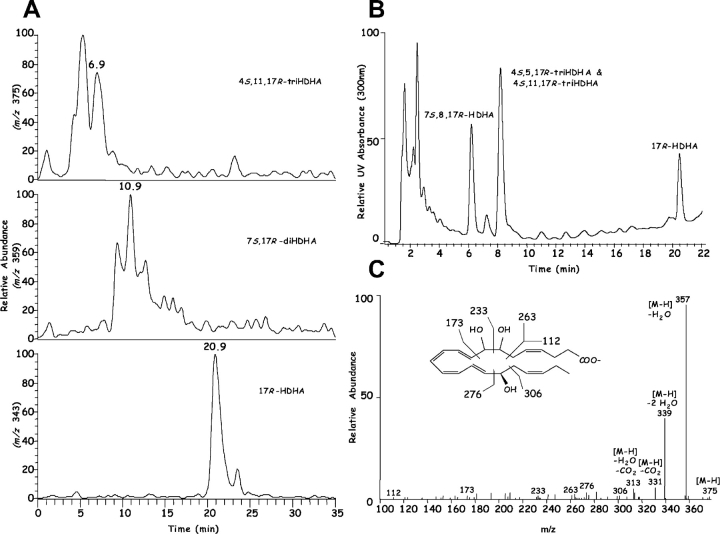
Aspirin (ASA) is unique among current therapies because it acetylates cyclooxygenase (COX)-2 enabling the biosynthesis of R-containing precursors of endogenous antiinflammatory mediators. Here, we report that lipidomic analysis of exudates obtained in the resolution phase from mice treated with ASA and docosahexaenoic acid (DHA) (C22:6) produce a novel family of bioactive 17R-hydroxy-containing di- and tri-hydroxy-docosanoids termed resolvins. Murine brain treated with aspirin produced endogenous 17R-hydroxydocosahexaenoic acid as did human microglial cells. Human COX-2 converted DHA to 13-hydroxy-DHA that switched with ASA to 17R-HDHA that also proved a major route in hypoxic endothelial cells. Human neutrophils transformed COX-2-ASA–derived 17R-hydroxy-DHA into two sets of novel di- and trihydroxy products; one initiated via oxygenation at carbon 7 and the other at carbon 4. These compounds inhibited (IC50 ∼50 pM) microglial cell cytokine expression and in vivo dermal inflammation and peritonitis at ng doses, reducing 40–80% leukocytic exudates. These results indicate that exudates, vascular, leukocytes and neural cells treated with aspirin convert DHA to novel 17R-hydroxy series of docosanoids that are potent regulators. These biosynthetic pathways utilize omega-3 DHA and EPA during multicellular events in resolution to produce a family of protective compounds, i.e., resolvins, that enhance proresolution status.
Overview
The claims and statistics of this paper haven’t been checked yet.
Free: it reads the open-access text and checks the first 5 claims that cite a source we can check. Create a free account to check every claim.
Integrity signals
Registry
Cites
Statistics
Figures



Verification
Claims the paper makes
The claims and statistics of this paper haven’t been checked yet.
Free: it reads the open-access text and checks the first 5 claims that cite a source we can check. Create a free account to check every claim.
Claims other papers make about this one
Each is checked against this paper’s own text: does it say what the citing paper says it does?
The source backs part of the claim, not all of it — or backs it for a different population, condition or comparison.
In the citing paper
“These lipid mediators can selectively stop neutrophil infiltration; increase monocyte recruitment and macrophage phagocytosis; stimulate the expression of genes important for antimicrobial defense; and promote the exit of phagocytes from the inflamed sites [100–103].”
From Transition from inflammation to proliferation: a critical step during wound healing (2016) · cites this paper as [100]
Experimental — accuracy not yet measuredThe source backs part of the claim, not all of it — or backs it for a different population, condition or comparison.
In the citing paper
“Prostaglandin E2 (PGE2) and D2 rapidly initiate the resolution process by inducing the expression of lipid mediators with both anti-inflammatory and pre-resolution functions, e.g., lipoxins [96, 97], resolvins and protectins [98–100], a process known as lipid-mediator class switch [97].”
From Transition from inflammation to proliferation: a critical step during wound healing (2016) · cites this paper as [100]
Experimental — accuracy not yet measuredThe source backs part of the claim, not all of it — or backs it for a different population, condition or comparison.
In the citing paper
“These lipid mediators can selectively stop neutrophil infiltration; increase monocyte recruitment and macrophage phagocytosis; stimulate the expression of genes important for antimicrobial defense; and promote the exit of phagocytes from the inflamed sites [100–103].”
From Transition from inflammation to proliferation: a critical step during wound healing (2016) · cites this paper as [100]
Experimental — accuracy not yet measuredThe source backs part of the claim, not all of it — or backs it for a different population, condition or comparison.
In the citing paper
“These lipid mediators can selectively stop neutrophil infiltration; increase monocyte recruitment and macrophage phagocytosis; stimulate the expression of genes important for antimicrobial defense; and promote the exit of phagocytes from the inflamed sites [100–103].”
From Transition from inflammation to proliferation: a critical step during wound healing (2016) · cites this paper as [100]
Experimental — accuracy not yet measuredThe cited source says what the claim attributes to it.
In the citing paper
“These lipid mediators can selectively stop neutrophil infiltration; increase monocyte recruitment and macrophage phagocytosis; stimulate the expression of genes important for antimicrobial defense; and promote the exit of phagocytes from the inflamed sites [100–103].”
From Transition from inflammation to proliferation: a critical step during wound healing (2016) · cites this paper as [100]
Self-check
Percentages, sums and reported differences re-computed from the paper’s own numbers.
The self-check needs the paper’s full text.
Citations
Cites
Inflammation. Basic principles and clinical correlates
(1989) · Biomedicine & Pharmacotherapy · doi:10.1016/0753-3322(89)90156-x · Cited by 2,393
Leukotrienes and Lipoxins: Structures, Biosynthesis, and Biological Effects
Samuelsson, B., Dahlén, S.-E., Lindgren, J. Å., Rouzer, C. A., & Serhan, C. N. (1987) · Science · doi:10.1126/science.2820055 · Cited by 2,233 · cited 7×
“Like other LO-derived eicosanoids, LXs are potent-local acting in subnanomolar levels with precise stereochemical requirements for evoking their actions (4, 9).”
BackgroundMethodInfluentialSelf-citation(1999) · PubMed · Cited by 2,062
Robbins pathologic basis of disease
Cotran, R. S., Kumar, V., & Collins, T. (1989) · Medical Entomology and Zoology · Cited by 1,944
Lipid mediator class switching during acute inflammation: signals in resolution
Levy, B. D., Clish, C. B., Schmidt, B., Gronert, K., & Serhan, C. N. (2001) · Nature Immunology · doi:10.1038/89759 · Cited by 1,453
Self-citationMarchioli, R., Barzi, F., Bomba, E., Chieffo, C., Di Gregorio, D., Di Mascio, R., Franzosi, M. G., Geraci, E., Levantesi, G., Maggioni, A. P., et al. (2002) · Circulation · doi:10.1161/01.cir.0000014682.14181.f2 · Cited by 1,311
Inducible cyclooxygenase may have anti-inflammatory properties
Gilroy, D. W., Colville-Nash, P. R., Willis, D., Chivers, J., Paul-Clark, M. J., & Willoughby, D. A. (1999) · Nature Medicine · doi:10.1038/9550 · Cited by 1,242
Serhan, C. N., Clish, C. B., Brannon, J., Colgan, S. P., Chiang, N., & Gronert, K. (2000) · The Journal of Experimental Medicine · doi:10.1084/jem.192.8.1197 · Cited by 1,189
Self-citationBlood Levels of Long-Chain n–3 Fatty Acids and the Risk of Sudden Death
Albert, C. M., Campos, H., Stampfer, M. J., Ridker, P. M., Manson, J. E., Willett, W. C., & Ma, J. (2002) · New England Journal of Medicine · doi:10.1056/nejmoa012918 · Cited by 1,146 · cited 3×
“It is noteworthy that both patient groups received aspirin in the GISSI trial while comparing tocopherol versus omega-3 supplementation (20) as did a significant number of participants in the most recent Physician Health study report (18).”
Background
Research works printed but not linked: 1
- De Caterina, R., S. Endres, S.D. Kristensen, and E.B. Schmidt, editors. 1993. N-3 Fatty Acids and Vascular Disease. Springer-Verlag, London. pp. 1–166.
Cited by
Items 401–500 of 1,004
A double-blind dose-finding pilot study of docosahexaenoic acid (DHA) for major depressive disorder
Mischoulon, D., Best-Popescu, C. A., Laposata, M., Merens, W., Murakami, J. L., Wu, S. L., Papakostas, G. I., Dording, C. M., Sonawalla, S. B., Nierenberg, A. A., et al. (2008) · European Neuropsychopharmacology · doi:10.1016/j.euroneuro.2008.04.011 · Cited by 98
The vascular contribution to Alzheimer's disease
Altman, R., & Rutledge, J. C. (2010) · Clinical Science · doi:10.1042/cs20100094 · Cited by 93
Docosahexaenoic acid metabolome in neural tumors: identification of cytotoxic intermediates
Gleissman, H., Yang, R., Martinod, K., Lindskog, M., Serhan, C. N., Johnsen, J. I., & Kogner, P. (2009) · The FASEB Journal · doi:10.1096/fj.09-137919 · Cited by 99
“Our discovery that resolvins and protectins show potent anti-inflammatory and neuroprotective actions in vivo may explain the different modes of action of DHA in cell survival (28, 29).”
BackgroundSelf-citationMarkworth, J. F., Kaur, G., Miller, E. G., Larsen, A. E., Sinclair, A. J., Rao Maddipati, K., & Cameron‐Smith, D. (2016) · The FASEB Journal · doi:10.1096/fj.201600360r · Cited by 89
Pathophysiology of Acute Kidney Injury: Roles of Potential Inhibitors of Inflammation
Bonventre, J. V. (2007) · KARGER eBooks · doi:10.1159/000102069 · Cited by 93
Control of inflammation and periodontitis
Dyke, T. E. V. (2007) · Periodontology 2000 · doi:10.1111/j.1600-0757.2007.00229.x · Cited by 110
Lee, T. C., Ivester, P., Hester, A. G., Sergeant, S., Case, L. D., Morgan, T. M., Kouba, E. O., & Chilton, F. H. (2014) · Lipids in Health and Disease · doi:10.1186/1476-511x-13-196 · Cited by 105
“For example, DHA itself is known to directly inhibit NF-κB activation [42,43], and DHA (and EPA)-derived resolvins and protectins [21,44,45] are proposed to dampen and resolve inflammatory responses.”
BackgroundResolvin D1 prevents TNF-α-mediated disruption of salivary epithelial formation
Odusanwo, O., Chinthamani, S., McCall, A. D., Duffey, M. E., & Baker, O. J. (2012) · American Journal of Physiology-Cell Physiology · doi:10.1152/ajpcell.00207.2011 · Cited by 96
Omega‐3 Polyunsaturated Fatty Acids in Critical Illness: Anti‐Inflammatory, Proresolving, or Both?
Molfino, A., Amabile, M. I., Monti, M., & Muscaritoli, M. (2017) · Oxidative Medicine and Cellular Longevity · doi:10.1155/2017/5987082 · Cited by 102
“[7] demonstrated that increasing cellular uptake of omega-3 PUFAs causes an enhancement in the production of resolvins and protectins, which are crucial in resolving inflammatory responses (Figure 1).”
BackgroundCyclooxygenase-3: axiom, dogma, anomaly, enigma or splice error?--Not as easy as 1, 2, 3.
Davies, N. M., Good, R. L., Roupe, K., & Yáñez, J. A. (2004) · PubMed · Cited by 128
Kumar, A., Mosa, K. A., Ji, L., Kage, U., Dhokane, D., Karre, S., Madalageri, D. M., & Pathania, N. (2017) · Critical Reviews in Food Science and Nutrition · doi:10.1080/10408398.2017.1285752 · Cited by 97
“DHA shows anti-inflammatory and antiarrhythmic effect (Serhan et al., 2002) and contributes to brain formation and development; therefore, it is essential for women during the pregnancy and lactation (Brenna et al., 2007).”
BackgroundResolvin D2 protects against cerebral ischemia/reperfusion injury in rats
Zuo, G., Zhang, D., Mu, R., Shen, H., Li, X., Wang, Z., Li, H., & Chen, G. (2018) · Molecular Brain · doi:10.1186/s13041-018-0351-1 · Cited by 93
“Resolvin D2 (RvD2), a member of the resolvin family, is produced from ω-3 polyunsaturated fatty acids after a series of catalyzed reactions by lipoxygenases [6].”
Hastürk, H., Schulte, F., Martins, M., Sherzai, H., Floros, C., Cugini, M., Chiu, C., Hardt, M., & Dyke, T. E. V. (2021) · Frontiers in Immunology · doi:10.3389/fimmu.2021.704163 · Cited by 96
Stotts, C., Corrales‐Medina, V., & Rayner, K. J. (2023) · Circulation Research · doi:10.1161/circresaha.122.321636 · Cited by 100
Das, U. N. (2007) · Prostaglandins Leukotrienes and Essential Fatty Acids · doi:10.1016/j.plefa.2007.03.001 · Cited by 102
“Aspirin converts AA, EPA and DHA to form aspirin-triggered 15 epimer LXs (ATLs) that inhibit acute inflammation [1,29–31].”
BackgroundFish Oil Lipid Emulsions and Immune Response: What Clinicians Need to Know
Waitzberg, D. L., & Torrinhas, R. S. (2009) · Nutrition in Clinical Practice · doi:10.1177/0884533609339071 · Cited by 92
Lee, H. J., Park, M. K., Lee, E. J., & Lee, C. H. (2013) · The International Journal of Biochemistry & Cell Biology · doi:10.1016/j.biocel.2013.09.018 · Cited by 92
Eicosanoids in inflammation and cancer: the role of COX-2
Agarwal, S., Reddy, G. V., & Reddanna, P. (2009) · Expert Review of Clinical Immunology · doi:10.1586/1744666x.5.2.145 · Cited by 104
Gu, Z., Lamont, G. J., Lamont, R. J., Uriarte, S. M., Wang, H., & Scott, D. A. (2016) · Innate Immunity · doi:10.1177/1753425916628618 · Cited by 91
Omega-3 Fatty Acids in Modern Parenteral Nutrition: A Review of the Current Evidence
Klek, S. (2016) · Journal of Clinical Medicine · doi:10.3390/jcm5030034 · Cited by 88
“These mediators have been shown to limit neutrophilic infiltration and enhance macrophage resolution responses, thus playing a role in diseases characterized by excessive uncontrolled inflammation [34–41].”
BackgroundMaclean, C. H., Issa, A. M., Newberry, S. J., Mojica, W., Morton, S. C., Garland, R. H., Hilton, L., Traina, S., & Shekelle, P. (2005) · PubMed Central · Cited by 102
Docosahexaenoic acid neurolipidomics
Niemoller, T. D., & Bazan, N. G. (2010) · Prostaglandins & Other Lipid Mediators · doi:10.1016/j.prostaglandins.2009.09.005 · Cited by 89
“Thus NPD1 and other DHA-derived mediators are endowed with potent anti-inflammatory and proresolving actions in experimental models of inflammatory diseases outside of the nervous system, such as peritonitis [24,25] and acute kidney injury [26].”
BackgroundMethodEndogenous lipid mediators in the resolution of airway inflammation
Haworth, O., & Levy, B. D. (2007) · European Respiratory Journal · doi:10.1183/09031936.00005807 · Cited by 88
Fish oil and rheumatoid arthritis: past, present and future
James, M. J., Proudman, S., & Cleland, L. (2010) · Proceedings of The Nutrition Society · doi:10.1017/s0029665110001564 · Cited by 100
Kishawy, A. T. Y., Amer, S. A., El-Hack, M. E. A., Saadeldin, I. M., & Swelum, A. A. (2019) · Asian-Australasian Journal of Animal Sciences · doi:10.5713/ajas.18.0522 · Cited by 90
Artiach, G., Carracedo, M., Plunde, O., Wheelock, C. E., Thul, S., Sjövall, P., Franco-Cereceda, A., Laguna-Fernandez, A., Arnardottir, H., & Bäck, M. (2020) · Circulation · doi:10.1161/circulationaha.119.041868 · Cited by 78
Yang, R., Fredman, G., Krishnamoorthy, S., Agrawal, N., Irimia, D., Piomelli, D., & Serhan, C. N. (2011) · Journal of Biological Chemistry · doi:10.1074/jbc.m111.237990 · Cited by 88
Self-citationImproving Lithium Therapeutics by Crystal Engineering of Novel Ionic Cocrystals
Smith, A. J., Kim, S.-H., Duggirala, N. K., Jin, J., Wojtas, Ł., Ehrhart, J. C., Giunta, B. N., Tan, J., Zaworotko, M. J., & Shytle, R. D. (2013) · Molecular Pharmaceutics · doi:10.1021/mp400571a · Cited by 97
Glencross, B. D., Bachis, E., Betancor, M. B., Calder, P., Liland, N., Newton, R., & Ruyter, B. (2025) · Reviews in Fisheries Science & Aquaculture · doi:10.1080/23308249.2024.2388563 · Cited by 89
“…to prostaglandins and leukotrienes, other signaling molecules (mediators) also derived from LC-PUFA in the form of specialized pro-resolving mediators (SPM), are gaining increasing attention (Serhan et al. 2000, 2002, 2008, 2009; Hong et al. 2005; Mas et al. 2012; Barden et al. 2016; Kuda 2017).”
InfluentialRegulation of Neutrophil Survival/Apoptosis by Mcl-1
Milot, É., & Filep, J. G. (2011) · The Scientific World JOURNAL · doi:10.1100/2011/131539 · Cited by 98
Hersberger, M. (2010) · cclm · doi:10.1515/cclm.2010.212 · Cited by 85
Macrophage polarization: an effective approach to targeted therapy of inflammatory bowel disease
Du, Y., Rong, L., Cong, Y., Shen, L., Zhang, N., & Wang, B. (2021) · Expert Opinion on Therapeutic Targets · doi:10.1080/14728222.2021.1901079 · Cited by 89
“Resolvins, a group of specialized proresolving mediators (SPMs) possess anti-inflammatory and pro-resolving actions [212].”
BackgroundHong, S., & Lü, Y. (2013) · Frontiers in Immunology · doi:10.3389/fimmu.2013.00013 · Cited by 90
“…or 15-LO (b, c, f) PI3K Akt mTOR/p70S6K (n) NFκB (o) COX2 (r) 14S,21R-diHDHA DHA (12/15-LO or 12-LO) + P450 (g–k) PI3K Akt p38-MAPK (h–k) IL-10 (i) Notes: (a) (Serhan et al., 2002); (b) (Hong et al., 2003); (c) (Serhan and Petasis, 2011); (d) (Serhan et al., 2000); (e) (Arita et al., 2005a); (f)…”
BackgroundInfluentialSelf-citationHong, S., Tjonahen, E., Morgan, E. L., Lu, Y., Serhan, C. N., & Rowley, A. F. (2005) · Prostaglandins & Other Lipid Mediators · doi:10.1016/j.prostaglandins.2005.04.004 · Cited by 94
Self-citationResolution of inflammation in obesity-induced liver disease
Rius, B., López-Vicario, C., González-Périz, A., Morán-Salvador, E., García-Alonso, V., Clária, J., & Titos, E. (2012) · Frontiers in Immunology · doi:10.3389/fimmu.2012.00257 · Cited by 79
“They were initially identified using a lipidomics-based approach that combined liquid chromatography and tandem mass spectrometry within self-limited inflammatory exudates captured during the “spontaneous resolution” phase of acute inflammation (Serhan et al., 2000, 2002).”
BackgroundMethodInfluentialEltweri, A., Thomas, A., Metcalfe, M. S., Calder, P. C., Dennison, A. R., & Bowrey, D. J. (2016) · Clinical Nutrition · doi:10.1016/j.clnu.2016.01.007 · Cited by 94
Zhang, X., Yang, N., Ai, D., & Zhu, Y. (2015) · Journal of Proteome Research · doi:10.1021/pr501200u · Cited by 88
Specialized Proresolving Mediators in Innate and Adaptive Immune Responses in Airway Diseases
Krishnamoorthy, N., Abdulnour, R.-E. E., Walker, K. H., Engstrom, B. D., & Levy, B. D. (2018) · Physiological Reviews · doi:10.1152/physrev.00026.2017 · Cited by 89
Sun, W., Ma, J., Zhao, H., Xiao, C., Zhong, H., Ling, H., Xie, Z., Tian, Q., Chen, H., Zhang, T., et al. (2020) · Arthritis Research & Therapy · doi:10.1186/s13075-020-2133-2 · Cited by 89
EPA- and DHA-derived resolvins' actions in inflammatory bowel disease
Schwanke, R. C., Marcon, R., Bento, A. F., & Calixto, J. Β. (2015) · European Journal of Pharmacology · doi:10.1016/j.ejphar.2015.08.050 · Cited by 89
“E-series resolvins (RvE) were the first EPA metabolites identified, and, until now, three subtypes were described, 18-S-R-resolvin E1 (RvE1), 18S-R-resolvin E2 (RvE2), and 17,18-diHEPE-resolvin E3 (RvE3) (Isobe et al., 2012; Kusunoki et al., 1992; Serhan et al., 2008; Serhan et al., 2002; Serhan et al., 2009).”
BackgroundInfluentialProtective effect of resolvin E1 on the development of asthmatic airway inflammation
Aoki, H., Hisada, T., Ishizuka, T., Utsugi, M., Ono, A., Koga, Y., Sunaga, N., Nakakura, T., Okajima, F., Dobashi, K., et al. (2010) · Biochemical and Biophysical Research Communications · doi:10.1016/j.bbrc.2010.08.025 · Cited by 86
Li, D., Hodges, R. R., Jiao, J., Carozza, R. B., Shatos, M. A., Chiang, N., Serhan, C. N., & Dartt, D. A. (2013) · Mucosal Immunology · doi:10.1038/mi.2013.7 · Cited by 81
“” Mucosal immunology 6 (6): 1119-1130.”
Self-citationFatty Acids and Immune Function: Relevance to Inflammatory Bowel Diseases
Calder, P. C. (2009) · International Reviews of Immunology · doi:10.3109/08830180903197480 · Cited by 84
“EPA and DHA also give rise to resolvins through pathways involving cyclooxygenase and lipoxygenase enzymes [51, 52].”
BackgroundChen, J., Shetty, S., Zhang, P., Gao, R., Hu, Y., Wang, S., Li, Z., & Fu, J. (2014) · Toxicology and Applied Pharmacology · doi:10.1016/j.taap.2014.03.017 · Cited by 87
Shevalye, H., Yorek, M. S., Coppey, L. J., Holmes, A. J., Harper, M. M., Kardon, R. H., & Yorek, M. A. (2015) · Journal of Neurophysiology · doi:10.1152/jn.00224.2015 · Cited by 87
“…have demonstrated that circulating levels of the resolvins can be increased by dietary supplementation with n-3 polyunsaturated fatty acids derived from fish oil and resolvin levels can be further enhanced by aspirin (Serhan et al. 2002; Mas et al. 2012; Chen et al. 2014; Katakura et al. 2014).”
BackgroundGrenon, S. M., Owens, C. D., Nosova, E. V., Hughes‐Fulford, M., Alley, H. F., Chong, K., Perez, S., Yen, P. K., Boscardin, J., Hellmann, J., et al. (2015) · Journal of the American Heart Association · doi:10.1161/jaha.115.002034 · Cited by 84
“27,65,66 In the future, it would be prudent to design studies that have suf fi ciently high n-3 PUFA dosing and duration to counteract the increased in fl ammatory state in PAD and to more accurately examine the nutrient ’ s clinical effects.”
BackgroundResolvin D2 restores neutrophil directionality and improves survival after burns
Kurihara, T., Jones, C. N., Yu, Y., Fischman, A. J., Watada, S., Tompkins, R. G., Fagan, S. P., & Irimia, D. (2013) · The FASEB Journal · doi:10.1096/fj.12-219519 · Cited by 85
“and peritonitis (26, 27), and enhancing the contain-”
BackgroundSpite, M., Summers, L., Porter, T., Srivastava, S., Bhatnagar, A., & Serhan, C. (2009) · British Journal of Pharmacology · doi:10.1111/j.1476-5381.2009.00234.x · Cited by 82
“…lipid mediators biosynthesized from w-3 fatty acids, such as eicosapentaenoic acid and docosahexaenoic acid (DHA) have been characterized in vivo from resolving exudates, termed resolvins (resolution phase interaction products) and protectins (Serhan et al., 2002; Serhan and Chiang, 2008).”
BackgroundSelf-citationResolvin D1 Reduces Lung Infection and Inflammation Activating Resolution in Cystic Fibrosis
Isopi, E., Mattoscio, D., Codagnone, M., Mari, V. C., Lamolinara, A., Patruno, S., D’Aurora, M., Cianci, E., Nespoli, A., Franchi, S., et al. (2020) · Frontiers in Immunology · doi:10.3389/fimmu.2020.00581 · Cited by 86
“Resolution, the ideal outcome of inflammation, is an active process regulated by a superfamily of autacoids termed specialized pro-resolving lipid mediators (SPM) that reduce inflammation without compromising immune defenses, protect from tissue damage, and augment removal of microbes and apoptotic leukocytes, allowin…”
BackgroundPoulsen, R. C., Gotlinger, K. H., Serhan, C. N., & Kruger, M. C. (2008) · American Journal of Hematology · doi:10.1002/ajh.21170 · Cited by 83
“The type of oil in the diet was also altered from soybean (as stipulated for AIN93M) to corn oil as soybean oil is a source of n-3 LCPUFAs.”
BackgroundInfluentialSelf-citationRole of ω-3 polyunsaturated fatty acids on cyclooxygenase-2 metabolism in brain-metastatic melanoma
Denkins, Y. M., Kempf, D., Ferniz, M., Nileshwar, S., & Marchetti, D. (2005) · Journal of Lipid Research · doi:10.1194/jlr.m400474-jlr200 · Cited by 86
Pro-resolving lipid mediators in vascular disease
Conte, M. S., Desai, T. A., Wu, B., Schaller, M. S., & Werlin, E. C. (2018) · Journal of Clinical Investigation · doi:10.1172/jci97947 · Cited by 85
Mechanisms of nonsteroidal anti-inflammatory drugs in cancer prevention
Umar, A., Steele, V. E., Menter, D. G., & Hawk, E. T. (2015) · Seminars in Oncology · doi:10.1053/j.seminoncol.2015.09.010 · Cited by 87
Biosynthesis of D-Series Resolvins in Skin Provides Insights into their Role in Tissue Repair
Hellmann, J. L., Sansbury, B. E., Wong, B. C. K., Li, X., Singh, M., Nuutila, K., Chiang, N., Eriksson, E. K., Serhan, C. N., & Spite, M. R. (2018) · Journal of Investigative Dermatology · doi:10.1016/j.jid.2018.03.1498 · Cited by 83
“Their complete structures and stereochemical assignments have been systematically elucidated (Hong et al., 2003; Serhan, 2014; Serhan et al., 2002; Spite et al., 2009; Winkler et al., 2016).”
BackgroundSelf-citationFattori, V., Zaninelli, T. H., Rasquel-Oliveira, F. S., Casagrande, R., & Verri, W. A., Jr. (2019) · Pharmacological Research · doi:10.1016/j.phrs.2019.104549 · Cited by 86
Resolvin D1 supports skeletal myofiber regeneration via actions on myeloid and muscle stem cells
Markworth, J. F., Brown, L. A., Lim, E. Y., Floyd, C., Larouche, J. A., Castor‐Macias, J. A., Sugg, K. B., Sarver, D. C., Macpherson, P. C. D., Davis, C. S., et al. (2020) · JCI Insight · doi:10.1172/jci.insight.137713 · Cited by 85
Cox, R., Phillips, O., Fukumoto, J., Fukumoto, I., Parthasarathy, P. T., Arias, S., Cho, Y., Lockey, R. F., & Kolliputi, N. (2015) · American Journal of Respiratory Cell and Molecular Biology · doi:10.1165/rcmb.2014-0339oc · Cited by 79
“In the presence of aspirin, however, more stable and less enzymatically susceptible “aspirintriggered” epimeric forms are generated through aspirin-induced cyclooxygenase-2 acetylation (21).”
BackgroundBrooks, J. D., Milne, G. L., Yin, H., Sanchez, S. C., Porter, N. A., & Morrow, J. D. (2008) · Journal of Biological Chemistry · doi:10.1074/jbc.m800122200 · Cited by 82
The role of resolvin D1 in the regulation of inflammatory and catabolic mediators in osteoarthritis
Benabdoune, H., Rondon, E.-P., Shi, Q., Fernandes, J., Ranger, P., Fahmi, H., & Benderdour, M. (2016) · Inflammation Research · doi:10.1007/s00011-016-0946-x · Cited by 87
Luo, B., Wang, J., Liu, Z., Shen, Z., Shi, R., Liu, Y., Liu, Y., Jiang, M., Wu, Y., & Zhang, Z. (2016) · Nature Communications · doi:10.1038/ncomms12177 · Cited by 87
McDaniel, J. C., Massey, K., & Nicolaou, A. (2011) · Wound Repair and Regeneration · doi:10.1111/j.1524-475x.2010.00659.x · Cited by 82
“Low-dose aspirin has been found to enhance the actions of resolvin species.(4) A specific date to begin the softgels and aspirin was assigned to each participant.”
BackgroundFish oil and vascular endothelial protection: Bench to bedside
Balakumar, P., & Taneja, G. (2012) · Free Radical Biology and Medicine · doi:10.1016/j.freeradbiomed.2012.05.005 · Cited by 87
An atlas of G-protein coupled receptor expression and function in human subcutaneous adipose tissue
Amisten, S., Neville, M. J., Hawkes, R. G., Persaud, S. J., Karpe, F., & Salehi, A. A. (2014) · Pharmacology & Therapeutics · doi:10.1016/j.pharmthera.2014.09.007 · Cited by 93
Lipids as central modulators of sensory TRP channels
Ciardo, M. G., & Ferrer-Montiel, A. V. (2017) · Biochimica et Biophysica Acta (BBA) - Biomembranes · doi:10.1016/j.bbamem.2017.04.012 · Cited by 88
Resolvin D2 Restrains Th1 Immunity and Prevents Alveolar Bone Loss in Murine Periodontitis
Mizraji, G., Heyman, O., Dyke, T. E. V., & Wilensky, A. (2018) · Frontiers in Immunology · doi:10.3389/fimmu.2018.00785 · Cited by 85
Sun, S., Wang, J., Wang, J., Wang, F., Yao, S., & Xia, H. (2019) · Frontiers in Pharmacology · doi:10.3389/fphar.2019.01323 · Cited by 88
“These fatty acids and their oxidized derivatives are widely distributed in organisms, such as protectins and resolvins, which have strong anti-inflammatory and pro-resolving effects (Serhan et al., 2002; Serhan, 2006).”
Backgroundn-3 Polyunsaturated Fatty Acids and Their Derivates Reduce Neuroinflammation during Aging
Joffre, C., Dinel, A., Chataigner, M., Pallet, V., & Layé, S. (2020) · Nutrients · doi:10.3390/nu12030647 · Cited by 83
Amrousy, D. E., Elashry, H., Salamah, A., Maher, S., Abd-Elsalam, S. M., & Hasan, S. (2022) · Journal of Inflammation Research · doi:10.2147/jir.s349502 · Cited by 84
“Resolvin (E1, D1) is well-known for its anti-inflammatory characteristics, since it prevents polymorphous neutrophils (PMN) from activating and translocating to tissue.(39,40) Resolvin E1 suppresses TNF-induced nuclear translocation of NFkB and controls cytokine/chemokine production.”
BackgroundOmega-3 Polyunsaturated Fatty Acids in Depression
Serefko, A., Jach, M. E., Pietraszuk, M., Świąder, M., Świąder, K., & Szopa, A. (2024) · International Journal of Molecular Sciences · doi:10.3390/ijms25168675 · Cited by 87
Yacoubian, S., & Serhan, C. N. (2007) · Nature Clinical Practice Rheumatology · doi:10.1038/ncprheum0616 · Cited by 87
Self-citationProresolving actions of a new resolvin D1 analog mimetic qualifies as an immunoresolvent
Orr, S. K., Colas, R. A., Dalli, J., Chiang, N., & Serhan, C. N. (2015) · American Journal of Physiology-Lung Cellular and Molecular Physiology · doi:10.1152/ajplung.00370.2014 · Cited by 80
“26 and 30), RvD1 reduces TNF- signaling (18, 28), decreases pain via regulation of transient receptor potential channels (3, 13), is important in skeletal homeostasis (22), and is protective in experimental models of hyperoxia-induced lung injury (20), fibromyalgia (15), colitis (4), allergic airway, and salivary glan…”
BackgroundSelf-citationPanchaud, A., Sauty, A., Kernen, Y., Decosterd, L. A., Buclin, T., Boulat, O., Hug, C., Pilet, M., & Roulet, M. (2005) · Clinical Nutrition · doi:10.1016/j.clnu.2005.10.011 · Cited by 81
ω-3 and ω-6 long-chain PUFAs and their enzymatic metabolites in neovascular eye diseases
Gong, Y. Q., Fu, Z., Liegl, R. G.-H., Chen, J., Hellström, A., & Smith, L. E. H. (2017) · American Journal of Clinical Nutrition · doi:10.3945/ajcn.117.153825 · Cited by 83
Diclofenac – induced hepatotoxicity: Low dose of omega-3 fatty acids have more protective effects
Adeyemi, W. J., & Olayaki, L. A. (2017) · Toxicology Reports · doi:10.1016/j.toxrep.2017.12.002 · Cited by 92
Anti-cancer and analgesic effects of resolvin D2 in oral squamous cell carcinoma
Ye, Y., Scheff, N. N., Bernabé, D. G., Salvo, E., Ono, K., Liu, C., Veeramachaneni, R., Viet, C. T., Viet, D. T., Dolan, J. C., et al. (2018) · Neuropharmacology · doi:10.1016/j.neuropharm.2018.07.016 · Cited by 80
“acids (PUFA), through the activity of lipoxygenases (Serhan et al., 2002).”
Mechanisms by which fatty acids regulate leucocyte function
de Lima, T. M., Gorjão, R., Hatanaka, E., Cury‐Boaventura, M. F., Silva, É. P. P., Procópio, J., & Curi, R. (2007) · Clinical Science · doi:10.1042/cs20070006 · Cited by 85
Paradigm Shift in the Pharmacological Management of Periodontal Diseases
Hasturk, H., Kantarci, A., & Van Dyke, T. E. (2012) · Frontiers of Oral Biology · doi:10.1159/000329678 · Cited by 73
Baranowski, M., Enns, J. E., Blewett, H., Yakandawala, U., Zahradka, P. C., & Taylor, C. G. (2012) · Cytokine · doi:10.1016/j.cyto.2012.04.004 · Cited by 88
Yang, B., Fritsche, K. L., Beversdorf, D. Q., Gu, Z., Lee, J. C., Folk, W. R., Greenlief, C. M., & Sun, G. Y. (2019) · Frontiers in Neurology · doi:10.3389/fneur.2019.00642 · Cited by 83
“Aspirin-triggered RvD1 was shown to mitigate inflammation by enhancing the pro-resolution status as well as protecting the brain from synaptic dysfunction (58).”
BackgroundTian, H., Lu, Y., Sherwood, A. M., Hongqian, D., & Hong, S. (2009) · Investigative Opthalmology & Visual Science · doi:10.1167/iovs.08-3146 · Cited by 76
“Lipid mediators were extracted and purified according to our established procedures.(11,12) Briefly, cells and medium of each sample were combined.”
BackgroundMethodInfluentialSelf-citationAbdelmoaty, S., Wigerblad, G., Bas, D. B., Codeluppi, S., Fernández-Zafra, T., El‐Awady, E., Moustafa, Y. M., Abdelhamid, A. E.-D. S., Brodin, E., & Svensson, C. I. (2013) · PLoS ONE · doi:10.1371/journal.pone.0075543 · Cited by 79
“Since these classes of anti-inflammatory lipid mediators reduce cytokine production in peripheral immune cells [38,39], it is possible that they display the same action on spinal glia cells.”
BackgroundPolyunsaturated Fatty Acid-Derived Lipid Mediators and T Cell Function
Nicolaou, A., Mauro, C., Urquhart, P., & Marelli‐Berg, F. M. (2014) · Frontiers in Immunology · doi:10.3389/fimmu.2014.00075 · Cited by 88
Emerging Concepts in the Resolution of Periodontal Inflammation: A Role for Resolvin E1
Balta, M. G., Loos, B. G., & Nicu, E. A. (2017) · Frontiers in Immunology · doi:10.3389/fimmu.2017.01682 · Cited by 84
Stark, D. T., & Bazan, N. G. (2011) · The Journal of Neuroscience · doi:10.1523/jneurosci.3544-11.2011 · Cited by 75
“…bio- activity and can be converted to more potent anti-inflammatory mediators (e.g., resolvins, lipoxins, and electrophilic oxo-derivatives) via subsequent enzymatic and transcellular processing (Serhan et al., 2000, 2002, 2008; Bazan, 2003, 2006; Marcheselli et al., 2003; Groeger et al., 2010).”
BackgroundMetabolic Phenotyping Reveals a Lipid Mediator Response to Ionizing Radiation
Laiakis, E. C., Strassburg, K., Bogumil, R., Lai, S., Vreeken, R. J., Hankemeier, T., Langridge, J., Plumb, R. S., Fornace, A. J., & Astarita, G. (2014) · Journal of Proteome Research · doi:10.1021/pr5005295 · Cited by 80
dos Santos, N. C. C., Andere, N. M. R. B., Araújo, C. F., Marco, A. C. D., Kantarcı, A., Dyke, T. E. V., & Santamaria, M. P. (2020) · Journal of Periodontology · doi:10.1002/jper.19-0613 · Cited by 79
Ren, J., Fok, M. R., Zhang, Y., Han, B., & Lin, Y. (2023) · Journal of Translational Medicine · doi:10.1186/s12967-023-03990-2 · Cited by 85
Aziz, T. A., Khan, A. A., Tzora, A., Voidarou, C. C., & Skoufos, I. (2023) · Nutrients · doi:10.3390/nu15132956 · Cited by 84
“Fluctuating the intake and specific food groups would promote gut dysbiosis, which leads to an alteration of the gut barrier, immune activation, and tissue damage [2].”
BackgroundLysophosphatidylcholine Containing Docosahexaenoic Acid at the sn‐1 Position is Anti‐inflammatory
Huang, L. S., Hung, N. D., Sok, D., & Kim, M. R. (2010) · Lipids · doi:10.1007/s11745-010-3392-5 · Cited by 77
“In turn, 14-hydroperoxydocosahexaenoyl derivative and 17-hydroperoxydocosahexaenoyl derivative could be transformed finally to maresin [37] or protectin D [ 38 ].”
BackgroundWeylandt, K. H. (2015) · European Journal of Pharmacology · doi:10.1016/j.ejphar.2015.11.002 · Cited by 77
Motwani, M. P., Colas, R. A., George, M. J., Flint, J., Dalli, J., Richard-Loendt, A., Maeyer, R. P. H. D., Serhan, C. N., & Gilroy, D. W. (2018) · JCI Insight · doi:10.1172/jci.insight.94463 · Cited by 76
Self-citationTrilleaud, C., Gauttier, V., Biteau, K., Girault, I., Belarif, L., Mary, C., Pengam, S., Teppaz, G., Thépenier, V., Danger, R., et al. (2021) · Science Advances · doi:10.1126/sciadv.abd1453 · Cited by 80
Deore, G. D., Gurav, A. N., Patil, R., Shete, A., Naiktari, R. S., & Inamdar, S. P. (2014) · Journal of Periodontal & Implant Science · doi:10.5051/jpis.2014.44.1.25 · Cited by 79
Kim, T., Kim, G., Jin, Y., Park, Y. S., & Park, C. (2012) · International Immunopharmacology · doi:10.1016/j.intimp.2012.08.005 · Cited by 80
Polyunsaturated fatty acids and their potential therapeutic role in multiple sclerosis
Mehta, L. R., Dworkin, R. H., & Schwid, S. R. (2009) · Nature Clinical Practice Neurology · doi:10.1038/ncpneuro1009 · Cited by 75
Mancini, A. D., & Battista, J. A. D. (2011) · Inflammation Research · doi:10.1007/s00011-011-0385-7 · Cited by 81
“, periodontitis, colitis, asthma, Alzheimer’s disease, RA) [70–81].”
BackgroundElsherbiny, M. E., Emara, M., & Godbout, R. (2013) · Progress in Lipid Research · doi:10.1016/j.plipres.2013.08.004 · Cited by 75
“DHA was also metabolized by recombinant COX-2 to 13-hydroxy DHA which has anti-inflammatory properties and down-regulates cytokine production and neutrophil recruitment to sites of inflammation [117].”
BackgroundEffect of polyunsaturated fatty acids on drug-sensitive and resistant tumor cells in vitro
Das, U. N., & Madhavi, N. (2011) · Lipids in Health and Disease · doi:10.1186/1476-511x-10-159 · Cited by 75
“Thus, the cytotoxic action of DHA on neuroblastoma and other tumor cells could be due to the production of hydroperoxy fatty acids and restricted production of resolvins and protectins that are cytoprotective in nature [83-86].”
BackgroundNeutrophils: Innate Effectors of TB Resistance?
Kroon, E. E., Coussens, A. K., Kinnear, C. J., Orlova, M., Möller, M., Seeger, A., Wilkinson, R. J., Hoal, E. G., & Schurr, E. (2018) · Frontiers in Immunology · doi:10.3389/fimmu.2018.02637 · Cited by 84
“Lipoxins, protectins, resolvins and macrophage mediator in resolving inflammation (maresins) are unique mediators fulfilling this duality (137, 156, 157).”
BackgroundGao, J., Wang, S., Dong, X., Leanse, L. G., Dai, T., & Wang, Z. (2020) · Communications Biology · doi:10.1038/s42003-020-01410-5 · Cited by 75
Metadata
- Authors
- Serhan, C. N., Hong, S., Gronert, K., Colgan, S. P., Devchand, P. R., Mirick, G., & Moussignac, R.-L.
- Affiliations
- Brigham and Women's Hospital (US)
- Venue
- The Journal of Experimental Medicine
- Publisher
- Rockefeller University Press
- Published
- 2002-10-21
- Volume
- 196
- Issue
- 8
- Pages
- 1025-1037
- ISSN
- 0022-1007 (ISSN-L)
- 1540-9538
- PMC
- PMC2194036
- OpenAlex
- W2162465757
- Cited by
- 1,650
- References
- 62
- Citations by year
- 2026: 40 · 2025: 45 · 2024: 65 · 2023: 61 · 2022: 68 · 2021: 75 · 2020: 101 · 2019: 78 · 2018: 81 · 2017: 81 · 2016: 84 · 2015: 94 · 2014: 100 · 2013: 112 · 2012: 92
- FWCI
- 30.40
- Type
- journal article
- Language
- en
- Open access
- bronze
- doi.org
- Locations
- The Journal of Experimental Medicine (publishedVersion)
- PubMed Central (publishedVersion, cc-by-nc-sa)
- PubMed (publishedVersion)
- Funders
- National Institutes of Health (4r37gm038765-19, DE13499, GM 38765, P01-DE13499)
- National Institute of General Medical Sciences (GM 38765, R01GM038765, R37-GM038765)
- National Institute of Diabetes and Digestive and Kidney Diseases (K01DK060583)
- National Institute of Dental and Craniofacial Research (P01 DE 13499, P01DE013499)
- Topics
- Health Sciences › Nursing › Nutrition and Dietetics › Fatty Acid Research and Health
- Health Sciences › Medicine › Pharmacology (medical) › Inflammatory mediators and NSAID effects
- Life Sciences › Biochemistry, Genetics and Molecular Biology › Biochemistry › Eicosanoids and Hypertension Pharmacology
- Keywords
- resolvins, aspirin, cyclooxygenase-2, docosahexaenoic acid, omega-3 fatty acids, inflammation resolution, microglia, neutrophils, eicosanoid biosynthesis, anti-inflammatory mediators, peritonitis, skin inflammation, leukocyte recruitment
- MeSH terms
- Animals, Aspirin, Biological Factors, Humans, Inflammation, Tumor Cells, Cultured, Signal Transduction, Fatty Acids, Omega-3, Mice
About these checks
Registry, retraction, Cites and statistics results are computed, not judged, with one exception: a printed reference that no index lists is read once by a model before it counts as a citation error. Claims are extracted by a model and kept only when their quote appears verbatim in the text; each cited source is then checked, with a model’s help, for whether it says what the claim relies on. Those verdicts can be wrong — read the claim’s quote and the cited source before relying on one.
Statistics and arithmetic are recomputed, not judged.
Confidence bands are shown only for fields calibrated on our annotated test set. None is calibrated yet, so no band is shown.
What counts as a claim ›How we measure confidence ›How we check this ›
Are you an author, or do you see a problem with this page? Request a review
Data sources
Bibliographic data: Semantic Scholar, OpenAlex, Crossref.
Contains information from the Semantic Scholar Academic Graph Datasets, made available under the ODC Attribution License (ODC-BY 1.0).
Semantic Scholar’s data is described in: Kinney, R., et al. (2023). The Semantic Scholar Open Data Platform. arXiv:2301.10140.
