

Resolvins
Open accessThe DOI matches its Crossref record; 62 of the 62 references it cites were found in a registry or an index.
Abstract
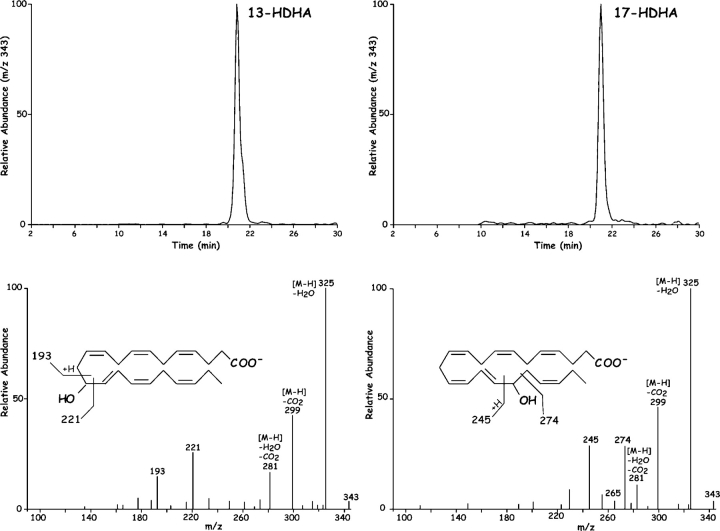
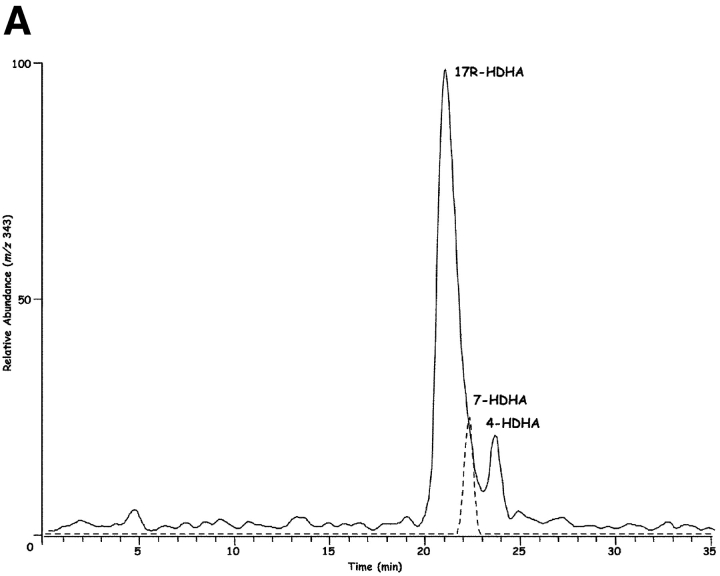
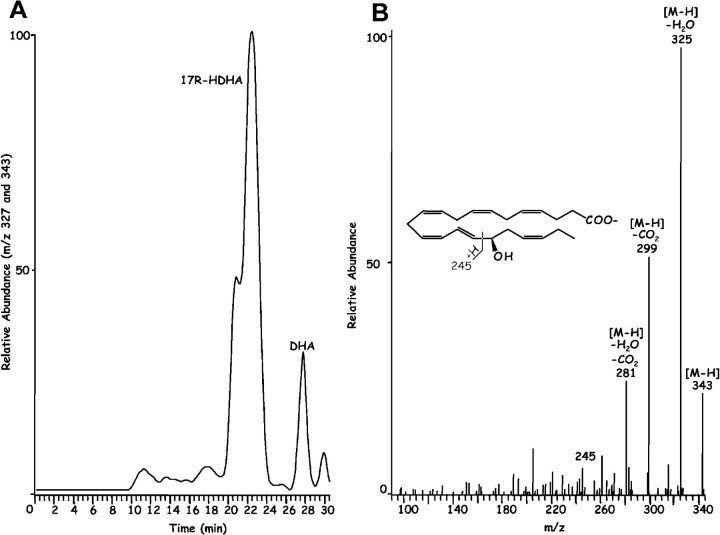
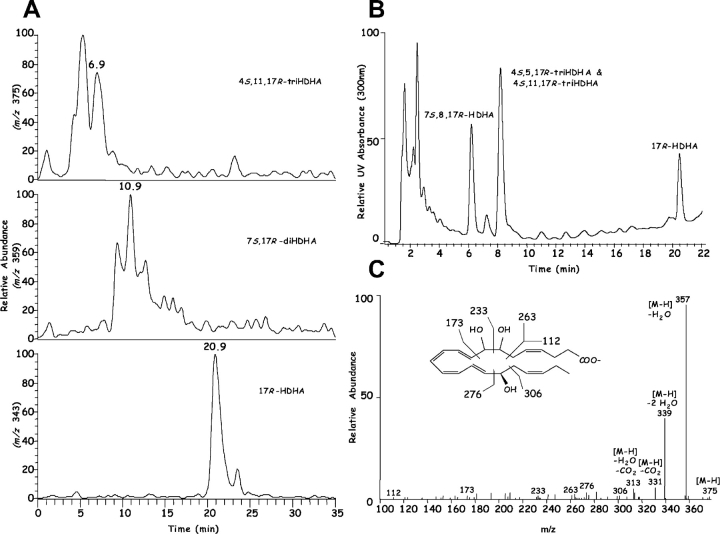
Aspirin (ASA) is unique among current therapies because it acetylates cyclooxygenase (COX)-2 enabling the biosynthesis of R-containing precursors of endogenous antiinflammatory mediators. Here, we report that lipidomic analysis of exudates obtained in the resolution phase from mice treated with ASA and docosahexaenoic acid (DHA) (C22:6) produce a novel family of bioactive 17R-hydroxy-containing di- and tri-hydroxy-docosanoids termed resolvins. Murine brain treated with aspirin produced endogenous 17R-hydroxydocosahexaenoic acid as did human microglial cells. Human COX-2 converted DHA to 13-hydroxy-DHA that switched with ASA to 17R-HDHA that also proved a major route in hypoxic endothelial cells. Human neutrophils transformed COX-2-ASA–derived 17R-hydroxy-DHA into two sets of novel di- and trihydroxy products; one initiated via oxygenation at carbon 7 and the other at carbon 4. These compounds inhibited (IC50 ∼50 pM) microglial cell cytokine expression and in vivo dermal inflammation and peritonitis at ng doses, reducing 40–80% leukocytic exudates. These results indicate that exudates, vascular, leukocytes and neural cells treated with aspirin convert DHA to novel 17R-hydroxy series of docosanoids that are potent regulators. These biosynthetic pathways utilize omega-3 DHA and EPA during multicellular events in resolution to produce a family of protective compounds, i.e., resolvins, that enhance proresolution status.
Overview
The claims and statistics of this paper haven’t been checked yet.
Free: it reads the open-access text and checks the first 5 claims that cite a source we can check. Create a free account to check every claim.
Integrity signals
Registry
Cites
Statistics
Figures



Verification
Claims the paper makes
The claims and statistics of this paper haven’t been checked yet.
Free: it reads the open-access text and checks the first 5 claims that cite a source we can check. Create a free account to check every claim.
Claims other papers make about this one
Each is checked against this paper’s own text: does it say what the citing paper says it does?
The source backs part of the claim, not all of it — or backs it for a different population, condition or comparison.
In the citing paper
“These lipid mediators can selectively stop neutrophil infiltration; increase monocyte recruitment and macrophage phagocytosis; stimulate the expression of genes important for antimicrobial defense; and promote the exit of phagocytes from the inflamed sites [100–103].”
From Transition from inflammation to proliferation: a critical step during wound healing (2016) · cites this paper as [100]
Experimental — accuracy not yet measuredThe source backs part of the claim, not all of it — or backs it for a different population, condition or comparison.
In the citing paper
“Prostaglandin E2 (PGE2) and D2 rapidly initiate the resolution process by inducing the expression of lipid mediators with both anti-inflammatory and pre-resolution functions, e.g., lipoxins [96, 97], resolvins and protectins [98–100], a process known as lipid-mediator class switch [97].”
From Transition from inflammation to proliferation: a critical step during wound healing (2016) · cites this paper as [100]
Experimental — accuracy not yet measuredThe source backs part of the claim, not all of it — or backs it for a different population, condition or comparison.
In the citing paper
“These lipid mediators can selectively stop neutrophil infiltration; increase monocyte recruitment and macrophage phagocytosis; stimulate the expression of genes important for antimicrobial defense; and promote the exit of phagocytes from the inflamed sites [100–103].”
From Transition from inflammation to proliferation: a critical step during wound healing (2016) · cites this paper as [100]
Experimental — accuracy not yet measuredThe source backs part of the claim, not all of it — or backs it for a different population, condition or comparison.
In the citing paper
“These lipid mediators can selectively stop neutrophil infiltration; increase monocyte recruitment and macrophage phagocytosis; stimulate the expression of genes important for antimicrobial defense; and promote the exit of phagocytes from the inflamed sites [100–103].”
From Transition from inflammation to proliferation: a critical step during wound healing (2016) · cites this paper as [100]
Experimental — accuracy not yet measuredThe cited source says what the claim attributes to it.
In the citing paper
“These lipid mediators can selectively stop neutrophil infiltration; increase monocyte recruitment and macrophage phagocytosis; stimulate the expression of genes important for antimicrobial defense; and promote the exit of phagocytes from the inflamed sites [100–103].”
From Transition from inflammation to proliferation: a critical step during wound healing (2016) · cites this paper as [100]
Self-check
Percentages, sums and reported differences re-computed from the paper’s own numbers.
The self-check needs the paper’s full text.
Citations
Cites
Inflammation. Basic principles and clinical correlates
(1989) · Biomedicine & Pharmacotherapy · doi:10.1016/0753-3322(89)90156-x · Cited by 2,393
Leukotrienes and Lipoxins: Structures, Biosynthesis, and Biological Effects
Samuelsson, B., Dahlén, S.-E., Lindgren, J. Å., Rouzer, C. A., & Serhan, C. N. (1987) · Science · doi:10.1126/science.2820055 · Cited by 2,233 · cited 7×
“Like other LO-derived eicosanoids, LXs are potent-local acting in subnanomolar levels with precise stereochemical requirements for evoking their actions (4, 9).”
BackgroundMethodInfluentialSelf-citation(1999) · PubMed · Cited by 2,062
Robbins pathologic basis of disease
Cotran, R. S., Kumar, V., & Collins, T. (1989) · Medical Entomology and Zoology · Cited by 1,944
Lipid mediator class switching during acute inflammation: signals in resolution
Levy, B. D., Clish, C. B., Schmidt, B., Gronert, K., & Serhan, C. N. (2001) · Nature Immunology · doi:10.1038/89759 · Cited by 1,453
Self-citationMarchioli, R., Barzi, F., Bomba, E., Chieffo, C., Di Gregorio, D., Di Mascio, R., Franzosi, M. G., Geraci, E., Levantesi, G., Maggioni, A. P., et al. (2002) · Circulation · doi:10.1161/01.cir.0000014682.14181.f2 · Cited by 1,311
Inducible cyclooxygenase may have anti-inflammatory properties
Gilroy, D. W., Colville-Nash, P. R., Willis, D., Chivers, J., Paul-Clark, M. J., & Willoughby, D. A. (1999) · Nature Medicine · doi:10.1038/9550 · Cited by 1,242
Serhan, C. N., Clish, C. B., Brannon, J., Colgan, S. P., Chiang, N., & Gronert, K. (2000) · The Journal of Experimental Medicine · doi:10.1084/jem.192.8.1197 · Cited by 1,189
Self-citationBlood Levels of Long-Chain n–3 Fatty Acids and the Risk of Sudden Death
Albert, C. M., Campos, H., Stampfer, M. J., Ridker, P. M., Manson, J. E., Willett, W. C., & Ma, J. (2002) · New England Journal of Medicine · doi:10.1056/nejmoa012918 · Cited by 1,146 · cited 3×
“It is noteworthy that both patient groups received aspirin in the GISSI trial while comparing tocopherol versus omega-3 supplementation (20) as did a significant number of participants in the most recent Physician Health study report (18).”
Background
Research works printed but not linked: 1
- De Caterina, R., S. Endres, S.D. Kristensen, and E.B. Schmidt, editors. 1993. N-3 Fatty Acids and Vascular Disease. Springer-Verlag, London. pp. 1–166.
Cited by
Items 101–200 of 1,004
Ibarguren, M., López, D. J., & Escribá, P. V. (2014) · Biochimica et Biophysica Acta (BBA) - Biomembranes · doi:10.1016/j.bbamem.2013.12.021 · Cited by 322
“The term resolvins or ‘resolutionphase interaction products’ was coined by Serhan and colleagues, because these compounds were first encountered in resolving inflammatory exudates of murine models [129].”
BackgroundWeatherill, A. R., Lee, J. Y., Zhao, L., Lemay, D. G., Youn, H. S., & Hwang, D. H. (2005) · The Journal of Immunology · doi:10.4049/jimmunol.174.9.5390 · Cited by 312
“Recently, it was shown that novel hydroxy series of DHA metabolites possess potent anti-inflammatory effects (42).”
BackgroundNeurological Benefits of Omega-3 Fatty Acids
Dyall, S. C., & Michael-Titus, A. T. (2008) · NeuroMolecular Medicine · doi:10.1007/s12017-008-8036-z · Cited by 311
“Non-esterified DHA is the substrate for a 15-lipoxy- genase-like (15-LOX-like) enzyme to produce NPD1 and 17R-resolvins (Serhan et al. 2002; Hong et al. 2003).”
BackgroundGronert, K., Maheshwari, N., Khan, N., Hassan, I. R., Dunn, M., & Laniado Schwartzman, M. (2005) · Journal of Biological Chemistry · doi:10.1074/jbc.m410638200 · Cited by 310
Self-citationSerhan, C. N., Gotlinger, K., Hong, S., & Arita, M. (2004) · Prostaglandins & Other Lipid Mediators · doi:10.1016/j.prostaglandins.2004.03.005 · Cited by 310
Self-citationSnowden, S. G., Ebshiana, A. A., Hye, A., An, Y., Pletnikova, O., O’Brien, R., Troncoso, J., Legido-Quigley, C., & Thambisetty, M. (2017) · PLOS Medicine · doi:10.1371/journal.pmed.1002266 · Cited by 309
Aspirin and clopidogrel resistance: an emerging clinical entity
Wang, T. H., Bhatt, D. L., & Topol, E. J. (2006) · European Heart Journal · doi:10.1093/eurheartj/ehi684 · Cited by 309
Omega-3 fatty acids and antioxidants in neurological and psychiatric diseases: An overview
Mazza, M., Pomponi, M., Janiri, L., Bria, P., & Mazza, S. (2007) · Progress in Neuro-Psychopharmacology and Biological Psychiatry · doi:10.1016/j.pnpbp.2006.07.010 · Cited by 306
“In the presence of aspirin and during ischemia–reperfusion the formation of characteristic DHA messengers that in nonneural tissues are potent mediators of inflammation resolution has been found (Serhan et al., 2002).”
BackgroundRegulation of inflammation in cancer by eicosanoids
Greene, E. R., Huang, S., Serhan, C. N., & Panigrahy, D. (2011) · Prostaglandins & Other Lipid Mediators · doi:10.1016/j.prostaglandins.2011.08.004 · Cited by 303
“Resolvins can be produced in the presence or absence of aspirin and in the presence of statins [30,31].”
BackgroundSelf-citationOmega-3 Fatty Acids and Cancer Cell Cytotoxicity: Implications for Multi-Targeted Cancer Therapy
D’Eliseo, D., & Velotti, F. (2016) · Journal of Clinical Medicine · doi:10.3390/jcm5020015 · Cited by 303
“In addition, EPA and DHA give rise to anti-inflammatory and inflammation resolving metabolites, including resolvins produced from EPA (E-series) and DHA (D-series) and protectins and maresins produced from DHA [113,139,140,151,152].”
BackgroundResolution of Acute Inflammation in the Lung
Levy, B. D., & Serhan, C. N. (2014) · Annual Review of Physiology · doi:10.1146/annurev-physiol-021113-170408 · Cited by 298
“Using a systems approach with LC-MS/MS-based metabolo-lipidomics the identity of specific resolution-phase molecules was determined and using material generated by total organic synthesis matching studies for the physical and biological properties of the molecules were performed (5, 6).”
BackgroundMethodInfluentialSelf-citationCyclooxygenase-2 generates anti-inflammatory mediators from omega-3 fatty acids
Groeger, A. L., Cipollina, C., Cole, M. P., Woodcock, S. R., Bonacci, G., Rudolph, T. K., Rudolph, V., Freeman, B. A., & Schopfer, F. J. (2010) · Nature Chemical Biology · doi:10.1038/nchembio.367 · Cited by 295
“ω-3 fatty acids are metabolized and converted into bioactive products, which can promote the observed beneficial effect”
Marcon, R., Bento, A. F., Dutra, R. C., Bicca, M. A., Leite, D. F. P., & Calixto, J. B. (2013) · The Journal of Immunology · doi:10.4049/jimmunol.1202743 · Cited by 293
“These endogenous mediators, which are biosynthesized in situ, such as lipoxins, resolvins, and protectins, are thought to exert a critical role in triggering the resolution of inflammation (1, 5), accelerating the uptake of apoptotic leukocytes by macrophages in a nonphlogistic fashion and switching from a proinflamma…”
BackgroundMicroRNAs in resolution of acute inflammation: identification of novel resolvin Dl‐miRNA circuits
Recchiuti, A., Krishnamoorthy, S., Fredman, G., Chiang, N., & Serhan, C. N. (2011) · The FASEB Journal · doi:10.1096/fj.10-169599 · Cited by 292
“miRNA 219 down-regulates 5-LO, an essential enzyme involved in the biosynthesis of both leukotrienes and lipoxins (44), as well as D-series resolvins from DHA (15).”
BackgroundInfluentialSelf-citationResolvins and protectins: mediating solutions to inflammation
Kohli, P., & Levy, B. D. (2009) · British Journal of Pharmacology · doi:10.1111/j.1476-5381.2009.00290.x · Cited by 292
“These products’ counter-regulatory bioactions were determined in structure-function assays for control of peritoneal PMN infiltration (Serhan et al., 2002; Sun et al., 2007).”
BackgroundMethodInfluentialGamma-linolenic acid, Dihommo-gamma linolenic, Eicosanoids and Inflammatory Processes
Sergeant, S., Rahbar, E., & Chilton, F. H. (2016) · European Journal of Pharmacology · doi:10.1016/j.ejphar.2016.04.020 · Cited by 291
Transcriptomic analyses of murine resolution-phase macrophages
Stables, M. J., Shah, S., Camon, E. B., Lovering, R. C., Newson, J., Bystrom, J., Farrow, S., & Gilroy, D. W. (2011) · Blood · doi:10.1182/blood-2011-04-345330 · Cited by 291
Oh, S. F., Pillai, P. S., Recchiuti, A., Yang, R., & Serhan, C. N. (2011) · Journal of Clinical Investigation · doi:10.1172/jci42545 · Cited by 290
Self-citationTargeting inflammation in metabolic syndrome
Welty, F. K., Alfaddagh, A., & Elajami, T. K. (2016) · Translational Research · doi:10.1016/j.trsl.2015.06.017 · Cited by 287
DHA- and EPA-derived resolvins, protectins, and maresins in airway inflammation
Duvall, M. G., & Levy, B. D. (2016) · European Journal of Pharmacology · doi:10.1016/j.ejphar.2015.11.001 · Cited by 286
“…interactions in airway inflammation, 15- lipoxygenase (15-LOX) in epithelial cells converts DHA to 17S-hydroperoxy-DHA, which can be subsequently converted by 5-LOX (in neutrophils) to RvD1 through RvD4 via epoxide-containing biosynthetic intermediates (Hong et al., 2003; Serhan et al., 2002) (Fig.”
BackgroundPathological mechanisms and therapeutic outlooks for arthrofibrosis
Usher, K. M., Zhu, S., Mavropalias, G., Carrino, J. A., Zhao, J., & Xu, J. (2019) · Bone Research · doi:10.1038/s41413-019-0047-x · Cited by 285
Inflammatory lipid mediators in adipocyte function and obesity
Iyer, A., Fairlie, D. P., Prins, J. B., Hammock, B. D., & Brown, L. (2010) · Nature Reviews Endocrinology · doi:10.1038/nrendo.2009.264 · Cited by 285
Resolvin D1 Receptor Stereoselectivity and Regulation of Inflammation and Proresolving MicroRNAs
Krishnamoorthy, S., Recchiuti, A., Chiang, N., Fredman, G., & Serhan, C. N. (2012) · The American Journal of Pathology · doi:10.1016/j.ajpath.2012.01.028 · Cited by 283
Self-citationRegulation of adipocyte differentiation and function by polyunsaturated fatty acids
Madsen, L., Petersen, R. K., & Kristiansen, K. (2005) · Biochimica et Biophysica Acta (BBA) - Molecular Basis of Disease · doi:10.1016/j.bbadis.2005.03.001 · Cited by 281
“The consumption of a diet enriched in n-3 PUFA (specifically EPA and DHA) may thereby affect eicosanoid biosynthesis [15–17].”
BackgroundResolvin E1 Receptor Activation Signals Phosphorylation and Phagocytosis
Ohira, T., Arita, M., Omori, K., Recchiuti, A., Van Dyke, T. E., & Serhan, C. N. (2010) · Journal of Biological Chemistry · doi:10.1074/jbc.m109.044131 · Cited by 278
Self-citationNovel Anti-Inflammatory-Pro-Resolving Mediators and Their Receptors
N. Serhan, C., Krishnamoorthy, S., Recchiuti, A., & Chiang, N. (2011) · Current Topics in Medicinal Chemistry · doi:10.2174/1568026611109060629 · Cited by 276
Self-citationCyclooxygenase 2 Plays a Pivotal Role in the Resolution of Acute Lung Injury
Fukunaga, K., Kohli, P., Bonnans, C., Fredenburgh, L. E., & Levy, B. D. (2005) · The Journal of Immunology · doi:10.4049/jimmunol.174.8.5033 · Cited by 275
“In addition to 15-epi-LXs, ASA-acetylated COX-2 can also catalyze the formation of resolvins, structurally distinct lipid mediators derived from docosahexaenoic and eicosapentaenoic acids that also display tissue-protective properties during acute inflammation (33, 34).”
BackgroundMas, E., Croft, K. D., Zahra, P., Barden, A., & Mori, T. A. (2012) · Clinical Chemistry · doi:10.1373/clinchem.2012.190199 · Cited by 270
The role of non-resolving inflammation in atherosclerosis
Kasikara, C., Doran, A. C., Cai, B., & Tabas, I. (2018) · Journal of Clinical Investigation · doi:10.1172/jci97950 · Cited by 266
Pro-resolving lipid mediators: regulators of inflammation, metabolism and kidney function
Brennan, E., Kantharidis, P., Cooper, M. E., & Godson, C. (2021) · Nature Reviews Nephrology · doi:10.1038/s41581-021-00454-y · Cited by 262
Shelton, R. C., & Miller, A. H. (2010) · Progress in Neurobiology · doi:10.1016/j.pneurobio.2010.04.004 · Cited by 261
Park, C.-K., Xu, Z.-Z., Liu, T., Lü, N., Serhan, C. N., & Ji, R.-R. (2011) · The Journal of Neuroscience · doi:10.1523/jneurosci.4192-11.2011 · Cited by 261
“Resolvins were initially isolated in exudates from the resolution phase of self-limited acute inflammation (Serhan et al., 2002).”
BackgroundSelf-citationThe Management of Inflammation in Periodontal Disease
Van Dyke, T. E. (2008) · Journal of Periodontology · doi:10.1902/jop.2008.080173 · Cited by 261
Weylandt, K. H., Chiu, C.-Y., Gomolka, B., Waechter, S. F., & Wiedenmann, B. (2012) · Prostaglandins & Other Lipid Mediators · doi:10.1016/j.prostaglandins.2012.01.005 · Cited by 258
Serhan, C. N. (2017) · Molecular Aspects of Medicine · doi:10.1016/j.mam.2017.03.001 · Cited by 257
“In addition to the resolvins, protectins and maresins (Hong et al., 2003; Serhan et al., 2002), conjugates of the epoxide intermediates in each of the SPM pathways were uncovered in recent studies; these novel SPM-peptido conjugates enhance tissue regeneration and bacterial killing and clearance;…”
BackgroundMethodResultInfluentialSelf-citationNobili, V., Bedogni, G., Alisi, A., Pietrobattista, A., Rise, P., Galli, C., & Agostoni, C. (2011) · Archives of Disease in Childhood · doi:10.1136/adc.2010.192401 · Cited by 256
Bento, A. F., Claudino, R. F., Dutra, R. C., Marcon, R., & Calixto, J. B. (2011) · The Journal of Immunology · doi:10.4049/jimmunol.1101305 · Cited by 256
“DHA), also known as aspirin-triggered (AT)RvD1 (1, 11, 12).”
Resolvins suppress tumor growth and enhance cancer therapy
Sulciner, M. L., Serhan, C. N., Gilligan, M. M., Mudge, D. K., Chang, J., Gartung, A., Lehner, K. A., Bielenberg, D. R., Schmidt, B., Dalli, J., et al. (2018) · Journal of Experimental Medicine · doi:10.1084/jem.20170681 · Cited by 256
“Unlike the majority of antiinflammatory agents, including NSA IDs, resolvins are endogenous, nonimmunosuppressive, and nontoxic inhibitors of inflammation (Serhan et al., 2002).”
BackgroundSelf-citationCalder, P. C. (2012) · Molecular Nutrition & Food Research · doi:10.1002/mnfr.201100710 · Cited by 255
Bioactive Compounds Isolated from Microalgae in Chronic Inflammation and Cancer
Talero, E., García-Mauriño, S., Ávila-Román, J., Rodríguez-Luna, A., Alcaide, A., & Motilva, V. (2015) · Marine Drugs · doi:10.3390/md13106152 · Cited by 255
“[205] demonstrated, for the first time, that this group of animal OXLs are synthetized during the inflammatory process and are able to promote the resolution of acute phase of inflammation.”
BackgroundMerTK cleavage limits proresolving mediator biosynthesis and exacerbates tissue inflammation
Cai, B., Thorp, E. B., Doran, A. C., Subramanian, M., Sansbury, B. E., Lin, C.-S., Spite, M., Fredman, G., & Tabas, I. (2016) · Proceedings of the National Academy of Sciences · doi:10.1073/pnas.1524292113 · Cited by 254
“The macrophage media were then harvested for analysis by the Neogen LXA4 ELISA kit, which has the following cross-reactivities of ≥0.1% according to the manufacturer: 15-epi-LXA4 (24%), 5(S),6(R)-DiHETE (5%), LXB4 (1%), and 15-HETE (0.1%); or they were analyzed by the Cayman RvD1 ELISA kit, with cross-reactivities to…”
BackgroundInfluentialSapieha, P., Stahl, A., Chen, J., Seaward, M. R., Willett, K. L., Krah, N. M., Dennison, R. J., Connor, K. M., Aderman, C. M., Liclican, E., et al. (2011) · Science Translational Medicine · doi:10.1126/scitranslmed.3001571 · Cited by 252
Self-citationThe foundations and development of lipidomics
Han, X., & Gross, R. W. (2022) · Journal of Lipid Research · doi:10.1016/j.jlr.2021.100164 · Cited by 249
“(99) in literature before 2003, the emergence collection of thoughts in the field was facilitated through the use of definitive definitions in 2003 (11, 100), demonstration of the power of synergistic technologies (11, 101,”
BackgroundToll-like receptor signaling links dietary fatty acids to the metabolic syndrome
Fessler, M. B., Rudel, L. L., & Brown, J. M. (2009) · Current Opinion in Lipidology · doi:10.1097/mol.0b013e32832fa5c4 · Cited by 249
Elucidation of novel 13-series resolvins that increase with atorvastatin and clear infections
Dalli, J., Chiang, N., & Serhan, C. N. (2015) · Nature Medicine · doi:10.1038/nm.3911 · Cited by 249
Self-citationBazan, N. G. (2003) · Journal of Lipid Research · doi:10.1194/jlr.r300013-jlr200 · Cited by 247
Docosahexaenoic Acid and the Aging Brain
Lukiw, W. J., & Bazan, N. G. (2008) · The Journal of Nutrition · doi:10.3945/jn.108.096016 · Cited by 247
Ariel, A., Li, P.-L., Wang, W., Tang, W.-X., Fredman, G., Hong, S., Gotlinger, K. H., & Serhan, C. N. (2005) · Journal of Biological Chemistry · doi:10.1074/jbc.m509796200 · Cited by 246
Self-citationDumbleton, K., Caffery, B., Dogru, M., Hickson-Curran, S., Kern, J., Kojima, T., Morgan, P. B., Purslow, C., Robertson, D. M., & Nelson, J. D. (2013) · Investigative Opthalmology & Visual Science · doi:10.1167/iovs.13-13125 · Cited by 245
New pro-resolving n-3 mediators bridge resolution of infectious inflammation to tissue regeneration
Serhan, C. N., Chiang, N., & Dalli, J. (2018) · Molecular Aspects of Medicine · doi:10.1016/j.mam.2017.08.002 · Cited by 245
Self-citationResolvin D3 and Aspirin-Triggered Resolvin D3 Are Potent Immunoresolvents
Dalli, J., Winkler, J. W., Colas, R. A., Arnardottir, H., Cheng, C.-Y. C., Chiang, N., Petasis, N. A., & Serhan, C. N. (2013) · Chemistry & Biology · doi:10.1016/j.chembiol.2012.11.010 · Cited by 243
“The resolvins are biosynthesized from essential omega-3 fatty acids (Serhan, 2007; Serhan et al., 2002; Serhan and Petasis, 2011).”
BackgroundMethodInfluentialSelf-citationOmega-3 fatty acids, pro-inflammatory signaling and neuroprotection
Bazan, N. G. (2007) · Current Opinion in Clinical Nutrition and Metabolic Care · doi:10.1097/mco.0b013e32802b7030 · Cited by 243
Park, C.-K., Lü, N., Xu, Z.-Z., Liu, T., Serhan, C. N., & Ji, R.-R. (2011) · The Journal of Neuroscience · doi:10.1523/jneurosci.2443-11.2011 · Cited by 241
“The novel mediator neuroprotectin D1 (NPD1) is biosynthesized from -3 fatty acid docosahexaenoic acid (DHA) and was first identified in resolving inflammatory exudates and murine brain (Serhan et al., 2002; Hong et al., 2003) as well as in experimental stroke, where it displays potent protective actions (Marcheselli e…”
BackgroundSelf-citationAnti-inflammatory circuitry: Lipoxin, aspirin-triggered lipoxins and their receptor ALX
Chiang, N., Arita, M., & Serhan, C. N. (2005) · Prostaglandins, Leukotrienes and Essential Fatty Acids · doi:10.1016/j.plefa.2005.05.003 · Cited by 239
Self-citationTargeting cyclooxygenases-1 and -2 in neuroinflammation: Therapeutic implications
Aïd, S., & Bosetti, F. (2011) · Biochimie · doi:10.1016/j.biochi.2010.09.009 · Cited by 239
“However, after aspirin administration, acetylated COX-2 can generate epimers of lipoxins, resolvins or protectins and increase their formation [36], effects that are blocked by selective COX-2 inhibitors [37].”
BackgroundTjonahen, E., Oh, S. F., Siegelman, J., Elangovan, S., Percarpio, K. B., Hong, S., Arita, M., & Serhan, C. N. (2006) · Chemistry & Biology · doi:10.1016/j.chembiol.2006.09.011 · Cited by 239
Self-citationRapid Appearance of Resolvin Precursors in Inflammatory Exudates: Novel Mechanisms in Resolution
Kasuga, K., Yang, R., Porter, T. F., Agrawal, N., Petasis, N. A., Irimia, D., Toner, M., & Serhan, C. N. (2008) · The Journal of Immunology · doi:10.4049/jimmunol.181.12.8677 · Cited by 239
“The protectins possess potent biological actions and a conjugated triene structure as distinguishing features (19).”
BackgroundSelf-citationClaria, J. (2003) · Current Pharmaceutical Design · doi:10.2174/1381612033454054 · Cited by 238
“, a novel 17R series of hydroxy-DHAs [14].”
BackgroundSchif‐Zuck, S., Gross, N., Assi, S., Rostoker, R., Serhan, C. N., & Ariel, A. (2011) · European Journal of Immunology · doi:10.1002/eji.201040801 · Cited by 237
Self-citationLipid Signaling in Neural Plasticity, Brain Repair, and Neuroprotection
Bazan, N. G. (2005) · Molecular Neurobiology · doi:10.1385/mn:32:1:089 · Cited by 236
“On one hand, two DHA-oxygenation pathways give rise to 10,17S-docosatriene; on the other hand, these two DHA-oxygenation pathways give rise to the synthesis of resolvintype messengers (17R-DHA), which have also been identified outside the nervous system as a response to aspirin treatment ( 57 ).”
BackgroundLiu, J. J., Green, P., John Mann, J., Rapoport, S. I., & Sublette, M. E. (2015) · Brain Research · doi:10.1016/j.brainres.2014.11.059 · Cited by 235
Isobe, Y., Arita, M., Matsueda, S., Iwamoto, R., Fujihara, T., Nakanishi, H., Taguchi, R., Masuda, K., Sasaki, K., Urabe, D., et al. (2012) · Journal of Biological Chemistry · doi:10.1074/jbc.m112.340612 · Cited by 232
Resolvin D1 and Aspirin-Triggered Resolvin D1 Promote Resolution of Allergic Airways Responses
Rogerio, A. P., Haworth, O., Croze, R., Oh, S. F., Uddin, M., Carlo, T., Pfeffer, M. A., Priluck, R., Serhan, C. N., & Levy, B. D. (2012) · The Journal of Immunology · doi:10.4049/jimmunol.1101665 · Cited by 232
“During inflammation, the essential v-3 fatty acid docosahexaenoic acid (DHA; C22:6) is available for enzymatic transformation to several anti-inflammatory and proresolving mediators, including D-series resolvins (3).”
BackgroundSelf-citationNeuhofer, A., Zeyda, M., Mascher, D., Itariu, B. K., Murano, I., Leitner, L., Hochbrugger, E. E., Fraisl, P., Cinti, S., Serhan, C. N., et al. (2013) · Diabetes · doi:10.2337/db12-0828 · Cited by 229
“In in vitro studies, 17-HDHA inhibits cytokine release of human microglial cells (48) and decreases TNF-a secretion of murine RAW macrophages (49,50) indicating that 17-HDHA or SPM derived from it exert potent anti-inflammatory action on macrophage-like cells.”
BackgroundSelf-citationNovel eicosanoid and docosanoid mediators: resolvins, docosatrienes, and neuroprotectins
Serhan, C. N. (2005) · Current Opinion in Clinical Nutrition and Metabolic Care · doi:10.1097/00075197-200503000-00003 · Cited by 227
Self-citationResolving Lipid Mediators Maresin 1 and Resolvin D2 Prevent Atheroprogression in Mice
Viola, J. R., Lemnitzer, P., Jansen, Y., Csaba, G., Winter, C., Neideck, C., Silvestre-Roig, C., Dittmar, G., Döring, Y., Drechsler, M., et al. (2016) · Circulation Research · doi:10.1161/circresaha.116.309492 · Cited by 226
Sansbury, B. E., & Spite, M. (2016) · Circulation Research · doi:10.1161/circresaha.116.307308 · Cited by 226
Novel n-3 Immunoresolvents: Structures and Actions
Dalli, J., Colas, R. A., & Serhan, C. N. (2013) · Scientific Reports · doi:10.1038/srep01940 · Cited by 226
Self-citationDona, M., Fredman, G., Schwab, J. M., Chiang, N., Arita, M., Goodarzi, A., Cheng, G., von Andrian, U. H., & Serhan, C. N. (2008) · Blood · doi:10.1182/blood-2007-11-122598 · Cited by 226
Self-citationGonzález‐Périz, A., Planagumà, A., Gronert, K., Miquel, R., López‐Parra, M., Titos, E., Horrillo, R., Ferré, N., Deulofeu, R., Arroyo, V., et al. (2006) · The FASEB Journal · doi:10.1096/fj.06-6250fje · Cited by 225
“Physical criteria for identification such as HPLC retention times, specific UV chromophores, as well as GC/MS and LC/MS major and signature ions have already been established (4, 5, 10).”
BackgroundMethodSelf-citationLong-chain fatty acids and inflammation
Calder, P. C. (2012) · Proceedings of The Nutrition Society · doi:10.1017/s0029665112000067 · Cited by 222
Romano, M., & Clària, J. (2003) · The FASEB Journal · doi:10.1096/fj.03-0053rev · Cited by 222
“, a novel 17R series of hydroxy-DHAs (15).”
BackgroundUpdate on leukotriene, lipoxin and oxoeicosanoid receptors: IUPHAR Review 7
Bäck, M., Powell, W. S., Dahlén, S., Drazen, J. M., Evans, J. F., Serhan, C. N., Shimizu, T., Yokomizo, T., & Rovati, G. E. (2014) · British Journal of Pharmacology · doi:10.1111/bph.12665 · Cited by 217
“More recently, RvD1 was identified as another lipid mediator of resolution (Serhan et al., 2002), which could activate human ALX/FPR2 (Krishnamoorthy et al.”
BackgroundSelf-citationUnderstanding Omega-3 Polyunsaturated Fatty Acids
Calder, P. C., & Yaqoob, P. (2009) · Postgraduate Medicine · doi:10.3810/pgm.2009.11.2083 · Cited by 210
Hsiao, H.-M., Sapinoro, R. E., Thatcher, T. H., Croasdell, A., Levy, E. P., Fulton, R. A., Olsen, K. C., Pollock, S. J., Serhan, C. N., Phipps, R. P., et al. (2013) · PLoS ONE · doi:10.1371/journal.pone.0058258 · Cited by 209
“Several of these mediators have anti-inflammatory and proresolving activity in pre-clinical disease models such as peritonitis [4], colitis [5], dermal inflammation [6] and asthma [7].”
BackgroundSelf-citationLima-Garcia, J., Dutra, R., da Silva, K., Motta, E., Campos, M., & Calixto, J. (2011) · British Journal of Pharmacology · doi:10.1111/j.1476-5381.2011.01345.x · Cited by 209
“, 2003), denoted the E series (RvE) and the D series (RvD) resolvins (Serhan et al., 2002).”
BackgroundResultInfluentialLipoxins and new lipid mediators in the resolution of inflammation
SCHWAB, J., & SERHAN, C. (2006) · Current Opinion in Pharmacology · doi:10.1016/j.coph.2006.02.006 · Cited by 207
Self-citationBrain docosahexaenoic acid uptake and metabolism
Lacombe, R. J. S., Chouinard-Watkins, R., & Bazinet, R. P. (2018) · Molecular Aspects of Medicine · doi:10.1016/j.mam.2017.12.004 · Cited by 206
Campbell, E. L., Louis, N. A., Tomassetti, S. E., Canny, G. O., Arita, M., Serhan, C. N., & Colgan, S. P. (2007) · The FASEB Journal · doi:10.1096/fj.07-8473com · Cited by 205
“Studies with anti-inflammatory lipids, the resolvins RvE1 and RvD1, have demonstrated that exposure to PMN attenuates migration across endothelial monolayers (13, 21).”
BackgroundResultSelf-citationCarcinogenesis: Failure of resolution of inflammation?
Fishbein, A., Hammock, B. D., Serhan, C. N., & Panigrahy, D. (2021) · Pharmacology & Therapeutics · doi:10.1016/j.pharmthera.2020.107670 · Cited by 205
“The Serhan laboratory utilized lipid mediator metabololipidomics, proteomics (liquid chromatography–tandem mass spectrometry [LC-MS/MS]), and cell trafficking in self-limited exudates to identify three more new families of pro-resolving mediators, termed the “resolvins” (short for resolution phase interaction products…”
InfluentialSelf-citationBlame the signaling: Role of cAMP for the resolution of inflammation
Tavares, L. P., Negreiros-Lima, G. L., Lima, K. M., E Silva, P. M. R., Pinho, V., Teixeira, M. M., & Sousa, L. P. (2020) · Pharmacological Research · doi:10.1016/j.phrs.2020.105030 · Cited by 205
Ho, K. J., Spite, M., Owens, C. D., Lancero, H., Kroemer, A. H. K., Pande, R., Creager, M. A., Serhan, C. N., & Conte, M. S. (2010) · The American Journal of Pathology · doi:10.2353/ajpath.2010.091082 · Cited by 204
Self-citationPro-Resolving Lipid Mediators Improve Neuronal Survival and Increase Aβ42 Phagocytosis
Zhu, M., Wang, X., Hjorth, E., Colas, R. A., Schroeder, L., Granholm, A.-C., Serhan, C. N., & Schultzberg, M. (2016) · Molecular Neurobiology · doi:10.1007/s12035-015-9544-0 · Cited by 204
Self-citationAdipose tissue and the immune system
Pond, C. M. (2005) · Prostaglandins, Leukotrienes and Essential Fatty Acids · doi:10.1016/j.plefa.2005.04.005 · Cited by 204
El‐Sharkawy, H., Aboelsaad, N., Eliwa, M., Darweesh, M., Alshahat, M., Kantarci, A., Hasturk, H., & Van Dyke, T. E. (2010) · Journal of Periodontology · doi:10.1902/jop.2010.090628 · Cited by 203
Rao, J. S., Ertley, R. N., DeMar, J. C., Rapoport, S. I., Bazinet, R. P., & Lee, H.-J. (2007) · Molecular Psychiatry · doi:10.1038/sj.mp.4001887 · Cited by 199
Oral infections and cardiovascular disease
Kholy, K. E., Genco, R. J., & Van Dyke, T. E. (2015) · Trends in Endocrinology & Metabolism · doi:10.1016/j.tem.2015.03.001 · Cited by 197
An atlas and functional analysis of G-protein coupled receptors in human islets of Langerhans
Amisten, S., Salehi, A., Rorsman, P., Jones, P. M., & Persaud, S. J. (2013) · Pharmacology & Therapeutics · doi:10.1016/j.pharmthera.2013.05.004 · Cited by 196
The resolution of inflammation: the devil in the flask and in the details
Serhan, C. N. (2011) · The FASEB Journal · doi:10.1096/fj.11-0502ufm · Cited by 196
“The birth of aspirin-triggered lipid mediators (12, 13, 48), the understanding of catabasis as the return from the battle of disease to tissue homeostasis (14), and the recognition of the important role of macrophages in efferocytosis (49 –51) at present provide many new opportunities to appreciate the cellular and mo…”
BackgroundSelf-citationThe Modulation of Inflammatory Gene Expression by Lipids: Mediation through Toll-like Receptors
Lee, J. Y., & Hwang, D. H. (2006) · Molecules and Cells · doi:10.1016/s1016-8478(23)12877-9 · Cited by 196
“17Rhydroxy series of docosanoids produced from DHA by aspirin-modified COX-2 possess potent anti-inflammatory effects (Serhan et al., 2002).”
BackgroundLipid signaling: Sleep, synaptic plasticity, and neuroprotection
Chen, C., & Bazan, N. G. (2005) · Prostaglandins & Other Lipid Mediators · doi:10.1016/j.prostaglandins.2005.07.001 · Cited by 196
DeMar, J. C., Ma, K., Bell, J. M., & Rapoport, S. I. (2004) · Journal of Neurochemistry · doi:10.1111/j.1471-4159.2004.02789.x · Cited by 194
“…unesterified DHA is reincorporated into the phospholipids (Lands and Crawford 1976; Purdon and Rapoport 1998; Farooqui et al. 2000; Rapoport 2003) or is lost by conversion to docosanoids (Kim et al. 1990; Serhan et al. 2002; Hong et al. 2003) and by b-oxidation or peroxidation (Yavin et al. 2002).”
BackgroundReview of Eukaryote Cellular Membrane Lipid Composition, with Special Attention to the Fatty Acids
Ali, O., & Szabó, A. (2023) · International Journal of Molecular Sciences · doi:10.3390/ijms242115693 · Cited by 191
Maderna, P., Yona, S., Perretti, M., & Godson, C. (2005) · The Journal of Immunology · doi:10.4049/jimmunol.174.6.3727 · Cited by 190
“In this regard, it is noteworthy that the biosynthesis of specific mediators that actively promote the resolution of inflammation has been demonstrated (10, 11, 32).”
BackgroundResolvin E2 Formation and Impact in Inflammation Resolution
Oh, S. F., Dona, M., Fredman, G., Krishnamoorthy, S., Irimia, D., & Serhan, C. N. (2012) · The Journal of Immunology · doi:10.4049/jimmunol.1103652 · Cited by 189
“Fresh human polymorphonuclear neutrophils (PMN) were isolated from the whole blood by Ficoll gradient and enumerated (22).”
MethodSelf-citationCyclooxygenases in the skin: pharmacological and toxicological implications
Lee, J. L., Mukhtar, H., Bickers, D. R., Kopelovich, L., & Athar, M. (2003) · Toxicology and Applied Pharmacology · doi:10.1016/s0041-008x(03)00301-6 · Cited by 189
Campbell, E. L., MacManus, C. F., Kominsky, D. J., Keely, S., Glover, L. E., Bowers, B. E., Scully, M., Bruyninckx, W. J., & Colgan, S. P. (2010) · Proceedings of the National Academy of Sciences · doi:10.1073/pnas.0914730107 · Cited by 186
“RvE1 is generated at sites of inflammation through transcellular metabolism and has been shown to potently inhibit neutrophil (PMN) transendothelial migration (12), to attenuate colonic mucosal inflammation in vivo (13, 14), and to resolve oral inflammation in a rabbit periodontitis model (15).”
BackgroundSelf-citationMaresin 1 mitigates LPS‐induced acute lung injury in mice
Gong, J., Wu, Z., Qi, H., Chen, L., Li, H., Li, B., Yao, C., Wang, Y., Wu, J., Yuan, S., et al. (2014) · British Journal of Pharmacology · doi:10.1111/bph.12714 · Cited by 186
“Recent findings have highlighted the role of pro-resolving mediators derived from polyunsaturated fatty acids (PUFAs) in regulating the inflammatory response (Serhan et al., 2002; Decker et al., 2009).”
BackgroundDevassy, J. G., Leng, S., Gabbs, M., Monirujjaman, M., & Aukema, H. M. (2016) · Advances in Nutrition · doi:10.3945/an.116.012187 · Cited by 183
Lipid metabolism in inflammation-related diseases
Zhang, C., Wang, K., Yang, L., Liu, R., Chu, Y., Qin, X., Yang, P., & Yu, H. (2018) · The Analyst · doi:10.1039/c8an01046c · Cited by 182
Metadata
- Authors
- Serhan, C. N., Hong, S., Gronert, K., Colgan, S. P., Devchand, P. R., Mirick, G., & Moussignac, R.-L.
- Affiliations
- Brigham and Women's Hospital (US)
- Venue
- The Journal of Experimental Medicine
- Publisher
- Rockefeller University Press
- Published
- 2002-10-21
- Volume
- 196
- Issue
- 8
- Pages
- 1025-1037
- ISSN
- 0022-1007 (ISSN-L)
- 1540-9538
- PMC
- PMC2194036
- OpenAlex
- W2162465757
- Cited by
- 1,650
- References
- 62
- Citations by year
- 2026: 40 · 2025: 45 · 2024: 65 · 2023: 61 · 2022: 68 · 2021: 75 · 2020: 101 · 2019: 78 · 2018: 81 · 2017: 81 · 2016: 84 · 2015: 94 · 2014: 100 · 2013: 112 · 2012: 92
- FWCI
- 30.40
- Type
- journal article
- Language
- en
- Open access
- bronze
- doi.org
- Locations
- The Journal of Experimental Medicine (publishedVersion)
- PubMed Central (publishedVersion, cc-by-nc-sa)
- PubMed (publishedVersion)
- Funders
- National Institutes of Health (4r37gm038765-19, DE13499, GM 38765, P01-DE13499)
- National Institute of General Medical Sciences (GM 38765, R01GM038765, R37-GM038765)
- National Institute of Diabetes and Digestive and Kidney Diseases (K01DK060583)
- National Institute of Dental and Craniofacial Research (P01 DE 13499, P01DE013499)
- Topics
- Health Sciences › Nursing › Nutrition and Dietetics › Fatty Acid Research and Health
- Health Sciences › Medicine › Pharmacology (medical) › Inflammatory mediators and NSAID effects
- Life Sciences › Biochemistry, Genetics and Molecular Biology › Biochemistry › Eicosanoids and Hypertension Pharmacology
- Keywords
- resolvins, aspirin, cyclooxygenase-2, docosahexaenoic acid, omega-3 fatty acids, inflammation resolution, microglia, neutrophils, eicosanoid biosynthesis, anti-inflammatory mediators, peritonitis, skin inflammation, leukocyte recruitment
- MeSH terms
- Animals, Aspirin, Biological Factors, Humans, Inflammation, Tumor Cells, Cultured, Signal Transduction, Fatty Acids, Omega-3, Mice
About these checks
Registry, retraction, Cites and statistics results are computed, not judged, with one exception: a printed reference that no index lists is read once by a model before it counts as a citation error. Claims are extracted by a model and kept only when their quote appears verbatim in the text; each cited source is then checked, with a model’s help, for whether it says what the claim relies on. Those verdicts can be wrong — read the claim’s quote and the cited source before relying on one.
Statistics and arithmetic are recomputed, not judged.
Confidence bands are shown only for fields calibrated on our annotated test set. None is calibrated yet, so no band is shown.
What counts as a claim ›How we measure confidence ›How we check this ›
Are you an author, or do you see a problem with this page? Request a review
Data sources
Bibliographic data: Semantic Scholar, OpenAlex, Crossref.
Contains information from the Semantic Scholar Academic Graph Datasets, made available under the ODC Attribution License (ODC-BY 1.0).
Semantic Scholar’s data is described in: Kinney, R., et al. (2023). The Semantic Scholar Open Data Platform. arXiv:2301.10140.
