

Resolvins
Open accessThe DOI matches its Crossref record; 62 of the 62 references it cites were found in a registry or an index.
Abstract
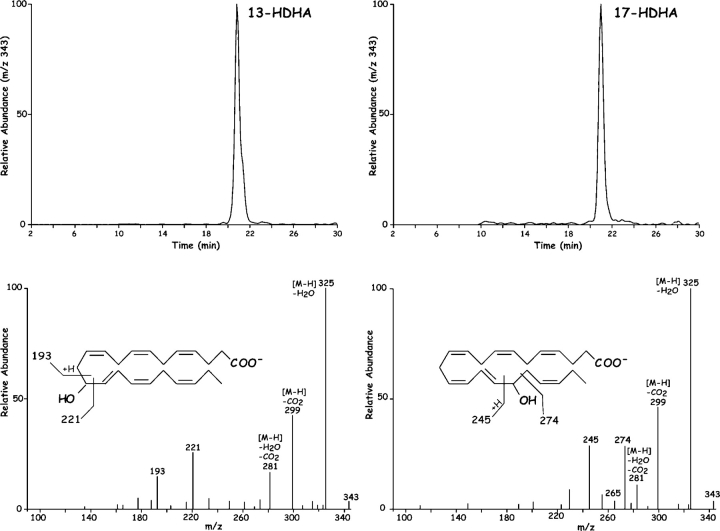
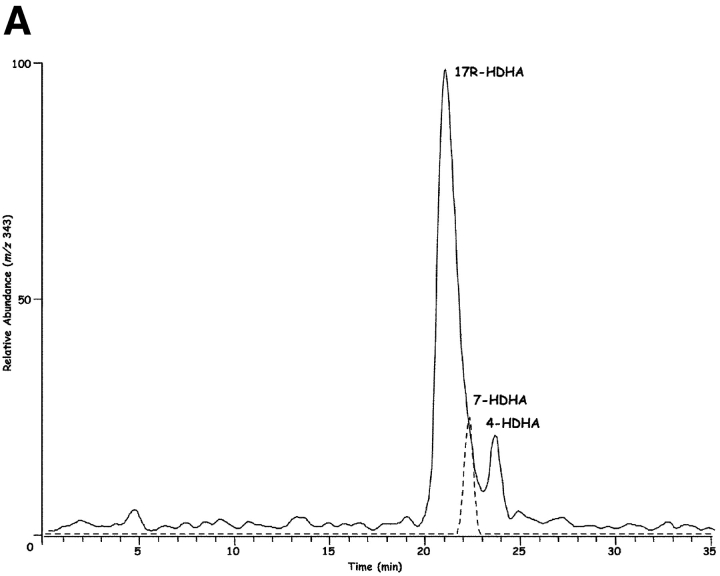
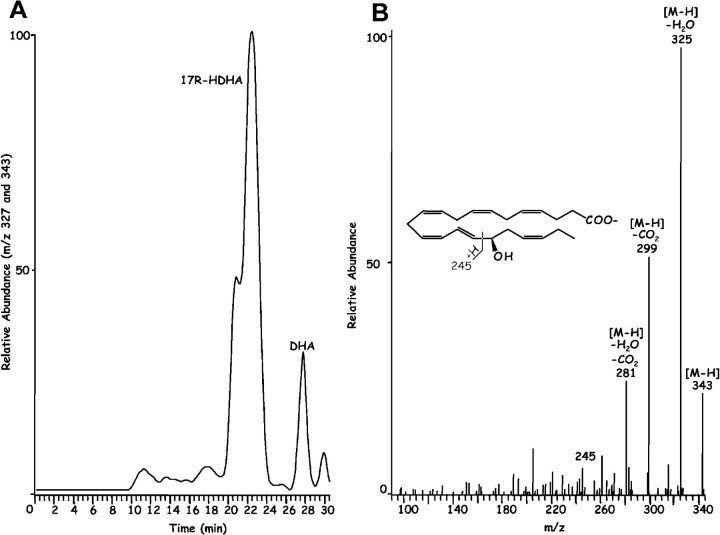
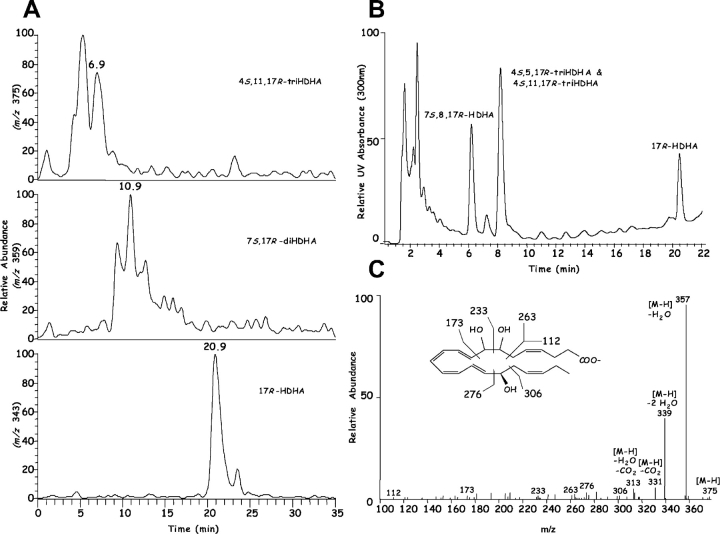
Aspirin (ASA) is unique among current therapies because it acetylates cyclooxygenase (COX)-2 enabling the biosynthesis of R-containing precursors of endogenous antiinflammatory mediators. Here, we report that lipidomic analysis of exudates obtained in the resolution phase from mice treated with ASA and docosahexaenoic acid (DHA) (C22:6) produce a novel family of bioactive 17R-hydroxy-containing di- and tri-hydroxy-docosanoids termed resolvins. Murine brain treated with aspirin produced endogenous 17R-hydroxydocosahexaenoic acid as did human microglial cells. Human COX-2 converted DHA to 13-hydroxy-DHA that switched with ASA to 17R-HDHA that also proved a major route in hypoxic endothelial cells. Human neutrophils transformed COX-2-ASA–derived 17R-hydroxy-DHA into two sets of novel di- and trihydroxy products; one initiated via oxygenation at carbon 7 and the other at carbon 4. These compounds inhibited (IC50 ∼50 pM) microglial cell cytokine expression and in vivo dermal inflammation and peritonitis at ng doses, reducing 40–80% leukocytic exudates. These results indicate that exudates, vascular, leukocytes and neural cells treated with aspirin convert DHA to novel 17R-hydroxy series of docosanoids that are potent regulators. These biosynthetic pathways utilize omega-3 DHA and EPA during multicellular events in resolution to produce a family of protective compounds, i.e., resolvins, that enhance proresolution status.
Overview
The claims and statistics of this paper haven’t been checked yet.
Free: it reads the open-access text and checks the first 5 claims that cite a source we can check. Create a free account to check every claim.
Integrity signals
Registry
Cites
Statistics
Figures



Verification
Claims the paper makes
The claims and statistics of this paper haven’t been checked yet.
Free: it reads the open-access text and checks the first 5 claims that cite a source we can check. Create a free account to check every claim.
Claims other papers make about this one
Each is checked against this paper’s own text: does it say what the citing paper says it does?
The source backs part of the claim, not all of it — or backs it for a different population, condition or comparison.
In the citing paper
“These lipid mediators can selectively stop neutrophil infiltration; increase monocyte recruitment and macrophage phagocytosis; stimulate the expression of genes important for antimicrobial defense; and promote the exit of phagocytes from the inflamed sites [100–103].”
From Transition from inflammation to proliferation: a critical step during wound healing (2016) · cites this paper as [100]
Experimental — accuracy not yet measuredThe source backs part of the claim, not all of it — or backs it for a different population, condition or comparison.
In the citing paper
“Prostaglandin E2 (PGE2) and D2 rapidly initiate the resolution process by inducing the expression of lipid mediators with both anti-inflammatory and pre-resolution functions, e.g., lipoxins [96, 97], resolvins and protectins [98–100], a process known as lipid-mediator class switch [97].”
From Transition from inflammation to proliferation: a critical step during wound healing (2016) · cites this paper as [100]
Experimental — accuracy not yet measuredThe source backs part of the claim, not all of it — or backs it for a different population, condition or comparison.
In the citing paper
“These lipid mediators can selectively stop neutrophil infiltration; increase monocyte recruitment and macrophage phagocytosis; stimulate the expression of genes important for antimicrobial defense; and promote the exit of phagocytes from the inflamed sites [100–103].”
From Transition from inflammation to proliferation: a critical step during wound healing (2016) · cites this paper as [100]
Experimental — accuracy not yet measuredThe source backs part of the claim, not all of it — or backs it for a different population, condition or comparison.
In the citing paper
“These lipid mediators can selectively stop neutrophil infiltration; increase monocyte recruitment and macrophage phagocytosis; stimulate the expression of genes important for antimicrobial defense; and promote the exit of phagocytes from the inflamed sites [100–103].”
From Transition from inflammation to proliferation: a critical step during wound healing (2016) · cites this paper as [100]
Experimental — accuracy not yet measuredThe cited source says what the claim attributes to it.
In the citing paper
“These lipid mediators can selectively stop neutrophil infiltration; increase monocyte recruitment and macrophage phagocytosis; stimulate the expression of genes important for antimicrobial defense; and promote the exit of phagocytes from the inflamed sites [100–103].”
From Transition from inflammation to proliferation: a critical step during wound healing (2016) · cites this paper as [100]
Self-check
Percentages, sums and reported differences re-computed from the paper’s own numbers.
The self-check needs the paper’s full text.
Citations
Cites
Inflammation. Basic principles and clinical correlates
(1989) · Biomedicine & Pharmacotherapy · doi:10.1016/0753-3322(89)90156-x · Cited by 2,393
Leukotrienes and Lipoxins: Structures, Biosynthesis, and Biological Effects
Samuelsson, B., Dahlén, S.-E., Lindgren, J. Å., Rouzer, C. A., & Serhan, C. N. (1987) · Science · doi:10.1126/science.2820055 · Cited by 2,233 · cited 7×
“Like other LO-derived eicosanoids, LXs are potent-local acting in subnanomolar levels with precise stereochemical requirements for evoking their actions (4, 9).”
BackgroundMethodInfluentialSelf-citation(1999) · PubMed · Cited by 2,062
Robbins pathologic basis of disease
Cotran, R. S., Kumar, V., & Collins, T. (1989) · Medical Entomology and Zoology · Cited by 1,944
Lipid mediator class switching during acute inflammation: signals in resolution
Levy, B. D., Clish, C. B., Schmidt, B., Gronert, K., & Serhan, C. N. (2001) · Nature Immunology · doi:10.1038/89759 · Cited by 1,453
Self-citationMarchioli, R., Barzi, F., Bomba, E., Chieffo, C., Di Gregorio, D., Di Mascio, R., Franzosi, M. G., Geraci, E., Levantesi, G., Maggioni, A. P., et al. (2002) · Circulation · doi:10.1161/01.cir.0000014682.14181.f2 · Cited by 1,311
Inducible cyclooxygenase may have anti-inflammatory properties
Gilroy, D. W., Colville-Nash, P. R., Willis, D., Chivers, J., Paul-Clark, M. J., & Willoughby, D. A. (1999) · Nature Medicine · doi:10.1038/9550 · Cited by 1,242
Serhan, C. N., Clish, C. B., Brannon, J., Colgan, S. P., Chiang, N., & Gronert, K. (2000) · The Journal of Experimental Medicine · doi:10.1084/jem.192.8.1197 · Cited by 1,189
Self-citationBlood Levels of Long-Chain n–3 Fatty Acids and the Risk of Sudden Death
Albert, C. M., Campos, H., Stampfer, M. J., Ridker, P. M., Manson, J. E., Willett, W. C., & Ma, J. (2002) · New England Journal of Medicine · doi:10.1056/nejmoa012918 · Cited by 1,146 · cited 3×
“It is noteworthy that both patient groups received aspirin in the GISSI trial while comparing tocopherol versus omega-3 supplementation (20) as did a significant number of participants in the most recent Physician Health study report (18).”
Background
Research works printed but not linked: 1
- De Caterina, R., S. Endres, S.D. Kristensen, and E.B. Schmidt, editors. 1993. N-3 Fatty Acids and Vascular Disease. Springer-Verlag, London. pp. 1–166.
Cited by
Items 301–400 of 1,004
The role of the FPR2/ALX receptor in atherosclerosis development and plaque stability
Petri, M. H., Laguna-Fernández, A., Gonzalez-Diez, M., Paulsson-Berne, G., Hansson, G. K., & Bäck, M. (2015) · Cardiovascular Research · doi:10.1093/cvr/cvu224 · Cited by 125
Ramon, S., Baker, S. F., Sahler, J., Kim, N., Feldsott, E. A., Serhan, C. N., Martínez‐Sobrido, L., Topham, D. J., & Phipps, R. P. (2014) · The Journal of Immunology · doi:10.4049/jimmunol.1302795 · Cited by 129
“One difficulty lays on the properties of 17-HDHA to undergo enzymatic conversion rapidly into D-series resolvins (15, 57).”
BackgroundSelf-citationNadtochiy, S. M., & Redman, E. K. (2011) · Nutrition · doi:10.1016/j.nut.2010.12.006 · Cited by 122
“Biosynthesis of these molecules is a multi-step process and involves participation of several enzymes, such as acetylated cyclooxygenase-2, cytochrome P450, and lypoxygenases [98,99,100,101].”
BackgroundHarrison, J. L., Rowe, R. K., Ellis, T. W., Yee, N. S., O’Hara, B. F., Adelson, P. D., & Lifshitz, J. (2015) · Brain, Behavior, and Immunity · doi:10.1016/j.bbi.2015.01.001 · Cited by 116
Weiss, G. A., Troxler, H., Klinke, G., Rogler, D., Braegger, C., & Hersberger, M. (2013) · Lipids in Health and Disease · doi:10.1186/1476-511x-12-89 · Cited by 120
“Albeit these changes in the concentration of the PUFAs, the ratio of omega-6 (C18:2, γC18:3, AA) to omega-3 (αC18:3, EPA, DHA) fatty acids in human milk did not change significantly over the first four weeks of lactation.”
BackgroundInfluentialOxidation of Polyunsaturated Fatty Acids and its Impact on Food Quality and Human Health
Tao, L. (2015) · Advanced in Food Technology and Nutritional Sciences - Open Journal · doi:10.17140/aftnsoj-1-123 · Cited by 149
Vegetarian diets and bone status
Tucker, K. L. (2014) · American Journal of Clinical Nutrition · doi:10.3945/ajcn.113.071621 · Cited by 142
Zhao, L., Kwon, M.-J., Huang, S., Lee, J. Y., Fukase, K., Inohara, N., & Hwang, D. H. (2007) · Journal of Biological Chemistry · doi:10.1074/jbc.m608644200 · Cited by 117
Pope, N. H., Salmon, M., Davis, J. P., Chatterjee, A., Su, G., Conte, M. S., Ailawadi, G., & Upchurch, G. R. (2016) · The FASEB Journal · doi:10.1096/fj.201600144rr · Cited by 125
“Aspirin has been previously shown to both inhibit proinflammatory prostaglandins and thromboxanes, and to initiate theproduction of anti-inflammatory lipoxins and resolvins (1, 37, 39).”
BackgroundSerhan, C. N. (2008) · Journal of Periodontology · doi:10.1902/jop.2008.080231 · Cited by 132
Self-citationMacrophage Proresolving Mediators—the When and Where
Dalli, J., & Serhan, C. (2016) · Microbiology Spectrum · doi:10.1128/microbiolspec.mchd-0001-2014 · Cited by 121
Self-citationBazan, N. G., Eady, T. N., Khoutorova, L., Atkins, K. D., Hong, S., Lu, Y., Zhang, C., Jun, B., Obenaus, A., Fredman, G., et al. (2012) · Experimental Neurology · doi:10.1016/j.expneurol.2012.04.007 · Cited by 121
“One of the protectins, 10,17-docosatriene, is produced in murine ischemic stroke and is a potent regulator of polymorphonuclear neutrophil (PMN) infiltration, reducing stroke-mediated tissue damage (Marcheselli et al., 2003; Serhan et al., 2002).”
BackgroundInfluentialSelf-citationWang, Q., Zheng, X., Cheng, Y., Zhang, Y.-L., Wen, H.-X., Tao, Z., Li, H., Hao, Y., Gao, Y., Yang, L.-M., et al. (2014) · The Journal of Immunology · doi:10.4049/jimmunol.1302421 · Cited by 111
Ferreira, I., Falcato, F., Bandarra, N., & Rauter, A. P. (2022) · Molecules · doi:10.3390/molecules27051677 · Cited by 120
Eicosanoids and Their Drugs in Cardiovascular Diseases: Focus on Atherosclerosis and Stroke
Capra, V., Bäck, M., Barbieri, S. S., Camera, M., Tremoli, E., & Rovati, G. E. (2013) · Medicinal Research Reviews · doi:10.1002/med.21251 · Cited by 113
Hansen, T. V., Vik, A., & Serhan, C. N. (2019) · Frontiers in Pharmacology · doi:10.3389/fphar.2018.01582 · Cited by 123
“AT-PD1 also display potent pro-resolving and anti-inflammatory actions as well as neuroprotective properties (Serhan et al., 2002, 2011).”
BackgroundInfluentialSelf-citationResolvin D 2 prevents secondary thrombosis and necrosis in a mouse burn wound model
Bohr, S., Patel, S. J., Sarin, D., Irimia, D., Yarmush, M. L., & Berthiaume, F. (2013) · Wound Repair and Regeneration · doi:10.1111/j.1524-475x.2012.00853.x · Cited by 113
“In this study, we specifically focus on resolvin D2 (RvD2), which is endogenously produced by the sequential actions of 15-lipoxygenase and 5-lipoxygenase on docosahexaenoic acid, and whose stereochemistry (7S,16R,17S-trihydroxy4Z,8E,10Z,12E,14E,19Z-docosahexaenoic acid) has been confirmed by total organic synthesis.(…”
BackgroundBioactive metabolites of docosahexaenoic acid
Kuda, O. (2017) · Biochimie · doi:10.1016/j.biochi.2017.01.002 · Cited by 125
Isobe, Y., Kato, T., & Arita, M. (2012) · Frontiers in Immunology · doi:10.3389/fimmu.2012.00270 · Cited by 127
“…EPA-derived E-series resolvin (RvE1, E2; Serhan et al., 2000; Arita et al., 2005; Tjonahen et al., 2006), DHA-derived D-series resolvin (RvD1-6; Serhan et al., 2002; Sun et al., 2007; Spite et al., 2009; Chiang et al., 2012), neuroprotectin/protectin (NPD1/PD1; Hong et al., 2003; Marcheselli…”
BackgroundAtherosclerosis, Dyslipidemia, and Inflammation: The Significant Role of Polyunsaturated Fatty Acids
Dessì, M., Noce, A., Bertucci, P., di Villahermosa, S. M., Zenobi, R., Castagnola, V., Addessi, E., & Daniele, N. D. (2013) · ISRN Inflammation · doi:10.1155/2013/191823 · Cited by 129
“Serhan and coworkers identified families of novel bioactive mediators derived from arachidonic acid (AAderived lipoxins), eicosapentaenoic acid (EPA-derived Eseries resolvins), and docosahexaenoic acid (DHA-derived D-series resolvins, protectin, and maresin) [124–135].”
BackgroundPlatelets in the pathogenesis of acute respiratory distress syndrome
Yadav, H., & Kor, D. J. (2015) · American Journal of Physiology-Lung Cellular and Molecular Physiology · doi:10.1152/ajplung.00266.2015 · Cited by 121
Hassan, I. R., & Gronert, K. (2009) · The Journal of Immunology · doi:10.4049/jimmunol.0802064 · Cited by 114
“Eicosanoids and DHA-derived metabolites were identified and quantified by lipid chromatography-mass spectroscopy/mass spectroscopy (LC-MS/MS)-based lipidomics and gas chromatography (GC)/MS analysis (18, 31, 36, 37).”
MethodSelf-citationTowards targeting resolution pathways of airway inflammation in asthma
Barnig, C., Frossard, N., & Levy, B. D. (2018) · Pharmacology & Therapeutics · doi:10.1016/j.pharmthera.2018.01.004 · Cited by 121
Hong, S., Lu, Y., Yang, R., Gotlinger, K. H., Petasis, N. A., & Serhan, C. N. (2007) · Journal of the American Society for Mass Spectrometry · doi:10.1016/j.jasms.2006.09.002 · Cited by 112
“Biogenic syntheses of RvD1, 17S-HDHA, and 17-HpDHA were conducted via incubation of DHA (Cayman Chemical, Ann Arbor, MI) [5,6,24] with isolated enzyme(s), i.”
BackgroundMethodInfluentialSelf-citationResolvins: Natural agonists for resolution of pulmonary inflammation
Uddin, M., & Levy, B. D. (2010) · Progress in Lipid Research · doi:10.1016/j.plipres.2010.09.002 · Cited by 126
“An exciting area in pro-resolving mediator research began with the identification of resolvins [8,58].”
BackgroundMethodInfluentialSekheri, M., El Kebir, D., Edner, N., & Filep, J. G. (2020) · Proceedings of the National Academy of Sciences · doi:10.1073/pnas.1920193117 · Cited by 112
“We found that high nanomolar concentrations were required to inhibit PMN responses to CpG DNA, consistent with those required to block PMN transendothelial migration (51, 52) and myeloperoxidase signaling (49).”
BackgroundStapleton, F. J., Marfurt, C. F., Golebiowski, B., Rosenblatt, M. I., Bereiter, D. A., Begley, C. G., Dartt, D. A., Gallar, J., Belmonte, C., Hamrah, P., et al. (2013) · Investigative Ophthalmology & Visual Science · doi:10.1167/iovs.13-13226 · Cited by 130
Omega-3 PUFA derived anti-inflammatory lipid mediator resolvin E1
Seki, H., Tani, Y., & Arita, M. (2009) · Prostaglandins & Other Lipid Mediators · doi:10.1016/j.prostaglandins.2009.03.002 · Cited by 131
Novel proresolving and tissue‐regenerative resolvin and protectin sulfido‐conjugated pathways
Dalli, J., Ramon, S., Norris, P. C., Colas, R. A., & Serhan, C. N. (2015) · The FASEB Journal · doi:10.1096/fj.14-268441 · Cited by 114
“used that took into consideration the size of the regenerated tissue total area (A)and thepostocularwidth(W),whereTRI=A/W(10).”
BackgroundMethodSelf-citationResolvins and protectins: Natural pharmacophores for resolution biology
Levy, B. D. (2010) · Prostaglandins Leukotrienes and Essential Fatty Acids · doi:10.1016/j.plefa.2010.02.003 · Cited by 124
Regulation of adipokine secretion by n-3 fatty acids
Moreno-Aliaga, M. J., Lorente-Cebrián, S., & Martínez, J. A. (2010) · Proceedings of the Nutrition Society · doi:10.1017/s0029665110001801 · Cited by 103
Ulu, A., Harris, T. R., Morisseau, C. H. P., Miyabe, C. Y., Inoue, H., Schuster, G. U., Dong, H., Iosif, A., Liu, J., Weiss, R. H., et al. (2013) · Journal of Cardiovascular Pharmacology · doi:10.1097/fjc.0b013e318298e460 · Cited by 120
Anesthetics Impact the Resolution of Inflammation
Chiang, N., Schwab, J. M., Fredman, G., Kasuga, K., Gelman, S., & Serhan, C. N. (2008) · PLoS ONE · doi:10.1371/journal.pone.0001879 · Cited by 109
Self-citationResolvin D1 Polarizes Primary Human Macrophages toward a Proresolution Phenotype through GPR32
Schmid, M., Gemperle, C., Rimann, N., & Hersberger, M. (2016) · The Journal of Immunology · doi:10.4049/jimmunol.1501701 · Cited by 117
In vivo approaches to quantifying and imaging brain arachidonic and docosahexaenoic acid metabolism
Rapoport, S. I. (2003) · The Journal of Pediatrics · doi:10.1067/s0022-3476(03)00399-8 · Cited by 112
Calder, P. C. (2008) · Proceedings of The Nutrition Society · doi:10.1017/s0029665108008690 · Cited by 111
Fatty Acids - Induced Lipotoxicity and Inflammation
Savary, S., Trompier, D., Andreoletti, P., Le Borgne, F., Demarquoy, J., & Lizard, G. (2012) · Current Drug Metabolism · doi:10.2174/138920012803762729 · Cited by 111
Elkhouli, A. M. (2011) · Journal of Periodontal Research · doi:10.1111/j.1600-0765.2010.01336.x · Cited by 104
Luo, X., Gu, Y., Tao, X., Serhan, C. N., & Ji, R. (2019) · Frontiers in Pharmacology · doi:10.3389/fphar.2019.00745 · Cited by 115
Self-citationLong-Chain Polyunsaturated Fatty Acids and the Regulation of Bone Metabolism
Poulsen, R. C., Moughan, P. J., & Kruger, M. C. (2007) · Experimental Biology and Medicine · doi:10.3181/0704-mr-100 · Cited by 120
Enduring prevention and transient reduction of postoperative pain by intrathecal resolvin D1
Huang, L., Wang, C.-F., Serhan, C. N., & Strichartz, G. (2011) · Pain · doi:10.1016/j.pain.2010.11.021 · Cited by 111
“Resolvin D1 was first identified in resolving inflammatory exudates, murine brain and microglial cells [18,22,37].”
BackgroundSelf-citationResolvin E1 Regulates Adenosine Diphosphate Activation of Human Platelets
Fredman, G., Van Dyke, T. E., & Serhan, C. N. (2010) · Arteriosclerosis, Thrombosis, and Vascular Biology · doi:10.1161/atvbaha.110.209908 · Cited by 108
Self-citationQu, X., Zhang, X., Yao, J., Song, J., Nikolic‐Paterson, D. J., & Li, J. (2012) · The Journal of Pathology · doi:10.1002/path.4050 · Cited by 107
Role of platelets in neuroinflammation: a wide-angle perspective
Horstman, L. L., Jy, W., Ahn, Y. S., Zivadinov, R., Maghzi, A. H., Etemadifar, M., Steven Alexander, J., & Minagar, A. (2010) · Journal of Neuroinflammation · doi:10.1186/1742-2094-7-10 · Cited by 102
Resolution of ulcerative colitis
Neurath, M. F., & Leppkes, M. (2019) · Seminars in Immunopathology · doi:10.1007/s00281-019-00751-6 · Cited by 112
Distinguishing Health Benefits of Eicosapentaenoic and Docosahexaenoic Acids
Russell, F. D., & Bürgin-Maunder, C. (2012) · Marine Drugs · doi:10.3390/md10112535 · Cited by 122
Codagnone, M., Cianci, E., Lamolinara, A., Mari, V. C., Nespoli, A., Isopi, E., Mattoscio, D., Arita, M., Bragonzi, A., Iezzi, M., et al. (2017) · Mucosal Immunology · doi:10.1038/mi.2017.36 · Cited by 111
Impact on the brain of the inflammatory response to surgery
Saxena, S., & Maze, M. (2018) · La Presse Médicale · doi:10.1016/j.lpm.2018.03.011 · Cited by 114
Lipid mediators in immune regulation and resolution
Gilroy, D. W., & Bishop‐Bailey, D. (2019) · British Journal of Pharmacology · doi:10.1111/bph.14587 · Cited by 118
“PD1, for instance, is synthesized in the human brain and microglial (Serhan et al., 2002) and peripheral blood mononuclear cells (Hong et al.”
BackgroundInfluentialResolvins: Emerging Players in Autoimmune and Inflammatory Diseases
Abdolmaleki, F., Kovanen, P. T., Mardani, R., Hayat, S. M. G., Bo, S., & Sahebkar, A. (2019) · Clinical Reviews in Allergy & Immunology · doi:10.1007/s12016-019-08754-9 · Cited by 117
Lipids, inflammasomes, metabolism, and disease
Anand, P. K. (2020) · Immunological Reviews · doi:10.1111/imr.12891 · Cited by 112
Bazinet, R. P., Rao, J. S., Chang, L., Rapoport, S. I., & Lee, H. (2005) · Biological Psychiatry · doi:10.1016/j.biopsych.2005.07.024 · Cited by 115
Resolvin E1 Metabolome in Local Inactivation during Inflammation-Resolution
Hong, S., Porter, T. F., Lu, Y., Oh, S. F., Pillai, P. S., & Serhan, C. N. (2008) · The Journal of Immunology · doi:10.4049/jimmunol.180.5.3512 · Cited by 108
“Each incubation was stopped with the addition of 2 vol of ice-cold methanol (19, 20), centrifuged, and the supernatants were extracted using C18 solid phase extraction.”
MethodSelf-citationOmega-3 fatty acids in cancer, the protectors of good and the killers of evil?
Gleissman, H., Johnsen, J. I., & Kogner, P. (2010) · Experimental Cell Research · doi:10.1016/j.yexcr.2010.02.039 · Cited by 118
“These indirect mechanisms for inhibiting inflammatory responses seem reasonable and have proven to be correct, but a great step was taken towards understanding DHA's beneficial effects when resolvins and protectins were identified in 2002 [19].”
BackgroundDelpech, J.-C., Madore, C., Joffre, C., Aubert, A., Kang, J. X., Nadjar, A., & Layé, S. (2014) · Neuropsychopharmacology · doi:10.1038/npp.2014.196 · Cited by 109
“Interestingly, previous works have shown that specialized pro-resolving mediators derived from n-3 PUFAs, particularly from EPA, are anti-inflammatory and pro-resolving (Serhan et al, 2002; Serhan et al, 2008).”
BackgroundAkagi, D., Chen, M., Toy, R., Chatterjee, A., & Conte, M. S. (2015) · The FASEB Journal · doi:10.1096/fj.14-265363 · Cited by 104
“These SPMs were initially isolated from inflammatory exudates in models of self-limited inflammation (19, 20).”
BackgroundSerhan, C. N., Libreros, S., & Nshimiyimana, R. (2022) · Seminars in Immunology · doi:10.1016/j.smim.2022.101597 · Cited by 108
Self-citationMetabolomics‐Lipidomics of Eicosanoids and Docosanoids Generated by Phagocytes
Yang, R., Chiang, N., Oh, S. F., & Serhan, C. N. (2011) · Current Protocols in Immunology · doi:10.1002/0471142735.im1426s95 · Cited by 104
“…the aid of LC-UV-MSMS and other technologies in this laboratory, we identified the resolvins, protectins, and more recently, maresins, using physical properties including characteristic UV spectra and LC retention times, as well as mass spectra (Serhan et al., 2000, 2002, 2009; Hong et al., 2003).”
BackgroundMethodInfluentialSelf-citationDuda, M. K., O’Shea, K. M., & Stanley, W. C. (2009) · Cardiovascular Research · doi:10.1093/cvr/cvp169 · Cited by 120
Novel Chemical Mediators in the Resolution of Inflammation: Resolvins and Protectins
Serhan, C. N. (2006) · Anesthesiology Clinics of North America · doi:10.1016/j.atc.2006.01.003 · Cited by 113
Self-citationMitigation of Inflammation with Foods
Wu, X., & Schauss, A. G. (2012) · Journal of Agricultural and Food Chemistry · doi:10.1021/jf3007008 · Cited by 114
The role of pro‐resolution lipid mediators in infectious disease
Russell, C. D., & Schwarze, J. (2014) · Immunology · doi:10.1111/imm.12206 · Cited by 102
“E-series resolvins are synthesized from eicosapentaenoic acid involving aspirin-acetylated cyclo-oxygenase 2. 6 Protectins are also omega-3 polyunsaturated fatty acid derivatives, generated from docosahexaenoic acid through a 15-lipoxygenase-mediated pathway.”
BackgroundAbdulnour, R., Sham, H., Douda, D., Colas, R., Dalli, J., Bai, Y., Ai, X.-B., Serhan, C., & Levy, B. (2015) · Mucosal Immunology · doi:10.1038/mi.2015.129 · Cited by 100
“Aspirin-triggered resolvin D1 (AT-RvD1; 7S,8R,17R-trihydroxy-4Z,9E,11E,13Z,15E,19Z-docosahexaenoic acid (DHA)) was first identified as a product of aspirin-acetylated cyclooxygenase-2.(3,4) It is now clear that AT-RvD1 is a DHA-derived SPM that can also be produced endogenously in the absence of aspirin by a second pa…”
BackgroundSelf-citationKang, J., & Lee, S. (2016) · Biochimica et Biophysica Acta (BBA) - Molecular and Cell Biology of Lipids · doi:10.1016/j.bbalip.2016.06.002 · Cited by 106
Inflammation and cardiovascular disease: are marine phospholipids the answer?
Lordan, R., Redfern, S., Tsoupras, A., & Zabetakis, I. (2020) · Food & Function · doi:10.1039/c9fo01742a · Cited by 101
Aursnes, M., Tungen, J. E., Vik, A., Colas, R., Cheng, C.-Y. C., Dalli, J., Serhan, C. N., & Hansen, T. V. (2014) · Journal of Natural Products · doi:10.1021/np4009865 · Cited by 100
Self-citationMarcheselli, V. L., Mukherjee, P. K., Arita, M., Hong, S., Antony, R., Sheets, K., Winkler, J. W., Petasis, N. A., Serhan, C. N., & Bazan, N. G. (2010) · Prostaglandins, Leukotrienes and Essential Fatty Acids · doi:10.1016/j.plefa.2009.10.010 · Cited by 100
Self-citationLipidomic profiling of bioactive lipids by mass spectrometry during microbial infections
Tam, V. C. (2013) · Seminars in Immunology · doi:10.1016/j.smim.2013.08.006 · Cited by 110
Candida albicans Modulates Host Defense by Biosynthesizing the Pro-Resolving Mediator Resolvin E1
Haas-Stapleton, E. J., Lu, Y., Hong, S., Arita, M., Favoreto, S., Nigam, S., Serhan, C. N., & Agabian, N. (2007) · PLoS ONE · doi:10.1371/journal.pone.0001316 · Cited by 103
“resolution of inflammation [7,8].”
Self-citationLipidomics of polyunsaturated-fatty-acid-derived oxygenated metabolites
Massey, K. A., & Nicolaou, A. (2011) · Biochemical Society Transactions · doi:10.1042/bst0391240 · Cited by 101
Neuronal SphK1 acetylates COX2 and contributes to pathogenesis in a model of Alzheimer’s Disease
Lee, J. Y., Han, S. H., Park, M. H., Baek, B., Song, I.-S., Choi, M.-K., Takuwa, Y., Ryu, H., Kim, S. H., He, X., et al. (2018) · Nature Communications · doi:10.1038/s41467-018-03674-2 · Cited by 99
Fenton, J. I., Hord, N. G., Ghosh, S., & Gurzell, E. A. (2013) · Prostaglandins Leukotrienes and Essential Fatty Acids · doi:10.1016/j.plefa.2013.09.011 · Cited by 112
Serhan, C. N., & Chiang, N. (2004) · Rheumatic Disease Clinics of North America · doi:10.1016/s0889-857x(03)00117-0 · Cited by 120
Self-citationRole of Neutrophil Apoptosis in the Resolution of Inflammation
Kebir, D. E., & Filep, J. G. (2010) · The Scientific World JOURNAL · doi:10.1100/tsw.2010.169 · Cited by 115
“Resolvins, derived from the enzymatic modification of ω-3 polyunsaturated fatty acids, also exhibits potent anti-inflammatory and proresolution activities, predominantly through decreasing the production of proinflammatory cytokines and inhibition of neutrophil recruitment[1,110].”
BackgroundRamon, S., Dalli, J., Sanger, J. M., Winkler, J. W., Aursnes, M., Tungen, J. E., Hansen, T. V., & Serhan, C. N. (2016) · American Journal Of Pathology · doi:10.1016/j.ajpath.2015.12.012 · Cited by 102
Self-citationResolvin D4 stereoassignment and its novel actions in host protection and bacterial clearance
Winkler, J. W., Orr, S. K., Dalli, J., Cheng, C.-Y. C., Sanger, J. M., Chiang, N., Petasis, N. A., & Serhan, C. N. (2016) · Scientific Reports · doi:10.1038/srep18972 · Cited by 99
Self-citationCarracedo, M., Artiach, G., Arnardottir, H., & Bäck, M. (2019) · Seminars in Immunopathology · doi:10.1007/s00281-019-00767-y · Cited by 88
Platelet activation in cystic fibrosis
O'Sullivan, B. P., Linden, M. D., Frelinger, A. L., Barnard, M. R., Spencer-Manzon, M., Morris, J. E., Salem, R. O., Laposata, M., & Michelson, A. D. (2005) · Blood · doi:10.1182/blood-2004-06-2098 · Cited by 102
Serhan, C. N. (2008) · Prostaglandins Leukotrienes and Essential Fatty Acids · doi:10.1016/j.plefa.2008.09.012 · Cited by 108
Self-citationMas, E., Woodman, R. J., Burke, V., Puddey, I. B., Beilin, L. J., Durand, T., & Mori, T. A. (2010) · Free Radical Research · doi:10.3109/10715762.2010.492830 · Cited by 94
“The term resolvins, resolution phase interaction products, was introduced to signify that the new structures are endogenous, local-acting mediators possessing potent anti-infl ammatory and immunoregulatory properties [50,54].”
BackgroundSuccess of prostaglandin E 2 in structure–function is a challenge for structure-based therapeutics
Serhan, C. N., & Levy, B. (2003) · Proceedings of the National Academy of Sciences · doi:10.1073/pnas.1733589100 · Cited by 98
Self-citationA Double-Blind, Randomized Controlled Trial of Ethyl-Eicosapentaenoate for Major Depressive Disorder
Mischoulon, D., Papakostas, G. I., Dording, C. M., Farabaugh, A. H., Sonawalla, S. B., Agoston, A. M., Smith, J., Beaumont, E. C., Dahan, L. E., Alpert, J. E., et al. (2009) · The Journal of Clinical Psychiatry · doi:10.4088/jcp.08m04603 · Cited by 94
Transcellular biosynthesis of eicosanoid lipid mediators
Capra, V., Rovati, G. E., Mangano, P., Buccellati, C., Murphy, R. C., & Sala, A. (2014) · Biochimica et Biophysica Acta (BBA) - Molecular and Cell Biology of Lipids · doi:10.1016/j.bbalip.2014.09.002 · Cited by 110
Zhang, L., Terrando, N., Xu, Z., Bang, S., Jordt, S. E., Maixner, W. D., Serhan, C. N., & Ji, R. (2018) · Frontiers in Pharmacology · doi:10.3389/fphar.2018.00412 · Cited by 101
Self-citationKwon, Y. (2020) · Molecular Nutrition & Food Research · doi:10.1002/mnfr.201900824 · Cited by 84
Dakin, S. G., Werling, D., Hibbert, A. P., Abayasekara, D. R. E., Young, N. J., Smith, R. K. W., & Dudhia, J. (2012) · PLoS ONE · doi:10.1371/journal.pone.0032333 · Cited by 107
“An intriguing dimension to the physiology of inflammation is the identification of specialised pro-resolving mediators (SPM) encompassing lipoxins such as lipoxin A4 (LXA4) [39] acting upon FPR2/ALX (previously termed FPRL1 or ALXR) [40] and more recently, the resolvins, protectins and maresins [41,42].”
BackgroundSchebb, N. H., Ostermann, A. I., Yang, J., Hammock, B. D., Hahn, A., & Schuchardt, J. P. (2014) · Prostaglandins & Other Lipid Mediators · doi:10.1016/j.prostaglandins.2014.05.002 · Cited by 102
Poisson, L. M., Suhail, H., Singh, J., Datta, I., Denic, A., Labuzek, K., Hoda, M. N., Shankar, A., Kumar, A., Cerghet, M., et al. (2015) · Journal of Biological Chemistry · doi:10.1074/jbc.m115.679068 · Cited by 95
Lipoxins: Potential anti-inflammatory, proresolution, and antifibrotic mediators in renal disease
Kieran, N. E., MADERNA, P., & Godson, C. (2004) · Kidney International · doi:10.1111/j.1523-1755.2004.00487.x · Cited by 100
Resolvin E1 attenuates murine psoriatic dermatitis
Sawada, Y., Honda, T., Nakamizo, S., Otsuka, A., Ogawa, N., Kobayashi, Y., Nakamura, M., & Kabashima, K. (2018) · Scientific Reports · doi:10.1038/s41598-018-30373-1 · Cited by 96
Noh, M., Kwon, H. S., Kwon, M., Nahm, M., Jin, H. K., Bae, J., & Kim, S. H. (2025) · Molecular Neurodegeneration · doi:10.1186/s13024-025-00867-4 · Cited by 97
Norling, L. V., & Serhan, C. N. (2010) · Journal of Internal Medicine · doi:10.1111/j.1365-2796.2010.02235.x · Cited by 115
Self-citationRole of lipoxins, resolvins, and other bioactive lipids in colon and pancreatic cancer
Janakiram, N. B., Mohammed, A., & Rao, C. V. (2011) · Cancer and Metastasis Reviews · doi:10.1007/s10555-011-9311-2 · Cited by 96
楠知里, Liu, Y., Yoshizaki, T., Nakagawa, F., Ishikado, A., Kondo, M., Morino, K., Sekine, O., Ugi, S., Nishio, Y., et al. (2012) · Biochemical and Biophysical Research Communications · doi:10.1016/j.bbrc.2012.10.115 · Cited by 102
“As they have been reported to be representative members of DHA- and EPA-derived lipid mediators and mimic beneficial actions as potent protective, anti-inflammatory, and pro-resolution properties [10,11], we examined whether 18-HEPE and 10(S),17(S)-DiHDoHE increased HO-1 mRNA expression and found neither induced HO-1…”
BackgroundOmega-3 polyunsaturated fatty acids for cardiovascular diseases: present, past and future
Watanabe, Y., & Tatsuno, I. (2017) · Expert Review of Clinical Pharmacology · doi:10.1080/17512433.2017.1333902 · Cited by 93
“vins and neuroprotectins are produced from omega-3 fatty acids, especially from DHA [45,46].”
BackgroundNeutrophil Resolvin E1 Receptor Expression and Function in Type 2 Diabetes
Freire, M., Dalli, J., Serhan, C. N., & Dyke, T. E. V. (2016) · The Journal of Immunology · doi:10.4049/jimmunol.1601543 · Cited by 98
Self-citationBioactive Compounds in Edible Oils and Their Role in Oxidative Stress and Inflammation
Mazzocchi, A., Cosmi, V. D., Risé, P., Milani, G. P., Turolo, S., Syrén, M., Sala, A., & Agostoni, C. V. (2021) · Frontiers in Physiology · doi:10.3389/fphys.2021.659551 · Cited by 104
Arachidonic acid and lipoxin A4 as possible endogenous anti-diabetic molecules
Das, U. N. (2013) · Prostaglandins Leukotrienes and Essential Fatty Acids · doi:10.1016/j.plefa.2012.11.009 · Cited by 99
Farina, E. K., Kiel, D. P., Roubenoff, R., Schaefer, E. J., Cupples, L. A., & Tucker, K. L. (2011) · Journal of Nutrition · doi:10.3945/jn.110.133728 · Cited by 101
Biteman, B., Hassan, I. R., Walker, E., Leedom, A. J., Dunn, M., Seta, F., Laniado-Schwartzman, M., & Gronert, K. (2007) · The FASEB Journal · doi:10.1096/fj.06-7918com · Cited by 90
“17S-HDHA (17S-hydroxydocosa-4Z, 7Z, 11Z, 13Z, 15E, 19Z- hexaenoic acid) and neuroprotectin D1 [10R,17S-dihydroxy-docosa-4Z, 7Z, 11E, 13E, 15Z, 19Z-hexaenoic acid, NPD1 (25)] were generated by biogenic synthesis and purified by HPLC as described previously (41, 42); LXA4 (5S,6R,15S-trihydroxy-eicosa-7E, 9E, 11Z, 13E-te…”
Self-citation
Metadata
- Authors
- Serhan, C. N., Hong, S., Gronert, K., Colgan, S. P., Devchand, P. R., Mirick, G., & Moussignac, R.-L.
- Affiliations
- Brigham and Women's Hospital (US)
- Venue
- The Journal of Experimental Medicine
- Publisher
- Rockefeller University Press
- Published
- 2002-10-21
- Volume
- 196
- Issue
- 8
- Pages
- 1025-1037
- ISSN
- 0022-1007 (ISSN-L)
- 1540-9538
- PMC
- PMC2194036
- OpenAlex
- W2162465757
- Cited by
- 1,650
- References
- 62
- Citations by year
- 2026: 40 · 2025: 45 · 2024: 65 · 2023: 61 · 2022: 68 · 2021: 75 · 2020: 101 · 2019: 78 · 2018: 81 · 2017: 81 · 2016: 84 · 2015: 94 · 2014: 100 · 2013: 112 · 2012: 92
- FWCI
- 30.40
- Type
- journal article
- Language
- en
- Open access
- bronze
- doi.org
- Locations
- The Journal of Experimental Medicine (publishedVersion)
- PubMed Central (publishedVersion, cc-by-nc-sa)
- PubMed (publishedVersion)
- Funders
- National Institutes of Health (4r37gm038765-19, DE13499, GM 38765, P01-DE13499)
- National Institute of General Medical Sciences (GM 38765, R01GM038765, R37-GM038765)
- National Institute of Diabetes and Digestive and Kidney Diseases (K01DK060583)
- National Institute of Dental and Craniofacial Research (P01 DE 13499, P01DE013499)
- Topics
- Health Sciences › Nursing › Nutrition and Dietetics › Fatty Acid Research and Health
- Health Sciences › Medicine › Pharmacology (medical) › Inflammatory mediators and NSAID effects
- Life Sciences › Biochemistry, Genetics and Molecular Biology › Biochemistry › Eicosanoids and Hypertension Pharmacology
- Keywords
- resolvins, aspirin, cyclooxygenase-2, docosahexaenoic acid, omega-3 fatty acids, inflammation resolution, microglia, neutrophils, eicosanoid biosynthesis, anti-inflammatory mediators, peritonitis, skin inflammation, leukocyte recruitment
- MeSH terms
- Animals, Aspirin, Biological Factors, Humans, Inflammation, Tumor Cells, Cultured, Signal Transduction, Fatty Acids, Omega-3, Mice
About these checks
Registry, retraction, Cites and statistics results are computed, not judged, with one exception: a printed reference that no index lists is read once by a model before it counts as a citation error. Claims are extracted by a model and kept only when their quote appears verbatim in the text; each cited source is then checked, with a model’s help, for whether it says what the claim relies on. Those verdicts can be wrong — read the claim’s quote and the cited source before relying on one.
Statistics and arithmetic are recomputed, not judged.
Confidence bands are shown only for fields calibrated on our annotated test set. None is calibrated yet, so no band is shown.
What counts as a claim ›How we measure confidence ›How we check this ›
Are you an author, or do you see a problem with this page? Request a review
Data sources
Bibliographic data: Semantic Scholar, OpenAlex, Crossref.
Contains information from the Semantic Scholar Academic Graph Datasets, made available under the ODC Attribution License (ODC-BY 1.0).
Semantic Scholar’s data is described in: Kinney, R., et al. (2023). The Semantic Scholar Open Data Platform. arXiv:2301.10140.
