

Resolvins
Open accessThe DOI matches its Crossref record; 62 of the 62 references it cites were found in a registry or an index.
Abstract
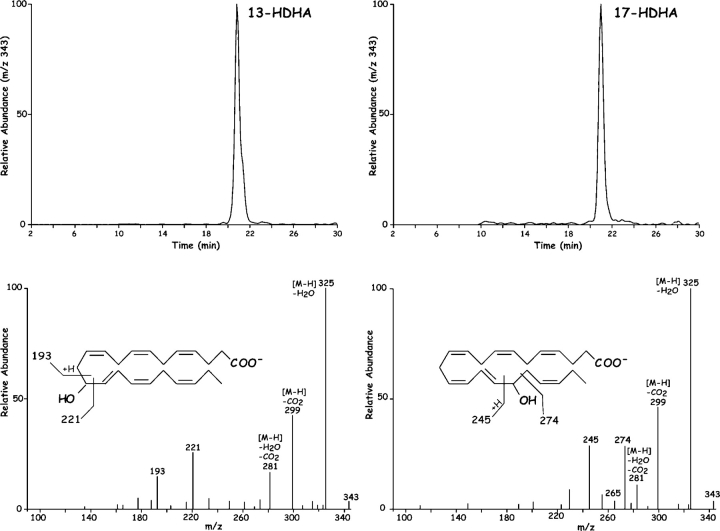
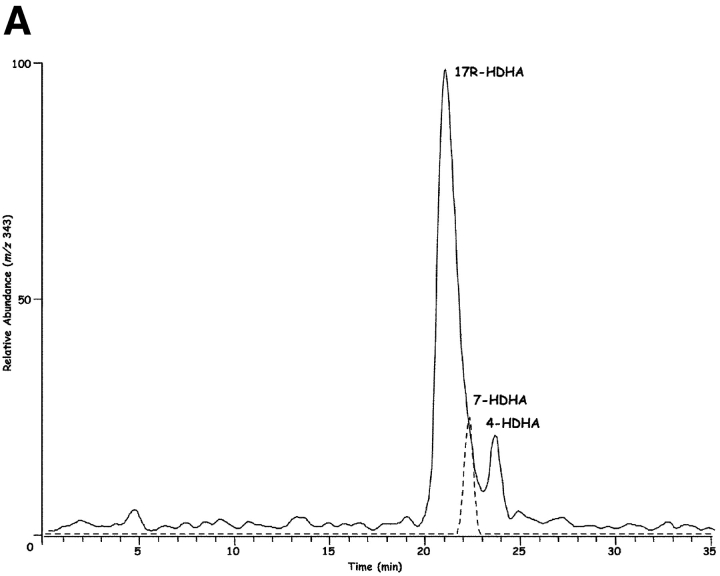
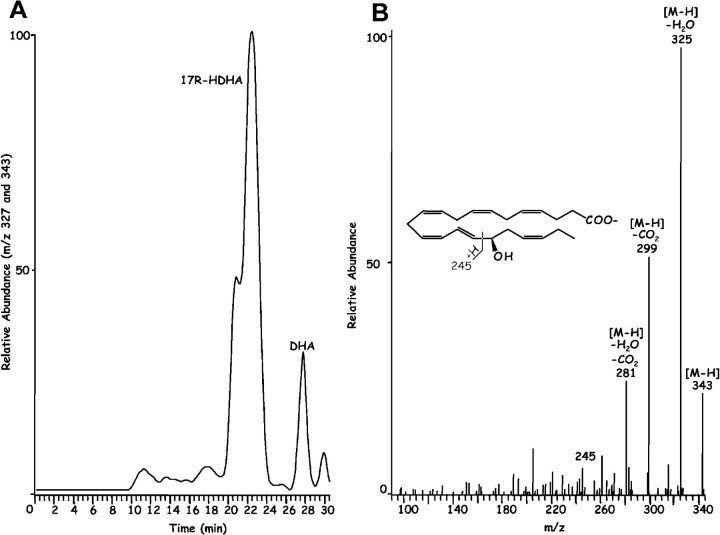
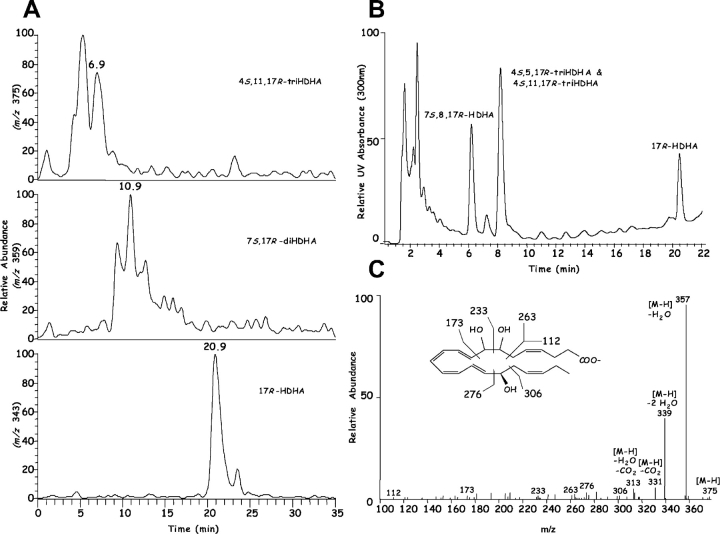
Aspirin (ASA) is unique among current therapies because it acetylates cyclooxygenase (COX)-2 enabling the biosynthesis of R-containing precursors of endogenous antiinflammatory mediators. Here, we report that lipidomic analysis of exudates obtained in the resolution phase from mice treated with ASA and docosahexaenoic acid (DHA) (C22:6) produce a novel family of bioactive 17R-hydroxy-containing di- and tri-hydroxy-docosanoids termed resolvins. Murine brain treated with aspirin produced endogenous 17R-hydroxydocosahexaenoic acid as did human microglial cells. Human COX-2 converted DHA to 13-hydroxy-DHA that switched with ASA to 17R-HDHA that also proved a major route in hypoxic endothelial cells. Human neutrophils transformed COX-2-ASA–derived 17R-hydroxy-DHA into two sets of novel di- and trihydroxy products; one initiated via oxygenation at carbon 7 and the other at carbon 4. These compounds inhibited (IC50 ∼50 pM) microglial cell cytokine expression and in vivo dermal inflammation and peritonitis at ng doses, reducing 40–80% leukocytic exudates. These results indicate that exudates, vascular, leukocytes and neural cells treated with aspirin convert DHA to novel 17R-hydroxy series of docosanoids that are potent regulators. These biosynthetic pathways utilize omega-3 DHA and EPA during multicellular events in resolution to produce a family of protective compounds, i.e., resolvins, that enhance proresolution status.
Overview
The claims and statistics of this paper haven’t been checked yet.
Free: it reads the open-access text and checks the first 5 claims that cite a source we can check. Create a free account to check every claim.
Integrity signals
Registry
Cites
Statistics
Figures



Verification
Claims the paper makes
The claims and statistics of this paper haven’t been checked yet.
Free: it reads the open-access text and checks the first 5 claims that cite a source we can check. Create a free account to check every claim.
Claims other papers make about this one
Each is checked against this paper’s own text: does it say what the citing paper says it does?
The source backs part of the claim, not all of it — or backs it for a different population, condition or comparison.
In the citing paper
“These lipid mediators can selectively stop neutrophil infiltration; increase monocyte recruitment and macrophage phagocytosis; stimulate the expression of genes important for antimicrobial defense; and promote the exit of phagocytes from the inflamed sites [100–103].”
From Transition from inflammation to proliferation: a critical step during wound healing (2016) · cites this paper as [100]
Experimental — accuracy not yet measuredThe source backs part of the claim, not all of it — or backs it for a different population, condition or comparison.
In the citing paper
“Prostaglandin E2 (PGE2) and D2 rapidly initiate the resolution process by inducing the expression of lipid mediators with both anti-inflammatory and pre-resolution functions, e.g., lipoxins [96, 97], resolvins and protectins [98–100], a process known as lipid-mediator class switch [97].”
From Transition from inflammation to proliferation: a critical step during wound healing (2016) · cites this paper as [100]
Experimental — accuracy not yet measuredThe source backs part of the claim, not all of it — or backs it for a different population, condition or comparison.
In the citing paper
“These lipid mediators can selectively stop neutrophil infiltration; increase monocyte recruitment and macrophage phagocytosis; stimulate the expression of genes important for antimicrobial defense; and promote the exit of phagocytes from the inflamed sites [100–103].”
From Transition from inflammation to proliferation: a critical step during wound healing (2016) · cites this paper as [100]
Experimental — accuracy not yet measuredThe source backs part of the claim, not all of it — or backs it for a different population, condition or comparison.
In the citing paper
“These lipid mediators can selectively stop neutrophil infiltration; increase monocyte recruitment and macrophage phagocytosis; stimulate the expression of genes important for antimicrobial defense; and promote the exit of phagocytes from the inflamed sites [100–103].”
From Transition from inflammation to proliferation: a critical step during wound healing (2016) · cites this paper as [100]
Experimental — accuracy not yet measuredThe cited source says what the claim attributes to it.
In the citing paper
“These lipid mediators can selectively stop neutrophil infiltration; increase monocyte recruitment and macrophage phagocytosis; stimulate the expression of genes important for antimicrobial defense; and promote the exit of phagocytes from the inflamed sites [100–103].”
From Transition from inflammation to proliferation: a critical step during wound healing (2016) · cites this paper as [100]
Self-check
Percentages, sums and reported differences re-computed from the paper’s own numbers.
The self-check needs the paper’s full text.
Citations
Cites
Inflammation. Basic principles and clinical correlates
(1989) · Biomedicine & Pharmacotherapy · doi:10.1016/0753-3322(89)90156-x · Cited by 2,393
Leukotrienes and Lipoxins: Structures, Biosynthesis, and Biological Effects
Samuelsson, B., Dahlén, S.-E., Lindgren, J. Å., Rouzer, C. A., & Serhan, C. N. (1987) · Science · doi:10.1126/science.2820055 · Cited by 2,233 · cited 7×
“Like other LO-derived eicosanoids, LXs are potent-local acting in subnanomolar levels with precise stereochemical requirements for evoking their actions (4, 9).”
BackgroundMethodInfluentialSelf-citation(1999) · PubMed · Cited by 2,062
Robbins pathologic basis of disease
Cotran, R. S., Kumar, V., & Collins, T. (1989) · Medical Entomology and Zoology · Cited by 1,944
Lipid mediator class switching during acute inflammation: signals in resolution
Levy, B. D., Clish, C. B., Schmidt, B., Gronert, K., & Serhan, C. N. (2001) · Nature Immunology · doi:10.1038/89759 · Cited by 1,453
Self-citationMarchioli, R., Barzi, F., Bomba, E., Chieffo, C., Di Gregorio, D., Di Mascio, R., Franzosi, M. G., Geraci, E., Levantesi, G., Maggioni, A. P., et al. (2002) · Circulation · doi:10.1161/01.cir.0000014682.14181.f2 · Cited by 1,311
Inducible cyclooxygenase may have anti-inflammatory properties
Gilroy, D. W., Colville-Nash, P. R., Willis, D., Chivers, J., Paul-Clark, M. J., & Willoughby, D. A. (1999) · Nature Medicine · doi:10.1038/9550 · Cited by 1,242
Serhan, C. N., Clish, C. B., Brannon, J., Colgan, S. P., Chiang, N., & Gronert, K. (2000) · The Journal of Experimental Medicine · doi:10.1084/jem.192.8.1197 · Cited by 1,189
Self-citationBlood Levels of Long-Chain n–3 Fatty Acids and the Risk of Sudden Death
Albert, C. M., Campos, H., Stampfer, M. J., Ridker, P. M., Manson, J. E., Willett, W. C., & Ma, J. (2002) · New England Journal of Medicine · doi:10.1056/nejmoa012918 · Cited by 1,146 · cited 3×
“It is noteworthy that both patient groups received aspirin in the GISSI trial while comparing tocopherol versus omega-3 supplementation (20) as did a significant number of participants in the most recent Physician Health study report (18).”
Background
Research works printed but not linked: 1
- De Caterina, R., S. Endres, S.D. Kristensen, and E.B. Schmidt, editors. 1993. N-3 Fatty Acids and Vascular Disease. Springer-Verlag, London. pp. 1–166.
Cited by
Items 601–700 of 1,004
Vella, L. D., Markworth, J. F., Farnfield, M. M., Maddipati, K. R., Russell, A. P., & Cameron‐Smith, D. (2019) · Physiological Reports · doi:10.14814/phy2.14108 · Cited by 57
Atherosclerosis is a major human killer and non-resolving inflammation is a prime suspect
Fredman, G., & MacNamara, K. C. (2021) · Cardiovascular Research · doi:10.1093/cvr/cvab309 · Cited by 64
Vassiliou, E. K., Kesler, O. M., Tadros, J. H., & Ganea, D. (2008) · The Journal of Immunology · doi:10.4049/jimmunol.181.7.4534 · Cited by 56
“Recent studies indicate two different pathways for the generation of RvE1, an aspirin-dependent pathway that involves transcellular conversion of EPA by an aspirin-acetylated cyclooxygenase (COX)2 in vascular endothelial cells followed by the effect of polymorphonuclear cell (PMN)-derived 5-lipoxygenases, and an aspir…”
BackgroundAcetylsalicylic acid as an augmentation agent in fluoxetine treatment resistant depressive rats
Wang, Y., Yang, F., Liu, Y.-F., Gao, F., & Jiang, W. (2011) · Neuroscience Letters · doi:10.1016/j.neulet.2011.05.035 · Cited by 56
Alini, M., Diwan, A. D., Erwin, W. M., Little, C. B., & Melrose, J. (2023) · JOR Spine · doi:10.1002/jsp2.1230 · Cited by 61
“362 The resolvins also reduce the activation of CD4 and CD8 cell activation and prevent Th1 and Th17 cell differentiation 363 and have potent anti-inflammatory and pain resolving properties.”
BackgroundFormyl peptide receptor 2 is an emerging modulator of inflammation in the liver
Lee, C., Han, J., & Jung, Y. (2023) · Experimental & Molecular Medicine · doi:10.1038/s12276-023-00941-1 · Cited by 59
Serhan, C. N., & Chiang, N. (2023) · Prostaglandins & Other Lipid Mediators · doi:10.1016/j.prostaglandins.2023.106718 · Cited by 59
Self-citationInnate immunity is a key factor for the resolution of inflammation in asthma
Barnig, C., & Levy, B. D. (2015) · European Respiratory Review · doi:10.1183/09059180.00012514 · Cited by 59
Soluble Epoxide Hydrolase Inhibitor Attenuates Inflammation and Airway Hyperresponsiveness in Mice
Yang, J., Bratt, J. M., Franzi, L. M., Liu, J., Zhang, G., Zeki, A. A., Vogel, C. F. A., Williams, K. M., Dong, H., Lin, Y., et al. (2014) · American Journal of Respiratory Cell and Molecular Biology · doi:10.1165/rcmb.2013-0440oc · Cited by 56
Targeting the D Series Resolvin Receptor System for the Treatment of Osteoarthritis Pain
Huang, J., Burston, J. J., Li, L., Ashraf, S., Mapp, P. I., Bennett, A. J., Ravipati, S., Pousinis, P., Barrett, D. A., Scammell, B. E., et al. (2016) · Arthritis & Rheumatology · doi:10.1002/art.40001 · Cited by 60
“Resolvins are endogenous specialized pro-resolution lipid mediators derived from docosahexaenoic acid (DHA [D series resolvins]) and eicosapentaenoic acid (EPA [E series resolvins]), which exhibit potent antiinflammatory and pro-resolution properties (7,8).”
BackgroundZhang, X., Wang, T., Gui, P., Yao, C., Sun, W., Wang, L., Wang, H., Xie, W., Yao, S., Lin, Y., et al. (2013) · Oxidative Medicine and Cellular Longevity · doi:10.1155/2013/185715 · Cited by 56
“RvD1, generated through sequential oxygenation of DHA, can reduce human polymorphonuclear leukocyte (PMN) transendothelial migration and inflammatory pain [22].”
BackgroundYin, H., Brooks, J. D., Gao, L., Porter, N. A., & Morrow, J. D. (2007) · Journal of Biological Chemistry · doi:10.1074/jbc.m703108200 · Cited by 66
Perry, S., Kalyanaraman, C., Tourdot, B. E., Conrad, W. S., Akinkugbe, O., Freedman, J. C., Holinstat, M. A., Jacobson, M. P., & Holman, T. R. (2020) · Journal of Lipid Research · doi:10.1194/jlr.ra120000777 · Cited by 56
“RvD5 is a D-series resolvin made from DHA (23, 24), which enhances phagocytosis in neutrophils and macrophages”
BackgroundWinkler, J. W., Uddin, J., Serhan, C. N., & Petasis, N. A. (2013) · Organic Letters · doi:10.1021/ol400484u · Cited by 55
Self-citationQuan-Xin, F., Fan, F., Feng, X., Li, S., Wang, S., Zhao-Xu, L., Xu-Jie, Z., Zhao, Q., & Wang, W. (2012) · BMC Gastroenterology · doi:10.1186/1471-230x-12-148 · Cited by 55
Long Chain n-3 Polyunsaturated Fatty Acids in the Prevention of Allergic and Cardiovascular Disease
van den Elsen, L. W. J., Garssen, J., & Willemsen, L. E. M. (2012) · Current Pharmaceutical Design · doi:10.2174/138161212800165960 · Cited by 57
Do polyunsaturated fatty acids protect against bone loss in our aging and osteoporotic population?
Martyniak, K., Wei, F., Ballesteros, A., Meckmongkol, T. T., Calder, A. N., Gilbertson, T. A., Orlovskaya, N. A., & Coathup, M. J. (2020) · Bone · doi:10.1016/j.bone.2020.115736 · Cited by 57
Tonic inhibition of chemotaxis in human plasma
Malawista, S. E., de Boisfleury Chevance, A., van Damme, J., & Serhan, C. N. (2008) · Proceedings of the National Academy of Sciences · doi:10.1073/pnas.0802572105 · Cited by 54
Self-citationBazinet, R. P., Rao, J. S., Chang, L., Rapoport, S. I., & Lee, H. (2005) · Psychopharmacology · doi:10.1007/s00213-005-0059-7 · Cited by 59
“Eicosanoids derived from AA via COXs or lipoxygenases are considered pro-inflammatory (Flower et al. 1972), whereas docosanoids derived from DHA via lipoxygenases are considered anti-inflammatory (Hong et al. 2003; Marcheselli et al. 2003; Serhan et al. 2002 ).”
BackgroundPro-resolving lipid mediators and therapeutic innovations in resolution of inflammation
Peh, H. Y., & Chen, J. (2024) · Pharmacology & Therapeutics · doi:10.1016/j.pharmthera.2024.108753 · Cited by 56
Amtul, Z., Uhrig, M., Rozmahel, R. F., & Beyreuther, K. T. (2010) · Journal of Biological Chemistry · doi:10.1074/jbc.m110.183608 · Cited by 54
Aursnes, M., Tungen, J. E., Vik, A., Dalli, J., & Hansen, T. V. (2013) · Organic & Biomolecular Chemistry · doi:10.1039/c3ob41902a · Cited by 54
Microalgae as a Source for VLC-PUFA Production
Khozin‐Goldberg, I., Leu, S., & Boussiba, S. (2016) · Sub-cellular biochemistry/Subcellular biochemistry · doi:10.1007/978-3-319-25979-6_19 · Cited by 56
Biosynthesis of proresolving lipid mediators by vascular cells and tissues
Chatterjee, A., Komshian, S. R., Sansbury, B. E., Wu, B., Mottola, G., Chen, M., Spite, M. R., & Conte, M. S. (2017) · The FASEB Journal · doi:10.1096/fj.201700082r · Cited by 54
“(EPA) anddocosahexaenoic acid (DHA), aswell as thev-6 PUFA arachidonic acid (3, 4, 6, 7).”
BackgroundIs There a Role for Bioactive Lipids in the Pathobiology of Diabetes Mellitus?
Das, U. N. (2017) · Frontiers in Endocrinology · doi:10.3389/fendo.2017.00182 · Cited by 57
Sheikh, O., Hei, A. V., Battisha, A., Hammad, T., Pham, S. V., & CHILTON, R. J. (2019) · Cardiovascular Diabetology · doi:10.1186/s12933-019-0887-0 · Cited by 59
James, M. J., Proudman, S., & Cleland, L. G. (2003) · Prostaglandins Leukotrienes and Essential Fatty Acids · doi:10.1016/s0952-3278(03)00064-4 · Cited by 54
Lee, S. A., Kim, H. J., Chang, K. C., Baek, J. C., Park, J. K., Shin, J. K., Choi, W. J., Lee, J. H., & Paik, W. Y. (2009) · The Korean Journal of Physiology and Pharmacology · doi:10.4196/kjpp.2009.13.4.301 · Cited by 53
Farooqui, A. A., & Farooqui, T. (2024) · International Journal of Molecular Sciences · doi:10.3390/ijms251910672 · Cited by 56
“In the presence of aspirin, the action of COX-2 on DHA produces aspirin-triggered forms of RVs that not only produce potent anti-inflammatory and immunoregulatory effects, but also regulate leukocyte trafficking [46,47].”
BackgroundHong, S., Lu, Y., Tian, H., Alapure, B. V., Wang, Q., Bunnell, B. A., & Laborde, J. M. (2014) · Chemistry & Biology · doi:10.1016/j.chembiol.2014.06.010 · Cited by 50
Self-citationPillai, P. S., Leeson, S., Porter, T. F., Owens, C. D., Kim, J. M., Conte, M. S., Serhan, C. N., & Gelman, S. (2012) · Inflammation · doi:10.1007/s10753-011-9294-8 · Cited by 52
“Of the many currently available anti-inflammatory drugs, aspirin has the unique property to both block the formation of pro-inflammatory and pro-thrombotic prostaglandins and thromboxanes, and to jump-start resolution by initiating the biosynthesis of SPM, aspirintriggered 15-epi-lipoxins and resolvins [11, 12, 16].”
Self-citationDietary Omega-3 Fats for Treatment of Inflammatory Joint Disease: Efficacy and Utility
Proudman, S., Cleland, L. G., & James, M. J. (2008) · Rheumatic Disease Clinics of North America · doi:10.1016/j.rdc.2008.03.003 · Cited by 57
El-Wakeel, N., & Hazzaa, H. H. A. (2015) · Journal of Periodontal Research · doi:10.1111/jre.12257 · Cited by 57
“Furthermore, the intervention group showed a significant IL-1b reduction compared to the placebo controls, proving the downregulatory effect of x3 PUFAs plus low-dose aspirin upon key inflammatory cytokines (19,36).”
BackgroundResolvin D3 and Aspirin-Triggered Resolvin D3 Are Protective for Injured Epithelia
Colby, J. K., Abdulnour, R.-E. E., Sham, H. P., Dalli, J., Colas, R. A., Winkler, J. W., Hellmann, J. L., Wong, B. C. K., Cui, Y., El‐Chemaly, S., et al. (2016) · American Journal Of Pathology · doi:10.1016/j.ajpath.2016.03.011 · Cited by 57
Self-citationN-AS-triggered SPMs are direct regulators of microglia in a model of Alzheimer’s disease
Lee, J. Y., Han, S. H., Park, M. H., Song, I.-S., Choi, M.-K., Yu, E., Park, C.-M., Kim, H.-J., Kim, S. H., Schuchman, E. H., et al. (2020) · Nature Communications · doi:10.1038/s41467-020-16080-4 · Cited by 52
Functional Metabolomics Reveals Novel Active Products in the DHA Metabolome
Shinohara, M., Mirakaj, V., & Serhan, C. N. (2012) · Frontiers in Immunology · doi:10.3389/fimmu.2012.00081 · Cited by 52
“Earlier results indicated that NPD1/PD1 exerted potent antiinflammatory actions regulating leukocyte trafficking in murine systems (Serhan et al., 2002; Hong et al., 2003).”
BackgroundResultInfluentialSelf-citationBasselin, M., Kim, H.-W., Chen, M., Ma, K., Rapoport, S. I., Murphy, R. C., & Farias, S. E. (2010) · Journal of Lipid Research · doi:10.1194/jlr.m002469 · Cited by 52
“Supporting such a mechanism is epidemiological evidence that aspirin, which can increase 17(R)-OH-DHA by acetylating COX-2 (9, 57), when given chronically reduced untoward effects in (presumably) bipolar disorder patients on lithium therapy (58).”
BackgroundRetractedDysregulated plasma lipid mediator profiles in critically ill COVID-19 patients
Palmas, F., Clarke, J., Colas, R. A., Gómez, E. A., Keogh, A., Boylan, M., McEvoy, N. L., McElvaney, O. J., McElvaney, O. F., Alalqam, R., et al. (2021) · PLoS ONE · doi:10.1371/journal.pone.0256226 · Cited by 53
“While the resolution of inflammation was previously thought to be a passive process, it has since been established that specific LM are central players in driving endogenous counter-regulation of inflammation and activation of resolution [14, 15].”
BackgroundELOVL2 promotes cancer progression by inhibiting cell apoptosis in renal cell carcinoma
Tanaka, K., Kandori, S., Sakka, S., Nitta, S., Tanuma, K., Shiga, M., Nagumo, Y., Negoro, H., Kojima, T., Mathis, B. J., et al. (2021) · Oncology Reports · doi:10.3892/or.2021.8234 · Cited by 52
Serhan, C. N., Bäck, M., Chiurchiù, V., Hersberger, M., Mittendorfer, B., Calder, P. C., Waitzberg, D. L., Stoppe, C., Kłęk, S., Martindale, R. G., et al. (2024) · The FASEB Journal · doi:10.1096/fj.202400619r · Cited by 56
Self-citationKim, G., Bernier, J., Godbout, R., & Rousseau, G. (2014) · Marine Drugs · doi:10.3390/md12115396 · Cited by 56
“EPA and DHA are metabolized to RvE and RvD by acetylated cyclooxygenase (COX)-2 and 5-lipoxygenase or through a COX-independent pathway involving cytochrome P-450 or 15-lipoxygenase [16].”
BackgroundZhang, Y., Brown, R. E., Zhang, P., Zhao, Y., Ju, X., & Song, C. (2017) · Prostaglandins Leukotrienes and Essential Fatty Acids · doi:10.1016/j.plefa.2017.07.003 · Cited by 56
Zheng, S., Wang, Q., D’Souza, V., Bartis, D., Dancer, R. C. A., Parekh, D., Gao, F., Lian, Q., Jin, S., & THICKETT, D. R. (2017) · Laboratory Investigation · doi:10.1038/labinvest.2017.114 · Cited by 55
“ResolvinD1 (RvD1) is a lipid mediator derived from both eicosapentaenoic acid (EPA) and docosahexaenoic acid (DHA) which acts to dampen excessive PMN infiltration and transmigration.(15) Previous studies have suggested that RvD1 attenuates lung inflammation and can maintain the integrity of lung epithelium.”
BackgroundCrouch, M. J., Kosaraju, R., Guesdon, W., Armstrong, M., Reisdorph, N. A., Jain, R., Fenton, J. I., & Shaikh, S. R. (2018) · Journal of Leukocyte Biology · doi:10.1002/jlb.3hi1017-405rr · Cited by 53
Darwesh, A. M., Sosnowski, D. K., Lee, T. Y., Keshavarz-Bahaghighat, H., & Seubert, J. M. (2019) · Chemico-Biological Interactions · doi:10.1016/j.cbi.2019.04.037 · Cited by 56
“Important lipid mediators involved in regulating inflammatory responses generated from the metabolism n-3 PUFAs include resolvins ‘resolution phase interaction products’ produced from both EPA (E-series, RvE1-2) and DHA (D-series, RvD1-6) as well as protectins and maresins produced from DHA [278, 356, 357].”
BackgroundInfluentialResolvin D1 and its GPCRs in resolution circuits of inflammation
Recchiuti, A. (2013) · Prostaglandins & Other Lipid Mediators · doi:10.1016/j.prostaglandins.2013.02.004 · Cited by 59
Aspirin sensitivity of PIK3CA-mutated Colorectal Cancer: potential mechanisms revisited
Hall, D. C. N., & Benndorf, R. A. (2022) · Cellular and Molecular Life Sciences · doi:10.1007/s00018-022-04430-y · Cited by 54
Docosahexaenoic Acid Derivative Prevents Inflammation and Hyperreactivity in Lung
Morin, C., Fortin, S., Cantin, A. M., & Rousseau, É. (2010) · American Journal of Respiratory Cell and Molecular Biology · doi:10.1165/rcmb.2010-0156oc · Cited by 51
Xu, M., Tan, B., Zhou, W., Wei, T., Lai, W., Tan, J., & Dong, J. (2013) · CNS Neuroscience & Therapeutics · doi:10.1111/cns.12069 · Cited by 51
“In addition, the structure and biosynthesis has been established and the stereochemistry assigned 7S, 8R, 17S-trihydroxy-4Z, 9E, 11E, 13Z, 15E, and 19Z-docosahexaenoic acid [10,11].”
BackgroundRetractedOmega-3-derived mediators counteract obesity-induced adipose tissue inflammation
Titos, E., & Clària, J. (2013) · Prostaglandins & Other Lipid Mediators · doi:10.1016/j.prostaglandins.2013.05.003 · Cited by 57
Assessment of DHA on reducing early preterm birth: the ADORE randomized controlled trial protocol
Carlson, S. E., Gajewski, B. J., Valentine, C. J., Rogers, L. K., Weiner, C. P., DeFranco, E., & Buhimschi, C. S. (2017) · BMC Pregnancy and Childbirth · doi:10.1186/s12884-017-1244-5 · Cited by 52
Hansen, T. V., Dalli, J., & Serhan, C. N. (2017) · Prostaglandins & Other Lipid Mediators · doi:10.1016/j.prostaglandins.2017.06.003 · Cited by 52
Self-citationResolvin E3 attenuates allergic airway inflammation via the interleukin‐23‐interleukin‐17A pathway
Sato, M., Aoki‐Saito, H., Fukuda, H., Ikeda, H., Koga, Y., Yatomi, M., Tsurumaki, H., Maeno, T., Saito, T., Nakakura, T., et al. (2019) · The FASEB Journal · doi:10.1096/fj.201900283r · Cited by 52
Specialized Pro-Resolving Lipid Mediators: The Future of Chronic Pain Therapy?
Chávez-Castillo, M., Ortega, Á., Cudris–Torres, L., Durán, P., Rojas, M., Manzano, A., Garrido, B., Salazar, J. J., Silva, A., Rojas-Gómez, D. M., et al. (2021) · International Journal of Molecular Sciences · doi:10.3390/ijms221910370 · Cited by 55
Lipoxins and Annexin-1: Resolution of Inflammation and Regulation of Phagocytosis of Apoptotic Cells
Scannell, M., & Maderna, P. (2006) · The Scientific World JOURNAL · doi:10.1100/tsw.2006.259 · Cited by 48
Update on the Role of Spinal Cord TRPV1 Receptors in Pain Modulation
Spicarova, D., Nerandžič, V., & Paleček, J. (2014) · Physiological Research · doi:10.33549/physiolres.932713 · Cited by 54
“2014 Spinal Cord TRPV1 Receptors S231 Resolvins are bioactive products of ω-3 polyunsaturated fatty acids derived from DHA and eicosapentaenoic acid (EPA) produced after aspirin treatment that counteracts the proinflammatory signaling (Serhan et al. 2002).”
Chêne, G., Dubourdeau, M., Balard, P., Escoubet‐Lozach, L., Orfila, C., Berry, A., Bernad, J., Ariès, M.-F., Charvéron, M., & Pipy, B. (2007) · Biochimica et Biophysica Acta (BBA) - Molecular and Cell Biology of Lipids · doi:10.1016/j.bbalip.2007.02.014 · Cited by 58
Recchiuti, A., Codagnone, M., Pierdomenico, A. M., Rossi, C., Mari, V. C., Cianci, E., Simiele, F., Gatta, V., & Romano, M. (2014) · The FASEB Journal · doi:10.1096/fj.13-248393 · Cited by 53
“23) is a DHAderived SPM formed by lipoxygenases during resolution (23, 24).”
BackgroundBioactive lipids as new class of microglial modulators: When nutrition meets neuroimunology
Nadjar, A., Leyrolle, Q., Joffre, C., & Layé, S. (2016) · Progress in Neuro-Psychopharmacology and Biological Psychiatry · doi:10.1016/j.pnpbp.2016.07.004 · Cited by 51
Resolvin D1 Attenuates Mpp+-Induced Parkinson Disease via Inhibiting Inflammation in PC12 Cells
Xu, J., Gao, X., Yang, C., Chen, L., & Chen, Z. (2017) · Medical Science Monitor · doi:10.12659/msm.901995 · Cited by 47
“Resolvins are compounds synthesized by the human body from omega-3 fatty acids eicosapentaenoic acid (EPA) and docosahexaenoic acid (DHA) [13].”
BackgroundDietary Fatty Acids and Microbiota-Brain Communication in Neuropsychiatric Diseases
Marrone, M. C., & Coccurello, R. (2019) · Biomolecules · doi:10.3390/biom10010012 · Cited by 45
Bioactive Lipid Signaling in Cardiovascular Disease, Development, and Regeneration
Wasserman, A. H., Venkatesan, M., & Aguirre, A. (2020) · Cells · doi:10.3390/cells9061391 · Cited by 50
Eicosanomics: targeted lipidomics of eicosanoids in biological systems
Balazy, M. (2004) · Prostaglandins & Other Lipid Mediators · doi:10.1016/j.prostaglandins.2004.03.003 · Cited by 50
Lipoxins as biomarkers of lupus and other inflammatory conditions
Das, U. N. (2011) · Lipids in Health and Disease · doi:10.1186/1476-511x-10-76 · Cited by 52
“Synthetic glucocorticoid dexamethasone inhibited both cPLA2 and sPLA2 expression, whereas type IV iPLA2 expression is refractory to its suppressive actions [44,47,48].”
BackgroundRole of metabolic programming in the modulation of microglia phagocytosis by lipids
Nadjar, A. (2018) · Prostaglandins, Leukotrienes and Essential Fatty Acids · doi:10.1016/j.plefa.2018.07.006 · Cited by 49
Börgeson, E., & Godson, C. (2012) · Frontiers in Immunology · doi:10.3389/fimmu.2012.00318 · Cited by 51
“Microglia cells Inhibits IL-1β expression (Serhan et al., 2002)”
Resolution of inflammation and mood disorders
Chistyakov, D. V., Astakhova, A. A., & Sergeeva, M. G. (2018) · Experimental and Molecular Pathology · doi:10.1016/j.yexmp.2018.08.002 · Cited by 74
O'Reilly, M. E., Lenighan, Y. M., Dillon, E., Kajani, S., Curley, S., Bruen, R., Byrne, R., Heslin, A. M., MOLONEY, A. P., Roche, H. M., et al. (2020) · Molecular Nutrition & Food Research · doi:10.1002/mnfr.201900599 · Cited by 50
Lee, C. H. (2021) · Archives of Pharmacal Research · doi:10.1007/s12272-020-01299-y · Cited by 51
“D-series Rvs (RvD1-RvD6) are biosynthesized from DHA by the LOX in PMN and macrophages (Serhan et al. 2002).”
BackgroundYamamoto, S., & Egashira, N. (2021) · Frontiers in Pharmacology · doi:10.3389/fphar.2020.607780 · Cited by 51
“…Serhan and colleagues identified new families of potent anti-inflammatory lipid mediators derived from omega-3 fatty acid, called “specialized pro-resolving mediators” (SPMs), which include resolvins, neuroprotectin, and maresins (Serhan et al., 2002; Serhan et al., 2008; Chen et al., 2018).”
BackgroundResolvins as Regulators of the Immune System
Seki, H., Sasaki, T., Ueda, T., & Arita, M. (2010) · The Scientific World JOURNAL · doi:10.1100/tsw.2010.72 · Cited by 53
“To examine this possibility, mice were given injections of sterile air to create air pouches, followed by intrapouch injections of tumor necrosis factor alpha (TNFα) with ω-3 PUFAs and aspirin on board[9,10].”
BackgroundMethodInfluentialLiu, G., Gong, Y., Zhang, R., Piao, L., Li, X., Liu, Q., Yan, S., Shen, Y., Guo, S., Zhu, M., et al. (2018) · The FASEB Journal · doi:10.1096/fj.201800173r · Cited by 48
“Resolvins are derived from the v3 polyunsaturated fatty acids eicosapentaenoic acid (EPA), and docosahexaenoic acid, and are denoted as either E series (RvE) or D series (RvD), respectively (7).”
BackgroundMediator Lipidomics: Search Algorithms for Eicosanoids, Resolvins, and Protectins
Serhan, C. N., Lu, Y., Hong, S., & Yang, R. (2007) · Methods in enzymology on CD-ROM/Methods in enzymology · doi:10.1016/s0076-6879(07)32012-0 · Cited by 53
Self-citationMurphy, E. J. (2009) · Prostaglandins & Other Lipid Mediators · doi:10.1016/j.prostaglandins.2009.07.005 · Cited by 50
Sneddon, A. A., McLeod, E., Wahle, K. W. J., & Arthur, J. R. (2006) · Biochimica et Biophysica Acta (BBA) - Molecular and Cell Biology of Lipids · doi:10.1016/j.bbalip.2006.05.014 · Cited by 48
Cipollina, C., Vincenzo, S. D., Gerbino, S., Siena, L., Gjomarkaj, M., & Pace, E. (2014) · Biochimica et Biophysica Acta (BBA) - General Subjects · doi:10.1016/j.bbagen.2014.02.024 · Cited by 49
17(R)-resolvin D1 ameliorates bleomycin-induced pulmonary fibrosis in mice
Yatomi, M., Hisada, T., Ishizuka, T., Koga, Y., Ono, A., Kamide, Y., Seki, K., Aoki‐Saito, H., Tsurumaki, H., Sunaga, N., et al. (2015) · Physiological Reports · doi:10.14814/phy2.12628 · Cited by 50
“Likewise, RvD1 and 17(R)-resolvin D1 (17(R)-RvD1), which are generated locally in response to inflammatory stimuli, both possess potent anti-inflammatory activity, and promote resolution of inflammation (Serhan et al. 2002; Hong et al. 2003).”
BackgroundResolvin E1 Inhibits Substance P-Induced Potentiation of TRPV1 in Primary Sensory Neurons
Jo, Y. Y., Lee, J. Y., & Park, C. (2016) · Mediators of Inflammation · doi:10.1155/2016/5259321 · Cited by 47
“After the full structural elucidation, resolvins were produced by full organic chemical synthesis [15, 20].”
MethodPerucci, L. O., Sugimoto, M. A., Gomes, K. B., Dusse, L. M. S., Teixeira, M. M., & Sousa, L. P. (2017) · Expert Opinion on Therapeutic Targets · doi:10.1080/14728222.2017.1364363 · Cited by 49
“For example, proresolving mediators, such as AnxA1, can be produced in early phases of inflammation – when the levels of pro-inflammatory mediators such as tumor necrosis factor-alpha (TNF-α) and IL-6 go up – probably to temper the effects of pro-inflammatory mediators and avoid an overexuberant inflammatory response…”
BackgroundInfluentialJannaway, M., Torrens, C., Warner, J. A., & Sampson, A. P. (2018) · British Journal of Pharmacology · doi:10.1111/bph.14151 · Cited by 47
“Specialized pro-resolving lipid mediators (SPM) including the resolvins are derived from the ω-3 PUFAs eicosapentaenoic acid (EPA) or docosahexaenoic acid (DHA) (Serhan et al., 2000; Serhan et al., 2002).”
BackgroundInfluentialShichino, S., Ueha, S., Hashimoto, S., Otsuji, M., Abe, J., Tsukui, T., Deshimaru, S., Nakajima, T., Kosugi‐Kanaya, M., Shand, F. H. W., et al. (2019) · JCI Insight · doi:10.1172/jci.insight.122163 · Cited by 47
Saving Problematic Mucosae: SPMs in Intestinal Mucosal Inflammation and Repair
Quirós, M., & Nusrat, A. (2019) · Trends in Molecular Medicine · doi:10.1016/j.molmed.2018.12.004 · Cited by 47
Lamont, L. A., & Grimm, K. A. (2014) · Wiley eBooks · doi:10.1002/9781118792919.ch1 · Cited by 47
Neuroinflammation in hypertension: the renin-angiotensin system versus pro-resolution pathways
Mowry, F. E., & Biancardi, V. C. (2019) · Pharmacological Research · doi:10.1016/j.phrs.2019.04.029 · Cited by 49
Tułowiecka, N., Kotlęga, D., Prowans, P., & Szczuko, M. (2020) · International Journal of Molecular Sciences · doi:10.3390/ijms21207628 · Cited by 51
“Acetylsalicylic acid (ASA), known as aspirin, acetylates cyclooxygenase-2 (COX-2) and enables the biosynthesis of precursors for anti-inflammatory mediators.”
BackgroundInfluentialGordon, W. C., & Bazan, N. G. (2013) · Current Eye Research · doi:10.3109/02713683.2013.827211 · Cited by 49
“osanoids from DHA, including resolvins and protectins, to ameliorate the effects of inflammation.(23) We”
BackgroundEndogenous Receptor Agonists: Resolving Inflammation
Bannenberg, G., Arita, M., & Serhan, C. N. (2007) · The Scientific World JOURNAL · doi:10.1100/tsw.2007.188 · Cited by 47
“Resolving exudates from mice given aspirin and DHA contained 17R-hydroxy-DHA (17R-HDHA)[151].”
BackgroundInfluentialSelf-citationKalish, B. T., Le, H. D., Fitzgerald, J. M., Wang, S., Seamon, K. J., Gura, K. M., Gronert, K., & Puder, M. (2013) · American Journal of Physiology-Gastrointestinal and Liver Physiology · doi:10.1152/ajpgi.00106.2013 · Cited by 47
Self-citationFirst total synthesis of 7(S),17(S)-Resolvin D5, a potent anti-inflammatory docosanoid
Rodríguez, A. R., & Spur, B. W. (2005) · Tetrahedron Letters · doi:10.1016/j.tetlet.2005.03.175 · Cited by 47
Rasquel-Oliveira, F. S., da Silva, M. D. V., Martelossi-Cebinelli, G., Fattori, V., Casagrande, R., & Verri, W. A., Jr. (2023) · Molecules · doi:10.3390/molecules28135032 · Cited by 49
“DHA can be converted into D-series resolvins (RvD; RvD1, RvD2, RvD3, RvD4, RvD5, and RvD6) [17–19], protectins (PD1)/neuroprotectins (NPD1) [20,21], and maresins (MaRs; MaR1 and MaR2) [22].”
BackgroundRispoli, R. M., Popolo, A., Fabrizio, V. D., Bianca, R. D. D. V., Autore, G., Dalli, J., & Marzocco, S. (2025) · International Journal of Molecular Sciences · doi:10.3390/ijms26073072 · Cited by 49
“LX also attenuated glomerular dilatation and mesangial matrix deposition [146].”
Feeding the beast: Can microglia in the senescent brain be regulated by diet?
Johnson, R. W. (2015) · Brain, Behavior, and Immunity · doi:10.1016/j.bbi.2014.09.022 · Cited by 44
Synaptic Signaling by Lipids in the Life and Death of Neurons
Bazan, N. G. (2005) · Molecular Neurobiology · doi:10.1385/mn:31:1-3:219 · Cited by 50
“In nonneural tissues, aspirin triggers the biosynthesis of anti-inflammatory lipid mediators (12, 14 ).”
BackgroundInfluentialResolvin D1 attenuates lipopolysaccharide induced acute lung injury through CXCL-12/CXCR4 pathway
Yaxin, W., Shanglong, Y., Huaqing, S., Liu, H., Shiying, Y., Xiangdong, C., Li, R., Wu, X., Lina, G., & Wang, Y. (2013) · Journal of Surgical Research · doi:10.1016/j.jss.2013.11.1107 · Cited by 46
“[12] Serhan CN, Hong S, Gronert K, et al.”
BackgroundOmega-3 fatty acids as an adjunct for periodontal therapy—a review
Chee, B., Park, B., Fitzsimmons, T. R., Coates, A. M., & Bartold, P. M. (2016) · Clinical Oral Investigations · doi:10.1007/s00784-016-1750-2 · Cited by 54
Patel, M. S., Miranda-Nieves, D., Chen, J., Haller, C. A., & Chaikof, E. L. (2016) · Translational research · doi:10.1016/j.trsl.2016.11.007 · Cited by 46
Resolvins as proresolving inflammatory mediators in cardiovascular disease
Capó, X., Martorell, M., Busquets-Cortés, C., Tejada, S., Tur, J. A., Pons, A., & Sureda, A. (2017) · European Journal of Medicinal Chemistry · doi:10.1016/j.ejmech.2017.07.018 · Cited by 47
Redox (phospho)lipidomics of signaling in inflammation and programmed cell death
Tyurina, Y. Y., Croix, C. M. S., Watkins, S. C., Watson, A. M., Epperly, M. W., Anthonymuthu, T. S., Kisin, E. R., Vlasova, I. I., Krysko, O., Krysko, D. V., et al. (2019) · Journal of Leukocyte Biology · doi:10.1002/jlb.3mir0119-004rr · Cited by 49
Ruíz, A., Sarabia‐Cobo, C., Torres, M., & Juárez, E. (2019) · International Immunopharmacology · doi:10.1016/j.intimp.2019.105694 · Cited by 46
Resolution of Inflammation in Neurodegenerative Diseases: The Role of Resolvins
Chamani, S., Bianconi, V., Tasbandi, A., Pirro, M., Barreto, G. E., Jamialahmadi, T., & Sahebkar, A. (2020) · Mediators of Inflammation · doi:10.1155/2020/3267172 · Cited by 46
Metadata
- Authors
- Serhan, C. N., Hong, S., Gronert, K., Colgan, S. P., Devchand, P. R., Mirick, G., & Moussignac, R.-L.
- Affiliations
- Brigham and Women's Hospital (US)
- Venue
- The Journal of Experimental Medicine
- Publisher
- Rockefeller University Press
- Published
- 2002-10-21
- Volume
- 196
- Issue
- 8
- Pages
- 1025-1037
- ISSN
- 0022-1007 (ISSN-L)
- 1540-9538
- PMC
- PMC2194036
- OpenAlex
- W2162465757
- Cited by
- 1,650
- References
- 62
- Citations by year
- 2026: 40 · 2025: 45 · 2024: 65 · 2023: 61 · 2022: 68 · 2021: 75 · 2020: 101 · 2019: 78 · 2018: 81 · 2017: 81 · 2016: 84 · 2015: 94 · 2014: 100 · 2013: 112 · 2012: 92
- FWCI
- 30.40
- Type
- journal article
- Language
- en
- Open access
- bronze
- doi.org
- Locations
- The Journal of Experimental Medicine (publishedVersion)
- PubMed Central (publishedVersion, cc-by-nc-sa)
- PubMed (publishedVersion)
- Funders
- National Institutes of Health (4r37gm038765-19, DE13499, GM 38765, P01-DE13499)
- National Institute of General Medical Sciences (GM 38765, R01GM038765, R37-GM038765)
- National Institute of Diabetes and Digestive and Kidney Diseases (K01DK060583)
- National Institute of Dental and Craniofacial Research (P01 DE 13499, P01DE013499)
- Topics
- Health Sciences › Nursing › Nutrition and Dietetics › Fatty Acid Research and Health
- Health Sciences › Medicine › Pharmacology (medical) › Inflammatory mediators and NSAID effects
- Life Sciences › Biochemistry, Genetics and Molecular Biology › Biochemistry › Eicosanoids and Hypertension Pharmacology
- Keywords
- resolvins, aspirin, cyclooxygenase-2, docosahexaenoic acid, omega-3 fatty acids, inflammation resolution, microglia, neutrophils, eicosanoid biosynthesis, anti-inflammatory mediators, peritonitis, skin inflammation, leukocyte recruitment
- MeSH terms
- Animals, Aspirin, Biological Factors, Humans, Inflammation, Tumor Cells, Cultured, Signal Transduction, Fatty Acids, Omega-3, Mice
About these checks
Registry, retraction, Cites and statistics results are computed, not judged, with one exception: a printed reference that no index lists is read once by a model before it counts as a citation error. Claims are extracted by a model and kept only when their quote appears verbatim in the text; each cited source is then checked, with a model’s help, for whether it says what the claim relies on. Those verdicts can be wrong — read the claim’s quote and the cited source before relying on one.
Statistics and arithmetic are recomputed, not judged.
Confidence bands are shown only for fields calibrated on our annotated test set. None is calibrated yet, so no band is shown.
What counts as a claim ›How we measure confidence ›How we check this ›
Are you an author, or do you see a problem with this page? Request a review
Data sources
Bibliographic data: Semantic Scholar, OpenAlex, Crossref.
Contains information from the Semantic Scholar Academic Graph Datasets, made available under the ODC Attribution License (ODC-BY 1.0).
Semantic Scholar’s data is described in: Kinney, R., et al. (2023). The Semantic Scholar Open Data Platform. arXiv:2301.10140.
