

Resolvins
Open accessThe DOI matches its Crossref record; 62 of the 62 references it cites were found in a registry or an index.
Abstract
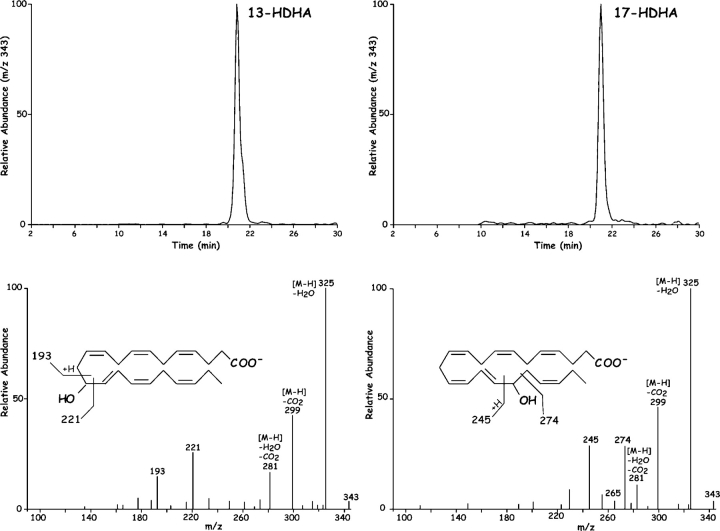
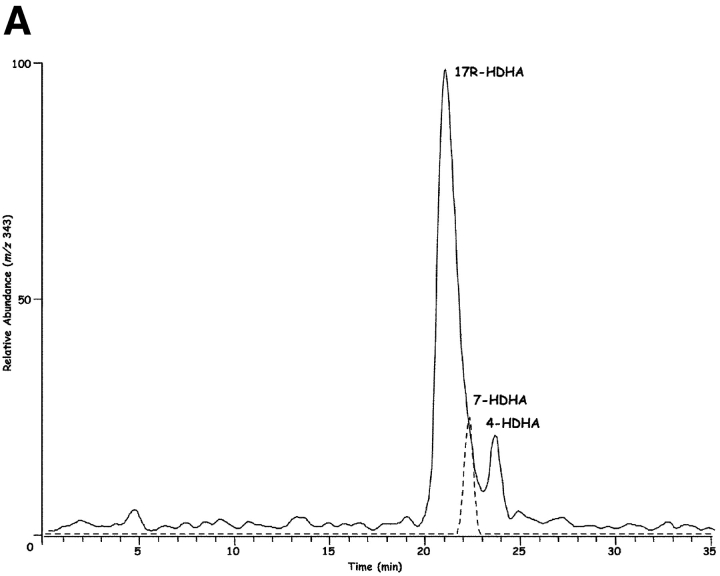
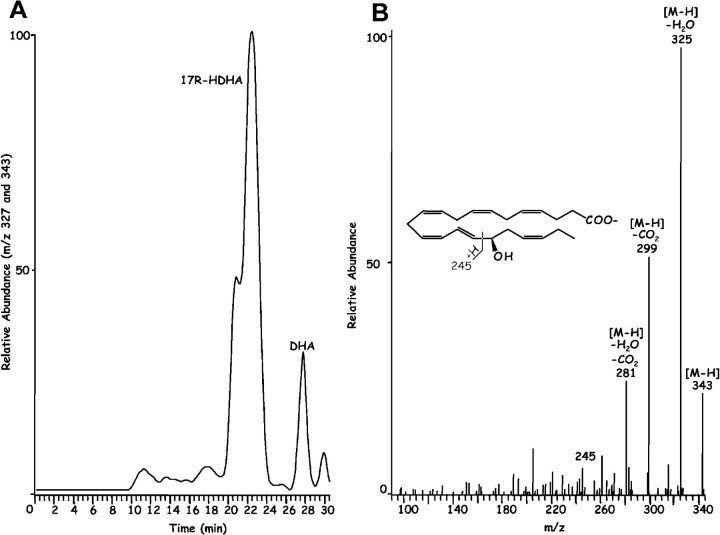
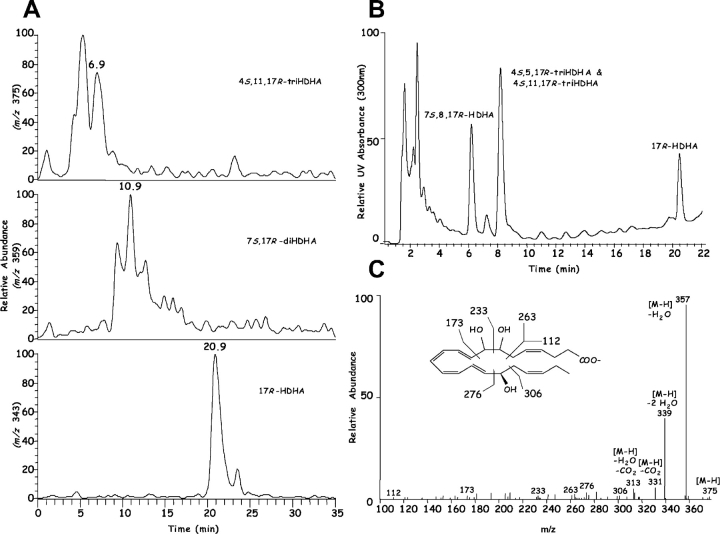
Aspirin (ASA) is unique among current therapies because it acetylates cyclooxygenase (COX)-2 enabling the biosynthesis of R-containing precursors of endogenous antiinflammatory mediators. Here, we report that lipidomic analysis of exudates obtained in the resolution phase from mice treated with ASA and docosahexaenoic acid (DHA) (C22:6) produce a novel family of bioactive 17R-hydroxy-containing di- and tri-hydroxy-docosanoids termed resolvins. Murine brain treated with aspirin produced endogenous 17R-hydroxydocosahexaenoic acid as did human microglial cells. Human COX-2 converted DHA to 13-hydroxy-DHA that switched with ASA to 17R-HDHA that also proved a major route in hypoxic endothelial cells. Human neutrophils transformed COX-2-ASA–derived 17R-hydroxy-DHA into two sets of novel di- and trihydroxy products; one initiated via oxygenation at carbon 7 and the other at carbon 4. These compounds inhibited (IC50 ∼50 pM) microglial cell cytokine expression and in vivo dermal inflammation and peritonitis at ng doses, reducing 40–80% leukocytic exudates. These results indicate that exudates, vascular, leukocytes and neural cells treated with aspirin convert DHA to novel 17R-hydroxy series of docosanoids that are potent regulators. These biosynthetic pathways utilize omega-3 DHA and EPA during multicellular events in resolution to produce a family of protective compounds, i.e., resolvins, that enhance proresolution status.
Overview
The claims and statistics of this paper haven’t been checked yet.
Free: it reads the open-access text and checks the first 5 claims that cite a source we can check. Create a free account to check every claim.
Integrity signals
Registry
Cites
Statistics
Figures



Verification
Claims the paper makes
The claims and statistics of this paper haven’t been checked yet.
Free: it reads the open-access text and checks the first 5 claims that cite a source we can check. Create a free account to check every claim.
Claims other papers make about this one
Each is checked against this paper’s own text: does it say what the citing paper says it does?
The source backs part of the claim, not all of it — or backs it for a different population, condition or comparison.
In the citing paper
“These lipid mediators can selectively stop neutrophil infiltration; increase monocyte recruitment and macrophage phagocytosis; stimulate the expression of genes important for antimicrobial defense; and promote the exit of phagocytes from the inflamed sites [100–103].”
From Transition from inflammation to proliferation: a critical step during wound healing (2016) · cites this paper as [100]
Experimental — accuracy not yet measuredThe source backs part of the claim, not all of it — or backs it for a different population, condition or comparison.
In the citing paper
“Prostaglandin E2 (PGE2) and D2 rapidly initiate the resolution process by inducing the expression of lipid mediators with both anti-inflammatory and pre-resolution functions, e.g., lipoxins [96, 97], resolvins and protectins [98–100], a process known as lipid-mediator class switch [97].”
From Transition from inflammation to proliferation: a critical step during wound healing (2016) · cites this paper as [100]
Experimental — accuracy not yet measuredThe source backs part of the claim, not all of it — or backs it for a different population, condition or comparison.
In the citing paper
“These lipid mediators can selectively stop neutrophil infiltration; increase monocyte recruitment and macrophage phagocytosis; stimulate the expression of genes important for antimicrobial defense; and promote the exit of phagocytes from the inflamed sites [100–103].”
From Transition from inflammation to proliferation: a critical step during wound healing (2016) · cites this paper as [100]
Experimental — accuracy not yet measuredThe source backs part of the claim, not all of it — or backs it for a different population, condition or comparison.
In the citing paper
“These lipid mediators can selectively stop neutrophil infiltration; increase monocyte recruitment and macrophage phagocytosis; stimulate the expression of genes important for antimicrobial defense; and promote the exit of phagocytes from the inflamed sites [100–103].”
From Transition from inflammation to proliferation: a critical step during wound healing (2016) · cites this paper as [100]
Experimental — accuracy not yet measuredThe cited source says what the claim attributes to it.
In the citing paper
“These lipid mediators can selectively stop neutrophil infiltration; increase monocyte recruitment and macrophage phagocytosis; stimulate the expression of genes important for antimicrobial defense; and promote the exit of phagocytes from the inflamed sites [100–103].”
From Transition from inflammation to proliferation: a critical step during wound healing (2016) · cites this paper as [100]
Self-check
Percentages, sums and reported differences re-computed from the paper’s own numbers.
The self-check needs the paper’s full text.
Citations
Cites
Inflammation. Basic principles and clinical correlates
(1989) · Biomedicine & Pharmacotherapy · doi:10.1016/0753-3322(89)90156-x · Cited by 2,393
Leukotrienes and Lipoxins: Structures, Biosynthesis, and Biological Effects
Samuelsson, B., Dahlén, S.-E., Lindgren, J. Å., Rouzer, C. A., & Serhan, C. N. (1987) · Science · doi:10.1126/science.2820055 · Cited by 2,233 · cited 7×
“Like other LO-derived eicosanoids, LXs are potent-local acting in subnanomolar levels with precise stereochemical requirements for evoking their actions (4, 9).”
BackgroundMethodInfluentialSelf-citation(1999) · PubMed · Cited by 2,062
Robbins pathologic basis of disease
Cotran, R. S., Kumar, V., & Collins, T. (1989) · Medical Entomology and Zoology · Cited by 1,944
Lipid mediator class switching during acute inflammation: signals in resolution
Levy, B. D., Clish, C. B., Schmidt, B., Gronert, K., & Serhan, C. N. (2001) · Nature Immunology · doi:10.1038/89759 · Cited by 1,453
Self-citationMarchioli, R., Barzi, F., Bomba, E., Chieffo, C., Di Gregorio, D., Di Mascio, R., Franzosi, M. G., Geraci, E., Levantesi, G., Maggioni, A. P., et al. (2002) · Circulation · doi:10.1161/01.cir.0000014682.14181.f2 · Cited by 1,311
Inducible cyclooxygenase may have anti-inflammatory properties
Gilroy, D. W., Colville-Nash, P. R., Willis, D., Chivers, J., Paul-Clark, M. J., & Willoughby, D. A. (1999) · Nature Medicine · doi:10.1038/9550 · Cited by 1,242
Serhan, C. N., Clish, C. B., Brannon, J., Colgan, S. P., Chiang, N., & Gronert, K. (2000) · The Journal of Experimental Medicine · doi:10.1084/jem.192.8.1197 · Cited by 1,189
Self-citationBlood Levels of Long-Chain n–3 Fatty Acids and the Risk of Sudden Death
Albert, C. M., Campos, H., Stampfer, M. J., Ridker, P. M., Manson, J. E., Willett, W. C., & Ma, J. (2002) · New England Journal of Medicine · doi:10.1056/nejmoa012918 · Cited by 1,146 · cited 3×
“It is noteworthy that both patient groups received aspirin in the GISSI trial while comparing tocopherol versus omega-3 supplementation (20) as did a significant number of participants in the most recent Physician Health study report (18).”
Background
Research works printed but not linked: 1
- De Caterina, R., S. Endres, S.D. Kristensen, and E.B. Schmidt, editors. 1993. N-3 Fatty Acids and Vascular Disease. Springer-Verlag, London. pp. 1–166.
Cited by
Items 501–600 of 1,004
Specialized pro‐resolving mediators: biosynthesis and biological role in bacterial infections
Jordan, P. M., & Werz, O. (2021) · FEBS Journal · doi:10.1111/febs.16266 · Cited by 79
Jung, T. W., Hwang, H., Hong, H. C., Choi, H. Y., Yoo, H. J., Baik, S. H., & Choi, K. M. (2014) · Molecular and Cellular Endocrinology · doi:10.1016/j.mce.2014.04.012 · Cited by 76
Lipidomics applications in health, disease and nutrition research
MURPHY, S. A., & Nicolaou, A. (2013) · Molecular Nutrition & Food Research · doi:10.1002/mnfr.201200863 · Cited by 80
Uno, H., Furukawa, K., Suzuki, D., Shimizu, H., Ohtsuka, M., Kato, A., Yoshitomi, H., & Miyazaki, M. (2016) · Surgery · doi:10.1016/j.surg.2016.01.019 · Cited by 74
Regidor, P., Mueller, A., Sailer, M., Santos, F. G., Rizo, J. M., & Egea, F. M. (2020) · International Journal of Molecular Sciences · doi:10.3390/ijms22010384 · Cited by 77
Stolk, P., Souverein, P. C., Wilting, I., Leufkens, H. G. M., Klein, D. F., Rapoport, S. I., & Heerdink, E. R. (2010) · Prostaglandins, Leukotrienes and Essential Fatty Acids · doi:10.1016/j.plefa.2009.10.007 · Cited by 70
De Novo Lipogenesis Products and Endogenous Lipokines
Yilmaz, M., Claiborn, K. C., & Hotamışlıgil, G. S. (2016) · Diabetes · doi:10.2337/db16-0251 · Cited by 78
Liu, G., Tao, T., Wang, H., Zhou, Y., Gao, X., Gao, Y., Hang, C., & Li, W. (2020) · Journal of Neuroinflammation · doi:10.1186/s12974-020-01918-x · Cited by 74
Anti-Inflammatory and Proresolving Effects of the Omega-6 Polyunsaturated Fatty Acid Adrenic Acid
Brouwers, H., Jónasdóttir, H. S., Kuipers, M. E., Kwekkeboom, J. C., Auger, J. L., González‐Torres, M. I., López‐Vicario, C., Clària, J., Freysdóttir, J., Harðardóttir, I., et al. (2020) · The Journal of Immunology · doi:10.4049/jimmunol.1801653 · Cited by 76
Proresolving lipid mediators: potential for prevention and treatment of periodontitis
Dyke, T. E. V. (2011) · Journal Of Clinical Periodontology · doi:10.1111/j.1600-051x.2010.01662.x · Cited by 81
Vlaardingerbroek, H., & Hornstra, G. (2004) · Prostaglandins Leukotrienes and Essential Fatty Acids · doi:10.1016/j.plefa.2004.07.002 · Cited by 72
Ren, Y., Zhang, B.-Z., Zhao, X.-J., & Zhang, Z. (2020) · Journal of Neurochemistry · doi:10.1111/jnc.14962 · Cited by 71
Therapeutic potential of pro-resolving mediators in diabetic kidney disease
Vartak, T., Godson, C., & Brennan, E. P. (2021) · Advanced Drug Delivery Reviews · doi:10.1016/j.addr.2021.113965 · Cited by 72
Arachidonate 15-lipoxygenase type B: Regulation, function, and its role in pathophysiology
Benatzy, Y., Palmer, M. A., & Brüne, B. (2022) · Frontiers in Pharmacology · doi:10.3389/fphar.2022.1042420 · Cited by 74
Morris, G., Walder, K., Puri, B. K., Berk, M., & Maes, M. (2016) · Molecular Neurobiology · doi:10.1007/s12035-015-9392-y · Cited by 67
Therapeutic potential of resolvins in the prevention and treatment of inflammatory disorders
Lee, H., & Surh, Y. (2012) · Biochemical Pharmacology · doi:10.1016/j.bcp.2012.08.004 · Cited by 79
Chen, P., Vãricel, E., Lagarde, M., & Guichardant, M. (2010) · The FASEB Journal · doi:10.1096/fj.10-161836 · Cited by 71
Serhan, C. N. (2004) · Prostaglandins & Other Lipid Mediators · doi:10.1016/j.prostaglandins.2004.09.016 · Cited by 71
Self-citationRosa, A. O., & Rapoport, S. I. (2009) · Biochimica et Biophysica Acta (BBA) - Molecular and Cell Biology of Lipids · doi:10.1016/j.bbalip.2009.03.009 · Cited by 76
“metabolized by COX and lipoxygenase enzymes and generate active compounds [90,91].”
Lipid Mediator Profiling in Pulmonary Disease
Lundström, S. L., Balgoma, D., Wheelock, Å. M., Haeggström, J. Z., Dahlén, S., & Wheelock, C. E. (2011) · Current Pharmaceutical Biotechnology · doi:10.2174/138920111795909087 · Cited by 71
“CYP and aspirin acetylated COX-2 can similarly convert DHA to the stereoselective intermediate 17-(R)-hydroperoxydocosahexaenoic acid (17(R)-HpDoHE) for subsequent enzymatic conversion to the 17-(R)-RvD series [253, 269].”
BackgroundTreatment of Parenteral Nutrition-Associated Liver Disease: The Role of Lipid Emulsions
Nandivada, P., Carlson, S. J., Chang, M. I., Cowan, E. A., Gura, K. M., & Puder, M. (2013) · Advances in Nutrition · doi:10.3945/an.113.004770 · Cited by 77
Resolvin E1 Promotes Bone Preservation Under Inflammatory Conditions
Kholy, K. E., Freire, M., Chen, T., & Dyke, T. E. V. (2018) · Frontiers in Immunology · doi:10.3389/fimmu.2018.01300 · Cited by 73
“Inflammation resolution is not a passive mechanism resulting from decay of proinflammatory cytokines; instead, SPMs are active biochemical signaling molecules (14, 15, 22, 23) promoting debris and apoptotic cell clearance through lymphatics and a return to homeostasis.”
BackgroundMediator-lipidomics: databases and search algorithms for PUFA-derived mediators
Lu, Y., Hong, S., Tjonahen, E., & Serhan, C. N. (2005) · Journal of Lipid Research · doi:10.1194/jlr.d400020-jlr200 · Cited by 71
Self-citation‘PUFA–GPR40–CREB signaling’ hypothesis for the adult primate neurogenesis
Yamashima, T. (2012) · Progress in Lipid Research · doi:10.1016/j.plipres.2012.02.001 · Cited by 71
Dangi, B., Obeng, M., Nauroth, J. M., Teymourlouei, M., Needham, M., Raman, K., & Arterburn, L. M. (2009) · Journal of Biological Chemistry · doi:10.1074/jbc.m809014200 · Cited by 68
Vik, A., Dalli, J., & Hansen, T. V. (2017) · Bioorganic & Medicinal Chemistry Letters · doi:10.1016/j.bmcl.2017.03.079 · Cited by 72
Siddiqui, Y. D., Omori, K., Ito, T., Yamashiro, K., Nakamura, S., Okamoto, K., Ono, M., Yamamoto, T., Dyke, T. E. V., & Takashiba, S. (2019) · Frontiers in Immunology · doi:10.3389/fimmu.2019.00307 · Cited by 69
Resolution of Adipose Tissue Inflammation
González‐Périz, A., & Clària, J. (2010) · The Scientific World JOURNAL · doi:10.1100/tsw.2010.77 · Cited by 78
“Finally, DHA is also transformed into a dihydroxy-containing DHA derivative, 17S-hydroxy-DHA, via an intermediate epoxide that opens via hydrolysis and subsequent rearrangements to form protectin D1 (10R,17S-dihydroxy-docosaDHA)[151,152,153,154].”
BackgroundMethodInfluentialDarwesh, A. M., Bassiouni, W., Sosnowski, D. K., & Seubert, J. M. (2020) · Pharmacology & Therapeutics · doi:10.1016/j.pharmthera.2020.107703 · Cited by 75
“This includes preventing the migration of neutrophils and monocytes across epithelial cells and promoting clearance of polymorphonuclear (PMNs) leukocytes, apoptotic cells and debris from the site of inflammation (Campbell et al., 2007; Serhan et al., 2002).”
InfluentialHung, N. D., Kim, M. R., & Sok, D. (2011) · Lipids · doi:10.1007/s11745-011-3589-2 · Cited by 68
“Besides, anti-inflammatory lipids such as protectin D1 or resolvin D [32, 48], presumably derived from the in vivo metabolism of 2-DHA-lysoPtdEtn, might be involved in its antiinflammatory activity through suppression of leukocyte migration, down-regulation of pro-inflammatory cytokines, and inhibition of the NF-jB pa…”
BackgroundInfluentialGlycogene Expression in Conjunctiva of Patients with Dry Eye: Downregulation of Notch Signaling
Mantelli, F., Schaffer, L., Dana, R., Head, S. R., & Argüeso, P. (2009) · Investigative Ophthalmology & Visual Science · doi:10.1167/iovs.08-2734 · Cited by 68
Das, U. N. (2011) · Clinical Lipidology · doi:10.2217/clp.11.34 · Cited by 72
Sharma, N. P., Dong, L., Yuan, C., Noon, K. R., & Smith, W. L. (2010) · Molecular Pharmacology · doi:10.1124/mol.109.063115 · Cited by 68
“17R-RvD1 is reportedly formed from DHA, with the first step being the conversion of DHA to 17R-HDHA (Serhan et al., 2002, 2008).”
BackgroundResolvin D1 protects periodontal ligament
Mustafa, M., Zarrough, A., Bolstad, A. I., Lygre, H., Mustafa, K., Hasturk, H., Serhan, C., Kantarci, A., & Van Dyke, T. E. (2013) · American Journal of Physiology-Cell Physiology · doi:10.1152/ajpcell.00242.2012 · Cited by 63
“Aspirin-triggered forms of resolvins are generated by the aspirin modified-COX-2 pathway; both the aspirin-triggered and natural pathways are LO-initiated mechanisms (46, 48).”
BackgroundSelf-citationDietary omega-3 and omega-6 polyunsaturated fatty acids modulate hepatic pathology
Khadge, S., Sharp, J. G., Thiele, G. M., McGuire, T. R., Klassen, L. W., Duryee, M. J., Britton, H. C., Dafferner, A. J., Beck, J., Black, P. N., et al. (2017) · The Journal of Nutritional Biochemistry · doi:10.1016/j.jnutbio.2017.09.017 · Cited by 69
Matteis, R. D., Flak, M. B., Gonzalez-Nuñez, M., Austin‐Williams, S., Palmas, F., Colas, R. A., & Dalli, J. (2022) · Science Advances · doi:10.1126/sciadv.abl5420 · Cited by 70
Omega-3 fatty acids in critical illness: Nutrition Reviews©, Vol. 68, No. 9
Martin, J. M., & Stapleton, R. D. (2010) · Nutrition Reviews · doi:10.1111/j.1753-4887.2010.00313.x · Cited by 65
Resolvin D3 multi-level proresolving actions are host protective during infection
Norris, P. C., Arnardottir, H. H., Sanger, J. M., Fichtner, D., Keyes, G. S., & Serhan, C. N. (2016) · Prostaglandins Leukotrienes and Essential Fatty Acids · doi:10.1016/j.plefa.2016.01.001 · Cited by 69
Self-citationResolution of Inflammation in Periodontitis
Kantarcı, A., & Dyke, T. E. V. (2005) · Journal of Periodontology · doi:10.1902/jop.2005.76.11-s.2168 · Cited by 77
Perretti, M., & Dalli, J. (2022) · The Annual Review of Pharmacology and Toxicology · doi:10.1146/annurev-pharmtox-051821-042743 · Cited by 69
Opreanu, M., Lydic, T. A., Reid, G. E., McSorley, K. M., Esselman, W. J., & Busik, J. V. (2010) · Investigative Ophthalmology & Visual Science · doi:10.1167/iovs.09-4731 · Cited by 67
Dietary fat’gene interactions in cancer
Chen, Y. Q., Edwards, I. J., Kridel, S. J., Thornburg, T., & Berquin, I. M. (2007) · Cancer and Metastasis Reviews · doi:10.1007/s10555-007-9075-x · Cited by 75
“Besides eicosanoids, marine n-3 PUFA (EPA and DHA) can also be metabolized to resolvins and protectins [139, 140].”
BackgroundLu, Y., Tian, H., & Hong, S. (2010) · Journal of Lipid Research · doi:10.1194/jlr.m000059 · Cited by 66
Self-citationRen, Z.-P., Chen, L., Wang, Y., Wei, X., Zeng, S., Zheng, Y., Gao, C., & Liu, H. (2018) · The Journal of Immunology · doi:10.4049/jimmunol.1800637 · Cited by 66
Schwab, J. M., Schluesener, H. J., Meyermann, R., & Serhan, C. N. (2003) · Prostaglandins Leukotrienes and Essential Fatty Acids · doi:10.1016/j.plefa.2003.07.003 · Cited by 92
Self-citationProtectins: Their biosynthesis, metabolism and structure-functions
Hansen, T. V., & Serhan, C. N. (2022) · Biochemical Pharmacology · doi:10.1016/j.bcp.2022.115330 · Cited by 68
“Thus, the detailed biochemical pathways or their complete chemical structures, namely stereochemistry, were not disclosed in these original studies that focused on their potent novel bioactions [2,5,6].”
BackgroundMethodInfluentialSelf-citationShen, H., Shahzad, G., Jawairia, M., Bostick, R. M., & Mustacchia, P. (2014) · Alimentary Pharmacology & Therapeutics · doi:10.1111/apt.12944 · Cited by 64
Chen, F., Fan, X., Wu, Y., Zhu, J., Wang, F., Bo, L., Li, J. B., Bao, R., & Deng, X. M. (2013) · European Journal of Clinical Microbiology & Infectious Diseases · doi:10.1007/s10096-013-1978-6 · Cited by 68
Olmsted syndrome: exploration of the immunological phenotype
Danso‐Abeam, D., Zhang, J., Dooley, J., Staats, K. A., Eyck, L. V., Brussel, T. V., Zaman, S., Hauben, E. I., de Velde, M. V., Morren, M., et al. (2013) · Orphanet Journal of Rare Diseases · doi:10.1186/1750-1172-8-79 · Cited by 65
Chattopadhyay, R., Raghavan, S., & Rao, G. N. (2017) · Redox Biology · doi:10.1016/j.redox.2017.02.023 · Cited by 67
“These lipid mediators appear to limit excessive inflammation without any adverse effects on normal immune responses [6,7].”
BackgroundSerhan, C. N., de la Rosa, X., & Jouvene, C. C. (2018) · Journal of Internal Medicine · doi:10.1111/joim.12871 · Cited by 70
Self-citationShi, J., Zhang, X., Jiang, L., Zhang, L., Dong, Y., Midgley, A. C., Kong, D., & Wang, S. (2019) · Acta Biomaterialia · doi:10.1016/j.actbio.2019.07.037 · Cited by 65
Jones, M. L., Mark, P. J., Keelan, J. A., Barden, A., Mas, E., Mori, T. A., & Waddell, B. J. (2013) · Journal of Lipid Research · doi:10.1194/jlr.m039842 · Cited by 64
Alterations of Lipid Profile in COVID-19: A Narrative Review
Rezaei, A., Neshat, S., & Heshmat‐Ghahdarijani, K. (2021) · Current Problems in Cardiology · doi:10.1016/j.cpcardiol.2021.100907 · Cited by 67
Role of omega-3 PUFA-derived mediators, the protectins, in influenza virus infection
Imai, Y. (2015) · Biochimica et Biophysica Acta (BBA) - Molecular and Cell Biology of Lipids · doi:10.1016/j.bbalip.2015.01.006 · Cited by 71
Maskrey, B. H., Megson, I. L., Rossi, A. G., & Whitfield, P. D. (2013) · Molecular Nutrition & Food Research · doi:10.1002/mnfr.201200723 · Cited by 69
Chiral lipidomics of E-series resolvins: Aspirin and the biosynthesis of novel mediators
Oh, S. F., Vickery, T. W., & Serhan, C. N. (2011) · Biochimica et Biophysica Acta (BBA) - Molecular and Cell Biology of Lipids · doi:10.1016/j.bbalip.2011.06.007 · Cited by 64
“As in lipoxin biosynthesis triggered by aspirin, aspirin-triggered D-series resolvins (ATRvDs) were also identified that carry position 17 in the R configuration [16].”
BackgroundSelf-citationClària, J., González‐Périz, A., López‐Vicario, C., Rius, B., & Titos, E. (2011) · Frontiers in Immunology · doi:10.3389/fimmu.2011.00049 · Cited by 78
“Redox lipidomics technology: Looking for a needle in a haystack”
Tyurina, Y. Y., Tyurin, V. A., Anthonymuthu, T., Amoscato, A. A., Sparvero, L. J., Nesterova, A. M., Baynard, M. L., Sun, W., He, R., Khaitovich, P., et al. (2019) · Chemistry and Physics of Lipids · doi:10.1016/j.chemphyslip.2019.03.012 · Cited by 58
Markworth, J. F., Brown, L. A., Lim, E. Y., Castor‐Macias, J. A., Larouche, J. A., Macpherson, P. C. D., Davis, C. S., Aguilar, C. A., Maddipati, K. R., & Brooks, S. V. (2021) · Aging Cell · doi:10.1111/acel.13393 · Cited by 67
Xie, W., Wang, H., Wang, L., Yao, C., Yuan, R., & Wu, Q. (2013) · Laboratory Investigation · doi:10.1038/labinvest.2013.80 · Cited by 63
Das, U. N. (2010) · Journal of Inflammation Research · doi:10.2147/jir.s9425 · Cited by 64
Derogis, P. B. M. C., Freitas, F. P., Marques, A. S. F., Cunha, D., Appolinário, P. P., de Paula, F., Lourenço, T. C., Murgu, M., Mascio, P. D., de Medeiros, M. H. G., et al. (2013) · PLoS ONE · doi:10.1371/journal.pone.0077561 · Cited by 65
Zou, H.-C., Yuan, C., Dong, L., Sidhu, R. S., Hong, Y. H., Kuklev, D. V., & Smith, W. L. (2012) · Journal of Lipid Research · doi:10.1194/jlr.m026856 · Cited by 63
Dalli, J., Kraft, B. D., Colas, R. A., Shinohara, M., Fredenburgh, L. E., HESS, D. R., Chiang, N., Welty‐Wolf, K. E., Choi, A. M. K., Piantadosi, C. A., et al. (2015) · American Journal of Respiratory Cell and Molecular Biology · doi:10.1165/rcmb.2014-0299oc · Cited by 64
Self-citationTungen, J. E., Aursnes, M., Dalli, J., Arnardottir, H., Serhan, C. N., & Hansen, T. V. (2014) · Chemistry – A European Journal · doi:10.1002/chem.201404721 · Cited by 62
Self-citationResolvin E1 regulates osteoclast fusion via DC‐STAMP and NFATc1
Zhu, M., Dyke, T. E. V., & Gyurko, R. (2013) · The FASEB Journal · doi:10.1096/fj.12-220228 · Cited by 69
Levy, B. D. (2012) · Frontiers in Immunology · doi:10.3389/fimmu.2012.00390 · Cited by 66
“The phagocytes enzymatically derived from the omega-3 fatty acids eicosapentaenoic acid (i.e., E-series resolvins) and docosahexaenoic acid (i.e., D-series resolvins; Serhan et al., 2000, 2002).”
BackgroundResolvin RvD2 reduces hypothalamic inflammation and rescues mice from diet-induced obesity
Pascoal, L. B., Bombassaro, B., Ramalho, A. F. S., Coope, A., de Moura, R. F., Corrêa‐da‐Silva, F., Ignácio-Souza, L. M., Razolli, D. S., de Oliveira, D. N., Catharino, R. R., et al. (2017) · Journal of Neuroinflammation · doi:10.1186/s12974-016-0777-2 · Cited by 63
“Resolvin D2 (RvD2), one of the members of the resolvin family, is produced from the ω3-polyunsaturated fatty acid, docosahexaenoic acid (DHA), as a result of a series of reactions catalysed by lipoxygenases [3].”
First total synthesis of 7(S),16(R),17(S)-Resolvin D2, a potent anti-inflammatory lipid mediator
Rodríguez, A. R., & Spur, B. W. (2004) · Tetrahedron Letters · doi:10.1016/j.tetlet.2004.09.129 · Cited by 63
Kotlyarov, S. N., & Котлярова, А. А. (2021) · International Journal of Molecular Sciences · doi:10.3390/ijms222312803 · Cited by 64
Wang, L., Yuan, R., Yao, C., Wu, Q., Christelle, M., Xie, W., Zhang, X., Sun, W., Wang, H., & Yao, S. (2014) · Chinese Medical Journal · doi:10.3760/cma.j.issn.0366-6999.20131044 · Cited by 67
“RvD1 could also prevent neutrophil recruitment in a murine air pouch model.(10)”
BackgroundLiu, X., Yang, H., & Liu, Z. (2022) · International Immunopharmacology · doi:10.1016/j.intimp.2022.109301 · Cited by 69
Hua, J., Jin, Y., Chen, Y., Inomata, T., Lee, H., Chauhan, S. K., Petasis, N. A., Serhan, C. N., & Dana, R. (2014) · Investigative Ophthalmology & Visual Science · doi:10.1167/iovs.14-14356 · Cited by 61
Self-citationThe Multifaceted Effects of Omega-3 Polyunsaturated Fatty Acids on the Hallmarks of Cancer
Stephenson, J. A., Al‐Taan, O., Arshad, A. R., Morgan, B., Metcalfe, M. S., & Dennison, A. R. (2013) · Journal of Lipids · doi:10.1155/2013/261247 · Cited by 68
“As previously discussed n-3 PUFAs can also bemetabolized to resolvins and protectins [15, 44].”
BackgroundEarly treatment with Resolvin E1 facilitates myocardial recovery from ischaemia in mice
Liu, G., Liu, Q., Shen, Y., Kong, D., Gong, Y., Bo, T., Chen, G., Guo, S., Li, J., Zuo, S., et al. (2017) · British Journal of Pharmacology · doi:10.1111/bph.14041 · Cited by 62
“Rvs are biosynthesized from ω-3 polyunsaturated fatty acids, including eicosapentaenoic acid (EPA) and docosahexaenoic acid, and are denoted as E-series (RvE) and D-series resolvins respectively (Serhan et al., 2002).”
Backgroundde la Rosa, X., Norris, P. C., Chiang, N., Rodríguez, A. R., Spur, B. W., & Serhan, C. N. (2018) · American Journal Of Pathology · doi:10.1016/j.ajpath.2018.01.004 · Cited by 62
Self-citationRecchiuti, A., Mattoscio, D., & Isopi, E. (2019) · Frontiers in Pharmacology · doi:10.3389/fphar.2019.00252 · Cited by 64
Resolvins are potent analgesics for arthritic pain
Xu, Z., & Ji, R. (2011) · British Journal of Pharmacology · doi:10.1111/j.1476-5381.2011.01348.x · Cited by 60
“The resolvins, such as resolvin D1 (RvD1) and resolving E1 (RvE1), represent a new family of proresolution mediators that are biosynthesized from w-3 fatty acids such as docosahexaenoic acid (DHA) and eicosapentaenoic acid (EPA) (Serhan et al., 2002).”
BackgroundALX/FPR2 receptor for RvD1 is expressed and functional in salivary glands
Nelson, J. W., Leigh, N. J., Mellas, R. E., McCall, A. D., Aguirre, A., & Baker, O. J. (2014) · American Journal of Physiology-Cell Physiology · doi:10.1152/ajpcell.00284.2013 · Cited by 60
“Resolvins were initially discovered as regulators of innate immune cells; for example, RvD1 and AT-RvD1 were demonstrated to be potent regulators of polymorphonuclear leukocyte (PMN) infiltration in brain, skin, and intestinal epithelium in vivo (40, 42).”
BackgroundStables, M. J., Newson, J., Ayoub, S. S., Brown, J., Hyams, C. J., & Gilroy, D. W. (2010) · Blood · doi:10.1182/blood-2010-05-284844 · Cited by 61
PGC-1α-mediated changes in phospholipid profiles of exercise-trained skeletal muscle
Senoo, N., Miyoshi, N., Goto‐Inoue, N., Minami, K., Yoshimura, R., Morita, A., Sawada, N., Matsuda, J., Ogawa, Y., Setou, M., et al. (2015) · Journal of Lipid Research · doi:10.1194/jlr.m060533 · Cited by 61
Gao, J., Dong, X., Su, Y., & Wang, Z. (2021) · Acta Biomaterialia · doi:10.1016/j.actbio.2021.01.020 · Cited by 62
Resolution of Inflammation in Asthma
Levy, B. D., Vachier, I., & Serhan, C. N. (2012) · Clinics in Chest Medicine · doi:10.1016/j.ccm.2012.06.006 · Cited by 63
Self-citationGrimm, M. O. W., Haupenthal, V. J., Mett, J., Stahlmann, C. P., Blümel, T., Mylonas, N. T., Endres, K., Grimm, H. S., & Hartmann, T. (2016) · Neurodegenerative Diseases · doi:10.1159/000440839 · Cited by 56
Inflammation, Lipid (Per)oxidation, and Redox Regulation
Dias, I. H. K., Milic, I., Heiß, C., Ademowo, O. S., Polidori, M. C., Devitt, A., & Griffiths, H. R. (2020) · Antioxidants and Redox Signaling · doi:10.1089/ars.2020.8022 · Cited by 64
Roles of resolvins in the resolution of acute inflammation
Qu, Q., Xuan, W., & Fan, G.-H. (2014) · Cell Biology International · doi:10.1002/cbin.10345 · Cited by 65
“Resolvins are biosynthesized through a lipoxygenase (LOX) mechanism or by the aspirin-triggered cyclo-oxygenase-2 (COX-2) pathway (Serhan et al., 2002; Uddin and Levy, 2011).”
BackgroundTian, H., Lu, Y., Shah, S. P., & Hong, S. (2011) · Journal of Biological Chemistry · doi:10.1074/jbc.m110.100388 · Cited by 58
Self-citationGeneration and Dietary Modulation of Anti-Inflammatory Electrophilic Omega-3 Fatty Acid Derivatives
Cipollina, C., Salvatore, S. R., Muldoon, M. F., Freeman, B. Α., & Schopfer, F. J. (2014) · PLoS ONE · doi:10.1371/journal.pone.0094836 · Cited by 62
“These oxygenases also convert v-3 PUFAs into bioactive lipid mediators that promote the resolution of inflammation [8–11].”
BackgroundHong, S., Tian, H., Lu, Y., Laborde, J. M., Muhale, F. A., Wang, Q., Alapure, B. V., Serhan, C. N., & Bazan, N. G. (2014) · American Journal of Physiology-Cell Physiology · doi:10.1152/ajpcell.00270.2014 · Cited by 53
“M s or monocytes from blood or injury sites convert docosahexaenoic acid (DHA) to pro-resolving lipid mediators such as neuroprotectin/protectin D1 (NPD1/PD1, 10R,17S-dihydroxy-docosa4Z,7Z,11E,13E,15Z,19Z-hexaenoic acid) (34, 49, 63, 64), maresins (65), and resolvins (64), as well as 14,21-dihydroxyDHAs (47).”
BackgroundSelf-citationXu, J., Duan, X., Hu, F., Poorun, D., Liu, X., Wang, X., Zhang, S., Gan, L., He, M. L., Zhu, K., et al. (2017) · Journal of Dermatological Science · doi:10.1016/j.jdermsci.2017.10.016 · Cited by 58
Atherosclerosis, Periodontal Disease, and Treatment with Resolvins
Hamilton, J. A., Hastürk, H., Kantarcı, A., Serhan, C. N., & Dyke, T. E. V. (2017) · Current Atherosclerosis Reports · doi:10.1007/s11883-017-0696-4 · Cited by 58
Self-citationMyeloid ALX/FPR2 regulates vascularization following tissue injury
Sansbury, B. E., Li, X., Wong, B. C. K., Patsalos, A., Giannakis, N., Zhang, M. J., Nagy, L., & Spite, M. R. (2020) · Proceedings of the National Academy of Sciences · doi:10.1073/pnas.1918163117 · Cited by 62
“The complete structure and stereochemical assignment of RvD1 (7S, 8R, 17S-trihydroxy-4Z, 9E, 11E, 13Z, 15E, 19Z-docosahexaenoic acid) was systematically elucidated (15, 16).”
BackgroundBiological Roles of Resolvins and Related Substances in the Resolution of Pain
Lim, J. Y., Park, C., & Hwang, S. W. (2015) · BioMed Research International · doi:10.1155/2015/830930 · Cited by 61
“A study with a murine inflammation model using a dorsal-skin air pouch first demonstrated the effects of RvD1 [29]; it interfered with the neutrophil recruitment.”
BackgroundInfluentialAntimicrobial Aspects of Inflammatory Resolution in the Mucosa: A Role for Proresolving Mediators
Campbell, E. L., Serhan, C. N., & Colgan, S. P. (2011) · The Journal of Immunology · doi:10.4049/jimmunol.1100150 · Cited by 58
“RvE1 and RvD1 both attenuate PMN transmigration across endothelia (32, 33).”
BackgroundSelf-citationPotential Effects of Medicinal Plants and Secondary Metabolites on Acute Lung Injury
Favarin, D. C., de Oliveira, J. R., Oliveira, C. J. F., & Rogério, A. D. P. (2013) · BioMed Research International · doi:10.1155/2013/576479 · Cited by 57
“Resolution includes the steps of (a) the inhibition of polymorphonuclear cell (neutrophil) infiltration, (b) return to normal vascular permeability, (c) clearance of polymorphonuclear cells (mainly by apoptosis), (d) infiltration of monocytes/alternatively activated macrophages, and (e) removal of apoptotic neutrophil…”
BackgroundAlterations in immune response and PPAR/LXR regulation in cystic fibrosis macrophages
Andersson, C., Zaman, M. M., Jones, A. B., & Freedman, S. D. (2007) · Journal of Cystic Fibrosis · doi:10.1016/j.jcf.2007.05.004 · Cited by 60
“However, DHA may have other antiinflammatory properties including lowering of arachidonic acid levels as well as providing the substrate for the production of resolvins and docosatrienes which are important for the termination of the inflammatory process [55–58].”
BackgroundEicosanoids and the endogenous control of acute inflammatory resolution
Gilroy, D. W. (2009) · The International Journal of Biochemistry & Cell Biology · doi:10.1016/j.biocel.2009.12.013 · Cited by 57
Molinar-Toribio, E., Pérez-Jiménez, J., Ramos-Romero, S., Romeu, M., Giralt, M., Taltavull, N., Muñoz-Cortes, M., Jáuregui, O., Méndez, L., Medina, I., et al. (2015) · British Journal of Nutrition · doi:10.1017/s0007114514004437 · Cited by 51
“It has been suggested that n -3 PUFA show anti-inflammatory effects because they cause a partial displacement of the pro-inflammatory n -6 PUFA pathway and simultaneously generate anti-inflammatory resolvins (from EPA and DHA) and protec-tins (from DHA) (29,30) .”
BackgroundTargeting lipid mediators in cancer biology
Sulciner, M. L., Gartung, A., Gilligan, M. M., Serhan, C. N., & Panigrahy, D. (2018) · Cancer and Metastasis Reviews · doi:10.1007/s10555-018-9754-9 · Cited by 57
Self-citation
Metadata
- Authors
- Serhan, C. N., Hong, S., Gronert, K., Colgan, S. P., Devchand, P. R., Mirick, G., & Moussignac, R.-L.
- Affiliations
- Brigham and Women's Hospital (US)
- Venue
- The Journal of Experimental Medicine
- Publisher
- Rockefeller University Press
- Published
- 2002-10-21
- Volume
- 196
- Issue
- 8
- Pages
- 1025-1037
- ISSN
- 0022-1007 (ISSN-L)
- 1540-9538
- PMC
- PMC2194036
- OpenAlex
- W2162465757
- Cited by
- 1,650
- References
- 62
- Citations by year
- 2026: 40 · 2025: 45 · 2024: 65 · 2023: 61 · 2022: 68 · 2021: 75 · 2020: 101 · 2019: 78 · 2018: 81 · 2017: 81 · 2016: 84 · 2015: 94 · 2014: 100 · 2013: 112 · 2012: 92
- FWCI
- 30.40
- Type
- journal article
- Language
- en
- Open access
- bronze
- doi.org
- Locations
- The Journal of Experimental Medicine (publishedVersion)
- PubMed Central (publishedVersion, cc-by-nc-sa)
- PubMed (publishedVersion)
- Funders
- National Institutes of Health (4r37gm038765-19, DE13499, GM 38765, P01-DE13499)
- National Institute of General Medical Sciences (GM 38765, R01GM038765, R37-GM038765)
- National Institute of Diabetes and Digestive and Kidney Diseases (K01DK060583)
- National Institute of Dental and Craniofacial Research (P01 DE 13499, P01DE013499)
- Topics
- Health Sciences › Nursing › Nutrition and Dietetics › Fatty Acid Research and Health
- Health Sciences › Medicine › Pharmacology (medical) › Inflammatory mediators and NSAID effects
- Life Sciences › Biochemistry, Genetics and Molecular Biology › Biochemistry › Eicosanoids and Hypertension Pharmacology
- Keywords
- resolvins, aspirin, cyclooxygenase-2, docosahexaenoic acid, omega-3 fatty acids, inflammation resolution, microglia, neutrophils, eicosanoid biosynthesis, anti-inflammatory mediators, peritonitis, skin inflammation, leukocyte recruitment
- MeSH terms
- Animals, Aspirin, Biological Factors, Humans, Inflammation, Tumor Cells, Cultured, Signal Transduction, Fatty Acids, Omega-3, Mice
About these checks
Registry, retraction, Cites and statistics results are computed, not judged, with one exception: a printed reference that no index lists is read once by a model before it counts as a citation error. Claims are extracted by a model and kept only when their quote appears verbatim in the text; each cited source is then checked, with a model’s help, for whether it says what the claim relies on. Those verdicts can be wrong — read the claim’s quote and the cited source before relying on one.
Statistics and arithmetic are recomputed, not judged.
Confidence bands are shown only for fields calibrated on our annotated test set. None is calibrated yet, so no band is shown.
What counts as a claim ›How we measure confidence ›How we check this ›
Are you an author, or do you see a problem with this page? Request a review
Data sources
Bibliographic data: Semantic Scholar, OpenAlex, Crossref.
Contains information from the Semantic Scholar Academic Graph Datasets, made available under the ODC Attribution License (ODC-BY 1.0).
Semantic Scholar’s data is described in: Kinney, R., et al. (2023). The Semantic Scholar Open Data Platform. arXiv:2301.10140.
