

Demonstration of quantum volume 64 on a superconducting quantum computing system
Open accessThe DOI matches its Crossref record; 55 of the 55 references it cites were found in a registry or an index.
Abstract
We improve the quality of quantum circuits on superconducting quantum computing systems, as measured by the quantum volume (QV), with a combination of dynamical decoupling, compiler optimizations, shorter two-qubit gates, and excited state promoted readout. This result shows that the path to larger QV systems requires the simultaneous increase of coherence, control gate fidelities, measurement fidelities, and smarter software which takes into account hardware details, thereby demonstrating the need to continue to co-design the software and hardware stack for the foreseeable future.
Overview
The claims and statistics of this paper haven’t been checked yet.
Free: it reads the open-access text and checks the first 5 claims that cite a source we can check. Create a free account to check every claim.
Integrity signals
Registry
Cites
Statistics
Figures
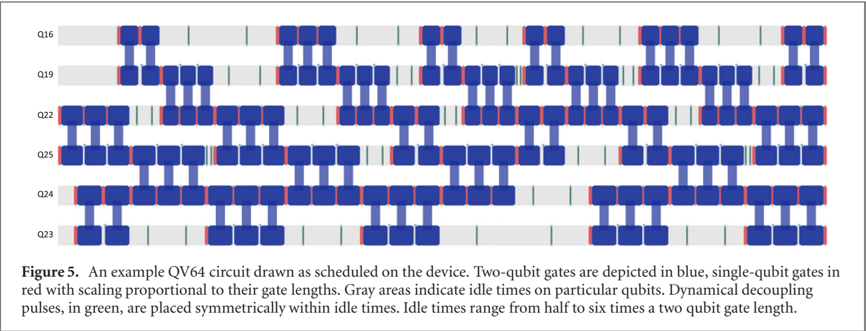
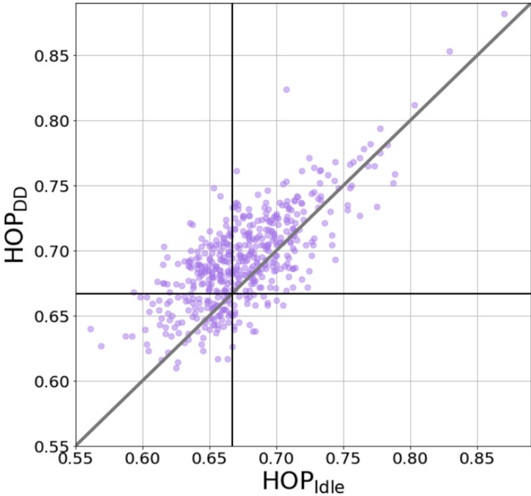
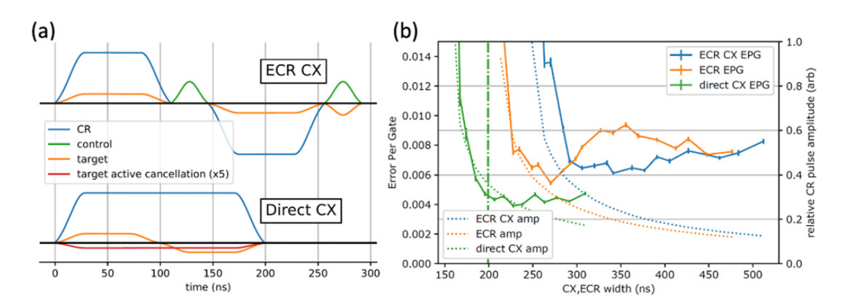
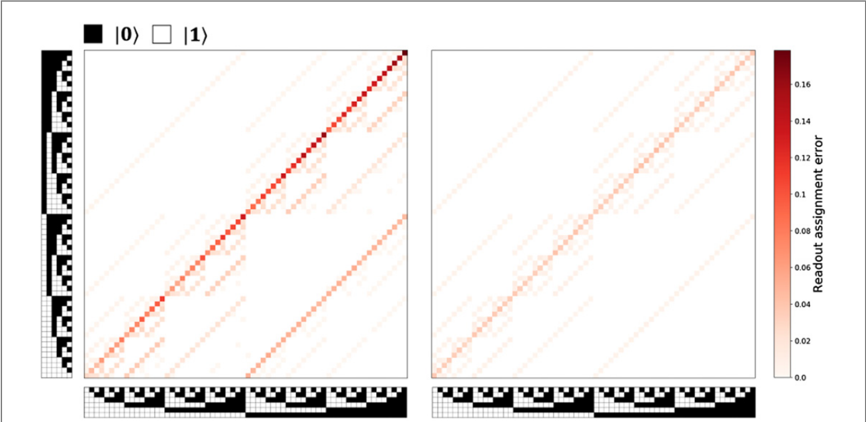
Verification
Claims the paper makes
The claims and statistics of this paper haven’t been checked yet.
Free: it reads the open-access text and checks the first 5 claims that cite a source we can check. Create a free account to check every claim.
Claims other papers make about this one
Each is checked against this paper’s own text: does it say what the citing paper says it does?
The source backs part of the claim, not all of it — or backs it for a different population, condition or comparison.
In the citing paper
“The advantage of this fabrication technique is the possibility for in situ fabrication of the JJ and minimal etch damage to achieve high-coherence qubits of up to hundreds of microseconds19–22.”
From Advanced CMOS manufacturing of superconducting qubits on 300 mm wafers (2024) · cites this paper as [22]
Experimental — accuracy not yet measured
Self-check
Percentages, sums and reported differences re-computed from the paper’s own numbers.
The self-check needs the paper’s full text.
Citations
Cites
Effects of Diffusion on Free Precession in Nuclear Magnetic Resonance Experiments
Carr, H. Y., & Purcell, E. M. (1954) · Physical Review · doi:10.1103/physrev.94.630 · Cited by 6,466
Modified Spin-Echo Method for Measuring Nuclear Relaxation Times
Meiboom, S., & Gill, D. (1958) · Review of Scientific Instruments · doi:10.1063/1.1716296 · Cited by 6,022 · cited 1×
“decoupling sequences have been proposed [29], [30], [31], some with self-correcting properties [32], [33], others with non-equidistant temporal spacing [34], and hybrids combining both [35], [36], [37], in order to optimize the effective filter function.”
BackgroundHahn, E. L. (1950) · Physical Review · doi:10.1103/physrev.80.580 · Cited by 5,085
Charge-insensitive qubit design derived from the Cooper pair box
Koch, J., Yu, T. M., Gambetta, J., Houck, A. A., Schuster, D. I., Majer, J., Blais, A., Devoret, M. H., Girvin, S. M., & Schoelkopf, R. J. (2007) · Physical Review A · doi:10.1103/physreva.76.042319 · Cited by 3,351 · cited 1×
“Secondly, even though the | f 〉-state has a lifetime half of the |1〉-state [53], the qubit excitation has to decay twice | f 〉 → |1〉 → |0〉 (while a two-photon decay | f 〉 → |0〉 is strongly suppressed [54] ).”
Dynamical Decoupling of Open Quantum Systems
Viola, L., Knill, E., & Lloyd, S. (1999) · Physical Review Letters · doi:10.1103/physrevlett.82.2417 · Cited by 1,808 · cited 1×
“Dynamical decoupling is a thoroughly discussed error mitigation technique [25], [26], [27], and in its simplest form, can be a single Hahn echo-pulse [28], refocusing the lowfrequency noise spectrum acting on a unitary.”
BackgroundRandomized benchmarking of quantum gates
Knill, E., Leibfried, D., Reichle, R., Britton, J., Blakestad, R. B., Jost, J. D., Langer, C., Ozeri, R., Seidelin, S., & Wineland, D. J. (2008) · Physical Review A · doi:10.1103/physreva.77.012307 · Cited by 1,019 · cited 1×
“randomized benchmarking [43, 44] and gate set tomography [45, 46], QV was developed as a holistic system measure and hence is sensitive to SPAM-errors.”
BackgroundSimple Pulses for Elimination of Leakage in Weakly Nonlinear Qubits
Motzoi, F., Gambetta, J. M., Rebentrost, P., & Wilhelm, F. K. (2009) · Physical Review Letters · doi:10.1103/physrevlett.103.110501 · Cited by 814 · cited 1×
“A DRAG pulse envelope [15] corrects σz-errors and signal dispersion due to wiring.”
BackgroundScalable and Robust Randomized Benchmarking of Quantum Processes
Magesan, E., Gambetta, J. M., & Emerson, J. (2011) · Physical Review Letters · doi:10.1103/physrevlett.106.180504 · Cited by 724 · cited 1×
“randomized benchmarking [43, 44] and gate set tomography [45, 46], QV was developed as a holistic system measure and hence is sensitive to SPAM-errors.”
BackgroundKeeping a Quantum Bit Alive by Optimized π -Pulse Sequences
Uhrig, G. S. (2007) · Physical Review Letters · doi:10.1103/physrevlett.98.100504 · Cited by 716 · cited 1×
“Various decoupling sequences have been proposed [32–34], some with self-correcting properties [35, 36], others with non-equidistant temporal spacing [37], and hybrids combining both [38–40], in order to optimize the effective filter function.”
MethodValidating quantum computers using randomized model circuits
Cross, A. W., Bishop, L. S., Sheldon, S., Nation, P. D., & Gambetta, J. M. (2019) · Physical Review A · doi:10.1103/physreva.100.032328 · Cited by 704 · cited 4×
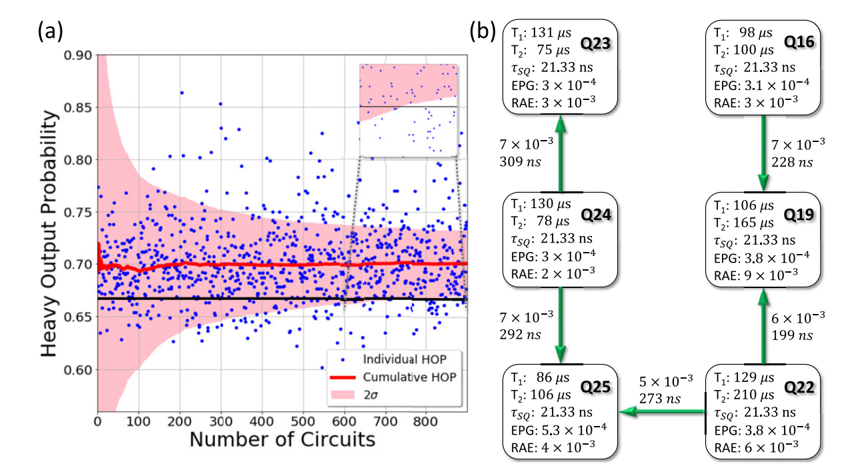
“Red: cumulative HOP with shaded region ±2σ as calculated per appendix C of [1].”
BackgroundMethodInfluentialSelf-citation
Cited by
Suppressing quantum errors by scaling a surface code logical qubit
Google Quantum, A. I., Acharya, R., Aleiner, I., Allen, R., Andersen, T. I., Ansmann, M., Arute, F., Arya, K., Asfaw, A., Atalaya, J., et al. (2023) · Nature · doi:10.1038/s41586-022-05434-1 · Cited by 1,103
The Variational Quantum Eigensolver: A review of methods and best practices
Tilly, J., Chen, H., Cao, S., Picozzi, D., Setia, K., Li, Y., Grant, E., Wossnig, L., Rungger, I., Booth, G. H., et al. (2022) · Physics Reports · doi:10.1016/j.physrep.2022.08.003 · Cited by 1,031
Noise-Induced Barren Plateaus in Variational Quantum Algorithms
Wang, S., Fontana, E., Cerezo, M., Sharma, K., Sone, A., Cincio, L., & Coles, P. J. (2020) · arXiv · doi:10.48550/arxiv.2007.14384 · Cited by 791
Noise-induced barren plateaus in variational quantum algorithms
Wang, S., Fontana, E., Cerezo, M., Sharma, K., Sone, A., Cincio, L., & Coles, P. J. (2021) · Nature Communications · doi:10.1038/s41467-021-27045-6 · Cited by 773
“At time of writing this holds the record for the largest quantum volume measured on an IBM Quantum device, which was demonstrated on a line of 6 qubits [80].”
BackgroundCai, Z., Babbush, R., Benjamin, S. C., Endo, S., Huggins, W. J., Li, Y., McClean, J. R., & O’Brien, T. E. (2023) · Reviews of Modern Physics · doi:10.1103/revmodphys.95.045005 · Cited by 591
“…to see reports of experiments demonstrating high-quality control over multiple qubits [see e.g. Asavanant et al. (2019); Ebadi et al. (2021); Jurcevic et al. (2021); Madjarov et al. (2020); and Xue et al. (2022)], some even reaching beyond 50 qubits [see e.g. Arute et al. (2019) and Wu et…”
BackgroundDemonstration of the trapped-ion quantum CCD computer architecture
Pino, J. M., Dreiling, J. M., Figgatt, C., Gaebler, J. P., Moses, S. A., Allman, M. S., Baldwin, C. H., Foss-Feig, M., Hayes, D., Mayer, K., et al. (2021) · Nature · doi:10.1038/s41586-021-03318-4 · Cited by 547
High-fidelity parallel entangling gates on a neutral atom quantum computer
Evered, S. J., Bluvstein, D., Kalinowski, M., Ebadi, S., Manovitz, T., Zhou, H., Li, S. H., Geim, A. A., Wang, T. T., Maskara, N., et al. (2023) · arXiv · doi:10.48550/arxiv.2304.05420 · Cited by 526
“They demonstrate the functionality of these gates by preparing and measuring Bell states in parallel with up to 10 atom pairs.”
MethodHigh-fidelity parallel entangling gates on a neutral-atom quantum computer
Evered, S. J., Bluvstein, D., Kalinowski, M., Ebadi, S., Manovitz, T., Zhou, H., Li, S. H., Geim, A. A., Wang, T. T., Maskara, N., et al. (2023) · Nature · doi:10.1038/s41586-023-06481-y · Cited by 522
“They demonstrate the functionality of these gates by preparing and measuring Bell states in parallel with up to 10 atom pairs.”
MethodQuantum computing: A taxonomy, systematic review and future directions
Gill, S. S., Kumar, A., Singh, H., Singh, M., Kaur, K., Usman, M., & Buyya, R. (2022) · Software: Practice and Experience · doi:10.1002/spe.3039 · Cited by 476
Koch, C. P., Boscain, U., Calarco, T., Dirr, G., Filipp, S., Glaser, S. J., Kosloff, R., Montangero, S., Schulte-Herbrüggen, T., Sugny, D., et al. (2022) · EPJ Quantum Technology · doi:10.1140/epjqt/s40507-022-00138-x · Cited by 405
“Based on these methods, gates can be calibrated across a complete quantum processor to reach high quantum volumes [314, 549].”
MethodExponential suppression of bit or phase errors with cyclic error correction
Google Quantum, A. I., Chen, Z., Satzinger, K. J., Atalaya, J., Korotkov, A. N., Dunsworth, A., Sank, D., Quintana, C., McEwen, M., Barends, R., et al. (2021) · Nature · doi:10.1038/s41586-021-03588-y · Cited by 393
Quantum simulation and computing with Rydberg-interacting qubits
Morgado, M., & Whitlock, S. (2021) · AVS Quantum Science · doi:10.1116/5.0036562 · Cited by 370
“≈ 10 (Sec III), similar to the latest reported demonstrations with SC quantum circuits 10,73 and trapped ions 19,74–76 .”
BackgroundQuantum Low-Density Parity-Check Codes
Breuckmann, N. P., & Eberhardt, J. N. (2021) · PRX Quantum · doi:10.1103/prxquantum.2.040101 · Cited by 328
Quantum Information Scrambling on a Superconducting Qutrit Processor
Blok, M. S., Ramasesh, V. V., Schuster, T., O’Brien, K., Kreikebaum, J. M., Dahlen, D., Morvan, A., Yoshida, B., Yao, N. Y., & Siddiqi, I. (2021) · Physical Review X · doi:10.1103/physrevx.11.021010 · Cited by 262
OpenQASM 3: A Broader and Deeper Quantum Assembly Language
Cross, A., Javadi-Abhari, A., Alexander, T., De Beaudrap, N., Bishop, L. S., Heidel, S., Ryan, C. A., Sivarajah, P., Smolin, J., Gambetta, J. M., et al. (2022) · ACM Transactions on Quantum Computing · doi:10.1145/3505636 · Cited by 248
Self-citationMillisecond Coherence in a Superconducting Qubit
Somoroff, A., Ficheux, Q., Mencia, R. A., Xiong, H., Kuzmin, R., & Manucharyan, V. E. (2023) · Physical Review Letters · doi:10.1103/physrevlett.130.267001 · Cited by 233
Laser-annealing Josephson junctions for yielding scaled-up superconducting quantum processors
Hertzberg, J. B., Zhang, E. J., Rosenblatt, S., Magesan, E., Smolin, J. A., Yau, J.-B., Adiga, V. P., Sandberg, M., Brink, M., Chow, J. M., et al. (2021) · npj Quantum Information · doi:10.1038/s41534-021-00464-5 · Cited by 198
Self-citationScalable error mitigation for noisy quantum circuits produces competitive expectation values
Kim, Y., Wood, C. J., Yoder, T. J., Merkel, S. T., Gambetta, J. M., Temme, K., & Kandala, A. (2023) · Nature Physics · doi:10.1038/s41567-022-01914-3 · Cited by 191
“9 % with sub-100 ns gate times [28], with steady progress in holistic metrics such as quantum volume [29] as well.”
BackgroundSelf-citationQuantum dots for photonic quantum information technology
Heindel, T., Kim, J.-H., Gregersen, N., Rastelli, A., & Reitzenstein, S. (2023) · Advances in Optics and Photonics · doi:10.1364/aop.490091 · Cited by 172
Koh, J. M., Sun, S.-N., Motta, M., & Minnich, A. J. (2023) · Nature Physics · doi:10.1038/s41567-023-02076-6 · Cited by 171
Preparing random states and benchmarking with many-body quantum chaos
Choi, J., Shaw, A. L., Madjarov, I. S., Xie, X., Finkelstein, R., Covey, J. P., Cotler, J. S., Mark, D. K., Huang, H.-Y., Kale, A., et al. (2023) · Nature · doi:10.1038/s41586-022-05442-1 · Cited by 155
Computational advantage of quantum random sampling
Hangleiter, D., & Eisert, J. (2023) · Reviews of Modern Physics · doi:10.1103/revmodphys.95.035001 · Cited by 145
SupermarQ: A Scalable Quantum Benchmark Suite
Tomesh, T., Gokhale, P., Omole, V., Ravi, G. S., Smith, K. N., Viszlai, J., Wu, X.-C., Hardavellas, N., Martonosi, M. R., & Chong, F. T. (2022) · arXiv · doi:10.48550/arxiv.2202.11045 · Cited by 143
“Operations of particular interest are two-qubit interactions because two-qubit operations dominate single-qubit operations in terms of gate error and execution time on NISQ hardware [43] [44].”
BackgroundHigh-fidelity qutrit entangling gates for superconducting circuits
Goss, N., Morvan, A., Marinelli, B., Mitchell, B. K., Nguyen, L. B., Naik, R. K., Chen, L., Jünger, C., Kreikebaum, J. M., Santiago, D. I., et al. (2022) · Nature Communications · doi:10.1038/s41467-022-34851-z · Cited by 129
Mooney, G. J., White, G. A. L., Hill, C. D., & Hollenberg, L. C. L. (2021) · Journal of Physics Communications · doi:10.1088/2399-6528/ac1df7 · Cited by 137
“The device is from the series of IBM Quantum Falcon processors and was recently benchmarked at having a quantum volume of 64 [10].”
BackgroundMethodBuilding blocks of a flip-chip integrated superconducting quantum processor
Kosen, S., Li, H.-X., Rommel, M., Shiri, D., Warren, C., Grönberg, L., Salonen, J., Abad, T., Biznárová, J., Caputo, M., et al. (2022) · Quantum Science and Technology · doi:10.1088/2058-9565/ac734b · Cited by 88
Demonstration of the trapped-ion quantum CCD computer architecture
Pino, J. M., Dreiling, J., Figgatt, C., Gaebler, J., Moses, S. A., Allman, M. S., Baldwin, C. H., Foss‐Feig, M., Hayes, D., Mayer, K., et al. (2021) · RePEc: Research Papers in Economics · Cited by 87
Error Mitigation for Universal Gates on Encoded Qubits
Piveteau, C., Sutter, D., Bravyi, S., Gambetta, J. M., & Temme, K. (2021) · Physical Review Letters · doi:10.1103/physrevlett.127.200505 · Cited by 81
“While the hardware requirements to implement quantum algorithms fault-tolerantly have not been met yet, steady progress in the development of quantum hardware has been made [18, 11, 8].”
BackgroundSelf-citationSeamless High- Q Microwave Cavities for Multimode Circuit Quantum Electrodynamics
Chakram, S., Oriani, A., Naik, R., Dixit, A. V., He, K. T., Agrawal, A. K., Kwon, H., & Schuster, D. (2021) · Physical Review Letters · doi:10.1103/physrevlett.127.107701 · Cited by 119
Entanglement Purification and Protection in a Superconducting Quantum Network
Yan, H., Zhong, Y., Chang, H.-S., Bienfait, A., Chou, M.-H., Conner, C. R., Dumur, É., Grebel, J., Povey, R. G., & Cleland, A. N. (2022) · Physical Review Letters · doi:10.1103/physrevlett.128.080504 · Cited by 100
Fast Logic with Slow Qubits: Microwave-Activated Controlled-Z Gate on Low-Frequency Fluxoniums
Ficheux, Q., Nguyen, L. B., Somoroff, A., Xiong, H., Nesterov, K., Vavilov, M., & Manucharyan, V. (2021) · Physical Review X · doi:10.1103/physrevx.11.021026 · Cited by 90
Simulating the dynamics of braiding of Majorana zero modes using an IBM quantum computer
Stenger, J., Bronn, N. T., Egger, D. J., & Pekker, D. (2021) · Physical Review Research · doi:10.1103/physrevresearch.3.033171 · Cited by 85
Advanced CMOS manufacturing of superconducting qubits on 300 mm wafers
Van Damme, J., Massar, S., Acharya, R., Ivanov, T., Perez Lozano, D., Canvel, Y., Demarets, M., Vangoidsenhoven, D., Hermans, Y., Lai, J. G., et al. (2024) · Nature · doi:10.1038/s41586-024-07941-9 · Cited by 63
“Moreover, it offers the potential for further upscaling through three-dimensional integration 5 and more process optimization.”
BackgroundApproaching optimal entangling collective measurements on quantum computing platforms
Conlon, L. O., Vogl, T., Marciniak, C. D., Pogorelov, I., Yung, S. K., Eilenberger, F. X., Berry, D. W., Santana, F. S., Blatt, R., Monz, T., et al. (2023) · Nature Physics · doi:10.1038/s41567-022-01875-7 · Cited by 100
“The frequency of the transmons are around 5 GHz [61].”
BackgroundQuantum computing and industrial information integration: A review
Lu, Y., Sigov, A., Ratkin, L., Ivanov, L. A., & Zuo, M. (2023) · Journal of Industrial Information Integration · doi:10.1016/j.jii.2023.100511 · Cited by 103
Certification of Non-Gaussian States with Operational Measurements
Chabaud, U., Roeland, G., Walschaers, M., Grosshans, F., Parigi, V., Markham, D., & Treps, N. (2021) · PRX Quantum · doi:10.1103/prxquantum.2.020333 · Cited by 92
Merged-Element Transmons: Design and Qubit Performance
Mamin, H. J., Huang, E., Carnevale, S., Rettner, C. T., Arellano, N., Sherwood, M. H., Kurter, C., Trimm, B., Sandberg, M., Shelby, R. M., et al. (2021) · Physical Review Applied · doi:10.1103/physrevapplied.16.024023 · Cited by 57
“[2] Petar Jurcevic, Ali Javadi-Abhari, Lev S Bishop, Isaac Lauer, Daniela Borgorin, Markus Brink, Lauren Capelluto, Oktay Gunluk, Toshinari Itoko, Naoki”
BackgroundBaldwin, C. H., Mayer, K., Brown, N. C., Ryan-Anderson, C., & Hayes, D. (2022) · Quantum · doi:10.22331/q-2022-05-09-707 · Cited by 54
“[6].”
MethodOptimal Qubit Assignment and Routing via Integer Programming
Nannicini, G., Bishop, L. S., Günlük, O., & Jurcevic, P. (2022) · ACM Transactions on Quantum Computing · doi:10.1145/3544563 · Cited by 94
“This formulation was instrumental in demonstrating quantum volume [8] 64 on an IBM device [11]; this was mentioned and briefly described in [11], here we give for the first time a full description of the mathematical model, of the methodology used to perform to optimization, and a comparison with existing algorithms.”
BackgroundMethodSelf-citationQuantum Computing: Towards Industry Reference Problems
Luckow, A., Klepsch, J., & Pichlmeier, J. (2021) · Digitale Welt · doi:10.1007/s42354-021-0335-7 · Cited by 68
“Table 1) Optimization TSP, SAT, Max-Cut, partitioning, maximum independent set problem QUBO, PUBO, Graph QAOA [7] , Quantum Adiabatic Algorithm [44], Grover Adaptive Search [45] [1,2,3,4,5,6,7,8,9]”
BackgroundMethodBest Approximate Quantum Compiling Problems
Madden, L., & Simonetto, A. (2022) · ACM Transactions on Quantum Computing · doi:10.1145/3505181 · Cited by 88
“With the steady advances in quantum hardware and volume [1], quantum computing is well on track to become widely adopted in science and technology in the near future.”
BackgroundQubit Mapping and Routing via MaxSAT
Molavi, A., Xu, A., Diges, M., Pick, L., Tannu, S., & Albarghouthi, A. (2022) · 2022 55th IEEE/ACM International Symposium on Microarchitecture (MICRO) · doi:10.1109/micro56248.2022.00077 · Cited by 54
“While others develop application-specific [37], [38] and noise-aware strategies that use hardware-level characteristics to improve fidelity [39], [40], [41], [42], [43], [44], [45].”
BackgroundQuantum Algorithms for Mixed Binary Optimization Applied to Transaction Settlement
Braine, L., Egger, D. J., Glick, J., & Woerner, S. (2021) · IEEE Transactions on Quantum Engineering · doi:10.1109/tqe.2021.3063635 · Cited by 51
“It is therefore paramount to increase the quality of the hardware so that such algorithms may find practical relevance [28].”
BackgroundEffects of Dynamical Decoupling and Pulse-Level Optimizations on IBM Quantum Computers
Niu, S., & Todri‐Sanial, A. (2022) · IEEE Transactions on Quantum Engineering · doi:10.1109/tqe.2022.3203153 · Cited by 71
“DD plays an important role in reducing the idle error and has been used in quantum volume (QV) experiments [18], noise spectrum characterization [44], decoherence-protected quantum gate implementation [49], etc.”
MethodSubsystem codes with high thresholds by gauge fixing and reduced qubit overhead
Higgott, O., & Breuckmann, N. P. (2021) · Physical Review X · doi:10.1103/physrevx.11.031039 · Cited by 48
“This includes IBM, who plan to implement the heavy-hexagon subsystem code [9] to reduce frequency collisions in their superconducting quantum processors [21].”
MethodQuantum walk approach to simulating parton showers
Bepari, K., Malik, S. A., Spannowsky, M., & Williams, S. (2022) · Physical review. D/Physical review. D. · doi:10.1103/physrevd.106.056002 · Cited by 64
Cross-platform comparison of arbitrary quantum states
Zhu, D., Cian, Z.-P., Noel, C., Risinger, A., Biswas, D., Egan, L., Zhu, Y., Green, A., Alderete, C. H., Nguyen, N. H., et al. (2022) · Nature Communications · doi:10.1038/s41467-022-34279-5 · Cited by 82
“We present cross-platform fi delity results for 7-and 13-qubit QV-like circuits 24 .”
BackgroundMethodNatural evolutionary strategies for variational quantum computation
Anand, A., Degroote, M., & Aspuru-Guzik, A. (2021) · Machine Learning: Science and Technology · doi:10.1088/2632-2153/abf3ac · Cited by 40
Exploiting Symmetry Reduces the Cost of Training QAOA
Shaydulin, R., & Wild, S. M. (2021) · IEEE Transactions on Quantum Engineering · doi:10.1109/tqe.2021.3066275 · Cited by 39
“Recent advances in quantum hardware [1, 2] pave the way for demonstrating useful quantum advantage in the coming years.”
BackgroundPishchimova, A. A., Smirnov, N. S., Ezenkova, D. A., Krivko, E. A., Zikiy, E. V., Moskalev, D. O., Ivanov, A. I., Korshakov, N. D., & Rodionov, I. A. (2023) · Scientific Reports · doi:10.1038/s41598-023-34051-9 · Cited by 39
Towards a quantum computing algorithm for helicity amplitudes and parton showers
Bepari, K., Malik, S. A., Spannowsky, M., & Williams, S. (2021) · Physical review. D/Physical review. D. · doi:10.1103/physrevd.103.076020 · Cited by 38
“adding disproportionate computational complexity. With IBM recently setting their goal of exceeding 1,000 qubits by 2023 [50] and advancements in the development of devices with better Quantum Volume [49], we are on the brink of a quantum revolution. These developments would allow the algorithms presented in this pape…”
BackgroundMethodHazra, S., Bhattacharjee, A., Chand, M., Salunkhe, K. V., Gopalakrishnan, S., Patankar, M. P., & Vijay, R. (2021) · Physical Review Applied · doi:10.1103/physrevapplied.16.024018 · Cited by 40
Digital quantum simulation of non-equilibrium quantum many-body systems
Fauseweh, B., & Zhu, J. (2021) · Quantum Information Processing · doi:10.1007/s11128-021-03079-z · Cited by 52
Synthesizing Five-Body Interaction in a Superconducting Quantum Circuit
Zhang, K., Li, H., Zhang, P., Yuan, J., Chen, J., Ren, W., Wang, Z., Song, C., Wang, D., Wang, H., et al. (2022) · Physical Review Letters · doi:10.1103/physrevlett.128.190502 · Cited by 43
Enhancing the coherence of superconducting quantum bits with electric fields
Lisenfeld, J., Bilmes, A., & Ustinov, A. V. (2023) · npj Quantum Information · doi:10.1038/s41534-023-00678-9 · Cited by 41
Epitaxial superconductor-semiconductor two-dimensional systems for superconducting quantum circuits
Yuan, J. O., Wickramasinghe, K. S., Strickland, W. M., Dartiailh, M., Sardashti, K., Hatefipour, M., & Shabani, J. (2021) · Journal of Vacuum Science & Technology A Vacuum Surfaces and Films · doi:10.1116/6.0000918 · Cited by 31
Simulating Static and Dynamic Properties of Magnetic Molecules with Prototype Quantum Computers
Crippa, L., Tacchino, F., Chizzini, M., Aita, A., Grossi, M., Chiesa, A., Santini, P. M., Tavernelli, I., & Carretta, S. (2021) · Magnetochemistry · doi:10.3390/magnetochemistry7080117 · Cited by 24
“, by the quantum volume metric [60,61], have also been consistently improving, thus pointing towards promising new avenues of research.”
BackgroundSilver, D., Patel, T., & Tiwari, D. (2022) · Proceedings of the AAAI Conference on Artificial Intelligence · doi:10.1609/aaai.v36i8.20807 · Cited by 43
“This is because loading data, training, and testing samples on existing near-term intermediate-scale quantum (NISQ) computers is challenging due to significant hardware errors (Schuld and Killoran 2019a; Jurcevic et al. 2021; Preskill 2018).”
BackgroundOn Testing and Debugging Quantum SoftwarePreprint
Miranskyy, A. V., Zhang, L., & Doliskani, J. (2021) · arXiv (Cornell University) · doi:10.13016/m2tytz-xb93 · Cited by 63
Scalable Benchmarks for Gate-Based Quantum ComputersPreprint
Cornelissen, A., Bausch, J., & Gilyén, A. (2021) · arXiv (Cornell University) · doi:10.48550/arxiv.2104.10698 · Cited by 42
Quantum circuit engineering for correcting coherent noise
Ahsan, M., Naqvi, S. A. Z., & Anwer, H. (2022) · Physical Review A · doi:10.1103/physreva.105.022428 · Cited by 22
Small-world complex network generation on a digital quantum processor
Jones, E. B., Hillberry, L. E., Jones, M. T., Fasihi, M., Roushan, P., Zhang, J., Ho, A., Neill, C., Ostby, E. P., Graf, P. A., et al. (2022) · Nature Communications · doi:10.1038/s41467-022-32056-y · Cited by 29
Neural network decoder for near-term surface-code experiments
Varbanov, B. M., Serra-Peralta, M., Byfield, D., & Terhal, B. M. (2025) · Physical Review Research · doi:10.1103/physrevresearch.7.013029 · Cited by 20
Robust Qubit Mapping Algorithm via Double-Source Optimal Routing on Large Quantum Circuits
Cheng, C.-Y., Yang, C.-Y., Kuo, Y.-H., Wang, R.-C., Cheng, H.-C., & Huang, C.-Y. (. (2024) · ACM Transactions on Quantum Computing · doi:10.1145/3680291 · Cited by 19
Zhao, P., Zhang, Y., Xue, G., Jin, Y., & Yu, H. (2022) · Applied Physics Letters · doi:10.1063/5.0097521 · Cited by 23
Experimental accreditation of outputs of noisy quantum computers
Ferracin, S., Merkel, S., McKay, D. C., & Datta, A. (2021) · Physical Review A · doi:10.1103/physreva.104.042603 · Cited by 35
“[40] and for specific details about ibmq johannesburg and ibmq paris see Ref.”
BackgroundScruby, T. R., Browne, D. E., Webster, P., & Vasmer, M. (2022) · Quantum · doi:10.22331/q-2022-05-24-721 · Cited by 30
Optimization of the resonator-induced phase gate for superconducting qubits
Malekakhlagh, M., Shanks, W., & Paik, H. (2022) · Physical Review A · doi:10.1103/physreva.105.022607 · Cited by 23
High-fidelity superconducting quantum processors via laser-annealing of transmon qubitsPreprint
Zhang, E., Srinivasan, S. J., Sundaresan, N., Bogorin, D. F., Martin, Y., Hertzberg, J. B., Timmerwilke, J., Pritchett, E., Yau, J.-B., Wang, C., et al. (2020) · arXiv (Cornell University) · doi:10.48550/arxiv.2012.08475 · Cited by 18
“Our LASIQ process has been broadly utilized for precise frequency control of post-fabricated 27-qubit Falcon processors, including the recent QV-128 ibmq montreal system [4], [29].”
BackgroundMethodInfluentialSelf-citationTopological-Graph Dependencies and Scaling Properties of a Heuristic Qubit-Assignment Algorithm
Steinberg, M., Feld, S., Almudéver, C. G., Marthaler, M., & Reiner, J.-M. (2022) · IEEE Transactions on Quantum Engineering · doi:10.1109/tqe.2022.3160015 · Cited by 24
“instead, we have analyzed the statistics from several of the IBM quantum computers [3], [60], [50], and assume random errors on the same order of magnitude (which are typically ∼ 10−3 for single-qubit errors, and ∼ 10−2 for two-qubit gate errors and measurement errors [50]), which are then randomly assigned to nodes a…”
BackgroundMethodTimeStitch: Exploiting Slack to Mitigate Decoherence in Quantum Circuits
Smith, K. N., Ravi, G. S., Murali, P., Baker, J. M., Earnest, N., Javadi-Abhari, A., & Chong, F. T. (2022) · ACM Transactions on Quantum Computing · doi:10.1145/3548778 · Cited by 62
“• Dynamic Decoupling w/Heuristic: Dynamic Decoupling w/Heuristic (DD(H)) is similar to above, but DD is only added if a heuristic threshold inspired by References [23, 47, 53] is met to allow for adequate spacing between DD pulses.”
BackgroundInfluentialSelf-citationAn Assessment of the U.S. and Chinese Industrial Bases in Quantum Technology
Parker, E., Gonzales, D., Kochhar, A., Litterer, S., O'Connor, K., Schmid, J., Scholl, K., Silberglitt, R., Chang, J., Eusebi, C. A., et al. (2022) · RAND Corporation eBooks · doi:10.7249/rra869-1 · Cited by 33
Performance of superconducting quantum computing chips under different architecture designs
Hu, W., Yang, Y., Xia, W., Pi, J., Huang, E., Zhang, X.-D., & Xu, H. (2022) · Quantum Information Processing · doi:10.1007/s11128-022-03571-0 · Cited by 15
Reinforcement learning pulses for transmon qubit entangling gates
Nguyễn, H. N., Motzoi, F., Metcalf, M., Whaley, K. B., Bukov, M., & Schmitt, M. (2024) · Machine Learning Science and Technology · doi:10.1088/2632-2153/ad4f4d · Cited by 30
“For both schemes, calibration of the amplitudes and phases of the main CR pulse, in tandem with calibration of the additional tones, achieves between 99% to 99.7% average gate fidelity [16, 31].”
BackgroundMethodInfluentialGround-state phase diagram of quantum link electrodynamics in $(2+1)$-d
Hashizume, T., Halimeh, J. C., Hauke, P., & Banerjee, D. (2022) · SciPost Physics · doi:10.21468/scipostphys.13.2.017 · Cited by 20
“This approach takes Feynman’s suggestion30 of using quantum degrees of freedom to model and simulate quantum systems on quantum tabletop experiments31,32, which now are also being deployed on an engineering scale by Google33–36, IBM37, Rigetti38, IonQ39, Alpine Quantum Computing40, Pasqal41, and others.”
MethodFast Universal Entangling Gate for Superconducting Quantum ComputersPreprint
AbuGhanem, M., Homid, A. H., Hendy, A. S., Obada, A. ‐. F., & Eleuch, H. (2024) · SSRN Electronic Journal · doi:10.2139/ssrn.4726035 · Cited by 14
Implementing fault-tolerant non-Clifford gates using the [[8,3,2]] color code
Menendez, D. H., Ray, A., & Vasmer, M. (2023) · arXiv · doi:10.48550/arxiv.2309.08663 · Cited by 12
“Two-qubit gates and measurements are the noisiest operations in superconducting and trapped-ion devices [13, 14], hence we can approximate the error model in these devices with ideal state preparation and one-qubit gates, but noisy two-qubit gates and measurements (1% error rate).”
BackgroundInvited: Trainable Discrete Feature Embeddings for Quantum Machine Learning
Thumwanit, N., Lortaraprasert, C., & Raymond, R. (2021) · ACM/IEEE Design Automation Conference (DAC) · doi:10.1109/dac18074.2021.9586190 · Cited by 11
Quantum computing and simulation with trapped ions: On the path to the future
Wu, W., Zhang, T., & Chen, P. (2021) · Fundamental Research · doi:10.1016/j.fmre.2020.12.004 · Cited by 15
A QUBO Formulation for Qubit Allocation
Dury, B., & Di Matteo, O. (2020) · arXiv · doi:10.48550/arxiv.2009.00140 · Cited by 10
“[30] P.”
Analog/Mixed-Signal Integrated Circuits for Quantum Computing
Bardin, J. C. (2020) · IEEE BiCMOS and Compound Semiconductor Integrated Circuits and Technology Symposium (BCICTS) · doi:10.1109/bcicts48439.2020.9392973 · Cited by 8
“The characteristic timescale over which today’s transmons can maintain coherence is limited to about 100μs by losses and frequency fluctuations [16].”
BackgroundDiscriminating Quantum States with Quantum Machine Learning
Quiroga, D., Date, P., & Pooser, R. C. (2021) · IEEE International Conference on Quantum Computing and Engineering (QCE) · doi:10.1109/qce52317.2021.00088 · Cited by 9
Quantum Computing for Location DeterminationPreprint
Shokry, A., & Youssef, M. A. (2021) · arXiv (Cornell University) · doi:10.48550/arxiv.2106.11751 · Cited by 21
“This materialized in currently having real cloud-based quantum computers with free accounts to researchers [16, 27] as well as a large number of quantum programming languages and simulators [2, 17, 27].”
BackgroundLarkin, J. M., Jonsson, M., Justice, D., & Guerreschi, G. G. (2020) · arXiv (Cornell University) · Cited by 6
Quantum Accelerator Stack: A Research RoadmapPreprint
Bertels, K., Sarkar, A., Krol, A. M., Budhrani, R., Samadi, J., Geoffroy, E., Matos, J. S., Abreu, R., Gielen, G. E., & Ashraf, I. (2021) · arXiv (Cornell University) · doi:10.48550/arxiv.2102.02035 · Cited by 22
Crosstalk diagnosis for the next generation of quantum processors
Hangleiter, D. (2020) · doi:10.22331/qv-2020-10-29-46 · Cited by 5
Seifert, L. M., Dangwal, S., Chong, F. T., & Ravi, G. S. (2024) · International Conference on Architectural Support for Programming Languages and Operating Systems (ASPLOS) · doi:10.1145/3622781.3674178 · Cited by 14
“The chemistry problems still profit significantly from the transformation, underlining that Clap-ton is well suited for this type of Hamiltonian structure.”
Comparative Study of Sampling-Based Simulation Costs of Noisy Quantum Circuits
Hakkaku, S., & Fujii, K. (2021) · Physical Review Applied · doi:10.1103/physrevapplied.15.064027 · Cited by 6
“Recently, extensive effort has been paid for the realization of quantum computers, and the number of qubits is now approaching 100 qubits [1–5].”
BackgroundFluctuations in Extractable Work and Bounds on the Charging Power of Quantum Batteries
Wang, S.-Y. (2021) · Entropy · doi:10.3390/e23111455 · Cited by 4
“In light of recent advances in quantum computing [20,21], quantum batteries may be able to explore quantum phenomena to improve charging [10], energy storage [11], and discharging [12] capabilities.”
BackgroundChallenges and Advances in the Simulation of Targeted Covalent Inhibitors Using Quantum Computing
Chaudhuri, S., Huynh, B. C., Amory, R., Rogers, D. M., Cranney, A., Martínez-Martínez, L. Á., Macrì, T., Jones, G., Sheridan, E., Khedkar, A., et al. (2025) · The Journal of Physical Chemistry Letters · doi:10.1021/acs.jpclett.5c01680 · Cited by 8
Trainable Discrete Feature Embeddings for Variational Quantum ClassifierPreprint
Thumwanit, N., Lortaraprasert, C., Yano, H., & Raymond, R. (2021) · arXiv (Cornell University) · doi:10.48550/arxiv.2106.09415 · Cited by 10
“Recent noisy quantum devices [4] are built towards the goal of realizing such perfect quantum computers with the progress comparable to that of the Moore’s Law [5].”
MethodPractical Quantum Error Correction with the XZZX Code and Kerr-Cat Qubits
Darmawan, A. S., Brown, B. J., Grimsmo, A. L., Tuckett, D. K., & Puri, S. (2021) · PRX Quantum · doi:10.1103/prxquantum.2.030345 · Cited by 2
Error mitigation in brainbox quantum autoencoders
Pazem, J., & Ansari, M. H. (2025) · Scientific Reports · doi:10.1038/s41598-024-84171-z · Cited by 15
“The Noisy Intermediate Scale Quantum (NISQ) processors [12] due to their fragility can be reasonably controlled only in the scale of a few tens of qubits [13, 14].”
Cui, G., Wang, Z., Wang, S., Shi, S., Shang, R., Li, W., Wei, Z., & Gu, Y. (2022) · Quantum Information and Computation · doi:10.26421/qic22.7-8-2 · Cited by 3
Layout-Aware Quantum Circuitry and Algorithmic Extensions to Grover's Algorithm
Al-Bayaty, A. (2025) · PDXScholar (Portland State University) · doi:10.15760/etd.3924 · Cited by 5
Liu, X., He, M. X., Wang, J., Xie, H., & Zhao, C. (2022) · Journal of Physics Conference Series · doi:10.1088/1742-6596/2221/1/012029 · Cited by 1
“Considering the influence of many factors, IBM proposed a measurement standard that has nothing to do with the architecture--Quantum Volume (QV) [6-8].”
BackgroundPotential of Visualization to Explain Quantum Algorithms
Sasakura, M., & Iwata, K. (2023) · International Conference on Information Visualisation (IV) · doi:10.1109/iv60283.2023.00080 · Cited by 1
“The coherence time, duration that a quantum superposition state can survive, was 1ns at the first time in 1999, but nowadays it goes beyond 100μs [2].”
BackgroundFinding high-order Hadamard matrices by using quantum computersPreprint
Suksmono, A. B., & Minato, Y. (2020) · arXiv (Cornell University) · doi:10.48550/arxiv.2009.10919 · Cited by 1
“[22] and the 1000 qubits milestone [23] of QGM processor, the H-SEARCH implementation by”
MethodThe European quantum flagship: First results and future perspectives
Mlynek, J. (2021) · Fundamental Research · doi:10.1016/j.fmre.2021.01.003 · Cited by 1
Q-Pandora Unboxed: Characterizing Noise Resilience of Quantum Error Correction CodesPreprint
Chatterjee, A., Das, S. K., & Ghosh, S. (2023) · Research Square · doi:10.21203/rs.3.rs-3663236/v1 · Cited by 3
Metadata
- Authors
- Jurcevic, P., Javadi-Abhari, A., Bishop, L. S., Lauer, I., Bogorin, D. F., Brink, M., Capelluto, L., Günlük, O., Itoko, T., Kanazawa, N., Kandala, A., Keefe, G. A., Krsulich, K., Landers, W., Lewandowski, E. P., McClure, D. T., Nannicini, G., Narasgond, A., Nayfeh, H. M., Pritchett, E., Rothwell, M. B., Srinivasan, S., Sundaresan, N., Wang, C., Wei, K. X., Wood, C. J., Yau, J.-B., Zhang, E. J., Dial, O. E., Chow, J. M., & Gambetta, J. M.
- Affiliations
- IBM (United States) (US)
- IBM Research - Tokyo (JP)
- Corresponding author
- Jurcevic, Petar
- ORCID
- Jurcevic, Petar
- Javadi-Abhari, Ali
- Bishop, Lev S
- Lauer, Isaac
- Brink, Markus
- Günlük, Oktay
- Itoko, Toshinari
- Kanazawa, Naoki
- Kandala, Abhinav
- Keefe, George A
- Krsulich, Kevin
- Landers, William
- Lewandowski, Eric P
- McClure, Douglas T
- Nannicini, Giacomo
- Nayfeh, Hasan M
- Rothwell, Mary Beth
- Srinivasan, Srikanth
- Sundaresan, Neereja
- Wang, Cindy
- Wei, Ken X
- Wood, Christopher J
- Yau, Jeng-Bang
- Zhang, Eric J
- Dial, Oliver E
- Chow, Jerry M
- Gambetta, Jay M
- Venue
- Quantum Science and Technology
- Publisher
- IOP Publishing
- Published
- 2021-03-17
- Volume
- 6
- Issue
- 2
- Pages
- 025020
- ISSN
- 2058-9565 (ISSN-L)
- OpenAlex
- W3062963497
- Cited by
- 85
- References
- 52
- Citations by year
- 2025: 5 · 2024: 5 · 2023: 7 · 2022: 28 · 2021: 33
- FWCI
- 6.45
- Type
- journal article
- Language
- en
- Open access
- hybrid
- doi.org
- Licence
- cc-by
- creativecommons.org/licenses/by/4.0/ (vor)
- iopscience.iop.org/info/page/text-and-data-mining (tdm)
- Locations
- Quantum Science and Technology (publishedVersion, cc-by)
- arXiv (Cornell University) (submittedVersion)
- arXiv (Cornell University)
- Funders
- Intelligence Advanced Research Projects Activity (W911NF-16-1-0114)
- Army Research Office (W911NF-16-1-0114, W911NF-16-1-, W911NF)
- Topics
- Physical Sciences › Computer Science › Artificial Intelligence › Quantum Computing Algorithms and Architecture
- Physical Sciences › Physics and Astronomy › Atomic and Molecular Physics, and Optics › Quantum Information and Cryptography
- Physical Sciences › Physics and Astronomy › Atomic and Molecular Physics, and Optics › Quantum Mechanics and Applications
- Keywords
- quantum volume, superconducting quantum computing, dynamical decoupling, compiler optimization, two-qubit gate fidelity, measurement fidelity, coherence, hardware-software co-design
About these checks
Registry, retraction, Cites and statistics results are computed, not judged, with one exception: a printed reference that no index lists is read once by a model before it counts as a citation error. Claims are extracted by a model and kept only when their quote appears verbatim in the text; each cited source is then checked, with a model’s help, for whether it says what the claim relies on. Those verdicts can be wrong — read the claim’s quote and the cited source before relying on one.
Statistics and arithmetic are recomputed, not judged.
Confidence bands are shown only for fields calibrated on our annotated test set. None is calibrated yet, so no band is shown.
What counts as a claim ›How we measure confidence ›How we check this ›
Are you an author, or do you see a problem with this page? Request a review
Data sources
Bibliographic data: Semantic Scholar, OpenAlex, Crossref.
Contains information from the Semantic Scholar Academic Graph Datasets, made available under the ODC Attribution License (ODC-BY 1.0).
Semantic Scholar’s data is described in: Kinney, R., et al. (2023). The Semantic Scholar Open Data Platform. arXiv:2301.10140.
