

AlphaFold Protein Structure Database in 2024: providing structure coverage for over 214 million protein sequences
Open accessThe DOI matches its Crossref record; 29 of the 29 references it cites were found in a registry or an index; 18 of the 18 sources its claims cite were checked for support.
Abstract
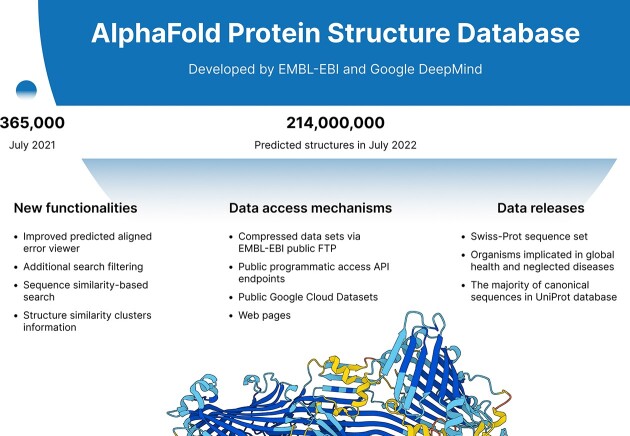
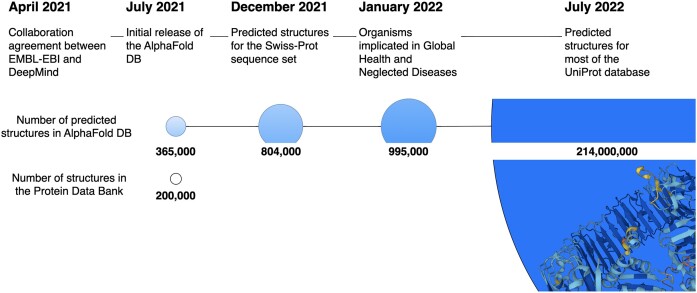
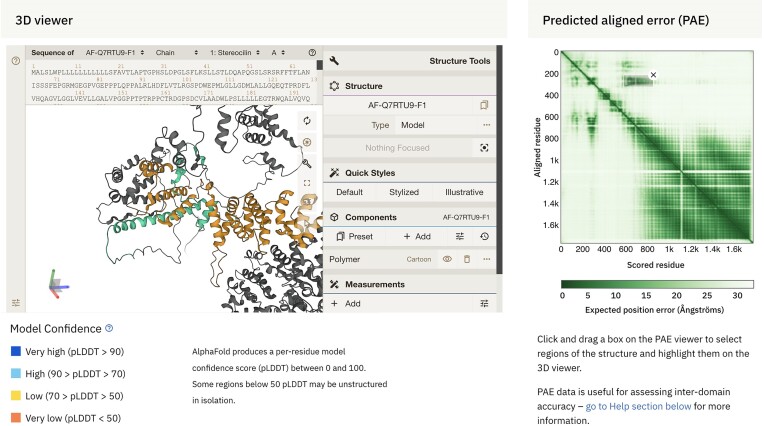
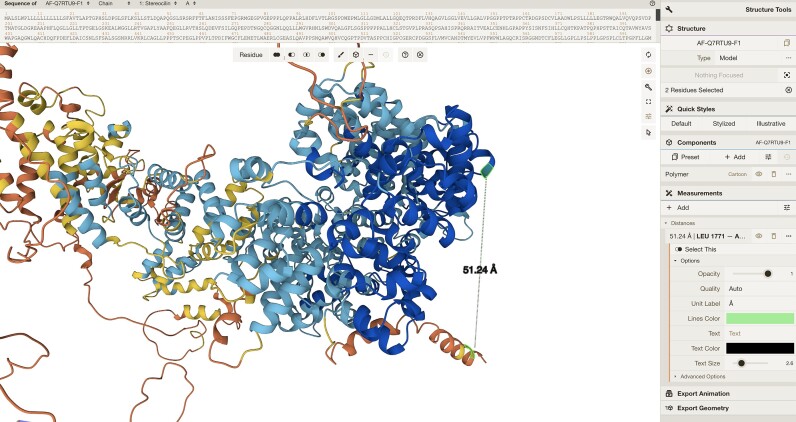
The AlphaFold Database Protein Structure Database (AlphaFold DB, https://alphafold.ebi.ac.uk) has significantly impacted structural biology by amassing over 214 million predicted protein structures, expanding from the initial 300k structures released in 2021. Enabled by the groundbreaking AlphaFold2 artificial intelligence (AI) system, the predictions archived in AlphaFold DB have been integrated into primary data resources such as PDB, UniProt, Ensembl, InterPro and MobiDB. Our manuscript details subsequent enhancements in data archiving, covering successive releases encompassing model organisms, global health proteomes, Swiss-Prot integration, and a host of curated protein datasets. We detail the data access mechanisms of AlphaFold DB, from direct file access via FTP to advanced queries using Google Cloud Public Datasets and the programmatic access endpoints of the database. We also discuss the improvements and services added since its initial release, including enhancements to the Predicted Aligned Error viewer, customisation options for the 3D viewer, and improvements in the search engine of AlphaFold DB.
Overview
CoChat Summary
TL;DR
AlphaFold DB has grown from ~300k to over 214 million predicted protein structures as of September 2023, with expanded access, search, and visualization features. This 2024 update describes data archiving, access mechanisms, integration with core resources, and new clustering/BLAST/PAE viewer capabilities.
Key findings
- AlphaFold DB expanded from approximately 300k structures in 2021 to over 214 million predicted protein structures as of September 2023; the initial July 2021 release housed over 360,000 structures for 20 model organism proteomes.
- Predictions are integrated into resources including PDB, UniProt, Ensembl, InterPro and MobiDB, and are accessible via FTP, Google Cloud Public Datasets (~23 TiB), API, and the website; PAE data is unavailable from EMBL-EBI public FTP.
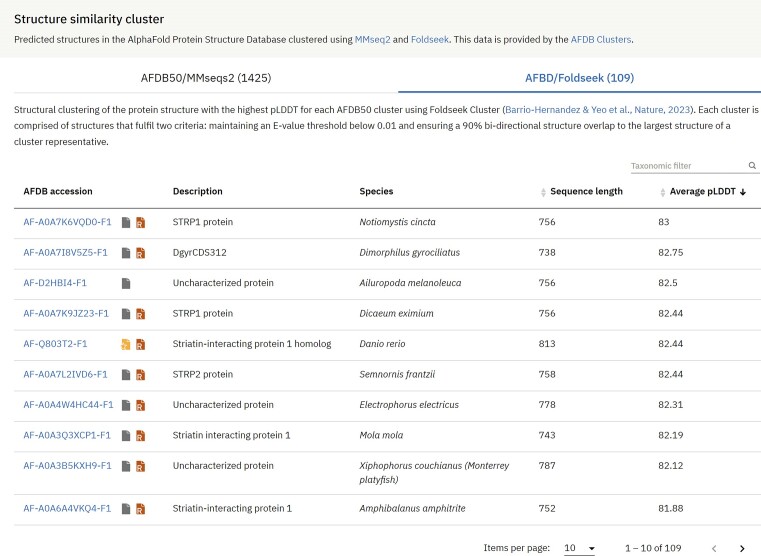
- Structure similarity clustering used MMseqs2 to cluster 214 million UniProtKB sequences into 52 million clusters, then Foldseek secondary clustering yielded 18.8 million clusters, finalizing 2.30 million robust clusters each with at least a pair of structures.
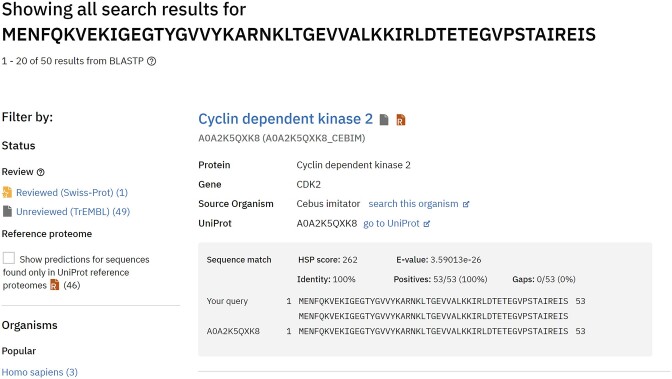
- New features include BLAST sequence similarity search, improved search filters for reviewed/unreviewed and reference proteome status, enhanced PAE viewer–Mol* interactivity, and a November 2022 update fixing a numerical bug that affected ~4% of total structure predictions.
Methods
- Descriptive database update/report with no primary experimental design; data generation is carried out by Google DeepMind, with predictions stored in PDB, mmCIF (modelCIF), and binaryCIF formats plus JSON metadata and confidence metrics pLDDT and PAE.
- Archiving uses successive releases from UniProt reference proteomes (e.g., 2021_02, 2021_04), Swiss-Prot, WHO global health proteomes, and MANE select; as of September 2023, EMBL-EBI FTP hosts TAR files for proteomes of 48 organisms.
- Access and analysis infrastructure includes FTP, Google Cloud Public Datasets, an API keyed on UniProt accessions, Apache-Solr search, BLAST on Google Cloud Platform, and Foldseek/MMseqs2 clustering.
Limitations
- Stated: sequences are not covered if they are less than 16 amino acids; >2700 aa for Swiss-Prot/proteome sequences or >1280 aa for other UniProt sequences; contain non-standard amino acids; are not in the UniProt ‘one sequence per gene’ FASTA file; or are viral proteins; these limitations are under discussion.
- Stated: some sequences may be outdated compared to UniProt due to less frequent AlphaFold DB releases; PAE data is unavailable from EMBL-EBI public FTP; full Google Cloud dataset download requires a Google account and can take roughly 2.5 days at 1 Gbps.
- Evident from the text: all archived structures are predicted models rather than experimental structures, and users must interpret pLDDT/PAE cautiously (e.g., pLDDT <50 likely disordered, 50–70 lower confidence); the database also currently lacks isoform and multimeric predicted structures, which are listed as future work.
Model-written summary. Check it against the paper before relying on it.
Integrity signals
Registry
Cites
Statistics
Figures

Verification
Claims the paper makes
11 Valid · 1 Not valid · 0 Not checked · 28 Own results and interpretations
Every source the paper cites for this claim was checked and supports it.
In the paper
“The new generation of predicted protein structure models has demonstrated remarkable accuracy, which could mitigate the continually widening gap between known protein sequences and experimentally determined protein structures (7).”
§ AlphaFold Protein Structure Database in 2024: providing structure coverage for over 214 million protein sequences > Introduction
What the sources say
- Supportedcites [7] Varadi M., Bordin N., Orengo C., Velankar S. The opportunities and challenges posed by the new generation of deep learning-based protein structure predictors. Curr. Opin. Struct. Biol. 2023; 79: 102543. 36807079 PMC7618866 source
The Introduction says prediction models made a major advance in accuracy and can match or sometimes surpass experimentally determined structures. It also describes a growing gap between known protein sequences and determined structures; the section on new challenges says predicted structures have greatly increased coverage of protein sequence space. These passages support both the accuracy claim and the proposed potential to narrow that gap (page numbers unavailable). (LLM, conf=0.93)
boosted- Asserted: passes — The authors put it forward as true.
- Checkable: passes — It can be checked against evidence.
- Load-bearing: passes — The paper’s conclusions depend on it.
- Based: passes — The paper gives a reason why it holds.
- Supported
Every source the paper cites for this claim was checked and supports it.
In the paper
“In response to frequent requests from the user community since the AlphaFold DB launch, we have made significant strides to implement a sequence-based similarity search feature. We have incorporated the Basic Local Alignment Search Tool (BLAST) (21) into our Google Cloud Platform infrastructure to achieve this.”
§ AlphaFold Protein Structure Database in 2024: providing structure coverage for over 214 million protein sequences > Implementation > Data access
What the sources say
- Supportedcites [21] Camacho C., Coulouris G., Avagyan V., Ma N., Papadopoulos J., Bealer K., Madden T.L. BLAST+: architecture and applications. BMC Bioinf. 2009; 10: 421. PMC2803857 20003500 source
The Background identifies BLAST as a sequence similarity search program that matches a query sequence against a database. In the citing sentence, the citation identifies the tool incorporated; the AlphaFold DB implementation is the citing authors’ own report, not a claim attributed to this source. (LLM, conf=0.91)
plainstates a cause- Asserted: passes — The authors put it forward as true.
- Checkable: passes — It can be checked against evidence.
- Load-bearing: unclear — It is unclear whether the paper’s conclusions depend on it.
- Based: passes — The paper gives a reason why it holds.
- Supported
Every source the paper cites for this claim was checked and supports it.
In the paper
“The impact of the predicted structures is further enhanced by their seamless integration into several core data resources, including PDBe-KB (17), UniProt (6), Ensembl (16), InterPro (15), Genecards (24) and MobiDB (25), among others.”
§ AlphaFold Protein Structure Database in 2024: providing structure coverage for over 214 million protein sequences > Conclusions and outlook
What the sources say
- Supportedcites [17] consortium P.D.B.-K.B. PDBe-KB: collaboratively defining the biological context of structural data. Nucleic Acids Res. 2022; 50: D534– D542. 34755867 PMC8728252 source
Citation (17) is attached specifically to PDBe-KB, rather than to the other resources in the sentence. The Introduction identifies PDBe-KB as a resource that integrates structural and functional annotations, supporting its identification here. (LLM, conf=0.90)
- Supportedcites [6] U.P. Consortium UniProt: the Universal Protein Knowledgebase in 2023. Nucleic Acids Res. 2023; 51: D523– D531. 36408920 PMC9825514 source
The citation is attached to UniProt in a list of resources, and the cited paper is a description of UniProt. Its Data integration and Interactive visualisations in entry pages sections state that UniProt incorporates AlphaFold-predicted structures into protein entries alongside other data; the supplied passages do not give page numbers. (LLM, conf=0.93)
- Supportedcites [16] Cunningham F., Allen J.E., Allen J., Alvarez-Jarreta J., Amode M.R., Armean I.M., Austine-Orimoloye O., Azov A.G., Barnes I., Bennett R. et al. Ensembl 2022. Nucleic Acids Res. 2022; 50: D988– D995. 34791404 PMC8728283 source
The citation identifies Ensembl as one of the resources in the list. In “Developing a new website” (page not provided), the paper says Ensembl’s Entity Viewer provides access to protein information, including 3D structures from PDBe. (LLM, conf=0.86)
plainstates a cause- Asserted: passes — The authors put it forward as true.
- Checkable: passes — It can be checked against evidence.
- Load-bearing: unclear — It is unclear whether the paper’s conclusions depend on it.
- Based: passes — The paper gives a reason why it holds.
- Supported
Every source the paper cites for this claim was checked and supports it.
In the paper
“Tackling this challenge, Steinegger et al. recently unveiled the Foldseek Cluster, a state-of-the-art structural-alignment-based clustering algorithm designed for vast datasets (22). They applied this novel method to the AlphaFold DB archive, making the derived structure similarity clusters available to the research community.”
§ AlphaFold Protein Structure Database in 2024: providing structure coverage for over 214 million protein sequences > Implementation > Data access
What the sources say
- Supportedcites [22] Barrio-Hernandez I., Yeo J., Jänes J., Mirdita M., Gilchrist C.L.M., Wein T., Varadi M., Velankar S., Beltrao P., Steinegger M. Clustering-predicted structures at the scale of the known protein universe. Nature. 2023; 622: 637– 645. 37704730 PMC10584675 source
The Abstract says the authors used Foldseek cluster to cluster the AlphaFold database. The Methods section (“Web server”) says they developed a server for users to explore the clusters, their members and related clusters, supporting the claim that the results were made available to researchers. (LLM, conf=0.93)
plainstates a cause- Asserted: passes — The authors put it forward as true.
- Checkable: passes — It can be checked against evidence.
- Load-bearing: passes — The paper’s conclusions depend on it.
- Based: passes — The paper gives a reason why it holds.
- Supported
- Probably not a substantial claim. 30
- It may state two separate claims as one. 15
- The quote only partly states this claim. 1
Claims other papers make about this one
Each is checked against this paper’s own text: does it say what the citing paper says it does?
The cited source says what the claim attributes to it.
In the citing paper
“houses over 200 million pre-run AF2 predictions”
From The power and pitfalls of AlphaFold2 for structure prediction beyond rigid globular proteins (2024) · cites this paper as [7]
Citations
Cites
Highly accurate protein structure prediction with AlphaFold
Jumper, J., Evans, R., Pritzel, A., Green, T., Figurnov, M., Ronneberger, O., Tunyasuvunakool, K., Bates, R., Žídek, A., Potapenko, A., et al. (2021) · Nature · doi:10.1038/s41586-021-03819-2 · Cited by 43,764
Self-citationBLAST+: architecture and applications
Camacho, C., Coulouris, G., Avagyan, V., Ma, N., Papadopoulos, J., Bealer, K., & Madden, T. L. (2009) · BMC Bioinformatics · doi:10.1186/1471-2105-10-421 · Cited by 22,074
UniProt: the Universal Protein Knowledgebase in 2023
The UniProt Consortium, Bateman, A., Martin, M.-J., Orchard, S., Magrane, M., Ahmad, S., Alpi, E., Bowler-Barnett, E. H., Britto, R., Bye-A-Jee, H., et al. (2023) · Nucleic Acids Research · doi:10.1093/nar/gkac1052 · Cited by 7,210
Evolutionary-scale prediction of atomic level protein structure with a language model
Lin, Z., Akin, H., Rao, R., Hie, B., Zhu, Z., Lu, W., Smetanin, N., Verkuil, R., Kabeli, O., Shmueli, Y., et al. (2022) · doi:10.1101/2022.07.20.500902 · Cited by 5,990 · cited 1×
“In the wake of the latest breakthroughs in prediction software, new databases such as the AlphaFold Protein Structure Database and the ESM Atlas ( 14 ) have emerged.”
MethodThe GeneCards suite: from gene data mining to disease genome sequence analyses
Stelzer, G., Rosen, N., Plaschkes, I., Zimmerman, S., Twik, M., Fishilevich, S., Stein, T. I., Nudel, R., Lieder, I., Mazor, Y., et al. (2016) · Current Protocols in Bioinformatics · doi:10.1002/cpbi.5 · Cited by 5,550 · cited 1×
“The impact of the predicted structures is further enhanced by their seamless integration into several core data resources, including PDBe-KB ( 17 ), UniProt ( 6 ), Ensembl ( 16 ), InterPro ( 15 ), Genecards ( 24 ) and MobiDB ( 25 ), among others.”
BackgroundAccurate prediction of protein structures and interactions using a 3-track network
Baek, M., DiMaio, F., Anishchenko, I., Dauparas, J., Ovchinnikov, S., Lee, G. R., Wang, J., Cong, Q., Kinch, L. N., Schaeffer, R. D., et al. (2021) · doi:10.1101/2021.06.14.448402 · Cited by 5,549
Paysan-Lafosse, T., Blum, M., Chuguransky, S., Grego, T., Pinto, B. L., Salazar, G. A., Bileschi, M. L., Bork, P., Bridge, A., Colwell, L., et al. (2023) · Nucleic Acids Research · doi:10.1093/nar/gkac993 · Cited by 2,399
Cunningham, F., Allen, J. E., Allen, J., Alvarez-Jarreta, J., Amode, M. R., Armean, I. M., Austine-Orimoloye, O., Azov, A. G., Barnes, I., Bennett, R., et al. (2022) · Nucleic Acids Research · doi:10.1093/nar/gkab1049 · Cited by 1,923
Mol* Viewer: modern web app for 3D visualization and analysis of large biomolecular structures
Sehnal, D., Bittrich, S., Deshpande, M., Svobodová, R., Berka, K., Bazgier, V., Velankar, S., Burley, S. K., Koča, J., & Rose, A. S. (2021) · Nucleic Acids Research · doi:10.1093/nar/gkab314 · Cited by 1,154 · cited 1×
“We improved the visualisation of non-consecutive regions and the interactivity between the PAE viewer and the 3D molecular graphics viewer, Mol* ( 23 ) (Figure 5 ).”
MethodSelf-citationMariani, V., Biasini, M., Barbato, A., & Schwede, T. (2013) · Bioinformatics · doi:10.1093/bioinformatics/btt473 · Cited by 1,138 · cited 1×
“AlphaFold yields a per-residue estimate of its confidence, known as pLDDT, ranging from 0 to 100, indicating the tool’s predicted score on the lDDT-C α metric ( 19 ).”
Method
Cited by
Items 201–300 of 2,174
Mutti, G., Ocaña‐Pallarès, E., & Gabaldón, T. (2025) · Molecular Biology and Evolution · doi:10.1093/molbev/msaf149 · Cited by 20
Spiegel, M. (2025) · Chemistry – A European Journal · doi:10.1002/chem.202403755 · Cited by 12
Rational design of cyclic peptides, with an emphasis on bicyclic peptides
Rowland, C. E., Bezerra, G. A., & Skynner, M. J. (2025) · Current Opinion in Structural Biology · doi:10.1016/j.sbi.2025.103025 · Cited by 12
A novel bacterial effector protein mediates ER-LD membrane contacts to regulate host lipid droplets
Angara, R. K., Sadi, A., & Gilk, S. D. (2024) · EMBO Reports · doi:10.1038/s44319-024-00266-8 · Cited by 17
A new age in structural S-layer biology: Experimental and in silico milestones
Grill-Walcher, S., & Schäffer, C. (2025) · Journal of Biological Chemistry · doi:10.1016/j.jbc.2025.110205 · Cited by 14
(2025) · doi:10.1038/s41467-025-58692-8 · Cited by 14
“All other models were retrieved from the AlphaFold Protein Structure Database (Supplementary Table 10) 115 .”
The Dayhoff Atlas: scaling sequence diversity for improved protein generationPreprint
Yang, K., Alamdari, S., Lee, A. J., Kaymak-Loveless, K., Char, S., Brixi, G., Domingo-Enrich, C., Wang, C., Lyu, S., Fusi, N., et al. (2025) · bioRxiv (Cold Spring Harbor Laboratory) · doi:10.1101/2025.07.21.665991 · Cited by 18
The dual role of VDAC in cancer: Molecular mechanisms and advances in targeted therapy
Huang, H., Chen, M., Feng, S., Lin, Z., & Liu, Y. (2025) · Biomedicine & Pharmacotherapy · doi:10.1016/j.biopha.2025.118530 · Cited by 18
HflX-mediated drug resistance through ribosome splitting and rRNA disordering in mycobacteria
Majumdar, S., Kashyap, A., Koripella, R. K., Sharma, M. R., Hurst-Hess, K. R., Manjari, S. R., Banavali, N. K., Ghosh, P., & Agrawal, R. K. (2025) · Proceedings of the National Academy of Sciences · doi:10.1073/pnas.2419826122 · Cited by 12
“The Msm HflX predicted structure was available in the Alphafold Protein Structure database (52, 53).”
Mutational landscape and molecular bases of echinocandin resistance in Saccharomyces cerevisiae
Durand, R., Torbey, A. G., Giguère, M., Pageau, A., Dubé, A. K., Lagüe, P., & Landry, C. R. (2026) · Genetics · doi:10.1093/genetics/iyag055 · Cited by 16
“The Fks1 structure from C. albicans was retrieved from the AlphaFold database (AFDB accession AF-A0A1D8PCT0-F1) (Varadi et al. 2024).”
From data to discovery: leveraging big data in plant natural products biosynthesis research
McConnachie, M. M., Nguyen, T. M., Kim, T., Nguyen, T., & Dang, T. T. (2025) · The Plant Journal · doi:10.1111/tpj.70288 · Cited by 14
Plastic degradation by enzymes from uncultured deep sea microorganisms
Acosta, D. J., Barth, D. R., Bondy, J., Appler, K. E., Anda, V. D., Ngo, P. H. T., Alper, H. S., Baker, B. J., Marcotte, E. M., & Ellington, A. D. (2025) · The ISME Journal · doi:10.1093/ismejo/wraf068 · Cited by 16
“In parallel, we downloaded the predicted protein structures of the known enzymes necessary for the metabolic process from the AlphaFold Database [37] and used ESMFold [31] to predict the structures of the proteins present in the MAGs.”
mBER: Controllable de novo antibody design with million-scale experimental screeningPreprint
Swanson, E., Nichols, M., Ravichandran, S., & Ogden, P. (2025) · bioRxiv (Cold Spring Harbor Laboratory) · doi:10.1101/2025.09.26.678877 · Cited by 28
“Computationally predicted structures from the AlphaFold Protein Structure Database (AFDB) were obtained for each target [31].”
A conserved mechanism for the retrieval of polyubiquitinated proteins from cilia
Lange, S. M., Bennett, J. A., Eisert, R. J., & Brown, A. (2025) · Cell · doi:10.1016/j.cell.2025.07.043 · Cited by 11
Chong, L. C., & Khan, A. M. (2025) · Elsevier eBooks · doi:10.1016/b978-0-323-95502-7.00226-8 · Cited by 11
High-accuracy protein complex structure modeling based on sequence-derived structure complementarity
Hou, M., Xia, Y., Wang, P., Lv, Z., Hou, D., Zhou, X., Zeng, J., & Zhang, G. (2025) · Nature Communications · doi:10.1038/s41467-025-65090-7 · Cited by 16
Tools for structural lectinomics: From structures to lectomes
Lisacek, F., Schnider, B., & Imberty, A. (2025) · BBA Advances · doi:10.1016/j.bbadva.2025.100154 · Cited by 14
“7A, the AlphaFold Structure Database [83] fails to produce a reliable model for HCA (P84871) and outputs a low confidence one for HML (P84870) that somehow predicts a tandem repeat structure and disulfide bridges.”
Multi-tissue transcriptomic aging atlas reveals predictive aging biomarkers in the killifish
Costa, E. K., Chen, J., Guldner, I. H., Mboning, L., Schmahl, N., Tsenter, A., Nagvekar, R., Wu, M.-R., Losada, P. M., Bouchard, L.-S., et al. (2026) · Nature Aging · doi:10.1038/s43587-026-01074-6 · Cited by 21
Chen, J., Wei, Y., Ni, D., Zhu, Y., Xu, W., Zhang, W., & Mu, W. (2025) · International Journal of Biological Macromolecules · doi:10.1016/j.ijbiomac.2025.141168 · Cited by 11
Fang, C., Zhou, P., Zhang, X., He, Y., & Yang, Q. (2025) · Frontiers in Oncology · doi:10.3389/fonc.2025.1609827 · Cited by 25
“AlphaFold predicts the three-dimensional structures of proteins with remarkable accuracy, providing crucial insights into protein conformations and druggability (28, 29).”
Modulation of Albumin Esterase Activity by Warfarin and Diazepam
Belinskaia, D. A., Batalova, A. A., Voronina, P. A., Shmurak, V. I., Vovk, M. A., Polyanichko, A. M., Sych, T. S., Samodurova, K. V., Antonova, V. K., Volkova, A. A., et al. (2024) · International Journal of Molecular Sciences · doi:10.3390/ijms252111543 · Cited by 13
Buakaew, W., Krobthong, S., Yingchutrakul, Y., Khamto, N., Sutana, P., Potup, P., Thongsri, Y., Daowtak, K., Ferrante, A., Léon, C., et al. (2024) · International Journal of Molecular Sciences · doi:10.3390/ijms25168995 · Cited by 12
“…the proteomics, including low-density-lipoprotein-receptor-related protein 5 (LRP5) and the catalytic subunit alpha of cAMP-dependent protein kinase (PRKACA), were retrieved from public databases (LRP5-AlphaFold protein structure database [55,56], PRKACA-RCSB PDB database (PDB ID: 3OXT) [57,58]).”
MethodStructural insights into Beclin 1 interactions with it's regulators for autophagy modulation
Sarmadhikari, D., & Asthana, S. (2025) · Computational and Structural Biotechnology Journal · doi:10.1016/j.csbj.2025.06.044 · Cited by 14
AXL Tyrosine Kinases: A Growing Isoform Family That Promotes Cancer Pathogenesis
Gjerstad, M. E., Aehnlich, P., Gélébart, P., & McCormack, E. (2025) · Cancer Research · doi:10.1158/0008-5472.can-24-3841 · Cited by 16
Pospíšilová, P., Bosák, J., Hrala, M., Krbková, L., Vrbová, E., & Šmajs, D. (2025) · Communications Medicine · doi:10.1038/s43856-025-00948-x · Cited by 16
“Protein structure prediction Alphafold structure prediction 30,31 of wild-type penicillin binding protein TP0705 and the version with M625V amino acid change was performed.”
MetalNet2: an enhanced server for predicting metal-binding sites in proteomes
Zhang, F., Cheng, Y., Xue, B., Gao, Y., Liu, Y., & Wang, C. (2024) · National Science Review · doi:10.1093/nsr/nwae391 · Cited by 12
Exploring plant protein functions through structure-based clustering
Yu, M., Wu, J., Zhao, C., & Qiu, J. (2025) · Trends in Plant Science · doi:10.1016/j.tplants.2025.03.014 · Cited by 11
TORC1 autonomously controls its spatial partitioning via the Rag GTPase tether Tco89
Nicastro, R., Gulli, M., Caligaris, M., Jaquenoud, M., Dokládal, L., Alba, J., Tripodi, F., Pillet, B., Brunner, M., Stumpe, M., et al. (2025) · Cell Reports · doi:10.1016/j.celrep.2025.115683 · Cited by 11
Nuclear speckle proteins form intrinsic and MALAT1 -dependent microphases
Shinn, M. K., Tomares, D. T., Liu, V., Pant, A., Qiu, Y., Song, Y. J., Ayala, Y., Strout, G. W., Ruff, K. M., Lew, M. D., et al. (2025) · doi:10.1101/2025.02.26.640430 · Cited by 38
A self-assembling surface layer flattens the cytokinetic furrow to aid cell division in an archaeon
Foo, S., Caspy, I., Cezanne, A., Bharat, T. A. M., & Baum, B. (2025) · Proceedings of the National Academy of Sciences · doi:10.1073/pnas.2501044122 · Cited by 14
Karagöl, T., & Karagöl, A. (2024) · bioRxiv (Cold Spring Harbor Laboratory) · doi:10.1101/2024.11.14.623563 · Cited by 11
AlphaFold -guided molecular replacement for solving challenging crystal structures
Wang, W., Gong, Z. L., & Hendrickson, W. A. (2025) · Acta Crystallographica Section D Structural Biology · doi:10.1107/s2059798324011999 · Cited by 11
Pelt, K. M. V., & Truttmann, M. C. (2025) · PLoS Genetics · doi:10.1371/journal.pgen.1011723 · Cited by 13
“Representative figures depicting the identified AMPylated residues were generated in pyMOL using AlphaFold2 [53]-predicted structures obtained from the AlphaFold Protein Structure Database [54,55].”
The mitochondrial methylation potential gates mitoribosome assembly
Glasgow, R. I. C., Singh, V., Peña-Pérez, L., Wilhalm, A., Moedas, M. F., Moore, D., Rosenberger, F. A., Li, X., Atanassov, I., Saba, M., et al. (2025) · Nature Communications · doi:10.1038/s41467-025-60977-x · Cited by 14
“Speci fi cally, for states B1 and B2, the initial model for GTPBP10 was taken from AlphaFold Protein Structure Database 94,95 (AF-Q8K013-F1) and fi tted into the map.”
Targeting RNA-binding proteins with small molecules: perspectives and challenges
Konde, O. M., Balela, W. B., & Tshitenge, T. B. (2025) · Frontiers in Chemistry · doi:10.3389/fchem.2025.1649692 · Cited by 14
A SWI/SNF-specific Ig-like domain, SWIFT, is a transcription factor binding platform
Jain, S. U., Williamson, K. E., Ying, A. W., Turner, A. M., Jiang, R. J., Raval, S., So, K., Allison, M. J., Sankar, A., Sáme Guerra, D. D., et al. (2026) · Science · doi:10.1126/science.aeb3627 · Cited by 11
Proinflammatory synergy between protease and superantigen streptococcal pyogenic exotoxins
Johnson, A. F., Bushman, S. D., LaRock, D. L., Díaz, J. M., McCormick, J. K., & LaRock, C. N. (2025) · Infection and Immunity · doi:10.1128/iai.00405-24 · Cited by 16
“Prior structures of SEB (71) and SpeA (72) and predicted structures of all other super antigens from the Alphafold Structure Database (73) were aligned and visualized in PyMOL version 2.5.2 (Schrodinger) from the KC906583, AAL97848, KC906584, NP607350, NP795602, and DAC73996.”
InfluentialChen, Y., Hagopian, B., & Tan, S. (2025) · PLOS Pathogens · doi:10.1371/journal.ppat.1013207 · Cited by 11
EMBL’s European Bioinformatics Institute (EMBL-EBI) in 2025
Thakur, M., Bosc, N., Brooksbank, C., Ernst, C., Freeberg, M., Gurwitz, K. T., Hermjakob, H., Hulcoop, D. G., Martin, M. J., McDonagh, E. M., et al. (2025) · Nucleic Acids Research · doi:10.1093/nar/gkaf1078 · Cited by 17
“…allelic frequencies, variant effect predictions, and structural interpretation, many derived from EMBL-EBI resources such as AlphaFoldDB [ 27 ], Ensembl VEP [ 28 ], and ProtVar [ 29 ], publicly available resources such as GnomAD [ 30 ] or AlphaMissense [ 31 ], or locally run predictions…”
Qiao, Y., Li, C., Chen, C., Wu, P., Yang, Y., Xie, M., Liu, N., & Gu, J. (2025) · Drug Design Development and Therapy · doi:10.2147/dddt.s523836 · Cited by 11
Myonectin and metabolic health: a systematic review
Petro, J. L., Gallo‐Villegas, J., & Calderón, J. C. (2025) · Frontiers in Endocrinology · doi:10.3389/fendo.2025.1557142 · Cited by 17
Autoregulation of the Master Regulator Spo0A Controls Cell‐Fate Decisions in Bacillus subtilis
Zarazúa‐Osorio, B., Srivastava, P., Marathe, A., Zahid, S. H., & Fujita, M. (2025) · Molecular Microbiology · doi:10.1111/mmi.15341 · Cited by 10
“The structural differences in the N-terminal domains are also supported by an Alphafold model (Figure S7) (Jumper et al. 2021; Varadi et al. 2024).”
Metagenomic-Scale Analysis of the Predicted Protein Structure UniversePreprint
Yeo, J., Han, Y., Bordin, N., Lau, A. M., Kandathil, S. M., Kim, H., Karin, E. L., Mirdita, M., Jones, D. T., Orengo, C. A., et al. (2025) · SSRN Electronic Journal · doi:10.1101/2025.04.23.650224 · Cited by 23
Self-citationPu, P., Zheng, J., Qiao, M., et al. (2024) · Journal of Agricultural and Food Chemistry · doi:10.1021/acs.jafc.4c04092 · Cited by 10
Benchmarking unsupervised methods for inferring TCR specificity
(2025) · doi:10.1093/nargab/lqaf150 · Cited by 15
“To address this gap, tools like TCRmodel2 have emerged, us-ing AlphaFold [ 48 , 49 ] to predict structures directly from amino acid sequences, thus offering a practical solution to overcome this challenge [ 50 ].”
CREB1-BCL2 drives mitochondrial resilience in RAS GAP-dependent breast cancer chemoresistance
Man, K.-F., Darweesh, O., Hong, J., Thompson, A., O’Connor, C., Bonaldo, C., Melkonyan, M. N., Sun, M., Patel, R., Ellisen, L. W., et al. (2025) · Oncogene · doi:10.1038/s41388-025-03284-5 · Cited by 15
“In-silico AlphaFold modelling predicted high con fi dence protein-protein interaction between BCL2 and the N-terminus of RASAL2 [33, 34] (Fig.”
Protein Language Model Identifies Disordered, Conserved Motifs Implicated in Phase Separation
Zhang, Y., Zheng, J., & Zhang, B. (2024) · doi:10.1101/2024.12.12.628175 · Cited by 10
“The pLDDT scores for human proteins were retrieved from the AlphaFold Protein Structure Database 128 by selecting the Homo sapiens organisms (Reference Proteome ID: UP000005640).”
Adıgüzel, Y., Bogdanos, D. P., & Shoenfeld, Y. (2025) · Autoimmunity Reviews · doi:10.1016/j.autrev.2025.103811 · Cited by 10
Wu, E. J., Kandalkar, A. T., Ehrmann, J. F., Tong, A., Zhang, J., Cong, Q., & Wu, H. (2025) · Proceedings of the National Academy of Sciences · doi:10.1073/pnas.2426986122 · Cited by 18
“Given the availability of AlphaFold predicted structures in several model organisms (91, 92), we asked whether we could obtain an integrated understanding on the prevalence of DDFs genome - wide in these model organisms by structure - based identification.”
Weng, S.-L., Mohanty, P., & Mittal, J. (2025) · The Journal of Physical Chemistry B · doi:10.1021/acs.jpcb.5c02911 · Cited by 13
Advances in the synthesis and engineering of conotoxins
Ho, T. N. T., Tran, T. H., Sinh, L. H., & Lewis, R. J. (2024) · European Journal of Medicinal Chemistry · doi:10.1016/j.ejmech.2024.117038 · Cited by 11
Structural motif search across the protein universe with Folddisco
Kim, H., Kim, R. S., Mirdita, M., Yoon, J., & Steinegger, M. (2026) · Nature Biotechnology · doi:10.1038/s41587-026-03162-9 · Cited by 10
Self-citationFrom reactants to products: computational methods for biosynthetic pathway design
Ding, S., Liu, D., Tian, Y. T., Zhang, D., Xing, H., Chen, J., Liu, Z., & Hu, Q. (2025) · Synthetic and Systems Biotechnology · doi:10.1016/j.synbio.2025.05.005 · Cited by 10
“AlphaFold DB is a high-quality protein structure database based on the AlphaFold algorithm, predicting protein structures through deep learning methods [38].”
Lin, H., Liu, C., Kang, Y.-T., Lin, S.-W., Liu, H., Lee, C.-T., Liu, Y.-C., Hsu, M.-C., Chien, Y.-Y., Hong, S.-M., et al. (2024) · Biomolecules · doi:10.3390/biom14030372 · Cited by 13
In situ architecture of the nuclear pore complex of the higher plant Arabidopsis thaliana
Sanchez Carrillo, I. B., Hoffmann, P. C., Obarska-Kosinska, A., Fourcassié, V., Beck, M., & Germain, H. (2025) · Nature Plants · doi:10.1038/s41477-025-02138-y · Cited by 10
“To achieve this, we compared the AlphaFold predictions 54,55 of the A. thaliana and H. sapiens Y-complex NUPs side by side (Fig.”
SNARE mimicry by the CD225 domain of IFITM3 enables regulation of homotypic late endosome fusion
(2024) · doi:10.1038/s44318-024-00334-8 · Cited by 12
“To further investigate the SNARE-like structural qualities of IFITM3, we used Alphafold (Mirdita et al, 2022; Varadi et al, 2024) and the fl exible protein structure alignment algorithm FATCAT (Li et al, 2020) to model the R-SNARE-like motif of IFITM3 against a template consisting of the R-SNARE…”
New High-Affinity Peptide Ligands for Kv1.2 Channel: Selective Blockers and Fluorescent Probes
Ignatova, A. A., Kryukova, E. V., Novoseletsky, V. N., Kazakov, O. V., Orlov, N. A., Korabeynikova, V. N., Ларина, М. В., Fradkov, A. F., Yakimov, S. A., Kirpichnikov, M. P., et al. (2024) · Cells · doi:10.3390/cells13242096 · Cited by 10
Efficient protein structure generation with sparse denoising models
Jendrusch, M., & Korbel, J. O. (2025) · Nature Machine Intelligence · doi:10.1038/s42256-025-01100-z · Cited by 10
“Genie 2 was trained on a clustered subset of the AlphaFold database, which greatly exceeds our PDB dataset in both size and structural diversity 2,54,60 .”
Structural basis of TMPRSS11D specificity and autocleavage activation
Fraser, B. J., Wilson, R. P., Ferková, S., Ilyassov, O., Lac, J., Dong, A., Li, Y.-Y., Seitova, A., Li, Y., Hejazi, Z., et al. (2025) · Nature Communications · doi:10.1038/s41467-025-59677-3 · Cited by 12
“The Alpha-Fold2 TMPRSS11D structure (AF-O60235-F1) 51,52 , which depicts the zymogen form of the protease, modeled the zymogen activation motif in a similar orientation as that of the pro-matriptase structure (Fig.”
Grossman, A. S., Lei, L., Botting, J. M., Liu, J., Nahar, N., Liu, J., McLean, J. S., He, X., & Bor, B. (2025) · The ISME Journal · doi:10.1093/ismejo/wraf119 · Cited by 14
Norris, S. J., & Brangulis, K. (2024) · Frontiers in Microbiology · doi:10.3389/fmicb.2024.1469411 · Cited by 10
Manfredi, M., Vazzana, G., Savojardo, C., Martelli, P. L., & Casadio, R. (2025) · Computational and Structural Biotechnology Journal · doi:10.1016/j.csbj.2025.01.008 · Cited by 13
“AlphaFold2 is a deep machine learning method trained on protein multiple sequence alignments, protein contact maps, correlated mutations, and protein family templates to infer protein structures [4,5].”
Deep generative modeling of temperature-dependent structural ensembles of proteins
Janson, G., Jussupow, A., & Feig, M. (2025) · bioRxiv · doi:10.1101/2025.03.09.642148 · Cited by 2
EBI Search: providing discovery tools for biological metadata in 2025
Pearce, M. B. Y. D. J., Basutkar, P., Neto, R. C. J., Subramoniam, V. V., Neis, K., Tutis, I., & Hermjakob, H. (2025) · Nucleic Acids Research · doi:10.1093/nar/gkaf359 · Cited by 14
“Since the previous update, AlphaFold [ 10 ], CancerModels.org [ 11 ], Infectious Diseases Toolkit ( https://www.infectious- diseases-toolkit.org/), BioIm-age Archive [ 12 ], GEO DataSets [ 13 ], and the BioStudies repository [ 14 ] have been added as new resources.”
Minshull, T. C., Byrd, E. J., Olejnik, M., & Calabrese, A. N. (2024) · Journal of the American Chemical Society · doi:10.1021/jacs.4c11229 · Cited by 12
The Roles of EDA2R in Ageing and Disease
Farrington, G., Tonge, L., Branagan, T., Sudirman, S., Fang, C., Luk, L. Y. P., Kır, S., Bolis, M., Ahmetov, I. I., & Ross, K. (2025) · Aging Cell · doi:10.1111/acel.70282 · Cited by 17
Faleye, O. S., Lee, J.-H., Lee, J.-H., et al. (2024) · LWT · doi:10.1016/j.lwt.2024.117229 · Cited by 10
Lu, X., Cao, M., Ma, M., Wu, Y., Qu, M., Du, F., Ji, R., Duan, M., Dong, L., Liu, K., et al. (2025) · Food Bioengineering · doi:10.1002/fbe2.70029 · Cited by 14
Autoimmune Diseases and Molecular Mimicry in Tuberculosis
Churilov, L. P., Normatov, M. G., Ling, H., et al. (2024) · Biology · doi:10.3390/biology13121083 · Cited by 10
Feng, C., Lorenz, J., Dreißig, S., Schubert, V., Wang, B., Hartmann, F., Cuacos, M., Fernández‐Jiménez, N., Zhao, Z., Eggeling, C., et al. (2025) · Nature Plants · doi:10.1038/s41477-025-02030-9 · Cited by 13
Physics-Grounded Evaluation to Guide Accurate Biomolecular PredictionPreprint
Lyu, N., Du, S., Shao, Q., Yang, Z. J., Ma, J., & Herschlag, D. (2025) · bioRxiv (Cold Spring Harbor Laboratory) · doi:10.1101/2025.06.30.662466 · Cited by 12
“Identical sequences were used to retrieve AlphaFold2 predictions from its database 36 and to predict structures using AlphaFold3 9,37 and ESMFold 7 ( Methods ).”
ER remodelling is a feature of ageing and depends on ER-phagy
Donahue, E. K. F., Hepowit, N. L., Ruark, E. M., Mulligan, A. G., Keuchel, B., Urban, N. D., Peng, L., Stephens, S., Johnson, D. J., Wallace, N. S., et al. (2026) · Nature Cell Biology · doi:10.1038/s41556-025-01860-1 · Cited by 18
“However, bioinformatic predictions also indicate a cytosolic domain architecture reminiscent of established ER-phagy receptors 33,59 , including intrinsically disordered regions 60,61 and a conserved LIR motif 62 (residues 1517–1520) outside the TRAPPIII-binding region 58 (Fig.”
Molecular basis of human GABA transporter 3 inhibition
Yadav, R., Han, G. W., & Gati, C. (2025) · Nature Communications · doi:10.1038/s41467-025-59066-w · Cited by 10
Græsholt, C., Brembu, T., Volpe, C., Bartosova, Z., Serif, M., Winge, P., & Nymark, M. (2024) · doi:10.20944/preprints202404.0058.v1 · Cited by 27
Transcription factors instruct DNA methylation patterns in plant reproductive tissues
(2025) · doi:10.1038/s41556-025-01808-5 · Cited by 17
Development of a Second-Generation, In Vivo Chemical Probe for PIKfyve
Min, S. M., Bashore, F. M., Smith, J. L., Havener, T. M., Howell, S., Li, H., Couñago, R. M., Popov, K. I., & Axtman, A. D. (2025) · Journal of Medicinal Chemistry · doi:10.1021/acs.jmedchem.4c02531 · Cited by 9
Enzyme property prediction using artificial intelligence
Yuan, L., Shafaei, S., & Zhao, H. (2025) · Current Opinion in Chemical Engineering · doi:10.1016/j.coche.2025.101208 · Cited by 16
Kumar, S. P., Nadendla, E. K., Malireddi, R. K. S., Haque, S. A., Mall, R., Neuwald, A. F., & Kanneganti, T. (2025) · Molecular Biology and Evolution · doi:10.1093/molbev/msaf096 · Cited by 10
Baratam, K., & Srivastava, A. (2024) · Journal of Chemical Theory and Computation · doi:10.1021/acs.jctc.4c00579 · Cited by 9
Zhang, W., Ushimaru, R., Kanaida, M., & Abe, I. (2025) · Journal of the American Chemical Society · doi:10.1021/jacs.5c01994 · Cited by 10
Jiang, L., Yang, X., Guo, X., Li, D., Li, J., Wuchty, S., Shi, W., & Zhang, Z. (2025) · Briefings in Bioinformatics · doi:10.1093/bib/bbaf461 · Cited by 15
“Furthermore, AlphaFold2 [27] achieved a considerable breakthrough in predicting protein tertiary structures, with a released comprehensive database encompassing over 200 million predicted protein monomer structures for the human proteome and 47 other key organisms [28].”
LD-transpeptidation is crucial for fitness and polar growth in Agrobacterium tumefaciens
Aliashkevich, A., Guest, T., Álvarez, L., Gilmore, M. C., Rea, D., Amstutz, J., Mateus, A., Schiffthaler, B., Ruiz, I., Typas, A., et al. (2024) · PLoS Genetics · doi:10.1371/journal.pgen.1011449 · Cited by 8
Bajraktari‐Sylejmani, G., Kamaraj, R., Theile, D., Pávek, P., & Weiß, J. (2024) · Naunyn-Schmiedeberg s Archives of Pharmacology · doi:10.1007/s00210-024-03743-y · Cited by 9
“The modelled structure of OCT2 was retrieved from AlphaFold with the identifier AF-O15244-F1 (Uniport ID: O15244) (Varadi et al. 2023).”
An ultra-rare missense variant in the KIF1B gene linked to autoinflammatory Menière’s disease
Cruz‐Granados, P., Bortoletto, G. B., Arán, I., de Jesús, V. R., & Lopez-Escamez, J. A. (2025) · npj Genomic Medicine · doi:10.1038/s41525-025-00503-6 · Cited by 12
“Pathogenicity predictions for the missense sites were obtained from the AlphaMissense database 60,61 .”
The Development and Opportunities of Predictive Biotechnology
Nestl, B. M., Nebel, B. A., Resch, V., Schürmann, M., & Tischler, D. (2024) · ChemBioChem · doi:10.1002/cbic.202300863 · Cited by 9
Advancements in the conservation of the conformational epitope of membrane protein immunogens
Mahboob, A., Fatma, N., Faraz, A., Pervez, M., Khan, M. A., & Husain, A. (2025) · Frontiers in Immunology · doi:10.3389/fimmu.2025.1538871 · Cited by 15
Computation of Protein Thermostability and Epistasis
Peccati, F., Segovia, C. M., Núñez‐Franco, R., & Jiménez‐Osés, G. (2025) · Wiley Interdisciplinary Reviews Computational Molecular Science · doi:10.1002/wcms.70045 · Cited by 13
“Finally, structural databases such as CATH [132] and the AlphaFold Protein Structure Database [133] (AFDB) can be used for generating test sets to evaluate the performance of structure-based stability estimators [40]; hence, the AFDB offers predicted structures for entire proteomes [30], including…”
Guo, X., Wang, L., Chen, S., Sun, C., Qin, J., Liu, Q., Gan, Y., Li, Y., Jin, Z., Wei, X., et al. (2025) · Redox Report · doi:10.1080/13510002.2025.2534745 · Cited by 11
“Protein structure data for the target genes were sourced from the AlphaFold Protein Structure Database [28] (https:// alphafold.ebi.ac.uk/), and the corresponding UniProt (https://www.uniprot.org/) IDs are also listed in the table.”
Kley, M., Stücheli, S., Ruffiner, P., Temml, V., Boudon, S. M., Schuster, D., & Odermatt, A. (2024) · Toxicology · doi:10.1016/j.tox.2024.153997 · Cited by 10
The Ensemble Basis of Allostery and Function: Insights from Models of Local Unfolding
Millard, C. E., Wrabl, J. O., Brantley, S. J., Grasso, E. M., Schmitz, A., White, J. T., & Hilser, V. J. (2025) · Journal of Molecular Biology · doi:10.1016/j.jmb.2025.169287 · Cited by 11
Nicastro, G. G., Sibinelli-Sousa, S., Hespanhol, J. T., Santos, T. W. C., Munoz, J. P., Santos, R. S., Perez-Sepulveda, B. M., Miyamoto, S., Aravind, L., de Souza, R. F., et al. (2024) · doi:10.1101/2024.09.27.615498 · Cited by 9
Kumar, A., Gupta, S. K., Mathuria, Y. P., & Ghosh, D. K. (2025) · Cell Communication and Signaling · doi:10.1186/s12964-025-02581-6 · Cited by 9
“Structures: Structures of C18ORF32 (AF-Q8TCD1-F1) and SEC22B (AF-O75396-F1) were curated from the AlphaFold database [39].”
Wang, Y., Ma, Y., Chang, Y.-H., Yan, J., Zhang, J., Cai, M.-Y., & Wei, K. (2025) · Biology · doi:10.3390/biology14121665 · Cited by 13
“The recent AlphaFold Database [147,148], containing predicted structures for over 214 million proteins, has dramatically expanded the available structure data, though the quality varies and experimental validation is limited.”
Statistical Thermodynamics of the Protein Ensemble: Mediating Function and Evolution
Hilser, V. J., Wrabl, J. O., Millard, C. E., Schmitz, A., Brantley, S. J., Pearce, M., Rehfus, J., Russo, M. M., & Voortman‐Sheetz, K. (2025) · Annual Review of Biophysics · doi:10.1146/annurev-biophys-061824-104900 · Cited by 13
Structural basis of drug recognition by human MATE1 transporter
Romane, K., Peteani, G., Mukherjee, S., et al. (2025) · Nature Communications · doi:10.1038/s41467-025-64490-z · Cited by 9
“Alphafold 35,36 structure of hMATE1 (Uniprot ID Q96FL8) was used for model building of apo hMATE1.”
Advancing active compound discovery for novel drug targets: insights from AI-driven approaches
Wang, X.-Y., Chen, Y., Li, Y.-F., Wei, C., Liu, M.-Y., Yuan, C.-X., Zheng, Y.-Y., Qin, M.-H., Sheng, Y.-F., Tong, X., et al. (2025) · Acta Pharmacologica Sinica · doi:10.1038/s41401-025-01591-x · Cited by 17
“…of proteins and protein-ligand complexes, including experimentally determined structures like PDB [115], predicted structures like AlphaFoldDB [116], and complex interactions from PDBbind [117], BindingDB [118], and BioLiP [119]; and specialized resources designed to evaluate and compare the…”
Jankovičová, J., Michalková, K., Sečová, P., Horovská, Ľ., & Antalíková, J. (2024) · Scientific Reports · doi:10.1038/s41598-024-81021-w · Cited by 11
Cutting-edge tools for structural biology: bringing AlphaFold to the people
Elfmann, C., & Stülke, J. (2025) · Trends in Microbiology · doi:10.1016/j.tim.2025.03.014 · Cited by 10
Predictive and therapeutic applications of protein language models.
Furui, K., Sakano, K., & Ohue, M. (2025) · Allergology International · doi:10.1016/j.alit.2025.08.004 · Cited by 10
A small signaling domain controls PPIP5K phosphatase activity in phosphate homeostasis
Raia, P., Lee, K., Bartsch, S. M., Rico-Resendiz, F., Portugal-Calisto, D., Vadas, O., Panse, V. G., Fiedler, D., & Hothorn, M. (2025) · Nature Communications · doi:10.1038/s41467-025-56937-0 · Cited by 9
Metadata
- Authors
- Varadi, M., Bertoni, D., Magana, P., Paramval, U., Pidruchna, I., Radhakrishnan, M., Tsenkov, M., Nair, S., Mirdita, M., Yeo, J., Kovalevskiy, O., Tunyasuvunakool, K., Laydon, A., Žídek, A., Tomlinson, H., Hariharan, D., Abrahamson, J., Green, T., Jumper, J., Birney, E., Steinegger, M., Hassabis, D., & Velankar, S.
- Affiliations
- European Molecular Biology Laboratory, European Bioinformatics Institute , Hinxton, UK
- European Bioinformatics Institute (GB)
- Seoul National University (KR)
- Google DeepMind (United Kingdom) (GB)
- Corresponding author
- Hassabis, Demis
- Velankar, Sameer
- ORCID
- Venue
- Nucleic Acids Research
- Publisher
- Oxford University Press (OUP)
- Published
- 2023-11-02
- Volume
- 52
- Issue
- D1
- Pages
- D368-D375
- ISSN
- 0305-1048 (ISSN-L)
- 1362-4962
- PMC
- PMC10767828
- OpenAlex
- W4388464011
- Cited by
- 2,052
- References
- 29
- Citations by year
- 2026: 724 · 2025: 1015 · 2024: 307 · 2023: 5
- FWCI
- 181.98
- Type
- journal article
- Language
- en
- Open access
- gold
- doi.org
- Licence
- Locations
- Nucleic Acids Research (publishedVersion, cc-by)
- PubMed Central (publishedVersion, cc-by)
- PubMed (publishedVersion)
- Seoul National University Open Repository (Seoul National University) (submittedVersion)
- Funders
- Google DeepMind
- National Research Foundation of Korea (2019R1A6A1A10073437, 2020M3A9G7103933, 2021R1C1C102065, 2021M3A9I4021220, RS-2023-00250470)
- Samsung DS Research Fund
- Seoul National University
- Topics
- Life Sciences › Biochemistry, Genetics and Molecular Biology › Molecular Biology › Protein Structure and Dynamics
- Life Sciences › Biochemistry, Genetics and Molecular Biology › Structural Biology › Enzyme Structure and Function
- Life Sciences › Biochemistry, Genetics and Molecular Biology › Molecular Biology › Machine Learning in Bioinformatics
- Keywords
- predicted protein structures, AlphaFold2, protein structure prediction, protein sequence coverage, data archiving, database access, search engines
- MeSH terms
- Amino Acid Sequence, Artificial Intelligence, Proteins, Protein Structure, Secondary, Proteome, Databases, Protein, Search Engine
About these checks
Registry, retraction, Cites and statistics results are computed, not judged, with one exception: a printed reference that no index lists is read once by a model before it counts as a citation error. Claims are extracted by a model and kept only when their quote appears verbatim in the text; each cited source is then checked, with a model’s help, for whether it says what the claim relies on. Those verdicts can be wrong — read the claim’s quote and the cited source before relying on one.
The claim verdicts this report counts are experimental: their accuracy is not yet measured.
A language model drew the claims from the paper on 2026-10-10, under version 3 of the claim definition (model deepseek-v4.1-flash, prompt extract-v3).
A second model labelled each claim on 2026-10-10 (model jev-1.13-20260917, definition revision gold-guideline-v0.2).
Cited sources are checked with a language model’s help (gpt-6-sol).
Statistics and arithmetic are recomputed, not judged.
Confidence bands are shown only for fields calibrated on our annotated test set. None is calibrated yet, so no band is shown.
What counts as a claim ›How we measure confidence ›How we check this ›
Are you an author, or do you see a problem with this page? Request a review
Data sources
Bibliographic data: Semantic Scholar, OpenAlex, Crossref.
Contains information from the Semantic Scholar Academic Graph Datasets, made available under the ODC Attribution License (ODC-BY 1.0).
Semantic Scholar’s data is described in: Kinney, R., et al. (2023). The Semantic Scholar Open Data Platform. arXiv:2301.10140.
