

AlphaFold Protein Structure Database in 2024: providing structure coverage for over 214 million protein sequences
Open accessThe DOI matches its Crossref record; 29 of the 29 references it cites were found in a registry or an index; 18 of the 18 sources its claims cite were checked for support.
Abstract
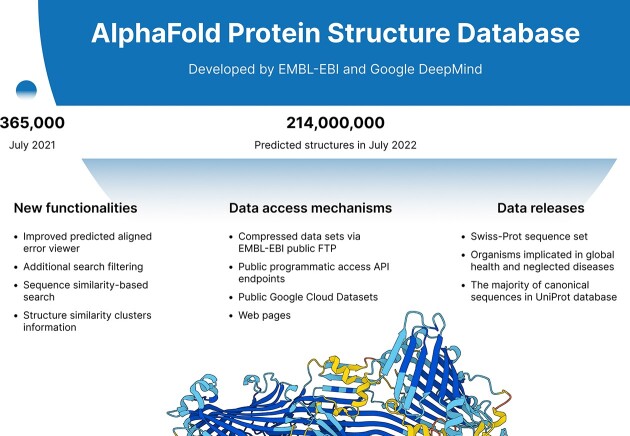
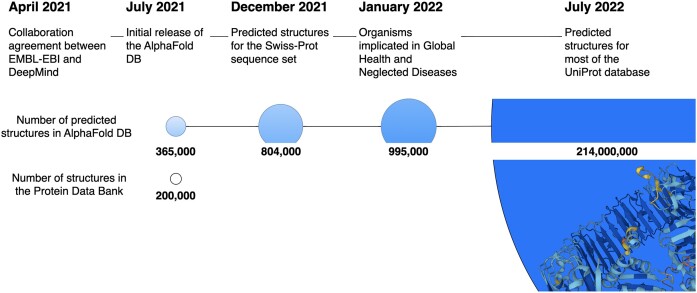
The AlphaFold Database Protein Structure Database (AlphaFold DB, https://alphafold.ebi.ac.uk) has significantly impacted structural biology by amassing over 214 million predicted protein structures, expanding from the initial 300k structures released in 2021. Enabled by the groundbreaking AlphaFold2 artificial intelligence (AI) system, the predictions archived in AlphaFold DB have been integrated into primary data resources such as PDB, UniProt, Ensembl, InterPro and MobiDB. Our manuscript details subsequent enhancements in data archiving, covering successive releases encompassing model organisms, global health proteomes, Swiss-Prot integration, and a host of curated protein datasets. We detail the data access mechanisms of AlphaFold DB, from direct file access via FTP to advanced queries using Google Cloud Public Datasets and the programmatic access endpoints of the database. We also discuss the improvements and services added since its initial release, including enhancements to the Predicted Aligned Error viewer, customisation options for the 3D viewer, and improvements in the search engine of AlphaFold DB.
Overview
CoChat Summary
TL;DR
AlphaFold DB has grown from ~300k to over 214 million predicted protein structures as of September 2023, with expanded access, search, and visualization features. This 2024 update describes data archiving, access mechanisms, integration with core resources, and new clustering/BLAST/PAE viewer capabilities.
Key findings
- AlphaFold DB expanded from approximately 300k structures in 2021 to over 214 million predicted protein structures as of September 2023; the initial July 2021 release housed over 360,000 structures for 20 model organism proteomes.
- Predictions are integrated into resources including PDB, UniProt, Ensembl, InterPro and MobiDB, and are accessible via FTP, Google Cloud Public Datasets (~23 TiB), API, and the website; PAE data is unavailable from EMBL-EBI public FTP.
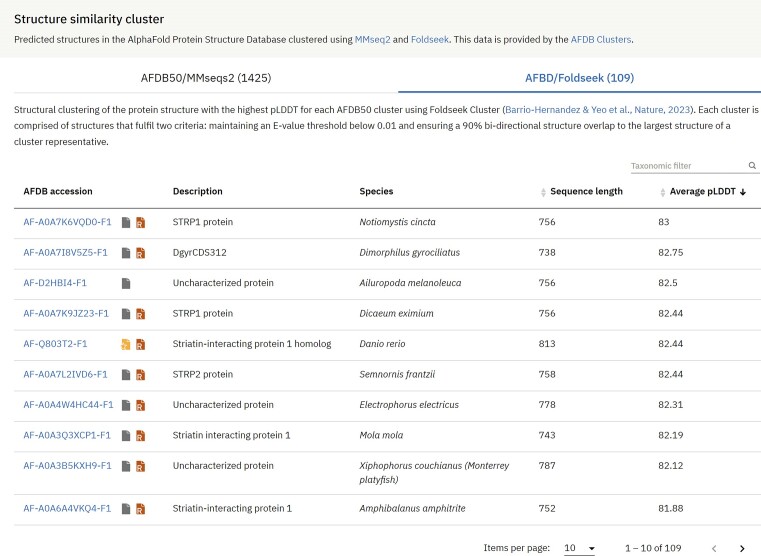
- Structure similarity clustering used MMseqs2 to cluster 214 million UniProtKB sequences into 52 million clusters, then Foldseek secondary clustering yielded 18.8 million clusters, finalizing 2.30 million robust clusters each with at least a pair of structures.
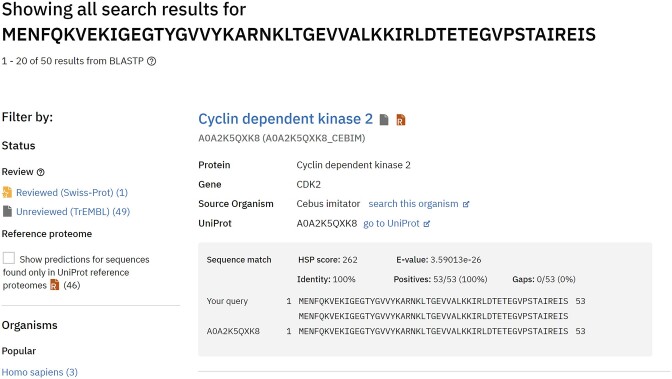
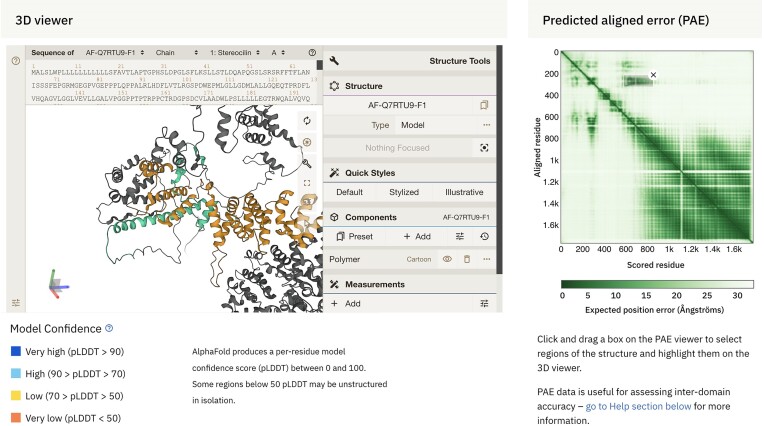
- New features include BLAST sequence similarity search, improved search filters for reviewed/unreviewed and reference proteome status, enhanced PAE viewer–Mol* interactivity, and a November 2022 update fixing a numerical bug that affected ~4% of total structure predictions.
Methods
- Descriptive database update/report with no primary experimental design; data generation is carried out by Google DeepMind, with predictions stored in PDB, mmCIF (modelCIF), and binaryCIF formats plus JSON metadata and confidence metrics pLDDT and PAE.
- Archiving uses successive releases from UniProt reference proteomes (e.g., 2021_02, 2021_04), Swiss-Prot, WHO global health proteomes, and MANE select; as of September 2023, EMBL-EBI FTP hosts TAR files for proteomes of 48 organisms.
- Access and analysis infrastructure includes FTP, Google Cloud Public Datasets, an API keyed on UniProt accessions, Apache-Solr search, BLAST on Google Cloud Platform, and Foldseek/MMseqs2 clustering.
Limitations
- Stated: sequences are not covered if they are less than 16 amino acids; >2700 aa for Swiss-Prot/proteome sequences or >1280 aa for other UniProt sequences; contain non-standard amino acids; are not in the UniProt ‘one sequence per gene’ FASTA file; or are viral proteins; these limitations are under discussion.
- Stated: some sequences may be outdated compared to UniProt due to less frequent AlphaFold DB releases; PAE data is unavailable from EMBL-EBI public FTP; full Google Cloud dataset download requires a Google account and can take roughly 2.5 days at 1 Gbps.
- Evident from the text: all archived structures are predicted models rather than experimental structures, and users must interpret pLDDT/PAE cautiously (e.g., pLDDT <50 likely disordered, 50–70 lower confidence); the database also currently lacks isoform and multimeric predicted structures, which are listed as future work.
Model-written summary. Check it against the paper before relying on it.
Integrity signals
Registry
Cites
Statistics
Figures

Verification
Claims the paper makes
11 Valid · 1 Not valid · 0 Not checked · 28 Own results and interpretations
Every source the paper cites for this claim was checked and supports it.
In the paper
“The new generation of predicted protein structure models has demonstrated remarkable accuracy, which could mitigate the continually widening gap between known protein sequences and experimentally determined protein structures (7).”
§ AlphaFold Protein Structure Database in 2024: providing structure coverage for over 214 million protein sequences > Introduction
What the sources say
- Supportedcites [7] Varadi M., Bordin N., Orengo C., Velankar S. The opportunities and challenges posed by the new generation of deep learning-based protein structure predictors. Curr. Opin. Struct. Biol. 2023; 79: 102543. 36807079 PMC7618866 source
The Introduction says prediction models made a major advance in accuracy and can match or sometimes surpass experimentally determined structures. It also describes a growing gap between known protein sequences and determined structures; the section on new challenges says predicted structures have greatly increased coverage of protein sequence space. These passages support both the accuracy claim and the proposed potential to narrow that gap (page numbers unavailable). (LLM, conf=0.93)
boosted- Asserted: passes — The authors put it forward as true.
- Checkable: passes — It can be checked against evidence.
- Load-bearing: passes — The paper’s conclusions depend on it.
- Based: passes — The paper gives a reason why it holds.
- Supported
Every source the paper cites for this claim was checked and supports it.
In the paper
“In response to frequent requests from the user community since the AlphaFold DB launch, we have made significant strides to implement a sequence-based similarity search feature. We have incorporated the Basic Local Alignment Search Tool (BLAST) (21) into our Google Cloud Platform infrastructure to achieve this.”
§ AlphaFold Protein Structure Database in 2024: providing structure coverage for over 214 million protein sequences > Implementation > Data access
What the sources say
- Supportedcites [21] Camacho C., Coulouris G., Avagyan V., Ma N., Papadopoulos J., Bealer K., Madden T.L. BLAST+: architecture and applications. BMC Bioinf. 2009; 10: 421. PMC2803857 20003500 source
The Background identifies BLAST as a sequence similarity search program that matches a query sequence against a database. In the citing sentence, the citation identifies the tool incorporated; the AlphaFold DB implementation is the citing authors’ own report, not a claim attributed to this source. (LLM, conf=0.91)
plainstates a cause- Asserted: passes — The authors put it forward as true.
- Checkable: passes — It can be checked against evidence.
- Load-bearing: unclear — It is unclear whether the paper’s conclusions depend on it.
- Based: passes — The paper gives a reason why it holds.
- Supported
Every source the paper cites for this claim was checked and supports it.
In the paper
“The impact of the predicted structures is further enhanced by their seamless integration into several core data resources, including PDBe-KB (17), UniProt (6), Ensembl (16), InterPro (15), Genecards (24) and MobiDB (25), among others.”
§ AlphaFold Protein Structure Database in 2024: providing structure coverage for over 214 million protein sequences > Conclusions and outlook
What the sources say
- Supportedcites [17] consortium P.D.B.-K.B. PDBe-KB: collaboratively defining the biological context of structural data. Nucleic Acids Res. 2022; 50: D534– D542. 34755867 PMC8728252 source
Citation (17) is attached specifically to PDBe-KB, rather than to the other resources in the sentence. The Introduction identifies PDBe-KB as a resource that integrates structural and functional annotations, supporting its identification here. (LLM, conf=0.90)
- Supportedcites [6] U.P. Consortium UniProt: the Universal Protein Knowledgebase in 2023. Nucleic Acids Res. 2023; 51: D523– D531. 36408920 PMC9825514 source
The citation is attached to UniProt in a list of resources, and the cited paper is a description of UniProt. Its Data integration and Interactive visualisations in entry pages sections state that UniProt incorporates AlphaFold-predicted structures into protein entries alongside other data; the supplied passages do not give page numbers. (LLM, conf=0.93)
- Supportedcites [16] Cunningham F., Allen J.E., Allen J., Alvarez-Jarreta J., Amode M.R., Armean I.M., Austine-Orimoloye O., Azov A.G., Barnes I., Bennett R. et al. Ensembl 2022. Nucleic Acids Res. 2022; 50: D988– D995. 34791404 PMC8728283 source
The citation identifies Ensembl as one of the resources in the list. In “Developing a new website” (page not provided), the paper says Ensembl’s Entity Viewer provides access to protein information, including 3D structures from PDBe. (LLM, conf=0.86)
plainstates a cause- Asserted: passes — The authors put it forward as true.
- Checkable: passes — It can be checked against evidence.
- Load-bearing: unclear — It is unclear whether the paper’s conclusions depend on it.
- Based: passes — The paper gives a reason why it holds.
- Supported
Every source the paper cites for this claim was checked and supports it.
In the paper
“Tackling this challenge, Steinegger et al. recently unveiled the Foldseek Cluster, a state-of-the-art structural-alignment-based clustering algorithm designed for vast datasets (22). They applied this novel method to the AlphaFold DB archive, making the derived structure similarity clusters available to the research community.”
§ AlphaFold Protein Structure Database in 2024: providing structure coverage for over 214 million protein sequences > Implementation > Data access
What the sources say
- Supportedcites [22] Barrio-Hernandez I., Yeo J., Jänes J., Mirdita M., Gilchrist C.L.M., Wein T., Varadi M., Velankar S., Beltrao P., Steinegger M. Clustering-predicted structures at the scale of the known protein universe. Nature. 2023; 622: 637– 645. 37704730 PMC10584675 source
The Abstract says the authors used Foldseek cluster to cluster the AlphaFold database. The Methods section (“Web server”) says they developed a server for users to explore the clusters, their members and related clusters, supporting the claim that the results were made available to researchers. (LLM, conf=0.93)
plainstates a cause- Asserted: passes — The authors put it forward as true.
- Checkable: passes — It can be checked against evidence.
- Load-bearing: passes — The paper’s conclusions depend on it.
- Based: passes — The paper gives a reason why it holds.
- Supported
- Probably not a substantial claim. 30
- It may state two separate claims as one. 15
- The quote only partly states this claim. 1
Claims other papers make about this one
Each is checked against this paper’s own text: does it say what the citing paper says it does?
The cited source says what the claim attributes to it.
In the citing paper
“houses over 200 million pre-run AF2 predictions”
From The power and pitfalls of AlphaFold2 for structure prediction beyond rigid globular proteins (2024) · cites this paper as [7]
Citations
Cites
Highly accurate protein structure prediction with AlphaFold
Jumper, J., Evans, R., Pritzel, A., Green, T., Figurnov, M., Ronneberger, O., Tunyasuvunakool, K., Bates, R., Žídek, A., Potapenko, A., et al. (2021) · Nature · doi:10.1038/s41586-021-03819-2 · Cited by 43,764
Self-citationBLAST+: architecture and applications
Camacho, C., Coulouris, G., Avagyan, V., Ma, N., Papadopoulos, J., Bealer, K., & Madden, T. L. (2009) · BMC Bioinformatics · doi:10.1186/1471-2105-10-421 · Cited by 22,074
UniProt: the Universal Protein Knowledgebase in 2023
The UniProt Consortium, Bateman, A., Martin, M.-J., Orchard, S., Magrane, M., Ahmad, S., Alpi, E., Bowler-Barnett, E. H., Britto, R., Bye-A-Jee, H., et al. (2023) · Nucleic Acids Research · doi:10.1093/nar/gkac1052 · Cited by 7,210
Evolutionary-scale prediction of atomic level protein structure with a language model
Lin, Z., Akin, H., Rao, R., Hie, B., Zhu, Z., Lu, W., Smetanin, N., Verkuil, R., Kabeli, O., Shmueli, Y., et al. (2022) · doi:10.1101/2022.07.20.500902 · Cited by 5,990 · cited 1×
“In the wake of the latest breakthroughs in prediction software, new databases such as the AlphaFold Protein Structure Database and the ESM Atlas ( 14 ) have emerged.”
MethodThe GeneCards suite: from gene data mining to disease genome sequence analyses
Stelzer, G., Rosen, N., Plaschkes, I., Zimmerman, S., Twik, M., Fishilevich, S., Stein, T. I., Nudel, R., Lieder, I., Mazor, Y., et al. (2016) · Current Protocols in Bioinformatics · doi:10.1002/cpbi.5 · Cited by 5,550 · cited 1×
“The impact of the predicted structures is further enhanced by their seamless integration into several core data resources, including PDBe-KB ( 17 ), UniProt ( 6 ), Ensembl ( 16 ), InterPro ( 15 ), Genecards ( 24 ) and MobiDB ( 25 ), among others.”
BackgroundAccurate prediction of protein structures and interactions using a 3-track network
Baek, M., DiMaio, F., Anishchenko, I., Dauparas, J., Ovchinnikov, S., Lee, G. R., Wang, J., Cong, Q., Kinch, L. N., Schaeffer, R. D., et al. (2021) · doi:10.1101/2021.06.14.448402 · Cited by 5,549
Paysan-Lafosse, T., Blum, M., Chuguransky, S., Grego, T., Pinto, B. L., Salazar, G. A., Bileschi, M. L., Bork, P., Bridge, A., Colwell, L., et al. (2023) · Nucleic Acids Research · doi:10.1093/nar/gkac993 · Cited by 2,399
Cunningham, F., Allen, J. E., Allen, J., Alvarez-Jarreta, J., Amode, M. R., Armean, I. M., Austine-Orimoloye, O., Azov, A. G., Barnes, I., Bennett, R., et al. (2022) · Nucleic Acids Research · doi:10.1093/nar/gkab1049 · Cited by 1,923
Mol* Viewer: modern web app for 3D visualization and analysis of large biomolecular structures
Sehnal, D., Bittrich, S., Deshpande, M., Svobodová, R., Berka, K., Bazgier, V., Velankar, S., Burley, S. K., Koča, J., & Rose, A. S. (2021) · Nucleic Acids Research · doi:10.1093/nar/gkab314 · Cited by 1,154 · cited 1×
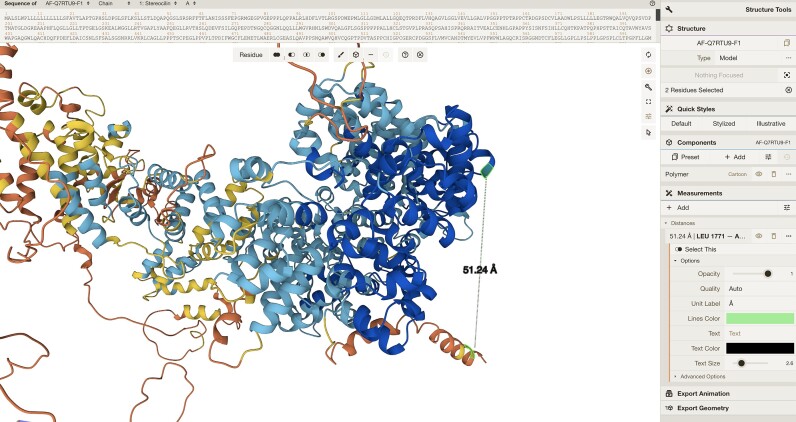
“We improved the visualisation of non-consecutive regions and the interactivity between the PAE viewer and the 3D molecular graphics viewer, Mol* ( 23 ) (Figure 5 ).”
MethodSelf-citationMariani, V., Biasini, M., Barbato, A., & Schwede, T. (2013) · Bioinformatics · doi:10.1093/bioinformatics/btt473 · Cited by 1,138 · cited 1×
“AlphaFold yields a per-residue estimate of its confidence, known as pLDDT, ranging from 0 to 100, indicating the tool’s predicted score on the lDDT-C α metric ( 19 ).”
Method
Cited by
Items 501–600 of 2,174
Guan, Y., Wang, Y., Yang, X., Li, L., Shi, F., Li, M., Chen, M., Wang, Y., Yang, G., Chang, J., et al. (2024) · Food Hydrocolloids · doi:10.1016/j.foodhyd.2024.110508 · Cited by 6
PELP1 coordinates the modular assembly and enzymatic activity of the rixosome complex
Gordon, J., Kaminski, A. M., Bommu, S. R., Skrajna, A., Petrovich, R. M., Pedersen, L. C., McGinty, R. K., Warren, A. J., & Stanley, R. E. (2025) · Science Advances · doi:10.1126/sciadv.adw4603 · Cited by 5
Update of the sideroflexin (SLC56) gene family
Katsafadou, A. I., Nebert, D. W., Krupenko, S. A., Thompson, D. C., & Vasiliou, V. (2025) · Human Genomics · doi:10.1186/s40246-025-00779-w · Cited by 7
Chen, J., Luo, G., Huang, Z., Ni, D., Zhu, Y., Xu, W., Zhang, W., & Mu, W. (2025) · Journal of Agricultural and Food Chemistry · doi:10.1021/acs.jafc.5c01729 · Cited by 5
Mamun, Y., Aguado, A., Preza, A. M., Kadel, A., Mogallur, A., Gonzalez, B., Rosa, J. D. L., Diaz, D., Evdokimova, P., Karki, U., et al. (2025) · Computational and Structural Biotechnology Journal · doi:10.1016/j.csbj.2025.03.041 · Cited by 5
“Since its introduction, it has been extensively used to predict more than 200 million structures of known proteins [6].”
Niu, Q., Zhao, L., Dang, Y., et al. (2025) · Plant Cell & Environment · doi:10.1111/pce.70094 · Cited by 5
“AtELIPs Using Alphafold 3.0 The three ‐ dimensional structure of the target protein was predicted using AlphaFold 3.0 (Jumper et al. 2021; Varadi et al. 2024), implemented through the ColabFold platform (Mirdita et al. 2022).”
InfluentialCCDC89 is required for optimal sperm motility and male fertility in mammals
O’Bryan, M. K., Saritaş, G., Nguyen, J., Winge, S. B., O’Connor, A. E., Castillo-Madeen, H., Conrad, D. F., Graffeo, M. L., Nosrati, R., Dunleavy, J. E. M., et al. (2025) · Human Reproduction · doi:10.1093/humrep/deaf126 · Cited by 5
“Analysis of CCDC89 protein structure and the potential effects of variants on protein structure were investigated using AlphaFold (Jumper et al. , 2021; Varadi et al. , 2024) and ColabFold (Mirdita et al. , 2022) (Supplementary Fig.”
Diverse bacterial pattern recognition receptors sense the core phage proteome
Lee, H., Luengo-Woods, S., Zhang, J., Makarova, K. S., Wolf, Y. I., Chiu, C., Evans, S. A., Chen, J., Xiao, H., Feng, L., et al. (2026) · Nature · doi:10.1038/s41586-026-10852-6 · Cited by 14
The ATO gene family governs Candida albicans colonization in the dysbiotic gastrointestinal tract
Alves, R. M. A., Ghasemi, F. C., Genechten, W. V., Wijnants, S., Goethem, O. V., Barata-Antunes, C., Fernandes, V., Ataíde, P., Gomes-Gonçalves, A., Vergauwen, R., et al. (2025) · mBio · doi:10.1128/mbio.01644-25 · Cited by 7
“Analyses of alpha-fold (19, 20) structures for the C. albicans Ato proteins reveal typical architectures analogous to those of bacterial AceTr family members (Fig.”
Unifying constraints linking protein folding and native dynamics decoded from AlphaFold
Zhang, Z., Ren, W., Xie, L., Zheng, Y., Guan, X., Wang, J., Li, W., & Tang, Q.-Y. (2026) · doi:10.64898/2026.01.08.698426 · Cited by 5
“Tools such as Al-phaFold 2 (AF2) [6], RosettaFold [7], and ESMFold [8] now produce near-atomic resolution predictions, while the AlphaFold Database (AFDB) contains hundreds of millions of structures across diverse organisms [9, 10].”
TBM preferred to AlphaFold 3 for functional models of insect odorant receptors
Thanu, V. C., Jabeen, A., Zographos, S. E., Taylor, P. W., & Ranganathan, S. (2025) · Computational and Structural Biotechnology Journal · doi:10.1016/j.csbj.2025.08.028 · Cited by 9
“Following its success, the AlphaFold Protein Structure Data-base (AFDB) [17] has been created, with 214 million predicted models as of Jan 2024.”
InfluentialWang, Y., Boadu, F., & Cheng, J. (2025) · Bioinformatics · doi:10.1093/bioinformatics/btaf589 · Cited by 11
“To further validate and analyze MPBind, we also down-loaded the 23 391 human protein structures in the human proteome from the AlphaFold-European Bioinformatics Institute (AF-EBI) database (Jumper et al. 2021, Varadi et al. 2024) and their function annotations in UniProt.”
InfluentialMmatli, M., Mbelle, N. M., Fourie, P. B., & Sekyere, J. O. (2025) · Virulence · doi:10.1080/21505594.2025.2514092 · Cited by 5
“The structural variations observed in porin proteins as a result of mutations in the K. pneumoniae test strains were observed using AlphaFold [25,26] and Evo 2 [27], with Evo 2 being used for finer resolutions while AlphaFold was used for overall structural changes.”
Zai, X., Zhao, Y., Wang, X., Leng, M., Lu, M., Yang, Y., Zhao, X., Li, R., Li, Y., Zhang, Y., et al. (2025) · Nature Communications · doi:10.1038/s41467-025-67778-2 · Cited by 10
“To achieve this, we obtained a substantial dataset of 805,000 high-quality protein structures from the AlphaFold Protein Structure Database 38 .”
TET dioxygenases localize at splicing speckles and promote RNA splicing
Hastert, F. D., Weber, J., Bauer, C., Zhadan, A., Singh, D. N. D., Dix, T. C., Arnold, R., Bessonov, S., Soller, M., Leonhardt, H., et al. (2025) · Nucleus · doi:10.1080/19491034.2025.2536902 · Cited by 5
“GO analysis was done with STRING using the rank list enrichment analysis.”
MolViewSpec: a Mol* extension for describing and sharing molecular visualizations
Midlik, A., Bittrich, S., Fleming, J. R., Nair, S. S., Velankar, S. S., Burley, S. K., Young, J. Y., Vallat, B. K., & Sehnal, D. (2025) · Nucleic Acids Research · doi:10.1093/nar/gkaf370 · Cited by 7
“1 for illustration of selected features) has been tailored to facilitate the creation of reproducible and interactive visualizations akin to those found in data resources like PDB and AlphaFold database [ 17 ].”
Self-citationGang, J., Ping, Y., & Du, C. (2024) · Current Microbiology · doi:10.1007/s00284-024-03898-0 · Cited by 6
Artificial intelligence in kidney disease and dialysis: from data mining to clinical impact
Neri, L., Zhang, H., & Usvyat, L. A. (2025) · Current Opinion in Nephrology & Hypertension · doi:10.1097/mnh.0000000000001132 · Cited by 9
Multi-scale structural similarity embedding search across entire proteomes
Segura, J., Sánchez-García, R., Bittrich, S., Rose, Y., Burley, S. K., & Duarte, J. M. (2026) · Bioinformatics · doi:10.1093/bioinformatics/btag058 · Cited by 7
“To demonstrate the scalability of the embedding approach, we generated embeddings for all predicted structures ( > 214 million) available in AlphaFold DB (Varadi et al. 2024) and stored them in a separate vector database.”
Sonani, R. R., Liu, Y., Xiang, J., Cvirkaitė‐Krupovič, V., Du, S., Chen, X., Krupovìč, M., & Egelman, E. H. (2025) · Proceedings of the National Academy of Sciences · doi:10.1073/pnas.2514980122 · Cited by 6
“Thus, we searched for structural homologs of AbpA ( 8 ) using FoldSeek ( 40 ) against the AlphaFold50 database ( 41 ).”
Role of PDE4 Family in Cardiomyocyte Physiology and Heart Failure
Sherstnev, I., Judina, A., Luciani, G. B., Ghigo, A., Hirsch, E., & Gorelik, J. (2025) · Cells · doi:10.3390/cells14060460 · Cited by 7
Sleutel, M., Sonani, R. R., Miller, J., Wang, F., Socorro, A. G., Chen, Y., Martin, R., Demeler, B., Rudolph, M. J., Alva, V., et al. (2025) · Nature Communications · doi:10.1038/s41467-025-64120-8 · Cited by 11
Sheaths are diverse and abundant cell surface layers in archaea
Medvedeva, S., Borrel, G., & Gribaldo, S. (2024) · The ISME Journal · doi:10.1093/ismejo/wrae225 · Cited by 5
Ghaly, T. M., Rajabal, V., Russell, D., Colombi, E., & Tetu, S. G. (2025) · doi:10.1101/2025.04.02.646905 · Cited by 5
Exploring functional insights into the human gut microbiome via the structural proteome
Liu, H., Shen, J., Zhang, Z., Wang, J., Zhang, C., Zheng, L., Ni, H., Hong, L., Zhang, J., Xue, D., et al. (2025) · Cell Host & Microbe · doi:10.1016/j.chom.2025.11.001 · Cited by 10
Mapping cryptic phosphorylation sites in the human proteome
Gasparotto, D., Zanon, A., Bonaldo, V., Marchiori, E., Casagranda, M., Di Domenico, E., Copat, L., Asquini, T. F., Rigoli, M., Feltrin, S. V., et al. (2025) · The EMBO Journal · doi:10.1038/s44318-025-00567-1 · Cited by 9
da Silva, R. C. C., Filho, R. S. R., Aragão, M. A. D. L., Silva, R. L. D. O., Ferreira‐Neto, J. R. C., da Silva, M. D., & Benko‐Iseppon, A. M. (2024) · International Journal of Biological Macromolecules · doi:10.1016/j.ijbiomac.2024.135511 · Cited by 6
The yeast Mkt1/Pbp1 complex promotes adaptive responses to respiratory growth
Caballero, D., Sutter, B. M., Xing, Z., Wang, C., Choo, E., Wang, Y., Yang, Y.-S., Ghaemmaghami, S., Lemoff, A. S., & Tu, B. P. (2025) · The Journal of Cell Biology · doi:10.1083/jcb.202411169 · Cited by 4
“The S. cerevisiae Mkt1 and Pbp1 AlphaFold structures were accessed from the AlphaFold Protein Structure Database (Jumper et al., 2021; Varadi et al., 2024).”
Chisholm, S. A., Flores, V. M. Q., Kemp, A. C., Breckels, L. M., Kořený, L., Pacheco, N. D. S., Barylyuk, K. V., Kuroshchenkova, A., Lilley, K. S., Rayner, J. C., et al. (2025) · bioRxiv (Cold Spring Harbor Laboratory) · doi:10.1101/2025.11.27.690946 · Cited by 5
Co-translational assembly promotes functional diversification of paralogous proteinsPreprint
Mallik, S., Cisneros, A. F., Landry, C. R., & Levy, E. D. (2025) · bioRxiv (Cold Spring Harbor Laboratory) · doi:10.1101/2025.01.22.634331 · Cited by 6
Damir, S. S., Probst, J., deMello, A. J., & Stavrakis, S. (2025) · Chemistry - Methods · doi:10.1002/cmtd.202500069 · Cited by 12
Rocha, C. H. L., Rocha, F. M. G., Sanches, P. R., Rossi, A., & Martinez-Rossi, N. M. (2025) · Genes · doi:10.3390/genes16020146 · Cited by 9
“To predict and align the three-dimensional models of the two isoforms, we used AlphaFold2 [40] and PyMOL [41], respectively.”
Naiavirus: an enveloped giant virus with a pleomorphic, flexible tail
Rodrigues, M. F. B., Queiroz, V. F., Arantes, T. S., Limborço, H., Neiva, B. N., Arias, N. E. C., Machado, T. B., Barcelos, M. G., Cortines, J. R., Thiemann, O. H., et al. (2025) · Nature Communications · doi:10.1038/s41467-025-63463-6 · Cited by 8
“The predicted structures were searched against PDB and Uniprot50-minimal v4 structural databases using Foldseek easy-search 22 – 24 .”
Pseudomonas aeruginosa Cryptic Prophage Endolysin Is a Highly Active Muramidase
Edvardsen, P. K. T., Englund, A. N., Røhr, Å. K., Mesnage, S., & Vaaje‐Kolstad, G. (2025) · Biochemistry · doi:10.1021/acs.biochem.5c00142 · Cited by 8
Wang, W. (2025) · Environment International · doi:10.1016/j.envint.2025.109797 · Cited by 7
Cao, B., Xing, Z., Li, J., Yuan, Y., Lei, X., Tang, H., Wang, D., Ma, J., Heng, S., & Cheng, L. Z. (2025) · Biomolecules · doi:10.3390/biom15111513 · Cited by 6
Weiblen, C., Kits, K. D., Kleiner, M., Sauvageau, D., & Stein, L. Y. (2025) · mBio · doi:10.1128/mbio.01533-25 · Cited by 8
Acylamino acid-releasing enzyme, a bifunctional protease with a potential role in aging
Hoernstein, S. N. W., Miniera, A. A., & Reski, R. (2025) · Journal of Experimental Botany · doi:10.1093/jxb/eraf169 · Cited by 6
USP37 prevents premature disassembly of stressed replisomes by TRAIP
Kochenova, O. V., D’Alessandro, G., Pilger, D., Schmid, E., Richards, S. L., Garcia, M. R., Jhujh, S. S., Voigt, A., Gupta, V., Carnie, C. J., et al. (2025) · Nature Communications · doi:10.1038/s41467-025-60139-z · Cited by 6
“Average interface pLDDT values above 70 are generally considered con fi dent 68 .”
Li, X., Li, Y., & Zhu, J. (2025) · Journal of Fungi · doi:10.3390/jof11040244 · Cited by 4
“…each individual residue [Mariani et al., 2013 [55]; Jumper et al., 2021 [50]; David et al., 2022 [51]; Monzon et al., 2022 [56]; Xu et al., 2023 [57]; Abramson et al., 2024 [53]; Varadi et al., 2024 [54]]. tree in Figure 1, while those in pink are for Branch 2, those in purple are are for Branch 4.”
Prédiction de structures biomoléculaires complexes par AlphaFold 3
Taly, A., & Verger, A. (2024) · médecine/sciences · doi:10.1051/medsci/2024124 · Cited by 5
Kadam, R., Patil, C. D., Feferman, L., Maienschein‐Cline, M., Chlipala, G. E., Borole, P., Bhattacharya, I., Orameh, C., Nyugen, T., Tseng, H., et al. (2026) · Cell Reports · doi:10.1016/j.celrep.2026.117263 · Cited by 6
“Since there are no experimentally derived, isolated protein structures for human OPTN and Rictor in the PDB database, we used the predicted structures from the AlphaFold database 56,57 (entry ID Q6R327 for RICTOR and Q96CV9 for OPTN).”
Osborne, M. S., Brehm, J. N., Olivença, C., Cochran, A. M., Serrano, M., Henriques, A. O., & Sorg, J. A. (2024) · Molecular Microbiology · doi:10.1111/mmi.15316 · Cited by 5
“Using an AlphaFold2 prediction of the preproSleC protein structure, we noticed that the three arginine residues at which YabG processes are in a disordered region (Figure 3B) (Varadi et al. 2024; Jumper et al. 2021).”
Large protein databases reveal structural complementarity and functional locality
Szczerbiak, P., Szydlowski, L. M., Wydmański, W., Renfrew, P. D., Leman, J. K., & Kościółek, T. (2025) · Nature Communications · doi:10.1038/s41467-025-63250-3 · Cited by 10
“So far, we have seen a rapid development of efficient tools for protein structure processing, e.g. clustering [10], compression [11,12] or representation [13–15].”
Timinskas, K., Timinskas, A., & Venclovas, Č. (2025) · Computational and Structural Biotechnology Journal · doi:10.1016/j.csbj.2025.01.010 · Cited by 5
Arıkan, M., & Atabay, B. (2024) · Journal of Proteome Research · doi:10.1021/acs.jproteome.4c00665 · Cited by 7
Biophysical basis of tight junction barrier modulation by a pan-claudin-binding molecule
Ogbu, C. P., Alas, M. D. L., Mandriota, A. M., Liu, X., Kapoor, S., Choudhury, J., Ruma, Y. N., Goodman, M., Sanders, C. R., Gonen, T., et al. (2025) · PNAS Nexus · doi:10.1093/pnasnexus/pgaf189 · Cited by 8
“3A) (62).”
Practical Outcomes From CASP16 for Users in Need of Biomolecular Structure Prediction
Abriata, L. A., & Peraro, M. D. (2025) · Proteins Structure Function and Bioinformatics · doi:10.1002/prot.70078 · Cited by 9
“The pLDDT is color-coded onto the structure outputs (B) using the same mapping used in the AFDB [20]; proteins are colored by residue-wise pLDDT while non-standard moieties like the cysteine's palmitate group are colored by atom-wise pLDDT, as the atoms of small molecule ligands would be colored by…”
Kotlyar, M., Pastrello, C., Abovsky, M., Mizeranschi, A. E., Keating, A., Cameron, L. C., Chandran, V., & Jurišica, I. (2025) · Nucleic Acids Research · doi:10.1093/nar/gkaf1259 · Cited by 8
“Three-dimensional structures of human proteins were sourced from the AlphaFold Protein Structure Database version 2 ( https: //alphafold.ebi.ac.uk ) [ 35 , 36 ].”
dos Santos, G. P., Coelho, A. C., & Reimão, J. Q. (2025) · Expert Opinion on Drug Discovery · doi:10.1080/17460441.2025.2450787 · Cited by 5
“As a result, AlphaFold is now widely regarded as a vital resource in the field of bioinformatics and molecular modeling [31–33].”
The rise of AlphaFold in drug design
Stecuła, A., Paul, R., Litchfield, K., Dalton, S. E., Low, C. M. R., Reis, C. R., & Congreve, M. (2025) · Progress in medicinal chemistry · doi:10.1016/bs.pmch.2025.09.002 · Cited by 7
Wang, C., Chang, S., Hu, C.-F., Hu, Y.-Q., Luo, H., Liu, L., & Fan, L. (2024) · Molecular Medicine · doi:10.1186/s10020-024-00913-9 · Cited by 4
“The structure of the ZCCHC8 protein was built by Alphafold (https://alphafold.com) (Jumper et al. 2021; Varadi et al. 2024) and analyzed by Swiss-Model online software (https://swissmodel.expasy.org).”
MethodEvolution of the Cytomegalovirus RL11 gene family in Old World monkeys and Great Apes
Litvin, U., Wang, E., Stanton, R. J., Fielding, C. A., & Hughes, J. (2024) · Virus Evolution · doi:10.1093/ve/veae066 · Cited by 6
“The extracellular region of the human CD229/SLAMF3/LY9, on the other hand, contains four Ig domains (IgV1, IgC1, IgV2, and IgC2) where IgV1 also shares the topology but not the disulphide bond with the RL11D and CR1 domains (Varadi et al. 2024).”
BackgroundCryo-EM structures of GnRHR: Foundations for next-generation therapeutics
Shen, S.-Y., He, X., Liu, H., Hu, W., Xu, H. E., & Duan, J. (2025) · Proceedings of the National Academy of Sciences · doi:10.1073/pnas.2500112122 · Cited by 4
SOuLMuSiC, a novel tool for predicting the impact of mutations on protein solubility
Attanasio, S., Kwasigroch, J. M., Rooman, M. J., & Pucci, F. (2025) · Scientific Reports · doi:10.1038/s41598-025-11326-x · Cited by 7
“The user has the choice among three different methods for this: provide the PDB code 40 whose structure will be automatically retrieved from the PDB; the UniProt ID, in which case the corresponding structure will be retrieved from AlphaFold DB 81 ; or upload his own structure in PDB format.”
Qian, J., Yang, B., Wang, S., Yuan, S., Zhu, W., Zhou, Z., Zhang, Y., & Hu, G. (2024) · International Journal of Molecular Sciences · doi:10.3390/ijms25168917 · Cited by 6
“Specifically, each system was immersed in a dodecahedral solvent box filled with TIP3P [81] water molecules and then automatically neutralized using NA + or CL − , and energy minimization and equilibration were performed using default settings subsequently.”
MethodLemos, R. P., Mariano, D., Silveira, S. D. A., & de Melo-Minardi, R. C. (2025) · Frontiers in Bioinformatics · doi:10.3389/fbinf.2025.1630078 · Cited by 5
From genes to Black Rust: genomic insights into corrosive methanogens
Kleinbub, S., Braymer, J. J., Pfeiffer, F., Dyall‐Smith, M., Spirgath, K. S., Alfaro‐Espinoza, G., & Koerdt, A. (2025) · FEMS Microbes · doi:10.1093/femsmc/xtaf018 · Cited by 4
“Models of unknown protein structures were either accessed from the AlphaFold Protein Structure Database ( https:// alphafold.ebi.ac.uk/) (Jumper et al. 2021 , Varadi et al. 2024 ) or generated with the AlphaFold Server ( https://alphafoldserver.com/) (Abramson et al. 2024 ).”
DDX50 cooperates with STAU1 to effect stabilization of pro-differentiation RNAs
Miao, W., Porter, D. F., Siprashvili, Z., Ferguson, I., Ducoli, L., Nguyen, D. T., Ko, L. A., Lopez-Pajares, V., Srinivasan, S., Hong, A. W., et al. (2025) · Cell Reports · doi:10.1016/j.celrep.2024.115174 · Cited by 3
Dcr1 senses R-loops for RNAPII termination at sites of replication stress and repair pathway choice
Wang, Z., Zhang, Y., Guo, T., He, M., Xu, Y., Bhattacharjee, S., Martienssen, R. A., & Ren, J. (2025) · Molecular Cell · doi:10.1016/j.molcel.2025.10.004 · Cited by 6
Kalacas, N. A., Bui, B. T. S., Marquant, R., Merlier, F., Maffucci, I., Hadchouel, J., Galichon, P., & Haupt, K. (2025) · Macromolecular Bioscience · doi:10.1002/mabi.202400605 · Cited by 4
Deep learning model of post-translational modification regulating liquid-liquid phase separation
Hong, X., Lv, J., Li, Z., Zhu, J., Li, J., Rahman, M. U., Wei, T., Mu, J., & Chen, H. (2025) · Communications Chemistry · doi:10.1038/s42004-025-01773-y · Cited by 6
An, X., Guo, X., Cai, M., & Xu, M. (2025) · Nutrients · doi:10.3390/nu17091421 · Cited by 3
“The SMILES and SDF structures of HT were retrieved from PubChem (https:// pubchem.ncbi.nlm.nih.gov/, 12 January 2025), and the predicted structure of ATG7 was obtained from AlphaFold Protein Structure Database (https://alphafold.com/, accessed on 12 January 2025) [36,37].”
Yang, Y.-T., Engleberg, A. I., Kapoor, I., Kitagawa, K., Hilburger, S. A., Thaiwong, T., & Yuzbasiyan‐Gurkan, V. (2024) · Genes · doi:10.3390/genes15081050 · Cited by 4
“3D protein models were generated from AlphaFold [26,27] and UCSF ChimeraX [28].”
MethodStructural basis of phosphorylation-independent nuclear import of CIRBP by TNPO3
Zhou, Q., Sagmeister, T., Hutten, S., Bourgeois, B. M. R., Pavkov‐Keller, T., Dormann, D., & Madl, T. (2025) · Nature Communications · doi:10.1038/s41467-025-59802-2 · Cited by 5
“5 and Supplementary Data 3, Datasheet 2), secondary structure examination of the motifs was conducted using AlphaFold2-predicted structures available via UniProt 39,66,67 .”
Sequence variants in HECTD1 result in a variable neurodevelopmental disorder
Zerafati‐Jahromi, G., Oxman, E., Hoang, H. D., Charng, W., Kotla, T., Yuan, W., Ishibashi, K., Sebaoui, S., Luedtke, K., Winrow, B., et al. (2025) · The American Journal of Human Genetics · doi:10.1016/j.ajhg.2025.01.001 · Cited by 6
Cryo-EM structure of the bacterial intramembrane metalloprotease RseP in the substrate-bound state
Asahi, K., Hirose, M., Aruga, R., Shimizu, Y., Tajiri, M., Tanaka, T., Adachi, Y., Tanaka, Y., Kaneko, M. K., Kato, Y., et al. (2025) · Science Advances · doi:10.1126/sciadv.adu0925 · Cited by 4
“CyoE is composed of 296 amino acid residues and is predicted by AlphaFold2 to possess nine TM helices (https:// alphafold.ebi.ac.uk/entry/A0A7T2JMK0) ( 32 ).”
Protein dynamics prediction by integrating biophysics and artificial intelligence
Huang, H., Guan, X., Li, W., Zhang, J., & Wang, W. (2026) · Current Opinion in Structural Biology · doi:10.1016/j.sbi.2026.103223 · Cited by 8
A Mycobacterium tuberculosis secreted virulence factor Rv1435c/hsr1 disrupts host snRNP biogenesis
Chauhan, K. N. K., Datta, D., Kapoor, Y., Passricha, N., Dutt, R., Arora, N., Das, M., Rao, K., Singh, L., Gautam, A., et al. (2025) · Proceedings of the National Academy of Sciences · doi:10.1073/pnas.2423349122 · Cited by 6
“Similar structural features were also revealed by AlphaFold Protein Structure Database (52) ( SI Appendix , Fig.”
TMEM2: A New Dimension in Hyaluronan Biology
Yamaguchi, Y. (2025) · Proteoglycan Research · doi:10.1002/pgr2.70021 · Cited by 5
AmyloGram reveals amyloidogenic potential in stroke thrombus proteomes
Kell, D. B., Doyle, K. M., Salcedo-Sora, J. E., Sekhar, A., Walker, M., & Pretorius, E. (2025) · Biochemical Journal · doi:10.1042/bcj20253317 · Cited by 4
“Sequence information is generally sufficient (i) to direct protein folding [58] and (ii) to enable accurate three-dimensional structure prediction [59–63].”
Protection of lipase by self-assembled microgels under high-pressure
Yu, C. L., Liu, L., Zhao, C., Sun, X., Li, W., Yang, X., & Zhang, Z. (2025) · Journal of Food Engineering · doi:10.1016/j.jfoodeng.2024.112464 · Cited by 4
Doobin, D. J., Helmer, P., Carabalona, A., Bertipaglia, C., & Vallee, R. B. (2024) · Molecular Biology of the Cell · doi:10.1091/mbc.e24-05-0217 · Cited by 6
“C , Predicted protein structure of Nde1 from AlphaFold (Jumper et al. , 2021; Varadi et al. , 2024) with locations of T215, T243, and T246 indicated. of the protein, or no detectable expression (Alkuraya et al. , 2011; Bakircioglu et al. , 2011).”
Bochtler, M. (2024) · BioEssays · doi:10.1002/bies.202400155 · Cited by 6
Salaün, C., Thévenin, J., Edoura‐Gaena, A., Qiu, Y., Burguet, J., Miquel, M., Lepiniec, L., & Dubreucq, B. (2025) · The Plant Journal · doi:10.1111/tpj.70380 · Cited by 4
Protein-based nanocarriers in the management of hard-to-treat solid tumours
Evtushenko, A. S., Lozano‐Torres, B., & Fruk, L. (2026) · Advanced Drug Delivery Reviews · doi:10.1016/j.addr.2026.115842 · Cited by 4
Diverse bacterial pattern recognition receptors sense the core phage proteomePreprint
Lee, H., Luengo-Woods, S., Zhang, J., et al. (2026) · bioRxiv (Cold Spring Harbor Laboratory) · doi:10.64898/2026.01.04.697583 · Cited by 4
OrgXenomics: an integrated proteomic knowledge base for patient-derived organoid and xenograft
Zhang, Y., Lian, X., Xu, H., Zhu, S., Zhang, H., Ni, Z., Fu, T., Liu, S., Tao, L., Zhou, Y., et al. (2024) · Nucleic Acids Research · doi:10.1093/nar/gkae861 · Cited by 5
The FinO/ProQ-like protein PA2582 impacts antimicrobial resistance in Pseudomonas aeruginosa
Sesso, A. C., Resch, A., Moll, I., Bläsi, U., & Sonnleitner, E. (2024) · Frontiers in Microbiology · doi:10.3389/fmicb.2024.1422742 · Cited by 6
Functional framework of the kinetochore and spindle assembly checkpoint in Arabidopsis
Pettkó‐Szandtner, A., Magyar, Z., & Komaki, S. (2025) · PLANT PHYSIOLOGY · doi:10.1093/plphys/kiaf461 · Cited by 6
Protein language model identifies disordered, conserved motifs implicated in phase separation
Zhang, Y., Zheng, J., & Zhang, B. (2025) · eLife · doi:10.7554/elife.105309 · Cited by 4
The Atypical Pectin Methylesterase Family Member PME31 Promotes Seedling Lipid Droplet Utilization
Hamade, S., Traver, M. S., & Bartel, B. (2025) · Plant Direct · doi:10.1002/pld3.70054 · Cited by 5
“Protein structures were predicted by AlphaFold2 (Jumper et al. 2021; Varadi et al. 2022; Varadi et al. 2024) and imported into UCSF ChimeraX (Meng et al. 2023) for structural alignments.”
Singh, K. K., Mangang, H. A., Singh, O. V., et al. (2025) · Phytochemical Analysis · doi:10.1002/pca.3517 · Cited by 4
Predictions from Deep Learning Propose Substantial Protein-Carbohydrate Interplay
Canner, S. W., Schnaar, R. L., & Gray, J. J. (2025) · doi:10.1101/2025.03.07.641884 · Cited by 4
“We chose three model organisms from the AF2 proteome datasets 12 , E. coli , M. musculus, and H. sapiens .”
Structure-guided discovery of protein functions in plants
Chen, J., Feng, Y., Zhang, Y., Gao, J., Ou, J., Wu, W., Li, C., Song, S., Tai, L., Rifat, M. H., et al. (2026) · The Plant Cell · doi:10.1093/plcell/koag022 · Cited by 4
Biased regulation of protein synthesis and hypoxic death by a conditional raptor mutation
Sun, C., Xu, C., Itani, O. A., Christensen, E. L., Vijay, H., Ho, J. Q., Correa-Medina, A., Klingler, C. B., Mathew, N. D., Flibotte, S., et al. (2025) · Current Biology · doi:10.1016/j.cub.2025.04.040 · Cited by 3
McCarthy, A. A., Basu, S., Bernaudat, F., Blakeley, M. P., Bowler, M. W., Carpentier, P., Effantin, G., Engilberge, S., Flot, D. M., Gabel, F., et al. (2025) · Journal of Synchrotron Radiation · doi:10.1107/s1600577525002012 · Cited by 9
Walunjkar, N., Lai, T. Y., Akhter, N., Miller, J. H., Bettinger, J. Q., Marcus, E., Phizicky, E. M., Ghaemmaghami, S., & Fay, J. C. (2025) · Molecular Biology and Evolution · doi:10.1093/molbev/msaf137 · Cited by 3
PDBe: enhanced structural data exploration to facilitate discovery
Afonso, M. Q. L., Pidruchna, I., Nair, S. S., Midlik, A., Lawal, D. K., Vollmar, M., Appasamy, S. D., Choudhary, P., Kunnakkattu, I. R., Bertoni, D., et al. (2025) · Nucleic Acids Research · doi:10.1093/nar/gkaf1120 · Cited by 10
Self-citationSertm2 is a conserved micropeptide that promotes GDNF-mediated motor neuron subtype specification
Hsu, F.-Y., Yen, Y.-P., Fan, H.-C., Chang, M., & Chen, J. (2025) · EMBO Reports · doi:10.1038/s44319-025-00400-0 · Cited by 4
Admas, T., Shu, J., Bimpong, D., Pan, R., & Zhang, W. (2026) · International Journal of Biological Macromolecules · doi:10.1016/j.ijbiomac.2026.151511 · Cited by 4
Yang, Y., Wang, F., Zhang, Y., Huang, R., Zhang, C., Zhao, L., Dang, H., Tao, X., Lu, Y., Lu, D., et al. (2025) · Advanced Science · doi:10.1002/advs.202502271 · Cited by 5
VNFlow: integration of variational autoencoders and normalizing flows for novel molecular design
Hostaš, J., Ghaemi, M. S., Hu, H., Lin, J., Hu, A., & Ooi, H. K. (2025) · Journal of Cheminformatics · doi:10.1186/s13321-025-01104-2 · Cited by 7
“The AI has the potential to accelerate rational design of new potential drug candidates, streamline clinical trial processes or democratize access to protein structure information which could significantly reduce the time and labor costs associated with drug development [4, 5].”
Jing, H., Richardson, P. L., Potts, G. K., Senaweera, S., Marin, V. L., McClure, R. A., Banlasan, A., Tang, H., Kath, J. E., Patel, S., et al. (2025) · Journal of Proteome Research · doi:10.1021/acs.jproteome.4c00696 · Cited by 4
Bouezzedine, F., Thomas, C., & Théret, N. (2025) · Hepatology Research · doi:10.1111/hepr.70032 · Cited by 4
Dual‐wield NTPases : A novel protein family mined from AlphaFold DB
Sakuma, K., Koike, R., & Ota, M. (2024) · Protein Science · doi:10.1002/pro.4934 · Cited by 2
GPR15LG binds CXCR4 and synergistically modulates CXCL12-induced cell signaling and migration
Albers, D., Novikova, S., Vieyto‐Nuñez, J., Almeida‐Hernández, Y., Pastorio, C., Klassen, F., Weiss, D., von Maltitz, P., Jaikishan, J., Datta, M., et al. (2025) · Cell Communication and Signaling · doi:10.1186/s12964-025-02231-x · Cited by 4
“The 3D structures of ACKR3 (AF-P25106) and GPR15LG (AF-Q6UWK7) were obtained from the AlphaFold Protein Structure Database (accessed on https://alphafold.ebi.ac.uk/) [36, 37].”
Ren, J., Zhao, L., Chen, G., Ou, G., & Feng, W. (2025) · Nature Communications · doi:10.1038/s41467-025-62152-8 · Cited by 5
(2024) · doi:10.1007/s11033-024-09845-3 · Cited by 2
“The 3D structures of RAPGEF1 isoforms were predicted using AlphaFold [24, 25], and protein-protein docking with RAP1A was examined using LZerD [26, 27].”
Wellslager, B., Roberts, J. S., Chowdhury, N., Madan, L. K., Orellana, E., & Yilmaz, Ö. (2024) · bioRxiv (Cold Spring Harbor Laboratory) · doi:10.1101/2024.07.01.601539 · Cited by 4
Metadata
- Authors
- Varadi, M., Bertoni, D., Magana, P., Paramval, U., Pidruchna, I., Radhakrishnan, M., Tsenkov, M., Nair, S., Mirdita, M., Yeo, J., Kovalevskiy, O., Tunyasuvunakool, K., Laydon, A., Žídek, A., Tomlinson, H., Hariharan, D., Abrahamson, J., Green, T., Jumper, J., Birney, E., Steinegger, M., Hassabis, D., & Velankar, S.
- Affiliations
- European Molecular Biology Laboratory, European Bioinformatics Institute , Hinxton, UK
- European Bioinformatics Institute (GB)
- Seoul National University (KR)
- Google DeepMind (United Kingdom) (GB)
- Corresponding author
- Hassabis, Demis
- Velankar, Sameer
- ORCID
- Venue
- Nucleic Acids Research
- Publisher
- Oxford University Press (OUP)
- Published
- 2023-11-02
- Volume
- 52
- Issue
- D1
- Pages
- D368-D375
- ISSN
- 0305-1048 (ISSN-L)
- 1362-4962
- PMC
- PMC10767828
- OpenAlex
- W4388464011
- Cited by
- 2,052
- References
- 29
- Citations by year
- 2026: 724 · 2025: 1015 · 2024: 307 · 2023: 5
- FWCI
- 181.98
- Type
- journal article
- Language
- en
- Open access
- gold
- doi.org
- Licence
- Locations
- Nucleic Acids Research (publishedVersion, cc-by)
- PubMed Central (publishedVersion, cc-by)
- PubMed (publishedVersion)
- Seoul National University Open Repository (Seoul National University) (submittedVersion)
- Funders
- Google DeepMind
- National Research Foundation of Korea (2019R1A6A1A10073437, 2020M3A9G7103933, 2021R1C1C102065, 2021M3A9I4021220, RS-2023-00250470)
- Samsung DS Research Fund
- Seoul National University
- Topics
- Life Sciences › Biochemistry, Genetics and Molecular Biology › Molecular Biology › Protein Structure and Dynamics
- Life Sciences › Biochemistry, Genetics and Molecular Biology › Structural Biology › Enzyme Structure and Function
- Life Sciences › Biochemistry, Genetics and Molecular Biology › Molecular Biology › Machine Learning in Bioinformatics
- Keywords
- predicted protein structures, AlphaFold2, protein structure prediction, protein sequence coverage, data archiving, database access, search engines
- MeSH terms
- Amino Acid Sequence, Artificial Intelligence, Proteins, Protein Structure, Secondary, Proteome, Databases, Protein, Search Engine
About these checks
Registry, retraction, Cites and statistics results are computed, not judged, with one exception: a printed reference that no index lists is read once by a model before it counts as a citation error. Claims are extracted by a model and kept only when their quote appears verbatim in the text; each cited source is then checked, with a model’s help, for whether it says what the claim relies on. Those verdicts can be wrong — read the claim’s quote and the cited source before relying on one.
The claim verdicts this report counts are experimental: their accuracy is not yet measured.
A language model drew the claims from the paper on 2026-10-10, under version 3 of the claim definition (model deepseek-v4.1-flash, prompt extract-v3).
A second model labelled each claim on 2026-10-10 (model jev-1.13-20260917, definition revision gold-guideline-v0.2).
Cited sources are checked with a language model’s help (gpt-6-sol).
Statistics and arithmetic are recomputed, not judged.
Confidence bands are shown only for fields calibrated on our annotated test set. None is calibrated yet, so no band is shown.
What counts as a claim ›How we measure confidence ›How we check this ›
Are you an author, or do you see a problem with this page? Request a review
Data sources
Bibliographic data: Semantic Scholar, OpenAlex, Crossref.
Contains information from the Semantic Scholar Academic Graph Datasets, made available under the ODC Attribution License (ODC-BY 1.0).
Semantic Scholar’s data is described in: Kinney, R., et al. (2023). The Semantic Scholar Open Data Platform. arXiv:2301.10140.
