

AlphaFold Protein Structure Database in 2024: providing structure coverage for over 214 million protein sequences
Open accessThe DOI matches its Crossref record; 29 of the 29 references it cites were found in a registry or an index; 18 of the 18 sources its claims cite were checked for support.
Abstract
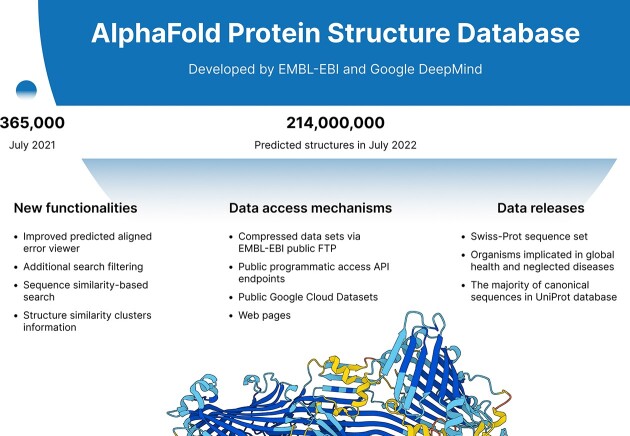
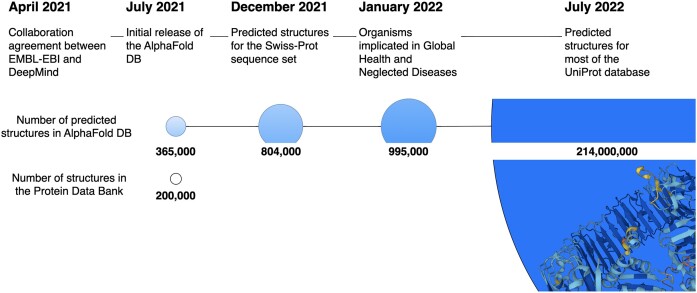
The AlphaFold Database Protein Structure Database (AlphaFold DB, https://alphafold.ebi.ac.uk) has significantly impacted structural biology by amassing over 214 million predicted protein structures, expanding from the initial 300k structures released in 2021. Enabled by the groundbreaking AlphaFold2 artificial intelligence (AI) system, the predictions archived in AlphaFold DB have been integrated into primary data resources such as PDB, UniProt, Ensembl, InterPro and MobiDB. Our manuscript details subsequent enhancements in data archiving, covering successive releases encompassing model organisms, global health proteomes, Swiss-Prot integration, and a host of curated protein datasets. We detail the data access mechanisms of AlphaFold DB, from direct file access via FTP to advanced queries using Google Cloud Public Datasets and the programmatic access endpoints of the database. We also discuss the improvements and services added since its initial release, including enhancements to the Predicted Aligned Error viewer, customisation options for the 3D viewer, and improvements in the search engine of AlphaFold DB.
Overview
CoChat Summary
TL;DR
AlphaFold DB has grown from ~300k to over 214 million predicted protein structures as of September 2023, with expanded access, search, and visualization features. This 2024 update describes data archiving, access mechanisms, integration with core resources, and new clustering/BLAST/PAE viewer capabilities.
Key findings
- AlphaFold DB expanded from approximately 300k structures in 2021 to over 214 million predicted protein structures as of September 2023; the initial July 2021 release housed over 360,000 structures for 20 model organism proteomes.
- Predictions are integrated into resources including PDB, UniProt, Ensembl, InterPro and MobiDB, and are accessible via FTP, Google Cloud Public Datasets (~23 TiB), API, and the website; PAE data is unavailable from EMBL-EBI public FTP.
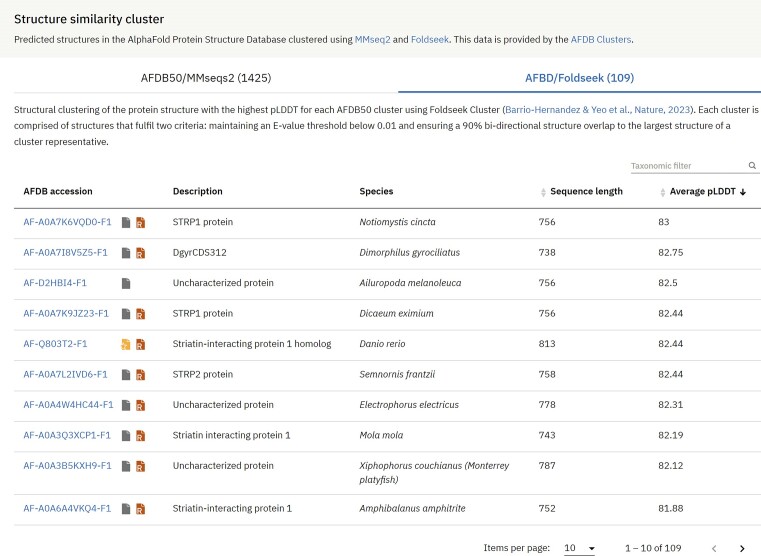
- Structure similarity clustering used MMseqs2 to cluster 214 million UniProtKB sequences into 52 million clusters, then Foldseek secondary clustering yielded 18.8 million clusters, finalizing 2.30 million robust clusters each with at least a pair of structures.
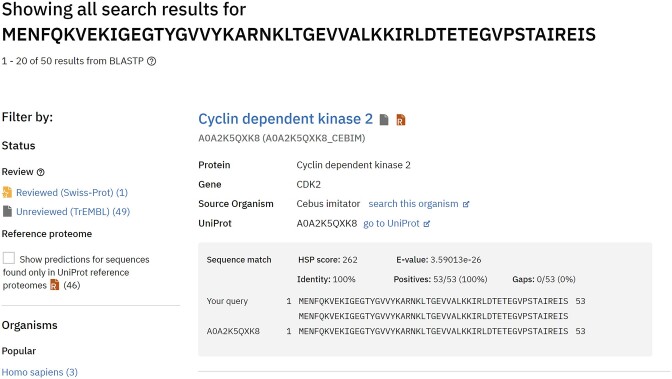
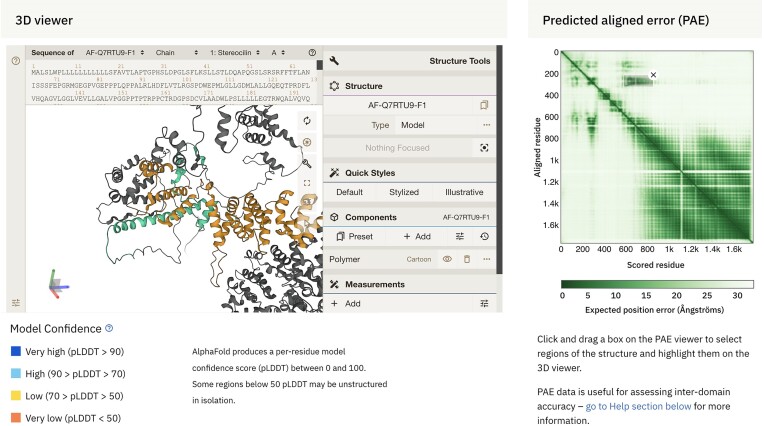
- New features include BLAST sequence similarity search, improved search filters for reviewed/unreviewed and reference proteome status, enhanced PAE viewer–Mol* interactivity, and a November 2022 update fixing a numerical bug that affected ~4% of total structure predictions.
Methods
- Descriptive database update/report with no primary experimental design; data generation is carried out by Google DeepMind, with predictions stored in PDB, mmCIF (modelCIF), and binaryCIF formats plus JSON metadata and confidence metrics pLDDT and PAE.
- Archiving uses successive releases from UniProt reference proteomes (e.g., 2021_02, 2021_04), Swiss-Prot, WHO global health proteomes, and MANE select; as of September 2023, EMBL-EBI FTP hosts TAR files for proteomes of 48 organisms.
- Access and analysis infrastructure includes FTP, Google Cloud Public Datasets, an API keyed on UniProt accessions, Apache-Solr search, BLAST on Google Cloud Platform, and Foldseek/MMseqs2 clustering.
Limitations
- Stated: sequences are not covered if they are less than 16 amino acids; >2700 aa for Swiss-Prot/proteome sequences or >1280 aa for other UniProt sequences; contain non-standard amino acids; are not in the UniProt ‘one sequence per gene’ FASTA file; or are viral proteins; these limitations are under discussion.
- Stated: some sequences may be outdated compared to UniProt due to less frequent AlphaFold DB releases; PAE data is unavailable from EMBL-EBI public FTP; full Google Cloud dataset download requires a Google account and can take roughly 2.5 days at 1 Gbps.
- Evident from the text: all archived structures are predicted models rather than experimental structures, and users must interpret pLDDT/PAE cautiously (e.g., pLDDT <50 likely disordered, 50–70 lower confidence); the database also currently lacks isoform and multimeric predicted structures, which are listed as future work.
Model-written summary. Check it against the paper before relying on it.
Integrity signals
Registry
Cites
Statistics
Figures

Verification
Claims the paper makes
11 Valid · 1 Not valid · 0 Not checked · 28 Own results and interpretations
Every source the paper cites for this claim was checked and supports it.
In the paper
“The new generation of predicted protein structure models has demonstrated remarkable accuracy, which could mitigate the continually widening gap between known protein sequences and experimentally determined protein structures (7).”
§ AlphaFold Protein Structure Database in 2024: providing structure coverage for over 214 million protein sequences > Introduction
What the sources say
- Supportedcites [7] Varadi M., Bordin N., Orengo C., Velankar S. The opportunities and challenges posed by the new generation of deep learning-based protein structure predictors. Curr. Opin. Struct. Biol. 2023; 79: 102543. 36807079 PMC7618866 source
The Introduction says prediction models made a major advance in accuracy and can match or sometimes surpass experimentally determined structures. It also describes a growing gap between known protein sequences and determined structures; the section on new challenges says predicted structures have greatly increased coverage of protein sequence space. These passages support both the accuracy claim and the proposed potential to narrow that gap (page numbers unavailable). (LLM, conf=0.93)
boosted- Asserted: passes — The authors put it forward as true.
- Checkable: passes — It can be checked against evidence.
- Load-bearing: passes — The paper’s conclusions depend on it.
- Based: passes — The paper gives a reason why it holds.
- Supported
Every source the paper cites for this claim was checked and supports it.
In the paper
“In response to frequent requests from the user community since the AlphaFold DB launch, we have made significant strides to implement a sequence-based similarity search feature. We have incorporated the Basic Local Alignment Search Tool (BLAST) (21) into our Google Cloud Platform infrastructure to achieve this.”
§ AlphaFold Protein Structure Database in 2024: providing structure coverage for over 214 million protein sequences > Implementation > Data access
What the sources say
- Supportedcites [21] Camacho C., Coulouris G., Avagyan V., Ma N., Papadopoulos J., Bealer K., Madden T.L. BLAST+: architecture and applications. BMC Bioinf. 2009; 10: 421. PMC2803857 20003500 source
The Background identifies BLAST as a sequence similarity search program that matches a query sequence against a database. In the citing sentence, the citation identifies the tool incorporated; the AlphaFold DB implementation is the citing authors’ own report, not a claim attributed to this source. (LLM, conf=0.91)
plainstates a cause- Asserted: passes — The authors put it forward as true.
- Checkable: passes — It can be checked against evidence.
- Load-bearing: unclear — It is unclear whether the paper’s conclusions depend on it.
- Based: passes — The paper gives a reason why it holds.
- Supported
Every source the paper cites for this claim was checked and supports it.
In the paper
“The impact of the predicted structures is further enhanced by their seamless integration into several core data resources, including PDBe-KB (17), UniProt (6), Ensembl (16), InterPro (15), Genecards (24) and MobiDB (25), among others.”
§ AlphaFold Protein Structure Database in 2024: providing structure coverage for over 214 million protein sequences > Conclusions and outlook
What the sources say
- Supportedcites [17] consortium P.D.B.-K.B. PDBe-KB: collaboratively defining the biological context of structural data. Nucleic Acids Res. 2022; 50: D534– D542. 34755867 PMC8728252 source
Citation (17) is attached specifically to PDBe-KB, rather than to the other resources in the sentence. The Introduction identifies PDBe-KB as a resource that integrates structural and functional annotations, supporting its identification here. (LLM, conf=0.90)
- Supportedcites [6] U.P. Consortium UniProt: the Universal Protein Knowledgebase in 2023. Nucleic Acids Res. 2023; 51: D523– D531. 36408920 PMC9825514 source
The citation is attached to UniProt in a list of resources, and the cited paper is a description of UniProt. Its Data integration and Interactive visualisations in entry pages sections state that UniProt incorporates AlphaFold-predicted structures into protein entries alongside other data; the supplied passages do not give page numbers. (LLM, conf=0.93)
- Supportedcites [16] Cunningham F., Allen J.E., Allen J., Alvarez-Jarreta J., Amode M.R., Armean I.M., Austine-Orimoloye O., Azov A.G., Barnes I., Bennett R. et al. Ensembl 2022. Nucleic Acids Res. 2022; 50: D988– D995. 34791404 PMC8728283 source
The citation identifies Ensembl as one of the resources in the list. In “Developing a new website” (page not provided), the paper says Ensembl’s Entity Viewer provides access to protein information, including 3D structures from PDBe. (LLM, conf=0.86)
plainstates a cause- Asserted: passes — The authors put it forward as true.
- Checkable: passes — It can be checked against evidence.
- Load-bearing: unclear — It is unclear whether the paper’s conclusions depend on it.
- Based: passes — The paper gives a reason why it holds.
- Supported
Every source the paper cites for this claim was checked and supports it.
In the paper
“Tackling this challenge, Steinegger et al. recently unveiled the Foldseek Cluster, a state-of-the-art structural-alignment-based clustering algorithm designed for vast datasets (22). They applied this novel method to the AlphaFold DB archive, making the derived structure similarity clusters available to the research community.”
§ AlphaFold Protein Structure Database in 2024: providing structure coverage for over 214 million protein sequences > Implementation > Data access
What the sources say
- Supportedcites [22] Barrio-Hernandez I., Yeo J., Jänes J., Mirdita M., Gilchrist C.L.M., Wein T., Varadi M., Velankar S., Beltrao P., Steinegger M. Clustering-predicted structures at the scale of the known protein universe. Nature. 2023; 622: 637– 645. 37704730 PMC10584675 source
The Abstract says the authors used Foldseek cluster to cluster the AlphaFold database. The Methods section (“Web server”) says they developed a server for users to explore the clusters, their members and related clusters, supporting the claim that the results were made available to researchers. (LLM, conf=0.93)
plainstates a cause- Asserted: passes — The authors put it forward as true.
- Checkable: passes — It can be checked against evidence.
- Load-bearing: passes — The paper’s conclusions depend on it.
- Based: passes — The paper gives a reason why it holds.
- Supported
- Probably not a substantial claim. 30
- It may state two separate claims as one. 15
- The quote only partly states this claim. 1
Claims other papers make about this one
Each is checked against this paper’s own text: does it say what the citing paper says it does?
The cited source says what the claim attributes to it.
In the citing paper
“houses over 200 million pre-run AF2 predictions”
From The power and pitfalls of AlphaFold2 for structure prediction beyond rigid globular proteins (2024) · cites this paper as [7]
Citations
Cites
Highly accurate protein structure prediction with AlphaFold
Jumper, J., Evans, R., Pritzel, A., Green, T., Figurnov, M., Ronneberger, O., Tunyasuvunakool, K., Bates, R., Žídek, A., Potapenko, A., et al. (2021) · Nature · doi:10.1038/s41586-021-03819-2 · Cited by 43,764
Self-citationBLAST+: architecture and applications
Camacho, C., Coulouris, G., Avagyan, V., Ma, N., Papadopoulos, J., Bealer, K., & Madden, T. L. (2009) · BMC Bioinformatics · doi:10.1186/1471-2105-10-421 · Cited by 22,074
UniProt: the Universal Protein Knowledgebase in 2023
The UniProt Consortium, Bateman, A., Martin, M.-J., Orchard, S., Magrane, M., Ahmad, S., Alpi, E., Bowler-Barnett, E. H., Britto, R., Bye-A-Jee, H., et al. (2023) · Nucleic Acids Research · doi:10.1093/nar/gkac1052 · Cited by 7,210
Evolutionary-scale prediction of atomic level protein structure with a language model
Lin, Z., Akin, H., Rao, R., Hie, B., Zhu, Z., Lu, W., Smetanin, N., Verkuil, R., Kabeli, O., Shmueli, Y., et al. (2022) · doi:10.1101/2022.07.20.500902 · Cited by 5,990 · cited 1×
“In the wake of the latest breakthroughs in prediction software, new databases such as the AlphaFold Protein Structure Database and the ESM Atlas ( 14 ) have emerged.”
MethodThe GeneCards suite: from gene data mining to disease genome sequence analyses
Stelzer, G., Rosen, N., Plaschkes, I., Zimmerman, S., Twik, M., Fishilevich, S., Stein, T. I., Nudel, R., Lieder, I., Mazor, Y., et al. (2016) · Current Protocols in Bioinformatics · doi:10.1002/cpbi.5 · Cited by 5,550 · cited 1×
“The impact of the predicted structures is further enhanced by their seamless integration into several core data resources, including PDBe-KB ( 17 ), UniProt ( 6 ), Ensembl ( 16 ), InterPro ( 15 ), Genecards ( 24 ) and MobiDB ( 25 ), among others.”
BackgroundAccurate prediction of protein structures and interactions using a 3-track network
Baek, M., DiMaio, F., Anishchenko, I., Dauparas, J., Ovchinnikov, S., Lee, G. R., Wang, J., Cong, Q., Kinch, L. N., Schaeffer, R. D., et al. (2021) · doi:10.1101/2021.06.14.448402 · Cited by 5,549
Paysan-Lafosse, T., Blum, M., Chuguransky, S., Grego, T., Pinto, B. L., Salazar, G. A., Bileschi, M. L., Bork, P., Bridge, A., Colwell, L., et al. (2023) · Nucleic Acids Research · doi:10.1093/nar/gkac993 · Cited by 2,399
Cunningham, F., Allen, J. E., Allen, J., Alvarez-Jarreta, J., Amode, M. R., Armean, I. M., Austine-Orimoloye, O., Azov, A. G., Barnes, I., Bennett, R., et al. (2022) · Nucleic Acids Research · doi:10.1093/nar/gkab1049 · Cited by 1,923
Mol* Viewer: modern web app for 3D visualization and analysis of large biomolecular structures
Sehnal, D., Bittrich, S., Deshpande, M., Svobodová, R., Berka, K., Bazgier, V., Velankar, S., Burley, S. K., Koča, J., & Rose, A. S. (2021) · Nucleic Acids Research · doi:10.1093/nar/gkab314 · Cited by 1,154 · cited 1×
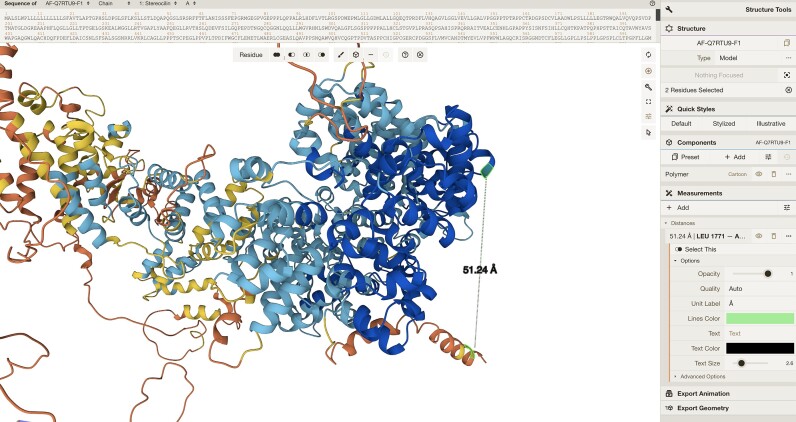
“We improved the visualisation of non-consecutive regions and the interactivity between the PAE viewer and the 3D molecular graphics viewer, Mol* ( 23 ) (Figure 5 ).”
MethodSelf-citationMariani, V., Biasini, M., Barbato, A., & Schwede, T. (2013) · Bioinformatics · doi:10.1093/bioinformatics/btt473 · Cited by 1,138 · cited 1×
“AlphaFold yields a per-residue estimate of its confidence, known as pLDDT, ranging from 0 to 100, indicating the tool’s predicted score on the lDDT-C α metric ( 19 ).”
Method
Cited by
Items 801–900 of 2,174
Liang, Y., Zhao, Y., Yin, Z., Zeng, X., Han, X.-L., & Wen, M. (2025) · Archives of Microbiology · doi:10.1007/s00203-025-04259-6 · Cited by 2
“Recent advancements by AlphaFold2 in predicting high-resolution 3D protein structures from 1D amino acid sequences have created a vast repository for mining proteins with specific functions (Jumper et al. 2021; Varadi et al. 2022; Varadi et al. 2023).”
Fish, M., Saudan, G., Chuong, S. D. X., Jelokhani‐Niaraki, M., & Smith, M. D. (2024) · bioRxiv (Cold Spring Harbor Laboratory) · doi:10.1101/2024.10.25.620236 · Cited by 2
Rodríguez‐Sotres, R., & Aguayo‐Ortiz, R. (2025) · Educación Química · doi:10.22201/fq.18708404e.2025.1.89902 · Cited by 2
3D structural insights into the effect of N-glycosylation in human chitotriosidase variant G102S
Xu, X., Manabe, N., Ohno, S., Komatsu, S., Fujimura, T., & Yamaguchi, Y. (2024) · Biochimica et Biophysica Acta (BBA) - General Subjects · doi:10.1016/j.bbagen.2024.130730 · Cited by 2
Linear Ubiquitination of Hemocyanin Mediated by LUBEL Regulates Innate Immunity in Penaeus vannamei
Zhang, X., Zhang, H., Zhang, Y., et al. (2025) · International Journal of Molecular Sciences · doi:10.3390/ijms26115110 · Cited by 2
“Receptor and ligand structure preparation: The RBR domain of Homo sapiens HOIP ( Hs HOIP, gene name RNF31, AF-Q96EP0-F1-v4) was retrieved from the AlphaFold Protein Structure Database [58], while the Penaeus vannamei LUBEL (XP_069991990.”
Wang, W., Song, Z., Chen, Y., Guo, Z., Su, M., Shi, J., Tang, G., Liu, Q., & Li, S. (2025) · Journal of Food Science · doi:10.1111/1750-3841.70708 · Cited by 2
Modeling the structure-conditioned sequence landscape for large-scale protein design with TriFlowPreprint
Srinivasan, H., Yuan, R., Zhang, J., Cong, Q., & Zhou, J. (2025) · bioRxiv (Cold Spring Harbor Laboratory) · doi:10.64898/2025.11.30.691458 · Cited by 3
“Moreover, we scaled the model training by creating a larger dataset, including interacting domain pairs in the AlphaFold protein structure Database (AFDB), to improve design accuracy and generalization 9 .”
When can AlphaFold predict the oligomeric states of proteins?
Lin, Y., Wallis, C., & Corry, B. (2026) · Protein Science · doi:10.1002/pro.70686 · Cited by 12
GTalign: High-performance protein structure alignment, superposition, and search
Margelevicius, M. (2024) · doi:10.21203/rs.3.rs-3820640/v1 · Cited by 23
Nitrogen metabolism profiling reveals cell state-specific pyrimidine synthesis pathway choice
Savani, M. R., Li, B., Smith, B. C., Gu, W., Xiao, Y., Baquer, G., Shipman, T. E., Oken, S., Manoj, N., Zacharias, L. G., et al. (2026) · Nature Metabolism · doi:10.1038/s42255-026-01520-0 · Cited by 5
Sequence rules for a long SPOP-binding degron required for protein ubiquitylation
Makhlouf, L., Mishra, M., Makhlouf, H., Manfield, I. W., Busino, L., & Zeqiraj, E. (2025) · Biochemical Journal · doi:10.1042/bcj20253041 · Cited by 1
Naz, S., Ishaque, U., Chatha, A. M. M., Maqbool, B., Ullah, Q., Farooq, M., Naz, S., Momand, N. K., & Alhidary, I. A. (2025) · Veterinary Medicine and Science · doi:10.1002/vms3.70703 · Cited by 2
Song, X., Zhao, L., Tian, Y., et al. (2025) · Lab on a Chip · doi:10.1039/d4lc01086h · Cited by 2
ProxiCapture reveals context-dependent CRBN interactome landscape of molecular glue degraders
Kazi, R. S., Bailey, H., Gerhartz, J., Shah, V. J., Toker, B., Bein, J., Wild, P. J., Nowak, R. P., Mosler, T., & Đikić, I. (2026) · Disease and Therapeutics · doi:10.1016/j.dist.2026.100004 · Cited by 4
Rijal, R., & Gomer, R. H. (2025) · Microbiology Spectrum · doi:10.1128/spectrum.02163-25 · Cited by 3
“AdcB (UniProt: Q86KB1; another protein identified in the D. discoideum screen) does not have a clear human ortholog, but Alphafold/Foldseek analysis suggested that human thioredoxin-interacting protein is a structural homolog of Dictyostelium AdcB (42–44).”
Li, Z., Deng, Y., Xiao, F., et al. (2025) · Frontiers in Immunology · doi:10.3389/fimmu.2025.1681989 · Cited by 2
Nishiyama, K., Akiba, H., Tsutsui, Y., Kamada, H., & Ohno, H. (2025) · Chemistry - A European Journal · doi:10.1002/chem.202501803 · Cited by 2
Turvey, A. K., & Cavalcanti, A. R. O. (2024) · IUBMB Life · doi:10.1002/iub.2932 · Cited by 2
ALi, A., Alamri, A. M., Mishra, V. K., Utegenova, A., Askarova, G., Baiduissenova, A., & Dusmagambetova, A. (2026) · BMC Immunology · doi:10.1186/s12865-025-00795-4 · Cited by 7
“5.5 ( h t t p s : / / c o l a b f o l d . m m s e q s . c o m /) [54, 55].”
InfluentialXiong, Y., Reinhardt, C. J., Nguyen, T., Hoffman, M. A., Simon, G. M., Melillo, B. N., & Cravatt, B. F. (2026) · Journal of the American Chemical Society · doi:10.1021/jacs.6c03985 · Cited by 5
Project automation in CCP4 Cloud: Enabling customization and high‐throughput efficiency
Krissinel, E., Fando, M. S., Kovalevskiy, O. V., Keegan, R. M., Wills, J., Lebedev, A., Uski, V., & Ballard, C. B. (2025) · Protein Science · doi:10.1002/pro.70176 · Cited by 2
Self-citationTerasaki, H., Zdravković, A., Niwa, T., et al. (2026) · mBio · doi:10.1128/mbio.02110-25 · Cited by 2
Gnutti, B., Iuso, A., Angelini, C., & Finazzi, D. (2025) · Brain Sciences · doi:10.3390/brainsci15080777 · Cited by 3
“While this prediction appears to be similar to the alphafold prediction [68,69] (https://alphafold.com) (Figure 3A), the analysis with the newest release of the same web-based tool (MEMSAT SVM) gives different results.”
Zhou, Y., Ke, J., Zheng, L., Mo, S., Liu, X., Zhao, H., Zhu, W., & Li, X. (2024) · Journal of Marine Science and Engineering · doi:10.3390/jmse12122341 · Cited by 4
Liu, C., Liu, W., Wang, Y., Jiang, C., Chen, S., Huang, Q., Xiong, X., Wang, L., Zeng, G., & Huang, Q. (2025) · Biochimica et Biophysica Acta (BBA) - Molecular Basis of Disease · doi:10.1016/j.bbadis.2025.168150 · Cited by 2
Mohar, N. P., Langland, C. J., Darr, Z., et al. (2025) · Science Advances · doi:10.1126/sciadv.ads7903 · Cited by 2
“1E) ( 77 , 78 ).”
Cha, J., Ryu, J., Rawal, D., et al. (2024) · European Journal of Pharmacology · doi:10.1016/j.ejphar.2024.176896 · Cited by 2
Oliw, E. H. (2025) · Archives of Biochemistry and Biophysics · doi:10.1016/j.abb.2025.110490 · Cited by 2
Lin, X., Chen, Z., Li, Y. G., Ma, Z., Fan, C., Cao, Z., Feng, S., Zhang, J., & Gao, Y. Q. (2025) · Chemical Science · doi:10.1039/d5sc02055g · Cited by 5
Osteoporosis Caused by Monoallelic Variant of WNT1 Gene in Four Pediatric Patients
Wang, Q., Liu, M., Cao, B., Su, C., Meng, X., Ding, Y., Ren, X., & Gong, C. (2025) · American Journal of Medical Genetics Part A · doi:10.1002/ajmg.a.63987 · Cited by 3
“Predicted three-dimensional (3D) structure of the WNT1 protein (AF- P04628-F1) was retrieved from the AlphaFold Protein Structure Database (AlphaFold DB, https://alpha fold. ebi. ac. uk) (Jumper et al. 2021; Varadi et al. 2024).”
Das, R., Nadar, K., Arora, R., & Bajpai, U. (2025) · International Journal of Biological Macromolecules · doi:10.1016/j.ijbiomac.2025.147435 · Cited by 2
Favre, S., Pillet, B., Burchert, F., Sankar, D. S., Méndez-Godoy, A., Kiontke, S., Dengjel, J., Bange, G., & Kressler, D. (2026) · Nucleic Acids Research · doi:10.1093/nar/gkag264 · Cited by 2
Esskhayry, S., Benamri, I., Lamzouri, A., Kaissi, O., Fissoune, R., Moussa, A., & Radouani, F. (2025) · BMC Microbiology · doi:10.1186/s12866-025-03860-5 · Cited by 2
Translating multi-omics into healthcare: requisites for scalable and equitable implementation
Tumiene, B., Adams, D. R., Allaway, R. J., Barrero, M. J., Chan, C., Faùndes, V., Fear, V. S., Glezer, P., Fuchs, C., Groza, T., et al. (2026) · Human Genomics · doi:10.1186/s40246-025-00902-x · Cited by 3
“Fortunately, this gap can be partially addressed through unbiased high-throughput methods such as MAVE [72] and computational resources like AlphaFold [73], which offer functionally relevant information beneficial to communities world-wide.”
Lin, C., Lin, L., Chen, T., Ye, Y., & Chiang, B. (2025) · Cancer Medicine · doi:10.1002/cam4.71358 · Cited by 2
“The main polypeptide chains of subunit α 3, α 5, and α 7 are highly similar but the large cytoplasmic M3–M4 loops of them differ greatly in the AlphaFold protein structure data-base (Figure S1) [10–12].”
The Matter/Life Nexus in Biological Cells
Sivasankar, V. S., & Zia, R. N. (2025) · Annual Review of Chemical and Biomolecular Engineering · doi:10.1146/annurev-chembioeng-100722-104442 · Cited by 5
“Each section touches on major milestones and landmark achievements via experimental, statistical, and computational approaches.”
Puerner, C. T. S., Wilkins, O. M., & Cramer, R. A. (2025) · bioRxiv (Cold Spring Harbor Laboratory) · doi:10.1101/2025.11.16.688756 · Cited by 1
A Machine Learning Approach for the Prediction of Thermostable β-Glucosidases
Mariano, D. (2025) · Applied Sciences · doi:10.3390/app15094839 · Cited by 2
Lee, W.-J., Mazigo, E., Han, J., et al. (2025) · Scientific Reports · doi:10.1038/s41598-025-88746-2 · Cited by 2
The aging of the AlphaFold database
Tsitsa, I., Conev, A., David, A., Islam, S. A., & Sternberg, M. J. E. (2025) · Nature Structural & Molecular Biology · doi:10.1038/s41594-025-01725-z · Cited by 5
Jung, J., Mora-Sanz, V., Briz, N., & Nidetzky, B. (2026) · Enzyme and Microbial Technology · doi:10.1016/j.enzmictec.2026.110818 · Cited by 3
PPI-ID: Streamlining Protein-Protein Interaction Prediction through Domain and SLiM MappingPreprint
Goodwin, H. V., & Atkinson, N. S. (2025) · bioRxiv (Cold Spring Harbor Laboratory) · doi:10.1101/2025.04.22.649917 · Cited by 2
SAPP: Structure Aware PTM Prediction
Choo, Y., Na, S., & Paek, E. (2025) · Computers in Biology and Medicine · doi:10.1016/j.compbiomed.2025.111169 · Cited by 5
Frésard, L., Facio, F. M., Chen, E. Y., Colavin, A., Johnson, B. A., Araya, C. L., Manders, T. R., Wahl, A., Metz, H. C., Nicoludis, J., et al. (2025) · medRxiv · doi:10.1101/2025.02.03.25321356 · Cited by 3
Vieni, C., Rothstein, T. E., Johnson, S., Schuetz, A. N., Norgan, A. P., & Patel, R. (2025) · iScience · doi:10.1016/j.isci.2025.114077 · Cited by 5
Broutzakis, G., Pyrris, Y., Akrani, I., et al. (2024) · bioRxiv (Cold Spring Harbor Laboratory) · doi:10.1101/2024.08.23.609436 · Cited by 2
“The initial model for all the structures was the Alphafold prediction AF-Q07307-F1 60,61 .”
MethodShi, Y., Dong, Y., Herrington, N. B., Singh, S., Wang, J., Schlessinger, A., & Grewer, C. T. (2025) · Biochemistry · doi:10.1021/acs.biochem.5c00118 · Cited by 2
Akbari, A., Talaee, M., Mir‐Derikvand, M., et al. (2025) · Applied Microbiology and Biotechnology · doi:10.1007/s00253-025-13584-1 · Cited by 2
“Among several proposed models, one was selected based on factors such as identification level, predicted aligned error (PAE), high-scoring segment pair (HSP) score, and per-residue confidence score (pLDDT) (Jumper et al. 2021; Varadi et al. 2024).”
The evolutionarily conserved PhLP3 is essential for sperm development in Drosophila melanogaster
Petit, C., Kojak, E., Webster, S., Marra, M., Sweeney, B., Chaikin, C., Jemc, J. C., & Kanzok, S. M. (2024) · PLoS ONE · doi:10.1371/journal.pone.0306676 · Cited by 3
“The AlphaFold database contains a predicted D . melanogaster PhLP3 structure (Uniprot ID Q9VGV8 [29, 30]), exhibiting the characteristic organization of the PhLP family of proteins (Fig 4A).”
Background(2025) · doi:10.1038/s44318-025-00375-7 · Cited by 2
Zhao, Q., Liu, X., Chen, H., Jin, Y., Chen, Q., Huang, Y., & Peng, L. (2025) · Frontiers in Chemistry · doi:10.3389/fchem.2025.1630283 · Cited by 2
Antimicrobial Peptide with a Bent Helix Motif Identified in Parasitic Flatworm Mesocestoides corti
Rončević, T., Gerdol, M., Pacor, S., Cvitanović, A. B., Begić, A., Weber, I., Krce, L., Caporale, A., Mardirossian, M., Tossi, A., et al. (2024) · International Journal of Molecular Sciences · doi:10.3390/ijms252111690 · Cited by 4
Structural Insights into RubisCO Dynamics and Pyrenoid Architecture in Chlamydomonas reinhardtiiPreprint
Chen, M. (2025) · bioRxiv (Cold Spring Harbor Laboratory) · doi:10.1101/2025.09.18.677200 · Cited by 2
“To model the additional densities in the RubisCO subtomogram average, we started from the existing molecular model of purified RubisCO with attached EPYC1 fragments (PDB:7JFO) 6 , as well as the AlphaFold model of the EPYC1 (AF-Q94ET8) 20 .”
Plant structural biology: Emerging technologies and future biological insights
Böhm, J. M., & Maurino, V. G. (2026) · The Plant Journal · doi:10.1111/tpj.70786 · Cited by 2
“…al., 2024; Jumper & Hassabis, 2022) and RoseTTAFold (Baek et al., 2021; Chen, Li, et al., 2024), have further broadened the scope of structural biology, even providing models for entire proteomes (Seong & Krasileva, 2023; Varadi et al., 2023; Wang et al., 2025; Woodhouse et al., 2023) (Figure 1).”
Enrichable Protein Footprinting for Structural Proteomics
Wolfer, J. D., Minkoff, B. B., Burch, H. L., et al. (2024) · Journal of the American Society for Mass Spectrometry · doi:10.1021/jasms.4c00362 · Cited by 2
Everyone is using biological structures, but how does one find the structure(s) one wants?
Bond, C. S., & Sussman, J. L. (2024) · Acta Crystallographica Section D Structural Biology · doi:10.1107/s2059798324007848 · Cited by 2
Liang, C., Lu, S., Zhao, H., et al. (2025) · International Journal of Biological Macromolecules · doi:10.1016/j.ijbiomac.2025.145852 · Cited by 2
Duan, Z., Liang, Y., Zhang, J., Chen, Z., Gu, L., & Xue, W. (2025) · Briefings in Bioinformatics · doi:10.1093/bib/bbaf573 · Cited by 3
“For each scaffold, we conducted structural similarity searches using the FoldSeek [19] against the AlphaFold-UniProt100 database [11], targeting all SBP structures derived from its monomers.”
Exploring the impact of quercetin on the growth and biofilm formation of Leptospira interrogans
Rajalakshmi, E., L., E. S. J., Anandkumar, B., et al. (2025) · Folia Microbiologica · doi:10.1007/s12223-025-01344-7 · Cited by 2
Arginine methylation-dependent stabilization of SUV39H1 promotes breast cancer growth
Zhao, W., Wang, G., Wang, P., Ma, B., Liu, B., Fu, Y., Tang, Y., Duan, X., Zhou, K., Zhang, J., et al. (2026) · Oncogene · doi:10.1038/s41388-026-03712-0 · Cited by 3
The R203W substitution drives PACS ‐1 syndrome by disrupting intramolecular regulation
Krzysiak, T. C., Byeon, I. L., Ponticelli, R., Lucas, M. E., Thompson, L., DeHaven, C., Thomas, G., & Gronenborn, A. M. (2026) · FEBS Journal · doi:10.1111/febs.70492 · Cited by 2
“(AF) predictions suggest the ( 196 RRKRYKNR 203 ) basic cluster has a few residues at the end of a β -strand but mostly occupies a large loop on one side of the FBR [33,34].”
InfluentialJiang, Z., Wang, N., Chen, J., Xu, H., Zhu, W., Shi, D., Chen, Q., Shi, J., Hu, X., Xu, Z., et al. (2025) · European Journal of Medicinal Chemistry · doi:10.1016/j.ejmech.2025.117553 · Cited by 2
Gnanasekar, P., Gambhir, S., Kinatukara, P., & Bhardwaj, A. (2025) · Current Research in Structural Biology · doi:10.1016/j.crstbi.2025.100172 · Cited by 2
“Using this method, the entire proteome of MAB AFDB models were searched against the publicly available database of Protein Data Bank (PDB) (Burley et al., 2023) provided by the Foldseek team.”
InfluentialImproving AlphaFold3 by Engineering MSA and Template InputsPreprint
Neupane, P., Liu, J., & Cheng, J. (2026) · bioRxiv (Cold Spring Harbor Laboratory) · doi:10.64898/2026.04.22.720119 · Cited by 4
“…sequence alignment-based MSAs generated by multi-74 ple sequence search tools and expanded protein sequence databases as well as structure-alignment based MSAs generated by FoldSeek[24]-based alignment of predicted structures to the structures in Protein Data Bank[25] and AlphaFoldDB [26] as input.”
Hama, K., Fujiwara, Y., Imai, K., Kusakabe, Y., Hayashi, Y., Takashima, S., Azuma, S., Kondo, M., Yamashita, A., Takita, R., et al. (2025) · Journal of Lipid Research · doi:10.1016/j.jlr.2025.100973 · Cited by 3
Samak, N. A., Götz, F., Adjir, K., et al. (2025) · Applied and Environmental Microbiology · doi:10.1128/aem.00166-25 · Cited by 2
Li, X.-Z., Li, Y.-L., Liu, W., & Zhu, J. (2026) · Biology · doi:10.3390/biology15020186 · Cited by 2
Guzmán‐Flores, J. M., Martínez–Esquivias, F., Amador, A. A., et al. (2025) · Scientia Pharmaceutica · doi:10.3390/scipharm93010012 · Cited by 2
“We also obtained the PBD files of the targets from the AlphaFold Protein Structure Database [30], limiting the results to the Homo sapiens organism and considering only those structures that had undergone review.”
Hasdemir, H. S., Li, Y., Kelich, P., Wen, P., & Tajkhorshid, E. (2026) · Methods in molecular biology · doi:10.1007/978-1-0716-5054-7_1 · Cited by 5
Alem, M., Froushani, S. M. A., Hajighahramani, N., Hosseini-Asl, S., Pourfarzi, F., & Nemati, R. (2025) · PLoS ONE · doi:10.1371/journal.pone.0333618 · Cited by 4
“As no experimental structure for bacterial HSP90 was available, the AlphaFold structure [65,66] for HSP90 from Campylobacter jejuni (strain RM1221), with the closest sequence similarity, was utilized.”
The gram-positive HtrA, the protease that is also a chaperone
Latimer, S., Agbavor, C., & Cahoon, L. A. (2025) · Journal of Bacteriology · doi:10.1128/jb.00360-25 · Cited by 2
Molecular pathogenesis and gene therapy-based intervention of GTPBP3-related mitochondrial disease
Zhang, Y., Yao, S., Li, J., Yu, T., Liu, H., zhu, N., Peng, G.-X., Zheng, W.-Q., Ma, C.-R., Wang, E. D., et al. (2026) · Nature Communications · doi:10.1038/s41467-026-71750-z · Cited by 3
“S2A) 44 , with amodel con fi dencescoreperresidueof >90 in a large majority of proteins.”
The ATO gene family governs Candida albicans colonisation in the dysbiotic gastrointestinal tractPreprint
Alves, R. M. A., Ghasemi, F., Genechten, W. V., Wijnants, S., Goethem, O. V., Barata-Antunes, C., Fernandes, V., Ataíde, P., Gomes-Gonçalves, A., Vergauwen, R., et al. (2025) · bioRxiv (Cold Spring Harbor Laboratory) · doi:10.1101/2025.05.29.656788 · Cited by 2
Swiatek, L.-S., Schaufler, K., & Leo, J. C. (2025) · Scientific Reports · doi:10.1038/s41598-025-22967-3 · Cited by 1
VEXAS Syndrome and Alzheimer’s Disease—Are There Connections?
Sowa, A., Malicka, M., Biernacka, M., Beszłej, J. A., & Leszek, J. (2025) · Brain Sciences · doi:10.3390/brainsci15060573 · Cited by 3
Rios, M. U., Stachera, W. E., Familiari, N. E., Brito, C., Surrey, T., & Woodruff, J. B. (2025) · Journal of Cell Science · doi:10.1242/jcs.264121 · Cited by 3
NavDB: A Comprehensive Database for Voltage-Gated Sodium Channels Modulators and Targets
Wang, G., Yu, J., Chen, H., Luo, H. L., Pan, P., & Hou, T. (2026) · Journal of Chemical Information and Modeling · doi:10.1021/acs.jcim.5c02124 · Cited by 2
Arshad, K., Salim, J., Talat, M. A., Ashraf, A., & Kanwal, N. (2024) · PLoS ONE · doi:10.1371/journal.pone.0312860 · Cited by 2
Analysis of bb0556 Expression and Its Role During Borrelia burgdorferi Mammalian Infection
George, S., Waldron, C., Thompson, C., & Ouyang, Z. (2024) · Molecular Microbiology · doi:10.1111/mmi.15319 · Cited by 2
“The structure of BB0556 was predicted using AlphaFold (Jumper et al. 2021; Varadi et al. 2023) and compared with the crystal structure of R. capsulatus FAD-binding XDHA subunit (PDB: 1JRO) using PyMol version 2.5.5.”
InfluentialDou, X., & Jurenka, R. A. (2026) · Journal of Insect Science · doi:10.1093/jisesa/ieag025 · Cited by 2
A pbpB1 mutation causing reduced β-lactam susceptibility in clinical Listeria monocytogenes isolates
Wamp, S., Wagner, R., Schuler, F., et al. (2026) · Emerging Microbes & Infections · doi:10.1080/22221751.2026.2616949 · Cited by 2
Salgado, M. G., Maity, P. J., Lundin, D., & Pawlowski, K. (2025) · PLoS ONE · doi:10.1371/journal.pone.0315798 · Cited by 2
Molecular basis for the inhibition of de novo DNA methylation by TCL1A
Liu, Q., Li, J., Wang, X., Li, Y., Wu, Y. Z., Han, Z., Guo, Z., Guo, L., Wang, X., Yuan, G., et al. (2026) · Nature Communications · doi:10.1038/s41467-025-67710-8 · Cited by 3
“The atomic structures of DNMT3A and TCL1A were individually generated using Alphafold2 and then docked into cryo-EM with ChimeraX 1.4 58 – 60 .”
InfluentialMinium, K., Knepp, Z. J., Sutton, M., Falls, T., Bobb, S., McKeefery, C., Smith, K., & Root, K. T. (2025) · Biochemistry · doi:10.1021/acs.biochem.5c00057 · Cited by 3
Polyamine homeostasis in Caenorhabditis elegans relies primarily on transport
Chang, C., & Jain, A. (2026) · Cell Reports · doi:10.1016/j.celrep.2026.117283 · Cited by 2
Influence of Calcium Ions on the Membrane Binding of S100B Protein
Jaouen, P., & Boisselier, É. (2025) · Langmuir · doi:10.1021/acs.langmuir.5c03189 · Cited by 2
Acharya, S., Hanssen, E. G., Botha, V. B., Smith, T. M., Jayatissa, S., Trifunovic, Z., Bartho, L. A., Schjenken, J. E., Kaitu’u‐Lino, T. J., Perkins, A. V., et al. (2026) · Nature Communications · doi:10.1038/s41467-026-75408-8 · Cited by 8
A structural code for assembly specificity in GID/CTLH-type E3 ligases
van gen Hassend, P. M., & Schindelin, H. (2026) · eLife · doi:10.7554/elife.110152 · Cited by 4
AFragmenter: schema-free, tuneable protein domain segmentation for AlphaFold protein structures
Verwimp, S., Lavigne, R., Lood, C., & van Noort, V. (2025) · Bioinformatics · doi:10.1093/bioinformatics/btaf588 · Cited by 2
Gong, Y., Li, N., Li, Z., Wang, H., Zhang, D., Chu, H., Lu, Z., Jia, A., Li, F., & Lei, L. (2026) · Transboundary and Emerging Diseases · doi:10.1155/tbed/5696948 · Cited by 2
“Because of a lack of well-characterized SLA Class II histocompatibility antigen, the vaccine constructs were docked with the SLA structure predicted by the Alpha-Fold Database (SLA-DQ; PDB ID: AF-P15980-F1-v4) [35, 36].”
Lapous, R., Amegan, K. E., Caromel, B., Durel, C.-É., Lavoir, A., de Carvalho, J. F., & Larbat, R. (2025) · Plant Cell & Environment · doi:10.1111/pce.70328 · Cited by 3
“…the dynamic of research in this domain, supported by artificial intelligence, could lead to major breakthroughs in the coming years as it has been achieved recently with the emergence of the AlphaFold software for the protein 3D structure elucidation (Jumper et al. 2021; Varadi et al. 2024).”
Gucchait, A., Fu, J., Zhang, L., Agrahari, A. K., Zheng, Z., Yang, X., Yu, H., Yang, X., Varki, A. P., & Chen, X. (2025) · Journal of the American Chemical Society · doi:10.1021/jacs.5c12312 · Cited by 5
CD2AP in Alzheimer's disease: Key mechanisms and therapeutic potential
Wang, Y., & Zhang, Y.-W. (2025) · Brain medicine : · doi:10.61373/bm025i.0026 · Cited by 2
“CD2AP is primarily composed of three consecutive SH3 domains near the N-terminus, a proline-rich region in the middle, and a coiled-coil domain at the C-terminus [Figure 1A, with the three-dimensional structure of CD2AP derived from AlphaFold 3 (13, 14)].”
Saxena, S. K., Banerjee, A., & Guruprasad, L. (2025) · SAR and QSAR in environmental research · doi:10.1080/1062936x.2025.2506055 · Cited by 3
“The model structure of DprE2 was retrieved from the AlphaFold database [25].”
Li, X., Cao, H., Niu, M., Liu, Q., Liang, B., Hou, J., Tu, J., & Gao, J. (2025) · Frontiers in Immunology · doi:10.3389/fimmu.2025.1587705 · Cited by 8
Molecular architecture of Influenza A virionsPreprint
Víjayakríshnan, S., Hirst, J. C., Cole, S. J., Hester, S., Sreenu, V. B., Loney, C., Kamel, W., Fischer, R., Smith, T., Autin, L., et al. (2026) · bioRxiv (Cold Spring Harbor Laboratory) · doi:10.64898/2026.04.02.715802 · Cited by 2
“The 8 vRNPs were then arranged in a 7+1 configuration, with seven surrounding a central vRNP, consistent with previously reported organisation 13,68 .”
Valladares, A., & Herrero, A. (2024) · Molecular Microbiology · doi:10.1111/mmi.15335 · Cited by 4
“See a prediction of the ThyD structure by AlphaFold (Varadi et al. 2024) in Figure S1B.”
Zhu, Y. L., Wang, S., Han, Y. M., Lu, Y., Xiong, A., Qiu, S., Jin, L. N., & Zhang, W. (2025) · Environmental Science & Technology · doi:10.1021/acs.est.5c12915 · Cited by 2
Need for speed: advances in the era of high throughput interaction proteomics
Frommelt, F., Uliana, F., Aebersold, R. H., & Fossati, A. (2026) · Molecular Omics · doi:10.1093/molecular-omics/aaiag012 · Cited by 3
Metadata
- Authors
- Varadi, M., Bertoni, D., Magana, P., Paramval, U., Pidruchna, I., Radhakrishnan, M., Tsenkov, M., Nair, S., Mirdita, M., Yeo, J., Kovalevskiy, O., Tunyasuvunakool, K., Laydon, A., Žídek, A., Tomlinson, H., Hariharan, D., Abrahamson, J., Green, T., Jumper, J., Birney, E., Steinegger, M., Hassabis, D., & Velankar, S.
- Affiliations
- European Molecular Biology Laboratory, European Bioinformatics Institute , Hinxton, UK
- European Bioinformatics Institute (GB)
- Seoul National University (KR)
- Google DeepMind (United Kingdom) (GB)
- Corresponding author
- Hassabis, Demis
- Velankar, Sameer
- ORCID
- Venue
- Nucleic Acids Research
- Publisher
- Oxford University Press (OUP)
- Published
- 2023-11-02
- Volume
- 52
- Issue
- D1
- Pages
- D368-D375
- ISSN
- 0305-1048 (ISSN-L)
- 1362-4962
- PMC
- PMC10767828
- OpenAlex
- W4388464011
- Cited by
- 2,052
- References
- 29
- Citations by year
- 2026: 724 · 2025: 1015 · 2024: 307 · 2023: 5
- FWCI
- 181.98
- Type
- journal article
- Language
- en
- Open access
- gold
- doi.org
- Licence
- Locations
- Nucleic Acids Research (publishedVersion, cc-by)
- PubMed Central (publishedVersion, cc-by)
- PubMed (publishedVersion)
- Seoul National University Open Repository (Seoul National University) (submittedVersion)
- Funders
- Google DeepMind
- National Research Foundation of Korea (2019R1A6A1A10073437, 2020M3A9G7103933, 2021R1C1C102065, 2021M3A9I4021220, RS-2023-00250470)
- Samsung DS Research Fund
- Seoul National University
- Topics
- Life Sciences › Biochemistry, Genetics and Molecular Biology › Molecular Biology › Protein Structure and Dynamics
- Life Sciences › Biochemistry, Genetics and Molecular Biology › Structural Biology › Enzyme Structure and Function
- Life Sciences › Biochemistry, Genetics and Molecular Biology › Molecular Biology › Machine Learning in Bioinformatics
- Keywords
- predicted protein structures, AlphaFold2, protein structure prediction, protein sequence coverage, data archiving, database access, search engines
- MeSH terms
- Amino Acid Sequence, Artificial Intelligence, Proteins, Protein Structure, Secondary, Proteome, Databases, Protein, Search Engine
About these checks
Registry, retraction, Cites and statistics results are computed, not judged, with one exception: a printed reference that no index lists is read once by a model before it counts as a citation error. Claims are extracted by a model and kept only when their quote appears verbatim in the text; each cited source is then checked, with a model’s help, for whether it says what the claim relies on. Those verdicts can be wrong — read the claim’s quote and the cited source before relying on one.
The claim verdicts this report counts are experimental: their accuracy is not yet measured.
A language model drew the claims from the paper on 2026-10-10, under version 3 of the claim definition (model deepseek-v4.1-flash, prompt extract-v3).
A second model labelled each claim on 2026-10-10 (model jev-1.13-20260917, definition revision gold-guideline-v0.2).
Cited sources are checked with a language model’s help (gpt-6-sol).
Statistics and arithmetic are recomputed, not judged.
Confidence bands are shown only for fields calibrated on our annotated test set. None is calibrated yet, so no band is shown.
What counts as a claim ›How we measure confidence ›How we check this ›
Are you an author, or do you see a problem with this page? Request a review
Data sources
Bibliographic data: Semantic Scholar, OpenAlex, Crossref.
Contains information from the Semantic Scholar Academic Graph Datasets, made available under the ODC Attribution License (ODC-BY 1.0).
Semantic Scholar’s data is described in: Kinney, R., et al. (2023). The Semantic Scholar Open Data Platform. arXiv:2301.10140.
