

AlphaFold Protein Structure Database in 2024: providing structure coverage for over 214 million protein sequences
Open accessThe DOI matches its Crossref record; 29 of the 29 references it cites were found in a registry or an index; 18 of the 18 sources its claims cite were checked for support.
Abstract
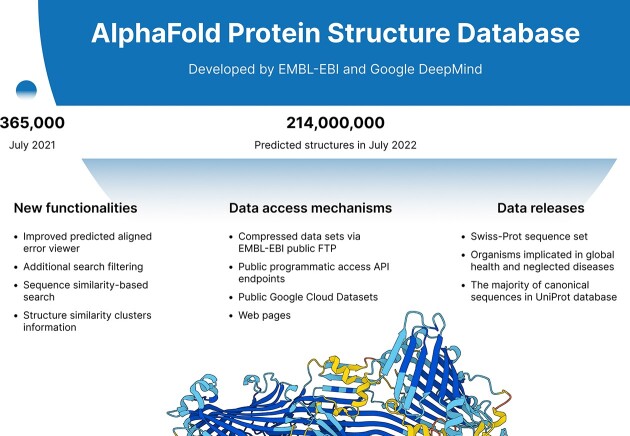
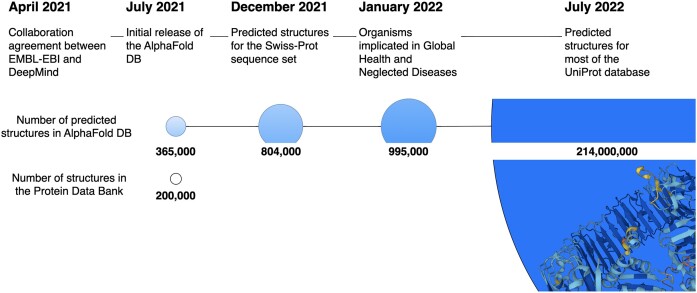
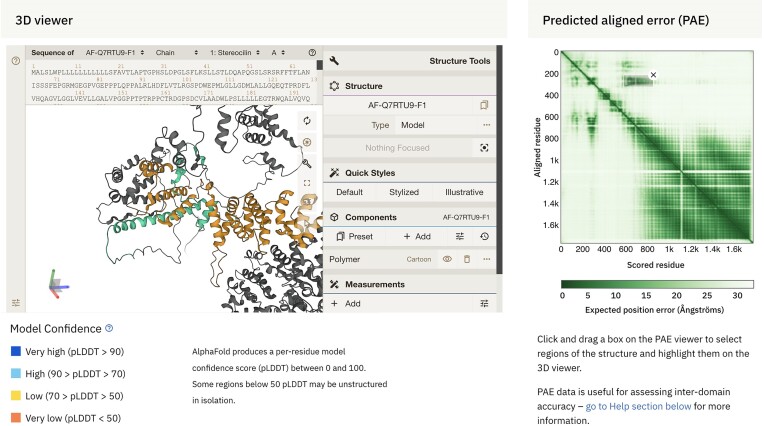
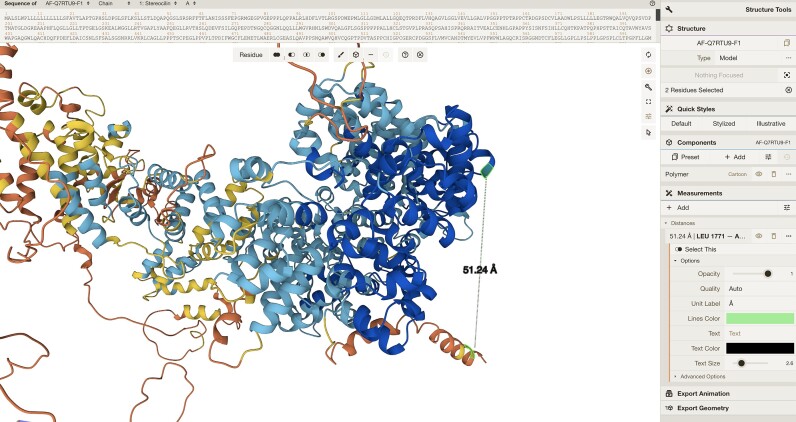
The AlphaFold Database Protein Structure Database (AlphaFold DB, https://alphafold.ebi.ac.uk) has significantly impacted structural biology by amassing over 214 million predicted protein structures, expanding from the initial 300k structures released in 2021. Enabled by the groundbreaking AlphaFold2 artificial intelligence (AI) system, the predictions archived in AlphaFold DB have been integrated into primary data resources such as PDB, UniProt, Ensembl, InterPro and MobiDB. Our manuscript details subsequent enhancements in data archiving, covering successive releases encompassing model organisms, global health proteomes, Swiss-Prot integration, and a host of curated protein datasets. We detail the data access mechanisms of AlphaFold DB, from direct file access via FTP to advanced queries using Google Cloud Public Datasets and the programmatic access endpoints of the database. We also discuss the improvements and services added since its initial release, including enhancements to the Predicted Aligned Error viewer, customisation options for the 3D viewer, and improvements in the search engine of AlphaFold DB.
Overview
CoChat Summary
TL;DR
AlphaFold DB has grown from ~300k to over 214 million predicted protein structures as of September 2023, with expanded access, search, and visualization features. This 2024 update describes data archiving, access mechanisms, integration with core resources, and new clustering/BLAST/PAE viewer capabilities.
Key findings
- AlphaFold DB expanded from approximately 300k structures in 2021 to over 214 million predicted protein structures as of September 2023; the initial July 2021 release housed over 360,000 structures for 20 model organism proteomes.
- Predictions are integrated into resources including PDB, UniProt, Ensembl, InterPro and MobiDB, and are accessible via FTP, Google Cloud Public Datasets (~23 TiB), API, and the website; PAE data is unavailable from EMBL-EBI public FTP.
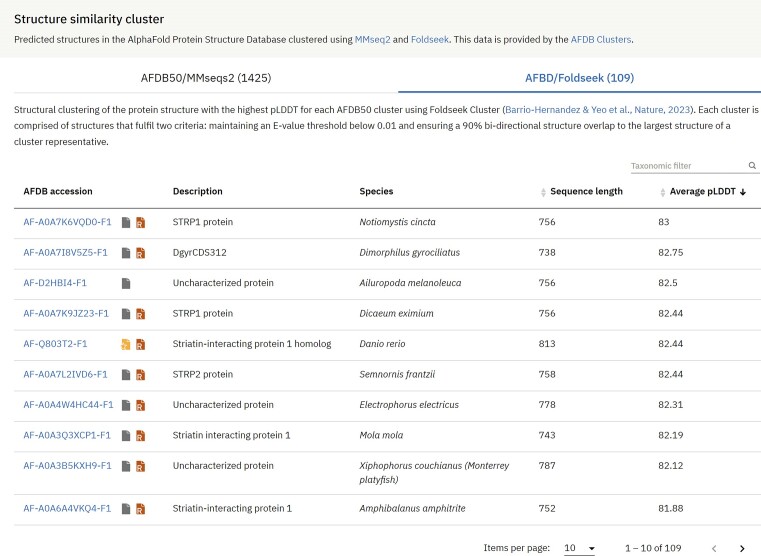
- Structure similarity clustering used MMseqs2 to cluster 214 million UniProtKB sequences into 52 million clusters, then Foldseek secondary clustering yielded 18.8 million clusters, finalizing 2.30 million robust clusters each with at least a pair of structures.
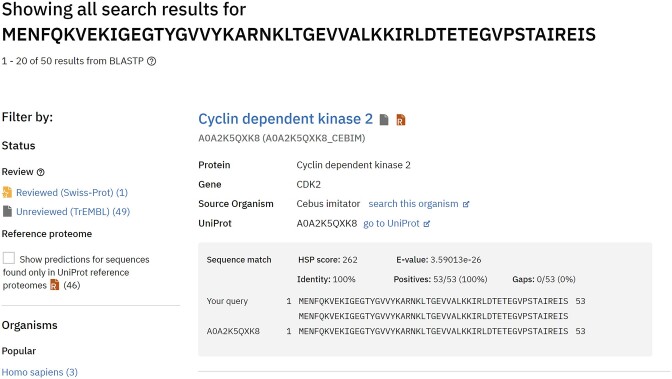
- New features include BLAST sequence similarity search, improved search filters for reviewed/unreviewed and reference proteome status, enhanced PAE viewer–Mol* interactivity, and a November 2022 update fixing a numerical bug that affected ~4% of total structure predictions.
Methods
- Descriptive database update/report with no primary experimental design; data generation is carried out by Google DeepMind, with predictions stored in PDB, mmCIF (modelCIF), and binaryCIF formats plus JSON metadata and confidence metrics pLDDT and PAE.
- Archiving uses successive releases from UniProt reference proteomes (e.g., 2021_02, 2021_04), Swiss-Prot, WHO global health proteomes, and MANE select; as of September 2023, EMBL-EBI FTP hosts TAR files for proteomes of 48 organisms.
- Access and analysis infrastructure includes FTP, Google Cloud Public Datasets, an API keyed on UniProt accessions, Apache-Solr search, BLAST on Google Cloud Platform, and Foldseek/MMseqs2 clustering.
Limitations
- Stated: sequences are not covered if they are less than 16 amino acids; >2700 aa for Swiss-Prot/proteome sequences or >1280 aa for other UniProt sequences; contain non-standard amino acids; are not in the UniProt ‘one sequence per gene’ FASTA file; or are viral proteins; these limitations are under discussion.
- Stated: some sequences may be outdated compared to UniProt due to less frequent AlphaFold DB releases; PAE data is unavailable from EMBL-EBI public FTP; full Google Cloud dataset download requires a Google account and can take roughly 2.5 days at 1 Gbps.
- Evident from the text: all archived structures are predicted models rather than experimental structures, and users must interpret pLDDT/PAE cautiously (e.g., pLDDT <50 likely disordered, 50–70 lower confidence); the database also currently lacks isoform and multimeric predicted structures, which are listed as future work.
Model-written summary. Check it against the paper before relying on it.
Integrity signals
Registry
Cites
Statistics
Figures

Verification
Claims the paper makes
11 Valid · 1 Not valid · 0 Not checked · 28 Own results and interpretations
Every source the paper cites for this claim was checked and supports it.
In the paper
“The new generation of predicted protein structure models has demonstrated remarkable accuracy, which could mitigate the continually widening gap between known protein sequences and experimentally determined protein structures (7).”
§ AlphaFold Protein Structure Database in 2024: providing structure coverage for over 214 million protein sequences > Introduction
What the sources say
- Supportedcites [7] Varadi M., Bordin N., Orengo C., Velankar S. The opportunities and challenges posed by the new generation of deep learning-based protein structure predictors. Curr. Opin. Struct. Biol. 2023; 79: 102543. 36807079 PMC7618866 source
The Introduction says prediction models made a major advance in accuracy and can match or sometimes surpass experimentally determined structures. It also describes a growing gap between known protein sequences and determined structures; the section on new challenges says predicted structures have greatly increased coverage of protein sequence space. These passages support both the accuracy claim and the proposed potential to narrow that gap (page numbers unavailable). (LLM, conf=0.93)
boosted- Asserted: passes — The authors put it forward as true.
- Checkable: passes — It can be checked against evidence.
- Load-bearing: passes — The paper’s conclusions depend on it.
- Based: passes — The paper gives a reason why it holds.
- Supported
Every source the paper cites for this claim was checked and supports it.
In the paper
“In response to frequent requests from the user community since the AlphaFold DB launch, we have made significant strides to implement a sequence-based similarity search feature. We have incorporated the Basic Local Alignment Search Tool (BLAST) (21) into our Google Cloud Platform infrastructure to achieve this.”
§ AlphaFold Protein Structure Database in 2024: providing structure coverage for over 214 million protein sequences > Implementation > Data access
What the sources say
- Supportedcites [21] Camacho C., Coulouris G., Avagyan V., Ma N., Papadopoulos J., Bealer K., Madden T.L. BLAST+: architecture and applications. BMC Bioinf. 2009; 10: 421. PMC2803857 20003500 source
The Background identifies BLAST as a sequence similarity search program that matches a query sequence against a database. In the citing sentence, the citation identifies the tool incorporated; the AlphaFold DB implementation is the citing authors’ own report, not a claim attributed to this source. (LLM, conf=0.91)
plainstates a cause- Asserted: passes — The authors put it forward as true.
- Checkable: passes — It can be checked against evidence.
- Load-bearing: unclear — It is unclear whether the paper’s conclusions depend on it.
- Based: passes — The paper gives a reason why it holds.
- Supported
Every source the paper cites for this claim was checked and supports it.
In the paper
“The impact of the predicted structures is further enhanced by their seamless integration into several core data resources, including PDBe-KB (17), UniProt (6), Ensembl (16), InterPro (15), Genecards (24) and MobiDB (25), among others.”
§ AlphaFold Protein Structure Database in 2024: providing structure coverage for over 214 million protein sequences > Conclusions and outlook
What the sources say
- Supportedcites [17] consortium P.D.B.-K.B. PDBe-KB: collaboratively defining the biological context of structural data. Nucleic Acids Res. 2022; 50: D534– D542. 34755867 PMC8728252 source
Citation (17) is attached specifically to PDBe-KB, rather than to the other resources in the sentence. The Introduction identifies PDBe-KB as a resource that integrates structural and functional annotations, supporting its identification here. (LLM, conf=0.90)
- Supportedcites [6] U.P. Consortium UniProt: the Universal Protein Knowledgebase in 2023. Nucleic Acids Res. 2023; 51: D523– D531. 36408920 PMC9825514 source
The citation is attached to UniProt in a list of resources, and the cited paper is a description of UniProt. Its Data integration and Interactive visualisations in entry pages sections state that UniProt incorporates AlphaFold-predicted structures into protein entries alongside other data; the supplied passages do not give page numbers. (LLM, conf=0.93)
- Supportedcites [16] Cunningham F., Allen J.E., Allen J., Alvarez-Jarreta J., Amode M.R., Armean I.M., Austine-Orimoloye O., Azov A.G., Barnes I., Bennett R. et al. Ensembl 2022. Nucleic Acids Res. 2022; 50: D988– D995. 34791404 PMC8728283 source
The citation identifies Ensembl as one of the resources in the list. In “Developing a new website” (page not provided), the paper says Ensembl’s Entity Viewer provides access to protein information, including 3D structures from PDBe. (LLM, conf=0.86)
plainstates a cause- Asserted: passes — The authors put it forward as true.
- Checkable: passes — It can be checked against evidence.
- Load-bearing: unclear — It is unclear whether the paper’s conclusions depend on it.
- Based: passes — The paper gives a reason why it holds.
- Supported
Every source the paper cites for this claim was checked and supports it.
In the paper
“Tackling this challenge, Steinegger et al. recently unveiled the Foldseek Cluster, a state-of-the-art structural-alignment-based clustering algorithm designed for vast datasets (22). They applied this novel method to the AlphaFold DB archive, making the derived structure similarity clusters available to the research community.”
§ AlphaFold Protein Structure Database in 2024: providing structure coverage for over 214 million protein sequences > Implementation > Data access
What the sources say
- Supportedcites [22] Barrio-Hernandez I., Yeo J., Jänes J., Mirdita M., Gilchrist C.L.M., Wein T., Varadi M., Velankar S., Beltrao P., Steinegger M. Clustering-predicted structures at the scale of the known protein universe. Nature. 2023; 622: 637– 645. 37704730 PMC10584675 source
The Abstract says the authors used Foldseek cluster to cluster the AlphaFold database. The Methods section (“Web server”) says they developed a server for users to explore the clusters, their members and related clusters, supporting the claim that the results were made available to researchers. (LLM, conf=0.93)
plainstates a cause- Asserted: passes — The authors put it forward as true.
- Checkable: passes — It can be checked against evidence.
- Load-bearing: passes — The paper’s conclusions depend on it.
- Based: passes — The paper gives a reason why it holds.
- Supported
- Probably not a substantial claim. 30
- It may state two separate claims as one. 15
- The quote only partly states this claim. 1
Claims other papers make about this one
Each is checked against this paper’s own text: does it say what the citing paper says it does?
The cited source says what the claim attributes to it.
In the citing paper
“houses over 200 million pre-run AF2 predictions”
From The power and pitfalls of AlphaFold2 for structure prediction beyond rigid globular proteins (2024) · cites this paper as [7]
Citations
Cites
Highly accurate protein structure prediction with AlphaFold
Jumper, J., Evans, R., Pritzel, A., Green, T., Figurnov, M., Ronneberger, O., Tunyasuvunakool, K., Bates, R., Žídek, A., Potapenko, A., et al. (2021) · Nature · doi:10.1038/s41586-021-03819-2 · Cited by 43,764
Self-citationBLAST+: architecture and applications
Camacho, C., Coulouris, G., Avagyan, V., Ma, N., Papadopoulos, J., Bealer, K., & Madden, T. L. (2009) · BMC Bioinformatics · doi:10.1186/1471-2105-10-421 · Cited by 22,074
UniProt: the Universal Protein Knowledgebase in 2023
The UniProt Consortium, Bateman, A., Martin, M.-J., Orchard, S., Magrane, M., Ahmad, S., Alpi, E., Bowler-Barnett, E. H., Britto, R., Bye-A-Jee, H., et al. (2023) · Nucleic Acids Research · doi:10.1093/nar/gkac1052 · Cited by 7,210
Evolutionary-scale prediction of atomic level protein structure with a language model
Lin, Z., Akin, H., Rao, R., Hie, B., Zhu, Z., Lu, W., Smetanin, N., Verkuil, R., Kabeli, O., Shmueli, Y., et al. (2022) · doi:10.1101/2022.07.20.500902 · Cited by 5,990 · cited 1×
“In the wake of the latest breakthroughs in prediction software, new databases such as the AlphaFold Protein Structure Database and the ESM Atlas ( 14 ) have emerged.”
MethodThe GeneCards suite: from gene data mining to disease genome sequence analyses
Stelzer, G., Rosen, N., Plaschkes, I., Zimmerman, S., Twik, M., Fishilevich, S., Stein, T. I., Nudel, R., Lieder, I., Mazor, Y., et al. (2016) · Current Protocols in Bioinformatics · doi:10.1002/cpbi.5 · Cited by 5,550 · cited 1×
“The impact of the predicted structures is further enhanced by their seamless integration into several core data resources, including PDBe-KB ( 17 ), UniProt ( 6 ), Ensembl ( 16 ), InterPro ( 15 ), Genecards ( 24 ) and MobiDB ( 25 ), among others.”
BackgroundAccurate prediction of protein structures and interactions using a 3-track network
Baek, M., DiMaio, F., Anishchenko, I., Dauparas, J., Ovchinnikov, S., Lee, G. R., Wang, J., Cong, Q., Kinch, L. N., Schaeffer, R. D., et al. (2021) · doi:10.1101/2021.06.14.448402 · Cited by 5,549
Paysan-Lafosse, T., Blum, M., Chuguransky, S., Grego, T., Pinto, B. L., Salazar, G. A., Bileschi, M. L., Bork, P., Bridge, A., Colwell, L., et al. (2023) · Nucleic Acids Research · doi:10.1093/nar/gkac993 · Cited by 2,399
Cunningham, F., Allen, J. E., Allen, J., Alvarez-Jarreta, J., Amode, M. R., Armean, I. M., Austine-Orimoloye, O., Azov, A. G., Barnes, I., Bennett, R., et al. (2022) · Nucleic Acids Research · doi:10.1093/nar/gkab1049 · Cited by 1,923
Mol* Viewer: modern web app for 3D visualization and analysis of large biomolecular structures
Sehnal, D., Bittrich, S., Deshpande, M., Svobodová, R., Berka, K., Bazgier, V., Velankar, S., Burley, S. K., Koča, J., & Rose, A. S. (2021) · Nucleic Acids Research · doi:10.1093/nar/gkab314 · Cited by 1,154 · cited 1×
“We improved the visualisation of non-consecutive regions and the interactivity between the PAE viewer and the 3D molecular graphics viewer, Mol* ( 23 ) (Figure 5 ).”
MethodSelf-citationMariani, V., Biasini, M., Barbato, A., & Schwede, T. (2013) · Bioinformatics · doi:10.1093/bioinformatics/btt473 · Cited by 1,138 · cited 1×
“AlphaFold yields a per-residue estimate of its confidence, known as pLDDT, ranging from 0 to 100, indicating the tool’s predicted score on the lDDT-C α metric ( 19 ).”
Method
Cited by
Items 301–400 of 2,174
Bonus, M., Greb, J., Majmudar, J. D., Boehm, M., Korczynska, M., Nazemi, A., Mathiowetz, A. M., & Gohlke, H. (2025) · Journal of Molecular Biology · doi:10.1016/j.jmb.2025.169196 · Cited by 14
Transmembrane Parkinson’s disease mutation of PINK1 leads to altered mitochondrial anchoring
Brassard, R., Arutyunova, E. I., Takyi, E., Espinoza‐Fonseca, L. M., Young, H. S., Touret, N., & Lemieux, M. J. (2025) · Journal of Biological Chemistry · doi:10.1016/j.jbc.2025.108253 · Cited by 13
“We used an atomic model of human PINK1 from the AlphaFold Protein Structure Database (57 – 59) (entry: Q9BXM7) to simulate the dynamics of WT and mutants C92F, R98W, and I111S.”
Deep Brain Stimulation for VPS16 ‐Related Dystonia: A Multicenter Study
Svoreňová, T., Romito, L. M., Kaymak, A., Mulroy, E., Cif, L., Moro, E., Zeuner, K. E., Zittel, S., Petry‐Schmelzer, J. N., Gruber, D., et al. (2025) · Annals of Neurology · doi:10.1002/ana.27290 · Cited by 9
Cryo-EM structures of the BAF-Lamin A/C complex bound to nucleosomes
Horikoshi, N., Miyake, R., Sogawa-Fujiwara, C., et al. (2025) · Nature Communications · doi:10.1038/s41467-025-56823-9 · Cited by 9
“1 (AlphaFold2 52 – 54 ).”
Off-pore Nup98 condensates mobilize heterochromatic breaks and exclude Rad51
Merigliano, C., Ryu, T., Cibulka, J., Rawal, C. C., See, C. D., Mitra, A., Reynolds, T. W., Butova, N. L., Caridi, C. P., Li, X., et al. (2023) · Molecular Cell · doi:10.1016/j.molcel.2025.05.012 · Cited by 18
Identification of Plasma Free Fatty Acid Carrier Proteins in Mice
Tomoo, K., Zhang, Y., Mohallem, R., Aryal, U. K., Klauda, J. B., & Henderson, G. C. (2025) · The FASEB Journal · doi:10.1096/fj.202501328r · Cited by 9
“The predicted 3D structures of the mouse proteins were obtained from AlphaFold Protein Structure Database [27, 28].”
Zhang, J., Wang, G., Liu, J., Tang, F., Wang, S., & Li, Y. (2025) · Frontiers in Oncology · doi:10.3389/fonc.2025.1513622 · Cited by 12
“The 3D structures of the ITGA4 protein and chemotherapeutic drugs were downloaded from the AlphaFold Protein Structure Database (https:// www.alphafold.ebi.ac.uk/) (40, 41) and the PubChem platform (https://pubchem.ncbi.nlm.nih.gov/), respectively.”
Zhan, K., Chen, S., Ji, L., Xu, L., Zhang, Y., Zhang, Q., Dai, Q., & Wu, S. (2024) · Scientific Reports · doi:10.1038/s41598-024-77897-3 · Cited by 8
Planells‐Cárcel, A., Sánchez‐Martí, S., Muñiz‐Calvo, S., & Guillamón, J. M. (2025) · Journal of Pineal Research · doi:10.1111/jpi.70053 · Cited by 8
“1) structure of Streptomyces griseofuscus (AF ‐ W8QGX9 ‐ F1) obtained from the AlphaFold database [31, 38] were chosen as templates.”
Scala, E., Madonna, S., ABENI, D. D., Cecchi, L., Cocuroccia, B., Dattolo, A., Moretta, G., Provini, A., Russo, F., Sordi, D., et al. (2024) · Allergy · doi:10.1111/all.16377 · Cited by 13
Model Quality Assessment for CASP16
Fadini, A., Studer, G., & Read, R. J. (2025) · Proteins Structure Function and Bioinformatics · doi:10.1002/prot.70037 · Cited by 10
Fine-tuning of conditional Transformers improves in silico enzyme prediction and generation
Nicolini, M., Saitto, E., Franco, R. E. J., Cavalleri, E., Galeano, A., Malchiodi, D., Paccanaro, A., Robinson, P. N., Casiraghi, E., & Valentini, G. (2025) · Computational and Structural Biotechnology Journal · doi:10.1016/j.csbj.2025.03.037 · Cited by 8
“Interest-ingly, the training set sequence with the highest sequence identity has a predicted structure present in the AlphaFoldDB [62].”
Latest advances in research methods for high-yield cellulase production
Xiang, X., Zhang, Y., Wei, W., & Zhou, G. (2025) · Sustainable Energy & Fuels · doi:10.1039/d4se01553c · Cited by 9
CAZyme3D: A Database of 3D Structures for Carbohydrate-active Enzymes
Siva Shanmugam, N. R., & Yin, Y. (2025) · Journal of Molecular Biology · doi:10.1016/j.jmb.2025.169001 · Cited by 8
Structural analysis of the dynamic ribosome-translocon complex
Lewis, A. J., Zhong, F., Keenan, R. J., & Hegde, R. S. (2024) · eLife · doi:10.7554/elife.95814.3 · Cited by 9
Bioinformatic approach to identifying causative missense polymorphisms in animal genomes
Peka, M., & Balatsky, V. (2024) · BMC Genomics · doi:10.1186/s12864-024-11126-z · Cited by 11
“The Q8MIB3 [52] structure from the AlphaFold database [53, 54] was used as a template for modeling of areas containing missing residues in the 7OJ8 homolog of ABCG2.”
López‐Laguna, A., Polonio, Á., Castro, L. J., Morales, Y., Vielba‐Fernández, A., Martín, M. E., González, V. M., de Vicente, A., Pérez‐García, A., & Fernández‐Ortuño, D. (2025) · Plant Biotechnology Journal · doi:10.1111/pbi.70317 · Cited by 10
“First, the 3D structure of BcSOD1, BcSOD2, BcSOD3, BcSOD4 and S. lycopersicum SOD1 was obtained from AlphaFold Protein Structure Database (AFDB; Varadi et al. 2024), showing all of them a very high confidence structure (pLDDT > 90).”
Double prenylation of budding yeast Ykt6 regulates cell wall integrity and autophagy
Tateishi, M., Goto, K., Hishinuma, E., Matsukawa, N., Kishimoto, T., Tanaka, K., Horiuchi, H., Fukasawa, M., & Shirakawa, R. (2025) · Journal of Biological Chemistry · doi:10.1016/j.jbc.2025.108384 · Cited by 9
Hasnat, S., Hoque, M. N., Mahbub, M. M., Jummah, J. B., Ali, J., Sakif, T. I., Crandal, K. A., & Islam, T. (2025) · Computational and Structural Biotechnology Reports · doi:10.1016/j.csbr.2024.100028 · Cited by 11
Kiekens, C., Morré, S. A., & Vanrompay, D. C. G. (2024) · Microorganisms · doi:10.3390/microorganisms12061196 · Cited by 8
“The AlphaFold-predicted 3D structure (accession number AF-P17451-F1) of MOMP, which illustrates this β -barrel porin architecture, is shown in Figure 2b [46,47].”
BackgroundThibault, E., & Brandizzí, F. (2024) · Biochemical Society Transactions · doi:10.1042/bst20231025 · Cited by 8
A near-complete map of human cytosolic degrons and their relevance for disease
Voutsinos, V., Johansson, K. E., Larsen, F. B., Grønbæk-Thygesen, M., Jonsson, N., Holm-Olesen, E., Tesei, G., Stein, A., Fowler, D. M., Lindorff‐Larsen, K., et al. (2026) · Science Advances · doi:10.1126/sciadv.adz3483 · Cited by 16
Lawrenz, J., Wettstein, L., Rodríguez Alfonso, A., Nchioua, R., von Maltitz, P., Albers, D. P. J., Zech, F., Vandeput, J., Naesens, L., Fois, G., et al. (2025) · Advanced Science · doi:10.1002/advs.202506430 · Cited by 8
BFVD - a large repository of predicted viral protein structures
Kim, R. S., Karin, E. L., & Steinegger, M. (2024) · doi:10.1101/2024.09.08.611582 · Cited by 86
Self-citationStructure and function of human XPR1 in phosphate export
Chen, L., He, J., Wang, M., et al. (2025) · Nature Communications · doi:10.1038/s41467-025-58195-6 · Cited by 8
“ModelbuildingwasconductedinCoot 39 andtheXPR1modelpredicted by AlphaFold2 40 was used as an initial reference.”
Paik, H., Oh, C., Hussain, S., Seo, S., Park, S. W., Ko, T. L., & Lee, A. (2024) · Database · doi:10.1093/database/baae111 · Cited by 16
“The PDB files required for these analyses were acquired from the AlphaFold database, utilizing UniProt identifiers that were retrieved from the associated gene names [16].”
MethodViro3D: a comprehensive database of virus protein structure predictions
Litvin, U., Lytras, S., Jack, A., Robertson, D. L., Grove, J., & Hughes, J. (2024) · doi:10.1101/2024.12.19.629443 · Cited by 28
Persistent homology reveals strong phylogenetic signal in 3D protein structures
Dagher, L. B., Madern, D., Malbos, P., & Brochier‐Armanet, C. (2024) · PNAS Nexus · doi:10.1093/pnasnexus/pgae158 · Cited by 9
Karlin, D. G. (2024) · Journal of General Virology · doi:10.1099/jgv.0.001948 · Cited by 8
IL-33 in cancer immunotherapy: Pleiotropic functions and biological strategies
Che, K., Li, J., Chen, Z., Li, Q., Wen, Q., Wang, C., & Yang, Z. (2024) · Cytokine & Growth Factor Reviews · doi:10.1016/j.cytogfr.2024.11.005 · Cited by 8
Feng, Y., Ding, J., Lin, Y., Cui, D.-X., Li, K.-J., Zheng, D., Cai, Z.-W., Bell, S. D., & Wu, F. (2025) · Nature Ecology & Evolution · doi:10.1038/s41559-025-02882-6 · Cited by 8
“…the substantial sequence divergence between archaeal and eukaryotic homologues, we used an iterative hidden Markov model (HMM) approach complemented by structural comparisons using AlphaFold predictions 28,29 , ensuring precise homologue identification (see the Methods and Extended Data Fig.”
De novo design of potent CRISPR–Cas13 inhibitors
Taveneau, C., Chai, H. X., D’Silva, J., Bamert, R. S., Chen, H., Hayes, B. K., Calvert, R. W., Purcell, J., Curwen, D. J., Munder, F., et al. (2026) · Nature Chemical Biology · doi:10.1038/s41589-025-02136-3 · Cited by 17
Mitochondrial control of glycerolipid synthesis by a PEP shuttle
Yamamuro, T., Katoh, D., Silva, G. M., Nishida, H., Oikawa, S., Higuchi, Y., Wang, D., Fujimoto, M., Yoshida, N., Li, M., et al. (2026) · Cell · doi:10.1016/j.cell.2026.02.017 · Cited by 11
The Fundamental Neurobiological Mechanism of Oxidative Stress-Related 4E-BP2 Protein Deamidation
Joseph, D. (2024) · International Journal of Molecular Sciences · doi:10.3390/ijms252212268 · Cited by 9
Cutting-edge deep-learning based tools for metagenomic research
Karin, E. L., & Steinegger, M. (2025) · National Science Review · doi:10.1093/nsr/nwaf056 · Cited by 12
“The release of AF2 and other protein structure prediction methods has been followed by a major expansion of available protein structures in public databases, such as the AFDB [46 ] and ESM Atlas (see Tool 2), which contain hundreds of mi l lions of structures.”
Self-citationEssandoh, K., Eramo, G. A., Subramani, A., & Brody, M. J. (2025) · Biophysical Journal · doi:10.1016/j.bpj.2025.02.010 · Cited by 9
Ciszkowicz, E., Miłoś, A., Łyskowski, A., et al. (2025) · Molecules · doi:10.3390/molecules30102167 · Cited by 8
Kikuchi, A., Nishiyama, A., Chiba, Y., Nakanishi, M., To, T. K., & Arita, K. (2025) · Nature Communications · doi:10.1038/s41467-025-63765-9 · Cited by 9
“10a) 63 .”
Buraschi, S., Pascal, G. J., Liberatore, F., & Iozzo, R. V. (2025) · Proteoglycan Research · doi:10.1002/pgr2.70014 · Cited by 12
Prediction of Protein Half-lives from Amino Acid Sequences by Protein Language ModelsPreprint
Sagawa, T., Kanao, E., Ogata, K., Imami, K., & Ishihama, Y. (2024) · bioRxiv (Cold Spring Harbor Laboratory) · doi:10.1101/2024.09.10.612367 · Cited by 11
“Herein, we propose the Protein Lifetime Neural Model (PLTNUM), an AI platform designed for a sequence-dependent prediction of protein half-lives, leveraging PLMs. PLTNUM requires only amino acid sequences as input to predict protein half-lives, achieving higher prediction accuracy by incorporating structural informati…”
MethodInfluentialChisholm, S. A., Flores, V. M. Q., Kemp, A. C., Breckels, L. M., Kořený, L., Pacheco, N. D. S., Barylyuk, K., Kuroshchenkova, A., Lilley, K. S., Rayner, J. C., et al. (2026) · Nature Communications · doi:10.1038/s41467-026-73664-2 · Cited by 22
“We used multiple predictors of protein disorder: IUPred3 57 , MobiDB-lite 58 and two outputs from Alphafold, DSSP and con fi dence scores 59 .”
qProtein: Exploring Physical Features of Protein Thermostability Based on Structural Proteomics
Dou, Z., He, J., Han, C., Wu, X., Wan, L. S., Yang, J., Zheng, Y., Gong, B., & Wang, L. (2024) · Journal of Chemical Information and Modeling · doi:10.1021/acs.jcim.4c01303 · Cited by 8
A general substitution matrix for structural phylogenetics
Garg, S. G., & Hochberg, G. K. (2024) · doi:10.1101/2024.09.19.613819 · Cited by 29
Chakraborty, C., Bhattacharya, M., & Lee, S.-S. (2026) · Frontiers in Artificial Intelligence · doi:10.3389/frai.2026.1739303 · Cited by 12
“This change embeds structural models within the primary sequence knowledge-base used across biology and improves integration with common data resources (Varadi et al., 2024).”
Koga, N., & Koga, R. (2024) · Journal of Molecular Biology · doi:10.1016/j.jmb.2024.168791 · Cited by 10
Identification of a Novel Substrate for eEF2K and the AURKA‐SOX8 as the Related Pathway in TNBC
Wan, X., Gong, R., Zhao, X., Li, Y., Shan, T., Zhong, C., Zhu, R., Chen, Z., Jiang, S., He, L., et al. (2025) · Advanced Science · doi:10.1002/advs.202412985 · Cited by 13
AlphaFold2 SLiM screen for LC3-LIR interactions in autophagy
Stuke, J. F. M., & Hummer, G. (2025) · Autophagy · doi:10.1080/15548627.2025.2493999 · Cited by 8
“For single proteins we used already predicted structures provided by the AlphaFold Protein Structure Database [86] if available, and AlphaFold2.”
Obisesan, O. A., Ofori, S., Orobator, O. N., Sharma, H., Groetecke, E., & Awuah, S. G. (2025) · Journal of Medicinal Chemistry · doi:10.1021/acs.jmedchem.4c02556 · Cited by 9
Tsai, Y.-L., Wolf, E. J., Fluke, K. A., Fuchs, R. T., Dai, N., Johnson, S. R., Sun, Z., Elkins, L., Burkhart, B. W., Santangelo, T. J., et al. (2025) · Cell Reports · doi:10.1016/j.celrep.2025.115471 · Cited by 8
Comprehensive degron mapping in human transcription factors
Larsen, F. B., Voutsinos, V., Jonsson, N., Johansson, K. E., Ethelberg, F. D., Henrichs, I. K., Lindorff‐Larsen, K., & Hartmann‐Petersen, R. (2026) · Science Advances · doi:10.1101/2025.05.16.654404 · Cited by 9
Huang, J., Li, Q., Wang, H., Zhang, S., Zhou, X., Huang, F., Chen, J., Xu, L., & Kang, D. (2025) · The Journal of Gene Medicine · doi:10.1002/jgm.70011 · Cited by 11
“The RCSB Protein Data Bank (rcsb.org) provided the 3D crystal structures of these proteins in PDB format [18] or the AlphaFold protein structure database [19, 20], while the structure file of BA was obtained from PubChem [21].”
Morris, V. S., Richards, E. M. B., Morris, R., Dart, C., & Helassa, N. (2025) · Cells · doi:10.3390/cells14030152 · Cited by 10
“The AlphaFold protein structure database, developed by Google DeepMind, utilises an AI system to predict the 3D structure of proteins based on their amino acid sequence [42].”
Protein folding stability estimation with explicit consideration of unfolded states
Lee, H. C., Cho, Y., Yun, J., Steinegger, M., Kim, H. M., & Park, H. (2026) · Nature Communications · doi:10.1038/s41467-026-68637-4 · Cited by 19
Self-citationManav, N., Jit, B. P., Kataria, B., & Sharma, A. K. (2024) · Epigenomics · doi:10.1080/17501911.2024.2351788 · Cited by 11
Dipeptidyl peptidase DPF-3 is a gatekeeper of microRNA Argonaute compensation in animals
Harvey, L.-M., Frédérick, P., Gudipati, R. K., Michaud, P., Houle, F., Young, D. W., Desbiens, C., Ladouceur, S., Dufour, A., Großhans, H., et al. (2025) · Nature Communications · doi:10.1038/s41467-025-58141-6 · Cited by 10
Genotype-specific differences in infertile men due to loss-of-function variants in M1AP or ZZS genes
Rotte, N., Dunleavy, J. E. M., Runkel, M. D., Bosse, L., Fietz, D., Pilatz, A. M. E., Kuß, J., Dicke, A., Winge, S. B., Persio, S. D., et al. (2025) · EMBO Molecular Medicine · doi:10.1038/s44321-025-00244-0 · Cited by 9
Khan, S. H., Tayara, H., & Chong, K. T. (2025) · Measurement · doi:10.1016/j.measurement.2025.117227 · Cited by 9
Arroyo, M. D. C. G., Casas-Delucchi, C. S., Pabba, M. K., Prorok, P., Pradhan, S. K., Rausch, C., Lehmkuhl, A., Maiser, A., Buschbeck, M., Pasque, V., et al. (2024) · Nucleic Acids Research · doi:10.1093/nar/gkae734 · Cited by 8
“Protein fragments were designed using available monomeric structural models from AlphaFold as provided by the AlphaFold database ( 72 ).”
MethodColgren, J. J., & Burkhardt, P. (2025) · Nature reviews. Neuroscience · doi:10.1038/s41583-025-00983-6 · Cited by 8
Keeping it in the family: using protein family templates to rescue low confidence AlphaFold2 models
Costa, F., Blum, M., & Bateman, A. G. (2024) · Bioinformatics Advances · doi:10.1093/bioadv/vbae188 · Cited by 8
Accelerating Leigh syndrome drug discovery through deep learning screening in brain organoids
Menacho, C., Okawa, S., Álvarez‐Merz, I., Wittich, A., Muñoz‐Oreja, M., Lisowski, P., López-Martín, M., Pentimalli, T. M., Zakin, S., Thevandavakkam, M. A., et al. (2026) · Nature Communications · doi:10.1038/s41467-026-71391-2 · Cited by 11
“The predicted structure of human cytochrome P450 26A1 and 26B1wasobtainedfromtheAlphaFoldDatabase(O43174andQ9NR63, respectively) 142,147 and the transmembrane region was removed (residues 1-45 and 1-41, respectively).”
Modeling intrinsically disordered regions from AlphaFold2 to AlphaFold3
Mehdiabadi, M., Tosatto, S. C. E., & Piovesan, D. (2025) · Protein Science · doi:10.1002/pro.70426 · Cited by 14
Khairil, L., Benny, K. H. S., Jerry, J., Khatib, F. M., Ramli, M. D. C., & Kumar, S. (2026) · Pharmaceuticals · doi:10.3390/ph19060916 · Cited by 14
“By 2024, the AlphaFold Database had grown to include over 214 million protein structure predictions, offering a nearly complete map of the human proteome and structures from millions of other species [26].”
Nukaga, S., Shiraishi, K., Hamabe, K., Mochizuki, A., Hamaguchi, Y., Ogawa, E., Le, N. T., Shimada, Y., Ono, H., Nishinakamura, H., et al. (2025) · Nature Communications · doi:10.1038/s41467-025-64821-0 · Cited by 9
A model of zymogen factor XII: insights into protease activation
Шаманаев, А. Ю., Ma, Y., Ponczek, M. B., et al. (2025) · Blood Advances · doi:10.1182/bloodadvances.2025015842 · Cited by 7
ComFB, a new widespread family of c-di-NMP receptor proteins
Samir, S., Elshereef, A. A., Alva, V., Hahn, J., Dubnau, D., Galperin, M. Y., & Selim, K. A. (2024) · doi:10.1101/2024.11.10.622515 · Cited by 7
inan, D., KARAGECILI, S., Ali, N. S., & Ali, A. (2026) · Computational Biology and Chemistry · doi:10.1016/j.compbiolchem.2026.108906 · Cited by 9
Learning Universal Representations of Intermolecular Interactions with ATOMICAPreprint
Fang, A., Desgagné, M., Zhang, Z., Zhou, A., Loscalzo, J., Pentelute, B. L., & Žitnik, M. (2025) · bioRxiv (Cold Spring Harbor Laboratory) · doi:10.1101/2025.04.02.646906 · Cited by 22
“PeSTo is run across all human proteins from the AlphaFold Protein Structure Database [99, 144].”
The synaptonemal complex aligns meiotic chromosomes by wetting
Gordon, S. G., Rodriguez, A. A., Gu, Y., Corbett, K. D., Lee, C. F., & Rog, O. (2025) · Science Advances · doi:10.1126/sciadv.adt5675 · Cited by 9
Role of artificial intelligence in advancing immunology
Alanazi, H. H. (2025) · Immunologic Research · doi:10.1007/s12026-025-09632-7 · Cited by 10
“AlphaFold and DeepTCR are valuable tools that can predict protein structure and reveal meaningful information from immunog-enomic data [82, 103, 104].”
Open Enzyme Database: a community-wide repository for sharing enzyme data
Yuan, L., Bianchi, D. M., Arneson, K., Guo, B., Lambert, S., Stephens, C., Wasnik, Y., Pond, C., Berry, M. J., & Zhao, H. (2025) · Nucleic Acids Research · doi:10.1093/nar/gkaf1082 · Cited by 9
“Enzyme structures are also displayed as a 3D diagram using 3Dmol.js, with geometries retrieved on demand from the AlphaFold Protein Structure Database [ 12 , 13 ].”
Review of protein structure-based analyses that illuminate plant stress mechanisms
Shahid, F., Sen, N., Rasni, H. N., Isa, N. M., Ling, N., Orengo, C. A., & Lam, S. D. (2025) · Computational and Structural Biotechnology Journal · doi:10.1016/j.csbj.2025.07.021 · Cited by 9
“The AlphaFold Protein Structure Database currently provides protein structure models for a total of 214 million protein sequences in UniProt [65].”
Shimanovich, U., & Hartl, F. U. (2024) · Proceedings of the National Academy of Sciences · doi:10.1073/pnas.2411135121 · Cited by 7
Shen, X., Zhang, H., Zhang, P., Niu, X., Zhao, X., Zhu, L., Zhu, J., & Wang, S. (2025) · Food Chemistry X · doi:10.1016/j.fochx.2025.102544 · Cited by 10
“Subsequently, the complete structures of T1R1 and T1R3 were constructed using Alphafold2 (Jumper et al., 2021; Varadi et al., 2024).”
Structure-based discovery and definition of RiPP recognition elements
Bregman, M. H., Cogan, D. P., Shelton, K. E., Rice, A. J., Dommaraju, S. R., Nair, S. K., & Mitchell, D. A. (2025) · mSystems · doi:10.1128/msystems.01252-25 · Cited by 10
Self-citationOrtmann, J. (2025) · Synthese · doi:10.1007/s11229-025-04930-x · Cited by 21
“By 2022, the team behind AlphaFold con - tributed over 214 million predictions to openly accessible databases (Varadi et al., 2021, 2023), covering almost all proteins known to exist in nature, and open-sourced the underlying models.”
Which pLM to choose?Preprint
Senoner, T., Koludarov, I., Guenther, J., Shehu, A., Rost, B., & Bromberg, Y. (2025) · bioRxiv (Cold Spring Harbor Laboratory) · doi:10.1101/2025.10.30.685515 · Cited by 9
“For the SwissProt-pre2024 dataset, we used the pre-existing Foldcomp (Kim et al., 2023) compressed structures from the AlphaFold DB (v4) (Varadi et al., 2024).”
Comparative analysis of mitochondrial proteomes across the tree of life
Chen, M. Z., Stefely, J. A., Bardon, E. G., Aphasizhev, R., Aphasizheva, I., Betsinger, C. N., Carr, S. A., Chao, L. H., Deng, F. G., Duraisingh, M. T., et al. (2026) · Cell · doi:10.1016/j.cell.2026.08.029 · Cited by 10
Zhang, H., Li, Y., Li, L., et al. (2024) · Science Advances · doi:10.1126/sciadv.adn5691 · Cited by 7
Semantic search using protein large language models detects class II microcins in bacterial genomes
Kulikova, A. V., Parker, J. K., Davies, B. W., & Wilke, C. O. (2024) · mSystems · doi:10.1128/msystems.01044-24 · Cited by 10
Liu, D., Ren, Y., Zhong, S., & Xu, B. (2025) · Food Chemistry · doi:10.1016/j.foodchem.2025.146779 · Cited by 10
Deep generative model for protein subcellular localization prediction
(2025) · doi:10.1093/bib/bbaf152 · Cited by 7
“To integrate protein tertiary structure information in our model, we first downloaded predicted protein structures (PDB files) from the AlphaFold database [14].”
InfluentialZinc Transporters in Diseases, Including Diabetes and Related Conditions
Xu, W., Wang, X., Gao, Y., Ma, Q., & Li, W. (2025) · Physiology · doi:10.1152/physiol.00026.2025 · Cited by 8
Nuclear lamina phase separation orchestrates stress-induced transcriptional responses in plants
Tang, Y., Liu, X., Fang, Y., Calvanese, E., Hong, Y., & Gu, Y. (2025) · Developmental Cell · doi:10.1016/j.devcel.2025.07.008 · Cited by 11
Urdiain‐Arraiza, J., Vandenberghe, A., Dimitrova, G., et al. (2024) · Journal of Biological Chemistry · doi:10.1016/j.jbc.2024.108069 · Cited by 7
“The structural models of the nine LarAHs were retrieved from the AlphaFold database (22, 23).”
AI-powered mapping of tumor immunity for optimized mRNA vaccine engineering
Srivastava, R. (2026) · Frontiers in Oncology · doi:10.3389/fonc.2026.1766201 · Cited by 11
“Although highly versatile supporting predictions for proteins from 10 to ~1000 residues (172 – 175), Rosetta requires careful parameterization, and its accuracy may decline for very large or complex structures.”
RNA anchoring of Upf1 facilitates recruitment of Dcp2 in the NMD decapping complex
Ruiz-Gutierrez, N., Dupas, J., Auquier, E., Barbarin-Bocahu, I., Gaudon, C., Saveanu, C., Graille, M., & Hir, H. L. (2025) · Nucleic Acids Research · doi:10.1093/nar/gkaf160 · Cited by 8
“S3 A) supports a globular architecture for aa 1–591 flanked by a disordered C-terminal region (aa 592– 884) predicted with low pLDDT values [ 62–64 ].”
Hancock, L. P., Palmer, J. S., Allwood, E. G., Rooij, I. I. S., Hodder, A. J., Rowe, M. L., Williamson, M. P., & Ayscough, K. R. (2025) · Communications Biology · doi:10.1038/s42003-025-08188-4 · Cited by 8
“0 to generate a predicted structure of Sla1 SH3#1&2 28,29 .”
Kurz, N. S., Kornrumpf, K., Tucholski, T., Drofenik, K., König, A. O., Beißbarth, T., & Dönitz, J. (2025) · Nucleic Acids Research · doi:10.1093/nar/gkaf376 · Cited by 7
“To compute different features of a mutated site’s protein, we downloaded AlphaFold-predicted protein structures of wild-type MANE Select transcripts [ 36 , 37 ].”
Sakhuja, A., Bhattacharyya, R., Katakia, Y. T., Ramakrishnan, S. K., Chakraborty, S., Jayakumar, H., Tripathi, S. M., Thakkar, N. P., Thakar, S., Sundriyal, S., et al. (2025) · Nature Communications · doi:10.1038/s41467-025-59003-x · Cited by 9
“To address these structural gaps, the EZH2 structure was downloaded from AlphaFold, assigned an AFDB accession code AF-Q15910-F1, and possessed an average pLDDT score of 76.25 (Uniport ID: Q15910) 72 .”
InfluentialYe, Q., Zhao, F., Wei, H., Tang, Y., Song, Y., & Xu, W. (2025) · Journal of Agricultural and Food Chemistry · doi:10.1021/acs.jafc.5c02938 · Cited by 7
Large-scale protein clustering in the age of deep learning
Pereira, J., Pantolini, L., Durairaj, J., & Schwede, T. F. (2025) · Current Opinion in Structural Biology · doi:10.1016/j.sbi.2025.103078 · Cited by 8
Mahtha, S. K., Sureshkumar, V., & Mohanty, D. (2026) · NAR Genomics and Bioinformatics · doi:10.1093/nargab/lqag002 · Cited by 12
“AlphaFold has released predictions for 200 million individual protein sequences [ 20 , 21 ].”
Becker, S., Dang, T. T., Wei, R., & Kappler, A. A. (2025) · FEMS Microbiology Ecology · doi:10.1093/femsec/fiaf024 · Cited by 11
“…using AlphaFold Protein Structure Database, UniProt, Foldseek, and STRING the below hypothetical functions where assigned to proteins encoded by the T. denitrificans genome (Beller et al. 2006a , Szklarczyk et al. 2023 , The UniProt Consortium 2023 , van Kempen et al. 2024 , Varadi et al. 2024 ).”
Deep learning methods and applications in single-cell multimodal data integration
Nunes, F. V. M., Behrens, L. M. P., Weimer, R. D., Gonçalves, G. F., Fernandes, G. D. S., & Dorn, M. (2025) · Molecular Omics · doi:10.1039/d5mo00062a · Cited by 10
Describing and Sharing Molecular Visualizations Using the MolViewSpec Toolkit
Bittrich, S., Midlik, A., Váradi, M., Velankar, S. S., Burley, S. K., Young, J. Y., Sehnal, D., & Vallat, B. K. (2024) · Current Protocols · doi:10.1002/cpz1.1099 · Cited by 7
Self-citationGetting attached to membranes—How plant signaling networks employ PtdIns(4,5)P2
Heilmann, M., & Heilmann, I. (2024) · PLANT PHYSIOLOGY · doi:10.1093/plphys/kiae393 · Cited by 11
A snapshot of the Physcomitrella N-terminome reveals N-terminal methylation of organellar proteins
Hoernstein, S. N. W., Schlosser, A., Fiedler, K., van Gessel, N., Igloi, G. L., Lang, D., & Reski, R. (2024) · Plant Cell Reports · doi:10.1007/s00299-024-03329-1 · Cited by 5
Hickman, A. B., Lannes, L., Furman, C. M., Hong, C., Franklin, L., Ghirlando, R., Ghosh, A., Luo, W., Κωνσταντινίδου, Π., Lorenzi, H., et al. (2025) · Nature Communications · doi:10.1038/s41467-024-55784-9 · Cited by 7
“…PGDB4 most likely have the same CRD fold as pBat based on the similarity in zinc-ligand identity and spacing in addition to AlphaFold2 prediction 19,26 The interactions between the pBat CRDs and the imperfect palindrome result in a ~ 60° bend in the DNA as it curls around the dimer formed by the…”
Karakuş, F., & Kuzu, B. (2025) · Neurotoxicity Research · doi:10.1007/s12640-025-00741-7 · Cited by 7
Metadata
- Authors
- Varadi, M., Bertoni, D., Magana, P., Paramval, U., Pidruchna, I., Radhakrishnan, M., Tsenkov, M., Nair, S., Mirdita, M., Yeo, J., Kovalevskiy, O., Tunyasuvunakool, K., Laydon, A., Žídek, A., Tomlinson, H., Hariharan, D., Abrahamson, J., Green, T., Jumper, J., Birney, E., Steinegger, M., Hassabis, D., & Velankar, S.
- Affiliations
- European Molecular Biology Laboratory, European Bioinformatics Institute , Hinxton, UK
- European Bioinformatics Institute (GB)
- Seoul National University (KR)
- Google DeepMind (United Kingdom) (GB)
- Corresponding author
- Hassabis, Demis
- Velankar, Sameer
- ORCID
- Venue
- Nucleic Acids Research
- Publisher
- Oxford University Press (OUP)
- Published
- 2023-11-02
- Volume
- 52
- Issue
- D1
- Pages
- D368-D375
- ISSN
- 0305-1048 (ISSN-L)
- 1362-4962
- PMC
- PMC10767828
- OpenAlex
- W4388464011
- Cited by
- 2,052
- References
- 29
- Citations by year
- 2026: 724 · 2025: 1015 · 2024: 307 · 2023: 5
- FWCI
- 181.98
- Type
- journal article
- Language
- en
- Open access
- gold
- doi.org
- Licence
- Locations
- Nucleic Acids Research (publishedVersion, cc-by)
- PubMed Central (publishedVersion, cc-by)
- PubMed (publishedVersion)
- Seoul National University Open Repository (Seoul National University) (submittedVersion)
- Funders
- Google DeepMind
- National Research Foundation of Korea (2019R1A6A1A10073437, 2020M3A9G7103933, 2021R1C1C102065, 2021M3A9I4021220, RS-2023-00250470)
- Samsung DS Research Fund
- Seoul National University
- Topics
- Life Sciences › Biochemistry, Genetics and Molecular Biology › Molecular Biology › Protein Structure and Dynamics
- Life Sciences › Biochemistry, Genetics and Molecular Biology › Structural Biology › Enzyme Structure and Function
- Life Sciences › Biochemistry, Genetics and Molecular Biology › Molecular Biology › Machine Learning in Bioinformatics
- Keywords
- predicted protein structures, AlphaFold2, protein structure prediction, protein sequence coverage, data archiving, database access, search engines
- MeSH terms
- Amino Acid Sequence, Artificial Intelligence, Proteins, Protein Structure, Secondary, Proteome, Databases, Protein, Search Engine
About these checks
Registry, retraction, Cites and statistics results are computed, not judged, with one exception: a printed reference that no index lists is read once by a model before it counts as a citation error. Claims are extracted by a model and kept only when their quote appears verbatim in the text; each cited source is then checked, with a model’s help, for whether it says what the claim relies on. Those verdicts can be wrong — read the claim’s quote and the cited source before relying on one.
The claim verdicts this report counts are experimental: their accuracy is not yet measured.
A language model drew the claims from the paper on 2026-10-10, under version 3 of the claim definition (model deepseek-v4.1-flash, prompt extract-v3).
A second model labelled each claim on 2026-10-10 (model jev-1.13-20260917, definition revision gold-guideline-v0.2).
Cited sources are checked with a language model’s help (gpt-6-sol).
Statistics and arithmetic are recomputed, not judged.
Confidence bands are shown only for fields calibrated on our annotated test set. None is calibrated yet, so no band is shown.
What counts as a claim ›How we measure confidence ›How we check this ›
Are you an author, or do you see a problem with this page? Request a review
Data sources
Bibliographic data: Semantic Scholar, OpenAlex, Crossref.
Contains information from the Semantic Scholar Academic Graph Datasets, made available under the ODC Attribution License (ODC-BY 1.0).
Semantic Scholar’s data is described in: Kinney, R., et al. (2023). The Semantic Scholar Open Data Platform. arXiv:2301.10140.
