

AlphaFold Protein Structure Database in 2024: providing structure coverage for over 214 million protein sequences
Open accessThe DOI matches its Crossref record; 29 of the 29 references it cites were found in a registry or an index; 18 of the 18 sources its claims cite were checked for support.
Abstract
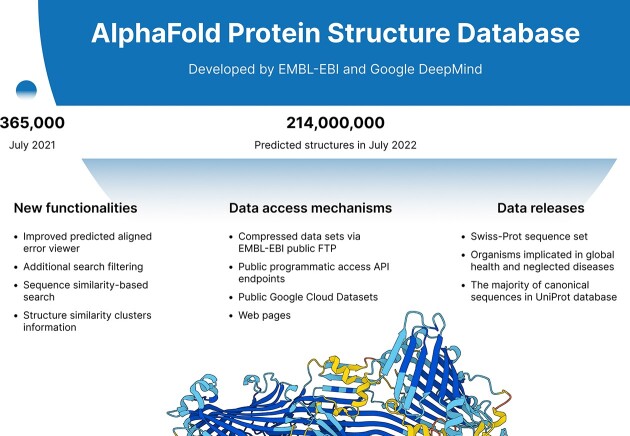
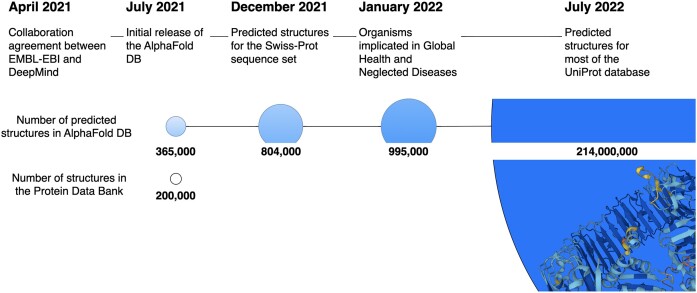
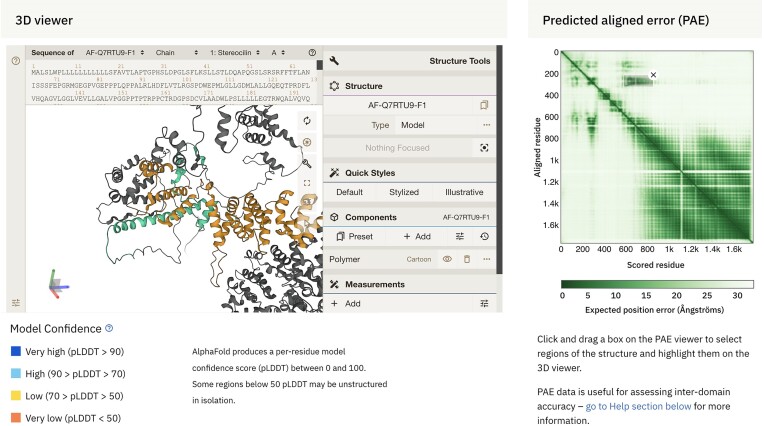
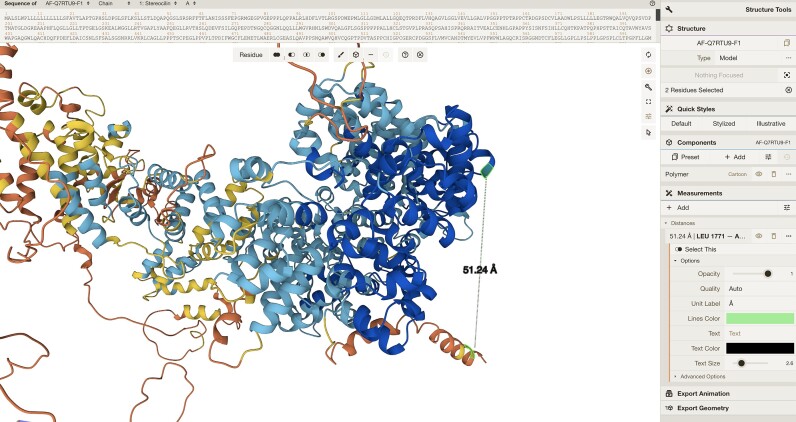
The AlphaFold Database Protein Structure Database (AlphaFold DB, https://alphafold.ebi.ac.uk) has significantly impacted structural biology by amassing over 214 million predicted protein structures, expanding from the initial 300k structures released in 2021. Enabled by the groundbreaking AlphaFold2 artificial intelligence (AI) system, the predictions archived in AlphaFold DB have been integrated into primary data resources such as PDB, UniProt, Ensembl, InterPro and MobiDB. Our manuscript details subsequent enhancements in data archiving, covering successive releases encompassing model organisms, global health proteomes, Swiss-Prot integration, and a host of curated protein datasets. We detail the data access mechanisms of AlphaFold DB, from direct file access via FTP to advanced queries using Google Cloud Public Datasets and the programmatic access endpoints of the database. We also discuss the improvements and services added since its initial release, including enhancements to the Predicted Aligned Error viewer, customisation options for the 3D viewer, and improvements in the search engine of AlphaFold DB.
Overview
CoChat Summary
TL;DR
AlphaFold DB has grown from ~300k to over 214 million predicted protein structures as of September 2023, with expanded access, search, and visualization features. This 2024 update describes data archiving, access mechanisms, integration with core resources, and new clustering/BLAST/PAE viewer capabilities.
Key findings
- AlphaFold DB expanded from approximately 300k structures in 2021 to over 214 million predicted protein structures as of September 2023; the initial July 2021 release housed over 360,000 structures for 20 model organism proteomes.
- Predictions are integrated into resources including PDB, UniProt, Ensembl, InterPro and MobiDB, and are accessible via FTP, Google Cloud Public Datasets (~23 TiB), API, and the website; PAE data is unavailable from EMBL-EBI public FTP.
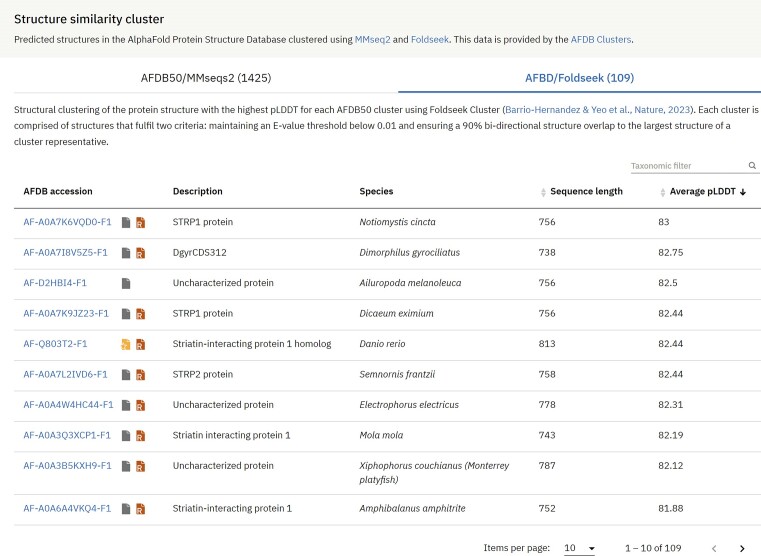
- Structure similarity clustering used MMseqs2 to cluster 214 million UniProtKB sequences into 52 million clusters, then Foldseek secondary clustering yielded 18.8 million clusters, finalizing 2.30 million robust clusters each with at least a pair of structures.
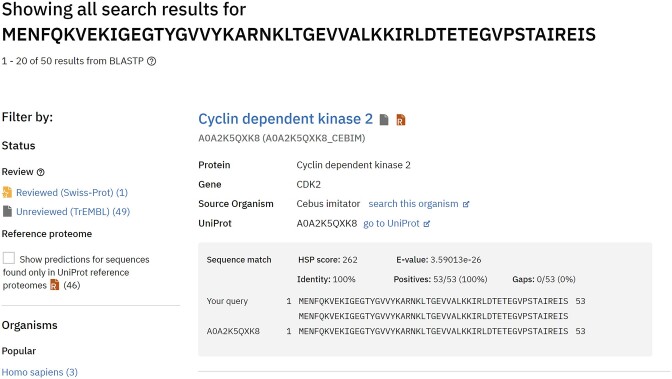
- New features include BLAST sequence similarity search, improved search filters for reviewed/unreviewed and reference proteome status, enhanced PAE viewer–Mol* interactivity, and a November 2022 update fixing a numerical bug that affected ~4% of total structure predictions.
Methods
- Descriptive database update/report with no primary experimental design; data generation is carried out by Google DeepMind, with predictions stored in PDB, mmCIF (modelCIF), and binaryCIF formats plus JSON metadata and confidence metrics pLDDT and PAE.
- Archiving uses successive releases from UniProt reference proteomes (e.g., 2021_02, 2021_04), Swiss-Prot, WHO global health proteomes, and MANE select; as of September 2023, EMBL-EBI FTP hosts TAR files for proteomes of 48 organisms.
- Access and analysis infrastructure includes FTP, Google Cloud Public Datasets, an API keyed on UniProt accessions, Apache-Solr search, BLAST on Google Cloud Platform, and Foldseek/MMseqs2 clustering.
Limitations
- Stated: sequences are not covered if they are less than 16 amino acids; >2700 aa for Swiss-Prot/proteome sequences or >1280 aa for other UniProt sequences; contain non-standard amino acids; are not in the UniProt ‘one sequence per gene’ FASTA file; or are viral proteins; these limitations are under discussion.
- Stated: some sequences may be outdated compared to UniProt due to less frequent AlphaFold DB releases; PAE data is unavailable from EMBL-EBI public FTP; full Google Cloud dataset download requires a Google account and can take roughly 2.5 days at 1 Gbps.
- Evident from the text: all archived structures are predicted models rather than experimental structures, and users must interpret pLDDT/PAE cautiously (e.g., pLDDT <50 likely disordered, 50–70 lower confidence); the database also currently lacks isoform and multimeric predicted structures, which are listed as future work.
Model-written summary. Check it against the paper before relying on it.
Integrity signals
Registry
Cites
Statistics
Figures

Verification
Claims the paper makes
11 Valid · 1 Not valid · 0 Not checked · 28 Own results and interpretations
Every source the paper cites for this claim was checked and supports it.
In the paper
“The new generation of predicted protein structure models has demonstrated remarkable accuracy, which could mitigate the continually widening gap between known protein sequences and experimentally determined protein structures (7).”
§ AlphaFold Protein Structure Database in 2024: providing structure coverage for over 214 million protein sequences > Introduction
What the sources say
- Supportedcites [7] Varadi M., Bordin N., Orengo C., Velankar S. The opportunities and challenges posed by the new generation of deep learning-based protein structure predictors. Curr. Opin. Struct. Biol. 2023; 79: 102543. 36807079 PMC7618866 source
The Introduction says prediction models made a major advance in accuracy and can match or sometimes surpass experimentally determined structures. It also describes a growing gap between known protein sequences and determined structures; the section on new challenges says predicted structures have greatly increased coverage of protein sequence space. These passages support both the accuracy claim and the proposed potential to narrow that gap (page numbers unavailable). (LLM, conf=0.93)
boosted- Asserted: passes — The authors put it forward as true.
- Checkable: passes — It can be checked against evidence.
- Load-bearing: passes — The paper’s conclusions depend on it.
- Based: passes — The paper gives a reason why it holds.
- Supported
Every source the paper cites for this claim was checked and supports it.
In the paper
“In response to frequent requests from the user community since the AlphaFold DB launch, we have made significant strides to implement a sequence-based similarity search feature. We have incorporated the Basic Local Alignment Search Tool (BLAST) (21) into our Google Cloud Platform infrastructure to achieve this.”
§ AlphaFold Protein Structure Database in 2024: providing structure coverage for over 214 million protein sequences > Implementation > Data access
What the sources say
- Supportedcites [21] Camacho C., Coulouris G., Avagyan V., Ma N., Papadopoulos J., Bealer K., Madden T.L. BLAST+: architecture and applications. BMC Bioinf. 2009; 10: 421. PMC2803857 20003500 source
The Background identifies BLAST as a sequence similarity search program that matches a query sequence against a database. In the citing sentence, the citation identifies the tool incorporated; the AlphaFold DB implementation is the citing authors’ own report, not a claim attributed to this source. (LLM, conf=0.91)
plainstates a cause- Asserted: passes — The authors put it forward as true.
- Checkable: passes — It can be checked against evidence.
- Load-bearing: unclear — It is unclear whether the paper’s conclusions depend on it.
- Based: passes — The paper gives a reason why it holds.
- Supported
Every source the paper cites for this claim was checked and supports it.
In the paper
“The impact of the predicted structures is further enhanced by their seamless integration into several core data resources, including PDBe-KB (17), UniProt (6), Ensembl (16), InterPro (15), Genecards (24) and MobiDB (25), among others.”
§ AlphaFold Protein Structure Database in 2024: providing structure coverage for over 214 million protein sequences > Conclusions and outlook
What the sources say
- Supportedcites [17] consortium P.D.B.-K.B. PDBe-KB: collaboratively defining the biological context of structural data. Nucleic Acids Res. 2022; 50: D534– D542. 34755867 PMC8728252 source
Citation (17) is attached specifically to PDBe-KB, rather than to the other resources in the sentence. The Introduction identifies PDBe-KB as a resource that integrates structural and functional annotations, supporting its identification here. (LLM, conf=0.90)
- Supportedcites [6] U.P. Consortium UniProt: the Universal Protein Knowledgebase in 2023. Nucleic Acids Res. 2023; 51: D523– D531. 36408920 PMC9825514 source
The citation is attached to UniProt in a list of resources, and the cited paper is a description of UniProt. Its Data integration and Interactive visualisations in entry pages sections state that UniProt incorporates AlphaFold-predicted structures into protein entries alongside other data; the supplied passages do not give page numbers. (LLM, conf=0.93)
- Supportedcites [16] Cunningham F., Allen J.E., Allen J., Alvarez-Jarreta J., Amode M.R., Armean I.M., Austine-Orimoloye O., Azov A.G., Barnes I., Bennett R. et al. Ensembl 2022. Nucleic Acids Res. 2022; 50: D988– D995. 34791404 PMC8728283 source
The citation identifies Ensembl as one of the resources in the list. In “Developing a new website” (page not provided), the paper says Ensembl’s Entity Viewer provides access to protein information, including 3D structures from PDBe. (LLM, conf=0.86)
plainstates a cause- Asserted: passes — The authors put it forward as true.
- Checkable: passes — It can be checked against evidence.
- Load-bearing: unclear — It is unclear whether the paper’s conclusions depend on it.
- Based: passes — The paper gives a reason why it holds.
- Supported
Every source the paper cites for this claim was checked and supports it.
In the paper
“Tackling this challenge, Steinegger et al. recently unveiled the Foldseek Cluster, a state-of-the-art structural-alignment-based clustering algorithm designed for vast datasets (22). They applied this novel method to the AlphaFold DB archive, making the derived structure similarity clusters available to the research community.”
§ AlphaFold Protein Structure Database in 2024: providing structure coverage for over 214 million protein sequences > Implementation > Data access
What the sources say
- Supportedcites [22] Barrio-Hernandez I., Yeo J., Jänes J., Mirdita M., Gilchrist C.L.M., Wein T., Varadi M., Velankar S., Beltrao P., Steinegger M. Clustering-predicted structures at the scale of the known protein universe. Nature. 2023; 622: 637– 645. 37704730 PMC10584675 source
The Abstract says the authors used Foldseek cluster to cluster the AlphaFold database. The Methods section (“Web server”) says they developed a server for users to explore the clusters, their members and related clusters, supporting the claim that the results were made available to researchers. (LLM, conf=0.93)
plainstates a cause- Asserted: passes — The authors put it forward as true.
- Checkable: passes — It can be checked against evidence.
- Load-bearing: passes — The paper’s conclusions depend on it.
- Based: passes — The paper gives a reason why it holds.
- Supported
- Probably not a substantial claim. 30
- It may state two separate claims as one. 15
- The quote only partly states this claim. 1
Claims other papers make about this one
Each is checked against this paper’s own text: does it say what the citing paper says it does?
The cited source says what the claim attributes to it.
In the citing paper
“houses over 200 million pre-run AF2 predictions”
From The power and pitfalls of AlphaFold2 for structure prediction beyond rigid globular proteins (2024) · cites this paper as [7]
Citations
Cites
Highly accurate protein structure prediction with AlphaFold
Jumper, J., Evans, R., Pritzel, A., Green, T., Figurnov, M., Ronneberger, O., Tunyasuvunakool, K., Bates, R., Žídek, A., Potapenko, A., et al. (2021) · Nature · doi:10.1038/s41586-021-03819-2 · Cited by 43,764
Self-citationBLAST+: architecture and applications
Camacho, C., Coulouris, G., Avagyan, V., Ma, N., Papadopoulos, J., Bealer, K., & Madden, T. L. (2009) · BMC Bioinformatics · doi:10.1186/1471-2105-10-421 · Cited by 22,074
UniProt: the Universal Protein Knowledgebase in 2023
The UniProt Consortium, Bateman, A., Martin, M.-J., Orchard, S., Magrane, M., Ahmad, S., Alpi, E., Bowler-Barnett, E. H., Britto, R., Bye-A-Jee, H., et al. (2023) · Nucleic Acids Research · doi:10.1093/nar/gkac1052 · Cited by 7,210
Evolutionary-scale prediction of atomic level protein structure with a language model
Lin, Z., Akin, H., Rao, R., Hie, B., Zhu, Z., Lu, W., Smetanin, N., Verkuil, R., Kabeli, O., Shmueli, Y., et al. (2022) · doi:10.1101/2022.07.20.500902 · Cited by 5,990 · cited 1×
“In the wake of the latest breakthroughs in prediction software, new databases such as the AlphaFold Protein Structure Database and the ESM Atlas ( 14 ) have emerged.”
MethodThe GeneCards suite: from gene data mining to disease genome sequence analyses
Stelzer, G., Rosen, N., Plaschkes, I., Zimmerman, S., Twik, M., Fishilevich, S., Stein, T. I., Nudel, R., Lieder, I., Mazor, Y., et al. (2016) · Current Protocols in Bioinformatics · doi:10.1002/cpbi.5 · Cited by 5,550 · cited 1×
“The impact of the predicted structures is further enhanced by their seamless integration into several core data resources, including PDBe-KB ( 17 ), UniProt ( 6 ), Ensembl ( 16 ), InterPro ( 15 ), Genecards ( 24 ) and MobiDB ( 25 ), among others.”
BackgroundAccurate prediction of protein structures and interactions using a 3-track network
Baek, M., DiMaio, F., Anishchenko, I., Dauparas, J., Ovchinnikov, S., Lee, G. R., Wang, J., Cong, Q., Kinch, L. N., Schaeffer, R. D., et al. (2021) · doi:10.1101/2021.06.14.448402 · Cited by 5,549
Paysan-Lafosse, T., Blum, M., Chuguransky, S., Grego, T., Pinto, B. L., Salazar, G. A., Bileschi, M. L., Bork, P., Bridge, A., Colwell, L., et al. (2023) · Nucleic Acids Research · doi:10.1093/nar/gkac993 · Cited by 2,399
Cunningham, F., Allen, J. E., Allen, J., Alvarez-Jarreta, J., Amode, M. R., Armean, I. M., Austine-Orimoloye, O., Azov, A. G., Barnes, I., Bennett, R., et al. (2022) · Nucleic Acids Research · doi:10.1093/nar/gkab1049 · Cited by 1,923
Mol* Viewer: modern web app for 3D visualization and analysis of large biomolecular structures
Sehnal, D., Bittrich, S., Deshpande, M., Svobodová, R., Berka, K., Bazgier, V., Velankar, S., Burley, S. K., Koča, J., & Rose, A. S. (2021) · Nucleic Acids Research · doi:10.1093/nar/gkab314 · Cited by 1,154 · cited 1×
“We improved the visualisation of non-consecutive regions and the interactivity between the PAE viewer and the 3D molecular graphics viewer, Mol* ( 23 ) (Figure 5 ).”
MethodSelf-citationMariani, V., Biasini, M., Barbato, A., & Schwede, T. (2013) · Bioinformatics · doi:10.1093/bioinformatics/btt473 · Cited by 1,138 · cited 1×
“AlphaFold yields a per-residue estimate of its confidence, known as pLDDT, ranging from 0 to 100, indicating the tool’s predicted score on the lDDT-C α metric ( 19 ).”
Method
Cited by
Items 901–1,000 of 2,174
Radler, C. N., Wang, T., LeGate, J. F., Crone, L., Deo, P., Wortley, J., Moore, P., Bryant, G., Smitherman, K., & Sathyamoorthy, M. (2025) · International Journal of Molecular Sciences · doi:10.3390/ijms26136535 · Cited by 2
“The WT structure was obtained from AFDB [22,23], and the variant structure was computationally predicted using the AF3 server [21].”
InfluentialTaxonomic quasi‐primes: peptides charting lineage‐specific adaptations and disease‐relevant loci
Bochalis, E., Patsakis, M., Chantzi, N., Mouratidis, I., Chartoumpekis, D. V., & Georgakopoulos‐Soares, I. (2025) · Protein Science · doi:10.1002/pro.70241 · Cited by 3
Veselu, D.-F., Shoemark, D. K., & van der Kamp, M. W. (2025) · doi:10.1101/2025.07.07.663434 · Cited by 2
“Loops modelled from AlphaFold2 structure predictions (AF-P13569-F1-v4) 13, 14 are coloured red.”
From hemocuprein to CSRP: the many faces of Cu/Zn superoxide dismutase
Peterson, R. L., & Culotta, V. (2026) · Metallomics · doi:10.1093/mtomcs/mfag007 · Cited by 3
Ren, J., Zhu, H., Liu, M., Zhang, R., Mao, W., & Xiao, S. (2025) · Scientific Reports · doi:10.1038/s41598-025-17966-3 · Cited by 3
“AlphaFold is an AI system capable of predicting a protein’s three-dimensional structure based on its amino acid sequence 33–35 .”
Wang, S., Liu, Y., Zhang, B., Aduse‐Opoku, J., Buccafusca, R., Ayrton, O., Mastroianni, G., Machado, P., Roberts, M. A. J., Curtis, M. A., et al. (2025) · Journal of Oral Microbiology · doi:10.1080/20002297.2025.2600179 · Cited by 3
“For prediction of ΔG app values for the transmembrane helices of LpxE PAP2 domains, AlphaFold models were downloaded from the AlphaFold protein structure database [55,56] and superposed onto the crystal structure of Aquifex aeolicus LpxE (PDB ID: 6ebu) [57]using PyMol [58].”
The translational impact of bioinformatics on traditional wet lab techniques
Suveena, S., Rekha, A. A., Rani, J. R., Oommen, O. V., & Ramakrishnan, R. (2025) · Advances in pharmacology · doi:10.1016/bs.apha.2025.01.012 · Cited by 5
Prediction of plant phase-separating proteins using positive-unlabeled learning
Fu, R., Tian, Y., Ren, H., Zhao, A., Lou, Y., Mao, S., Yang, J., Jiang, S., Huang, X., & Wang, X. (2026) · Genome biology · doi:10.1186/s13059-026-04075-1 · Cited by 2
“We batch-downloaded the structural information of proteins, both experimentally measured and predicted with Alphafold2 [40], at the AlphaFold Protein Structure Data-base [41].”
Enhancing protein immunogenicity prediction via uncertainty weighted deep ensemble
Qayyum, A. B. A., Rahmati, A. H., Qian, X., & Yoon, B.-J. (2026) · Oxford Open Immunology · doi:10.1093/oxfimm/iqag008 · Cited by 3
“Particularly, it is trained on a non-redundant subset of high confidence protein structures from AlphaFold structure Database (AFDB) [58].”
Shen, Y.-H., Cheng, W., Wang, X., Dai, H., Wang, M., & Liu, L. (2025) · The Protein Journal · doi:10.1007/s10930-025-10254-z · Cited by 2
Albillos‐Arenal, S., Alonso‐del‐Real, J., Adam, A. C., Lairón‐Peris, M., Barrio, E., & Querol, A. (2025) · mSystems · doi:10.1128/msystems.00827-25 · Cited by 4
High-efficiency enzymatic biodegradation of polypropylene-based melt-blown fabric debris
Huang, X. F., Huang, L. P., Wang, Q., He, Q., Zhang, Z., Liu, Q. S., & Jiang, G. (2025) · Chemical Science · doi:10.1039/d5sc03097h · Cited by 3
Lu, H., Sun, D., Zhang, H., Shi, S., Yu, H., Cui, H., Cai, X., Ding, X., Chen, S., Zhang, M., et al. (2025) · Journal of Medicinal Chemistry · doi:10.1021/acs.jmedchem.5c01944 · Cited by 2
Resch, M., Frickel, J. S., Dischinger, K., Choo, R. S. W., Hell, K., & Harner, M. E. (2025) · Journal of Cell Science · doi:10.1242/jcs.263661 · Cited by 2
(2026) · doi:10.1021/acs.biochem.6c00194 · Cited by 3
“All growth experiments were performed in triplicate.”
The mitochondrial dicarboxylate carrier mediates in vivo hepatic gluconeogenesisPreprint
Pape, D. J., Falls-Hubert, K. C., Merrill, R. A., Ahmed, A., Qian, Q., McGivney, G. R., Sobieralski, P., Rauckhorst, A. J., Yang, L., & Taylor, E. B. (2024) · bioRxiv (Cold Spring Harbor Laboratory) · doi:10.1101/2024.09.12.612761 · Cited by 2
“To selectively test the role of the DiC in hepatic GNG, we generated liver-specific DiC knockout (DiC Additionally, the DiC AlphaFold model predicts that R261 resides in the central pore (Fig 3A), consistent with a role in transport function 28,29 .”
MethodRichardson, T. I., Klein, R. C., Huang, K., Zhang, J., Mesecar, A. D., Dage, J. L., Clayton, B., Lamb, B. T., & Palkowitz, A. D. (2026) · Alzheimer s & Dementia · doi:10.1002/alz.70964 · Cited by 3
Ortelli, M., Prakapaitė, R., Müller, A., Miele, S., Fino, C., Klimke, S., Tschudin‐Sutter, S., Jenal, U., Flores, C., Bikard, D., et al. (2025) · bioRxiv (Cold Spring Harbor Laboratory) · doi:10.1101/2025.10.31.685768 · Cited by 2
“Because the crystal structure of the E. coli ALS II catalytic subunits has not been resolved yet, we used the AlphaFold-predicted model (AF-P0DP90-F1-v4) 47,48 .”
ECOD: Classification of domains in AFDB Swiss-Prot structure predictions
Schaeffer, R. D., Zhang, J., Cong, Q., & Grishin, N. V. (2026) · PLOS Computational Biology · doi:10.1371/journal.pcbi.1013431 · Cited by 2
“…of AlphaFold2 at CASP14 [15] and the subsequent development of software such as RoseTTAFold [16], ESMFold [17], and AlphaFold3 [18] has led to the widespread prediction of large protein sets resulting in resources such as the AlphaFold Protein Structure Database (AFDB) [19,20] and ESM-Atlas [17].”
Multimodal diffusion for joint design of protein sequence and structure
Zhu, S., Gulati, S., Liu, Y., Kotnis, S., Sun, Q. H., & Shen, Y. (2025) · Protein Science · doi:10.1002/pro.70340 · Cited by 5
“Due to computational resource limitations, our models were trained on CATH proteins with no more than 200 residues or AFDB proteins with no more than residues.”
InfluentialCategorizing prediction modes within low-pLDDT regions of AlphaFold2 structuresPreprint
Williams, C. J., Chen, V. B., Richardson, D. C., & Richardson, J. S. (2025) · bioRxiv (Cold Spring Harbor Laboratory) · doi:10.1101/2025.06.06.658382 · Cited by 2
Insights into the protein domains of C-VI TRIM subfamily in viral infection
Patrick, B., Lo, Y.-C., & Su, W. (2025) · Frontiers in Cellular and Infection Microbiology · doi:10.3389/fcimb.2025.1573422 · Cited by 4
Padhy, I., Dwibedy, S. K., & Mohapatra, S. S. (2025) · Microbial Pathogenesis · doi:10.1016/j.micpath.2025.107473 · Cited by 3
Yu, T., He, C., Zhang, H., Zhu, Y., Wang, A., Zeng, X., Huang, Y., Zhong, J., Wu, X., Shu, Y., et al. (2025) · Genes & Diseases · doi:10.1016/j.gendis.2025.101716 · Cited by 5
Mangu, J. C. K., Rogne, P., Mattsson, J., Hultgren, L., Gahlot, D. K., Lamy, A., Berntsson, R. P. ‐., Johansson, L. B. ‐., Francis, M. S., & Wolf‐Watz, M. (2025) · Protein Science · doi:10.1002/pro.70400 · Cited by 3
The promise of AlphaFold for gene structure annotation
Davison, H. R., Böhme, U., Mesdaghi, S., Wilkinson, P. A., Roos, D. S., Jones, A. R., & Rigden, D. J. (2026) · Nucleic Acids Research · doi:10.1093/nar/gkag369 · Cited by 2
“Similarly, Foldseek was only informative for folds currently observed in the PDB. Future work could explore extending the search to TED (The Ency-clopedia of Domains; [ 47 ]), which captures and classifies re-curring domains in the AlphaFold Protein Structure Database [ 48 ].”
Pradeep, B. K., Chen, S., Dima, R., Hassan, M., Joachimiak, A., Kihara, D., Kloczkowski, A., Law, J., Liwo, A., Meller, J., et al. (2026) · Journal of Molecular Biology · doi:10.1016/j.jmb.2026.169949 · Cited by 4
Giustini, C., Bo, D. D., Storti, M., Vlierberghe, M. V., Baurain, D., Cardol, P., Zhang, Y., Fernie, A. R., Fitzpatrick, D., Aro, E., et al. (2025) · Physiologia Plantarum · doi:10.1111/ppl.70640 · Cited by 7
Within-ejaculate sperm selection in humans acts against molecular signatures of age-related diseasePreprint
Marcu, D., Cohen‐Krais, J., Godden, A. M., Alavioon, G., Bergström, A., Almstrup, K., Maklakov, A. A., Saalbach, G., & Immler, S. (2024) · bioRxiv (Cold Spring Harbor Laboratory) · doi:10.1101/2024.10.08.617222 · Cited by 3
Vinci, M., Treccarichi, S., Failla, P., Musumeci, A., Gloria, A., Virgillito, M., Federico, C., Saccone, S., & Calì, F. (2025) · Gene · doi:10.1016/j.gene.2025.149876 · Cited by 7
Mesoscale regulation of MTOCs by the E3 ligase TRIM37Preprint
Yeow, Z. Y., Sarju, S., van Breugel, M., et al. (2024) · bioRxiv (Cold Spring Harbor Laboratory) · doi:10.1101/2024.10.09.617407 · Cited by 2
Kim, M., Kang, R., Jeon, T. J., et al. (2024) · STAR Protocols · doi:10.1016/j.xpro.2024.102999 · Cited by 2
CAZyme3D: a database of 3D structures for carbohydrate-active enzymes
(2024) · doi:10.1101/2024.12.27.630555 · Cited by 8
Zhang, Z., Zhang, Q., Xiao, J., Ding, S., & Li, Z. (2025) · The Journal of Supercomputing · doi:10.1007/s11227-025-07076-2 · Cited by 4
“The protein structure data used in this paper are provided by the AlphaFold database, which performs structure prediction from protein sequences and stores the results in an open database [30].”
Astragalosides Promote MH7A Cell Apoptosis by Suppressing WTAP-mediated m6A Methylation of TRAIL-DR4
Cui, X., Zhang, L., Chen, H., & Jiang, H. (2025) · Combinatorial Chemistry & High Throughput Screening · doi:10.2174/0113862073363967250308084008 · Cited by 3
Beyond the leaderboard: leveraging predictive modeling for protein–ligand insights and discovery
Kalifa, D., Radinsky, K., & Horvitz, E. (2025) · Bioinformatics · doi:10.1093/bioinformatics/btaf425 · Cited by 2
“Following the procedure used in SaProt (Su et al. 2024), we retrieve AlphaFold2 structures a Statistically significant results with P < .05 using a two-tailed paired t -test (with Holm–Bonferroni correction) are marked with an asterisk ( � ).”
Leipart, V., Carmona, O. G., Orengo, C. A., Fraternali, F., & Amdam, G. V. (2025) · iScience · doi:10.1016/j.isci.2025.113241 · Cited by 3
“AFDB quickly became a central data resource with over 200 million structures, 16 including close to 2,000 Vg structures spanning diverse species and groups, including chicken, fish, geckos, nematodes, and insects.”
Kudalkar, G. P., Leidner, F., Kumar, N., Hass, J. L., Madzelan, P., Powell, D. R., Day, V. W., Maguerès, P. L., Ferrara, J. D., Daniels, L. M., et al. (2025) · Angewandte Chemie International Edition · doi:10.1002/anie.202510889 · Cited by 2
Enrichment of Cysteine S-palmitoylated Peptides Using Sodium Deoxycholate Acid Precipitation
Jensen, P. T., Palmisano, G., Rhodes, C. J., & Larsen, M. R. (2025) · Molecular & Cellular Proteomics · doi:10.1016/j.mcpro.2025.101218 · Cited by 4
Bittrich, S., Rose, A., Sehnal, D., Duarte, J. M., Rose, Y., Segura, J., Piehl, D. W., Vallat, B. K., Shao, C., Bhikadiya, C., et al. (2025) · Protein Science · doi:10.1002/pro.70093 · Cited by 4
Origin and Evolution of Key Enzymes in the Anammox Pathway Revisited
Hägglund, E., Jiménez-González, A., Hagström, E., Björkholm, P., Guy, L., & Andersson, S. G. E. (2025) · Genome Biology and Evolution · doi:10.1093/gbe/evaf244 · Cited by 3
Kinetochore clustering is mediated by Mps1 phosphorylation of conserved MELT motifs in Stu1Preprint
Mallett, D. R., Jiang, M., Minnuto, G. M., et al. (2026) · bioRxiv (Cold Spring Harbor Laboratory) · doi:10.64898/2026.01.23.701336 · Cited by 2
“For structure prediction only involving Stu1 (and not Slk19), the Stu1 structure in the AlphaFold 2 database was used 32 .”
Visitsatthawong, S., Anuwan, P., Lawan, N., Chaiyen, P., & Wongnate, T. (2024) · RSC Chemical Biology · doi:10.1039/d4cb00213j · Cited by 2
Lattice Ultrasensitivity Amplifies Signals in E. coli without Finely-Tuned Allosteric Interactions
Sherry, D. M., Graf, I. R., Bryant, S. J., Emonet, T., & Machta, B. B. (2026) · PRX Life · doi:10.1103/7dgz-l5fd · Cited by 2
“Because of significant variability between individual cells, a more precise fitting procedure for the (de)methylation rates would provide meaningfully better information.”
Ryu, S. H., Lee, J., Lee, U., Kim, K., Jun, G.-E., Oh, J., Lee, S., & Chang, S. (2025) · Autophagy · doi:10.1080/15548627.2025.2559689 · Cited by 2
“Molecular graphics and analyses were performed with UCSF ChimeraX [91,92].”
Substrate promiscuity catalyzed by an O -glycosyltransferase MrOGT2 from Metarhizium robertsii
Ma, Y., Ren, J.-X., Yin, W., et al. (2025) · Mycology: An International Journal on Fungal Biology · doi:10.1080/21501203.2025.2478073 · Cited by 2
“The AlphaFold2-generated model has been considered as the sufficient tactics to explore the catalytic mechanism of enzymes (Varadi et al. 2024).”
PCMD-1 stabilizes the PCM scaffold and facilitates centriole separation
Schreiner, A., Heim, A., Pletschacher, L., Alznauer, L.-M., Schwenkert, S., Wolff, F., Zanin, E., & Mikeladze‐Dvali, T. (2025) · The Journal of Cell Biology · doi:10.1083/jcb.202411107 · Cited by 4
AlphaFold-based peptide structure prediction: Opportunities, limitations, and future directions
Zhang, B., Zhu, J., Chen, H.-F., & Liu, L. (2026) · Biotechnology Advances · doi:10.1016/j.biotechadv.2026.108977 · Cited by 5
An Unfolding Story: AlphaFold's View on Protein Flexibility
Jeschke, G. (2026) · Helvetica Chimica Acta · doi:10.1002/hlca.202500235 · Cited by 2
Li, Y., Peng, H.-Q., Wen, M., & Yang, L.-Q. (2024) · Molecules · doi:10.3390/molecules29153614 · Cited by 2
“Three-dimensional structures of Pfu, Tpe, and Tca predicted by the AlphaFold2 were accessed from the AlphaFold Protein Structure Database [19].”
MethodEmbleporicin: A Novel Class I Lanthipeptide from the Actinobacteria Embleya sp. NF3
Roblero-Mejía, D. O., García-Ausencio, C., Rodrı́guez-Sanoja, R., Chavez, F. F. G., & Sánchez, S. (2024) · Antibiotics · doi:10.3390/antibiotics13121179 · Cited by 2
Zhang, Y., Yang, Y., Lu, C.-C., Jiang, W., Cheng, F., Fang, B., & Guan, Q. (2025) · International Conference for High Performance Computing, Networking, Storage and Analysis (SC) · doi:10.1145/3712285.3759799 · Cited by 8
“The AlphaFold Protein Structure Database [16, 17], created by DeepMind and EMBL-EBI, marked a major breakthrough by providing high-confidence structural predictions for over 200 million protein sequences.”
Cui, E., Medwid, S. J., Schwarz, U. I., & Kim, R. B. (2025) · Cancer Chemotherapy and Pharmacology · doi:10.1007/s00280-025-04839-9 · Cited by 3
NAC promotes co-translational protein folding at the ribosomal tunnel exit
Santos, J., Günnigmann, M., Gora, R. J., Iljina, M., Predin, M., Kotan, I., De, P., Choudhary, D., Jang, J., Tippmann, F., et al. (2026) · Molecular Cell · doi:10.1016/j.molcel.2026.02.022 · Cited by 8
Willdigg, J. R., Patel, Y. S., Arquilevich, B. E., et al. (2024) · Journal of Bacteriology · doi:10.1128/jb.00015-24 · Cited by 2
The genetic repertoire of deep-sea microbiome: From sequence to structure and function
Guo, Y., Wang, Z., Li, D., Wang, L., Lan, H., Guo, F., Zhao, Z., Liu, Z., Meng, L., Shen, X., et al. (2026) · Cell Host & Microbe · doi:10.1016/j.chom.2026.05.009 · Cited by 5
Acetylation of proximal cysteine-lysine pairs by alcohol metabolism
McGinnis, C. D., Harris, P. S., Graham, B. I. M., Marentette, J., Michel, C. R., Saba, L. M., Reisdorph, R. M., Roede, J. R., & Fritz, K. S. (2024) · Redox Biology · doi:10.1016/j.redox.2024.103462 · Cited by 3
Elucidating the Structure and Activation Mechanisms of GPCRs Using Modern Computational and AI Tools
Uba, A. İ. (2025) · Cell Biochemistry and Biophysics · doi:10.1007/s12013-025-01977-y · Cited by 3
“…receptor subfamilies is enhanced by sup-plementing AlphaFold2 predictions with well-curated databases like GPCRdb, which offers extensive information on GPCR sequences, structures, ligand data, and mutagenesis sequence, making it the most comprehensive protein structure resource to date [120 ].”
Ce, C., Ma, B., Zhang, J., Yang, L., Liu, Z., Li, H., Song, J., Zhang, K. C., Li, L., Fu, J., et al. (2026) · MedComm · doi:10.1002/mco2.70752 · Cited by 4
“The heterodimeric complex structure of PHB1 and PHB2 was modeled using AlphaFold3 [ 57, 58 ].”
Analysis of NUDIX enzymes across fungi reveals previously unrecognized diversity
Pasterny, Z., Barua, D., Mancera, E., & Muszewska, A. (2025) · BMC Genomics · doi:10.1186/s12864-025-11778-5 · Cited by 2
“Each of the subfamilies was represented by two selected sequences and their AlphaFold2 3D structure models [28, 29].”
Blackburn, M. R., Nguyen, T. T., Patton, S. E., Bartosiak, J. M., & Sussman, M. R. (2024) · FEBS Letters · doi:10.1002/1873-3468.15067 · Cited by 3
(2024) · doi:10.1101/2024.08.02.606455 · Cited by 3
FlatProt: 2D visualization eases protein structure comparison
Olenyi, T., Carl, C., Senoner, T., Koludarov, I., & Rost, B. (2025) · BMC Bioinformatics · doi:10.1186/s12859-025-06233-x · Cited by 2
“For example, A7X3S2 [18–20, 29] (Fig.”
InfluentialBagherian, M., Harris, G., Sathishkumar, P., & Lloyd, J. P. B. (2025) · Genes · doi:10.3390/genes16111297 · Cited by 2
“Computational prediction of protein structure is becoming routine and automated [40], raising the concern that incorrectly annotated ORFs may pollute the databases with the structural predictions of incorrect proteins that are likely to never be translated and have no biological impact on the…”
Liang, B.-C., Zhang, T., Li, G.-T., Yang, H.-Y., Wang, Z.-J., Li, K.-C., Liu, S., Yu, H.-H., & Xing, R. (2025) · Journal of Agricultural and Food Chemistry · doi:10.1021/acs.jafc.5c08532 · Cited by 2
EZHIP boosts neuronal-like synaptic gene programs and depresses polyamine metabolism
Hasheminasabgorji, E., Chen, H., Gatesman, T. A., Younes, S. T., Nobles, G., Jaryani, F., Mao, H., Yu, K., Deneen, B., Yong, V. W., et al. (2025) · Acta Neuropathologica Communications · doi:10.1186/s40478-025-02141-6 · Cited by 2
Mapping Cryptic Phosphorylation Sites in the Human ProteomePreprint
Gasparotto, D., Zanon, A., Marchiori, E., et al. (2025) · Qeios · doi:10.32388/yh086q · Cited by 2
Wang, Y., Boadu, F., & Cheng, J. J. (2025) · bioRxiv (Cold Spring Harbor Laboratory) · doi:10.1101/2025.04.12.648527 · Cited by 2
“After training on experimental structures from the PDB database [29, 30], it can predict binding sites from either experimental structures or AlphaFold-predicted structures (e.g., ones in AlphaFold Protein Structure Database [20, 31]).”
InfluentialTesti, C., Piacentini, R., Perrone, A., Bartoli, C., Leso, D., Pavia, D., Pistolesi, E., Scipione, F., Cotronea, I., Falcone, M. A., et al. (2025) · Frontiers in Chemical Biology · doi:10.3389/fchbi.2024.1517163 · Cited by 2
The synaptonemal complex aligns meiotic chromosomes by wetting
Gordon, S. G., Rodriguez, A. A., Gu, Y., Corbett, K. D., Lee, C. F., & Rog, O. (2024) · doi:10.1101/2024.08.07.607092 · Cited by 9
Green, R., Richards, H., Ozbilek, D., Tyrrell, F., Barton, V., Lovell, S. C., Gifford, D. R., Lagator, M., McBain, A. J., Krašovec, R., et al. (2025) · bioRxiv (Cold Spring Harbor Laboratory) · doi:10.1101/2025.01.28.635215 · Cited by 2
Holderer, O., Landman, J., Kohlbrecher, J., et al. (2025) · Advanced Materials Interfaces · doi:10.1002/admi.202500368 · Cited by 2
Yang, W. J., Jin, S., Jiang, J., Ji, W., & He, Q. (2025) · Regenerative medicine and dentistry. · doi:10.53941/rmd.2025.100002 · Cited by 2
Ricci, M. F., Lourenço, E. M. G., Pereira, R. D. D., Araújo, R. R. S., Oliveira, F. B. R., da Silva, E. B., de Oliveira, G. S., Teixeira, M. M., Rocha, N. N., Chambergo, F. S., et al. (2024) · ACS Infectious Diseases · doi:10.1021/acsinfecdis.4c00623 · Cited by 2
Utilizing protein structure graph embeddings to predict the pathogenicity of missense variants
Danner, M., Begemann, M., Elbracht, M., Kurth, I., & Krause, J. (2025) · NAR Genomics and Bioinformatics · doi:10.1093/nargab/lqaf097 · Cited by 2
“The AlphaFold database contains over 214 million predicted protein structures as of 2024 [ 26 ].”
Chan, H., Krichel, B., Bandura, L. J., Chapman, E. A., Rogers, H. T., Fischer, M. S., Roberts, D. S., Gao, Z., Wang, M., Wu, J., et al. (2025) · Journal of the American Chemical Society · doi:10.1021/jacs.5c06950 · Cited by 7
“The mass spectrometry proteomics data generated in this study have been deposited to the ProteomeXchange Consortium via the PRIDE partner repository with the data set identifier PXD062177 and MassIVE repository with identifier MSV000097430.”
Deciphering DEL pocket patterns through contrastive learning
Zhang, W., Wang, Y., Zhan, R., Qian, R., Hu, Q., & Huang, J. (2026) · Nature Communications · doi:10.1038/s41467-026-69663-y · Cited by 2
Zhai, N., Zhou, C., Cheng, L., Xu, X., Li, Z., & Cheng, J. (2025) · Pest Management Science · doi:10.1002/ps.70191 · Cited by 2
“31-33 The SDH structures of target species were predicted through the ColabFold approach, with PDB100 as template mode, mmseqs2_uniref_env as MSA mode, unpaired_paired as pair mode, and AlphaFold2_multimer_v3 as model type.”
Khan, S., Khan, I., Iqbal, A., Ali, S. S., Ahmad, N., Ullah, S., Ali, L., & Ahmad, S. (2025) · Medicine in Omics · doi:10.1016/j.meomic.2025.100050 · Cited by 3
Duque-Ortiz, A., Rivera‐Chávez, J., Pastor-Palacios, G., et al. (2024) · Phytochemistry · doi:10.1016/j.phytochem.2024.114203 · Cited by 2
Singh, A., Pandit, S., Singh, T. P., et al. (2025) · Computers in Biology and Medicine · doi:10.1016/j.compbiomed.2025.111174 · Cited by 2
Dolot, R., Sierant, M., Mikołajczyk, A., et al. (2025) · Bioorganic Chemistry · doi:10.1016/j.bioorg.2025.109115 · Cited by 2
Mereshchuk, A., Chew, J. S. K., & Dobson, M. J. (2026) · G3 Genes Genomes Genetics · doi:10.1093/g3journal/jkag012 · Cited by 2
“Partitioning of the 2-micron family plasmid pSB3 | 5 but structures of some have been predicted by AlphaFold protein modeling (Jumper et al. 2021; Varadi et al. 2024; Fleming et al. 2025) (Fig.”
Jeong, K. H., Son, S. B., Ko, J. H., Lee, M., & Lee, J. Y. (2024) · Biochemical and Biophysical Research Communications · doi:10.1016/j.bbrc.2024.150601 · Cited by 2
Haq, I., Ngo, J. C., Roy, N., Lee, E., Choudhury, M. A., Soni, R. K., Teich, A. F., Mayeux, R. P., Jager, P. L. D., He, Y., et al. (2026) · Acta Neuropathologica · doi:10.1007/s00401-026-03002-9 · Cited by 3
Benchmarking Zinc-Binding Site Predictors: A Comparative Analysis of Structure-Based Approaches
Ciofalo, C., Laveglia, V., Andreini, C., & Rosato, A. (2025) · Journal of Chemical Information and Modeling · doi:10.1021/acs.jcim.5c00549 · Cited by 3
Bertschmann, J., Liu, G., Djamshidi, M., Heshmatazad, K., Romanov, Y., Dhaliwahl, J., Hojjat, H., Yang, Y., de Koning, A. P. J., Riabowol, K. T., et al. (2026) · Cellular and Molecular Life Sciences · doi:10.1007/s00018-025-06076-y · Cited by 2
“Examination of the 422, 393 and 283 amino acid sequences of human, orangutan and macaque ING1a using the AlphaFold 3 protein structure prediction program [35] indicates that the SAD is largely unstructured (Fig.”
AlphaMissense for Identifying Pathogenic Missense Mutations in DNA Damage Repair Genes in Cancer
Yazaki, S., Pei, X., Powell, S. N., Khan, A. J., Setton, J. S., & Riaz, N. (2025) · JCO Precision Oncology · doi:10.1200/po-24-00908 · Cited by 6
Rare missense variants in MYO7A and OTOP2 genes in a South Korean Meniere’s disease cohort
Pham, M. T., Cruz‐Granados, P., Nadar‐Ponniah, P. T., Chua, H. C., Jang, S. H., Gee, H. Y., Jung, J., Choi, J. Y., Kim, S. H., & Lopez-Escamez, J. A. (2026) · Journal of Medical Genetics · doi:10.1136/jmg-2025-111426 · Cited by 4
“Protein Data Bank (PDB) files for wild-type (WT) proteins were retrieved from the AlphaFold2 Protein Structure Data-base 34 and were assessed for high quality.”
Vo, P., Connors, D. E., Sharkey, B. P., Gravina, S. A., Servant, G., McFarland, C. T., Pitkanen, T. T., Burk, C. D., Cowen, C. P., Grein, E., et al. (2026) · Biochemistry · doi:10.1021/acs.biochem.5c00622 · Cited by 2
Vroegindewey, L., Kim, J., & Joseph, D. J. (2024) · Endocrinology Diabetes and Metabolism Case Reports · doi:10.1530/edm-24-0020 · Cited by 2
Turpo-Peqqueña, A. G., Luna-Prado, S., Valencia-Arce, R. J., Del-Carpio-Carrazco, F. L., & Gómez, B. (2025) · Current Issues in Molecular Biology · doi:10.3390/cimb47010040 · Cited by 3
“Due to the empirical nature of the origin of the structure, it was necessary to eliminate the crystallized water molecules and complete the protein structure with the AlphaFold tool [51–53] using the Chimera X program [54].”
Zhou, H., Zhang, W., Li, X., et al. (2025) · Journal of Dermatologic Science and Cosmetic Technology · doi:10.1016/j.jdsct.2025.100109 · Cited by 2
RetractedHiller, N. D. J., Salles, J. P., Hoelz, L. V. B., Zorzanelli, B. C., Fernandes, T. V. A., Boechat, N., Martins, D. D. L., & Faria, R. X. (2025) · Biomedicine & Pharmacotherapy · doi:10.1016/j.biopha.2025.117945 · Cited by 2
Horizontal gene transfer of a functional cki homolog in the human pathogen Schistosoma mansoniPreprint
Wendt, G. R., & Collins, J. J. (2024) · bioRxiv (Cold Spring Harbor Laboratory) · doi:10.1101/2024.05.27.596073 · Cited by 2
Shershakova, N. N., Baraboshkina, E. N., Khochenkov, D. A., Turetskiy, E. A., Nikonova, A. A., Kamyshnikov, O., Константиновна, Б. Д., Parshina, V. A., Шабанова, Д. Д., Makarova, E., et al. (2025) · International Journal of Molecular Sciences · doi:10.3390/ijms26178517 · Cited by 2
“Structural data of the mouse adenosine A 2A receptor protein (UniProt Q60613) [84] was retrieved from AlphaFold Protein Structure Database (https://www.alphafold.com/ (accessed on 1 March 2025)) [85,86].”
Oncogenic RIT1 mutations confer ferroptosis vulnerability in lung adenocarcinoma
Ma, R., Yang, D., Wang, P., Zhang, Z., Zhang, X., Jialiang, S., Liu, H., Liu, S., Zhang, Y., & Zou, L. (2025) · Biology Direct · doi:10.1186/s13062-025-00613-2 · Cited by 4
Zhu, J.-H., Chen, Z., Cheng, C., Fan, C.-X., Liu, Y., He, M., Chen, Y.-F., Lai, J.-X., Ye, X., Chen, Y., et al. (2025) · Seizure · doi:10.1016/j.seizure.2025.08.017 · Cited by 3
Metadata
- Authors
- Varadi, M., Bertoni, D., Magana, P., Paramval, U., Pidruchna, I., Radhakrishnan, M., Tsenkov, M., Nair, S., Mirdita, M., Yeo, J., Kovalevskiy, O., Tunyasuvunakool, K., Laydon, A., Žídek, A., Tomlinson, H., Hariharan, D., Abrahamson, J., Green, T., Jumper, J., Birney, E., Steinegger, M., Hassabis, D., & Velankar, S.
- Affiliations
- European Molecular Biology Laboratory, European Bioinformatics Institute , Hinxton, UK
- European Bioinformatics Institute (GB)
- Seoul National University (KR)
- Google DeepMind (United Kingdom) (GB)
- Corresponding author
- Hassabis, Demis
- Velankar, Sameer
- ORCID
- Venue
- Nucleic Acids Research
- Publisher
- Oxford University Press (OUP)
- Published
- 2023-11-02
- Volume
- 52
- Issue
- D1
- Pages
- D368-D375
- ISSN
- 0305-1048 (ISSN-L)
- 1362-4962
- PMC
- PMC10767828
- OpenAlex
- W4388464011
- Cited by
- 2,052
- References
- 29
- Citations by year
- 2026: 724 · 2025: 1015 · 2024: 307 · 2023: 5
- FWCI
- 181.98
- Type
- journal article
- Language
- en
- Open access
- gold
- doi.org
- Licence
- Locations
- Nucleic Acids Research (publishedVersion, cc-by)
- PubMed Central (publishedVersion, cc-by)
- PubMed (publishedVersion)
- Seoul National University Open Repository (Seoul National University) (submittedVersion)
- Funders
- Google DeepMind
- National Research Foundation of Korea (2019R1A6A1A10073437, 2020M3A9G7103933, 2021R1C1C102065, 2021M3A9I4021220, RS-2023-00250470)
- Samsung DS Research Fund
- Seoul National University
- Topics
- Life Sciences › Biochemistry, Genetics and Molecular Biology › Molecular Biology › Protein Structure and Dynamics
- Life Sciences › Biochemistry, Genetics and Molecular Biology › Structural Biology › Enzyme Structure and Function
- Life Sciences › Biochemistry, Genetics and Molecular Biology › Molecular Biology › Machine Learning in Bioinformatics
- Keywords
- predicted protein structures, AlphaFold2, protein structure prediction, protein sequence coverage, data archiving, database access, search engines
- MeSH terms
- Amino Acid Sequence, Artificial Intelligence, Proteins, Protein Structure, Secondary, Proteome, Databases, Protein, Search Engine
About these checks
Registry, retraction, Cites and statistics results are computed, not judged, with one exception: a printed reference that no index lists is read once by a model before it counts as a citation error. Claims are extracted by a model and kept only when their quote appears verbatim in the text; each cited source is then checked, with a model’s help, for whether it says what the claim relies on. Those verdicts can be wrong — read the claim’s quote and the cited source before relying on one.
The claim verdicts this report counts are experimental: their accuracy is not yet measured.
A language model drew the claims from the paper on 2026-10-10, under version 3 of the claim definition (model deepseek-v4.1-flash, prompt extract-v3).
A second model labelled each claim on 2026-10-10 (model jev-1.13-20260917, definition revision gold-guideline-v0.2).
Cited sources are checked with a language model’s help (gpt-6-sol).
Statistics and arithmetic are recomputed, not judged.
Confidence bands are shown only for fields calibrated on our annotated test set. None is calibrated yet, so no band is shown.
What counts as a claim ›How we measure confidence ›How we check this ›
Are you an author, or do you see a problem with this page? Request a review
Data sources
Bibliographic data: Semantic Scholar, OpenAlex, Crossref.
Contains information from the Semantic Scholar Academic Graph Datasets, made available under the ODC Attribution License (ODC-BY 1.0).
Semantic Scholar’s data is described in: Kinney, R., et al. (2023). The Semantic Scholar Open Data Platform. arXiv:2301.10140.
