

AlphaFold Protein Structure Database in 2024: providing structure coverage for over 214 million protein sequences
Open accessThe DOI matches its Crossref record; 29 of the 29 references it cites were found in a registry or an index; 18 of the 18 sources its claims cite were checked for support.
Abstract
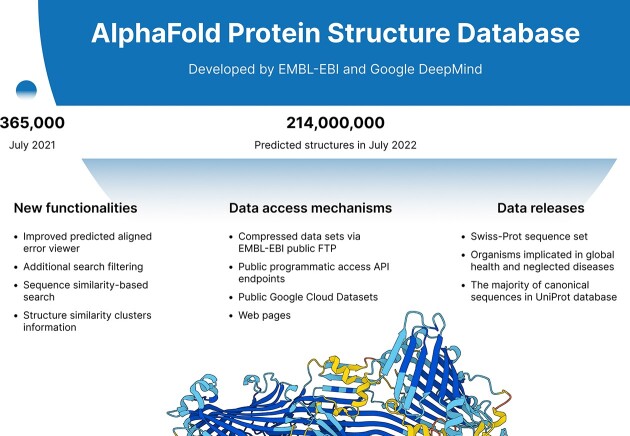
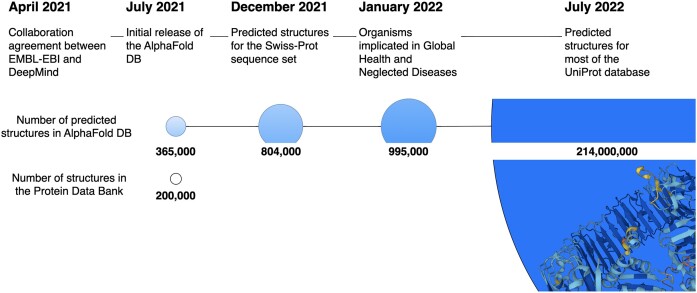
The AlphaFold Database Protein Structure Database (AlphaFold DB, https://alphafold.ebi.ac.uk) has significantly impacted structural biology by amassing over 214 million predicted protein structures, expanding from the initial 300k structures released in 2021. Enabled by the groundbreaking AlphaFold2 artificial intelligence (AI) system, the predictions archived in AlphaFold DB have been integrated into primary data resources such as PDB, UniProt, Ensembl, InterPro and MobiDB. Our manuscript details subsequent enhancements in data archiving, covering successive releases encompassing model organisms, global health proteomes, Swiss-Prot integration, and a host of curated protein datasets. We detail the data access mechanisms of AlphaFold DB, from direct file access via FTP to advanced queries using Google Cloud Public Datasets and the programmatic access endpoints of the database. We also discuss the improvements and services added since its initial release, including enhancements to the Predicted Aligned Error viewer, customisation options for the 3D viewer, and improvements in the search engine of AlphaFold DB.
Overview
CoChat Summary
TL;DR
AlphaFold DB has grown from ~300k to over 214 million predicted protein structures as of September 2023, with expanded access, search, and visualization features. This 2024 update describes data archiving, access mechanisms, integration with core resources, and new clustering/BLAST/PAE viewer capabilities.
Key findings
- AlphaFold DB expanded from approximately 300k structures in 2021 to over 214 million predicted protein structures as of September 2023; the initial July 2021 release housed over 360,000 structures for 20 model organism proteomes.
- Predictions are integrated into resources including PDB, UniProt, Ensembl, InterPro and MobiDB, and are accessible via FTP, Google Cloud Public Datasets (~23 TiB), API, and the website; PAE data is unavailable from EMBL-EBI public FTP.
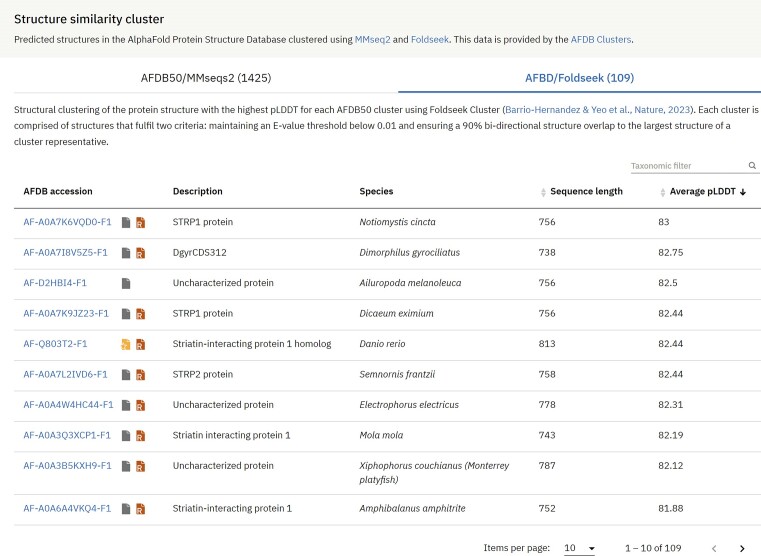
- Structure similarity clustering used MMseqs2 to cluster 214 million UniProtKB sequences into 52 million clusters, then Foldseek secondary clustering yielded 18.8 million clusters, finalizing 2.30 million robust clusters each with at least a pair of structures.
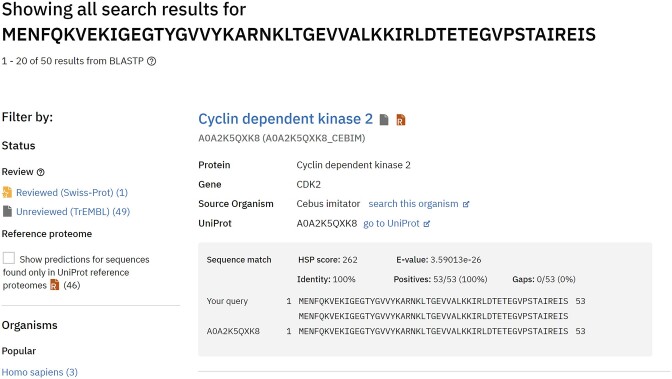
- New features include BLAST sequence similarity search, improved search filters for reviewed/unreviewed and reference proteome status, enhanced PAE viewer–Mol* interactivity, and a November 2022 update fixing a numerical bug that affected ~4% of total structure predictions.
Methods
- Descriptive database update/report with no primary experimental design; data generation is carried out by Google DeepMind, with predictions stored in PDB, mmCIF (modelCIF), and binaryCIF formats plus JSON metadata and confidence metrics pLDDT and PAE.
- Archiving uses successive releases from UniProt reference proteomes (e.g., 2021_02, 2021_04), Swiss-Prot, WHO global health proteomes, and MANE select; as of September 2023, EMBL-EBI FTP hosts TAR files for proteomes of 48 organisms.
- Access and analysis infrastructure includes FTP, Google Cloud Public Datasets, an API keyed on UniProt accessions, Apache-Solr search, BLAST on Google Cloud Platform, and Foldseek/MMseqs2 clustering.
Limitations
- Stated: sequences are not covered if they are less than 16 amino acids; >2700 aa for Swiss-Prot/proteome sequences or >1280 aa for other UniProt sequences; contain non-standard amino acids; are not in the UniProt ‘one sequence per gene’ FASTA file; or are viral proteins; these limitations are under discussion.
- Stated: some sequences may be outdated compared to UniProt due to less frequent AlphaFold DB releases; PAE data is unavailable from EMBL-EBI public FTP; full Google Cloud dataset download requires a Google account and can take roughly 2.5 days at 1 Gbps.
- Evident from the text: all archived structures are predicted models rather than experimental structures, and users must interpret pLDDT/PAE cautiously (e.g., pLDDT <50 likely disordered, 50–70 lower confidence); the database also currently lacks isoform and multimeric predicted structures, which are listed as future work.
Model-written summary. Check it against the paper before relying on it.
Integrity signals
Registry
Cites
Statistics
Figures

Verification
Claims the paper makes
11 Valid · 1 Not valid · 0 Not checked · 28 Own results and interpretations
Every source the paper cites for this claim was checked and supports it.
In the paper
“The new generation of predicted protein structure models has demonstrated remarkable accuracy, which could mitigate the continually widening gap between known protein sequences and experimentally determined protein structures (7).”
§ AlphaFold Protein Structure Database in 2024: providing structure coverage for over 214 million protein sequences > Introduction
What the sources say
- Supportedcites [7] Varadi M., Bordin N., Orengo C., Velankar S. The opportunities and challenges posed by the new generation of deep learning-based protein structure predictors. Curr. Opin. Struct. Biol. 2023; 79: 102543. 36807079 PMC7618866 source
The Introduction says prediction models made a major advance in accuracy and can match or sometimes surpass experimentally determined structures. It also describes a growing gap between known protein sequences and determined structures; the section on new challenges says predicted structures have greatly increased coverage of protein sequence space. These passages support both the accuracy claim and the proposed potential to narrow that gap (page numbers unavailable). (LLM, conf=0.93)
boosted- Asserted: passes — The authors put it forward as true.
- Checkable: passes — It can be checked against evidence.
- Load-bearing: passes — The paper’s conclusions depend on it.
- Based: passes — The paper gives a reason why it holds.
- Supported
Every source the paper cites for this claim was checked and supports it.
In the paper
“In response to frequent requests from the user community since the AlphaFold DB launch, we have made significant strides to implement a sequence-based similarity search feature. We have incorporated the Basic Local Alignment Search Tool (BLAST) (21) into our Google Cloud Platform infrastructure to achieve this.”
§ AlphaFold Protein Structure Database in 2024: providing structure coverage for over 214 million protein sequences > Implementation > Data access
What the sources say
- Supportedcites [21] Camacho C., Coulouris G., Avagyan V., Ma N., Papadopoulos J., Bealer K., Madden T.L. BLAST+: architecture and applications. BMC Bioinf. 2009; 10: 421. PMC2803857 20003500 source
The Background identifies BLAST as a sequence similarity search program that matches a query sequence against a database. In the citing sentence, the citation identifies the tool incorporated; the AlphaFold DB implementation is the citing authors’ own report, not a claim attributed to this source. (LLM, conf=0.91)
plainstates a cause- Asserted: passes — The authors put it forward as true.
- Checkable: passes — It can be checked against evidence.
- Load-bearing: unclear — It is unclear whether the paper’s conclusions depend on it.
- Based: passes — The paper gives a reason why it holds.
- Supported
Every source the paper cites for this claim was checked and supports it.
In the paper
“The impact of the predicted structures is further enhanced by their seamless integration into several core data resources, including PDBe-KB (17), UniProt (6), Ensembl (16), InterPro (15), Genecards (24) and MobiDB (25), among others.”
§ AlphaFold Protein Structure Database in 2024: providing structure coverage for over 214 million protein sequences > Conclusions and outlook
What the sources say
- Supportedcites [17] consortium P.D.B.-K.B. PDBe-KB: collaboratively defining the biological context of structural data. Nucleic Acids Res. 2022; 50: D534– D542. 34755867 PMC8728252 source
Citation (17) is attached specifically to PDBe-KB, rather than to the other resources in the sentence. The Introduction identifies PDBe-KB as a resource that integrates structural and functional annotations, supporting its identification here. (LLM, conf=0.90)
- Supportedcites [6] U.P. Consortium UniProt: the Universal Protein Knowledgebase in 2023. Nucleic Acids Res. 2023; 51: D523– D531. 36408920 PMC9825514 source
The citation is attached to UniProt in a list of resources, and the cited paper is a description of UniProt. Its Data integration and Interactive visualisations in entry pages sections state that UniProt incorporates AlphaFold-predicted structures into protein entries alongside other data; the supplied passages do not give page numbers. (LLM, conf=0.93)
- Supportedcites [16] Cunningham F., Allen J.E., Allen J., Alvarez-Jarreta J., Amode M.R., Armean I.M., Austine-Orimoloye O., Azov A.G., Barnes I., Bennett R. et al. Ensembl 2022. Nucleic Acids Res. 2022; 50: D988– D995. 34791404 PMC8728283 source
The citation identifies Ensembl as one of the resources in the list. In “Developing a new website” (page not provided), the paper says Ensembl’s Entity Viewer provides access to protein information, including 3D structures from PDBe. (LLM, conf=0.86)
plainstates a cause- Asserted: passes — The authors put it forward as true.
- Checkable: passes — It can be checked against evidence.
- Load-bearing: unclear — It is unclear whether the paper’s conclusions depend on it.
- Based: passes — The paper gives a reason why it holds.
- Supported
Every source the paper cites for this claim was checked and supports it.
In the paper
“Tackling this challenge, Steinegger et al. recently unveiled the Foldseek Cluster, a state-of-the-art structural-alignment-based clustering algorithm designed for vast datasets (22). They applied this novel method to the AlphaFold DB archive, making the derived structure similarity clusters available to the research community.”
§ AlphaFold Protein Structure Database in 2024: providing structure coverage for over 214 million protein sequences > Implementation > Data access
What the sources say
- Supportedcites [22] Barrio-Hernandez I., Yeo J., Jänes J., Mirdita M., Gilchrist C.L.M., Wein T., Varadi M., Velankar S., Beltrao P., Steinegger M. Clustering-predicted structures at the scale of the known protein universe. Nature. 2023; 622: 637– 645. 37704730 PMC10584675 source
The Abstract says the authors used Foldseek cluster to cluster the AlphaFold database. The Methods section (“Web server”) says they developed a server for users to explore the clusters, their members and related clusters, supporting the claim that the results were made available to researchers. (LLM, conf=0.93)
plainstates a cause- Asserted: passes — The authors put it forward as true.
- Checkable: passes — It can be checked against evidence.
- Load-bearing: passes — The paper’s conclusions depend on it.
- Based: passes — The paper gives a reason why it holds.
- Supported
- Probably not a substantial claim. 30
- It may state two separate claims as one. 15
- The quote only partly states this claim. 1
Claims other papers make about this one
Each is checked against this paper’s own text: does it say what the citing paper says it does?
The cited source says what the claim attributes to it.
In the citing paper
“houses over 200 million pre-run AF2 predictions”
From The power and pitfalls of AlphaFold2 for structure prediction beyond rigid globular proteins (2024) · cites this paper as [7]
Citations
Cites
Highly accurate protein structure prediction with AlphaFold
Jumper, J., Evans, R., Pritzel, A., Green, T., Figurnov, M., Ronneberger, O., Tunyasuvunakool, K., Bates, R., Žídek, A., Potapenko, A., et al. (2021) · Nature · doi:10.1038/s41586-021-03819-2 · Cited by 43,764
Self-citationBLAST+: architecture and applications
Camacho, C., Coulouris, G., Avagyan, V., Ma, N., Papadopoulos, J., Bealer, K., & Madden, T. L. (2009) · BMC Bioinformatics · doi:10.1186/1471-2105-10-421 · Cited by 22,074
UniProt: the Universal Protein Knowledgebase in 2023
The UniProt Consortium, Bateman, A., Martin, M.-J., Orchard, S., Magrane, M., Ahmad, S., Alpi, E., Bowler-Barnett, E. H., Britto, R., Bye-A-Jee, H., et al. (2023) · Nucleic Acids Research · doi:10.1093/nar/gkac1052 · Cited by 7,210
Evolutionary-scale prediction of atomic level protein structure with a language model
Lin, Z., Akin, H., Rao, R., Hie, B., Zhu, Z., Lu, W., Smetanin, N., Verkuil, R., Kabeli, O., Shmueli, Y., et al. (2022) · doi:10.1101/2022.07.20.500902 · Cited by 5,990 · cited 1×
“In the wake of the latest breakthroughs in prediction software, new databases such as the AlphaFold Protein Structure Database and the ESM Atlas ( 14 ) have emerged.”
MethodThe GeneCards suite: from gene data mining to disease genome sequence analyses
Stelzer, G., Rosen, N., Plaschkes, I., Zimmerman, S., Twik, M., Fishilevich, S., Stein, T. I., Nudel, R., Lieder, I., Mazor, Y., et al. (2016) · Current Protocols in Bioinformatics · doi:10.1002/cpbi.5 · Cited by 5,550 · cited 1×
“The impact of the predicted structures is further enhanced by their seamless integration into several core data resources, including PDBe-KB ( 17 ), UniProt ( 6 ), Ensembl ( 16 ), InterPro ( 15 ), Genecards ( 24 ) and MobiDB ( 25 ), among others.”
BackgroundAccurate prediction of protein structures and interactions using a 3-track network
Baek, M., DiMaio, F., Anishchenko, I., Dauparas, J., Ovchinnikov, S., Lee, G. R., Wang, J., Cong, Q., Kinch, L. N., Schaeffer, R. D., et al. (2021) · doi:10.1101/2021.06.14.448402 · Cited by 5,549
Paysan-Lafosse, T., Blum, M., Chuguransky, S., Grego, T., Pinto, B. L., Salazar, G. A., Bileschi, M. L., Bork, P., Bridge, A., Colwell, L., et al. (2023) · Nucleic Acids Research · doi:10.1093/nar/gkac993 · Cited by 2,399
Cunningham, F., Allen, J. E., Allen, J., Alvarez-Jarreta, J., Amode, M. R., Armean, I. M., Austine-Orimoloye, O., Azov, A. G., Barnes, I., Bennett, R., et al. (2022) · Nucleic Acids Research · doi:10.1093/nar/gkab1049 · Cited by 1,923
Mol* Viewer: modern web app for 3D visualization and analysis of large biomolecular structures
Sehnal, D., Bittrich, S., Deshpande, M., Svobodová, R., Berka, K., Bazgier, V., Velankar, S., Burley, S. K., Koča, J., & Rose, A. S. (2021) · Nucleic Acids Research · doi:10.1093/nar/gkab314 · Cited by 1,154 · cited 1×
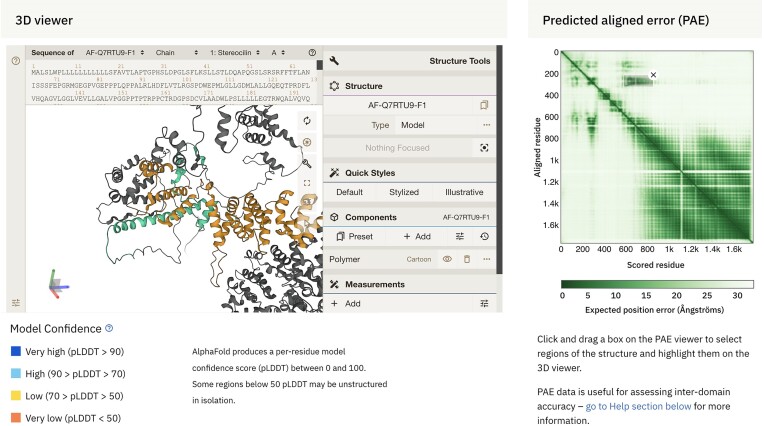
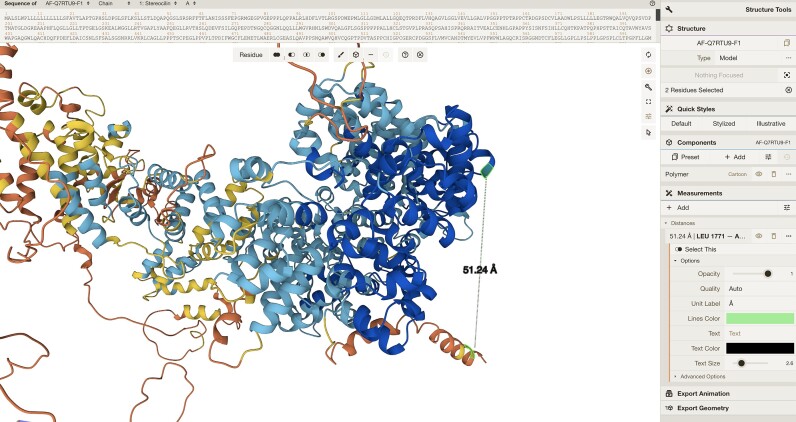
“We improved the visualisation of non-consecutive regions and the interactivity between the PAE viewer and the 3D molecular graphics viewer, Mol* ( 23 ) (Figure 5 ).”
MethodSelf-citationMariani, V., Biasini, M., Barbato, A., & Schwede, T. (2013) · Bioinformatics · doi:10.1093/bioinformatics/btt473 · Cited by 1,138 · cited 1×
“AlphaFold yields a per-residue estimate of its confidence, known as pLDDT, ranging from 0 to 100, indicating the tool’s predicted score on the lDDT-C α metric ( 19 ).”
Method
Cited by
Items 401–500 of 2,174
Williams, C. J., Chen, V. B., Richardson, D. C., & Richardson, J. S. (2025) · Acta Crystallographica Section D Structural Biology · doi:10.1107/s2059798325007843 · Cited by 15
Exploiting Archaeal/Thermostable Enzymes in Synthetic Chemistry: Back to the Future?
Kudalkar, G. P., Tiwari, V. K., & Berkowitz, D. B. (2024) · ChemCatChem · doi:10.1002/cctc.202400835 · Cited by 8
DIKWP-TRIZ: A Revolution on Traditional TRIZ Towards Invention for Artificial Consciousness
Wu, K., & Duan, Y. (2024) · Applied Sciences · doi:10.3390/app142310865 · Cited by 12
(GMO), E. P. O. G. M. O., Casacuberta, J., Barro, F., Braeuning, A., de Maagd, R. A., Epstein, M. M., Frenzel, T., Gallois, J., Koning, F., Messéan, A., et al. (2025) · EFSA Journal · doi:10.2903/j.efsa.2025.9568 · Cited by 19
Defensins identified through molecular de-extinction
Ferreira, A. F. L., Osiro, K. O., de Oliveira, K. B. S., Cardoso, M. H. E. S., de Lima, L. R., Duque, H. M., Macedo, M. L. R., Landon, C., de la Fuente‐Núñez, C., & Franco, O. L. (2024) · Cell Reports Physical Science · doi:10.1016/j.xcrp.2024.102193 · Cited by 7
Allosteric control of the bacterial ClpC/ClpP protease and its hijacking by antibacterial peptides
Jenne, T., Engelhardt, L., Baronaitė, I., et al. (2025) · The EMBO Journal · doi:10.1038/s44318-025-00575-1 · Cited by 7
“The initial monomeric atomic model of S. aureus ClpC WT was predicted through AlphaFold 3 (Jumper et al, 2021; Varadi et al, 2024).”
De novo identification of protein domains in cryo-electron tomography maps from AlphaFold2 modelsPreprint
Lu, Y., Chen, G., Sun, F., Zhu, Y., & Zhang, Z. (2024) · bioRxiv (Cold Spring Harbor Laboratory) · doi:10.1101/2024.11.21.623534 · Cited by 9
“The AlphaFold Protein Structure Database (AFDB) now provides over 200 million predicted models across numerous species 19 , allowing rapid and automated retrieval of candidate structures for density fitting.”
Haley, O. C., Tibbs‐Cortes, L. E., Hayford, R. K., Harding, S. F., Woodhouse, M. R., Cannon, E. K. S., Gardiner, J. M., Portwood, J. L., Sen, T. Z., Kim, H.-S., et al. (2025) · bioRxiv (Cold Spring Harbor Laboratory) · doi:10.1101/2025.07.05.663230 · Cited by 12
“However, crops like maize exhibit some of the lowest prediction confidences in the AlphaFold database 22 .”
Structure-aware annotation of leucine-rich repeat domains
(2024) · doi:10.1371/journal.pcbi.1012526 · Cited by 6
“Of these 161 NLRs, 127 had AlphaFold-predicted structures available on AlphaFoldDB [3, 30].”
Wang, J., Tian, H., Gao, Y., Qiu, X., Bao, Z., Zhao, D., Zhang, F., Zhang, Z., Wang, F., Zheng, S., et al. (2025) · Research · doi:10.34133/research.0808 · Cited by 15
ComFB, a widespread family of c-di-NMP receptor proteins
Samir, S., Elshereef, A. A., Alva, V., Hahn, J., Eck, F., Celma, L., Lopes, E. S., Thormann, K. M., Dubnau, D. A., Galperin, M. Y., et al. (2025) · Proceedings of the National Academy of Sciences · doi:10.1073/pnas.2513041122 · Cited by 10
Qayyum, N., Seo, H., Khan, N., Manan, A., Ramachandran, R., Haseeb, M., Kim, E., & Choi, S. (2025) · International Journal of Biological Macromolecules · doi:10.1016/j.ijbiomac.2025.144652 · Cited by 6
Glotzer, M. (2024) · Current Biology · doi:10.1016/j.cub.2025.05.052 · Cited by 6
Evaluating sequence and structural similarity metrics for predicting shared paralog functions
Dennler, O., & Ryan, C. J. (2025) · NAR Genomics and Bioinformatics · doi:10.1093/nargab/lqaf051 · Cited by 8
Pedroza, L. A., van den Haak, F., Frumovitz, A., Hernández, E., Hegewisch-Solloa, E., Orange, T. K., Sheehan, K. B., Prockop, S. E., Bodansky, A., Chinn, I. K., et al. (2025) · Cell Reports · doi:10.1016/j.celrep.2024.115156 · Cited by 7
Histatins, proangiogenic molecules with therapeutic implications in regenerative medicine
Tapia, H., Torres, P., Mateluna, C., et al. (2024) · iScience · doi:10.1016/j.isci.2024.111309 · Cited by 6
Zhang, L., & Liu, T. (2025) · Journal of Chemical Information and Modeling · doi:10.1021/acs.jcim.5c00016 · Cited by 7
The androgen receptor amino-terminal domain: structure, function and therapeutic potential
Hunter, I., Jamieson, C., & McEwan, I. J. (2025) · Endocrine Oncology · doi:10.1530/eo-24-0061 · Cited by 11
Engineering complexity into protein-based biomaterials for biomedical applications
Gregorio, N. E., Haas, C. M., King, N. P., & DeForest, C. A. (2025) · Nature Reviews Materials · doi:10.1038/s41578-025-00861-8 · Cited by 16
German, G. J., DeGiulio, J. V., Ramsey, J., Kropinski, A. M., & Misra, R. (2024) · PHAGE · doi:10.1089/phage.2023.0041 · Cited by 6
“The Tlsvirus and Tunavirus tail fi ber protein sequences were aligned using AlphaFold2 26,27 at https://neurosnap.ai/ service/AlphaFold2, COBALT, 28 FALCON2, 25 Phyre, 2,29 TopModel, 30 and trRosetta.”
Liu, J., Lu, W., Wu, H., Yan, Z., Liu, Y., Tang, C., Chen, Y., Wang, S., Tang, W., Han, J. D. J., et al. (2025) · European Journal of Medicinal Chemistry · doi:10.1016/j.ejmech.2025.117320 · Cited by 7
Nonphototrophic hypocotyl 3 domain proteins: traffic directors, hitchhikers, or both?
Verslues, P. E., & Upadhyay, N. (2024) · New Phytologist · doi:10.1111/nph.20211 · Cited by 7
Yang, W., Wang, Y., & Wang, Y. (2026) · Biophysics Reviews · doi:10.1063/5.0273394 · Cited by 11
Databases and web-based tools for studying structures of protein-nucleic acid complexes
Dapkūnas, J., & Venclovas, Č. (2025) · Current Opinion in Structural Biology · doi:10.1016/j.sbi.2025.103079 · Cited by 5
Sleutel, M., Sonani, R. R., Miller, J. G., et al. (2024) · bioRxiv (Cold Spring Harbor Laboratory) · doi:10.1101/2024.12.30.630787 · Cited by 6
Innovative therapies for inherited retinal dystrophies: navigating DNA, RNA, and protein approaches
Gómez-Escribano, A. P., García-García, G., Pérez-Santamarina, E., Aller-Mañas, E., Vázquez-Manrique, R. P., & Millán-Salvador, J. M. (2025) · eBioMedicine · doi:10.1016/j.ebiom.2025.105751 · Cited by 6
“111”
Molla, A., & Abebe, G. M. (2025) · Innovation · doi:10.11648/j.innov.20250603.20 · Cited by 6
Erlitz, K. S., Prinz, A., Wagner, S., Massa, J., Dunker, C., Höhl, M., Griep, A., McManus, R. M., Schelhaas, S., Koch, O., et al. (2025) · Journal of Medicinal Chemistry · doi:10.1021/acs.jmedchem.4c02171 · Cited by 6
Improving AlphaFold2 and 3-based protein complex structure prediction with MULTICOM4 in CASP16
(2025) · doi:10.1101/2025.03.06.641913 · Cited by 6
“The highest-ranked model, selected based on AlphaFold’s global plDDT score, is then searched against structural databases, including AlphaFoldDB[27] and the ESM Metagenomic Atlas[28], using FoldSeek[29].”
Yu, P., Krah, B. S., Orlando, M. A., Subramanian, S., & Orlando, B. J. (2025) · Structure · doi:10.1016/j.str.2025.10.004 · Cited by 7
When can AlphaFold predict the oligomeric states of proteins?Preprint
Lin, Y., Wallis, C., & Corry, B. (2025) · bioRxiv (Cold Spring Harbor Laboratory) · doi:10.1101/2025.03.10.642518 · Cited by 6
Karunarathne, K., Poorni, S., Jayampathi, N., Dhananjaya, H., Hasintha, A., Hulugalla, M., Anupama, N. M. T., Nethmini, N., Iqbal, N., Jayawardana, B., et al. (2026) · PLoS ONE · doi:10.1371/journal.pone.0341938 · Cited by 9
AlphaSync is an enhanced AlphaFold structure database synchronized with UniProt
Lang, B., Mészáros, B., Sejdiu, B. I., Patel, J. N., & Babu, M. M. (2025) · Nature Structural & Molecular Biology · doi:10.1038/s41594-025-01719-x · Cited by 10
Bains, A. K., & Naba, A. (2024) · Expert Review of Proteomics · doi:10.1080/14789450.2024.2427136 · Cited by 8
“…the peptides identified onto experimental or predicted protein structures from the Protein DataBank (PDB, https://www.rcsb.org; [145]) or AlphaFold (https://alphafold.ebi.ac.uk/; [146]), we could also gain structural insights into protease accessibility, and thus, folding of ECM proteins [144].”
Navigating in silico drug discovery: A hands-on guide with AutoDock Vina and Discovery Studio
Mukherjee, T., Sahu, S. S., Pattnaik, A. K., et al. (2025) · Elsevier eBooks · doi:10.1016/b978-0-443-29281-1.00004-6 · Cited by 6
Li, Y., Wang, W., Wang, W., Zhang, X., Chen, J., & Gao, H. (2025) · Advanced Science · doi:10.1002/advs.202409957 · Cited by 6
Tonoli, A., Anselmi, S., Ward, J. M., Hailes, H. C., & Jeffries, J. W. E. (2025) · ChemBioChem · doi:10.1002/cbic.202401028 · Cited by 7
Gamal, H., Shoeib, E. M., Hajjaj, A., Abdullah, H. E. A., Elramy, E., Ellah, D. A. A., El-Sayed, S. M., & Khder, M. F. (2025) · RSC Pharmaceutics · doi:10.1039/d5pm00158g · Cited by 7
Nehra, A., Kalwan, G., Taneja, D., Jangra, R., Joshi, K., Kumar, A., Jain, P. K., Nehra, K., Ansari, M. W., Singh, K., et al. (2025) · Plant Physiology and Biochemistry · doi:10.1016/j.plaphy.2025.110042 · Cited by 9
Shahreen, N., Chowdhury, N. B., Stone, E., Knobbe, E., & Saha, R. (2025) · mSystems · doi:10.1128/msystems.01555-24 · Cited by 6
Drivers of strigolactone diversity: P450s in strigolactone biosynthesis
Niu, C.-B., Bouwmeester, H. J., & Li, C. (2025) · Journal of Integrative Plant Biology · doi:10.1111/jipb.70091 · Cited by 9
Zhou, X., Wang, G., Wu, Y., Wu, M., Zhai, X., Tian, C., Prochownik, E. V., Jiang, C., & Li, Y. (2025) · Cell Reports · doi:10.1016/j.celrep.2025.116139 · Cited by 10
Nicastro, G. G., Sibinelli-Sousa, S., Hespanhol, J. T., Santos, T. W. C., Munoz, J. P., Santos, R. S., Perez-Sepulveda, B. M., Miyamoto, S., Aravind, L., de Souza, R. F., et al. (2026) · PLOS Biology · doi:10.1371/journal.pbio.3003680 · Cited by 9
“…models were created using Alphafold2 [37] from multiple sequence alignments to perform searches in FoldSeek [38] and DALI [39] against PDB [40] and AlphaFoldDB [41]; (iii) the structure-structure comparison algorithm from FoldSeek was used to cluster groups of candidates.”
Alam, H., Bailing, W., Zhao, F. H., Ullah, H., Ullah, I., Ali, M., Ullah, I., Tuerhong, R., Zhang, L., & Shi, L. (2025) · Cardiovascular Toxicology · doi:10.1007/s12012-025-09968-4 · Cited by 8
“…3D structures of proteins [32], while AlphaFold (https:// alpha fold. ebi. ac. uk/), an open-source database comprising predicted 3D structures employing artificial intelligence [33], was utilized to retrieve the 3D structures of the selected proteins for which PDB structures were not available.”
Structures and mechanisms of U6 snRNA m6A modification by METTL16
Ju, J., & Tomita, K. (2025) · Nature Communications · doi:10.1038/s41467-025-63021-0 · Cited by 10
A review of periostin in orthopedics
Wishman, M. D., Sgrignoli, W. M., Patterson, B. M., Nepola, J. V., Wolf, B. R., Bozoghlian, M. F., Lane, C. M., Coleman, M. C., & Galvin, J. W. (2025) · Osteoarthritis and Cartilage Open · doi:10.1016/j.ocarto.2025.100600 · Cited by 8
“Each Fas1 domain consists of about 140 amino acids, including two separate, highly conserved sequences and are organized into mixed alpha helix and beta-sheet motif architectures that allow for the binding of a wide variety of proteins [29 – 31].”
Singh, A., Tanwar, M., Singh, T. P., Sharma, S., & Sharma, P. K. (2024) · Archives of Biochemistry and Biophysics · doi:10.1016/j.abb.2024.110233 · Cited by 6
Liang, Y., Zhao, Y., Yin, Z., Gong, X., Han, X., & Wen, M. (2025) · Journal of Agricultural and Food Chemistry · doi:10.1021/acs.jafc.4c10554 · Cited by 9
Control of Golgi- V-ATPase through Sac1-dependent co-regulation of PI(4)P and cholesterol
Zhou, X., van der Stoel, M. M., Kaptan, S., Li, H., Li, S., Hölttä, M., Vihinen, H., Jokitalo, E., Thiele, C., Pietiläinen, O., et al. (2025) · Nature Communications · doi:10.1038/s41467-025-63125-7 · Cited by 6
“The cryo-EM structure includes the lysosomal V 0 a1 subunit that was replaced by the V 0 a2 subunit structure given by the AlphaFold data-base entry Q9Y487 85,86 .”
Haley, O. C., Harding, S. F., Sen, T. Z., Woodhouse, M. R., Kim, H.-S., & Andorf, C. M. (2024) · bioRxiv (Cold Spring Harbor Laboratory) · doi:10.1101/2024.09.17.613523 · Cited by 8
Molecular basis of Siglec-10 ligand recognition and antibody blockadePreprint
Sobczak, K., Antoñana-Vildosola, A., Valverde, P., Valdaliso-Díez, E., Mentxaka, A., Travecedo, M. A., Jame-Chernaboo, Z., Schmidt, E. N., Heinze, L., D’Andrea, S., et al. (2025) · bioRxiv (Cold Spring Harbor Laboratory) · doi:10.1101/2025.06.10.658867 · Cited by 8
“The 3D structure of full-length Siglec-10 ECD was generated with AlphaFold-2 (AF2) 74 (AlphaFold Protein Structure Database number AF-Q96LC7) 75 .”
Unicore Enables Scalable and Accurate Phylogenetic Reconstruction with Structural Core Genes
Kim, D., Park, S., & Steinegger, M. (2025) · Genome Biology and Evolution · doi:10.1093/gbe/evaf109 · Cited by 7
Self-citationX-linked Deficiency in ELF4 in Females with Skewed X Chromosome Inactivation
Zhao, R., Zhang, Z., Mei, S., Sun, L., Zhang, Q., Lv, Q., Zhou, F., Sun, G., Zhou, L., Tang, X., et al. (2025) · Journal of Clinical Immunology · doi:10.1007/s10875-025-01866-2 · Cited by 7
“Structurally, various atomic contacts and bonds are predicted to be disrupted by the mutation [14, 15 ] (Fig.”
Sriram, S., Palanichamy, C., Subash, P. T., Gupta, M. K., & Sudandiradoss, C. (2025) · Scientific Reports · doi:10.1038/s41598-025-16936-z · Cited by 7
“The AlphaFold-predicted 3D structure 23,24 of AGO2 complements this validated sequence information and was used in downstream computational studies to model the binding of siRNA candidates to the PAZ and MID domains, which are responsible for siRNA recognition, anchoring, and cleavage facilitation.”
Proteome-wide in silico screening for human protein-protein interactionsPreprint
Schmid, E. W., Zhu, H., Ryu, E., Lim, Y., Smogorzewska, A., Brown, A., & Walter, J. C. (2025) · bioRxiv (Cold Spring Harbor Laboratory) · doi:10.1101/2025.11.10.687652 · Cited by 19
KlebPhaCol: a community-driven resource for Klebsiella research identified a novel phage family
Rothschild-Rodriguez, D., Lambon, K. S., Kushwaha, S. K., Garushyants, S. K., Ertelt, M., Łątka, A., Costa, A. R., Mantzouratou, A., King, C., Boeckaerts, D., et al. (2025) · Nucleic Acids Research · doi:10.1093/nar/gkaf1122 · Cited by 14
“For each cluster, a representative was compared to the PDB [ 78 ] and AlphaFold2 [ 79 ] databases using Foldseek search.”
Cytoplasmic lattices are megadalton storage complexes in mammalian oocytes
Kılıç, Z. I., van Loenhout, J., Chaillet, M. L., van Es, R. M., Alcaraz, P. S., Vos, H. R., Noteborn, W. E. M., & Leung, M. R. (2026) · Nature · doi:10.1038/s41586-026-10513-8 · Cited by 8
“Once we had pinpointed the locations of these proteins, we replaced the published structures with mouse AlphaFold predictions 48,49 .”
Protein foundation models: a comprehensive survey
Xu, H., Li, L., Pan, S., Cheng, P., Wang, Y., Rong, Z., Feng, L., Huang, X., Wang, S., & Shu, W. (2026) · Science China Life Sciences · doi:10.1007/s11427-025-3147-2 · Cited by 10
Rangarajan, A. A., Schroeder, J. W., Hurto, R. L., Severin, G. B., Pell, M. E., Hsieh, M., Waters, C. M., & Freddolino, L. (2024) · bioRxiv (Cold Spring Harbor Laboratory) · doi:10.1101/2024.09.01.610008 · Cited by 5
“The first 156 residues of the structural prediction of CdgC (AFDB model AF-Q9KLF9-F1) model the CdgC sensing domain with high confidence [36,37].”
BackgroundA genetically encoded bifunctional enzyme mitigates redox imbalance and lipotoxicity
Pan, X., Munan, S., Zuckerman, A. L., Pon, A., Thompson, N. B., Perera, R. M., Shrestha, N., Violante, S. N., Cross, J. R., Goodman, R. P., et al. (2026) · Nature Metabolism · doi:10.1038/s42255-025-01450-3 · Cited by 8
The deacetylases HDAC1/HDAC2 control JAK2V617F-STAT signaling through the ubiquitin ligase SIAH2
Mustafa, A. M., Petrosino, G., Fischer, M. A., Schnoeder, T. M., Gül, D., Zeyn, Y., Hieber, C., Lossa, J., Muth, S., Radsak, M. P., et al. (2025) · Signal Transduction and Targeted Therapy · doi:10.1038/s41392-025-02369-7 · Cited by 8
“46,47 The 3D model was visualized with ChimeraX V1.”
Balasco, N., Modjtahedi, N., Monti, A., Ruvo, M., Vitagliano, L., & Doti, N. (2025) · Molecules · doi:10.3390/molecules30102117 · Cited by 5
“…experimental structural data are extremely limited, in Section 6, we have integrated this information by searching the EBI-AlphaFold database [44] and performing exhaustive predictions of the three-dimensional structures of CHCHD4 redox-regulated substrates using the innovative and powerful…”
Proteome-wide prediction of the functional impact of missense variants with ProteoCast
Abakarova, M., Freiberger, M. I., Liehrmann, A., Rera, M., & Laine, E. (2026) · Nature Communications · doi:10.1038/s41467-026-72140-1 · Cited by 5
“ProteoCast maps predicted variant scores to proteoform 3D models from the AlphaFold database 22,41 , leveraging its extensive protein structuraldata.”
Cryo-EM structure of human TUT1:U6 snRNA complex
Yamashita, S., & Tomita, K. (2025) · Nucleic Acids Research · doi:10.1093/nar/gkae1314 · Cited by 5
Girolimetti, G., Calcagnile, M., & Bucci, C. (2025) · International Journal of Molecular Sciences · doi:10.3390/ijms26209858 · Cited by 7
“[41,42] model of the TBC superfamily domain highlights the positions of mutations D397 and R400 (red) within the TBC superfamily domain.”
Dhillon, D., Jain, M., Singh, A. K., & Muthukumaran, J. (2025) · Computers in Biology and Medicine · doi:10.1016/j.compbiomed.2025.111367 · Cited by 6
STK19 positions TFIIH for cell-free transcription-coupled DNA repair
Mevissen, T. E. T., Kümmecke, M., Schmid, E. W., Farnung, L., & Walter, J. C. (2024) · doi:10.1101/2024.07.22.604623 · Cited by 50
“42 The average models score was calculated by averaging how many independent AF-M models predicted a contact across all unique inter-residue contact pairs.”
Aldosari, H. (2026) · Healthcare · doi:10.3390/healthcare14111497 · Cited by 10
“The success of AlphaFold has shown how AI can transform biological knowledge generation by providing large-scale protein structure predictions that support target identification and therapeutic research [18,19].”
Jiang, Y., Yu, X., & Renata, H. (2025) · Journal of the American Chemical Society · doi:10.1021/jacs.5c05269 · Cited by 5
Identification of a Coxiella burnetii outer membrane porin required for intracellular replication
Yang, Z., Duncan-Lowey, J. K., & Roy, C. R. (2025) · Infection and Immunity · doi:10.1128/iai.00448-24 · Cited by 7
Long-Read Sequencing Unlocks New Insights into the Amphidinium carterae Microbiome
Judd, M., Wira, J., Place, A. R., & Bachvaroff, T. (2024) · Marine Drugs · doi:10.3390/md22080342 · Cited by 5
Zhang, F., Sun, M., Ma, S., et al. (2025) · Phytotherapy Research · doi:10.1002/ptr.70052 · Cited by 5
Ethanolamine-induced assembly of microcompartments is required for Fusobacterium nucleatum virulence
Franklin, D. S., Chen, Y.-W., Chen, Y., Wittchen, M., Agnew, A., Luu, A., Whitelegge, J. P., Zhou, Z. H., Tauch, A., Das, A., et al. (2024) · mBio · doi:10.1128/mbio.03405-24 · Cited by 7
Zhang, M., Chen, M., Yan, Y., Lu, J., Sheng, J., Gui, M., & Ma, X. (2025) · Journal of Ethnopharmacology · doi:10.1016/j.jep.2025.119685 · Cited by 5
Liu, Y., Xiong, W., Wang, X., et al. (2025) · Applied and Environmental Microbiology · doi:10.1128/aem.01285-25 · Cited by 5
Simica, A., Segovia, Y., Navarro‐Sempere, A., Martínez‐Espinosa, R. M., & Pire, C. (2025) · Marine Drugs · doi:10.3390/md23040166 · Cited by 7
“All PCRs performed in this work were carried out using Phusion™ High-Fidelity DNA Polymerase (Thermo Fisher Scientific, Waltham, MA, USA).”
Structural insights into the coupling between VCP, an essential unfoldase, and a deubiquitinase
Vostal, L. E., Dahan, N. E., Zhang, W., Reynolds, M. J., Chait, B. T., & Kapoor, T. M. (2025) · The Journal of Cell Biology · doi:10.1083/jcb.202410148 · Cited by 4
Unifying Constraints Linking Protein Folding and Native Dynamics Decoded from AlphaFold
Zhang, Z., Ren, W., Xie, L., Zheng, Y., Guan, X., Wang, J., Li, W., & Tang, Q.-Y. (2026) · Physical Review Letters · doi:10.1103/7j2j-f8f7 · Cited by 5
Lynch, T. J., McNally, B. J. E., Losic, T., Lindquist, J., & Finkelstein, R. R. (2025) · PLANT PHYSIOLOGY · doi:10.1093/plphys/kiaf674 · Cited by 8
“Overexpression of the AFPs re-sults in extreme ABA resistance, including decreased expression of many seed maturation genes, failure to acquire desiccation tolerance, and ability to germinate on 100-fold higher ABA concentrations than wt seeds (Lynch et al. 2017).”
Regulation of RNA-binding proteins by small biomolecules
Miao, W., Porter, D. F., Lopez-Pajares, V., & Khavari, P. A. (2025) · Nature Reviews Molecular Cell Biology · doi:10.1038/s41580-025-00914-4 · Cited by 8
“Molecular docking predicts SBM-binding sites on RBPs that have experimentally resolved structures 335 and structures modelled using AlphaFold 346,347 .”
Intermediate stages in the origin of metabolism at a phosphorylating hydrothermal vent
Mrnjavac, N., Hoffmann, N. K., Schlikker, M. L., Burmeister, M., Schwander, L., García, C. G., Brabender, M., Steel, M., Huson, D. H., Metzger, S. U., et al. (2026) · Science Advances · doi:10.1126/sciadv.aef3128 · Cited by 14
Effector innovation in genome-reduced phytoplasmas and other host-dependent mollicutes
Mirkin, F. G., Mugford, S. T., Thole, V., Marzo, M., & Hogenhout, S. A. (2025) · PLoS Genetics · doi:10.1371/journal.pgen.1011946 · Cited by 5
“…we compared the structural features of GATA zinc fingers bound to SAP05 (S7E Fig) [58] with those bound to DNA [69] To identify additional SAP05-like fold-containing proteins across phytoplasmas, we performed a structure-based search using Foldseek against AlphaFold-predicted models [70] from Ca .”
Crystal structure and mechanistic studies of the PPM1D serine/threonine phosphatase catalytic domain
Kumar, J. P., Košek, D., Durell, S. R., Jenkins, L. M. M., Debnath, S., Coussens, N. P., Hall, M. D., Appella, D. H., Dyda, F., Mazur, S. J., et al. (2024) · Journal of Biological Chemistry · doi:10.1016/j.jbc.2024.107561 · Cited by 4
A complete map of human cytosolic degrons and their relevance for diseasePreprint
Voutsinos, V., Johansson, K. E., Larsen, F. B., Grønbæk-Thygesen, M., Jonsson, N., Holm-Olesen, E., Tesei, G., Stein, A., Fowler, D. M., Lindorff‐Larsen, K., et al. (2025) · bioRxiv (Cold Spring Harbor Laboratory) · doi:10.1101/2025.05.10.653233 · Cited by 5
Wen, P., Lei, H., Deng, H., Deng, S., Tirado, C. R., Wang, M., Mu, P., Zheng, Y., & Pan, D. (2024) · Genes & Development · doi:10.1101/gad.351856.124 · Cited by 11
Rewriting protein alphabets with language modelsPreprint
Pantolini, L., Studer, G., Engist, L., Pudžiuvelytė, I., Pommerening, F., Waterhouse, A. M., Bienert, S., Tauriello, G., Steinegger, M., Schwede, T. F., et al. (2025) · bioRxiv (Cold Spring Harbor Laboratory) · doi:10.1101/2025.11.27.690975 · Cited by 7
Self-citationMolecular basis of Fab-dependent IgA antibody recognition by gut-bacterial metallopeptidases
Marquez-Monino, M. A., Gascueña, A. M., Azzam, T., Persson, A., Manzanares-Gomez, A., Aguillo-Urarte, M., Brown, T. T., Montero-Sagarminaga, A., Lood, R., Naegeli, A., et al. (2025) · The EMBO Journal · doi:10.1038/s44318-025-00518-w · Cited by 7
“…323-878 and BF3526 was solved using molecular replacement with Phaser (McCoy et al, 2007) and PHENIX suite (Adams et al, 2010), by employing AF template (AF-Q9AES2-F1) (Jumper et al, 2021; Varadi et al, 2024), and the previously reported BF3526 unliganded structure (PDB code 4DF9), respectively.”
Chadwick, G. L., Williams, M. C., Shalvarjian, K. E., & Nayak, D. D. (2025) · PLOS Genetics · doi:10.1371/journal.pgen.1011695 · Cited by 4
“Alphafold models of MA3299, MA1821 and MA1822 were retrieved from the AlphaFold Protein Structure Database [37,38].”
Complexoform-restricted covalent TRMT112 ligands that allosterically agonize METTL5
Goetzke, F. W., Bernard, S. M., Ju, C., Pollock, J., DeMeester, K. E., Gross, J., Simon, G. M., He, C., Melillo, B. N., & Cravatt, B. F. (2026) · Nature Chemical Biology · doi:10.1038/s41589-025-02099-5 · Cited by 10
“Interestingly, the AlphaFold 35,36 -predicted structure of RNF14 places C68 and C212 binding to a transcription factor 19 ), thus underscoring the potential for ABPP to illuminate state-dependent protein liganding events in cells.”
Diehl, A., Lindemann, F., Cremer, N., Roske, Y., Hiller, M., van Rossum, B., Leidert, M., Turgay, K., & Oschkinat, H. (2026) · Journal of Molecular Biology · doi:10.1016/j.jmb.2026.169661 · Cited by 6
Tokenizing Foldable Protein Structures with Machine-Learned Artificial Amino-Acid VocabularyPreprint
Lin, X., Chen, Z., Li, Y., Ma, Z., Fan, C., Cao, Z., Feng, S., Gao, Y. Q., & Zhang, J. (2023) · bioRxiv (Cold Spring Harbor Laboratory) · doi:10.1101/2023.11.27.568722 · Cited by 9
“Therefore, we extract high-confidence structures from the AFDB dark cluster dataset and interrogate ProTokens’ capability of reconstructing these out-of-distribution (OOD) folds.”
BackgroundMethodPhogat, A., Krishnan, S. R., Pandey, M., & Gromiha, M. M. (2025) · Methods · doi:10.1016/j.ymeth.2025.01.020 · Cited by 5
Conditional Protein Structure Generation with Protpardelle-1cPreprint
Lu, T., Shuai, R. W., Kouba, P., Li, Z., Chen, Y., Shirali, A., Kim, J., & Huang, P. (2025) · bioRxiv (Cold Spring Harbor Laboratory) · doi:10.1101/2025.08.18.670959 · Cited by 18
“For motif scaffolding, several comparisons remain: a baseline for searching motifs in a large database of native structures (e.g. AlphaFold Database [25]) or sampled structures (e.g. SHAPES [16]) and comparison to recent diffusion models beyond RFdiffusion.”
Structural basis of lipopolysaccharide translocon assembly mediated by the small lipoprotein LptM
Miyazaki, R., Kimoto, M., Kohga, H., & Tsukazaki, T. (2025) · Cell Reports · doi:10.1016/j.celrep.2025.116013 · Cited by 10
Designing novel solenoid proteins with in silico evolution
(2025) · doi:10.1038/s42004-025-01817-3 · Cited by 10
“WhileAF2isknowntoproduce artifacts such as highly con fi dent isolated long helices, the bias towards right-handed β -solenoids is unusual, as structured domains with extensive inter-residue contacts are generally reliably predicted 2 .”
Integrative structural interactomics reveals protein organization and structure in a giant virus
Mühlberg, L., Ruta, J., Mikirtumov, V., Burton‐Smith, R. N., Murata, K., Kudryashev, M., Okamoto, K., Bogdanow, B., & Liu, F. (2026) · Nature Communications · doi:10.1038/s41467-026-74973-2 · Cited by 6
“Leveraging our high-con fi dence structure models, we investigated potential functional roles of melbournevirus proteins through struc-turalhomology searches 48 .”
Thorkelsson, A., Chou, C., Tripp, A., Ali, S. A., Galper, J., & Chin, M. T. (2025) · International Journal of Molecular Sciences · doi:10.3390/ijms26062383 · Cited by 6
“The sequences for calcineurin and wild-type CRYAB were collected from the AlphaFold Protein The sequences for calcineurin and wild-type CRYAB were collected from the AlphaFold Protein database and altered with the selected mutations [36,37]. database and altered with the selected mutations [36,37].”
Charcot-Marie-Tooth disease type 1E: Clinical Natural History and Molecular Impact of PMP22 VariantsPreprint
Ward, K. S., Ptak, C. P., Pashkova, N., et al. (2025) · medRxiv · doi:10.1101/2025.05.01.25326605 · Cited by 5
Navigation of drug discovery via artificial intelligence
Mishra, S. K., Praba, J. J., Hamadou, M., Subba, A., & Georrge, J. J. (2026) · Future Journal of Pharmaceutical Sciences · doi:10.1186/s43094-026-00954-3 · Cited by 5
Öster, C., Chevelkov, V., & Lange, A. (2025) · Journal of Biomolecular NMR · doi:10.1007/s10858-024-00454-7 · Cited by 5
Metadata
- Authors
- Varadi, M., Bertoni, D., Magana, P., Paramval, U., Pidruchna, I., Radhakrishnan, M., Tsenkov, M., Nair, S., Mirdita, M., Yeo, J., Kovalevskiy, O., Tunyasuvunakool, K., Laydon, A., Žídek, A., Tomlinson, H., Hariharan, D., Abrahamson, J., Green, T., Jumper, J., Birney, E., Steinegger, M., Hassabis, D., & Velankar, S.
- Affiliations
- European Molecular Biology Laboratory, European Bioinformatics Institute , Hinxton, UK
- European Bioinformatics Institute (GB)
- Seoul National University (KR)
- Google DeepMind (United Kingdom) (GB)
- Corresponding author
- Hassabis, Demis
- Velankar, Sameer
- ORCID
- Venue
- Nucleic Acids Research
- Publisher
- Oxford University Press (OUP)
- Published
- 2023-11-02
- Volume
- 52
- Issue
- D1
- Pages
- D368-D375
- ISSN
- 0305-1048 (ISSN-L)
- 1362-4962
- PMC
- PMC10767828
- OpenAlex
- W4388464011
- Cited by
- 2,052
- References
- 29
- Citations by year
- 2026: 724 · 2025: 1015 · 2024: 307 · 2023: 5
- FWCI
- 181.98
- Type
- journal article
- Language
- en
- Open access
- gold
- doi.org
- Licence
- Locations
- Nucleic Acids Research (publishedVersion, cc-by)
- PubMed Central (publishedVersion, cc-by)
- PubMed (publishedVersion)
- Seoul National University Open Repository (Seoul National University) (submittedVersion)
- Funders
- Google DeepMind
- National Research Foundation of Korea (2019R1A6A1A10073437, 2020M3A9G7103933, 2021R1C1C102065, 2021M3A9I4021220, RS-2023-00250470)
- Samsung DS Research Fund
- Seoul National University
- Topics
- Life Sciences › Biochemistry, Genetics and Molecular Biology › Molecular Biology › Protein Structure and Dynamics
- Life Sciences › Biochemistry, Genetics and Molecular Biology › Structural Biology › Enzyme Structure and Function
- Life Sciences › Biochemistry, Genetics and Molecular Biology › Molecular Biology › Machine Learning in Bioinformatics
- Keywords
- predicted protein structures, AlphaFold2, protein structure prediction, protein sequence coverage, data archiving, database access, search engines
- MeSH terms
- Amino Acid Sequence, Artificial Intelligence, Proteins, Protein Structure, Secondary, Proteome, Databases, Protein, Search Engine
About these checks
Registry, retraction, Cites and statistics results are computed, not judged, with one exception: a printed reference that no index lists is read once by a model before it counts as a citation error. Claims are extracted by a model and kept only when their quote appears verbatim in the text; each cited source is then checked, with a model’s help, for whether it says what the claim relies on. Those verdicts can be wrong — read the claim’s quote and the cited source before relying on one.
The claim verdicts this report counts are experimental: their accuracy is not yet measured.
A language model drew the claims from the paper on 2026-10-10, under version 3 of the claim definition (model deepseek-v4.1-flash, prompt extract-v3).
A second model labelled each claim on 2026-10-10 (model jev-1.13-20260917, definition revision gold-guideline-v0.2).
Cited sources are checked with a language model’s help (gpt-6-sol).
Statistics and arithmetic are recomputed, not judged.
Confidence bands are shown only for fields calibrated on our annotated test set. None is calibrated yet, so no band is shown.
What counts as a claim ›How we measure confidence ›How we check this ›
Are you an author, or do you see a problem with this page? Request a review
Data sources
Bibliographic data: Semantic Scholar, OpenAlex, Crossref.
Contains information from the Semantic Scholar Academic Graph Datasets, made available under the ODC Attribution License (ODC-BY 1.0).
Semantic Scholar’s data is described in: Kinney, R., et al. (2023). The Semantic Scholar Open Data Platform. arXiv:2301.10140.
