

AlphaFold Protein Structure Database in 2024: providing structure coverage for over 214 million protein sequences
Open accessThe DOI matches its Crossref record; 29 of the 29 references it cites were found in a registry or an index; 18 of the 18 sources its claims cite were checked for support.
Abstract
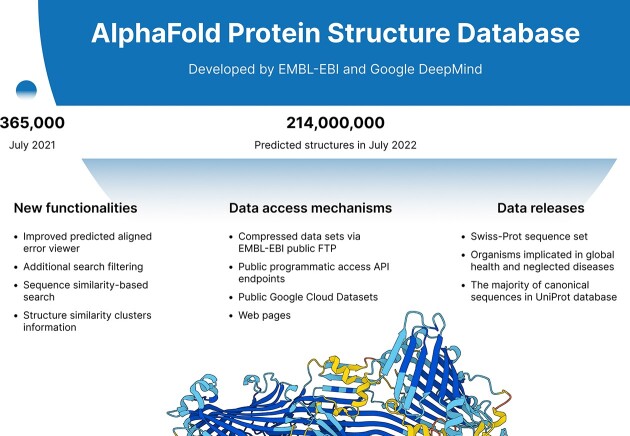
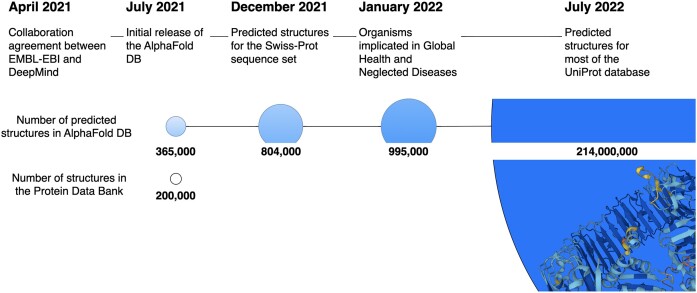
The AlphaFold Database Protein Structure Database (AlphaFold DB, https://alphafold.ebi.ac.uk) has significantly impacted structural biology by amassing over 214 million predicted protein structures, expanding from the initial 300k structures released in 2021. Enabled by the groundbreaking AlphaFold2 artificial intelligence (AI) system, the predictions archived in AlphaFold DB have been integrated into primary data resources such as PDB, UniProt, Ensembl, InterPro and MobiDB. Our manuscript details subsequent enhancements in data archiving, covering successive releases encompassing model organisms, global health proteomes, Swiss-Prot integration, and a host of curated protein datasets. We detail the data access mechanisms of AlphaFold DB, from direct file access via FTP to advanced queries using Google Cloud Public Datasets and the programmatic access endpoints of the database. We also discuss the improvements and services added since its initial release, including enhancements to the Predicted Aligned Error viewer, customisation options for the 3D viewer, and improvements in the search engine of AlphaFold DB.
Overview
CoChat Summary
TL;DR
AlphaFold DB has grown from ~300k to over 214 million predicted protein structures as of September 2023, with expanded access, search, and visualization features. This 2024 update describes data archiving, access mechanisms, integration with core resources, and new clustering/BLAST/PAE viewer capabilities.
Key findings
- AlphaFold DB expanded from approximately 300k structures in 2021 to over 214 million predicted protein structures as of September 2023; the initial July 2021 release housed over 360,000 structures for 20 model organism proteomes.
- Predictions are integrated into resources including PDB, UniProt, Ensembl, InterPro and MobiDB, and are accessible via FTP, Google Cloud Public Datasets (~23 TiB), API, and the website; PAE data is unavailable from EMBL-EBI public FTP.
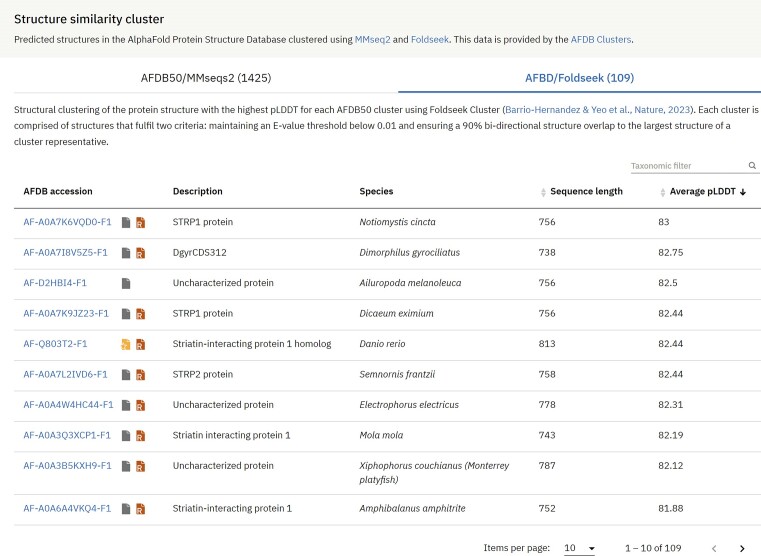
- Structure similarity clustering used MMseqs2 to cluster 214 million UniProtKB sequences into 52 million clusters, then Foldseek secondary clustering yielded 18.8 million clusters, finalizing 2.30 million robust clusters each with at least a pair of structures.
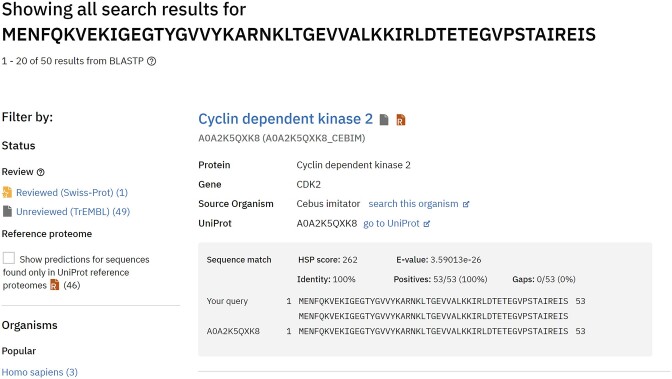
- New features include BLAST sequence similarity search, improved search filters for reviewed/unreviewed and reference proteome status, enhanced PAE viewer–Mol* interactivity, and a November 2022 update fixing a numerical bug that affected ~4% of total structure predictions.
Methods
- Descriptive database update/report with no primary experimental design; data generation is carried out by Google DeepMind, with predictions stored in PDB, mmCIF (modelCIF), and binaryCIF formats plus JSON metadata and confidence metrics pLDDT and PAE.
- Archiving uses successive releases from UniProt reference proteomes (e.g., 2021_02, 2021_04), Swiss-Prot, WHO global health proteomes, and MANE select; as of September 2023, EMBL-EBI FTP hosts TAR files for proteomes of 48 organisms.
- Access and analysis infrastructure includes FTP, Google Cloud Public Datasets, an API keyed on UniProt accessions, Apache-Solr search, BLAST on Google Cloud Platform, and Foldseek/MMseqs2 clustering.
Limitations
- Stated: sequences are not covered if they are less than 16 amino acids; >2700 aa for Swiss-Prot/proteome sequences or >1280 aa for other UniProt sequences; contain non-standard amino acids; are not in the UniProt ‘one sequence per gene’ FASTA file; or are viral proteins; these limitations are under discussion.
- Stated: some sequences may be outdated compared to UniProt due to less frequent AlphaFold DB releases; PAE data is unavailable from EMBL-EBI public FTP; full Google Cloud dataset download requires a Google account and can take roughly 2.5 days at 1 Gbps.
- Evident from the text: all archived structures are predicted models rather than experimental structures, and users must interpret pLDDT/PAE cautiously (e.g., pLDDT <50 likely disordered, 50–70 lower confidence); the database also currently lacks isoform and multimeric predicted structures, which are listed as future work.
Model-written summary. Check it against the paper before relying on it.
Integrity signals
Registry
Cites
Statistics
Figures

Verification
Claims the paper makes
11 Valid · 1 Not valid · 0 Not checked · 28 Own results and interpretations
Every source the paper cites for this claim was checked and supports it.
In the paper
“The new generation of predicted protein structure models has demonstrated remarkable accuracy, which could mitigate the continually widening gap between known protein sequences and experimentally determined protein structures (7).”
§ AlphaFold Protein Structure Database in 2024: providing structure coverage for over 214 million protein sequences > Introduction
What the sources say
- Supportedcites [7] Varadi M., Bordin N., Orengo C., Velankar S. The opportunities and challenges posed by the new generation of deep learning-based protein structure predictors. Curr. Opin. Struct. Biol. 2023; 79: 102543. 36807079 PMC7618866 source
The Introduction says prediction models made a major advance in accuracy and can match or sometimes surpass experimentally determined structures. It also describes a growing gap between known protein sequences and determined structures; the section on new challenges says predicted structures have greatly increased coverage of protein sequence space. These passages support both the accuracy claim and the proposed potential to narrow that gap (page numbers unavailable). (LLM, conf=0.93)
boosted- Asserted: passes — The authors put it forward as true.
- Checkable: passes — It can be checked against evidence.
- Load-bearing: passes — The paper’s conclusions depend on it.
- Based: passes — The paper gives a reason why it holds.
- Supported
Every source the paper cites for this claim was checked and supports it.
In the paper
“In response to frequent requests from the user community since the AlphaFold DB launch, we have made significant strides to implement a sequence-based similarity search feature. We have incorporated the Basic Local Alignment Search Tool (BLAST) (21) into our Google Cloud Platform infrastructure to achieve this.”
§ AlphaFold Protein Structure Database in 2024: providing structure coverage for over 214 million protein sequences > Implementation > Data access
What the sources say
- Supportedcites [21] Camacho C., Coulouris G., Avagyan V., Ma N., Papadopoulos J., Bealer K., Madden T.L. BLAST+: architecture and applications. BMC Bioinf. 2009; 10: 421. PMC2803857 20003500 source
The Background identifies BLAST as a sequence similarity search program that matches a query sequence against a database. In the citing sentence, the citation identifies the tool incorporated; the AlphaFold DB implementation is the citing authors’ own report, not a claim attributed to this source. (LLM, conf=0.91)
plainstates a cause- Asserted: passes — The authors put it forward as true.
- Checkable: passes — It can be checked against evidence.
- Load-bearing: unclear — It is unclear whether the paper’s conclusions depend on it.
- Based: passes — The paper gives a reason why it holds.
- Supported
Every source the paper cites for this claim was checked and supports it.
In the paper
“The impact of the predicted structures is further enhanced by their seamless integration into several core data resources, including PDBe-KB (17), UniProt (6), Ensembl (16), InterPro (15), Genecards (24) and MobiDB (25), among others.”
§ AlphaFold Protein Structure Database in 2024: providing structure coverage for over 214 million protein sequences > Conclusions and outlook
What the sources say
- Supportedcites [17] consortium P.D.B.-K.B. PDBe-KB: collaboratively defining the biological context of structural data. Nucleic Acids Res. 2022; 50: D534– D542. 34755867 PMC8728252 source
Citation (17) is attached specifically to PDBe-KB, rather than to the other resources in the sentence. The Introduction identifies PDBe-KB as a resource that integrates structural and functional annotations, supporting its identification here. (LLM, conf=0.90)
- Supportedcites [6] U.P. Consortium UniProt: the Universal Protein Knowledgebase in 2023. Nucleic Acids Res. 2023; 51: D523– D531. 36408920 PMC9825514 source
The citation is attached to UniProt in a list of resources, and the cited paper is a description of UniProt. Its Data integration and Interactive visualisations in entry pages sections state that UniProt incorporates AlphaFold-predicted structures into protein entries alongside other data; the supplied passages do not give page numbers. (LLM, conf=0.93)
- Supportedcites [16] Cunningham F., Allen J.E., Allen J., Alvarez-Jarreta J., Amode M.R., Armean I.M., Austine-Orimoloye O., Azov A.G., Barnes I., Bennett R. et al. Ensembl 2022. Nucleic Acids Res. 2022; 50: D988– D995. 34791404 PMC8728283 source
The citation identifies Ensembl as one of the resources in the list. In “Developing a new website” (page not provided), the paper says Ensembl’s Entity Viewer provides access to protein information, including 3D structures from PDBe. (LLM, conf=0.86)
plainstates a cause- Asserted: passes — The authors put it forward as true.
- Checkable: passes — It can be checked against evidence.
- Load-bearing: unclear — It is unclear whether the paper’s conclusions depend on it.
- Based: passes — The paper gives a reason why it holds.
- Supported
Every source the paper cites for this claim was checked and supports it.
In the paper
“Tackling this challenge, Steinegger et al. recently unveiled the Foldseek Cluster, a state-of-the-art structural-alignment-based clustering algorithm designed for vast datasets (22). They applied this novel method to the AlphaFold DB archive, making the derived structure similarity clusters available to the research community.”
§ AlphaFold Protein Structure Database in 2024: providing structure coverage for over 214 million protein sequences > Implementation > Data access
What the sources say
- Supportedcites [22] Barrio-Hernandez I., Yeo J., Jänes J., Mirdita M., Gilchrist C.L.M., Wein T., Varadi M., Velankar S., Beltrao P., Steinegger M. Clustering-predicted structures at the scale of the known protein universe. Nature. 2023; 622: 637– 645. 37704730 PMC10584675 source
The Abstract says the authors used Foldseek cluster to cluster the AlphaFold database. The Methods section (“Web server”) says they developed a server for users to explore the clusters, their members and related clusters, supporting the claim that the results were made available to researchers. (LLM, conf=0.93)
plainstates a cause- Asserted: passes — The authors put it forward as true.
- Checkable: passes — It can be checked against evidence.
- Load-bearing: passes — The paper’s conclusions depend on it.
- Based: passes — The paper gives a reason why it holds.
- Supported
- Probably not a substantial claim. 30
- It may state two separate claims as one. 15
- The quote only partly states this claim. 1
Claims other papers make about this one
Each is checked against this paper’s own text: does it say what the citing paper says it does?
The cited source says what the claim attributes to it.
In the citing paper
“houses over 200 million pre-run AF2 predictions”
From The power and pitfalls of AlphaFold2 for structure prediction beyond rigid globular proteins (2024) · cites this paper as [7]
Citations
Cites
Highly accurate protein structure prediction with AlphaFold
Jumper, J., Evans, R., Pritzel, A., Green, T., Figurnov, M., Ronneberger, O., Tunyasuvunakool, K., Bates, R., Žídek, A., Potapenko, A., et al. (2021) · Nature · doi:10.1038/s41586-021-03819-2 · Cited by 43,764
Self-citationBLAST+: architecture and applications
Camacho, C., Coulouris, G., Avagyan, V., Ma, N., Papadopoulos, J., Bealer, K., & Madden, T. L. (2009) · BMC Bioinformatics · doi:10.1186/1471-2105-10-421 · Cited by 22,074
UniProt: the Universal Protein Knowledgebase in 2023
The UniProt Consortium, Bateman, A., Martin, M.-J., Orchard, S., Magrane, M., Ahmad, S., Alpi, E., Bowler-Barnett, E. H., Britto, R., Bye-A-Jee, H., et al. (2023) · Nucleic Acids Research · doi:10.1093/nar/gkac1052 · Cited by 7,210
Evolutionary-scale prediction of atomic level protein structure with a language model
Lin, Z., Akin, H., Rao, R., Hie, B., Zhu, Z., Lu, W., Smetanin, N., Verkuil, R., Kabeli, O., Shmueli, Y., et al. (2022) · doi:10.1101/2022.07.20.500902 · Cited by 5,990 · cited 1×
“In the wake of the latest breakthroughs in prediction software, new databases such as the AlphaFold Protein Structure Database and the ESM Atlas ( 14 ) have emerged.”
MethodThe GeneCards suite: from gene data mining to disease genome sequence analyses
Stelzer, G., Rosen, N., Plaschkes, I., Zimmerman, S., Twik, M., Fishilevich, S., Stein, T. I., Nudel, R., Lieder, I., Mazor, Y., et al. (2016) · Current Protocols in Bioinformatics · doi:10.1002/cpbi.5 · Cited by 5,550 · cited 1×
“The impact of the predicted structures is further enhanced by their seamless integration into several core data resources, including PDBe-KB ( 17 ), UniProt ( 6 ), Ensembl ( 16 ), InterPro ( 15 ), Genecards ( 24 ) and MobiDB ( 25 ), among others.”
BackgroundAccurate prediction of protein structures and interactions using a 3-track network
Baek, M., DiMaio, F., Anishchenko, I., Dauparas, J., Ovchinnikov, S., Lee, G. R., Wang, J., Cong, Q., Kinch, L. N., Schaeffer, R. D., et al. (2021) · doi:10.1101/2021.06.14.448402 · Cited by 5,549
Paysan-Lafosse, T., Blum, M., Chuguransky, S., Grego, T., Pinto, B. L., Salazar, G. A., Bileschi, M. L., Bork, P., Bridge, A., Colwell, L., et al. (2023) · Nucleic Acids Research · doi:10.1093/nar/gkac993 · Cited by 2,399
Cunningham, F., Allen, J. E., Allen, J., Alvarez-Jarreta, J., Amode, M. R., Armean, I. M., Austine-Orimoloye, O., Azov, A. G., Barnes, I., Bennett, R., et al. (2022) · Nucleic Acids Research · doi:10.1093/nar/gkab1049 · Cited by 1,923
Mol* Viewer: modern web app for 3D visualization and analysis of large biomolecular structures
Sehnal, D., Bittrich, S., Deshpande, M., Svobodová, R., Berka, K., Bazgier, V., Velankar, S., Burley, S. K., Koča, J., & Rose, A. S. (2021) · Nucleic Acids Research · doi:10.1093/nar/gkab314 · Cited by 1,154 · cited 1×
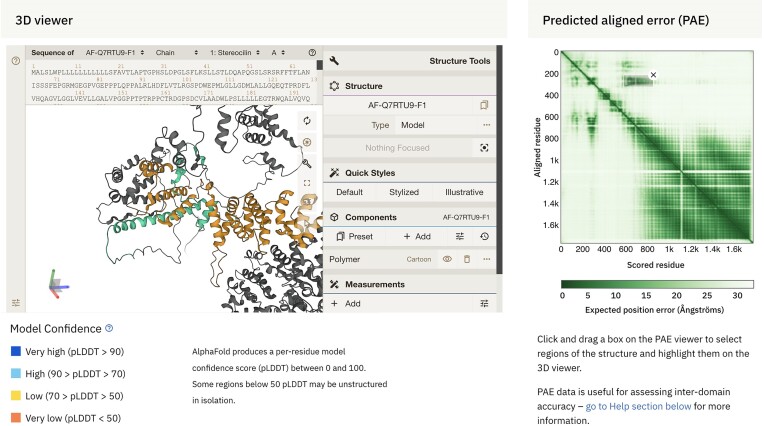
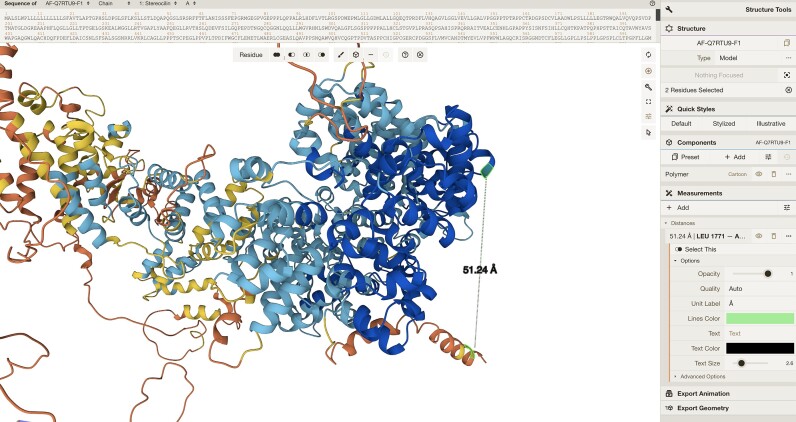
“We improved the visualisation of non-consecutive regions and the interactivity between the PAE viewer and the 3D molecular graphics viewer, Mol* ( 23 ) (Figure 5 ).”
MethodSelf-citationMariani, V., Biasini, M., Barbato, A., & Schwede, T. (2013) · Bioinformatics · doi:10.1093/bioinformatics/btt473 · Cited by 1,138 · cited 1×
“AlphaFold yields a per-residue estimate of its confidence, known as pLDDT, ranging from 0 to 100, indicating the tool’s predicted score on the lDDT-C α metric ( 19 ).”
Method
Cited by
Items 601–700 of 2,174
Yang, L., Zhao, Y., Fu, X., Zhang, W., & Xu, W. L. (2025) · Journal of the American Society for Mass Spectrometry · doi:10.1021/jasms.4c00465 · Cited by 4
Sornsuwan, K., Pamonsupornwichit, T., Juntit, O.-A., Thongkum, W., Takheaw, N., Kodchakorn, K., & Tayapiwatana, C. (2025) · Computational and Structural Biotechnology Journal · doi:10.1016/j.csbj.2025.01.001 · Cited by 7
Designing Novel Solenoid Proteins with In Silico Evolution
Pretorius, D., Nikov, G. I., Washio, K., Florent, S.-W., Taunt, H. N., Ovchinnikov, S., & Murray, J. W. (2025) · doi:10.1101/2025.04.23.646631 · Cited by 10
Yu, J., Zhao, B., & Kurgan, L. (2025) · Computational and Structural Biotechnology Journal · doi:10.1016/j.csbj.2025.05.047 · Cited by 5
“We obtained the AF2 ’ s predictions from the AlphaFold DB [56, 57].”
Dissecting the role of the MS ‐ring protein FliF in Bacillus cereus flagella‐related functions
Mazzantini, D., Gherardini, G., Rossi, V., et al. (2024) · Molecular Microbiology · doi:10.1111/mmi.15299 · Cited by 4
Noble Gases in Medicine: Current Status and Future Prospects
Winkler, D. A. (2024) · Oxygen · doi:10.3390/oxygen4040026 · Cited by 5
RDBSB: a database for catalytic bioparts with experimental evidence
Liu, W., Wang, P., Zhuang, X., Ling, Y., Liu, H., Wang, S., Yu, H., Ma, L., Jiang, Y., Zhao, G., et al. (2024) · Nucleic Acids Research · doi:10.1093/nar/gkae844 · Cited by 5
Royet, K., Kergoat, L., Lutz, S., Oriol, C., Parisot, N., Schori, C., Ahrens, C. H., Rodrigue, A., & Gueguen, E. (2025) · Environmental Microbiology · doi:10.1111/1462-2920.70095 · Cited by 7
Benchmarking unsupervised methods for inferring TCR specificity
Jouannet, C., Vantomme, H., Klatzmann, D., & Mariotti-Ferrandiz, E. (2024) · doi:10.1101/2024.10.26.620398 · Cited by 15
The Evolution of Function in the DNA-Binding Domain of the CRP/FNR Family
Krishnaswamy, M., & Seshasayee, A. S. N. (2025) · Genome Biology and Evolution · doi:10.1093/gbe/evaf182 · Cited by 3
Rowe, D. J., Khalil, T., Kammer, M. N., et al. (2025) · Biosensors and Bioelectronics X · doi:10.1016/j.biosx.2025.100593 · Cited by 4
“The three-dimensional structure of CK19 was obtained from Alphafold (alphafold ID AF-P08727-F1-v4) (Jumper et al., 2021; Varadi et al., 2023).”
Chatzimiltis, S., Agathocleous, M., Promponas, V. J., & Christodoulou, C. C. (2025) · Computational and Structural Biotechnology Journal · doi:10.1016/j.csbj.2024.12.022 · Cited by 8
“…determined structures representing their alternative folds followed by predicted secondary structures by NetSurfP 3.0 and CNN-HFO, as well as the secondary structure assignment (using DSSP) for the respective predicted 3D structures from the AlphaFold database [65] (accessed December 2024).”
InfluentialThou shalt not pass - arachnid venom peptides interacting with biological membranes
Wang, Y., Guo, S., Jee, K. F., & Herzig, V. (2024) · Frontiers in Arachnid Science · doi:10.3389/frchs.2024.1490313 · Cited by 4
Genetic Drivers of Plant Root Colonisation by the Biocontrol Agent Pseudomonas protegens Pf‐5
Ghaly, T. M., Fabian, B. K., Vick, S. H. W., Foster, C., Asher, A. J., Hassan, K. A., Elbourne, L. D. H., Paulsen, I. T., & Tetu, S. G. (2025) · Environmental Microbiology Reports · doi:10.1111/1758-2229.70179 · Cited by 4
“…which were subject to structural homology searching with Foldseek (van Kempen et al. 2024) against the Protein Data Bank (Burley et al. 2023), the AlphaFold/SwissProt (Boeckmann et al. 2003; Varadi et al. 2023), and the AlphaFold/UniProt50 (Consortium 2022; Varadi et al. 2023) databases.”
Functional protein design and enhancement with ontology reinforcement iteration
He, B., Qin, C., Zhao, Y. S., Huang, L.-K., Wu, Z., Wang, F., Wu, F., Yang, F., & Yao, J. (2026) · Nature Communications · doi:10.1038/s41467-026-69855-6 · Cited by 11
“The protein structures were collected from PDB 52 , AlphaFold Protein Structure Database 53 , and ESM Meta-genomic Atlas 30 .”
Sai Krishna, A. V. S., & Balaram, H. (2025) · Biochemistry · doi:10.1021/acs.biochem.4c00801 · Cited by 4
Cryo-EM structure of the human Pannexin-3 channel
Tsuyama, T., Teramura, R., Mitsuoka, K., Kishikawa, J.-I., & Yokoyama, K. (2024) · Biochemical and Biophysical Research Communications · doi:10.1016/j.bbrc.2024.151227 · Cited by 4
PgpP is a broadly conserved phosphatase required for phosphatidylglycerol lipid synthesis
Gründling, A., Brogan, A. P., James, M. J., Ramírez‐Guadiana, F. H., Roney, I. J., Bernhardt, T. G., & Rudner, D. Z. (2025) · Proceedings of the National Academy of Sciences · doi:10.1073/pnas.2418775122 · Cited by 5
“Using the B. subtilis PgpP Alphafold2 model (AF - P54452 - F1 - model v4) (27, 28) to query the Foldseek server (29), we identified the yeast mitochondrial Gep4 protein as a potential PgpP homolog.”
Is a rare CXCL8 gene variant a new possible cause or course factor of inflammatory bowel disease?
Gabryel, M., Zakerska‐Banaszak, O., Ladziak, K., Hubert, K. A., Baturo, A., Suszyńska-Zajczyk, J., Hryhorowicz, M., Dobrowolska, A., & Skrzypczak-Zielińska, M. (2025) · Frontiers in Immunology · doi:10.3389/fimmu.2025.1562618 · Cited by 4
Novel ribosome biogenesis-related biomarkers and therapeutic targets identified in psoriasis
Liu, J., Luo, N., Ma, W., Qiao, Z., Zhong, X., Cheng, Z., Hao, P., & Lv, C. (2025) · Scientific Reports · doi:10.1038/s41598-025-03833-8 · Cited by 5
Medina-Ortiz, D., Escobedo, S., Murillo-Acevedo, N., Soto-García, N., Villegas, D. F., Sandoval, D., & Sanchez–Daza, A. (2026) · IntechOpen eBooks · doi:10.5772/intechopen.1013230 · Cited by 5
Zhang, H., Luo, X., Li, S., et al. (2025) · Phytotherapy Research · doi:10.1002/ptr.70021 · Cited by 4
“MAI-TargetFisher leverages a comprehensive protein target database, comprising both experimentally resolved protein structures and AlphaFold2 predicted structures (Varadi et al. 2023).”
Infectious potential and circulation of SARS-CoV-2 in wild rats
(2025) · doi:10.1371/journal.pone.0316882 · Cited by 4
DeepMFFGO: A Protein Function Prediction Method for Large-Scale Multifeature Fusion
Wang, J., Chen, J., Hu, Y., Song, C., Li, X., Qian, Y., & Deng, L. (2025) · Journal of Chemical Information and Modeling · doi:10.1021/acs.jcim.5c00062 · Cited by 5
Tang, J., Gong, D., Li, H., & Li, S. (2026) · Acta Pharmaceutica Sinica B · doi:10.1016/j.apsb.2026.01.039 · Cited by 7
“Subsequently, AlphaFold’s 214 million predicted structures significantly supplemented these existing datasets 230 .”
Aguilar-Rodríguez, J., Vila, J. C. C., Chen, S.-A. A., Razo‐Mejia, M., Ghosh, O. M., Jarosz, D. F., Fraser, H. B., & Petrov, D. A. (2024) · bioRxiv (Cold Spring Harbor Laboratory) · doi:10.1101/2024.10.30.621178 · Cited by 18
Overexpression of OsMYBS1 affect leaf morphology, photosynthesis, and agronomic performance in rice
Ma, Y., Zhang, J., Liang, K., et al. (2025) · Frontiers in Plant Science · doi:10.3389/fpls.2025.1653514 · Cited by 4
The unusual suspect: A novel role for intermediate filament proteins in mitochondrial morphology
Hemel, I. M. G. M., Steen, C., Denil, S. L. I. J., Ertaylan, G., Kutmon, M., Adriaens, M. E., & Gerards, M. (2025) · Mitochondrion · doi:10.1016/j.mito.2025.102008 · Cited by 4
In-silico analysis of deleterious non-synonymous SNPs in the human AVPR1a gene linked to autism
Jibon, M. D. K., Islam, M. A., Hosen, M. E., Faruqe, M. O., Zaman, R., Acharjee, U. K., Sikdar, B., Tiruneh, Y. K., Khalekuzzaman, M., Jawi, M., et al. (2025) · BMC Genomics · doi:10.1186/s12864-025-11655-1 · Cited by 5
“The native structure of the AVPR1a protein was down-loaded from the AlphaFold protein structure database (AlphaFold DB, https:// alpha fold. ebi. ac. uk/) [52].”
von Känel, C., Aeschlimann, S., Husová, M., Oeljeklaus, S., Stettler, P., Schnaufer, A., Warscheid, B., Zíková, A., & Schneider, A. (2026) · The FEBS Journal · doi:10.1111/febs.70297 · Cited by 4
“S1) [41,42].”
Peter Simmonds, K., Butković, A., Grove, J., Mayne, R., Mifsud, J. C. O., Beer, M., Bukh, J., Drexler, J. F., Kapoor, A., Lohmann, V., et al. (2025) · bioRxiv (Cold Spring Harbor Laboratory) · doi:10.1101/2025.01.17.632993 · Cited by 5
Exploring the structural landscape of universal stress proteins in Archaea
Matarredona, L., García-Bonete, M.-J., Zafrilla, B., et al. (2025) · World Journal of Microbiology and Biotechnology · doi:10.1007/s11274-025-04439-y · Cited by 4
Zoabi, F. H., Zerihun, M., Lizarovich, R., Torre, C. D., Davis, L., Ertracht, O., Barsheshet, M., Atar, S., Shalev, D. E., Zotti, M. D., et al. (2025) · Computational and Structural Biotechnology Journal · doi:10.1016/j.csbj.2025.07.001 · Cited by 4
“Simultaneously, a representative structure of the human Mfn2 cytosolic domain (residues 1 – 540, 653 – 757: UniProt O95140) was retrieved from the AlphaFold database (entry: O95140) [47,48] followed by refinement via a 50 ns MD simulation (Fig.”
Akçimen, F., Paquette, K., Crea, P. W., et al. (2025) · medRxiv · doi:10.1101/2025.01.14.25320205 · Cited by 4
(2025) · doi:10.1101/2025.02.10.637553 · Cited by 4
“Alphafold models of MA3299, MA1821 and MA1822 were retrieved from the AlphaFold Protein Structure Database ( 34 , 35 ).”
Exploration of potential novel drug targets for rheumatoid arthritis by plasma proteome screening
Ma, Z., Chen, R., & Feng, Z. (2025) · PLoS Computational Biology · doi:10.1371/journal.pcbi.1013333 · Cited by 4
“The compound structures are obtained from the PubChem [38] database (https://pub-chem.ncbi.nlm.nih.gov/), and the protein structures are obtained from the PDB [39] database (https://www.rcsb.org/) or AlphaFold database [40,41](https://alphafold.ebi.ac.uk/).”
Foltran, B. B., Gaspar, J. P., Silva, I. R. M., Pires, H. M., de Andrade, F. B., Costa, G. M., Paixao, J. E. L., Fernandes, L. G. V., Teixeira, A. F., & Nascimento, A. L. T. O. (2024) · Frontiers in Cellular and Infection Microbiology · doi:10.3389/fcimb.2024.1492352 · Cited by 4
Enzymatic basis of branching and extension of O-Man glycans for keratan sulfate biosynthesis
Itoh, T., Tanaka, H.-N., Pareek, M., Nagae, M., Manya, H., Ido, A., Mishra, S. K., & Kizuka, Y. (2026) · Journal of Biological Chemistry · doi:10.1016/j.jbc.2026.111140 · Cited by 6
Toward life with a 19–amino acid alphabet through generative artificial intelligence design
Liu, L., Rochereau, C., Kozlov, S., Urtecho, G., Liu, X., Zhao, J., Wang, J., Huang, Y., Qu, Y., Zhang, Z., et al. (2026) · Science · doi:10.1126/science.aeb5171 · Cited by 9
Agboraw, E., Haese-Hill, W., Hentzschel, F., Briggs, E., Aghabi, D., Heawood, A., Harding, C. R., Shiels, B., Crouch, K., Somma, D., et al. (2025) · Nucleic Acids Research · doi:10.1093/nar/gkaf091 · Cited by 4
Liu, X., Rastegari, S., Huang, Y., Cheong, S. C., Liu, W., Zhao, W., Tian, Q., Wang, H., Guo, Y., Zhou, S., et al. (2025) · Methods · doi:10.1016/j.ymeth.2025.07.004 · Cited by 6
Sherer, N., Bastiray, A., Chen, X., Molugu, T. R., Yadav, G. P., Igumenova, T. I., & Cho, J. (2026) · Science Advances · doi:10.1126/sciadv.aee5276 · Cited by 7
“Initial models for Tom70 and Tom70:Hsp90 EEVD complex were generated through AlphaFold ( 61 , 62 ), and the initial fitting into the map was performed in UCSF ChimeraX ( 63 ).”
Otwinowska, A., Koszucki, J., Panicker, V. R., Leconte, J., Olejniczak, S., Holt, K. E., Feil, E. J., Rocha, E. P. C., Smug, B., Maciejewska, B., et al. (2026) · PLOS Biology · doi:10.1371/journal.pbio.3003716 · Cited by 5
“We used FoldSeek [52] to search the non-RBP predictors against the CATH Protein Structure Classification database [53], the Protein Data Bank database [54], and the AlphaFold Protein Structure database [55] and found that these proteins structurally resembled known acetyltransferases.”
LncRNA SLNCR phenocopies the E2F1 DNA binding site to promote melanoma progression
Shah, K. K., Anastasakou, E., Sejour, L., Wang, Y., Wert-Lamas, L., Rauchet, C., Studer, S., Goller, S. G., Distel, R. J., Marasco, W. A., et al. (2025) · Cell Reports · doi:10.1016/j.celrep.2025.115608 · Cited by 4
KIF21A-associated peripheral neuropathy defined by impaired binding with TUBB3
Borja, N. A., Zafeer, M. F., Bivona, S., Peart, L., Gultekin, S. H., Undiagnosed Diseases Network, Bademci, G., & Tekin, M. (2024) · Journal of Medical Genetics · doi:10.1136/jmg-2024-109908 · Cited by 3
TDP43 is a newly identified substrate for PS1, enhancing the expression of APP following cleavage
Yin, H., Wang, Y., Ren, Z., Xiao, Z., Zhang, Y., Wang, Y., Guo, Z., Chen, L., Bao, X., Bei, Y., et al. (2025) · Cell Death Discovery · doi:10.1038/s41420-025-02340-z · Cited by 4
“Furthermore, Primer Premier software (PREMIER Biosoft, Version 5, USA) was employed to design the point mutation primers for TDP-43 (Table 1).”
Physical exercise increases binding of POMC to blood extracellular vesicles
Santos, M. F., Randa, J., Tai, D., Vistoli, G., Schahaf, N. A., Vittorio, S., Fuentes, G., Lauro, R., Mosallaei, S., Karbanová, J., et al. (2025) · Proceedings of the National Academy of Sciences · doi:10.1073/pnas.2525044122 · Cited by 4
“The structure was protonated at two different pH values (7.0 and 7.4) using the H++ webserver (62) and optimized by running two replica MD simulations for 1 μ s each.”
InfluentialUnsupervised Domain Classification of AlphaFold2-Predicted Protein Structures
Barone, F., Laio, A., Punta, M., Cozzini, S., Ansuini, A., & Cazzaniga, A. (2025) · PRX Life · doi:10.1103/prxlife.3.023009 · Cited by 3
Capra, V., Ropero‐Pérez, C., Ruiz, M. E., Zotti, M., Marcos, J. F., Manzanares, P., & Garrigues, S. (2025) · International Journal of Biological Macromolecules · doi:10.1016/j.ijbiomac.2025.147125 · Cited by 4
Atom-level generative foundation model for molecular interaction with pockets
Peng, X., Guo, F., Guo, R., Sun, J., Guan, J., Jia, Y., Xu, Y., Huang, Y., Zhang, M., Peng, J., et al. (2024) · doi:10.1101/2024.10.17.618827 · Cited by 22
“Recently, artificial intelligence has made significant strides in understanding and deciphering these complexities 3–9 .”
Spinner, A., Sreenivasan, S., McLellan, J. R., Ikonomova, S. P., Cortade, D. L., d’Oelsnitz, S., Sheldon, K. N., Vasilyeva, O. B., Alperovich, N., Chadha, A., et al. (2026) · bioRxiv (Cold Spring Harbor Laboratory) · doi:10.64898/2026.04.15.718744 · Cited by 4
Mezcord, V., Luu, I., Akhtar, U., Traglia, G. M., Rodriguez, C., Moheb, S., Sanchez, S. D., Soto, M. T., Clave, M. J. C., Sieira, R., et al. (2026) · mBio · doi:10.1128/mbio.03760-25 · Cited by 3
RG motifs promote piRNA-mediated gene silencing in C. elegans
Wallis, D. C., & Phillips, C. M. (2025) · Nucleic Acids Research · doi:10.1093/nar/gkaf1331 · Cited by 3
“This result is further supported by the predicted protein structure, as determined by AlphaFold2 [ 92 , 93 ], which finds that the first ∼ 30 amino acids of C. elegans PRG-1 are unstructured ( Supplementary Fig.”
Sun, Z., Ning, Z., Wu, Q., Li, L., Doxey, A. C., & Figeys, D. (2025) · npj Biofilms and Microbiomes · doi:10.1038/s41522-025-00801-y · Cited by 4
“In contrast, searching this protein in the AlphaFold Protein Structure Database 29,30 matched UniProt ID A0A1E9BZD4 (100% identity, HSP score of 1197), an uncharacterized protein without a known biological function.”
Zhang, Y., Cao, Y., & de Visser, S. P. (2025) · Journal of the American Chemical Society · doi:10.1021/jacs.5c13857 · Cited by 11
Zacharias, A. O., Cornelius, S., & Chowdhury, S. M. (2024) · Molecular Omics · doi:10.1039/d4mo00186a · Cited by 4
Zhang, R., Liu, S., Tao, Y., Wang, X.-N., Li, F., & Wang, Z. (2025) · Chemistry - A European Journal · doi:10.1002/chem.202503240 · Cited by 5
Guillén-Samander, A., Perepelkina, N., Horáčková, V., Behrens, H. M., Cruz, H. O. R., Mesén-Ramírez, P., Ribeiro-Holbein, A., Haberkant, P., Stein, F., & Spielmann, T. (2026) · Nature Communications · doi:10.1038/s41467-026-70887-1 · Cited by 6
Dexter, G. N., Grigg, J. C., Zahn, M., et al. (2025) · Journal of Biological Chemistry · doi:10.1016/j.jbc.2025.110210 · Cited by 3
Winterbourne, S., Jayachandran, U., Zou, J., Rappsilber, J., Granneman, S., & Cook, A. G. (2025) · Nucleic Acids Research · doi:10.1093/nar/gkaf204 · Cited by 5
“Alignments were used as input files for ConSurf conservation analysis using full-length AlphaFold2 models of all proteins [ 33 ].”
TRPtracker: a community database for monitoring praziquantel sensitivity at TRPMPZQ variants
Rohr, C. M., Park, S.-K., Aguiar-Martins, K., Anderson, T. J. C., Berger, D., Berriman, M., Buddenborg, S. K., Bustinduy, A. L., Chevalier, F. D., Cotton, J. A., et al. (2026) · International Journal for Parasitology Drugs and Drug Resistance · doi:10.1016/j.ijpddr.2026.100639 · Cited by 6
Human prostacyclin and thromboxane synthases: Molecular interactions, regulation, and pharmacology
Ershov, P. V., Yablokov, E. O., Mezentsev, Y. V., & Ivanov, A. S. (2025) · Biochimie · doi:10.1016/j.biochi.2025.04.003 · Cited by 5
Kousar, S., Manzoor, I., Muhammad, S., Almohaimeed, H. M., Hasan, T., Fenibo, E. O., & Matambo, T. S. (2026) · Scientific Reports · doi:10.1038/s41598-026-45572-4 · Cited by 6
Dewangan, P. S., Dohr, S. R., Trotter, J. T., Nichols, B., & Reese, M. L. (2025) · bioRxiv (Cold Spring Harbor Laboratory) · doi:10.1101/2025.08.27.672535 · Cited by 3
metagRoot: a comprehensive database of protein families associated with plant root microbiomes
Chasapi, M. N., Chasapi, I. N., Aplakidou, E., Baltoumas, F. A., Karatzas, E., Iliopoulos, I., Stravopodis, D. J., Emiris, I. Z., Buluç, A., Georgakopoulos‐Soares, I., et al. (2025) · Nucleic Acids Research · doi:10.1093/nar/gkaf862 · Cited by 4
Cysteine-reactive covalent chloro-N-acetamide ligands induce ferroptosis mediated cell death
Gotthardt, G., Weckesser, J., Tascher, G., da Gama, S. B., Uckelmann, H. J., Sun, S., Schwalm, M. P., Mosler, T., Ferrario, G., Angeli, J. P. F., et al. (2025) · EMBO Reports · doi:10.1038/s44319-025-00593-4 · Cited by 3
Structural assembly of the subcortical maternal complex SCMC
Ou, G., Liu, Q., Jiao, H., et al. (2025) · Structure · doi:10.1016/j.str.2025.09.009 · Cited by 3
A unified multimodal model for generalizable zero-shot and supervised protein function prediction
Boadu, F., Wang, Y., & Cheng, J. (2026) · Bioinformatics · doi:10.1093/bioinformatics/btag356 · Cited by 4
“The zero-shot function prediction was tested on the Text_Zero dataset.”
Cnidarian toxins: omics approaches and recombinant proteins
Vega-Tamayo, J. E., Alcantar-Orozco, E. D. J., Mendoza-Ramírez, R. A., Silva-Díaz, L. G., Aguilar-Salazar, J. A., Salvador-Aguilar, D. H., & Rojas‐Molina, A. (2025) · The Journal of venomous animals and toxins including tropical diseases · doi:10.1590/1678-9199-jvatitd-2025-0019 · Cited by 4
Bacterial lipids traverse the hydrophobic groove of TamBPreprint
Lin, Y., & Corry, B. (2025) · bioRxiv (Cold Spring Harbor Laboratory) · doi:10.1101/2025.03.12.642747 · Cited by 3
Xie, C., Zeng, B., Du, X., Yan, S., Shen, J., & Zhang, J. (2024) · Journal of Agricultural and Food Chemistry · doi:10.1021/acs.jafc.4c06416 · Cited by 4
Coronavirus M protein impairs cilium during early infection by enhancing the AurA-HDAC6 axis
Zhuang, T., Yang, P., Wang, M., Liu, S., Wang, W., Sun, B., Xu, Y. M., Chen, L., Bao, X., Yang, D. A., et al. (2025) · PLoS Pathogens · doi:10.1371/journal.ppat.1013515 · Cited by 3
“Additionally, three-dimensional structure models of human AurA (AF-O14965-F1), human HDAC6 (AF-Q9UBN7-F1), porcine AurA (AF-A5GFW1-F1), and porcine HDAC6 (AF-A0A287BPX4-F1) were predicted via Alpha-Fold server (https://alphafold.com/) [ 61,62].”
Structural insights into metallocluster trafficking in the nitrogenase assembly scaffold NifEN
Neumann, B. C., Brandon, K., Quechol, R., et al. (2026) · Nature Catalysis · doi:10.1038/s41929-026-01489-9 · Cited by 3
“Atomic models for apo-NifEN and holo-NifEN in were generated using the AlphaFold Protein Structure Database (AFDB) 44–46 as the initial models.”
Generating functional and multistate proteins with a multimodal diffusion transformerPreprint
Jing, B., Sappington, A., Bafna, M., Shah, R., Tang, A., Krishna, R., Klivans, A. R., Diaz, D. J., & Berger, B. (2025) · bioRxiv (Cold Spring Harbor Laboratory) · doi:10.1101/2025.09.03.672144 · Cited by 13
Genetic analysis of circulating metabolic traits in 619,372 individuals
Tambets, R., Jesse, M., Kronberg, J., van der Graaf, A., Abner, E., Võsa, U., Rahu, I., Taba, N., Kolde, A., Yarish, D., et al. (2026) · Nature · doi:10.1038/s41586-026-10532-5 · Cited by 37
“Structures of the regulatory proteins BCKDK and PPM1K were retrieved from the AlphaFold Protein Structure Database 89,90 .”
Multimodal graph, surface, and language-based model for protein protein interaction prediction
Arteaga, D., Chervov, N., & Poptsova, M. (2026) · Scientific Reports · doi:10.1038/s41598-025-34758-x · Cited by 3
LLP1 is a pyrophosphatase involved in homeostasis/quality control of dolichol-linked oligosaccharide
Li, S.-T., Kamada, K., Honda, A., Seino, J., Matsuda, T., Suzuki, T., Dohmae, N., Shichino, Y., Iwasaki, S., Noda, Y., et al. (2025) · The Journal of Cell Biology · doi:10.1083/jcb.202501239 · Cited by 5
Kobayashi, D., Takami, T., & Matsumoto, M. (2025) · Journal of Proteome Research · doi:10.1021/acs.jproteome.5c00339 · Cited by 5
Deep Generative Modeling of Protein Conformations: A Comprehensive Review
Dao, T. M., & Rahman, T. (2025) · BioChem · doi:10.3390/biochem5030032 · Cited by 9
“The AlphaFold Protein Structure Database (AlphaFold DB) is an extensive repository of protein structures predicted by the AlphaFold 2 artificial intelligence system developed by Google DeepMind [7].”
Xu, X., Xu, F., Chen, J., et al. (2025) · International Journal of Biological Macromolecules · doi:10.1016/j.ijbiomac.2025.139561 · Cited by 3
Ahmed, S. T., Zhai, S., Huang, X., Sulaja, S., Adewole, A., Ioffe, A., Merg, A. D., Yan, J., & Eguiluz, R. C. A. (2025) · Colloids and Surfaces B Biointerfaces · doi:10.1016/j.colsurfb.2025.115390 · Cited by 3
Ruan, H., Dillenburg, R. F., Hosseini, E., Wittmann, S., Girard, M., & Lemke, E. A. (2025) · Nature Communications · doi:10.1038/s41467-025-66327-1 · Cited by 7
“The coordinates for the structured regions of HOXA9 are alpha-fold predictions taken from UniProt database (https://www.uniprot.org/uniprotkb/P31269/ entry) 84,85 .”
Qiu, Z., Shi, Y., Wu, Y., Zheng, Y., Shi, W., Yin, M., Zhang, L., & Wang, X. (2025) · Comprehensive Reviews in Food Science and Food Safety · doi:10.1111/1541-4337.70364 · Cited by 4
Structures of Ostα/β reveal a unique fold and bile acid transport mechanism
Yang, X., Cui, N., Li, T., He, X., Zhang, H., Wu, C., Li, Y., Ma, X., & Xu, H. E. (2026) · Nature · doi:10.1038/s41586-025-10029-7 · Cited by 4
“Structure similarity searches against the AlphaFold Protein Structure Database 19,33 using Foldseek 20 suggest this distinctive architecture extends to the TMEM184 membrane protein family (Supplementary Fig.”
Mesoscale regulation of microtubule-organizing centers by the E3 ligase TRIM37
Yeow, Z. Y., Sarju, S., Chang, F.-C., Xu, L. Y., van Breugel, M., & Holland, A. J. (2025) · Nature Structural & Molecular Biology · doi:10.1038/s41594-025-01540-6 · Cited by 8
“The structure of monomeric TRIM37 (UniProt O94762) was obtained from the AlphaFold Protein Structure Database 55 .”
A Novel Actinobacteria-Specific Ribosome Hibernation Factor in Mycobacterium tuberculosisPreprint
Majumdar, S., Li, Y., Manjari, S. R., Gamper, H., Hou, Y., Banavali, N. K., Ojha, A. K., & Agrawal, R. K. (2024) · bioRxiv (Cold Spring Harbor Laboratory) · doi:10.1101/2024.11.25.625233 · Cited by 6
Gallas, G. (2025) · Plant Signaling & Behavior · doi:10.1080/15592324.2025.2532008 · Cited by 3
Krammer, L., Darnhofer, B., Kljajic, M., Liesinger, L., Schittmayer, M., Neshchadin, D., Gescheidt, G., Kollau, A., Mayer, B., Fischer, R. C., et al. (2025) · Chemical Science · doi:10.1039/d4sc08454c · Cited by 5
Weiblen, C., Kits, K. D., Kleiner, M., Sauvageau, D., & Stein, L. Y. (2024) · doi:10.1101/2024.01.07.574550 · Cited by 8
Jensen, P. T., Palmisano, G., Rhodes, C. J., & Larsen, M. R. (2023) · bioRxiv (Cold Spring Harbor Laboratory) · doi:10.1101/2023.07.09.548252 · Cited by 3
Exploring the protein universe with distant similarity detection methods
Sahakyan, H., Mutz, P., Tobiasson, V., & Koonin, E. V. (2025) · Protein Science · doi:10.1002/pro.70397 · Cited by 5
Legionella uses host Rab GTPases and BAP31 to create a unique ER niche
Chadha, A., Yanai, Y., Oide, H., Wakana, Y., Inoue, H., Saha, S., Paul, M., Tagaya, M., Arasaki, K., & Mukherjee, S. (2024) · Cell Reports · doi:10.1016/j.celrep.2024.115053 · Cited by 6
“The 3D model structure of human BAP31 (Uniprot ID: P51572) was predicted in Swissmodel server (Waterhouse et al. 52 ) based on a previously determined 3D model of the same protein in Alphafold (Varadi et al. 53 ).”
Metagenomic mining reveals novel viral histones in dsDNA viruses
Liu, Y., Hou, Z., Hao, W., Cui, S., Wang, H., & Liu, Y. (2025) · hLife · doi:10.1016/j.hlife.2025.02.005 · Cited by 5
Xu, C., Zhang, S., Liu, Y., Lv, J., Cao, Y., Yao, C., Sun, H., Zhang, B., Dai, S., Li, J., et al. (2025) · Advanced Science · doi:10.1002/advs.202509654 · Cited by 5
Çapan, Ö. Y. (2025) · Journal of Molecular Neuroscience · doi:10.1007/s12031-024-02299-z · Cited by 4
“These missing regions were completed using the predicted protein structure obtained from the AlphaFold Protein Structure Database (AF-O76039-F1) (Varadi et al. 2024).”
An interpretable molecular framework for predicting cancer driver missense mutations
Yang, Y., Sun, W., Liu, Y., Zhang, J., & Li, M. (2026) · Proceedings of the National Academy of Sciences · doi:10.1073/pnas.2524289123 · Cited by 3
“…sites and predicted PPI - BS were obtained from exter-nal databases, while the others were computed in - house using experimentally resolved PDB structures (68) and/or AlphaFold2 - predicted monomeric models (69, 70); models that were truncated or had a median pLDDT score below 70 were excluded.”
Tayac, C., Torres, J., & Rodas-Rodríguez, J. M. (2025) · Progress in Biophysics and Molecular Biology · doi:10.1016/j.pbiomolbio.2025.09.001 · Cited by 3
Large protein databases reveal structural complementarity and functional localityPreprint
Szczerbiak, P., Szydlowski, L. M., Wydmański, W., Renfrew, P. D., Leman, J. K., & Kościółek, T. (2024) · bioRxiv (Cold Spring Harbor Laboratory) · doi:10.1101/2024.08.14.607935 · Cited by 3
Freye, C., & Miller, B. G. (2025) · Archives of Biochemistry and Biophysics · doi:10.1016/j.abb.2025.110517 · Cited by 2
Metadata
- Authors
- Varadi, M., Bertoni, D., Magana, P., Paramval, U., Pidruchna, I., Radhakrishnan, M., Tsenkov, M., Nair, S., Mirdita, M., Yeo, J., Kovalevskiy, O., Tunyasuvunakool, K., Laydon, A., Žídek, A., Tomlinson, H., Hariharan, D., Abrahamson, J., Green, T., Jumper, J., Birney, E., Steinegger, M., Hassabis, D., & Velankar, S.
- Affiliations
- European Molecular Biology Laboratory, European Bioinformatics Institute , Hinxton, UK
- European Bioinformatics Institute (GB)
- Seoul National University (KR)
- Google DeepMind (United Kingdom) (GB)
- Corresponding author
- Hassabis, Demis
- Velankar, Sameer
- ORCID
- Venue
- Nucleic Acids Research
- Publisher
- Oxford University Press (OUP)
- Published
- 2023-11-02
- Volume
- 52
- Issue
- D1
- Pages
- D368-D375
- ISSN
- 0305-1048 (ISSN-L)
- 1362-4962
- PMC
- PMC10767828
- OpenAlex
- W4388464011
- Cited by
- 2,052
- References
- 29
- Citations by year
- 2026: 724 · 2025: 1015 · 2024: 307 · 2023: 5
- FWCI
- 181.98
- Type
- journal article
- Language
- en
- Open access
- gold
- doi.org
- Licence
- Locations
- Nucleic Acids Research (publishedVersion, cc-by)
- PubMed Central (publishedVersion, cc-by)
- PubMed (publishedVersion)
- Seoul National University Open Repository (Seoul National University) (submittedVersion)
- Funders
- Google DeepMind
- National Research Foundation of Korea (2019R1A6A1A10073437, 2020M3A9G7103933, 2021R1C1C102065, 2021M3A9I4021220, RS-2023-00250470)
- Samsung DS Research Fund
- Seoul National University
- Topics
- Life Sciences › Biochemistry, Genetics and Molecular Biology › Molecular Biology › Protein Structure and Dynamics
- Life Sciences › Biochemistry, Genetics and Molecular Biology › Structural Biology › Enzyme Structure and Function
- Life Sciences › Biochemistry, Genetics and Molecular Biology › Molecular Biology › Machine Learning in Bioinformatics
- Keywords
- predicted protein structures, AlphaFold2, protein structure prediction, protein sequence coverage, data archiving, database access, search engines
- MeSH terms
- Amino Acid Sequence, Artificial Intelligence, Proteins, Protein Structure, Secondary, Proteome, Databases, Protein, Search Engine
About these checks
Registry, retraction, Cites and statistics results are computed, not judged, with one exception: a printed reference that no index lists is read once by a model before it counts as a citation error. Claims are extracted by a model and kept only when their quote appears verbatim in the text; each cited source is then checked, with a model’s help, for whether it says what the claim relies on. Those verdicts can be wrong — read the claim’s quote and the cited source before relying on one.
The claim verdicts this report counts are experimental: their accuracy is not yet measured.
A language model drew the claims from the paper on 2026-10-10, under version 3 of the claim definition (model deepseek-v4.1-flash, prompt extract-v3).
A second model labelled each claim on 2026-10-10 (model jev-1.13-20260917, definition revision gold-guideline-v0.2).
Cited sources are checked with a language model’s help (gpt-6-sol).
Statistics and arithmetic are recomputed, not judged.
Confidence bands are shown only for fields calibrated on our annotated test set. None is calibrated yet, so no band is shown.
What counts as a claim ›How we measure confidence ›How we check this ›
Are you an author, or do you see a problem with this page? Request a review
Data sources
Bibliographic data: Semantic Scholar, OpenAlex, Crossref.
Contains information from the Semantic Scholar Academic Graph Datasets, made available under the ODC Attribution License (ODC-BY 1.0).
Semantic Scholar’s data is described in: Kinney, R., et al. (2023). The Semantic Scholar Open Data Platform. arXiv:2301.10140.
