

Mindfulness-based Relapse Prevention for Substance Use Disorders: A Systematic Review and Meta-analysis
Open accessThe DOI matches its Crossref record; 72 of the 76 references it cites were found in a registry or an index.
Abstract
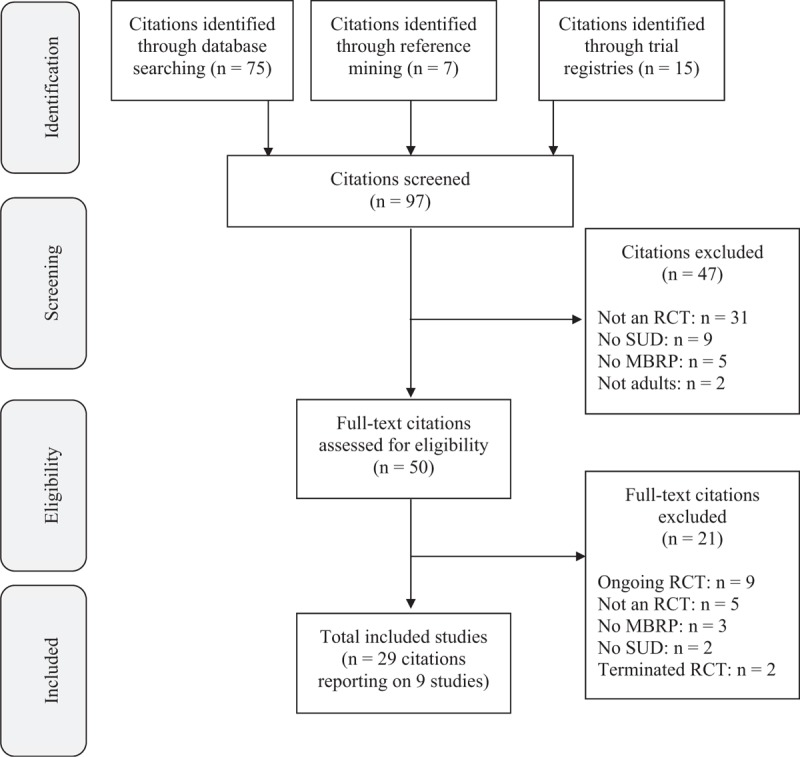
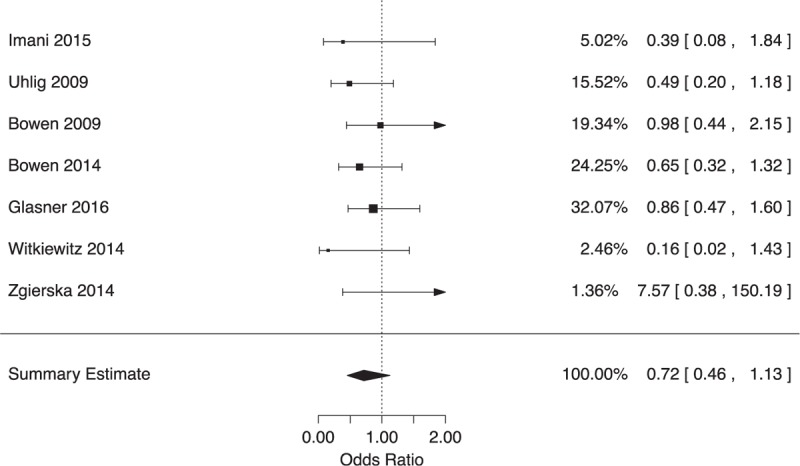
Objectives: Substance use disorder (SUD) is a prevalent health issue with serious personal and societal consequences. This review aims to estimate the effects and safety of Mindfulness-based Relapse Prevention (MBRP) for SUDs. Methods: We searched electronic databases for randomized controlled trials evaluating MBRP for adult patients diagnosed with SUDs. Two reviewers independently assessed citations, extracted trial data, and assessed risks of bias. We conducted random-effects meta-analyses and assessed quality of the body of evidence (QoE) using the Grading of Recommendations Assessment, Development, and Evaluation approach. Results: We identified 9 randomized controlled trials comprising 901 participants. We did not detect statistically significant differences between MBRP and comparators on relapse (odds ratio [OR] 0.72, 95% confidence interval [CI] 0.46–1.13, low QoE), frequency of use (standardized mean difference [SMD] 0.02, 95% CI −0.40 to 0.44, low QoE), treatment dropout (OR 0.81, 95% CI 0.40 to 1.62, very low QoE), depressive symptoms (SMD −0.09, 95% CI −0.39 to 0.21, low QoE), anxiety symptoms (SMD −0.32, 95% CI −1.16 to 0.52, very low QoE), and mindfulness (SMD −0.28, 95% CI −0.72 to 0.16, very low QoE). We identified significant differences in favor of MBRP on withdrawal/craving symptoms (SMD −0.13, 95% CI −0.19 to −0.08, I 2 = 0%, low QoE) and negative consequences of substance use (SMD −0.23, 95% CI −0.39 to −0.07, I 2 = 0%, low QoE). We found negligible evidence of adverse events. Conclusions: We have limited confidence in estimates suggesting MBRP yields small effects on withdrawal/craving and negative consequences versus comparator interventions. We did not detect differences for any other outcome. Future trials should aim to minimize participant attrition to improve confidence in effect estimates.
Overview
The claims and statistics of this paper haven’t been checked yet.
Free: it reads the open-access text and checks the first 5 claims that cite a source we can check. Create a free account to check every claim.
Integrity signals
Registry
Cites
Statistics
Figures
Verification
Claims the paper makes
The claims and statistics of this paper haven’t been checked yet.
Free: it reads the open-access text and checks the first 5 claims that cite a source we can check. Create a free account to check every claim.
Claims other papers make about this one
Each is checked against this paper’s own text: does it say what the citing paper says it does?
The cited source doesn’t support the claim as written.
In the citing paper
“Second, MBSR has been adapted in a variety of other marginalized populations (e.g., African American adults) and clinical conditions (e.g., addiction) with demonstrated efficacy (Grant et al., 2017; Palta et al., 2012; Sibinga et al., 2014; Witkiewitz & Bowen, 2010).”
From Mindfulness for Reducing Minority Stress and Promoting Health Among Sexual Minority Men: Uncovering Intervention Principles and Techniques (2022) · cites this paper as Grant et al., 2017
Checked by a reasoning model — may be wrong.
Experimental — accuracy not yet measuredThe source backs part of the claim, not all of it — or backs it for a different population, condition or comparison.
In the citing paper
“Furthermore, MBRP may have direct benefits on well-being for participants in jails and prisons (Grant et al. 2017, Auty, Cope, & Liebling, 2017).”
From Mindfulness-Based Relapse Prevention in a Jail Drug Treatment Program. (2019) · cites this paper as Grant et al. 2017
Experimental — accuracy not yet measuredThe source backs part of the claim, not all of it — or backs it for a different population, condition or comparison.
In the citing paper
“MT has been shown to reduce the severity of physical symptoms in populations with various medical disorders, including pain severity in people being treated for cancer,16 gastrointestinal symptoms in adults with irritable bowel syndrome,17 and withdrawal symptoms in people recovering from substance use.18”
From Prenatal Mindfulness Training and Interoceptive Awareness in Pregnant People at Risk for Hypertensive Disorders. (2024) · cites this paper as [18]
Experimental — accuracy not yet measuredThe source backs part of the claim, not all of it — or backs it for a different population, condition or comparison.
In the citing paper
“Meta-analyses of mindfulness intervention studies indicate small-to-large effects of mindfulness interventions in reducing frequency and severity of substance use, intensity of drug craving and severity of experienced stress, and improving mental health [22–24].”
From Mindful moms: acceptability and impact of co-designed and digitally delivered video meditations for pregnant and parenting women with opioid use disorder (2025) · cites this paper as [23]
Experimental — accuracy not yet measuredThe cited source says what the claim attributes to it.
In the citing paper
“A recent meta-analysis has suggested that the benefits of MBRP over other treatments in reducing substance use may be limited (Grant et al. 2017).”
From Mindfulness-Based Relapse Prevention in a Jail Drug Treatment Program. (2019) · cites this paper as Grant et al. 2017
3 more claims about this paper
Create a free account to see every claim other papers make about this one.
Self-check
Percentages, sums and reported differences re-computed from the paper’s own numbers.
The self-check needs the paper’s full text.
Citations
Cites
Measuring inconsistency in meta-analyses
Higgins, J. P. T., Thompson, S. G., Deeks, J. J., & Altman, D. G. (2003) · BMJ · doi:10.1136/bmj.327.7414.557 · Cited by 63,139
Bias in meta-analysis detected by a simple, graphical test
Egger, M., Smith, G. D., Schneider, M., & Minder, C. (1997) · BMJ · doi:10.1136/bmj.315.7109.629 · Cited by 56,722 · cited 2×
“Published by Wolters Kluwer He for funnel plot asymmetry (Begg and Mazumdar, 1994), and Egger test for funnel plot asymmetry (Egger et al., 1997).”
MethodThe Cochrane Collaboration's tool for assessing risk of bias in randomised trials
Higgins, J. P. T., Altman, D. G., Gotzsche, P. C., Juni, P., Moher, D., Oxman, A. D., Savovic, J., Schulz, K. F., Weeks, L., Sterne, J. A. C., et al. (2011) · BMJ · doi:10.1136/bmj.d5928 · Cited by 33,817
Dermyshi, E., Wang, Y., Yan, C., Hong, W., Qiu, G., Gong, X., & Zhang, T. (2017) · Neonatology · doi:10.1159/000454668 · Cited by 24,451
Operating characteristics of a rank correlation test for publication bias
Begg, C. B., & Mazumdar, M. (1994) · Biometrics · doi:10.2307/2533446 · Cited by 16,955
Duval, S., & Tweedie, R. (2000) · Biometrics · doi:10.1111/j.0006-341x.2000.00455.x · Cited by 14,099
The benefits of being present: Mindfulness and its role in psychological well-being
Brown, K. W., & Ryan, R. M. (2003) · Journal of Personality and Social Psychology · doi:10.1037/0022-3514.84.4.822 · Cited by 13,448
Moher, D., Hopewell, S., Schulz, K. F., Montori, V., Gotzsche, P. C., Devereaux, P. J., Elbourne, D., Egger, M., & Altman, D. G. (2010) · BMJ · doi:10.1136/bmj.c869 · Cited by 8,883
GRADE guidelines: 3. Rating the quality of evidence
Balshem, H., Helfand, M., Schünemann, H. J., Oxman, A. D., Kunz, R., Brozek, J., Vist, G. E., Falck-Ytter, Y., Meerpohl, J., & Norris, S. (2011) · Journal of Clinical Epidemiology · doi:10.1016/j.jclinepi.2010.07.015 · Cited by 8,285
Dissociable intrinsic connectivity networks for salience processing and executive control
Seeley, W. W., Menon, V., Schatzberg, A. F., Keller, J., Glover, G. H., Kenna, H., Reiss, A. L., & Greicius, M. D. (2007) · The Journal of Neuroscience · doi:10.1523/jneurosci.5587-06.2007 · Cited by 7,426 · cited 1×
“, 2010), and stimulate activity in circuitry related to cognitive self-regulation of behavior (Seeley et al., 2007; Craig, 2009; Xue et al., 2011; Hasenkamp and Barsalou, 2012; Hasenkamp et al., 2012).”
BackgroundHow do you feel — now? The anterior insula and human awareness
(Bud) Craig, A. D. (2009) · Nature Reviews Neuroscience · doi:10.1038/nrn2555 · Cited by 6,657
SPIRIT 2013 explanation and elaboration: guidance for protocols of clinical trials
Chan, A.-W., Tetzlaff, J. M., Gotzsche, P. C., Altman, D. G., Mann, H., Berlin, J. A., Dickersin, K., Hrobjartsson, A., Schulz, K. F., Parulekar, W. R., et al. (2013) · BMJ · doi:10.1136/bmj.e7586 · Cited by 6,251 · cited 1×
“Given that much outcome data were not reported, we implore future researchers to pre-register trial protocols and subsequently report all outcomes measured in trial manuscripts to have greater statistical power to detect effects amongst all outcomes of interest (Chan et al., 2013).”
BackgroundRehm, J., Mathers, C., Popova, S., Thavorncharoensap, M., Teerawattananon, Y., & Patra, J. (2009) · The Lancet · doi:10.1016/s0140-6736(09)60746-7 · Cited by 3,870 · cited 1×
“, 2015a, 2016), and implicated in significant social and economic consequences (National Institute on Drug Abuse, 2008; Rehm et al., 2009; National Drug Intelligence Center, 2011; World Health Organization, 2014).”
BackgroundThe effect of mindfulness based therapy on anxiety and depression: A meta analytic review
Hofmann, S. G., Sawyer, A. T., Witt, A. A., & Oh, D. (2010) · Journal of Consulting and Clinical Psychology · doi:10.1037/a0018555 · Cited by 3,846 · cited 15×
“Those considering MBRP should weigh our reported effect estimates and our confidence in them with other factors, such as resource requirements, impact on health equity, acceptability to patients, feasibility to implement, and opportunity costs, before deciding whether to recommend it as a treatment in lieu of or in co…”
MethodInfluentialPrevention of relapse/recurrence in major depression by mindfulness-based cognitive therapy.
Teasdale, J. D., Segal, Z. V., Williams, J. M. G., Ridgeway, V. A., Soulsby, J. M., & Lau, M. A. (2000) · Journal of Consulting and Clinical Psychology · doi:10.1037/0022-006x.68.4.615 · Cited by 3,236 · cited 15×
“Those considering MBRP should weigh our reported effect estimates and our confidence in them with other factors, such as resource requirements, impact on health equity, acceptability to patients, feasibility to implement, and opportunity costs, before deciding whether to recommend it as a treatment in lieu of or in co…”
MethodInfluentialGRADE guidelines 6. Rating the quality of evidence—imprecision
Guyatt, G. H., Oxman, A. D., Kunz, R., Brozek, J., Alonso-Coello, P., Rind, D., Devereaux, P. J., Montori, V. M., Freyschuss, B., Vist, G., et al. (2011) · Journal of Clinical Epidemiology · doi:10.1016/j.jclinepi.2011.01.012 · Cited by 2,693 · cited 1×
“First, most RCTs resembled pilot efficacy trials rather than pragmatic effectiveness trials, with more than half of RCTs randomizing less than 40 participants to each trial group; larger samples are needed to reach the optimal information size for detecting robust results (Guyatt et al., 2011).”
BackgroundDrug Dependence, a Chronic Medical Illness
McLellan, A. T., Lewis, D. C., O'Brien, C. P., & Kleber, H. D. (2000) · JAMA · doi:10.1001/jama.284.13.1689 · Cited by 2,622 · cited 1×
“Administration, 2008), and the majority of these adults experience relapse within 12 months (McLellan et al., 2000).”
BackgroundA Re-Evaluation of Random-Effects Meta-Analysis
Higgins, J. P. T., Thompson, S. G., & Spiegelhalter, D. J. (2009) · Journal of the Royal Statistical Society Series A: Statistics in Society · doi:10.1111/j.1467-985x.2008.00552.x · Cited by 2,569 · cited 1×
“To explore the robustness of our meta-analyses, we conducted sensitivity analyses using earlier time-points than longest follow-up when reported, and we followed recommendations to calculate a prediction interval for considering the whole distribution of effects, and also to examine whether effects exist and are consi…”
MethodGrant, B. F., Goldstein, R. B., Saha, T. D., Chou, S. P., Jung, J., Zhang, H., Pickering, R. P., Ruan, W. J., Smith, S. M., Huang, B., et al. (2015) · JAMA Psychiatry · doi:10.1001/jamapsychiatry.2015.0584 · Cited by 2,556
How Big is a Big Odds Ratio? Interpreting the Magnitudes of Odds Ratios in Epidemiological Studies
Chen, H., Cohen, P., & Chen, S. (2010) · Communications in Statistics - Simulation and Computation · doi:10.1080/03610911003650383 · Cited by 1,952
Chiesa, A., & Serretti, A. (2009) · The Journal of Alternative and Complementary Medicine · doi:10.1089/acm.2008.0495 · Cited by 1,681 · cited 15×
“Those considering MBRP should weigh our reported effect estimates and our confidence in them with other factors, such as resource requirements, impact on health equity, acceptability to patients, feasibility to implement, and opportunity costs, before deciding whether to recommend it as a treatment in lieu of or in co…”
MethodInfluentialAlonso-Coello, P., Schünemann, H. J., Moberg, J., Brignardello-Petersen, R., Akl, E. A., Davoli, M., Treweek, S., Mustafa, R. A., Rada, G., Rosenbaum, S., et al. (2016) · BMJ · doi:10.1136/bmj.i2016 · Cited by 1,317
Extent of illicit drug use and dependence, and their contribution to the global burden of disease
Degenhardt, L., & Hall, W. (2012) · The Lancet · doi:10.1016/s0140-6736(11)61138-0 · Cited by 1,303
Relapse Prevention for Alcohol and Drug Problems: That Was Zen, This Is Tao
Witkiewitz, K., & Marlatt, G. A. (2004) · American Psychologist · doi:10.1037/0003-066x.59.4.224 · Cited by 880
Grant, B. F., Saha, T. D., Ruan, W. J., Goldstein, R. B., Chou, S. P., Jung, J., Zhang, H., Smith, S. M., Pickering, R. P., Huang, B., et al. (2016) · JAMA Psychiatry · doi:10.1001/jamapsychiatry.2015.2132 · Cited by 877
Boutron, I. (2010) · JAMA · doi:10.1001/jama.2010.651 · Cited by 842
A refined method for the meta-analysis of controlled clinical trials with binary outcome
Hartung, J., & Knapp, G. (2001) · Statistics in Medicine · doi:10.1002/sim.1009 · Cited by 775
Mindfulness-Based Relapse Prevention for Substance Use Disorders: A Pilot Efficacy Trial
Bowen, S., Chawla, N., Collins, S. E., Witkiewitz, K., Hsu, S., Grow, J., Clifasefi, S., Garner, M., Douglass, A., Larimer, M. E., et al. (2009) · Substance Abuse · doi:10.1080/08897070903250084 · Cited by 715 · cited 2×
“MBRP specifically has been evaluated in several randomized controlled trials (RCTs) (Bowen et al., 2009; Witkiewitz and Bowen, 2010; Lee et al., 2011).”
BackgroundBowen, S., Witkiewitz, K., Clifasefi, S. L., Grow, J., Chawla, N., Hsu, S. H., Carroll, H. A., Harrop, E., Collins, S. E., Lustyk, M. K., et al. (2014) · JAMA Psychiatry · doi:10.1001/jamapsychiatry.2013.4546 · Cited by 701
The meeting of meditative disciplines and western psychology: A mutually enriching dialogue.
Walsh, R., & Shapiro, S. L. (2006) · American Psychologist · doi:10.1037/0003-066x.61.3.227 · Cited by 687
Hasenkamp, W., Wilson-Mendenhall, C. D., Duncan, E., & Barsalou, L. W. (2012) · NeuroImage · doi:10.1016/j.neuroimage.2011.07.008 · Cited by 643 · cited 1×
“, 2010), and stimulate activity in circuitry related to cognitive self-regulation of behavior (Seeley et al., 2007; Craig, 2009; Xue et al., 2011; Hasenkamp and Barsalou, 2012; Hasenkamp et al., 2012).”
BackgroundGottfredson, D. C., Cook, T. D., Gardner, F. E. M., Gorman-Smith, D., Howe, G. W., Sandler, I. N., & Zafft, K. M. (2015) · Prevention Science · doi:10.1007/s11121-015-0555-x · Cited by 627 · cited 1×
“, 2010) in the RCT to indicate whether each RCT was an independent replication (Gottfredson et al., 2015).”
BackgroundRamel1, W., Goldin, P. R., Carmona, P. E., & McQuaid, J. R. (2004) · Cognitive Therapy and Research · doi:10.1023/b:cotr.0000045557.15923.96 · Cited by 580 · cited 1×
“, 2010; McCown and Reibel, 2010), either as standalone interventions or integrated into existing treatments (Ramel et al., 2004; Walsh and Shapiro, 2006).”
BackgroundThe risks associated with alcohol use and alcoholism.
(2011) · PubMed Central · Cited by 556
Morone, N. E., Greco, C. M., & Weiner, D. K. (2008) · Pain · doi:10.1016/j.pain.2007.04.038 · Cited by 546
Witkiewitz, K., & Bowen, S. (2010) · Journal of Consulting and Clinical Psychology · doi:10.1037/a0019172 · Cited by 453
When and how to update systematic reviews: consensus and checklist
Garner, P., Hopewell, S., Chandler, J., MacLehose, H., Schünemann, H. J., Akl, E. A., Beyene, J., Chang, S., Churchill, R., Dearness, K., et al. (2016) · BMJ · doi:10.1136/bmj.i3507 · Cited by 426 · cited 1×
“In addition, since that review of the evidence, more studies had been published in this small research area, so we updated our review in accordance with guidance on when to update reviews (Garner et al., 2016), which indicates the emergence of new studies that were likely to influence the direction, magnitude, and cre…”
MethodEfficacy of relapse prevention: A meta-analytic review.
Irvin, J. E., Bowers, C. A., Dunn, M. E., & Wang, M. C. (1999) · Journal of Consulting and Clinical Psychology · doi:10.1037/0022-006x.67.4.563 · Cited by 424
Brewer, D. D., Catalano, R. F., Haggerty, K., Gainey, R. R., & Fleming, C. B. (1998) · Addiction · doi:10.1046/j.1360-0443.1998.931738.x · Cited by 392
Relapse and Relapse Prevention
Brandon, T. H., Vidrine, J. I., & Litvin, E. B. (2007) · Annual Review of Clinical Psychology · doi:10.1146/annurev.clinpsy.3.022806.091455 · Cited by 385 · cited 1×
“Mindfulness-based Relapse Prevention (MBRP) is a recently developed mindfulness intervention specifically for substance use that integrates traditional psychotherapeutic relapse prevention techniques (Marlatt and Gordon, 1985; Carroll, 1996; Irvin et al., 1999; Lancaster et al., 2006; Brandon et al., 2007) with mindfu…”
BackgroundEffects of Meditation Experience on Functional Connectivity of Distributed Brain Networks
Hasenkamp, W., & Barsalou, L. W. (2012) · Frontiers in Human Neuroscience · doi:10.3389/fnhum.2012.00038 · Cited by 367
Mindfulness meditation for substance use disorders: a systematic review
Zgierska, A., Rabago, D., Chawla, N., Kushner, K., Koehler, R., & Marlatt, A. (2009) · Substance Abuse · doi:10.1080/08897070903250019 · Cited by 348
Chiesa, A., & Serretti, A. (2014) · Substance Use & Misuse · doi:10.3109/10826084.2013.770027 · Cited by 348
Brewer, J. A., Elwafi, H. M., & Davis, J. H. (2013) · Psychology of Addictive Behaviors · doi:10.1037/a0028490 · Cited by 303 · cited 1×
“Reviews of the overall literature on mindfulness treatments for substance use and addiction suggest such interventions may be an effective tool, yet these have not involved meta-analyses of intervention effects (Zgierska et al., 2009; Brewer et al., 2013; Garland and Froeliger, 2013; Witkiewitz et al., 2013; Black, 20…”
BackgroundBrewer, J. A., Sinha, R., Chen, J. A., Michalsen, R. N., Babuscio, T. A., Nich, C., Grier, A., Bergquist, K. L., Reis, D. L., Potenza, M. N., et al. (2009) · Substance Abuse · doi:10.1080/08897070903250241 · Cited by 286 · cited 4×
“com/JAM/A59) meeting inclusion criteria (Bowen et al., 2009, 2014b; Brewer et al., 2009; Uhlig, 2009; Lee et al., 2011; Zgierska, 2014; Imani et al., 2015; Glasner et al., 2017).”
BackgroundInfluentialRelapse prevention as a psychosocial treatment: A review of controlled clinical trials.
Carroll, K. M. (1996) · Experimental and Clinical Psychopharmacology · doi:10.1037/1064-1297.4.1.46 · Cited by 285
Garland, E. L., Froeliger, B., & Howard, M. O. (2014) · Frontiers in Psychiatry · doi:10.3389/fpsyt.2013.00173 · Cited by 268 · cited 1×
“Reviews of the overall literature on mindfulness treatments for substance use and addiction suggest such interventions may be an effective tool, yet these have not involved meta-analyses of intervention effects (Zgierska et al., 2009; Brewer et al., 2013; Garland and Froeliger, 2013; Witkiewitz et al., 2013; Black, 20…”
BackgroundA comparison of procedures to test for moderators in mixed-effects meta-regression models
Viechtbauer, W., López-López, J. A., Sánchez-Meca, J., & Marín-Martínez, F. (2015) · Psychological Methods · doi:10.1037/met0000023 · Cited by 241
Efficacy of disulfiram: a reply to Hughes and Cook.
Brewer, C. L. (1998) · PubMed · Cited by 241
Understanding the health impact of alcohol dependence
Cargiulo, T. (2007) · American Journal of Health-System Pharmacy · doi:10.2146/ajhp060647 · Cited by 218
Way, B. M., Creswell, J. D., Eisenberger, N. I., & Lieberman, M. D. (2010) · Emotion · doi:10.1037/a0018312 · Cited by 211 · cited 1×
“Neurologically, mindfulness is hypothesized to reduce activity in circuitry related to craving (Way et al., 2010), and stimulate activity in circuitry related to cognitive self-regulation of behavior (Seeley et al.”
BackgroundWitkiewitz, K., Bowen, S., Harrop, E. N., Douglas, H., Enkema, M., & Sedgwick, C. (2014) · Substance Use & Misuse · doi:10.3109/10826084.2014.891845 · Cited by 210
Witkiewitz, K., Lustyk, M. K. B., & Bowen, S. (2013) · Psychology of Addictive Behaviors · doi:10.1037/a0029258 · Cited by 207 · cited 1×
“Reviews of the overall literature on mindfulness treatments for substance use and addiction suggest such interventions may be an effective tool, yet these have not involved meta-analyses of intervention effects (Zgierska et al., 2009; Brewer et al., 2013; Garland and Froeliger, 2013; Witkiewitz et al., 2013; Black, 20…”
BackgroundMindfulness Meditation for Alcohol Relapse Prevention: A Feasibility Pilot Study
Zgierska, A., Rabago, D., Zuelsdorff, M., Coe, C., Miller, M., & Fleming, M. (2008) · Journal of Addiction Medicine · doi:10.1097/adm.0b013e31816f8546 · Cited by 184
Prospective and retrospective reports of mood states before relapse to substance use.
Hodgins, D. C., el-Guebaly, N., & Armstrong, S. (1995) · Journal of Consulting and Clinical Psychology · doi:10.1037/0022-006x.63.3.400 · Cited by 173
The mindful way through depression
Teasdale, J. D., Kabat‐Zinn, J., & Segal, Z. V. (2007) · Cited by 164
Black, D. S. (2014) · Substance Use & Misuse · doi:10.3109/10826084.2014.860749 · Cited by 149
Robust variance estimation for random effects meta-analysis
Sidik, K., & Jonkman, J. N. (2006) · Computational Statistics & Data Analysis · doi:10.1016/j.csda.2005.07.019 · Cited by 138
Witkiewitz, K., Warner, K., Sully, B., Barricks, A., Stauffer, C., Thompson, B. L., & Luoma, J. B. (2014) · Substance Use & Misuse · doi:10.3109/10826084.2013.856922 · Cited by 137
Classes of substance abuse relapse situations: A comparison of adolescents and adults.
Ramo, D. E., & Brown, S. A. (2008) · Psychology of Addictive Behaviors · doi:10.1037/0893-164x.22.3.372 · Cited by 128
Mindfulness training for smoking cessation: a meta-analysis of randomized-controlled trials
Oikonomou, M. T., Arvanitis, M., & Sokolove, R. L. (2017) · Journal of Health Psychology · doi:10.1177/1359105316637667 · Cited by 123 · cited 1×
“, 2014a) or include the SUDs of interest to this review (de Lisle et al., 2011; Oikonomou et al., 2016).”
BackgroundMindfulness-Based Relapse Prevention for Addictive Behaviors
Bowen, S. W., Chawla, N., & Witkiewitz, K. A. (2014) · Elsevier eBooks · doi:10.1016/b978-0-12-416031-6.00007-4 · Cited by 111
Conceptualizations of relapse: a summary of psychological and psychobiological models
CONNORS, G. J., MAISTO, S. A., & DONOVAN, D. M. (1996) · Addiction · doi:10.1111/j.1360-0443.1996.tb02323.x · Cited by 104
Prevention of Relapse After Quitting Smoking: A Systematic Review of Trials
Lancaster, T., Hajek, P., Stead, L. F., West, R., & Jarvis, M. J. (2006) · Archives of Internal Medicine · doi:10.1001/archinte.166.8.828 · Cited by 102
Short-term meditation increases network efficiency of the anterior cingulate cortex
Xue, S., Tang, Y.-Y., & Posner, M. I. (2011) · NeuroReport · doi:10.1097/wnr.0b013e328348c750 · Cited by 97
Mindfulness and Problem Gambling: A Review of the Literature
de Lisle, S. M., Dowling, N. A., & Allen, J. S. (2011) · Journal of Gambling Studies · doi:10.1007/s10899-011-9284-7 · Cited by 94
Glasner, S., Mooney, L. J., Ang, A., Garneau, H. C., Hartwell, E., Brecht, M.-L., & Rawson, R. A. (2017) · Mindfulness · doi:10.1007/s12671-016-0586-9 · Cited by 66 · cited 7×
“Many RCTs excluded patients with concurrent psychotic disorder, significant suicide risk, or cognitive impairments, though notably 43% (n1⁄4 27) of participants in 1 study had an axis I mood or anxiety disorder (Glasner et al., 2017).”
BackgroundInfluentialLee, K.-H., Bowen, S., & An-Fu, B. (2011) · Journal of Substance Use · doi:10.3109/14659891.2010.505999 · Cited by 55
Effectiveness of Mindfulness-Based Group Therapy Compared to the Usual Opioid Dependence Treatment.
(2015) · PubMed Central · Cited by 28
The Concept of Attributable Risk in Epidemiological Practice
Uter, W. J. C., & Pfahlberg, A. B. (1999) · Biometrical Journal · doi:10.1002/(sici)1521-4036(199912)41:8<901::aid-bimj901>3.0.co;2-w · Cited by 25
New guidelines are needed to improve the reporting of trials in addiction sciences
Grant, S., Mayo‐Wilson, E., Hopewell, S., Macdonald, G. M., Moher, D., & Montgomery, P. (2013) · Addiction · doi:10.1111/add.12249 · Cited by 7
Self-citation
Research works printed but not linked: 9
- Bowen S Chawla N Marlatt GA Mindfulness-based Relapse Prevention for Addictive Behaviors: A Clinician's Guide. New York, NY: Guilford Press; 2010.
- Bowen S Chawla N Marlatt GA Mindfulness-based Relapse Prevention for Addictive Behaviors: A Clinician's Guide. New York, NY: Guilford Press; 2011.
- Grant S Hempel S Colaiaco B Mindfulness-based Relapse Prevention for Substance Use Disorders: A Systematic Review; RR-1031. RAND Corporation, Santa Monica; 2015. PMC5636047 28727663
- Institute of Medicine. Complementary and Alternative Medicine in the United States. Washington, DC: National Academies Press; 2005. 22379647
- Institute of Medicine. Clinical Practice Guidelines We Can Trust. Washington, DC: National Academies Press; 2011.
- Marlatt GA Gordon JR Relapse Prevention: Maintenance Strategies in the Treatment of Addictive Behaviors. New York, NY: Guilford Press; 1985.
- McCown D Reibel D Monti DA Beitman BD Mindfulness and mindfulness-based stress reduction. Integrative Psychiatry. New York, NY: Oxford University Press; 2010 289– 338. 494, xvii.
- Substance Abuse and Mental Health Services Administration. Treatment Episode Data Set (TEDS): 2005: Discharges From Substance Abuse Treatment Services: DASIS Series: S-41. Dept of Health & Human Services publication No. (SMA) 08-4314, in: Services, U.D., o.H.H., (Ed.). Rockville, MD; 2008.
- Uhlig DJ Mindfulness based relapse prevention and the matrix model in substance abuse relapse prevention. Dissertation Abstracts Int B Sci Eng 2009; 70: 2596.
Cited by
Mindfulness-Based Interventions in Psychiatry
Shapero, B. G., Greenberg, J., Pedrelli, P., de Jong, M., & Desbordes, G. (2018) · Focus · doi:10.1176/appi.focus.20170039 · Cited by 172
“Mindfulness-Based Relapse Prevention may be successful in reducing both substance use and craving (40), however a meta-analysis did not detect statistically significant differences between Mindfulness-Based Relapse Prevention and comparators on relapse, frequency of use, treatment dropout (41).”
BackgroundCraving in Opioid Use Disorder: From Neurobiology to Clinical Practice
Kakko, J., Alho, H., Baldacchino, A., Molina, R., Nava, F. A., & Shaya, G. (2019) · Frontiers in Psychiatry · doi:10.3389/fpsyt.2019.00592 · Cited by 140
Expanding the continuum of substance use disorder treatment: Nonabstinence approaches
Paquette, C. E., Daughters, S. B., & Witkiewitz, K. A. (2021) · Clinical Psychology Review · doi:10.1016/j.cpr.2021.102110 · Cited by 165
The Trauma Resiliency Model: A “Bottom-Up” Intervention for Trauma Psychotherapy
Grabbe, L., & Miller-Karas, E. (2018) · Journal of the American Psychiatric Nurses Association · doi:10.1177/1078390317745133 · Cited by 107
Priddy, S. E., Howard, M. O., Hanley, A. W., Riquino, M. R., Friberg-Felsted, K., & Garland, E. L. (2018) · Substance Abuse and Rehabilitation · doi:10.2147/sar.s145201 · Cited by 101
Metadata
- Authors
- Grant, S., Colaiaco, B., Motala, A., Shanman, R., Booth, M., Sorbero, M., & Hempel, S.
- Affiliations
- RAND Corporation (US)
- Corresponding author
- Grant, Sean
- Venue
- Journal of Addiction Medicine
- Published
- 2017-09
- Volume
- 11
- Issue
- 5
- Pages
- 386-396
- ISSN
- 1932-0620 (ISSN-L)
- 1935-3227
- PMC
- PMC5636047
- OpenAlex
- W2739068436
- Semantic Scholar
- 90b756bf07db25b46d40ee483e95f030758081aa
- Cited by
- 220
- References
- 76
- Citations by year
- 2026: 7 · 2025: 14 · 2024: 23 · 2023: 26 · 2022: 19 · 2021: 36 · 2020: 64 · 2019: 13 · 2018: 15 · 2017: 2
- FWCI
- 3.38
- Type
- journal article
- Language
- en
- Open access
- hybrid
- doi.org
- Licence
- Locations
- Journal of Addiction Medicine (publishedVersion, cc-by-nc-nd)
- PubMed Central (publishedVersion, cc-by-nc-nd)
- PubMed (publishedVersion)
- Funders
- RAND Corporation
- Topics
- Health Sciences › Medicine › Epidemiology › Substance Abuse Treatment and Outcomes
- Social Sciences › Psychology › Clinical Psychology › Mindfulness and Compassion Interventions
- Health Sciences › Medicine › Public Health, Environmental and Occupational Health › Opioid Use Disorder Treatment
- Keywords
- mindfulness-based relapse prevention, substance use disorders, relapse prevention, withdrawal symptoms, craving, treatment discontinuation, depressive symptoms, anxiety symptoms, treatment safety, quality of evidence
- MeSH terms
- Humans, Outcome Assessment, Health Care, Substance-Related Disorders, Secondary Prevention, Mindfulness
About these checks
Registry, retraction, Cites and statistics results are computed, not judged, with one exception: a printed reference that no index lists is read once by a model before it counts as a citation error. Claims are extracted by a model and kept only when their quote appears verbatim in the text; each cited source is then checked, with a model’s help, for whether it says what the claim relies on. Those verdicts can be wrong — read the claim’s quote and the cited source before relying on one.
Statistics and arithmetic are recomputed, not judged.
Confidence bands are shown only for fields calibrated on our annotated test set. None is calibrated yet, so no band is shown.
What counts as a claim ›How we measure confidence ›How we check this ›
Are you an author, or do you see a problem with this page? Request a review
Data sources
Bibliographic data: Semantic Scholar, OpenAlex, Crossref.
Contains information from the Semantic Scholar Academic Graph Datasets, made available under the ODC Attribution License (ODC-BY 1.0).
Semantic Scholar’s data is described in: Kinney, R., et al. (2023). The Semantic Scholar Open Data Platform. arXiv:2301.10140.
