

Hearing Impairment and Cognitive Energy: The Framework for Understanding Effortful Listening (FUEL)
Open accessThe DOI matches its Crossref record; 127 of the 132 references it cites were found in a registry or an index; 3 of the 43 sources its claims cite were checked for support.
Abstract
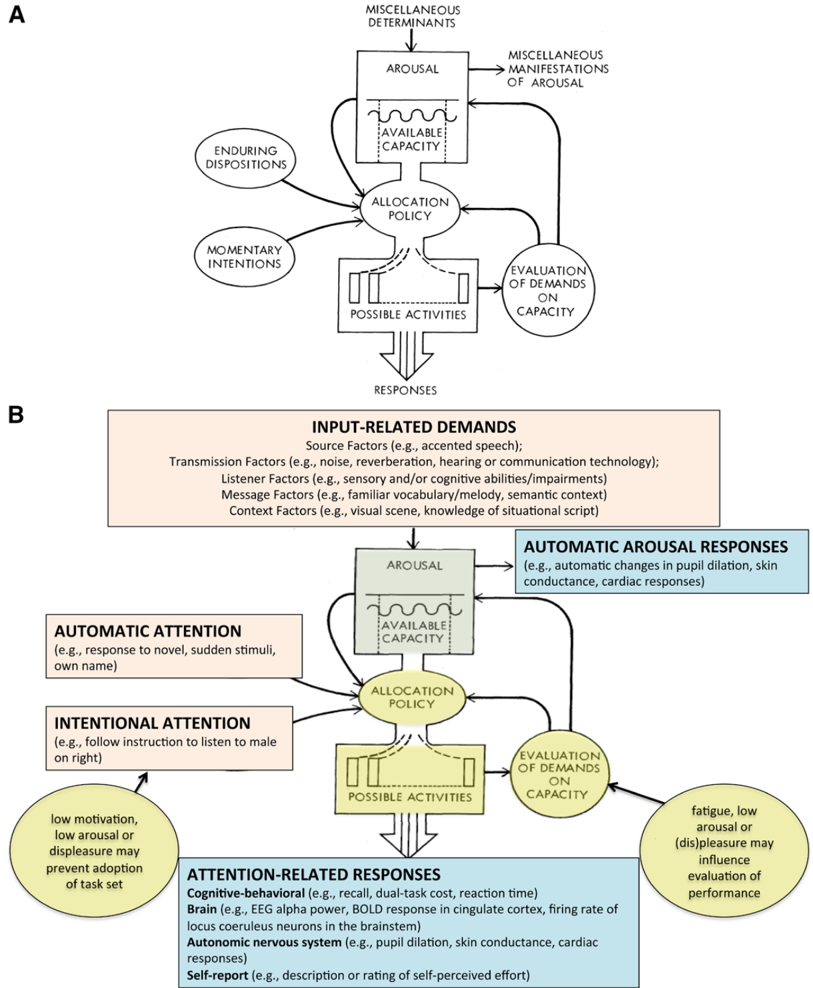
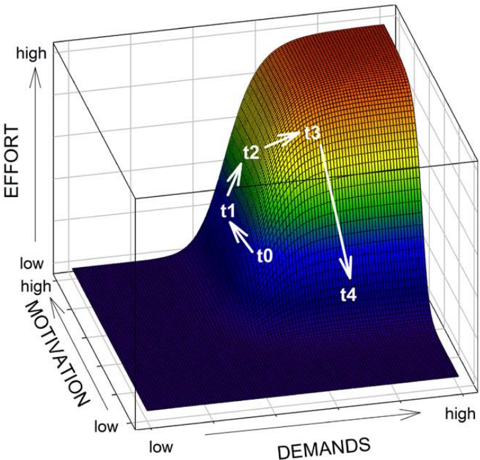
The Fifth Eriksholm Workshop on "Hearing Impairment and Cognitive Energy" was convened to develop a consensus among interdisciplinary experts about what is known on the topic, gaps in knowledge, the use of terminology, priorities for future research, and implications for practice. The general term cognitive energy was chosen to facilitate the broadest possible discussion of the topic. It goes back to who described the effects of attention on perception; he used the term psychic energy for the notion that limited mental resources can be flexibly allocated among perceptual and mental activities. The workshop focused on three main areas: (1) theories, models, concepts, definitions, and frameworks; (2) methods and measures; and (3) knowledge translation. We defined effort as the deliberate allocation of mental resources to overcome obstacles in goal pursuit when carrying out a task, with listening effort applying more specifically when tasks involve listening. We adapted Kahneman's seminal (1973) Capacity Model of Attention to listening and proposed a heuristically useful Framework for Understanding Effortful Listening (FUEL). Our FUEL incorporates the well-known relationship between cognitive demand and the supply of cognitive capacity that is the foundation of cognitive theories of attention. Our FUEL also incorporates a motivation dimension based on complementary theories of motivational intensity, adaptive gain control, and optimal performance, fatigue, and pleasure. Using a three-dimensional illustration, we highlight how listening effort depends not only on hearing difficulties and task demands but also on the listener's motivation to expend mental effort in the challenging situations of everyday life.
Overview
CoChat Summary
TL;DR
The paper reports the Fifth Eriksholm Workshop consensus and proposes FUEL, a conceptual framework for understanding effortful listening that integrates cognitive capacity, motivation, fatigue, and pleasure. It argues that listening effort depends not only on audibility and task demands but also on how listeners evaluate the value of exerting effort in everyday communication.
Key findings
- The workshop’s consensus was that no single existing theory or model sufficiently explains listening effort, so FUEL was proposed as a conceptual framework rather than a quantitative model.
- FUEL adapts Kahneman’s Capacity Model of Attention and adds a motivation dimension; the paper states that effort varies with both demands and motivation, illustrated with a 3D plot of effort, demands, and motivation.
- The paper defines effort as “the deliberate allocation of mental resources to overcome obstacles in goal pursuit when carrying out a task,” and listening effort as effort involved in listening; it extends listening beyond speech to music and environmental sounds.
- The paper organizes candidate listening-effort measures into behavioral, physiological, and self-report measures, and notes that some measures are more sensitive to demands, some to motivation, and some to both.
Methods
- Consensus workshop paper based on the Fifth Eriksholm Workshop on Hearing Impairment and Cognitive Energy, held in June 2015, with 16 participants from audiology, engineering, neuroscience, speech perception, gerontology, philosophy, and psychology.
- The workshop reviewed existing theories/models, definitions, and methods/measures relevant to effortful listening, and used the discussion to develop shared terminology and the FUEL framework.
- The paper’s analysis is conceptual and comparative: it contrasts theories, maps candidate measures onto demand and motivation dimensions, and adapts Kahneman’s model into a listening-specific framework.
Limitations
- The paper explicitly states that the field is not yet at a stage where outcomes can be quantitatively predicted, so FUEL is proposed as a framework rather than a model.
- It states that there is no agreement on an appropriate scale for effort, demands, or motivation, and that the shape of the functions relating them is unknown.
- Evident from the text: the framework is based on a workshop consensus and literature synthesis rather than new empirical data or direct validation studies of FUEL.
Model-written summary of a shortened version of the paper’s full text (it is longer than we read). Check it against the paper before relying on it.
Integrity signals
Registry
Cites
Statistics
Figures
Verification
Claims the paper makes
3 Valid · 7 Not valid · 27 Not checked · 32 Own results and interpretations
Every source the paper cites for this claim was checked and supports it.
In the paper
“From a population health perspective, epidemiological research has provided evidence of a significant association between hearing loss and incident dementia (Albers et al. 2015) and prompted questions regarding the potential advantages of adopting a more integrated approach to research on hearing health and cognitive health (Dupuis et al. 2015; Pichora-Fuller et al. 2015).”
What the sources say
- Supportedcites Albers et al. 2015 matched to “At the interface of sensory and motor dysfunctions and Alzheimer’s disease.” (2015) source
The Epidemiological and Clinical Studies section reports that a prospective cohort found hearing loss independently associated with incident all-cause dementia, with a 95% confidence interval of 1.06–1.50 for the reported risk increase. The paper reports epidemiological evidence for the association; the citing sentence does not claim that it established causation. (LLM, conf=0.94)
plainstates an association- Asserted: passes — The authors put it forward as true.
- Checkable: passes — It can be checked against evidence.
- Load-bearing: unclear — It is unclear whether the paper’s conclusions depend on it.
- Based: passes — The paper gives a reason why it holds.
- Supported
A conclusion the paper draws from its own results — it cites no other source for it, so there is none to check. The quote shows it is in the paper.
In the paper
“Individuals may also need to allocate more cognitive capacity to comprehend, remember, and respond to the auditory objects and events that they have perceived.”
hedgedstates a possible cause- Asserted: passes — The authors put it forward as true.
- Checkable: passes — It can be checked against evidence.
- Load-bearing: passes — The paper’s conclusions depend on it.
- Based: passes — The paper gives a reason why it holds.
A conclusion the paper draws from its own results — it cites no other source for it, so there is none to check. The quote shows it is in the paper.
In the paper
“Therefore, success in achieving listening goals may depend on the deployment of greater cognitive energy when the quality of the signal available to the listener is suboptimal.”
hedgedstates a possible cause- Asserted: passes — The authors put it forward as true.
- Checkable: passes — It can be checked against evidence.
- Load-bearing: passes — The paper’s conclusions depend on it.
- Based: passes — The paper gives a reason why it holds.
None of the sources cited for this claim have been checked yet.
In the paper
“These changes in temporal auditory processing are thought to underpin problems understanding speech in noise and also remembering it once it has been heard.”
hedgedstates a possible cause- Asserted: passes — The authors put it forward as true.
- Checkable: passes — It can be checked against evidence.
- Load-bearing: passes — The paper’s conclusions depend on it.
- Based: passes — The paper gives a reason why it holds.
None of the sources cited for this claim have been checked yet.
In the paper
“(3) his idea that there will be increased mental activity when demands are increased is compatible with the current notion of cognitive compensation (Pichora-Fuller 2010; Grady 2012).”
What the sources say
- Not matchedcites Pichora-Fuller 2010
An author–year citation the paper’s reference list doesn’t settle. We don’t search these by name.
- Not checked — no full text of the sourcecites Grady 2012 matched to “The cognitive neuroscience of ageing” (2012) source
plainstates an association- Asserted: passes — The authors put it forward as true.
- Checkable: passes — It can be checked against evidence.
- Load-bearing: unclear — It is unclear whether the paper’s conclusions depend on it.
- Based: passes — The paper gives a reason why it holds.
- Not matched
15 more claims
Create a free account to see all 69 claims and to verify the 2 references still open.
- It may state two separate claims as one. 13
- Probably not a substantial claim. 46
Claims other papers make about this one
Each is checked against this paper’s own text: does it say what the citing paper says it does?
The cited source says what the claim attributes to it.
In the citing paper
“The subjective experience of effort during communication is likely to precede more chronic experiences of fatigue (Pichora-Fuller et al., 2016).”
From Language proficiency drives listening-related fatigue in those who communicate in English as their second language (2026) · cites this paper as Pichora-Fuller et al., 2016
In the citing paper
“Changes in these kinds of subjective judgments over the course of a communication scenario will likely influence whether or not an individual chooses to withdraw or sustain engagement (Pichora-Fuller et al., 2016).”
From Effortful listening under the microscope: Examining relations between pupillometric and subjective markers of effort and tiredness from listening (2021) · cites this paper as Pichora-Fuller et al., 2016
In the citing paper
“This finding lends weight to the argument that TEPR is not an objective correlate of the subjective experience of listening effort (McGarrigle et al., 2014;Pichora-Fuller et al., 2016;Strand et al., 2018).”
From Effortful listening under the microscope: Examining relations between pupillometric and subjective markers of effort and tiredness from listening (2021) · cites this paper as Pichora-Fuller et al., 2016
In the citing paper
“Thus, to reach lexical access in such adverse conditions, there is a greater need to rely on mental and cognitive processes (Pichora-Fuller et al., 2016; Rönnberg et al., 2008, 2013, 2019).”
From The Involvement of Listening Effort in Explaining Bilingual Listening Under Adverse Listening Conditions (2023) · cites this paper as Pichora-Fuller et al., 2016
In the citing paper
“Our findings are consistent with the FUEL (Pichora-Fuller et al., 2016) and extend it to primary school children.”
From Listening effort and fatigue in native and non-native primary school children (2021) · cites this paper as Pichora-Fuller et al., 2016
5 more claims about this paper
Create a free account to see every claim other papers make about this one.
Citations
Cites
The relation of strength of stimulus to rapidity of habit formation
Yerkes, R. M., & Dodson, J. D. (1908) · Journal of Comparative Neurology and Psychology · doi:10.1002/cne.920180503 · Cited by 6,911
Individual differences in working memory and reading
Daneman, M., & Carpenter, P. A. (1980) · Journal of Verbal Learning and Verbal Behavior · doi:10.1016/s0022-5371(80)90312-6 · Cited by 6,336
The processing-speed theory of adult age differences in cognition
Salthouse, T. A. (1996) · Psychological Review · doi:10.1037/0033-295x.103.3.403 · Cited by 5,902
Social Relationships and Health.
Cohen, S. (2004) · American Psychologist · doi:10.1037/0003-066x.59.8.676 · Cited by 4,852
Aston-Jones, G., & Cohen, J. D. (2005) · Annual Review of Neuroscience · doi:10.1146/annurev.neuro.28.061604.135709 · Cited by 4,472
Broadbent, D. E. (1958) · doi:10.1037/10037-000 · Cited by 4,337
A capacity theory of comprehension: individual differences in working memory
Just, M. A., & Carpenter, P. A. (1992) · Psychological Review · doi:10.1037/0033-295x.99.1.122 · Cited by 4,153
The adaptive brain: aging and neurocognitive scaffolding
Park, D. C., & Reuter-Lorenz, P. (2009) · Annual Review of Psychology · doi:10.1146/annurev.psych.59.103006.093656 · Cited by 2,790
Motor control and aging: Links to age-related brain structural, functional, and biochemical effects
Seidler, R. D., Bernard, J. A., Burutolu, T. B., Fling, B. W., Gordon, M. T., Gwin, J. T., Kwak, Y., & Lipps, D. B. (2010) · Neuroscience & Biobehavioral Reviews · doi:10.1016/j.neubiorev.2009.10.005 · Cited by 1,791
Neurocognitive Aging and the Compensation Hypothesis
Reuter-Lorenz, P. A., & Cappell, K. A. (2008) · Current Directions in Psychological Science · doi:10.1111/j.1467-8721.2008.00570.x · Cited by 1,639
Research works printed but not linked: 2
- Robertson, 1997, The effect of an aural rehabilitation program on responses to scenarios depicting communication breakdown., J Speech Lang Pathol Audiol, 21, 187
- Smith, Development of the Word Auditory Recognition and Recall Measure (WARRM): A working memory test for use in rehabilitative audiology, Ear Hear
Cited by
Items 201–300 of 1,325
Christensen, J. H., Saunders, G. H., Porsbo, M., & Pontoppidan, N. H. (2021) · Royal Society Open Science · doi:10.1098/rsos.201345 · Cited by 43
Zhang, Y., Lehmann, A., & Deroche, M. L. D. (2021) · PLoS ONE · doi:10.1371/journal.pone.0233251 · Cited by 33
“Its popularity can be attributed to its sensitivity to a wide range of cognitive tasks and processing that relate to the concept of listening effort [3, 14, 15].”
BackgroundInvestigating the Reliability of Pupillometry as a Measure of Individualized Listening Effort
Neagu, M.-B., Kressner, A. A., Relaño-Iborra, H., Bækgaard, P., Dau, T., & Wendt, D. (2023) · Trends in Hearing · doi:10.1177/23312165231153288 · Cited by 28
Speech in Noise Perception as a Marker of Cognitive Impairment in HIV Infection
Zhan, Y., Fellows, A. M., Qi, T., Clavier, O., Soli, S. D., Shi, X., Gui, J., Shi, Y., & Buckey, J. C. (2017) · Ear and Hearing · doi:10.1097/aud.0000000000000508 · Cited by 29
Wang, Y., Kramer, S. E., Wendt, D., Naylor, G., Lunner, T., & Zekveld, A. A. (2018) · Trends in Hearing · doi:10.1177/2331216518816603 · Cited by 31
“…perceived as more challenging and effortful for people with hearing impairment than for normally hearing people, especially in background noise (Kramer, Zekveld, & Houtgast, 2009; Pichora-Fuller et al., 2016; Plomp & Mimpen, 1979; Rönnberg, Rudner, & Foo, 2008; Zekveld, Kramer, & Festen, 2011).”
BackgroundSelf-citationCortical Tracking of Sung Speech in Adults vs Infants: A Developmental Analysis
Attaheri, A., Panayiotou, D., Phillips, A., Choisdealbha, Á. N., Liberto, G. M. D., Rocha, S., Brusini, P., Mead, N., Flanagan, S. A., Olawole‐Scott, H., et al. (2022) · Frontiers in Neuroscience · doi:10.3389/fnins.2022.842447 · Cited by 27
“…models of speech perception, linguistic decoding is achieved in part via the neural tracking of different temporal modulation patterns in speech at different timescales simultaneously (Poeppel, 2003; Greenberg, 2006; Luo and Poeppel, 2007; Ghitza and Greenberg, 2009; Chait et al., 2015).”
BackgroundPetersen, E. B., MacDonald, E., & Sørensen, A. J. M. (2022) · Trends in Hearing · doi:10.1177/23312165221103340 · Cited by 43
The effect of classroom environment on literacy development
Rance, G., Dowell, R. C., & Tomlin, D. (2023) · npj Science of Learning · doi:10.1038/s41539-023-00157-y · Cited by 61
Clinical Effectiveness of an At-Home Auditory Training Program: A Randomized Controlled Trial
Humes, L. E., Skinner, K. G., Kinney, D. L., Rogers, S. E., Main, A. K., & Quigley, T. M. (2018) · Ear and Hearing · doi:10.1097/aud.0000000000000688 · Cited by 32
“Although ANL measures suggest no changes in listening effort from training, in hindsight, given what is known now (Pichora-Fuller et al. 2016), it would have been better to include other behavioral or physiological measures of listening effort to get a more complete picture of the impact of…”
BackgroundSelf-citationMattsson, T. S., Lind, O., Follestad, T., Grøndahl, K., Wilson, W. J., Nicholas, J., Nordgård, S., & Andersson, S. (2019) · International Journal of Audiology · doi:10.1080/14992027.2019.1621396 · Cited by 33
“Top-down cognitive mechanisms are linked to speech-perception in noise, and as the listening situation becomes poorer, the amount of cognitive capacity to comprehend speech will increase, requiring more listening effort (Kramer, Zekveld, and Houtgast 2009; Pichora-Fuller et al. 2016).”
BackgroundEffects of Cognitive Load on Pure-Tone Audiometry Thresholds in Younger and Older Adults
Heinrich, A., Ferguson, M., & Mattys, S. L. (2019) · Ear and Hearing · doi:10.1097/aud.0000000000000812 · Cited by 31
Heinrich, A. (2020) · International Journal of Behavioral Development · doi:10.1177/0165025420914984 · Cited by 30
From Healthy Hearing to Healthy Living: A Holistic Approach
Campos, J. L., & Launer, S. (2020) · Ear and Hearing · doi:10.1097/aud.0000000000000931 · Cited by 34
“Hearing loss can have broad negative consequences to overall quality of life and has been identified as a significant risk factor for injury and illness (Lin et al. 2011, 2013; Lin & Ferrucci 2012; Mick & Pichora-Fuller 2016; Mick et al. 2018; Deal et al. 2018).”
BackgroundCan Cochlear Implantation in Older Adults Reverse Cognitive Decline Due to Hearing Loss?
Huber, M., Roesch, S., Pletzer, B. A., Lukaschyk, J., Lesinski‐Schiedat, A., & Illg, A. (2021) · Ear and Hearing · doi:10.1097/aud.0000000000001049 · Cited by 38
The Role of Movement-Specific Reinvestment in Visuomotor Control of Walking by Older Adults
Uiga, L., Capio, C. M., Ryu, D., Young, W. R., Wilson, M., Wong, T. W. L., Tse, A. C. Y., & Masters, R. S. W. (2018) · The Journals of Gerontology Series B · doi:10.1093/geronb/gby078 · Cited by 33
Individual characteristics moderate listening effort in noisy classrooms
Visentin, C., Pellegatti, M., Garraffa, M., Domenico, A. D., & Prodi, N. (2023) · Scientific Reports · doi:10.1038/s41598-023-40660-1 · Cited by 34
“Notably, in effortful listening, unless sufficient motivation can be raised, after a while the listener will stop concentrating as fatigue sets in 28 .”
BackgroundInfluentialPicou, E. M., Bean, B., Marcrum, S. C., Ricketts, T. A., & Hornsby, B. W. Y. (2019) · Frontiers in Psychology · doi:10.3389/fpsyg.2019.01749 · Cited by 33
Self-citationVisentin, C., Prodi, N., Cappelletti, F., Torresin, S., & Gasparella, A. (2019) · Building Acoustics · doi:10.1177/1351010x19882314 · Cited by 25
“26(4) 275 –291 © The Author(s) 2019 Article reuse guidelines: sagepub.”
Kestens, K., Degeest, S., & Keppler, H. (2021) · American Journal of Audiology · doi:10.1044/2020_aja-20-00019 · Cited by 34
Mental fatigue prediction during eye-typing
Bafna, T., Bækgaard, P., & Hansen, J. P. (2021) · PLoS ONE · doi:10.1371/journal.pone.0246739 · Cited by 34
“The ability to apply sustained effort on a task to achieve maximum performance has been termed conation [51].”
BackgroundKurthen, I., Galbier, J., Jagoda, L., Neuschwander, P., Giroud, N., & Meyer, M. E. (2021) · Human Brain Mapping · doi:10.1002/hbm.25415 · Cited by 29
Silcox, J. W., & Payne, B. R. (2021) · Cortex · doi:10.1016/j.cortex.2021.06.007 · Cited by 30
Visentin, C., Valzolgher, C., Pellegatti, M., Potente, P., Pavani, F., & Prodi, N. (2021) · International Journal of Audiology · doi:10.1080/14992027.2021.1921290 · Cited by 33
Is children’s listening effort in background noise influenced by the speaker’s voice quality?
Sahlén, B. S., Haake, M., von Lochow, H., Holm, L., Kastberg, T., Brännström, K. J., & Åhlander, V. L. (2017) · Logopedics Phoniatrics Vocology · doi:10.1080/14015439.2017.1324914 · Cited by 36
Francis, A. L., Tigchelaar, L. J., Zhang, R., & Zekveld, A. A. (2018) · Journal of Speech, Language, and Hearing Research · doi:10.1044/2018_jslhr-h-17-0254 · Cited by 21
Bsharat-Maalouf, D., Degani, T., & Karawani, H. (2023) · Trends in Hearing · doi:10.1177/23312165231205107 · Cited by 27
“Thus, to reach lexical access in such adverse conditions, there is a greater need to rely on mental and cognitive processes (Pichora-Fuller et al., 2016; Rönnberg et al., 2008, 2013, 2019).”
BackgroundInfluentialDifferential At-Risk Pediatric Outcomes of Parental Sensitivity Based on Hearing Status
Jamsek, I. A., Holt, R. F., Kronenberger, W. G., & Pisoni, D. B. (2021) · Journal of Speech Language and Hearing Research · doi:10.1044/2021_jslhr-20-00491 · Cited by 29
“…processing, such as the Ease of Language Understanding theory (Rönnberg et al., 2013) and the Framework for Understanding Effortful Listening (Pichora-Fuller et al., 2016), by adding inhibitory control to working memory as core EF components that are activated to support listening effort and…”
BackgroundMethodInfluentialBruce, H., Lai, L., Bherer, L., Lussier, M., St-Onge, N., & Li, K. (2018) · Gait & Posture · doi:10.1016/j.gaitpost.2018.10.020 · Cited by 30
Auditory Training for Adult Cochlear Implant Users: A Survey and Cost Analysis Study
dos Reis, M. C. P., Boisvert, I., Beedell, E., & Mumford, V. (2019) · Ear and Hearing · doi:10.1097/aud.0000000000000724 · Cited by 26
Cartocci, G., Scorpecci, A., Borghini, G., Maglione, A. G., Inguscio, B. M. S., Giannantonio, S., Giorgi, A., Malerba, P., Rossi, D., Modica, E., et al. (2019) · Hearing Research · doi:10.1016/j.heares.2019.04.011 · Cited by 23
“Listening effort is defined as “deliberate allocation of mental resources to overcome obstacles in goal pursuit when carrying out a listening task” (Pichora-Fuller et al., 2016).”
BackgroundDevesse, A., Wieringen, A. V., & Wouters, J. M. (2019) · Ear and Hearing · doi:10.1097/aud.0000000000000778 · Cited by 30
“According to the Fifth Eriksholm Workshop on Hearing impairment and Cognitive Energy (Pichora-Fuller et al. 2016) and a special issue on Ecologically Valid Protocols for the Assessment of Hearing and Hearing Devices (Keidser 2016), ecologically relevant paradigms should at least include (1) nonaural information, inclu…”
BackgroundMethodInfluentialO’Neill, E. R., Parke, M. N., Kreft, H. A., & Oxenham, A. J. (2020) · Journal of Speech Language and Hearing Research · doi:10.1044/2020_jslhr-20-00174 · Cited by 28
Davis, H., Schlundt, D., Bonnet, K. R., Camarata, S., Hornsby, B. W. Y., & Bess, F. H. (2021) · American Journal of Audiology · doi:10.1044/2021_aja-20-00216 · Cited by 39
Self-citationQuantifying the Effects of Motivation on Listening Effort: A Systematic Review and Meta-Analysis
Carolan, P. J., Heinrich, A., Munro, K. J., & Millman, R. E. (2022) · Trends in Hearing · doi:10.1177/23312165211059982 · Cited by 31
Stenbäck, V., Marsja, E., Hällgren, M., Lyxell, B., & Larsby, B. (2022) · Journal of Speech Language and Hearing Research · doi:10.1044/2022_jslhr-21-00674 · Cited by 26
Psychophysiological measurement of affective responses during speech perception
Francis, A. L., & Oliver, J. N. (2018) · Hearing Research · doi:10.1016/j.heares.2018.07.007 · Cited by 24
“Francis, 2017) and/or working memory (Pichora-Fuller et al., 2016; Wingfield, 2016).”
Dwyer, R. T., Gifford, R. H., Bess, F. H., Dorman, M., Spahr, A., & Hornsby, B. W. Y. (2019) · American Journal of Audiology · doi:10.1044/2019_aja-19-0009 · Cited by 23
“Thosewith hearing loss may be required to expend greater effort listening and devote more cognitive resources to listening than individuals without hearing loss (Pichora-Fuller et al., 2016).”
BackgroundSelf-citationOosthuizen, I., Picou, E. M., Pottas, L., Myburgh, H. C., & Swanepoel, D. W. (2021) · American Journal of Audiology · doi:10.1044/2021_aja-20-00082 · Cited by 29
Kommajosyula, S. P., Bartlett, E. L., Cai, R., Ling, L., & Caspary, D. M. (2021) · The Journal of Physiology · doi:10.1113/jp282321 · Cited by 26
Do hearing loss interventions prevent dementia?
Dawes, P., & Völter, C. (2023) · Zeitschrift für Gerontologie und Geriatrie · doi:10.1007/s00391-023-02178-z · Cited by 35
Efficiency of spoken word recognition slows across the adult lifespanPreprint
Colby, S., & McMurray, B. (2022) · PsyArXiv (OSF Preprints) · doi:10.1016/j.cognition.2023.105588 · Cited by 34
Lagrois, M.-É., Peretz, I., & Zendel, B. R. (2018) · Frontiers in Neuroscience · doi:10.3389/fnins.2018.00054 · Cited by 27
“A recent model introduced by a group of hearing scientists (Pichora-Fuller et al., 2016) explains how aging impacts hearing based on two types of attention related processes.”
BackgroundStrand, J. F., Brown, V. A., & Barbour, D. L. (2020) · Psychonomic Bulletin & Review · doi:10.3758/s13423-020-01713-y · Cited by 25
Kronenberger, W. G., Bozell, H. D., Henning, S. C., Montgomery, C. J., Ditmars, A. M., & Pisoni, D. B. (2020) · International Journal of Audiology · doi:10.1080/14992027.2020.1826586 · Cited by 26
“This finding is consistent with previous theory and empirical research suggesting that children with CIs who have poorer fast-automatic rapid phonological coding skills (assessed by nonword repetition test performance) must expend greater compensatory effort during spoken language processing (Pichora-Fuller et al. 201…”
BackgroundMethodResultInfluentialVerbal Fluency in Prelingually Deaf, Early Implanted Children and Adolescents With Cochlear Implants
Hasnain, F., Herran, R. M., Henning, S. C., Ditmars, A. M., Pisoni, D. B., Sehgal, S. T., & Kronenberger, W. G. (2023) · Journal of Speech Language and Hearing Research · doi:10.1044/2022_jslhr-22-00383 · Cited by 30
Perceived listener effort as an outcome measure for disordered speech
Nagle, K. F., & Eadie, T. L. (2018) · Journal of Communication Disorders · doi:10.1016/j.jcomdis.2018.03.003 · Cited by 26
The effect of monetary reward on listening effort and sentence recognition
Koelewijn, T., Zekveld, A. A., Lunner, T., & Kramer, S. E. (2021) · Hearing Research · doi:10.1016/j.heares.2021.108255 · Cited by 26
Self-citationPrince, P., Paul, B. T., Chen, J., Le, T., Lin, V. W., & Dimitrijevic, A. (2021) · European Journal of Neuroscience · doi:10.1111/ejn.15365 · Cited by 27
Slade, K., Kramer, S. E., Fairclough, S. H., & Richter, M. M. (2021) · Hearing Research · doi:10.1016/j.heares.2021.108348 · Cited by 32
Self-citationA neural signature of regularity in sound is reduced in older adults
Herrmann, B., Maeß, B., & Johnsrude, I. S. (2021) · Neurobiology of Aging · doi:10.1016/j.neurobiolaging.2021.09.011 · Cited by 22
Eye Movements Decrease during Effortful Speech Listening
Cui, M. E., & Herrmann, B. (2023) · Journal of Neuroscience · doi:10.1523/jneurosci.0240-23.2023 · Cited by 33
Listening Effort Through Depth of Processing in School-Age Children
Hsu, B. C.-L., Vanpoucke, F. J., & Wieringen, A. V. (2017) · Ear and Hearing · doi:10.1097/aud.0000000000000436 · Cited by 27
Winneke, A. H., Schulte, M., Vormann, M., & Latzel, M. (2020) · Trends in Hearing · doi:10.1177/2331216520948410 · Cited by 26
“Based on the Framework for Understanding Effortful Listening (FUEL; Pichora-Fuller et al., 2016), listening effort refers to an intentional act of investing mental resources, which have corresponding neural underpinnings, in order to comprehend a (speech) signal of interest in an acoustically…”
MethodHow do we allocate our resources when listening and memorizing speech in noise? A pupillometry study
Bönitz, H., Lunner, T., Finke, M., Fiedler, L., Lyxell, B., Riis, S. K., Ng, E., Valdes, A. L., Büchner, A., & Wendt, D. (2021) · Ear & Hearing · doi:10.1097/aud.0000000000001002 · Cited by 19
“Several studies have pointed out that several higher cognitive processes such as working memory (WM) and attention are involved in communication (Rudner & Rönnberg 2008; Koelewijn et al. 2012; Rönnberg et al. 2013; Ng et al. 2013, 2015; Pichora-Fuller et al. 2016).”
BackgroundMethodInfluentialSelf-citationSimeon, K. M., & Grieco‐Calub, T. M. (2021) · Journal of Speech Language and Hearing Research · doi:10.1044/2021_jslhr-20-00547 · Cited by 25
Hornsby, B. W. Y., Camarata, S., Cho, S., Davis, H., McGarrigle, R., & Bess, F. H. (2023) · Ear and Hearing · doi:10.1097/aud.0000000000001369 · Cited by 28
“Listening-related fatigue is a type of fatigue associated with the sustained application of effort toward a listening task (Bess & Hornsby 2014; Pichora-Fuller et al. 2016; Davis et al. 2021a; Hornsby et al. 2021).”
BackgroundSelf-citationPlain, B., Richter, M. M., Zekveld, A. A., Lunner, T., Bhuiyan, T. A., & Kramer, S. E. (2020) · Ear and Hearing · doi:10.1097/aud.0000000000000971 · Cited by 30
“Listening can be effortful, particularly when the auditory signal is degraded, for example, by hearing loss, or in challenging acoustic environments (Plomp, 1986; Pichora-Fuller et al. 2016; Peelle, 2018).”
BackgroundInfluentialSelf-citationColby, S., & McMurray, B. (2021) · Journal of Speech, Language, and Hearing Research · doi:10.1044/2021_jslhr-20-00583 · Cited by 18
Speech modifications in interactive speech: effects of age, sex and noise type
Tuomainen, O., Taschenberger, L., Rosen, S., & Hazan, V. L. (2021) · Philosophical Transactions of the Royal Society B Biological Sciences · doi:10.1098/rstb.2020.0398 · Cited by 35
“to allocate more cognitive resources (attention, working memory) to what has been said by the conversation partner, that is, to increase listening effort, as accounted for by the Framework for Understanding Effortful Listening (FUEL; [6]).”
BackgroundMethodFeldman, J. I., Thompson, E., Davis, H., Keceli-Kaysili, B., Dunham, K., Woynaroski, T. G., Tharpe, A. M., & Picou, E. M. (2022) · Ear and Hearing · doi:10.1097/aud.0000000000001058 · Cited by 26
“According to the Framework for Effortful listening (Pichora-Fuller et al. 2016) and Ease of language Understanding model (Rönnberg et al.”
BackgroundMethodAge-related deficits in dip-listening evident for isolated sentences but not for spoken stories
Irsik, V. C., Johnsrude, I. S., & Herrmann, B. (2022) · Scientific Reports · doi:10.1038/s41598-022-09805-6 · Cited by 20
Cowan, T., Paroby, C., Leibold, L. J., Buss, E., Rodriguez, B., & Calandruccio, L. (2022) · Journal of Speech, Language, and Hearing Research · doi:10.1044/2022_jslhr-22-00011 · Cited by 21
Herrmann, B., Maeß, B., & Johnsrude, I. S. (2022) · Hearing Research · doi:10.1016/j.heares.2022.108677 · Cited by 26
Huang, A., Reed, N. S., Deal, J. A., Arnold, M. L., Burgard, S. L., Chisolm, T. H., Couper, D. J., Glynn, N. W., Gmelin, T. A., Goman, A. M., et al. (2023) · Journal of Applied Gerontology · doi:10.1177/07334648231212291 · Cited by 26
“Older adults with greater hearing loss may have more dif fi culty communicating (Pichora-Fuller et al., 2016) and withdraw from engaging with friends and family (Mick et al., 2014; Pichora-Fuller et al., 2015), particularly in situations where background noise is high, which can lead to greater…”
BackgroundLanguage learning experience and mastering the challenges of perceiving speech in noise
Kousaie, S., Baum, S. R., Phillips, N. A., Gracco, V. L., Titone, D. A., Chen, J., Chai, X. J., & Klein, D. (2019) · Brain and Language · doi:10.1016/j.bandl.2019.104645 · Cited by 24
Self-citationHughes, S., Rapport, F., Watkins, A. J., Boisvert, I., McMahon, C. M., & Hutchings, H. A. (2019) · BMJ Open · doi:10.1136/bmjopen-2018-028881 · Cited by 29
Mehra, R., Brimijoin, O., Robinson, P. W., & Lunner, T. (2020) · Ear and Hearing · doi:10.1097/aud.0000000000000961 · Cited by 29
“Even with additional features like speech processors, directional microphones, frequency transpositions, etc., the most advanced devices provide only modest additional benefits (Humes et al. 1999; Larson et al. 2000; Magnusson et al. 2013; Brons et al. 2014; Cox et al. 2014; Picou et al. 2015).”
BackgroundSelf-citationTremblay, K. L., & Backer, K. C. (2016) · Ear & Hearing · doi:10.1097/aud.0000000000000307 · Cited by 16
“As summarized in the consensus paper (Pichora-Fuller et al., 2016, this issue, pp. 5S–27S), different tools (e.g., pupillometry, EEG alpha oscillations, word recall, self-report, etc.) have been used to measure similar concepts, even though these measures may not reflect the same neural mechanisms…”
BackgroundMethodInfluentialSelf-citationCognitive Training Enhances Auditory Attention Efficiency in Older Adults
O’Brien, J. L., Lister, J. J., Fausto, B. A., Clifton, G. K., & Edwards, J. D. (2017) · Frontiers in Aging Neuroscience · doi:10.3389/fnagi.2017.00322 · Cited by 24
“Because hearing loss results in effortful auditory processing in normal aging (Pichora-Fuller et al., 2016), remediation of auditory processing may improve cognition and enhance quality of life in older adults.”
BackgroundAutonomic Nervous System Responses to Hearing-Related Demand and Evaluative Threat
Mackersie, C. L., & Kearney, L. (2017) · American Journal of Audiology · doi:10.1044/2017_aja-16-0133 · Cited by 29
Self-citationSpeech intelligibility of virtual humans
Devesse, A., Dudek, A., Wieringen, A. V., & Wouters, J. M. (2018) · International Journal of Audiology · doi:10.1080/14992027.2018.1511922 · Cited by 24
“The need for multimodal, ecologically valid listening situations that can be applied in clinical practice is high among both researchers and clinicians (Pichora-Fuller et al. 2016).”
BackgroundHearing Aid Uptake, Benefit, and Use: The Impact of Hearing, Cognition, and Personal Factors
Nixon, G., Sarant, J. Z., Tomlin, D., & Dowell, R. C. (2021) · Journal of Speech Language and Hearing Research · doi:10.1044/2020_jslhr-20-00014 · Cited by 23
Defining the Role of Attention in Hierarchical Auditory Processing
Price, C. N., & Moncrieff, D. W. (2021) · Audiology Research · doi:10.3390/audiolres11010012 · Cited by 26
“[60] describe input-related demands specific to audition including source (aspects of the signal, e.”
BackgroundNichols, E., Deal, J. A., Swenor, B. K., Abraham, A. G., Armstrong, N. M., Carlson, M. C., Griswold, M., Lin, F. R., Mosley, T. H., Ramulu, P. Y., et al. (2021) · Journal of the International Neuropsychological Society · doi:10.1017/s1355617721000400 · Cited by 31
Książek, P., Zekveld, A. A., Wendt, D., Fiedler, L., Lunner, T., & Kramer, S. E. (2021) · Trends in Hearing · doi:10.1177/23312165211009351 · Cited by 25
Self-citationHumes, L. E. (2021) · Trends in Hearing · doi:10.1177/23312165211014329 · Cited by 24
“This, in turn, causes many difficulties for everyday speech communication, including poor speech perception (e.g., Humes & Dubno, 2010) and increased listening effort (e.g., Pichora-Fuller et al., 2016), among others.”
BackgroundSelf-citationHenshaw, H., Heinrich, A., Tittle, A., & Ferguson, M. (2021) · Ear and Hearing · doi:10.1097/aud.0000000000001096 · Cited by 25
“…over the last decade, in order to identify effective training approaches to benefit people with hearing loss, it has become clear that we require theory-driven approaches to understand why and how interventions work (e.g., Coulson et al. 2016; Ferguson et al. 2019; Pichora-Fuller et al. 2016).”
BackgroundMacGregor, L. J., Gilbert, R. A., Balewski, Z. Z., Mitchell, D. J., Erzinçlioğlu, S., Rodd, J. M., Duncan, J., Fedorenko, E. G., & Davis, M. H. (2022) · Neurobiology of Language · doi:10.1162/nol_a_00081 · Cited by 26
“Carlyon, & Davis, 2014), increases listening effort (Pichora-Fuller et al., 2016; Wild et al., 2012), and encourages listeners to utilise informative semantic contextual cues (Davis, Ford, Kherif, & Johnsrude, 2011; Miller, Heise, & Lichten, 1951; Obleser, Wise, Dresner, & Scott, 2007; Rysop, Schmitt, Obleser, & Hartw…”
Meister, H., Rählmann, S., Lemke, U., & Besser, J. (2018) · Trends in Hearing · doi:10.1177/2331216518793255 · Cited by 24
Self-citationMeasuring the Impact of Tinnitus on Aided Listening Effort Using Pupillary Response
Jensen, J. J., Callaway, S. L., Lunner, T., & Wendt, D. (2018) · Trends in Hearing · doi:10.1177/2331216518795340 · Cited by 26
Self-citationBianchi, F., Wendt, D., Wassard, C., Maas, P., Lunner, T., Rosenbom, T., & Holmberg, M. (2019) · Ear and Hearing · doi:10.1097/aud.0000000000000699 · Cited by 22
“The concepts of fatigue, cognitive load, and listening effort have received increased attention in the past years (Pichora-Fuller & Kramer 2016; Pichora-Fuller et al. 2016), as it has become clear that the interplay between auditory and cognitive factors has a central role in everyday listening environments.”
BackgroundMethodSelf-citationZhang, M., Siegle, G. J., McNeil, M. R., Pratt, S. R., & Palmer, C. V. (2019) · Hearing Research · doi:10.1016/j.heares.2019.107775 · Cited by 23
“It supplements the FUEL framework with an alternative relationship between motivation and task demand factors when driving effort allocation in auditory tasks.”
BackgroundResultInfluentialLee, Y. S., Wingfield, A., Min, N. E., Kotloff, E. D., Grossman, M., & Peelle, J. E. (2018) · eNeuro · doi:10.1523/eneuro.0263-17.2018 · Cited by 28
Self-citationPerceptual Learning of Accented Speech
Bent, T., & Baese‐Berk, M. M. (2021) · Wiley eBooks · doi:10.1002/9781119184096.ch16 · Cited by 33
Smiljanić, R. (2021) · Wiley eBooks · doi:10.1002/9781119184096.ch7 · Cited by 33
Hughes, S., Rapport, F., Boisvert, I., McMahon, C. M., & Hutchings, H. A. (2017) · BMJ Open · doi:10.1136/bmjopen-2016-014995 · Cited by 28
Nixon, G., Sarant, J. Z., Tomlin, D., & Dowell, R. C. (2019) · International Journal of Audiology · doi:10.1080/14992027.2019.1641752 · Cited by 24
“As proposed by the “fuel cognitive model” (Pichora-Fuller et al. 2016), tasks requiring more focus and motivation increase the cognitive load.”
BackgroundValidation of the Iowa Test of Consonant Perception
Geller, J., Holmes, A., Schwalje, A. T., Berger, J. I., Gander, P. E., Choi, I., & McMurray, B. (2021) · The Journal of the Acoustical Society of America · doi:10.1121/10.0006246 · Cited by 24
Visual trajectories and risk of physical and cognitive impairment among older Chinese adults
Cao, G., Wang, K., Han, L., Zhang, Q., Yao, S., Chen, Z., Huang, Z.-T., Luo, Y., Hu, Y., & Xu, B. (2021) · Journal of the American Geriatrics Society · doi:10.1111/jgs.17311 · Cited by 24
Intelligibility and recall of sentences spoken by adult and child talkers wearing face masks
Truong, T. L., & Weber, A. (2021) · The Journal of the Acoustical Society of America · doi:10.1121/10.0006098 · Cited by 23
Neural Activity during Story Listening Is Synchronized across Individuals Despite Acoustic Masking
Irsik, V. C., Johnsrude, I. S., & Herrmann, B. (2022) · Journal of Cognitive Neuroscience · doi:10.1162/jocn_a_01842 · Cited by 22
“First, engagement depends on degree to which a listener judges that, with deliberate deployment of cognitive resources, some of the masked speech will be understandable (Herrmann & Johnsrude, 2020a; Pichora-Fuller et al., 2016; Wright, 2014; Richter, 2013; Brehm & Self, 1989).”
BackgroundInfluentialBrown, V. A., & Strand, J. F. (2018) · Language Cognition and Neuroscience · doi:10.1080/23273798.2018.1562084 · Cited by 28
“…& Tharpe, 2002; Fraser, Gagné, Alepins, & Dubois, 2010; Picou & Ricketts, 2014; Picou, Gordon, & Ricketts, 2016) or, more generally: “the deliberate allocation of mental resources to overcome obstacles in goal pursuit when carrying out a [listening] task” (Pichora-Fuller et al., 2016).”
BackgroundAuditory Measures for the Next Billion Users
Slaney, M., Lyon, R. F., Garcia, R. A., Kemler, B., Gnegy, C. N., Wilson, K., Kanevsky, D., Savla, S., & Cerf, V. G. (2020) · Ear and Hearing · doi:10.1097/aud.0000000000000955 · Cited by 27
Oosthuizen, I., Picou, E. M., Pottas, L., Myburgh, H. C., & Swanepoel, D. W. (2021) · Trends in Hearing · doi:10.1177/2331216520984700 · Cited by 24
“Considerations of how intervention options affect the child’s motivation to sustain listening can be included because motivation also affects experienced listening effort (Peelle, 2018; Pichora-Fuller et al., 2016).”
BackgroundInfluentialA model of listening engagement (MoLE).Preprint
Herrmann, B., & Johnsrude, I. (2019) · Hearing Research · doi:10.31234/osf.io/y3cr9 · Cited by 109
Miller, C. W., Stewart, E. K., Wu, Y.-H., Bishop, C. W., Bentler, R. A., & Tremblay, K. L. (2017) · Journal of Speech Language and Hearing Research · doi:10.1044/2017_jslhr-h-16-0284 · Cited by 22
“For example, under the Framework for Effortful Listening (Pichora-Fuller et al., 2016), other sources of input-related demands (e.”
BackgroundSelf-citationKraft, N. G., Demarchi, G., & Weisz, N. (2020) · eLife · doi:10.7554/elife.55508 · Cited by 22
Age-Related Changes in Speech Understanding: Peripheral Versus Cognitive Influences
Gordon-Salant, S. M., Shader, M. J., & Wingfield, A. (2020) · Springer handbook of auditory research · doi:10.1007/978-3-030-49367-7_9 · Cited by 29
Self-citationRasch Analysis of the Listening Effort Questionnaire—Cochlear Implant
Hughes, S., Watkins, A. J., Rapport, F., Boisvert, I., McMahon, C. M., & Hutchings, H. A. (2021) · Ear and Hearing · doi:10.1097/aud.0000000000001059 · Cited by 25
A Comparison of the Perceived Hearing Difficulties of Community and Clinical Samples of Older Adults
Humes, L. E., & Dubno, J. R. (2021) · Journal of Speech Language and Hearing Research · doi:10.1044/2021_jslhr-20-00728 · Cited by 23
“Social support and selfefficacy, for example, are two approaches to intervention that may be even more critical for older adults in denial of communication difficulties (e.g., Pichora-Fuller et al., 2016).”
BackgroundSelf-citation
Metadata
- Authors
- Pichora-Fuller, M. K., Kramer, S. E., Eckert, M. A., Edwards, B., Hornsby, B. W. Y., Humes, L. E., Lemke, U., Lunner, T., Matthen, M., Mackersie, C. L., Naylor, G., Phillips, N. A., Richter, M., Rudner, M., Sommers, M. S., Tremblay, K. L., & Wingfield, A.
- Affiliations
- Brandeis University (US)
- Vanderbilt University (US)
- Sonova (Switzerland) (CH)
- Oticon (Denmark) (DK)
- Earlens (United States) (US)
- University of Toronto (CA)
- Indiana University Bloomington (US)
- Corresponding author
- Pichora-Fuller, M. Kathleen
- ORCID
- Venue
- Ear & Hearing
- Published
- 2016-07
- Volume
- 37
- Issue
- 1
- Pages
- 5S-27S
- ISSN
- 0196-0202 (ISSN-L)
- OpenAlex
- W2472770001
- Semantic Scholar
- 353d1914960d7e69bd9f7dd3f6c74863cb5c1bcc
- Cited by
- 1,318
- References
- 132
- Citations by year
- 2026: 180 · 2025: 210 · 2024: 154 · 2023: 141 · 2022: 131 · 2021: 163 · 2020: 117 · 2019: 95 · 2018: 69 · 2017: 45 · 2016: 10
- FWCI
- 46.32
- Type
- journal article
- Language
- en
- Open access
- hybrid
- doi.org
- Licence
- Locations
- Ear and Hearing (publishedVersion, cc-by-nc-nd)
- PubMed (publishedVersion)
- Repository@Nottingham (University of Nottingham) (publishedVersion, cc-by-nc-nd)
- Amsterdam UMC (VU Amsterdam) - Institutional Repository (publishedVersion)
- Repository@Nottingham (University of Nottingham) (submittedVersion, cc-by-nc-nd)
- Pure Amsterdam UMC (submittedVersion, other-oa)
- Liverpool John Moores University (submittedVersion)
- Data Archiving and Networked Services (DANS) (submittedVersion)
- Funders
- University of Toronto
- Oticon Fonden
- Topics
- Health Sciences › Health Professions › Speech and Hearing › Hearing Loss and Rehabilitation
- Social Sciences › Psychology › Developmental and Educational Psychology › Hearing Impairment and Communication
- Life Sciences › Neuroscience › Sensory Systems › Hearing, Cochlea, Tinnitus, Genetics
- Keywords
- hearing loss, cognitive energy, listening effort, attentional capacity, cognitive demand, motivation, fatigue, pleasure, adaptive gain control, optimal performance, knowledge translation
- MeSH terms
- Attention, Auditory Perception, Cognition, Humans, Speech Perception, Comprehension, Hearing Loss
About these checks
Registry, retraction, Cites and statistics results are computed, not judged, with one exception: a printed reference that no index lists is read once by a model before it counts as a citation error. Claims are extracted by a model and kept only when their quote appears verbatim in the text; each cited source is then checked, with a model’s help, for whether it says what the claim relies on. Those verdicts can be wrong — read the claim’s quote and the cited source before relying on one.
The claim verdicts this report counts are experimental: their accuracy is not yet measured.
A language model drew the claims from the paper on 2026-10-10, under version 3 of the claim definition (model deepseek-v4.1-flash, prompt extract-v3).
A second model labelled each claim on 2026-10-10 (model jev-1.13-20260917, definition revision gold-guideline-v0.2).
Cited sources are checked with a language model’s help (gpt-6-sol).
Statistics and arithmetic are recomputed, not judged.
Confidence bands are shown only for fields calibrated on our annotated test set. None is calibrated yet, so no band is shown.
What counts as a claim ›How we measure confidence ›How we check this ›
Are you an author, or do you see a problem with this page? Request a review
Data sources
Bibliographic data: Semantic Scholar, OpenAlex, Crossref.
Contains information from the Semantic Scholar Academic Graph Datasets, made available under the ODC Attribution License (ODC-BY 1.0).
Semantic Scholar’s data is described in: Kinney, R., et al. (2023). The Semantic Scholar Open Data Platform. arXiv:2301.10140.
