

Hearing Impairment and Cognitive Energy: The Framework for Understanding Effortful Listening (FUEL)
Open accessThe DOI matches its Crossref record; 127 of the 132 references it cites were found in a registry or an index; 3 of the 43 sources its claims cite were checked for support.
Abstract
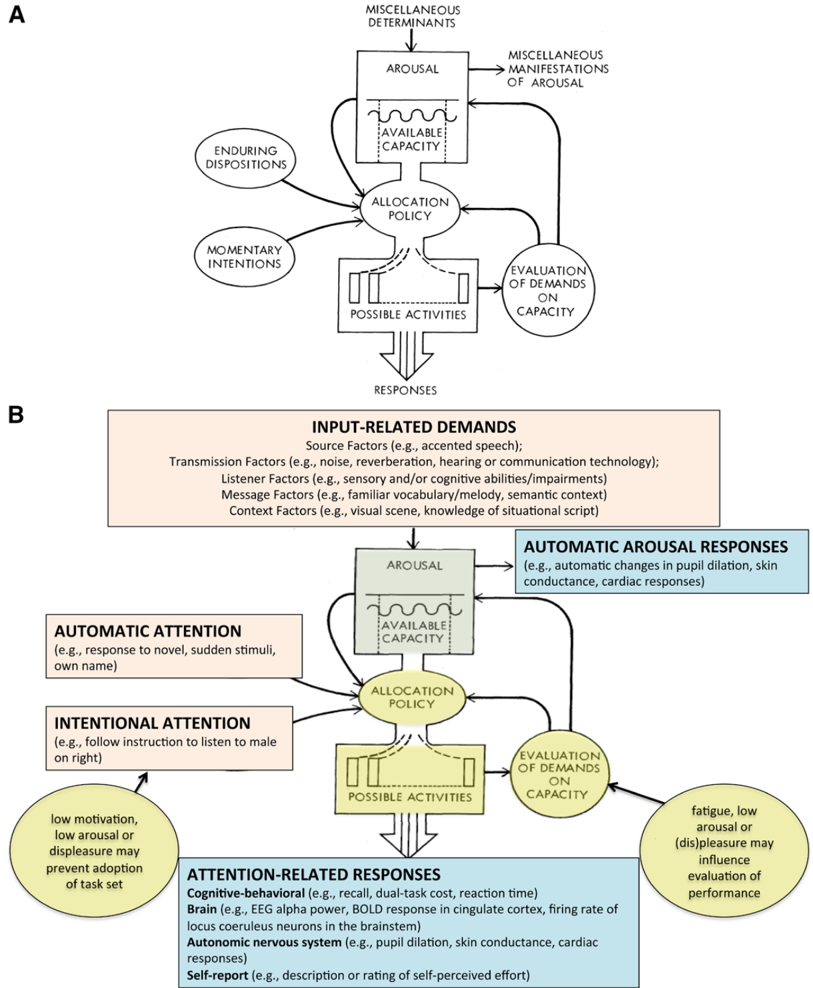
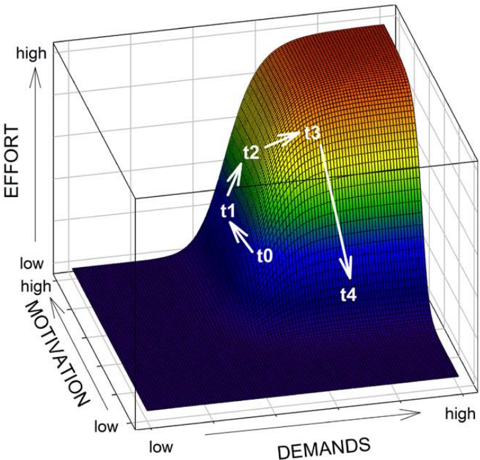
The Fifth Eriksholm Workshop on "Hearing Impairment and Cognitive Energy" was convened to develop a consensus among interdisciplinary experts about what is known on the topic, gaps in knowledge, the use of terminology, priorities for future research, and implications for practice. The general term cognitive energy was chosen to facilitate the broadest possible discussion of the topic. It goes back to who described the effects of attention on perception; he used the term psychic energy for the notion that limited mental resources can be flexibly allocated among perceptual and mental activities. The workshop focused on three main areas: (1) theories, models, concepts, definitions, and frameworks; (2) methods and measures; and (3) knowledge translation. We defined effort as the deliberate allocation of mental resources to overcome obstacles in goal pursuit when carrying out a task, with listening effort applying more specifically when tasks involve listening. We adapted Kahneman's seminal (1973) Capacity Model of Attention to listening and proposed a heuristically useful Framework for Understanding Effortful Listening (FUEL). Our FUEL incorporates the well-known relationship between cognitive demand and the supply of cognitive capacity that is the foundation of cognitive theories of attention. Our FUEL also incorporates a motivation dimension based on complementary theories of motivational intensity, adaptive gain control, and optimal performance, fatigue, and pleasure. Using a three-dimensional illustration, we highlight how listening effort depends not only on hearing difficulties and task demands but also on the listener's motivation to expend mental effort in the challenging situations of everyday life.
Overview
CoChat Summary
TL;DR
The paper reports the Fifth Eriksholm Workshop consensus and proposes FUEL, a conceptual framework for understanding effortful listening that integrates cognitive capacity, motivation, fatigue, and pleasure. It argues that listening effort depends not only on audibility and task demands but also on how listeners evaluate the value of exerting effort in everyday communication.
Key findings
- The workshop’s consensus was that no single existing theory or model sufficiently explains listening effort, so FUEL was proposed as a conceptual framework rather than a quantitative model.
- FUEL adapts Kahneman’s Capacity Model of Attention and adds a motivation dimension; the paper states that effort varies with both demands and motivation, illustrated with a 3D plot of effort, demands, and motivation.
- The paper defines effort as “the deliberate allocation of mental resources to overcome obstacles in goal pursuit when carrying out a task,” and listening effort as effort involved in listening; it extends listening beyond speech to music and environmental sounds.
- The paper organizes candidate listening-effort measures into behavioral, physiological, and self-report measures, and notes that some measures are more sensitive to demands, some to motivation, and some to both.
Methods
- Consensus workshop paper based on the Fifth Eriksholm Workshop on Hearing Impairment and Cognitive Energy, held in June 2015, with 16 participants from audiology, engineering, neuroscience, speech perception, gerontology, philosophy, and psychology.
- The workshop reviewed existing theories/models, definitions, and methods/measures relevant to effortful listening, and used the discussion to develop shared terminology and the FUEL framework.
- The paper’s analysis is conceptual and comparative: it contrasts theories, maps candidate measures onto demand and motivation dimensions, and adapts Kahneman’s model into a listening-specific framework.
Limitations
- The paper explicitly states that the field is not yet at a stage where outcomes can be quantitatively predicted, so FUEL is proposed as a framework rather than a model.
- It states that there is no agreement on an appropriate scale for effort, demands, or motivation, and that the shape of the functions relating them is unknown.
- Evident from the text: the framework is based on a workshop consensus and literature synthesis rather than new empirical data or direct validation studies of FUEL.
Model-written summary of a shortened version of the paper’s full text (it is longer than we read). Check it against the paper before relying on it.
Integrity signals
Registry
Cites
Statistics
Figures
Verification
Claims the paper makes
3 Valid · 7 Not valid · 27 Not checked · 32 Own results and interpretations
Every source the paper cites for this claim was checked and supports it.
In the paper
“From a population health perspective, epidemiological research has provided evidence of a significant association between hearing loss and incident dementia (Albers et al. 2015) and prompted questions regarding the potential advantages of adopting a more integrated approach to research on hearing health and cognitive health (Dupuis et al. 2015; Pichora-Fuller et al. 2015).”
What the sources say
- Supportedcites Albers et al. 2015 matched to “At the interface of sensory and motor dysfunctions and Alzheimer’s disease.” (2015) source
The Epidemiological and Clinical Studies section reports that a prospective cohort found hearing loss independently associated with incident all-cause dementia, with a 95% confidence interval of 1.06–1.50 for the reported risk increase. The paper reports epidemiological evidence for the association; the citing sentence does not claim that it established causation. (LLM, conf=0.94)
plainstates an association- Asserted: passes — The authors put it forward as true.
- Checkable: passes — It can be checked against evidence.
- Load-bearing: unclear — It is unclear whether the paper’s conclusions depend on it.
- Based: passes — The paper gives a reason why it holds.
- Supported
A conclusion the paper draws from its own results — it cites no other source for it, so there is none to check. The quote shows it is in the paper.
In the paper
“Individuals may also need to allocate more cognitive capacity to comprehend, remember, and respond to the auditory objects and events that they have perceived.”
hedgedstates a possible cause- Asserted: passes — The authors put it forward as true.
- Checkable: passes — It can be checked against evidence.
- Load-bearing: passes — The paper’s conclusions depend on it.
- Based: passes — The paper gives a reason why it holds.
A conclusion the paper draws from its own results — it cites no other source for it, so there is none to check. The quote shows it is in the paper.
In the paper
“Therefore, success in achieving listening goals may depend on the deployment of greater cognitive energy when the quality of the signal available to the listener is suboptimal.”
hedgedstates a possible cause- Asserted: passes — The authors put it forward as true.
- Checkable: passes — It can be checked against evidence.
- Load-bearing: passes — The paper’s conclusions depend on it.
- Based: passes — The paper gives a reason why it holds.
None of the sources cited for this claim have been checked yet.
In the paper
“These changes in temporal auditory processing are thought to underpin problems understanding speech in noise and also remembering it once it has been heard.”
hedgedstates a possible cause- Asserted: passes — The authors put it forward as true.
- Checkable: passes — It can be checked against evidence.
- Load-bearing: passes — The paper’s conclusions depend on it.
- Based: passes — The paper gives a reason why it holds.
None of the sources cited for this claim have been checked yet.
In the paper
“(3) his idea that there will be increased mental activity when demands are increased is compatible with the current notion of cognitive compensation (Pichora-Fuller 2010; Grady 2012).”
What the sources say
- Not matchedcites Pichora-Fuller 2010
An author–year citation the paper’s reference list doesn’t settle. We don’t search these by name.
- Not checked — no full text of the sourcecites Grady 2012 matched to “The cognitive neuroscience of ageing” (2012) source
plainstates an association- Asserted: passes — The authors put it forward as true.
- Checkable: passes — It can be checked against evidence.
- Load-bearing: unclear — It is unclear whether the paper’s conclusions depend on it.
- Based: passes — The paper gives a reason why it holds.
- Not matched
15 more claims
Create a free account to see all 69 claims and to verify the 2 references still open.
- It may state two separate claims as one. 13
- Probably not a substantial claim. 46
Claims other papers make about this one
Each is checked against this paper’s own text: does it say what the citing paper says it does?
The cited source says what the claim attributes to it.
In the citing paper
“The subjective experience of effort during communication is likely to precede more chronic experiences of fatigue (Pichora-Fuller et al., 2016).”
From Language proficiency drives listening-related fatigue in those who communicate in English as their second language (2026) · cites this paper as Pichora-Fuller et al., 2016
In the citing paper
“Changes in these kinds of subjective judgments over the course of a communication scenario will likely influence whether or not an individual chooses to withdraw or sustain engagement (Pichora-Fuller et al., 2016).”
From Effortful listening under the microscope: Examining relations between pupillometric and subjective markers of effort and tiredness from listening (2021) · cites this paper as Pichora-Fuller et al., 2016
In the citing paper
“This finding lends weight to the argument that TEPR is not an objective correlate of the subjective experience of listening effort (McGarrigle et al., 2014;Pichora-Fuller et al., 2016;Strand et al., 2018).”
From Effortful listening under the microscope: Examining relations between pupillometric and subjective markers of effort and tiredness from listening (2021) · cites this paper as Pichora-Fuller et al., 2016
In the citing paper
“Thus, to reach lexical access in such adverse conditions, there is a greater need to rely on mental and cognitive processes (Pichora-Fuller et al., 2016; Rönnberg et al., 2008, 2013, 2019).”
From The Involvement of Listening Effort in Explaining Bilingual Listening Under Adverse Listening Conditions (2023) · cites this paper as Pichora-Fuller et al., 2016
In the citing paper
“Our findings are consistent with the FUEL (Pichora-Fuller et al., 2016) and extend it to primary school children.”
From Listening effort and fatigue in native and non-native primary school children (2021) · cites this paper as Pichora-Fuller et al., 2016
5 more claims about this paper
Create a free account to see every claim other papers make about this one.
Citations
Cites
The relation of strength of stimulus to rapidity of habit formation
Yerkes, R. M., & Dodson, J. D. (1908) · Journal of Comparative Neurology and Psychology · doi:10.1002/cne.920180503 · Cited by 6,911
Individual differences in working memory and reading
Daneman, M., & Carpenter, P. A. (1980) · Journal of Verbal Learning and Verbal Behavior · doi:10.1016/s0022-5371(80)90312-6 · Cited by 6,336
The processing-speed theory of adult age differences in cognition
Salthouse, T. A. (1996) · Psychological Review · doi:10.1037/0033-295x.103.3.403 · Cited by 5,902
Social Relationships and Health.
Cohen, S. (2004) · American Psychologist · doi:10.1037/0003-066x.59.8.676 · Cited by 4,852
Aston-Jones, G., & Cohen, J. D. (2005) · Annual Review of Neuroscience · doi:10.1146/annurev.neuro.28.061604.135709 · Cited by 4,472
Broadbent, D. E. (1958) · doi:10.1037/10037-000 · Cited by 4,337
A capacity theory of comprehension: individual differences in working memory
Just, M. A., & Carpenter, P. A. (1992) · Psychological Review · doi:10.1037/0033-295x.99.1.122 · Cited by 4,153
The adaptive brain: aging and neurocognitive scaffolding
Park, D. C., & Reuter-Lorenz, P. (2009) · Annual Review of Psychology · doi:10.1146/annurev.psych.59.103006.093656 · Cited by 2,790
Motor control and aging: Links to age-related brain structural, functional, and biochemical effects
Seidler, R. D., Bernard, J. A., Burutolu, T. B., Fling, B. W., Gordon, M. T., Gwin, J. T., Kwak, Y., & Lipps, D. B. (2010) · Neuroscience & Biobehavioral Reviews · doi:10.1016/j.neubiorev.2009.10.005 · Cited by 1,791
Neurocognitive Aging and the Compensation Hypothesis
Reuter-Lorenz, P. A., & Cappell, K. A. (2008) · Current Directions in Psychological Science · doi:10.1111/j.1467-8721.2008.00570.x · Cited by 1,639
Research works printed but not linked: 2
- Robertson, 1997, The effect of an aural rehabilitation program on responses to scenarios depicting communication breakdown., J Speech Lang Pathol Audiol, 21, 187
- Smith, Development of the Word Auditory Recognition and Recall Measure (WARRM): A working memory test for use in rehabilitative audiology, Ear Hear
Cited by
Items 401–500 of 1,325
Talking points: A modulating circle reduces listening effort without improving speech recognition
Strand, J. F., Brown, V. A., & Barbour, D. L. (2018) · Psychonomic Bulletin & Review · doi:10.3758/s13423-018-1489-7 · Cited by 14
“However, it is possible that temporal features of the abstract visual stimulus enhanced low-level attentional processes, thereby reducing Blistening effort^ (LE)—the cognitive resources necessary to comprehend speech (Downs, 1982; see also Pichora-Fuller et al., 2016).”
BackgroundRetractedFogerty, D., Madorskiy, R., Ahlstrom, J. B., & Dubno, J. R. (2020) · Journal of Speech Language and Hearing Research · doi:10.1044/2020_jslhr-20-00246 · Cited by 13
The Impact and Management of Listening-Related Fatigue in Children with Hearing Loss
Hornsby, B. W. Y., Davis, H., & Bess, F. H. (2021) · Otolaryngologic Clinics of North America · doi:10.1016/j.otc.2021.07.001 · Cited by 17
Self-citationAssessment methods for determining small changes in hearing performance over time
Brungart, D. S., Sherlock, L. P., Kuchinsky, S. E., Perry, T. T., Bieber, R. E., Grant, K. W., & Bernstein, J. G. W. (2022) · The Journal of the Acoustical Society of America · doi:10.1121/10.0011509 · Cited by 18
Visentin, C., Pellegatti, M., Garraffa, M., Domenico, A. D., & Prodi, N. (2023) · International Journal of Environmental Research and Public Health · doi:10.3390/ijerph20064822 · Cited by 17
Listening Effort Among Adults With and Without Attention-Deficit/Hyperactivity Disorder
Taitelbaum‐Swead, R., Kozol, Z., & Fostick, L. (2019) · Journal of Speech Language and Hearing Research · doi:10.1044/2019_jslhr-h-19-0134 · Cited by 19
Fogerty, D., Ahlstrom, J. B., & Dubno, J. R. (2021) · The Journal of the Acoustical Society of America · doi:10.1121/10.0006238 · Cited by 13
The Relationship Between Central Auditory Tests and Neurocognitive Domains in Adults Living With HIV
Niemczak, C. E., Lichtenstein, J. D., Magohe, A., Amato, J., Fellows, A. M., Gui, J., Huang, M. C., Rieke, C. C., Massawe, E. R., Boivin, M. J., et al. (2021) · Frontiers in Neuroscience · doi:10.3389/fnins.2021.696513 · Cited by 14
Mohanathas, N., Montanari, L., Gabriel, G. A., Downey, R. I., Li, K., & Campos, J. L. (2024) · Scientific Reports · doi:10.1038/s41598-024-79933-8 · Cited by 16
“Research has shown that emotional factors (e.g., anxiety, fatigue, motivation) can influence both postural outcomes 69 and listening performance and effort 13 .”
InfluentialAudio-visual speech comprehension in noise with real and virtual speakers
Nirme, J., Sahlén, B. S., Åhlander, V. L., Brännström, K. J., & Haake, M. (2019) · Speech Communication · doi:10.1016/j.specom.2019.11.005 · Cited by 12
Moberly, A. C. (2020) · Laryngoscope Investigative Otolaryngology · doi:10.1002/lio2.494 · Cited by 11
“In other words, both the quality of the signal or the “bottom-up” input, as well as the language knowledge and cognitive skills of the listener or “top-down” processing, contribute to speech recognition outcomes.(10,11) In particular, top-down processes come into play when bottom-up input is degraded.”
BackgroundSpeech to noise ratio improvement induces nonlinear parietal phase synchrony in hearing aid users
Baboukani, P. S., Graversen, C., Alickovic, E., & Østergaard, J. (2022) · Frontiers in Neuroscience · doi:10.3389/fnins.2022.932959 · Cited by 13
“Listening effort can also be modulated by the listener’s motivation (Pichora-Fuller et al., 2016; Peelle, 2018).”
BackgroundInvestigating effortful speech perception using fNIRS and pupillometry measures
Zhou, X., Burg, E. A., Kan, A., & Litovsky, R. Y. (2022) · Current Research in Neurobiology · doi:10.1016/j.crneur.2022.100052 · Cited by 13
Ferschneider, M., & Moulin, A. M. (2023) · Trends in Hearing · doi:10.1177/23312165231176320 · Cited by 13
Speech recognition in noise task among children and young-adults: a pupillometry study
Trau-Margalit, A., Fostick, L., Harel-Arbeli, T., Gannot, R. N., & Taitelbaum‐Swead, R. (2023) · Frontiers in Psychology · doi:10.3389/fpsyg.2023.1188485 · Cited by 15
“When the task demands are high but not too much, and the motivation is high, one is typically more engaged (Pichora-Fuller et al., 2016).”
BackgroundBorschke, I., Jürgens, T. P., & Schinkel–Bielefeld, N. (2024) · Ear and Hearing · doi:10.1097/aud.0000000000001490 · Cited by 15
McHaney, J. R., Hancock, K. E., Polley, D. B., & Parthasarathy, A. (2024) · Scientific Reports · doi:10.1038/s41598-024-81673-8 · Cited by 15
“In addition to the fidelity of sensory encoding, multi-talker speech intelligibility involves the recruitment of additional cognitive resources that are diverted to assist with listening 21 .”
Enhanced neural speech tracking through noise indicates stochastic resonance in humans
Herrmann, B. (2025) · eLife · doi:10.7554/elife.100830.3 · Cited by 24
Coulter, K., Gilbert, A. C., Kousaie, S., Baum, S. R., Gracco, V. L., Klein, D., Titone, D. A., & Phillips, N. A. (2020) · Bilingualism Language and Cognition · doi:10.1017/s1366728920000516 · Cited by 16
Self-citationCentral auditory processing and listening effort in normal-hearing children: a pilot study
Danneels, M., Degeest, S., Dhooge, I. J. M., & Keppler, H. (2021) · International Journal of Audiology · doi:10.1080/14992027.2021.1877365 · Cited by 15
“Subsequently, difficulties with concentration, motivation, and learning abilities might be observed (Pichora-Fuller et al. 2016; Koelewijn et al. 2018).”
BackgroundAge-Related Difficulty of Listening Effort in Elderly
Kwak, C., & Han, W. (2021) · International Journal of Environmental Research and Public Health · doi:10.3390/ijerph18168845 · Cited by 18
Huang, R. J., Pieper, C. F., Whitson, H. E., Garrison, D. B., Pavon, J. M., & Riska, K. M. (2021) · Ear and Hearing · doi:10.1097/aud.0000000000001156 · Cited by 15
Hunter, C. R., & Humes, L. E. (2022) · Ear and Hearing · doi:10.1097/aud.0000000000001192 · Cited by 19
“Listening effort refers to the allocation of cognitive resources while comprehending a spoken or other auditory message (McGarrigle et al. 2014; Pichora-Fuller et al. 2016).”
BackgroundSelf-citationO’Leary, R. M., Neukam, J. D., Hansen, T. A., Kinney, A. J., Capach, N. H., Svirsky, M. A., & Wingfield, A. (2023) · Trends in Hearing · doi:10.1177/23312165231203514 · Cited by 16
“Speci fi cally, models such as that of Kahneman (1973) or the Framework for Understanding Effortful Listening (Pichora-Fuller et al., 2016) characterize cognitive processing as a limited resource system.”
BackgroundInfluentialSelf-citationKommajosyula, S. P., Cai, R., Bartlett, E. L., & Caspary, D. M. (2019) · The Journal of Physiology · doi:10.1113/jp277450 · Cited by 14
Executive Functioning and Language Development in Children with Cochlear Implants.
Kronenberger, W. G. (2019) · PubMed · Cited by 16
Wasiuk, P. A., Lavandier, M., Buss, E., Oleson, J., & Calandruccio, L. (2020) · The Journal of the Acoustical Society of America · doi:10.1121/10.0002661 · Cited by 12
“…harmonic-cancellation model has been recently proposed to predict intelligibility in the presence of a single harmonic complex with no f0 variation (Prud’homme et al., 2020), but to the best of our knowledge no such model is currently available to predict intelligibility in the presence of a…”
BackgroundBugannim, Y., Roziner, I., & Kishon‐Rabin, L. (2025) · Scientific Reports · doi:10.1038/s41598-025-05882-5 · Cited by 22
“This efficiency supports the rapid reconstruction of degraded speech and reduces the cognitive load associated with listening in noise 8,42 .”
InfluentialSustainable employability of teachers with hearing loss
Schriemer, A., Roelen, C. A. M., Abma, F. I., van Rhenen, W., van der Klink, J. J. L., & Bültmann, U. (2021) · International Journal of Audiology · doi:10.1080/14992027.2021.2000650 · Cited by 11
Cañete, O. M., Nielsen, S. G., & Fuentes–López, E. (2022) · Disability and Rehabilitation · doi:10.1080/09638288.2021.2022781 · Cited by 11
Homman, L. E., Danielsson, H., & Rönnberg, J. (2023) · Frontiers in Psychology · doi:10.3389/fpsyg.2023.1015227 · Cited by 13
Virtual and Reality: A Neurophysiological Pilot Study of the Sarcophagus of the Spouses
Giorgi, A., Menicocci, S., Forte, M., Ferrara, V., Mingione, M., Loro, P. A. D., Inguscio, B. M. S., Ferrara, S., Babiloni, F., Vozzi, A., et al. (2023) · Brain Sciences · doi:10.3390/brainsci13040635 · Cited by 15
Fluctuation in cognitive engagement during listening and reading of erotica and horror stories
Ballenghein, U., Kaakinen, J. K., Tissier, G., & Baccino, T. (2023) · Cognition & Emotion · doi:10.1080/02699931.2023.2215974 · Cited by 15
Sound localization in noisy contexts: performance, metacognitive evaluations and head movements
Valzolgher, C., Capra, S., Gessa, E., Rosi, T., Giovanelli, E., & Pavani, F. (2024) · Cognitive Research Principles and Implications · doi:10.1186/s41235-023-00530-w · Cited by 14
“This measure goes beyond mere performance metrics and captures additional dimensions of the listening experience (Peelle, 2018; Pichora-Fuller et al., 2016).”
BackgroundAttention Mobilization as a Modulator of Listening Effort: Evidence From Pupillometry
Johns, M., Calloway, R. C., Karunathilake, I. M. D., Decruy, L. P., Anderson, S., Simon, J. Z., & Kuchinsky, S. E. (2024) · Trends in Hearing · doi:10.1177/23312165241245240 · Cited by 13
Dor, Y. I., Algom, D., Shakuf, V., & Ben‐David, B. M. (2024) · Cognition & Emotion · doi:10.1080/02699931.2024.2351960 · Cited by 15
“As available resources decrease (e.g. in aging) and/or task demands increase (e.g. BN) there is a need to exert more effort to complete the task efficiently (for relevant theoretical models see Pichora-Fuller et al., 2016; Rönnberg et al., 2019).”
Sarant, J. Z., Busby, P. A., Schembri, A. J., Briggs, R., Masters, C. L., & Harris, D. (2024) · Brain Sciences · doi:10.3390/brainsci14121279 · Cited by 17
Electromyographic correlates of effortful listening in the vestigial auriculomotor system
Schroeer, A., Corona–Strauss, F. I., Hannemann, R., Hackley, S. A., & Strauß, D. J. (2025) · Frontiers in Neuroscience · doi:10.3389/fnins.2024.1462507 · Cited by 14
Kuk, F. K., Slugocki, C., & Korhonen, P. (2019) · Journal of the American Academy of Audiology · doi:10.3766/jaaa.19009 · Cited by 14
Venezia, J. H., Leek, M. R., & Lindeman, M. P. (2020) · Journal of Speech Language and Hearing Research · doi:10.1044/2020_jslhr-19-00324 · Cited by 11
Performance of normal-hearing listeners on the Repeat-Recall test in different noise configurations
Kuk, F. K., Slugocki, C., Davis-Ruperto, N., & Korhonen, P. (2020) · International Journal of Audiology · doi:10.1080/14992027.2020.1807626 · Cited by 12
How Reliable are 11- to 13-Year-Olds’ Self-Ratings of Effort in Noisy Conditions?
Visentin, C., & Prodi, N. (2021) · Frontiers in Built Environment · doi:10.3389/fbuil.2021.688016 · Cited by 13
Ozmeral, E. J., Eddins, D. A., & Eddins, A. C. (2021) · Journal of Neurophysiology · doi:10.1152/jn.00609.2020 · Cited by 13
Saksida, A., Ghiselli, S., Picinali, L., Pintonello, S., Battelino, S., & Orzan, E. (2022) · Journal of Clinical Medicine · doi:10.3390/jcm11061745 · Cited by 13
“, the allocation of cognitive resources to overcome obstacles or challenges to achieving listening-oriented goals [10].”
BackgroundImpact of Effortful Word Recognition on Supportive Neural Systems Measured by Alpha and Theta Power
Ryan, D. B., Eckert, M. A., Sellers, E. W., Schairer, K. S., McBee, M. T., Jones, M. R., & Smith, S. L. (2022) · Ear and Hearing · doi:10.1097/aud.0000000000001211 · Cited by 13
Self-citationRelaño-Iborra, H., Wendt, D., Neagu, M.-B., Kressner, A. A., Dau, T., & Bækgaard, P. (2022) · Trends in Hearing · doi:10.1177/23312165221134003 · Cited by 10
Cognitive Predictors of Perception and Adaptation to Dysarthric Speech in Young Adult Listeners
Lansford, K. L., Barrett, T. S., & Borrie, S. A. (2022) · Journal of Speech Language and Hearing Research · doi:10.1044/2022_jslhr-22-00391 · Cited by 11
“…understand speech in adverse listening conditions, listeners appear to suppress or reduce their attention to distracting or irrelevant acoustic information and attend to the salient acoustic information that facilitates lexical segmentation and word recognition (Pichora-Fuller et al., 2016).”
BackgroundInfluentialBelluscio, V., Cartocci, G., Terbojevich, T., Feo, P. D., Inguscio, B. M. S., Ferrari, M., Quaresima, V., & Vannozzi, G. (2023) · Frontiers in Neuroscience · doi:10.3389/fnins.2023.1197733 · Cited by 13
Cartocci, G., Inguscio, B. M. S., Giorgi, A., Vozzi, A., Leone, C. A., Grassia, R., Nardo, W. D., Cesare, T. D., Fetoni, A. R., Freni, F., et al. (2023) · PLoS ONE · doi:10.1371/journal.pone.0288461 · Cited by 13
Petley, L., Blankenship, C. M., Hunter, L. L., Stewart, H. J., Lin, L., & Moore, D. R. (2024) · Journal of Speech Language and Hearing Research · doi:10.1044/2023_jslhr-23-00317 · Cited by 14
Zekveld, A. A., van Scheepen, J. A. M., Versfeld, N. J., Kramer, S. E., & van Steenbergen, H. (2020) · Journal of Speech Language and Hearing Research · doi:10.1044/2020_jslhr-20-00107 · Cited by 13
“Currently, the specific nature of the impact of hearing loss on the processing of auditory information is unclear (Peelle, 2018; Pichora-Fuller et al., 2016; Zekveld et al., 2018).”
BackgroundSelf-citationAlhanbali, S., Munro, K. J., Dawes, P., Perugia, E., & Millman, R. E. (2021) · International Journal of Audiology · doi:10.1080/14992027.2021.1899314 · Cited by 13
Speech perception and hearing effort using a new active middle ear implant audio processor
Rahne, T., Fröhlich, L., Wagner, L., Kropp, M. H., & Müller, A. (2021) · European Archives of Oto-Rhino-Laryngology · doi:10.1007/s00405-021-07207-4 · Cited by 11
“Poor speech signal quality due to disturbing background noise or hearing impairment requires the patient to invest more cognitive resources and is perceived to be more effort [11].”
BackgroundAdults with cochlear implants can use prosody to determine the clausal structure of spoken sentences
Amichetti, N. M., Neukam, J. D., Kinney, A. J., Capach, N. H., March, S. U., Svirsky, M. A., & Wingfield, A. (2021) · The Journal of the Acoustical Society of America · doi:10.1121/10.0008899 · Cited by 10
Self-citationFricke, M. (2022) · Frontiers in Psychology · doi:10.3389/fpsyg.2022.674157 · Cited by 15
Pérez, F. P., Hartley, D. E. H., Kitterick, P. T., & Wiggins, I. M. (2022) · Trends in Hearing · doi:10.1177/23312165221087011 · Cited by 17
Auditory attention switching with listening difficulty: Behavioral and pupillometric measures
McCloy, D., Larson, E., & Lee, A. K. C. (2018) · The Journal of the Acoustical Society of America · doi:10.1121/1.5078618 · Cited by 12
Task-evoked pupil response for accurately-recognized accented speechPreprint
McLaughlin, D. J., & Engen, K. J. V. (2019) · doi:10.31234/osf.io/vx2ty · Cited by 11
Effects of hearing acuity on psychophysiological responses to effortful speech perception
Keur‐Huizinga, L., Huizinga, N. A., Zekveld, A. A., Versfeld, N. J., van de Ven, S. R. B., van Dijk, W. A. J., de Geus, E. J. C., & Kramer, S. E. (2024) · Hearing Research · doi:10.1016/j.heares.2024.109031 · Cited by 14
“Previous studies have found that HH individuals show higher overall cortisol levels (Kramer et al., 2016) and overall increased SCL reactivity (speech in noise vs. quiet) (Mackersie et al., 2015).”
Self-citationExploring Age Differences in Absorption and Enjoyment during Story Listening
Mathiesen, S. L., Hedger, S. C. V., Irsik, V. C., Bain, M., Johnsrude, I. S., & Herrmann, B. (2024) · Psychology International · doi:10.3390/psycholint6020041 · Cited by 17
Spoken narrative comprehension for young adult listeners: effects of competing voices and noise
Wasiuk, P. A., Radvansky, G. A., Greene, R. L., & Calandruccio, L. (2021) · International Journal of Audiology · doi:10.1080/14992027.2021.1878397 · Cited by 11
Guo, Z., & Smiljanić, R. (2021) · Laboratory Phonology Journal of the Association for Laboratory Phonology · doi:10.5334/labphon.310 · Cited by 12
“…affect speech segmentation beyond covering the beneficial acoustic-phonetic cues (Francis, Love, & Boutin, 2019; McCoy et al., 2005; Peelle, 2018; Pichora-Fuller et al., 2016; Rabbitt, 1968, 1991; Rönnberg et al., 2013; Rönnberg, Rudner, Foo, & Lunner, 2008; Schneider, Bernarding, Francis,…”
Rovetti, J., Goy, H., Zara, M., & Russo, F. (2021) · Ear and Hearing · doi:10.1097/aud.0000000000001137 · Cited by 13
“This process is known as listening effort, defined as “the deliberate allocation of mental resources to overcome obstacles in goal pursuit when carrying out a [listening] task” (Pichora-Fuller et al. 2016, p. 10S).”
BackgroundMethodO'Neill, E. R., Basile, J. D., & Nelson, P. (2021) · Journal of Speech Language and Hearing Research · doi:10.1044/2021_jslhr-21-00249 · Cited by 10
Age of Acquisition Modulates Alpha Power During Bilingual Speech Comprehension in Noise
Grant, A. M., Kousaie, S., Coulter, K., Gilbert, A. C., Baum, S. R., Gracco, V., Titone, D., Klein, D., & Phillips, N. A. (2022) · Frontiers in Psychology · doi:10.3389/fpsyg.2022.865857 · Cited by 10
Self-citationThe effects of hearing protection devices on spatial awareness in complex listening environments
Snapp, H., Millet, B., Solle, N. S., Rajguru, S. M., & Ausili, S. A. (2023) · PLoS ONE · doi:10.1371/journal.pone.0280240 · Cited by 13
McGarrigle, R., & Mattys, S. (2023) · Journal of Speech, Language, and Hearing Research · doi:10.1044/2022_jslhr-22-00374 · Cited by 12
Masked Speech Recognition and Reading Ability in School-Age Children: Is There a Relationship?
Miller, G. J., Lewis, B. A., Benchek, P. H., Buss, E., & Calandruccio, L. (2018) · Journal of Speech Language and Hearing Research · doi:10.1044/2017_jslhr-h-17-0279 · Cited by 11
Adaptation of the Connected Speech Test: Rerecording and Passage Equivalency
Saleh, H. K., Folkeard, P., Macpherson, E. A., & Scollie, S. D. (2020) · American Journal of Audiology · doi:10.1044/2019_aja-19-00052 · Cited by 10
Hsu, B. C.-L., Vanpoucke, F. J., Langereis, M. C., Dierckx, A., & Wieringen, A. V. (2020) · Ear and Hearing · doi:10.1097/aud.0000000000000953 · Cited by 13
The Listening Network and Cochlear Implant Benefits in Hearing-Impaired Adults
James, C. J., Graham, P. L., Reinoso, F. A. B., Breuning, S. N., Durko, M., Irujo, A. H., López, J. R., Müller, L., Perényi, Á., Saffon, R. J., et al. (2021) · Frontiers in Aging Neuroscience · doi:10.3389/fnagi.2021.589296 · Cited by 13
Relationship between Memory Load and Listening Demands in Age-Related Hearing Impairment
Pauquet, J., Thiel, C. M., Mathys, C., & Rosemann, S. (2021) · Neural Plasticity · doi:10.1155/2021/8840452 · Cited by 11
“To sum up, our results support the theory that listening to speech in noise binds resources that could be used for other tasks [7, 34].”
BackgroundResultTong, J., Zhang, J., Xu, L., Liu, M., Min, J., Yao, M., Cheng, X., Zhang, Q., Sun, X., & Yuan, J. (2022) · Frontiers in Aging Neuroscience · doi:10.3389/fnagi.2022.934921 · Cited by 11
“In addition, HL may cause cognitive resources to be diverted frommemory function into auditory processing, which creates an excessive cognitive load on higher cortical functions (Pichora-Fuller et al., 2016; Van Canneyt et al., 2021).”
BackgroundThe Effects of Amplification on Listening Self-Efficacy in Adults With Sensorineural Hearing Loss
Kawaguchi, L., Wu, Y.-H., & Miller, C. W. (2019) · American Journal of Audiology · doi:10.1044/2019_aja-18-0120 · Cited by 14
Pupillometry as an objective measure of sustained attention in young and older listenersPreprint
Zhao, S., Bury, G., Milne, A. E., & Maria Chait, A. (2019) · bioRxiv (Cold Spring Harbor Laboratory) · doi:10.1101/579540 · Cited by 9
Language and agingPreprint
Peelle, J. E. (2019) · PsyArXiv (OSF Preprints) · doi:10.31234/osf.io/xp29u · Cited by 16
Andersson, K. E., Neher, T., & Christensen, J. H. (2023) · Frontiers in Audiology and Otology · doi:10.3389/fauot.2023.1275210 · Cited by 9
Ceuleers, D., Keppler, H., Degeest, S., Baudonck, N., Swinnen, F. K. R., Kestens, K., & Dhooge, I. J. M. (2024) · Ear and Hearing · doi:10.1097/aud.0000000000001458 · Cited by 14
Behtani, L., Paromov, D., Moïn-Darbari, K., Houde, M.-S., Bacon, B. A., Maheu, M., Leroux, T., & Champoux, F. (2024) · Trends in Hearing · doi:10.1177/23312165241232219 · Cited by 9
A Perspective on Auditory Wellness: What It Is, Why It Is Important, and How It Can Be Managed
Humes, L. E., Dhar, S., Manchaiah, V. K. C., Sharma, A., Chisolm, T. H., Arnold, M. L., & Sanchez, V. A. (2024) · Trends in Hearing · doi:10.1177/23312165241273342 · Cited by 12
“…falls (Jiam et al., 2016; Martinez-Amezcua et al., 2021), psychological wellness, especially anxiety, depression and fatigue (Cosh et al., 2019; Pichora-Fuller et al., 2016), social wellness (Mick et al., 2014; Timmer et al., 2023), and cognitive function (Amieva & Ouvrard, 2020; Livingston…”
BackgroundSelf-citationThe relational nature of citizen science
Moon, K., Yates, S., Callaghan, C. T., & Thompson, M. M. (2024) · People and Nature · doi:10.1002/pan3.10709 · Cited by 13
Huang, A., Morales, E. E. G., Arnold, M. L., Burgard, S. L., Couper, D. J., Deal, J. A., Glynn, N. W., Gmelin, T. A., Goman, A. M., Gravens‐Mueller, L., et al. (2024) · JAMA Network Open · doi:10.1001/jamanetworkopen.2024.46591 · Cited by 16
Visual speech cues speed processing and reduce effort for children listening in quiet and noise
Holt, R., Bruggeman, L., & Demuth, K. (2020) · Applied Psycholinguistics · doi:10.1017/s0142716420000302 · Cited by 11
“In models of listening effort, such as the framework for understanding effortful listening (FUEL; Pichora-Fuller et al., 2016), processing speed is often conflated with or used as a proxy for processing effort, such that higher speed corresponds to lower effort.”
MethodResultInfluentialGrieco‐Calub, T. M. (2021) · Perspectives of the ASHA Special Interest Groups · doi:10.1044/2021_persp-21-00037 · Cited by 11
Dysphonia Interference in Schoolteachers’ Speech Intelligibility in the Classroom
Oliveira, G. M. G. F., de Melo, D. C., Serra, L. S. M., Granjeiro, R. C., & Sampaio, A. L. L. (2021) · Journal of Voice · doi:10.1016/j.jvoice.2021.09.004 · Cited by 10
Zhou, X., Sobczak, G. G., McKay, C. M., & Litovsky, R. Y. (2022) · PLoS ONE · doi:10.1371/journal.pone.0267588 · Cited by 10
“Listeners may expend elevated cognitive resources in a challenging condition to retain accuracy in speech perception [3].”
BackgroundEffects of aging on neural processing during an active listening task
Kuruvilla-Mathew, A., Thorne, P. R., & Purdy, S. C. (2022) · PLoS ONE · doi:10.1371/journal.pone.0273304 · Cited by 11
“Probing such interactions between auditory and cognitive processes has been crucial to understanding difficulties experienced by older people when listening to speech in adverse listening conditions [10, 11].”
BackgroundInguscio, B. M. S., Cartocci, G., Sciaraffa, N., Nicastri, M., Giallini, I., Greco, A., Babiloni, F., & Mancini, P. (2022) · Brain Sciences · doi:10.3390/brainsci12101291 · Cited by 9
Identifying Listeners Whose Speech Intelligibility Depends on a Quiet Extra Moment After a Sentence
Gianakas, S. P., Fitzgerald, M. B., & Winn, M. B. (2022) · Journal of Speech Language and Hearing Research · doi:10.1044/2022_jslhr-21-00622 · Cited by 9
Lemel, R., Shalev, L., Nitsan, G., & Ben‐David, B. M. (2022) · Research in Developmental Disabilities · doi:10.1016/j.ridd.2022.104401 · Cited by 17
Biçer, A., Koelewijn, T., & Başkent, D. (2023) · Ear and Hearing · doi:10.1097/aud.0000000000001335 · Cited by 11
Shen, J., Sun, J., Zhang, Z., Sun, B., Li, H., & Liu, Y. (2024) · Ear and Hearing · doi:10.1097/aud.0000000000001470 · Cited by 11
Older Adults With Hearing Loss Have Reductions in Visual, Motor and Attentional Functioning
Gillingham, S. M., Vallesi, A., Pichora-Fuller, M. K., & Alain, C. (2018) · Frontiers in Aging Neuroscience · doi:10.3389/fnagi.2018.00351 · Cited by 10
Self-citationStickel, A. M., Tarraf, W., Bainbridge, K. E., Viviano, R. P., Daviglus, M. L., Dhar, S., Gonzalez, F., Zeng, D., & González, H. M. (2020) · JAMA Otolaryngology–Head & Neck Surgery · doi:10.1001/jamaoto.2020.4835 · Cited by 11
Prodi, N., Pellegatti, M., & Visentin, C. (2022) · The Journal of the Acoustical Society of America · doi:10.1121/10.0011403 · Cited by 10
Brundle, C., Heaven, A., & Clegg, A. P. (2022) · Trials · doi:10.1186/s13063-022-06805-9 · Cited by 9
“In some situations, when listeners are unable or unwilling to sustain a sufficiently high level of effort, they may experience fatigue and/or decide to quit the task at hand to avoid becoming fatigued [17].”
BackgroundStrand, J. F., Ray, L., Dillman-Hasso, N. H., Villanueva, J., & Brown, V. A. (2020) · Auditory Perception & Cognition · doi:10.31234/osf.io/3e7mf · Cited by 35
“…message ” (McGarrigle et al., 2014) • “the deliberate allocation of mental resources to overcome obstacles in goal pursuit when carrying out a [listening] task” (Pichora-Fuller et al., 2016) • “the amount of processing resources (perceptual, attentional, cognitive, etc.) allocated to a…”
BackgroundMethodInfluentialCeuleers, D., Baudonck, N., Keppler, H., Kestens, K., Dhooge, I. J. M., & Degeest, S. (2022) · Journal of Communication Disorders · doi:10.1016/j.jcomdis.2022.106291 · Cited by 11
Blümer, M., Heeren, J., Mirkovic, B., Latzel, M., Gordon, C. A., Crowhen, D., Meis, M., Wagener, K. C., & Schulte, M. (2024) · Trends in Hearing · doi:10.1177/23312165241265199 · Cited by 14
“…auditory abilities and the adversity of a listening situation, individual motivation to follow a conversation or, in the lab, to complete a listening task, plays an important role in the willingness to exert effort when following a conversation or a target speaker (Pichora-Fuller et al., 2016).”
BackgroundInfluentialAdachi, R., & Paul, B. T. (2024) · International Journal of Audiology · doi:10.1080/14992027.2024.2442735 · Cited by 9
Metadata
- Authors
- Pichora-Fuller, M. K., Kramer, S. E., Eckert, M. A., Edwards, B., Hornsby, B. W. Y., Humes, L. E., Lemke, U., Lunner, T., Matthen, M., Mackersie, C. L., Naylor, G., Phillips, N. A., Richter, M., Rudner, M., Sommers, M. S., Tremblay, K. L., & Wingfield, A.
- Affiliations
- Brandeis University (US)
- Vanderbilt University (US)
- Sonova (Switzerland) (CH)
- Oticon (Denmark) (DK)
- Earlens (United States) (US)
- University of Toronto (CA)
- Indiana University Bloomington (US)
- Corresponding author
- Pichora-Fuller, M. Kathleen
- ORCID
- Venue
- Ear & Hearing
- Published
- 2016-07
- Volume
- 37
- Issue
- 1
- Pages
- 5S-27S
- ISSN
- 0196-0202 (ISSN-L)
- OpenAlex
- W2472770001
- Semantic Scholar
- 353d1914960d7e69bd9f7dd3f6c74863cb5c1bcc
- Cited by
- 1,318
- References
- 132
- Citations by year
- 2026: 180 · 2025: 210 · 2024: 154 · 2023: 141 · 2022: 131 · 2021: 163 · 2020: 117 · 2019: 95 · 2018: 69 · 2017: 45 · 2016: 10
- FWCI
- 46.32
- Type
- journal article
- Language
- en
- Open access
- hybrid
- doi.org
- Licence
- Locations
- Ear and Hearing (publishedVersion, cc-by-nc-nd)
- PubMed (publishedVersion)
- Repository@Nottingham (University of Nottingham) (publishedVersion, cc-by-nc-nd)
- Amsterdam UMC (VU Amsterdam) - Institutional Repository (publishedVersion)
- Repository@Nottingham (University of Nottingham) (submittedVersion, cc-by-nc-nd)
- Pure Amsterdam UMC (submittedVersion, other-oa)
- Liverpool John Moores University (submittedVersion)
- Data Archiving and Networked Services (DANS) (submittedVersion)
- Funders
- University of Toronto
- Oticon Fonden
- Topics
- Health Sciences › Health Professions › Speech and Hearing › Hearing Loss and Rehabilitation
- Social Sciences › Psychology › Developmental and Educational Psychology › Hearing Impairment and Communication
- Life Sciences › Neuroscience › Sensory Systems › Hearing, Cochlea, Tinnitus, Genetics
- Keywords
- hearing loss, cognitive energy, listening effort, attentional capacity, cognitive demand, motivation, fatigue, pleasure, adaptive gain control, optimal performance, knowledge translation
- MeSH terms
- Attention, Auditory Perception, Cognition, Humans, Speech Perception, Comprehension, Hearing Loss
About these checks
Registry, retraction, Cites and statistics results are computed, not judged, with one exception: a printed reference that no index lists is read once by a model before it counts as a citation error. Claims are extracted by a model and kept only when their quote appears verbatim in the text; each cited source is then checked, with a model’s help, for whether it says what the claim relies on. Those verdicts can be wrong — read the claim’s quote and the cited source before relying on one.
The claim verdicts this report counts are experimental: their accuracy is not yet measured.
A language model drew the claims from the paper on 2026-10-10, under version 3 of the claim definition (model deepseek-v4.1-flash, prompt extract-v3).
A second model labelled each claim on 2026-10-10 (model jev-1.13-20260917, definition revision gold-guideline-v0.2).
Cited sources are checked with a language model’s help (gpt-6-sol).
Statistics and arithmetic are recomputed, not judged.
Confidence bands are shown only for fields calibrated on our annotated test set. None is calibrated yet, so no band is shown.
What counts as a claim ›How we measure confidence ›How we check this ›
Are you an author, or do you see a problem with this page? Request a review
Data sources
Bibliographic data: Semantic Scholar, OpenAlex, Crossref.
Contains information from the Semantic Scholar Academic Graph Datasets, made available under the ODC Attribution License (ODC-BY 1.0).
Semantic Scholar’s data is described in: Kinney, R., et al. (2023). The Semantic Scholar Open Data Platform. arXiv:2301.10140.
