

Hearing Impairment and Cognitive Energy: The Framework for Understanding Effortful Listening (FUEL)
Open accessThe DOI matches its Crossref record; 127 of the 132 references it cites were found in a registry or an index; 3 of the 43 sources its claims cite were checked for support.
Abstract
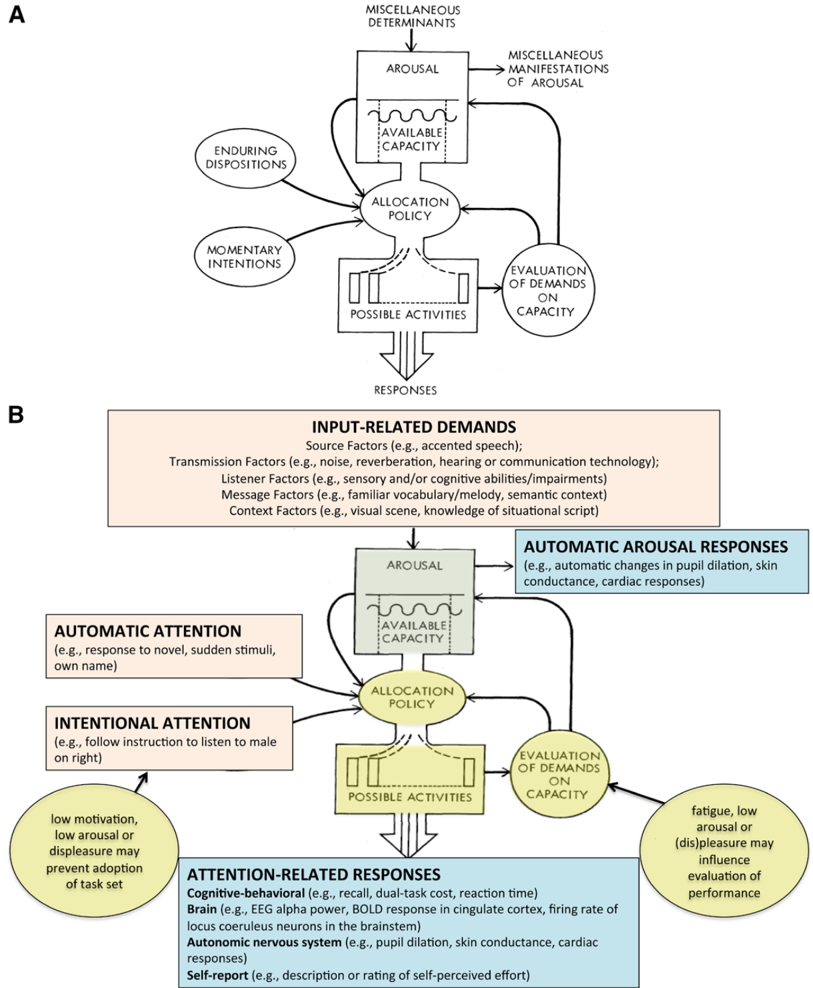
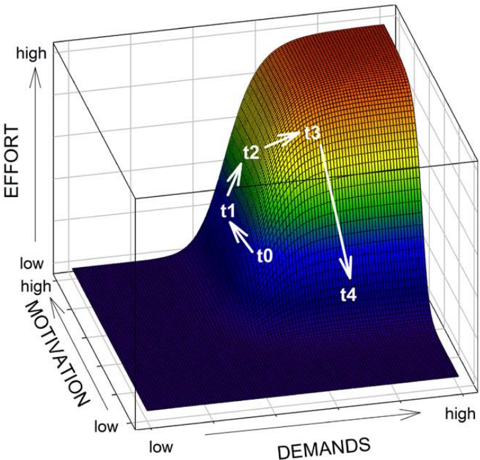
The Fifth Eriksholm Workshop on "Hearing Impairment and Cognitive Energy" was convened to develop a consensus among interdisciplinary experts about what is known on the topic, gaps in knowledge, the use of terminology, priorities for future research, and implications for practice. The general term cognitive energy was chosen to facilitate the broadest possible discussion of the topic. It goes back to who described the effects of attention on perception; he used the term psychic energy for the notion that limited mental resources can be flexibly allocated among perceptual and mental activities. The workshop focused on three main areas: (1) theories, models, concepts, definitions, and frameworks; (2) methods and measures; and (3) knowledge translation. We defined effort as the deliberate allocation of mental resources to overcome obstacles in goal pursuit when carrying out a task, with listening effort applying more specifically when tasks involve listening. We adapted Kahneman's seminal (1973) Capacity Model of Attention to listening and proposed a heuristically useful Framework for Understanding Effortful Listening (FUEL). Our FUEL incorporates the well-known relationship between cognitive demand and the supply of cognitive capacity that is the foundation of cognitive theories of attention. Our FUEL also incorporates a motivation dimension based on complementary theories of motivational intensity, adaptive gain control, and optimal performance, fatigue, and pleasure. Using a three-dimensional illustration, we highlight how listening effort depends not only on hearing difficulties and task demands but also on the listener's motivation to expend mental effort in the challenging situations of everyday life.
Overview
CoChat Summary
TL;DR
The paper reports the Fifth Eriksholm Workshop consensus and proposes FUEL, a conceptual framework for understanding effortful listening that integrates cognitive capacity, motivation, fatigue, and pleasure. It argues that listening effort depends not only on audibility and task demands but also on how listeners evaluate the value of exerting effort in everyday communication.
Key findings
- The workshop’s consensus was that no single existing theory or model sufficiently explains listening effort, so FUEL was proposed as a conceptual framework rather than a quantitative model.
- FUEL adapts Kahneman’s Capacity Model of Attention and adds a motivation dimension; the paper states that effort varies with both demands and motivation, illustrated with a 3D plot of effort, demands, and motivation.
- The paper defines effort as “the deliberate allocation of mental resources to overcome obstacles in goal pursuit when carrying out a task,” and listening effort as effort involved in listening; it extends listening beyond speech to music and environmental sounds.
- The paper organizes candidate listening-effort measures into behavioral, physiological, and self-report measures, and notes that some measures are more sensitive to demands, some to motivation, and some to both.
Methods
- Consensus workshop paper based on the Fifth Eriksholm Workshop on Hearing Impairment and Cognitive Energy, held in June 2015, with 16 participants from audiology, engineering, neuroscience, speech perception, gerontology, philosophy, and psychology.
- The workshop reviewed existing theories/models, definitions, and methods/measures relevant to effortful listening, and used the discussion to develop shared terminology and the FUEL framework.
- The paper’s analysis is conceptual and comparative: it contrasts theories, maps candidate measures onto demand and motivation dimensions, and adapts Kahneman’s model into a listening-specific framework.
Limitations
- The paper explicitly states that the field is not yet at a stage where outcomes can be quantitatively predicted, so FUEL is proposed as a framework rather than a model.
- It states that there is no agreement on an appropriate scale for effort, demands, or motivation, and that the shape of the functions relating them is unknown.
- Evident from the text: the framework is based on a workshop consensus and literature synthesis rather than new empirical data or direct validation studies of FUEL.
Model-written summary of a shortened version of the paper’s full text (it is longer than we read). Check it against the paper before relying on it.
Integrity signals
Registry
Cites
Statistics
Figures
Verification
Claims the paper makes
3 Valid · 7 Not valid · 27 Not checked · 32 Own results and interpretations
Every source the paper cites for this claim was checked and supports it.
In the paper
“From a population health perspective, epidemiological research has provided evidence of a significant association between hearing loss and incident dementia (Albers et al. 2015) and prompted questions regarding the potential advantages of adopting a more integrated approach to research on hearing health and cognitive health (Dupuis et al. 2015; Pichora-Fuller et al. 2015).”
What the sources say
- Supportedcites Albers et al. 2015 matched to “At the interface of sensory and motor dysfunctions and Alzheimer’s disease.” (2015) source
The Epidemiological and Clinical Studies section reports that a prospective cohort found hearing loss independently associated with incident all-cause dementia, with a 95% confidence interval of 1.06–1.50 for the reported risk increase. The paper reports epidemiological evidence for the association; the citing sentence does not claim that it established causation. (LLM, conf=0.94)
plainstates an association- Asserted: passes — The authors put it forward as true.
- Checkable: passes — It can be checked against evidence.
- Load-bearing: unclear — It is unclear whether the paper’s conclusions depend on it.
- Based: passes — The paper gives a reason why it holds.
- Supported
A conclusion the paper draws from its own results — it cites no other source for it, so there is none to check. The quote shows it is in the paper.
In the paper
“Individuals may also need to allocate more cognitive capacity to comprehend, remember, and respond to the auditory objects and events that they have perceived.”
hedgedstates a possible cause- Asserted: passes — The authors put it forward as true.
- Checkable: passes — It can be checked against evidence.
- Load-bearing: passes — The paper’s conclusions depend on it.
- Based: passes — The paper gives a reason why it holds.
A conclusion the paper draws from its own results — it cites no other source for it, so there is none to check. The quote shows it is in the paper.
In the paper
“Therefore, success in achieving listening goals may depend on the deployment of greater cognitive energy when the quality of the signal available to the listener is suboptimal.”
hedgedstates a possible cause- Asserted: passes — The authors put it forward as true.
- Checkable: passes — It can be checked against evidence.
- Load-bearing: passes — The paper’s conclusions depend on it.
- Based: passes — The paper gives a reason why it holds.
None of the sources cited for this claim have been checked yet.
In the paper
“These changes in temporal auditory processing are thought to underpin problems understanding speech in noise and also remembering it once it has been heard.”
hedgedstates a possible cause- Asserted: passes — The authors put it forward as true.
- Checkable: passes — It can be checked against evidence.
- Load-bearing: passes — The paper’s conclusions depend on it.
- Based: passes — The paper gives a reason why it holds.
None of the sources cited for this claim have been checked yet.
In the paper
“(3) his idea that there will be increased mental activity when demands are increased is compatible with the current notion of cognitive compensation (Pichora-Fuller 2010; Grady 2012).”
What the sources say
- Not matchedcites Pichora-Fuller 2010
An author–year citation the paper’s reference list doesn’t settle. We don’t search these by name.
- Not checked — no full text of the sourcecites Grady 2012 matched to “The cognitive neuroscience of ageing” (2012) source
plainstates an association- Asserted: passes — The authors put it forward as true.
- Checkable: passes — It can be checked against evidence.
- Load-bearing: unclear — It is unclear whether the paper’s conclusions depend on it.
- Based: passes — The paper gives a reason why it holds.
- Not matched
15 more claims
Create a free account to see all 69 claims and to verify the 2 references still open.
- It may state two separate claims as one. 13
- Probably not a substantial claim. 46
Claims other papers make about this one
Each is checked against this paper’s own text: does it say what the citing paper says it does?
The cited source says what the claim attributes to it.
In the citing paper
“The subjective experience of effort during communication is likely to precede more chronic experiences of fatigue (Pichora-Fuller et al., 2016).”
From Language proficiency drives listening-related fatigue in those who communicate in English as their second language (2026) · cites this paper as Pichora-Fuller et al., 2016
In the citing paper
“Changes in these kinds of subjective judgments over the course of a communication scenario will likely influence whether or not an individual chooses to withdraw or sustain engagement (Pichora-Fuller et al., 2016).”
From Effortful listening under the microscope: Examining relations between pupillometric and subjective markers of effort and tiredness from listening (2021) · cites this paper as Pichora-Fuller et al., 2016
In the citing paper
“This finding lends weight to the argument that TEPR is not an objective correlate of the subjective experience of listening effort (McGarrigle et al., 2014;Pichora-Fuller et al., 2016;Strand et al., 2018).”
From Effortful listening under the microscope: Examining relations between pupillometric and subjective markers of effort and tiredness from listening (2021) · cites this paper as Pichora-Fuller et al., 2016
In the citing paper
“Thus, to reach lexical access in such adverse conditions, there is a greater need to rely on mental and cognitive processes (Pichora-Fuller et al., 2016; Rönnberg et al., 2008, 2013, 2019).”
From The Involvement of Listening Effort in Explaining Bilingual Listening Under Adverse Listening Conditions (2023) · cites this paper as Pichora-Fuller et al., 2016
In the citing paper
“Our findings are consistent with the FUEL (Pichora-Fuller et al., 2016) and extend it to primary school children.”
From Listening effort and fatigue in native and non-native primary school children (2021) · cites this paper as Pichora-Fuller et al., 2016
5 more claims about this paper
Create a free account to see every claim other papers make about this one.
Citations
Cites
The relation of strength of stimulus to rapidity of habit formation
Yerkes, R. M., & Dodson, J. D. (1908) · Journal of Comparative Neurology and Psychology · doi:10.1002/cne.920180503 · Cited by 6,911
Individual differences in working memory and reading
Daneman, M., & Carpenter, P. A. (1980) · Journal of Verbal Learning and Verbal Behavior · doi:10.1016/s0022-5371(80)90312-6 · Cited by 6,336
The processing-speed theory of adult age differences in cognition
Salthouse, T. A. (1996) · Psychological Review · doi:10.1037/0033-295x.103.3.403 · Cited by 5,902
Social Relationships and Health.
Cohen, S. (2004) · American Psychologist · doi:10.1037/0003-066x.59.8.676 · Cited by 4,852
Aston-Jones, G., & Cohen, J. D. (2005) · Annual Review of Neuroscience · doi:10.1146/annurev.neuro.28.061604.135709 · Cited by 4,472
Broadbent, D. E. (1958) · doi:10.1037/10037-000 · Cited by 4,337
A capacity theory of comprehension: individual differences in working memory
Just, M. A., & Carpenter, P. A. (1992) · Psychological Review · doi:10.1037/0033-295x.99.1.122 · Cited by 4,153
The adaptive brain: aging and neurocognitive scaffolding
Park, D. C., & Reuter-Lorenz, P. (2009) · Annual Review of Psychology · doi:10.1146/annurev.psych.59.103006.093656 · Cited by 2,790
Motor control and aging: Links to age-related brain structural, functional, and biochemical effects
Seidler, R. D., Bernard, J. A., Burutolu, T. B., Fling, B. W., Gordon, M. T., Gwin, J. T., Kwak, Y., & Lipps, D. B. (2010) · Neuroscience & Biobehavioral Reviews · doi:10.1016/j.neubiorev.2009.10.005 · Cited by 1,791
Neurocognitive Aging and the Compensation Hypothesis
Reuter-Lorenz, P. A., & Cappell, K. A. (2008) · Current Directions in Psychological Science · doi:10.1111/j.1467-8721.2008.00570.x · Cited by 1,639
Research works printed but not linked: 2
- Robertson, 1997, The effect of an aural rehabilitation program on responses to scenarios depicting communication breakdown., J Speech Lang Pathol Audiol, 21, 187
- Smith, Development of the Word Auditory Recognition and Recall Measure (WARRM): A working memory test for use in rehabilitative audiology, Ear Hear
Cited by
Items 301–400 of 1,325
Hunter, C. R. (2021) · Trends in Hearing · doi:10.1177/23312165211018092 · Cited by 30
Learning and bilingualism in challenging listening conditions: How challenging can it be?
Bsharat-Maalouf, D., & Karawani, H. (2022) · Cognition · doi:10.1016/j.cognition.2022.105018 · Cited by 26
Adams, B., Thornton, S. K., Naylor, G., Spriggs, R. V., Wiggins, I. M., & Kitterick, P. T. (2023) · Frontiers in Pediatrics · doi:10.3389/fped.2023.1127578 · Cited by 23
Self-citationStrategic stabilization of arousal boosts sustained attention
de Gee, J. W., Mridha, Z., Hudson, M., Shi, Y., Ramsaywak, H., Smith, S., Karediya, N., Thompson, M., Jaspe, K., Jiang, H., et al. (2024) · Current Biology · doi:10.1016/j.cub.2024.07.070 · Cited by 35
Brennan, M., Lewis, D. E., McCreery, R. W., Kopun, J. G., & Alexander, J. M. (2017) · Journal of the American Academy of Audiology · doi:10.3766/jaaa.16158 · Cited by 20
“For example, McGarrigle et al (2014) suggested that a low-quality signal might cause individuals to respond more quickly as a result of more focused attention (also see Pichora-Fuller et al, 2016).”
BackgroundRusso, F., Hoen, M., Karoui, C., Demarcy, T., Ardoint, M., Tuset, M., Seta, D. D., Sterkers, O., Lahlou, G., & Mosnier, I. (2020) · Frontiers in Neuroscience · doi:10.3389/fnins.2020.556675 · Cited by 24
“Having to make constant listening efforts is therefore likely to have a negative impact on health and cognition in general (PichoraFuller et al., 2015; Pichora-Fuller, 2016).”
BackgroundBenefit of Musical Training for Speech Perception and Cognition Later in Life
Merten, N., Fischer, M., Dillard, L. K., Klein, R., Tweed, T. S., & Cruickshanks, K. J. (2021) · Journal of Speech Language and Hearing Research · doi:10.1044/2021_jslhr-20-00588 · Cited by 27
“…Pronk et al., 2019; Valentijn et al., 2005), and cognitive processing capacity has been considered as an important factor for speech-in-noise perception (Anderson, White-Schwoch, Parbery-Clark, & Kraus, 2013; Humes et al., 2012; Pichora-Fuller et al., 2016; B. A. Schneider & Pichora-Fuller, 2000).”
BackgroundProdi, N., Visentin, C., Borella, E., Mammarella, I. C., & Domenico, A. D. (2021) · Applied Acoustics · doi:10.1016/j.apacoust.2021.108239 · Cited by 23
EEG power spectral dynamics associated with listening in adverse conditions
Wisniewski, M. G., Zakrzewski, A. C., Bell, D. R., & Wheeler, M. (2021) · Psychophysiology · doi:10.1111/psyp.13877 · Cited by 24
Listening Effort: Order Effects and Core Executive Functions
Brännström, K. J., Karlsson, E., Waechter, S., & Kastberg, T. (2017) · Journal of the American Academy of Audiology · doi:10.3766/jaaa.17024 · Cited by 27
“FUEL suggests that listener motivation in relation to the listening demands influences listening effort in a given listening situation (Pichora-Fuller et al, 2016).”
BackgroundInfluentialHall, D. A., Kitterick, P. T., Heffernan, E., Fackrell, K., Lucas, L., & Ferguson, M. (2019) · Otology & Neurotology · doi:10.1097/mao.0000000000001937 · Cited by 22
“Hearing loss can also increase the effort required for listening and communicating causing fatigue (3).”
BackgroundKurthen, I., Meyer, M. E., Schlesewsky, M., & Bornkessel‐Schlesewsky, I. (2020) · Frontiers in Neuroscience · doi:10.3389/fnins.2020.573513 · Cited by 24
Patro, C., Kreft, H. A., & Wojtczak, M. (2021) · Hearing Research · doi:10.1016/j.heares.2021.108333 · Cited by 25
Dingemanse, G., & Goedegebure, A. (2021) · Journal of Speech Language and Hearing Research · doi:10.1044/2021_jslhr-21-00230 · Cited by 26
Ritz, H., Wild, C. J., & Johnsrude, I. S. (2022) · Journal of Neuroscience · doi:10.1523/jneurosci.1777-21.2022 · Cited by 30
Jamsek, I. A., Kronenberger, W. G., Pisoni, D. B., & Holt, R. F. (2022) · Frontiers in Psychology · doi:10.3389/fpsyg.2022.987256 · Cited by 24
“In DHH children, there is emerging evidence that EF may play an outsized role during language processing and learning relative to TH children, due to challenges in listening effort, quality of language exposure, and underspecified phonologicallexical representations of words in short- and long-term memory associated w…”
BackgroundShatzer, H., & Russo, F. (2023) · Seminars in Hearing · doi:10.1055/s-0043-1766105 · Cited by 23
Aging, Hearing Loss, and Listening Effort: Imaging Studies of the Aging Listener
Kuchinsky, S. E., & Vaden, K. I. (2020) · Springer handbook of auditory research · doi:10.1007/978-3-030-49367-7_10 · Cited by 20
Kestens, K., Degeest, S., Miatton, M., & Keppler, H. (2021) · Frontiers in Psychology · doi:10.3389/fpsyg.2021.668828 · Cited by 21
Getzmann, S., Reiser, J. E., Gajewski, P. D., Schneider, D. A., Karthaus, M., & Wascher, E. (2023) · Frontiers in Psychology · doi:10.3389/fpsyg.2023.1232344 · Cited by 32
Ruytenbeek, N. (2021) · Cambridge University Press eBooks · doi:10.1017/9781108673112 · Cited by 32
Investigation of the Relation Between Tinnitus, Cognition, and the Amount of Listening Effort
Degeest, S., Kestens, K., & Keppler, H. (2022) · Journal of Speech Language and Hearing Research · doi:10.1044/2022_jslhr-21-00347 · Cited by 22
Alhanbali, S., AlJasser, A., Aboudi, O., Alaqrabawi, W. S., & Munro, K. J. (2022) · International Journal of Audiology · doi:10.1080/14992027.2022.2085195 · Cited by 19
“Given that hearing disability and handicap can impose a number of limitations on the everyday life of individuals with hearing impairment (Pichora-Fuller et al. 2016), a good assessment of hearing difficulty should take into account both of individuals’ experience of impairment and disability.”
BackgroundKraus, F., Tune, S., Obleser, J., & Herrmann, B. (2023) · Journal of Neuroscience · doi:10.1523/jneurosci.2181-22.2023 · Cited by 20
Kestens, K., Yper, L. N. V., Degeest, S., & Keppler, H. (2023) · Ear and Hearing · doi:10.1097/aud.0000000000001381 · Cited by 24
Motala, A., Johnsrude, I. S., & Herrmann, B. (2024) · Trends in Hearing · doi:10.1177/23312165241236041 · Cited by 39
“Background noise renders listening effortful and fatiguing (Eckert et al., 2016; Herrmann & Johnsrude, 2020; Peelle, 2018; Pichora-Fuller et al., 1995, 2016).”
BackgroundInfluentialPupil Size and Eye Movements Differently Index Effort in Both Younger and Older Adults
Herrmann, B., & Ryan, J. D. (2024) · Journal of Cognitive Neuroscience · doi:10.1162/jocn_a_02172 · Cited by 20
“For example, older adults often invest substantial effort to comprehend speech in noise, and this effort is considered an early sign of age-related hearing loss (Herrmann & Johnsrude, 2020; Peelle, 2018; Eckert, Teubner-Rhodes, & Vaden, 2016; Pichora-Fuller et al., 2016).”
BackgroundEriksholm Workshop on Hearing Impairment and Cognitive Energy
Pichora-Fuller, M. K., & Kramer, S. E. (2016) · Ear and Hearing · doi:10.1097/aud.0000000000000306 · Cited by 21
“Our proposed FUEL illustrates how the amount of listening effort allocated to a task depends on the sorts of demands that are familiar to audiologists, but also on the listener’s motivation or arousal.”
BackgroundInfluentialSelf-citationThe Presence of Another Individual Influences Listening Effort, But Not Performance
Pielage, H., Zekveld, A. A., Saunders, G. H., Versfeld, N. J., Lunner, T., & Kramer, S. E. (2021) · Ear and Hearing · doi:10.1097/aud.0000000000001046 · Cited by 26
“The Framework for Understanding Effortful Listening defines listening effort as “the deliberate allocation of mental resources to overcome obstacles in goal pursuit when carrying out a [listening] task” (Pichora-Fuller et al. 2016, p. 5).”
BackgroundMethodResultInfluentialSelf-citationMicula, A., Rönnberg, J., Fiedler, L., Wendt, D., Jørgensen, M. C., Larsen, D. K., & Ng, E. H. N. (2021) · Ear and Hearing · doi:10.1097/aud.0000000000001053 · Cited by 19
“…during listening tasks has been investigated using various measures, such as behavioral measures (e.g., recall performance) or physiological measures (e.g., pupillometry) (Zekveld et al. 2011; Pichora-Fuller et al. 2016; Wendt et al. 2017; Ohlenforst et al. 2018; Peelle 2018; Zhang et al. 2021).”
BackgroundMethodInfluentialOn the impairment of executive control of attention in chronic tinnitus
Jensen, M., Hüttenrauch, E., Müller-Mazzotta, J., Stuck, B. A., & Weise, C. (2021) · Behavioural Brain Research · doi:10.1016/j.bbr.2021.113493 · Cited by 18
Listening effort: WHAT is it, HOW is it measured and WHY is it important?
Shields, C., Willis, H., Nichani, J., Sladen, M., & Kluk, K. (2021) · Cochlear Implants International · doi:10.1080/14670100.2021.1992941 · Cited by 22
“There is mounting evidence to suggest that children with mild to moderate or unilateral hearing loss may display poorer educational outcomes compared with normal hearing students (Bess et al., 1998; Niedzielski et al., 2006; Purcell et al., 2016).”
BackgroundWunderlich, A., Wollesen, B., Asamoah, J., Delbaere, K., & Li, K. (2024) · European Review of Aging and Physical Activity · doi:10.1186/s11556-024-00350-x · Cited by 22
Speech Recognition and Listening Effort of Meaningful Sentences Using Synthetic Speech
Ibelings, S., Brand, T., & Holube, I. (2022) · Trends in Hearing · doi:10.1177/23312165221130656 · Cited by 25
“Both objective and subjective methods have been used to determine listening effort (Klink et al., 2012a, 2012b; McGarrigle et al., 2014; Pichora-Fuller et al., 2016).”
MethodHow pronunciation distance impacts word recognition in children and adults
Bent, T., Holt, R. F., Engen, K. J. V., Jamsek, I. A., Arzbecker, L. J., Liang, L., & Brown, E. (2021) · The Journal of the Acoustical Society of America · doi:10.1121/10.0008930 · Cited by 25
Evidence for cortical adjustments to perceptual decision criteria during word recognition in noise
Vaden, K. I., Teubner-Rhodes, S. E., Ahlstrom, J. B., Dubno, J. R., & Eckert, M. A. (2022) · NeuroImage · doi:10.1016/j.neuroimage.2022.119042 · Cited by 18
“Some of this variance may be explained by differences in the engagement of listening effort or cognitive resources to facilitate speech recognition for some older adults (e.g., Alain et al., 2004; Eckert et al., 2016; Peelle, 2017; Pichora-Fuller et al., 2016; Wingfield, 1996).”
BackgroundSelf-citationNitsan, G., Banai, K., & Ben‐David, B. M. (2022) · Frontiers in Psychology · doi:10.3389/fpsyg.2022.841466 · Cited by 18
“According to the Framework for Understanding Effortful Listening (FUEL; Pichora-Fuller et al., 2016) speech processing depends on deployment of cognitive resources and therefore might be affected by differences in maximal capacity, especially under increased perceptual effort conditions such as in the presence of back…”
MethodFletcher, A. R., Wisler, A. A., Gruver, E. R., & Borrie, S. A. (2022) · Journal of Speech Language and Hearing Research · doi:10.1044/2022_jslhr-22-00136 · Cited by 19
Plasticity After Hearing Rehabilitation in the Aging Brain
Lazard, D. S., Doelling, K. B., & Arnal, L. H. (2023) · Trends in Hearing · doi:10.1177/23312165231156412 · Cited by 28
Wasmann, J.-W. A., Huinck, W. J., & Lanting, C. (2023) · Ear and Hearing · doi:10.1097/aud.0000000000001422 · Cited by 21
Sarant, J. Z., Lemke, U., Giroud, N., Scherpiet, S., & Weinstein, B. E. (2023) · International Journal of Audiology · doi:10.1080/14992027.2023.2260099 · Cited by 27
“The use of additional cognitive resources for speech understanding may have cognitive and behavioural consequences including loss of resources for other cognitive tasks, listening fatigue, loss of motivation to engage, and withdrawal (Peelle and Wingfield, 2016, Pichora-Fuller et al. 2016).”
Self-citationQin, A., Chen, C., Bao, B., Xin, T., & Xu, L. (2024) · Journal of Affective Disorders · doi:10.1016/j.jad.2024.01.203 · Cited by 21
Effects of linguistic context and noise type on speech comprehension
Fitzgerald, L. P., DeDe, G., & Shen, J. (2024) · Frontiers in Psychology · doi:10.3389/fpsyg.2024.1345619 · Cited by 22
Effects of noise on arousal in a speech communication setting
Cvijanović, N., Kechichian, P., Janse, K., & Kohlrausch, A. (2017) · Speech Communication · doi:10.1016/j.specom.2017.02.001 · Cited by 18
Deroche, M. L. D., Felezeu, M., Paquette, S., Zeitouni, A. G., & Lehmann, A. (2019) · Ear and Hearing · doi:10.1097/aud.0000000000000701 · Cited by 19
“To some degree, this result resonates with emerging evidence that CI users spend too much effort deciphering the auditory inputs leaving fewer cognitive resources for additional demands (Pisoni & Cleary 2003; Winn et al. 2015; Pichora-Fuller et al. 2016).”
ResultMcAllister, A. M., Rantala, L. M., & Jónsdottir, V. (2019) · Frontiers in Psychology · doi:10.3389/fpsyg.2019.01954 · Cited by 28
Zora, H., Rudner, M., & Magnusson, A. K. M. (2020) · European Journal of Neuroscience · doi:10.1111/ejn.14658 · Cited by 20
“Fewer socio-emotional acoustic cues may lead to an impoverished environment or social isolation, which in turn may contribute to delayed cognitive development or hastened decline in later life (Arlinger, 2003; Lin et al., 2013; Livingston et al., 2017; Pichora-Fuller et al., 2016; Rönnberg, Rudner, & Lunner, 2011; Rud…”
BackgroundSelf-citationAssociations Between Measures of Auditory Function and Brief Assessments of Cognition
Humes, L. E. (2020) · American Journal of Audiology · doi:10.1044/2020_aja-20-00077 · Cited by 22
Self-citationAge-Related Differences in Auditory Cortex Activity During Spoken Word Recognition
Rogers, C. S., Jones, M. S., McConkey, S. M., Spehar, B., Engen, K. J. V., Sommers, M. S., & Peelle, J. E. (2020) · Neurobiology of Language · doi:10.1162/nol_a_00021 · Cited by 19
Self-citationGustafson, S. J., Ricketts, T. A., & Picou, E. M. (2021) · Journal of Speech Language and Hearing Research · doi:10.1044/2020_jslhr-20-00281 · Cited by 17
“Hearing Impairment and Cognitive Energy: The Framework for Understanding Effortful Listening (FUEL).”
MethodMilvae, K. D., Kuchinsky, S. E., Stakhovskaya, O. A., & Goupell, M. J. (2021) · The Journal of the Acoustical Society of America · doi:10.1121/10.0005653 · Cited by 14
Sound Localization in Real-Time Vocoded Cochlear-Implant Simulations With Normal-Hearing Listeners
Ausili, S. A., Backus, B. C., Agterberg, M. J. H., Opstal, A. J. V., & van Wanrooij, M. M. (2019) · Trends in Hearing · doi:10.1177/2331216519847332 · Cited by 20
“Despite clear CI benefits in speech perception and spatial hearing in simple, short-duration experiments, this aspect might actually reflect how much effort they need to invest for listening in everyday life situations over longer periods of time (Ohlenforst et al., 2017; Pichora-Fuller et al., 2016).”
Listening effort in children and adults in classroom noise
Seitz, J., Loh, K., & Fels, J. (2024) · Scientific Reports · doi:10.1038/s41598-024-76932-7 · Cited by 21
Alpha Oscillations During Effortful Continuous Speech: From Scalp EEG to Ear-EEG
Ala, T. S., Aličković, E., Cabrera, A. F., Whitmer, W. M., Hadley, L. V., Rank, M. L., Lunner, T., & Graversen, C. (2022) · IEEE Transactions on Biomedical Engineering · doi:10.1109/tbme.2022.3214428 · Cited by 23
“If the task becomes too difficult, then the listener will disengage from the listening task, and that leads to a drop in the objective measure of effort [1].”
BackgroundSelf-citationHearing Aids Reduce Self-Perceived Difficulties in Noise for Listeners With Normal Audiograms
Mealings, K. T., Valderrama, J. T., Mejia, J., Yeend, I., Beach, E. F., & Edwards, B. (2023) · Ear and Hearing · doi:10.1097/aud.0000000000001412 · Cited by 19
Self-citationDumassais, S., Pichora-Fuller, M. K., Guthrie, D. M., Phillips, N. A., Savundranayagam, M. Y., & Wittich, W. (2024) · Age and Ageing · doi:10.1093/ageing/afae051 · Cited by 18
Self-citationMotivation to Address Self-Reported Hearing Problems in Adults With Normal Hearing Thresholds
Alicea, C. C. M., & Doherty, K. A. (2017) · Journal of Speech Language and Hearing Research · doi:10.1044/2017_jslhr-h-17-0110 · Cited by 16
Keerstock, S., & Smiljanić, R. (2018) · The Journal of the Acoustical Society of America · doi:10.1121/1.5078589 · Cited by 16
da Cruz, A. D., Gagné, J., Cruz, W. M., Isotani, S., Gauthier-Cossette, L., & Jacob, R. T. D. S. (2019) · International Journal of Audiology · doi:10.1080/14992027.2019.1671992 · Cited by 19
Aberrant brain functional hubs and causal connectivity in presbycusis
Xing, C., Chen, Y., Tong, Z., Xu, W., Xǔ, J., Yin, X., Wu, Y., & Cai, Y. (2020) · Brain Imaging and Behavior · doi:10.1007/s11682-020-00386-4 · Cited by 18
Watkins, G. D., Swanson, B. A., & Suaning, G. J. (2018) · Ear and Hearing · doi:10.1097/aud.0000000000000556 · Cited by 16
A Quantitative Model of Listening Related Fatigue
Schneider, E. N., Bernarding, C., Francis, A. L., Hornsby, B. W. Y., & Strauß, D. J. (2019) · International IEEE/EMBS Conference on Neural Engineering · doi:10.1109/ner.2019.8717046 · Cited by 19
“de 2Speech Perception and Cognitive Effort Laboratory Department of Speech, Language & Hearing Sciences, Purdue University, West Lafayette, IN, USA 3Department of Hearing Speech Sciences, Vanderbilt Bill Wilkerson Center, Vanderbilt University School of Medicine, Nashville, TN, USA Effort can be defined as the conscio…”
BackgroundSelf-citationImpact of Background Noise Fluctuation and Reverberation on Response Time in a Speech Reception Task
Prodi, N., & Visentin, C. (2019) · Journal of Speech Language and Hearing Research · doi:10.1044/2019_jslhr-h-19-0180 · Cited by 18
Cao, G., Yao, S., Wang, K., Han, L., Chen, Z., Huang, Z.-T., Zhang, Q., Wang, C., Hu, Y., & Xu, B. (2020) · Aging & Mental Health · doi:10.1080/13607863.2020.1828271 · Cited by 16
Visentin, C., & Prodi, N. (2018) · Journal of Speech Language and Hearing Research · doi:10.1044/2018_jslhr-h-17-0418 · Cited by 17
Myers, E. B., Phillips, M., & Skoe, E. (2024) · The Journal of the Acoustical Society of America · doi:10.1121/10.0028583 · Cited by 27
Predictors of Listening-Related Fatigue Across the Adult Life Span
McGarrigle, R., Knight, S., Hornsby, B. W. Y., & Mattys, S. (2021) · Psychological Science · doi:10.1177/09567976211016410 · Cited by 16
Self-citationCost-Effectiveness of Hearing Screening in Older Adults: A Scoping Review
Hsu, A. K., Bassett, S. M., O’Dwyer, L., McHugh, M., Heinemann, A. W., Jordan, N., & Dhar, S. (2021) · Research on Aging · doi:10.1177/01640275211008583 · Cited by 17
“However, the association between hearing loss and declines in cognitive function is becoming Hsu et al. 13 Hsu et al. 199 ever more clear (Lin et al., 2011; Pichora-Fuller et al., 2015, 2016).”
BackgroundBurg, E. A., Thakkar, T. D., Fields, T. N., Misurelli, S. M., Kuchinsky, S. E., Roche, J. P., Lee, D. J., & Litovsky, R. Y. (2021) · Trends in Hearing · doi:10.1177/23312165211013256 · Cited by 19
Combining Multiple Psychophysiological Measures of Listening Effort: Challenges and Recommendations
Richter, M. M., Buhiyan, T., Bramsløw, L., Innes-Brown, H., Fiedler, L., Hadley, L. V., Naylor, G., Saunders, G. H., Wendt, D., Whitmer, W. M., et al. (2023) · Seminars in Hearing · doi:10.1055/s-0043-1767669 · Cited by 18
Self-citationSocioeconomic Status and Cochlear Implant Usage: A Datalogging Study
Awad, D. R., Castaño, J. E., McCoy, J. L., Levy, R., Oberlies, N. R., Shaffer, A. D., Kitsko, D. J., Jabbour, N., & Chi, D. H. (2023) · Annals of Otology Rhinology & Laryngology · doi:10.1177/00034894231170588 · Cited by 15
Cortical responses correlate with speech performance in pre-lingually deaf cochlear implant children
Zhou, X.-Q., Zhang, Q., Xi, X., Leng, M.-R., Liu, H., Liu, S., Zhang, T., & Yuan, W. (2023) · Frontiers in Neuroscience · doi:10.3389/fnins.2023.1126813 · Cited by 17
“The deactivation of LIFG for PCIs suggested that these individuals may identify the experimental trials as impossible and eventually “gave up” (Pichora-Fuller et al., 2016), like the response of the STG.”
Sladen, D. P., Nie, Y., & Berg, K. A. (2018) · Cochlear Implants International · doi:10.1080/14670100.2018.1424513 · Cited by 19
“The group described effort as ‘the deliberate allocation of mental resources to overcome obstacles in goal pursuit when carrying out a task with listening effort applying more specifically when tasks involve listening’ (Pichora-Fuller et al., 2016).”
BackgroundAutonomic Nervous System Correlates of Speech Categorization Revealed Through Pupillometry
Lewis, G. A., & Bidelman, G. M. (2020) · Frontiers in Neuroscience · doi:10.3389/fnins.2019.01418 · Cited by 14
Paulus, M., Hazan, V. L., & Adank, P. (2020) · The Journal of the Acoustical Society of America · doi:10.1121/10.0001212 · Cited by 20
“Following the definitions by Mattys et al. (2012), input demands have been divided into channel and source factors (Pichora-Fuller et al., 2016) and have usually been investigated separately.”
BackgroundInfluentialOosthuizen, I., Picou, E. M., Pottas, L., Myburgh, H. C., & Swanepoel, D. W. (2020) · Journal of Speech, Language, and Hearing Research · doi:10.1044/2020_jslhr-19-00330 · Cited by 15
Xu, D., Newell, M., & Francis, A. L. (2021) · The Journals of Gerontology Series A · doi:10.1093/gerona/glab123 · Cited by 17
“In particular, we found no mediation effects for the youngest group (18-39), and for the middleaged group (40-59) we found only mediation effects of serious injury and fall-related injury.”
BackgroundPayne, B. R., Silcox, J. W., Crandell, H. A., Lash, A., Ferguson, S. H., & Lohani, M. (2022) · Ear & Hearing · doi:10.1097/aud.0000000000001079 · Cited by 13
“Importantly, under a listening effort model (Peelle 2018; Pichora-Fuller et al. 2016), even small increases in background noise should draw attentional resources away from memory encoding, even when speech is still intelligible (Piquado et al.”
InfluentialPlain, B., Pielage, H., Richter, M., Bhuiyan, T. A., Lunner, T., Kramer, S. E., & Zekveld, A. A. (2021) · Hearing Research · doi:10.1016/j.heares.2021.108334 · Cited by 19
Self-citationUnderstanding degraded speech leads to perceptual gating of a brainstem reflex in human listeners
Hernández-Pérez, H., Mikiel‐Hunter, J., McAlpine, D., Dhar, S., Boothalingam, S., Monaghan, J. J. M., & McMahon, C. M. (2021) · PLoS Biology · doi:10.1371/journal.pbio.3001439 · Cited by 17
Stewart, H. J., Cash, E. K., Hunter, L. L., Maloney, T., Vannest, J. J., & Moore, D. R. (2022) · NeuroImage Clinical · doi:10.1016/j.nicl.2022.103172 · Cited by 15
Abraham, A. G., Hong, C., Deal, J. A., Bettcher, B. M., Pelak, V. S., Gross, A. L., Jiang, K., Swenor, B. K., & Wittich, W. (2023) · Journal of the American Geriatrics Society · doi:10.1111/jgs.18229 · Cited by 19
Functional Consequences of Impaired Hearing in Older Adults and Implications for Intervention
Humes, L. E., Pichora-Fuller, M. K., & Hickson, L. M. H. (2020) · Springer handbook of auditory research · doi:10.1007/978-3-030-49367-7_11 · Cited by 19
Self-citationHearing loss and psychosocial outcomes: Influences of social emotional aspects and personality
Cormier, K., Brennan, C., & Sharma, A. (2024) · PLoS ONE · doi:10.1371/journal.pone.0304428 · Cited by 20
“…Understanding Effortful Listening) suggests listening effort secondary to hearing loss results in a chronic taxing of cognition, specifically attention, memory, and executive functioning, resulting in lower global cognitive abilities in people with hearing loss compared to age matched peers [4–8].”
BackgroundSelf-Perception of Hearing Difficulties and Quality of Life in Individuals with Hearing Loss
de Andrade, A. N., Soares, A., Skarzynska, M. B., Skarzynski, P. H., Sanfins, M. D., & Gil, D. (2022) · Audiology Research · doi:10.3390/audiolres12050053 · Cited by 16
“The self-perception of a degree of hearing difficulty cannot be correlated with the degree of hearing loss [27–29], audiometric configuration, general ability to recognize speech [30], or sociodemographic factors [29], but appears to be closely related to hearing demand, acceptance or denial of hearing loss, emotional…”
BackgroundInfluentialMagits, S., Boon, E., Meyere, L. D., Dierckx, A., Vermaete, E., Francart, T., Verhaert, N., Wouters, J. M., & Wieringen, A. V. (2022) · Ear and Hearing · doi:10.1097/aud.0000000000001295 · Cited by 18
Time Scales and Moments of Listening Effort Revealed in Pupillometry
Winn, M. B. (2023) · Seminars in Hearing · doi:10.1055/s-0043-1767741 · Cited by 17
Aliakbaryhosseinabadi, S., Keidser, G., May, T., Dau, T., Wendt, D., & Rotger-Griful, S. (2023) · Journal of Speech Language and Hearing Research · doi:10.1044/2023_jslhr-23-00063 · Cited by 18
“Pupil size has long been considered a valid indicator of listening effort (Beatty, 1982; Kahneman, 1973), more recently defined as the deliberate allocation of mental resources to overcome obstacles in goal pursuit when carrying out a task (see Pichora-Fuller et al., 2016).”
InfluentialVaisberg, J. M., Gilmore, S. A., Qian, J., & Russo, F. (2024) · Trends in Hearing · doi:10.1177/23312165241273346 · Cited by 21
“While standardized measures of listening effort lack in clinical practice (Pichora-Fuller et al., 2016), many techniques for measuring listening effort have been implemented in hearing research.”
BackgroundInfluentialPichora-Fuller, M. K. (2020) · Elsevier eBooks · doi:10.1016/b978-0-12-817422-7.00003-1 · Cited by 13
Self-citationAdding noise is a confounded nuisance
Francis, A. L. (2022) · The Journal of the Acoustical Society of America · doi:10.1121/10.0013874 · Cited by 15
Micula, A., Rönnberg, J., Książek, P., Nielsen, R. M., Wendt, D., Fiedler, L., & Ng, E. H. N. (2022) · Trends in Hearing · doi:10.1177/23312165221130581 · Cited by 14
Fumero, M. J., Eustaquio-Martín, A., Arocena, J. M. G., López, R. P., Revilla, M. A. G., Lassaletta, L., Schatzer, R., Nopp, P., Stohl, J. S., & Lopez‐Poveda, E. A. (2021) · Hearing Research · doi:10.1016/j.heares.2021.108320 · Cited by 13
Isler, B., Giroud, N., Hirsiger, S., Kleinjung, T., & Meyer, M. E. (2021) · Hearing Research · doi:10.1016/j.heares.2021.108252 · Cited by 14
Neural signatures of task-related fluctuations in auditory attention and age-related changes
Herrmann, B., Maeß, B., Henry, M. J., Obleser, J., & Johnsrude, I. S. (2023) · NeuroImage · doi:10.1016/j.neuroimage.2023.119883 · Cited by 14
“…the need to recruit cognitive resources such as attention, but this is mentally costly ( Westbrook and Braver, 2015 ; Hornsby et al., 2016 ; Shenhav et al., 2017 ) and makes listening effortful ( Pichora-Fuller, 2016 ; Strauss and Francis, 2017 ; Peelle, 2018 ; Herrmann and Johnsrude, 2020 ).”
An Exploratory Study of the Effect of Tinnitus on Listening Effort Using EEG and Pupillometry
Sendesen, E., Kılıç, S., Erbil, N., Aydın, Ö., & Türkyılmaz, M. D. (2023) · Otolaryngology · doi:10.1002/ohn.367 · Cited by 13
Cartocci, G., Inguscio, B. M. S., Giliberto, G., Vozzi, A., Giorgi, A., Greco, A., Babiloni, F., & Attanasio, G. (2023) · Brain Sciences · doi:10.3390/brainsci13071084 · Cited by 15
Schiller, I., Aspöck, L., & Schlittmeier, S. J. (2023) · Frontiers in Psychology · doi:10.3389/fpsyg.2023.1243249 · Cited by 19
Keur‐Huizinga, L., Kramer, S. E., de Geus, E. J. C., & Zekveld, A. A. (2024) · Ear and Hearing · doi:10.1097/aud.0000000000001508 · Cited by 21
Self-citationNote on the Dual-Task Paradigm and its Use to Measure Listening Effort
Kuchinsky, S. E., Gallun, F. J., & Lee, A. K. C. (2024) · Trends in Hearing · doi:10.1177/23312165241292215 · Cited by 14
Metadata
- Authors
- Pichora-Fuller, M. K., Kramer, S. E., Eckert, M. A., Edwards, B., Hornsby, B. W. Y., Humes, L. E., Lemke, U., Lunner, T., Matthen, M., Mackersie, C. L., Naylor, G., Phillips, N. A., Richter, M., Rudner, M., Sommers, M. S., Tremblay, K. L., & Wingfield, A.
- Affiliations
- Brandeis University (US)
- Vanderbilt University (US)
- Sonova (Switzerland) (CH)
- Oticon (Denmark) (DK)
- Earlens (United States) (US)
- University of Toronto (CA)
- Indiana University Bloomington (US)
- Corresponding author
- Pichora-Fuller, M. Kathleen
- ORCID
- Venue
- Ear & Hearing
- Published
- 2016-07
- Volume
- 37
- Issue
- 1
- Pages
- 5S-27S
- ISSN
- 0196-0202 (ISSN-L)
- OpenAlex
- W2472770001
- Semantic Scholar
- 353d1914960d7e69bd9f7dd3f6c74863cb5c1bcc
- Cited by
- 1,318
- References
- 132
- Citations by year
- 2026: 180 · 2025: 210 · 2024: 154 · 2023: 141 · 2022: 131 · 2021: 163 · 2020: 117 · 2019: 95 · 2018: 69 · 2017: 45 · 2016: 10
- FWCI
- 46.32
- Type
- journal article
- Language
- en
- Open access
- hybrid
- doi.org
- Licence
- Locations
- Ear and Hearing (publishedVersion, cc-by-nc-nd)
- PubMed (publishedVersion)
- Repository@Nottingham (University of Nottingham) (publishedVersion, cc-by-nc-nd)
- Amsterdam UMC (VU Amsterdam) - Institutional Repository (publishedVersion)
- Repository@Nottingham (University of Nottingham) (submittedVersion, cc-by-nc-nd)
- Pure Amsterdam UMC (submittedVersion, other-oa)
- Liverpool John Moores University (submittedVersion)
- Data Archiving and Networked Services (DANS) (submittedVersion)
- Funders
- University of Toronto
- Oticon Fonden
- Topics
- Health Sciences › Health Professions › Speech and Hearing › Hearing Loss and Rehabilitation
- Social Sciences › Psychology › Developmental and Educational Psychology › Hearing Impairment and Communication
- Life Sciences › Neuroscience › Sensory Systems › Hearing, Cochlea, Tinnitus, Genetics
- Keywords
- hearing loss, cognitive energy, listening effort, attentional capacity, cognitive demand, motivation, fatigue, pleasure, adaptive gain control, optimal performance, knowledge translation
- MeSH terms
- Attention, Auditory Perception, Cognition, Humans, Speech Perception, Comprehension, Hearing Loss
About these checks
Registry, retraction, Cites and statistics results are computed, not judged, with one exception: a printed reference that no index lists is read once by a model before it counts as a citation error. Claims are extracted by a model and kept only when their quote appears verbatim in the text; each cited source is then checked, with a model’s help, for whether it says what the claim relies on. Those verdicts can be wrong — read the claim’s quote and the cited source before relying on one.
The claim verdicts this report counts are experimental: their accuracy is not yet measured.
A language model drew the claims from the paper on 2026-10-10, under version 3 of the claim definition (model deepseek-v4.1-flash, prompt extract-v3).
A second model labelled each claim on 2026-10-10 (model jev-1.13-20260917, definition revision gold-guideline-v0.2).
Cited sources are checked with a language model’s help (gpt-6-sol).
Statistics and arithmetic are recomputed, not judged.
Confidence bands are shown only for fields calibrated on our annotated test set. None is calibrated yet, so no band is shown.
What counts as a claim ›How we measure confidence ›How we check this ›
Are you an author, or do you see a problem with this page? Request a review
Data sources
Bibliographic data: Semantic Scholar, OpenAlex, Crossref.
Contains information from the Semantic Scholar Academic Graph Datasets, made available under the ODC Attribution License (ODC-BY 1.0).
Semantic Scholar’s data is described in: Kinney, R., et al. (2023). The Semantic Scholar Open Data Platform. arXiv:2301.10140.
