

Hearing Impairment and Cognitive Energy: The Framework for Understanding Effortful Listening (FUEL)
Open accessThe DOI matches its Crossref record; 127 of the 132 references it cites were found in a registry or an index; 3 of the 43 sources its claims cite were checked for support.
Abstract
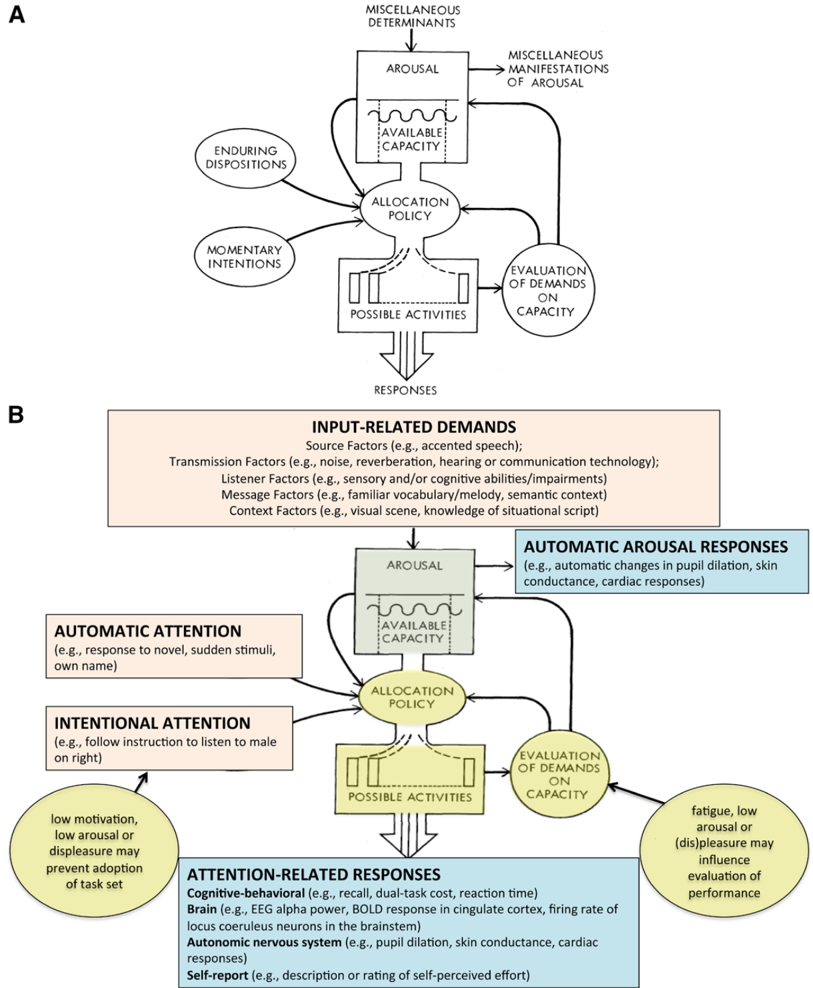
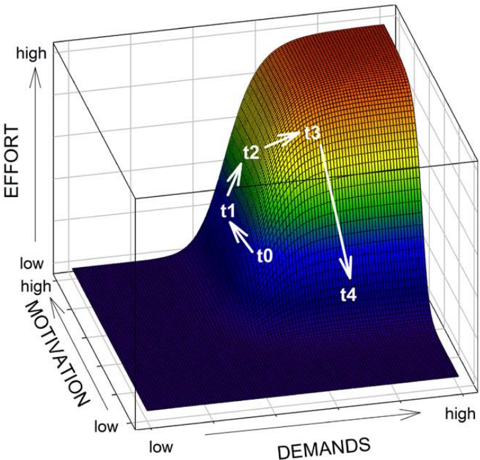
The Fifth Eriksholm Workshop on "Hearing Impairment and Cognitive Energy" was convened to develop a consensus among interdisciplinary experts about what is known on the topic, gaps in knowledge, the use of terminology, priorities for future research, and implications for practice. The general term cognitive energy was chosen to facilitate the broadest possible discussion of the topic. It goes back to who described the effects of attention on perception; he used the term psychic energy for the notion that limited mental resources can be flexibly allocated among perceptual and mental activities. The workshop focused on three main areas: (1) theories, models, concepts, definitions, and frameworks; (2) methods and measures; and (3) knowledge translation. We defined effort as the deliberate allocation of mental resources to overcome obstacles in goal pursuit when carrying out a task, with listening effort applying more specifically when tasks involve listening. We adapted Kahneman's seminal (1973) Capacity Model of Attention to listening and proposed a heuristically useful Framework for Understanding Effortful Listening (FUEL). Our FUEL incorporates the well-known relationship between cognitive demand and the supply of cognitive capacity that is the foundation of cognitive theories of attention. Our FUEL also incorporates a motivation dimension based on complementary theories of motivational intensity, adaptive gain control, and optimal performance, fatigue, and pleasure. Using a three-dimensional illustration, we highlight how listening effort depends not only on hearing difficulties and task demands but also on the listener's motivation to expend mental effort in the challenging situations of everyday life.
Overview
CoChat Summary
TL;DR
The paper reports the Fifth Eriksholm Workshop consensus and proposes FUEL, a conceptual framework for understanding effortful listening that integrates cognitive capacity, motivation, fatigue, and pleasure. It argues that listening effort depends not only on audibility and task demands but also on how listeners evaluate the value of exerting effort in everyday communication.
Key findings
- The workshop’s consensus was that no single existing theory or model sufficiently explains listening effort, so FUEL was proposed as a conceptual framework rather than a quantitative model.
- FUEL adapts Kahneman’s Capacity Model of Attention and adds a motivation dimension; the paper states that effort varies with both demands and motivation, illustrated with a 3D plot of effort, demands, and motivation.
- The paper defines effort as “the deliberate allocation of mental resources to overcome obstacles in goal pursuit when carrying out a task,” and listening effort as effort involved in listening; it extends listening beyond speech to music and environmental sounds.
- The paper organizes candidate listening-effort measures into behavioral, physiological, and self-report measures, and notes that some measures are more sensitive to demands, some to motivation, and some to both.
Methods
- Consensus workshop paper based on the Fifth Eriksholm Workshop on Hearing Impairment and Cognitive Energy, held in June 2015, with 16 participants from audiology, engineering, neuroscience, speech perception, gerontology, philosophy, and psychology.
- The workshop reviewed existing theories/models, definitions, and methods/measures relevant to effortful listening, and used the discussion to develop shared terminology and the FUEL framework.
- The paper’s analysis is conceptual and comparative: it contrasts theories, maps candidate measures onto demand and motivation dimensions, and adapts Kahneman’s model into a listening-specific framework.
Limitations
- The paper explicitly states that the field is not yet at a stage where outcomes can be quantitatively predicted, so FUEL is proposed as a framework rather than a model.
- It states that there is no agreement on an appropriate scale for effort, demands, or motivation, and that the shape of the functions relating them is unknown.
- Evident from the text: the framework is based on a workshop consensus and literature synthesis rather than new empirical data or direct validation studies of FUEL.
Model-written summary of a shortened version of the paper’s full text (it is longer than we read). Check it against the paper before relying on it.
Integrity signals
Registry
Cites
Statistics
Figures
Verification
Claims the paper makes
3 Valid · 7 Not valid · 27 Not checked · 32 Own results and interpretations
Every source the paper cites for this claim was checked and supports it.
In the paper
“From a population health perspective, epidemiological research has provided evidence of a significant association between hearing loss and incident dementia (Albers et al. 2015) and prompted questions regarding the potential advantages of adopting a more integrated approach to research on hearing health and cognitive health (Dupuis et al. 2015; Pichora-Fuller et al. 2015).”
What the sources say
- Supportedcites Albers et al. 2015 matched to “At the interface of sensory and motor dysfunctions and Alzheimer’s disease.” (2015) source
The Epidemiological and Clinical Studies section reports that a prospective cohort found hearing loss independently associated with incident all-cause dementia, with a 95% confidence interval of 1.06–1.50 for the reported risk increase. The paper reports epidemiological evidence for the association; the citing sentence does not claim that it established causation. (LLM, conf=0.94)
plainstates an association- Asserted: passes — The authors put it forward as true.
- Checkable: passes — It can be checked against evidence.
- Load-bearing: unclear — It is unclear whether the paper’s conclusions depend on it.
- Based: passes — The paper gives a reason why it holds.
- Supported
A conclusion the paper draws from its own results — it cites no other source for it, so there is none to check. The quote shows it is in the paper.
In the paper
“Individuals may also need to allocate more cognitive capacity to comprehend, remember, and respond to the auditory objects and events that they have perceived.”
hedgedstates a possible cause- Asserted: passes — The authors put it forward as true.
- Checkable: passes — It can be checked against evidence.
- Load-bearing: passes — The paper’s conclusions depend on it.
- Based: passes — The paper gives a reason why it holds.
A conclusion the paper draws from its own results — it cites no other source for it, so there is none to check. The quote shows it is in the paper.
In the paper
“Therefore, success in achieving listening goals may depend on the deployment of greater cognitive energy when the quality of the signal available to the listener is suboptimal.”
hedgedstates a possible cause- Asserted: passes — The authors put it forward as true.
- Checkable: passes — It can be checked against evidence.
- Load-bearing: passes — The paper’s conclusions depend on it.
- Based: passes — The paper gives a reason why it holds.
None of the sources cited for this claim have been checked yet.
In the paper
“These changes in temporal auditory processing are thought to underpin problems understanding speech in noise and also remembering it once it has been heard.”
hedgedstates a possible cause- Asserted: passes — The authors put it forward as true.
- Checkable: passes — It can be checked against evidence.
- Load-bearing: passes — The paper’s conclusions depend on it.
- Based: passes — The paper gives a reason why it holds.
None of the sources cited for this claim have been checked yet.
In the paper
“(3) his idea that there will be increased mental activity when demands are increased is compatible with the current notion of cognitive compensation (Pichora-Fuller 2010; Grady 2012).”
What the sources say
- Not matchedcites Pichora-Fuller 2010
An author–year citation the paper’s reference list doesn’t settle. We don’t search these by name.
- Not checked — no full text of the sourcecites Grady 2012 matched to “The cognitive neuroscience of ageing” (2012) source
plainstates an association- Asserted: passes — The authors put it forward as true.
- Checkable: passes — It can be checked against evidence.
- Load-bearing: unclear — It is unclear whether the paper’s conclusions depend on it.
- Based: passes — The paper gives a reason why it holds.
- Not matched
15 more claims
Create a free account to see all 69 claims and to verify the 2 references still open.
- It may state two separate claims as one. 13
- Probably not a substantial claim. 46
Claims other papers make about this one
Each is checked against this paper’s own text: does it say what the citing paper says it does?
The cited source says what the claim attributes to it.
In the citing paper
“The subjective experience of effort during communication is likely to precede more chronic experiences of fatigue (Pichora-Fuller et al., 2016).”
From Language proficiency drives listening-related fatigue in those who communicate in English as their second language (2026) · cites this paper as Pichora-Fuller et al., 2016
In the citing paper
“Changes in these kinds of subjective judgments over the course of a communication scenario will likely influence whether or not an individual chooses to withdraw or sustain engagement (Pichora-Fuller et al., 2016).”
From Effortful listening under the microscope: Examining relations between pupillometric and subjective markers of effort and tiredness from listening (2021) · cites this paper as Pichora-Fuller et al., 2016
In the citing paper
“This finding lends weight to the argument that TEPR is not an objective correlate of the subjective experience of listening effort (McGarrigle et al., 2014;Pichora-Fuller et al., 2016;Strand et al., 2018).”
From Effortful listening under the microscope: Examining relations between pupillometric and subjective markers of effort and tiredness from listening (2021) · cites this paper as Pichora-Fuller et al., 2016
In the citing paper
“Thus, to reach lexical access in such adverse conditions, there is a greater need to rely on mental and cognitive processes (Pichora-Fuller et al., 2016; Rönnberg et al., 2008, 2013, 2019).”
From The Involvement of Listening Effort in Explaining Bilingual Listening Under Adverse Listening Conditions (2023) · cites this paper as Pichora-Fuller et al., 2016
In the citing paper
“Our findings are consistent with the FUEL (Pichora-Fuller et al., 2016) and extend it to primary school children.”
From Listening effort and fatigue in native and non-native primary school children (2021) · cites this paper as Pichora-Fuller et al., 2016
5 more claims about this paper
Create a free account to see every claim other papers make about this one.
Citations
Cites
The relation of strength of stimulus to rapidity of habit formation
Yerkes, R. M., & Dodson, J. D. (1908) · Journal of Comparative Neurology and Psychology · doi:10.1002/cne.920180503 · Cited by 6,911
Individual differences in working memory and reading
Daneman, M., & Carpenter, P. A. (1980) · Journal of Verbal Learning and Verbal Behavior · doi:10.1016/s0022-5371(80)90312-6 · Cited by 6,336
The processing-speed theory of adult age differences in cognition
Salthouse, T. A. (1996) · Psychological Review · doi:10.1037/0033-295x.103.3.403 · Cited by 5,902
Social Relationships and Health.
Cohen, S. (2004) · American Psychologist · doi:10.1037/0003-066x.59.8.676 · Cited by 4,852
Aston-Jones, G., & Cohen, J. D. (2005) · Annual Review of Neuroscience · doi:10.1146/annurev.neuro.28.061604.135709 · Cited by 4,472
Broadbent, D. E. (1958) · doi:10.1037/10037-000 · Cited by 4,337
A capacity theory of comprehension: individual differences in working memory
Just, M. A., & Carpenter, P. A. (1992) · Psychological Review · doi:10.1037/0033-295x.99.1.122 · Cited by 4,153
The adaptive brain: aging and neurocognitive scaffolding
Park, D. C., & Reuter-Lorenz, P. (2009) · Annual Review of Psychology · doi:10.1146/annurev.psych.59.103006.093656 · Cited by 2,790
Motor control and aging: Links to age-related brain structural, functional, and biochemical effects
Seidler, R. D., Bernard, J. A., Burutolu, T. B., Fling, B. W., Gordon, M. T., Gwin, J. T., Kwak, Y., & Lipps, D. B. (2010) · Neuroscience & Biobehavioral Reviews · doi:10.1016/j.neubiorev.2009.10.005 · Cited by 1,791
Neurocognitive Aging and the Compensation Hypothesis
Reuter-Lorenz, P. A., & Cappell, K. A. (2008) · Current Directions in Psychological Science · doi:10.1111/j.1467-8721.2008.00570.x · Cited by 1,639
Research works printed but not linked: 2
- Robertson, 1997, The effect of an aural rehabilitation program on responses to scenarios depicting communication breakdown., J Speech Lang Pathol Audiol, 21, 187
- Smith, Development of the Word Auditory Recognition and Recall Measure (WARRM): A working memory test for use in rehabilitative audiology, Ear Hear
Cited by
Items 901–1,000 of 1,325
Nemati, S., Newman‐Norlund, R., Newman-Norlund, S. E., den Ouden, D., Arjmandi, M. K., Neils‐Strunjas, J., Rorden, C., Bonilha, L., & Fridriksson, J. (2025) · Neuroscience · doi:10.1016/j.neuroscience.2025.10.057 · Cited by 1
Barriers and facilitators to air travel among adults with hearing loss: a scoping review
Danful, G. K., Pignac, S., Fitzpatrick, E. M., Mulvey, M. S., Turcotte, P., Robitaille, A., Primossi, V., & Garcia, L. (2025) · International Journal of Audiology · doi:10.1080/14992027.2025.2578659 · Cited by 2
“These challenges are compounded by the fatigue that interferes with listening comprehension (McGarrigle et al. 2014; Pichora-Fuller et al. 2016; Holman et al. 2021), practical difficulties related to security screenings for those with implantable hearing devices (Schulz 2023), and the use of face…”
Wang, X., Wang, L., Ding, Y., & Chen, F. (2025) · Annual International Conference of the IEEE Engineering in Medicine and Biology Society (EMBC) · doi:10.1109/embc58623.2025.11253070 · Cited by 1
“However, for hearing-impaired populations, while traditional hearing assistive devices can enhance basic auditory perception through acoustic amplification, they fail to recognize users’ real-time attention-switching intentions [4].”
Network Analysis of the Vanderbilt Fatigue Scale for Adults
Hunter, C. R., & Vitevitch, M. S. (2025) · Ear and Hearing · doi:10.1097/aud.0000000000001768 · Cited by 2
Narrative engagement in story listening: The challenge of age and vision loss
Mathiesen, S. L., Grenier, A. M., Wittich, W., Sukhai, M. A., & Herrmann, B. (2025) · Journal of Aging Studies · doi:10.1016/j.jaging.2025.101355 · Cited by 2
Pirranavi, M. S., Eranna, P. K., & Bhat, J. S. (2025) · Perception · doi:10.1177/03010066251404859 · Cited by 1
“This increased demand leaves fewer resources available for higher-order cognitive functions such as WM and recall (Pichora-Fuller et al., 2016).”
Seitz, J., & Fels, J. (2025) · Ear and Hearing · doi:10.1097/aud.0000000000001759 · Cited by 2
Pellegatti, M., Visentin, C., Torresin, S., Babich, F., & Prodi, N. (2025) · Applied Acoustics · doi:10.1016/j.apacoust.2025.111206 · Cited by 7
Neural Signatures of Engagement and Event Segmentation during Story Listening in Background Noise
Herrmann, B., Motala, A., Panela, R. A., & Johnsrude, I. S. (2026) · eNeuro · doi:10.1523/eneuro.0385-25.2025 · Cited by 3
“Speech in everyday life is often degraded or masked by background noise, which makes comprehension cognitively demanding and effortful (Eckert et al., 2016; Pichora-Fuller et al., 2016; Peelle, 2018; Herrmann and Johnsrude, 2020a).”
Marinelli, A., Woodruff-Gautherin, T. A., & Cienkowski, K. M. (2026) · Journal of Speech Language and Hearing Research · doi:10.1044/2025_jslhr-25-00266 · Cited by 2
Heard-text recall and listening effort under irrelevant speech and pseudo-speech in virtual reality
Ermert, C. A., Schlittmeier, S. J., Bönsch, A., Kuhlen, T., & Fels, J. (2026) · Acta Acustica · doi:10.1051/aacus/2026003 · Cited by 2
Berdau, M., Padilla, D.-J. A., Brand, T., Rollwage, C., & Rennies, J. (2026) · Acta Acustica · doi:10.1051/aacus/2026011 · Cited by 2
Study protocol: feasibility of a hearing program in primary care for underserved older adults
Friedmann, D. R., Diminich, L. N., Spitzer, E. R., Ajmal, S., Weinstein, B. E., Dickson, V. V., Goldfeld, K. S., & Chodosh, J. (2026) · Pilot and Feasibility Studies · doi:10.1186/s40814-026-01773-2 · Cited by 1
Mood and Cognitive Disorders Following Hearing Loss: Impact of Hearing Aid Timing
Alberti, G., Loteta, S., Portelli, D., Galletti, C., Galletti, F., Galletti, B., Lentini, M., Ronsivalle, S., Maira, S., Lechien, J. R., et al. (2026) · Audiology Research · doi:10.3390/audiolres16020032 · Cited by 1
“…load hypothesis proposed by Pichora-Fuller et al. in the Framework for Understanding Effortful Listening (FUEL), which argues that effortful listening in older adults with hearing loss consumes additional cognitive resources, thereby accelerating decline in non-auditory cognitive domains [31].”
Zhang, Z., Zhang, Z., Liu, J., Fan, Z., Wang, H., Jiang, D., Wang, R., & Xu, L. (2026) · Ear and Hearing · doi:10.1097/aud.0000000000001803 · Cited by 1
Optimizing Sound Quality Improves Hearing Aid Users’ Moods and Listening-Related Fatigue
Picou, E. M., Balling, L. W., Dalzell, T., Branscome, K., & Branda, E. (2026) · Trends in Hearing · doi:10.1177/23312165261431922 · Cited by 1
“Factors that affect listening-related fatigue are those that affect listening effort (e.g., background noise, reverberation; Pichora-Fuller et al., 2016).”
Micula, A., Flensborg‐Madsen, T., & Christensen, J. H. (2026) · Hearing Research · doi:10.1016/j.heares.2026.109624 · Cited by 1
Zekveld, A. A., Visser, V. W., Kramer, S. E., Sangers, J., & Smits, C. (2026) · Journal of Speech Language and Hearing Research · doi:10.1044/2026_jslhr-25-00164 · Cited by 1
Self-citationArtificial intelligence and cognitive offloading: a potential new form of cognitive deprivation?
Viola, P., & Chiarella, G. (2026) · European Archives of Oto-Rhino-Laryngology · doi:10.1007/s00405-026-10210-2 · Cited by 1
“These mechanisms are consistent with models of effortful listening and increased cognitive energy expenditure during auditory processing [5].”
Folkeard, P., Ashkanichenarlogh, V., Rahme, M., Parsa, V., Kühnel, V., Sheikh, B., Qian, J., Sung, Y.-Y., & Scollie, S. D. (2026) · Trends in Hearing · doi:10.1177/23312165261449983 · Cited by 2
“Background noise can reduce speech recognition and increase listening effort (Pichora-Fuller et al., 2016).”
Elrashidy, R., Ibrahim, I., Seleem, G. Y., et al. (2026) · The Egyptian Journal of Otolaryngology · doi:10.1186/s43163-026-01097-1 · Cited by 1
Effects of hearing loss and hearing aids on environmental sound ratings in the lab and real world
Jorgensen, E. J., Modahl, L., Noll, A., & Grove, A. (2026) · The Journal of the Acoustical Society of America · doi:10.1121/10.0044116 · Cited by 1
Modeling Cognitive Trajectories in the Long-Term After Cochlear Implantation
Völter, C., Götze, L., & Kamin, S. T. (2026) · Otology & Neurotology · doi:10.1097/mao.0000000000005009 · Cited by 1
Understanding susceptibility to inattentional deafness in safety–critical environments
Oladejo, A. A., Bhandari, S., Quenin, L., Boven, L. V., Morris, M., Rajagopalan, B., & Hallowell, M. R. (2026) · Journal of Safety Research · doi:10.1016/j.jsr.2026.08.011 · Cited by 1
Illg, A., Bräcker, T., Schulte, M., & Lesinski‐Schiedat, A. (2026) · American Journal of Audiology · doi:10.1044/2026_aja-25-00220 · Cited by 1
Validação de conteúdo de um instrumento para mensuração do esforço auditivo
Guijo, L. M., Horiuti, M. B., & Cardoso, A. C. V. (2020) · CoDAS · doi:10.1590/2317-1782/20202018272 · Cited by 5
Kwak, C., & Han, W. (2020) · Audiology and Speech Research · doi:10.21848/asr.200071 · Cited by 1
“실제 로 청취 노력은 과제를 수행하는데 사용 가능한 수단으로 정의 될 수 있는 인지적 자원(cognitive resources), 동기부여(motivation), 노력(effort) 등을 포함한 다차원적 인지 과정의 결과로 발현되기 때문에(Pichora-Fuller et al., 2016), 이를 측정함에 있어서 인지적 자원의 발현 여부, 발현 과정에 대한 세부적 이 해, 가시적으로 노력 정도를 측정할 수 있는 데이터 도출 등 다 양한 관점에서 연구들이 선행되었다.”
InfluentialParthasarathy, S., Shetty, H. N., & Apeksha, K. (2021) · Indian Journal of Otolaryngology and Head & Neck Surgery · doi:10.1007/s12070-021-02527-7 · Cited by 1
Less effortful auditory-motor synchronization with low-frequency tones in isochronous sound sequence
Shivhare, Y. K., & Khanganba, S. P. (2021) · Neuroscience Letters · doi:10.1016/j.neulet.2021.135945 · Cited by 1
Objective assessment of the "listening effort" in audiology
Ghiselli, S., & Cuda, D. (2021) · Otorhinolaryngology · doi:10.23736/s2724-6302.21.02373-2 · Cited by 1
Beyond Recognition: Visual Contributions to Verbal Working Memory
Nittrouer, S., & Lowenstein, J. H. (2021) · Journal of Speech Language and Hearing Research · doi:10.1044/2021_jslhr-21-00177 · Cited by 5
The Auditory Cognitive Neuroscience of Speech Perception in Context
Holt, L. L., & Peelle, J. E. (2022) · Springer handbook of auditory research · doi:10.1007/978-3-030-81542-4_1 · Cited by 4
“Accelerating benefits, auditory science more generally has developed a nascent appreciation for the cognitive aspects of auditory processing, the field of auditory cognitive neuroscience has begun to develop traction, and general cognitive and perceptual mechanisms are increasingly understood to play a role in speech…”
BackgroundAuditory Distraction in ADHD : From Behaviour to the Brain
Blomberg, R. (2022) · Studies from the Swedish Institute for Disability Research · doi:10.3384/9789179293031 · Cited by 1
A WITHIN-SUBJECT COMPARISON OF HEARING AID PERFORMANCE IN NOISE BASED ON VERBAL RESPONSE TIMES
Cristiani, H. E., & Alonso, S. (2022) · Journal of Hearing Science · doi:10.17430/jhs.2022.12.3.1 · Cited by 1
“Pichora-Fuller et al. [11] define listening effort as “the de-liberate allocation of mental resources to overcome obstacles in the pursuit of objectives when performing a task, with listening effort applied more specifically when the tasks involve listening”.”
The effect of sentence length on question comprehension in children with cochlear implants
DeLuca, Z. W., Schwartz, R. G., Marton, K., Houston, D. M., Ying, E. A., Steinman, S. B., & Drakopoulou, G. (2022) · Cochlear Implants International · doi:10.1080/14670100.2022.2136591 · Cited by 1
“Yet with fewer and slower fixations to the target noun, more research is needed to understand how increase memory demands may affect children with CI, especially with regard to additional auditory processing efforts noted in theories such as the Framework for Effortful Listening (Pichora-Fuller et al., 2016).”
Hunter, C. R., & Abrahamyan, H. (2022) · International Journal of Audiology · doi:10.1080/14992027.2022.2145513 · Cited by 1
“However, recent consensus and review papers have highlighted the need for more attention to validation in the listening effort literature (McGarrigle et al. 2014; Ohlenforst et al. 2017; Pichora-Fuller et al. 2016; Strand et al. 2020).”
BackgroundResultZhong, L., Ricketts, T. A., Roberts, R. A., & Picou, E. M. (2023) · Ear & Hearing · doi:10.1097/aud.0000000000001316 · Cited by 1
Hollfelder, D., Prein, L., Leichtle, A., Bruchhage, K., & Jürgens, T. (2023) · Audiology and Neurotology · doi:10.1159/000528025 · Cited by 1
Neurophysiological Changes Associated With Listening Effort in Normal Adults
Kim, G., Kim, J. W., Jo, M., Yun, H. J., Cho, Y. S., & Moon, I. J. (2023) · Korean Journal of Otorhinolaryngology - Head and Neck Surgery · doi:10.3342/kjorl-hns.2023.00262 · Cited by 1
Speech comprehension and listening effort in noise: a comparison of younger and older adults
Gagné, J., POIRIER, M., AUDET, A., & HUOT-MONTMENY, K. (2023) · Otorhinolaryngology · doi:10.23736/s2724-6302.23.02484-2 · Cited by 1
Does a talkers voice quality affect university students listening effort in a virtual seminar room?
Schiller, I., Bönsch, A., Ehret, J., et al. (2022) · Convention of the European Acoustics Association Forum Acusticum · doi:10.61782/fa.2023.0320 · Cited by 1
Hendrikse, M. M. E., Dingemanse, G., & Goedegebure, A. (2024) · Trends in Hearing · doi:10.1177/23312165241240572
“In the scienti fi c literature, listening effort is de fi ned as the deliberate allocation of cognitive resources to overcome obstacles or challenges to achieving listening-oriented goals (Francis & Love, 2020; Pichora-Fuller et al., 2016).”
BackgroundBaldock, J., Kapadia, S., van Steenbrugge, W., & McCarley, J. S. (2024) · Journal of Speech Language and Hearing Research · doi:10.1044/2024_jslhr-23-00627 · Cited by 2
Kronenberger, W. G., Castellanos, I., & Pisoni, D. B. (2024) · Hearing Research · doi:10.1016/j.heares.2024.109069 · Cited by 2
Age and familiarity effects on musical memory
Sauvé, S. A., Satkunarajah, P., Cooke, S., Demirkaplan, Ö., Follett, A., & Zendel, B. R. (2024) · PLoS ONE · doi:10.1371/journal.pone.0305969 · Cited by 4
Spandita, H. L., & Jain, C. (2024) · International Journal of Pediatric Otorhinolaryngology · doi:10.1016/j.ijporl.2024.112058 · Cited by 2
Impact of Hearing Aid Processing Delay on Stop Consonant Voicing Perception in Open Fittings
Korhonen, P., Slugocki, C., Kuk, F. K., & Peeters, H. (2024) · American Journal of Audiology · doi:10.1044/2024_aja-24-00034 · Cited by 1
Cross-Cultural Adaptation and Validation of the Listening Inventory for Education-Revised in Italian
Nicastri, M., D’Alessandro, H. D., Anderson, K. L., Ciferri, M., Cavalcanti, L., Greco, A., Giallini, I., Portanova, G., & Mancini, P. (2024) · Audiology Research · doi:10.3390/audiolres14050069 · Cited by 3
Ambulatory autonomic nervous system activity in relation to hearing impairment
Huizinga, N. A., Keur‐Huizinga, L., van de Ven, S. R. B., van Dijk, W., Versfeld, N. J., Zekveld, A. A., Kramer, S. E., & de Geus, E. J. C. (2024) · Psychophysiology · doi:10.1111/psyp.14723 · Cited by 6
Self-citationCognitive Predictors of Perception and Adaption to Dysarthric Speech in Older Adults
Lansford, K. L., Hirsch, M. E., Barrett, T. S., & Borrie, S. A. (2025) · Journal of Speech Language and Hearing Research · doi:10.1044/2024_jslhr-24-00345 · Cited by 2
Abdel-Latif, K. H. A., Koelewijn, T., Başkent, D., & Meister, H. (2025) · Trends in Hearing · doi:10.1177/23312165241306091 · Cited by 4
Leone, A. C., Castilho, A. M., Danieli, F., Calil, D. B., & de Almeida, K. (2025) · International Archives of Otorhinolaryngology · doi:10.1055/s-0044-1788910 · Cited by 2
“19 The study by Hornsby 20 showed that individuals with hearing loss experience greater effort than individuals with normal hearing to complete intelligibility tests.”
Assessment of working memory abilities in normal hearing individuals with and without misophonia
Adline, P. D., Nisha, K. V., Prabhu, P., & Uppunda, A. K. (2025) · Quarterly Journal of Experimental Psychology · doi:10.1177/17470218251322718 · Cited by 2
Jang, J., Lee, S.-H., Kim, T.-S., Lee, E. J., Park, S. W., Yeo, N. Y., & Kim, Y.-J. (2025) · Journal of Alzheimer s Disease · doi:10.1177/13872877251316805 · Cited by 5
“25 Third, information degradation due to poor-quality auditory input might lead to incorrect or incomplete information processing by the brain, negatively impacting cognitive functions over time.”
Sendesen, E., & Türkyılmaz, M. D. (2025) · Brain and Behavior · doi:10.1002/brb3.70306 · Cited by 2
Whitley, A., Beechey, T., & Hadley, L. V. (2025) · Trends in Hearing · doi:10.1177/23312165251320794 · Cited by 2
The role of expertise in coping with accents during simultaneous interpreting: A pupillometric study
Broś, K., Czarnocka-Gołębiewska, K., Mołczanow, J., & Szupica-Pyrzanowska, M. (2025) · Interpreting International Journal of Research and Practice in Interpreting · doi:10.1075/intp.00117.bro · Cited by 4
Mepham, A., Knight, S., McGarrigle, R., Rakusen, L. L., & Mattys, S. L. (2025) · Journal of Speech Language and Hearing Research · doi:10.1044/2025_jslhr-24-00658 · Cited by 3
Effectiveness of Hearing Aid Adherence on Social Connectivity in Older Adults: A Scoping Review
Hamada, F., Lewis, C. T., & Peterson, L. J. (2025) · Journal of Applied Gerontology · doi:10.1177/07334648251331328 · Cited by 4
O'Leary, R. M., Zavlun, N., Kinney, A. J., & Wingfield, A. (2025) · Frontiers in Psychology · doi:10.3389/fpsyg.2025.1685938 · Cited by 3
Self-citationBao, W., Alain, C., Thaut, M. H., & Molnar, M. T. (2025) · Bilingualism Language and Cognition · doi:10.1017/s1366728925100795 · Cited by 4
Mamo, S. K., Reed, N. S., McNabney, M., et al. (2019) · PubMed · Cited by 1
Icht, M., Mama, Y., & Taitelbaum‐Swead, R. (2020) · Journal of Speech Language and Hearing Research · doi:10.1044/2020_jslhr-20-00170 · Cited by 1
Cordeiro, B. B., Banhara, M. R., Mendes, C. M. C., et al. (2021) · Audiology Research · doi:10.3390/audiolres11020016 · Cited by 1
Wächtler, M., Kessler, J., Walger, M., & Meister, H. (2021) · JASA Express Letters · doi:10.1121/10.0005511 · Cited by 1
Feldman, A., Patou, F., Baumann, M., Stockmarr, A., Waldemar, G., Maier, A. M., & Vogel, A. (2022) · BMJ Open · doi:10.1136/bmjopen-2021-051109 · Cited by 1
Morsomme, D., Remacle, A., & Schiller, I. (2023) · Langages · doi:10.3917/lang.230.0099 · Cited by 3
A Qualitative Examination of the Listening Effort Experience of Adults with Hearing Loss
Marinelli, A. (2017) · OpenCommons at University of Connecticut (University of Connecticut) · Cited by 3
Polonenko, M. J. (2018) · TSpace (University of Toronto) · Cited by 1
Christensen, J. H., Saunders, G. H., Porsbo, M., & Pontoppidan, N. H. (2020) · bioRxiv (Cold Spring Harbor Laboratory) · doi:10.1101/2020.07.08.180869 · Cited by 3
Giroud, N., Keller, M., & Meyer, M. E. (2020) · bioRxiv (Cold Spring Harbor Laboratory) · doi:10.1101/2020.09.14.296343 · Cited by 1
Neural activity during story listening is synchronized across individuals despite acoustic maskingPreprint
Irsik, V. C., Johnsrude, I. S., & Herrmann, B. (2020) · bioRxiv (Cold Spring Harbor Laboratory) · doi:10.17605/osf.io/tv7kg · Cited by 1
Informational masking vs. crowding — A mid-level trade-off between auditory and visual processingPreprint
Zhang, M., Denison, R. N., Pelli, D. G., Le, T. T. C., & Ihlefeld, A. (2021) · bioRxiv (Cold Spring Harbor Laboratory) · doi:10.1101/2021.04.21.440826 · Cited by 1
Multitasking with typical use of hearing aid noise reduction in older listenersPreprint
Schoof, T., & Souza, P. E. (2018) · PsyArXiv (OSF Preprints) · doi:10.31234/osf.io/bhq2j · Cited by 2
Effects of the availability of visual cues during adaptation to noise - vocoded speechPreprint
Trotter, A., Banks, B., & Adank, P. (2020) · doi:10.31234/osf.io/jxaeb · Cited by 1
Treatise on Hearing: The Temporal Auditory Imaging Theory Inspired by Optics and CommunicationPreprint
Weisser, A. (2021) · arXiv · doi:10.48550/arxiv.2111.04338 · Cited by 4
Alfandari, D., Richter, M. M., Wendt, D., Fiedler, L., & Naylor, G. (2022) · medRxiv · doi:10.1101/2022.01.04.22268734 · Cited by 4
“The moderating 26 effect of monetary incentives can be interpreted in consideration of the FUEL and complementary 1 models of motivational fatigue (Hockey, 2010; Müller & Apps, 2019; Pichora-Fuller et al., 2016).”
BackgroundSelf-citationTime scales and moments of listening effort revealed in pupillometryPreprint
Winn, M. B. (2022) · doi:10.31234/osf.io/wpquj · Cited by 1
Quantifying the Effects of Motivation on Listening Effort: A Systematic Review and Meta-AnalysisPreprint
Carolan, P., Heinrich, A., Munro, K. J., & Millman, R. E. (2021) · OSF Preprints (OSF Preprints) · doi:10.31219/osf.io/nduq9 · Cited by 2
Payne, B. R., Silcox, J. W., Crandell, H. A., et al. (2020) · doi:10.31234/osf.io/59cq8 · Cited by 1
Silcox, J., & Payne, B. (2020) · Cortex; a journal devoted to the study of the nervous system and behavior · doi:10.31234/osf.io/f8pzg · Cited by 26
“Hearing impairment and cognitive energy: The framework for understanding effortful listening (FUEL).”
BackgroundMethodResultInfluentialEnvironmental Sound Perception: Effects of Aging and Hearing Loss
Shafiro, V. (2022) · Springer eBooks · doi:10.1007/978-1-0716-1006-0_100683 · Cited by 2
Auditory, Lexical, and Multitasking Demands Interactively Impact Listening EffortPreprint
Kuchinsky, S. E., Razeghi, N., & Pandža, N. B. (2022) · doi:10.31234/osf.io/ucrp7 · Cited by 1
Assessing the effects of “native speaker” status on classic findings in speech researchPreprint
Strand, J. F., Brown, V. A., Lin, Y., et al. (2023) · doi:10.31234/osf.io/6ard2 · Cited by 1
Borjigin, A., & Bharadwaj, H. (2023) · bioRxiv (Cold Spring Harbor Laboratory) · doi:10.1101/2023.09.20.558670 · Cited by 1
“These TFS metrics were accordingly “adjusted” by regressing out”
Xu, S., Zhang, H., Fan, J., et al. (2023) · Preprints.org · doi:10.20944/preprints202309.1636.v1 · Cited by 1
Measuring the Dual-Task Costs of Audiovisual Speech Processing Across Levels of Background NoisePreprint
Brown, V. A. (2023) · PsyArXiv (OSF Preprints) · doi:10.31234/osf.io/6w453 · Cited by 1
Age and familiarity effects on musical memoryPreprint
Sauvé, S. A., Satkunarajah, P., Cooke, S., Demirkaplan, Ö., Follett, A., & Zendel, B. R. (2023) · OSF Preprints (OSF Preprints) · doi:10.31219/osf.io/hr6ys · Cited by 2
In Sync With Sound: Interpersonal synchronization as an objective measure of listening engagementPreprint
Lambrechts, L., Accou, B., Vanthornhout, J., Boets, B., & Francart, T. (2025) · bioRxiv (Cold Spring Harbor Laboratory) · doi:10.1101/2025.02.26.639799 · Cited by 3
Pupillometry Reveals Differences in Cognitive Demands of Listening to Face Mask-Attenuated SpeechPreprint
Carraturo, S., McLaughlin, D. J., Peelle, J. E., & Engen, K. J. V. (2023) · PsyArXiv (OSF Preprints) · doi:10.31234/osf.io/qy2ex_v1 · Cited by 1
Neural Tracking of Audiovisual Effects in Noise Using Deep Neural Network-Generated Virtual HumansPreprint
Cooper, J. K., Vanthornhout, J., Wieringen, A. V., & Francart, T. (2025) · bioRxiv (Cold Spring Harbor Laboratory) · doi:10.1101/2025.06.02.656280 · Cited by 1
Esser, K., Picou, E. M., & Hornsby, B. W. Y. (2025) · American Journal of Audiology · doi:10.1044/2025_aja-25-00018 · Cited by 1
“…deliberate use of mental resources (e.g., attention, working memory) during a listening task, can increase when the listening situation is demanding (e.g., poor signal-to-noise ratio) and due to certain characteristics of the listener (e.g., hearing loss; Peele, 2018; Pichora-Fuller et al., 2016).”
Self-citationCognitive and Visual Speech Contributions to Speech Perception in Challenging Listening Conditions
Wayne, R. V. (2016) · QSpace (Queen's University Library)
The effect of workplace noise exposure on reaction time
Leidy, H. T. (2017) · JMU Scholoraly Commons (James Madison University)
Harvey, J., Seeman, S., & von Hapsburg, D. (2017) · Perspectives of the ASHA Special Interest Groups · doi:10.1044/persp2.sig15.32
Leung, C. H. Y. (2018) · CUNY Academic Works (City University of New York)
Cognition and Neural Coding: Perspectives for Audiologists
Grush, L. D., Gallun, F. J., & Billings, C. J. (2018) · Perspectives of the ASHA Special Interest Groups · doi:10.1044/persp3.sig6.61
Involvement of Cognitive Resources in Sensory and Sensorimotor Functioning with Age
Bruce, H. (2018) · Spectrum Research Repository (Concordia University)
中西, 優. (2014) · 一橋法学 · doi:10.15057/26526 · Cited by 2
Task-evoked pupillary response to completely intelligible accented speech
McLaughlin, D. J., & Engen, K. J. V. (2019) · The Journal of the Acoustical Society of America · doi:10.1121/1.5101676
“, all of the words in their speech can all be correctly identified) speech processing should nonetheless require greater cognitive load (defined here as the degree to which cognitive resources are recruited at a given moment to meet processing demands; Pichora-Fuller et al., 2016).”
Background
Metadata
- Authors
- Pichora-Fuller, M. K., Kramer, S. E., Eckert, M. A., Edwards, B., Hornsby, B. W. Y., Humes, L. E., Lemke, U., Lunner, T., Matthen, M., Mackersie, C. L., Naylor, G., Phillips, N. A., Richter, M., Rudner, M., Sommers, M. S., Tremblay, K. L., & Wingfield, A.
- Affiliations
- Brandeis University (US)
- Vanderbilt University (US)
- Sonova (Switzerland) (CH)
- Oticon (Denmark) (DK)
- Earlens (United States) (US)
- University of Toronto (CA)
- Indiana University Bloomington (US)
- Corresponding author
- Pichora-Fuller, M. Kathleen
- ORCID
- Venue
- Ear & Hearing
- Published
- 2016-07
- Volume
- 37
- Issue
- 1
- Pages
- 5S-27S
- ISSN
- 0196-0202 (ISSN-L)
- OpenAlex
- W2472770001
- Semantic Scholar
- 353d1914960d7e69bd9f7dd3f6c74863cb5c1bcc
- Cited by
- 1,318
- References
- 132
- Citations by year
- 2026: 180 · 2025: 210 · 2024: 154 · 2023: 141 · 2022: 131 · 2021: 163 · 2020: 117 · 2019: 95 · 2018: 69 · 2017: 45 · 2016: 10
- FWCI
- 46.32
- Type
- journal article
- Language
- en
- Open access
- hybrid
- doi.org
- Licence
- Locations
- Ear and Hearing (publishedVersion, cc-by-nc-nd)
- PubMed (publishedVersion)
- Repository@Nottingham (University of Nottingham) (publishedVersion, cc-by-nc-nd)
- Amsterdam UMC (VU Amsterdam) - Institutional Repository (publishedVersion)
- Repository@Nottingham (University of Nottingham) (submittedVersion, cc-by-nc-nd)
- Pure Amsterdam UMC (submittedVersion, other-oa)
- Liverpool John Moores University (submittedVersion)
- Data Archiving and Networked Services (DANS) (submittedVersion)
- Funders
- University of Toronto
- Oticon Fonden
- Topics
- Health Sciences › Health Professions › Speech and Hearing › Hearing Loss and Rehabilitation
- Social Sciences › Psychology › Developmental and Educational Psychology › Hearing Impairment and Communication
- Life Sciences › Neuroscience › Sensory Systems › Hearing, Cochlea, Tinnitus, Genetics
- Keywords
- hearing loss, cognitive energy, listening effort, attentional capacity, cognitive demand, motivation, fatigue, pleasure, adaptive gain control, optimal performance, knowledge translation
- MeSH terms
- Attention, Auditory Perception, Cognition, Humans, Speech Perception, Comprehension, Hearing Loss
About these checks
Registry, retraction, Cites and statistics results are computed, not judged, with one exception: a printed reference that no index lists is read once by a model before it counts as a citation error. Claims are extracted by a model and kept only when their quote appears verbatim in the text; each cited source is then checked, with a model’s help, for whether it says what the claim relies on. Those verdicts can be wrong — read the claim’s quote and the cited source before relying on one.
The claim verdicts this report counts are experimental: their accuracy is not yet measured.
A language model drew the claims from the paper on 2026-10-10, under version 3 of the claim definition (model deepseek-v4.1-flash, prompt extract-v3).
A second model labelled each claim on 2026-10-10 (model jev-1.13-20260917, definition revision gold-guideline-v0.2).
Cited sources are checked with a language model’s help (gpt-6-sol).
Statistics and arithmetic are recomputed, not judged.
Confidence bands are shown only for fields calibrated on our annotated test set. None is calibrated yet, so no band is shown.
What counts as a claim ›How we measure confidence ›How we check this ›
Are you an author, or do you see a problem with this page? Request a review
Data sources
Bibliographic data: Semantic Scholar, OpenAlex, Crossref.
Contains information from the Semantic Scholar Academic Graph Datasets, made available under the ODC Attribution License (ODC-BY 1.0).
Semantic Scholar’s data is described in: Kinney, R., et al. (2023). The Semantic Scholar Open Data Platform. arXiv:2301.10140.
