

Hearing Impairment and Cognitive Energy: The Framework for Understanding Effortful Listening (FUEL)
Open accessThe DOI matches its Crossref record; 127 of the 132 references it cites were found in a registry or an index; 3 of the 43 sources its claims cite were checked for support.
Abstract
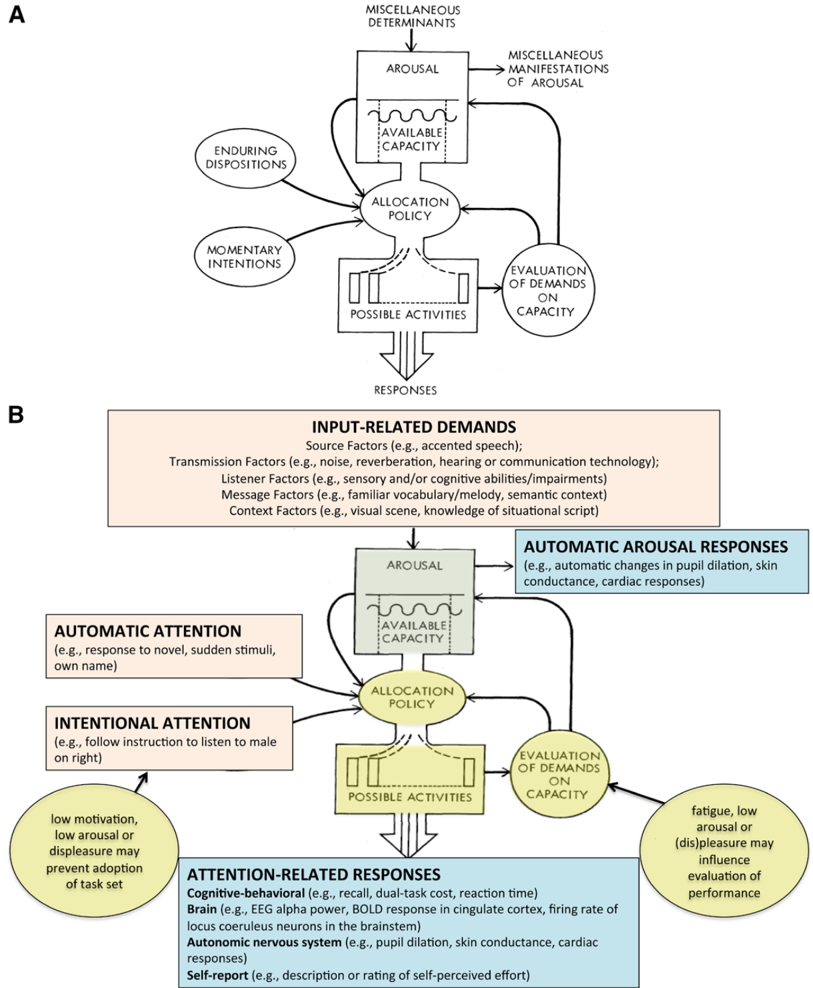
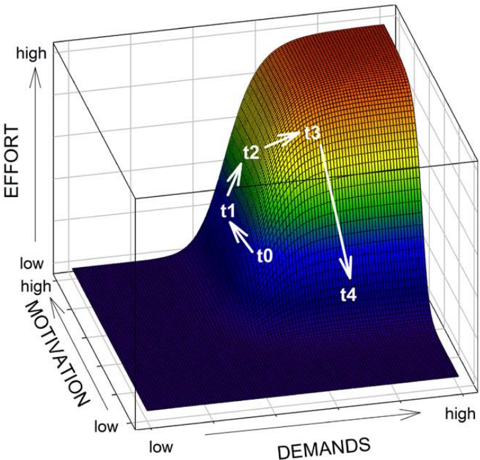
The Fifth Eriksholm Workshop on "Hearing Impairment and Cognitive Energy" was convened to develop a consensus among interdisciplinary experts about what is known on the topic, gaps in knowledge, the use of terminology, priorities for future research, and implications for practice. The general term cognitive energy was chosen to facilitate the broadest possible discussion of the topic. It goes back to who described the effects of attention on perception; he used the term psychic energy for the notion that limited mental resources can be flexibly allocated among perceptual and mental activities. The workshop focused on three main areas: (1) theories, models, concepts, definitions, and frameworks; (2) methods and measures; and (3) knowledge translation. We defined effort as the deliberate allocation of mental resources to overcome obstacles in goal pursuit when carrying out a task, with listening effort applying more specifically when tasks involve listening. We adapted Kahneman's seminal (1973) Capacity Model of Attention to listening and proposed a heuristically useful Framework for Understanding Effortful Listening (FUEL). Our FUEL incorporates the well-known relationship between cognitive demand and the supply of cognitive capacity that is the foundation of cognitive theories of attention. Our FUEL also incorporates a motivation dimension based on complementary theories of motivational intensity, adaptive gain control, and optimal performance, fatigue, and pleasure. Using a three-dimensional illustration, we highlight how listening effort depends not only on hearing difficulties and task demands but also on the listener's motivation to expend mental effort in the challenging situations of everyday life.
Overview
CoChat Summary
TL;DR
The paper reports the Fifth Eriksholm Workshop consensus and proposes FUEL, a conceptual framework for understanding effortful listening that integrates cognitive capacity, motivation, fatigue, and pleasure. It argues that listening effort depends not only on audibility and task demands but also on how listeners evaluate the value of exerting effort in everyday communication.
Key findings
- The workshop’s consensus was that no single existing theory or model sufficiently explains listening effort, so FUEL was proposed as a conceptual framework rather than a quantitative model.
- FUEL adapts Kahneman’s Capacity Model of Attention and adds a motivation dimension; the paper states that effort varies with both demands and motivation, illustrated with a 3D plot of effort, demands, and motivation.
- The paper defines effort as “the deliberate allocation of mental resources to overcome obstacles in goal pursuit when carrying out a task,” and listening effort as effort involved in listening; it extends listening beyond speech to music and environmental sounds.
- The paper organizes candidate listening-effort measures into behavioral, physiological, and self-report measures, and notes that some measures are more sensitive to demands, some to motivation, and some to both.
Methods
- Consensus workshop paper based on the Fifth Eriksholm Workshop on Hearing Impairment and Cognitive Energy, held in June 2015, with 16 participants from audiology, engineering, neuroscience, speech perception, gerontology, philosophy, and psychology.
- The workshop reviewed existing theories/models, definitions, and methods/measures relevant to effortful listening, and used the discussion to develop shared terminology and the FUEL framework.
- The paper’s analysis is conceptual and comparative: it contrasts theories, maps candidate measures onto demand and motivation dimensions, and adapts Kahneman’s model into a listening-specific framework.
Limitations
- The paper explicitly states that the field is not yet at a stage where outcomes can be quantitatively predicted, so FUEL is proposed as a framework rather than a model.
- It states that there is no agreement on an appropriate scale for effort, demands, or motivation, and that the shape of the functions relating them is unknown.
- Evident from the text: the framework is based on a workshop consensus and literature synthesis rather than new empirical data or direct validation studies of FUEL.
Model-written summary of a shortened version of the paper’s full text (it is longer than we read). Check it against the paper before relying on it.
Integrity signals
Registry
Cites
Statistics
Figures
Verification
Claims the paper makes
3 Valid · 7 Not valid · 27 Not checked · 32 Own results and interpretations
Every source the paper cites for this claim was checked and supports it.
In the paper
“From a population health perspective, epidemiological research has provided evidence of a significant association between hearing loss and incident dementia (Albers et al. 2015) and prompted questions regarding the potential advantages of adopting a more integrated approach to research on hearing health and cognitive health (Dupuis et al. 2015; Pichora-Fuller et al. 2015).”
What the sources say
- Supportedcites Albers et al. 2015 matched to “At the interface of sensory and motor dysfunctions and Alzheimer’s disease.” (2015) source
The Epidemiological and Clinical Studies section reports that a prospective cohort found hearing loss independently associated with incident all-cause dementia, with a 95% confidence interval of 1.06–1.50 for the reported risk increase. The paper reports epidemiological evidence for the association; the citing sentence does not claim that it established causation. (LLM, conf=0.94)
plainstates an association- Asserted: passes — The authors put it forward as true.
- Checkable: passes — It can be checked against evidence.
- Load-bearing: unclear — It is unclear whether the paper’s conclusions depend on it.
- Based: passes — The paper gives a reason why it holds.
- Supported
A conclusion the paper draws from its own results — it cites no other source for it, so there is none to check. The quote shows it is in the paper.
In the paper
“Individuals may also need to allocate more cognitive capacity to comprehend, remember, and respond to the auditory objects and events that they have perceived.”
hedgedstates a possible cause- Asserted: passes — The authors put it forward as true.
- Checkable: passes — It can be checked against evidence.
- Load-bearing: passes — The paper’s conclusions depend on it.
- Based: passes — The paper gives a reason why it holds.
A conclusion the paper draws from its own results — it cites no other source for it, so there is none to check. The quote shows it is in the paper.
In the paper
“Therefore, success in achieving listening goals may depend on the deployment of greater cognitive energy when the quality of the signal available to the listener is suboptimal.”
hedgedstates a possible cause- Asserted: passes — The authors put it forward as true.
- Checkable: passes — It can be checked against evidence.
- Load-bearing: passes — The paper’s conclusions depend on it.
- Based: passes — The paper gives a reason why it holds.
None of the sources cited for this claim have been checked yet.
In the paper
“These changes in temporal auditory processing are thought to underpin problems understanding speech in noise and also remembering it once it has been heard.”
hedgedstates a possible cause- Asserted: passes — The authors put it forward as true.
- Checkable: passes — It can be checked against evidence.
- Load-bearing: passes — The paper’s conclusions depend on it.
- Based: passes — The paper gives a reason why it holds.
None of the sources cited for this claim have been checked yet.
In the paper
“(3) his idea that there will be increased mental activity when demands are increased is compatible with the current notion of cognitive compensation (Pichora-Fuller 2010; Grady 2012).”
What the sources say
- Not matchedcites Pichora-Fuller 2010
An author–year citation the paper’s reference list doesn’t settle. We don’t search these by name.
- Not checked — no full text of the sourcecites Grady 2012 matched to “The cognitive neuroscience of ageing” (2012) source
plainstates an association- Asserted: passes — The authors put it forward as true.
- Checkable: passes — It can be checked against evidence.
- Load-bearing: unclear — It is unclear whether the paper’s conclusions depend on it.
- Based: passes — The paper gives a reason why it holds.
- Not matched
15 more claims
Create a free account to see all 69 claims and to verify the 2 references still open.
- It may state two separate claims as one. 13
- Probably not a substantial claim. 46
Claims other papers make about this one
Each is checked against this paper’s own text: does it say what the citing paper says it does?
The cited source says what the claim attributes to it.
In the citing paper
“The subjective experience of effort during communication is likely to precede more chronic experiences of fatigue (Pichora-Fuller et al., 2016).”
From Language proficiency drives listening-related fatigue in those who communicate in English as their second language (2026) · cites this paper as Pichora-Fuller et al., 2016
In the citing paper
“Changes in these kinds of subjective judgments over the course of a communication scenario will likely influence whether or not an individual chooses to withdraw or sustain engagement (Pichora-Fuller et al., 2016).”
From Effortful listening under the microscope: Examining relations between pupillometric and subjective markers of effort and tiredness from listening (2021) · cites this paper as Pichora-Fuller et al., 2016
In the citing paper
“This finding lends weight to the argument that TEPR is not an objective correlate of the subjective experience of listening effort (McGarrigle et al., 2014;Pichora-Fuller et al., 2016;Strand et al., 2018).”
From Effortful listening under the microscope: Examining relations between pupillometric and subjective markers of effort and tiredness from listening (2021) · cites this paper as Pichora-Fuller et al., 2016
In the citing paper
“Thus, to reach lexical access in such adverse conditions, there is a greater need to rely on mental and cognitive processes (Pichora-Fuller et al., 2016; Rönnberg et al., 2008, 2013, 2019).”
From The Involvement of Listening Effort in Explaining Bilingual Listening Under Adverse Listening Conditions (2023) · cites this paper as Pichora-Fuller et al., 2016
In the citing paper
“Our findings are consistent with the FUEL (Pichora-Fuller et al., 2016) and extend it to primary school children.”
From Listening effort and fatigue in native and non-native primary school children (2021) · cites this paper as Pichora-Fuller et al., 2016
5 more claims about this paper
Create a free account to see every claim other papers make about this one.
Citations
Cites
The relation of strength of stimulus to rapidity of habit formation
Yerkes, R. M., & Dodson, J. D. (1908) · Journal of Comparative Neurology and Psychology · doi:10.1002/cne.920180503 · Cited by 6,911
Individual differences in working memory and reading
Daneman, M., & Carpenter, P. A. (1980) · Journal of Verbal Learning and Verbal Behavior · doi:10.1016/s0022-5371(80)90312-6 · Cited by 6,336
The processing-speed theory of adult age differences in cognition
Salthouse, T. A. (1996) · Psychological Review · doi:10.1037/0033-295x.103.3.403 · Cited by 5,902
Social Relationships and Health.
Cohen, S. (2004) · American Psychologist · doi:10.1037/0003-066x.59.8.676 · Cited by 4,852
Aston-Jones, G., & Cohen, J. D. (2005) · Annual Review of Neuroscience · doi:10.1146/annurev.neuro.28.061604.135709 · Cited by 4,472
Broadbent, D. E. (1958) · doi:10.1037/10037-000 · Cited by 4,337
A capacity theory of comprehension: individual differences in working memory
Just, M. A., & Carpenter, P. A. (1992) · Psychological Review · doi:10.1037/0033-295x.99.1.122 · Cited by 4,153
The adaptive brain: aging and neurocognitive scaffolding
Park, D. C., & Reuter-Lorenz, P. (2009) · Annual Review of Psychology · doi:10.1146/annurev.psych.59.103006.093656 · Cited by 2,790
Motor control and aging: Links to age-related brain structural, functional, and biochemical effects
Seidler, R. D., Bernard, J. A., Burutolu, T. B., Fling, B. W., Gordon, M. T., Gwin, J. T., Kwak, Y., & Lipps, D. B. (2010) · Neuroscience & Biobehavioral Reviews · doi:10.1016/j.neubiorev.2009.10.005 · Cited by 1,791
Neurocognitive Aging and the Compensation Hypothesis
Reuter-Lorenz, P. A., & Cappell, K. A. (2008) · Current Directions in Psychological Science · doi:10.1111/j.1467-8721.2008.00570.x · Cited by 1,639
Research works printed but not linked: 2
- Robertson, 1997, The effect of an aural rehabilitation program on responses to scenarios depicting communication breakdown., J Speech Lang Pathol Audiol, 21, 187
- Smith, Development of the Word Auditory Recognition and Recall Measure (WARRM): A working memory test for use in rehabilitative audiology, Ear Hear
Cited by
Items 801–900 of 1,325
Francis, A. L., & Strauß, D. J. (2026) · JASA Express Letters · doi:10.1121/10.0042868 · Cited by 3
Gundmi, A., Yerraguntla, K., Rajashekhar, B., & Guddattu, V. (2026) · European Archives of Oto-Rhino-Laryngology · doi:10.1007/s00405-026-10058-6 · Cited by 3
“While some investigations demonstrated positive outcomes [11, 12 ], others reported limited effects or poor generalization [13–16].”
Libbi, C. A., Frijns, J. H. M., Stronks, H. C., Eichengreen, A., Koutamanis, A., & Rieffe, C. J. (2026) · Journal of Environmental Psychology · doi:10.1016/j.jenvp.2026.103028 · Cited by 4
Gessa, E., Valzolgher, C., Giovanelli, E., Rosi, T., Desoche, C., Farnè, A., & Pavani, F. (2026) · Psychonomic Bulletin & Review · doi:10.3758/s13423-026-02942-3 · Cited by 3
“In everyday conversations, listeners’ speech processing demands vary dynamically due to factors such as motivation, fatigue, or situational novelty (Pichora-Fuller et al., 2016).”
Aljehani, M., Alanazi, A. S., Alghanim, A. M., Bagazi, A. A., Albassam, F. A., Hamed, N., Hagr, A. A., Alzhrani, F., & Alhabib, S. F. (2026) · Ear Nose & Throat Journal · doi:10.1177/01455613261473652 · Cited by 2
Recall of Reverberant Speech in Quiet and Four-Talker Babble Noise
Koo, M., Jeon, J., Moon, H., Suh, M., Lee, J., Oh, S. H., & Park, M. K. (2021) · Brain Sciences · doi:10.3390/brainsci11070891 · Cited by 3
Barrett, D., Souto, D., Pilling, M., & Baguley, D. (2022) · Ear and Hearing · doi:10.1097/aud.0000000000001214 · Cited by 2
Fatores que interferem na participação social de idosos com perda auditiva
dos Santos, I. B., de Morais, E. A., de Lacerda, A. B. M., & Guarinello, A. C. (2022) · Research Society and Development · doi:10.33448/rsd-v11i12.34860 · Cited by 7
Blumenthal, L., & Sefotho, M. M. (2022) · African Journal of Disability · doi:10.4102/ajod.v11i0.886 · Cited by 2
“In order to manage these challenging listening demands, learners with cochlear implants may be required to rely more on controlled cognitive effort towards the goal of understanding spoken information (Pichora-Fuller et al. 2016).”
BackgroundGoldschagg, P., Bekker, T. L.-A., & Cockcroft, K. (2023) · South African Journal of Education · doi:10.15700/saje.v43n1a2153 · Cited by 2
Cortical networks for recognition of speech with simultaneous talkers
Herrera, C., Whittle, N. K., Leek, M. R., Brodbeck, C. J., Lee, G., Barcenas, C., Barnes, S. R., Holshouser, B. A., Yi, A. C., & Venezia, J. H. (2023) · Hearing Research · doi:10.1016/j.heares.2023.108856 · Cited by 6
Oiticica, J., Vasconcelos, L. G. E., & Horiuti, M. B. (2023) · Brazilian Journal of Otorhinolaryngology · doi:10.1016/j.bjorl.2023.101340 · Cited by 2
Parental knowledge and attitudes towards hereditary hearing loss and genetic technology
Alqudah, S., Alqudah, A. M., Zaitoun, M., & Alqassem, H. (2023) · Electronic Journal of General Medicine · doi:10.29333/ejgm/13813 · Cited by 2
“Hearing impairment symptoms interfere with the ability to listen, communicate, and behave accordingly [13, 14].”
BackgroundGökay, N. Y., Baysan, C., & Yücel, E. (2024) · Cochlear Implants International · doi:10.1080/14670100.2024.2304468 · Cited by 6
Carolan, P. J., Heinrich, A., Munro, K. J., & Millman, R. E. (2024) · Frontiers in Psychology · doi:10.3389/fpsyg.2024.1171873 · Cited by 3
Green, G. D., Jacewicz, E., Santosa, H., Arzbecker, L. J., & Fox, R. A. (2024) · Journal of Speech Language and Hearing Research · doi:10.1044/2024_jslhr-23-00476 · Cited by 4
The role of inhibitory control in spoken word recognition: evidence from cochlear implant users
Colby, S., Smith, F. X., & McMurray, B. (2024) · Language Cognition and Neuroscience · doi:10.1080/23273798.2024.2369178 · Cited by 6
Tuomainen, O., Rosen, S., Taschenberger, L., & Hazan, V. L. (2024) · Speech Communication · doi:10.1016/j.specom.2024.103101 · Cited by 5
Mertel, K., Dimitrijevic, A., & Thaut, M. H. (2024) · Audiology Research · doi:10.3390/audiolres14040052 · Cited by 4
“This heightened effort is associated with increased frustration, fatigue, and reduced concentration among CI users, impacting their performance at work or school and potentially leading to chronic stress and its negative effects on the mental quality of life (e.g., [65–68]).”
BackgroundSanjana, M., Palaniswamy, H. P., Ganapathy, K., & Hornsby, B. W. Y. (2024) · Speech Language and Hearing · doi:10.1080/2050571x.2024.2372174 · Cited by 3
“Listening-related fatigue, a prevalent phenomenon resulting from prolonged mental effort while listening, has gained significant clinical and research interest in recent years (Davis et al., 2021; Pichora-Fuller et al., 2016).”
Self-citationSense of control and noise sensitivity affect frustration from interfering noise
Francis, A. L., Chen, Y., Lopez, P. M., & Clougherty, J. E. (2024) · The Journal of the Acoustical Society of America · doi:10.1121/10.0028634 · Cited by 4
Plain, B., Pielage, H., Zekveld, A. A., Richter, M. M., Bhuiyan, T. A., van de Ven, S. R. B., & Kramer, S. E. (2024) · Ear and Hearing · doi:10.1097/aud.0000000000001597 · Cited by 3
Self-citationOkamoto, K., Hoyano, K., Saiki, Y., Nomura, T., Irie, K., Obama, N., Kodama, N., & Kobayashi, Y. (2024) · Frontiers in Human Neuroscience · doi:10.3389/fnhum.2024.1479810 · Cited by 3
Kılıç, S., Sendesen, E., Aslan, F., Erbil, N., Aydın, Ö., & Türkyılmaz, D. (2024) · Brain and Behavior · doi:10.1002/brb3.70135 · Cited by 2
Slugocki, C., Kuk, F. K., & Korhonen, P. (2024) · Ear and Hearing · doi:10.1097/aud.0000000000001619 · Cited by 3
Kestens, K., Verbrugghe, F., Goylen, L. V., & Keppler, H. (2024) · Journal of Communication Disorders · doi:10.1016/j.jcomdis.2024.106492 · Cited by 2
Polo, E. M., Simeone, D., Mollura, M., Paglialonga, A., & Barbieri, R. (2024) · Journal of Neuroscience Methods · doi:10.1016/j.jneumeth.2024.110348 · Cited by 3
Rahme, M., Folkeard, P., & Scollie, S. D. (2025) · International Journal of Audiology · doi:10.1080/14992027.2025.2450660 · Cited by 3
“…at crowded environments, inability to effectively communicate, or barriers to hearing aid use have been reported in complex listening environments (Pichora-Fuller et al. 2016), such as physical activity settings (Gispen et al. 2014; Goodwin, Hogervorst, and Maidment 2024; Rahme et al. 2022).”
Fiedler, L., Johnsrude, I. S., & Wendt, D. (2025) · Journal of Neuroscience · doi:10.1523/jneurosci.2066-23.2025 · Cited by 3
Enhancing Speech Perception in Noise Through Home-Based Competing Talker Training
Wilderode, M. V., Humbeeck, N. V., Krampe, R. T., & Wieringen, A. V. (2025) · Ear and Hearing · doi:10.1097/aud.0000000000001631 · Cited by 4
Wiggins, I. M., Stacey, J. E., Naylor, G., & Saunders, G. H. (2025) · Ear and Hearing · doi:10.1097/aud.0000000000001662 · Cited by 5
Self-citationBen‐David, B. M., Icht, M., Zukerman, G., Fink, N., & Fostick, L. (2025) · Language and Speech · doi:10.1177/00238309251322954 · Cited by 2
Mussoi, B. S., Warren, A., Benedict, J. T., Sereki, S. A., & Huyck, J. J. (2025) · Journal of Speech Language and Hearing Research · doi:10.1044/2025_jslhr-24-00667 · Cited by 2
Dual-task costs of listening while driving in older and younger adults
Bak, K., Arnold, K., Darakjian, L., Pichora-Fuller, M. K., Russo, F., & Campos, J. L. (2025) · PLoS ONE · doi:10.1371/journal.pone.0324657 · Cited by 3
“These age-related changes may lead to increased listening difficulties, especially in noisy conditions, requiring more cognitive resources to listen, thereby reducing the spare cognitive capacity available to support other simultaneously performed tasks [6].”
Self-citationSpeech-reading on the lips as a cognitive resource to understand speech in noise
Gessa, E., Valzolgher, C., Giovanelli, E., Vescovi, M., Visentin, C., Prodi, N., Blasi, E. D., Sadler, V., & Pavani, F. (2025) · Experimental Brain Research · doi:10.1007/s00221-025-07117-5 · Cited by 2
Yun, H. J., Jo, S., Kim, J., Jo, M., Kim, D., Shin, J., & Moon, I. J. (2025) · Hearing Research · doi:10.1016/j.heares.2025.109408 · Cited by 3
Time Delay and Frequency Analysis of Remote Microphones
Andreatta, E., Caregnato, I., Selmo, A., et al. (2025) · Audiology Research · doi:10.3390/audiolres15050123 · Cited by 2
“Cognitive load and motivation also play a key role [20].”
Use of a difference in fundamental frequency and spatial location beyond intelligibility purposes
Adams, R., & Deroche, M. L. D. (2025) · The Journal of the Acoustical Society of America · doi:10.1121/10.0039887 · Cited by 2
Rosemann, S., & Thiel, C. M. (2021) · Neuroimage Reports · doi:10.1016/j.ynirp.2021.100020 · Cited by 2
Tackling the Toll of Hearing Loss on Executive Function
Pichora-Fuller, M. K., & Phillips, N. D. (2017) · ASHA Leader · doi:10.1044/leader.fmp.22072017.6 · Cited by 2
Self-citationPresenting and processing information in background noise: A combined speaker–listener perspective
Bockstael, A., Samyn, L., Corthals, P., & Botteldooren, D. B. (2018) · The Journal of the Acoustical Society of America · doi:10.1121/1.5020799 · Cited by 4
Guijo, L. M., Horiuti, M. B., & Cardoso, A. C. V. (2019) · CoDAS · doi:10.1590/2317-1782/20192018181 · Cited by 7
Hazan, V., Tuomainen, O., & Taschenberger, L. (2019) · Interspeech · doi:10.21437/interspeech.2019-2215 · Cited by 4
From Detection to Intervention Psychological Aspects of Online Hearing Rehabilitation
Molander, P. (2018) · Studies from the Swedish Institute for Disability Research · doi:10.3384/diss.diva-152429 · Cited by 2
Burton, H., Reeder, R. M., Holden, T., Agato, A., & Firszt, J. B. (2021) · Frontiers in Neuroscience · doi:10.3389/fnins.2021.618326 · Cited by 2
Perception of Multi-Cue Indexical Speech Leads to Amplified Stereotyping
Roche, J. M., Hatten, Q., & Murray, G. (2021) · Auditory Perception & Cognition · doi:10.1080/25742442.2021.1973880 · Cited by 2
Shende, S. A., Lydon, E. A., Husain, F. T., & Mudar, R. A. (2022) · Aging and Health Research · doi:10.1016/j.ahr.2022.100074 · Cited by 3
Giallini, I., Inguscio, B. M. S., Nicastri, M., Russo, F., D’Alessandro, H. D., Cartocci, G., & Mancini, P. (2022) · Hearing Balance and Communication · doi:10.1080/21695717.2022.2088179 · Cited by 3
“The ability of coping with hearing impairment, the HI patient’s motivation, the self-confidence in their own capacity and competence, the perceived social support, all are crucial elements to cope with hearing difficulties [39].”
BackgroundListening effort in individuals with noise-induced hearing loss
Shetty, H. N., Raju, S., Kumar, Y., & Singh, S. S. (2022) · Hearing Balance and Communication · doi:10.1080/21695717.2022.2102733 · Cited by 2
“The speculation can be substantiated by the Framework of Understanding Effortful Listening (FUEL) [19].”
BackgroundEinfluss von Richtmikrofonie auf die Höranstrengung bei Mittelohrimplantatträgern
Hollfelder, D., Prein, L., Jürgens, T. P., Leichtle, A., & Bruchhage, K. (2022) · HNO · doi:10.1007/s00106-022-01223-4 · Cited by 3
Alhanbali, S., Alkharabsheh, A., Alanati, W., Joudeh, K., & Munro, K. J. (2023) · Frontiers in Neurology · doi:10.3389/fneur.2023.1172441 · Cited by 2
Alfandari, D., Richter, M. M., Wendt, D., Fiedler, L., & Naylor, G. (2023) · Trends in Hearing · doi:10.1177/23312165231196520 · Cited by 4
“…on how listening effort — de fi ned as the deliberate allocation of mental resources to overcome obstacles in goal pursuit when carrying out a task that involves listening (Pichora-Fuller et al., 2016) scales with changes in background noise (McGarrigle et al., 2014; Ohlenforst et al., 2018).”
BackgroundMethodResultInfluentialSelf-citationSendesen, E., & Türkyılmaz, M. D. (2024) · Auris Nasus Larynx · doi:10.1016/j.anl.2024.04.009 · Cited by 2
Lew, E. C., Sares, A. G., Gilbert, A. C., Zhang, Y., Lehmann, A., & Deroche, M. L. D. (2024) · Journal of Speech Language and Hearing Research · doi:10.1044/2024_jslhr-23-00655 · Cited by 2
Westover, L., Ostevik, A. V., Aalto, D., Cummine, J., & Hodgetts, W. E. (2020) · International Journal of Audiology · doi:10.1080/14992027.2019.1708983 · Cited by 2
“However, there continues to be instances where high speech perception is still accompanied by challenges with communication (Pichora-Fuller et al. 2016; Smith, PichoraFuller, and Alexander 2016) that cannot simply be explained by a hearing aid feature.”
BackgroundPupillometry in children: a good method for assessing listening effort
Gheller, F., Spicciarelli, G., Gómez‐Merino, N., & Trevisi, P. (2020) · Padua Research Archive (University of Padova) · doi:10.14658/pupj-ijap-2020-1-4 · Cited by 2
Age-related differences in auditory cortex activity during spoken word recognitionPreprint
Rogers, C. S., Jones, M. S., McConkey, S. M., Spehar, B., Engen, K. J. V., Sommers, M. S., & Peelle, J. E. (2020) · bioRxiv (Cold Spring Harbor Laboratory) · doi:10.1101/2020.03.05.977306 · Cited by 2
“Such activity would be consistent with increased cognitive demand during speech perception in listeners with hearing loss or other acoustic challenges (Peelle, 2018; Pichora-Fuller et al., 2016).”
BackgroundSelf-citationZhang, Y., Lehmann, A., & Deroche, M. L. D. (2020) · bioRxiv (Cold Spring Harbor Laboratory) · doi:10.1101/2020.05.04.076588 · Cited by 2
Perceptual gating of a brainstem reflex facilitates speech understanding in human listenersPreprint
Hernández-Pérez, H., Mikiel‐Hunter, J., McAlpine, D., Dhar, S., Boothalingam, S., Monaghan, J. J. M., & McMahon, C. M. (2020) · bioRxiv (Cold Spring Harbor Laboratory) · doi:10.1101/2020.05.31.115444 · Cited by 2
Age-related deficits in dip-listening evident for isolated sentences but not for spoken storiesPreprint
Irsik, V. C., Johnsrude, I. S., & Herrmann, B. (2021) · doi:10.31234/osf.io/t7xf3 · Cited by 2
Cortical Networks for Recognition of Speech with Simultaneous TalkersPreprint
Ortiz, C. H., Whittle, N. K., Leek, M. R., Brodbeck, C. J., Lee, G., Barcenas, C., Barnes, S. R., Holshouser, B. A., Yi, A. C., & Venezia, J. H. (2021) · doi:10.31234/osf.io/vea5y · Cited by 2
Ishikawa, K. (2023) · doi:10.31234/osf.io/fas7t · Cited by 2
Sendesen, E., & Türkyılmaz, M. D. (2023) · Auris Nasus Larynx · doi:10.1016/j.anl.2023.04.011 · Cited by 2
RetractedZink, M. E., Zhen, L. Q., McHaney, J. R., Klara, J., Yurasits, K., Cancel, V. E., Flemm, O., Mitchell, C., Datta, J., Chandrasekaran, B., et al. (2024) · eLife · doi:10.7554/elife.102823.1 · Cited by 6
The Oldenburg Hearing Health Record (OHHR)Preprint
Jafri, S., Berg, D., Buhl, M., et al. (2025) · medRxiv · doi:10.1101/2025.03.30.25324761 · Cited by 2
He, H., Christensen, J. H., Sørensen, A. J. M., & Konvalinka, I. (2025) · bioRxiv (Cold Spring Harbor Laboratory) · doi:10.64898/2025.12.01.691366 · Cited by 2
Listening Effort Across Non-Native and Regional Accents: A Pupillometry Study
Barnard, M., Kunkel, S., Lamarque, R., & Chong, A. J. (2025) · Language and Speech · doi:10.1177/00238309251389573 · Cited by 2
Cochlear Implants: Neuroprosthetic Hearing and the Brain
Kral, A., & Tillein, J. (2020) · Elsevier eBooks · doi:10.1016/b978-0-12-809324-5.24134-5 · Cited by 2
Lo, M., Lin, Y.-X., & Li, Y.-J. (2021) · Journal of Psychophysiology · doi:10.1027/0269-8803/a000282 · Cited by 1
Actualizing Affordances of Audiobooks for Elective Readings in a University Course
Jahn, V. B., & Lombaerts, K. (2022) · International Journal of Mobile and Blended Learning · doi:10.4018/ijmbl.304457 · Cited by 3
Farahani, M., Parsa, V., & Doyle, P. C. (2023) · Journal of Voice · doi:10.1016/j.jvoice.2023.04.021 · Cited by 2
Musician-Advantage on Listening Effort for Speech in Noise Perception: A Dual-Task Paradigm Measure
Lavanya, V., Rajaram, R., Vaidyanath, R., & Uppunda, A. K. (2023) · Journal of Audiology & Otology · doi:10.7874/jao.2023.00038 · Cited by 3
“The underlying premise of LE is that, as the listening situation becomes challenging, differentiating speech from noise entails greater LE as more cognitive resources are required to retain adequate comprehension to achieve successful SIN perception [19,22-24].”
BackgroundPlain, B., Pielage, H., Kramer, S. E., Richter, M. M., Saunders, G. H., Versfeld, N. J., Zekveld, A. A., & Bhuiyan, T. A. (2024) · Trends in Hearing · doi:10.1177/23312165241232551 · Cited by 5
“Hearing loss is a chronic condition associated with a myriad of negative consequences, including communication dif fi cul-ties, stress, and the need for high listening effort (Canlon et al., 2013; Hasson et al., 2011; Hétu et al., 1993; Holman et al., 2019; Pichora-Fuller et al., 2016).”
BackgroundInfluentialSelf-citationImpact of perceptual-learning strategies and background noise on disordered speech intelligibility
Evitts, P. M., Porcaro, C. K., & Tom, G. (2024) · Archives of Otolaryngology & Rhinology · doi:10.17352/2455-1759.000153 · Cited by 1
Mack, J. E., Grossman, M., Ward, C. B., Bondar, M., & Ciulla, A. E. (2024) · Aphasiology · doi:10.1080/02687038.2024.2373450 · Cited by 1
“Differences in motivation may also have contributed to observed differences in effort (cf. models of listening effort; Carolan et al., 2022; Pichora-Fuller et al., 2016).”
Mold, J. W., Lawler, F. H., Liao, X., et al. (2024) · Journal of the American Geriatrics Society · doi:10.1111/jgs.19142 · Cited by 1
“5,24 Some individuals may have coexisting changes in vestibular function, which could adversely impact balance.”
The impact of face masks on metacognition in sign language is mediated by proficiency
Gianfreda, G., Giovanelli, E., Gessa, E., et al. (2025) · Cognitive Processing · doi:10.1007/s10339-024-01254-5 · Cited by 1
Azzi, N. M., Obeïd, S., Hallit, R. R., Malaeb, D. N., Khatib, S. E., Dabbous, M., Sakr, F., Hallit, S. R., & Azzi, V. (2025) · BMC Psychology · doi:10.1186/s40359-025-02409-5 · Cited by 1
“Consequently, the decreased effort exerted due to cognitive fatigue considerably impact academic outcomes, leading to an overall decline in quality of life, withdrawal from social engagements and depressive symptoms [64].”
Wirth, L., Aydın, B., Ehmke, T., Retelsdorf, J., & Kuhl, P. (2025) · European Journal of Psychology of Education · doi:10.1007/s10212-025-00950-w · Cited by 3
“In their model of effortful listening, although developed in terms of hearing impairments, Pichora-Fuller et al. (2016) postulated that attentive listening and comprehension are demanding in everyday life even without hearing impairments and that emotional features such as emotional arousal or…”
Piazzalunga, S., Hornsby, B. W. Y., Parravicini, G., Dossi, M. M., Negri, L., Schindler, A., & Cristofari, E. (2025) · Folia Phoniatrica et Logopaedica · doi:10.1159/000545301 · Cited by 2
“When fatigue develops as a result of the prolonged application of high cognitive and attentional resources (listening effort) during demanding listening tasks, it is commonly referred to as “ listening fatigue ” [4, 6, 7].”
Self-citationHerrmann, J., Fiedler, L., Wendt, D., Santurette, S., Husstedt, H., & Jürgens, T. (2025) · Trends in Hearing · doi:10.1177/23312165251336652 · Cited by 1
“In contrast to subjective measures of listening effort (i.e., questionnaires), the pupil response can be seen as an objective measure of invested listening effort (Pichora-Fuller et al., 2016; Winn et al., 2018).”
Müller, V., Ukuwait, A., Frößler, K., & Lang‐Roth, R. (2025) · International Journal of Audiology · doi:10.1080/14992027.2025.2499099 · Cited by 4
Maturation of Listening Effort in Typically Developing Children
Spandita, H. L., & Jain, C. (2025) · Indian Journal of Otolaryngology and Head & Neck Surgery · doi:10.1007/s12070-025-05537-x · Cited by 1
Gagné, N., Greenlaw, K., & Coffey, E. B. J. (2025) · Hearing Research · doi:10.1016/j.heares.2025.109303 · Cited by 1
Bao, W., Pérez, A., & Molnar, M. T. (2025) · Acta Psychologica · doi:10.1016/j.actpsy.2025.105095 · Cited by 2
Minagi, M., Tabaru, K., Innes-Brown, H., Kubo, M., Komoda, T., Kataoka, Y., & Ando, M. (2025) · Ear and Hearing · doi:10.1097/aud.0000000000001688 · Cited by 1
Exploring sense of coherence (SOC) in relation to working conditions for employees with hearing loss
Båsjö, S., Gustafsson, J., & Granberg, S. (2025) · Work · doi:10.1177/10519815251349523 · Cited by 4
“17,51 Energy-demanding listening results in greater effort and strain, as well as higher levels of fatigue, leading to a considerable need for recovery after a day ’ s work.”
Marx, M., Taoui, S., Mosnier, I., Venail, F., Mondain, M., Uziel, A. S., Bakhos, D., Lescanne, E., Nguyen, Y., Bernardeschi, D., et al. (2025) · European Annals of Otorhinolaryngology Head and Neck Diseases · doi:10.1016/j.anorl.2025.06.004 · Cited by 1
Italian adaptation of Listening Effort Assessment Scale and Fatigue Assessment Scale questionnaires
Ghiselli, S., Salsi, D., Vincenti, V., Fabrizi, E., Frontera, P., & Cuda, D. (2025) · Acta Otorhinolaryngologica Italica · doi:10.14639/0392-100x-n2826 · Cited by 1
Growing Up with Cochlear Implants: Development of deaf and hard of hearing children and adolescents
Knoors, H. E. T., & Dirks, E. (2025) · doi:10.1093/9780198974550.001.0001 · Cited by 1
Normative Performance Functions for the Modified Connected Speech Test
Sung, Y.-Y., Hassanpour, A., Folkeard, P., Johnsrude, I. S., Scott, J. M., Parsa, V., Macpherson, E. A., & Scollie, S. D. (2025) · American Journal of Audiology · doi:10.1044/2025_aja-24-00234 · Cited by 1
Listening Effort for Soft Speech in Quiet
Husstedt, H., Schmidt, J., Wiederschein, L., Wiedenbeck, R., Kemper, M., & Denk, F. (2025) · Trends in Hearing · doi:10.1177/23312165251370006 · Cited by 4
“Listening effort has emerged as an important indicator of hearing performance (McGarrigle et al., 2014; Pichora-Fuller et al., 2016).”
Fogerty, D., & Dubno, J. R. (2025) · PLoS ONE · doi:10.1371/journal.pone.0331487 · Cited by 1
“That is, sufficient cognitive resources for top-down linguistic processing are not available after glimpsing for OHI listeners [24].”
InfluentialAuditory Training for Everyday Functioning in Later Life
Li, K., Campos, J. L., & Pichora-Fuller, M. K. (2025) · Seminars in Hearing · doi:10.1055/s-0045-1811533 · Cited by 3
“11 In general, effort is the deliberate allocation of cognitive resources to overcome obstacles in pursuing goals while carrying out a task; more specifically, depending on the motivation of the individual, “listening effort” may be allocated when engaging in demanding tasks that involve listening.”
Self-citationHuber, M., Weitgasser, L., Reuter, L., Pletzer, B. A., & Illg, A. (2025) · Ear and Hearing · doi:10.1097/aud.0000000000001719 · Cited by 1
Shen, J., & DeDe, G. (2025) · Frontiers in Neuroscience · doi:10.3389/fnins.2025.1655467 · Cited by 1
Influence of mental effort on sound evaluations in virtual and real experimental environments
Himmelein, H., von Berg, M., Pörschmann, C., & Steffens, J. (2025) · Frontiers in Virtual Reality · doi:10.3389/frvir.2025.1672595 · Cited by 1
Association Between Shift Work and Auditory–Cognitive Processing in Middle-Aged Healthcare Workers
Roque, M., Marques, T., & Serrano, M. (2025) · Audiology Research · doi:10.3390/audiolres15060145 · Cited by 1
The Effect of Hearing Loss on the P300 Auditory-Evoked Potential as a Measure of Listening Effort
Goylen, L. V., Kestens, K., Keppler, H., & Yper, L. N. V. (2025) · Ear and Hearing · doi:10.1097/aud.0000000000001748 · Cited by 2
Rallapalli, V. H., Crukley, J., Lundberg, E. M. H., Kates, J. M., Arehart, K. H., & Souza, P. E. (2025) · Ear and Hearing · doi:10.1097/aud.0000000000001754 · Cited by 1
Metadata
- Authors
- Pichora-Fuller, M. K., Kramer, S. E., Eckert, M. A., Edwards, B., Hornsby, B. W. Y., Humes, L. E., Lemke, U., Lunner, T., Matthen, M., Mackersie, C. L., Naylor, G., Phillips, N. A., Richter, M., Rudner, M., Sommers, M. S., Tremblay, K. L., & Wingfield, A.
- Affiliations
- Brandeis University (US)
- Vanderbilt University (US)
- Sonova (Switzerland) (CH)
- Oticon (Denmark) (DK)
- Earlens (United States) (US)
- University of Toronto (CA)
- Indiana University Bloomington (US)
- Corresponding author
- Pichora-Fuller, M. Kathleen
- ORCID
- Venue
- Ear & Hearing
- Published
- 2016-07
- Volume
- 37
- Issue
- 1
- Pages
- 5S-27S
- ISSN
- 0196-0202 (ISSN-L)
- OpenAlex
- W2472770001
- Semantic Scholar
- 353d1914960d7e69bd9f7dd3f6c74863cb5c1bcc
- Cited by
- 1,318
- References
- 132
- Citations by year
- 2026: 180 · 2025: 210 · 2024: 154 · 2023: 141 · 2022: 131 · 2021: 163 · 2020: 117 · 2019: 95 · 2018: 69 · 2017: 45 · 2016: 10
- FWCI
- 46.32
- Type
- journal article
- Language
- en
- Open access
- hybrid
- doi.org
- Licence
- Locations
- Ear and Hearing (publishedVersion, cc-by-nc-nd)
- PubMed (publishedVersion)
- Repository@Nottingham (University of Nottingham) (publishedVersion, cc-by-nc-nd)
- Amsterdam UMC (VU Amsterdam) - Institutional Repository (publishedVersion)
- Repository@Nottingham (University of Nottingham) (submittedVersion, cc-by-nc-nd)
- Pure Amsterdam UMC (submittedVersion, other-oa)
- Liverpool John Moores University (submittedVersion)
- Data Archiving and Networked Services (DANS) (submittedVersion)
- Funders
- University of Toronto
- Oticon Fonden
- Topics
- Health Sciences › Health Professions › Speech and Hearing › Hearing Loss and Rehabilitation
- Social Sciences › Psychology › Developmental and Educational Psychology › Hearing Impairment and Communication
- Life Sciences › Neuroscience › Sensory Systems › Hearing, Cochlea, Tinnitus, Genetics
- Keywords
- hearing loss, cognitive energy, listening effort, attentional capacity, cognitive demand, motivation, fatigue, pleasure, adaptive gain control, optimal performance, knowledge translation
- MeSH terms
- Attention, Auditory Perception, Cognition, Humans, Speech Perception, Comprehension, Hearing Loss
About these checks
Registry, retraction, Cites and statistics results are computed, not judged, with one exception: a printed reference that no index lists is read once by a model before it counts as a citation error. Claims are extracted by a model and kept only when their quote appears verbatim in the text; each cited source is then checked, with a model’s help, for whether it says what the claim relies on. Those verdicts can be wrong — read the claim’s quote and the cited source before relying on one.
The claim verdicts this report counts are experimental: their accuracy is not yet measured.
A language model drew the claims from the paper on 2026-10-10, under version 3 of the claim definition (model deepseek-v4.1-flash, prompt extract-v3).
A second model labelled each claim on 2026-10-10 (model jev-1.13-20260917, definition revision gold-guideline-v0.2).
Cited sources are checked with a language model’s help (gpt-6-sol).
Statistics and arithmetic are recomputed, not judged.
Confidence bands are shown only for fields calibrated on our annotated test set. None is calibrated yet, so no band is shown.
What counts as a claim ›How we measure confidence ›How we check this ›
Are you an author, or do you see a problem with this page? Request a review
Data sources
Bibliographic data: Semantic Scholar, OpenAlex, Crossref.
Contains information from the Semantic Scholar Academic Graph Datasets, made available under the ODC Attribution License (ODC-BY 1.0).
Semantic Scholar’s data is described in: Kinney, R., et al. (2023). The Semantic Scholar Open Data Platform. arXiv:2301.10140.
