

Hearing Impairment and Cognitive Energy: The Framework for Understanding Effortful Listening (FUEL)
Open accessThe DOI matches its Crossref record; 127 of the 132 references it cites were found in a registry or an index; 3 of the 43 sources its claims cite were checked for support.
Abstract
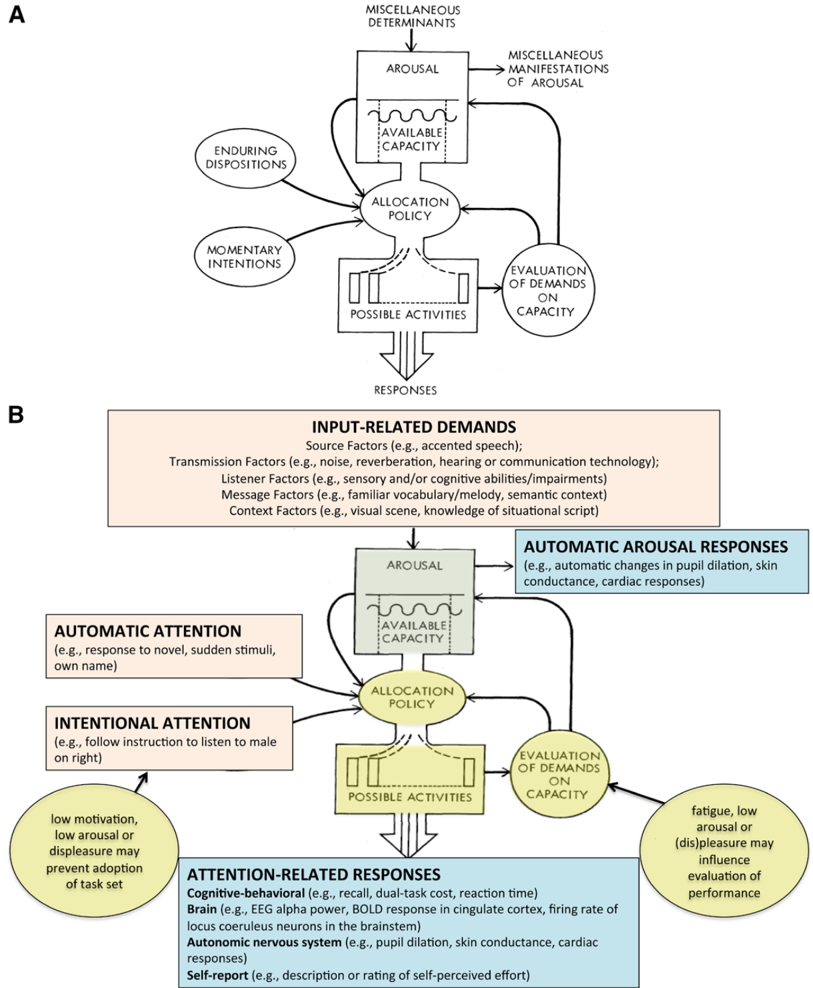
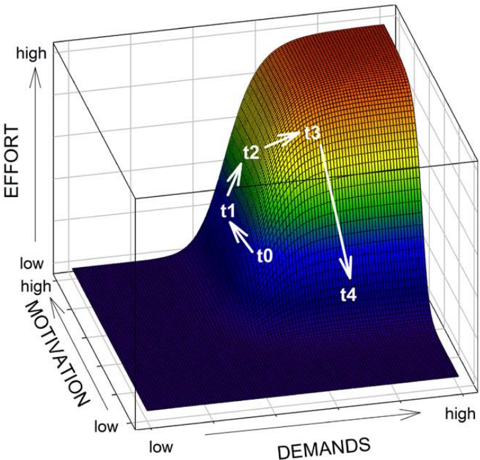
The Fifth Eriksholm Workshop on "Hearing Impairment and Cognitive Energy" was convened to develop a consensus among interdisciplinary experts about what is known on the topic, gaps in knowledge, the use of terminology, priorities for future research, and implications for practice. The general term cognitive energy was chosen to facilitate the broadest possible discussion of the topic. It goes back to who described the effects of attention on perception; he used the term psychic energy for the notion that limited mental resources can be flexibly allocated among perceptual and mental activities. The workshop focused on three main areas: (1) theories, models, concepts, definitions, and frameworks; (2) methods and measures; and (3) knowledge translation. We defined effort as the deliberate allocation of mental resources to overcome obstacles in goal pursuit when carrying out a task, with listening effort applying more specifically when tasks involve listening. We adapted Kahneman's seminal (1973) Capacity Model of Attention to listening and proposed a heuristically useful Framework for Understanding Effortful Listening (FUEL). Our FUEL incorporates the well-known relationship between cognitive demand and the supply of cognitive capacity that is the foundation of cognitive theories of attention. Our FUEL also incorporates a motivation dimension based on complementary theories of motivational intensity, adaptive gain control, and optimal performance, fatigue, and pleasure. Using a three-dimensional illustration, we highlight how listening effort depends not only on hearing difficulties and task demands but also on the listener's motivation to expend mental effort in the challenging situations of everyday life.
Overview
CoChat Summary
TL;DR
The paper reports the Fifth Eriksholm Workshop consensus and proposes FUEL, a conceptual framework for understanding effortful listening that integrates cognitive capacity, motivation, fatigue, and pleasure. It argues that listening effort depends not only on audibility and task demands but also on how listeners evaluate the value of exerting effort in everyday communication.
Key findings
- The workshop’s consensus was that no single existing theory or model sufficiently explains listening effort, so FUEL was proposed as a conceptual framework rather than a quantitative model.
- FUEL adapts Kahneman’s Capacity Model of Attention and adds a motivation dimension; the paper states that effort varies with both demands and motivation, illustrated with a 3D plot of effort, demands, and motivation.
- The paper defines effort as “the deliberate allocation of mental resources to overcome obstacles in goal pursuit when carrying out a task,” and listening effort as effort involved in listening; it extends listening beyond speech to music and environmental sounds.
- The paper organizes candidate listening-effort measures into behavioral, physiological, and self-report measures, and notes that some measures are more sensitive to demands, some to motivation, and some to both.
Methods
- Consensus workshop paper based on the Fifth Eriksholm Workshop on Hearing Impairment and Cognitive Energy, held in June 2015, with 16 participants from audiology, engineering, neuroscience, speech perception, gerontology, philosophy, and psychology.
- The workshop reviewed existing theories/models, definitions, and methods/measures relevant to effortful listening, and used the discussion to develop shared terminology and the FUEL framework.
- The paper’s analysis is conceptual and comparative: it contrasts theories, maps candidate measures onto demand and motivation dimensions, and adapts Kahneman’s model into a listening-specific framework.
Limitations
- The paper explicitly states that the field is not yet at a stage where outcomes can be quantitatively predicted, so FUEL is proposed as a framework rather than a model.
- It states that there is no agreement on an appropriate scale for effort, demands, or motivation, and that the shape of the functions relating them is unknown.
- Evident from the text: the framework is based on a workshop consensus and literature synthesis rather than new empirical data or direct validation studies of FUEL.
Model-written summary of a shortened version of the paper’s full text (it is longer than we read). Check it against the paper before relying on it.
Integrity signals
Registry
Cites
Statistics
Figures
Verification
Claims the paper makes
3 Valid · 7 Not valid · 27 Not checked · 32 Own results and interpretations
Every source the paper cites for this claim was checked and supports it.
In the paper
“From a population health perspective, epidemiological research has provided evidence of a significant association between hearing loss and incident dementia (Albers et al. 2015) and prompted questions regarding the potential advantages of adopting a more integrated approach to research on hearing health and cognitive health (Dupuis et al. 2015; Pichora-Fuller et al. 2015).”
What the sources say
- Supportedcites Albers et al. 2015 matched to “At the interface of sensory and motor dysfunctions and Alzheimer’s disease.” (2015) source
The Epidemiological and Clinical Studies section reports that a prospective cohort found hearing loss independently associated with incident all-cause dementia, with a 95% confidence interval of 1.06–1.50 for the reported risk increase. The paper reports epidemiological evidence for the association; the citing sentence does not claim that it established causation. (LLM, conf=0.94)
plainstates an association- Asserted: passes — The authors put it forward as true.
- Checkable: passes — It can be checked against evidence.
- Load-bearing: unclear — It is unclear whether the paper’s conclusions depend on it.
- Based: passes — The paper gives a reason why it holds.
- Supported
A conclusion the paper draws from its own results — it cites no other source for it, so there is none to check. The quote shows it is in the paper.
In the paper
“Individuals may also need to allocate more cognitive capacity to comprehend, remember, and respond to the auditory objects and events that they have perceived.”
hedgedstates a possible cause- Asserted: passes — The authors put it forward as true.
- Checkable: passes — It can be checked against evidence.
- Load-bearing: passes — The paper’s conclusions depend on it.
- Based: passes — The paper gives a reason why it holds.
A conclusion the paper draws from its own results — it cites no other source for it, so there is none to check. The quote shows it is in the paper.
In the paper
“Therefore, success in achieving listening goals may depend on the deployment of greater cognitive energy when the quality of the signal available to the listener is suboptimal.”
hedgedstates a possible cause- Asserted: passes — The authors put it forward as true.
- Checkable: passes — It can be checked against evidence.
- Load-bearing: passes — The paper’s conclusions depend on it.
- Based: passes — The paper gives a reason why it holds.
None of the sources cited for this claim have been checked yet.
In the paper
“These changes in temporal auditory processing are thought to underpin problems understanding speech in noise and also remembering it once it has been heard.”
hedgedstates a possible cause- Asserted: passes — The authors put it forward as true.
- Checkable: passes — It can be checked against evidence.
- Load-bearing: passes — The paper’s conclusions depend on it.
- Based: passes — The paper gives a reason why it holds.
None of the sources cited for this claim have been checked yet.
In the paper
“(3) his idea that there will be increased mental activity when demands are increased is compatible with the current notion of cognitive compensation (Pichora-Fuller 2010; Grady 2012).”
What the sources say
- Not matchedcites Pichora-Fuller 2010
An author–year citation the paper’s reference list doesn’t settle. We don’t search these by name.
- Not checked — no full text of the sourcecites Grady 2012 matched to “The cognitive neuroscience of ageing” (2012) source
plainstates an association- Asserted: passes — The authors put it forward as true.
- Checkable: passes — It can be checked against evidence.
- Load-bearing: unclear — It is unclear whether the paper’s conclusions depend on it.
- Based: passes — The paper gives a reason why it holds.
- Not matched
15 more claims
Create a free account to see all 69 claims and to verify the 2 references still open.
- It may state two separate claims as one. 13
- Probably not a substantial claim. 46
Claims other papers make about this one
Each is checked against this paper’s own text: does it say what the citing paper says it does?
The cited source says what the claim attributes to it.
In the citing paper
“The subjective experience of effort during communication is likely to precede more chronic experiences of fatigue (Pichora-Fuller et al., 2016).”
From Language proficiency drives listening-related fatigue in those who communicate in English as their second language (2026) · cites this paper as Pichora-Fuller et al., 2016
In the citing paper
“Changes in these kinds of subjective judgments over the course of a communication scenario will likely influence whether or not an individual chooses to withdraw or sustain engagement (Pichora-Fuller et al., 2016).”
From Effortful listening under the microscope: Examining relations between pupillometric and subjective markers of effort and tiredness from listening (2021) · cites this paper as Pichora-Fuller et al., 2016
In the citing paper
“This finding lends weight to the argument that TEPR is not an objective correlate of the subjective experience of listening effort (McGarrigle et al., 2014;Pichora-Fuller et al., 2016;Strand et al., 2018).”
From Effortful listening under the microscope: Examining relations between pupillometric and subjective markers of effort and tiredness from listening (2021) · cites this paper as Pichora-Fuller et al., 2016
In the citing paper
“Thus, to reach lexical access in such adverse conditions, there is a greater need to rely on mental and cognitive processes (Pichora-Fuller et al., 2016; Rönnberg et al., 2008, 2013, 2019).”
From The Involvement of Listening Effort in Explaining Bilingual Listening Under Adverse Listening Conditions (2023) · cites this paper as Pichora-Fuller et al., 2016
In the citing paper
“Our findings are consistent with the FUEL (Pichora-Fuller et al., 2016) and extend it to primary school children.”
From Listening effort and fatigue in native and non-native primary school children (2021) · cites this paper as Pichora-Fuller et al., 2016
5 more claims about this paper
Create a free account to see every claim other papers make about this one.
Citations
Cites
The relation of strength of stimulus to rapidity of habit formation
Yerkes, R. M., & Dodson, J. D. (1908) · Journal of Comparative Neurology and Psychology · doi:10.1002/cne.920180503 · Cited by 6,911
Individual differences in working memory and reading
Daneman, M., & Carpenter, P. A. (1980) · Journal of Verbal Learning and Verbal Behavior · doi:10.1016/s0022-5371(80)90312-6 · Cited by 6,336
The processing-speed theory of adult age differences in cognition
Salthouse, T. A. (1996) · Psychological Review · doi:10.1037/0033-295x.103.3.403 · Cited by 5,902
Social Relationships and Health.
Cohen, S. (2004) · American Psychologist · doi:10.1037/0003-066x.59.8.676 · Cited by 4,852
Aston-Jones, G., & Cohen, J. D. (2005) · Annual Review of Neuroscience · doi:10.1146/annurev.neuro.28.061604.135709 · Cited by 4,472
Broadbent, D. E. (1958) · doi:10.1037/10037-000 · Cited by 4,337
A capacity theory of comprehension: individual differences in working memory
Just, M. A., & Carpenter, P. A. (1992) · Psychological Review · doi:10.1037/0033-295x.99.1.122 · Cited by 4,153
The adaptive brain: aging and neurocognitive scaffolding
Park, D. C., & Reuter-Lorenz, P. (2009) · Annual Review of Psychology · doi:10.1146/annurev.psych.59.103006.093656 · Cited by 2,790
Motor control and aging: Links to age-related brain structural, functional, and biochemical effects
Seidler, R. D., Bernard, J. A., Burutolu, T. B., Fling, B. W., Gordon, M. T., Gwin, J. T., Kwak, Y., & Lipps, D. B. (2010) · Neuroscience & Biobehavioral Reviews · doi:10.1016/j.neubiorev.2009.10.005 · Cited by 1,791
Neurocognitive Aging and the Compensation Hypothesis
Reuter-Lorenz, P. A., & Cappell, K. A. (2008) · Current Directions in Psychological Science · doi:10.1111/j.1467-8721.2008.00570.x · Cited by 1,639
Working memory and language comprehension: A meta-analysis
Daneman, M., & Merikle, P. M. (1996) · Psychonomic Bulletin & Review · doi:10.3758/bf03214546 · Cited by 1,432
Baltes, P. B., & Lindenberger, U. (1997) · Psychology and Aging · doi:10.1037//0882-7974.12.1.12 · Cited by 1,430
The Speech, Spatial and Qualities of Hearing Scale (SSQ)
Gatehouse, S., & Noble, W. (2004) · International Journal of Audiology · doi:10.1080/14992020400050014 · Cited by 1,385
Handbook of Approach and Avoidance Motivation
(2013) · Psychology Press eBooks · doi:10.4324/9780203888148 · Cited by 1,302
Brehm, J. W., & Self, E. A. (1989) · Annual Review of Psychology · doi:10.1146/annurev.ps.40.020189.000545 · Cited by 1,292
The cognitive neuroscience of ageing
Grady, C. (2012) · Nature Reviews Neuroscience · doi:10.1038/nrn3256 · Cited by 1,286
Sensory functioning and intelligence in old age: A strong connection.
Lindenberger, U., & Baltes, P. B. (1994) · Psychology and Aging · doi:10.1037//0882-7974.9.3.339 · Cited by 1,237
Working memory as an emergent property of the mind and brain
Postle, B. R. (2006) · Neuroscience · doi:10.1016/j.neuroscience.2005.06.005 · Cited by 1,152
How young and old adults listen to and remember speech in noise.
Pichora-Fuller, M. K., Schneider, B. A., & Daneman, M. (1995) · The Journal of the Acoustical Society of America · doi:10.1121/1.412282 · Cited by 1,089
Self-citationThe Ease of Language Understanding (ELU) model: theoretical, empirical, and clinical advances
Rönnberg, J., Lunner, T., Zekveld, A., Sörqvist, P., Danielsson, H., Lyxell, B., Dahlström, Ö., Signoret, C., Stenfelt, S., Pichora-Fuller, M. K., et al. (2013) · Frontiers in Systems Neuroscience · doi:10.3389/fnsys.2013.00031 · Cited by 989
Self-citationProcessing speed as a mental capacity
Kail, R., & Salthouse, T. A. (1994) · Acta Psychologica · doi:10.1016/0001-6918(94)90003-5 · Cited by 850
Human auditory steady-state responses: Respuestas auditivas de estado estable en humanos
Picton, T. W., John, M. S., Dimitrijevic, A., & Purcell, D. (2003) · International Journal of Audiology · doi:10.3109/14992020309101316 · Cited by 846
Rönnlund, M., Nyberg, L., Bäckman, L., & Nilsson, L.-G. (2005) · Psychology and Aging · doi:10.1037/0882-7974.20.1.3 · Cited by 839
Speech recognition in adverse conditions: A review.
Mattys, S. L., Davis, M. H., Bradlow, A. R., & Scott, S. K. (2012) · Language and Cognitive Processes · doi:10.1080/01690965.2012.705006 · Cited by 809
At the interface of sensory and motor dysfunctions and Alzheimer’s disease.
Albers, M. W., Gilmore, G. C., Kaye, J., Murphy, C., Wingfield, A., Bennett, D. A., Boxer, A. L., Buchman, A. S., Cruickshanks, K. J., Devanand, D. P., et al. (2015) · Alzheimer's & Dementia · doi:10.1016/j.jalz.2014.04.514 · Cited by 589
Self-citationNeural Basis of Reinforcement Learning and Decision Making
Lee, D., Seo, H., & Jung, M. W. (2012) · Annual Review of Neuroscience · doi:10.1146/annurev-neuro-062111-150512 · Cited by 546
Psycholinguistic and social psychological components of communication by and with the elderly
Ryan, E. B., Giles, H., Bartolucci, G., & Henwood, K. (1986) · Language & Communication · doi:10.1016/0271-5309(86)90002-9 · Cited by 542
McGarrigle, R., Munro, K. J., Dawes, P., Stewart, A. J., Moore, D. R., Barry, J. G., & Amitay, S. (2014) · International Journal of Audiology · doi:10.3109/14992027.2014.890296 · Cited by 532
Cognition counts: A working memory system for ease of language understanding (ELU)
Rönnberg, J., Rudner, M., Foo, C., & Lunner, T. (2008) · International Journal of Audiology · doi:10.1080/14992020802301167 · Cited by 489
Self-citationVarazzani, C., San-Galli, A., Gilardeau, S., & Bouret, S. (2015) · The Journal of Neuroscience · doi:10.1523/jneurosci.0454-15.2015 · Cited by 452
Pichora-Fuller, M. K., & Singh, G. (2006) · Trends in Amplification · doi:10.1177/108471380601000103 · Cited by 442
Self-citationPupil Response as an Indication of Effortful Listening: The Influence of Sentence Intelligibility
Zekveld, A. A., Kramer, S. E., & Festen, J. M. (2010) · Ear & Hearing · doi:10.1097/aud.0b013e3181d4f251 · Cited by 437
Self-citationChannel-Capacity, Intelligibility and Immediate Memory
Rabbitt, P. M. A. (1968) · Quarterly Journal of Experimental Psychology · doi:10.1080/14640746808400158 · Cited by 436
Zekveld, A. A., Kramer, S. E., & Festen, J. M. (2011) · Ear & Hearing · doi:10.1097/aud.0b013e31820512bb · Cited by 432
Self-citationListening Effort and Fatigue in School-Age Children With and Without Hearing Loss
Hicks, C. B., & Tharpe, A. M. (2002) · Journal of Speech, Language, and Hearing Research · doi:10.1044/1092-4388(2002/046 · Cited by 410
Hearing Loss in Older Adulthood: What It Is and How It Interacts With Cognitive Performance
Wingfield, A., Tun, P. A., & McCoy, S. L. (2005) · Current Directions in Psychological Science · doi:10.1111/j.0963-7214.2005.00356.x · Cited by 397
Self-citationSpeech understanding and aging
Aging, W. G. O. S. U. A. (1988) · The Journal of the Acoustical Society of America · doi:10.1121/1.395965 · Cited by 392
Pupillometry as a measure of cognitive effort in younger and older adults
Piquado, T., Isaacowitz, D., & Wingfield, A. (2010) · Psychophysiology · doi:10.1111/j.1469-8986.2009.00947.x · Cited by 390
Self-citationAging Affects Neural Precision of Speech Encoding
Anderson, S., Parbery-Clark, A., White-Schwoch, T., & Kraus, N. (2012) · The Journal of Neuroscience · doi:10.1523/jneurosci.2176-12.2012 · Cited by 377
Cognitive function in relation to hearing aid use
Lunner, T. (2003) · International Journal of Audiology · doi:10.3109/14992020309074624 · Cited by 345
Self-citationCognitive aging and auditory information processing
Pichora-Fuller, M. K. (2003) · International Journal of Audiology · doi:10.3109/14992020309074641 · Cited by 339
Self-citationAlpha Rhythms in Audition: Cognitive and Clinical Perspectives
Weisz, N., Hartmann, T., Müller, N., Lorenz, I., & Obleser, J. (2011) · Frontiers in Psychology · doi:10.3389/fpsyg.2011.00073 · Cited by 329
Mild hearing loss can cause apparent memory failures which increase with age and reduce with IQ
Rabbitt, P. (1991) · Acta Oto-Laryngologica · doi:10.3109/00016489109127274 · Cited by 308
Effects of hearing and vision impairments on the Montreal Cognitive Assessment
Dupuis, K., Pichora-Fuller, M. K., Chasteen, A. L., Marchuk, V., Singh, G., & Smith, S. L. (2015) · Aging, Neuropsychology, and Cognition · doi:10.1080/13825585.2014.968084 · Cited by 278
Self-citationThe Impact of Auditory Spectral Resolution on Listening Effort Revealed by Pupil Dilation
Winn, M. B., Edwards, J. R., & Litovsky, R. Y. (2015) · Ear & Hearing · doi:10.1097/aud.0000000000000145 · Cited by 278
Candidature for and delivery of audiological services: special needs of older people
Kiessling, J., Pichora-Fuller, M. K., Gatehouse, S., Stephens, D., Arlinger, S., Chisolm, T., Davis, A. C., Erber, N. P., Hickson, L., Holmes, A., et al. (2003) · International Journal of Audiology · doi:10.3109/14992020309074650 · Cited by 261
Self-citationHumes, L. E. (2007) · Journal of the American Academy of Audiology · doi:10.3766/jaaa.18.7.6 · Cited by 253
Self-citationAre age-related changes in cognitive function driven by age-related changes in sensory processing?
Humes, L. E., Busey, T. A., Craig, J., & Kewley-Port, D. (2013) · Attention, Perception, & Psychophysics · doi:10.3758/s13414-012-0406-9 · Cited by 247
Self-citationThe emergence of Cognitive Hearing Science
ARLINGER, S., LUNNER, T., LYXELL, B., & KATHLEEN PICHORA‐FULLER, M. (2009) · Scandinavian Journal of Psychology · doi:10.1111/j.1467-9450.2009.00753.x · Cited by 231
Self-citationPupil Dilation Uncovers Extra Listening Effort in the Presence of a Single-Talker Masker
Koelewijn, T., Zekveld, A. A., Festen, J. M., & Kramer, S. E. (2012) · Ear & Hearing · doi:10.1097/aud.0b013e3182310019 · Cited by 227
Self-citationAdverse Listening Conditions and Memory Load Drive a Common Alpha Oscillatory Network
Obleser, J., Wöstmann, M., Hellbernd, N., Wilsch, A., & Maess, B. (2012) · The Journal of Neuroscience · doi:10.1523/jneurosci.4908-11.2012 · Cited by 224
Benefits from hearing aids in relation to the interaction between the user and the environment
Gatehouse, S., Naylor, G., & Elberling, C. (2003) · International Journal of Audiology · doi:10.3109/14992020309074627 · Cited by 222
Self-citationLunner, T., & Sundewall-Thorén, E. (2007) · Journal of the American Academy of Audiology · doi:10.3766/jaaa.18.7.7 · Cited by 221
Self-citationEffects of noise and working memory capacity on memory processing of speech for hearing-aid users
Ng, E. H. N., Rudner, M., Lunner, T., Pedersen, M. S., & Rönnberg, J. (2013) · International Journal of Audiology · doi:10.3109/14992027.2013.776181 · Cited by 207
Self-citationWingfield, A., McCoy, S. L., Peelle, J. E., Tun, P. A., & Cox, C. L. (2006) · Journal of the American Academy of Audiology · doi:10.3766/jaaa.17.7.4 · Cited by 206
Self-citationWorking Memory Supports Listening in Noise for Persons with Hearing Impairment
Rudner, M., Rönnberg, J., & Lunner, T. (2011) · Journal of the American Academy of Audiology · doi:10.3766/jaaa.22.3.4 · Cited by 203
Self-citationChanging the Way We Talk with Elders: Promoting Health Using the Communication Enhancement Model
Ryan, E. B., Meredith, S. D., MacLean, M. J., & Orange, J. B. (1995) · The International Journal of Aging and Human Development · doi:10.2190/fp05-fm8v-0y9f-53fx · Cited by 202
The Cingulo-Opercular Network Provides Word-Recognition Benefit
Vaden, K. I., Kuchinsky, S. E., Cute, S. L., Ahlstrom, J. B., Dubno, J. R., & Eckert, M. A. (2013) · The Journal of Neuroscience · doi:10.1523/jneurosci.1417-13.2013 · Cited by 191
Self-citationClinard, C. G., Tremblay, K. L., & Krishnan, A. R. (2010) · Hearing Research · doi:10.1016/j.heares.2009.11.010 · Cited by 190
Self-citationA taxonomy of fatigue concepts and their relation to hearing loss.
Hornsby, B. W. Y., Naylor, G., & Bess, F. H. (2016) · Ear & Hearing · doi:10.1097/aud.0000000000000289 · Cited by 188
Self-citationEffects of Senescent Changes in Audition and Cognition on Spoken Language Comprehension
Schneider, B. A., Pichora-Fuller, K., & Daneman, M. (2010) · Springer Handbook of Auditory Research · doi:10.1007/978-1-4419-0993-0_7 · Cited by 180
Working Memory, Age, and Hearing Loss: Susceptibility to Hearing Aid Distortion
Arehart, K. H., Souza, P. E., Baca, R. L., & Kates, J. M. (2013) · Ear and Hearing · doi:10.1097/aud.0b013e318271aa5e · Cited by 176
Linear and nonlinear hearing aid fittings – 2. Patterns of candidature
Gatehouse, S., Naylor, G., & Elberling, C. (2006) · International Journal of Audiology · doi:10.1080/14992020500429484 · Cited by 169
Self-citationNachtegaal, J., Kuik, D. J., Anema, J. R., Goverts, S. T., Festen, J. M., & Kramer, S. E. (2009) · International Journal of Audiology · doi:10.1080/14992020902962421 · Cited by 168
Self-citationHumes, L. E., Kidd, G. R., & Lentz, J. J. (2013) · Frontiers in Systems Neuroscience · doi:10.3389/fnsys.2013.00055 · Cited by 165
Self-citationWorking memory capacity may influence perceived effort during aided speech recognition in noise.
Rudner, M., Lunner, T., Behrens, T., Thorén, E. S., & Rönnberg, J. (2012) · Journal of the American Academy of Audiology · doi:10.3766/jaaa.23.7.7 · Cited by 164
Self-citationFoo, C., Rudner, M., Rönnberg, J., & Lunner, T. (2007) · Journal of the American Academy of Audiology · doi:10.3766/jaaa.18.7.8 · Cited by 161
Self-citationDissociation between mental fatigue and motivational state during prolonged mental activity
Gergelyfi, M., Jacob, B., Olivier, E., & Zénon, A. (2015) · Frontiers in Behavioral Neuroscience · doi:10.3389/fnbeh.2015.00176 · Cited by 157
How Linguistic Closure and Verbal Working Memory Relate to Speech Recognition in Noise—A Review
Besser, J., Koelewijn, T., Zekveld, A. A., Kramer, S. E., & Festen, J. M. (2013) · Trends in Amplification · doi:10.1177/1084713813495459 · Cited by 148
Self-citationEckert, M. A., Teubner-Rhodes, S., & Vaden, K. I. (2016) · Ear & Hearing · doi:10.1097/aud.0000000000000300 · Cited by 148
Self-citationMackersie, C. L., & Calderon-Moultrie, N. (2016) · Ear & Hearing · doi:10.1097/aud.0000000000000305 · Cited by 146
Self-citationLinear and nonlinear hearing aid fittings – 1. Patterns of benefit
Gatehouse, S., Naylor, G., & Elberling, C. (2006) · International Journal of Audiology · doi:10.1080/14992020500429518 · Cited by 138
Self-citationMick, P., Reed, M., & Pichora-Fuller, M. (2015) · Seminars in Hearing · doi:10.1055/s-0035-1555116 · Cited by 138
Self-citationLanguage Comprehension: Sentence and Discourse Processing
Carpenter, P. A., Miyake, A., & Just, M. A. (1995) · Annual Review of Psychology · doi:10.1146/annurev.ps.46.020195.000515 · Cited by 135
Wingfield, A., & Tun, P. A. (2001) · Seminars in Hearing · doi:10.1055/s-2001-15632 · Cited by 125
Self-citationEvolution of Models of Working Memory and Cognitive Resources
Wingfield, A. (2016) · Ear & Hearing · doi:10.1097/aud.0000000000000310 · Cited by 123
Self-citationVisual Cues and Listening Effort: Individual Variability
Picou, E. M., Ricketts, T. A., & Hornsby, B. W. Y. (2011) · Journal of Speech, Language, and Hearing Research · doi:10.1044/1092-4388(2011/10-0154 · Cited by 116
Self-citationCortical Activity Predicts Which Older Adults Recognize Speech in Noise and When
Vaden, K. I., Kuchinsky, S. E., Ahlstrom, J. B., Dubno, J. R., & Eckert, M. A. (2015) · Journal of Neuroscience · doi:10.1523/jneurosci.2908-14.2015 · Cited by 114
Self-citationCorrespondences among pupillary dilation response, subjective salience of sounds, and loudness
Liao, H., Kidani, S., Yoneya, M., Kashino, M., & Furukawa, S. (2015) · Psychonomic Bulletin & Review · doi:10.3758/s13423-015-0898-0 · Cited by 112
Rudner, M., Foo, C., Rönnberg, J., & Lunner, T. (2009) · Scandinavian Journal of Psychology · doi:10.1111/j.1467-9450.2009.00745.x · Cited by 112
Self-citationLopez‐Poveda, E. A. (2014) · Frontiers in Neuroscience · doi:10.3389/fnins.2014.00348 · Cited by 109
The pupil response is sensitive to divided attention during speech processing
Koelewijn, T., Shinn‐Cunningham, B. G., Zekveld, A. A., & Kramer, S. E. (2014) · Hearing Research · doi:10.1016/j.heares.2014.03.010 · Cited by 106
Self-citationPhonological mismatch and explicit cognitive processing in a sample of 102 hearing-aid users
Rudner, M., Foo, C., Thorén, E. S., Lunner, T., & Rönnberg, J. (2008) · International Journal of Audiology · doi:10.1080/14992020802304393 · Cited by 98
Self-citationSensory-cognitive interactions in older adults
Humes, L. E., & Young, L. A. (2016) · Ear & Hearing · doi:10.1097/aud.0000000000000303 · Cited by 94
Self-citationCognitive Load and Listening Effort: Concepts and Age-Related Considerations
Lemke, U., & Besser, J. (2016) · Ear & Hearing · doi:10.1097/aud.0000000000000304 · Cited by 93
Self-citationHow Social Psychological Factors May Modulate Auditory and Cognitive Functioning During Listening
Pichora-Fuller, M. K. (2016) · Ear and Hearing · doi:10.1097/aud.0000000000000323 · Cited by 87
Self-citationSurprenant, A. M. (2007) · Aging, Neuropsychology, and Cognition · doi:10.1080/13825580701217710 · Cited by 85
Richter, M. (2016) · Ear & Hearing · doi:10.1097/aud.0000000000000295 · Cited by 84
Self-citationP3a from auditory white noise stimuli
Combs, L. A., & Polich, J. M. (2006) · Clinical Neurophysiology · doi:10.1016/j.clinph.2006.01.023 · Cited by 83
Jahncke, H., & Halin, N. (2012) · Noise and Health · doi:10.4103/1463-1741.102966 · Cited by 83
Hearing loss impacts neural alpha oscillations under adverse listening conditions
Petersen, E. B., Wöstmann, M., Obleser, J., Stenfelt, S., & Lunner, T. (2015) · Frontiers in Psychology · doi:10.3389/fpsyg.2015.00177 · Cited by 77
Self-citationHumes, L. E., & Wilson, D. L. (2003) · Journal of Speech Language and Hearing Research · doi:10.1044/1092-4388(2003/011 · Cited by 75
Self-citationWorking memory and intelligibility of hearing-aid processed speech
Souza, P. E., Arehart, K. H., Shen, J., Anderson, M. C., & Kates, J. M. (2015) · Frontiers in Psychology · doi:10.3389/fpsyg.2015.00526 · Cited by 73
Measures of Working Memory, Sequence Learning, and Speech Recognition in the Elderly
Humes, L. E., & Floyd, S. S. (2005) · Journal of Speech Language and Hearing Research · doi:10.1044/1092-4388(2005/016 · Cited by 71
Self-citationNg, E. H. N., Rudner, M., Lunner, T., & Rönnberg, J. (2015) · Ear & Hearing · doi:10.1097/aud.0000000000000080 · Cited by 69
Self-citationNeher, T. (2014) · Frontiers in Neuroscience · doi:10.3389/fnins.2014.00391 · Cited by 69
Modeling and Predicting Hearing Aid Outcome
Humes, L. E. (2003) · Trends in Amplification · doi:10.1177/108471380300700202 · Cited by 68
Self-citationChasteen, A. L., Pichora-Fuller, M. K., Dupuis, K., Smith, S. L., & Singh, G. (2015) · Psychology and Aging · doi:10.1037/a0039723 · Cited by 64
Self-citationUsing speech recall in hearing aid fitting and outcome evaluation under ecological test conditions.
Lunner, T., Rudner, M., Rosenbom, T., Ågren, J., & Ng, E. H. N. (2016) · Ear & Hearing · doi:10.1097/aud.0000000000000294 · Cited by 61
Self-citationDavis, A. C. (2003) · International Journal of Audiology · doi:10.3109/14992020309074643 · Cited by 60
Deary, I. J., Caryl, P. G., Egan, V., & Wight, D. (1989) · Personality and Individual Differences · doi:10.1016/0191-8869(89)90034-2 · Cited by 60
Hällgren, M., Larsby, B., Lyxell, B., & Arlinger, S. (2001) · Journal of the American Academy of Audiology · doi:10.1055/s-0042-1745620 · Cited by 59
Sommers, M. S., & Phelps, D. (2016) · Ear and Hearing · doi:10.1097/aud.0000000000000322 · Cited by 58
Self-citationDeary, I. J. (1994) · Intelligence · doi:10.1016/0160-2896(94)90027-2 · Cited by 57
Processing load during listening: The influence of task characteristics on the pupil response
Kramer, S. E., Lorens, A., Coninx, F., Zekveld, A. A., Piotrowska, A., & Skarzynski, H. (2013) · Language and Cognitive Processes · doi:10.1080/01690965.2011.642267 · Cited by 52
Self-citationCognitive spare capacity as an index of listening effort
Rudner, M. (2016) · Ear & Hearing · doi:10.1097/aud.0000000000000302 · Cited by 52
Self-citationA Model of Auditory-Cognitive Processing and Relevance to Clinical Applicability
Edwards, B. (2016) · Ear and Hearing · doi:10.1097/aud.0000000000000308 · Cited by 52
Self-citationConation A Neglected Aspect of Neuropsychological Functioning
Reitan, R. M., & Wolfson, D. E. (2000) · Archives of Clinical Neuropsychology · doi:10.1093/arclin/15.5.443 · Cited by 51
Perceptual Effort and Apparent Cognitive Decline: Implications for Audiologic Rehabilitation
Pichora-Fuller, M. K. (2006) · Seminars in Hearing · doi:10.1055/s-2006-954855 · Cited by 49
Self-citationKramer, S. E., Teunissen, C. E., & Zekveld, A. A. (2016) · Ear & Hearing · doi:10.1097/aud.0000000000000311 · Cited by 49
Self-citationEffort and displeasure in people who are hard of hearing.
Matthen, M. (2016) · Ear & Hearing · doi:10.1097/aud.0000000000000292 · Cited by 47
Self-citationSpeech comprehension in the elderly: The effects of cognitive changes
Cohen, G. M. (1987) · British Journal of Audiology · doi:10.3109/03005368709076408 · Cited by 45
Phillips, N. A. (2016) · Ear & Hearing · doi:10.1097/aud.0000000000000309 · Cited by 44
Self-citationPichora-Fuller, M., Johnson, C. E., & Roodenburg, K. E. J. (1998) · Journal of Applied Communication Research · doi:10.1080/00909889809365494 · Cited by 43
Self-citationOhlenforst, B., Souza, P. E., & MacDonald, E. (2015) · Ear and Hearing · doi:10.1097/aud.0000000000000240 · Cited by 37
Bertoli, S., & Bodmer, D. (2013) · Clinical Neurophysiology · doi:10.1016/j.clinph.2013.09.045 · Cited by 36
Dupuis, K., Reed, M., Lemke, U., & Pichora-Fuller, M. (2013) · Seminars in Hearing · doi:10.1055/s-0033-1356643 · Cited by 35
Self-citationThe Neuropsychological Similarities of Mild and More Severe Head Injury
Reitan, R. M., & Wolfson, D. E. (2000) · Archives of Clinical Neuropsychology · doi:10.1093/arclin/15.5.433 · Cited by 33
Bertoli, S., & Bodmer, D. (2015) · Clinical Neurophysiology · doi:10.1016/j.clinph.2015.02.055 · Cited by 26
Tremblay, K. L., & Backer, K. C. (2016) · Ear & Hearing · doi:10.1097/aud.0000000000000307 · Cited by 16
Self-citationLoad and distinctness interact in working memory for lexical manual gestures
Rudner, M., Toscano, E., & Holmer, E. (2015) · Frontiers in Psychology · doi:10.3389/fpsyg.2015.01147 · Cited by 11
Self-citationCommunication as an ecological system.
Borg, E., Bergkvist, C., Olsson, I.-S., Wikström, C., & Borg, B. (2008) · International Journal of Audiology · doi:10.1080/14992020802307362 · Cited by 9
Fraser (2011) · doi:10.1044/1092-4388(2009/08-0140
(2010) · doi:10.1044/1092-4388(2010/10-0069
Goy (2013) · doi:10.1044/1092-4388(2013/12-0053
Self-citationDanermark (2013) · doi:10.1044/1059-0889(2013/12-0052
Self-citationConation A Neglected Aspect of Neuropsychological Functioning
Reitan, R. (2000) · Archives of Clinical Neuropsychology · doi:10.1016/s0887-6177(99)00043-8
Research works printed but not linked: 2
- Robertson, 1997, The effect of an aural rehabilitation program on responses to scenarios depicting communication breakdown., J Speech Lang Pathol Audiol, 21, 187
- Smith, Development of the Word Auditory Recognition and Recall Measure (WARRM): A working memory test for use in rehabilitative audiology, Ear Hear
Cited by
Peelle, J. E. (2018) · Ear & Hearing · doi:10.1097/aud.0000000000000494 · Cited by 672
“A recent consensus paper proposed the Framework for Understanding Effortful Listening, comprehensively addressing many of the complexities that go into concepts of spoken communication and listening effort (Pichora-Fuller et al. 2016 and the accompanying special issue).”
BackgroundInfluentialHearing aids for mild to moderate hearing loss in adults
Ferguson, M. A., Kitterick, P. T., Chong, L. Y., Edmondson-Jones, M., Barker, F., & Hoare, D. J. (2017) · Cochrane Database of Systematic Reviews · doi:10.1002/14651858.cd012023.pub2 · Cited by 375
How Can Hearing Loss Cause Dementia?
Griffiths, T. D., Lad, M., Kumar, S., Holmes, E., McMurray, B., Maguire, E. A., Billig, A. J., & Sedley, W. (2020) · Neuron · doi:10.1016/j.neuron.2020.08.003 · Cited by 369
Winn, M. B., Wendt, D., Koelewijn, T., & Kuchinsky, S. E. (2018) · Trends in Hearing · doi:10.1177/2331216518800869 · Cited by 339
“The results of this small pilot study are consistent with the aforementioned capacity model and FUEL; in situations where the taskevoked boredom or low cognitive demand (i.e., the normal-hearing listeners in this slow-paced easy speech task), the pupil response should be less reliable or more difficult to interpret be…”
BackgroundMethodInfluentialThe Pupil Dilation Response to Auditory Stimuli: Current State of Knowledge
Zekveld, A. A., Koelewijn, T., & Kramer, S. E. (2018) · Trends in Hearing · doi:10.1177/2331216518777174 · Cited by 306
“We grouped the results according to whether these were based on external (see Table 1) versus internal (individual) factors (Table 2) and furthermore used the FUEL categories to structure the results (Pichora-Fuller et al., 2016).”
BackgroundMethodResultInfluentialSelf-citation
Metadata
- Authors
- Pichora-Fuller, M. K., Kramer, S. E., Eckert, M. A., Edwards, B., Hornsby, B. W. Y., Humes, L. E., Lemke, U., Lunner, T., Matthen, M., Mackersie, C. L., Naylor, G., Phillips, N. A., Richter, M., Rudner, M., Sommers, M. S., Tremblay, K. L., & Wingfield, A.
- Affiliations
- Brandeis University (US)
- Vanderbilt University (US)
- Sonova (Switzerland) (CH)
- Oticon (Denmark) (DK)
- Earlens (United States) (US)
- University of Toronto (CA)
- Indiana University Bloomington (US)
- Corresponding author
- Pichora-Fuller, M. Kathleen
- ORCID
- Venue
- Ear & Hearing
- Published
- 2016-07
- Volume
- 37
- Issue
- 1
- Pages
- 5S-27S
- ISSN
- 0196-0202 (ISSN-L)
- OpenAlex
- W2472770001
- Semantic Scholar
- 353d1914960d7e69bd9f7dd3f6c74863cb5c1bcc
- Cited by
- 1,318
- References
- 132
- Citations by year
- 2026: 180 · 2025: 210 · 2024: 154 · 2023: 141 · 2022: 131 · 2021: 163 · 2020: 117 · 2019: 95 · 2018: 69 · 2017: 45 · 2016: 10
- FWCI
- 46.32
- Type
- journal article
- Language
- en
- Open access
- hybrid
- doi.org
- Licence
- Locations
- Ear and Hearing (publishedVersion, cc-by-nc-nd)
- PubMed (publishedVersion)
- Repository@Nottingham (University of Nottingham) (publishedVersion, cc-by-nc-nd)
- Amsterdam UMC (VU Amsterdam) - Institutional Repository (publishedVersion)
- Repository@Nottingham (University of Nottingham) (submittedVersion, cc-by-nc-nd)
- Pure Amsterdam UMC (submittedVersion, other-oa)
- Liverpool John Moores University (submittedVersion)
- Data Archiving and Networked Services (DANS) (submittedVersion)
- Funders
- University of Toronto
- Oticon Fonden
- Topics
- Health Sciences › Health Professions › Speech and Hearing › Hearing Loss and Rehabilitation
- Social Sciences › Psychology › Developmental and Educational Psychology › Hearing Impairment and Communication
- Life Sciences › Neuroscience › Sensory Systems › Hearing, Cochlea, Tinnitus, Genetics
- Keywords
- hearing loss, cognitive energy, listening effort, attentional capacity, cognitive demand, motivation, fatigue, pleasure, adaptive gain control, optimal performance, knowledge translation
- MeSH terms
- Attention, Auditory Perception, Cognition, Humans, Speech Perception, Comprehension, Hearing Loss
About these checks
Registry, retraction, Cites and statistics results are computed, not judged, with one exception: a printed reference that no index lists is read once by a model before it counts as a citation error. Claims are extracted by a model and kept only when their quote appears verbatim in the text; each cited source is then checked, with a model’s help, for whether it says what the claim relies on. Those verdicts can be wrong — read the claim’s quote and the cited source before relying on one.
The claim verdicts this report counts are experimental: their accuracy is not yet measured.
A language model drew the claims from the paper on 2026-10-10, under version 3 of the claim definition (model deepseek-v4.1-flash, prompt extract-v3).
A second model labelled each claim on 2026-10-10 (model jev-1.13-20260917, definition revision gold-guideline-v0.2).
Cited sources are checked with a language model’s help (gpt-6-sol).
Statistics and arithmetic are recomputed, not judged.
Confidence bands are shown only for fields calibrated on our annotated test set. None is calibrated yet, so no band is shown.
What counts as a claim ›How we measure confidence ›How we check this ›
Are you an author, or do you see a problem with this page? Request a review
Data sources
Bibliographic data: Semantic Scholar, OpenAlex, Crossref.
Contains information from the Semantic Scholar Academic Graph Datasets, made available under the ODC Attribution License (ODC-BY 1.0).
Semantic Scholar’s data is described in: Kinney, R., et al. (2023). The Semantic Scholar Open Data Platform. arXiv:2301.10140.
