

Hearing Impairment and Cognitive Energy: The Framework for Understanding Effortful Listening (FUEL)
Open accessThe DOI matches its Crossref record; 127 of the 132 references it cites were found in a registry or an index; 3 of the 43 sources its claims cite were checked for support.
Abstract
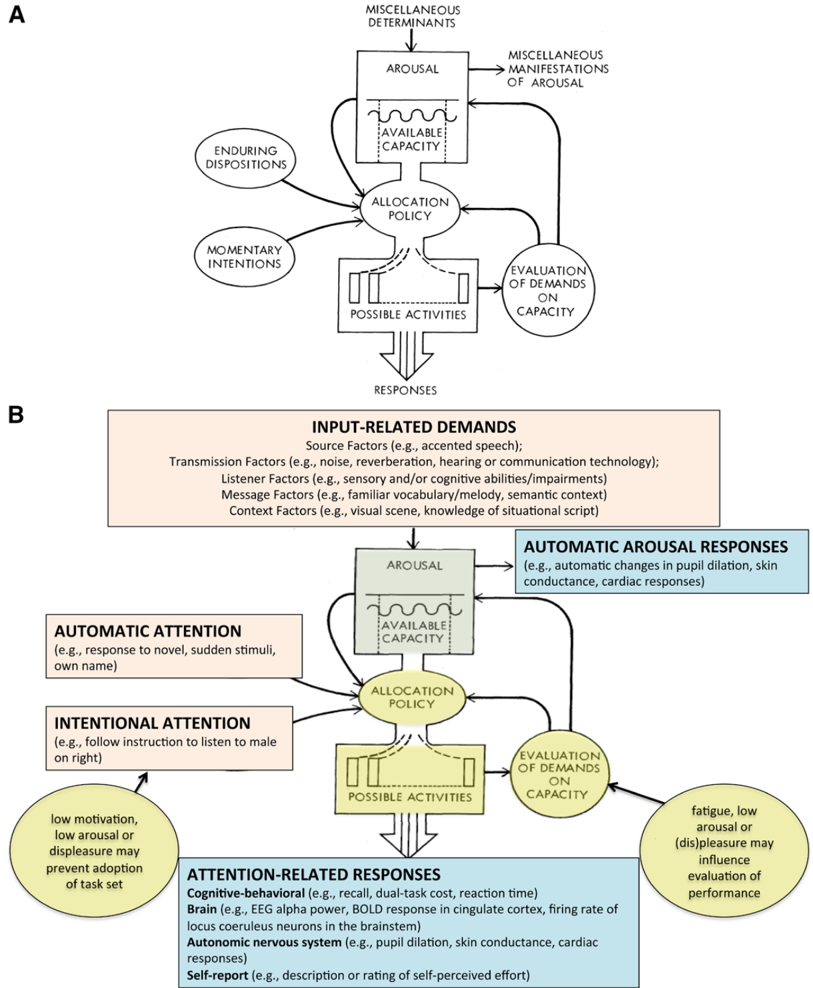
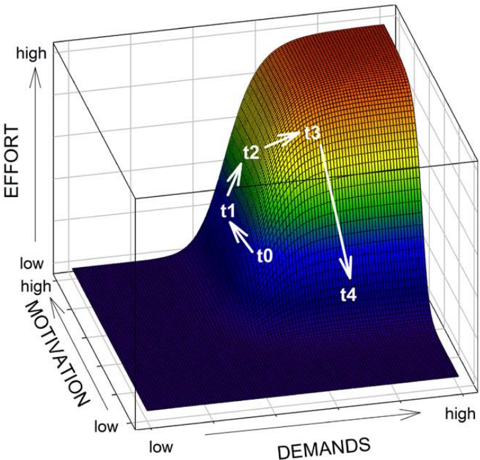
The Fifth Eriksholm Workshop on "Hearing Impairment and Cognitive Energy" was convened to develop a consensus among interdisciplinary experts about what is known on the topic, gaps in knowledge, the use of terminology, priorities for future research, and implications for practice. The general term cognitive energy was chosen to facilitate the broadest possible discussion of the topic. It goes back to who described the effects of attention on perception; he used the term psychic energy for the notion that limited mental resources can be flexibly allocated among perceptual and mental activities. The workshop focused on three main areas: (1) theories, models, concepts, definitions, and frameworks; (2) methods and measures; and (3) knowledge translation. We defined effort as the deliberate allocation of mental resources to overcome obstacles in goal pursuit when carrying out a task, with listening effort applying more specifically when tasks involve listening. We adapted Kahneman's seminal (1973) Capacity Model of Attention to listening and proposed a heuristically useful Framework for Understanding Effortful Listening (FUEL). Our FUEL incorporates the well-known relationship between cognitive demand and the supply of cognitive capacity that is the foundation of cognitive theories of attention. Our FUEL also incorporates a motivation dimension based on complementary theories of motivational intensity, adaptive gain control, and optimal performance, fatigue, and pleasure. Using a three-dimensional illustration, we highlight how listening effort depends not only on hearing difficulties and task demands but also on the listener's motivation to expend mental effort in the challenging situations of everyday life.
Overview
CoChat Summary
TL;DR
The paper reports the Fifth Eriksholm Workshop consensus and proposes FUEL, a conceptual framework for understanding effortful listening that integrates cognitive capacity, motivation, fatigue, and pleasure. It argues that listening effort depends not only on audibility and task demands but also on how listeners evaluate the value of exerting effort in everyday communication.
Key findings
- The workshop’s consensus was that no single existing theory or model sufficiently explains listening effort, so FUEL was proposed as a conceptual framework rather than a quantitative model.
- FUEL adapts Kahneman’s Capacity Model of Attention and adds a motivation dimension; the paper states that effort varies with both demands and motivation, illustrated with a 3D plot of effort, demands, and motivation.
- The paper defines effort as “the deliberate allocation of mental resources to overcome obstacles in goal pursuit when carrying out a task,” and listening effort as effort involved in listening; it extends listening beyond speech to music and environmental sounds.
- The paper organizes candidate listening-effort measures into behavioral, physiological, and self-report measures, and notes that some measures are more sensitive to demands, some to motivation, and some to both.
Methods
- Consensus workshop paper based on the Fifth Eriksholm Workshop on Hearing Impairment and Cognitive Energy, held in June 2015, with 16 participants from audiology, engineering, neuroscience, speech perception, gerontology, philosophy, and psychology.
- The workshop reviewed existing theories/models, definitions, and methods/measures relevant to effortful listening, and used the discussion to develop shared terminology and the FUEL framework.
- The paper’s analysis is conceptual and comparative: it contrasts theories, maps candidate measures onto demand and motivation dimensions, and adapts Kahneman’s model into a listening-specific framework.
Limitations
- The paper explicitly states that the field is not yet at a stage where outcomes can be quantitatively predicted, so FUEL is proposed as a framework rather than a model.
- It states that there is no agreement on an appropriate scale for effort, demands, or motivation, and that the shape of the functions relating them is unknown.
- Evident from the text: the framework is based on a workshop consensus and literature synthesis rather than new empirical data or direct validation studies of FUEL.
Model-written summary of a shortened version of the paper’s full text (it is longer than we read). Check it against the paper before relying on it.
Integrity signals
Registry
Cites
Statistics
Figures
Verification
Claims the paper makes
3 Valid · 7 Not valid · 27 Not checked · 32 Own results and interpretations
Every source the paper cites for this claim was checked and supports it.
In the paper
“From a population health perspective, epidemiological research has provided evidence of a significant association between hearing loss and incident dementia (Albers et al. 2015) and prompted questions regarding the potential advantages of adopting a more integrated approach to research on hearing health and cognitive health (Dupuis et al. 2015; Pichora-Fuller et al. 2015).”
What the sources say
- Supportedcites Albers et al. 2015 matched to “At the interface of sensory and motor dysfunctions and Alzheimer’s disease.” (2015) source
The Epidemiological and Clinical Studies section reports that a prospective cohort found hearing loss independently associated with incident all-cause dementia, with a 95% confidence interval of 1.06–1.50 for the reported risk increase. The paper reports epidemiological evidence for the association; the citing sentence does not claim that it established causation. (LLM, conf=0.94)
plainstates an association- Asserted: passes — The authors put it forward as true.
- Checkable: passes — It can be checked against evidence.
- Load-bearing: unclear — It is unclear whether the paper’s conclusions depend on it.
- Based: passes — The paper gives a reason why it holds.
- Supported
A conclusion the paper draws from its own results — it cites no other source for it, so there is none to check. The quote shows it is in the paper.
In the paper
“Individuals may also need to allocate more cognitive capacity to comprehend, remember, and respond to the auditory objects and events that they have perceived.”
hedgedstates a possible cause- Asserted: passes — The authors put it forward as true.
- Checkable: passes — It can be checked against evidence.
- Load-bearing: passes — The paper’s conclusions depend on it.
- Based: passes — The paper gives a reason why it holds.
A conclusion the paper draws from its own results — it cites no other source for it, so there is none to check. The quote shows it is in the paper.
In the paper
“Therefore, success in achieving listening goals may depend on the deployment of greater cognitive energy when the quality of the signal available to the listener is suboptimal.”
hedgedstates a possible cause- Asserted: passes — The authors put it forward as true.
- Checkable: passes — It can be checked against evidence.
- Load-bearing: passes — The paper’s conclusions depend on it.
- Based: passes — The paper gives a reason why it holds.
None of the sources cited for this claim have been checked yet.
In the paper
“These changes in temporal auditory processing are thought to underpin problems understanding speech in noise and also remembering it once it has been heard.”
hedgedstates a possible cause- Asserted: passes — The authors put it forward as true.
- Checkable: passes — It can be checked against evidence.
- Load-bearing: passes — The paper’s conclusions depend on it.
- Based: passes — The paper gives a reason why it holds.
None of the sources cited for this claim have been checked yet.
In the paper
“(3) his idea that there will be increased mental activity when demands are increased is compatible with the current notion of cognitive compensation (Pichora-Fuller 2010; Grady 2012).”
What the sources say
- Not matchedcites Pichora-Fuller 2010
An author–year citation the paper’s reference list doesn’t settle. We don’t search these by name.
- Not checked — no full text of the sourcecites Grady 2012 matched to “The cognitive neuroscience of ageing” (2012) source
plainstates an association- Asserted: passes — The authors put it forward as true.
- Checkable: passes — It can be checked against evidence.
- Load-bearing: unclear — It is unclear whether the paper’s conclusions depend on it.
- Based: passes — The paper gives a reason why it holds.
- Not matched
15 more claims
Create a free account to see all 69 claims and to verify the 2 references still open.
- It may state two separate claims as one. 13
- Probably not a substantial claim. 46
Claims other papers make about this one
Each is checked against this paper’s own text: does it say what the citing paper says it does?
The cited source says what the claim attributes to it.
In the citing paper
“The subjective experience of effort during communication is likely to precede more chronic experiences of fatigue (Pichora-Fuller et al., 2016).”
From Language proficiency drives listening-related fatigue in those who communicate in English as their second language (2026) · cites this paper as Pichora-Fuller et al., 2016
In the citing paper
“Changes in these kinds of subjective judgments over the course of a communication scenario will likely influence whether or not an individual chooses to withdraw or sustain engagement (Pichora-Fuller et al., 2016).”
From Effortful listening under the microscope: Examining relations between pupillometric and subjective markers of effort and tiredness from listening (2021) · cites this paper as Pichora-Fuller et al., 2016
In the citing paper
“This finding lends weight to the argument that TEPR is not an objective correlate of the subjective experience of listening effort (McGarrigle et al., 2014;Pichora-Fuller et al., 2016;Strand et al., 2018).”
From Effortful listening under the microscope: Examining relations between pupillometric and subjective markers of effort and tiredness from listening (2021) · cites this paper as Pichora-Fuller et al., 2016
In the citing paper
“Thus, to reach lexical access in such adverse conditions, there is a greater need to rely on mental and cognitive processes (Pichora-Fuller et al., 2016; Rönnberg et al., 2008, 2013, 2019).”
From The Involvement of Listening Effort in Explaining Bilingual Listening Under Adverse Listening Conditions (2023) · cites this paper as Pichora-Fuller et al., 2016
In the citing paper
“Our findings are consistent with the FUEL (Pichora-Fuller et al., 2016) and extend it to primary school children.”
From Listening effort and fatigue in native and non-native primary school children (2021) · cites this paper as Pichora-Fuller et al., 2016
5 more claims about this paper
Create a free account to see every claim other papers make about this one.
Citations
Cites
The relation of strength of stimulus to rapidity of habit formation
Yerkes, R. M., & Dodson, J. D. (1908) · Journal of Comparative Neurology and Psychology · doi:10.1002/cne.920180503 · Cited by 6,911
Individual differences in working memory and reading
Daneman, M., & Carpenter, P. A. (1980) · Journal of Verbal Learning and Verbal Behavior · doi:10.1016/s0022-5371(80)90312-6 · Cited by 6,336
The processing-speed theory of adult age differences in cognition
Salthouse, T. A. (1996) · Psychological Review · doi:10.1037/0033-295x.103.3.403 · Cited by 5,902
Social Relationships and Health.
Cohen, S. (2004) · American Psychologist · doi:10.1037/0003-066x.59.8.676 · Cited by 4,852
Aston-Jones, G., & Cohen, J. D. (2005) · Annual Review of Neuroscience · doi:10.1146/annurev.neuro.28.061604.135709 · Cited by 4,472
Broadbent, D. E. (1958) · doi:10.1037/10037-000 · Cited by 4,337
A capacity theory of comprehension: individual differences in working memory
Just, M. A., & Carpenter, P. A. (1992) · Psychological Review · doi:10.1037/0033-295x.99.1.122 · Cited by 4,153
The adaptive brain: aging and neurocognitive scaffolding
Park, D. C., & Reuter-Lorenz, P. (2009) · Annual Review of Psychology · doi:10.1146/annurev.psych.59.103006.093656 · Cited by 2,790
Motor control and aging: Links to age-related brain structural, functional, and biochemical effects
Seidler, R. D., Bernard, J. A., Burutolu, T. B., Fling, B. W., Gordon, M. T., Gwin, J. T., Kwak, Y., & Lipps, D. B. (2010) · Neuroscience & Biobehavioral Reviews · doi:10.1016/j.neubiorev.2009.10.005 · Cited by 1,791
Neurocognitive Aging and the Compensation Hypothesis
Reuter-Lorenz, P. A., & Cappell, K. A. (2008) · Current Directions in Psychological Science · doi:10.1111/j.1467-8721.2008.00570.x · Cited by 1,639
Research works printed but not linked: 2
- Robertson, 1997, The effect of an aural rehabilitation program on responses to scenarios depicting communication breakdown., J Speech Lang Pathol Audiol, 21, 187
- Smith, Development of the Word Auditory Recognition and Recall Measure (WARRM): A working memory test for use in rehabilitative audiology, Ear Hear
Cited by
Items 601–700 of 1,325
The neural basis for auditory and audiovisual speech perceptionPreprint
Peelle, J. E. (2019) · PsyArXiv (OSF Preprints) · doi:10.31234/osf.io/39ej7 · Cited by 7
Rapid adaptation to fully intelligible nonnative-accented speech reduces listening effortPreprint
Brown, V. A., McLaughlin, D. J., Strand, J. F., & Engen, K. J. V. (2019) · PsyArXiv (OSF Preprints) · doi:10.31234/osf.io/vbtnq · Cited by 6
Rönnberg, J., Sharma, A., Signoret, C., Campbell, T. A., & Sörqvist, P. (2022) · Frontiers in Neuroscience · doi:10.3389/fnins.2022.1098340 · Cited by 8
Motala, A., Johnsrude, I. S., & Herrmann, B. (2023) · doi:10.31234/osf.io/5uq87 · Cited by 6
A Review of Auditory Attention: Neural Mechanisms, Theories, and Affective Disorders
Razzaghipour, A., Ashrafi, M., & Mohammadzadeh, A. (2024) · Indian Journal of Otolaryngology and Head & Neck Surgery · doi:10.1007/s12070-023-04373-1 · Cited by 10
“FUEL underscores that several factors related to hearing, such as sound source characteristics, the acoustic environment, message content, and the cognitive abilities of the listener, influence available cognitive capacity [ 2, 7].”
Harmon, T. G., Hegewald, R., & Dromey, C. (2024) · American Journal of Speech-Language Pathology · doi:10.1044/2024_ajslp-23-00354 · Cited by 8
Older adults’ recognition of medical terminology in hospital noise
Bent, T., Baese‐Berk, M. M., Puckett, B. S., Ryherd, E. E., Perry, S. J., & Manley, N. A. (2024) · Cognitive Research Principles and Implications · doi:10.1186/s41235-024-00606-1 · Cited by 6
Spoorthi, G. N., Uppunda, A. K., Kalaiah, M. K., & Shastri, U. (2025) · European Archives of Oto-Rhino-Laryngology · doi:10.1007/s00405-025-09232-z · Cited by 11
“Listening effort is defined as “the deliberate allocation of mental resources to overcome obstacles in goal pursuit when carrying out a [listening] task” [1].”
Examining sound levels across different time scales measured from body-worn dosimeters
Jorgensen, E. J., Tufts, J. B., & Skoe, E. (2025) · The Journal of the Acoustical Society of America · doi:10.1121/10.0035807 · Cited by 6
Eye movements of younger and older adults decrease during story listening in background noise
Herrmann, B., Scharf, F., & Widmann, A. (2025) · Hearing Research · doi:10.1016/j.heares.2025.109447 · Cited by 7
Dementia and hearing loss: from risk to mechanisms and management
Broome, E., Calvert, S., Heffernan, E., Henshaw, H., Khan, A., Pelekanos, V., Sollini, J., Stancel-Lewis, J., & Dening, T. (2026) · Frontiers in Dementia · doi:10.3389/frdem.2026.1736003 · Cited by 5
Xiu, B., Paul, B. T., Chen, J. M., Le, T., Lin, V., & Dimitrijevic, A. (2022) · Frontiers in Human Neuroscience · doi:10.3389/fnhum.2022.1043499 · Cited by 13
“In the current study, the Effort subscale of the NASATLX was subsumed under the Mental Demand subscale to coincide with the definition of mental effort as “the deliberate allocation of mental resources to overcome obstacles in goal pursuit when carrying out a task” according to the Framework for Understanding Effortfu…”
BackgroundMethodInfluentialTepe, V., Guillory, L., Boudin-George, A., Cantelmo, T., & Murphy, S. (2023) · Journal of Speech Language and Hearing Research · doi:10.1044/2023_jslhr-23-00095 · Cited by 9
Ben‐David, B. M., Chebat, D., & Icht, M. (2024) · Cognition & Emotion · doi:10.1080/02699931.2024.2357656 · Cited by 7
Cognitive function in long-term testicular cancer survivors: impact of modifiable factors
Dinh, P. C., Monahan, P. O., Fung, C., Sesso, H. D., Feldman, D. R., Vaughn, D. J., Hamilton, R. J., Huddart, R. A., Martin, N. E., Kollmannsberger, C., et al. (2024) · JNCI Cancer Spectrum · doi:10.1093/jncics/pkae068 · Cited by 7
Herrmann, B., & Cui, M. E. (2025) · Audiology Research · doi:10.3390/audiolres15010014 · Cited by 5
Seitz, J., & Fels, J. (2025) · The Journal of the Acoustical Society of America · doi:10.1121/10.0036129 · Cited by 6
Altered auditory brainstem responses are post-acute sequela of SARS-CoV-2 (PASC)
Niemczak, C. E., Skoe, E., Leigh, S. M., Zhang, L., Dotzenrod, M., Kieley, A., Stone, S., Parsonnet, J., Martin, C. Y., Ealer, C., et al. (2025) · Scientific Reports · doi:10.1038/s41598-025-93664-4 · Cited by 7
“Auditory tests are particularly relevant in assessing cognitive fatigue because sound engages cognitive processes related to perception, attention, and memory 68,69 .”
Adeoye, S. O., Egbuta, O. U., & Ayeni, D. (2020) · Journal of Resources Development and Management · doi:10.7176/jrdm/67-05 · Cited by 18
“Pichora-Fuller et al. (2016) also identified with Deter and Burris (2007) that voice behaviour is positively related to employees’ felt responsibility for constructive change.”
BackgroundListening in 2020: A Survey of Adults' Experiences With Pandemic-Related Disruptions
Helfer, K. S., Mamo, S. K., Clauss, M., & Tellerico, S. (2021) · American Journal of Audiology · doi:10.1044/2021_aja-21-00021 · Cited by 4
Hearing Screening for Residents in Long-Term Care Homes Who Live with Dementia: A Scoping Review
Höbler, F., McGilton, K. S., Wittich, W., Dupuis, K., Reed, M., Dumassais, S., Mick, P. T., & Pichora-Fuller, M. K. (2021) · Journal of Alzheimer s Disease · doi:10.3233/jad-215087 · Cited by 7
“Notably, even when words have been correctly heard, they may not be remembered as well when listening occurs in noisy compared to quiet conditions, due to increased cognitive demands during listening [15].”
BackgroundSelf-citationKeerstock, S., & Smiljanić, R. (2021) · The Journal of the Acoustical Society of America · doi:10.1121/10.0006732 · Cited by 5
Slade, T. M., Gascón, A. E., Comeau, G., et al. (2022) · Psychology of Music · doi:10.1177/03057356221126203 · Cited by 5
“In the Framework for Understanding Effortful Listening (Pichora-Fuller et al., 2016), this phenomenon is attributed to greater motivation leading to a larger allocation of cognitive resources to the listening task.”
BackgroundBeadle, J., Kim, J., & Davis, C. (2022) · Trends in Hearing · doi:10.1177/23312165221145006 · Cited by 5
Fletcher, A. R., Potts, M. W., & Borrie, S. A. (2023) · American Journal of Speech-Language Pathology · doi:10.1044/2022_ajslp-22-00234 · Cited by 5
“Our second hypothesis was based on models of listening effort (Herr-mann & Johnsrude, 2020; Pichora-Fuller et al., 2016).”
BackgroundMethodSlade, K., Beat, A., Taylor, J., Plack, C. J., & Nuttall, H. E. (2023) · Psychonomic Bulletin & Review · doi:10.3758/s13423-023-02361-8 · Cited by 7
“Perceiving speech in noise may require increased ‘listening effort’, meaning that increased neural or cognitive resources are needed to hear successfully (Pichora-Fuller et al., 2016).”
BackgroundAuditory, Lexical, and Multitasking Demands Interactively Impact Listening Effort
Kuchinsky, S. E., Razeghi, N., & Pandža, N. B. (2023) · Journal of Speech Language and Hearing Research · doi:10.1044/2023_jslhr-22-00548 · Cited by 8
Linking Affective and Hearing Sciences—Affective Audiology
Zhang, M., & Siegle, G. J. (2023) · Trends in Hearing · doi:10.1177/23312165231208377 · Cited by 8
“…and low to high motivational arousal based on listening effort models, as people do not need much effort for easy tasks, expend higher effort for moderately dif fi cult tasks and then effectively give up for tasks that are too hard for them (Herrmann & Johnsrude, 2020; Pichora-Fuller et al., 2016).”
BackgroundFogerty, D., Ahlstrom, J. B., & Dubno, J. R. (2023) · The Journal of the Acoustical Society of America · doi:10.1121/10.0022445 · Cited by 8
Xu, S., Zhang, H., Fan, J., Jiang, X., Zhang, M., Guan, J., Ding, H., & Zhang, Y. (2024) · Journal of Speech Language and Hearing Research · doi:10.1044/2024_jslhr-23-00553 · Cited by 9
Valzolgher, C., Federici, A., Giovanelli, E., Gessa, E., Bottari, D., & Pavani, F. (2024) · Consciousness and Cognition · doi:10.1016/j.concog.2024.103747 · Cited by 5
Harel-Arbeli, T., Shaposhnik, H., Palgi, Y., & Ben‐David, B. M. (2024) · Ear and Hearing · doi:10.1097/aud.0000000000001582 · Cited by 5
Neurophysiology of Effortful Listening: Decoupling Motivational Modulation from Task Demands
Kraus, F., Roß, B., Herrmann, B., & Obleser, J. (2024) · Journal of Neuroscience · doi:10.1523/jneurosci.0589-24.2024 · Cited by 6
Sukowski, H. (2025) · Applied Acoustics · doi:10.1016/j.apacoust.2025.110533 · Cited by 5
Smith, M. L., & Winn, M. B. (2025) · Trends in Hearing · doi:10.1177/23312165251320789 · Cited by 6
“There is a growing appreciation for listening effort in clinical hearing science (Pichora-Fuller et al., 2016; Zekveld et al., 2018), complemented by studies aimed at understanding the mechanisms of what aspects of speech communication are effortful for listeners who are hard of hearing.”
Gianakas, S. P., & Winn, M. B. (2025) · Journal of Speech Language and Hearing Research · doi:10.1044/2025_jslhr-24-00184 · Cited by 6
Aural Rehabilitation as Comprehensive Hearing Health Care
Boothroyd, A. (2017) · Perspectives of the ASHA Special Interest Groups · doi:10.1044/persp2.sig7.31 · Cited by 8
Sonority’s Effect as a Surface Cue on Lexical Speech Perception of Children With Cochlear Implants
Hamza, Y., Okalidou, A., Kyriafinis, G., & Wieringen, A. V. (2018) · Ear and Hearing · doi:10.1097/aud.0000000000000559 · Cited by 9
Sensory and cognitive contributions to age‐related changes in spoken word recognition
Johns, A. R., Myers, E. B., & Skoe, E. (2018) · Language and Linguistics Compass · doi:10.1111/lnc3.12272 · Cited by 7
“Listening effort is a valuable index of the amount of work that a listener expends in order to successfully perform a task; effort interacts with listener motivation and task demands and increases under difficult listening conditions (Pichora‐Fuller et al., 2016).”
BackgroundThe cognitive load of listening activities of a cognitive-based listening instruction
Rahimi, M., & Sayyadi, M. (2019) · Indonesian Journal of Applied Linguistics · doi:10.17509/ijal.v9i2.20236 · Cited by 9
Degeest, S., Corthals, P., & Keppler, H. (2021) · B-ENT · doi:10.5152/b-ent.2021.20160 · Cited by 4
A clinical paradigm for listening effort assessment in middle-aged listeners
Kaplan Neeman, R., Roziner, I., & Muchnik, C. (2022) · Frontiers in Psychology · doi:10.3389/fpsyg.2022.820227 · Cited by 5
Age-Related Sensory Deficits and Their Consequences
Peelle, J. E. (2020) · Cambridge University Press eBooks · doi:10.1017/9781108552684.012 · Cited by 16
Hearing-Aid Directionality Improves Neural Speech Tracking in Older Hearing-Impaired Listeners
Petersen, E. B. (2022) · Trends in Hearing · doi:10.1177/23312165221099894 · Cited by 4
Yüksel, M., Taşdemir, İ., & Çiprut, A. A. (2022) · Otology & Neurotology · doi:10.1097/mao.0000000000003690 · Cited by 5
Shen, J., Fitzgerald, L. P., & Kulick, E. R. (2022) · Frontiers in Psychology · doi:10.3389/fpsyg.2022.959638 · Cited by 6
“In the literature, this processing effort is defined as resources that are purposefully distributed to address problems or challenges while carrying out a task (Pichora-Fuller et al., 2016).”
BackgroundKsiążek, P., Zekveld, A. A., Fiedler, L., Kramer, S. E., & Wendt, D. (2023) · Trends in Hearing · doi:10.1177/23312165231153280 · Cited by 8
“These factors are also considered in the Framework for Understanding Effortful Listening (FUEL) (Pichora-Fuller et al., 2016).”
BackgroundMethodInfluentialSelf-citationPielage, H., Plain, B., Saunders, G. H., Versfeld, N. J., Lunner, T., Kramer, S. E., & Zekveld, A. A. (2023) · Ear and Hearing · doi:10.1097/aud.0000000000001361 · Cited by 8
“…copresence independently impose demands on working memory, attention and effort, which might strengthen the relationship between copresence and listening even further (Shinn-Cunningham 2007; Wagstaff et al. 2008; Zekveld et al. 2011; Rudner et al. 2011; Pichora-Fuller 2016; Belletier et al. 2019).”
BackgroundSelf-citation(Zu-)Hören mit alterndem Gehirn – eine kognitive Herausforderung
Großmann, W. (2023) · Laryngo-Rhino-Otologie · doi:10.1055/a-1973-3038 · Cited by 14
Bent, T., Lind-Combs, H. C., Holt, R. F., & Clopper, C. G. (2023) · Linguistics Vanguard · doi:10.1515/lingvan-2021-0157 · Cited by 6
Pérez, F. P., Hartley, D. E. H., Kitterick, P. T., Zekveld, A. A., Naylor, G., & Wiggins, I. M. (2023) · Frontiers in Human Neuroscience · doi:10.3389/fnhum.2023.1214485 · Cited by 9
“In recent years, the assessment and understanding of listening effort has become a priority for the hearing science community (McGarrigle et al., 2014; Pichora-Fuller et al., 2016; Francis and Love, 2019).”
BackgroundSelf-citationPupil Dilation Reflects Perceptual Priorities During a Receptive Speech Task
Mechtenberg, H., Giorio, C., & Myers, E. B. (2023) · Ear and Hearing · doi:10.1097/aud.0000000000001438 · Cited by 7
Alpha-Band Dynamics of Hearing Aid Wearers Performing the Repeat-Recall Test (RRT)
Slugocki, C., Kuk, F. K., & Korhonen, P. (2024) · Trends in Hearing · doi:10.1177/23312165231222098 · Cited by 6
“…of Language Understanding model (Rönnberg, 2003; Rönnberg et al., 2019; 2013; 2008) and the Framework for Understanding Effortful Listening (FUEL; Pichora-Fuller et al., 2016) is an appreciation for how listeners ’ hearing losses and cognitive resources interact to in fl uence the effort they…”
BackgroundResultInfluentialBrain Network Interconnectivity Dynamics Explain Metacognitive Differences in Listening Behavior
Alavash, M., & Obleser, J. (2024) · Journal of Neuroscience · doi:10.1523/jneurosci.2322-23.2024 · Cited by 6
Hodgetts, W. E., Aalto, D., Ostevik, A. V., & Cummine, J. (2018) · Ear and Hearing · doi:10.1097/aud.0000000000000634 · Cited by 7
Brännström, K. J., von Lochow, H., Åhlander, V. L., & Sahlén, B. S. (2018) · Logopedics Phoniatrics Vocology · doi:10.1080/14015439.2018.1504984 · Cited by 6
“A score of four [4] is awarded for each correctly completed maze.”
BackgroundAge-related sensory deficits and their consequencesPreprint
Peelle, J. E. (2019) · doi:10.31234/osf.io/3cptq · Cited by 6
Christensen, J. H. (2020) · doi:10.17605/osf.io/rc37z · Cited by 5
Pisoni, D. B. (2021) · Wiley eBooks · doi:10.1002/9781119184096.ch25 · Cited by 6
Interactions between audition and cognition in hearing loss and agingPreprint
Rogers, C. S., & Peelle, J. E. (2019) · doi:10.31234/osf.io/d2bxw · Cited by 5
McLaughlin, D. J., Zink, M. E., Gaunt, L., Spehar, B., Engen, K. J. V., Sommers, M. S., & Peelle, J. E. (2021) · PsyArXiv (OSF Preprints) · doi:10.31234/osf.io/6pa3g · Cited by 5
Self-citationBeechey, T., & Naylor, G. (2025) · Trends in Hearing · doi:10.1177/23312165251317010 · Cited by 5
“Responses to adverse auditory conditions have been studied and theorized within hearing science mainly in terms of cognitive listening effort (e.g., Pichora-Fuller et al., 2016; Rönnberg et al., 2013).”
InfluentialSelf-citationFleming, J. T., & Winn, M. B. (2025) · Ear and Hearing · doi:10.1097/aud.0000000000001683 · Cited by 4
Coupal, P., Zhang, Y., & Deroche, M. L. D. (2025) · Trends in Hearing · doi:10.1177/23312165251371118 · Cited by 7
“The distribution of these cognitive resources across different brain structures to overcome such challenges in pursuit of a listening goal is known as listening effort (Pichora-Fuller et al., 2016).”
InfluentialRen, Y., & Cha, K. (2025) · Scientific Reports · doi:10.1038/s41598-025-17546-5 · Cited by 4
Simeone, D., Polo, E. M., Barbieri, R., & Paglialonga, A. (2025) · Scientific Reports · doi:10.1038/s41598-025-17451-x · Cited by 6
Chenarlogh, V. A., Folkeard, P., Scollie, S. D., Kühnel, V., & Parsa, V. (2025) · Trends in Hearing · doi:10.1177/23312165251396644 · Cited by 4
“For individuals with hearing loss, these challenges are further exacerbated, and even when using hearing aids,noisy environmentscan compromise speech comprehension and substantially increase cognitive load (Pichora-Fuller et al., 2016).”
Wagner, T. M., Wagner, L., Plontke, S. K., & Rahne, T. (2024) · Journal of Clinical Medicine · doi:10.3390/jcm13051399 · Cited by 5
Golob, E. J., Olayo, R. C., Brown, D. M. Y., & Mock, J. R. (2024) · Journal of Speech Language and Hearing Research · doi:10.1044/2024_jslhr-23-00465 · Cited by 3
Kondaurova, M. V., Smith, A. F., Mishra, R., Zheng, Q., Kondaurova, I., Francis, A. L., & Sallee, E. (2024) · American Journal of Audiology · doi:10.1044/2024_aja-24-00078 · Cited by 5
Slugocki, C., Kuk, F. K., & Korhonen, P. (2024) · Ear and Hearing · doi:10.1097/aud.0000000000001575 · Cited by 4
Goylen, L. V., Kestens, K., & Keppler, H. (2025) · Ear and Hearing · doi:10.1097/aud.0000000000001649 · Cited by 4
Acoustically Transparent Hearing Aids Increase Physiological Markers of Listening Effort
Kemper, M., Denk, F., Husstedt, H., & Obleser, J. (2025) · Trends in Hearing · doi:10.1177/23312165251333225 · Cited by 6
“The FUEL model by Pichora-Fuller et al. (2016) suggests that the presence of perceptual de fi cits, such as those caused by speech in noise, is a factor leading to increased effort.”
InfluentialSound Localization with Hearables in Transparency Mode
Ausili, S. A., Erthal, N., Bennett, C., & Snapp, H. (2025) · Audiology Research · doi:10.3390/audiolres15030048 · Cited by 7
“As reaction time can reflect underlying cognitive demand and listening effort [36,37], these results suggest that background noise imposes a measurable increase in effort, whereas using AirPods, regardless of the condition, might not alter the cognitive load required for spatial hearing.”
Auditory processing and its cognitive correlates in older adults with mild cognitive impairment
Thamizhmani, L., Ganapathy, K., Palaniswamy, H. P., Pitchaimuthu, A. N., & R, P. A. M. (2025) · BMC Geriatrics · doi:10.1186/s12877-025-05997-4 · Cited by 5
“In older adults with CAPD, increased cognitive resources are allocated for auditory comprehension [13, 14], and fewer resources are available for other cognitive activities, such as working memory [15].”
Impact of Single‐Side Deafness on Listening Effort: A Prospective Comparative Study
Su, W., Xia, Y., Xia, C., Zhang, Y., Zhang, Y., & Liu, Y. (2025) · Laryngoscope Investigative Otolaryngology · doi:10.1002/lio2.70185 · Cited by 6
Dialogue Enhancement and Listening Effort in Broadcast Audio: A Multimodal Evaluation
Torcoli, M., Robotham, T., & Habets, E. A. P. (2022) · International Conference on Quality of Multimedia Experience (QoMEX) · doi:10.1109/qomex55416.2022.9900884 · Cited by 6
“Although LE may be understood at an intuitive level, no unanimous consensus has been reached within audiology disciplines regarding its conceptual scope [13].”
BackgroundPerformance Monitoring and Cognitive Inhibition during a Speech-in-Noise Task in Older Listeners
Ryan, D. B., Eckert, M. A., Sellers, E. W., Schairer, K. S., McBee, M. T., Ridley, E. A., & Smith, S. L. (2023) · Seminars in Hearing · doi:10.1055/s-0043-1767695 · Cited by 3
“Moreover, listeners with and without hearing aids report that understanding speech in noise requires a focused mental effort, or listening effort.(4,5) The amount of listening effort required varies by the individual and listening condition.”
BackgroundSelf-citationInteraktion von Hör- und Gleichgewichtssinn
Seiwerth, I. (2023) · Laryngo-Rhino-Otologie · doi:10.1055/a-1960-4641 · Cited by 4
Peters, J., Frank, M., & Rohloff, T. (2023) · Journal of Voice · doi:10.1016/j.jvoice.2023.09.016 · Cited by 5
Arnăutu, S.-F., Arnăutu, D.-A., Jianu, D. C., Tomescu, M., Blajovan, M.-D., Banciu, C. D., & Malita, D. C. (2024) · Journal of Multidisciplinary Healthcare · doi:10.2147/jmdh.s439282 · Cited by 4
Vision and hearing difficulty and effects of cognitive training in older adults
Huang, A., Rebok, G. W., Swenor, B. K., & Deal, J. A. (2024) · Alzheimer s & Dementia Diagnosis Assessment & Disease Monitoring · doi:10.1002/dad2.12537 · Cited by 3
Pupillometry Studies of Listening Effort: Implications for Clinical Audiology
Kuchinsky, S. E., & Milvae, K. D. (2024) · Springer eBooks · doi:10.1007/978-3-031-54896-3_8 · Cited by 6
Sabin, A. T., McElhone, D. I., Gauger, D., & Rabinowitz, B. (2024) · Trends in Hearing · doi:10.1177/23312165241260029 · Cited by 6
“For the very mild (N1) loss, the ANC Bene fi t might not be experienced as an increase in intelligibility (which is approaching maximum) but rather a reduction in listening effort (Pichora-Fuller et al., 2016).”
BackgroundActive listening modulates the spatial hearing experience: a multicentric study
Valzolgher, C., Rosi, T., Ghiselli, S., Cuda, D., Gullotta, J., Zanetti, D., Lilli, G., Berardino, F. D., Pozzi, M., Ciorba, A., et al. (2024) · Experimental Brain Research · doi:10.1007/s00221-024-06955-z · Cited by 5
“Pichora-Fuller et al. (2016) have developed a Framework for Understanding Effortful Listening (FUEL), to better understand the cognitive processes involved in effortful listening.”
Valzolgher, C., Lever, L., Rosi, T., & Pavani, F. (2025) · Psychological Research · doi:10.1007/s00426-025-02079-3 · Cited by 5
“In particular, many studies have examined listening effort (Peelle, 2018; Pichora-Fuller et al., 2016, Van Den Tillaart-Haverkate et al., 2017) and relatively less work has examined confidence associated with speech processing (e.g., Giovanelli et al., 2021; Hakkani-Tur et al., 2005).”
Pandey, P. R., & Herrmann, B. (2025) · Journal of Speech Language and Hearing Research · doi:10.1044/2025_jslhr-24-00588 · Cited by 6
Dolhopiatenko, H., & Nogueira, W. (2025) · Hearing Research · doi:10.1016/j.heares.2025.109306 · Cited by 5
Age-related differences in the impact of background noise on neural speech tracking
Herrmann, B. (2025) · Neurobiology of Aging · doi:10.1016/j.neurobiolaging.2025.06.001 · Cited by 11
The Effects of Dysphonic Voice on Speech Intelligibility in Cantonese-Speaking Adults
Ma, E., Tse, M. M.-S., Momenian, M., Pu, D., & Chen, F. F. (2020) · Journal of Speech Language and Hearing Research · doi:10.1044/2020_jslhr-19-00190 · Cited by 7
The Relevance of the Availability of Visual Speech Cues During Adaptation to Noise-Vocoded Speech
Trotter, A. S., Banks, B., & Adank, P. (2021) · Journal of Speech Language and Hearing Research · doi:10.1044/2021_jslhr-20-00575 · Cited by 7
Eckert, M. A., Teubner-Rhodes, S. E., Vaden, K. I., Ahlstrom, J. B., McClaskey, C. M., & Dubno, J. R. (2021) · Brain Structure and Function · doi:10.1007/s00429-021-02398-2 · Cited by 4
Self-citationListener engagement: the missing link in research on accented speech
Lee, B. (2022) · IRAL - International Review of Applied Linguistics in Language Teaching · doi:10.1515/iral-2021-0177 · Cited by 4
Nitsan, G., Baharav, S., Tal-Shir, D., Shakuf, V., & Ben‐David, B. M. (2022) · JMIR Serious Games · doi:10.2196/32297 · Cited by 6
“Third, age-related decreases in cognitive resources, specifically in EFs and WM [38], can impair speech perception, as suggested by the Framework for Understanding Effortful Listening [41].”
BackgroundGiuliani, N. P., Venkitakrishnan, S., & Wu, Y.-H. (2024) · International Journal of Audiology · doi:10.1080/14992027.2022.2150901 · Cited by 3
“…during transmission, or during reception – and that these different forms of degradation will require different cognitive mechanisms (eg increased listening effort) to facilitate understanding (eg Mattys et al. 2012; Pichora-Fuller et al. 2016; Peelle 2018; R € onnberg, Holmer, and Rudner 2019).”
BackgroundInfluentialSares, A. G., Gilbert, A. C., Zhang, Y., Iordanov, M., Lehmann, A., & Deroche, M. L. D. (2023) · Trends in Hearing · doi:10.1177/23312165231181757 · Cited by 4
Subjective visual vertical and postural control in patients following cochlear implantation
Čakrt, O., Slabý, K., Kučerová, K., et al. (2023) · Journal of Vestibular Research · doi:10.3233/ves-220136 · Cited by 4
Tuncer, D., & Gürses, H. N. (2023) · Ear and Hearing · doi:10.1097/aud.0000000000001428 · Cited by 4
Pupillometry reveals differences in cognitive demands of listening to face mask-attenuated speech
Carraturo, S., McLaughlin, D. J., Peelle, J. E., & Engen, K. J. V. (2023) · The Journal of the Acoustical Society of America · doi:10.1121/10.0023953 · Cited by 6
Increasing Cognitive Interference Modulates the Amplitude of the Auditory Brainstem Response
Brännström, K. J., Wilson, W. J., & Waechter, S. (2017) · Journal of the American Academy of Audiology · doi:10.3766/jaaa.17003 · Cited by 4
Metadata
- Authors
- Pichora-Fuller, M. K., Kramer, S. E., Eckert, M. A., Edwards, B., Hornsby, B. W. Y., Humes, L. E., Lemke, U., Lunner, T., Matthen, M., Mackersie, C. L., Naylor, G., Phillips, N. A., Richter, M., Rudner, M., Sommers, M. S., Tremblay, K. L., & Wingfield, A.
- Affiliations
- Brandeis University (US)
- Vanderbilt University (US)
- Sonova (Switzerland) (CH)
- Oticon (Denmark) (DK)
- Earlens (United States) (US)
- University of Toronto (CA)
- Indiana University Bloomington (US)
- Corresponding author
- Pichora-Fuller, M. Kathleen
- ORCID
- Venue
- Ear & Hearing
- Published
- 2016-07
- Volume
- 37
- Issue
- 1
- Pages
- 5S-27S
- ISSN
- 0196-0202 (ISSN-L)
- OpenAlex
- W2472770001
- Semantic Scholar
- 353d1914960d7e69bd9f7dd3f6c74863cb5c1bcc
- Cited by
- 1,318
- References
- 132
- Citations by year
- 2026: 180 · 2025: 210 · 2024: 154 · 2023: 141 · 2022: 131 · 2021: 163 · 2020: 117 · 2019: 95 · 2018: 69 · 2017: 45 · 2016: 10
- FWCI
- 46.32
- Type
- journal article
- Language
- en
- Open access
- hybrid
- doi.org
- Licence
- Locations
- Ear and Hearing (publishedVersion, cc-by-nc-nd)
- PubMed (publishedVersion)
- Repository@Nottingham (University of Nottingham) (publishedVersion, cc-by-nc-nd)
- Amsterdam UMC (VU Amsterdam) - Institutional Repository (publishedVersion)
- Repository@Nottingham (University of Nottingham) (submittedVersion, cc-by-nc-nd)
- Pure Amsterdam UMC (submittedVersion, other-oa)
- Liverpool John Moores University (submittedVersion)
- Data Archiving and Networked Services (DANS) (submittedVersion)
- Funders
- University of Toronto
- Oticon Fonden
- Topics
- Health Sciences › Health Professions › Speech and Hearing › Hearing Loss and Rehabilitation
- Social Sciences › Psychology › Developmental and Educational Psychology › Hearing Impairment and Communication
- Life Sciences › Neuroscience › Sensory Systems › Hearing, Cochlea, Tinnitus, Genetics
- Keywords
- hearing loss, cognitive energy, listening effort, attentional capacity, cognitive demand, motivation, fatigue, pleasure, adaptive gain control, optimal performance, knowledge translation
- MeSH terms
- Attention, Auditory Perception, Cognition, Humans, Speech Perception, Comprehension, Hearing Loss
About these checks
Registry, retraction, Cites and statistics results are computed, not judged, with one exception: a printed reference that no index lists is read once by a model before it counts as a citation error. Claims are extracted by a model and kept only when their quote appears verbatim in the text; each cited source is then checked, with a model’s help, for whether it says what the claim relies on. Those verdicts can be wrong — read the claim’s quote and the cited source before relying on one.
The claim verdicts this report counts are experimental: their accuracy is not yet measured.
A language model drew the claims from the paper on 2026-10-10, under version 3 of the claim definition (model deepseek-v4.1-flash, prompt extract-v3).
A second model labelled each claim on 2026-10-10 (model jev-1.13-20260917, definition revision gold-guideline-v0.2).
Cited sources are checked with a language model’s help (gpt-6-sol).
Statistics and arithmetic are recomputed, not judged.
Confidence bands are shown only for fields calibrated on our annotated test set. None is calibrated yet, so no band is shown.
What counts as a claim ›How we measure confidence ›How we check this ›
Are you an author, or do you see a problem with this page? Request a review
Data sources
Bibliographic data: Semantic Scholar, OpenAlex, Crossref.
Contains information from the Semantic Scholar Academic Graph Datasets, made available under the ODC Attribution License (ODC-BY 1.0).
Semantic Scholar’s data is described in: Kinney, R., et al. (2023). The Semantic Scholar Open Data Platform. arXiv:2301.10140.
