

The DOI matches its Crossref record; 57 of the 57 references it cites were found in a registry or an index.
Broadly applicable and accurate protein design by integrating structure prediction networks and diffusion generative models
Open accessPreprint — published as 10.1038/s41586-023-06415-8 · Paper page
Abstract
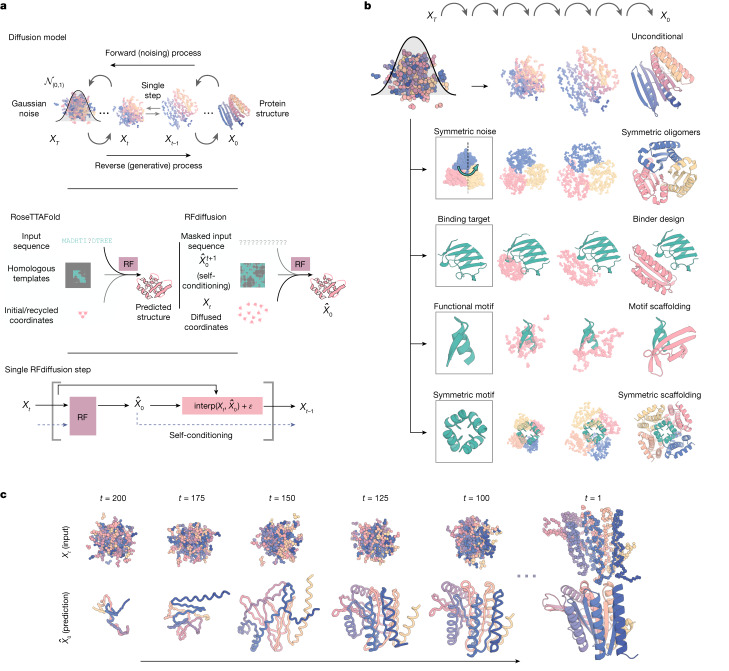
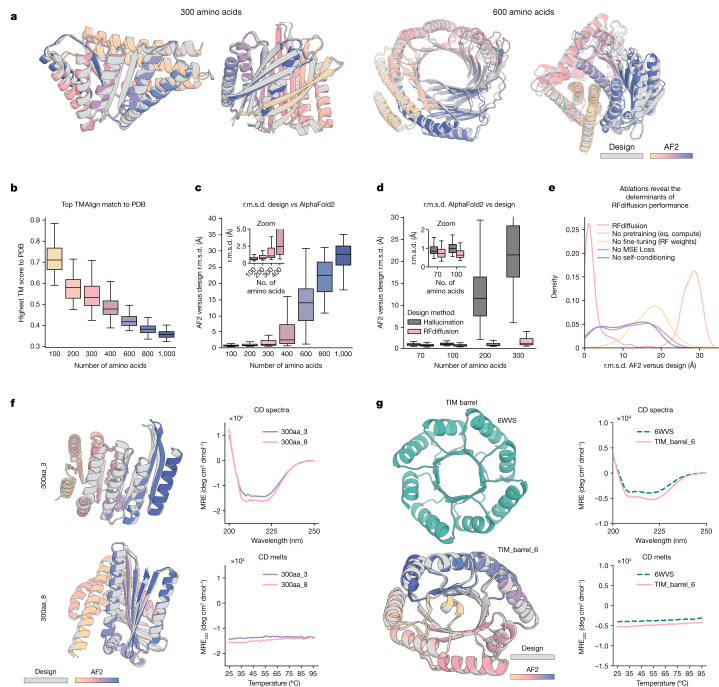
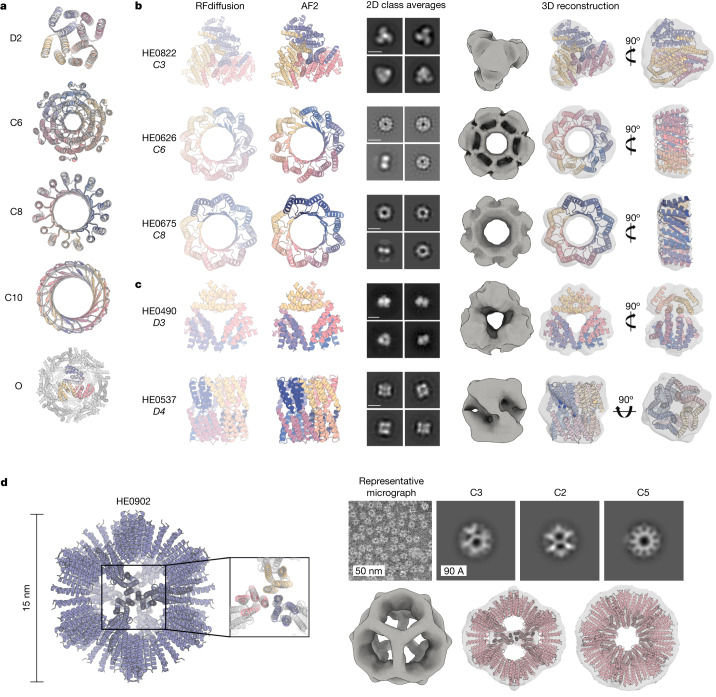
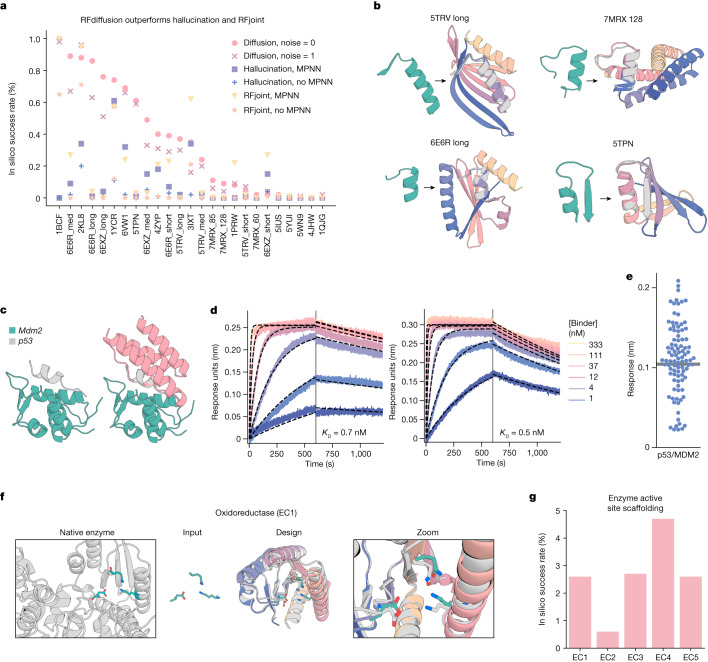
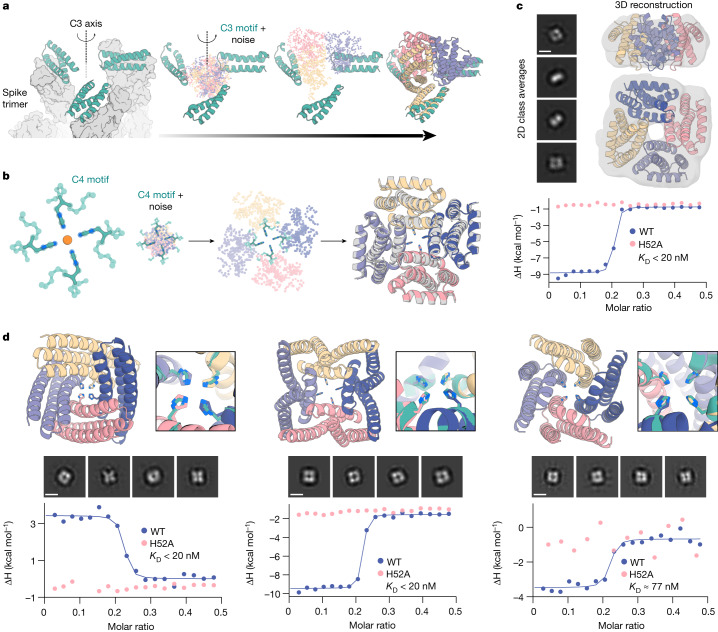
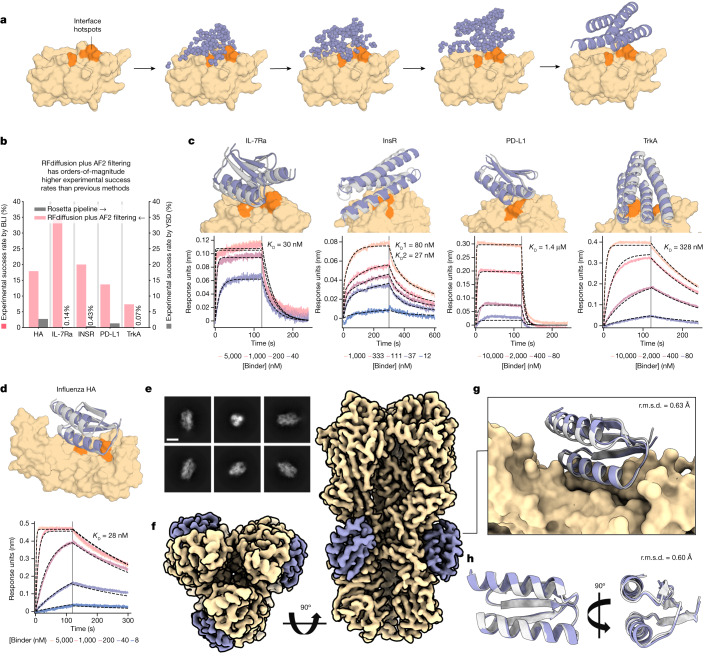
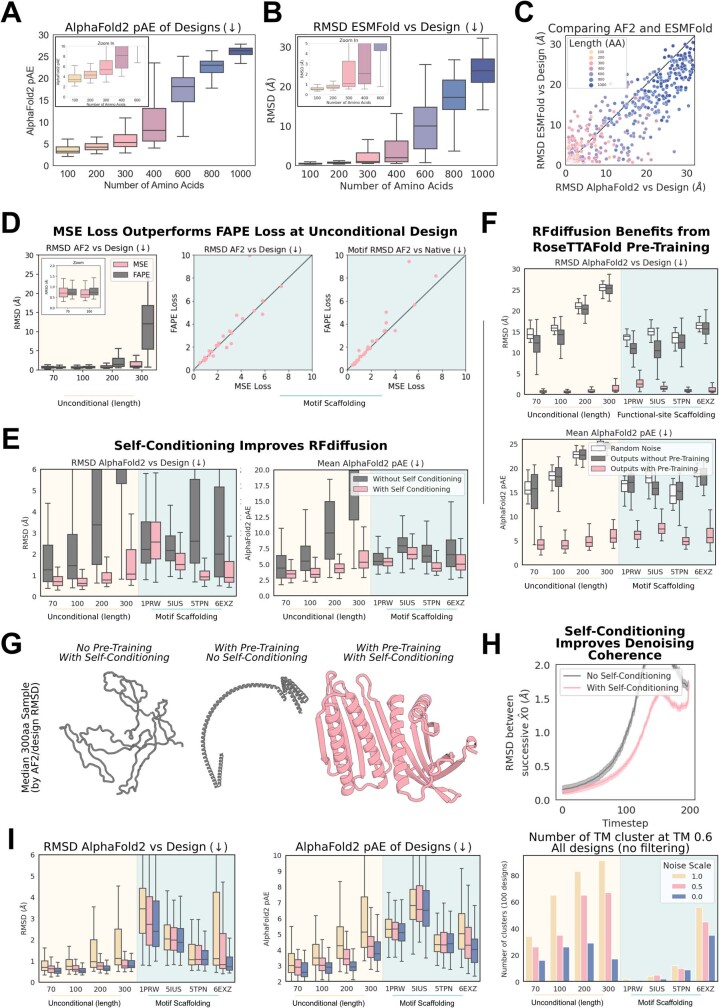
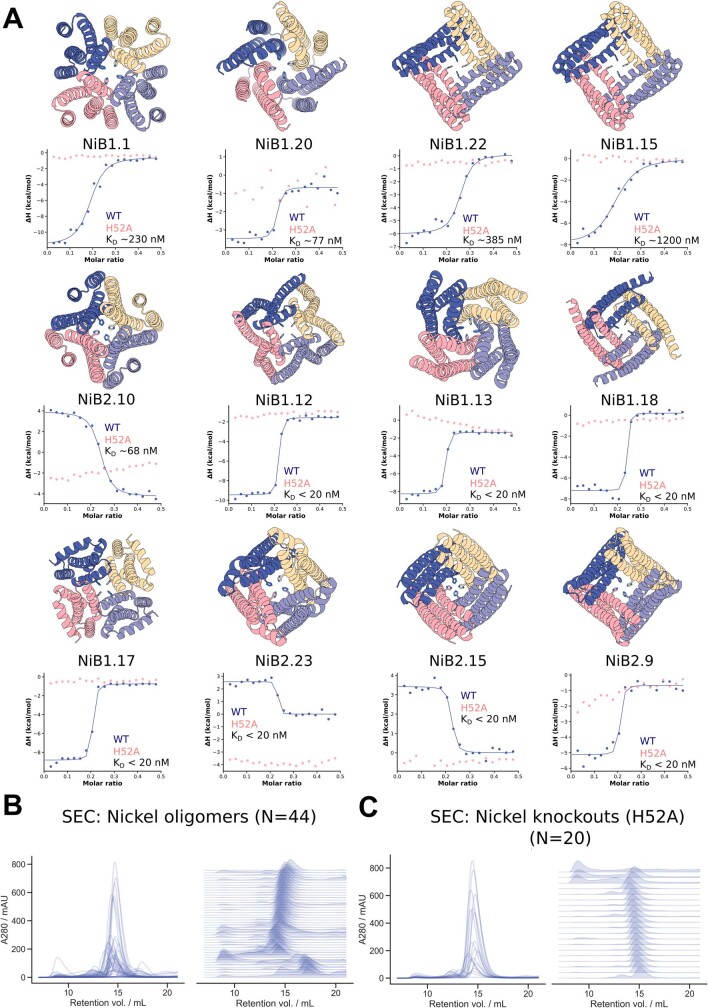
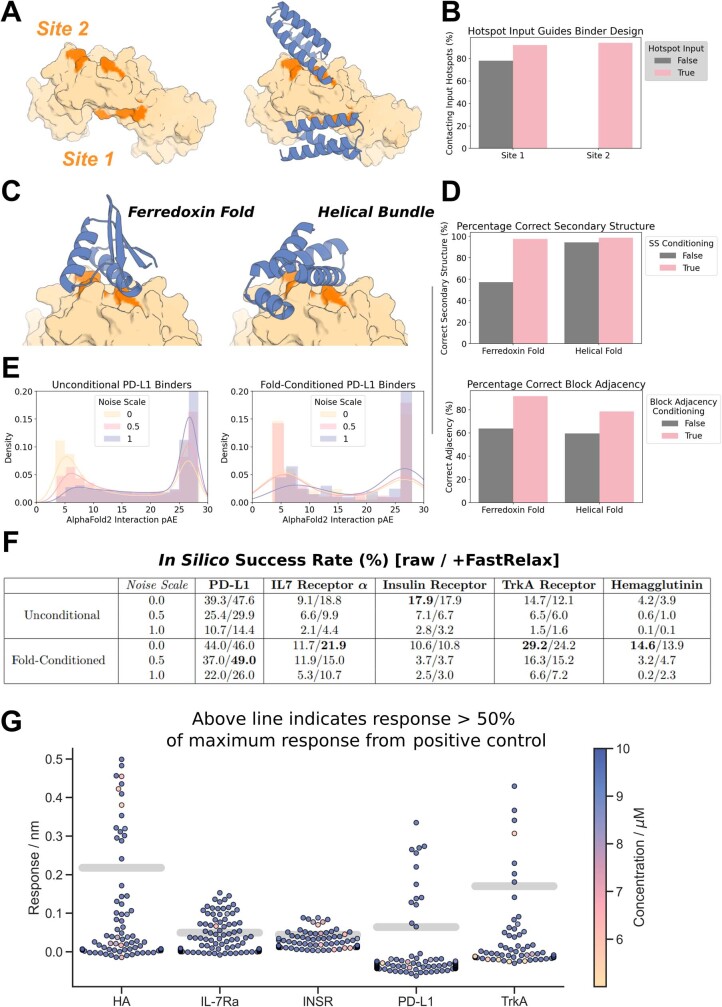
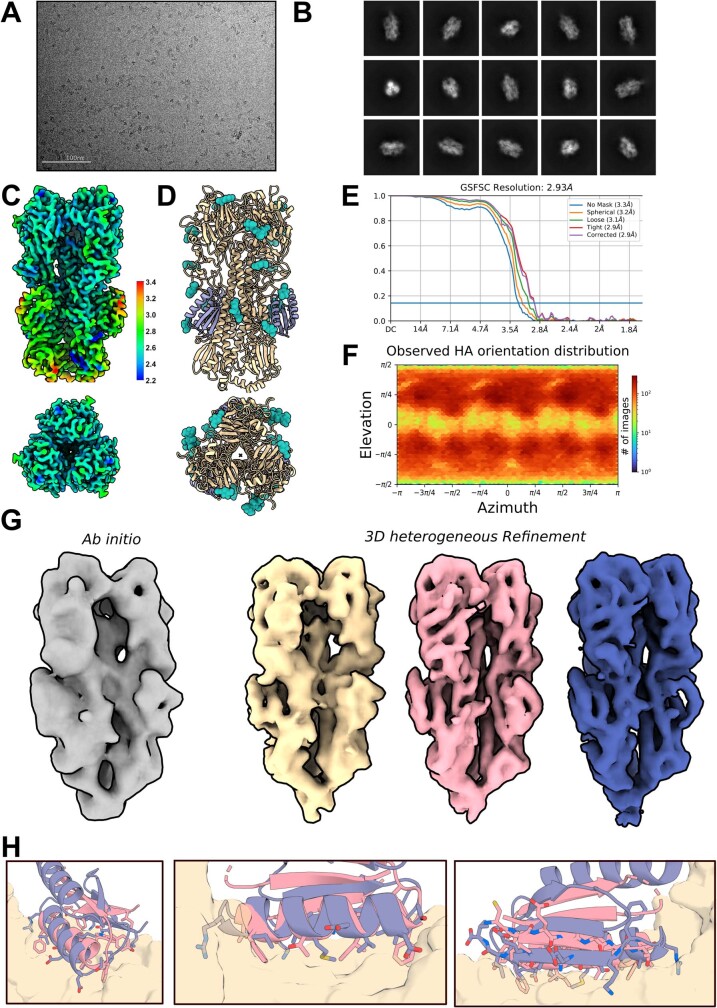
There has been considerable recent progress in designing new proteins using deep learning methods 1–9 . Despite this progress, a general deep learning framework for protein design that enables solution of a wide range of design challenges, including de novo binder design and design of higher order symmetric architectures, has yet to be described. Diffusion models 10,11 have had considerable success in image and language generative modeling but limited success when applied to protein modeling, likely due to the complexity of protein backbone geometry and sequence-structure relationships. Here we show that by fine tuning the RoseTTAFold structure prediction network on protein structure denoising tasks, we obtain a generative model of protein backbones that achieves outstanding performance on unconditional and topology-constrained protein monomer design, protein binder design, symmetric oligomer design, enzyme active site scaffolding, and symmetric motif scaffolding for therapeutic and metal-binding protein design. We demonstrate the power and generality of the method, called RoseTTAFold Diffusion (RF diffusion ), by experimentally characterizing the structures and functions of hundreds of new designs. In a manner analogous to networks which produce images from user-specified inputs, RF diffusion enables the design of diverse, complex, functional proteins from simple molecular specifications.
Overview
The claims and statistics of this paper haven’t been checked yet.
Run the check — free, no account needed. It reads the open-access text and checks the sources it cites.
Integrity signals
Registry
Cites
Statistics
Figures
Verification
Claims the paper makes
The claims and statistics of this paper haven’t been checked yet.
Run the check — free, no account needed. It reads the open-access text and checks the sources it cites.
Self-check
Percentages, sums and reported differences re-computed from the paper’s own numbers.
The self-check needs the paper’s full text.
Citations
Cites
Highly accurate protein structure prediction with AlphaFold
Jumper, J., Evans, R., Pritzel, A., Green, T., Figurnov, M., Ronneberger, O., Tunyasuvunakool, K., Bates, R., Žídek, A., Potapenko, A., et al. (2021) · Nature · doi:10.1038/s41586-021-03819-2 · Cited by 43,764
Berman, H. M. (2000) · Nucleic Acids Research · doi:10.1093/nar/28.1.235 · Cited by 40,196
Denoising Diffusion Probabilistic Models
Ho, J., Jain, A., & Abbeel, P. (2020) · arXiv · doi:10.48550/arxiv.2006.11239 · Cited by 8,712
Evolutionary-scale prediction of atomic level protein structure with a language model
Lin, Z., Akin, H., Rao, R., Hie, B., Zhu, Z., Lu, W., Smetanin, N., Verkuil, R., Kabeli, O., Shmueli, Y., et al. (2022) · doi:10.1101/2022.07.20.500902 · Cited by 5,990
Accurate prediction of protein structures and interactions using a 3-track network
Baek, M., DiMaio, F., Anishchenko, I., Dauparas, J., Ovchinnikov, S., Lee, G. R., Wang, J., Cong, Q., Kinch, L. N., Schaeffer, R. D., et al. (2021) · doi:10.1101/2021.06.14.448402 · Cited by 5,549
Self-citationDeep Unsupervised Learning using Nonequilibrium Thermodynamics
Sohl-Dickstein, J., Weiss, E. A., Maheswaranathan, N., & Ganguli, S. (2015) · arXiv · doi:10.48550/arxiv.1503.03585 · Cited by 2,637
Zero-shot text-to-image generation
Ramesh, A., Pavlov, M., Goh, G., Gray, S., Voss, C., Radford, A., Chen, M., & Sutskever, I. (2021) · arXiv · doi:10.48550/arxiv.2102.12092 · Cited by 2,417
THEORY OF PROTEIN FOLDING: The Energy Landscape Perspective
Onuchic, J. N., Luthey-Schulten, Z., & Wolynes, P. G. (1997) · Annual Review of Physical Chemistry · doi:10.1146/annurev.physchem.48.1.545 · Cited by 2,210
Robust deep learning–based protein sequence design using ProteinMPNN
Dauparas, J., Anishchenko, I., Bennett, N., Bai, H., Ragotte, R. J., Milles, L. F., Wicky, B. I. M., Courbet, A., de Haas, R. J., Bethel, N., et al. (2022) · Science · doi:10.1126/science.add2187 · Cited by 2,210
Self-citationStructure of the MDM2 Oncoprotein Bound to the p53 Tumor Suppressor Transactivation Domain
Kussie, P. H., Gorina, S., Marechal, V., Elenbaas, B., Moreau, J., Levine, A. J., & Pavletich, N. P. (1996) · Science · doi:10.1126/science.274.5289.948 · Cited by 2,206
Research works printed but not linked: 3
- 10.48550/arXiv.2209.15611 · DOI · Paper page
- 10.1101/2022.07.13.499967 · DOI · Paper page
- Anand, N. & Huang, P. Generative modeling for protein structures. in Advances in Neural Information Processing Systems vol. 31 (Curran Associates, Inc., 2018).
Cited by
Sorted by citations
Items 301–400 of 1,000
Opportunities and challenges of graph neural networks in electrical engineering
Chien, E., Li, M., Aportela, A., Ding, K., Jia, S., Maji, S., Zhao, Z., Duarte, J. M., Fung, V., Hao, C., et al. (2024) · Nature Reviews Electrical Engineering · doi:10.1038/s44287-024-00076-z · Cited by 31
Lin, K., Zhang, C., Bai, R., & Duan, H. (2025) · Journal of Medicinal Chemistry · doi:10.1021/acs.jmedchem.5c00712 · Cited by 30
ProtMamba: a homology-aware but alignment-free protein state space model
Sgarbossa, D., Malbranke, C., & Bitbol, A.-F. (2025) · Bioinformatics · doi:10.1093/bioinformatics/btaf348 · Cited by 27
Artificial Intelligence-Driven de Novo Design of Robust Enzymes to Enhance Their Performance
Tang, M., Ge, F., Li, A., Hu, L., Wang, C., Tang, J., Song, X., Liu, X., Shi, H. S., & Tan, Z. (2025) · ACS Synthetic Biology · doi:10.1021/acssynbio.5c00452 · Cited by 29
Old Moats for New Models: Openness, Control, and Competition in Generative AI
Azoulay, P., Krieger, J., & Nagaraj, A. (2024) · National Bureau of Economic Research · doi:10.3386/w32474 · Cited by 32
Degron-Based bioPROTACs for Controlling Signaling in CAR T Cells
Kim, M. S., Bhargava, H. K., Shavey, G. E., Lim, W. A., El‐Samad, H., & Ng, A. H. (2024) · ACS Synthetic Biology · doi:10.1021/acssynbio.4c00109 · Cited by 23
Beyond 25 years of biomedical innovation in nano-bioelectronics
Li, P., Kim, S., & Tian, B. (2024) · Device · doi:10.1016/j.device.2024.100401 · Cited by 28
Advances in the Synthesis and Physiological Metabolic Regulation of Nicotinamide Mononucleotide
Zheng, C., Li, Y., Wu, X., Gao, L., & Chen, X. (2024) · Nutrients · doi:10.3390/nu16142354 · Cited by 26
Harnessing hyperaccumulator plants to recover technology‐critical metals: where are we at?
Rylott, E. L., & van der Ent, A. (2025) · New Phytologist · doi:10.1111/nph.20449 · Cited by 32
Artificial intelligence methods for protein folding and design
Zhang, Z., Ou, C., Cho, Y., Akiyama, Y., & Ovchinnikov, S. (2025) · Current Opinion in Structural Biology · doi:10.1016/j.sbi.2025.103066 · Cited by 29
Artificial intelligence-driven computational methods for antibody design and optimization
Vecchietti, L. F., Wijaya, B. N., Armanuly, A., Hangeldiyev, B., Jung, H., Lee, S., Cha, M., & Kim, H. M. (2025) · mAbs · doi:10.1080/19420862.2025.2528902 · Cited by 32
From traditional to AI-driven: The evolution of intelligent enzyme engineering for biocatalysis
Lv, F., Zhang, J., You, S., & Qi, W. (2025) · Biotechnology Advances · doi:10.1016/j.biotechadv.2025.108788 · Cited by 31
Atomically Accurate Design of Metalloproteins with Predefined Coordination Geometries
Hoffnagle, A. M., & Tezcan, F. A. (2023) · Journal of the American Chemical Society · doi:10.1021/jacs.3c04047 · Cited by 27
Guide to serial synchrotron crystallography
Nam, K. H. (2024) · Current Research in Structural Biology · doi:10.1016/j.crstbi.2024.100131 · Cited by 26
Ryu, H., Kim, J., An, H., Chang, J., Seo, J., Kim, T.-H., Kim, Y., Hwang, C., Choi, J., & Horowitz, R. (2024) · IEEE Computer Society Conference on Computer Vision and Pattern Recognition/Proceedings - IEEE Computer Society Conference on Computer Vision and Pattern Recognition/Proceedings · doi:10.1109/cvpr52733.2024.01705 · Cited by 43
Efficient and scalable de novo protein design using a relaxed sequence spacePreprint
Frank, C., Khoshouei, A., de Stigter, Y., Schiewitz, D., Feng, S., Ovchinnikov, S., & Dietz, H. (2023) · bioRxiv (Cold Spring Harbor Laboratory) · doi:10.1101/2023.02.24.529906 · Cited by 26
Crowdsourced Protein Design: Lessons From the Adaptyv EGFR Binder CompetitionPreprint
Cotet, T., Krawczuk, I., Stocco, F., Ferruz, N., Gitter, A., Kurumida, Y., Machado, L. D. A., Paesani, F., Calia, C. N., Challacombe, C. A., et al. (2025) · bioRxiv (Cold Spring Harbor Laboratory) · doi:10.1101/2025.04.17.648362 · Cited by 32
Lighting the way: recent developments and applications in molecular optogenetics
Armbruster, A., Mohamed, A. M., Phan, H. T., & Weber, W. (2024) · Current Opinion in Biotechnology · doi:10.1016/j.copbio.2024.103126 · Cited by 24
Developing BioNavi for Hybrid Retrosynthesis Planning
Zeng, T., Jin, Z., Zheng, S., Yu, T., & Wu, R. (2024) · JACS Au · doi:10.1021/jacsau.4c00228 · Cited by 26
Ding, N., Yuan, Z., Ma, Z., Wu, Y., & Yin, L. (2024) · Molecules · doi:10.3390/molecules29153512 · Cited by 27
ChromoGen: Diffusion model predicts single-cell chromatin conformations
Schuette, G., Lao, Z., & Zhang, B. (2025) · Science Advances · doi:10.1126/sciadv.adr8265 · Cited by 27
CryoDRGN-AI: neural ab initio reconstruction of challenging cryo-EM and cryo-ET datasets
Levy, A., Raghu, R., Feathers, J. R., Grzadkowski, M., Poitevin, F., Johnston, J. D., Vallese, F., Clarke, O. B., Wetzstein, G., & Zhong, E. D. (2025) · Nature Methods · doi:10.1038/s41592-025-02720-4 · Cited by 25
Digital Alchemy: The Rise of Machine and Deep Learning in Small-Molecule Drug Discovery
Manan, A., Baek, E., Ilyas, S., & Lee, D. (2025) · International Journal of Molecular Sciences · doi:10.3390/ijms26146807 · Cited by 27
Recent advances in engineering microbial lipases for industrial applications
Wang, G., Abdella, A., Fakhari, M. A., Dong, J. N., Yang, K., & Yang, S. (2025) · Biotechnology Advances · doi:10.1016/j.biotechadv.2025.108658 · Cited by 25
Reprogramming resistance: phage-antibiotic synergy targets efflux systems in ESKAPEE pathogens
Tarasenko, A. B., Papudeshi, B. N., Grigson, S. R., Mallawaarachchi, V., Hutton, A. L. K., Warner, M. S., Barr, J. J., Iredell, J. R., Eijkelkamp, B. A., & Edwards, R. A. (2025) · mBio · doi:10.1128/mbio.01822-25 · Cited by 29
Recent advances in the pharmacology of voltage-gated ion channels
Mateos, D. L., Harris, B. J., Hernández-González, A., Yarov-Yarovoy, V. M., & Wulff, H. (2025) · Pharmacological Reviews · doi:10.1016/j.pharmr.2025.100090 · Cited by 30
IgGM: A Generative Model for Functional Antibody and Nanobody DesignPreprint
Wang, R., Wu, F., Gao, X., Wu, J., Zhao, P., & Yao, J. (2024) · bioRxiv (Cold Spring Harbor Laboratory) · doi:10.1101/2024.09.19.613838 · Cited by 27
De novo design of buttressed loops for sculpting protein functions
Jiang, H., Jude, K. M., Wu, K., Fallas, J. A., Ueda, G., Brunette, T., Hicks, D. R., Pyles, H., Yang, A., Carter, L. P., et al. (2024) · Nature Chemical Biology · doi:10.1038/s41589-024-01632-2 · Cited by 24
Self-citationAI-driven antibody design with generative diffusion models: current insights and future directions
He, X., Li, J.-R., Xu, J., Shan, H., Shen, S.-Y., Gao, S.-H., & Xu, H. E. (2024) · Acta Pharmacologica Sinica · doi:10.1038/s41401-024-01380-y · Cited by 28
Reading the repertoire: Progress in adaptive immune receptor analysis using machine learning
O’Donnell, T. J., Kanduri, C., Isacchini, G., Limenitakis, J. P., Brachman, R. A., Alvarez, R. A., Haff, I. H., Sandve, G. K., & Greiff, V. (2024) · Cell Systems · doi:10.1016/j.cels.2024.11.006 · Cited by 24
AI.zymes: A Modular Platform for Evolutionary Enzyme Design
Merlicek, L. P., Neumann, J., Lear, A., Degiorgi, V., de Waal, M. M., Cotet, T., Mulholland, A. J., & Bunzel, H. A. (2025) · Angewandte Chemie International Edition · doi:10.1002/anie.202507031 · Cited by 30
Progress in Pseudotyping Lentiviral Vectors Towards Cell-Specific Gene Delivery In Vivo
Arduini, A., Katiyar, H., & Liang, C. (2025) · Viruses · doi:10.3390/v17060802 · Cited by 30
AI-driven innovation in antibody-drug conjugate design
Noriega, H. A., & Wang, X. S. (2025) · Frontiers in Drug Discovery · doi:10.3389/fddsv.2025.1628789 · Cited by 26
Tuning insulin receptor signaling using de novo-designed agonists
Wang, X., Cardoso, S., Cai, K., Venkatesh, P., Hung, A., Ng, M., Hall, C., Coventry, B., Lee, D. S., Chowhan, R., et al. (2025) · Molecular Cell · doi:10.1016/j.molcel.2025.09.020 · Cited by 24
Self-citationArtificial intelligence in bioinformatics: a survey
Jiang, J., Li, Y., Cao, S., Shan, Y., Liu, Y., Fei, T., Yu, Y., Feng, Y., Li, Y., Li, Y., et al. (2025) · Briefings in Bioinformatics · doi:10.1093/bib/bbaf576 · Cited by 26
Computational design of superstable proteins through maximized hydrogen bonding
Zheng, B., Lu, Z., Wang, S., Liu, L., Ao, M., Zhou, Y., Tang, G., Wang, R., Liu, Y., Zhang, H., et al. (2025) · Nature Chemistry · doi:10.1038/s41557-025-01998-3 · Cited by 28
Deep generative modeling of temperature-dependent structural ensembles of proteins
Janson, G., Jussupow, A., & Feig, M. (2025) · Communications Chemistry · doi:10.1038/s42004-025-01737-2 · Cited by 33
Generative AI for the Design of Molecules: Advances and Challenges
Sun, Y., Chen, L., Jing, Z., Li, Y. Y., Kim, D., Gao, J.-Y., Noroozi, R., Yi, G. Y., Feugmo, C. G. T., Klinkova, A., et al. (2025) · Journal of Chemical Information and Modeling · doi:10.1021/acs.jcim.5c02234 · Cited by 29
Artificial intelligence drives the digital transformation of pharma
Harrer, S., Menard, J., Rivers, M., Green, D. V. S., Karpiak, J. D., Jeliazkov, J. R., Shapovalov, M. V., del Alamo, D., & Sternke, M. C. (2023) · Elsevier eBooks · doi:10.1016/b978-0-443-15688-5.00049-8 · Cited by 26
Generative AI for graph-based drug design: Recent advances and the way forward
Garg, V. (2024) · Current Opinion in Structural Biology · doi:10.1016/j.sbi.2023.102769 · Cited by 26
Rationally seeded computational protein design of ɑ-helical barrels
Albanese, K. I., Petrenas, R., Pirro, F., Naudin, E. A., Borucu, U., Dawson, W., Scott, D. A., Leggett, G. J., Weiner, O. D., Oliver, T. A. A., et al. (2024) · Nature Chemical Biology · doi:10.1038/s41589-024-01642-0 · Cited by 30
Diffusing protein binders to intrinsically disordered proteins
Liu, C., Wu, K., Choi, H., Han, H., Zhang, X., Watson, J. L., Shijo, S., Bera, A. K., Kang, A., Brackenbrough, E., et al. (2024) · doi:10.1101/2024.07.16.603789 · Cited by 24
Self-citationEfficient generation of epitope-targeted de novo antibodies with GerminalPreprint
Mille, L. S., Driscoll, C. L., Wang, J. N., Dai, H., Widatalla, T., Zhang, J. L., Zhang, X., Rao, B., Feng, L., Hie, B., et al. (2025) · bioRxiv (Cold Spring Harbor Laboratory) · doi:10.1101/2025.09.19.677421 · Cited by 24
Self-citationHelixDiff, a Score-Based Diffusion Model for Generating All-Atom α‑Helical Structures
Xie, X., Valiente, P. A., Kim, J., & Kim, P. M. (2024) · ACS Central Science · doi:10.1021/acscentsci.3c01488 · Cited by 21
Zheng, Y., Li, Z., & Song, Z. (2024) · Computer Methods in Applied Mechanics and Engineering · doi:10.1016/j.cma.2024.117224 · Cited by 24
Design of microbial catalysts for two-stage processes
Shabestary, K., Klamt, S., Link, H., Mahadevan, R., Steuer, R., & Hudson, E. P. (2024) · Nature Reviews Bioengineering · doi:10.1038/s44222-024-00225-x · Cited by 23
Xu, S., Huo, C., & Chu, X. (2024) · Journal of Chemical Information and Modeling · doi:10.1021/acs.jcim.4c00877 · Cited by 22
Emerging frontiers in protein structure prediction following the AlphaFold revolution
Rennie, M. L., & Oliver, M. R. (2025) · Journal of The Royal Society Interface · doi:10.1098/rsif.2024.0886 · Cited by 34
Machine learning to predict de novo protein–protein interactions
Gaínza, P., Bunker, R. D., Townson, S. A., & Castle, J. C. (2025) · Trends in biotechnology · doi:10.1016/j.tibtech.2025.04.013 · Cited by 26
Mahling, R. W., Hegyi, B., Cullen, E. R., Cho, T. M., Rodriques, A., Fossier, L., Yehya, M., Yang, L., Chen, B.-X., Katchman, A. N., et al. (2025) · Cell · doi:10.1016/j.cell.2025.07.038 · Cited by 27
Generative AI for computational chemistry: A roadmap to predicting emergent phenomena
Tiwary, P., Herron, L., John, R., Lee, S., Sanwal, D., & Wang, R. (2025) · Proceedings of the National Academy of Sciences · doi:10.1073/pnas.2415655121 · Cited by 37
Hendricks, G. G., Grigoryan, L., Navarro, M. J., Catanzaro, N., Hubbard, M. L., Powers, J. M., Mattocks, M. D., Treichel, C., Walls, A. C., Lee, J., et al. (2025) · Science Translational Medicine · doi:10.1126/scitranslmed.adu2085 · Cited by 24
Self-citationYao, Y.-Y., Yuan, Y., Xiong, K., Mao, S., Jiang, J.-W., Chen, Y., Li, X., Liu, H., Liu, L.-C., Cai, B., et al. (2026) · Foods · doi:10.3390/foods15020402 · Cited by 28
Machine learning-aided design and screening of an emergent protein function in synthetic cells
Kohyama, S., Frohn, B. P., Babl, L., & Schwille, P. (2024) · Nature Communications · doi:10.1038/s41467-024-46203-0 · Cited by 23
Rapid and accurate prediction of protein homo-oligomer symmetry using Seq2Symm
Kshirsagar, M., Meller, A., Humphreys, I. R., Sledzieski, S., Xu, Y., Dodhia, R., Horvitz, E., Berger, B., Bowman, G. R., Ferres, J. L., et al. (2025) · Nature Communications · doi:10.1038/s41467-025-57148-3 · Cited by 23
Self-citationAlphaFold3, a secret sauce for predicting mutational effects on protein-protein interactionsPreprint
Lu, W., Zhang, J., Rao, J., Zhang, Z., & Zheng, S. (2024) · bioRxiv (Cold Spring Harbor Laboratory) · doi:10.1101/2024.05.25.595871 · Cited by 27
Overath, M. D., Rygaard, A. M., Jacobsen, C. P., Brasas, V., Morell, O., Sormanni, P., & Jenkins, T. P. (2025) · bioRxiv (Cold Spring Harbor Laboratory) · doi:10.1101/2025.08.14.670059 · Cited by 36
Reengineering of a flavin‐binding fluorescent protein using ProteinMPNN
Nikolaev, A., Kuzmin, A., Markeeva, E., Kuznetsova, E., Ryzhykau, Y. L., Semenov, O., Anuchina, A. A., Remeeva, A., & Gushchin, I. (2024) · Protein Science · doi:10.1002/pro.4958 · Cited by 21
Lin, Y., Dong, Y., Li, X., Cai, J., Cai, L., & Zhang, G. (2024) · International Journal of Biological Macromolecules · doi:10.1016/j.ijbiomac.2024.134014 · Cited by 24
AIntibody: an experimentally validated in silico antibody discovery design challenge
Erasmus, M. F., Spector, L. P., Ferrara, F., Niro, R. D., Pohl, T. J., Perea-Schmittle, K., Wang, W., Tessier, P. M., Richardson, C. M., Turner, L., et al. (2024) · Nature Biotechnology · doi:10.1038/s41587-024-02469-9 · Cited by 26
Bond-centric modular design of protein assemblies
Wang, S., Favor, A., Kibler, R. D., Lubner, J. M., Borst, A. J., Coudray, N., Redler, R. L., Chiang, H. T., Sheffler, W., Hsia, Y., et al. (2025) · Nature Materials · doi:10.1038/s41563-025-02297-5 · Cited by 22
Self-citationDesign of a Soluble Multivalent Notch Agonist
Mout, R., Jing, R., Tanaka-Yano, M., Egan, E. D., Eisenach, H. E., Kononov, M., Windisch, R., Najia, M. A. T., Tompkins, A., Hensch, L. T., et al. (2024) · Cell · doi:10.1016/j.cell.2025.07.009 · Cited by 26
Self-citationYu, B., Liu, J., Cui, Z., Wang, C., Chen, P., Wang, C., Zhang, Y., Zhu, X., Zhang, Z., Li, S., et al. (2025) · Nature Chemistry · doi:10.1038/s41557-025-01929-2 · Cited by 29
Cheng, X., Jiang, S., Peng, X., Pan, Y., Zhang, S., Xu, C., Gao, X., Fan, S., Liu, H., Zhuang, J., et al. (2025) · Journal of the American Chemical Society · doi:10.1021/jacs.5c11292 · Cited by 23
Design of facilitated dissociation enables timing of cytokine signalling
Broerman, A. J., Pollmann, C., Zhao, Y., Lichtenstein, M. A., Jackson, M. D., Tessmer, M. H., Ryu, W. H., Ogishi, M., Abedi, M. H., Sahtoe, D. D., et al. (2025) · Nature · doi:10.1038/s41586-025-09549-z · Cited by 32
Self-citationUnified modeling of 3D molecular generation via atomic interactions with PocketXMol
Peng, X., Guo, R., Guo, F., Wang, Z., Sun, J., Guan, J., Jia, Y., Xu, Y., Huang, Y., Zhang, M., et al. (2026) · Cell · doi:10.1016/j.cell.2026.01.003 · Cited by 22
Kao, H.-W., Lu, W.-L., Ho, M., Lin, Y., Hsieh, Y.-J., Ko, T., Hsu, S. D., & Wu, K. (2023) · ACS Synthetic Biology · doi:10.1021/acssynbio.3c00042 · Cited by 21
Size-Selective Capturing of Exosomes Using DNA Tripods
Iinuma, R., Chen, X., Masubuchi, T., Ueda, T., & Tadakuma, H. (2024) · Journal of the American Chemical Society · doi:10.1021/jacs.3c11067 · Cited by 23
De novo design of miniprotein agonists and antagonists targeting G protein-coupled receptorsPreprint
Muratspahić, E., Feldman, D., Kim, D. E., Qu, X.-M., Bratovianu, A., Rivera-Sánchez, P., Dimitri, F., Cao, J., Cary, B. P., Belousoff, M., et al. (2025) · bioRxiv · doi:10.1101/2025.03.23.644666 · Cited by 25
Self-citationKim, H., Hillson, N. J., Cho, B., Sung, B. H., Lee, D., Kim, D., Oh, M., Chang, M. W., Jin, Y., Rosser, S. J., et al. (2025) · Nature Communications · doi:10.1038/s41467-025-61263-6 · Cited by 24
Recent advances in biocatalytic C–N bond-forming reactions
Yin, H.-N., Wang, P., & Liu, Z. (2024) · Bioorganic Chemistry · doi:10.1016/j.bioorg.2024.107108 · Cited by 21
Learning peptide properties with positive examples only
Ansari, M., & White, A. D. (2024) · Digital Discovery · doi:10.1039/d3dd00218g · Cited by 27
Raisinghani, N., Alshahrani, M., Gupta, G., Tian, H., Xiao, S., Tao, P., & Verkhivker, G. M. (2024) · Journal of Chemical Theory and Computation · doi:10.1021/acs.jctc.4c00222 · Cited by 17
An integrative approach to protein sequence design through multiobjective optimization
Hong, L., & Kortemme, T. (2024) · PLoS Computational Biology · doi:10.1371/journal.pcbi.1011953 · Cited by 25
Leveraging large language models for peptide antibiotic design
Guan, C., Fernandes, F. C., Franco, O. L., & de la Fuente‐Núñez, C. (2024) · Cell Reports Physical Science · doi:10.1016/j.xcrp.2024.102359 · Cited by 23
Next Frontiers of Aviation Safety: System-of-Systems Safety
Li, D., Yao, A. L., Feng, K., Zhou, H., Wang, R., Cheng, M., Li, H., Wang, D., & Ding, S. (2025) · Engineering · doi:10.1016/j.eng.2025.01.002 · Cited by 23
Protein-based materials: Applications, modification and molecular design
Tunuhe, A., Zheng, Z., Rao, X., Yu, H., Ma, F., Zhou, Y., & Xie, S. (2025) · BioDesign Research · doi:10.1016/j.bidere.2025.100004 · Cited by 24
Mieres‐Pérez, J., Almeida‐Hernández, Y., Sander, W., & Sánchez‐García, E. (2025) · Chemical Reviews · doi:10.1021/acs.chemrev.4c00807 · Cited by 22
Parametrically guided design of beta barrels and transmembrane nanopores using deep learning
Kim, D. E., Watson, J. L., Juergens, D., Majumder, S., Sonigra, R., Gerben, S. R., Kang, A., Bera, A. K., Li, X., & Baker, D. (2025) · Proceedings of the National Academy of Sciences · doi:10.1073/pnas.2425459122 · Cited by 21
Self-citationEvers, A., Guarnera, E., Pekar, L., & Zielonka, S. (2025) · mAbs · doi:10.1080/19420862.2025.2583210 · Cited by 23
Beyond Biosecurity by Taxonomic Lists: Lessons, Challenges, and Opportunities
Millett, P. D., Alexanian, T., Brink, K. R., Carter, S. R., Diggans, J., Palmer, M. J., Ritterson, R. S., Sandbrink, J. B., & Wheeler, N. E. (2023) · Health Security · doi:10.1089/hs.2022.0109 · Cited by 23
Structural insights into membrane adenylyl cyclases, initiators of cAMP signaling
Schuster, D., Khanppnavar, B., Kantarci, I., Mehta, V., & Korkhov, V. M. (2023) · Trends in Biochemical Sciences · doi:10.1016/j.tibs.2023.12.002 · Cited by 21
Enzyme engineering for functional lipids synthesis: recent advance and perspective
Guan, A., Hou, Y., Yang, R., & Qin, J. (2024) · Bioresources and Bioprocessing · doi:10.1186/s40643-023-00723-7 · Cited by 22
Engineering is evolution: a perspective on design processes to engineer biology
Castle, S. D., Stock, M., & Gorochowski, T. E. (2024) · Nature Communications · doi:10.1038/s41467-024-48000-1 · Cited by 26
A de novo designed coiled coil-based switch regulates the microtubule motor kinesin-1
Cross, J. A., Dawson, W., Shukla, S., Weijman, J. F., Mantell, J., Dodding, M. P., & Woolfson, D. N. (2024) · Nature Chemical Biology · doi:10.1038/s41589-024-01640-2 · Cited by 19
Protein Design by Directed Evolution Guided by Large Language Models
Tran, T. P., & Hy, T. S. (2024) · IEEE Transactions on Evolutionary Computation · doi:10.1109/tevc.2024.3439690 · Cited by 26
Accurate de novo design of high-affinity protein binding macrocycles using deep learningPreprint
Rettie, S., Juergens, D., Adebomi, V., Bueso, Y. F., Zhao, Q., Leveille, A. N., Liu, A., Bera, A. K., Wilms, J. A., Üffing, A., et al. (2024) · bioRxiv (Cold Spring Harbor Laboratory) · doi:10.1101/2024.11.18.622547 · Cited by 21
Self-citationRecent advances in generative biology for biotherapeutic discovery
Mock, M. L., LANGMEAD, C. J., Grandsard, P. J., Edavettal, S. C., & Russell, A. J. (2024) · Trends in Pharmacological Sciences · doi:10.1016/j.tips.2024.01.003 · Cited by 20
Graphusion: Latent Diffusion for Graph Generation
Yang, L. Q., Huang, Z., Zhang, Z., Liu, Z., Hong, S., Zhang, W., Yang, W., Cui, B., & Zhang, L. (2024) · IEEE Transactions on Knowledge and Data Engineering · doi:10.1109/tkde.2024.3389783 · Cited by 25
Exploring the conformational landscape of protein kinases
Gough, N. R., & Kalodimos, C. G. (2024) · Current Opinion in Structural Biology · doi:10.1016/j.sbi.2024.102890 · Cited by 23
Structure, function, and immunomodulation of the CD8 co-receptor
Srinivasan, S., Zhu, C., & McShan, A. C. (2024) · Frontiers in Immunology · doi:10.3389/fimmu.2024.1412513 · Cited by 21
Capin, J., Chabert, E., Zúñiga, A., & Bonnet, J. (2024) · Microbial Biotechnology · doi:10.1111/1751-7915.70047 · Cited by 21
Generative Artificial Intelligence for Advancing Discovery and Design in Biomateriomics
Pugliese, R., Badini, S., Frontoni, E., & Regondi, S. (2025) · Intelligent Computing · doi:10.34133/icomputing.0117 · Cited by 23
Sutherland, C. A., Stevens, D. M., Seong, K., Wei, W., & Krasileva, K. V. (2025) · The Plant Cell · doi:10.1093/plcell/koaf109 · Cited by 20
Multimeric protein interaction and complex prediction: Structure, dynamics and function
Lu, D., Yu, S., Huang, Y., & Gong, X. (2025) · Computational and Structural Biotechnology Journal · doi:10.1016/j.csbj.2025.05.009 · Cited by 23
Phage therapy against Klebsiella pneumoniae: An evolving perspective
Xing, J., Zhang, H., Zheng, L., Zhao, J., Zhang, Y., Xu, Z., Zhai, Y., Hu, G., Li, J., & Wu, H. (2025) · Biotechnology Advances · doi:10.1016/j.biotechadv.2025.108689 · Cited by 22
Designing synthetic regulatory elements using the generative AI framework DNA-Diffusion
daSilva, L. F., Senan, S., Kribelbauer, J. F., Patel, Z., Louis, L. K., Reddy, A. J., Gabbita, S., Rosen, J. D., Nussbaum, Z., Cordova, C. M. V., et al. (2025) · Nature Genetics · doi:10.1038/s41588-025-02441-6 · Cited by 36
Zhu, J., Li, Z., Tong, H., Lu, Z., Zhang, N.-J., Wei, T., & Chen, H. (2023) · Briefings in Bioinformatics · doi:10.1093/bib/bbad429 · Cited by 22
Extracellular vesicles for developing targeted hearing loss therapy
Pan, X., Li, Y., Huang, P., Staecker, H., & He, M. (2024) · Journal of Controlled Release · doi:10.1016/j.jconrel.2023.12.050 · Cited by 23
Chloroplast ATP synthase: From structure to engineering
Rühle, T., Leister, D., & Pasch, V. (2024) · The Plant Cell · doi:10.1093/plcell/koae081 · Cited by 22
Metadata
- Authors
- Watson, J. L., Juergens, D., Bennett, N. R., Trippe, B. L., Yim, J., Eisenach, H. E., Ahern, W., Borst, A. J., Ragotte, R. J., Milles, L. F., Wicky, B. I. M., Hanikel, N., Pellock, S. J., Courbet, A., Sheffler, W., Wang, J., Venkatesh, P., Sappington, I., Torres, S. V., Lauko, A., De Bortoli, V., Mathieu, E., Barzilay, R., Jaakkola, T. S., DiMaio, F., Baek, M., & Baker, D.
- Affiliations
- University of Washington (US)
- Centre National de la Recherche Scientifique (FR)
- Massachusetts Institute of Technology (US)
- Seoul National University (KR)
- Howard Hughes Medical Institute (US)
- Corresponding author
- Baker, David
- ORCID
- Watson, Joseph L.
- Juergens, David
- Bennett, Nathaniel R.
- Trippe, Brian L.
- Yim, Jason
- Eisenach, Helen E.
- Ahern, Woody
- Borst, Andrew J.
- Ragotte, Robert J.
- Milles, Lukas F.
- Wicky, Basile I. M.
- Hanikel, Nikita
- Pellock, Samuel J.
- Courbet, Alexis
- Sheffler, William
- Wang, Jue
- Venkatesh, Preetham
- Sappington, Isaac
- Torres, Susana Vázquez
- Lauko, Anna
- De Bortoli, Valentin
- Barzilay, Regina
- Jaakkola, Tommi S.
- DiMaio, Frank
- Baek, Minkyung
- Baker, David
- Venue
- Nature
- Publisher
- openRxiv
- Published
- 2022-12-10
- Volume
- 620
- Issue
- 7976
- Pages
- 1089-1100
- ISSN
- 0028-0836 (ISSN-L)
- PMC
- PMC10468394
- OpenAlex
- W4383957026
- Cited by
- 2,369
- References
- 57
- Citations by year
- 2026: 943 · 2025: 795 · 2024: 473 · 2023: 153 · 2022: 4
- FWCI
- 210.65
- Type
- journal article
- Language
- en
- Open access
- hybrid
- doi.org
- Licence
- cc-by
- Locations
- Nature (publishedVersion, cc-by)
- bioRxiv (Cold Spring Harbor Laboratory) (acceptedVersion, cc-by-nd)
- PubMed Central (publishedVersion, cc-by)
- PubMed (publishedVersion)
- RePEc: Research Papers in Economics (submittedVersion)
- Apollo (University of Cambridge) (submittedVersion, cc-by)
- Funders
- National Science Foundation (HDTRA1-19-1-0003, 1918839)
- Howard Hughes Medical Institute
- U.S. Department of Energy (DESC0018940)
- Bill and Melinda Gates Foundation (INV-010680)
- Washington Research Foundation
- Amgen
- Sanofi
- Washington State University
- Open Philanthropy Project
- Defense Advanced Research Projects Agency
- Defense Threat Reduction Agency (HDTRA1-19-1-0003, HDTRA1)
- Office of Science (DE-SC0018940 MOD03, DESC0018940)
- Engineering and Physical Sciences Research Council (EP/T005386/1)
- National Institute on Aging (U19AG065156)
- National Institute of General Medical Sciences (T32GM007250, T32GM008268)
- Topics
- Life Sciences › Biochemistry, Genetics and Molecular Biology › Molecular Biology › Protein Structure and Dynamics
- Life Sciences › Biochemistry, Genetics and Molecular Biology › Molecular Biology › Machine Learning in Bioinformatics
- Life Sciences › Biochemistry, Genetics and Molecular Biology › Structural Biology › Enzyme Structure and Function
- Keywords
- protein design, de novo protein design, diffusion models, RoseTTAFold, protein binder design, metal-binding proteins, protein backbone, influenza haemagglutinin, therapeutic proteins
- MeSH terms
- Deep Learning, Protein Binding, Proteins, Hemagglutinin Glycoproteins, Influenza Virus, Catalytic Domain, Cryoelectron Microscopy
About these checks
Registry, retraction, Cites and statistics results are computed, not judged, with one exception: a printed reference that no index lists is read once by a model before it counts as a citation error. Claims are extracted by a model and kept only when their quote appears verbatim in the text; each cited source is then checked, with a model’s help, for whether it says what the claim relies on. Those verdicts can be wrong — read the claim’s quote and the cited source before relying on one.
Statistics and arithmetic are recomputed, not judged.
Confidence bands are shown only for fields calibrated on our annotated test set. None is calibrated yet, so no band is shown.
What counts as a claim ›How we measure confidence ›How we check this ›
Are you an author, or do you see a problem with this page? Request a review
