

The DOI matches its Crossref record; 57 of the 57 references it cites were found in a registry or an index.
Broadly applicable and accurate protein design by integrating structure prediction networks and diffusion generative models
Open accessPreprint — published as 10.1038/s41586-023-06415-8 · Paper page
Abstract
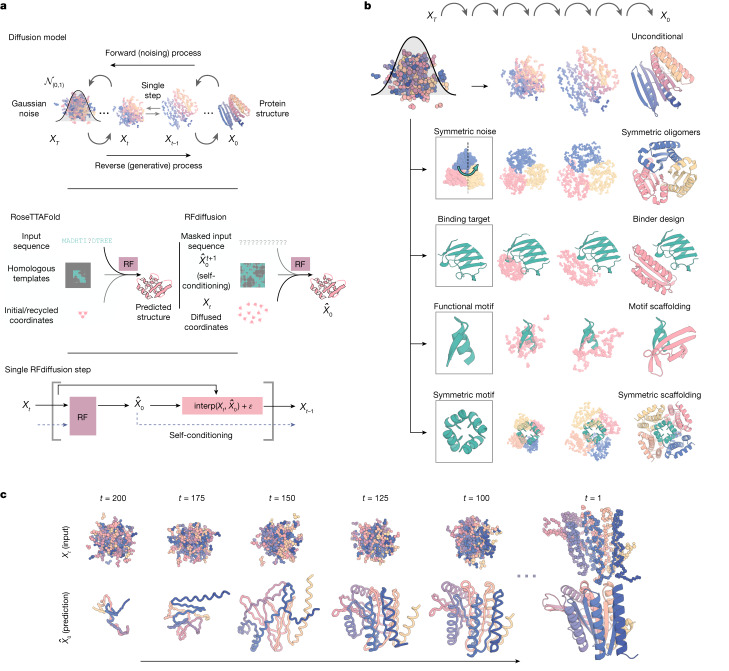
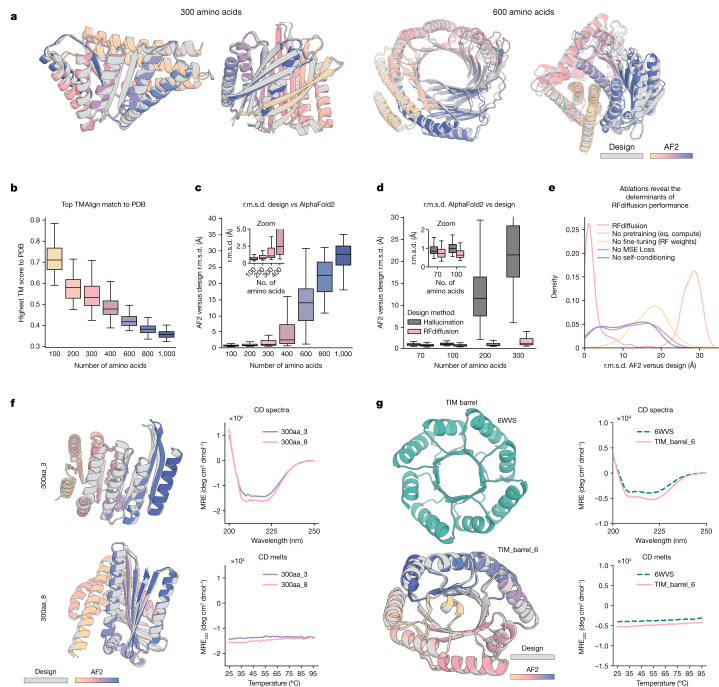
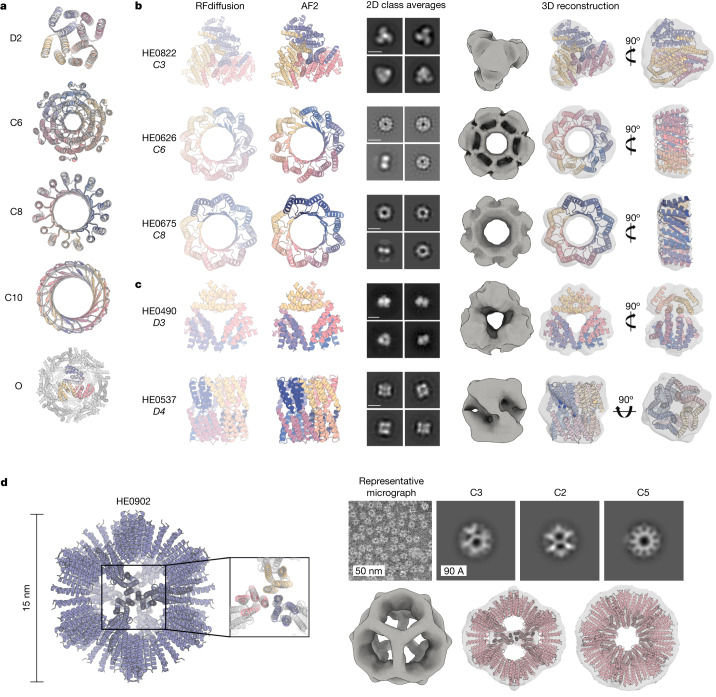
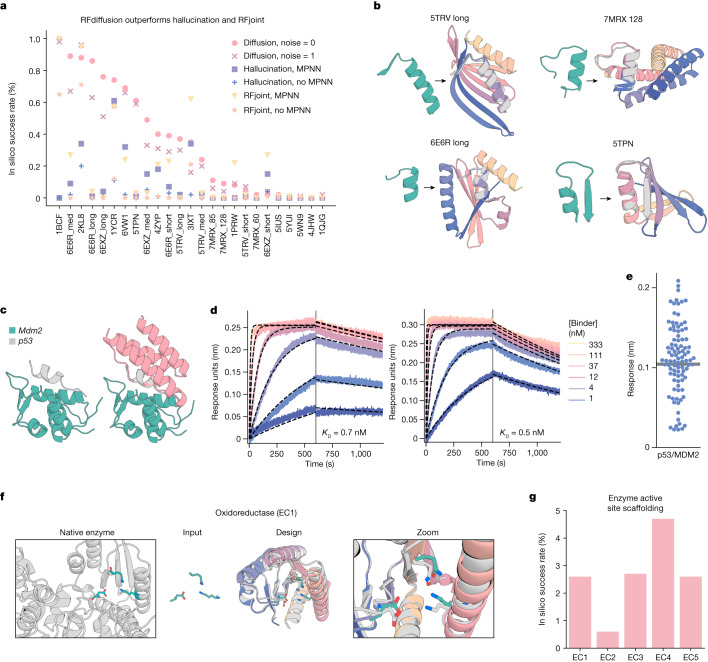
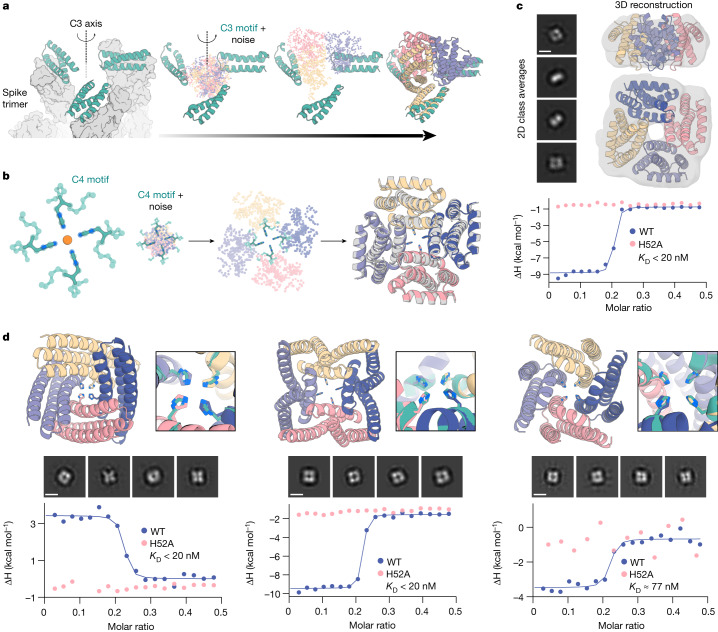
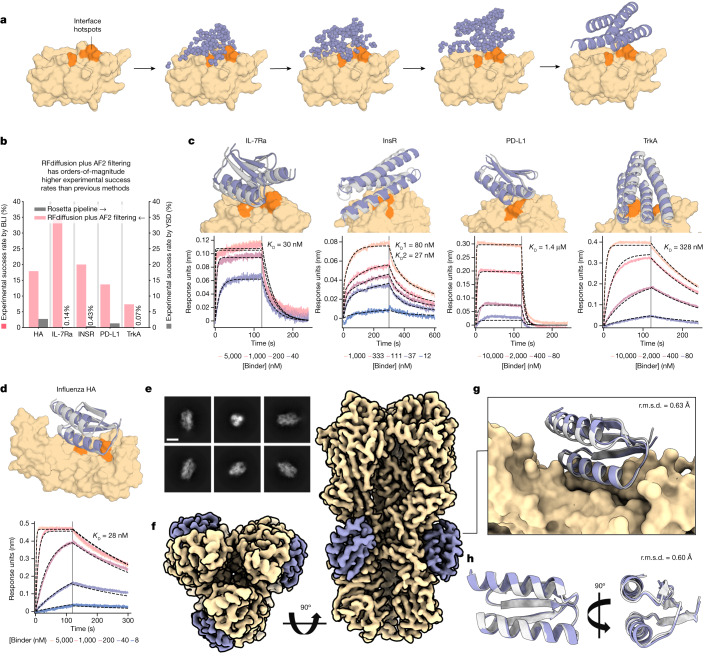
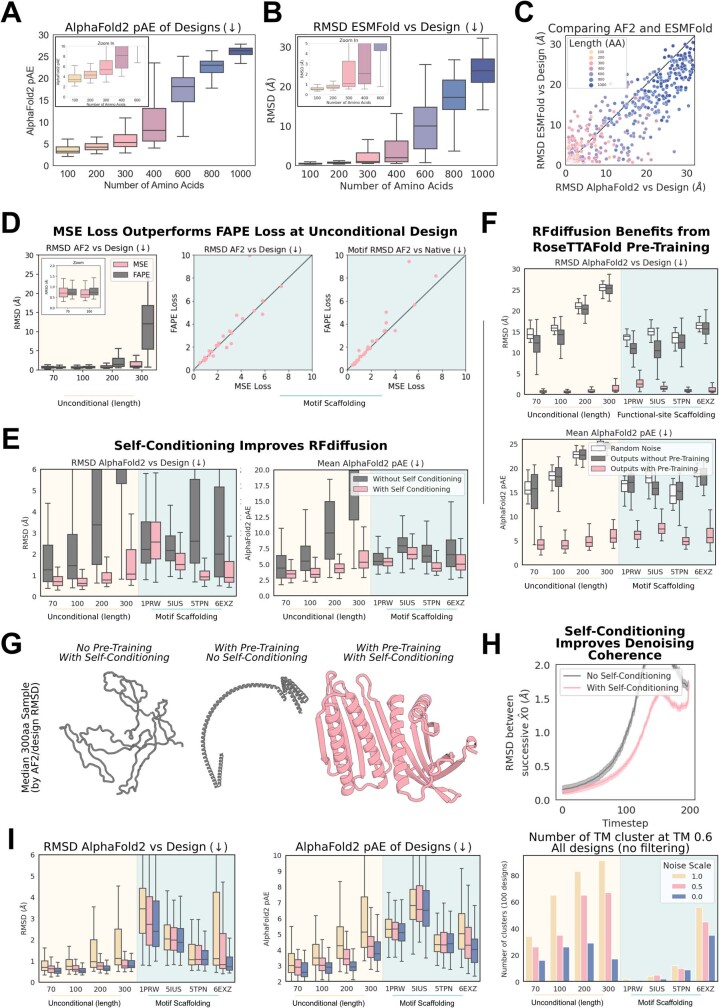
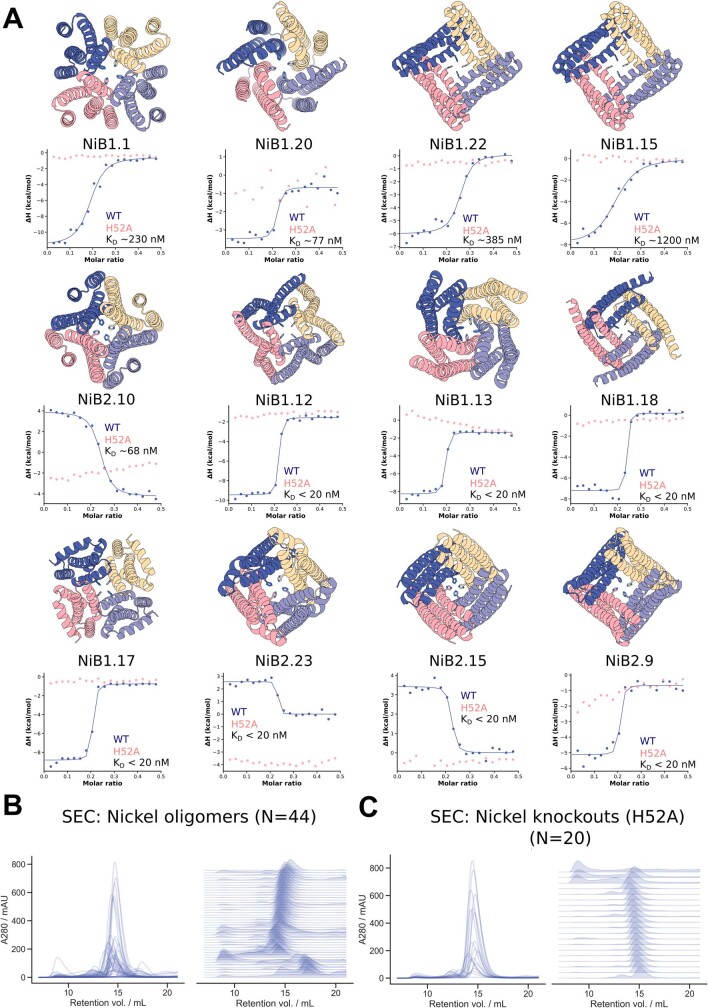
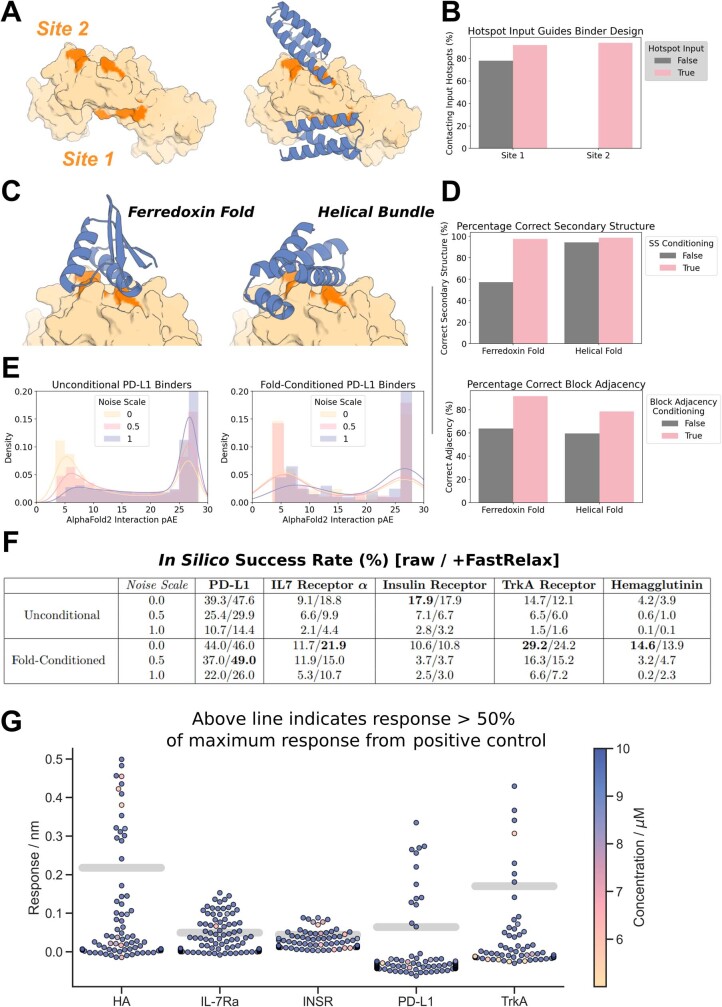
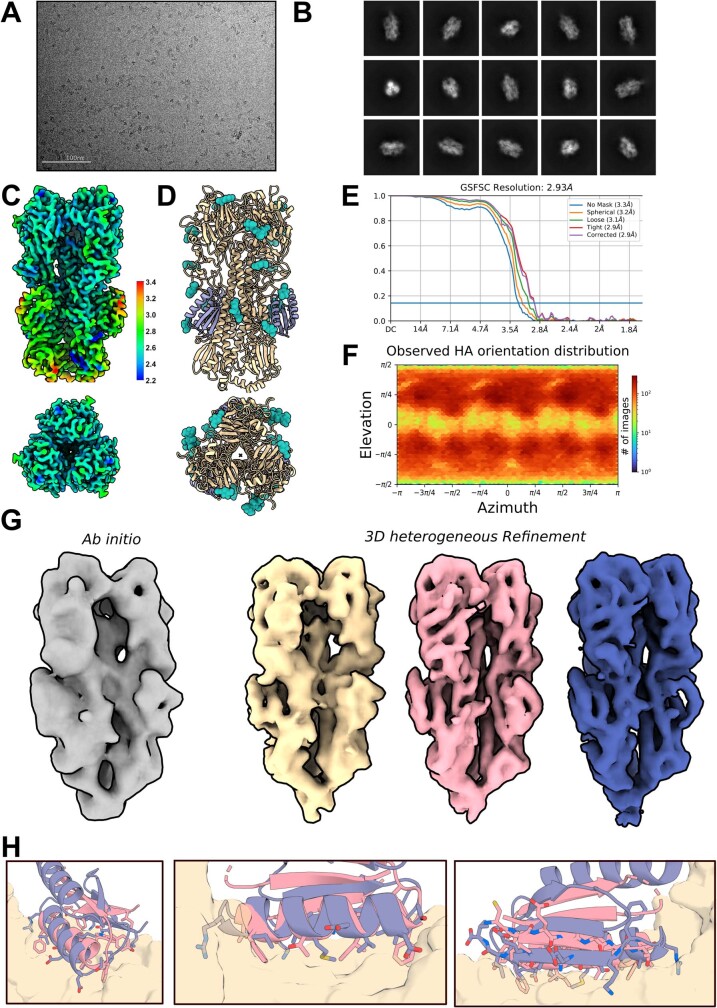
There has been considerable recent progress in designing new proteins using deep learning methods 1–9 . Despite this progress, a general deep learning framework for protein design that enables solution of a wide range of design challenges, including de novo binder design and design of higher order symmetric architectures, has yet to be described. Diffusion models 10,11 have had considerable success in image and language generative modeling but limited success when applied to protein modeling, likely due to the complexity of protein backbone geometry and sequence-structure relationships. Here we show that by fine tuning the RoseTTAFold structure prediction network on protein structure denoising tasks, we obtain a generative model of protein backbones that achieves outstanding performance on unconditional and topology-constrained protein monomer design, protein binder design, symmetric oligomer design, enzyme active site scaffolding, and symmetric motif scaffolding for therapeutic and metal-binding protein design. We demonstrate the power and generality of the method, called RoseTTAFold Diffusion (RF diffusion ), by experimentally characterizing the structures and functions of hundreds of new designs. In a manner analogous to networks which produce images from user-specified inputs, RF diffusion enables the design of diverse, complex, functional proteins from simple molecular specifications.
Overview
The claims and statistics of this paper haven’t been checked yet.
Run the check — free, no account needed. It reads the open-access text and checks the sources it cites.
Integrity signals
Registry
Cites
Statistics
Figures
Verification
Claims the paper makes
The claims and statistics of this paper haven’t been checked yet.
Run the check — free, no account needed. It reads the open-access text and checks the sources it cites.
Self-check
Percentages, sums and reported differences re-computed from the paper’s own numbers.
The self-check needs the paper’s full text.
Citations
Cites
Highly accurate protein structure prediction with AlphaFold
Jumper, J., Evans, R., Pritzel, A., Green, T., Figurnov, M., Ronneberger, O., Tunyasuvunakool, K., Bates, R., Žídek, A., Potapenko, A., et al. (2021) · Nature · doi:10.1038/s41586-021-03819-2 · Cited by 43,764
Berman, H. M. (2000) · Nucleic Acids Research · doi:10.1093/nar/28.1.235 · Cited by 40,196
Denoising Diffusion Probabilistic Models
Ho, J., Jain, A., & Abbeel, P. (2020) · arXiv · doi:10.48550/arxiv.2006.11239 · Cited by 8,712
Evolutionary-scale prediction of atomic level protein structure with a language model
Lin, Z., Akin, H., Rao, R., Hie, B., Zhu, Z., Lu, W., Smetanin, N., Verkuil, R., Kabeli, O., Shmueli, Y., et al. (2022) · doi:10.1101/2022.07.20.500902 · Cited by 5,990
Accurate prediction of protein structures and interactions using a 3-track network
Baek, M., DiMaio, F., Anishchenko, I., Dauparas, J., Ovchinnikov, S., Lee, G. R., Wang, J., Cong, Q., Kinch, L. N., Schaeffer, R. D., et al. (2021) · doi:10.1101/2021.06.14.448402 · Cited by 5,549
Self-citationDeep Unsupervised Learning using Nonequilibrium Thermodynamics
Sohl-Dickstein, J., Weiss, E. A., Maheswaranathan, N., & Ganguli, S. (2015) · arXiv · doi:10.48550/arxiv.1503.03585 · Cited by 2,637
Zero-shot text-to-image generation
Ramesh, A., Pavlov, M., Goh, G., Gray, S., Voss, C., Radford, A., Chen, M., & Sutskever, I. (2021) · arXiv · doi:10.48550/arxiv.2102.12092 · Cited by 2,417
THEORY OF PROTEIN FOLDING: The Energy Landscape Perspective
Onuchic, J. N., Luthey-Schulten, Z., & Wolynes, P. G. (1997) · Annual Review of Physical Chemistry · doi:10.1146/annurev.physchem.48.1.545 · Cited by 2,210
Robust deep learning–based protein sequence design using ProteinMPNN
Dauparas, J., Anishchenko, I., Bennett, N., Bai, H., Ragotte, R. J., Milles, L. F., Wicky, B. I. M., Courbet, A., de Haas, R. J., Bethel, N., et al. (2022) · Science · doi:10.1126/science.add2187 · Cited by 2,210
Self-citationStructure of the MDM2 Oncoprotein Bound to the p53 Tumor Suppressor Transactivation Domain
Kussie, P. H., Gorina, S., Marechal, V., Elenbaas, B., Moreau, J., Levine, A. J., & Pavletich, N. P. (1996) · Science · doi:10.1126/science.274.5289.948 · Cited by 2,206
Research works printed but not linked: 3
- 10.48550/arXiv.2209.15611 · DOI · Paper page
- 10.1101/2022.07.13.499967 · DOI · Paper page
- Anand, N. & Huang, P. Generative modeling for protein structures. in Advances in Neural Information Processing Systems vol. 31 (Curran Associates, Inc., 2018).
Cited by
Sorted by citations
Items 101–200 of 1,000
Proteins with alternative folds reveal blind spots in AlphaFold-based protein structure prediction
Chakravarty, D., Lee, M., & Porter, L. L. (2025) · Current Opinion in Structural Biology · doi:10.1016/j.sbi.2024.102973 · Cited by 76
Artificial intelligence for science in quantum, atomistic, and continuum systems
Zhang, X., Wang, L., Helwig, J., Luo, Y., Fu, C., Xie, Y., Liu, M., Lin, Y., Zhao, X., Yan, K., et al. (2025) · Foundations and Trends® in Machine Learning · doi:10.1561/2200000115 · Cited by 214
Self-citationRevolutionizing CRISPR technology with artificial intelligence
Kim, M., Go, M.-J., Kang, S.-H., Jeong, S.-H., & Lim, K. (2025) · Experimental & Molecular Medicine · doi:10.1038/s12276-025-01462-9 · Cited by 87
Computational enzyme design by catalytic motif scaffolding
Braun, M., Tripp, A., Chakatok, M., Kaltenbrunner, S., Fischer, C., Stoll, D., Bijelic, A., Elaily, W., Totaro, M. G., Moser, M., et al. (2026) · Nature · doi:10.1038/s41586-025-09747-9 · Cited by 73
Multi-omics approaches to decipher the interactions of nanoparticles and biological systems
Wang, Y., Xiao, Z., Wang, Z., Lee, D., Ma, Y., Wilhelm, S., Wang, H., Kim, B. Y. S., & Jiang, W. (2024) · Nature Reviews Bioengineering · doi:10.1038/s44222-024-00264-4 · Cited by 82
Deep learning tools to accelerate antibiotic discovery
Cesaro, A., Bagheri, M., Torres, M. D. T., Wan, F., & de la Fuente‐Núñez, C. (2023) · Expert Opinion on Drug Discovery · doi:10.1080/17460441.2023.2250721 · Cited by 79
Deep learning for protein structure prediction and design—progress and applications
Jänes, J., & Beltrão, P. (2024) · Molecular Systems Biology · doi:10.1038/s44320-024-00016-x · Cited by 76
De novo design of drug-binding proteins with predictable binding energy and specificity
Lü, L., Gou, X., Tan, S. K., Mann, S. I., Yang, H., Zhong, X., Gazgalis, D., Valdiviezo, J., Jo, H., Wu, Y., et al. (2024) · Science · doi:10.1126/science.adl5364 · Cited by 78
AI Methods for Antimicrobial Peptides: Progress and Challenges
Brizuela, C. A., Liu, G., Stokes, J. M., & de la Fuente‐Núñez, C. (2025) · Microbial Biotechnology · doi:10.1111/1751-7915.70072 · Cited by 80
Bhat, S., Palepu, K., Hong, L., Mao, Y., Ye, T., Iyer, R., Zhao, L., Chen, T., Vincoff, S., Watson, R., et al. (2025) · Science Advances · doi:10.1126/sciadv.adr8638 · Cited by 96
A survey of geometric graph neural networks: data structures, models and applications
Han, J., Cen, J., Wu, L., Li, Z., Kong, X., Jiao, R., Yu, Z., Xu, T., Wu, F., Wang, Z., et al. (2025) · Frontiers of Computer Science · doi:10.1007/s11704-025-41426-w · Cited by 104
Harnessing generative AI to decode enzyme catalysis and evolution for enhanced engineering
Xie, W. J., & Warshel, A. (2023) · National Science Review · doi:10.1093/nsr/nwad331 · Cited by 69
Computer-Aided Drug Discovery for Undruggable Targets
Sun, Q., Wang, H., Xie, J., Wang, L., Mu, J., Li, J., Ren, Y., & Lai, L. (2025) · Chemical Reviews · doi:10.1021/acs.chemrev.4c00969 · Cited by 72
Machine Learning‐Enhanced Nanoparticle Design for Precision Cancer Drug Delivery
Wang, Q., Liu, Y., Li, C., Xu, S., Xu, S., & Liu, B. (2025) · Advanced Science · doi:10.1002/advs.202503138 · Cited by 81
Target sequence-conditioned design of peptide binders using masked language modeling
Chen, T., Quinn, Z., Dumas, M., Peng, C. Y., Hong, L., Lopez-Gonzalez, M., Mestre, A. A., Watson, R., Vincoff, S., Zhao, L., et al. (2025) · Nature Biotechnology · doi:10.1038/s41587-025-02761-2 · Cited by 90
CodonTransformer: a multispecies codon optimizer using context-aware neural networks
Fallahpour, A., Gureghian, V., Filion, G. J. P., Lindner, A. B., & Pandi, A. (2025) · Nature Communications · doi:10.1038/s41467-025-58588-7 · Cited by 70
Casadevall, G., Duran, C., & Osuna, S. (2023) · JACS Au · doi:10.1021/jacsau.3c00188 · Cited by 70
De novo design of porphyrin-containing proteins as efficient and stereoselective catalysts
Hou, K.-P., Huang, W., Qi, M., Tugwell, T. H., Alturaifi, T. M., Chen, Y., Zhang, X., Lü, L., Mann, S. I., Liu, P., et al. (2025) · Science · doi:10.1126/science.adt7268 · Cited by 69
Structure-informed Language Models Are Protein DesignersPreprint
Zheng, Z., Deng, Y., Xue, D., Zhou, Y., Ye, F., & Gu, Q. (2023) · bioRxiv (Cold Spring Harbor Laboratory) · doi:10.1101/2023.02.03.526917 · Cited by 72
Review of machine learning for lipid nanoparticle formulation and process development
Dorsey, P. J., Lau, C. L., Chang, T., Doerschuk, P. C., & D’Addio, S. M. (2024) · Journal of Pharmaceutical Sciences · doi:10.1016/j.xphs.2024.09.015 · Cited by 74
Target-conditioned diffusion generates potent TNFR superfamily antagonists and agonists
Glögl, M., Krishnakumar, A., Ragotte, R. J., Goreshnik, I., Coventry, B., Bera, A. K., Kang, A., Joyce, E., Ahn, G., Huang, B., et al. (2024) · Science · doi:10.1126/science.adp1779 · Cited by 67
Self-citationThe Potential of Neural Network Potentials
Duignan, T. T. (2024) · ACS Physical Chemistry Au · doi:10.1021/acsphyschemau.4c00004 · Cited by 72
De novo design of pH-responsive self-assembling helical protein filaments
Shen, H., Lynch, E. M., Akkineni, S., Watson, J. L., Decarreau, J. A., Bethel, N. P., Benna, I., Sheffler, W., Farrell, D. P., DiMaio, F., et al. (2024) · Nature Nanotechnology · doi:10.1038/s41565-024-01641-1 · Cited by 67
Self-citationEdman, N. I., Phal, A., Redler, R. L., Schlichthaerle, T., Srivatsan, S. R., Ehnes, D. D., Etemadi, A., An, S. J., Favor, A., Li, Z., et al. (2024) · Cell · doi:10.1016/j.cell.2024.05.025 · Cited by 62
Self-citationExploring new galaxies: Perspectives on the discovery of novel PET-degrading enzymes
Mičan, J., Jaradat, D. M. M., Liu, W., Weber, G., Mazurenko, S., Bornscheuer, U. T., Damborský, J., Wei, R., & Bednář, D. (2023) · Applied Catalysis B: Environmental · doi:10.1016/j.apcatb.2023.123404 · Cited by 65
Strategies for designing biocatalysts with new functions
Bell, E. L., Hutton, A. E., Burke, A. J., O’Connell, A., Barry, A., O’Reilly, E., & Green, A. P. (2024) · Chemical Society Reviews · doi:10.1039/d3cs00972f · Cited by 70
MiDi: Mixed Graph and 3D Denoising Diffusion for Molecule Generation
Vignac, C., Osman, N., Toni, L., & Frossard, P. (2023) · Lecture notes in computer science · doi:10.1007/978-3-031-43415-0_33 · Cited by 63
Transferable deep generative modeling of intrinsically disordered protein conformations
Janson, G., & Feig, M. (2024) · PLOS Computational Biology · doi:10.1371/journal.pcbi.1012144 · Cited by 62
Artificial intelligence in peptide-based drug design
Zhai, S., Liu, T., Lin, S., Li, D., Liu, H., Yao, X., & Hou, T. (2025) · Drug Discovery Today · doi:10.1016/j.drudis.2025.104300 · Cited by 67
Chen, S., Li, Y., Wang, Y., Chen, H., & Özcan, A. (2025) · Nature · doi:10.1038/s41586-025-09446-5 · Cited by 75
AI for targeted polypharmacology: The next frontier in drug discovery
Cichońska, A., Ravikumar, B., & Rahman, R. (2024) · Current Opinion in Structural Biology · doi:10.1016/j.sbi.2023.102771 · Cited by 68
Complete computational design of high-efficiency Kemp elimination enzymes
Listov, D., Vos, E., Hoffka, G., Hoch, S. Y., Berg, A., Hamer-Rogotner, S., Dym, O., Kamerlin, S. C. L., & Fleishman, S. J. (2025) · Nature · doi:10.1038/s41586-025-09136-2 · Cited by 64
Biosensor and machine learning-aided engineering of an amaryllidaceae enzyme
d’Oelsnitz, S., Diaz, D. J., Kim, W., Acosta, D. J., Dangerfield, T. L., Schechter, M. W., Minus, M. B., Howard, J. R., Do, H., Loy, J. M., et al. (2024) · Nature Communications · doi:10.1038/s41467-024-46356-y · Cited by 58
Computational design of sequence-specific DNA-binding proteins
Glasscock, C. J., Pecoraro, R. J., McHugh, R., Doyle, L. A., Chen, W., Boivin, O., Lonnquist, B., Na, E., Politanska, Y., Haddox, H. K., et al. (2025) · Nature Structural & Molecular Biology · doi:10.1038/s41594-025-01669-4 · Cited by 58
Self-citationA high-level programming language for generative protein designPreprint
Hie, B., Candido, S., Lin, Z., Kabeli, O., Rao, R., Smetanin, N., Sercu, T., & Rives, A. W. (2022) · bioRxiv (Cold Spring Harbor Laboratory) · doi:10.1101/2022.12.21.521526 · Cited by 62
Generative models for protein sequence modeling: recent advances and future directions
Mardikoraem, M., Wang, Z., Pascual, N., & Woldring, D. (2023) · Briefings in Bioinformatics · doi:10.1093/bib/bbad358 · Cited by 61
Designing Multifunctional Biomaterials via Protein Self‐Assembly
Solomonov, A. V., Kozell, A., & Shimanovich, U. (2024) · Angewandte Chemie International Edition · doi:10.1002/anie.202318365 · Cited by 58
Integrating chemistry knowledge in large language models via prompt engineering
Liu, H., Yin, H., Luo, Z., & Wang, X. (2024) · Synthetic and Systems Biotechnology · doi:10.1016/j.synbio.2024.07.004 · Cited by 63
Protein language models are biased by unequal sequence sampling across the tree of life
Ding, F., & Steinhardt, J. (2024) · doi:10.1101/2024.03.07.584001 · Cited by 57
Revolutionizing peptide‐based drug discovery: Advances in the post‐AlphaFold era
Chang, L., Mondal, A., Singh, B., Martínez‐Noa, Y., & Perez, A. (2024) · WIREs Computational Molecular Science · doi:10.1002/wcms.1693 · Cited by 56
Vincenzi, M., Mercurio, F. A., & Leone, M. (2024) · International Journal of Molecular Sciences · doi:10.3390/ijms25031798 · Cited by 63
Revolutionizing protein–protein interaction prediction with deep learning
Zhang, J., Durham, J., & Cong, Q. (2024) · Current Opinion in Structural Biology · doi:10.1016/j.sbi.2024.102775 · Cited by 58
Current advancements in fungal engineering technologies for Sustainable Development Goals
Garg, S., Kim, M., & Romero-Suárez, D. (2024) · Trends in Microbiology · doi:10.1016/j.tim.2024.11.001 · Cited by 64
Perspectives on Computational Enzyme Modeling: From Mechanisms to Design and Drug Development
Nam, K., Shao, Y., Major, D. T., & Wolf‐Watz, M. (2024) · ACS Omega · doi:10.1021/acsomega.3c09084 · Cited by 57
Expansive discovery of chemically diverse structured macrocyclic oligoamides
Salveson, P. J., Moyer, A. P., Said, M. Y., Alpkilic, G. G., Li, X., Kang, A., Nguyen, H., Bera, A. K., Levine, P. M., Bhardwaj, G., et al. (2024) · Science · doi:10.1126/science.adk1687 · Cited by 54
Self-citationDewaker, V., Morya, V. K., Kim, Y. H., Park, S. T., Kim, H. S., & Koh, Y. H. (2025) · Biomarker Research · doi:10.1186/s40364-025-00764-4 · Cited by 62
New horizons at the interface of artificial intelligence and translational cancer research
Yates, J., & Allen, E. M. V. (2025) · Cancer Cell · doi:10.1016/j.ccell.2025.03.018 · Cited by 58
Code to complex: AI-driven de novo binder design
Fox, D., Taveneau, C., Clement, J., Grinter, R., & Knott, G. J. (2025) · Structure · doi:10.1016/j.str.2025.08.007 · Cited by 62
Degrons: defining the rules of protein degradation
Zhang, Z., Mena, E. L., Timms, R. T., Koren, I., & Elledge, S. J. (2025) · Nature Reviews Molecular Cell Biology · doi:10.1038/s41580-025-00870-z · Cited by 67
Large language models for drug discovery and development
Zheng, Y., Koh, H. Y., Ju, J., Yang, M., May, L. T., Webb, G. I., Li, L., Pan, S., & Church, G. M. (2025) · Patterns · doi:10.1016/j.patter.2025.101346 · Cited by 121
Chen, X., & Zhang, X. (2023) · ACM Conference on Embedded Networked Sensor Systems (SenSys) · doi:10.1145/3625687.3625798 · Cited by 56
Mao, M., Ahrens, L., Luka, J., Contreras, F., Kurkina, T., Bienstein, M., Sárria, M. P., Schirinzi, G. F., Méhn, D., Valsesia, A., et al. (2024) · Chemical Society Reviews · doi:10.1039/d2cs00991a · Cited by 53
Interpretable and explainable predictive machine learning models for data-driven protein engineering
Medina-Ortiz, D., Khalifeh, A., Anvari-Kazemabad, H., & Davari, M. D. (2024) · Biotechnology Advances · doi:10.1016/j.biotechadv.2024.108495 · Cited by 55
Molecular Modelling in Bioactive Peptide Discovery and Characterisation
Agoni, C., Fernández-Díaz, R., Timmons, P. B., Adelfio, A., Gómez, H., & Shields, D. C. (2025) · Biomolecules · doi:10.3390/biom15040524 · Cited by 63
Strengthening nucleic acid biosecurity screening against generative protein design tools
Wittmann, B. J., Alexanian, T., Bartling, C. M., Beal, J., Clore, A. J., Diggans, J., Flyangolts, K., Gemler, B. T., Mitchell, T., Murphy, S. T., et al. (2025) · Science · doi:10.1126/science.adu8578 · Cited by 86
Antibody design using deep learning: from sequence and structure design to affinity maturation
Joubbi, S., Micheli, A., Milazzo, P., Maccari, G., Ciano, G., Cardamone, D., & Medini, D. (2024) · Briefings in Bioinformatics · doi:10.1093/bib/bbae307 · Cited by 56
Hierarchical design of pseudosymmetric protein nanocages
Dowling, Q. M., Park, Y., Fries, C. N., Gerstenmaier, N., Ols, S., Yang, E. C., Wargacki, A. J., Dosey, A. M., Hsia, Y., Ravichandran, R., et al. (2024) · Nature · doi:10.1038/s41586-024-08360-6 · Cited by 61
Self-citationResponsible AI in biotechnology: balancing discovery, innovation and biosecurity risks
Wheeler, N. E. (2025) · Frontiers in Bioengineering and Biotechnology · doi:10.3389/fbioe.2025.1537471 · Cited by 63
Generative Diffusion Models on Graphs: Methods and Applications
Liu, C.-Y., Fan, W., Liu, Y., Li, J., Li, H., Liu, H., Tang, J., & Li, Q. (2023) · International Joint Conference on Artificial Intelligence · doi:10.24963/ijcai.2023/751 · Cited by 117
Protein subcellular localization prediction tools
Gillani, M., & Pollastri, G. (2024) · Computational and Structural Biotechnology Journal · doi:10.1016/j.csbj.2024.04.032 · Cited by 52
Resolving data bias improves generalization in binding affinity prediction
Graber, D., Stockinger, P., Meyer, F., Mishra, S., Horn, C., & Buller, R. (2025) · Nature Machine Intelligence · doi:10.1038/s42256-025-01124-5 · Cited by 69
Addressing epistasis in the design of protein function
Lipsh‐Sokolik, R., & Fleishman, S. J. (2024) · Proceedings of the National Academy of Sciences · doi:10.1073/pnas.2314999121 · Cited by 55
Synthetic biology advances towards a bio-based society in the era of artificial intelligence
Iram, A., Dong, Y., & Ignea, C. (2024) · Current Opinion in Biotechnology · doi:10.1016/j.copbio.2024.103143 · Cited by 53
Neural network extrapolation to distant regions of the protein fitness landscape
Freschlin, C. R., Fahlberg, S. A., Heinzelman, P., & Romero, P. A. (2024) · Nature Communications · doi:10.1038/s41467-024-50712-3 · Cited by 52
Artificial intelligence for life sciences: A comprehensive guide and future trends
Luo, M., Yang, W., Bai, L., Zhang, L., Huang, J., Cao, Y.-H., Xie, Y., Tong, L., Zhang, H., Lei, Y., et al. (2024) · The Innovation Life · doi:10.59717/j.xinn-life.2024.100105 · Cited by 51
Target-Specific De Novo Peptide Binder Design with DiffPepBuilder
Wang, F., Wang, Y. X., Feng, L., Zhang, C., & Lai, L. (2024) · Journal of Chemical Information and Modeling · doi:10.1021/acs.jcim.4c00975 · Cited by 53
Computational design of metallohydrolases
Kim, D., Woodbury, S. M., Ahern, W., Tischer, D., Kang, A., Joyce, E., Bera, A. K., Hanikel, N., Salike, S., Krishna, R., et al. (2025) · Nature · doi:10.1038/s41586-025-09746-w · Cited by 79
Self-citationJoint Generation of Protein Sequence and Structure with RoseTTAFold Sequence Space DiffusionPreprint
Lisanza, S. L., Gershon, J. M., Tipps, S. W. K., Arnoldt, L., Hendel, S. J., Sims, J. N., Li, X., & Baker, D. A. (2023) · bioRxiv (Cold Spring Harbor Laboratory) · doi:10.1101/2023.05.08.539766 · Cited by 48
Self-citationStructure-Based Drug Design with a Deep Hierarchical Generative Model
Weller, J. A., & Rohs, R. (2024) · Journal of Chemical Information and Modeling · doi:10.1021/acs.jcim.4c01193 · Cited by 47
Liu, Y., Wang, S., Dong, J., Chen, L.-H., Wang, X., Wang, L., Li, F., Wang, C., Zhang, J., Wang, Y., et al. (2024) · Nature Methods · doi:10.1038/s41592-024-02437-w · Cited by 55
ProSST: Protein Language Modeling with Quantized Structure and Disentangled Attention
Li, M., Tan, Y., Ma, X., Zhong, B., Yu, H., Zhou, Z., Ouyang, W., Zhong, B., Hong, L., & Tan, Y. (2024) · neural information processing systems · doi:10.52202/079017-1126 · Cited by 52
In silico evolution of autoinhibitory domains for a PD-L1 antagonist using deep learning models
Goudy, O. J., Nallathambi, A., Kinjo, T., Randolph, N. Z., & Kuhlman, B. A. (2023) · Proceedings of the National Academy of Sciences · doi:10.1073/pnas.2307371120 · Cited by 46
The Nobel Prize in Chemistry: past, present, and future of AI in biology
Abriata, L. A. (2024) · Communications Biology · doi:10.1038/s42003-024-07113-5 · Cited by 49
The design and engineering of synthetic genomes
James, J. S., Dai, J., Chew, W. L., & Cai, Y. (2024) · Nature Reviews Genetics · doi:10.1038/s41576-024-00786-y · Cited by 52
Han, X., Li, S., Zeng, Q., Sun, P., Wu, D., Wu, J., Yu, X., Lai, Z., Milne, R. J., Kang, Z., et al. (2024) · Plant Communications · doi:10.1016/j.xplc.2024.101195 · Cited by 49
A Multi‐Task Self‐Supervised Strategy for Predicting Molecular Properties and FGFR1 Inhibitors
Yang, X., Wang, Y., Lin, Y., Zhang, M., Liu, O., Shuai, J., & Zhao, Q. (2025) · Advanced Science · doi:10.1002/advs.202412987 · Cited by 52
Data‐Driven Protein Engineering for Improving Catalytic Activity and Selectivity
Ao, Y., Dörr, M., Menke, M. J., Born, S., Heuson, E., & Bornscheuer, U. T. (2023) · ChemBioChem · doi:10.1002/cbic.202300754 · Cited by 44
Wu, X., Lin, H., Bai, R., & Duan, H. (2024) · European Journal of Medicinal Chemistry · doi:10.1016/j.ejmech.2024.116262 · Cited by 52
Nuñez, L. F. S., Barrera-Ocampo, A. A., Caicedo, P. A., Cortés, N., Osorio, E. H., Villegas-Torres, M. F., & Barrios, A. F. G. (2024) · Metabolites · doi:10.3390/metabo14030154 · Cited by 47
Auditing and instructing text-to-image generation models on fairness
Friedrich, F., Brack, M., Struppek, L., Hintersdorf, D., Schramowski, P., Luccioni, A. S., & Kersting, K. (2024) · AI and Ethics · doi:10.1007/s43681-024-00531-5 · Cited by 58
Multi-modal deep learning enables efficient and accurate annotation of enzymatic active sites
Wang, X., Yin, X., Jiang, D., Zhao, H., Wu, Z., Zhang, O., Wang, J., Li, Y., Deng, Y., Liu, H., et al. (2024) · Nature Communications · doi:10.1038/s41467-024-51511-6 · Cited by 47
Self-citationTackling Undruggable Targets with Designer Peptidomimetics and Synthetic Biologics
Swenson, C., Mandava, G., Thomas, D. M., & Moellering, R. E. (2024) · Chemical Reviews · doi:10.1021/acs.chemrev.4c00423 · Cited by 55
Technological advancements in antibody-based therapeutics for treatment of diseases
Lu, R., Chiang, H.-L., Yuan, J. P., Wang, H.-H., Chen, C.-Y., Panda, S. S., Liang, K.-H., Peng, H., Ko, S.-H., Hsu, H.-J., et al. (2025) · Journal of Biomedical Science · doi:10.1186/s12929-025-01190-2 · Cited by 59
Zero-shot antibody design in a 24-well platePreprint
Chai Discovery Team, Boitreaud, J., Dent, J., Geisz, D., McPartlon, M., Meier, J., Qiao, Z., Rogozhnikov, A., Rollins, N., Wollenhaupt, P., et al. (2025) · bioRxiv (Cold Spring Harbor Laboratory) · doi:10.1101/2025.07.05.663018 · Cited by 56
Electrostatics as a Guiding Principle in Understanding and Designing Enzymes
Ruiz‐Pernía, J. J., Świderek, K., Bertrán, J., Moliner, V., & Tuñón, I. (2024) · Journal of Chemical Theory and Computation · doi:10.1021/acs.jctc.3c01395 · Cited by 47
Ma, B., Liu, D., Wang, Z., Zhang, D., Jian, Y., Zhang, K., Zhou, T., Gao, Y., Fan, Y., Ma, J., et al. (2024) · Journal of Medicinal Chemistry · doi:10.1021/acs.jmedchem.4c00828 · Cited by 52
Protein structure prediction via deep learning: an in-depth review
Meng, Y., Zhang, Z., Zhou, C., Tang, X., Hu, X., Tian, G., Yang, J., & Yao, Y. (2025) · Frontiers in Pharmacology · doi:10.3389/fphar.2025.1498662 · Cited by 52
Modeling protein–ligand interactions for drug discovery in the era of deep learning
Wang, Y. X., Li, Y., Chen, J., & Lai, L. (2025) · Chemical Society Reviews · doi:10.1039/d5cs00415b · Cited by 53
Peptide-based drug design using generative AI
Ekambaram, S., & Dokholyan, N. V. (2025) · Chemical Communications · doi:10.1039/d5cc04998a · Cited by 53
Protein-based nanoparticles for therapeutic nucleic acid delivery
Eweje, F., Walsh, M. L., Ahmad, K., Ibrahim, V., Alrefai, A., Chen, J., & Chaikof, E. L. (2024) · Biomaterials · doi:10.1016/j.biomaterials.2023.122464 · Cited by 46
De novo design of transmembrane fluorescence-activating proteins
Zhu, J., Liang, M., Sun, K., Yu, W., Guo, R., Zhang, L., Shi, J., Ma, D., Hu, Q., Huang, G., et al. (2025) · Nature · doi:10.1038/s41586-025-08598-8 · Cited by 51
Generative artificial intelligence for enzyme design: Recent advances in models and applications
Wen, S., Zheng, W., Bornscheuer, U. T., & Wu, S. (2025) · Current Opinion in Green and Sustainable Chemistry · doi:10.1016/j.cogsc.2025.101010 · Cited by 47
Circular RNA discovery with emerging sequencing and deep learning technologies
Zhang, J., & Zhao, F. (2025) · Nature Genetics · doi:10.1038/s41588-025-02157-7 · Cited by 44
AI-driven de novo enzyme design: Strategies, applications, and future prospects
Cui, X.-C., Zheng, Y., Liu, Y., Yuchi, Z., & Yuan, Y. (2025) · Biotechnology Advances · doi:10.1016/j.biotechadv.2025.108603 · Cited by 44
Nanobodies: From Discovery to AI-Driven Design
Zhu, H., & Ding, Y. (2025) · Biology · doi:10.3390/biology14050547 · Cited by 44
De novo design and structure of a peptide–centric TCR mimic binding module
Householder, K. D., Xiang, X., Jude, K. M., Deng, A., Obenaus, M., Zhao, Y., Wilson, S. C., Chen, X. T., Wang, N., & García, K. C. (2025) · Science · doi:10.1126/science.adv3813 · Cited by 46
AI-generated MLH1 small binder improves prime editing efficiency
Park, J.-C., Uhm, H., Kim, Y. W., Oh, Y. E., Lee, J., Yang, J., Kim, K., & Bae, S. (2025) · Cell · doi:10.1016/j.cell.2025.07.010 · Cited by 50
Applications of artificial intelligence to lipid nanoparticle delivery
Yuan, Y., Wu, Y., Cheng, J., Yang, K., Xia, Y., Wu, H., & Pan, X. (2023) · Particuology · doi:10.1016/j.partic.2023.11.014 · Cited by 43
Metadata
- Authors
- Watson, J. L., Juergens, D., Bennett, N. R., Trippe, B. L., Yim, J., Eisenach, H. E., Ahern, W., Borst, A. J., Ragotte, R. J., Milles, L. F., Wicky, B. I. M., Hanikel, N., Pellock, S. J., Courbet, A., Sheffler, W., Wang, J., Venkatesh, P., Sappington, I., Torres, S. V., Lauko, A., De Bortoli, V., Mathieu, E., Barzilay, R., Jaakkola, T. S., DiMaio, F., Baek, M., & Baker, D.
- Affiliations
- University of Washington (US)
- Centre National de la Recherche Scientifique (FR)
- Massachusetts Institute of Technology (US)
- Seoul National University (KR)
- Howard Hughes Medical Institute (US)
- Corresponding author
- Baker, David
- ORCID
- Watson, Joseph L.
- Juergens, David
- Bennett, Nathaniel R.
- Trippe, Brian L.
- Yim, Jason
- Eisenach, Helen E.
- Ahern, Woody
- Borst, Andrew J.
- Ragotte, Robert J.
- Milles, Lukas F.
- Wicky, Basile I. M.
- Hanikel, Nikita
- Pellock, Samuel J.
- Courbet, Alexis
- Sheffler, William
- Wang, Jue
- Venkatesh, Preetham
- Sappington, Isaac
- Torres, Susana Vázquez
- Lauko, Anna
- De Bortoli, Valentin
- Barzilay, Regina
- Jaakkola, Tommi S.
- DiMaio, Frank
- Baek, Minkyung
- Baker, David
- Venue
- Nature
- Publisher
- openRxiv
- Published
- 2022-12-10
- Volume
- 620
- Issue
- 7976
- Pages
- 1089-1100
- ISSN
- 0028-0836 (ISSN-L)
- PMC
- PMC10468394
- OpenAlex
- W4383957026
- Cited by
- 2,369
- References
- 57
- Citations by year
- 2026: 943 · 2025: 795 · 2024: 473 · 2023: 153 · 2022: 4
- FWCI
- 210.65
- Type
- journal article
- Language
- en
- Open access
- hybrid
- doi.org
- Licence
- cc-by
- Locations
- Nature (publishedVersion, cc-by)
- bioRxiv (Cold Spring Harbor Laboratory) (acceptedVersion, cc-by-nd)
- PubMed Central (publishedVersion, cc-by)
- PubMed (publishedVersion)
- RePEc: Research Papers in Economics (submittedVersion)
- Apollo (University of Cambridge) (submittedVersion, cc-by)
- Funders
- National Science Foundation (HDTRA1-19-1-0003, 1918839)
- Howard Hughes Medical Institute
- U.S. Department of Energy (DESC0018940)
- Bill and Melinda Gates Foundation (INV-010680)
- Washington Research Foundation
- Amgen
- Sanofi
- Washington State University
- Open Philanthropy Project
- Defense Advanced Research Projects Agency
- Defense Threat Reduction Agency (HDTRA1-19-1-0003, HDTRA1)
- Office of Science (DE-SC0018940 MOD03, DESC0018940)
- Engineering and Physical Sciences Research Council (EP/T005386/1)
- National Institute on Aging (U19AG065156)
- National Institute of General Medical Sciences (T32GM007250, T32GM008268)
- Topics
- Life Sciences › Biochemistry, Genetics and Molecular Biology › Molecular Biology › Protein Structure and Dynamics
- Life Sciences › Biochemistry, Genetics and Molecular Biology › Molecular Biology › Machine Learning in Bioinformatics
- Life Sciences › Biochemistry, Genetics and Molecular Biology › Structural Biology › Enzyme Structure and Function
- Keywords
- protein design, de novo protein design, diffusion models, RoseTTAFold, protein binder design, metal-binding proteins, protein backbone, influenza haemagglutinin, therapeutic proteins
- MeSH terms
- Deep Learning, Protein Binding, Proteins, Hemagglutinin Glycoproteins, Influenza Virus, Catalytic Domain, Cryoelectron Microscopy
About these checks
Registry, retraction, Cites and statistics results are computed, not judged, with one exception: a printed reference that no index lists is read once by a model before it counts as a citation error. Claims are extracted by a model and kept only when their quote appears verbatim in the text; each cited source is then checked, with a model’s help, for whether it says what the claim relies on. Those verdicts can be wrong — read the claim’s quote and the cited source before relying on one.
Statistics and arithmetic are recomputed, not judged.
Confidence bands are shown only for fields calibrated on our annotated test set. None is calibrated yet, so no band is shown.
What counts as a claim ›How we measure confidence ›How we check this ›
Are you an author, or do you see a problem with this page? Request a review
