

The DOI matches its Crossref record; 57 of the 57 references it cites were found in a registry or an index.
Broadly applicable and accurate protein design by integrating structure prediction networks and diffusion generative models
Open accessPreprint — published as 10.1038/s41586-023-06415-8 · Paper page
Abstract
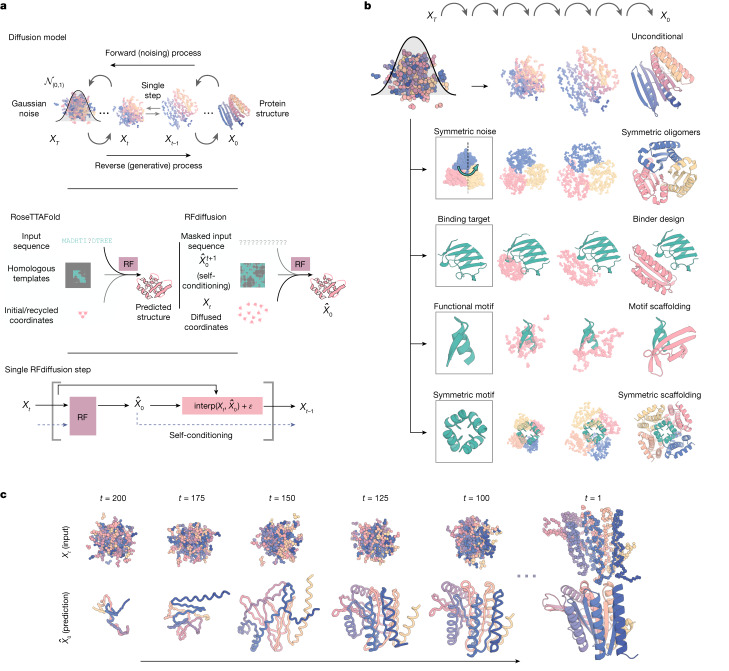
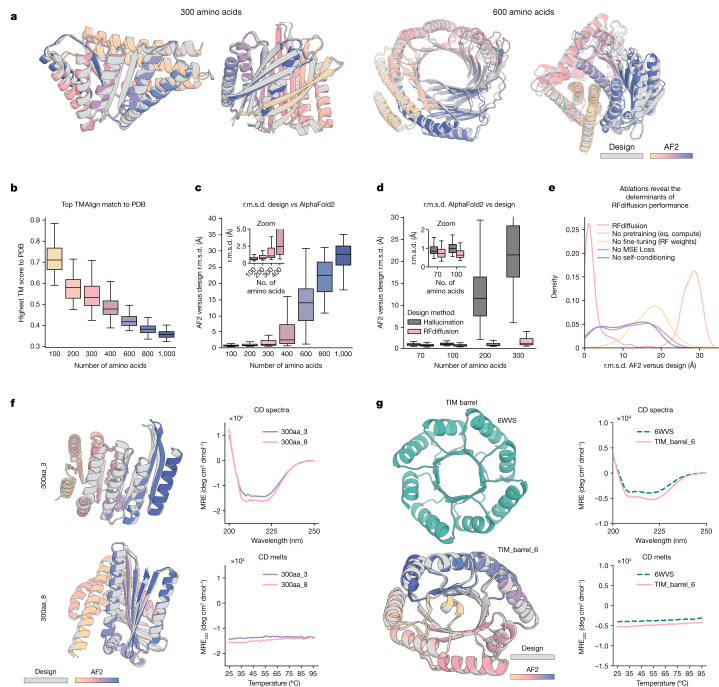
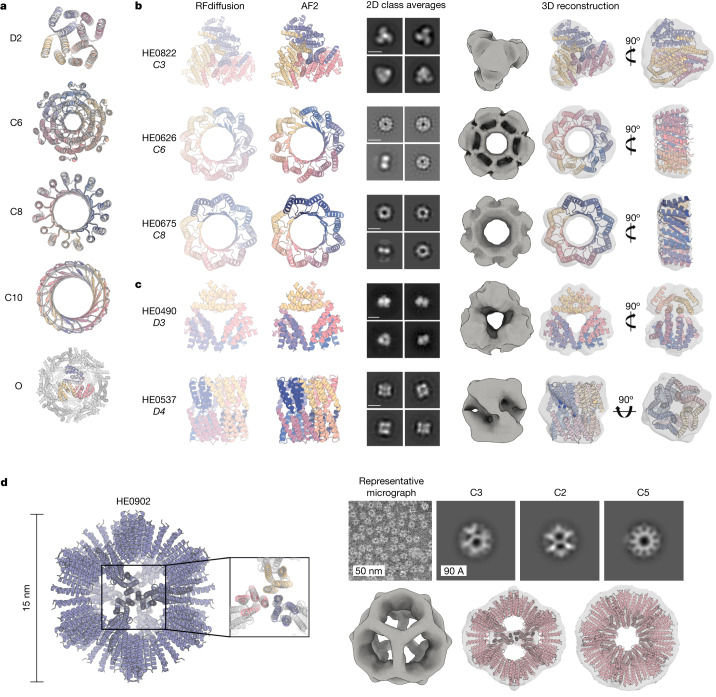
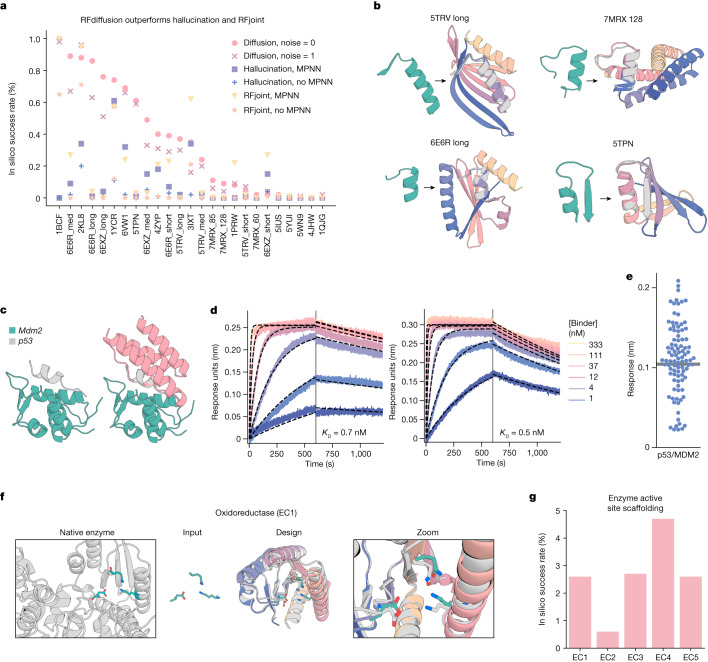
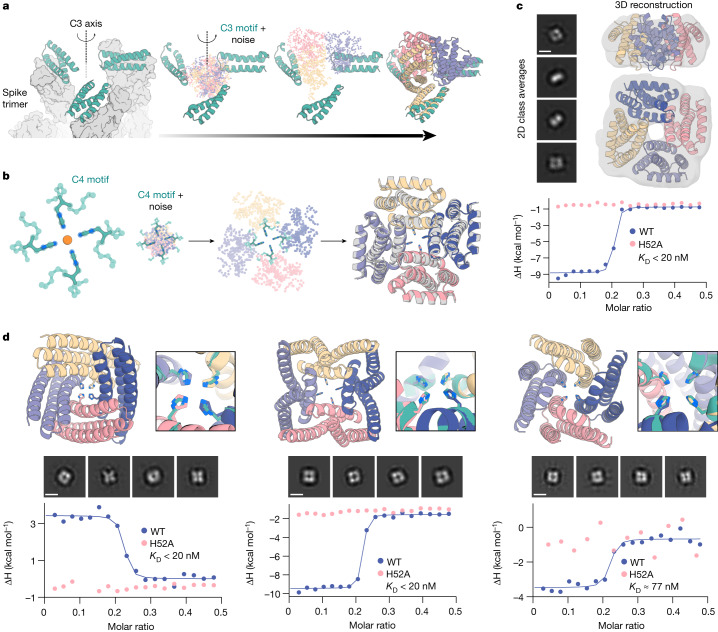
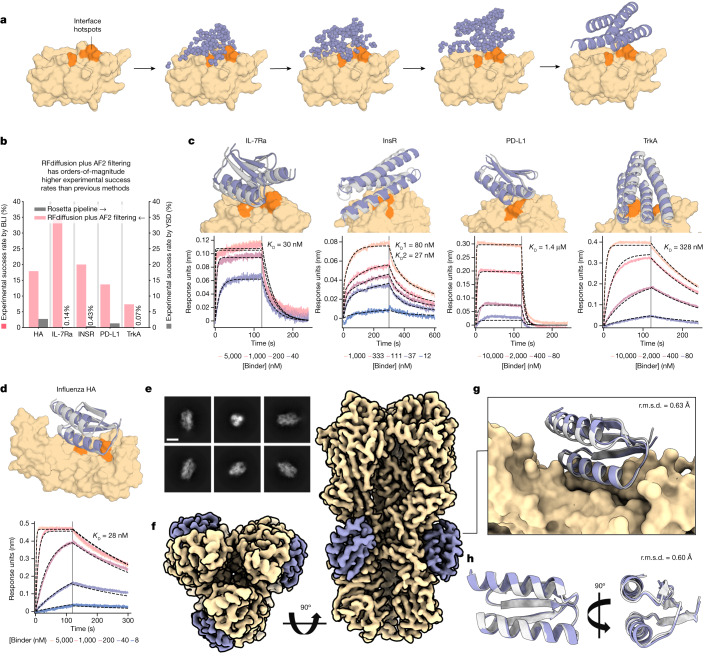
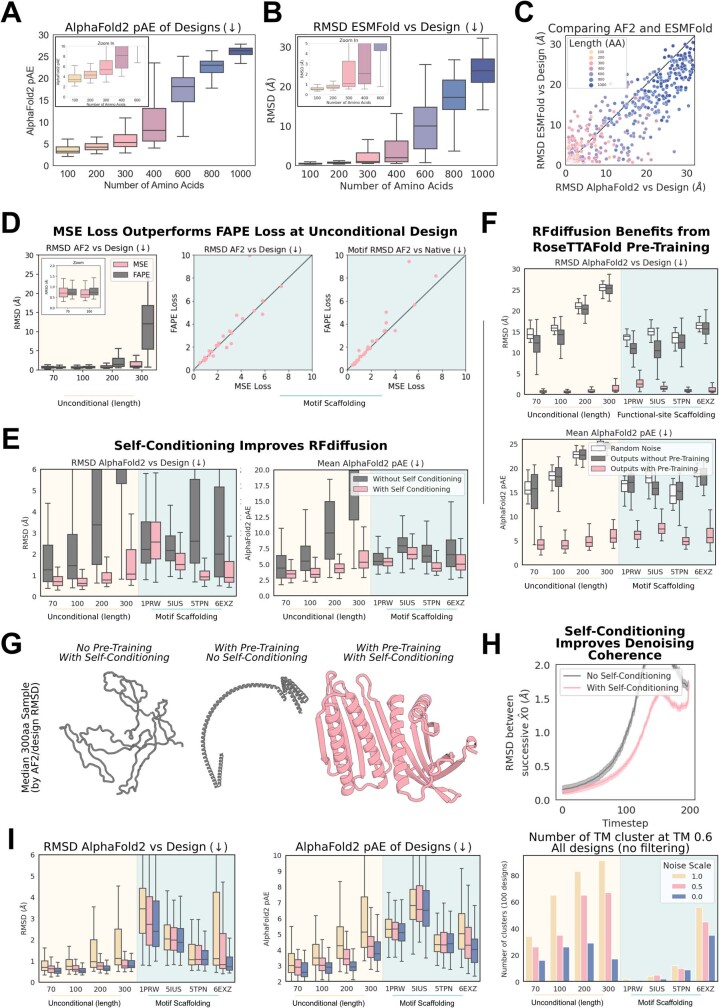
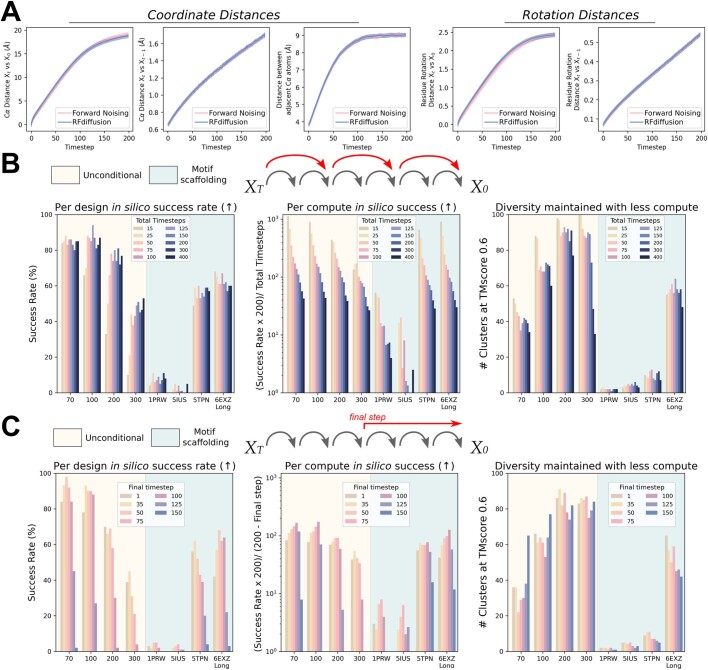
There has been considerable recent progress in designing new proteins using deep learning methods 1–9 . Despite this progress, a general deep learning framework for protein design that enables solution of a wide range of design challenges, including de novo binder design and design of higher order symmetric architectures, has yet to be described. Diffusion models 10,11 have had considerable success in image and language generative modeling but limited success when applied to protein modeling, likely due to the complexity of protein backbone geometry and sequence-structure relationships. Here we show that by fine tuning the RoseTTAFold structure prediction network on protein structure denoising tasks, we obtain a generative model of protein backbones that achieves outstanding performance on unconditional and topology-constrained protein monomer design, protein binder design, symmetric oligomer design, enzyme active site scaffolding, and symmetric motif scaffolding for therapeutic and metal-binding protein design. We demonstrate the power and generality of the method, called RoseTTAFold Diffusion (RF diffusion ), by experimentally characterizing the structures and functions of hundreds of new designs. In a manner analogous to networks which produce images from user-specified inputs, RF diffusion enables the design of diverse, complex, functional proteins from simple molecular specifications.
Overview
The claims and statistics of this paper haven’t been checked yet.
Run the check — free, no account needed. It reads the open-access text and checks the sources it cites.
Integrity signals
Registry
Cites
Statistics
Figures
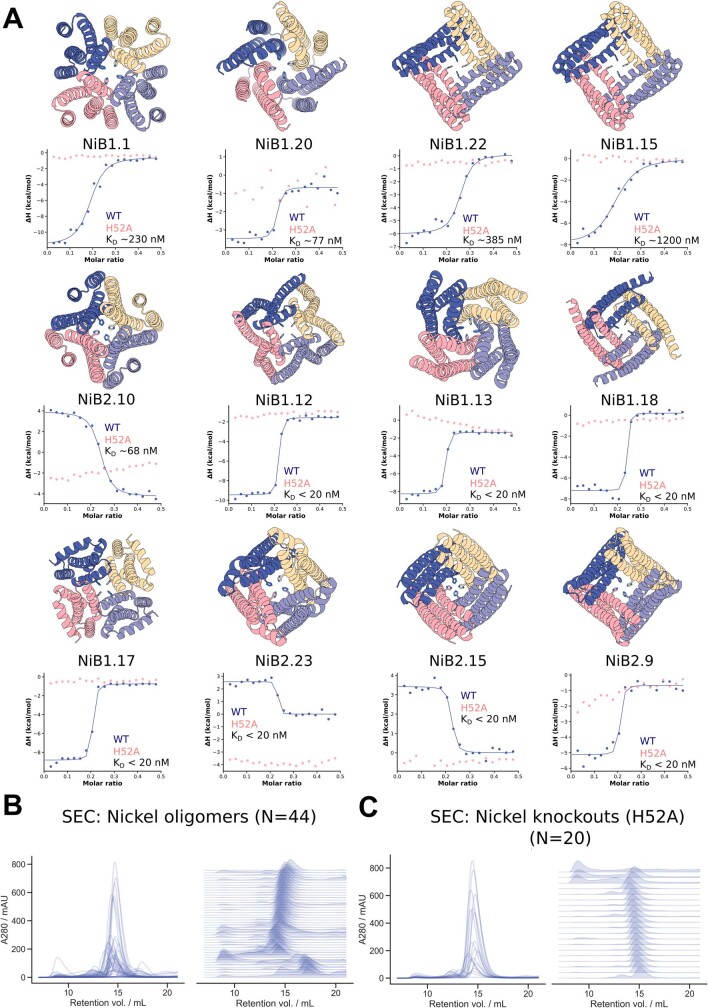
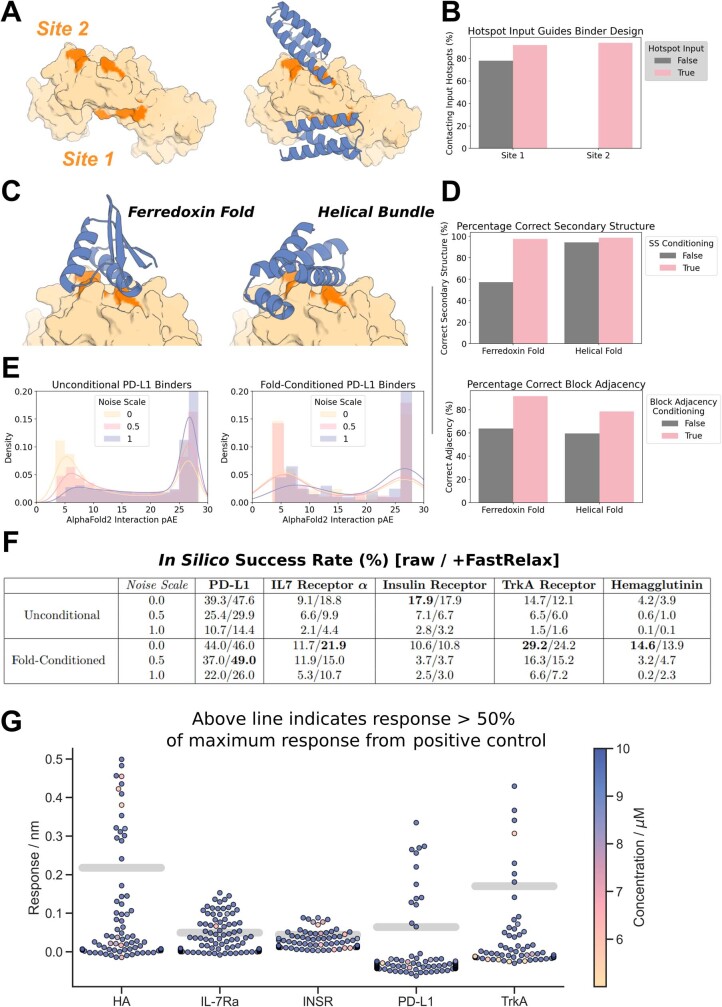
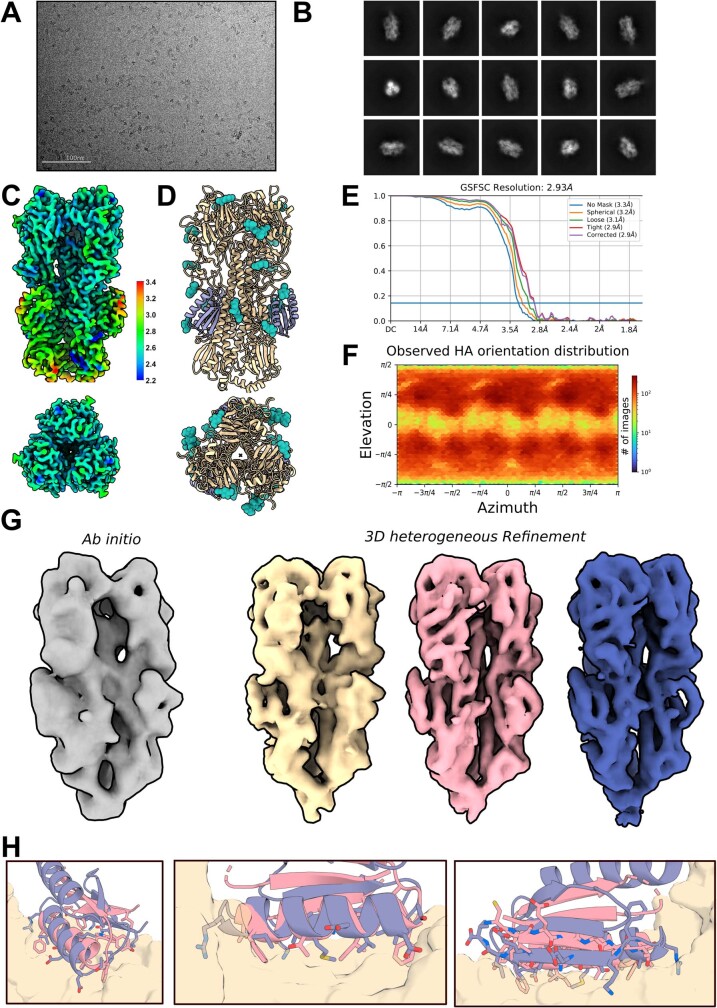
Verification
Claims the paper makes
The claims and statistics of this paper haven’t been checked yet.
Run the check — free, no account needed. It reads the open-access text and checks the sources it cites.
Self-check
Percentages, sums and reported differences re-computed from the paper’s own numbers.
The self-check needs the paper’s full text.
Citations
Cites
Highly accurate protein structure prediction with AlphaFold
Jumper, J., Evans, R., Pritzel, A., Green, T., Figurnov, M., Ronneberger, O., Tunyasuvunakool, K., Bates, R., Žídek, A., Potapenko, A., et al. (2021) · Nature · doi:10.1038/s41586-021-03819-2 · Cited by 43,764
Berman, H. M. (2000) · Nucleic Acids Research · doi:10.1093/nar/28.1.235 · Cited by 40,196
Denoising Diffusion Probabilistic Models
Ho, J., Jain, A., & Abbeel, P. (2020) · arXiv · doi:10.48550/arxiv.2006.11239 · Cited by 8,712
Evolutionary-scale prediction of atomic level protein structure with a language model
Lin, Z., Akin, H., Rao, R., Hie, B., Zhu, Z., Lu, W., Smetanin, N., Verkuil, R., Kabeli, O., Shmueli, Y., et al. (2022) · doi:10.1101/2022.07.20.500902 · Cited by 5,990
Accurate prediction of protein structures and interactions using a 3-track network
Baek, M., DiMaio, F., Anishchenko, I., Dauparas, J., Ovchinnikov, S., Lee, G. R., Wang, J., Cong, Q., Kinch, L. N., Schaeffer, R. D., et al. (2021) · doi:10.1101/2021.06.14.448402 · Cited by 5,549
Self-citationDeep Unsupervised Learning using Nonequilibrium Thermodynamics
Sohl-Dickstein, J., Weiss, E. A., Maheswaranathan, N., & Ganguli, S. (2015) · arXiv · doi:10.48550/arxiv.1503.03585 · Cited by 2,637
Zero-shot text-to-image generation
Ramesh, A., Pavlov, M., Goh, G., Gray, S., Voss, C., Radford, A., Chen, M., & Sutskever, I. (2021) · arXiv · doi:10.48550/arxiv.2102.12092 · Cited by 2,417
THEORY OF PROTEIN FOLDING: The Energy Landscape Perspective
Onuchic, J. N., Luthey-Schulten, Z., & Wolynes, P. G. (1997) · Annual Review of Physical Chemistry · doi:10.1146/annurev.physchem.48.1.545 · Cited by 2,210
Robust deep learning–based protein sequence design using ProteinMPNN
Dauparas, J., Anishchenko, I., Bennett, N., Bai, H., Ragotte, R. J., Milles, L. F., Wicky, B. I. M., Courbet, A., de Haas, R. J., Bethel, N., et al. (2022) · Science · doi:10.1126/science.add2187 · Cited by 2,210
Self-citationStructure of the MDM2 Oncoprotein Bound to the p53 Tumor Suppressor Transactivation Domain
Kussie, P. H., Gorina, S., Marechal, V., Elenbaas, B., Moreau, J., Levine, A. J., & Pavletich, N. P. (1996) · Science · doi:10.1126/science.274.5289.948 · Cited by 2,206
Research works printed but not linked: 3
- 10.48550/arXiv.2209.15611 · DOI · Paper page
- 10.1101/2022.07.13.499967 · DOI · Paper page
- Anand, N. & Huang, P. Generative modeling for protein structures. in Advances in Neural Information Processing Systems vol. 31 (Curran Associates, Inc., 2018).
Cited by
Sorted by citations
Items 601–700 of 1,000
De Novo Antibody Design with SE(3) Diffusion
Cutting, D., Dreyer, F. A., Errington, D., Schneider, C., & Deane, C. M. (2024) · Journal of Computational Biology · doi:10.1089/cmb.2024.0768 · Cited by 22
Minges, P., Eder, M., & Eder, A.-C. (2025) · Pharmaceuticals · doi:10.3390/ph18020143 · Cited by 11
Dhoriyani, J., Bergman, M. T., Hall, C. K., & You, F. (2025) · PNAS Nexus · doi:10.1093/pnasnexus/pgae572 · Cited by 12
The structural basis of the G protein–coupled receptor and ion channel axis
Luo, Y., Sun, L., & Peng, Y. (2025) · Current Research in Structural Biology · doi:10.1016/j.crstbi.2025.100165 · Cited by 12
A comprehensive primer and review of PROTACs and their In Silico design
Zattoni, J., Vottero, P., Carena, G., Uliveto, C., Pozzati, G., Morabito, B., Gitari, E., Tuszyński, J. A., & Aminpour, M. (2025) · Computer Methods and Programs in Biomedicine · doi:10.1016/j.cmpb.2025.108687 · Cited by 14
Fundamental and Application of Co-assembly of Peptides and Proteins: Experiment and Computation
Ihoeghian, N. A., & Shao, Q. (2025) · Supramolecular Materials · doi:10.1016/j.supmat.2025.100103 · Cited by 11
Artificial intelligence in de novo protein design
Yao, J., & Wang, X. (2025) · Medicine in Novel Technology and Devices · doi:10.1016/j.medntd.2025.100366 · Cited by 14
Artificial intelligence in drug development for delirium and Alzheimer’s disease
Ai, R., Xiao, X., Deng, S., Yang, N., Xing, X., Watne, L. O., Selbæk, G., Wedatilake, Y., Xie, C., Rubinsztein, D. C., et al. (2025) · Acta Pharmaceutica Sinica B · doi:10.1016/j.apsb.2025.04.026 · Cited by 11
MSBack: Multiscale Backmapping of Highly Coarse-Grained Proteins Using Constrained Diffusion
Waltmann, C., Wang, Y., Yang, C., Kim, S., & Voth, G. A. (2025) · Journal of Chemical Theory and Computation · doi:10.1021/acs.jctc.5c00459 · Cited by 11
MIC: A deep learning tool for assigning ions and waters in cryo-EM and crystal structures
Shub, L., Liu, W., Skiniotis, G., Keiser, M. J., & Robertson, M. J. (2025) · Nature Communications · doi:10.1038/s41467-025-61315-x · Cited by 14
Protein engineering via sequence-performance mapping
McConnell, A., & Hackel, B. J. (2023) · Cell Systems · doi:10.1016/j.cels.2023.06.009 · Cited by 13
Efficient 3D Molecular Design with an E(3) Invariant Transformer VAE
Dollar, O., Joshi, N., Pfaendtner, J., & Beck, D. A. C. (2023) · The Journal of Physical Chemistry A · doi:10.1021/acs.jpca.3c04188 · Cited by 12
Structural biology in the age of AI
Subramaniam, S. (2023) · Nature Methods · doi:10.1038/s41592-023-02123-3 · Cited by 12
De novo design of RNA and nucleoprotein complexesPreprint
Favor, A., Quijano, R. N., Chernova, E., Kubaney, A., Weidle, C., Esler, M. A., McHugh, R., Carr, A., Hsia, Y., Juergens, D., et al. (2025) · bioRxiv (Cold Spring Harbor Laboratory) · doi:10.1101/2025.10.01.679929 · Cited by 15
Self-citationFang, M., Wang, C., Shi, J., Lian, F., Jin, Q., Wang, Z., Zhang, Y., Chen, P., Cui, Z., Wang, Y., et al. (2025) · bioRxiv (Cold Spring Harbor Laboratory) · doi:10.1101/2025.11.08.686881 · Cited by 18
Beitzinger, B., Draphoen, B., Hald, J., Krämer, M., Rudolf, T., Schmitt, F., Schwarz, P., & Lindén, M. (2025) · Expert Opinion on Drug Delivery · doi:10.1080/17425247.2025.2522245 · Cited by 11
Efficient protein structure generation with sparse denoising models
Jendrusch, M., & Korbel, J. O. (2025) · Nature Machine Intelligence · doi:10.1038/s42256-025-01100-z · Cited by 10
A survey on large language models in biology and chemistry
Ashyrmamatov, I., Gwak, S. J., Jin, S.-Y., Jun, I., Ucak, U. V., Lee, J. Y., & Lee, J. (2025) · Experimental & Molecular Medicine · doi:10.1038/s12276-025-01583-1 · Cited by 15
Generative Artificial Intelligence: Applications and Future Prospects in Dentistry
Ma, Z., Du, C., Lao, Q., & Xie, X. (2025) · International Dental Journal · doi:10.1016/j.identj.2025.108276 · Cited by 14
Wang, Y., Ma, Y., Chang, Y.-H., Yan, J., Zhang, J., Cai, M.-Y., & Wei, K. (2025) · Biology · doi:10.3390/biology14121665 · Cited by 11
Fast, Bright, and Reversible Fluorescent Labeling of Rhodamine-Binding Proteins
Kompa, J., Dornfeld, L., Porzberg, N., Jang, S., Zedlitz, S., Lilje, S. H., Catapano, C., Jocher, D., Merk, L., Hoege, C., et al. (2025) · Journal of the American Chemical Society · doi:10.1021/jacs.5c18083 · Cited by 10
De novo design of small molecule–regulated protein oligomers
Jin, Q., Wang, Y., Chen, D., Liao, J., Cui, Z., Fan, Y., Zeng, A., Xie, M., & Cao, L. (2026) · Science · doi:10.1126/science.ady6017 · Cited by 15
Computation and deep-learning-driven advances in CRISPR genome editing
Pindi, C., & Palermo, G. (2026) · Nature Structural & Molecular Biology · doi:10.1038/s41594-025-01739-7 · Cited by 10
Deep generative molecular design and its value in modern drug discovery
Özdemir, E. S., Jang, H., Keskin, Ö., Gürsoy, A., & Nussinov, R. (2026) · Expert Opinion on Drug Discovery · doi:10.1080/17460441.2026.2636192 · Cited by 10
Generalist biological artificial intelligence in modeling the language of life
Rao, V. M., Zhang, S., Plosky, B. S., Hsu, P. D., Wang, B., Zou, J., Žitnik, M., Topol, E. J., & Rajpurkar, P. (2026) · Nature Biotechnology · doi:10.1038/s41587-026-03064-w · Cited by 14
De novo design of miniproteins targeting GPCRs
Muratspahić, E., Feldman, D., Kim, D. E., Qu, X., Bratovianu, A.-M., Rivera-Sánchez, P., Voss, J. H., Hertz, E. P. T., Jeppesen, M. G., Dimitri, F., et al. (2026) · Nature · doi:10.1038/s41586-026-10656-8 · Cited by 35
Self-citationEfficient generation of epitope-targeted antibodies with Germinal
Mille, L. S., Driscoll, C. L., Wang, J. N., Dai, H., Widatalla, T., Zhang, J. L., Zhang, X., Rao, B., Feng, L., Hie, B., et al. (2026) · Nature Biotechnology · doi:10.1038/s41587-026-03187-0 · Cited by 40
Self-citationZero-shot design of drug-binding proteins via neural iterative selection−expansion
Fry, B. N., Slaw, K., & Polizzi, N. F. (2026) · Nature · doi:10.1038/s41586-026-10670-w · Cited by 24
A guide to CAR T cell therapies: development, current status and future prospects
Rafei, H., Upadhyay, R., & Sharma, P. (2026) · Nature reviews. Immunology · doi:10.1038/s41577-026-01322-1 · Cited by 14
Validation and analysis of 12,000 AI-driven CAR-T designs in the Bits to Binders competition
Kosonocky, C. W., Abel, A. M., Feller, A. L., Rieffer, A. C., Woolley, P. R., Lála, J., Barth, D. S., Gardner, T., Competitors, B. T. B., Acosta, D., et al. (2026) · Molecular Systems Biology · doi:10.1038/s44320-026-00246-1 · Cited by 12
Effector translocation and rational design of disease resistance
Sha, G., & Li, G. (2023) · Trends in Microbiology · doi:10.1016/j.tim.2023.09.007 · Cited by 10
Designing Multifunctional Biomaterials via Protein Self‐Assembly
Solomonov, A. V., Kozell, A., & Shimanovich, U. (2024) · Angewandte Chemie · doi:10.1002/ange.202318365 · Cited by 11
Invariant point message passing for protein side chain packing
(2024) · doi:10.1002/prot.26705 · Cited by 10
PROUD: PaRetO-gUided diffusion model for multi-objective generation
Yao, Y., Pan, Y., Li, J., Tsang, I. W.-H., & Yao, X. (2024) · Machine Learning · doi:10.1007/s10994-024-06575-2 · Cited by 11
All‐Atom Protein Sequence Design Based on Geometric Deep Learning
Liu, J., Guo, Z., You, H., Zhang, C., & Lai, L. (2024) · Angewandte Chemie International Edition · doi:10.1002/anie.202411461 · Cited by 10
Repurposing Amide Bond-Forming Enzymes for Non-native Protein Modification
Zhu, T., & Wu, B. (2024) · ACS Catalysis · doi:10.1021/acscatal.4c04145 · Cited by 10
Protein Design by Integrating Machine Learning and Quantum-Encoded Optimization
Panizza, V., Hauke, P., Micheletti, C., & Faccioli, P. (2024) · PRX Life · doi:10.1103/prxlife.2.043012 · Cited by 10
The need for adaptability in detection, characterization, and attribution of biosecurity threats
Mo, W., Vaiana, C. A., & Myers, C. J. (2024) · Nature Communications · doi:10.1038/s41467-024-55436-y · Cited by 14
One-step antifouling coating of polystyrene using engineered polypeptides
Zheng, C., Hussain, Z., Chen, C., de Haas, R. J., Deshpande, S., Zhang, Z., Zuilhof, H. T., & de Vries, R. J. (2025) · Journal of Colloid and Interface Science · doi:10.1016/j.jcis.2025.01.147 · Cited by 10
RNAproDB: A Webserver and Interactive Database for Analyzing Protein–RNA Interactions
Mitra, R., Cohen, A. S., Tang, W. Y., Hosseini, H., Hong, Y., Berman, H. M., & Rohs, R. (2025) · Journal of Molecular Biology · doi:10.1016/j.jmb.2025.169012 · Cited by 13
De Novo Design of Proteins for Autocatalytic Isopeptide Bond Formation
Srisantitham, S., Walker, A. L., Markel, U., & Tezcan, F. A. (2025) · Journal of the American Chemical Society · doi:10.1021/jacs.5c03319 · Cited by 10
Discovery, design, and engineering of enzymes based on molecular retrobiosynthesis
Chen, A., Peng, X., Shen, T., Zheng, L., Wu, D., & Wang, S. (2025) · mLife · doi:10.1002/mlf2.70009 · Cited by 12
Electrochemical‐Genetic Programming of Protein‐Based Magnetic Soft Robots for Active Drug Delivery
Zhao, H., Yu, B., Yu, D., Ji, T., Nie, K., Tian, J., Shen, X., Zhang, K., Ou, J., Yang, X., et al. (2025) · Advanced Science · doi:10.1002/advs.202503404 · Cited by 10
The thermodynamic hypothesis of protein aggregation
Vendruscolo, M. (2025) · Molecular Aspects of Medicine · doi:10.1016/j.mam.2025.101364 · Cited by 12
From reactants to products: computational methods for biosynthetic pathway design
Ding, S., Liu, D., Tian, Y. T., Zhang, D., Xing, H., Chen, J., Liu, Z., & Hu, Q. (2025) · Synthetic and Systems Biotechnology · doi:10.1016/j.synbio.2025.05.005 · Cited by 10
Lin, H., Zhu, C., Shang, T., Zhu, N., Lin, K., Zhang, C., Shao, X., Wang, X., & Duan, H. (2025) · Journal of Medicinal Chemistry · doi:10.1021/acs.jmedchem.5c00896 · Cited by 10
Sewall, L. M., Rocha, R. D. P. F., Gibson, G., Louie, M., Xie, Z., Bangaru, S., Tran, A. S., Ozorowski, G., Mohanty, S., Beutler, N., et al. (2025) · Nature Biomedical Engineering · doi:10.1038/s41551-025-01411-x · Cited by 11
Mathematical models and computational approaches in CAR-T therapeutics
Putignano, G., Ruipérez-Campillo, S., Yuan, Z., Millet, J., & Guerrero‐Aspizua, S. (2025) · Frontiers in Immunology · doi:10.3389/fimmu.2025.1581210 · Cited by 12
Design of peptides with noncanonical amino acids using flow matching
Lee, J. S., & Kim, P. M. (2026) · Bioinformatics · doi:10.1093/bioinformatics/btag654 · Cited by 12
Breaking Evolution’s Ceiling: AI-Powered Protein Engineering
Jin, S., Wu, Q., Fu, G., Lu, D. X., Wang, F., Deng, L. F., & Nie, K. (2025) · Catalysts · doi:10.3390/catal15090842 · Cited by 11
Multi-Modal Topology-Aware Graph Neural Network for Robust Chemical–Protein Interaction Prediction
Wang, J. (2025) · International Journal of Molecular Sciences · doi:10.3390/ijms26178666 · Cited by 11
Self-citationDe novo design of potent inhibitors of clostridial family toxins
Ragotte, R. J., Liang, H., Tam, J., Miletic, S., Berman, J. M., Palou, R., Weidle, C., Li, Z., Glögl, M., Beilhartz, G. L., et al. (2025) · Proceedings of the National Academy of Sciences · doi:10.1073/pnas.2509329122 · Cited by 11
Self-citationTransfer learning on protein language models improves antimicrobial peptide classification
Georgoulis, E., Zervou, M. A., & Pantazis, Y. (2025) · Scientific Reports · doi:10.1038/s41598-025-21223-y · Cited by 13
Technologies for Monoclonal Antibody Discovery and Development
Han, K. H., Li, Y., Parveen, R., Venkataraman, S., & Lin, C. (2025) · International Journal of Molecular Sciences · doi:10.3390/ijms262110470 · Cited by 15
Designing novel solenoid proteins with in silico evolution
(2025) · doi:10.1038/s42004-025-01817-3 · Cited by 10
Active learning-guided optimization of cell-free biosensors for lead testing in drinking water
Wang, B. M., Chiang, N., Ekas, H. M., Brown, D. M., Dildine, G., Lucci, T. J., Feng, S., Bly, V., Gaillard, J., Lucks, J. B., et al. (2025) · Nature Communications · doi:10.1038/s41467-025-66964-6 · Cited by 13
AI tools are designing entirely new proteins that could transform medicine
Callaway, E. (2023) · Nature · doi:10.1038/d41586-023-02227-y · Cited by 11
Computational de novo protein design: From secondary to primary, then toward tertiary structures
Quan, L., Wu, T., & Lyu, Q. (2023) · Chem · doi:10.1016/j.chempr.2023.06.010 · Cited by 10
Kordes, S., Beck, J., Shanmugaratnam, S., Flecks, M., & Höcker, B. (2023) · Protein Engineering Design and Selection · doi:10.1093/protein/gzad012 · Cited by 8
A probabilistic view of protein stability, conformational specificity, and design
Stern, J. A., Free, T. J., Stern, K. L., Gardiner, S., Dalley, N. A., Bundy, B. C., Price, J. L., Wingate, D., & Della Corte, D. (2023) · Scientific Reports · doi:10.1038/s41598-023-42032-1 · Cited by 10
Analysis of conformational stability of interacting residues in protein binding interfaces
Chauhan, V. M., & Pantazes, R. J. (2022) · Protein Engineering Design and Selection · doi:10.1093/protein/gzad016 · Cited by 10
Intelligent Protein Design and Molecular Characterization Techniques: A Comprehensive Review
Wang, J., Chen, C., Yao, G., Ding, J., Wang, L., & Jiang, H. (2023) · Molecules · doi:10.3390/molecules28237865 · Cited by 10
Self-citationArtificial structural proteins: Synthesis, assembly and material applications
Li, M., Liu, K., Liu, K., & Zhang, H. (2024) · Bioorganic Chemistry · doi:10.1016/j.bioorg.2024.107162 · Cited by 10
gRNAde: A Geometric Deep Learning Pipeline for 3D RNA Inverse Design
Joshi, C. K., & Lió, P. (2024) · Methods in molecular biology · doi:10.1007/978-1-0716-4079-1_8 · Cited by 10
Revival of Bioengineered Proteins as Carriers for Nucleic Acids
Scherer, D., Burger, M., & Leroux, J. (2024) · Bioconjugate Chemistry · doi:10.1021/acs.bioconjchem.4c00079 · Cited by 10
Chen, T., Quinn, Z., Mishra, K., O’Connor, E. C., Silver, S. E., Zhang, Y., Valencia, M. J., Mei, Y., Behmoaras, J., Ferreira, L. M. R., et al. (2024) · bioRxiv (Cold Spring Harbor Laboratory) · doi:10.1101/2024.07.31.606098 · Cited by 11
P( all-atom ) Is Unlocking New Path For Protein DesignPreprint
Qu, W., Guan, J., Ma, R., Zhai, K., Wu, W., & Wang, H. (2024) · bioRxiv (Cold Spring Harbor Laboratory) · doi:10.1101/2024.08.16.608235 · Cited by 16
Miniaturizing, Modifying, and Magnifying Nature’s Proteins with RaygunPreprint
Devkota, K., Shonai, D., Mao, J., Ko, Y. S., Wang, W., Soderling, S., & Singh, R. (2025) · bioRxiv · doi:10.1101/2024.08.13.607858 · Cited by 8
Multi-Modal Large Language Model Enables Protein Function PredictionPreprint
Huo, M., Guo, H. W., Cheng, X., Singh, D., Rahmani, H., Li, S., Gerlof, P., Ideker, T., Grotjahn, D. A., Villa, E., et al. (2024) · bioRxiv (Cold Spring Harbor Laboratory) · doi:10.1101/2024.08.19.608729 · Cited by 12
Engineering de novo binder CAR-T cell therapies with generative AIPreprint
Mergen, M., Abele, D., Koleci, N., Fernandez, A. S., Sugden, M., Holzleitner, N., Carr, A., Rieger, L., Leone, V., Reichert, M., et al. (2024) · bioRxiv (Cold Spring Harbor Laboratory) · doi:10.1101/2024.11.25.625151 · Cited by 12
Protein Hunter: exploiting structure hallucination within diffusion for protein designPreprint
Cho, Y., Rangel, G., Bhardwaj, G., & Ovchinnikov, S. (2025) · bioRxiv (Cold Spring Harbor Laboratory) · doi:10.1101/2025.10.10.681530 · Cited by 16
Using a GPT-5-driven autonomous lab to optimize the cost and titer of cell-free protein synthesisPreprint
Smith, A. A., Wong, E. L., Donovan, R. C., Chapman, B., Harry, R., Tirandazi, P., Kanigowska, P., Gendreau, E. A., Dahl, R. H., Jastrzebski, M., et al. (2026) · bioRxiv (Cold Spring Harbor Laboratory) · doi:10.64898/2026.02.05.703998 · Cited by 15
Rational design of a highly active N-glycosyltransferase mutant using fragment replacement approach
Yang, J., Li, K., Rong, Y., Liu, Z., Liu, X., Yu, Y., Shi, W., Kong, Y., & Chen, M. (2023) · Engineering Microbiology · doi:10.1016/j.engmic.2023.100134 · Cited by 8
Biomolecular phase separation through theoretical and computational microscope
Kumar, R., Koo, D., Eom, Y., & Choi, J. (2024) · Bulletin of the Korean Chemical Society · doi:10.1002/bkcs.12840 · Cited by 9
Diversifying de novo TIM barrels by hallucination
Beck, J., Shanmugaratnam, S., & Höcker, B. (2024) · Protein Science · doi:10.1002/pro.5001 · Cited by 9
Perspective on AI for accelerated materials design at the AI4Mat-2023 workshop at NeurIPS 2023
Miret, S., Krishnan, N. M. A., Sánchez-Lengeling, B., Skreta, M., Venugopal, V., & Wei, J. N. (2024) · Digital Discovery · doi:10.1039/d4dd90010c · Cited by 10
Computational tools to predict context-specific protein complexes
Csikász‐Nagy, A., Fichó, E., Noto, S., & Reguly, I. Z. (2024) · Current Opinion in Structural Biology · doi:10.1016/j.sbi.2024.102883 · Cited by 11
Programmability and biomedical utility of intrinsically-disordered protein polymers
Giraldo-Castaño, M. C., Littlejohn, K. A., Avecilla, A. R. C., Barrera-Villamizar, N., & Quiroz, F. G. (2024) · Advanced Drug Delivery Reviews · doi:10.1016/j.addr.2024.115418 · Cited by 8
Koga, N., & Koga, R. (2024) · Journal of Molecular Biology · doi:10.1016/j.jmb.2024.168791 · Cited by 9
Exploring the potential of structure-based deep learning approaches for T cell receptor design
Filho, H. V. R., Jara, G. E., Guerra, J. V. D. S., Cheung, M., Felbinger, N. R., Pereira, J. G. D. C., Pierce, B. G., & de Oliveira, P. S. L. (2024) · PLoS Computational Biology · doi:10.1371/journal.pcbi.1012489 · Cited by 9
Effective Gene Expression Prediction and Optimization from Protein Sequences
Liu, T., Zhang, Y., Li, Y., Xu, G., Gao, H., Wang, P., Tu, T., Luo, H., Wu, N., Yao, B., et al. (2025) · Advanced Science · doi:10.1002/advs.202407664 · Cited by 9
Modeling for understanding and engineering metabolism
Nielsen, J., & Petranović, D. (2025) · QRB Discovery · doi:10.1017/qrd.2025.1 · Cited by 11
Principles and Design of Molecular Tools for Sensing and Perturbing Cell Surface Receptor Activity
Sescil, J., Havens, S. M., & Wang, W. (2025) · Chemical Reviews · doi:10.1021/acs.chemrev.4c00582 · Cited by 12
RoseTTAFold diffusion-guided short peptide design: a case study of binders against Keap1/Nrf2
Morena, F., Cencini, C., Emiliani, C., & Martino, S. (2025) · Computational and Structural Biotechnology Journal · doi:10.1016/j.csbj.2025.02.032 · Cited by 12
A Hyperbolic Discrete Diffusion 3D RNA Inverse Folding Model for Functional RNA Design
Hou, D., Zhang, S., Ma, M., Lin, H., Wan, Z., Zhao, H., Zhou, R., He, X. D., Wei, X., Ju, D., et al. (2025) · Journal of Chemical Information and Modeling · doi:10.1021/acs.jcim.5c00527 · Cited by 11
Advancing active compound discovery for novel drug targets: insights from AI-driven approaches
Wang, X.-Y., Chen, Y., Li, Y.-F., Wei, C., Liu, M.-Y., Yuan, C.-X., Zheng, Y.-Y., Qin, M.-H., Sheng, Y.-F., Tong, X., et al. (2025) · Acta Pharmacologica Sinica · doi:10.1038/s41401-025-01591-x · Cited by 12
Harnessing the biomolecular mechanisms of marine biomineralisation for carbon sequestration
Sanyal, S. K., Scott, C. S., Nagaraj, V., Speight, R. E., & Ahmed, F. H. (2025) · Biotechnology Advances · doi:10.1016/j.biotechadv.2025.108644 · Cited by 12
AF3Score: A Score-Only Adaptation of AlphaFold3 for Biomolecular Structure Evaluation
Liu, Y., Yu, Q., Wang, D., & Chen, M. (2025) · Journal of Chemical Information and Modeling · doi:10.1021/acs.jcim.5c00653 · Cited by 9
Ye, Q., Ma, B., Li, L., Wang, Z., Lu, M., Kang, J., Lei, Y., Xu, S., Wang, K., Jian, Y., et al. (2025) · Cancer Research · doi:10.1158/0008-5472.can-24-4096 · Cited by 9
Riemannian denoising diffusion probabilistic models
Liu, Z., Zhang, W., Schütte, C., & Li, T. (2026) · Communications in Mathematical Sciences · doi:10.4310/cms.260505104427 · Cited by 13
AI/ML-empowered approaches for predicting T Cell-mediated immunity and beyond
Chao, C., Chiu, Y., Yeung, L. C., Yee, C., Jiang, C., & Shen, X. (2025) · Frontiers in Immunology · doi:10.3389/fimmu.2025.1651533 · Cited by 9
Gonlepa, M. K., Osotuyi, T. B., Ofuonye, C. G., & Durojaye, O. A. (2025) · Discover Chemistry. · doi:10.1007/s44371-025-00313-w · Cited by 10
De Novo Design of Protein-Binding Peptides by Quantum Computing
Meuser, L., Patsilinakos, A., & Faccioli, P. (2025) · Journal of Chemical Theory and Computation · doi:10.1021/acs.jctc.5c00768 · Cited by 10
Application of synthetic biology in the cultured meat production
Yin, Z., Liu, F., Zhang, Z., Zhou, J., Li, J., Chen, J., Du, G., & Zhao, X. (2025) · Trends in Food Science & Technology · doi:10.1016/j.tifs.2025.105363 · Cited by 9
Proceeding artificial intelligence technology towards vaccine designs
Zhao, F., & Zai, X. (2025) · The Innovation Life · doi:10.59717/j.xinn-life.2025.100162 · Cited by 9
AI-Guided Hydrophobic Core Design of Robust Six-Helix Bundle Proteins
Meng, Y., Tang, G., Wang, R., Zheng, B., Liu, Y., Zhang, H., & Zheng, P. (2025) · ACS Nano · doi:10.1021/acsnano.5c13783 · Cited by 9
Protein folding stability estimation with explicit consideration of unfolded states
Lee, H. C., Cho, Y., Yun, J., Steinegger, M., Kim, H. M., & Park, H. (2026) · Nature Communications · doi:10.1038/s41467-026-68637-4 · Cited by 11
De novo design of potent CRISPR–Cas13 inhibitors
Taveneau, C., Chai, H. X., D’Silva, J., Bamert, R. S., Chen, H., Hayes, B. K., Calvert, R. W., Purcell, J., Curwen, D. J., Munder, F., et al. (2026) · Nature Chemical Biology · doi:10.1038/s41589-025-02136-3 · Cited by 12
Cracking the code of multi-layer films to promote circularity in single-use plastic packaging
Quinn, E. C., Hamernik, L. J., Law, J., Clarke, R. W., Milrod, M. L., Kozarekar, S. S., Mick, R. M., Sobkowicz, M. J., Broadbelt, L. J., Knott, B. C., et al. (2026) · Nature Communications · doi:10.1038/s41467-026-68936-w · Cited by 12
De novo design of GPCR exoframe modulators
Cheng, S., Guo, J., Zhou, Y., Luo, X., Zhang, G., Zhang, Y.-Z., Yang, Y., Xie, J., Xu, P., Shen, D.-D., et al. (2026) · Nature · doi:10.1038/s41586-025-09957-1 · Cited by 11
Metadata
- Authors
- Watson, J. L., Juergens, D., Bennett, N. R., Trippe, B. L., Yim, J., Eisenach, H. E., Ahern, W., Borst, A. J., Ragotte, R. J., Milles, L. F., Wicky, B. I. M., Hanikel, N., Pellock, S. J., Courbet, A., Sheffler, W., Wang, J., Venkatesh, P., Sappington, I., Torres, S. V., Lauko, A., De Bortoli, V., Mathieu, E., Barzilay, R., Jaakkola, T. S., DiMaio, F., Baek, M., & Baker, D.
- Affiliations
- University of Washington (US)
- Centre National de la Recherche Scientifique (FR)
- Massachusetts Institute of Technology (US)
- Seoul National University (KR)
- Howard Hughes Medical Institute (US)
- Corresponding author
- Baker, David
- ORCID
- Watson, Joseph L.
- Juergens, David
- Bennett, Nathaniel R.
- Trippe, Brian L.
- Yim, Jason
- Eisenach, Helen E.
- Ahern, Woody
- Borst, Andrew J.
- Ragotte, Robert J.
- Milles, Lukas F.
- Wicky, Basile I. M.
- Hanikel, Nikita
- Pellock, Samuel J.
- Courbet, Alexis
- Sheffler, William
- Wang, Jue
- Venkatesh, Preetham
- Sappington, Isaac
- Torres, Susana Vázquez
- Lauko, Anna
- De Bortoli, Valentin
- Barzilay, Regina
- Jaakkola, Tommi S.
- DiMaio, Frank
- Baek, Minkyung
- Baker, David
- Venue
- Nature
- Publisher
- openRxiv
- Published
- 2022-12-10
- Volume
- 620
- Issue
- 7976
- Pages
- 1089-1100
- ISSN
- 0028-0836 (ISSN-L)
- PMC
- PMC10468394
- OpenAlex
- W4383957026
- Cited by
- 2,369
- References
- 57
- Citations by year
- 2026: 943 · 2025: 795 · 2024: 473 · 2023: 153 · 2022: 4
- FWCI
- 210.65
- Type
- journal article
- Language
- en
- Open access
- hybrid
- doi.org
- Licence
- cc-by
- Locations
- Nature (publishedVersion, cc-by)
- bioRxiv (Cold Spring Harbor Laboratory) (acceptedVersion, cc-by-nd)
- PubMed Central (publishedVersion, cc-by)
- PubMed (publishedVersion)
- RePEc: Research Papers in Economics (submittedVersion)
- Apollo (University of Cambridge) (submittedVersion, cc-by)
- Funders
- National Science Foundation (HDTRA1-19-1-0003, 1918839)
- Howard Hughes Medical Institute
- U.S. Department of Energy (DESC0018940)
- Bill and Melinda Gates Foundation (INV-010680)
- Washington Research Foundation
- Amgen
- Sanofi
- Washington State University
- Open Philanthropy Project
- Defense Advanced Research Projects Agency
- Defense Threat Reduction Agency (HDTRA1-19-1-0003, HDTRA1)
- Office of Science (DE-SC0018940 MOD03, DESC0018940)
- Engineering and Physical Sciences Research Council (EP/T005386/1)
- National Institute on Aging (U19AG065156)
- National Institute of General Medical Sciences (T32GM007250, T32GM008268)
- Topics
- Life Sciences › Biochemistry, Genetics and Molecular Biology › Molecular Biology › Protein Structure and Dynamics
- Life Sciences › Biochemistry, Genetics and Molecular Biology › Molecular Biology › Machine Learning in Bioinformatics
- Life Sciences › Biochemistry, Genetics and Molecular Biology › Structural Biology › Enzyme Structure and Function
- Keywords
- protein design, de novo protein design, diffusion models, RoseTTAFold, protein binder design, metal-binding proteins, protein backbone, influenza haemagglutinin, therapeutic proteins
- MeSH terms
- Deep Learning, Protein Binding, Proteins, Hemagglutinin Glycoproteins, Influenza Virus, Catalytic Domain, Cryoelectron Microscopy
About these checks
Registry, retraction, Cites and statistics results are computed, not judged, with one exception: a printed reference that no index lists is read once by a model before it counts as a citation error. Claims are extracted by a model and kept only when their quote appears verbatim in the text; each cited source is then checked, with a model’s help, for whether it says what the claim relies on. Those verdicts can be wrong — read the claim’s quote and the cited source before relying on one.
Statistics and arithmetic are recomputed, not judged.
Confidence bands are shown only for fields calibrated on our annotated test set. None is calibrated yet, so no band is shown.
What counts as a claim ›How we measure confidence ›How we check this ›
Are you an author, or do you see a problem with this page? Request a review
