

The DOI matches its Crossref record; 57 of the 57 references it cites were found in a registry or an index.
Broadly applicable and accurate protein design by integrating structure prediction networks and diffusion generative models
Open accessPreprint — published as 10.1038/s41586-023-06415-8 · Paper page
Abstract
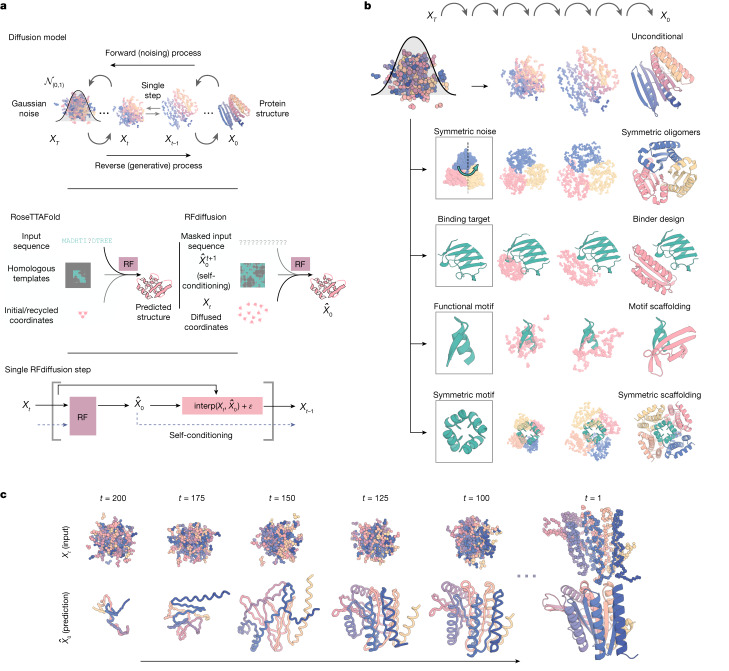
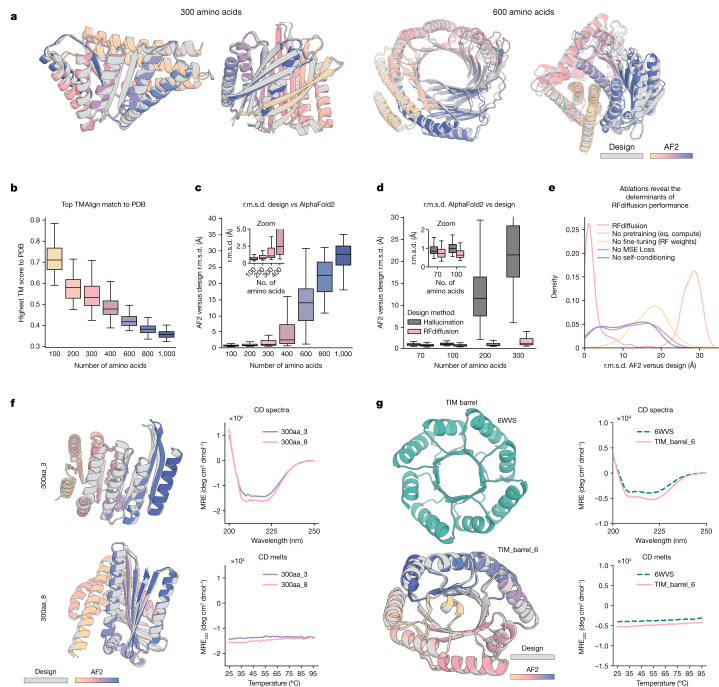
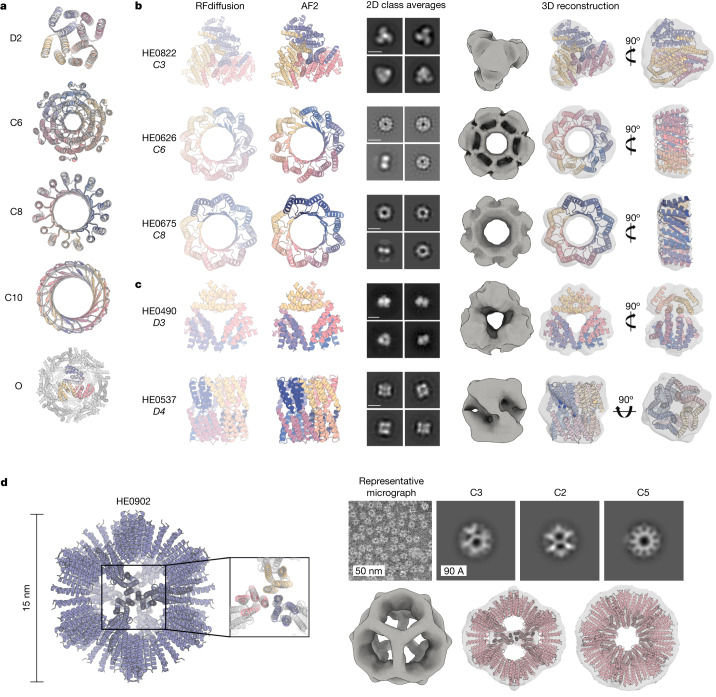
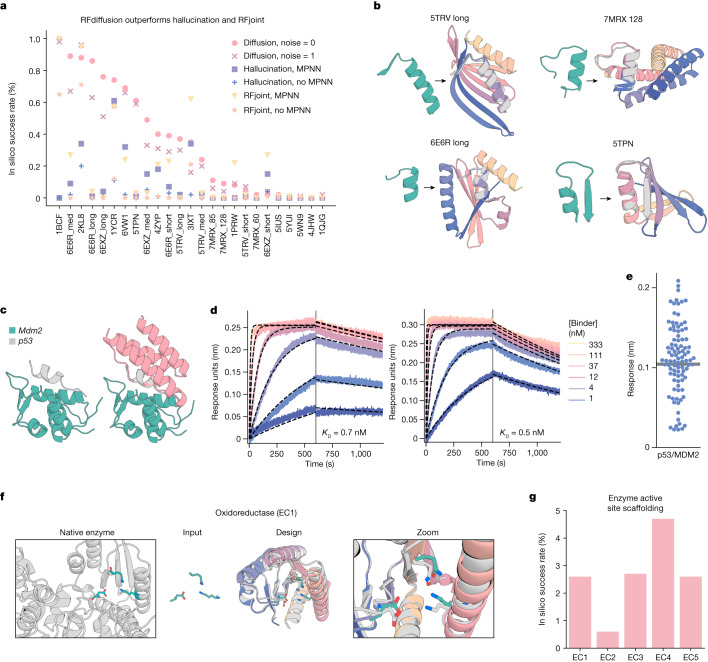
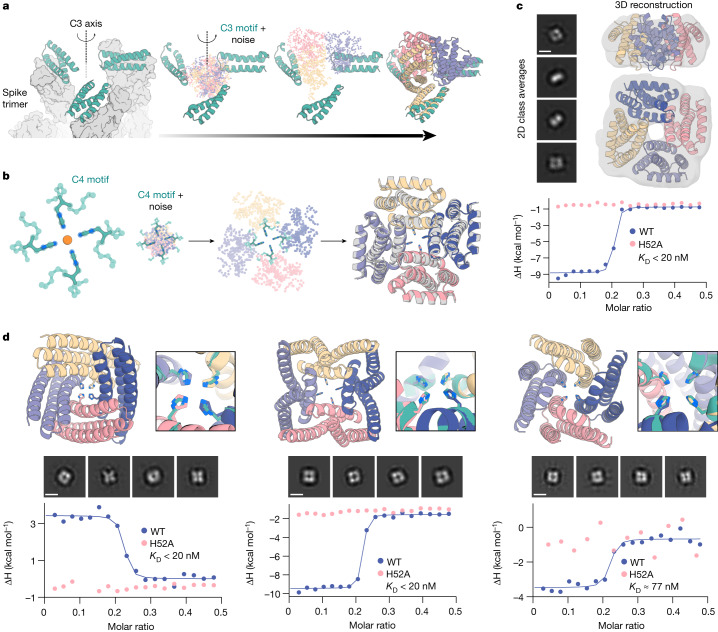
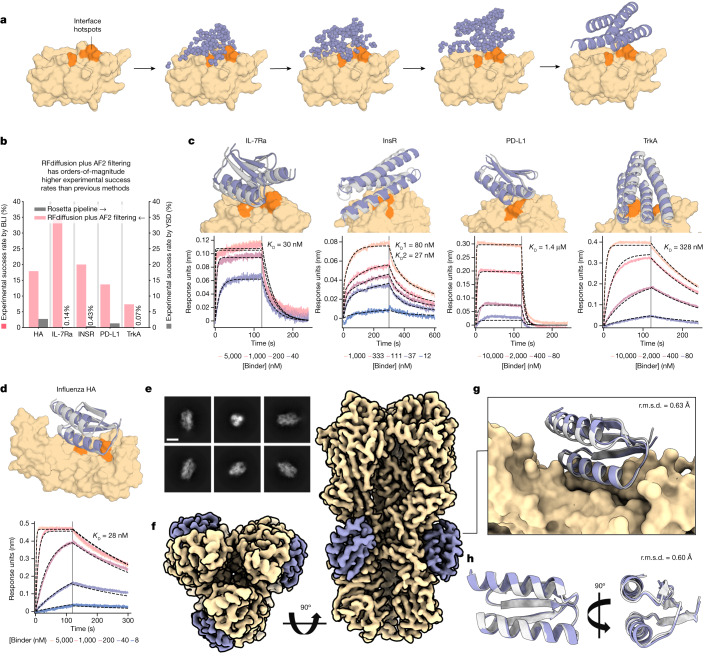
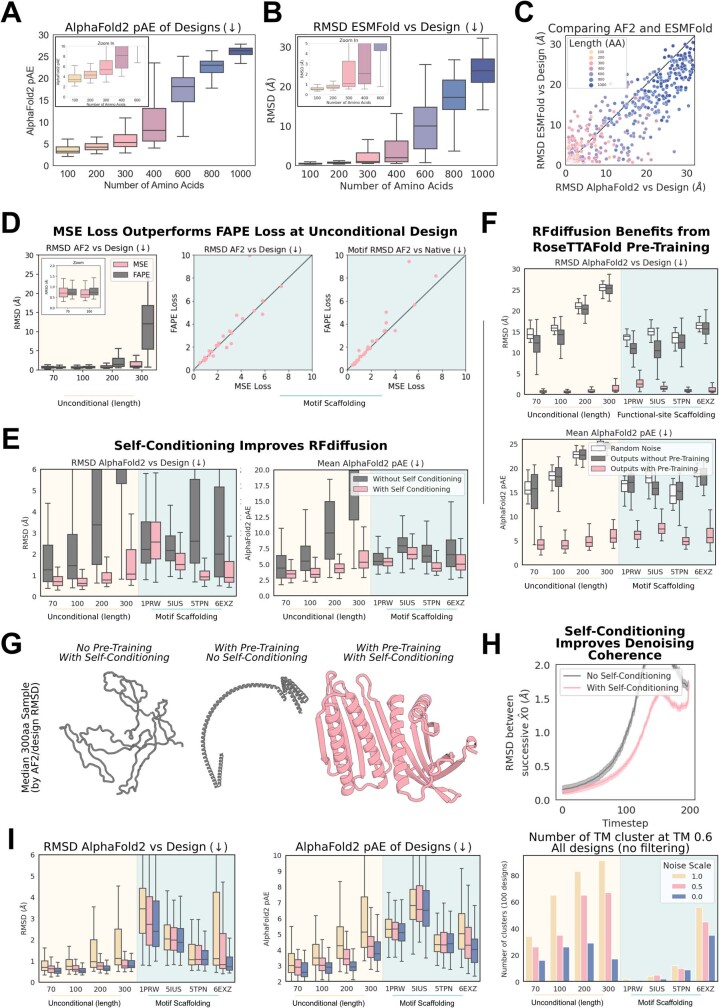
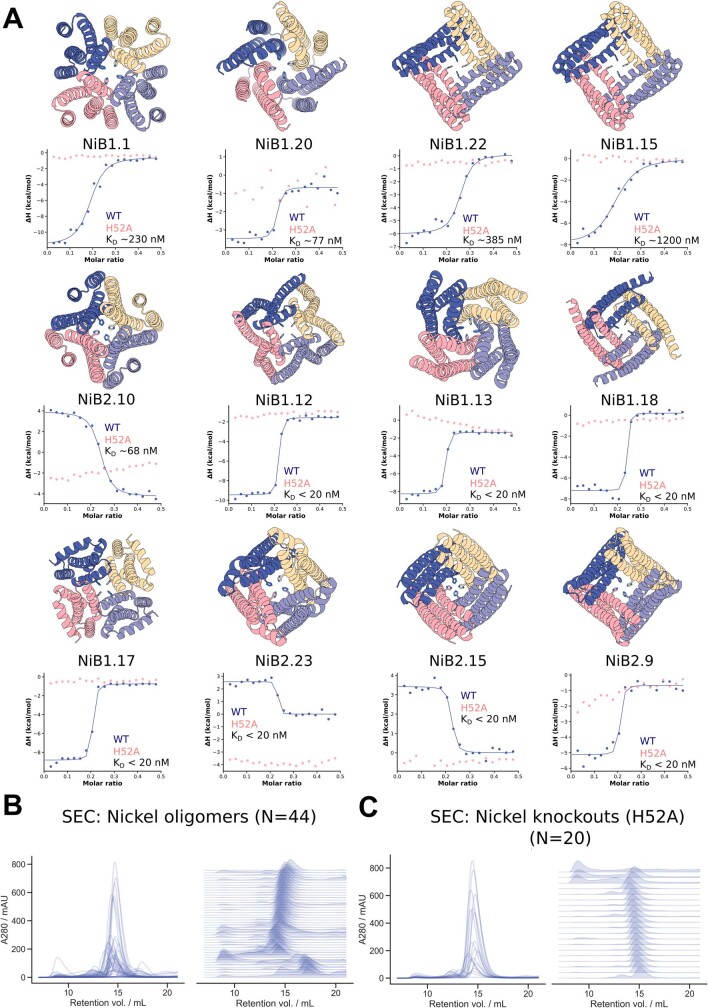
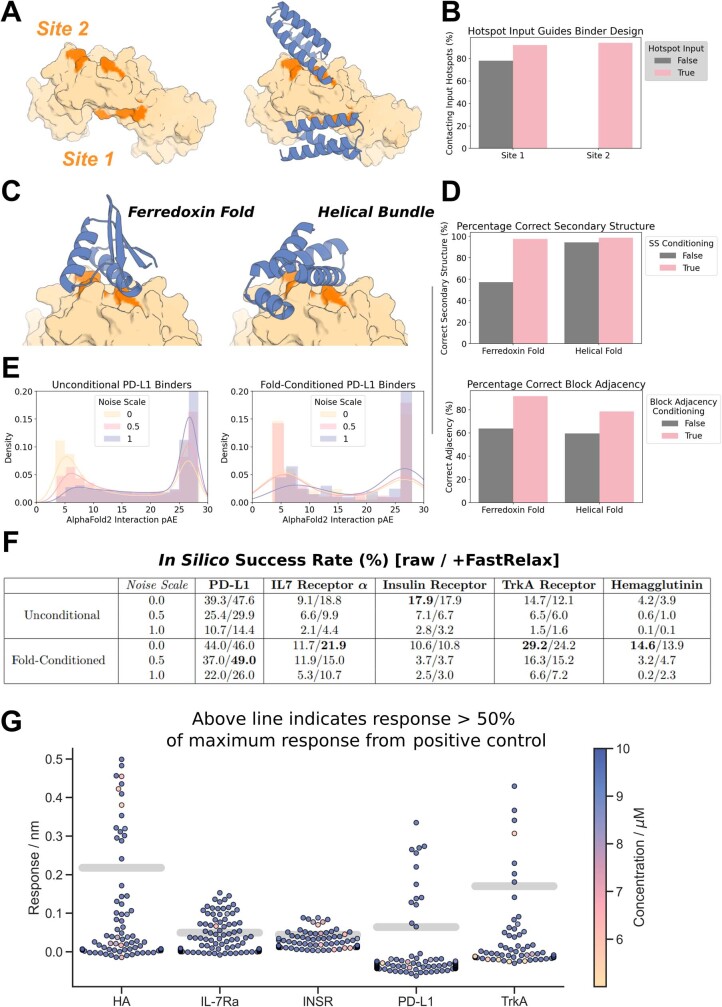
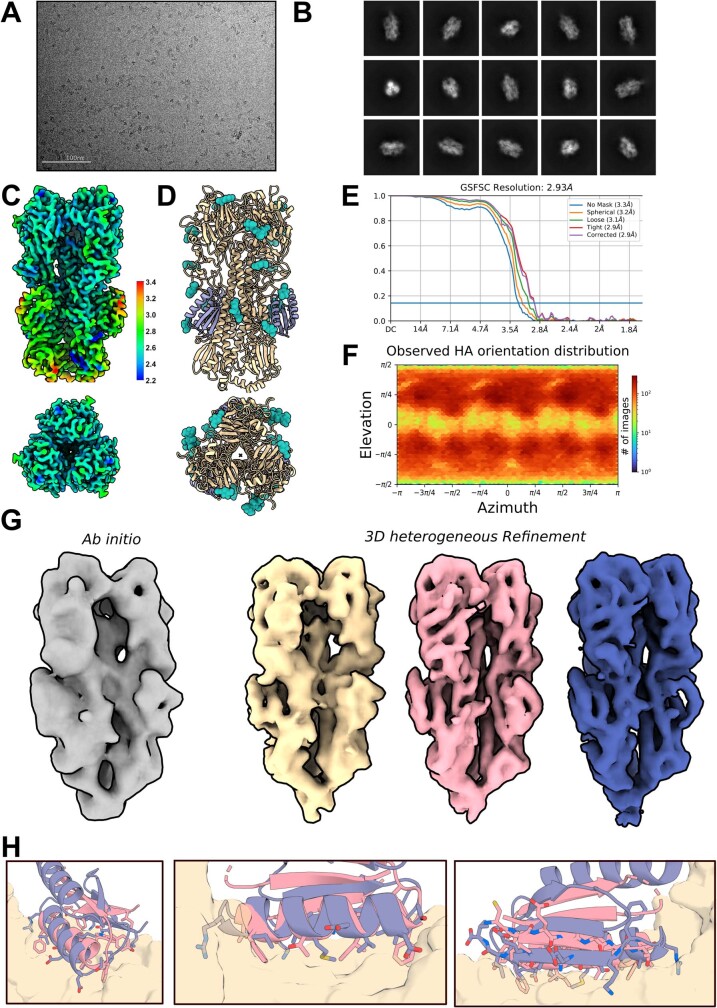
There has been considerable recent progress in designing new proteins using deep learning methods 1–9 . Despite this progress, a general deep learning framework for protein design that enables solution of a wide range of design challenges, including de novo binder design and design of higher order symmetric architectures, has yet to be described. Diffusion models 10,11 have had considerable success in image and language generative modeling but limited success when applied to protein modeling, likely due to the complexity of protein backbone geometry and sequence-structure relationships. Here we show that by fine tuning the RoseTTAFold structure prediction network on protein structure denoising tasks, we obtain a generative model of protein backbones that achieves outstanding performance on unconditional and topology-constrained protein monomer design, protein binder design, symmetric oligomer design, enzyme active site scaffolding, and symmetric motif scaffolding for therapeutic and metal-binding protein design. We demonstrate the power and generality of the method, called RoseTTAFold Diffusion (RF diffusion ), by experimentally characterizing the structures and functions of hundreds of new designs. In a manner analogous to networks which produce images from user-specified inputs, RF diffusion enables the design of diverse, complex, functional proteins from simple molecular specifications.
Overview
The claims and statistics of this paper haven’t been checked yet.
Run the check — free, no account needed. It reads the open-access text and checks the sources it cites.
Integrity signals
Registry
Cites
Statistics
Figures
Verification
Claims the paper makes
The claims and statistics of this paper haven’t been checked yet.
Run the check — free, no account needed. It reads the open-access text and checks the sources it cites.
Self-check
Percentages, sums and reported differences re-computed from the paper’s own numbers.
The self-check needs the paper’s full text.
Citations
Cites
Highly accurate protein structure prediction with AlphaFold
Jumper, J., Evans, R., Pritzel, A., Green, T., Figurnov, M., Ronneberger, O., Tunyasuvunakool, K., Bates, R., Žídek, A., Potapenko, A., et al. (2021) · Nature · doi:10.1038/s41586-021-03819-2 · Cited by 43,764
Berman, H. M. (2000) · Nucleic Acids Research · doi:10.1093/nar/28.1.235 · Cited by 40,196
Denoising Diffusion Probabilistic Models
Ho, J., Jain, A., & Abbeel, P. (2020) · arXiv · doi:10.48550/arxiv.2006.11239 · Cited by 8,712
Evolutionary-scale prediction of atomic level protein structure with a language model
Lin, Z., Akin, H., Rao, R., Hie, B., Zhu, Z., Lu, W., Smetanin, N., Verkuil, R., Kabeli, O., Shmueli, Y., et al. (2022) · doi:10.1101/2022.07.20.500902 · Cited by 5,990
Accurate prediction of protein structures and interactions using a 3-track network
Baek, M., DiMaio, F., Anishchenko, I., Dauparas, J., Ovchinnikov, S., Lee, G. R., Wang, J., Cong, Q., Kinch, L. N., Schaeffer, R. D., et al. (2021) · doi:10.1101/2021.06.14.448402 · Cited by 5,549
Self-citationDeep Unsupervised Learning using Nonequilibrium Thermodynamics
Sohl-Dickstein, J., Weiss, E. A., Maheswaranathan, N., & Ganguli, S. (2015) · arXiv · doi:10.48550/arxiv.1503.03585 · Cited by 2,637
Zero-shot text-to-image generation
Ramesh, A., Pavlov, M., Goh, G., Gray, S., Voss, C., Radford, A., Chen, M., & Sutskever, I. (2021) · arXiv · doi:10.48550/arxiv.2102.12092 · Cited by 2,417
THEORY OF PROTEIN FOLDING: The Energy Landscape Perspective
Onuchic, J. N., Luthey-Schulten, Z., & Wolynes, P. G. (1997) · Annual Review of Physical Chemistry · doi:10.1146/annurev.physchem.48.1.545 · Cited by 2,210
Robust deep learning–based protein sequence design using ProteinMPNN
Dauparas, J., Anishchenko, I., Bennett, N., Bai, H., Ragotte, R. J., Milles, L. F., Wicky, B. I. M., Courbet, A., de Haas, R. J., Bethel, N., et al. (2022) · Science · doi:10.1126/science.add2187 · Cited by 2,210
Self-citationStructure of the MDM2 Oncoprotein Bound to the p53 Tumor Suppressor Transactivation Domain
Kussie, P. H., Gorina, S., Marechal, V., Elenbaas, B., Moreau, J., Levine, A. J., & Pavletich, N. P. (1996) · Science · doi:10.1126/science.274.5289.948 · Cited by 2,206
Research works printed but not linked: 3
- 10.48550/arXiv.2209.15611 · DOI · Paper page
- 10.1101/2022.07.13.499967 · DOI · Paper page
- Anand, N. & Huang, P. Generative modeling for protein structures. in Advances in Neural Information Processing Systems vol. 31 (Curran Associates, Inc., 2018).
Cited by
Sorted by citations
Items 801–900 of 1,000
Harnessing Deep Learning Methods for Voltage-Gated Ion Channel Drug Discovery
Mateos, D. L., Harris, B. J., González, A. H., Narang, K., & Yarov-Yarovoy, V. M. (2024) · Physiology · doi:10.1152/physiol.00029.2024 · Cited by 9
PD-1 Targeted Antibody Discovery Using AI Protein Diffusion
Ford, C. T. (2024) · Technology in Cancer Research & Treatment · doi:10.1177/15330338241275947 · Cited by 7
Machine Learning for RNA Design: LEARNA
Runge, F., & Hutter, F. (2024) · Methods in molecular biology · doi:10.1007/978-1-0716-4079-1_5 · Cited by 7
Engineering conditional protein-protein interactions for dynamic cellular control
Stohr, A. M., Ma, D., Chen, W., & Blenner, M. (2024) · Biotechnology Advances · doi:10.1016/j.biotechadv.2024.108457 · Cited by 7
Marsiglia, J. D. C., Vaalavirta, K., Knight, E., Nakamura, M., Cong, L., & Hughes, N. W. (2024) · Cell Reports Methods · doi:10.1016/j.crmeth.2024.100882 · Cited by 8
Pan, C., Yu, S., Li, C., Li, J., Sun, P., Guo, Y., Li, T., Wang, D., Wang, K., Lyu, Y., et al. (2024) · Biomaterials · doi:10.1016/j.biomaterials.2024.122946 · Cited by 7
Confinement and Catalysis within De Novo Designed Peptide Barrels
Petrenas, R., Hawkins, O. A., Jones, J. F., Scott, D. A., Fletcher, J. M., Obst, U., Lombardi, L., Pirro, F., Leggett, G. J., Oliver, T. A. A., et al. (2025) · Journal of the American Chemical Society · doi:10.1021/jacs.4c16633 · Cited by 9
HNP-1: From Structure to Application Thanks to Multifaceted Functions
Zhang, J., Liu, Z., Zhou, Z., Huang, Z., Yang, Y., Wu, J., & Liu, Y. (2025) · Microorganisms · doi:10.3390/microorganisms13020458 · Cited by 8
Wang, J., Jiang, H., Chen, S., Li, Y., Hamouda, H. I., Balah, M. A. A., Xue, C., & Mao, X. (2025) · Food Chemistry · doi:10.1016/j.foodchem.2025.143778 · Cited by 7
Self-citationCurrent advancement in AI-integrated drug discovery: Methods and applications
Mathur, Y., Choudhury, A., Prabha, S., Saeed, M. U., Sulaimani, M. N., Mohammad, T., & Hassan, M. I. (2025) · Biotechnology Advances · doi:10.1016/j.biotechadv.2025.108642 · Cited by 8
Generative Artificial Intelligence-Assisted Protein Design Must Consider Repurposing Potential
Ekins, S., Brackmann, M., Invernizzi, C. F., & Lentzos, F. (2023) · GEN Biotechnology · doi:10.1089/genbio.2023.0025 · Cited by 7
Komp, E., Alanzi, H. N., Francis, R., Vuong, C., Roberts, L., Mosallanejad, A., & Beck, D. A. C. (2023) · Scientific Data · doi:10.1038/s41597-023-02553-w · Cited by 7
Liu, Y., Chen, L.-H., & Liu, H. (2023) · bioRxiv (Cold Spring Harbor Laboratory) · doi:10.1101/2023.11.18.567666 · Cited by 8
FrameDiPT: SE(3) Diffusion Model for Protein Structure InpaintingPreprint
Zhang, C., Leach, A., Makkink, T., Arbesú, M., Kadri, I., Luo, D., Mizrahi, L., Krichen, S., Lang, M., Tovchigrechko, A., et al. (2023) · bioRxiv (Cold Spring Harbor Laboratory) · doi:10.1101/2023.11.21.568057 · Cited by 9
FusOn-pLM: A Fusion Oncoprotein-Specific Language Model via Focused Probabilistic MaskingPreprint
Vincoff, S., Goel, S., Kholina, K., Pulugurta, R., Vure, P., & Chatterjee, P. (2024) · bioRxiv · doi:10.1101/2024.06.03.597245 · Cited by 8
Generative machine learning of ADAR substrates for precise and efficient RNA editingPreprint
Jiang, Y., Bagepalli, L. R., Banjanin, B. S., Savva, Y. A., Cao, Y., Guo, L., Briggs, A. W., Booth, B. J., & Hause, R. J. (2024) · bioRxiv (Cold Spring Harbor Laboratory) · doi:10.1101/2024.09.27.613923 · Cited by 6
Zhang, Z., Jin, R., Liu, J., Xu, G., Wang, X., Žitnik, M., Zhao, H., Cong, L., & Wang, M. (2024) · bioRxiv (Cold Spring Harbor Laboratory) · doi:10.1101/2024.10.23.619960 · Cited by 9
EvoFlow-RNA: Generating and Representing non-coding RNA with a Language ModelPreprint
Patel, S., Peng, F. Z., Fraser, K., Friedman, A. D., Chatterjee, P., & Yao, S. (2025) · bioRxiv (Cold Spring Harbor Laboratory) · doi:10.1101/2025.02.25.639942 · Cited by 9
Zero-shot design of drug-binding proteins via neural selection-expansionPreprint
Fry, B. N., Slaw, K., & Polizzi, N. F. (2025) · bioRxiv (Cold Spring Harbor Laboratory) · doi:10.1101/2025.04.22.649862 · Cited by 7
Adapting ProteinMPNN for antibody design without retrainingPreprint
del Alamo, D., Frick, R., Truan, D., & Karpiak, J. D. (2025) · bioRxiv (Cold Spring Harbor Laboratory) · doi:10.1101/2025.05.09.653228 · Cited by 7
Computational design of pH-sensitive bindersPreprint
Ahn, G., Coventry, B., Haefner, E., Sadre, S., Hu, J., Van, M., Huang, B., Sappington, I., Broerman, A. J., Lichtenstein, M. A., et al. (2025) · bioRxiv (Cold Spring Harbor Laboratory) · doi:10.1101/2025.09.29.678932 · Cited by 7
Self-citationAlphaFold model quality self‐assessment improvement via deep graph learning
Verburgt, J., Zhang, Z., & Kihara, D. (2025) · Protein Science · doi:10.1002/pro.70274 · Cited by 8
Next-generation direct reprogramming
Keshri, R., Detraux, D., Phal, A., McCurdy, C., Jhajharia, S., Chan, T. C., Mathieu, J., & Ruohola‐Baker, H. (2024) · Frontiers in Cell and Developmental Biology · doi:10.3389/fcell.2024.1343106 · Cited by 7
Buller, R., Damborský, J., Hilvert, D., & Bornscheuer, U. T. (2024) · Angewandte Chemie · doi:10.1002/ange.202421686 · Cited by 5
Why cellular computations challenge our design principles
Grozinger, L., Cuevas-Zuviría, B., & Goñi‐Moreno, Á. (2025) · Seminars in Cell and Developmental Biology · doi:10.1016/j.semcdb.2025.103616 · Cited by 7
The SpyBLI cell-free pipeline for the rapid quantification of binding kinetics from crude samples
Predeina, O., Atkinson, M., Wissett, O., Ali, M., Visentin, C., Ricagno, S., Keeble, A. H., Howarth, M. R., & Sormanni, P. (2025) · RSC Chemical Biology · doi:10.1039/d5cb00079c · Cited by 6
Meng, S., Li, Z., Zhang, P., Ji, Y., & Schwaneberg, U. (2025) · Biotechnology Advances · doi:10.1016/j.biotechadv.2025.108660 · Cited by 6
Nanodesigner: resolving the complex-CDR interdependency with iterative refinement
Zertuche, M. M. R., Kafkas, Ş., Renn, D., Rueping, M., & Hoehndorf, R. (2025) · Journal of Cheminformatics · doi:10.1186/s13321-025-01069-2 · Cited by 6
SCAN-ACT: adoptive T cell therapy target discovery through single-cell transcriptomics
Testa, S., Pal, A., Subramanian, A., Varma, S., Tang, J. P., Graham, D., Arfan, S., Pan, M., Bui, N. Q., Ganjoo, K. N., et al. (2025) · Genome Medicine · doi:10.1186/s13073-025-01514-9 · Cited by 6
Sun, G., Li, X., Hu, J., Yang, T., Liu, C., Wang, Z., Li, D., & Xu, W. (2025) · Proceedings of the National Academy of Sciences · doi:10.1073/pnas.2505320122 · Cited by 7
GeoEvoBuilder: A deep learning framework for efficient functional and thermostable protein design
Liu, J., You, H., Guo, Z., Xu, Q., Zhang, C., & Lai, L. (2025) · Proceedings of the National Academy of Sciences · doi:10.1073/pnas.2504117122 · Cited by 7
Wang, Y. X., Wang, F., Feng, L., Zhang, C., & Lai, L. (2025) · Protein Science · doi:10.1002/pro.70338 · Cited by 8
Wang, R., Wang, Z., Zhang, H., Liu, X., Zhu, P., Zhou, F., Ma, J., & Hu, Q. (2025) · TrAC Trends in Analytical Chemistry · doi:10.1016/j.trac.2025.118526 · Cited by 6
Egea, P. W., Delhommel, F., Mustafa, G., Leiss-Maier, F., Klimper, L., Badmann, T., Heider, A., Wille, I., Groll, M., Sattler, M., et al. (2025) · Structure · doi:10.1016/j.str.2025.10.010 · Cited by 7
Biomarker integration and biosensor technologies enabling AI-driven insights into biological aging
Kushner, J. A., Pandey, M., & Kohli, S. S. S. (2025) · Frontiers in Aging · doi:10.3389/fragi.2025.1703698 · Cited by 7
Best Practices for Machine Learning-Assisted Protein Engineering
Herrera‐Rocha, F., Medina-Ortiz, D., Mauz, F., Pleiss, J., & Davari, M. D. (2025) · Journal of Chemical Information and Modeling · doi:10.1021/acs.jcim.5c01983 · Cited by 12
Beyond evolution: De novo designed protein toolkit rewriting the rules of synthetic biology
Zhang, G., Liu, C., Li, W., Lu, J., Li, A., & Zhu, L. (2025) · Biosafety and Health · doi:10.1016/j.bsheal.2025.09.004 · Cited by 6
Engineering class I terpene synthases for skeletal diversity: strategies and applications
Pan, X., Li, H., & Dong, L. (2025) · Natural Product Reports · doi:10.1039/d5np00066a · Cited by 7
Methodological Advances in Transcriptomics and Metabolomics for Assessing Crop Stress Resilience
Zeljkovıć, S. Ć., Saeed, F., Šamec, D., & Chaudhry, U. K. (2025) · Physiologia Plantarum · doi:10.1111/ppl.70717 · Cited by 10
AI as a catalyst for transforming scientific research: a perspective
Li, L., Xu, K., Su, R., Gu, H., & Ma, P. (2025) · AI Agent · doi:10.20517/aiagent.2025.08 · Cited by 6
Protein foundation models: a comprehensive survey
Xu, H., Li, L., Pan, S., Cheng, P., Wang, Y., Rong, Z., Feng, L., Huang, X., Wang, S., & Shu, W. (2026) · Science China Life Sciences · doi:10.1007/s11427-025-3147-2 · Cited by 8
ProteinDJ : A high‐performance and modular protein design pipeline
Silke, D., Iskander, J., Pan, J., Thompson, A. P., Papenfuss, A. T., Lucet, I. S., & Hardy, J. M. (2026) · Protein Science · doi:10.1002/pro.70464 · Cited by 6
A system capable of verifiably and privately screening global DNA synthesis
Baum, C., Berlips, J., Chen, W. Q., Cozzarini, H., Cui, H., Damgård, I., Dong, J., Esvelt, K. M., Foner, L. N., Gao, M., et al. (2026) · National Science Review · doi:10.1093/nsr/nwag103 · Cited by 19
Patni, A. P., Mout, R., Alghadeer, A., Moore, R. H., Nademi, S., Ausk, B. J., Huber, P., Keshri, R., Regier, M. C., Cornell, R. A., et al. (2026) · International Journal of Oral Science · doi:10.1038/s41368-026-00429-4 · Cited by 9
Self-citationProteinMCP : An agentic AI framework for autonomous protein engineering
Xu, X., Feng, C., Zha, C., He, W., He, M., Xiao, B., & Gao, X. (2026) · Protein Science · doi:10.1002/pro.70547 · Cited by 6
Artificial intelligence in antibiotic discovery: Applications, challenges, and future outlook
Xu, J. B., Li, C., Wang, X., Peleg, A. Y., LI, F., Song, J., & de la Fuente‐Núñez, C. (2026) · Cell Biomaterials · doi:10.1016/j.celbio.2026.100445 · Cited by 9
Closing the loop: Experimentally validated methods in artificial intelligence–driven protein design
Kosonocky, C. W., Alamdari, S., Yang, K., & Amini, A. P. (2026) · Current Opinion in Structural Biology · doi:10.1016/j.sbi.2026.103272 · Cited by 9
Cai, M., & Liu, T. (2026) · Pharmaceuticals · doi:10.3390/ph19050696 · Cited by 8
Bhattacharyya, P., Christopherson, R. I., Skarratt, K. K., Chen, Z., Balle, T., & Fuller, S. J. (2023) · Cancers · doi:10.3390/cancers15112881 · Cited by 7
Heat‐induced structural and chemical changes to a computationally designed miniprotein
Dudley, J. A., Park, S., Cho, O. J., Wells, N. G. M., MacDonald, M. E., Blejec, K. M., Fetene, E., Zanderigo, E., Houliston, S., Liddle, J. C., et al. (2024) · Protein Science · doi:10.1002/pro.4991 · Cited by 5
Strategies of rational and structure-driven vaccine design for Arenaviruses
Peter, A. S., Hoffmann, D. S., Klier, J., Lange, C. M., Moeller, J., Most, V., Wüst, C. K., Beining, M., Güleşen, S., Junker, H., et al. (2024) · Infection Genetics and Evolution · doi:10.1016/j.meegid.2024.105626 · Cited by 6
Computational design of de novo bioenergetic membrane proteins
Hardy, B. J., & Curnow, P. (2024) · Biochemical Society Transactions · doi:10.1042/bst20231347 · Cited by 5
Antibody-SGM, a Score-Based Generative Model for Antibody Heavy-Chain Design
Xie, X., Valiente, P. A., Lee, J. S., Kim, J., & Kim, P. M. (2024) · Journal of Chemical Information and Modeling · doi:10.1021/acs.jcim.4c00711 · Cited by 7
Engineering signalling pathways in mammalian cells
Leopold, A. V., & Verkhusha, V. V. (2024) · Nature Biomedical Engineering · doi:10.1038/s41551-024-01237-z · Cited by 6
Costanzo, L. D., Sgueglia, G., Orlando, C., Polentarutti, M., Leone, L., Gatta, S. L., Fenza, M. D., GIOIA, L. D., Lombardi, A., Arrigoni, F., et al. (2024) · Journal of Inorganic Biochemistry · doi:10.1016/j.jinorgbio.2024.112810 · Cited by 6
Advances in designed bionanomolecular assemblies for biotechnological and biomedical applications
Snoj, J., Zhou, W., Ljubetič, A., & Jerala, R. (2025) · Current Opinion in Biotechnology · doi:10.1016/j.copbio.2024.103256 · Cited by 6
Ming, K., Liu, Z., Chen, X., Chen, M., Yang, Y. L., Gan, T., Wang, L., Wang, K., Xing, B., Weng, J., et al. (2025) · International Journal of Biological Macromolecules · doi:10.1016/j.ijbiomac.2025.140803 · Cited by 5
Liu, Z., Yang, Y. L., Chen, M., Chen, X., Ming, K., Liu, Y., Weng, J., Xing, B., Wei, L., Wang, Z., et al. (2025) · International Journal of Biological Macromolecules · doi:10.1016/j.ijbiomac.2025.142293 · Cited by 5
Nandy, A. (2025) · Journal of Catalysis · doi:10.1016/j.jcat.2025.116174 · Cited by 6
Durojaye, O. A., Uzoeto, H. O., Okoro, N. O., Cosmas, S., Fadahunsi, A. A., Bellah, S. F., Odiba, A. S., & Nwanguma, B. C. (2025) · Medical Oncology · doi:10.1007/s12032-025-02936-6 · Cited by 7
Inhibition of ice recrystallization with designed twistless helical repeat proteins
de Haas, R. J., Pyles, H., Huddy, E. B., van Ossenbruggen, J., Zheng, C., van den Broek, D., Giezen, S. N., Carr, A., Bera, A. K., Kang, A., et al. (2025) · Proceedings of the National Academy of Sciences · doi:10.1073/pnas.2514871122 · Cited by 6
Self-citationWang, Z., Chen, Y., Guo, X., Li, Y., Li, P., Li, C., Ye, X., & Sakurai, T. (2024) · Current Bioinformatics · doi:10.2174/0115748936285493240307071916 · Cited by 5
Pharmacodynamic and pharmacokinetic profiles of a novel GLP-1 receptor biased agonist-SAL0112
Sun, J., Xiao, Y., Xing, W., Jiang, W., Hu, X., Li, H., Liu, Z., Jin, Q., Ren, P., Zhang, H., et al. (2024) · Biomedicine & Pharmacotherapy · doi:10.1016/j.biopha.2024.116965 · Cited by 7
Hierarchical design of pseudosymmetric protein nanoparticlesPreprint
Dowling, Q. M., Park, Y., Gerstenmaier, N., Yang, E. C., Wargacki, A. J., Hsia, Y., Fries, C. N., Ravichandran, R., Walkey, C., Burrell, A. L., et al. (2023) · bioRxiv (Cold Spring Harbor Laboratory) · doi:10.1101/2023.06.16.545393 · Cited by 6
Self-citationPRO-LDM: Protein Sequence Generation with a Conditional Latent Diffusion ModelPreprint
Zhang, S., Jiang, Z., Huang, R., Mo, S., Zhu, L.-T., Li, P., Zhang, Z., Pan, E., Chen, X., Long, Y.-F., et al. (2024) · bioRxiv · doi:10.1101/2023.08.22.554145 · Cited by 11
Statistical design of a synthetic microbiome that suppresses diverse gut pathogensPreprint
Oliveira, R. A., McSpadden, E., Pandey, B., Lee, K. K., Yousef, M., Chen, R. Y., Triebold, C., Haro, F., Aksianiuk, V., Patel, R., et al. (2024) · bioRxiv (Cold Spring Harbor Laboratory) · doi:10.1101/2024.02.28.582635 · Cited by 11
Haley, O. C., Harding, S. F., Sen, T. Z., Woodhouse, M. R., Kim, H.-S., & Andorf, C. M. (2024) · bioRxiv (Cold Spring Harbor Laboratory) · doi:10.1101/2024.09.17.613523 · Cited by 6
AI-generated small binder improves prime editingPreprint
Park, J.-C., Uhm, H., Kim, Y. W., Oh, Y. E., & Bae, S. (2024) · bioRxiv (Cold Spring Harbor Laboratory) · doi:10.1101/2024.09.11.612443 · Cited by 6
Wittmann, B. J., Alexanian, T., Bartling, C. M., Beal, J., Clore, A. J., Diggans, J., Flyangolts, K., Gemler, B. T., Mitchell, T., Murphy, S. T., et al. (2024) · bioRxiv (Cold Spring Harbor Laboratory) · doi:10.1101/2024.12.02.626439 · Cited by 6
Solubilization of Membrane Proteins using designed protein WRAPSPreprint
Mihaljević, L., Kim, D. E., Eisenach, H. E., Bandawane, P., Borst, A. J., Courbet, A., Bettin, E. B., Liu, Q., Weidle, C., Majumder, S., et al. (2025) · bioRxiv (Cold Spring Harbor Laboratory) · doi:10.1101/2025.02.04.636539 · Cited by 6
Self-citationDe novo designed bright, hyperstable rhodamine binders for fluorescence microscopyPreprint
Chen, Y., Yserentant, K., Hong, K., Kuang, Y. P., Bhowmick, A., Charles‐Orszag, A., Lord, S. J., Lü, L., Hou, K.-P., Mann, S. I., et al. (2025) · bioRxiv (Cold Spring Harbor Laboratory) · doi:10.1101/2025.06.24.661379 · Cited by 6
Conditional Protein Structure Generation with Protpardelle-1cPreprint
Lu, T., Shuai, R. W., Kouba, P., Li, Z., Chen, Y., Shirali, A., Kim, J., & Huang, P. (2025) · bioRxiv (Cold Spring Harbor Laboratory) · doi:10.1101/2025.08.18.670959 · Cited by 8
Isolation of structural constraints by ensemble-conditioned protein sequence designPreprint
Shuai, R. W., Zhou, L., Nesr, G. E., Lin, J., Lu, T., Mathews, I. I., Bhatti, S., Yuan, J., Kouba, P., & Huang, P. (2025) · bioRxiv (Cold Spring Harbor Laboratory) · doi:10.1101/2025.09.30.679633 · Cited by 7
Targeting peptide–MHC complexes with designed T cell receptors and antibodiesPreprint
Motmaen, A., Jude, K. M., Wang, N., Minervina, A. A., Feldman, D., Lichtenstein, M. A., Ebenezer, A., Correnti, C., Thomas, P. G., García, K. C., et al. (2025) · bioRxiv (Cold Spring Harbor Laboratory) · doi:10.1101/2025.11.19.689381 · Cited by 7
Self-citationSequence and structural determinants of efficacious de novo chimeric antigen receptorsPreprint
Chow, A., Chu, H., Li, R., Nalbant, B. N., Dozic, A. V., Kida, L. C., & Lareau, C. A. (2025) · bioRxiv (Cold Spring Harbor Laboratory) · doi:10.64898/2025.12.12.694033 · Cited by 6
Intrinsic dataset features drive mutational effect prediction by protein language modelsPreprint
Vieira, L. C., Lin, S., & Wilke, C. O. (2026) · bioRxiv (Cold Spring Harbor Laboratory) · doi:10.64898/2026.03.08.710389 · Cited by 12
Thermostable phospholipase C: A key to efficient and sustainable enzymatic oil degumming processes
Val, D. S., Nardo, L. D., Marchisio, F., Lacava, F. E., Aguirre, A., Peirú, S., Castelli, M. E., Espariz, M., Abriata, L. A., Menzella, H. G., et al. (2025) · Journal of the American Oil Chemists Society · doi:10.1002/aocs.12934 · Cited by 5
Heuristic energy-based cyclic peptide design
Zhu, Q., Mulligan, V. K., & Shasha, D. E. (2025) · PLoS Computational Biology · doi:10.1371/journal.pcbi.1012290 · Cited by 6
Verdonk, C. J., Gagalova, K., Raffaele, S., & Derbyshire, M. C. (2025) · Computational and Structural Biotechnology Journal · doi:10.1016/j.csbj.2025.06.048 · Cited by 6
Computational protein design: Advancing biotechnology through in silico engineering
Ranbhor, R. S., Venkatesan, R., Redkar, A. S., & Ramakrishnan, V. (2025) · Progress in Biophysics and Molecular Biology · doi:10.1016/j.pbiomolbio.2025.07.003 · Cited by 6
Advancing Biocatalysis Education: Sustaining the Future of Industrial Biotechnology
Weise, N. J., & France, S. P. (2025) · JACS Au · doi:10.1021/jacsau.5c00369 · Cited by 5
Pinheiro, F., Nowak, J. S., Zueva, E., Pheasant, E. C., Grene, I. K., Lampinen, V., & Kjærgaard, M. (2025) · Protein Science · doi:10.1002/pro.70286 · Cited by 5
And… cut! – how conformational regulation of CRISPR-Cas effectors directs nuclease activity
Calvert, R. W., & Knott, G. J. (2025) · Biochemical Journal · doi:10.1042/bcj20240481 · Cited by 6
Li, X., Tao, X., Zhong, M., Wang, Y., Xue, H., Andongma, B. T., Chou, S., Wei, H., He, J., & Yang, H. (2025) · Computational and Structural Biotechnology Journal · doi:10.1016/j.csbj.2025.09.015 · Cited by 5
De N ovo -Designed Miniprotein Inhibits the Enzymatic Activity of the SARS-CoV-2 Main Protease
de Lima, T. E., Moreira, E. G., Coêlho, D. F., da Cruz, C. H. B., Dhália, R., Leite, B. H. S., Xavier, L. S. S., Pérez-Illana, M., Wallau, G. L., Viana, I. F. T., et al. (2025) · Journal of Chemical Information and Modeling · doi:10.1021/acs.jcim.5c01708 · Cited by 5
Nazarova, A. L., Sadybekov, A., Sadybekov, A. A., Protopopov, M., Radchenko, D. S., Moroz, Y. S., Tarkhanova, O. O., & Katritch, V. (2026) · npj Drug Discovery. · doi:10.1038/s44386-026-00053-6 · Cited by 10
Autonomous Bioluminescence Systems: From Molecular Mechanisms to Emerging Applications
Kusuma, S. H., Hattori, M., & Nagai, T. (2025) · JACS Au · doi:10.1021/jacsau.5c01072 · Cited by 5
Reimagining computational macromolecular modeling: AI-driven approaches
Özdemir, E. S., Jang, H., Nussinov, R., Keskin, Ö., & Gürsoy, A. (2025) · Biophysical Journal · doi:10.1016/j.bpj.2025.11.028 · Cited by 6
Automated and modular protein binder design with BinderFlow
González-Rodríguez, N., González-Rodríguez, N., Llorca, Ó., & Fernández-Leiro, R. (2025) · PLoS Computational Biology · doi:10.1371/journal.pcbi.1013747 · Cited by 6
Limitations of the refolding pipeline for de novo protein design
Korbeld, K. T., Viliuga, V., & Fürst, M. J. L. J. (2026) · Protein Science · doi:10.1002/pro.70613 · Cited by 5
Superwater as a generative AI framework to predict water molecule positions on protein structures
Kuang, X., Liu, Y., Lin, X., Spencer-Smith, J. B., Derr, T., Wu, Y., Bitter, H.-M., Hu, Y., Meiler, J., & Su, Z. (2025) · Communications Chemistry · doi:10.1038/s42004-025-01789-4 · Cited by 10
Stimuli-triggered formation of de novo-designed protein biomaterials
Gregorio, N. E., Li, Z., Hoye, J. W., Baker, D. A., & DeForest, C. A. (2025) · Cell Biomaterials · doi:10.1016/j.celbio.2025.100239 · Cited by 6
Self-citationCho, S., Zhu, R., Kuncewicz, K., Duan, H., & Gabr, M. T. (2025) · Bioorganic & Medicinal Chemistry Letters · doi:10.1016/j.bmcl.2025.130512 · Cited by 6
Liu, R., Wang, L.-W., Gao, Z.-H., Sun, X., Lv, S.-R., Liu, H., Kang, S.-O., & Sun, B. (2026) · Synthetic and Systems Biotechnology · doi:10.1016/j.synbio.2025.12.008 · Cited by 4
Xie, J., He, W., Qiu, M., Lin, J., Shu, H., Wang, J., & Liu, L. (2026) · Toxins · doi:10.3390/toxins18020060 · Cited by 6
Self-citationTang, J., Gong, D., Li, H., & Li, S. (2026) · Acta Pharmaceutica Sinica B · doi:10.1016/j.apsb.2026.01.039 · Cited by 6
Chubb, J. J., Boyle, A. L., & Albanese, K. I. (2026) · Current Opinion in Structural Biology · doi:10.1016/j.sbi.2026.103224 · Cited by 5
Pan, Y., Hu, C., Li, J., Wan, F., Hong, X., & Li, C. (2026) · Nature Communications · doi:10.1038/s41467-026-69441-w · Cited by 5
Metadata
- Authors
- Watson, J. L., Juergens, D., Bennett, N. R., Trippe, B. L., Yim, J., Eisenach, H. E., Ahern, W., Borst, A. J., Ragotte, R. J., Milles, L. F., Wicky, B. I. M., Hanikel, N., Pellock, S. J., Courbet, A., Sheffler, W., Wang, J., Venkatesh, P., Sappington, I., Torres, S. V., Lauko, A., De Bortoli, V., Mathieu, E., Barzilay, R., Jaakkola, T. S., DiMaio, F., Baek, M., & Baker, D.
- Affiliations
- University of Washington (US)
- Centre National de la Recherche Scientifique (FR)
- Massachusetts Institute of Technology (US)
- Seoul National University (KR)
- Howard Hughes Medical Institute (US)
- Corresponding author
- Baker, David
- ORCID
- Watson, Joseph L.
- Juergens, David
- Bennett, Nathaniel R.
- Trippe, Brian L.
- Yim, Jason
- Eisenach, Helen E.
- Ahern, Woody
- Borst, Andrew J.
- Ragotte, Robert J.
- Milles, Lukas F.
- Wicky, Basile I. M.
- Hanikel, Nikita
- Pellock, Samuel J.
- Courbet, Alexis
- Sheffler, William
- Wang, Jue
- Venkatesh, Preetham
- Sappington, Isaac
- Torres, Susana Vázquez
- Lauko, Anna
- De Bortoli, Valentin
- Barzilay, Regina
- Jaakkola, Tommi S.
- DiMaio, Frank
- Baek, Minkyung
- Baker, David
- Venue
- Nature
- Publisher
- openRxiv
- Published
- 2022-12-10
- Volume
- 620
- Issue
- 7976
- Pages
- 1089-1100
- ISSN
- 0028-0836 (ISSN-L)
- PMC
- PMC10468394
- OpenAlex
- W4383957026
- Cited by
- 2,369
- References
- 57
- Citations by year
- 2026: 943 · 2025: 795 · 2024: 473 · 2023: 153 · 2022: 4
- FWCI
- 210.65
- Type
- journal article
- Language
- en
- Open access
- hybrid
- doi.org
- Licence
- cc-by
- Locations
- Nature (publishedVersion, cc-by)
- bioRxiv (Cold Spring Harbor Laboratory) (acceptedVersion, cc-by-nd)
- PubMed Central (publishedVersion, cc-by)
- PubMed (publishedVersion)
- RePEc: Research Papers in Economics (submittedVersion)
- Apollo (University of Cambridge) (submittedVersion, cc-by)
- Funders
- National Science Foundation (HDTRA1-19-1-0003, 1918839)
- Howard Hughes Medical Institute
- U.S. Department of Energy (DESC0018940)
- Bill and Melinda Gates Foundation (INV-010680)
- Washington Research Foundation
- Amgen
- Sanofi
- Washington State University
- Open Philanthropy Project
- Defense Advanced Research Projects Agency
- Defense Threat Reduction Agency (HDTRA1-19-1-0003, HDTRA1)
- Office of Science (DE-SC0018940 MOD03, DESC0018940)
- Engineering and Physical Sciences Research Council (EP/T005386/1)
- National Institute on Aging (U19AG065156)
- National Institute of General Medical Sciences (T32GM007250, T32GM008268)
- Topics
- Life Sciences › Biochemistry, Genetics and Molecular Biology › Molecular Biology › Protein Structure and Dynamics
- Life Sciences › Biochemistry, Genetics and Molecular Biology › Molecular Biology › Machine Learning in Bioinformatics
- Life Sciences › Biochemistry, Genetics and Molecular Biology › Structural Biology › Enzyme Structure and Function
- Keywords
- protein design, de novo protein design, diffusion models, RoseTTAFold, protein binder design, metal-binding proteins, protein backbone, influenza haemagglutinin, therapeutic proteins
- MeSH terms
- Deep Learning, Protein Binding, Proteins, Hemagglutinin Glycoproteins, Influenza Virus, Catalytic Domain, Cryoelectron Microscopy
About these checks
Registry, retraction, Cites and statistics results are computed, not judged, with one exception: a printed reference that no index lists is read once by a model before it counts as a citation error. Claims are extracted by a model and kept only when their quote appears verbatim in the text; each cited source is then checked, with a model’s help, for whether it says what the claim relies on. Those verdicts can be wrong — read the claim’s quote and the cited source before relying on one.
Statistics and arithmetic are recomputed, not judged.
Confidence bands are shown only for fields calibrated on our annotated test set. None is calibrated yet, so no band is shown.
What counts as a claim ›How we measure confidence ›How we check this ›
Are you an author, or do you see a problem with this page? Request a review
