

The DOI matches its Crossref record; 57 of the 57 references it cites were found in a registry or an index.
Broadly applicable and accurate protein design by integrating structure prediction networks and diffusion generative models
Open accessPreprint — published as 10.1038/s41586-023-06415-8 · Paper page
Abstract
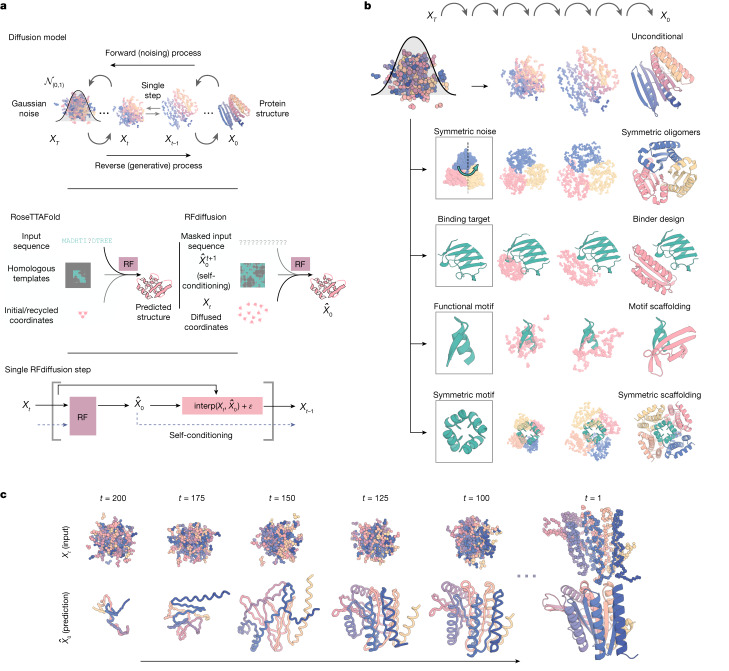
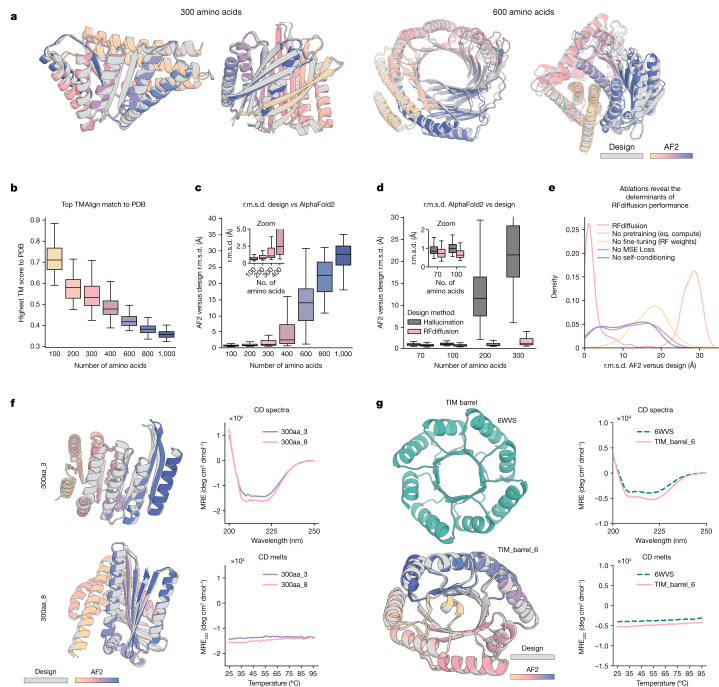
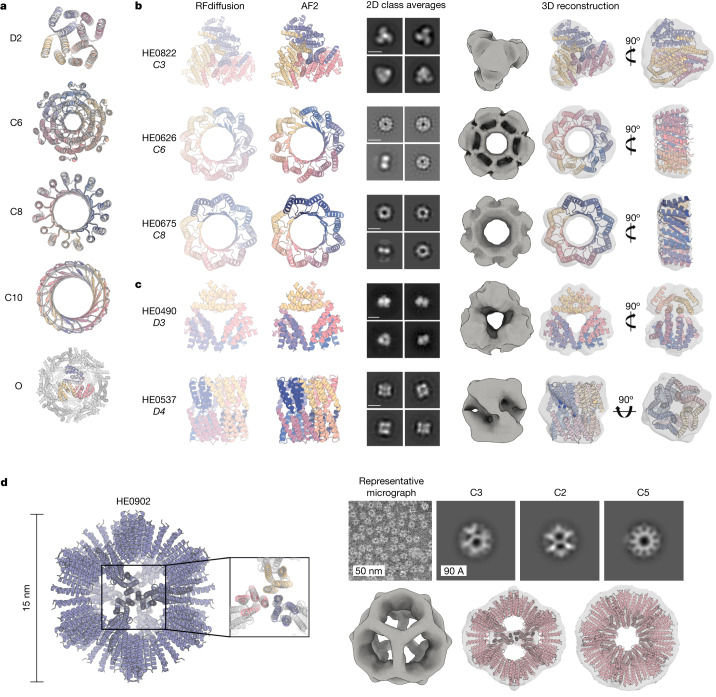
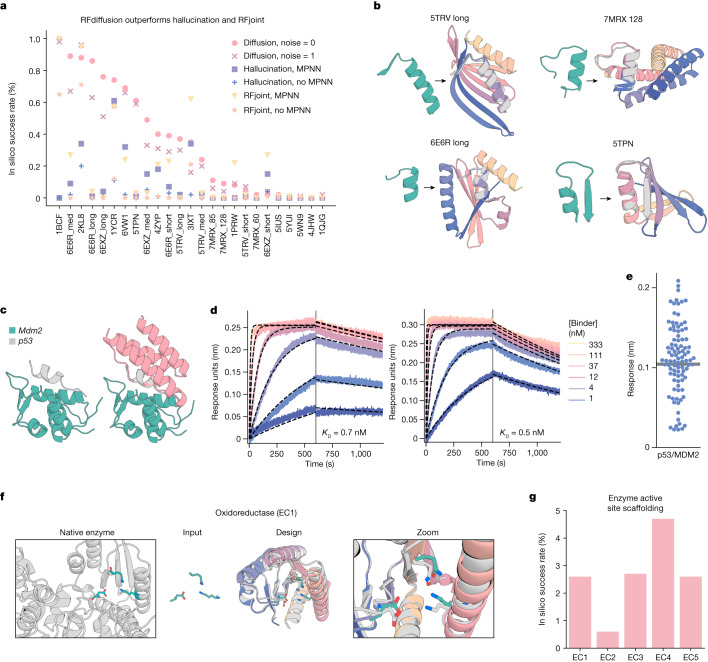
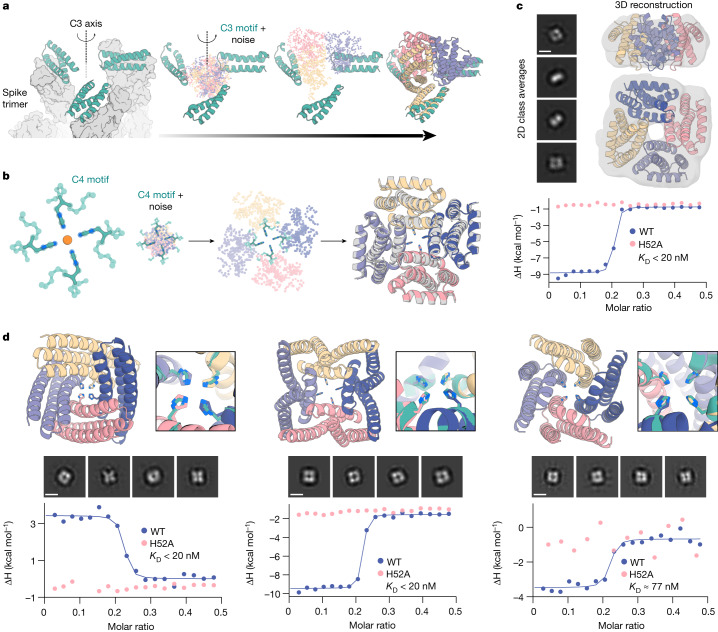
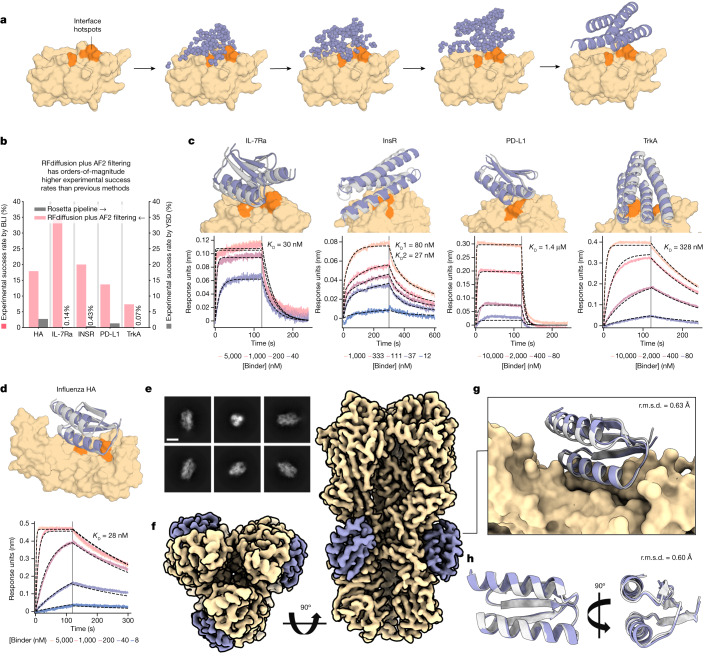
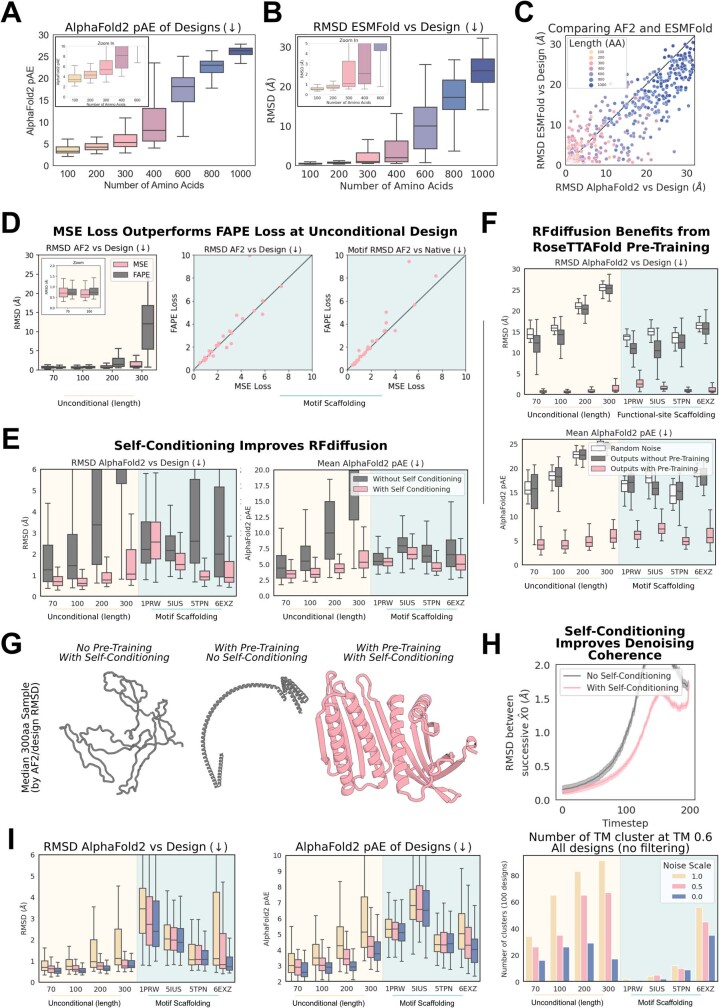
There has been considerable recent progress in designing new proteins using deep learning methods 1–9 . Despite this progress, a general deep learning framework for protein design that enables solution of a wide range of design challenges, including de novo binder design and design of higher order symmetric architectures, has yet to be described. Diffusion models 10,11 have had considerable success in image and language generative modeling but limited success when applied to protein modeling, likely due to the complexity of protein backbone geometry and sequence-structure relationships. Here we show that by fine tuning the RoseTTAFold structure prediction network on protein structure denoising tasks, we obtain a generative model of protein backbones that achieves outstanding performance on unconditional and topology-constrained protein monomer design, protein binder design, symmetric oligomer design, enzyme active site scaffolding, and symmetric motif scaffolding for therapeutic and metal-binding protein design. We demonstrate the power and generality of the method, called RoseTTAFold Diffusion (RF diffusion ), by experimentally characterizing the structures and functions of hundreds of new designs. In a manner analogous to networks which produce images from user-specified inputs, RF diffusion enables the design of diverse, complex, functional proteins from simple molecular specifications.
Overview
The claims and statistics of this paper haven’t been checked yet.
Run the check — free, no account needed. It reads the open-access text and checks the sources it cites.
Integrity signals
Registry
Cites
Statistics
Figures
Verification
Claims the paper makes
The claims and statistics of this paper haven’t been checked yet.
Run the check — free, no account needed. It reads the open-access text and checks the sources it cites.
Self-check
Percentages, sums and reported differences re-computed from the paper’s own numbers.
The self-check needs the paper’s full text.
Citations
Cites
Highly accurate protein structure prediction with AlphaFold
Jumper, J., Evans, R., Pritzel, A., Green, T., Figurnov, M., Ronneberger, O., Tunyasuvunakool, K., Bates, R., Žídek, A., Potapenko, A., et al. (2021) · Nature · doi:10.1038/s41586-021-03819-2 · Cited by 43,764
Berman, H. M. (2000) · Nucleic Acids Research · doi:10.1093/nar/28.1.235 · Cited by 40,196
Denoising Diffusion Probabilistic Models
Ho, J., Jain, A., & Abbeel, P. (2020) · arXiv · doi:10.48550/arxiv.2006.11239 · Cited by 8,712
Evolutionary-scale prediction of atomic level protein structure with a language model
Lin, Z., Akin, H., Rao, R., Hie, B., Zhu, Z., Lu, W., Smetanin, N., Verkuil, R., Kabeli, O., Shmueli, Y., et al. (2022) · doi:10.1101/2022.07.20.500902 · Cited by 5,990
Accurate prediction of protein structures and interactions using a 3-track network
Baek, M., DiMaio, F., Anishchenko, I., Dauparas, J., Ovchinnikov, S., Lee, G. R., Wang, J., Cong, Q., Kinch, L. N., Schaeffer, R. D., et al. (2021) · doi:10.1101/2021.06.14.448402 · Cited by 5,549
Self-citationDeep Unsupervised Learning using Nonequilibrium Thermodynamics
Sohl-Dickstein, J., Weiss, E. A., Maheswaranathan, N., & Ganguli, S. (2015) · arXiv · doi:10.48550/arxiv.1503.03585 · Cited by 2,637
Zero-shot text-to-image generation
Ramesh, A., Pavlov, M., Goh, G., Gray, S., Voss, C., Radford, A., Chen, M., & Sutskever, I. (2021) · arXiv · doi:10.48550/arxiv.2102.12092 · Cited by 2,417
THEORY OF PROTEIN FOLDING: The Energy Landscape Perspective
Onuchic, J. N., Luthey-Schulten, Z., & Wolynes, P. G. (1997) · Annual Review of Physical Chemistry · doi:10.1146/annurev.physchem.48.1.545 · Cited by 2,210
Robust deep learning–based protein sequence design using ProteinMPNN
Dauparas, J., Anishchenko, I., Bennett, N., Bai, H., Ragotte, R. J., Milles, L. F., Wicky, B. I. M., Courbet, A., de Haas, R. J., Bethel, N., et al. (2022) · Science · doi:10.1126/science.add2187 · Cited by 2,210
Self-citationStructure of the MDM2 Oncoprotein Bound to the p53 Tumor Suppressor Transactivation Domain
Kussie, P. H., Gorina, S., Marechal, V., Elenbaas, B., Moreau, J., Levine, A. J., & Pavletich, N. P. (1996) · Science · doi:10.1126/science.274.5289.948 · Cited by 2,206
Research works printed but not linked: 3
- 10.48550/arXiv.2209.15611 · DOI · Paper page
- 10.1101/2022.07.13.499967 · DOI · Paper page
- Anand, N. & Huang, P. Generative modeling for protein structures. in Advances in Neural Information Processing Systems vol. 31 (Curran Associates, Inc., 2018).
Cited by
Sorted by citations
Items 701–800 of 1,000
Bonds and bytes: The odyssey of structural biology
Hoff, S., Zinke, M. C., Izadi‐Pruneyre, N., & Bonomi, M. (2023) · Current Opinion in Structural Biology · doi:10.1016/j.sbi.2023.102746 · Cited by 10
Growing ecosystem of deep learning methods for modeling protein–protein interactions
Rogers, J. R., Nikolényi, G., & AlQuraishi, M. (2023) · Protein Engineering Design and Selection · doi:10.1093/protein/gzad023 · Cited by 12
Selection pressures on evolution of ribonuclease H explored with rigorous free–energy–based design
Hayes, R. L., Nixon, C. F., Marqusee, S., & Brooks, C. L. (2024) · Proceedings of the National Academy of Sciences · doi:10.1073/pnas.2312029121 · Cited by 8
Hansen, A. L., Theisen, F. F., Crehuet, R., Marcos, E., Aghajari, N., & Willemoës, M. (2024) · ACS Synthetic Biology · doi:10.1021/acssynbio.3c00674 · Cited by 10
The Development and Opportunities of Predictive Biotechnology
Nestl, B. M., Nebel, B. A., Resch, V., Schürmann, M., & Tischler, D. (2024) · ChemBioChem · doi:10.1002/cbic.202300863 · Cited by 9
Autophagy and machine learning: Unanswered questions
Yang, Y., Pan, Z., Sun, J., Welch, J. D., & Klionsky, D. J. (2024) · Biochimica et Biophysica Acta (BBA) - Molecular Basis of Disease · doi:10.1016/j.bbadis.2024.167263 · Cited by 10
Sun, R., Huang, H., Wang, Z., Chen, P., Wu, D., & Zheng, P. (2024) · Journal of Agricultural and Food Chemistry · doi:10.1021/acs.jafc.4c02064 · Cited by 9
Challenges and compromises: Predicting unbound antibody structures with deep learning
Greenshields‐Watson, A., Vavourakis, O., Spoendlin, F. C., Cagiada, M., & Deane, C. M. (2025) · Current Opinion in Structural Biology · doi:10.1016/j.sbi.2025.102983 · Cited by 9
Generative Diffusion Models for Antibody Design, Docking, and OptimizationPreprint
Peng, Z., Han, C., Wang, X., Li, D., & Yuan, F. (2023) · bioRxiv (Cold Spring Harbor Laboratory) · doi:10.1101/2023.09.25.559190 · Cited by 10
Structure and dynamics of the RF-amide QRFP receptor GPR103Preprint
Iwama, A., Akasaka, H., Sano, F. K., Oshima, H. S., Shihoya, W., & Nureki, O. (2023) · bioRxiv (Cold Spring Harbor Laboratory) · doi:10.1101/2023.12.06.570340 · Cited by 9
Wang, X., Zhu, H., Terashi, G., Taluja, M., & Kihara, D. (2024) · bioRxiv (Cold Spring Harbor Laboratory) · doi:10.1101/2024.01.20.576370 · Cited by 9
PPFlow: Target-Aware Peptide Design with Torsional Flow MatchingPreprint
Lin, H., Zhang, O., Zhao, H., Jiang, D., Wu, L., Liu, Z., Huang, Y., & Li, S. Z. (2024) · bioRxiv (Cold Spring Harbor Laboratory) · doi:10.1101/2024.03.07.583831 · Cited by 13
Xie, X., Li, C. Z., Lee, J. S., & Kim, P. M. (2025) · bioRxiv (Cold Spring Harbor Laboratory) · doi:10.1101/2025.02.11.637752 · Cited by 14
Physics-Grounded Evaluation to Guide Accurate Biomolecular PredictionPreprint
Lyu, N., Du, S., Shao, Q., Yang, Z. J., Ma, J., & Herschlag, D. (2025) · bioRxiv (Cold Spring Harbor Laboratory) · doi:10.1101/2025.06.30.662466 · Cited by 9
In vivo selection of synthetic nucleocapsids for tissue targeting
Olshefsky, A., Benasutti, H., Sylvestre, M., Butterfield, G. L., Rocklin, G. J., Richardson, C., Hicks, D. R., Lajoie, M. J., Song, K., Leaf, E. M., et al. (2023) · Proceedings of the National Academy of Sciences · doi:10.1073/pnas.2306129120 · Cited by 8
Self-citationHybrid Diffusion Model for Stable, Affinity-Driven, Receptor-Aware Peptide Generation
Vishva Saravanan, R., Choudhuri, S., & Ghosh, B. (2024) · Journal of Chemical Information and Modeling · doi:10.1021/acs.jcim.4c01020 · Cited by 10
Data and AI-driven synthetic binding protein discovery
Li, Y., Duan, Z., Li, Z., & Xue, W. (2025) · Trends in Pharmacological Sciences · doi:10.1016/j.tips.2024.12.002 · Cited by 8
FlowPacker: protein side-chain packing with torsional flow matching
Lee, J. S., & Kim, P. M. (2025) · Bioinformatics · doi:10.1093/bioinformatics/btaf010 · Cited by 8
Frontiers in integrative structural modeling of macromolecular assemblies
Majila, K., Arvindekar, S. M., Jindal, M., & Viswanath, S. (2025) · QRB Discovery · doi:10.1017/qrd.2024.15 · Cited by 9
Nakamura, S., Tanimura, Y., Nomura, R., Suzuki, H., Nishikawa, K., Kamegawa, A., Numoto, N., Tanaka, A., Kawabata, S., Sakaguchi, S., et al. (2025) · Proceedings of the National Academy of Sciences · doi:10.1073/pnas.2413465122 · Cited by 8
Liu, Y., Du, G., Chen, J., Lv, X., & Liu, L. (2025) · Current Opinion in Biotechnology · doi:10.1016/j.copbio.2025.103315 · Cited by 8
Grafted Coiled-Coil Peptides as Multivalent Scaffolds for Protein Recognition
Acevedo‐Jake, A. M., Mylemans, B., Kay, D. F., Zhang, P., Korona, B., Rhys, G. G., Leney, A. C., Huang, D. T. C., Edwards, T. A., Itzhaki, L. S., et al. (2025) · ACS Chemical Biology · doi:10.1021/acschembio.5c00137 · Cited by 9
AI4Protein: transforming the future of protein design
Wang, D., Tan, Z., Gao, J., Zhang, S., Shen, J., & Lu, Y. (2025) · Science China Life Sciences · doi:10.1007/s11427-024-2906-3 · Cited by 12
ProtTeX: Structure-In-Context Reasoning and Editing of Proteins with Large Language Models
Ma, Z., Fan, C., Wang, Z., Chen, Z., Lin, X., Li, Y., Feng, S., Cao, Z., Zhang, J., & Gao, Y. Q. (2025) · Journal of Chemical Information and Modeling · doi:10.1021/acs.jcim.5c00585 · Cited by 14
De novo design of a fusion protein tool for GPCR research
(2025) · doi:10.1073/pnas.2422360122 · Cited by 8
Unravelling emergence of chirality in click-chemistry polymers down to the single-chain level
Li, X., Pujari, S. P., van der Gucht, J., Zuilhof, H. T., & Ruggeri, F. S. (2025) · Nature Communications · doi:10.1038/s41467-025-62041-0 · Cited by 10
Ferguson, J. A., Raghavan, S. S. R., Alzua, G. P., Bhavsar, D., Huang, J., Rodriguez, A. J., Torres, J. L., Bottermann, M., Han, J., Krammer, F., et al. (2025) · Science Advances · doi:10.1126/sciadv.adv8257 · Cited by 12
Pseudo-perplexity in one fell swoop for protein fitness estimation
Kantroo, P., Wagner, G. P., & Machta, B. B. (2025) · PRX Life · doi:10.1103/zhx7-hcmm · Cited by 8
From Bench to Bedside: Emerging Paradigms in CAR‐T Cell Therapy for Solid Malignancies
Chen, Y., Ren, R., Yan, L., Zhou, Y., Sun, R., Song, H., Yan, H., & Li, Y. (2025) · Advanced Science · doi:10.1002/advs.202505822 · Cited by 9
HighMPNN: A Graph Neural Network Approach for Structure-Constrained Cyclic Peptide Sequence Design
Xu, W., Zhang, C., Shang, T., Mao, Q., Guo, J., & Duan, H. (2026) · IEEE Journal of Biomedical and Health Informatics · doi:10.1109/jbhi.2025.3620163 · Cited by 8
Tailored structured peptide design with a key-cutting machine approach
Leyva, Y. C., Torres, M. D. T., Oliva, C. A., de la Fuente‐Núñez, C., & Brizuela, C. A. (2025) · Nature Machine Intelligence · doi:10.1038/s42256-025-01119-2 · Cited by 9
Enhancing functional proteins through multimodal inverse folding with ABACUS-T
Liu, Y., Wu, R., Wang, X., Wang, S., Chen, L.-H., Li, F., Chen, Q., & Liu, H. (2025) · Nature Communications · doi:10.1038/s41467-025-65175-3 · Cited by 9
Engineering complexity into protein-based biomaterials for biomedical applications
Gregorio, N. E., Haas, C. M., King, N. P., & DeForest, C. A. (2025) · Nature Reviews Materials · doi:10.1038/s41578-025-00861-8 · Cited by 11
Artificial intelligence‐enabled digital biomedical engineering
Song, P., Tang, X., Lv, X., Reis, R. L., Chen, X., Bai, L., & Su, J. (2025) · BMEMat · doi:10.1002/bmm2.70049 · Cited by 9
Eskandar, K. (2025) · AI and Ethics · doi:10.1007/s43681-025-00872-9 · Cited by 11
Harnessing deep learning to accelerate the development of antibodies and aptamers
Tan, P., Li, S., Huang, J., Zhou, Z., & Hong, L. (2025) · Acta Pharmaceutica Sinica B · doi:10.1016/j.apsb.2025.12.017 · Cited by 10
Heaps, W. P., Packard, A., McCammon, K. M., Green, T. P., Talley, J. P., Bundy, B. C., & Corte, D. D. (2026) · Biophysica · doi:10.3390/biophysica6010004 · Cited by 8
Yang, W., Wang, Y., & Wang, Y. (2026) · Biophysics Reviews · doi:10.1063/5.0273394 · Cited by 9
AI-guided competitive docking for virtual screening and compound efficacy prediction
Mirgaux, M., Barcelli, V., Chua, A. C. Y., Bifani, P. J., & Wintjens, R. T. (2026) · npj Drug Discovery. · doi:10.1038/s44386-026-00039-4 · Cited by 13
Dual-encoder contrastive learning accelerates enzyme discovery
Rocks, J. W., Truong, D. P., Rappoport, D., Maddrell-Mander, S., Martin-Alarcon, D. A., Lee, T. M., Crossan, S., & Goldford, J. E. (2026) · Proceedings of the National Academy of Sciences · doi:10.1073/pnas.2520070123 · Cited by 9
Single-chain dimers from de novo immunoglobulins as robust scaffolds for multiple binding loops
Roel‐Touris, J., Nadal, M., & Marcos, E. (2023) · Nature Communications · doi:10.1038/s41467-023-41717-5 · Cited by 7
Padhi, A. K., Kalita, P., Maurya, S., Poluri, K. M., & Tripathi, T. (2023) · The Journal of Physical Chemistry B · doi:10.1021/acs.jpcb.3c04542 · Cited by 9
Harnessing iron‑sulfur enzymes for synthetic biology
Shomar, H., & Bokinsky, G. (2024) · Biochimica et Biophysica Acta (BBA) - Molecular Cell Research · doi:10.1016/j.bbamcr.2024.119718 · Cited by 10
Fang, S., Wei, R., Cui, Y., & Su, L. (2024) · Green Carbon · doi:10.1016/j.greenca.2024.05.001 · Cited by 10
Obi, P., GC, J. B., Mariasoosai, C., Diyaolu, A., & Natesan, S. (2024) · Journal of Chemical Theory and Computation · doi:10.1021/acs.jctc.4c00315 · Cited by 8
Huang, Y., Zhang, Z., & Hattori, M. (2024) · Journal of Molecular Biology · doi:10.1016/j.jmb.2024.168809 · Cited by 7
Identification, characterization, and design of plant genome sequences using deep learning
Wang, Z., Yuan, H., Yan, J., & Liu, J. (2024) · The Plant Journal · doi:10.1111/tpj.17190 · Cited by 9
Design of pseudosymmetric protein hetero-oligomers
Kibler, R. D., Lee, S., Kennedy, M. A., Wicky, B. I. M., Lai, S. M., Kostelic, M. M., Carr, A., Li, X., Chow, C. M., Nguyen, T. K., et al. (2024) · Nature Communications · doi:10.1038/s41467-024-54913-8 · Cited by 13
Self-citationProtein ligand structure prediction: From empirical to deep learning approaches
Zhou, G., & DiMaio, F. (2025) · Current Opinion in Structural Biology · doi:10.1016/j.sbi.2025.102998 · Cited by 9
Self-citationGoudy, O. J., Nallathambi, A., Kinjo, T., Randolph, N. Z., & Kuhlman, B. A. (2023) · bioRxiv (Cold Spring Harbor Laboratory) · doi:10.1101/2023.05.03.539278 · Cited by 8
Improved motif-scaffolding with SE(3) flow matchingPreprint
Yim, J., Campbell, A., Mathieu, É., Foong, A. Y. K., Gastegger, M., Jiménez-Luna, J., Lewis, S., Satorras, V. G., Veeling, B. S., Noé, F., et al. (2024) · PubMed · doi:10.48550/arxiv.2401.04082 · Cited by 34
Self-citationInstructPLM: Aligning Protein Language Models to Follow Protein Structure InstructionsPreprint
Qiu, J., Xu, J., Hu, J., Cao, H., Hou, L., Gao, Z.-J., Zhou, X., Li, A., Li, X., Cui, B., et al. (2024) · Research Square · doi:10.1101/2024.04.17.589642 · Cited by 10
De novo design of triosephosphate isomerases using generative language modelsPreprint
Romero‐Romero, S., Braun, A. E., Kossendey, T., Ferruz, N., Schmidt, S., & Höcker, B. (2024) · bioRxiv (Cold Spring Harbor Laboratory) · doi:10.1101/2024.11.10.622869 · Cited by 12
Alphafold2 refinement improves designability of large de novo proteinsPreprint
Frank, C., Schiwietz, D., Fuss, L., Ovchinnikov, S., & Dietz, H. (2024) · bioRxiv (Cold Spring Harbor Laboratory) · doi:10.1101/2024.11.21.624687 · Cited by 10
Blind De Novo Design of Dual Cyclic Peptide Agonists Targeting GCGR and GLP1RPreprint
Li, Q., Wiita, E., Helleday, T., & Bryant, P. (2025) · bioRxiv (Cold Spring Harbor Laboratory) · doi:10.1101/2025.06.06.658268 · Cited by 9
Evaluating zero-shot prediction of protein design success by AlphaFold, ESMFold, and ProteinMPNNPreprint
Garcia, M., Dixit, S. M., & Rocklin, G. J. (2025) · bioRxiv (Cold Spring Harbor Laboratory) · doi:10.1101/2025.07.29.667290 · Cited by 8
Pourseif, M. M., Hosseini, S. A. B., Khoshraftar, S. H., & Omidi, Y. (2025) · Bioimpacts · doi:10.34172/bi.33072 · Cited by 8
Excelzyme: A Swiss University-Industry Collaboration for Accelerated Biocatalyst Development
Malca, S. H., Stockinger, P., Duss, N., Milbredt, D., Iding, H., & Buller, R. (2024) · CHIMIA International Journal for Chemistry · doi:10.2533/chimia.2024.108 · Cited by 7
Exploiting Archaeal/Thermostable Enzymes in Synthetic Chemistry: Back to the Future?
Kudalkar, G. P., Tiwari, V. K., & Berkowitz, D. B. (2024) · ChemCatChem · doi:10.1002/cctc.202400835 · Cited by 7
Extending computational protein design to intrinsically disordered proteins
Robustelli, P. (2024) · Science Advances · doi:10.1126/sciadv.adr3239 · Cited by 7
Hu, R.-E., Chang, C.-C., Chen, T.-H., Chang, C., Yu, C., & Ng, I. (2025) · Process Biochemistry · doi:10.1016/j.procbio.2025.01.013 · Cited by 7
MELD in Action: Harnessing Data to Accelerate Molecular Dynamics
Gaza, J. T., Brini, E., MacCallum, J. L., Dill, K. A., & Pérez, A. (2025) · Journal of Chemical Information and Modeling · doi:10.1021/acs.jcim.4c02108 · Cited by 7
Proteins for Hyperelastic Materials
Su, R., Ma, C., Han, B., Zhang, H., & Liu, K. (2025) · Small · doi:10.1002/smll.202406388 · Cited by 8
Data-driven revolution of enzyme catalysis from the perspective of reactions, pathways, and enzymes
Liu, T., Zhai, S., Zhan, X., & Siu, S. W. I. (2025) · Cell Reports Physical Science · doi:10.1016/j.xcrp.2025.102466 · Cited by 7
In silico discovery of nanobody binders to a G-protein coupled receptor using AlphaFold-Multimer
Harvey, E. P., Smith, J. S., Hurley, J. D., Granados, A. J., Schmid, E. W., Liang-Lin, J. G., Zhang, H., Meara, E. M., Wren, E. K., Paul, S., et al. (2026) · Nature Communications · doi:10.1038/s41467-026-72093-5 · Cited by 7
EvoNB: A protein language model-based workflow for nanobody mutation prediction and optimization
Xiong, D., Ming, Y., Li, Y., Li, S., Chen, K., Liu, J., Duan, L., Li, H., Li, M., & He, X. D. (2025) · Journal of Pharmaceutical Analysis · doi:10.1016/j.jpha.2025.101260 · Cited by 7
Molecular circuits for genomic recording of cellular events
Chen, W., & Choi, J. (2025) · Trends in Genetics · doi:10.1016/j.tig.2025.04.004 · Cited by 8
Artificial intelligence in therapeutic antibody design: Advances and future prospects
Park, S., Jeong, W., Kim, Y., Lee, C., & Seok, C. (2025) · Current Opinion in Structural Biology · doi:10.1016/j.sbi.2025.103084 · Cited by 7
Sustainable hybrid photo/electro-enzyme systems for CO2 conversion
Dong, W., Cai, J., Sun, Q., Luan, L., Ji, X., Zeng, S., & Huang, Y. (2025) · Green Chemical Engineering · doi:10.1016/j.gce.2025.06.006 · Cited by 7
SAAINT-DB: a comprehensive structural antibody database for antibody modeling and design
Huang, X., Zhou, J., Chen, S., Xia, X., Chen, Y. E., & Xu, J. (2025) · Acta Pharmacologica Sinica · doi:10.1038/s41401-025-01608-5 · Cited by 8
Chainani, Y., Diaz, J., Guilarte-Silva, M., Blay, V., Zhang, Q., Sprague, W. W., Tyo, K. E. J., Broadbelt, L. J., Mukhopadhyay, A., Keasling, J. D., et al. (2025) · Nature Communications · doi:10.1038/s41467-025-61160-y · Cited by 11
An iterative strategy to design 4-1BB agonist nanobodies de novo with generative AI models
Poddiakov, I., Umerenkov, D., Shulcheva, I., Golovina, V., Borisova, V., Pozdnyakova-Filatova, I., Loktyushov, E., Zubkova, G., Savchenko, A., Ulitin, A. B., et al. (2025) · Scientific Reports · doi:10.1038/s41598-025-10241-5 · Cited by 7
Engineering light-driven biomineralization for a sustainable carbonate economy
Falkenroth, M., & Dann, M. (2025) · Frontiers in Photobiology · doi:10.3389/fphbi.2025.1619812 · Cited by 7
Generative AI techniques for conformational diversity and evolutionary adaptation of proteins
Brownless, A.-L. R., Yehorova, D., Welsh, C. L., & Kamerlin, S. C. L. (2025) · Current Opinion in Structural Biology · doi:10.1016/j.sbi.2025.103135 · Cited by 9
Bera, P., & Mondal, J. (2025) · The Journal of Chemical Physics · doi:10.1063/5.0279756 · Cited by 7
Quantum computing for faster enzyme discovery and engineering
Damborský, J., Kouba, P., Šivic, J., Vasina, M., Bednář, D., & Mazurenko, S. (2025) · Nature Catalysis · doi:10.1038/s41929-025-01410-w · Cited by 9
State-Specific Peptide Design Targeting G Protein-Coupled Receptors
Yang, X. W., Wang, H., Li, J., Hu, J., Chen, Z., Zheng, Z., Liu, L., Zhu, K., He, J., Gong, H., et al. (2025) · Journal of Chemical Information and Modeling · doi:10.1021/acs.jcim.5c00884 · Cited by 8
Hoffnagle, A. M., Herold, R. A., Tsai, C.-Y., Shiau, A. A., Britt, R. D., & Tezcan, F. A. (2025) · Journal of the American Chemical Society · doi:10.1021/jacs.5c13813 · Cited by 10
De Novo Design of Peptide Masks Enables Rapid Generation of Conditionally-Active Miniprotein Binders
Escobar-Rosales, M., Montaner, C., Expòsit, M., Lucchi, R., Díaz‐Perlas, C., Baker, D. A., & Oller‐Salvia, B. (2025) · Journal of the American Chemical Society · doi:10.1021/jacs.5c16108 · Cited by 8
Self-citationStructure and evolution-guided design of minimal RNA-guided nucleases
Skopintsev, P., Esain-Garcia, I., DeTurk, E. C., Yoon, P. H., Zhou, Z., Weiss, T. J., Kamalu, M., Chamraj, A., Loi, K. J., Langeberg, C. J., et al. (2026) · Science · doi:10.1126/science.aed6123 · Cited by 8
Algebraic language models for inverse design of metamaterials via diffusion transformers
Zheng, L., Kumar, S., & Kochmann, D. M. (2026) · Nature Machine Intelligence · doi:10.1038/s42256-026-01218-8 · Cited by 18
Approaches for accelerating microbial gene function discovery using artificial intelligence
Palsson, B. Ø., Lee, S. Y., & Kim, G. B. (2026) · Nature Microbiology · doi:10.1038/s41564-025-02214-1 · Cited by 8
Without safeguards, AI-Biology integration risks accelerating future pandemics
Wang, D., Huot, M., Zhang, Z., Jiang, K., Shakhnovich, E. I., & Esvelt, K. M. (2026) · Frontiers in Microbiology · doi:10.3389/fmicb.2025.1734561 · Cited by 8
Nanopore Single-Molecule Chemistry
Liu, Y., Gao, X., & Huang, S. (2026) · Annual Review of Biophysics · doi:10.1146/annurev-biophys-021424-125106 · Cited by 7
Bonneau, K., Pasos-Trejo, A. S., Plainer, M., Sagresti, L., Venturin, J., Zaporozhets, I., Caruso, A., Rolando, E., Guljas, A., Klein, L., et al. (2026) · Wiley Interdisciplinary Reviews Computational Molecular Science · doi:10.1002/wcms.70064 · Cited by 9
AI-driven food bioprocessing: How far its integration with practice?
Wang, Q., Tan, Y., Li, W., Zeng, H., & Wang, Y. (2026) · Trends in Food Science & Technology · doi:10.1016/j.tifs.2026.105662 · Cited by 8
Khan, A., Sawali, M. A., Mohammad, A., Hasssan, F., Alshabrmi, F. M., Alatawi, E. A., Crovella, S., Wei, D., & Agouni, A. (2026) · Probiotics and Antimicrobial Proteins · doi:10.1007/s12602-026-10956-5 · Cited by 7
Morehead, A., Liu, J., Neupane, P., & Cheng, J. (2026) · Current Opinion in Structural Biology · doi:10.1016/j.sbi.2026.103247 · Cited by 8
De novo enzyme design: Controlling structure to design function
Listov, D., & Fleishman, S. J. (2026) · Current Opinion in Structural Biology · doi:10.1016/j.sbi.2026.103252 · Cited by 10
AI-driven protein engineering: A new paradigm for plant trait design
Fu, R., Jiang, S., Wu, T., Yin, C., Yan, J., & Wang, X. (2026) · Molecular Plant · doi:10.1016/j.molp.2026.03.011 · Cited by 8
Biosynthetic Lanthanide-Luminescent Mini-Proteins Using Genetic Code Expansion
Habel, E., Qianzhu, H., Abdelkader, E. H., Paul, N., Otting, G., & Huber, T. (2026) · Journal of the American Chemical Society · doi:10.1021/jacs.6c01416 · Cited by 8
Feldman, J., Brogi, M., & Skolnick, J. (2026) · Computational and Structural Biotechnology Journal · doi:10.34133/csbj.0142 · Cited by 11
Hu, W., Sun, Y., Li, T., Williamson, M., Hu, X., & Wang, M. (2026) · The Innovation Drug Discovery · doi:10.59717/j.xinn-drugdisc.2026.100009 · Cited by 7
Strategies and mechanisms of precision genome engineering: From gene editing to genome writing
Huang, K., Tian, J., Zhao, W., Zhang, S., Xiang, L., Yang, M., Ls, L., Huang, Y., Zhang, N., Sun, L., et al. (2026) · iMetaOmics. · doi:10.1002/imo2.70115 · Cited by 8
The structural landscape of the immunoglobulin fold by large‐scale de novo design
Roel‐Touris, J., Carcelén, L., & Marcos, E. (2024) · Protein Science · doi:10.1002/pro.4936 · Cited by 8
Closing the Execution Gap in Generative AI for Chemicals and Materials: Freeways or Safeguards
Subramanian, A., Gao, W., Barzilay, R., Grossman, J. C., Jaakkola, T., Jegelka, S., Li, M., Li, J., Matusik, W., Olivetti, E., et al. (2024) · An MIT Exploration of Generative AI · doi:10.21428/e4baedd9.92e511e3 · Cited by 7
Self-citationStructures, dynamics, complexes, and functions: From classic computation to artificial intelligence
Frasnetti, E., Magni, A., Castelli, M., Serapian, S. A., Moroni, E., & Colombo, G. (2024) · Current Opinion in Structural Biology · doi:10.1016/j.sbi.2024.102835 · Cited by 7
Caught between a ROCK and a hard place: current challenges in structure-based drug design
Pala, D., & Clark, D. E. (2024) · Drug Discovery Today · doi:10.1016/j.drudis.2024.104106 · Cited by 8
Metadata
- Authors
- Watson, J. L., Juergens, D., Bennett, N. R., Trippe, B. L., Yim, J., Eisenach, H. E., Ahern, W., Borst, A. J., Ragotte, R. J., Milles, L. F., Wicky, B. I. M., Hanikel, N., Pellock, S. J., Courbet, A., Sheffler, W., Wang, J., Venkatesh, P., Sappington, I., Torres, S. V., Lauko, A., De Bortoli, V., Mathieu, E., Barzilay, R., Jaakkola, T. S., DiMaio, F., Baek, M., & Baker, D.
- Affiliations
- University of Washington (US)
- Centre National de la Recherche Scientifique (FR)
- Massachusetts Institute of Technology (US)
- Seoul National University (KR)
- Howard Hughes Medical Institute (US)
- Corresponding author
- Baker, David
- ORCID
- Watson, Joseph L.
- Juergens, David
- Bennett, Nathaniel R.
- Trippe, Brian L.
- Yim, Jason
- Eisenach, Helen E.
- Ahern, Woody
- Borst, Andrew J.
- Ragotte, Robert J.
- Milles, Lukas F.
- Wicky, Basile I. M.
- Hanikel, Nikita
- Pellock, Samuel J.
- Courbet, Alexis
- Sheffler, William
- Wang, Jue
- Venkatesh, Preetham
- Sappington, Isaac
- Torres, Susana Vázquez
- Lauko, Anna
- De Bortoli, Valentin
- Barzilay, Regina
- Jaakkola, Tommi S.
- DiMaio, Frank
- Baek, Minkyung
- Baker, David
- Venue
- Nature
- Publisher
- openRxiv
- Published
- 2022-12-10
- Volume
- 620
- Issue
- 7976
- Pages
- 1089-1100
- ISSN
- 0028-0836 (ISSN-L)
- PMC
- PMC10468394
- OpenAlex
- W4383957026
- Cited by
- 2,369
- References
- 57
- Citations by year
- 2026: 943 · 2025: 795 · 2024: 473 · 2023: 153 · 2022: 4
- FWCI
- 210.65
- Type
- journal article
- Language
- en
- Open access
- hybrid
- doi.org
- Licence
- cc-by
- Locations
- Nature (publishedVersion, cc-by)
- bioRxiv (Cold Spring Harbor Laboratory) (acceptedVersion, cc-by-nd)
- PubMed Central (publishedVersion, cc-by)
- PubMed (publishedVersion)
- RePEc: Research Papers in Economics (submittedVersion)
- Apollo (University of Cambridge) (submittedVersion, cc-by)
- Funders
- National Science Foundation (HDTRA1-19-1-0003, 1918839)
- Howard Hughes Medical Institute
- U.S. Department of Energy (DESC0018940)
- Bill and Melinda Gates Foundation (INV-010680)
- Washington Research Foundation
- Amgen
- Sanofi
- Washington State University
- Open Philanthropy Project
- Defense Advanced Research Projects Agency
- Defense Threat Reduction Agency (HDTRA1-19-1-0003, HDTRA1)
- Office of Science (DE-SC0018940 MOD03, DESC0018940)
- Engineering and Physical Sciences Research Council (EP/T005386/1)
- National Institute on Aging (U19AG065156)
- National Institute of General Medical Sciences (T32GM007250, T32GM008268)
- Topics
- Life Sciences › Biochemistry, Genetics and Molecular Biology › Molecular Biology › Protein Structure and Dynamics
- Life Sciences › Biochemistry, Genetics and Molecular Biology › Molecular Biology › Machine Learning in Bioinformatics
- Life Sciences › Biochemistry, Genetics and Molecular Biology › Structural Biology › Enzyme Structure and Function
- Keywords
- protein design, de novo protein design, diffusion models, RoseTTAFold, protein binder design, metal-binding proteins, protein backbone, influenza haemagglutinin, therapeutic proteins
- MeSH terms
- Deep Learning, Protein Binding, Proteins, Hemagglutinin Glycoproteins, Influenza Virus, Catalytic Domain, Cryoelectron Microscopy
About these checks
Registry, retraction, Cites and statistics results are computed, not judged, with one exception: a printed reference that no index lists is read once by a model before it counts as a citation error. Claims are extracted by a model and kept only when their quote appears verbatim in the text; each cited source is then checked, with a model’s help, for whether it says what the claim relies on. Those verdicts can be wrong — read the claim’s quote and the cited source before relying on one.
Statistics and arithmetic are recomputed, not judged.
Confidence bands are shown only for fields calibrated on our annotated test set. None is calibrated yet, so no band is shown.
What counts as a claim ›How we measure confidence ›How we check this ›
Are you an author, or do you see a problem with this page? Request a review
