

The DOI matches its Crossref record; 57 of the 57 references it cites were found in a registry or an index.
Broadly applicable and accurate protein design by integrating structure prediction networks and diffusion generative models
Open accessPreprint — published as 10.1038/s41586-023-06415-8 · Paper page
Abstract
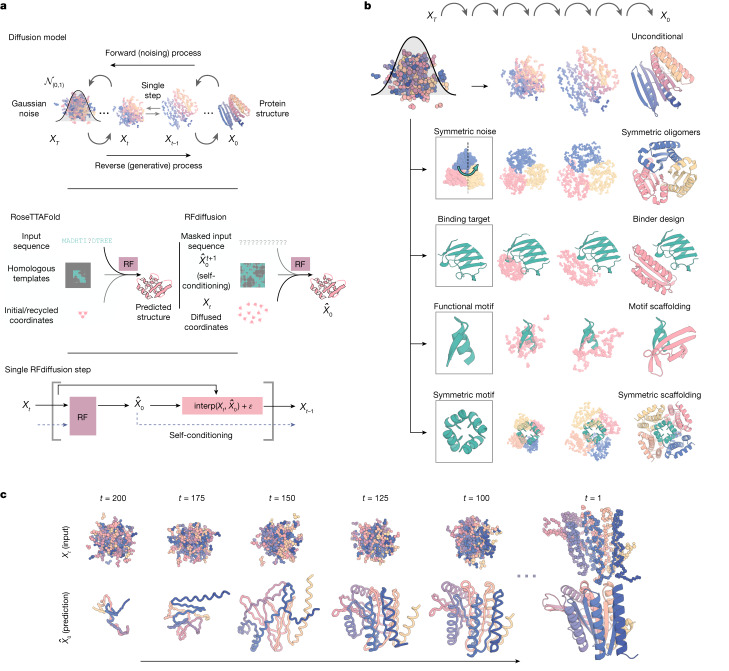
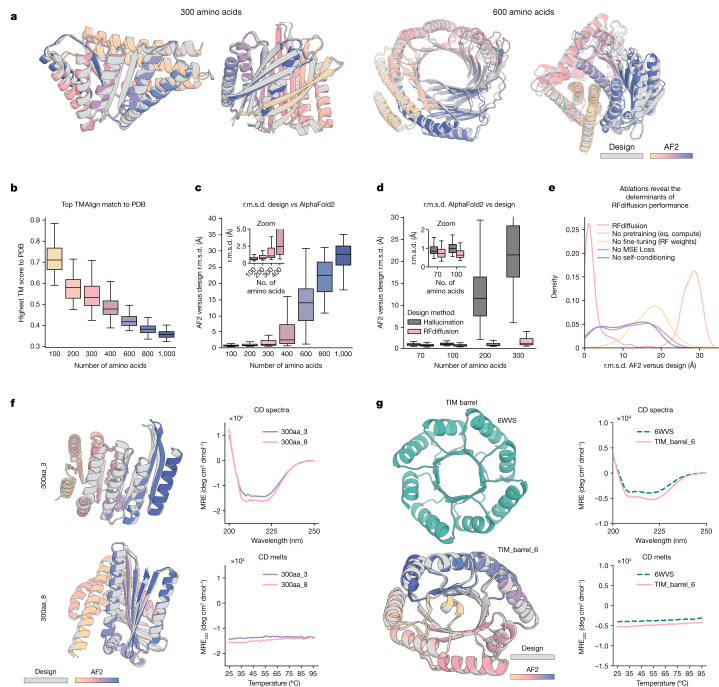
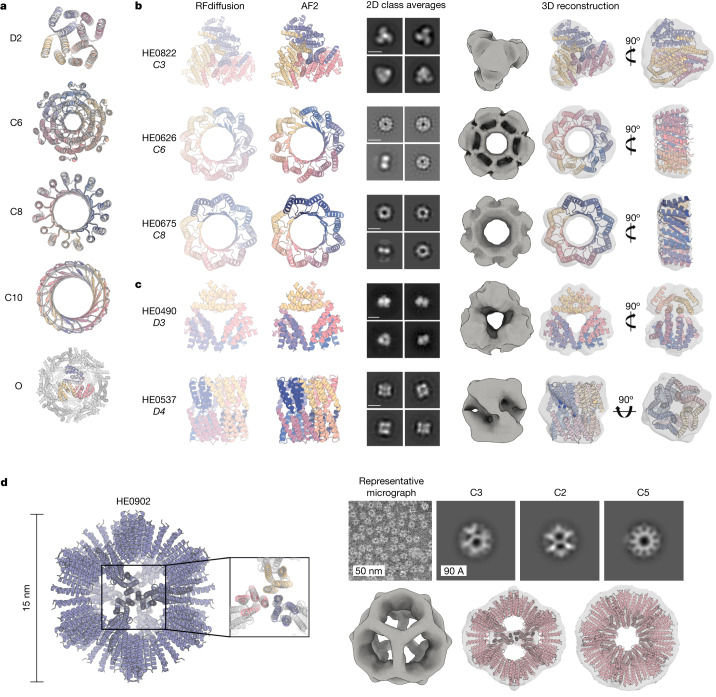
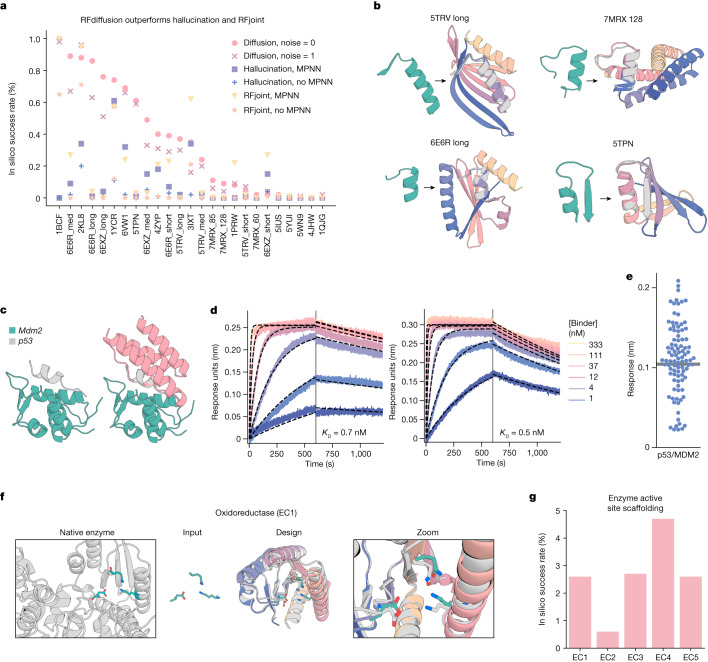
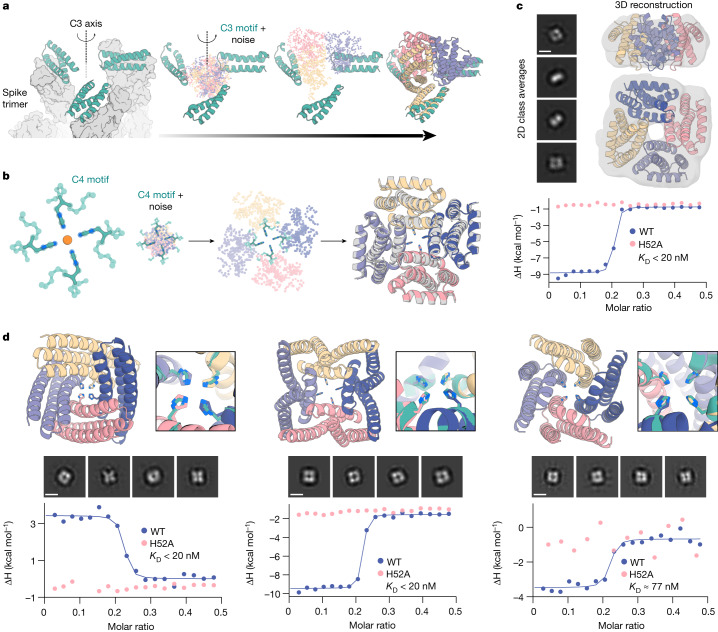
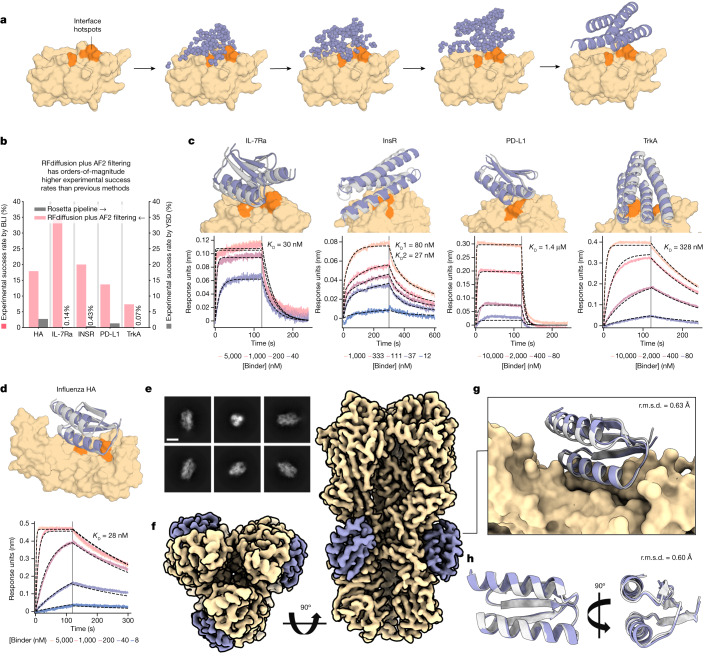
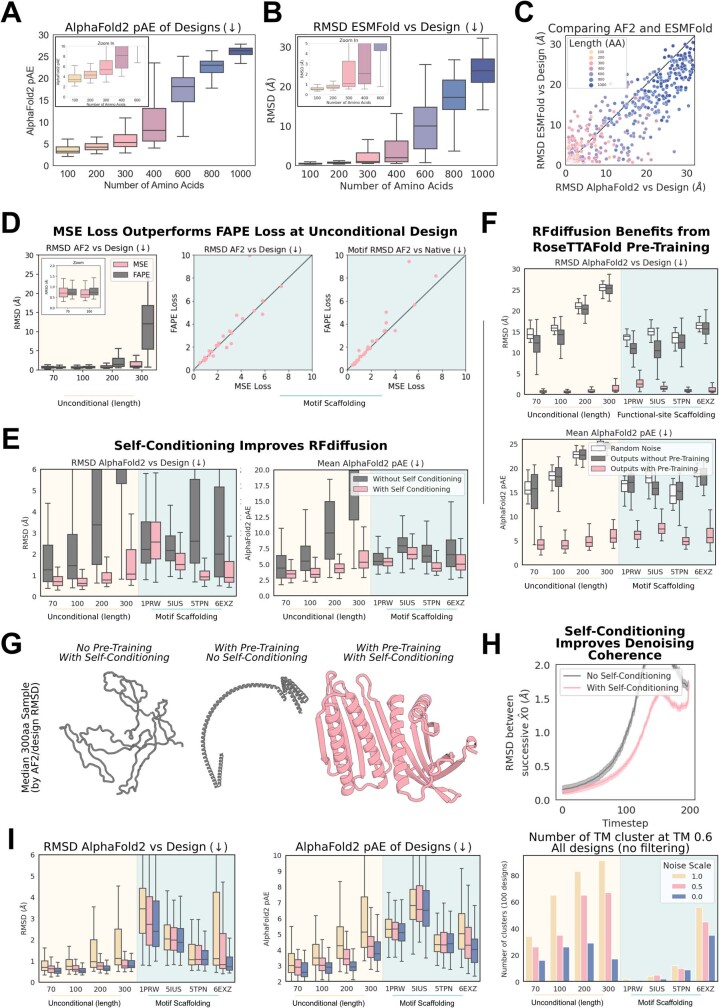
There has been considerable recent progress in designing new proteins using deep learning methods 1–9 . Despite this progress, a general deep learning framework for protein design that enables solution of a wide range of design challenges, including de novo binder design and design of higher order symmetric architectures, has yet to be described. Diffusion models 10,11 have had considerable success in image and language generative modeling but limited success when applied to protein modeling, likely due to the complexity of protein backbone geometry and sequence-structure relationships. Here we show that by fine tuning the RoseTTAFold structure prediction network on protein structure denoising tasks, we obtain a generative model of protein backbones that achieves outstanding performance on unconditional and topology-constrained protein monomer design, protein binder design, symmetric oligomer design, enzyme active site scaffolding, and symmetric motif scaffolding for therapeutic and metal-binding protein design. We demonstrate the power and generality of the method, called RoseTTAFold Diffusion (RF diffusion ), by experimentally characterizing the structures and functions of hundreds of new designs. In a manner analogous to networks which produce images from user-specified inputs, RF diffusion enables the design of diverse, complex, functional proteins from simple molecular specifications.
Overview
The claims and statistics of this paper haven’t been checked yet.
Run the check — free, no account needed. It reads the open-access text and checks the sources it cites.
Integrity signals
Registry
Cites
Statistics
Figures
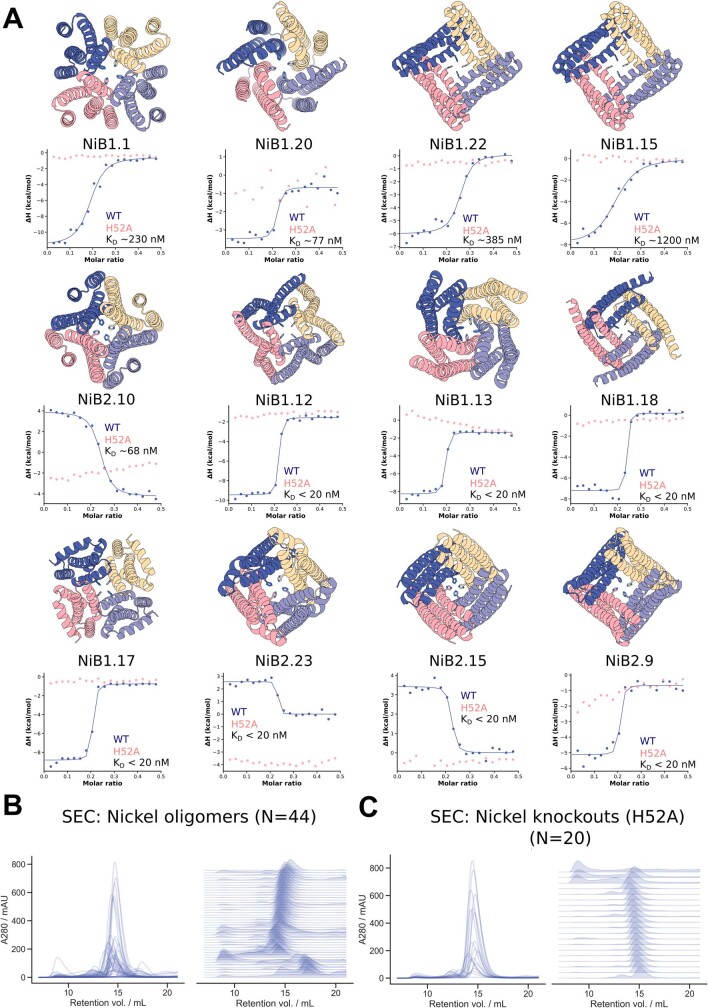
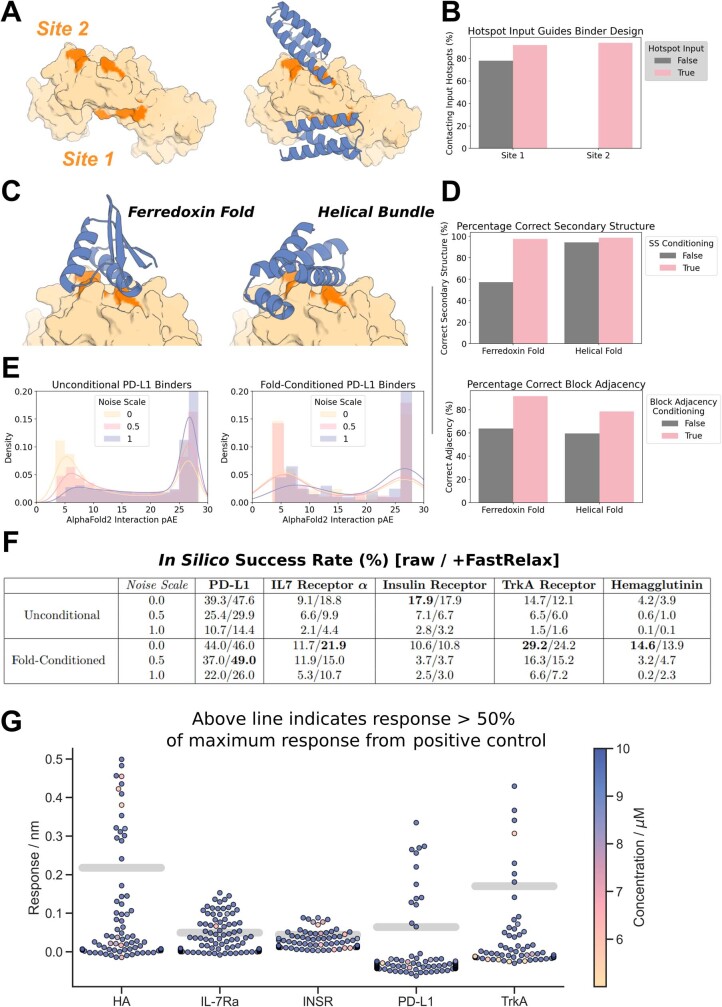
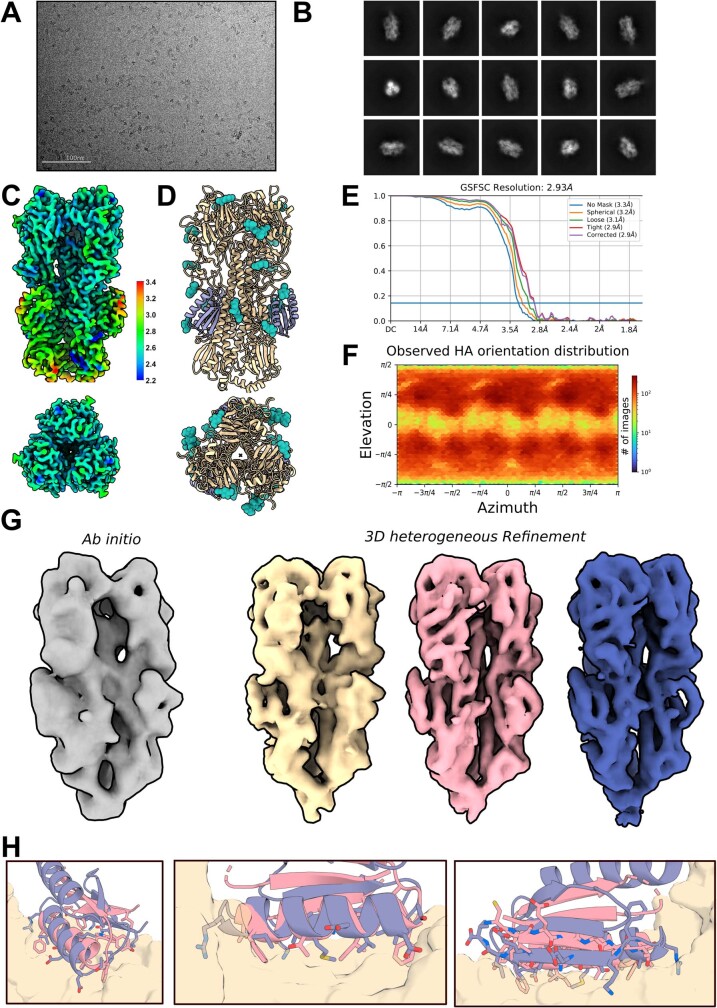
Verification
Claims the paper makes
The claims and statistics of this paper haven’t been checked yet.
Run the check — free, no account needed. It reads the open-access text and checks the sources it cites.
Self-check
Percentages, sums and reported differences re-computed from the paper’s own numbers.
The self-check needs the paper’s full text.
Citations
Cites
Highly accurate protein structure prediction with AlphaFold
Jumper, J., Evans, R., Pritzel, A., Green, T., Figurnov, M., Ronneberger, O., Tunyasuvunakool, K., Bates, R., Žídek, A., Potapenko, A., et al. (2021) · Nature · doi:10.1038/s41586-021-03819-2 · Cited by 43,764
Berman, H. M. (2000) · Nucleic Acids Research · doi:10.1093/nar/28.1.235 · Cited by 40,196
Denoising Diffusion Probabilistic Models
Ho, J., Jain, A., & Abbeel, P. (2020) · arXiv · doi:10.48550/arxiv.2006.11239 · Cited by 8,712
Evolutionary-scale prediction of atomic level protein structure with a language model
Lin, Z., Akin, H., Rao, R., Hie, B., Zhu, Z., Lu, W., Smetanin, N., Verkuil, R., Kabeli, O., Shmueli, Y., et al. (2022) · doi:10.1101/2022.07.20.500902 · Cited by 5,990
Accurate prediction of protein structures and interactions using a 3-track network
Baek, M., DiMaio, F., Anishchenko, I., Dauparas, J., Ovchinnikov, S., Lee, G. R., Wang, J., Cong, Q., Kinch, L. N., Schaeffer, R. D., et al. (2021) · doi:10.1101/2021.06.14.448402 · Cited by 5,549
Self-citationDeep Unsupervised Learning using Nonequilibrium Thermodynamics
Sohl-Dickstein, J., Weiss, E. A., Maheswaranathan, N., & Ganguli, S. (2015) · arXiv · doi:10.48550/arxiv.1503.03585 · Cited by 2,637
Zero-shot text-to-image generation
Ramesh, A., Pavlov, M., Goh, G., Gray, S., Voss, C., Radford, A., Chen, M., & Sutskever, I. (2021) · arXiv · doi:10.48550/arxiv.2102.12092 · Cited by 2,417
THEORY OF PROTEIN FOLDING: The Energy Landscape Perspective
Onuchic, J. N., Luthey-Schulten, Z., & Wolynes, P. G. (1997) · Annual Review of Physical Chemistry · doi:10.1146/annurev.physchem.48.1.545 · Cited by 2,210
Robust deep learning–based protein sequence design using ProteinMPNN
Dauparas, J., Anishchenko, I., Bennett, N., Bai, H., Ragotte, R. J., Milles, L. F., Wicky, B. I. M., Courbet, A., de Haas, R. J., Bethel, N., et al. (2022) · Science · doi:10.1126/science.add2187 · Cited by 2,210
Self-citationStructure of the MDM2 Oncoprotein Bound to the p53 Tumor Suppressor Transactivation Domain
Kussie, P. H., Gorina, S., Marechal, V., Elenbaas, B., Moreau, J., Levine, A. J., & Pavletich, N. P. (1996) · Science · doi:10.1126/science.274.5289.948 · Cited by 2,206
Research works printed but not linked: 3
- 10.48550/arXiv.2209.15611 · DOI · Paper page
- 10.1101/2022.07.13.499967 · DOI · Paper page
- Anand, N. & Huang, P. Generative modeling for protein structures. in Advances in Neural Information Processing Systems vol. 31 (Curran Associates, Inc., 2018).
Cited by
Sorted by citations
Items 501–600 of 1,000
Applications of cell free protein synthesis in protein design
Thornton, E. L., Paterson, S. M., Stam, M. J., Wood, C. W., Laohakunakorn, N., & Regan, L. (2024) · Protein Science · doi:10.1002/pro.5148 · Cited by 15
Ertelt, M., Moretti, R., Meiler, J., & Schoeder, C. T. (2025) · Science Advances · doi:10.1126/sciadv.adr7338 · Cited by 15
Evolving concepts of the protein universe
Kulkarni, P., Porter, L. L., Chou, T., Chong, S., Chiti, F., Schafer, J. W., Mohanty, A. R., Ramisetty, S. K., Onuchic, J. N., Tuite, M. F., et al. (2025) · iScience · doi:10.1016/j.isci.2025.112012 · Cited by 19
Engineering RiPP pathways: strategies for generating complex bioactive peptides
Smith, A. B., Ejindu, R. C., & Chekan, J. R. (2025) · Trends in Biochemical Sciences · doi:10.1016/j.tibs.2025.04.001 · Cited by 15
Bioengineering of long-chain polyunsaturated fatty acids in oilseed crops
Zheng, Y., Chen, Y., Ma, S., Zhang, M., Tang, T., & Du, C. (2025) · Progress in Lipid Research · doi:10.1016/j.plipres.2025.101333 · Cited by 16
Learning the Language of Antibody HypervariabilityPreprint
Singh, R., Im, C., Qiu, Y., Mackness, B. C., Gupta, A., Sorenson, T., Sledzieski, S., Erlach, L., Wendt, M., Fomekong‐Nanfack, Y., et al. (2023) · bioRxiv (Cold Spring Harbor Laboratory) · doi:10.1101/2023.04.26.538476 · Cited by 16
Jin, W., Chen, X., Vetticaden, A., Sarzikova, S., Raychowdhury, R., Uhler, C., & Hacohen, N. (2023) · bioRxiv (Cold Spring Harbor Laboratory) · doi:10.1101/2023.12.10.570461 · Cited by 20
Uncovering the Genomic Manifold via Scalable Learning from the Global MicrobiomePreprint
Wu, W., Zhou, Z., Riley, R. W., Abdulqader, M., Song, X., Kautsar, S. A., Egan, R. S., Hofmeyr, S. A., Liu, G., Goldhaber-Gordon, S., et al. (2025) · bioRxiv (Cold Spring Harbor Laboratory) · doi:10.1101/2025.01.30.635558 · Cited by 19
RareFold: Structure Prediction and Design of Proteins with Noncanonical Amino AcidsPreprint
Li, Q., Daumiller, D., Zuo, F., Marcotte, H., Pan-Hammarström, Q., & Bryant, P. (2025) · bioRxiv (Cold Spring Harbor Laboratory) · doi:10.1101/2025.05.19.654846 · Cited by 19
A contextualised protein language model reveals the functional syntax of bacterial evolutionPreprint
Wiatrak, M., Abelson, D. C., Mikhaylenko, R., Torné, R. V., Ntemourtsidou, M., Dinan, A. M., Arora, D., Horsfield, S., Lees, J. A., Brbić, M., et al. (2025) · bioRxiv (Cold Spring Harbor Laboratory) · doi:10.1101/2025.07.20.665723 · Cited by 19
CARE-SST: context-aware reconstruction diffusion model for sea surface temperature
Choo, M., Jung, S., Im, J., & Han, D. (2025) · ISPRS Journal of Photogrammetry and Remote Sensing · doi:10.1016/j.isprsjprs.2025.01.001 · Cited by 17
Structural Virology: The Key Determinants in Development of Antiviral Therapeutics
Handa, T., Saha, A., Narayanan, A., Ronzier, E., Kumar, P., Singla, J., & Tomar, S. (2025) · Viruses · doi:10.3390/v17030417 · Cited by 15
The coming wave of confluent biosynthetic, bioinformational and bioengineering technologies
Pretorius, I. S., Dixon, T. A., Boers, M., Paulsen, I. T., & Johnson, D. L. (2025) · Nature Communications · doi:10.1038/s41467-025-58030-y · Cited by 15
Co-design protein sequence and structure in discrete space via generative flow
Yang, S., Ju, L., Cheng, P., Zhou, J., Cai, Y., & Feng, D. (2025) · Bioinformatics · doi:10.1093/bioinformatics/btaf248 · Cited by 14
Bielska, W., Jaszczyszyn, I., Dudzic, P., Janusz, B., Chomicz, D., Wrobel, S., Greiff, V., Feehan, R., Adolf‐Bryfogle, J., & Krawczyk, K. (2025) · Frontiers in Immunology · doi:10.3389/fimmu.2025.1571371 · Cited by 17
Kim, G., Lee, D., Kim, J. H., Kim, S. D., Kim, H., Kim, J. H., Yim, S. S., Yeom, S., Keasling, J. D., & Cho, B. (2025) · Natural Product Reports · doi:10.1039/d5np00027k · Cited by 17
Huang, X., Yao, W., Chen, Q., Lin, J., Huang, J., Zou, Y., Chenglong, G., He, B., Yuan, X., Xu, C., et al. (2025) · Theoretical and Applied Genetics · doi:10.1007/s00122-025-04962-4 · Cited by 16
AI sheds new light on genome editing
Qin, Z. S., Deng, Z., Li, C., Wang, D., Ji, X., & Chen, Z. (2025) · Trends in biotechnology · doi:10.1016/j.tibtech.2025.07.011 · Cited by 15
Distinct Electric Fields Enable Common Catalytic Function in Structurally Diverse Enzymes
Chaturvedi, S. S., Goswami, A., Qian, J., Petersen, A., Ajmera, P., & Alexandrova, A. N. (2025) · Journal of the American Chemical Society · doi:10.1021/jacs.5c11931 · Cited by 15
Das, U. (2025) · ChemistrySelect · doi:10.1002/slct.202502448 · Cited by 17
Galindo, G., Maejima, D., DeRoo, J., Burlingham, S. R., Fixen, G. M., Morisaki, T., Febvre, H. P., Hasbrook, R., Zhao, N., Ghosh, S., et al. (2026) · Science Advances · doi:10.1126/sciadv.adx8352 · Cited by 16
Deep learning guided design of protease substrates
Martin-Alonso, C., Alamdari, S., Samad, T. S., Yang, K. K., Bhatia, S. N., & Amini, A. P. (2026) · Nature Communications · doi:10.1038/s41467-025-67226-1 · Cited by 14
Garcia, M., Dixit, S. M., & Rocklin, G. J. (2026) · Protein Science · doi:10.1002/pro.70453 · Cited by 26
Artificial intelligence driven protein design and sustainable nanomedicine for advanced theranostics
Esmaeilpour, D., Hamblin, M. R., Cheng, J., Khosravi, A., Liu, J., Zarepour, A., Zarrabi, A., Sillanpaa, M., Zare, E. N., Shen, J., et al. (2026) · Bioactive Materials · doi:10.1016/j.bioactmat.2026.01.036 · Cited by 18
Verkhivker, G. M., Alshahrani, M., Gupta, G., Xiao, S., & Tao, P. (2023) · International Journal of Molecular Sciences · doi:10.3390/ijms24097747 · Cited by 16
Illuminating enzyme design using deep learning
Dallago, C., & Yang, K. (2023) · Nature Chemistry · doi:10.1038/s41557-023-01218-w · Cited by 14
Click, Compute, Create: A Review of Web‐based Tools for Enzyme Engineering
Tripp, A., Braun, M., Wieser, F., Oberdorfer, G., & Lechner, H. (2024) · ChemBioChem · doi:10.1002/cbic.202400092 · Cited by 17
Structure and dynamics of the pyroglutamylated RF-amide peptide QRFP receptor GPR103
Iwama, A., Kise, R., Akasaka, H., Sano, F. K., Oshima, H. S., Inoue, A., Shihoya, W., & Nureki, O. (2024) · Nature Communications · doi:10.1038/s41467-024-49030-5 · Cited by 14
The art of designed coiled-coils for the regulation of mammalian cells
Plaper, T., Rihtar, E., Ramuta, T. Ž., Forstnerič, V., Jazbec, V., Ivanovski, F., Benčina, M., & Jerala, R. (2024) · Cell chemical biology · doi:10.1016/j.chembiol.2024.06.001 · Cited by 15
Advancing plant biology through deep learning-powered natural language processing
Peng, S., & Rajjou, L. (2024) · Plant Cell Reports · doi:10.1007/s00299-024-03294-9 · Cited by 14
Design of light- and chemically responsive protein assemblies through host-guest interactions
Zhang, Z., Chiang, H. T., Xia, Y., Avakyan, N., Sonani, R. R., Wang, F., Egelman, E. H., Yoreo, J. J. D., Pozzo, L. D., & Tezcan, F. A. (2025) · Chem · doi:10.1016/j.chempr.2024.102407 · Cited by 15
Self-assembled cell-scale containers made from DNA origami membranes
Karfusehr, C., Eder, M., Yang, H. Y., Beinsteiner, B., Jasnin, M., & Simmel, F. C. (2025) · Nature Materials · doi:10.1038/s41563-025-02418-0 · Cited by 15
Structure prediction of protein-ligand complexes from sequence information with UmolPreprint
Bryant, P., Kelkar, A., Guljas, A., Clementi, C., & Noé, F. (2023) · bioRxiv (Cold Spring Harbor Laboratory) · doi:10.1101/2023.11.03.565471 · Cited by 14
De novo design of diverse small molecule binders and sensors using Shape Complementary PseudocyclesPreprint
An, L., Said, M. Y., Tran, L., Majumder, S., Goreshnik, I., Lee, G. R., Juergens, D., Dauparas, J., Anishchenko, I. V., Coventry, B., et al. (2023) · bioRxiv (Cold Spring Harbor Laboratory) · doi:10.1101/2023.12.20.572602 · Cited by 14
Self-citationProgrammable design of functional proteins from natural languagePreprint
Dai, F.-Y., You, S.-Y., Zhu, Y.-D., Gao, Y., Fu, L.-H., Zhou, X.-B., Su, J., Wang, C.-T., Fan, Y.-L., Tan, Q.-S., et al. (2026) · bioRxiv · doi:10.1101/2024.08.01.606258 · Cited by 30
Language models for protein design
Lee, J. S., Abdin, O., & Kim, P. M. (2025) · Current Opinion in Structural Biology · doi:10.1016/j.sbi.2025.103027 · Cited by 15
Foundation models in plant molecular biology: advances, challenges, and future directions
Xu, F., Wu, T., Qian, C., Wang, X., & Yan, J. (2025) · Frontiers in Plant Science · doi:10.3389/fpls.2025.1611992 · Cited by 14
From data to discovery: leveraging big data in plant natural products biosynthesis research
McConnachie, M. M., Nguyen, T. M., Kim, T., Nguyen, T., & Dang, T. T. (2025) · The Plant Journal · doi:10.1111/tpj.70288 · Cited by 13
Harding, M. D., & Sainsbury, F. (2025) · Plant Biotechnology Journal · doi:10.1111/pbi.70232 · Cited by 14
Accelerating protein design by scaling experimental characterization
Qian, J., Milles, L. F., Wicky, B. I. M., Ragotte, R. J., Motmaen, A., Borst, A. J., Skotheim, R., Ols, S., Coventry, B., Li, X., et al. (2026) · Nature Communications · doi:10.1038/s41467-026-76740-9 · Cited by 25
Self-citationCao, C., Zhao, W., Guo, J., Wang, Z., Lü, A., & Liang, C. C. (2025) · The Innovation Medicine · doi:10.59717/j.xinn-med.2025.100154 · Cited by 14
Development of a targeted BioPROTAC degrader selective for misfolded SOD1
Chisholm, C. G., Bartlett, R., Brown, M. L., Proctor, E., Farrawell, N. E., Gorman, J., Delerue, F., Ittner, L. M., Vine, K. L., Ecroyd, H. W., et al. (2025) · Nature Communications · doi:10.1038/s41467-025-65481-w · Cited by 15
Challenging AlphaFold in predicting proteins with large-scale allosteric transitions
Perkins-Jechow, B. H., Ahualli, J. P. I., Nhu, H. T., Omidi, A., Li, C., Holguin-Cruz, J. A., Cho, D., Na, D., Malhis, N., Bui, J. M., et al. (2025) · Communications Chemistry · doi:10.1038/s42004-025-01763-0 · Cited by 14
Catalyzing Carbohydrate Cleavage: Glycosidases and Their Mechanisms
Overkleeft, H. S., Davies, G. J., & Williams, S. J. (2026) · Chemical Reviews · doi:10.1021/acs.chemrev.5c00803 · Cited by 15
Rexha, J., Perta, N., Roscioni, A., Motta, S., Teana, A. L., Maragliano, L., Romagnoli, A., & Marino, D. D. (2023) · Advanced Sensor Research · doi:10.1002/adsr.202300053 · Cited by 14
Wang, H., Yang, X., Li, Y., Ze, S., Feng, B., Weng, Y., Gao, A., Song, G., Liu, M., Xie, Q., et al. (2024) · Journal of Medicinal Chemistry · doi:10.1021/acs.jmedchem.4c00250 · Cited by 13
Non‐Canonical Amino Acids for Engineering Peptides and Proteins with new Functions
Zhou, K. Z. Q., & Obexer, R. (2024) · Israel Journal of Chemistry · doi:10.1002/ijch.202400006 · Cited by 14
Durojaye, O. A., Yekeen, A. A., Idris, M. O., Okoro, N. O., Odiba, A. S., & Nwanguma, B. C. (2024) · International Journal of Biological Macromolecules · doi:10.1016/j.ijbiomac.2024.131840 · Cited by 15
Machine learning in biological physics: From biomolecular prediction to design
Martin, J., Mateos, M., Onuchic, J. N., Coluzza, I., & Morcos, F. (2024) · Proceedings of the National Academy of Sciences · doi:10.1073/pnas.2311807121 · Cited by 14
The human touch: Utilizing AlphaFold 3 to analyze structures of endogenous metabolons
Träger, T. K., Tüting, C., & Kastritis, P. L. (2024) · Structure · doi:10.1016/j.str.2024.08.018 · Cited by 14
Li, J., Liao, L., Zhang, C., Huang, K., Zhang, P., Zhang, J. Z. H., Wan, X., & Zhang, H. (2024) · Briefings in Bioinformatics · doi:10.1093/bib/bbae488 · Cited by 13
Protein sequence modelling with Bayesian flow networks
Atkinson, T. J., Barrett, T. D., Cameron, S., Guloglu, B., Greenig, M., Tan, C. B., Robinson, L., Graves, A., Copoiu, L., & Laterre, A. (2025) · Nature Communications · doi:10.1038/s41467-025-58250-2 · Cited by 22
How enzyme functions evolve: genetic, structural, and kinetic perspectives
Fuentes-Ugarte, N., Pereira-Silva, M., Rubilar, I. M. C., Vallejos, G., Guixé, V., & Castro‐Fernández, V. (2025) · Biophysical Reviews · doi:10.1007/s12551-025-01314-w · Cited by 14
Vaccinology in the artificial intelligence era
Gasperini, G., Baylor, N. W., BLACK, S. B., Bloom, D. E., Cramer, J. P., de Lannoy, G., Denoël, P., Feinberg, M. B., Helleputte, T., Kang, G., et al. (2025) · Science Translational Medicine · doi:10.1126/scitranslmed.adu3791 · Cited by 19
Xie, J., Zhang, Y., Wang, Z., Jin, X., Lü, X., Ge, S., & Min, X. (2025) · BMC Bioinformatics · doi:10.1186/s12859-025-06123-2 · Cited by 15
Dreyer, F. A., Schneider, C., Kovaltsuk, A., Cutting, D., Byrne, M. J., Nissley, D. A., Kenlay, H., Marks, C., Errington, D., Gildea, R. J., et al. (2025) · mAbs · doi:10.1080/19420862.2025.2511220 · Cited by 20
Mask-prior-guided denoising diffusion improves inverse protein folding
Bai, P., Miljković, F. N., Liu, X., Maria, L. D., Croasdale-Wood, R., Rackham, O. J. L., & Lu, H. (2025) · Nature Machine Intelligence · doi:10.1038/s42256-025-01042-6 · Cited by 14
Accurate single-domain scaffolding of three nonoverlapping protein epitopes using deep learning
Castro, K. M., Watson, J. L., Wang, J., Southern, J., Ayardulabi, R., Georgeon, S., Rosset, S., Baker, D., & Correia, B. E. (2026) · Nature Chemical Biology · doi:10.1038/s41589-025-02083-z · Cited by 13
Self-citationExploring “dark-matter” protein folds using deep learning
Harteveld, Z., Van Hall-Beauvais, A., Morozova, I., Southern, J., Goverde, C., Georgeon, S., Rosset, S., Defferrard, M., Loukas, A., Vandergheynst, P., et al. (2024) · Cell Systems · doi:10.1016/j.cels.2024.09.006 · Cited by 13
Exploring Log-Likelihood Scores for Ranking Antibody Sequence DesignsPreprint
Uçar, T., Malherbe, C., & Hernandez, F. G. (2024) · bioRxiv (Cold Spring Harbor Laboratory) · doi:10.1101/2024.10.07.617023 · Cited by 16
De novo design of Ras isoform selective binders
Zhang, J. Z., Li, X., Batingana, A. R., Liu, C., Jiang, H., Shannon, K., Huang, B. J., Wu, K., & Baker, D. (2026) · Cell Chemical Biology · doi:10.1016/j.chembiol.2026.02.008 · Cited by 12
Self-citationImportance of Computer-aided Drug Design in Modern Pharmaceutical Research
Agarwal, U., Tonk, R. K., & Paliwal, S. (2025) · Current Drug Discovery Technologies · doi:10.2174/0115701638361318241230073123 · Cited by 14
Matthys, A., Félix, J., Catani, J. P. P., Roose, K., Nerinckx, W., Buyten, B. V., Fijałkowska, D., Callewaert, N., Savvides, S. N., & Saelens, X. (2025) · Nature Communications · doi:10.1038/s41467-025-60232-3 · Cited by 12
Illuminating the universe of enzyme catalysis in the era of artificial intelligence
Yang, J., Li, F.-Z., Long, Y., & Arnold, F. H. (2025) · Cell Systems · doi:10.1016/j.cels.2025.101372 · Cited by 18
Zhang, C., Wang, W., Zhu, N., Cao, Z., Wu, Y., Mao, Q., Zhu, C., Zhang, C., Guo, J., & Duan, H. (2025) · Journal of Chemical Information and Modeling · doi:10.1021/acs.jcim.5c01393 · Cited by 15
Yang, S., Ren, J., Gao, W., Cao, L., & Ling, S. (2025) · npj Soft Matter · doi:10.1038/s44431-025-00005-6 · Cited by 12
Halogenases and dehalogenases: mechanisms, engineering, and applications
Luo, J., Li, N., Wang, J., Gao, Y., Tang, H., Bai, L., Lee, S. Y., & Tong, Y. (2025) · Natural Product Reports · doi:10.1039/d5np00055f · Cited by 14
Self-citationMachine Learning for De Novo Molecular Generation: A Comprehensive Review
Chen, Y., & Xue, W. (2026) · ACS Chemical Neuroscience · doi:10.1021/acschemneuro.5c00861 · Cited by 13
Designing advanced thermoelectrics
Bai, S., Wan, D., Yu, T., Chang, C., Xie, H., Zhou, C., Chung, I. J., He, J., Kang, P. C., & Zhao, L. (2026) · Nature Reviews Materials · doi:10.1038/s41578-026-00931-5 · Cited by 20
Information and library professionals' roles and responsibilities in an AI ‐augmented world
Marchionini, G. (2024) · Journal of the Association for Information Science and Technology · doi:10.1002/asi.24930 · Cited by 12
Dey, S., Bruner, J., Brown, M., Roof, M., & Chowdhury, R. (2024) · Computational and Structural Biotechnology Journal · doi:10.1016/j.csbj.2024.08.029 · Cited by 12
A high-performance protein preparation approach in a single column-free step
Huang, Y., Zhang, Y., Yang, X., & Lin, Z. (2024) · Trends in biotechnology · doi:10.1016/j.tibtech.2024.10.008 · Cited by 12
Gavalda-Garcia, J., Dixit, B., Díaz, A., Ghysels, A., & Vranken, W. (2025) · Journal of Molecular Biology · doi:10.1016/j.jmb.2024.168900 · Cited by 12
FlowBack: A Generalized Flow-Matching Approach for Biomolecular Backmapping
Jones, M. S., Khanna, S., & Ferguson, A. L. (2025) · Journal of Chemical Information and Modeling · doi:10.1021/acs.jcim.4c02046 · Cited by 13
The physics-AI dialogue in drug design
Vargas-Rosales, P. A., & Caflisch, A. (2025) · RSC Medicinal Chemistry · doi:10.1039/d4md00869c · Cited by 15
Toward deep learning sequence–structure co-generation for protein design
Wang, C., Alamdari, S., Domingo-Enrich, C., Amini, A. P., & Yang, K. (2025) · Current Opinion in Structural Biology · doi:10.1016/j.sbi.2025.103018 · Cited by 18
Protein design accelerates the development and application of optogenetic tools
Zhu, L., Wang, Y., Wu, X., Wu, G., Zhang, G., Liu, C., & Zhang, S. (2025) · Computational and Structural Biotechnology Journal · doi:10.1016/j.csbj.2025.02.014 · Cited by 13
Wang, B., Zhou, T., Shen, Y. C., Hu, W. W., Zhou, J., Tang, J., Han, R., Xu, G., Schwaneberg, U., Wang, B., et al. (2025) · ACS Catalysis · doi:10.1021/acscatal.5c01569 · Cited by 13
Zhang, C., Xu, Z., Lin, K., Zhu, N., Zhang, C., Xu, W., Guo, J., Su, A., Li, C., & Duan, H. (2025) · Journal of Chemical Information and Modeling · doi:10.1021/acs.jcim.5c00227 · Cited by 12
NanoBinder: a machine learning assisted nanobody binding prediction tool using Rosetta energy scores
Shrestha, P., Talwar, C. S., Kandel, J., Park, K., Chong, K. T., Woo, E., & Tayara, H. (2025) · Journal of Cheminformatics · doi:10.1186/s13321-025-01040-1 · Cited by 14
Neutralizing antibodies to block viral entry and for identification of entry inhibitors
Tam, E.-H., Peng, Y., Cheah, M. X. Y., Yan, C., & Xiao, T. (2024) · Antiviral Research · doi:10.1016/j.antiviral.2024.105834 · Cited by 12
Hetmann, M., Parigger, L., Sirelkhatim, H., Stern, A. C., Krassnigg, A., Gruber, K. F., Steinkellner, G., Ruau, D., & Gruber, C. C. (2024) · Scientific Data · doi:10.1038/s41597-024-03403-z · Cited by 11
Design of linear and cyclic peptide binders of different lengths from protein sequence informationPreprint
Li, Q., Vlachos, E. N., & Bryant, P. (2024) · bioRxiv (Cold Spring Harbor Laboratory) · doi:10.1101/2024.06.20.599739 · Cited by 12
The Dayhoff Atlas: scaling sequence diversity for improved protein generationPreprint
Yang, K., Alamdari, S., Lee, A. J., Kaymak-Loveless, K., Char, S., Brixi, G., Domingo-Enrich, C., Wang, C., Lyu, S., Fusi, N., et al. (2025) · bioRxiv (Cold Spring Harbor Laboratory) · doi:10.1101/2025.07.21.665991 · Cited by 13
PXDesign: Fast, Modular, and Accurate De Novo Design of Protein BindersPreprint
Protenix Team, Ren, M., Sun, J., Guan, J., Liu, C., Gong, C., Wang, Y. X., Wang, L., Cai, Q., Ma, W., et al. (2025) · bioRxiv (Cold Spring Harbor Laboratory) · doi:10.1101/2025.08.15.670450 · Cited by 14
mBER: Controllable de novo antibody design with million-scale experimental screeningPreprint
Swanson, E., Nichols, M., Ravichandran, S., & Ogden, P. (2025) · bioRxiv (Cold Spring Harbor Laboratory) · doi:10.1101/2025.09.26.678877 · Cited by 14
FlowDesign: Improved design of antibody CDRs through flow matching and better prior distributions
Wu, J., Kong, X., Sun, N., Wei, J., Shan, S., Feng, F., Wu, F., Peng, J., Zhang, L., Liu, Y., et al. (2025) · Cell Systems · doi:10.1016/j.cels.2025.101270 · Cited by 11
Computational loop reconstruction based design of efficient PET hydrolases
Wang, H., Cun, Y., Wang, M., Du, X., Yang, Z., Wang, H., Zhang, J., Wang, P., Feng, Y., & Zhu, Y. (2025) · Communications Biology · doi:10.1038/s42003-025-08364-6 · Cited by 12
Vidal, P., Giménez-Dejoz, J., Fernández-López, L., Romero-Téllez, S., Nazemi, S. A., Luengo, M., González-Alfonso, J. L., Martinez-Sugrañes, M., Robles‐Martín, A., Almendral, D., et al. (2025) · Trends in biotechnology · doi:10.1016/j.tibtech.2025.07.008 · Cited by 12
Review of diffusion models and its applications in biomedical informatics
Luo, J., Yang, L., Liu, Y., Hu, C., Wang, G., Yang, Y. C., Yang, T.-L., & Zhou, X. (2025) · BMC Medical Informatics and Decision Making · doi:10.1186/s12911-025-03210-5 · Cited by 17
Haas, C. M., Jasti, N., Dosey, A. M., Allen, J. D., Gillespie, R. A., McGowan, J., Leaf, E. M., Crispin, M., DeForest, C. A., Kanekiyo, M., et al. (2025) · Proceedings of the National Academy of Sciences · doi:10.1073/pnas.2409566122 · Cited by 15
Computational design of a high-precision mitochondrial DNA cytosine base editor
Mi, L., Li, Y., Lv, X., Wan, Z.-L., Liu, X., Zhang, K., Li, H., Yao, Y., Zhang, L., Xu, Z., et al. (2025) · Nature Structural & Molecular Biology · doi:10.1038/s41594-025-01714-2 · Cited by 13
Lu, X., Cao, M., Ma, M., Wu, Y., Qu, M., Du, F., Ji, R., Duan, M., Dong, L., Liu, K., et al. (2025) · Food Bioengineering · doi:10.1002/fbe2.70029 · Cited by 12
TIMED-Design: flexible and accessible protein sequence design with convolutional neural networks
Castorina, L. V., Ünal, S. M., Subr, K., & Wood, C. W. (2024) · Protein Engineering Design and Selection · doi:10.1093/protein/gzae002 · Cited by 11
Epitope landscape in autoimmune neurological disease and beyond
Talucci, I., & Maric, H. M. (2024) · Trends in Pharmacological Sciences · doi:10.1016/j.tips.2024.07.007 · Cited by 14
Villegas-Morcillo, A., Weber, J. M., & Reinders, M. J. T. (2024) · PRX Life · doi:10.1103/prxlife.2.033012 · Cited by 11
Liao, M., Feng, S., Liu, X., Xu, G., Li, S., Bai, Y., Luo, H., Yao, B., Wang, H., & Tu, T. (2024) · Advanced Science · doi:10.1002/advs.202402441 · Cited by 12
Reaching New Heights in Genetic Code Manipulation with High Throughput Screening
Lino, B. R., Williams, S. J., Castor, M. E., & Deventer, J. A. V. (2024) · Chemical Reviews · doi:10.1021/acs.chemrev.4c00329 · Cited by 11
A general system for targeting MHC class II–antigen complex via a single adaptable loop
Du, H., Liu, J., Jude, K. M., Yang, X., Li, Y., Bell, B., Yang, H., Kassardjian, A., Blackson, W., Mobedi, A., et al. (2024) · Nature Biotechnology · doi:10.1038/s41587-024-02466-y · Cited by 13
Metadata
- Authors
- Watson, J. L., Juergens, D., Bennett, N. R., Trippe, B. L., Yim, J., Eisenach, H. E., Ahern, W., Borst, A. J., Ragotte, R. J., Milles, L. F., Wicky, B. I. M., Hanikel, N., Pellock, S. J., Courbet, A., Sheffler, W., Wang, J., Venkatesh, P., Sappington, I., Torres, S. V., Lauko, A., De Bortoli, V., Mathieu, E., Barzilay, R., Jaakkola, T. S., DiMaio, F., Baek, M., & Baker, D.
- Affiliations
- University of Washington (US)
- Centre National de la Recherche Scientifique (FR)
- Massachusetts Institute of Technology (US)
- Seoul National University (KR)
- Howard Hughes Medical Institute (US)
- Corresponding author
- Baker, David
- ORCID
- Watson, Joseph L.
- Juergens, David
- Bennett, Nathaniel R.
- Trippe, Brian L.
- Yim, Jason
- Eisenach, Helen E.
- Ahern, Woody
- Borst, Andrew J.
- Ragotte, Robert J.
- Milles, Lukas F.
- Wicky, Basile I. M.
- Hanikel, Nikita
- Pellock, Samuel J.
- Courbet, Alexis
- Sheffler, William
- Wang, Jue
- Venkatesh, Preetham
- Sappington, Isaac
- Torres, Susana Vázquez
- Lauko, Anna
- De Bortoli, Valentin
- Barzilay, Regina
- Jaakkola, Tommi S.
- DiMaio, Frank
- Baek, Minkyung
- Baker, David
- Venue
- Nature
- Publisher
- openRxiv
- Published
- 2022-12-10
- Volume
- 620
- Issue
- 7976
- Pages
- 1089-1100
- ISSN
- 0028-0836 (ISSN-L)
- PMC
- PMC10468394
- OpenAlex
- W4383957026
- Cited by
- 2,369
- References
- 57
- Citations by year
- 2026: 943 · 2025: 795 · 2024: 473 · 2023: 153 · 2022: 4
- FWCI
- 210.65
- Type
- journal article
- Language
- en
- Open access
- hybrid
- doi.org
- Licence
- cc-by
- Locations
- Nature (publishedVersion, cc-by)
- bioRxiv (Cold Spring Harbor Laboratory) (acceptedVersion, cc-by-nd)
- PubMed Central (publishedVersion, cc-by)
- PubMed (publishedVersion)
- RePEc: Research Papers in Economics (submittedVersion)
- Apollo (University of Cambridge) (submittedVersion, cc-by)
- Funders
- National Science Foundation (HDTRA1-19-1-0003, 1918839)
- Howard Hughes Medical Institute
- U.S. Department of Energy (DESC0018940)
- Bill and Melinda Gates Foundation (INV-010680)
- Washington Research Foundation
- Amgen
- Sanofi
- Washington State University
- Open Philanthropy Project
- Defense Advanced Research Projects Agency
- Defense Threat Reduction Agency (HDTRA1-19-1-0003, HDTRA1)
- Office of Science (DE-SC0018940 MOD03, DESC0018940)
- Engineering and Physical Sciences Research Council (EP/T005386/1)
- National Institute on Aging (U19AG065156)
- National Institute of General Medical Sciences (T32GM007250, T32GM008268)
- Topics
- Life Sciences › Biochemistry, Genetics and Molecular Biology › Molecular Biology › Protein Structure and Dynamics
- Life Sciences › Biochemistry, Genetics and Molecular Biology › Molecular Biology › Machine Learning in Bioinformatics
- Life Sciences › Biochemistry, Genetics and Molecular Biology › Structural Biology › Enzyme Structure and Function
- Keywords
- protein design, de novo protein design, diffusion models, RoseTTAFold, protein binder design, metal-binding proteins, protein backbone, influenza haemagglutinin, therapeutic proteins
- MeSH terms
- Deep Learning, Protein Binding, Proteins, Hemagglutinin Glycoproteins, Influenza Virus, Catalytic Domain, Cryoelectron Microscopy
About these checks
Registry, retraction, Cites and statistics results are computed, not judged, with one exception: a printed reference that no index lists is read once by a model before it counts as a citation error. Claims are extracted by a model and kept only when their quote appears verbatim in the text; each cited source is then checked, with a model’s help, for whether it says what the claim relies on. Those verdicts can be wrong — read the claim’s quote and the cited source before relying on one.
Statistics and arithmetic are recomputed, not judged.
Confidence bands are shown only for fields calibrated on our annotated test set. None is calibrated yet, so no band is shown.
What counts as a claim ›How we measure confidence ›How we check this ›
Are you an author, or do you see a problem with this page? Request a review
