

The DOI matches its Crossref record; 57 of the 57 references it cites were found in a registry or an index.
Broadly applicable and accurate protein design by integrating structure prediction networks and diffusion generative models
Open accessPreprint — published as 10.1038/s41586-023-06415-8 · Paper page
Abstract
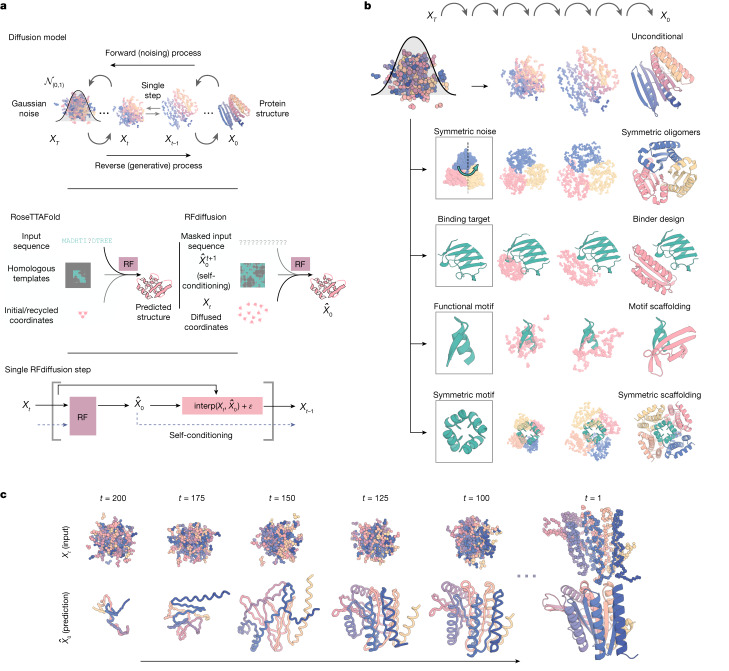
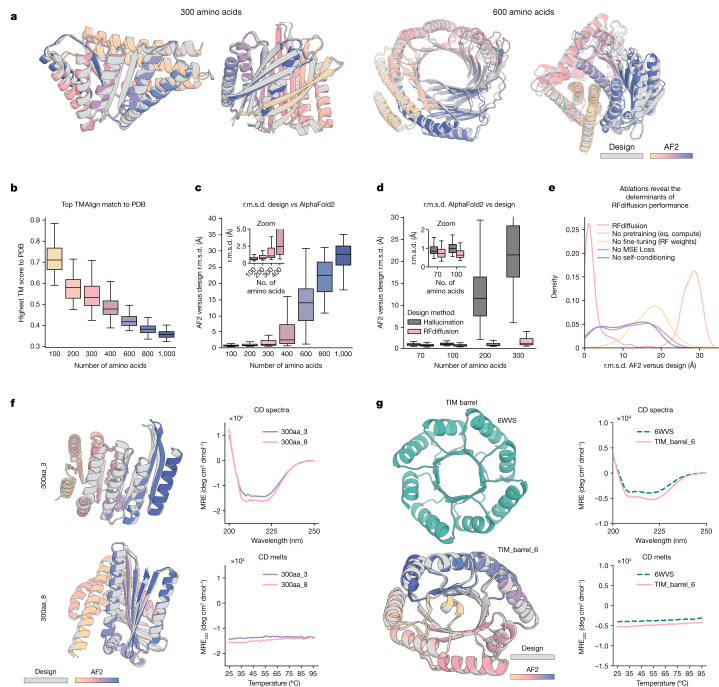
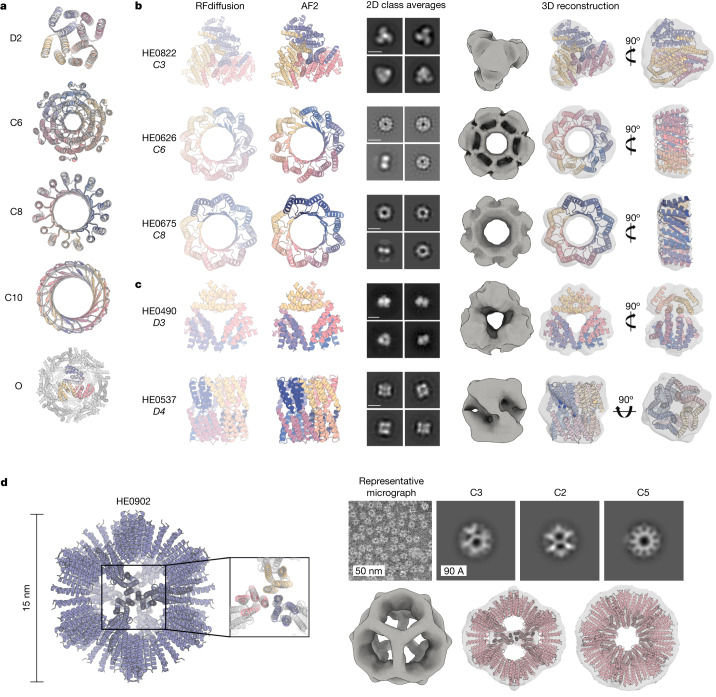
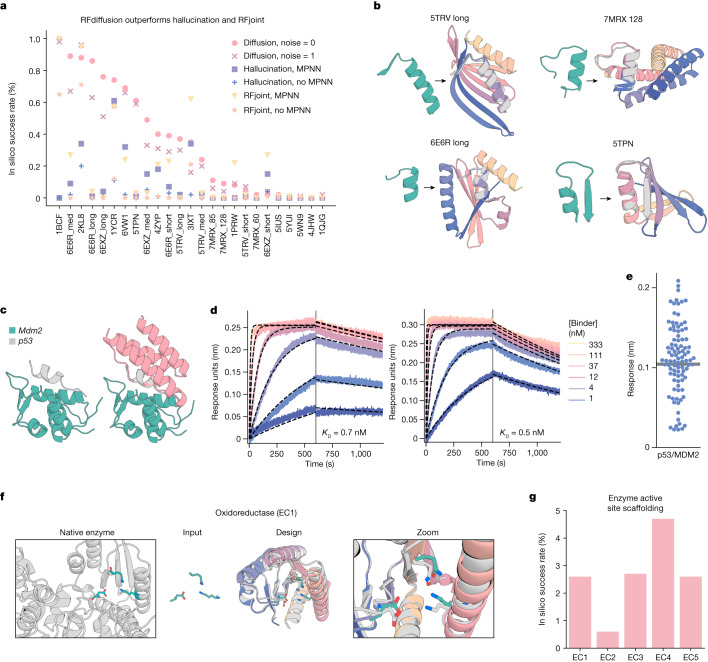
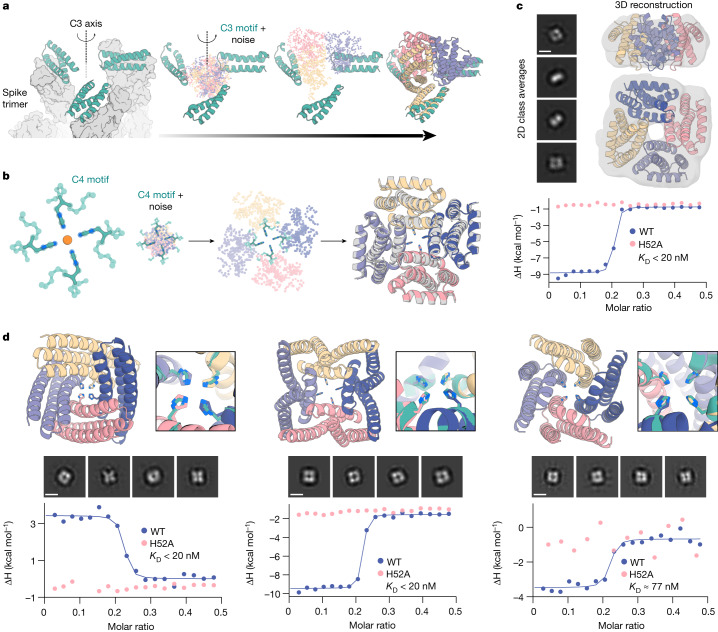
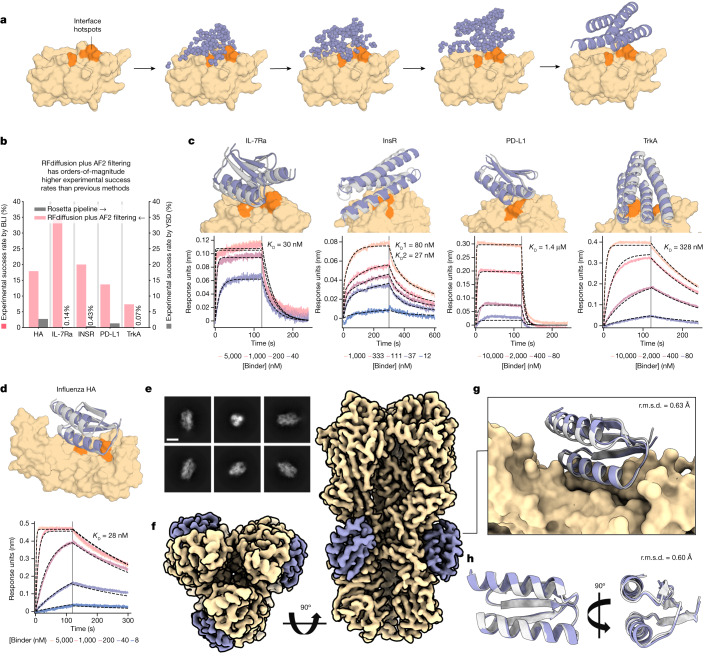
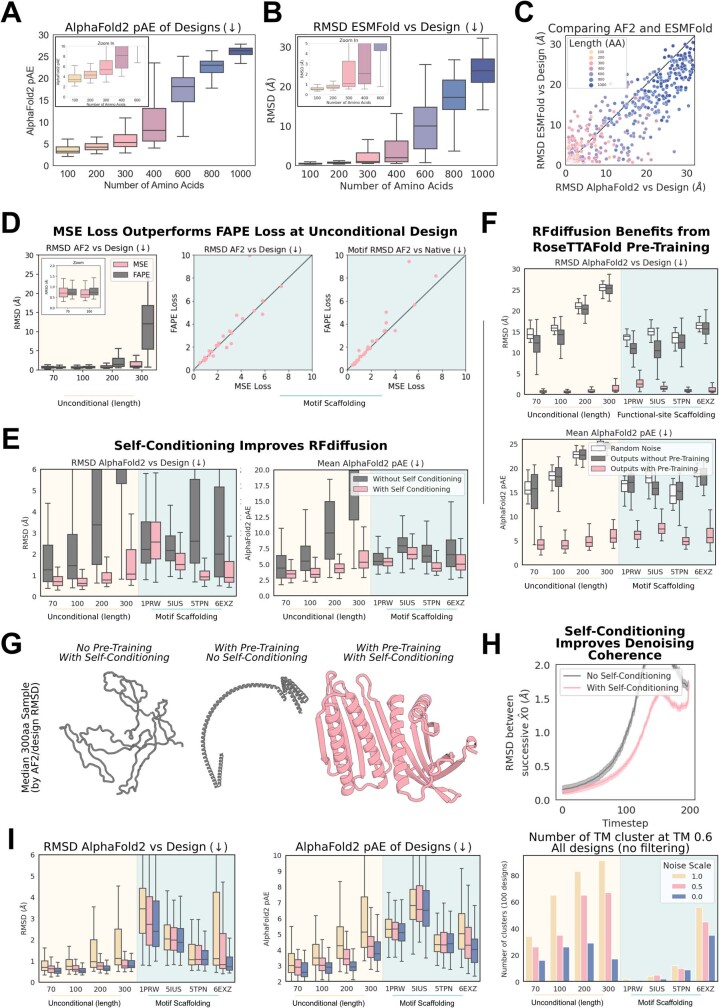
There has been considerable recent progress in designing new proteins using deep learning methods 1–9 . Despite this progress, a general deep learning framework for protein design that enables solution of a wide range of design challenges, including de novo binder design and design of higher order symmetric architectures, has yet to be described. Diffusion models 10,11 have had considerable success in image and language generative modeling but limited success when applied to protein modeling, likely due to the complexity of protein backbone geometry and sequence-structure relationships. Here we show that by fine tuning the RoseTTAFold structure prediction network on protein structure denoising tasks, we obtain a generative model of protein backbones that achieves outstanding performance on unconditional and topology-constrained protein monomer design, protein binder design, symmetric oligomer design, enzyme active site scaffolding, and symmetric motif scaffolding for therapeutic and metal-binding protein design. We demonstrate the power and generality of the method, called RoseTTAFold Diffusion (RF diffusion ), by experimentally characterizing the structures and functions of hundreds of new designs. In a manner analogous to networks which produce images from user-specified inputs, RF diffusion enables the design of diverse, complex, functional proteins from simple molecular specifications.
Overview
The claims and statistics of this paper haven’t been checked yet.
Run the check — free, no account needed. It reads the open-access text and checks the sources it cites.
Integrity signals
Registry
Cites
Statistics
Figures
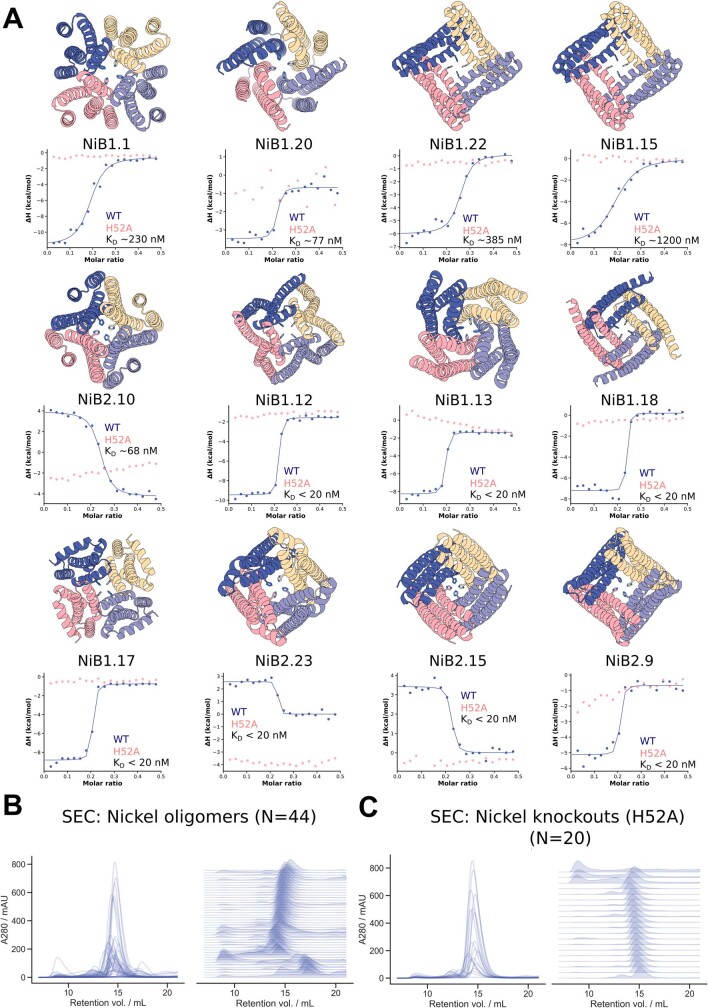
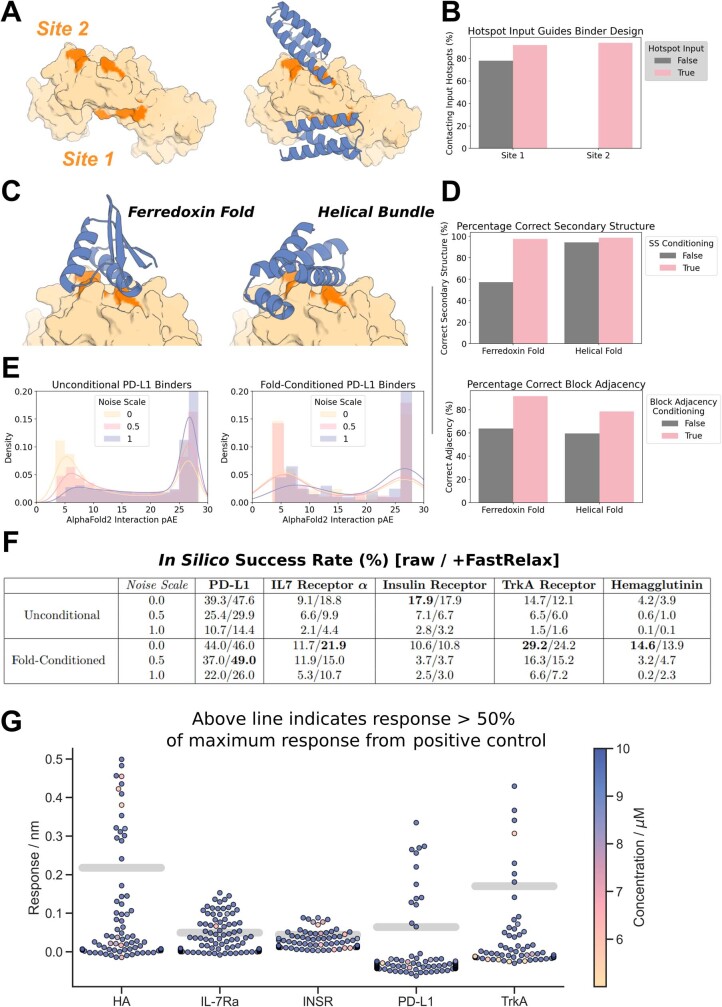
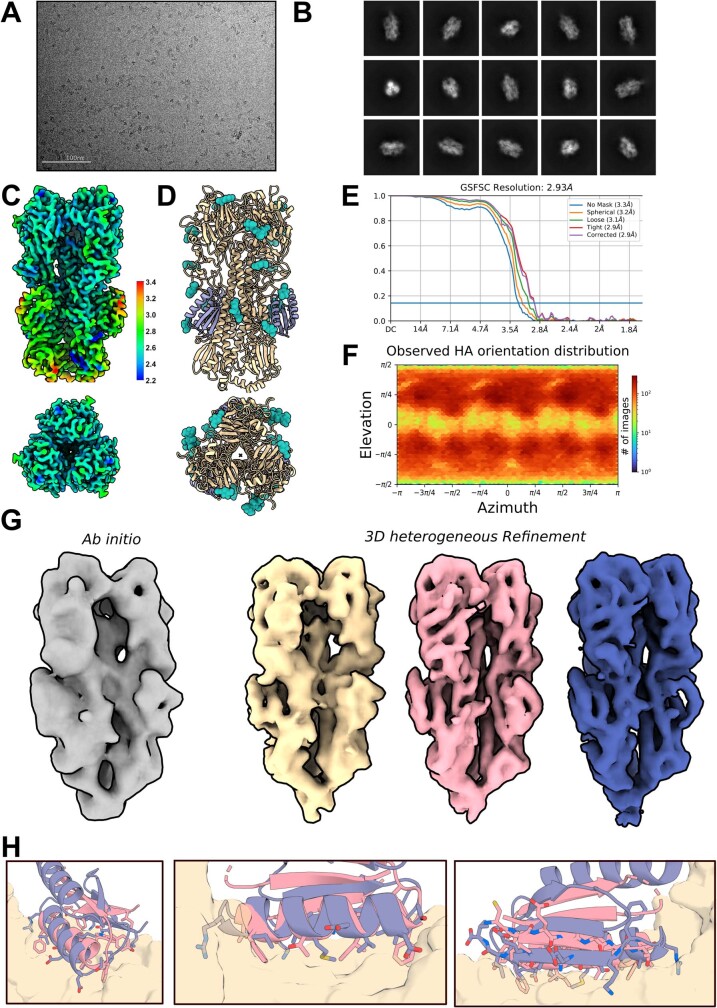
Verification
Claims the paper makes
The claims and statistics of this paper haven’t been checked yet.
Run the check — free, no account needed. It reads the open-access text and checks the sources it cites.
Self-check
Percentages, sums and reported differences re-computed from the paper’s own numbers.
The self-check needs the paper’s full text.
Citations
Cites
Highly accurate protein structure prediction with AlphaFold
Jumper, J., Evans, R., Pritzel, A., Green, T., Figurnov, M., Ronneberger, O., Tunyasuvunakool, K., Bates, R., Žídek, A., Potapenko, A., et al. (2021) · Nature · doi:10.1038/s41586-021-03819-2 · Cited by 43,764
Berman, H. M. (2000) · Nucleic Acids Research · doi:10.1093/nar/28.1.235 · Cited by 40,196
Denoising Diffusion Probabilistic Models
Ho, J., Jain, A., & Abbeel, P. (2020) · arXiv · doi:10.48550/arxiv.2006.11239 · Cited by 8,712
Evolutionary-scale prediction of atomic level protein structure with a language model
Lin, Z., Akin, H., Rao, R., Hie, B., Zhu, Z., Lu, W., Smetanin, N., Verkuil, R., Kabeli, O., Shmueli, Y., et al. (2022) · doi:10.1101/2022.07.20.500902 · Cited by 5,990
Accurate prediction of protein structures and interactions using a 3-track network
Baek, M., DiMaio, F., Anishchenko, I., Dauparas, J., Ovchinnikov, S., Lee, G. R., Wang, J., Cong, Q., Kinch, L. N., Schaeffer, R. D., et al. (2021) · doi:10.1101/2021.06.14.448402 · Cited by 5,549
Self-citationDeep Unsupervised Learning using Nonequilibrium Thermodynamics
Sohl-Dickstein, J., Weiss, E. A., Maheswaranathan, N., & Ganguli, S. (2015) · arXiv · doi:10.48550/arxiv.1503.03585 · Cited by 2,637
Zero-shot text-to-image generation
Ramesh, A., Pavlov, M., Goh, G., Gray, S., Voss, C., Radford, A., Chen, M., & Sutskever, I. (2021) · arXiv · doi:10.48550/arxiv.2102.12092 · Cited by 2,417
THEORY OF PROTEIN FOLDING: The Energy Landscape Perspective
Onuchic, J. N., Luthey-Schulten, Z., & Wolynes, P. G. (1997) · Annual Review of Physical Chemistry · doi:10.1146/annurev.physchem.48.1.545 · Cited by 2,210
Robust deep learning–based protein sequence design using ProteinMPNN
Dauparas, J., Anishchenko, I., Bennett, N., Bai, H., Ragotte, R. J., Milles, L. F., Wicky, B. I. M., Courbet, A., de Haas, R. J., Bethel, N., et al. (2022) · Science · doi:10.1126/science.add2187 · Cited by 2,210
Self-citationStructure of the MDM2 Oncoprotein Bound to the p53 Tumor Suppressor Transactivation Domain
Kussie, P. H., Gorina, S., Marechal, V., Elenbaas, B., Moreau, J., Levine, A. J., & Pavletich, N. P. (1996) · Science · doi:10.1126/science.274.5289.948 · Cited by 2,206
Research works printed but not linked: 3
- 10.48550/arXiv.2209.15611 · DOI · Paper page
- 10.1101/2022.07.13.499967 · DOI · Paper page
- Anand, N. & Huang, P. Generative modeling for protein structures. in Advances in Neural Information Processing Systems vol. 31 (Curran Associates, Inc., 2018).
Cited by
Sorted by citations
Foundation models for generalist medical artificial intelligence
Moor, M., Banerjee, O., Abad, Z. S. H., Krumholz, H. M., Leskovec, J., Topol, E. J., & Rajpurkar, P. (2023) · Nature · doi:10.1038/s41586-023-05881-4 · Cited by 2,028
Generalized biomolecular modeling and design with RoseTTAFold All-Atom
Krishna, R., Wang, J., Ahern, W., Sturmfels, P., Venkatesh, P., Kalvet, I., Lee, G. R., Morey-Burrows, F. S., Anishchenko, I., Humphreys, I. R., et al. (2024) · Science · doi:10.1126/science.adl2528 · Cited by 978
Self-citationSimulating 500 million years of evolution with a language model
Hayes, T., Rao, R., Akin, H., Sofroniew, N. J., Oktay, D., Lin, Z., Verkuil, R., Tran, V. Q., Deaton, J., Wiggert, M., et al. (2025) · Science · doi:10.1126/science.ads0018 · Cited by 937
From nature to industry: Harnessing enzymes for biocatalysis
Buller, R., Lutz, S., Kazlauskas, R. J., Šnajdrová, R., Moore, J. C., & Bornscheuer, U. T. (2023) · Science · doi:10.1126/science.adh8615 · Cited by 759
Self-Driving Laboratories for Chemistry and Materials Science
Tom, G., Schmid, S. P., Baird, S. G., Cao, Y., Darvish, K., Hao, H., Lo, S., Pablo-García, S., Rajaonson, E. M., Skreta, M., et al. (2024) · Chemical Reviews · doi:10.1021/acs.chemrev.4c00055 · Cited by 707
Sequence modeling and design from molecular to genome scale with Evo
Nguyen, E., Poli, M., Durrant, M. G., Kang, B., Katrekar, D., Li, D. B., Bartie, L. J., Thomas, A. W., King, S. H., Brixi, G., et al. (2024) · Science · doi:10.1126/science.ado9336 · Cited by 580
A Survey on Generative Diffusion Models
Cao, H., Tan, C., Gao, Z., Xu, Y., Chen, G., Heng, P., & Li, S. Z. (2024) · IEEE Transactions on Knowledge and Data Engineering · doi:10.1109/tkde.2024.3361474 · Cited by 834
A generative model for inorganic materials design
Zeni, C., Pinsler, R., Zügner, D., Fowler, A., Horton, M., Fu, X., Wang, Z., Shysheya, A., Crabbé, J., Ueda, S., et al. (2025) · Nature · doi:10.1038/s41586-025-08628-5 · Cited by 518
Boltz-1 Democratizing Biomolecular Interaction ModelingPreprint
Wohlwend, J., Corso, G., Passaro, S., Getz, N., Reveiz, M., Leidal, K., Swiderski, W., Atkinson, L., Portnoi, T., Chinn, I., et al. (2024) · bioRxiv (Cold Spring Harbor Laboratory) · doi:10.1101/2024.11.19.624167 · Cited by 592
Self-citationCorso, G., Stark, H., Jegelka, S., Jaakkola, T., & Barzilay, R. (2024) · Nature Reviews Methods Primers · doi:10.1038/s43586-024-00294-7 · Cited by 530
Self-citationIlluminating protein space with a programmable generative model
Ingraham, J. B., Baranov, M., Costello, Z., Barber, K. W., Wang, W., Ismail, A., Frappier, V., Lord, D. M., Ng-Thow-Hing, C., Van Vlack, E. R., et al. (2023) · Nature · doi:10.1038/s41586-023-06728-8 · Cited by 444
Improving de novo protein binder design with deep learning
Bennett, N. R., Coventry, B., Goreshnik, I., Huang, B., Allen, A., Vafeados, D., Peng, Y. P., Dauparas, J., Baek, M., Stewart, L., et al. (2023) · Nature Communications · doi:10.1038/s41467-023-38328-5 · Cited by 402
Self-citationDe novo protein design—From new structures to programmable functions
Kortemme, T. (2024) · Cell · doi:10.1016/j.cell.2023.12.028 · Cited by 383
Atomically accurate de novo design of antibodies with RFdiffusion
(2025) · doi:10.1038/s41586-025-09721-5 · Cited by 324
Self-citationAtomic context-conditioned protein sequence design using LigandMPNN
Dauparas, J., Lee, G. R., Pecoraro, R. J., An, L., Anishchenko, I. V., Glasscock, C. J., & Baker, D. A. (2025) · Nature Methods · doi:10.1038/s41592-025-02626-1 · Cited by 341
Self-citationMachine learning for functional protein design
Notin, P., Rollins, N. J., Gal, Y., Sander, C., & Marks, D. S. (2024) · Nature Biotechnology · doi:10.1038/s41587-024-02127-0 · Cited by 304
One-shot design of functional protein binders with BindCraft
Pačesa, M., Nickel, L., Schellhaas, C., Schmidt, J. H., Pyatova, E., Kissling, L., Barendse, P., Choudhury, J., Kapoor, S., Alcaraz‐Serna, A., et al. (2025) · Nature · doi:10.1038/s41586-025-09429-6 · Cited by 440
Opportunities and Challenges for Machine Learning-Assisted Enzyme Engineering
Yang, J., Li, F.-Z., & Arnold, F. H. (2024) · ACS Central Science · doi:10.1021/acscentsci.3c01275 · Cited by 268
Targeted genome-modification tools and their advanced applications in crop breeding
Li, B., Sun, C., Li, J., & Gao, C. (2024) · Nature Reviews Genetics · doi:10.1038/s41576-024-00720-2 · Cited by 269
De novo design of high-affinity binders of bioactive helical peptides
Torres, S. V., Leung, P. J. Y., Venkatesh, P., Lutz, I. D., Hink, F., Huynh, H., Becker, J. O., Yeh, A. H.-W., Juergens, D., Bennett, N. R., et al. (2023) · Nature · doi:10.1038/s41586-023-06953-1 · Cited by 287
Self-citationComputational design of serine hydrolases
Lauko, A., Pellock, S. J., Sumida, K. H., Anishchenko, I., Juergens, D., Ahern, W., Jeung, J., Shida, A. F., Hunt, A., Kalvet, I., et al. (2025) · Science · doi:10.1126/science.adu2454 · Cited by 235
Self-citationJablonka, K. M., Ai, Q., Al-Feghali, A., Badhwar, S., Bocarsly, J. D., Bran, A. M., Bringuier, S., Brinson, L. C., Choudhary, K., Circi, D., et al. (2023) · Digital Discovery · doi:10.1039/d3dd00113j · Cited by 218
Machine Learning-Guided Protein Engineering
Kouba, P., Kohout, P., Haddadi, F., Bushuiev, A., Samusevich, R., Sedlář, J., Damborský, J., Pluskal, T., Šivic, J., & Mazurenko, S. (2023) · ACS Catalysis · doi:10.1021/acscatal.3c02743 · Cited by 218
Machine learning in preclinical drug discovery
Catacutan, D. B., Alexander, J., Arnold, A., & Stokes, J. M. (2024) · Nature Chemical Biology · doi:10.1038/s41589-024-01679-1 · Cited by 227
Protein structure generation via folding diffusion
Wu, K., Yang, K., van den Berg, R., Alamdari, S., Zou, J., Lu, A. X., & Amini, A. P. (2024) · Nature Communications · doi:10.1038/s41467-024-45051-2 · Cited by 265
Opportunities and challenges in design and optimization of protein function
Listov, D., Goverde, C. A., Correia, B. E., & Fleishman, S. J. (2024) · Nature Reviews Molecular Cell Biology · doi:10.1038/s41580-024-00718-y · Cited by 212
Modeling conformational states of proteins with AlphaFold
Sala, D., Engelberger, F., Mchaourab, H. S., & Meiler, J. (2023) · Current Opinion in Structural Biology · doi:10.1016/j.sbi.2023.102645 · Cited by 182
Machine learning-aided generative molecular design
Du, Y., Jamasb, A. R., Guo, J., Fu, T., Harris, C., Wang, Y., Duan, C., Lió, P., Schwaller, P., & Blundell, T. L. (2024) · Nature Machine Intelligence · doi:10.1038/s42256-024-00843-5 · Cited by 221
Computational and artificial intelligence-based methods for antibody development
Kim, J., McFee, M., Fang, Q., Abdin, O., & Kim, P. M. (2023) · Trends in Pharmacological Sciences · doi:10.1016/j.tips.2022.12.005 · Cited by 178
Goles, M., Sanchez–Daza, A., Cabas-Mora, G., Varón, L. S., Sepúlveda-Yáñez, J., Anvari-Kazemabad, H., Davari, M. D., Uribe-Paredes, R., Olivera‐Nappa, Á., Navarrete, M. A., et al. (2024) · Briefings in Bioinformatics · doi:10.1093/bib/bbae275 · Cited by 188
Fully forward mode training for optical neural networks
Xue, Z., Zhou, T., Xu, Z., Yu, S., Dai, Q., & Fang, L. (2024) · Nature · doi:10.1038/s41586-024-07687-4 · Cited by 185
De novo designed proteins neutralize lethal snake venom toxins
Torres, S. V., Bénard-Valle, M., Mackessy, S. P., Menzies, S. K., Casewell, N. R., Ahmadi, S., Burlet, N. J., Muratspahić, E., Sappington, I., Overath, M. D., et al. (2025) · Nature · doi:10.1038/s41586-024-08393-x · Cited by 184
Self-citationBispecific antibody drug conjugates: Making 1+1>2
Gu, Y., Wang, Z., & Wang, Y. (2024) · Acta Pharmaceutica Sinica B · doi:10.1016/j.apsb.2024.01.009 · Cited by 171
Artificial Intelligence in Point-of-Care Biosensing: Challenges and Opportunities
Flynn, C. D., & Chang, D. (2024) · Diagnostics · doi:10.3390/diagnostics14111100 · Cited by 180
State-specific protein–ligand complex structure prediction with a multiscale deep generative model
Qiao, Z., Nie, W., Vahdat, A., Miller, T. F., & Anandkumar, A. (2024) · Nature Machine Intelligence · doi:10.1038/s42256-024-00792-z · Cited by 210
Efficient and accurate prediction of protein structure using RoseTTAFold2Preprint
Baek, M., Anishchenko, I. V., Humphreys, I. R., Cong, Q., Baker, D. A., & DiMaio, F. (2023) · bioRxiv (Cold Spring Harbor Laboratory) · doi:10.1101/2023.05.24.542179 · Cited by 170
Self-citationProtein generation with evolutionary diffusion: sequence is all you need
Alamdari, S., Thakkar, N., van den Berg, R., Tenenholtz, N., Strome, R., Moses, A. M., Lu, A. X., Fusi, N., Amini, A. P., & Yang, K. K. (2023) · doi:10.1101/2023.09.11.556673 · Cited by 154
Unsupervised evolution of protein and antibody complexes with a structure-informed language model
Shanker, V. R., Bruun, T. U. J., Hie, B., & Kim, P. S. (2024) · Science · doi:10.1126/science.adk8946 · Cited by 174
Diffusion models in bioinformatics and computational biology
Guo, Z., Liu, J., Wang, Y., Chen, M., Wang, D., Xu, D., & Cheng, J. (2023) · Nature Reviews Bioengineering · doi:10.1038/s44222-023-00114-9 · Cited by 193
The JAK-STAT pathway: from structural biology to cytokine engineering
Lv, Y., Qi, J., Babon, J. J., Cao, L., Fan, G.-H., Lang, J., Zhang, J., Mi, P., Kobe, B., & Wang, F. (2024) · Signal Transduction and Targeted Therapy · doi:10.1038/s41392-024-01934-w · Cited by 157
Computational design of soluble and functional membrane protein analogues
Goverde, C. A., Pačesa, M., Goldbach, N. M., Dornfeld, L., Balbi, P. E. M., Georgeon, S., Rosset, S., Kapoor, S., Choudhury, J., Dauparas, J., et al. (2024) · Nature · doi:10.1038/s41586-024-07601-y · Cited by 182
Self-citationIntegrated biotechnological and AI innovations for crop improvement
Li, G., An, L., Yang, W., Yang, L., Wei, T., Shi, J., Wang, J., Doonan, J. H., Xie, K., Fernie, A. R., et al. (2025) · Nature · doi:10.1038/s41586-025-09122-8 · Cited by 155
Self-citationMultistate and functional protein design using RoseTTAFold sequence space diffusion
Lisanza, S. L., Gershon, J. M., Tipps, S. W. K., Sims, J. N., Arnoldt, L., Hendel, S. J., Simma, M. K., Liu, G., Yase, M., Wu, H., et al. (2024) · Nature Biotechnology · doi:10.1038/s41587-024-02395-w · Cited by 189
Self-citationDesign of highly functional genome editors by modelling CRISPR–Cas sequences
Ruffolo, J. A., Nayfach, S., Gallagher, J. P., Bhatnagar, A., Beazer, J., Hussain, R., Russ, J., Yip, J., Hill, E., Pačesa, M., et al. (2025) · Nature · doi:10.1038/s41586-025-09298-z · Cited by 233
Atom-level enzyme active site scaffolding using RFdiffusion2
Ahern, W., Yim, J., Tischer, D., Salike, S., Woodbury, S. M., Kim, D., Kalvet, I., Kipnis, Y., Coventry, B., Altae-Tran, H., et al. (2025) · Nature Methods · doi:10.1038/s41592-025-02975-x · Cited by 157
Self-citationCurrent and future directions in network biology
Žitnik, M., Li, M. M., Wells, A., Glass, K., Gysi, D. M., Krishnan, A., Murali, T. M., Predrag Radivojac, A., Roy, S., Baudot, A., et al. (2024) · Bioinformatics Advances · doi:10.1093/bioadv/vbae099 · Cited by 128
Sparks of function by de novo protein design
Chu, A. E., Lu, T., & Huang, P. (2024) · Nature Biotechnology · doi:10.1038/s41587-024-02133-2 · Cited by 131
Design of intrinsically disordered region binding proteins
Wu, K., Jiang, H., Hicks, D. R., Liu, C., Muratspahić, E., Ramelot, T. A., Liu, Y., McNally, K. E., Kenny, S., Mihut, A., et al. (2025) · Science · doi:10.1126/science.adr8063 · Cited by 123
Self-citationA survey of generative AI for de novo drug design: new frontiers in molecule and protein generation
Tang, X., Dai, H., Knight, E., Wu, F., Li, Y., Li, T., & Gerstein, M. (2024) · Briefings in Bioinformatics · doi:10.1093/bib/bbae338 · Cited by 150
Markus, B., Gruber Christian, C., Andreas, K., Kummer, A., Stefan, L., Oberdorfer, G., Elina, S., & Šnajdrová, R. (2023) · ACS Catalysis · doi:10.1021/acscatal.3c03417 · Cited by 121
A new age in protein design empowered by deep learning
Khakzad, H., Igashov, I., Schneuing, A., Goverde, C. A., Bronstein, M. M., & Correia, B. E. (2023) · Cell Systems · doi:10.1016/j.cels.2023.10.006 · Cited by 121
Artificial Intelligence‐Driven Nanoarchitectonics for Smart Targeted Drug Delivery
Bae, H., Ji, H., Konstantinov, K., Sluyter, R., Ariga, K., Kim, J. H., & Kim, J. H. (2025) · Advanced Materials · doi:10.1002/adma.202510239 · Cited by 125
FireProt 2.0: web-based platform for the fully automated design of thermostable proteins
Musil, M., Jezik, A., Horackova, J., Borko, S., Kabourek, P., Damborský, J., & Bednář, D. (2023) · Briefings in Bioinformatics · doi:10.1093/bib/bbad425 · Cited by 113
Noncanonical Amino Acids in Biocatalysis
Birch-Price, Z., Hardy, F. J., Lister, T. M., Kohn, A. R., & Green, A. P. (2024) · Chemical Reviews · doi:10.1021/acs.chemrev.4c00120 · Cited by 122
BindCraft: one-shot design of functional protein bindersPreprint
Pačesa, M., Nickel, L., Schellhaas, C., Schmidt, J. H., Pyatova, E., Kissling, L., Barendse, P., Choudhury, J., Kapoor, S., Alcaraz‐Serna, A., et al. (2024) · bioRxiv (Cold Spring Harbor Laboratory) · doi:10.1101/2024.09.30.615802 · Cited by 111
Ghafarollahi, A., & Buehler, M. J. (2024) · Digital Discovery · doi:10.1039/d4dd00013g · Cited by 167
The generative era of medical AI
Fahrner, J., Chen, E., Topol, E. J., & Rajpurkar, P. (2025) · Cell · doi:10.1016/j.cell.2025.05.018 · Cited by 120
Cao, D., Chen, M., Zhang, R., Wang, Z., Huang, M., Yu, J., Jiang, X., Fan, Z., Zhang, W., Zhou, H., et al. (2025) · Nature Methods · doi:10.1038/s41592-024-02516-y · Cited by 106
Generalized Biomolecular Modeling and Design with RoseTTAFold All-Atom
Krishna, R., Wang, J., Ahern, W., Sturmfels, P., Venkatesh, P., Kalvet, I., Lee, G. R., Morey-Burrows, F. S., Anishchenko, I., Humphreys, I. R., et al. (2023) · doi:10.1101/2023.10.09.561603 · Cited by 106
Self-citationProtein codes promote selective subcellular compartmentalization
Kilgore, H. R., Chinn, I., Mikhael, P. G., Mitnikov, I., Van Dongen, C., Zylberberg, G., Afeyan, L., Banani, S. F., Wilson-Hawken, S., Lee, T. I., et al. (2025) · Science · doi:10.1126/science.adq2634 · Cited by 99
Self-citationKalvet, I., Ortmayer, M., Zhao, J., Crawshaw, R., Ennist, N. M., Levy, C., Roy, A., Green, A. P., & Baker, D. A. (2023) · Journal of the American Chemical Society · doi:10.1021/jacs.3c02742 · Cited by 103
Self-citationDe novo design of allosterically switchable protein assemblies
Pillai, A. S., Idris, A., Philomin, A., Weidle, C., Skotheim, R., Leung, P. J. Y., Broerman, A. J., Demakis, C., Borst, A. J., Praetorius, F., et al. (2024) · Nature · doi:10.1038/s41586-024-07813-2 · Cited by 102
Self-citationBuilding Enzymes through Design and Evolution
Hossack, E. J., Hardy, F. J., & Green, A. P. (2023) · ACS Catalysis · doi:10.1021/acscatal.3c02746 · Cited by 102
Derraz, B., Breda, G., Kaempf, C., Baenke, F., Cotte, F., Reiche, K., Köhl, U., Kather, J. N., Eskenazy, D., & Gilbert, S. (2024) · npj Precision Oncology · doi:10.1038/s41698-024-00517-w · Cited by 94
Score-based generative modeling for de novo protein design
Lee, J. S., Kim, J., & Kim, P. M. (2023) · Nature Computational Science · doi:10.1038/s43588-023-00440-3 · Cited by 94
Advancing Synthetic Hydrogels through Nature‐Inspired Materials Chemistry
Soliman, B. G., Nguyen, A. K., Gooding, J. J., & Kilian, K. A. (2024) · Advanced Materials · doi:10.1002/adma.202404235 · Cited by 100
Binding and sensing diverse small molecules using shape-complementary pseudocycles
An, L., Said, M. Y., Tran, L., Majumder, S., Goreshnik, I., Lee, G. R., Juergens, D., Dauparas, J., Anishchenko, I. V., Coventry, B., et al. (2024) · Science · doi:10.1126/science.adn3780 · Cited by 113
Self-citationA Comprehensive Survey of Foundation Models in Medicine
Khan, W., Leem, S., See, K. B., Wong, J. K., Zhang, S., & Fang, R. (2025) · IEEE Reviews in Biomedical Engineering · doi:10.1109/rbme.2025.3531360 · Cited by 137
Two for One: Diffusion Models and Force Fields for Coarse-Grained Molecular Dynamics
Arts, M., Satorras, V. G., Huang, C.-W., Zügner, D., Federici, M., Clementi, C., Noé, F., Pinsler, R., & van den Berg, R. (2023) · Journal of Chemical Theory and Computation · doi:10.1021/acs.jctc.3c00702 · Cited by 115
An all-atom protein generative model
Chu, A. E., Kim, J., Cheng, L., Nesr, G. E., Xu, M., Shuai, R. W., & Huang, P. (2024) · Proceedings of the National Academy of Sciences · doi:10.1073/pnas.2311500121 · Cited by 104
Automated in vivo enzyme engineering accelerates biocatalyst optimization
Orsi, E., von Borzyskowski, L. S., Noack, S., Nikel, P. I., & Lindner, S. N. (2024) · Nature Communications · doi:10.1038/s41467-024-46574-4 · Cited by 95
Synthetic data in biomedicine via generative artificial intelligence
van Breugel, B., Liu, T., Oglić, D., & van der Schaar, M. (2024) · Nature Reviews Bioengineering · doi:10.1038/s44222-024-00245-7 · Cited by 111
Ni, B., Kaplan, D. L., & Buehler, M. J. (2023) · Chem · doi:10.1016/j.chempr.2023.03.020 · Cited by 92
Qiu, X., Li, H., Steeg, G. V., & Godzik, A. (2024) · Biomolecules · doi:10.3390/biom14030339 · Cited by 103
Design of highly functional genome editors by modeling the universe of CRISPR-Cas sequences
Ruffolo, J. A., Nayfach, S., Gallagher, J., Bhatnagar, A., Beazer, J., Hussain, R., Russ, J., Yip, J., Hill, E., Pacesa, M., et al. (2024) · doi:10.1101/2024.04.22.590591 · Cited by 90
Koh, H. Y., Zheng, Y., Yang, M., Arora, R., Webb, G. I., Pan, S., Li, L., & Church, G. M. (2025) · Nature Reviews Bioengineering · doi:10.1038/s44222-025-00349-8 · Cited by 117
BoltzGen: Toward Universal Binder DesignPreprint
Stark, H., Faltings, F., Choi, M., Xie, Y., Hur, E., O’Donnell, T. J., Bushuiev, A., Uçar, T., Passaro, S., Mao, W., et al. (2025) · bioRxiv (Cold Spring Harbor Laboratory) · doi:10.1101/2025.11.20.689494 · Cited by 153
Self-citationZhang, X., Ibrahim, Z., Khaskheli, M. B., Raza, H., Zhou, F., & Shamsi, I. H. (2024) · Sustainability · doi:10.3390/su16177651 · Cited by 93
Generative artificial intelligence for de novo protein design
Winnifrith, A., Outeiral, C., & Hie, B. (2024) · Current Opinion in Structural Biology · doi:10.1016/j.sbi.2024.102794 · Cited by 103
Cyclic peptide structure prediction and design using AlphaFold2
Rettie, S., Campbell, K. V., Bera, A. K., Kang, A., Kozlov, S., Bueso, Y. F., Cruz, J. D. L., Ahlrichs, M., Cheng, S., Gerben, S., et al. (2025) · Nature Communications · doi:10.1038/s41467-025-59940-7 · Cited by 174
Self-citationScalable protein design using optimization in a relaxed sequence space
Frank, C., Khoshouei, A., Fuβ, L., Schiwietz, D., Putz, D., Weber, L., Zhao, Z., Hattori, M., Feng, S., de Stigter, Y., et al. (2024) · Science · doi:10.1126/science.adq1741 · Cited by 88
Accurate de novo design of high-affinity protein-binding macrocycles using deep learning
Rettie, S., Juergens, D., Adebomi, V., Bueso, Y. F., Zhao, Q., Leveille, A. N., Liu, A., Bera, A. K., Wilms, J. A., Üffing, A., et al. (2025) · Nature Chemical Biology · doi:10.1038/s41589-025-01929-w · Cited by 137
Self-citationTargeting protein–ligand neosurfaces with a generalizable deep learning tool
Marchand, A., Buckley, S., Schneuing, A., Pačesa, M., Elia, M., Gaínza, P., Elizarova, E., Neeser, R. M., Lee, P., Reymond, L., et al. (2025) · Nature · doi:10.1038/s41586-024-08435-4 · Cited by 91
Opportunities and challenges of diffusion models for generative AI
Chen, M., Song, M., Fan, J., & Wang, M. (2024) · National Science Review · doi:10.1093/nsr/nwae348 · Cited by 233
Vornholt, T., Leiss-Maier, F., Jeong, W. J., Zeymer, C., Song, W. J., Roelfes, G., & Ward, T. R. (2024) · Nature Reviews Methods Primers · doi:10.1038/s43586-024-00356-w · Cited by 96
Unlocking de novo antibody design with generative artificial intelligencePreprint
Shanehsazzadeh, A., McPartlon, M., Kasun, G. W., Steiger, A. K., Sutton, J. M., Yassine, E., McCloskey, C. M., Haile, R. G., Shuai, R. W., Alverio, J., et al. (2023) · bioRxiv (Cold Spring Harbor Laboratory) · doi:10.1101/2023.01.08.523187 · Cited by 87
CD19 CAR antigen engagement mechanisms and affinity tuning
He, C., Mansilla‐Soto, J., Khanra, N., Hamieh, M., Bustos, V., Paquette, A. J., Angus, A. G., Shore, D. M., Rice, W. J., Khelashvili, G., et al. (2023) · Science Immunology · doi:10.1126/sciimmunol.adf1426 · Cited by 83
Chemistry Nobel goes to developers of AlphaFold AI that predicts protein structures
Callaway, E. (2024) · Nature · doi:10.1038/d41586-024-03214-7 · Cited by 88
Comprehensive evaluation of the capacities of microbial cell factories
Kim, G. B., Kim, H. R., & Lee, S. Y. (2025) · Nature Communications · doi:10.1038/s41467-025-58227-1 · Cited by 82
Diffusing protein binders to intrinsically disordered proteins
Liu, C., Wu, K., Choi, H., Han, H. L., Zhang, X., Watson, J. L., Ahn, G., Zhang, J. Z., Shijo, S., Good, L. L., et al. (2025) · Nature · doi:10.1038/s41586-025-09248-9 · Cited by 79
Self-citationGeometry-complete diffusion for 3D molecule generation and optimization
Morehead, A., & Cheng, J. (2024) · Communications Chemistry · doi:10.1038/s42004-024-01233-z · Cited by 102
Rational multienzyme architecture design with iMARS
Wang, J., Ouyang, X., Meng, S., Zhao, B., Liu, L., Li, C., Li, H., Zheng, H., Liu, Y., Shi, T., et al. (2025) · Cell · doi:10.1016/j.cell.2024.12.029 · Cited by 80
Self-citationDas, U. (2025) · Medicine in Drug Discovery · doi:10.1016/j.medidd.2025.100213 · Cited by 91
Guarra, F., & Colombo, G. (2023) · Journal of Chemical Theory and Computation · doi:10.1021/acs.jctc.3c00513 · Cited by 82
De novo-designed pMHC binders facilitate T cell–mediated cytotoxicity toward cancer cells
Johansen, K. H., Wolff, D. S., Scapolo, B., Fernández-Quintero, M. L., Risager Christensen, C., Loeffler, J. R., Rivera-de-Torre, E., Overath, M. D., Kjærgaard Munk, K., Morell, O., et al. (2025) · Science · doi:10.1126/science.adv0422 · Cited by 77
A De Novo Metalloenzyme for Cerium Photoredox Catalysis
(2024) · doi:10.1021/jacs.4c04618 · Cited by 76
Cyclic peptide structure prediction and design using AlphaFoldPreprint
Rettie, S., Campbell, K. V., Bera, A. K., Kang, A., Kozlov, S., Cruz, J. D. L., Adebomi, V., Zhou, G., DiMaio, F., Ovchinnikov, S., et al. (2023) · bioRxiv (Cold Spring Harbor Laboratory) · doi:10.1101/2023.02.25.529956 · Cited by 76
Self-citationStructure prediction of protein-ligand complexes from sequence information with Umol
Bryant, P., Kelkar, A., Guljas, A., Clementi, C., & Noé, F. (2024) · Nature Communications · doi:10.1038/s41467-024-48837-6 · Cited by 75
Diffusion models in protein structure and docking
Yim, J., Stärk, H., Corso, G., Jing, B., Barzilay, R., & Jaakkola, T. (2024) · Wiley Interdisciplinary Reviews Computational Molecular Science · doi:10.1002/wcms.1711 · Cited by 87
Self-citation
Metadata
- Authors
- Watson, J. L., Juergens, D., Bennett, N. R., Trippe, B. L., Yim, J., Eisenach, H. E., Ahern, W., Borst, A. J., Ragotte, R. J., Milles, L. F., Wicky, B. I. M., Hanikel, N., Pellock, S. J., Courbet, A., Sheffler, W., Wang, J., Venkatesh, P., Sappington, I., Torres, S. V., Lauko, A., De Bortoli, V., Mathieu, E., Barzilay, R., Jaakkola, T. S., DiMaio, F., Baek, M., & Baker, D.
- Affiliations
- University of Washington (US)
- Centre National de la Recherche Scientifique (FR)
- Massachusetts Institute of Technology (US)
- Seoul National University (KR)
- Howard Hughes Medical Institute (US)
- Corresponding author
- Baker, David
- ORCID
- Watson, Joseph L.
- Juergens, David
- Bennett, Nathaniel R.
- Trippe, Brian L.
- Yim, Jason
- Eisenach, Helen E.
- Ahern, Woody
- Borst, Andrew J.
- Ragotte, Robert J.
- Milles, Lukas F.
- Wicky, Basile I. M.
- Hanikel, Nikita
- Pellock, Samuel J.
- Courbet, Alexis
- Sheffler, William
- Wang, Jue
- Venkatesh, Preetham
- Sappington, Isaac
- Torres, Susana Vázquez
- Lauko, Anna
- De Bortoli, Valentin
- Barzilay, Regina
- Jaakkola, Tommi S.
- DiMaio, Frank
- Baek, Minkyung
- Baker, David
- Venue
- Nature
- Publisher
- openRxiv
- Published
- 2022-12-10
- Volume
- 620
- Issue
- 7976
- Pages
- 1089-1100
- ISSN
- 0028-0836 (ISSN-L)
- PMC
- PMC10468394
- OpenAlex
- W4383957026
- Cited by
- 2,369
- References
- 57
- Citations by year
- 2026: 943 · 2025: 795 · 2024: 473 · 2023: 153 · 2022: 4
- FWCI
- 210.65
- Type
- journal article
- Language
- en
- Open access
- hybrid
- doi.org
- Licence
- cc-by
- Locations
- Nature (publishedVersion, cc-by)
- bioRxiv (Cold Spring Harbor Laboratory) (acceptedVersion, cc-by-nd)
- PubMed Central (publishedVersion, cc-by)
- PubMed (publishedVersion)
- RePEc: Research Papers in Economics (submittedVersion)
- Apollo (University of Cambridge) (submittedVersion, cc-by)
- Funders
- National Science Foundation (HDTRA1-19-1-0003, 1918839)
- Howard Hughes Medical Institute
- U.S. Department of Energy (DESC0018940)
- Bill and Melinda Gates Foundation (INV-010680)
- Washington Research Foundation
- Amgen
- Sanofi
- Washington State University
- Open Philanthropy Project
- Defense Advanced Research Projects Agency
- Defense Threat Reduction Agency (HDTRA1-19-1-0003, HDTRA1)
- Office of Science (DE-SC0018940 MOD03, DESC0018940)
- Engineering and Physical Sciences Research Council (EP/T005386/1)
- National Institute on Aging (U19AG065156)
- National Institute of General Medical Sciences (T32GM007250, T32GM008268)
- Topics
- Life Sciences › Biochemistry, Genetics and Molecular Biology › Molecular Biology › Protein Structure and Dynamics
- Life Sciences › Biochemistry, Genetics and Molecular Biology › Molecular Biology › Machine Learning in Bioinformatics
- Life Sciences › Biochemistry, Genetics and Molecular Biology › Structural Biology › Enzyme Structure and Function
- Keywords
- protein design, de novo protein design, diffusion models, RoseTTAFold, protein binder design, metal-binding proteins, protein backbone, influenza haemagglutinin, therapeutic proteins
- MeSH terms
- Deep Learning, Protein Binding, Proteins, Hemagglutinin Glycoproteins, Influenza Virus, Catalytic Domain, Cryoelectron Microscopy
About these checks
Registry, retraction, Cites and statistics results are computed, not judged, with one exception: a printed reference that no index lists is read once by a model before it counts as a citation error. Claims are extracted by a model and kept only when their quote appears verbatim in the text; each cited source is then checked, with a model’s help, for whether it says what the claim relies on. Those verdicts can be wrong — read the claim’s quote and the cited source before relying on one.
Statistics and arithmetic are recomputed, not judged.
Confidence bands are shown only for fields calibrated on our annotated test set. None is calibrated yet, so no band is shown.
What counts as a claim ›How we measure confidence ›How we check this ›
Are you an author, or do you see a problem with this page? Request a review
