

The DOI matches its Crossref record; 57 of the 57 references it cites were found in a registry or an index.
Broadly applicable and accurate protein design by integrating structure prediction networks and diffusion generative models
Open accessPreprint — published as 10.1038/s41586-023-06415-8 · Paper page
Abstract
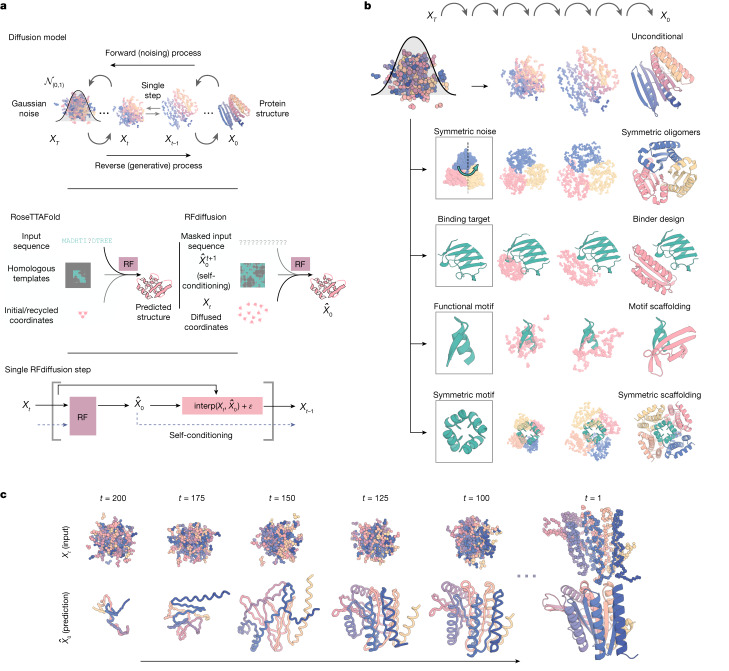
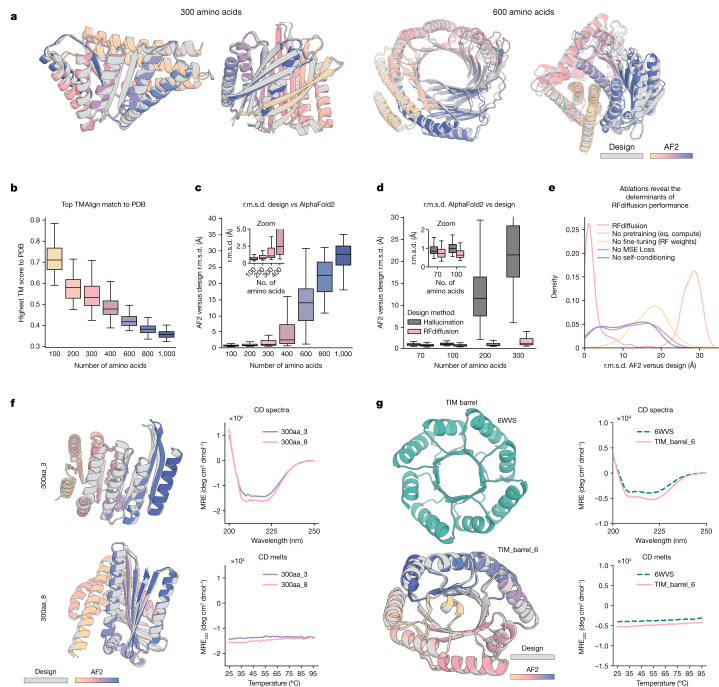
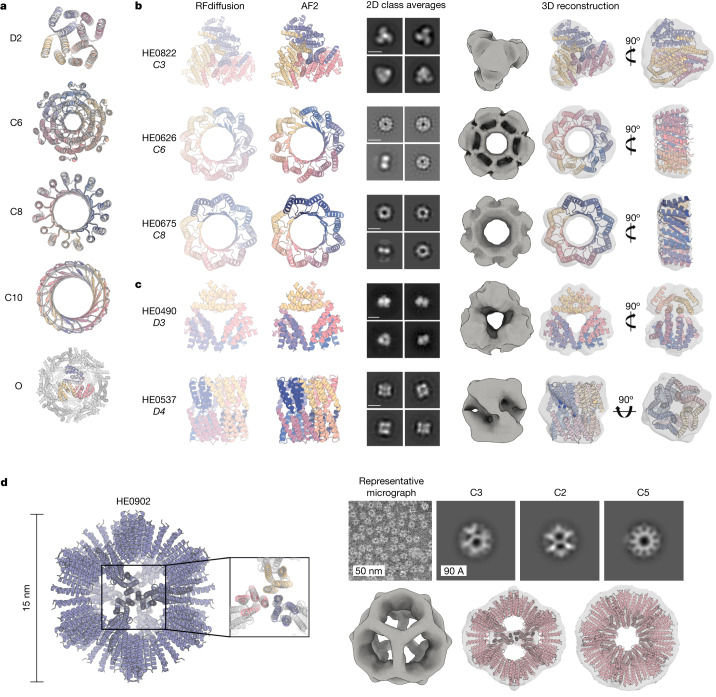
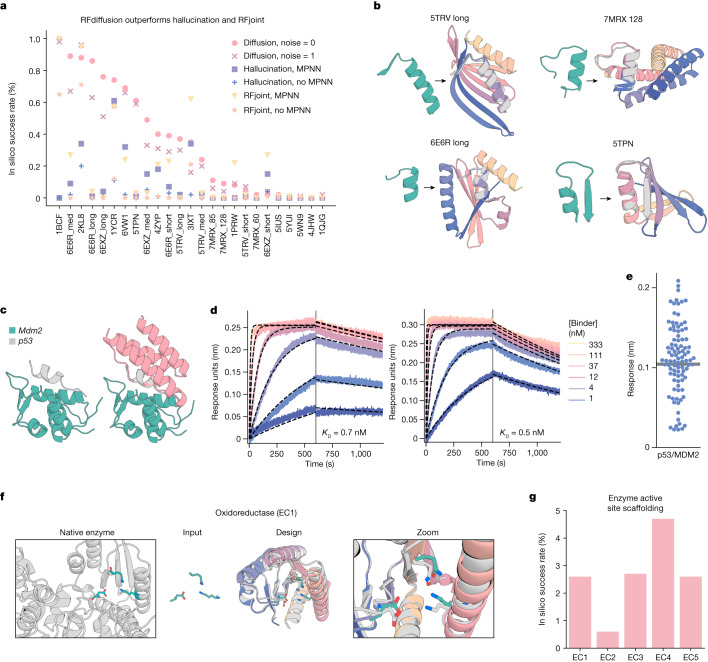
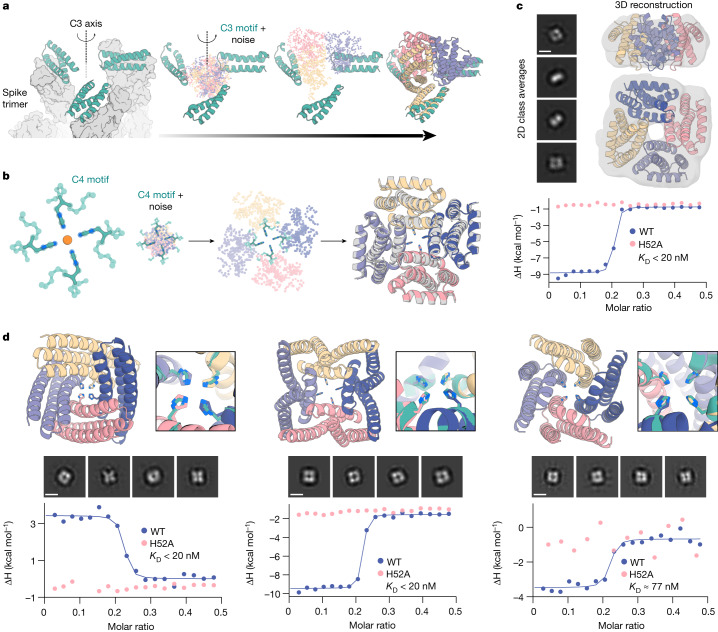
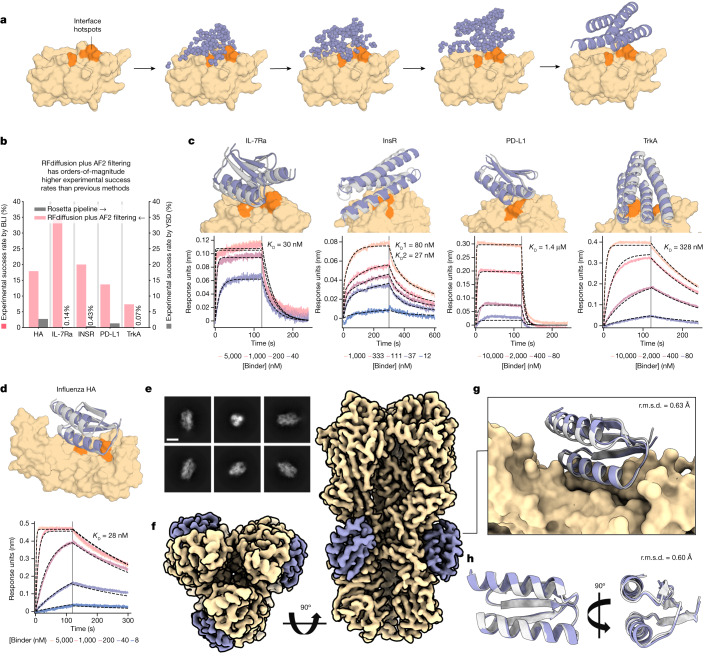
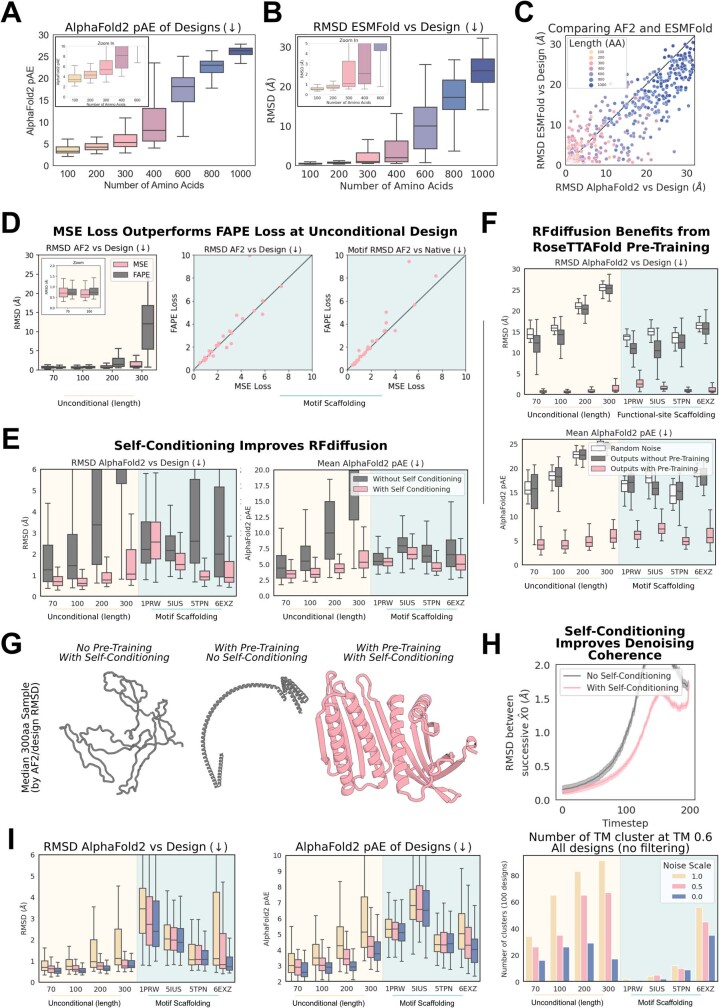
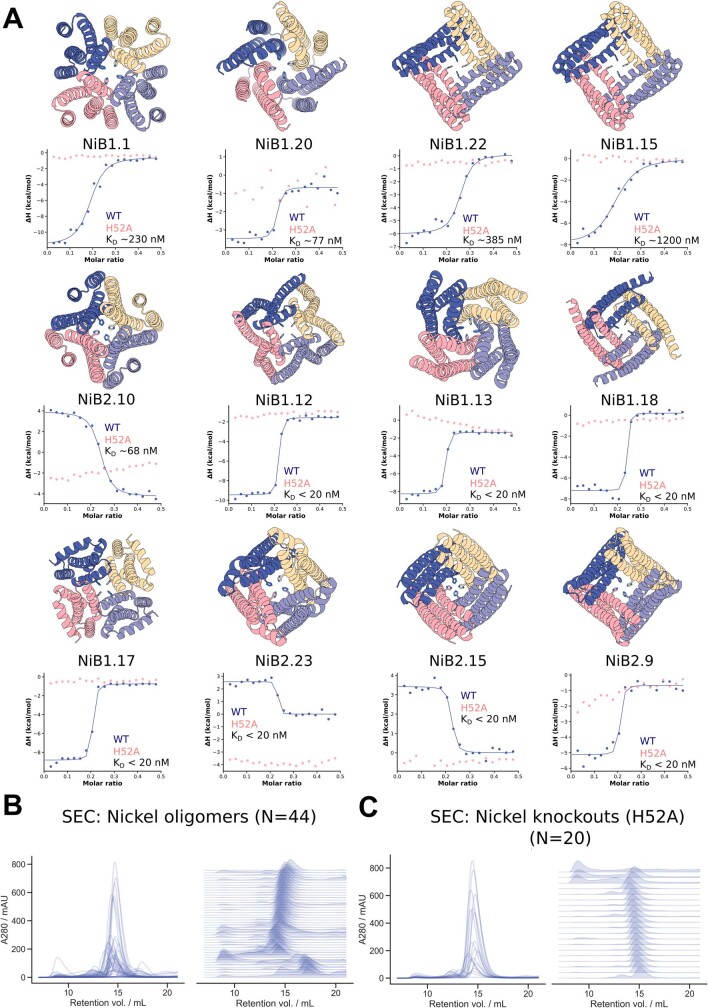
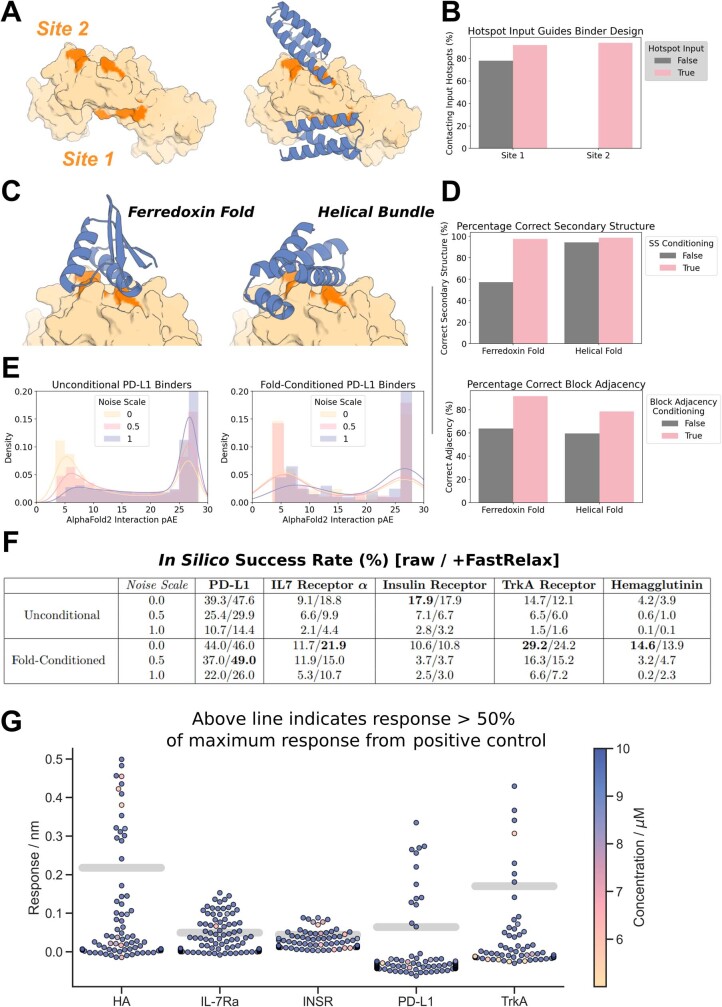
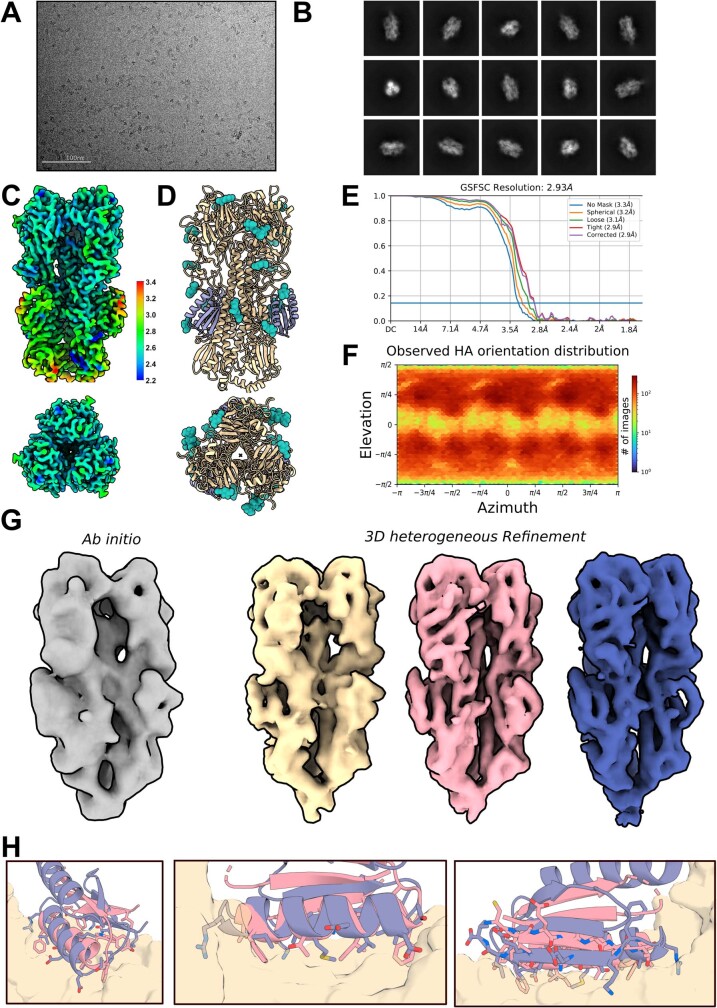
There has been considerable recent progress in designing new proteins using deep learning methods 1–9 . Despite this progress, a general deep learning framework for protein design that enables solution of a wide range of design challenges, including de novo binder design and design of higher order symmetric architectures, has yet to be described. Diffusion models 10,11 have had considerable success in image and language generative modeling but limited success when applied to protein modeling, likely due to the complexity of protein backbone geometry and sequence-structure relationships. Here we show that by fine tuning the RoseTTAFold structure prediction network on protein structure denoising tasks, we obtain a generative model of protein backbones that achieves outstanding performance on unconditional and topology-constrained protein monomer design, protein binder design, symmetric oligomer design, enzyme active site scaffolding, and symmetric motif scaffolding for therapeutic and metal-binding protein design. We demonstrate the power and generality of the method, called RoseTTAFold Diffusion (RF diffusion ), by experimentally characterizing the structures and functions of hundreds of new designs. In a manner analogous to networks which produce images from user-specified inputs, RF diffusion enables the design of diverse, complex, functional proteins from simple molecular specifications.
Overview
The claims and statistics of this paper haven’t been checked yet.
Run the check — free, no account needed. It reads the open-access text and checks the sources it cites.
Integrity signals
Registry
Cites
Statistics
Figures
Verification
Claims the paper makes
The claims and statistics of this paper haven’t been checked yet.
Run the check — free, no account needed. It reads the open-access text and checks the sources it cites.
Self-check
Percentages, sums and reported differences re-computed from the paper’s own numbers.
The self-check needs the paper’s full text.
Citations
Cites
Highly accurate protein structure prediction with AlphaFold
Jumper, J., Evans, R., Pritzel, A., Green, T., Figurnov, M., Ronneberger, O., Tunyasuvunakool, K., Bates, R., Žídek, A., Potapenko, A., et al. (2021) · Nature · doi:10.1038/s41586-021-03819-2 · Cited by 43,764
Berman, H. M. (2000) · Nucleic Acids Research · doi:10.1093/nar/28.1.235 · Cited by 40,196
Denoising Diffusion Probabilistic Models
Ho, J., Jain, A., & Abbeel, P. (2020) · arXiv · doi:10.48550/arxiv.2006.11239 · Cited by 8,712
Evolutionary-scale prediction of atomic level protein structure with a language model
Lin, Z., Akin, H., Rao, R., Hie, B., Zhu, Z., Lu, W., Smetanin, N., Verkuil, R., Kabeli, O., Shmueli, Y., et al. (2022) · doi:10.1101/2022.07.20.500902 · Cited by 5,990
Accurate prediction of protein structures and interactions using a 3-track network
Baek, M., DiMaio, F., Anishchenko, I., Dauparas, J., Ovchinnikov, S., Lee, G. R., Wang, J., Cong, Q., Kinch, L. N., Schaeffer, R. D., et al. (2021) · doi:10.1101/2021.06.14.448402 · Cited by 5,549
Self-citationDeep Unsupervised Learning using Nonequilibrium Thermodynamics
Sohl-Dickstein, J., Weiss, E. A., Maheswaranathan, N., & Ganguli, S. (2015) · arXiv · doi:10.48550/arxiv.1503.03585 · Cited by 2,637
Zero-shot text-to-image generation
Ramesh, A., Pavlov, M., Goh, G., Gray, S., Voss, C., Radford, A., Chen, M., & Sutskever, I. (2021) · arXiv · doi:10.48550/arxiv.2102.12092 · Cited by 2,417
THEORY OF PROTEIN FOLDING: The Energy Landscape Perspective
Onuchic, J. N., Luthey-Schulten, Z., & Wolynes, P. G. (1997) · Annual Review of Physical Chemistry · doi:10.1146/annurev.physchem.48.1.545 · Cited by 2,210
Robust deep learning–based protein sequence design using ProteinMPNN
Dauparas, J., Anishchenko, I., Bennett, N., Bai, H., Ragotte, R. J., Milles, L. F., Wicky, B. I. M., Courbet, A., de Haas, R. J., Bethel, N., et al. (2022) · Science · doi:10.1126/science.add2187 · Cited by 2,210
Self-citationStructure of the MDM2 Oncoprotein Bound to the p53 Tumor Suppressor Transactivation Domain
Kussie, P. H., Gorina, S., Marechal, V., Elenbaas, B., Moreau, J., Levine, A. J., & Pavletich, N. P. (1996) · Science · doi:10.1126/science.274.5289.948 · Cited by 2,206
Research works printed but not linked: 3
- 10.48550/arXiv.2209.15611 · DOI · Paper page
- 10.1101/2022.07.13.499967 · DOI · Paper page
- Anand, N. & Huang, P. Generative modeling for protein structures. in Advances in Neural Information Processing Systems vol. 31 (Curran Associates, Inc., 2018).
Cited by
Sorted by citations
Items 901–1,000 of 1,000
Barnett, A. J., Rajendra, K. C., Pandey, P., Somasiri, P., Fairfax, K. A., Hung, S. S. C., & Hewitt, A. W. (2026) · Genomics Proteomics & Bioinformatics · doi:10.1093/gpbjnl/qzag014 · Cited by 9
Generative AI for synthetic biology: Designing biological parts, circuits, and genomes
Kim, N., Carluccio, G. D., Zhang, K., & Collins, J. J. (2026) · Cell Systems · doi:10.1016/j.cels.2026.101533 · Cited by 5
Wang, B., Wang, C., Chen, J., Liu, D., Sun, C., Zhang, J., Zhang, K., & Li, H. (2026) · Nature Machine Intelligence · doi:10.1038/s42256-026-01198-9 · Cited by 5
Peptide cages: bioinspired supramolecular architectures for next-generation applications
Adorinni, S., Xu, H., Nitschke, J. R., & Marchesan, S. (2026) · Chemical Science · doi:10.1039/d5sc08607h · Cited by 5
Čondić‐Jurkić, K., Alibay, I., Sherman, W., Tollefson, M. R., Walters, W. P., Baker, Z., Chong, L. T., Wei, J. N., Gray, J. J., Weitzner, B. D., et al. (2026) · Journal of Chemical Information and Modeling · doi:10.1021/acs.jcim.5c03137 · Cited by 6
Andreano, E., McLellan, J. S., & Rappuoli, R. (2026) · Nature Reviews Microbiology · doi:10.1038/s41579-026-01286-y · Cited by 6
Compressing the collective knowledge of ESM into a single protein language model
Dinh, T., Jang, S.-K., Zaitlen, N., & Ntranos, V. (2026) · Nature Methods · doi:10.1038/s41592-026-03050-9 · Cited by 7
Protein design, generative AI and biological security
Brackmann, M., Reiners, S., Hoogendoorn, M., & Moser, M. (2026) · Frontiers in Microbiology · doi:10.3389/fmicb.2026.1817535 · Cited by 5
Rapid customization of base editors via machine learning-powered combinatorial mutagenesis
Peng, J., Chan, D. C. T., Chu, H. Y., Fong, J. H. C., Lam, Y. K., Cheung, M. S. H., Leung, W., Choi, G. C. G., & Wong, A. S. L. (2026) · Molecular Cell · doi:10.1016/j.molcel.2026.03.030 · Cited by 5
Flow matching for generative modelling in bioinformatics and computational biology
Morehead, A., Atanackovic, L., Hegde, A., Wang, Y., Boadu, F., Selvaraj, J., Tong, A., Krishnapriyan, A. S., & Cheng, J. (2026) · Nature Machine Intelligence · doi:10.1038/s42256-026-01220-0 · Cited by 12
Towards the explainability of protein language models
Hunklinger, A., & Ferruz, N. (2026) · Nature Machine Intelligence · doi:10.1038/s42256-026-01232-w · Cited by 12
Niazi, S. K. (2026) · International Journal of Molecular Sciences · doi:10.3390/ijms27104349 · Cited by 7
Contemporary data-driven innovations in peptide-based therapeutic design
Priyadarsinee, L., Kungurtsev, V., Kumar, V., Chatterjee, B., Sastry, G. N., & Murugan, N. A. (2026) · Briefings in Bioinformatics · doi:10.1093/bib/bbag220 · Cited by 5
Translating functional molecular knowledge into crop-breeding success
Ramstein, G. P., Zhai, J., Buckler, E. S., Tenaillon, M. I., & Jannink, J. (2026) · Nature Reviews Genetics · doi:10.1038/s41576-026-00968-w · Cited by 7
De Novo Design of Miniature and Efficient Metallo-Ketoreductases
Xu, Y., Li, Y., Zheng, H., Delfosse, E. S., Gao, Y. N., Baker, D. A., & Ji, P. (2026) · Journal of the American Chemical Society · doi:10.1021/jacs.6c00732 · Cited by 6
Self-citationArtificial intelligence tools for enzyme engineering and metabolic engineering
Volk, M., Pillalamarri, V. K., Guo, R., Liu, G., & Zhao, H. (2026) · Current Opinion in Biotechnology · doi:10.1016/j.copbio.2026.103522 · Cited by 5
Fung-AI: An AI/ML-driven pipeline for antifungal peptide discovery
Berman, D., Lewis, E. A., Curtis, T. D., Tiburzi, O. N., Smith, D. F. Q., Casadevall, A., & Dunphy, L. J. (2026) · PLoS Computational Biology · doi:10.1371/journal.pcbi.1014105 · Cited by 5
Seyhan, A. A., & Carini, C. (2026) · Critical Reviews in Oncology/Hematology · doi:10.1016/j.critrevonc.2026.105461 · Cited by 7
Birnbaum, F., & Keating, A. E. (2026) · Proceedings of the National Academy of Sciences · doi:10.1073/pnas.2535494123 · Cited by 7
Annealed fractional Lévy–Itō diffusion models for protein generation
Paquet, E., Soleymani, F., Viktor, H. L., & Michalowski, W. (2024) · Computational and Structural Biotechnology Journal · doi:10.1016/j.csbj.2024.04.009 · Cited by 7
Building tailor-made bioenergetic proteins and circuits from de novo redox proteins
Hardy, B. J., Bungay, E. L., Mellor, C., Curnow, P., & Anderson, J. L. R. (2024) · Current Opinion in Electrochemistry · doi:10.1016/j.coelec.2024.101541 · Cited by 5
Diffusion-Based Causal Representation Learning
Mamaghan, A. M. K., Dittadi, A., Bauer, S., Johansson, K. H., & Quinzan, F. (2024) · Entropy · doi:10.3390/e26070556 · Cited by 6
Chemical conjugation innovations for protein nanoparticles
Legendre, M. G., Pistilli, V. H., & Demirer, G. S. (2024) · Trends in Chemistry · doi:10.1016/j.trechm.2024.06.004 · Cited by 5
Cell-Free Gene Expression in Bioprinted Fluidic Networks
Bienau, A., Jäkel, A. C., & Simmel, F. C. (2024) · ACS Synthetic Biology · doi:10.1021/acssynbio.4c00187 · Cited by 5
Jointly Embedding Protein Structures and Sequences through Residue Level Alignment
Birnbaum, F., Jain, S., Mądry, A., & Keating, A. E. (2024) · PRX Life · doi:10.1103/prxlife.2.043013 · Cited by 5
Dissecting AlphaFold2’s capabilities with limited sequence information
Gut, J. A., & Lemmin, T. (2024) · Bioinformatics Advances · doi:10.1093/bioadv/vbae187 · Cited by 7
Richard, A. C., & Pantazes, R. J. (2024) · Proteins Structure Function and Bioinformatics · doi:10.1002/prot.26773 · Cited by 6
Computational design and improvement of a broad influenza virus HA stem targeting antibody
Duan, H., Chi, X., Yang, X., Pan, S., Liu, X., Gao, P., Zhang, F., Zhang, X., Dong, X., Liao, Y., et al. (2025) · Structure · doi:10.1016/j.str.2025.01.002 · Cited by 4
Advances of deep Neural Networks (DNNs) in the development of peptide drugs
Niu, Y., Qin, P., & Lin, P. (2025) · Future Medicinal Chemistry · doi:10.1080/17568919.2025.2463319 · Cited by 5
Liu, D., Jiang, Y., Ma, B., & Li, L. (2025) · Biochemical and Biophysical Research Communications · doi:10.1016/j.bbrc.2025.151870 · Cited by 6
MTPSol: Multimodal Twin Protein Solubility Prediction Architecture Based on Pretrained Models
Gao, Y., Wang, H., Zhang, L., Liu, F., Zhou, J., & Gu, Y. (2025) · Journal of Chemical Information and Modeling · doi:10.1021/acs.jcim.5c00534 · Cited by 5
Progress toward new function and design of extracellular G protein-coupled receptor nanobodies
Schlimgen, R. R., & Volkman, B. F. (2025) · Molecular Pharmacology · doi:10.1016/j.molpha.2025.100054 · Cited by 5
Artificial intelligence and first‐principle methods in protein redesign: A marriage of convenience?
Cianferoni, D., Vizarraga, D., Fernández‐Escamilla, A. M., Fita, I., Hamdani, R., Reche, R., Delgado, J., & Serrano, L. (2025) · Protein Science · doi:10.1002/pro.70210 · Cited by 4
A Complementarity‐Based Approach to De Novo Binder Design
Maksymenko, K., Hatskovska, V., Coles, M. P., Aghaallaei, N., Pashkovskaia, N., Borbarán‐Bravo, N., Pilz, M., Bucher, P., Volz, M., Pereira, J., et al. (2025) · Advanced Science · doi:10.1002/advs.202502015 · Cited by 5
Zhao, Z., Qu, Q., Sun, F., Zang, J., Zheng, B., Zhang, T., Zhao, G., Lv, C., & Wang, Z. (2025) · Biotechnology Advances · doi:10.1016/j.biotechadv.2025.108656 · Cited by 5
Mining and engineering of terpene synthases and their applications in biomanufacturing
Xu, Y., Liu, C., Qin, L., Lv, B., Zhang, G., & Li, C. (2025) · Chinese Journal of Chemical Engineering · doi:10.1016/j.cjche.2025.08.001 · Cited by 4
Keshri, R., Mathieu, J., & Ruohola‐Baker, H. (2023) · Cell Metabolism · doi:10.1016/j.cmet.2023.08.007 · Cited by 4
Zig, Zag, and 'Zyme: leveraging structural biology to engineer disease resistance
McClelland, A. J., & Ma, W. (2024) · aBIOTECH · doi:10.1007/s42994-024-00152-w · Cited by 5
Quantitative entropy–enthalpy compensation in intraprotein interactions from model compound data
Redvanly, T. W., & Pielak, G. J. (2024) · Protein Science · doi:10.1002/pro.5013 · Cited by 4
Nguyen, V. T. D., Nguyen, N. D., & Hy, T. S. (2024) · Structural Dynamics · doi:10.1063/4.0000271 · Cited by 8
Recent innovations in Baculovirus‐insect cell expression Systems for Therapeutic Protein Production
Hwang, H., Kim, M., Kim, Y., Hinterdorfer, P., Lee, J. H., & Ko, K. (2024) · Entomological Research · doi:10.1111/1748-5967.70008 · Cited by 6
Engineered 3D DNA Crystals: A Molecular Design Perspective
Cai, B., Xiao, R., Sun, Y., Liu, L., & Li, Z. (2025) · Small Methods · doi:10.1002/smtd.202401455 · Cited by 7
Foundation Models for Translational Cancer Biology
Tsang, K. K., Kivelson, S., Cortina, J. M. A., Kuchi, A., Berkowitz, J. S., Liu, H., Srinivasan, A., Friedrich, N. A., Fatapour, Y., & Tatonetti, N. P. (2025) · Annual Review of Biomedical Data Science · doi:10.1146/annurev-biodatasci-103123-095633 · Cited by 5
Hu, Y., Tao, F., Xu, J., Lan, W.-J., Zhang, J., & Lan, W. (2025) · Journal of Pharmaceutical Analysis · doi:10.1016/j.jpha.2025.101267 · Cited by 5
Sequence Determinants of Allosteric Back-to-front Control of the Arf Nucleotide Switch
Hantman, N., Koduru, T. N., Peters, E. V., Jaworek, M. W., McCallum, S. A., Gillilan, R. E., Winter, R., Cherfils, J., & Royer, C. A. (2025) · Journal of Molecular Biology · doi:10.1016/j.jmb.2025.169361 · Cited by 5
Modeling Protein Structure Using Geometric Vector Field NetworksPreprint
Mao, W., Zhu, M., Chen, H., & Shen, C. (2023) · bioRxiv (Cold Spring Harbor Laboratory) · doi:10.1101/2023.05.07.539736 · Cited by 6
Hermosilla, A. M., Berner, C., Ovchinnikov, S., & Vorobieva, A. A. (2023) · bioRxiv (Cold Spring Harbor Laboratory) · doi:10.1101/2023.06.06.543955 · Cited by 5
Capraro, V., Paolo, R. D., & Pizziol, V. (2023) · doi:10.31234/osf.io/8ackv · Cited by 9
Protein Language Model Supervised Precise and Efficient Protein Backbone Design MethodPreprint
Zhang, B., Liu, K., Zheng, Z., Liu, Y., Mu, J., Wei, T., & Chen, H. (2023) · bioRxiv (Cold Spring Harbor Laboratory) · doi:10.1101/2023.10.26.564121 · Cited by 5
Martinez, Z. A., Murray, R. M., & Thomson, M. W. (2023) · bioRxiv (Cold Spring Harbor Laboratory) · doi:10.1101/2023.10.24.563881 · Cited by 7
Neural network extrapolation to distant regions of the protein fitness landscapePreprint
Fahlberg, S. A., Freschlin, C. R., Heinzelman, P., & Romero, P. A. (2023) · bioRxiv (Cold Spring Harbor Laboratory) · doi:10.1101/2023.11.08.566287 · Cited by 5
Tokenizing Foldable Protein Structures with Machine-Learned Artificial Amino-Acid VocabularyPreprint
Lin, X., Chen, Z., Li, Y., Ma, Z., Fan, C., Cao, Z., Feng, S., Gao, Y. Q., & Zhang, J. (2023) · bioRxiv (Cold Spring Harbor Laboratory) · doi:10.1101/2023.11.27.568722 · Cited by 9
parSEQ: Probe and Rescue Sequencing for Advanced Variant Retrieval from DNA PoolPreprint
Houmani, M., Peterkin, F., Antoun, G., Fischer, L., & Hammi, A. (2023) · bioRxiv (Cold Spring Harbor Laboratory) · doi:10.1101/2023.12.12.571337 · Cited by 5
ProteinMPNN Recovers Complex Sequence Properties of Transmembrane β-barrelsPreprint
Dolorfino, M., Samanta, R., & Vorobieva, A. A. (2024) · bioRxiv (Cold Spring Harbor Laboratory) · doi:10.1101/2024.01.16.575764 · Cited by 6
Raisinghani, N., Alshahrani, M., Gupta, G., Tian, H., Xiao, S., Tao, P., & Verkhivker, G. M. (2024) · bioRxiv (Cold Spring Harbor Laboratory) · doi:10.1101/2024.02.15.580591 · Cited by 4
‘A landmark moment’: scientists use AI to design antibodies from scratch
Callaway, E. (2024) · Nature · doi:10.1038/d41586-024-00846-7 · Cited by 9
Mixed Continuous and Categorical Flow Matching for 3D De Novo Molecule GenerationPreprint
Dunn, I. C., & Koes, D. R. (2024) · PubMed · doi:10.48550/arxiv.2404.19739 · Cited by 43
Tang, Y., Yu, M., Bai, G., Li, X., Xu, Y., & Ma, B. (2024) · bioRxiv (Cold Spring Harbor Laboratory) · doi:10.1101/2024.06.27.600251 · Cited by 5
Accurate antibody loop structure prediction enables zero-shot design of target-specific antibodiesPreprint
Bang, Y., Choi, Y., Gu, J., Kwon, S., Lee, D., Lee, E. S., Lee, M. S., Lee, S., Lee, S., Lee, M. S., et al. (2024) · bioRxiv (Cold Spring Harbor Laboratory) · doi:10.1101/2024.08.23.609114 · Cited by 6
Weinstein, E. N., Gollub, M. G., Slabodkin, A., Gardner, C. L., Dobbs, K., Cui, X.-B., Amin, A. N., Church, G. M., & Wood, E. (2024) · bioRxiv (Cold Spring Harbor Laboratory) · doi:10.1101/2024.09.13.612900 · Cited by 6
De novo-designed minibinders expand the synthetic biology sensing repertoirePreprint
Weinberg, Z. Y., Soliman, S. S., Kim, M. S., Shah, D. H., Chen, I. P., Ott, M., Lim, W. A., & El‐Samad, H. (2024) · eLife · doi:10.7554/elife.96154.2 · Cited by 5
SuperWater: Predicting Water Molecule Positions on Protein Structures by Generative AIPreprint
Kuang, X., Su, Z., Liu, Y., Lin, X., Spencer-Smith, J. B., Derr, T., Wu, Y., & Meiler, J. (2024) · bioRxiv (Cold Spring Harbor Laboratory) · doi:10.1101/2024.11.18.624208 · Cited by 5
Controllable All-Atom Protein Generation with Latent DiffusionPreprint
Lu, A. X., Yang, J., Long, Y., Lambert, T., Yan, W., Robinson, S. A., Yang, K., Gligorijević, V., Cho, K., Bonneau, R., et al. (2024) · Research Square · doi:10.1101/2024.12.02.626353 · Cited by 6
Graber, D., Stockinger, P., Meyer, F., Mishra, S., Horn, C., & Buller, R. (2024) · bioRxiv (Cold Spring Harbor Laboratory) · doi:10.1101/2024.12.09.627482 · Cited by 5
Broske, B., Binder, S. C., McEnroe, B. A., Kempchen, T. N., Fandrey, C. I., Messmer, J. M., Tan, E., Konopka, P., Ferber, D., Yong, M. C. R., et al. (2025) · bioRxiv (Cold Spring Harbor Laboratory) · doi:10.1101/2025.05.11.652819 · Cited by 6
A Generative Foundation Model for Antibody DesignPreprint
Wang, R., Wu, F., Shi, J., Song, Y., Kong, Y., Ma, J., He, B., Yan, Q., Ying, T., Zhao, P., et al. (2025) · bioRxiv (Cold Spring Harbor Laboratory) · doi:10.1101/2025.09.12.675771 · Cited by 7
Origin-1: a generative AI platform for de novo antibody design against novel epitopesPreprint
Levine, S., King, J. E., Stern, J., Grayson, D., Wang, R., Yin, R., Lupo, U., Kulytė, P., Brand, R. M., Bertin, T., et al. (2026) · bioRxiv (Cold Spring Harbor Laboratory) · doi:10.64898/2026.01.14.699389 · Cited by 7
Programming Biomolecular Interactions with All-Atom Generative ModelPreprint
Kong, X., Chen, J., Zhang, Z., Li, G., Zhu, Q., Wei, L., Li, M., Shi, Y., Dai, W., Zhang, Z., et al. (2026) · bioRxiv (Cold Spring Harbor Laboratory) · doi:10.64898/2026.03.12.711044 · Cited by 7
Chomicz, D., Dudzic, P., Wrobel, S., Gawłowski, T., Demharter, S., Spreafico, R., Minoux, H., Phillips, A., & Krawczyk, K. (2025) · doi:10.1101/2025.10.17.683056 · Cited by 4
“Discerning protein-protein specificity has long been a goal of protein design (Watson et al. 2022), a solution to which could radically accelerate our ability to discover novel therapeutics.”
Assessing the generalization capabilities of TCR binding predictors via peptide distance analysis
Castorina, L. V., Grazioli, F., Machart, P., Mösch, A., & Errica, F. (2025) · PLOS One · doi:10.1371/journal.pone.0324011 · Cited by 7
Mapping targetable sites on the human surfaceome for the design of novel binders
Balbi, P. E. M., Sadek, A., Marchand, A., Yu, T.-Y., Damjanovic, J., Georgeon, S., Schmidt, J., Fulle, S., Yang, C., Khakzad, H., et al. (2026) · Proceedings of the National Academy of Sciences · doi:10.1073/pnas.2506269123 · Cited by 6
Engineering chimeric PCSK9 for a vaccine against atherosclerosis
Malenšek, Š., Lainšček, D., Esih, H., Orehek, S., Fink, T., Golob-Urbanc, A., Blinc, A., & Jerala, R. (2025) · Molecular Therapy — Methods & Clinical Development · doi:10.1016/j.omtm.2025.101535 · Cited by 4
Wu, J., Chen, Y., Huang, L., Sun, Y., Zhao, J., Cheng, X., Sun, R., Zhou, H., Shu, Y., Li, W., et al. (2025) · Chemical Engineering Journal · doi:10.1016/j.cej.2025.167829 · Cited by 4
Deep Generative Modeling of Protein Conformations: A Comprehensive Review
Dao, T. M., & Rahman, T. (2025) · BioChem · doi:10.3390/biochem5030032 · Cited by 5
De novo designed 3-helix bundle peptides and proteins with controlled topology and stability
Leng, X., Albanese, K. I., Golub, L. R., Norman, A. A., Clayden, J., & Woolfson, D. N. (2025) · Chemical Science · doi:10.1039/d5sc05576h · Cited by 6
Plant Terpenoid Diversity: From Pathway Elucidation to Ecological Functions
Wang, X., & Wang, G. (2025) · Engineering · doi:10.1016/j.eng.2025.11.021 · Cited by 5
Ohnuki, J., & Okazaki, K.-I. (2026) · JACS Au · doi:10.1021/jacsau.6c00596 · Cited by 4
Qian, Y., Chang, X., Lv, C., Zang, J., Zhao, G., & Zhang, T. (2025) · Nano Research · doi:10.26599/nr.2025.94907916 · Cited by 6
Deep learning–driven protein binder design for crop improvement
Iqbal, M. S., Bahitwa, R., Azam, A. A., Xu, H., & Wang, H. (2025) · aBIOTECH · doi:10.1016/j.abiote.2025.100018 · Cited by 6
Gupta, A. K., Esih, H., Gradišar, H., & Jerala, R. (2025) · Materials Advances · doi:10.1039/d5ma00792e · Cited by 4
Machine learning for nanoparticle-based imaging: From rational design to precision diagnosis
Kang, N., Li, Z., Tan, F., Liu, Z., Yang, Y., Qian, X., & Zhang, Q. (2025) · Advances in Colloid and Interface Science · doi:10.1016/j.cis.2025.103773 · Cited by 4
AI Guided Protein Design for Next‐Generation Autogenic Engineered Living Materials
Hammad, H. M., & Duraj‐Thatte, A. (2026) · Advanced Intelligent Systems · doi:10.1002/aisy.202501021 · Cited by 4
Leiss-Maier, F., Behringer, J., Mustafa, G., Heider, A., Mühlhofer, R., Klein, A., Groll, M., & Zeymer, C. (2026) · Chemical Science · doi:10.1039/d5sc08010j · Cited by 5
Design of robust networks via reinforcement learning prompts the emergence of multi-backbones
Zhu, B., Zhu, T., Gao, J., Havlin, S., & Li, D. (2026) · Nature Communications · doi:10.1038/s41467-026-70745-0 · Cited by 5
Jang, Y., Bellier, N., Canlas, K. K. V., Lee, J. Y., Kim, Y., Park, H., & Moon, J. J. (2026) · Nano Convergence · doi:10.1186/s40580-026-00545-1 · Cited by 5
Artificial allosteric protein switches with machine-learning-designed receptors
Guo, Z., Smutok, O. V., Lee, G. R., Cui, Z., Qianzhu, H., Kish, M., Ayva, C. E., Wu, K., Mutschler, R., Jackson, C. J., et al. (2026) · Nature Biotechnology · doi:10.1038/s41587-026-03081-9 · Cited by 7
Self-citationProgress in structure prediction and design of adaptive immune receptors
Cohen, T., Hochner, T., & Schneidman‐Duhovny, D. (2026) · Current Opinion in Structural Biology · doi:10.1016/j.sbi.2026.103326 · Cited by 4
Learning Micro-C from Hi-C with diffusion models
Liu, T., Zhu, H., & Wang, Z. (2024) · PLoS Computational Biology · doi:10.1371/journal.pcbi.1012136 · Cited by 5
Spiers Memorial Lecture: Engineering biocatalysts
Hilvert, D. (2024) · Faraday Discussions · doi:10.1039/d4fd00139g · Cited by 5
Bochtler, M. (2024) · BioEssays · doi:10.1002/bies.202400155 · Cited by 6
Fast sampling of protein conformational dynamics
Sauer, M. A., Mondal, S., Neff, B., Maiti, S., & Heyden, M. (2026) · Science Advances · doi:10.1126/sciadv.aea4617 · Cited by 8
htFuncLib: Designing Libraries of Active-site Multipoint Mutants for Protein Optimization
Lipsh‐Sokolik, R., & Fleishman, S. J. (2025) · Journal of Molecular Biology · doi:10.1016/j.jmb.2025.169011 · Cited by 6
Liao, S., Xu, G., Li, J., & Ma, J. (2025) · Molecules · doi:10.3390/molecules30051116 · Cited by 4
Mendes-Monteiro, L., & Viejo‐Borbolla, A. (2025) · Trends in Immunology · doi:10.1016/j.it.2025.02.013 · Cited by 4
Open-source antibodies as a path to enhanced research reproducibility and transparency
Rego, M. A., Houston, D. W., Fan, M., Murray, K. D., & Trimmer, J. S. (2025) · New Biotechnology · doi:10.1016/j.nbt.2025.04.004 · Cited by 4
Shanmugam, S. K., Kanner, S. A., Zou, X., Amarh, E., Choudhury, P., Soni, R. K., Kass, R. S., & Colecraft, H. M. (2025) · Nature Communications · doi:10.1038/s41467-025-60893-0 · Cited by 5
Zhong, Y., Tao, H., Zhang, Y., He, B., Jiao, H., Wang, D., Teng, M., Hu, H., Guo, Q., & Tao, Y. (2025) · Nature Communications · doi:10.1038/s41467-025-61695-0 · Cited by 5
Flow perturbation to accelerate Boltzmann sampling
Peng, X., & Gao, A. (2025) · Nature Communications · doi:10.1038/s41467-025-62039-8 · Cited by 5
A De Novo Designed Protein with Versatile Metal Binding and Tunable Hydrolytic Activity
Hoffnagle, A. M., Srisantitham, S., Neeley, M., Tsai, C.-Y., & Tezcan, F. A. (2025) · Biochemistry · doi:10.1021/acs.biochem.5c00259 · Cited by 4
Metadata
- Authors
- Watson, J. L., Juergens, D., Bennett, N. R., Trippe, B. L., Yim, J., Eisenach, H. E., Ahern, W., Borst, A. J., Ragotte, R. J., Milles, L. F., Wicky, B. I. M., Hanikel, N., Pellock, S. J., Courbet, A., Sheffler, W., Wang, J., Venkatesh, P., Sappington, I., Torres, S. V., Lauko, A., De Bortoli, V., Mathieu, E., Barzilay, R., Jaakkola, T. S., DiMaio, F., Baek, M., & Baker, D.
- Affiliations
- University of Washington (US)
- Centre National de la Recherche Scientifique (FR)
- Massachusetts Institute of Technology (US)
- Seoul National University (KR)
- Howard Hughes Medical Institute (US)
- Corresponding author
- Baker, David
- ORCID
- Watson, Joseph L.
- Juergens, David
- Bennett, Nathaniel R.
- Trippe, Brian L.
- Yim, Jason
- Eisenach, Helen E.
- Ahern, Woody
- Borst, Andrew J.
- Ragotte, Robert J.
- Milles, Lukas F.
- Wicky, Basile I. M.
- Hanikel, Nikita
- Pellock, Samuel J.
- Courbet, Alexis
- Sheffler, William
- Wang, Jue
- Venkatesh, Preetham
- Sappington, Isaac
- Torres, Susana Vázquez
- Lauko, Anna
- De Bortoli, Valentin
- Barzilay, Regina
- Jaakkola, Tommi S.
- DiMaio, Frank
- Baek, Minkyung
- Baker, David
- Venue
- Nature
- Publisher
- openRxiv
- Published
- 2022-12-10
- Volume
- 620
- Issue
- 7976
- Pages
- 1089-1100
- ISSN
- 0028-0836 (ISSN-L)
- PMC
- PMC10468394
- OpenAlex
- W4383957026
- Cited by
- 2,369
- References
- 57
- Citations by year
- 2026: 943 · 2025: 795 · 2024: 473 · 2023: 153 · 2022: 4
- FWCI
- 210.65
- Type
- journal article
- Language
- en
- Open access
- hybrid
- doi.org
- Licence
- cc-by
- Locations
- Nature (publishedVersion, cc-by)
- bioRxiv (Cold Spring Harbor Laboratory) (acceptedVersion, cc-by-nd)
- PubMed Central (publishedVersion, cc-by)
- PubMed (publishedVersion)
- RePEc: Research Papers in Economics (submittedVersion)
- Apollo (University of Cambridge) (submittedVersion, cc-by)
- Funders
- National Science Foundation (HDTRA1-19-1-0003, 1918839)
- Howard Hughes Medical Institute
- U.S. Department of Energy (DESC0018940)
- Bill and Melinda Gates Foundation (INV-010680)
- Washington Research Foundation
- Amgen
- Sanofi
- Washington State University
- Open Philanthropy Project
- Defense Advanced Research Projects Agency
- Defense Threat Reduction Agency (HDTRA1-19-1-0003, HDTRA1)
- Office of Science (DE-SC0018940 MOD03, DESC0018940)
- Engineering and Physical Sciences Research Council (EP/T005386/1)
- National Institute on Aging (U19AG065156)
- National Institute of General Medical Sciences (T32GM007250, T32GM008268)
- Topics
- Life Sciences › Biochemistry, Genetics and Molecular Biology › Molecular Biology › Protein Structure and Dynamics
- Life Sciences › Biochemistry, Genetics and Molecular Biology › Molecular Biology › Machine Learning in Bioinformatics
- Life Sciences › Biochemistry, Genetics and Molecular Biology › Structural Biology › Enzyme Structure and Function
- Keywords
- protein design, de novo protein design, diffusion models, RoseTTAFold, protein binder design, metal-binding proteins, protein backbone, influenza haemagglutinin, therapeutic proteins
- MeSH terms
- Deep Learning, Protein Binding, Proteins, Hemagglutinin Glycoproteins, Influenza Virus, Catalytic Domain, Cryoelectron Microscopy
About these checks
Registry, retraction, Cites and statistics results are computed, not judged, with one exception: a printed reference that no index lists is read once by a model before it counts as a citation error. Claims are extracted by a model and kept only when their quote appears verbatim in the text; each cited source is then checked, with a model’s help, for whether it says what the claim relies on. Those verdicts can be wrong — read the claim’s quote and the cited source before relying on one.
Statistics and arithmetic are recomputed, not judged.
Confidence bands are shown only for fields calibrated on our annotated test set. None is calibrated yet, so no band is shown.
What counts as a claim ›How we measure confidence ›How we check this ›
Are you an author, or do you see a problem with this page? Request a review
