

The DOI matches its Crossref record; 57 of the 57 references it cites were found in a registry or an index.
Broadly applicable and accurate protein design by integrating structure prediction networks and diffusion generative models
Open accessPreprint — published as 10.1038/s41586-023-06415-8 · Paper page
Abstract
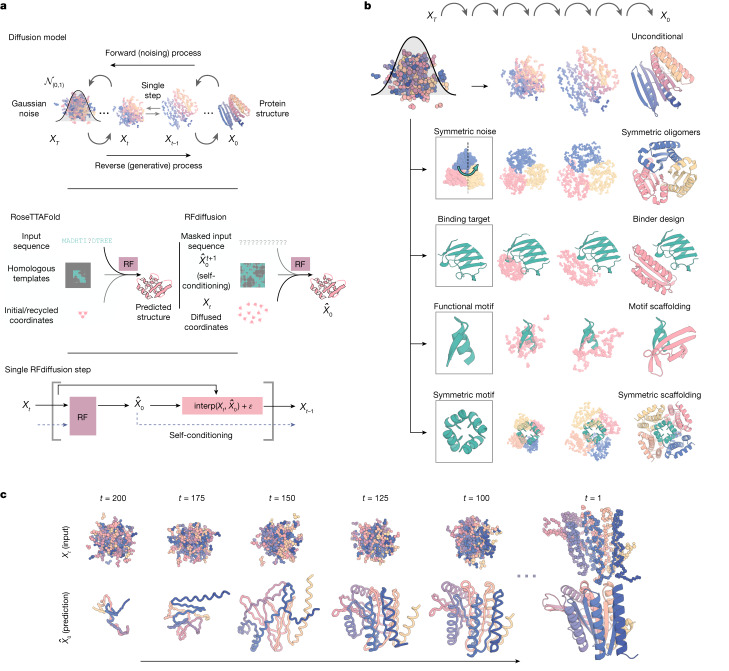
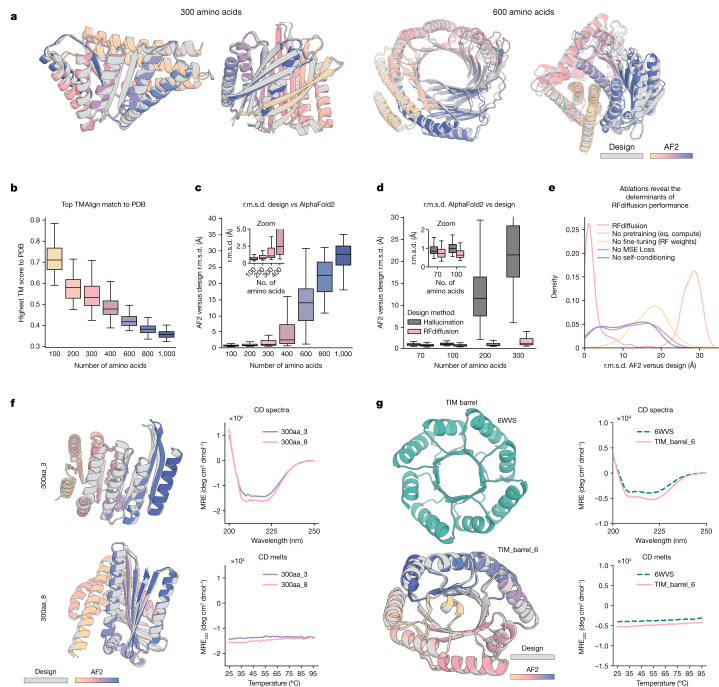
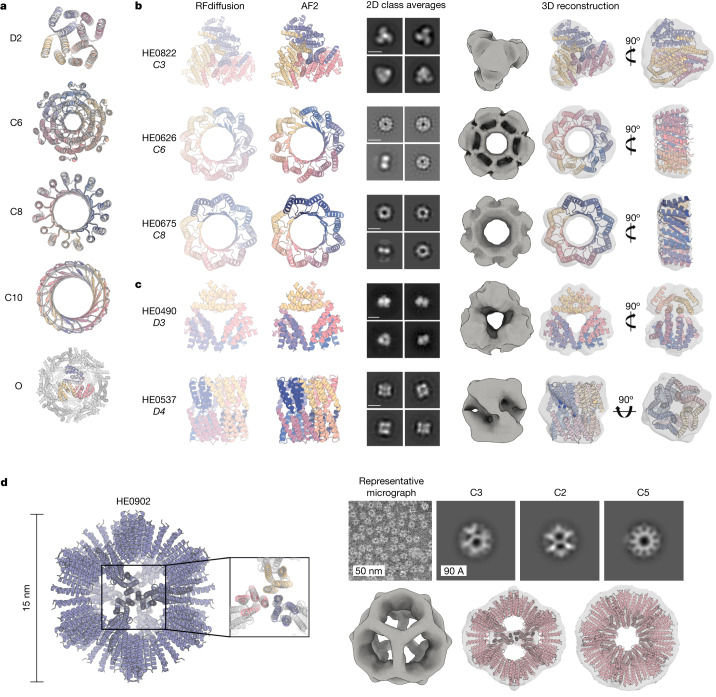
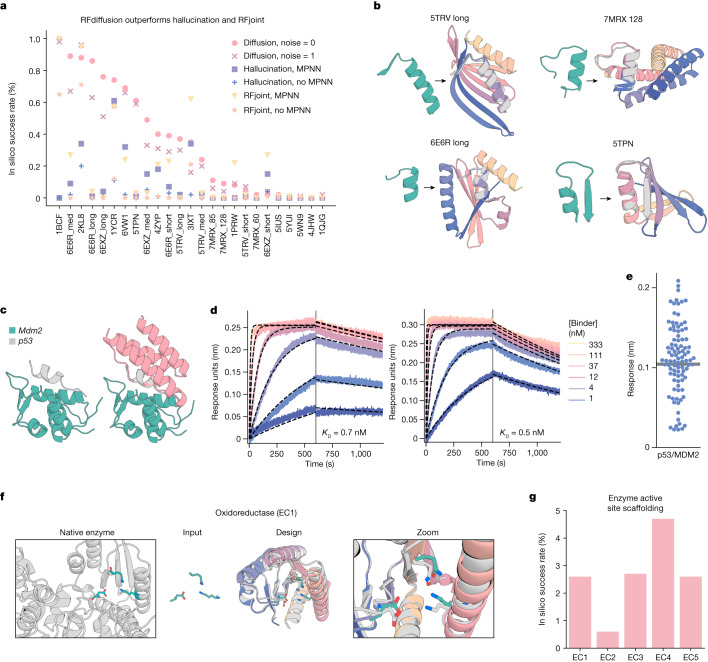
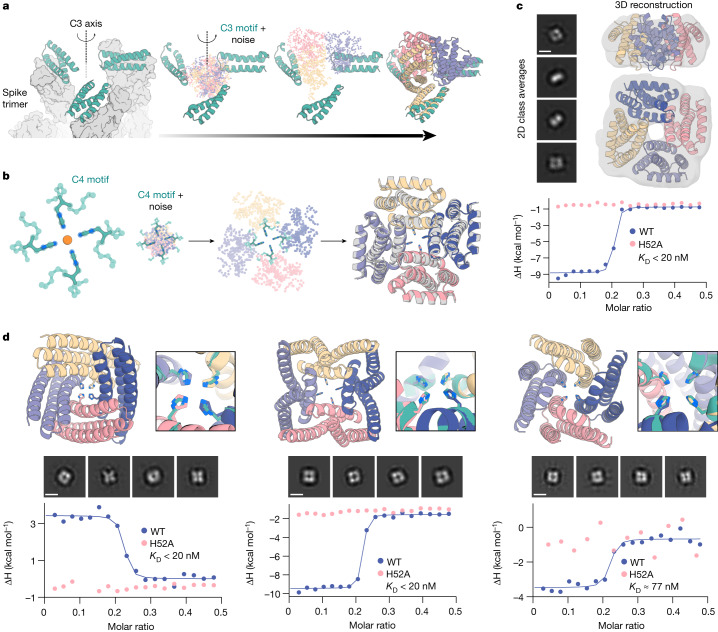
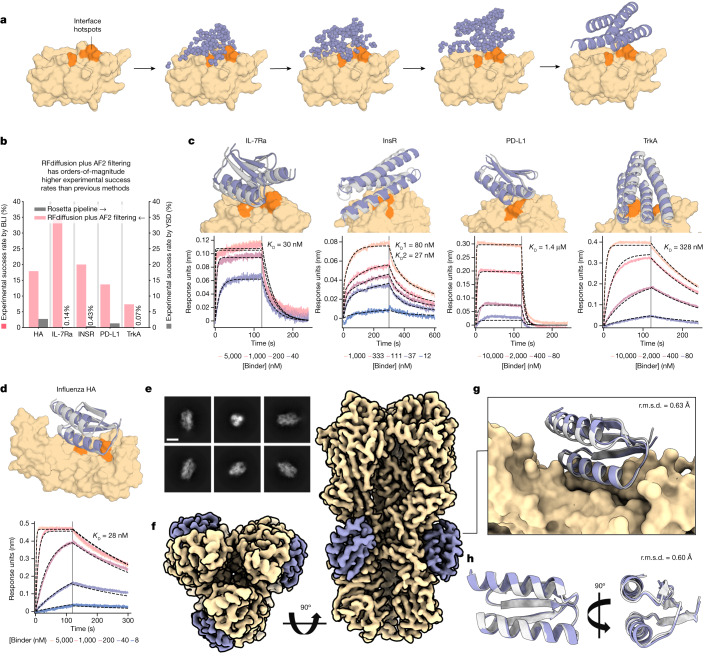
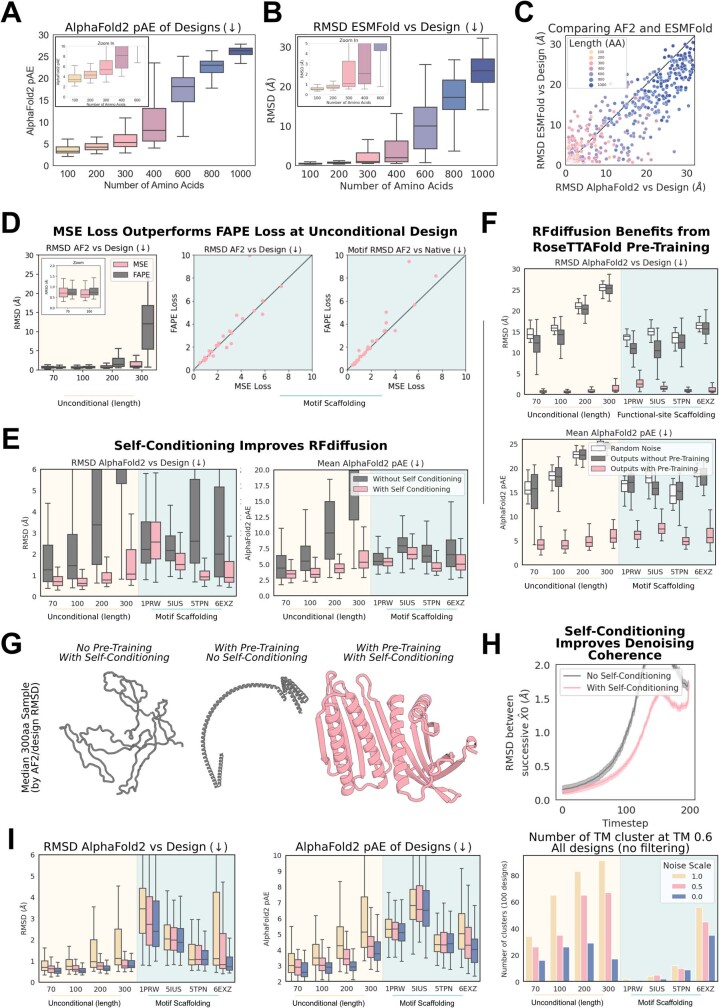
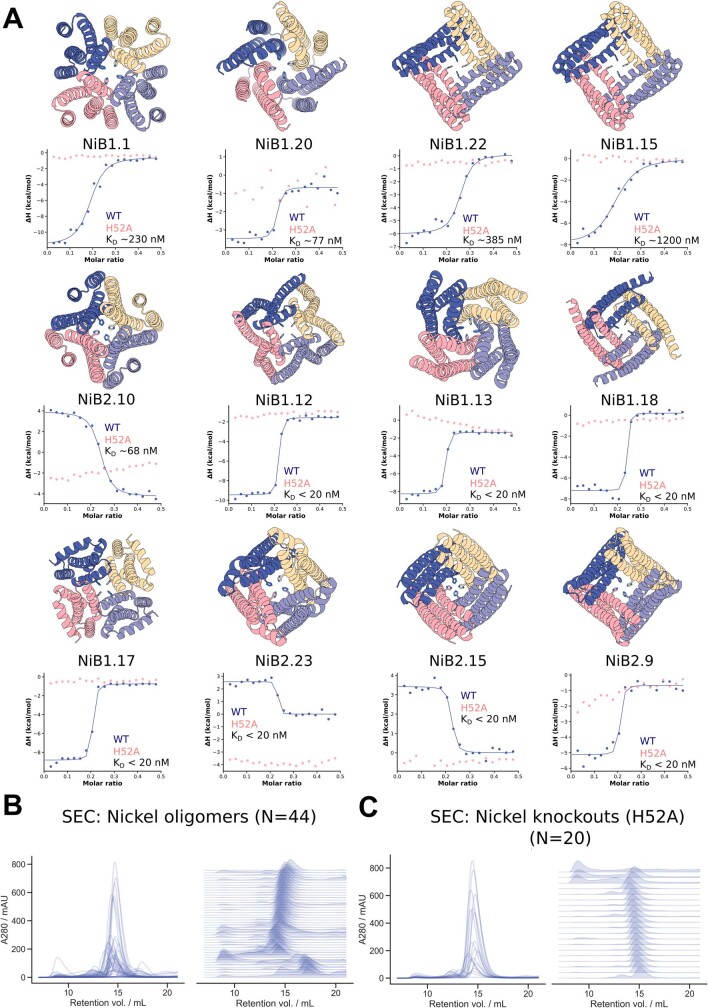
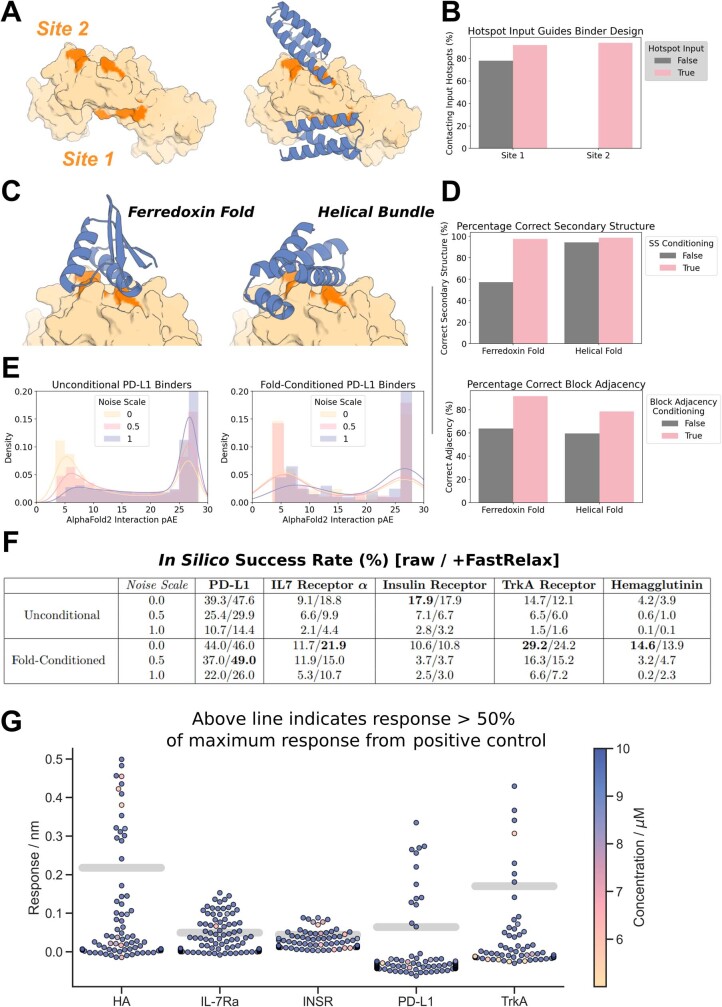
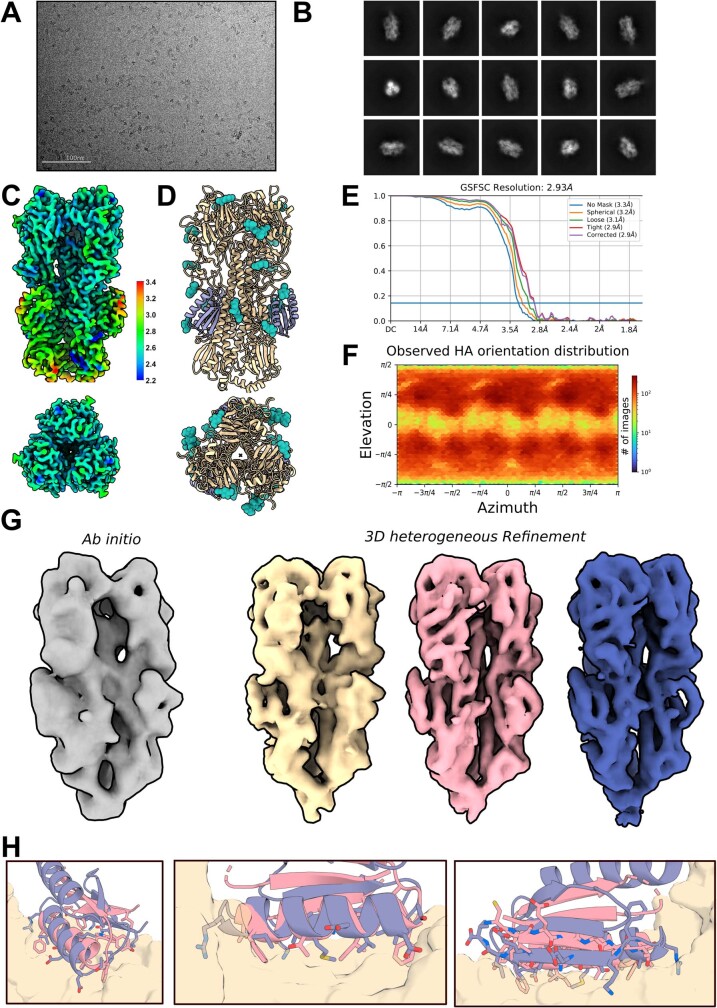
There has been considerable recent progress in designing new proteins using deep learning methods 1–9 . Despite this progress, a general deep learning framework for protein design that enables solution of a wide range of design challenges, including de novo binder design and design of higher order symmetric architectures, has yet to be described. Diffusion models 10,11 have had considerable success in image and language generative modeling but limited success when applied to protein modeling, likely due to the complexity of protein backbone geometry and sequence-structure relationships. Here we show that by fine tuning the RoseTTAFold structure prediction network on protein structure denoising tasks, we obtain a generative model of protein backbones that achieves outstanding performance on unconditional and topology-constrained protein monomer design, protein binder design, symmetric oligomer design, enzyme active site scaffolding, and symmetric motif scaffolding for therapeutic and metal-binding protein design. We demonstrate the power and generality of the method, called RoseTTAFold Diffusion (RF diffusion ), by experimentally characterizing the structures and functions of hundreds of new designs. In a manner analogous to networks which produce images from user-specified inputs, RF diffusion enables the design of diverse, complex, functional proteins from simple molecular specifications.
Overview
The claims and statistics of this paper haven’t been checked yet.
Run the check — free, no account needed. It reads the open-access text and checks the sources it cites.
Integrity signals
Registry
Cites
Statistics
Figures
Verification
Claims the paper makes
The claims and statistics of this paper haven’t been checked yet.
Run the check — free, no account needed. It reads the open-access text and checks the sources it cites.
Self-check
Percentages, sums and reported differences re-computed from the paper’s own numbers.
The self-check needs the paper’s full text.
Citations
Cites
Highly accurate protein structure prediction with AlphaFold
Jumper, J., Evans, R., Pritzel, A., Green, T., Figurnov, M., Ronneberger, O., Tunyasuvunakool, K., Bates, R., Žídek, A., Potapenko, A., et al. (2021) · Nature · doi:10.1038/s41586-021-03819-2 · Cited by 43,764
Berman, H. M. (2000) · Nucleic Acids Research · doi:10.1093/nar/28.1.235 · Cited by 40,196
Denoising Diffusion Probabilistic Models
Ho, J., Jain, A., & Abbeel, P. (2020) · arXiv · doi:10.48550/arxiv.2006.11239 · Cited by 8,712
Evolutionary-scale prediction of atomic level protein structure with a language model
Lin, Z., Akin, H., Rao, R., Hie, B., Zhu, Z., Lu, W., Smetanin, N., Verkuil, R., Kabeli, O., Shmueli, Y., et al. (2022) · doi:10.1101/2022.07.20.500902 · Cited by 5,990
Accurate prediction of protein structures and interactions using a 3-track network
Baek, M., DiMaio, F., Anishchenko, I., Dauparas, J., Ovchinnikov, S., Lee, G. R., Wang, J., Cong, Q., Kinch, L. N., Schaeffer, R. D., et al. (2021) · doi:10.1101/2021.06.14.448402 · Cited by 5,549
Self-citationDeep Unsupervised Learning using Nonequilibrium Thermodynamics
Sohl-Dickstein, J., Weiss, E. A., Maheswaranathan, N., & Ganguli, S. (2015) · arXiv · doi:10.48550/arxiv.1503.03585 · Cited by 2,637
Zero-shot text-to-image generation
Ramesh, A., Pavlov, M., Goh, G., Gray, S., Voss, C., Radford, A., Chen, M., & Sutskever, I. (2021) · arXiv · doi:10.48550/arxiv.2102.12092 · Cited by 2,417
THEORY OF PROTEIN FOLDING: The Energy Landscape Perspective
Onuchic, J. N., Luthey-Schulten, Z., & Wolynes, P. G. (1997) · Annual Review of Physical Chemistry · doi:10.1146/annurev.physchem.48.1.545 · Cited by 2,210
Robust deep learning–based protein sequence design using ProteinMPNN
Dauparas, J., Anishchenko, I., Bennett, N., Bai, H., Ragotte, R. J., Milles, L. F., Wicky, B. I. M., Courbet, A., de Haas, R. J., Bethel, N., et al. (2022) · Science · doi:10.1126/science.add2187 · Cited by 2,210
Self-citationStructure of the MDM2 Oncoprotein Bound to the p53 Tumor Suppressor Transactivation Domain
Kussie, P. H., Gorina, S., Marechal, V., Elenbaas, B., Moreau, J., Levine, A. J., & Pavletich, N. P. (1996) · Science · doi:10.1126/science.274.5289.948 · Cited by 2,206
Research works printed but not linked: 3
- 10.48550/arXiv.2209.15611 · DOI · Paper page
- 10.1101/2022.07.13.499967 · DOI · Paper page
- Anand, N. & Huang, P. Generative modeling for protein structures. in Advances in Neural Information Processing Systems vol. 31 (Curran Associates, Inc., 2018).
Cited by
Sorted by citations
Items 401–500 of 1,000
Structure‐based computational design of antibody mimetics: challenges and perspectives
Chaves, E. J. F., Coêlho, D. F., da Cruz, C. H. B., Moreira, E. G., Simões, J., Nascimento‐Filho, M. J., & Lins, R. D. (2024) · FEBS Open Bio · doi:10.1002/2211-5463.13855 · Cited by 22
NIS-Seq enables cell-type-agnostic optical perturbation screening
Fandrey, C. I., Jentzsch, M., Konopka, P., Hoch, A., Blumenstock, K., Zackria, A. A., Maasewerd, S., Lovotti, M., Lapp, D. J., Gohr, F. N., et al. (2024) · Nature Biotechnology · doi:10.1038/s41587-024-02516-5 · Cited by 25
Innovative approaches in the discovery of terpenoid natural products
Cheng, S., Wang, X., Deng, Z., & Liu, T. (2024) · Current Opinion in Microbiology · doi:10.1016/j.mib.2024.102575 · Cited by 20
Computational design of soluble functional analogues of integral membrane proteinsPreprint
Goverde, C. A., Pačesa, M., Goldbach, N. M., Dornfeld, L., Balbi, P. E. M., Georgeon, S., Rosset, S., Kapoor, S., Choudhury, J., Dauparas, J., et al. (2023) · bioRxiv (Cold Spring Harbor Laboratory) · doi:10.1101/2023.05.09.540044 · Cited by 20
Self-citationIs Novelty Predictable?Preprint
Fannjiang, C., & Listgarten, J. (2023) · Cold Spring Harbor Perspectives in Biology · doi:10.1101/cshperspect.a041469 · Cited by 21
Cheng, A., Ser, C. T., Skreta, M., Guzmán-Cordero, A., Thiede, L., Burger, A., Aldossary, A., Leong, S. X., Pablo‐García, S., Strieth‐Kalthoff, F., et al. (2024) · Faraday Discussions · doi:10.1039/d4fd00153b · Cited by 22
Zhang, D., He, T., Shi, T., Huang, K., & Peng, A. (2025) · Frontiers in Pharmacology · doi:10.3389/fphar.2025.1553853 · Cited by 22
Tan, L., Wang, L., Ren, X., Zou, Q., Yao, X., Zeng, X., & Fu, X. (2025) · Information Fusion · doi:10.1016/j.inffus.2025.103119 · Cited by 21
Talluri, Y. N., Sankaranarayanan, S. K. R. S., Fry, H. C., & Batra, R. (2025) · Science Advances · doi:10.1126/sciadv.adt9466 · Cited by 23
Yamada, S., Malkmus, C., Aasebø, E., Mustafa, K., Egusa, H., & Volponi, A. A. (2025) · Journal of Dentistry · doi:10.1016/j.jdent.2025.105934 · Cited by 20
Of Revolutions and Roadblocks: The Emerging Role of Machine Learning in Biocatalysis
Vornholt, T., Stockinger, P., Mutný, M., Jeschek, M., Nestl, B. M., Oberdorfer, G., Osuna, S., Pleiss, J., Welner, D. H., Krause, A., et al. (2025) · ACS Central Science · doi:10.1021/acscentsci.5c00949 · Cited by 23
Improving Stereochemical Limitations in Protein–Ligand Complex Structure Prediction
Ishitani, R., & Moriwaki, Y. (2025) · ACS Omega · doi:10.1021/acsomega.5c07675 · Cited by 19
Wang, H., Chen, J., Liu, W., Wang, D., Song, Y., Hong, H., Wang, T., Anastas, P. T., & Zimmerman, J. B. (2026) · Chemical Reviews · doi:10.1021/acs.chemrev.5c00828 · Cited by 19
Generative design of therapeutics that bind and modulate protein states
Chen, T., Hong, L., Yudistyra, V., Vincoff, S., & Chatterjee, P. (2023) · Current Opinion in Biomedical Engineering · doi:10.1016/j.cobme.2023.100496 · Cited by 18
Allosteric crosstalk in modular proteins: Function fine-tuning and drug design
Abhishek, S., Deeksha, W., Nethravathi, K. R., Davari, M. D., & Rajakumara, E. (2023) · Computational and Structural Biotechnology Journal · doi:10.1016/j.csbj.2023.10.013 · Cited by 19
Designing Multivalent and Multispecific Biologics
Kang, J. J., Ohoka, A., & Sarkar, C. A. (2023) · Annual Review of Chemical and Biomolecular Engineering · doi:10.1146/annurev-chembioeng-100722-112440 · Cited by 20
A suite of designed protein cages using machine learning and protein fragment-based protocols
Meador, K., Castells-Graells, R., Aguirre, R., Sawaya, M. R., Arbing, M. A., Sherman, T., Senarathne, C., & Yeates, T. O. (2024) · Structure · doi:10.1016/j.str.2024.02.017 · Cited by 19
Virus-like particles derived from bacteriophage MS2 as antigen scaffolds and RNA protective shells
Naskalska, A., & Heddle, J. G. (2024) · Nanomedicine · doi:10.2217/nnm-2023-0362 · Cited by 19
Bhat, S. M., Palepu, K., Hong, L., Mao, J., Ye, T., Iyer, R., Zhao, L., Chen, T., Vincoff, S., Watson, R., et al. (2024) · bioRxiv · doi:10.1101/2023.06.26.546591 · Cited by 90
Fortuna, K. L., Lebby, S., Geiger, P., Johnson, D., MacDonald, S., Chefetz, I., Ferron, J. C., St George, L., Rossom, R., Kalisa, J., et al. (2023) · JAMA Network Open · doi:10.1001/jamanetworkopen.2023.15479 · Cited by 18
Protein A-like Peptide Design Based on Diffusion and ESM2 Models
Zhao, L., He, Q., Song, H., Zhou, T., Luo, A., Wen, Z., Wang, T., & Lin, X. (2024) · Molecules · doi:10.3390/molecules29204965 · Cited by 20
Engineered enzymes for enantioselective nucleophilic aromatic substitutions
Lister, T. M., Roberts, G. W., Hossack, E. J., Zhao, F., Burke, A. J., Johannissen, L. O., Hardy, F. J., Millman, A. A. V., Leys, D., Larrosa, I., et al. (2025) · Nature · doi:10.1038/s41586-025-08611-0 · Cited by 21
Quantifying antibody binding: techniques and therapeutic implications
Lodge, J., Kajtar, L., Duxbury, R., Hall, D., Burley, G. A., Cordy, J. M., Yates, J. W. T., & Rattray, Z. (2025) · mAbs · doi:10.1080/19420862.2025.2459795 · Cited by 23
The Role of AI-Driven De Novo Protein Design in the Exploration of the Protein Functional Universe
Zhang, G., Liu, C., Lu, J., Zhang, S., & Zhu, L. (2025) · Biology · doi:10.3390/biology14091268 · Cited by 22
Discovery and protein language model-guided design of hyperactive transposases
Ivančić, D., Agudelo, A., Lindstrom-Vautrin, J., Jaraba-Wallace, J., Gallo, M., Das, R., Ragel, A., Herrero-Vicente, J., Higueras, I., Billeci, F., et al. (2025) · Nature Biotechnology · doi:10.1038/s41587-025-02816-4 · Cited by 22
Machine learning in biological research: key algorithms, applications, and future directions
Alam, M. N. U., Basava, K., Chitransh, A., Fattah, H. M. A., Garcia‐Verdugo, H. D., Lo, S.-H., Lohchab, T., Martinet, K. M., Román‐Palacios, C., Salazar, J. C., et al. (2025) · BMC Biology · doi:10.1186/s12915-025-02424-3 · Cited by 23
Improved protein binder design using β-pairing targeted RFdiffusion
Sappington, I., Toul, M., Lee, D. S., Robinson, S. A., Goreshnik, I., McCurdy, C., Chan, T. C., Buchholz, N., Huang, B., Vafeados, D. K., et al. (2026) · Nature Communications · doi:10.1038/s41467-025-67866-3 · Cited by 33
Self-citationSoleymani, F., Paquet, E., Viktor, H. L., & Michalowski, W. (2024) · Computational and Structural Biotechnology Journal · doi:10.1016/j.csbj.2024.06.021 · Cited by 17
Unlocking the Gates: Therapeutic Agents for Noninvasive Drug Delivery Across the Blood-Brain Barrier
Culkins, C., Adomanis, R., Phan, N., Robinson, B., Slaton, E. W., Lothrop, E., Chen, Y., & Kimmel, B. R. (2024) · Molecular Pharmaceutics · doi:10.1021/acs.molpharmaceut.4c00604 · Cited by 22
Deep learning in template-free de novo biosynthetic pathway design of natural products
Xie, X., Gui, L., Qiao, B., Wang, G., Huang, S., Zhao, Y., & Sun, S. (2024) · Briefings in Bioinformatics · doi:10.1093/bib/bbae495 · Cited by 21
Hashem, S., Dougha, A., & Tufféry, P. (2025) · Molecules · doi:10.3390/molecules30051047 · Cited by 18
Local structural flexibility drives oligomorphism in computationally designed protein assemblies
Khmelinskaia, A., Bethel, N. P., Fatehi, F., Mallik, B. B., Antanasijevic, A., Borst, A. J., Lai, S.-H., Chim, H. Y., Wang, J. Y. ‘., Miranda, M. C., et al. (2025) · Nature Structural & Molecular Biology · doi:10.1038/s41594-025-01490-z · Cited by 18
Self-citationAssessing Generative Model Coverage of Protein Structures with SHAPES
Lu, T., Liu, M., Chen, Y., Kim, J., & Huang, P. (2025) · Cell Systems · doi:10.1016/j.cels.2025.101347 · Cited by 18
A Survey of Reasoning with Foundation ModelsPreprint
Sun, J., Zheng, C., Xie, E., Liu, Z., Chu, R., Liu, J., Xu, J., Ding, M., Li, H., Geng, M., et al. (2023) · OSF Preprints (OSF Preprints) · doi:10.31219/osf.io/ac4sp · Cited by 143
Self-citationMicrodroplet screening rapidly profiles a biocatalyst to enable its AI-assisted engineeringPreprint
Gantz, M., Mathis, S. V., Nintzel, F. E. H., Penner, M., Zurek, P. J., Knaus, T., Tseliou, V., Patel, E., Boros, D., Weberling, F.-M., et al. (2024) · bioRxiv (Cold Spring Harbor Laboratory) · doi:10.1101/2024.04.08.588565 · Cited by 22
Computational Design of MetallohydrolasesPreprint
Kim, D., Woodbury, S. M., Ahern, W., Tischer, D., Hanikel, N., Salike, S., Yim, J., Pellock, S. J., Lauko, A., Kalvet, I., et al. (2024) · bioRxiv (Cold Spring Harbor Laboratory) · doi:10.1101/2024.11.13.623507 · Cited by 18
Self-citationApplying Spatiotemporal Modeling of Cell Dynamics to Accelerate Drug Development
Chen, X., Xu, S., Chu, B., Guo, J., Zhang, H.-K., Sun, S.-Y., Song, L., & Feng, X. (2024) · ACS Nano · doi:10.1021/acsnano.4c12599 · Cited by 16
AI In Action: Redefining Drug Discovery and Development
Kanakia, A., Sale, M., Zhao, L. Y., & Zhou, Z. (2025) · Clinical and Translational Science · doi:10.1111/cts.70149 · Cited by 18
Enzyme functional classification using artificial intelligence
Kim, H. R., Ji, H., Kim, G. B., & Lee, S. Y. (2025) · Trends in biotechnology · doi:10.1016/j.tibtech.2025.03.003 · Cited by 18
Recent progress and future challenges in structure-based protein-protein interaction prediction
Yuan, R., Zhang, J., Zhou, J., & Cong, Q. (2025) · Molecular Therapy · doi:10.1016/j.ymthe.2025.04.003 · Cited by 25
Designing Protein-Based Nanoparticles for Therapeutic Applications
Cui, J., Wang, K., Wu, Z., Sun, W., Gao, T., Shen, X., Wang, W., Cao, Y., & Xue, B. (2025) · ACS Applied Materials & Interfaces · doi:10.1021/acsami.5c10918 · Cited by 18
From machine learning to multimodal models: The AI revolution in enzyme engineering
Shi, Z., Xu, S., Xue, S., Chen, K., Lu, Y., Wang, F., Long, S., Tian, Y., Zhang, P., Wang, J., et al. (2025) · BioDesign Research · doi:10.1016/j.bidere.2025.100044 · Cited by 19
Self-citationSingh, R., Zhou, K., & Auclair, J. R. (2025) · Frontiers in Medicine · doi:10.3389/fmed.2025.1679611 · Cited by 18
Bottom-up design of Ca2+ channels from defined selectivity filter geometry
Liu, Y., Weidle, C., Mihaljević, L., Watson, J. L., Li, Z., Yu, L. T., Majumder, S., Borst, A. J., Carr, K. D., Kibler, R. D., et al. (2025) · Nature · doi:10.1038/s41586-025-09646-z · Cited by 20
Self-citationPeriodicity-aware deep learning for polymers
Wu, Y., Wang, C., Shen, X., Zhang, T., Zhang, P., & Ji, J. (2025) · Nature Computational Science · doi:10.1038/s43588-025-00903-9 · Cited by 22
Rational design of small‐molecule responsive protein switches
Shui, S., Buckley, S., Scheller, L., & Correia, B. E. (2023) · Protein Science · doi:10.1002/pro.4774 · Cited by 17
Accelerating Genetic Sensor Development, Scale-up, and Deployment Using Synthetic Biology
Joshi, S. H.-N., Jenkins, C., Ulaeto, D., & Gorochowski, T. E. (2024) · BioDesign Research · doi:10.34133/bdr.0037 · Cited by 21
Enhanced Thermostability of Nattokinase by Computation-Based Rational Redesign of Flexible Regions
Chen, L., Yu, K., Ma, A., Zhu, W., Wang, H., Tang, X., Tang, Y., Li, Y., & Li, J. (2024) · Journal of Agricultural and Food Chemistry · doi:10.1021/acs.jafc.4c02335 · Cited by 18
Hermosilla, A. M., Berner, C., Ovchinnikov, S., & Vorobieva, A. A. (2024) · Protein Science · doi:10.1002/pro.5033 · Cited by 20
Advancements in Functional Nanomaterials Inspired by Viral Particles
Sun, X., Lian, Y., Tian, T., & Cui, Z. (2024) · Small · doi:10.1002/smll.202402980 · Cited by 17
An outlook on structural biology after A lpha F old: tools, limits and perspectives
Rosignoli, S., Pacelli, M., Manganiello, F., & Paiardini, A. (2024) · FEBS Open Bio · doi:10.1002/2211-5463.13902 · Cited by 21
Artificial intelligence-guided strategies for next-generation biological sequence design
Zhang, P., Wei, L., Li, J., & Wang, X. (2024) · National Science Review · doi:10.1093/nsr/nwae343 · Cited by 20
Accurate Conformation Sampling via Protein Structural Diffusion
Fan, J., Li, Z., Alcaide, E., Ke, G., Huang, H., & E, W. (2024) · Journal of Chemical Information and Modeling · doi:10.1021/acs.jcim.4c00928 · Cited by 17
GRACE: Generative Redesign in Artificial Computational Enzymology
Hu, R.-E., Yu, C., & Ng, I. (2024) · ACS Synthetic Biology · doi:10.1021/acssynbio.4c00624 · Cited by 19
DrugDiff: small molecule diffusion model with flexible guidance towards molecular properties
Oestreich, M., Merdivan, E., Lee, M., Schultze, J. L., Piraud, M., & Becker, M. (2025) · Journal of Cheminformatics · doi:10.1186/s13321-025-00965-x · Cited by 23
Deep Generative Design of Epitope-Specific Binding Proteins by Latent Conformation OptimizationPreprint
Eguchi, R. R., Choe, C. A., Parekh, U., Khalek, I. S., Ward, M. D., Vithani, N., Bowman, G. R., Jardine, J. G., & Huang, P. (2022) · bioRxiv (Cold Spring Harbor Laboratory) · doi:10.1101/2022.12.22.521698 · Cited by 18
Cutting-edge computational approaches in enzyme design and activity enhancement
Sun, R., Wu, D., Chen, P., & Zheng, P. (2024) · Biochemical Engineering Journal · doi:10.1016/j.bej.2024.109510 · Cited by 20
How is the Amyloid Fold Built? Polymorphism and the Microscopic Mechanisms of Fibril Assembly
Aubrey, L. D., & Radford, S. E. (2025) · Journal of Molecular Biology · doi:10.1016/j.jmb.2025.169008 · Cited by 19
Foundation models of protein sequences: A brief overview
Bjerregaard, A., Groth, P. M., Hauberg, S., Krogh, A., & Boomsma, W. (2025) · Current Opinion in Structural Biology · doi:10.1016/j.sbi.2025.103004 · Cited by 16
Estimating Absolute Protein–Protein Binding Free Energies by a Super Learner Model
Chaves, E. J. F., Sartori, J., Santos, W. M., da Cruz, C. H. B., Mhrous, E. N., Nacimento-Filho, M. F., Ferraz, M. V. F., & Lins, R. D. (2025) · Journal of Chemical Information and Modeling · doi:10.1021/acs.jcim.4c01641 · Cited by 17
Xiao, Y., Tong, Z., Xu, H., Jia, Z., Wang, C., Yang, C., Song, L., Hao, S., Yang, J., Zhou, Y., et al. (2025) · Science Advances · doi:10.1126/sciadv.adt3943 · Cited by 16
Engineering catalytically promiscuous enzymes to serve new functions
Diao, H., Lin, L., Xu, L.-Y., Yao, J., Zheng, R., & Zheng, Y. (2025) · Biotechnology Advances · doi:10.1016/j.biotechadv.2025.108601 · Cited by 17
Fighting Alzheimer's naturally: Peptides as multitarget drug leads
Spinelli, R., Sanchís, I., & Siano, Á. (2025) · Bioorganic & Medicinal Chemistry Letters · doi:10.1016/j.bmcl.2025.130305 · Cited by 18
Advances and Applications of Plant Base Editing Technologies
Peng, H. F., Li, J., Sun, K., Tang, H., Huang, W., Li, X., Wang, S., Ding, K., Han, Z., Li, Z., et al. (2025) · International Journal of Molecular Sciences · doi:10.3390/ijms26199452 · Cited by 20
Accurate Generation of Conformational Ensembles for Intrinsically Disordered Proteins with IDPFold
Zhu, J., Li, Z., Zheng, Z., Zhang, B., Zhong, B., Bai, J., Hong, X., Wang, T., Wei, T., Yang, J., et al. (2025) · Advanced Science · doi:10.1002/advs.202511636 · Cited by 18
Artificial intelligence in antibody–drug conjugate development
Wang, Y., Guo, C., & Li, W. (2025) · Trends in Pharmacological Sciences · doi:10.1016/j.tips.2025.10.005 · Cited by 20
De novo design of epitope-specific antibodies via a structure-driven computational workflow
Wu, F., Zhao, Y. S., Wu, J., Jiang, B., He, B., Huang, L.-K., Qin, C., Xiao, Y., Yang, F., Wang, R., et al. (2025) · Nature Communications · doi:10.1038/s41467-025-67361-9 · Cited by 18
Tumor Targeting with Peptide-Drug Conjugates: Showcasing Key Progress and Hurdles
Parang, K., Do, T., Dinh, C., Davani-Davari, D., Foroughi, M., Khong, T., Moazen, M., & Shirazi, A. N. (2026) · Drug Design Development and Therapy · doi:10.2147/dddt.s562135 · Cited by 17
Therapeutic peptides and proteins: Status and developments in drug delivery
Hornsby, B. D., Lee, C. H., Steele, C. A., Tuekpe, J. K. K., & Lim, C. S. (2026) · Journal of Controlled Release · doi:10.1016/j.jconrel.2026.114895 · Cited by 20
How artificial intelligence is reengineering protein engineering
Listgarten, J., & Jiang, H. (2026) · Science · doi:10.1126/science.aec8444 · Cited by 20
Machine-learning-based methods to generate conformational ensembles of disordered proteins
Taneja, I., & Lasker, K. (2023) · Biophysical Journal · doi:10.1016/j.bpj.2023.12.001 · Cited by 19
Application of artificial scaffold systems in microbial metabolic engineering
Liu, N., Dong, W., Yang, H., Li, J.-H., & Chiu, T.-Y. (2023) · Frontiers in Bioengineering and Biotechnology · doi:10.3389/fbioe.2023.1328141 · Cited by 16
Rotskoff, G. M. (2024) · Current Opinion in Solid State and Materials Science · doi:10.1016/j.cossms.2024.101158 · Cited by 19
Diffusion-Based Generative Network for de Novo Synthetic Promoter Design
Lin, J., Wang, X., Liu, T., Teng, Y., & Cui, W. (2024) · ACS Synthetic Biology · doi:10.1021/acssynbio.4c00041 · Cited by 16
Porous protein crystals: synthesis and applications
Jones, A. A., & Snow, C. D. (2024) · Chemical Communications · doi:10.1039/d4cc00183d · Cited by 16
NucleoCraft: The Art of Stimuli-Responsive Precision in DNA and RNA Bioengineering
Lu, Y., Chen, L., Satyabola, D., Prasad, A., & Yan, H. (2024) · BME Frontiers · doi:10.34133/bmef.0050 · Cited by 17
Cao, J., Zhang, J., Yu, Q., Ji, J., Li, J., He, S., & Zhu, Z. (2024) · Briefings in Bioinformatics · doi:10.1093/bib/bbae644 · Cited by 20
Protein engineering in the deep learning era
Zhou, B., Tan, Y., Hu, Y., Zheng, L., Zhong, B., & Hong, L. (2024) · mLife · doi:10.1002/mlf2.12157 · Cited by 18
De novo designed protein guiding targeted protein degradation
Li, Q., Qiao, G., Wang, X., Wang, M., Cheng, J., Hu, G., Li, X., Wu, J., Liu, J., Gao, C., et al. (2025) · Nature Communications · doi:10.1038/s41467-025-62050-z · Cited by 17
Villena, F., Véliz, C., García-Huidobro, R., & Aguayo, S. D. (2025) · Dentistry Review · doi:10.1016/j.dentre.2025.100160 · Cited by 27
Chen, T., Dumas, M., Watson, R., Vincoff, S., Peng, C., Zhao, L., Hong, L., Pertsemlidis, S., Shaepers-Cheu, M., Wang, T. Z., et al. (2023) · PubMed · doi:10.48550/arxiv.2310.03842 · Cited by 24
Proteus: Exploring Protein Structure Generation for Enhanced Designability and EfficiencyPreprint
Wang, C., Qu, Y., Peng, Z., Wang, Y., Zhu, H., Chen, D., & Cao, L. (2024) · bioRxiv (Cold Spring Harbor Laboratory) · doi:10.1101/2024.02.10.579791 · Cited by 17
ProteinCLIP: enhancing protein language models with natural languagePreprint
Wu, K., Chang, H. Y., & Zou, J. (2024) · bioRxiv (Cold Spring Harbor Laboratory) · doi:10.1101/2024.05.14.594226 · Cited by 19
Computational design of serine hydrolases
Lauko, A., Pellock, S. J., Anischanka, I., Sumida, K. H., Juergens, D., Ahern, W., Shida, A., Hunt, A., Kalvet, I., Norn, C., et al. (2024) · doi:10.1101/2024.08.29.610411 · Cited by 16
Self-citationComputational design of bifaceted protein nanomaterials
Rankovic, S., Carr, K. D., Decarreau, J., Skotheim, R., Kibler, R. D., Ols, S., Lee, S., Chun, J.-H., Tooley, M. R., Dauparas, J., et al. (2025) · Nature Materials · doi:10.1038/s41563-025-02295-7 · Cited by 17
Self-citationAli, R., & Zhang, Y. (2024) · Frontiers of Chemical Science and Engineering · doi:10.1007/s11705-024-2500-7 · Cited by 15
De novo luciferases enable multiplexed bioluminescence imaging
Chen, J. Y.-H., Shi, Q., Peng, X., Habimana, J. D. D., Wang, J., Sobolewski, W., & Yeh, A. H.-W. (2024) · Chem · doi:10.1016/j.chempr.2024.10.013 · Cited by 15
Self-citationFusOn-pLM: a fusion oncoprotein-specific language model via adjusted rate masking
Vincoff, S., Goel, S., Kholina, K., Pulugurta, R., Vure, P., & Chatterjee, P. (2025) · Nature Communications · doi:10.1038/s41467-025-56745-6 · Cited by 20
Inhibiting heme piracy by pathogenic Escherichia coli using de novo-designed proteins
Fox, D., Asadollahi, K., Samuels, I., Spicer, B. A., Kropp, A., Lupton, C. J., Lim, K., Wang, C., Venugopal, H., Dramićanin, M., et al. (2025) · Nature Communications · doi:10.1038/s41467-025-60612-9 · Cited by 18
Artificial intelligence in drug discovery — what it is, where we stand and the path forward
Bender, A., Thomas, M. C., Scannell, J. W., Shaywitz, D. A., Ghiandoni, G. M., Greener, J. G., Pruteanu, L.-L., Jacobson, R. D., Handa, K., Hirano, M., et al. (2026) · Nature Reviews Drug Discovery · doi:10.1038/s41573-026-01496-2 · Cited by 23
Barghout, R. A., Xu, Z.-Q. J., Betala, S., & Mahadevan, R. (2023) · Current Opinion in Biotechnology · doi:10.1016/j.copbio.2023.103007 · Cited by 16
Zhang, X., Yin, H., Ling, F., Zhan, J., & Zhou, Y. (2023) · PLOS Computational Biology · doi:10.1371/journal.pcbi.1011330 · Cited by 15
Advances in Deep Learning Assisted Drug Discovery Methods: A Self-review
Zhang, H., & Saravanan, K. M. (2024) · Current Bioinformatics · doi:10.2174/0115748936285690240101041704 · Cited by 16
Inhibition and transport mechanisms of the ABC transporter hMRP5
Huang, Y. R., Xue, C., Bu, R., Wu, C., Li, J., Zhang, J., Chen, J., Shi, Z., Chen, Y., Wang, Y., et al. (2024) · Nature Communications · doi:10.1038/s41467-024-49204-1 · Cited by 15
A comprehensive overview of recent advances in generative models for antibodies
Meng, F., Zhou, N., Guangchun, H., Liu, R., Zhang, Y., Jing, M., & Hou, Q. (2024) · Computational and Structural Biotechnology Journal · doi:10.1016/j.csbj.2024.06.016 · Cited by 17
Machine learning for predicting protein properties: A comprehensive review
Wang, Y., Zhang, Y., Zhan, X., He, Y., Yang, Y., Cheng, L., & Alghazzawi, D. (2024) · Neurocomputing · doi:10.1016/j.neucom.2024.128103 · Cited by 15
Wu, F., Huang, Y. H., Yang, G., Ye, S., Mukamel, S., & Jiang, J. (2024) · Proceedings of the National Academy of Sciences · doi:10.1073/pnas.2409257121 · Cited by 14
Metadata
- Authors
- Watson, J. L., Juergens, D., Bennett, N. R., Trippe, B. L., Yim, J., Eisenach, H. E., Ahern, W., Borst, A. J., Ragotte, R. J., Milles, L. F., Wicky, B. I. M., Hanikel, N., Pellock, S. J., Courbet, A., Sheffler, W., Wang, J., Venkatesh, P., Sappington, I., Torres, S. V., Lauko, A., De Bortoli, V., Mathieu, E., Barzilay, R., Jaakkola, T. S., DiMaio, F., Baek, M., & Baker, D.
- Affiliations
- University of Washington (US)
- Centre National de la Recherche Scientifique (FR)
- Massachusetts Institute of Technology (US)
- Seoul National University (KR)
- Howard Hughes Medical Institute (US)
- Corresponding author
- Baker, David
- ORCID
- Watson, Joseph L.
- Juergens, David
- Bennett, Nathaniel R.
- Trippe, Brian L.
- Yim, Jason
- Eisenach, Helen E.
- Ahern, Woody
- Borst, Andrew J.
- Ragotte, Robert J.
- Milles, Lukas F.
- Wicky, Basile I. M.
- Hanikel, Nikita
- Pellock, Samuel J.
- Courbet, Alexis
- Sheffler, William
- Wang, Jue
- Venkatesh, Preetham
- Sappington, Isaac
- Torres, Susana Vázquez
- Lauko, Anna
- De Bortoli, Valentin
- Barzilay, Regina
- Jaakkola, Tommi S.
- DiMaio, Frank
- Baek, Minkyung
- Baker, David
- Venue
- Nature
- Publisher
- openRxiv
- Published
- 2022-12-10
- Volume
- 620
- Issue
- 7976
- Pages
- 1089-1100
- ISSN
- 0028-0836 (ISSN-L)
- PMC
- PMC10468394
- OpenAlex
- W4383957026
- Cited by
- 2,369
- References
- 57
- Citations by year
- 2026: 943 · 2025: 795 · 2024: 473 · 2023: 153 · 2022: 4
- FWCI
- 210.65
- Type
- journal article
- Language
- en
- Open access
- hybrid
- doi.org
- Licence
- cc-by
- Locations
- Nature (publishedVersion, cc-by)
- bioRxiv (Cold Spring Harbor Laboratory) (acceptedVersion, cc-by-nd)
- PubMed Central (publishedVersion, cc-by)
- PubMed (publishedVersion)
- RePEc: Research Papers in Economics (submittedVersion)
- Apollo (University of Cambridge) (submittedVersion, cc-by)
- Funders
- National Science Foundation (HDTRA1-19-1-0003, 1918839)
- Howard Hughes Medical Institute
- U.S. Department of Energy (DESC0018940)
- Bill and Melinda Gates Foundation (INV-010680)
- Washington Research Foundation
- Amgen
- Sanofi
- Washington State University
- Open Philanthropy Project
- Defense Advanced Research Projects Agency
- Defense Threat Reduction Agency (HDTRA1-19-1-0003, HDTRA1)
- Office of Science (DE-SC0018940 MOD03, DESC0018940)
- Engineering and Physical Sciences Research Council (EP/T005386/1)
- National Institute on Aging (U19AG065156)
- National Institute of General Medical Sciences (T32GM007250, T32GM008268)
- Topics
- Life Sciences › Biochemistry, Genetics and Molecular Biology › Molecular Biology › Protein Structure and Dynamics
- Life Sciences › Biochemistry, Genetics and Molecular Biology › Molecular Biology › Machine Learning in Bioinformatics
- Life Sciences › Biochemistry, Genetics and Molecular Biology › Structural Biology › Enzyme Structure and Function
- Keywords
- protein design, de novo protein design, diffusion models, RoseTTAFold, protein binder design, metal-binding proteins, protein backbone, influenza haemagglutinin, therapeutic proteins
- MeSH terms
- Deep Learning, Protein Binding, Proteins, Hemagglutinin Glycoproteins, Influenza Virus, Catalytic Domain, Cryoelectron Microscopy
About these checks
Registry, retraction, Cites and statistics results are computed, not judged, with one exception: a printed reference that no index lists is read once by a model before it counts as a citation error. Claims are extracted by a model and kept only when their quote appears verbatim in the text; each cited source is then checked, with a model’s help, for whether it says what the claim relies on. Those verdicts can be wrong — read the claim’s quote and the cited source before relying on one.
Statistics and arithmetic are recomputed, not judged.
Confidence bands are shown only for fields calibrated on our annotated test set. None is calibrated yet, so no band is shown.
What counts as a claim ›How we measure confidence ›How we check this ›
Are you an author, or do you see a problem with this page? Request a review
