

Domain randomization for transferring deep neural networks from simulation to the real world
Open accessThe DOI matches its Crossref record; 71 of the 71 references it cites were found in a registry or an index; 8 of the 17 sources its claims cite were checked for support.
Abstract
Bridging the `reality gap' that separates simulated robotics from experiments on hardware could accelerate robotic research through improved data availability. This paper explores domain randomization, a simple technique for training models on simulated images that transfer to real images by randomizing rendering in the simulator. With enough variability in the simulator, the real world may appear to the model as just another variation. We focus on the task of object localization, which is a stepping stone to general robotic manipulation skills. We find that it is possible to train a real-world object detector that is accurate to 1.5 cm and robust to distractors and partial occlusions using only data from a simulator with non-realistic random textures. To demonstrate the capabilities of our detectors, we show they can be used to perform grasping in a cluttered environment. To our knowledge, this is the first successful transfer of a deep neural network trained only on simulated RGB images (without pre-training on real images) to the real world for the purpose of robotic control.
Overview
CoChat Summary
TL;DR
This paper introduces domain randomization: training an object detector on simulated RGB images with randomized rendering, textures, lighting, camera pose, and distractors so that the real world appears as another variation. The authors show that a detector trained only in simulation can localize objects in the real world accurately enough to grasp them in clutter.
Key findings
- Real-world object detectors trained only on simulated images localized objects to within about 1.5 cm on average, including with distractors and partial occlusions; per-object errors in Table I range from 0.6 ± 0.3 cm to 3.2 ± 5.8 cm depending on object and condition.
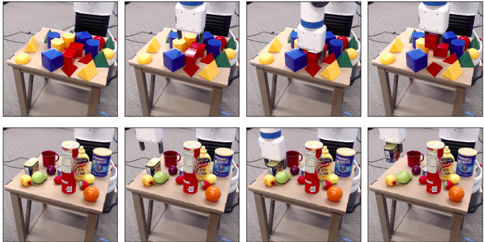
- The pipeline enabled a Fetch robot to detect and pick up the target object in 38 out of 40 trials in increasingly cluttered scenes, and a detector trained on a Spam can succeeded in 9 of 10 trials with previously unseen YCB food distractors.
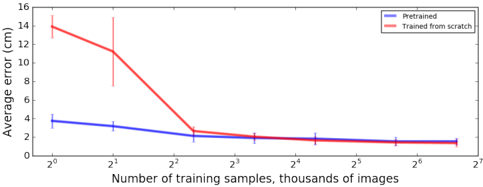
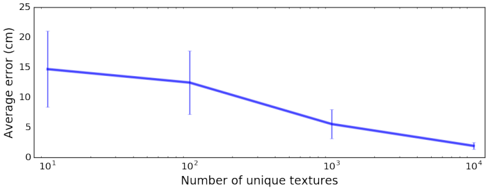
- Ablations found sensitivity to number of training images, number of unique textures, presence of distractors in training, and camera randomization; random noise had negligible effect. Performance improved up to around 50,000 training samples, and degraded significantly with fewer than 1,000 textures.
- ImageNet pretraining was not essential with enough data: random weight initialization achieved nearly the same real-world transfer performance as pretrained initialization, though pretraining helped in the low-data regime.
Methods
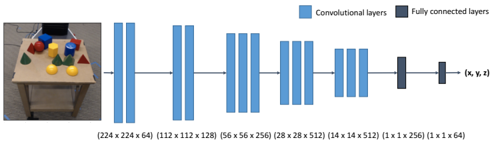
- The authors trained a modified VGG-16 convolutional neural network to map a single 224×224 monocular webcam image to Cartesian coordinates of object(s) of interest, using simulated images rendered by MuJoCo.
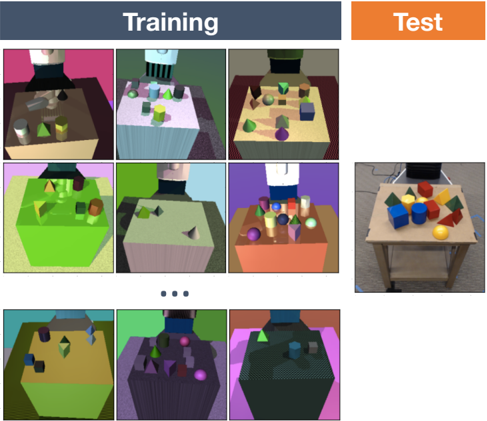
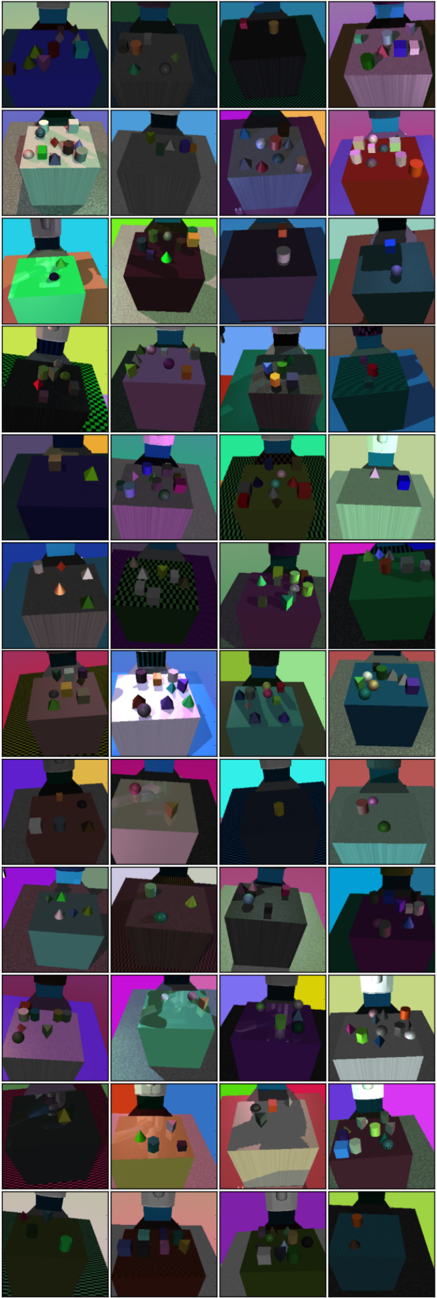
- Domain randomization varied number/shape of distractors, object positions and textures, table/floor/skybox/robot textures, camera position/orientation/field of view, number and properties of lights, and image noise. Textures were random RGB values, gradients, or checker patterns; 0–10 distractor objects were added per scene.
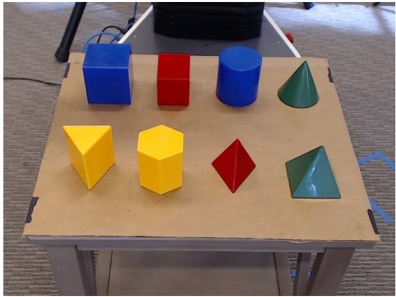
- Training used stochastic gradient descent with Adam on an L2 loss, learning rates around 1e-4, and batch sizes of 25, 50, or 100. Evaluation used 480 webcam images of eight geometric objects at 70–105 cm from a fixed camera, with 60 labeled images per object: 20 alone, 20 with distractors, and 20 partially occluded.
Limitations
- The paper states that the detectors still overfit simulated training data: simulated error was 0.3–0.5 cm versus about 1.5 cm in the real world, and no real-world validation could be done during training because no real data were assumed available.
- The paper states future work is needed for contact-rich manipulation or higher precision, and that the method fixes table height, effectively making the task 2D pose estimation from a single monocular uncalibrated camera.
- Evident from the text: evaluation is limited to eight geometric objects plus one Spam can, the test camera position remains constant across all images, and lighting and surrounding scene were not controlled.
Model-written summary. Check it against the paper before relying on it.
Integrity signals
Registry
Cites
Statistics
Figures
Verification
Claims the paper makes
2 Valid · 8 Not valid · 7 Not checked · 32 Own results and interpretations
The cited sources support only part of this claim — read each source’s verdict below.
In the paper
“Although previous work demonstrated the ability to perform robotic control using a neural network pretrained on ImageNet and fine-tuned on randomized rendered pixels [37], this paper provides the first demonstration that domain randomization can be useful for robotic tasks requiring precision.”
What the sources say
- Partly supportedcites [37] [37] Fereshteh Sadeghi and Sergey Levine. (cad) 2 RL: Real single-image flight without a single real image. arXiv preprint arXiv:1611.04201 , 2016. - sourceExperimental — accuracy not yet measured
The citation [37] is attached to the preceding claim about prior work, not to the citing authors’ claim that their own paper is the first to demonstrate precision robotics. Section 3.1 (p. 4) says LSDA pretrains a CNN on ImageNet classification data and fine-tunes it, but for object detection. It does not report robotic control or fine-tuning on randomized rendered pixels. (LLM, conf=0.84)
boostedstates a cause- Asserted: passes — The authors put it forward as true.
- Checkable: passes — It can be checked against evidence.
- Load-bearing: passes — The paper’s conclusions depend on it.
- Based: passes — The paper gives a reason why it holds.
- Partly supported
The cited sources that could be checked couldn’t confirm or dispute this claim.
In the paper
“Rather than relying on controller robustness, Yu et al. [53] use a model trained on varied physics to perform system identification using online trajectory data, but their approach is not shown to succeed in the real world.”
What the sources say
- Could not verifycites [53] [53] Wenhao Yu, C Karen Liu, and Greg Turk. Preparing for the unknown: Learning a universal policy with online system identification. arXiv preprint arXiv:1702.02453 , 2017. - sourceExperimental — accuracy not yet measured
The cited paper discusses image classification and localisation with convolutional networks (A.1, p. 10; A.2, p. 11), not Yu et al.'s approach. Searches for varied-physics training, online trajectory-based system identification, and real-world success found no passage addressing the claim. Our copy therefore cannot verify it. (LLM, conf=0.78)
plain- Asserted: passes — The authors put it forward as true.
- Checkable: passes — It can be checked against evidence.
- Load-bearing: unclear — It is unclear whether the paper’s conclusions depend on it.
- Based: passes — The paper gives a reason why it holds.
- Could not verify
The cited sources that could be checked couldn’t confirm or dispute this claim.
In the paper
“Though using realistic RGB rendering alone has had limited success for transferring to real robotic tasks [16], incorporating realistic simulation of depth information can allow models trained on rendered images to transfer reasonably well to the real world [32].”
What the sources say
- Could not verifycites [16] [16] Stephen James and Edward Johns. 3d simulation for robot arm control with deep q-learning. arXiv preprint arXiv:1609.03759 , 2016. - sourceExperimental — accuracy not yet measured
The Introduction (§1) and Conclusion (§8) describe Adam as a method for stochastic optimization, while the CNN experiment (§6.3) concerns training on image datasets. Searches for realistic RGB rendering and sim-to-real robotic transfer found no passage addressing whether RGB rendering alone has had limited success on real robotic tasks. (LLM, conf=0.78)
plain- Asserted: passes — The authors put it forward as true.
- Checkable: passes — It can be checked against evidence.
- Load-bearing: passes — The paper’s conclusions depend on it.
- Based: passes — The paper gives a reason why it holds.
- Could not verify
The cited sources that could be checked couldn’t confirm or dispute this claim.
In the paper
“However, their experiments - collision avoidance in hallways and open spaces - do not demonstrate the ability to deal with high-precision tasks.”
What the sources say
- Could not verifycites [37] [37] Fereshteh Sadeghi and Sergey Levine. (cad) 2 RL: Real single-image flight without a single real image. arXiv preprint arXiv:1611.04201 , 2016. - sourceExperimental — accuracy not yet measured
The Experiments section (p. 5) evaluates LSDA on an object-detection dataset, not Sadeghi and Levine’s collision-avoidance experiments. Searches for Sadeghi and Levine, hallway or open-space collision avoidance, and high-precision tasks found no passage addressing the claim. (LLM, conf=0.76)
plain- Asserted: passes — The authors put it forward as true.
- Checkable: passes — It can be checked against evidence.
- Load-bearing: passes — The paper’s conclusions depend on it.
- Based: passes — The paper gives a reason why it holds.
- Could not verify
A result the paper reports from its own data — it cites no other source for it, so there is none to check. The quote shows it is in the paper.
In the paper
“However, using a pre-trained model can significantly improve performance when less training data is used.”
plainstates a cause- Asserted: passes — The authors put it forward as true.
- Checkable: passes — It can be checked against evidence.
- Load-bearing: unclear — It is unclear whether the paper’s conclusions depend on it.
- Based: passes — The paper gives a reason why it holds.
29 more claims
Create a free account to see all 49 claims and to verify the 7 references still open.
- Probably not a substantial claim. 11
- It may state two separate claims as one. 8
Claims other papers make about this one
Each is checked against this paper’s own text: does it say what the citing paper says it does?
The source backs part of the claim, not all of it — or backs it for a different population, condition or comparison.
In the citing paper
“Most policies trained in simulation generalize poorly to the real-world due to agents adapting to specific visual details of the simulator.”
From Language-Based Augmentation to Address Shortcut Learning in Object-Goal Navigation (2023) · cites this paper as [8]
Experimental — accuracy not yet measuredThe source backs part of the claim, not all of it — or backs it for a different population, condition or comparison.
In the citing paper
“In robotic vision tasks including object localization [53], object detection [54], pose estimation [55], and semantic segmentation [56], the training data from simulator always have different textures, lighting, and camera positions from the realistic environments.”
From Sim-to-Real Transfer in Deep Reinforcement Learning for Robotics: a Survey (2020) · cites this paper as [53]
Experimental — accuracy not yet measuredThe source backs part of the claim, not all of it — or backs it for a different population, condition or comparison.
In the citing paper
“These artifacts limit the applicability of generative videos in physics-sensitive domains such as robotics [25,26], autonomous driving [27], simulationbased design, and scientific visualization [28].”
From PhyStruct-Video: Structured Physics State Spaces for Physically Consistent Video Generation (2025) · cites this paper as [25]
Experimental — accuracy not yet measuredThe source backs part of the claim, not all of it — or backs it for a different population, condition or comparison.
In the citing paper
“In domain randomization, the inputs during learning are “randomized” in the sense of being warped or corrupted in particular ways.”
From The overfitted brain: Dreams evolved to assist generalization (2021) · cites this paper as [144]
Experimental — accuracy not yet measuredThe source backs part of the claim, not all of it — or backs it for a different population, condition or comparison.
In the citing paper
“Domain randomization is a domain generalization technique that introduces drastic changes in the training image appearances, which forces the network to learn domain-invariant features between training and target domains [39].”
From A Fully Differentiable Framework for 2D/3D Registration and the Projective Spatial Transformers (2024) · cites this paper as [39]
Experimental — accuracy not yet measured
8 more claims about this paper
Create a free account to see every claim other papers make about this one.
Self-check
Percentages, sums and reported differences re-computed from the paper’s own numbers.
Each contradiction between two passages listed here was confirmed by an independent check.
Rated minor: it would not touch a result — a value no result rests on, a p-value that stays on the same side of the significance level, or a conflict that is clerical, resolved elsewhere in the paper, or outside its own findings.
In the paper
§ A. Experimental Setup · p. 4
“Each training sample consists of (a) a rendered image of the object and one or more distractors (also from among the geometric object set) on a simulated tabletop”
§ A. Domain randomization · p. 4
“Between 0 and 10 distractor objects are added to the table in each scene.”
Citations
Cites
Very Deep Convolutional Networks for Large-Scale Image Recognition
Simonyan, K., & Zisserman, A. (2014) · arXiv · doi:10.48550/arxiv.1409.1556 · Cited by 114,148 · cited 1×
“In particular, we use a modified version the VGG-16 architecture [42] shown in Figure 2.”
MethodAdam: A Method for Stochastic Optimization
Kingma, D. P., & Ba, J. (2014) · arXiv · doi:10.48550/arxiv.1412.6980 · Cited by 98,946 · cited 1×
“We found that using a learning rate of around 1e − 4 (as opposed to the standard 1e − 3 for Adam) improved convergence and helped avoid a common local optimum, mapping all objects to the center of the table.”
MethodLeCun, Y., Bengio, Y., & Hinton, G. (2015) · Nature · doi:10.1038/nature14539 · Cited by 84,126
Human-level control through deep reinforcement learning
Mnih, V., Kavukcuoglu, K., Silver, D., Rusu, A. A., Veness, J., Bellemare, M. G., Graves, A., Riedmiller, M., Fidjeland, A. K., Ostrovski, G., et al. (2015) · Nature · doi:10.1038/nature14236 · Cited by 30,357 · cited 3×
“Learning in simulation is especially promising for building on recent results using deep reinforcement learning to achieve human-level performance on tasks like Atari [27] and robotic control [21], [38].”
BackgroundResultHow transferable are features in deep neural networks?
Yosinski, J., Clune, J., Bengio, Y., & Lipson, H. (2014) · arXiv · doi:10.48550/arxiv.1411.1792 · Cited by 6,061 · cited 1×
“A variety of approaches have been proposed, including re-training the model in the target domain (e.g., [52]), adapting the weights of the model based on the statistics of the source and target domains (e.g., [22]), learning invariant features between domains (e.g., [47]), and learning a mapping…”
BackgroundMuJoCo: A physics engine for model-based control
Todorov, E., Erez, T., & Tassa, Y. (2012) · 2012 IEEE/RSJ International Conference on Intelligent Robots and Systems · doi:10.1109/iros.2012.6386109 · Cited by 4,767 · cited 1×
“We render images using the MuJoCo Physics Engine’s [45] built-in renderer.”
MethodTrust region policy optimization
Schulman, J., Levine, S., Moritz, P., Jordan, M. I., & Abbeel, P. (2015) · arXiv · doi:10.48550/arxiv.1502.05477 · Cited by 4,578 · cited 1×
“Learning in simulation is especially promising for building on recent results using deep reinforcement learning to achieve human-level performance on tasks like Atari [29] and robotic control [26], [41].”
ResultSelf-citationLearning Transferable Features with Deep Adaptation Networks
Long, M., Cao, Y., Wang, J., & Jordan, M. I. (2015) · arXiv · doi:10.48550/arxiv.1502.02791 · Cited by 4,505 · cited 1×
“omputer vision community has devoted significant study to the problem of adapting vision-based models trained in a source domain to a previously unseen target domain (see, e.g., [9], [14], [15], [19], [23], [25], [51]). A variety of approaches have been proposed, including re-training the model in the target domain (e.…”
BackgroundEnd-to-End Training of Deep Visuomotor Policies
Levine, S., Finn, C., Darrell, T., et al. (2015) · Journal of machine learning research · doi:10.5555/2946645.2946684 · Cited by 3,987
Describing Textures in the Wild
Cimpoi, M., Maji, S., Kokkinos, I., Mohamed, S., & Vedaldi, A. (2014) · 2014 IEEE Conference on Computer Vision and Pattern Recognition · doi:10.1109/cvpr.2014.461 · Cited by 2,438 · cited 1×
“To examine how our detectors would perform on objects with complex textures, we created simulated scenes in which the object of interest is given a texture from the Describable Textures Dataset (DTD) [4].”
Method
Research works printed but not linked: 3
- [24] David G Lowe. Three-dimensional object recognition from single two-dimensional images. Artificial intelligence , 31(3):355-395, 1987. -
- [49] Melonee Wise, Michael Ferguson, Derek King, Eric Diehr, and David Dymesich. Fetch and freight: Standard platforms for service robot applications. In Workshop on Autonomous Mobile Service Robots , 2016. -
- sucan, 0, MoveIt!
Cited by
Items 1,501–1,600 of 2,970
Procedural Generation of Synthetic Dataset for Robotic Applications in Sweet Pepper Cultivation
Vuletić, J., Polić, M., & Orsag, M. (2022) · International Conference on Smart Systems and Technologies (SST) · doi:10.1109/sst55530.2022.9954643 · Cited by 5
“According to conclusions of indepth analyses [12], [13], some parts of the dataset are highly realistic, and other, of more supportive role, are less detailed in modelling.”
BackgroundMethodCurriculum Adversarial Training for Robust Reinforcement Learning
Sheng, J., Zhai, P., Dong, Z., Kang, X., Chen, C., & Zhang, L. (2022) · International Joint Conference on Neural Networks (IJCNN) · doi:10.1109/ijcnn55064.2022.9892908 · Cited by 12
“…[19] are to define an adversarial agent to learn adversarial actions and act on the action space; 3): Domain randomization (abbreviated as D omain ) [16] randomly initializes environmental uncertainty components from the test domain as adversarial perturbations, such as the mass or friction of…”
BackgroundMethodRealism Assessment for Synthetic Images in Robot Vision through Performance Characterization
Cerón-López, A. E., Ranjan, R., & Koganti, N. (2022) · IEEE/RSJ International Conference on Intelligent Robots and Systems (IROS) · doi:10.1109/iros47612.2022.9982192 · Cited by 5
Alcover‐Couso, R., SanMiguel, J. C., Escudero-Viñolo, M., & García‐Martín, Á. (2023) · Multimedia Tools and Applications · doi:10.1007/s11042-023-14662-0 · Cited by 8
“Generative-based Some authors propose to enhance synthetic images realism from simulator to alleviate the domain shift [7, 59, 69].”
BackgroundMethodInfluentialTraining Deep Learning Spacecraft Component Detection Algorithms Using Synthetic Image Data
Viggh, H. E. M., Loughran, S., Rachlin, Y., Allen, R. E., & Ruprecht, J. (2023) · IEEE Aerospace Conference (AERO) · doi:10.1109/aero55745.2023.10115578 · Cited by 11
Industrial object detection with multi-modal SSD: closing the gap between synthetic and real images
Cohen, J., Crispim-Junior, C. F., Chiappa, J.-M., & Tougne, L. (2023) · Multimedia Tools and Applications · doi:10.1007/s11042-023-15367-0 · Cited by 6
“For example, data randomization creates a high number of unrealistic images, with many variations in the pose, illumination, and other characteristics for the model to learn to be invariant to most appearance changes [34, 92, 97, 98, 109].”
Andersson, D., Edlund, C., Corbett, B., & Sjögren, R. (2023) · Scientific Reports · doi:10.1038/s41598-023-38145-2 · Cited by 7
“(26) R = β · ( Rmass · Rconcentration + Rclean + γ · Rpurity − Premaining · Idone )”
Exploring Deep Reinforcement Learning for Robust Target Tracking Using Micro Aerial Vehicles
Dionigi, A., Leomanni, M., Saviolo, A., Loianno, G., & Costante, G. (2023) · International Conference on Advanced Robotics (ICAR) · doi:10.1109/icar58858.2023.10407017 · Cited by 9
“In this section, we provide details about the training of the DRL agent and discuss the controller evaluation campaign.”
MethodTraffic3D: A New Traffic Simulation Paradigm
Garg, D., Chli, M., & Vogiatzis, G. (2019) · Adaptive Agents and Multi-Agents Systems · doi:10.65109/pmul2995 · Cited by 5
“This has already been acknowledged in the literature, where an autonomous robot is trained within a simulation environment and the trained model is effectively transferred to a real-world robot [5].”
BackgroundLearning to Grasp Arbitrary Household Objects from a Single Demonstration
Coninck, E. D., Verbelen, T., Molle, P. V., Simoens, P., & Dhoedt, B. (2019) · IEEE/RSJ International Conference on Intelligent Robots and Systems (IROS) · doi:10.1109/iros40897.2019.8967638 · Cited by 7
“to generate trials and then learn to transfer to the real world [23].”
BackgroundKoporec, G., & Perš, J. (2019) · IEEE International Conference on Computer Vision Workshops · doi:10.1109/iccvw.2019.00310 · Cited by 7
“This is mainly due to the fact that some physics cannot be captured by rendering engines [36].”
BackgroundPitteri, G., Bugeau, A., Ilić, S., & Lepetit, V. (2021) · Lecture notes in computer science · doi:10.1007/978-3-030-69525-5_3 · Cited by 35
“Another interesting approach is domain randomization [36], which generates synthetic training images with random appearance by applying drastic variations to the object textures and the rendering parameters to improve generalization.”
High Acceleration Reinforcement Learning for Real-World Juggling with Binary Rewards
Ploeger, K., Lutter, M., & Peters, J. (2020) · Technischen Universität Darmstadt · doi:10.26083/tuprints-00020583 · Cited by 31
Cycle-Consistent Generative Rendering for 2D-3D Modality Translation
Aumentado‐Armstrong, T., Levinshtein, A., Tsogkas, S., Derpanis, K. G., & Jepson, A. D. (2020) · International Conference on 3D Vision (3DV) · doi:10.1109/3dv50981.2020.00033 · Cited by 8
“On the other hand, synthetically generated paired datasets suffer from a domain shift, necessitating the use of techniques like domain randomization (DR), for helping models transfer from simulated to real settings [71, 70].”
Reinforcement Learning with Randomized Physical Parameters for Fault-Tolerant Robots
Okamoto, W., & Kawamoto, K. (2020) · Joint International Conference on Soft Computing and Intelligent Systems and International Symposium on Advanced Intelligent Systems (SCIS&ISIS) · doi:10.1109/scisisis50064.2020.9322775 · Cited by 8
“These techniques are referred to as domain randomization [3], [4], [5].”
MethodSim2Real Transfer for Deep Reinforcement Learning with Stochastic State Transition Delays
Sandha, S. S., García, L. M. S., Balaji, B., Anwar, F. M., & Srivastava, M. B. (2020) · Conference on Robot Learning · Cited by 32
A Visual Approach to Measure Cloth-Body and Cloth-Cloth Friction
Rasheed, A. H., Romero, V., Bertails‐Descoubes, F., Wuhrer, S., Franco, J.-S., & Lazarus, A. (2021) · IEEE Transactions on Pattern Analysis and Machine Intelligence · doi:10.1109/tpami.2021.3097547 · Cited by 5
“These include approaches for cross domain transfer learning [19], [37] and interpretable low dimensional representation learning [18].”
Sieb, M., & Fragkiadaki, K. (2018) · IEEE-RAS International Conference on Humanoid Robots (Humanoids) · doi:10.1109/humanoids.2018.8625007 · Cited by 9
“The work of [34] showed that domain ran-”
BackgroundImplicit 3D Orientation Learning for 6D Object Detection from RGB ImagesPreprint
Sundermeyer, M., Márton, Z.-C., Durner, M., Brucker, M., & Triebel, R. (2019) · arXiv (Cornell University) · doi:10.48550/arxiv.1902.01275 · Cited by 6
“[36] demonstrated the potential of the Domain Randomization (DR) paradigm for 3D shape detection using CNNs.”
BackgroundMethodInfluentialMineRL: A Large-Scale Dataset of Minecraft DemonstrationsPreprint
Guss, W. H., Houghton, B., Topin, N., Wang, P., Codel, C. R., Veloso, M., & Salakhutdinov, R. (2019) · International Joint Conference on Artificial Intelligence · doi:10.48550/arxiv.1907.13440 · Cited by 338
Generalization in Transfer LearningPreprint
Ada, S. E., Uğur, E., & Akın, H. L. (2019) · arXiv (Cornell University) · doi:10.48550/arxiv.1909.01331 · Cited by 5
“[4] compared regularization techniques for deep reinforcement learning such as policy network size reduction, soft actor critic entropy regularizer[11], multi-domain learning[12], structured control net [13] and adversarially robust policy learning(APRL)[14] using AUC.”
MethodVid2Param: Modelling of Dynamics Parameters from VideoPreprint
Asenov, M., Burke, M., Angelov, D., Davchev, T., Subr, K., & Ramamoorthy, S. (2019) · Edinburgh Research Explorer (University of Edinburgh) · doi:10.48550/arxiv.1907.06422 · Cited by 8
Map-less Navigation: A Single DRL-based Controller for Robots with Varied DimensionsPreprint
Zhang, W., Zhang, Y., & Liu, N. (2020) · arXiv (Cornell University) · Cited by 6
Generating Automatic Curricula via Self-Supervised Active Domain RandomizationPreprint
Raparthy, S. C., Mehta, B., Golemo, F., & Paull, L. (2020) · arXiv (Cornell University) · doi:10.48550/arxiv.2002.07911 · Cited by 12
“One leading approach for this sim2real transfer is Domain Randomization (DR) [13], where a simulator’s parameters are perturbed, generating a space of similar yet distinct environments, all of which an agent tries to solve before transferring to a real robot.”
BackgroundInfluentialLuo, Y., Dong, K., Zhao, L., Sun, Z., Zhou, C. Q., & Song, B. (2020) · arXiv (Cornell University) · doi:10.48550/arxiv.2003.02740 · Cited by 5
“With the help of deep learning-based image processing techniques [27]–[30], DRL often takes a representation learning via transforming the images into a meaningful form with physical meaning, such as the position and distance [1], and this process is called state representation.”
InfluentialHow to Close Sim-Real Gap? Transfer with Segmentation!Preprint
Yan, M., Sun, Q., Frosio, I., Tyree, S., & Kautz, J. (2020) · arXiv (Cornell University) · doi:10.48550/arxiv.2005.07695 · Cited by 8
“However strategies learned in simulation have to generalize well to the real world, which justifies the research effort in the space of domain transfer Tobin et al. [2017]. We take a slightly different approach in addressing the visual domain gap, which takes advantage of the asymmetric information between simulation…”
BackgroundGSNet: Joint Vehicle Pose and Shape Reconstruction with Geometrical and Scene-aware SupervisionPreprint
Ke, L., Li, S., Sun, Y., et al. (2020) · arXiv (Cornell University) · doi:10.48550/arxiv.2007.13124 · Cited by 5
“A single-shot deep CNN is proposed in [51] which regresses 6D object pose in one stage while in [50] a two-stage method is used: 1) SSD [35] for detecting bounding boxes and identities; 2) augmented autoencoder predicts object rotation using domain randomization [52].”
MethodADAIL: Adaptive Adversarial Imitation LearningPreprint
Lu, Y., & Tompson, J. (2020) · arXiv (Cornell University) · doi:10.48550/arxiv.2008.12647 · Cited by 10
“Dynamics randomization [Tobin et al., 2017, Sadeghi and Levine, 2016, Mandlekar et al., 2017, Tan et al., 2018, Pinto et al., 2017, Peng et al., 2018, Chebotar et al., 2018, Rajeswaran et al., 2016] has been one of the prevailing vehicles for addressing varying simulation to real-world domain…”
BackgroundAdversarial Environment Generation for Learning to Navigate the WebPreprint
Gür, İ., Jaques, N., Malta, K., Tiwari, M. K., Lee, H., & Faust, A. (2021) · arXiv (Cornell University) · doi:10.48550/arxiv.2103.01991 · Cited by 18
“Another option would be to apply domain randomization (DR) (as in e.g. Jakobi (1997); Sadeghi & Levine (2016); Tobin et al. (2017)) to randomize parameters of websites, or automatically increase some parameter controlling the difficulty over time (as in Gur et al. (2019)).”
MethodDomain Adaptation In Reinforcement Learning Via Latent Unified State RepresentationPreprint
Xing, J., Nagata, T., Chen, K., et al. (2021) · arXiv (Cornell University) · doi:10.48550/arxiv.2102.05714 · Cited by 5
Affective Image Content Analysis: Two Decades Review and New PerspectivesPreprint
Zhao, S., Yao, X., Yang, J., et al. (2021) · arXiv (Cornell University) · doi:10.48550/arxiv.2106.16125 · Cited by 5
“To enrich the generalization ability, one possible solution is to randomize the labeled source images to a sufficient number of domains in the training stage using domain randomization [183], and then, the target domain belongs to the randomized domains to a large extent and thus, the models trained on the randomized…”
MethodA Scaling Law for Synthetic-to-Real Transfer: How Much Is Your Pre-training Effective?Preprint
Mikami, H., Fukumizu, K., Murai, S., Suzuki, S., Kikuchi, Y., Suzuki, T., Maeda, S., & Hayashi, K. (2021) · arXiv (Cornell University) · doi:10.48550/arxiv.2108.11018 · Cited by 5
“For the latter, existing techniques such as domain randomization [60] would be helpful.”
MethodProcedural Generalization by Planning with Self-Supervised World Models
Anand, A., Walker, J., Li, Y., Vértes, E., Schrittwieser, J., Ozair, S., Weber, T., & Hamrick, J. B. (2021) · arXiv · doi:10.48550/arxiv.2111.01587 · Cited by 5
“In robotics, collecting and training over a diverse range of data has Preprint been found to be critical particularly in the sim2real literature where the goal is to transfer a policy learned in simulation to the real world [3, 67].”
BackgroundMimicGen: A Data Generation System for Scalable Robot Learning using Human Demonstrations
Mandlekar, A., Nasiriany, S., Wen, B., Akinola, I., Narang, Y., Fan, L., Zhu, Y., & Fox, D. (2023) · arXiv · doi:10.48550/arxiv.2310.17596 · Cited by 226
Generalizable Causal Reinforcement Learning for Out-of-Distribution Environments
Huang, S., Hu, J., Chen, H., Cui, P., Piao, H., Sun, L., & Yang, B. (2025) · IEEE Transactions on Industrial Informatics · doi:10.1109/tii.2025.3556029 · Cited by 4
Transformable Quadruped Wheelchairs Capable of Autonomous Stair Ascent and Descent
Akamisaka, A., & Nagao, K. (2024) · Sensors · doi:10.3390/s24113675 · Cited by 5
“Tobin et al. [27] noted that closing the “reality gap” between simulation and actual hardware experimentation has the potential to accelerate robotics research.”
BackgroundBalanced Domain Randomization for Safe Reinforcement Learning
Kang, C., Chang, W., & Choi, J. (2024) · Applied Sciences · doi:10.3390/app14219710 · Cited by 7
SynthBA: Reliable Brain Age Estimation Across Multiple MRI Sequences and Resolutions
Puglisi, L., Rondinella, A., Meo, L. D., Guarnera, F., Battiato, S., & Ravì, D. (2024) · IEEE International Conference on Metrology for eXtended Reality, Artificial Intelligence and Neural Engineering (MetroXRAINE) · doi:10.1109/metroxraine62247.2024.10796114 · Cited by 4
“Although this technique can produce unrealistic data, such as MRIs with atypical contrasts, it improves the model’s ability to generalize to previously unseen data distributions [6].”
Reinforcement Learning-Based Footstep Control for Humanoid Robots on Complex Terrain
Suliman, W., Davydenko, E., Chaikovskaia, E., & Gorbachev, R. (2025) · IEEE Access · doi:10.1109/access.2025.3622091 · Cited by 7
“This learning-based paradigm enhances adaptability, reduces reliance on accurate modeling, and increases robustness to uncertainties and hardware variations by training the robot with techniques such as dynamics randomization [8], [9]— making it potentially well-suited for real-world deployment.”
Liu, D., Kababji, S. E., Mitsakakis, N., Pilgram, L., Walters, T. D., Clemons, M. J., Pond, G. R., El-Hussuna, A., & Emam, K. E. (2025) · BMC Medical Informatics and Decision Making · doi:10.1186/s12911-025-03266-3 · Cited by 21
Generalization in Reinforcement Learning for Radio Access Networks
Demirel, B., Wang, Y., Tatino, C., & Soldati, P. (2026) · IEEE Transactions on Machine Learning in Communications and Networking · doi:10.1109/tmlcn.2026.3655335 · Cited by 16
“While classical regularization techniques from supervised learning—such as weight decay, dropout, and batch or layer normalization—can enhance the robustness of RL policies [16], domain randomization has recently emerged as a particularly e ff ective alternative [17].”
Reinforcement Learning for Robotic Singulation: Policy Space Impact on Interactive Manipulation
Singh, R. (2025) · International Conference on Future Technologies (ICFT) · doi:10.1109/icft66708.2025.11336292 · Cited by 9
“Each head is trained using gradients from the PPO algorithm [7].”
Niu, B., & Dobretsov, R. Y. (2026) · Sensors · doi:10.3390/s26030964 · Cited by 5
“…and (3) data-efficient learning and robust generalization (e.g., imitation/offline RL with safety validation, domain randomization with closed-loop real-world refinement) [111], to enable practical deployment while maintaining safety, interpretability, and robustness in dynamic environments.”
Comprehensive Survey on Autonomous Disaster Reconnaissance: A Comparative Analysis of UAVs and UGVs
Jamwal, H. D. S., & Singh, S. (2026) · Telecom · doi:10.3390/telecom7020031 · Cited by 7
Qi, J., Li, M., Liu, J., Shu, Y., Yu, D. S. F., Ma, S., Cui, W., Zhao, Y., Chen, Y., Jiang, R., et al. (2026) · Academia AI and Applications · doi:10.20935/acadai8260 · Cited by 24
“Domain randomization and scenario generation expand coverage and reduce overfitting to a small set of scripted tasks [149].”
Autoencoder and Partially Impossible Reconstruction Losses
Cruz, S., Taetz, B., Stifter, T., & Stricker, D. (2022) · Sensors · doi:10.3390/s22134862 · Cited by 6
“Another work focuses on localization and training on synthetic images only [36], though the applicability is only tested on simple geometries.”
BackgroundAcar, C., Binici, K., Tekirdağ, A., & Wu, Y. (2023) · IEEE Robotics and Automation Letters · doi:10.1109/lra.2023.3336245 · Cited by 21
“Our proposed method involves utilizing a technique known as knowledge distillation, in which a “teacher” policy, pre-trained with multiple camera viewpoints, guides a “student” policy in learning from a single camera viewpoint.”
MethodGraph-based domain adversarial learning framework for video anomaly detection domain generalization
Mei, X., Wei, Y., & Chen, H. (2024) · The Journal of Supercomputing · doi:10.1007/s11227-024-06154-1 · Cited by 4
“Another potent approach for simulating complex signals with limited training data is domain randomization [5, 6].”
Hybrid Control Framework of UAVs Under Varying Wind and Payload Conditions
Coursey, A., Zhang, A., Quiñones-Grueiro, M., & Biswas, G. (2024) · Proceedings of the ... American Control Conference/Proceedings of the American Control Conference · doi:10.23919/acc60939.2024.10645000 · Cited by 5
“Approaches have been proposed to address this limitation such as Domain Randomization [7] and Continual RL [8].”
MethodRobust Deep Reinforcement Learning with Adaptive Adversarial Perturbations in Action Space
Liu, Q., Kuang, Y., & Wang, J. (2024) · International Joint Conference on Neural Networks (IJCNN) · doi:10.1109/ijcnn60899.2024.10651543 · Cited by 19
“For instance, Domain Randomization (DR) generates environments with different transition dynamics [17].”
BackgroundD-SPDH: Improving 3D Robot Pose Estimation in Sim2Real Scenario via Depth Data
Simoni, A., Borghi, G., Garattoni, L., Francesca, G., & Vezzani, R. (2024) · IEEE Access · doi:10.1109/access.2024.3492812 · Cited by 7
“The synthetic data are generated with UE4 using domain randomization [48] and consist of 100k RGB images for each robot with 2D/3D keypoint locations and robot joint angles as annotations.”
Sim2Real Transfer for Audio-Visual Navigation with Frequency-Adaptive Acoustic Field Prediction
Chen, C., Ramos, J., Tomar, A., & Grauman, K. L. (2024) · IEEE/RSJ International Conference on Intelligent Robots and Systems (IROS) · doi:10.1109/iros58592.2024.10802636 · Cited by 15
“The mostly widely used approaches are domain randomization [38], [39], system identification [15], [40], and transfer learning and domain adaptation [41].”
LANCAR: Leveraging Language for Context-Aware Robot Locomotion in Unstructured Environments
Shek, C. L., Wu, X., Suttle, W. A., Busart, C., Zaroukian, E. G., Manocha, D., Tokekar, P., & Bedi, A. S. (2024) · IEEE/RSJ International Conference on Intelligent Robots and Systems (IROS) · doi:10.1109/iros58592.2024.10802075 · Cited by 20
Visuotactile-Based Learning for Insertion With Compliant Hands
Azulay, O., Ramesh, D. M., Curtis, N., & Sintov, A. (2025) · IEEE Robotics and Automation Letters · doi:10.1109/lra.2025.3549657 · Cited by 9
“Recent progress in the area of learning-based methods stems from two main sources: the use of expert demonstrations combined with imitation learning [22], and learning in simulation paired with sim-to-real techniques [23], [24].”
Voronoi-GRU-Based Multi-Robot Collaborative Exploration in Unknown Environments
Lei, Y., Hou, J., Ma, P., & Ma, M. (2025) · Applied Sciences · doi:10.3390/app15063313 · Cited by 10
Karimi, M., & Ahmadi, M. (2025) · IEEE Transactions on Artificial Intelligence · doi:10.1109/tai.2025.3556983 · Cited by 4
“However, a learned policy may not inherently adapt to changing environments, necessitating the implementation of techniques such as metalearning [13], online fi ne-tuning [14], and domain randomization [15] to enhance adaptability and robustness.”
Safety-Driven AMR End-to-End Navigation Framework Based on Sparse Sensor Human Behavior Prediction
Jia, F., Yang, K., Xiao, J., Hu, T., Yang, X., Rushworth, A. G. A., Yu, H., & Cui, T. (2025) · IEEE Symposium on Computational Intelligence for Engineering Solutions (CIES) · doi:10.1109/cies64955.2025.11007636 · Cited by 5
“Domain randomization is a method used to artificially create variation in the simulation, such as changing actuator and sensor parameters [46].”
How Important are Data Augmentations to Close the Domain Gap for Object Detection in Orbit?
Ulmer, M., Klüpfel, L., Durner, M., & Triebel, R. (2025) · IEEE Aerospace Conference (AERO) · doi:10.1109/aero63441.2025.11068779 · Cited by 8
“This approach has been shown to be very beneficial for object detection and pose estimation models in terrestrial applications [17], [18].”
BackgroundYang, B., Zhou, S., Lin, C., Chai, Q., Yan, R., Ma, D., Pan, G., & Tang, H. (2025) · Proceedings - IEEE International Conference on Robotics and Automation/Proceedings · doi:10.1109/icra55743.2025.11128063 · Cited by 4
“Although domain randomization [15], [16] has emerged as a simple yet effective technique to mitigate this issue, especially for legged robots [17], [18], [19].”
Learning Quiet Walking for a Small Home Robot
Watanabe, R., Miki, T., Shi, F., Kadokawa, Y., Bjelonic, F., Kawaharazuka, K., Cramariuc, A., & Hutter, M. (2025) · Proceedings - IEEE International Conference on Robotics and Automation/Proceedings · doi:10.1109/icra55743.2025.11128174 · Cited by 12
“We employ DR [35] to enhance the sim-to-real transfer of the policy.”
Representation Learning Through Latent Canonicalizations
Litany, O., Morcos, A. S., Sridhar, S., Guibas, L. J., & Hoffman, J. (2021) · IEEE Winter Conference on Applications of Computer Vision · doi:10.1109/wacv48630.2021.00069 · Cited by 3
“Domain randomization: (DR) offers a surprising alternative (Tobin et al., 2017; Prakash et al., 2018) by exploiting control of the synthetic data generation pipeline to random-”
BackgroundLearning to stop: a unifying principle for legged locomotion in varying environments
Thuruthel, T. G., Picardi, G., Iida, F., Laschi, C., & Calisti, M. (2021) · Royal Society Open Science · doi:10.1098/rsos.210223 · Cited by 5
“Recent findings show that robustness can be achieved by learning in a rich environment [21] or using domain randomization techniques [23].”
BackgroundPolicy Distillation for Real-Time Inference in Fronthaul Congestion Control
Martins, J. P., Almeida, I., Souza, R. S., & Lins, S. (2021) · IEEE Access · doi:10.1109/access.2021.3129132 · Cited by 5
Amp-Space: A Large-Scale Dataset for Fine-Grained Timbre Transformation
Naradowsky, J. (2021) · International Conference on Digital Audio Effects (DAFx) · doi:10.23919/dafx51585.2021.9768241 · Cited by 4
Material Swapping for 3D Scenes using a Learnt Material Similarity Measure
Perroni-Scharf, M., Sunkavalli, K., Eisenmann, J., et al. (2022) · IEEE/CVF Conference on Computer Vision and Pattern Recognition Workshops (CVPRW) · doi:10.1109/cvprw56347.2022.00221 · Cited by 4
Goal-oriented Knowledge Reuse via Curriculum Evolution for Reinforcement Learning-based Adaptation
Li, J., Zhang, M., Mao, Z., Zhao, H., Jin, Z. G., Honiden, S., & Tei, K. (2022) · Asia-Pacific Software Engineering Conference (APSEC) · doi:10.1109/apsec57359.2022.00031 · Cited by 4
“In addition to the above relearning approaches, domain randomization is also an alternative approach for training a robust policy (at design time) that can work in different environments [20].”
BackgroundChen, Y.-C., & Lai, C. (2023) · The Journal of Supercomputing · doi:10.1007/s11227-023-05068-8 · Cited by 5
“In recent years, there are many literatures [10, 37–39] that use physics engine systems to generate a large amount of synthetic data to solve the cost of time and labor.”
BackgroundEnhancing Visual Domain Randomization with Real Images for Sim-to-Real Transfer
Béres, A., & Gyires-Tóth, B. (2023) · Híradástechnika/Infocommunications journal · doi:10.36244/icj.2023.1.3 · Cited by 8
Open-Ended Diverse Solution Discovery with Regulated Behavior Patterns for Cross-Domain Adaptation
Xu, K., Ma, Y., Wei, B., & Li, W. (2023) · Proceedings of the AAAI Conference on Artificial Intelligence · doi:10.1609/aaai.v37i9.26257 · Cited by 3
Practical Visual Deep Imitation Learning via Task-Level Domain Consistency
Khansari, M., Ho, D., Du, Y., Fuentes, A., Bennice, M., Sievers, N., Kirmani, S., Bai, Y., & Jang, E. (2023) · Proceedings - IEEE International Conference on Robotics and Automation/Proceedings · doi:10.1109/icra48891.2023.10161202 · Cited by 5
“One popular and simple approach to bridging the reality gap is “domain randomization” [11], [12], where a known set of simulator parameters, such as object textures and 2023 IEEE International Conference on Robotics and Automation (ICRA 2023) May 29 - June 2, 2023.”
BackgroundGenerating Synthetic Data Using a Knowledge-based Framework for Autonomous Productions
Petrović, O., Duarte, D. L. D., & Herfs, W. (2023) · IEEE/ASME International Conference on Advanced Intelligent Mechatronics · doi:10.1109/aim46323.2023.10196195 · Cited by 5
“For instance, the simulation can be heavily randomized so that ML models become more robust to changes [9], [12], or the simulation’s level of realism can be increased, e.”
BackgroundAltmann, P. J., Ritz, F., Feuchtinger, L., Nüßlein, J., Linnhoff–Popien, C., & Phan, T. (2023) · International Joint Conference on Artificial Intelligence · doi:10.24963/ijcai.2023/380 · Cited by 9
Policy Adaptation from Foundation Model Feedback
Ge, Y., Macaluso, A., Li, L. E., Luo, P., & Wang, X. (2023) · IEEE Computer Society Conference on Computer Vision and Pattern Recognition/Proceedings - IEEE Computer Society Conference on Computer Vision and Pattern Recognition/Proceedings · doi:10.1109/cvpr52729.2023.01827 · Cited by 29
“A popular way to achieve such generalization is us-ing domain randomization [46, 51, 59] and data augmentation [8,19,29,30,69] for learning invariant visual representations.”
MethodPrivacy-Preserving Constrained Domain Generalization Via Gradient Alignment
Tian, C. X., Li, H., Wang, Y., & Wang, S. (2023) · IEEE Transactions on Knowledge and Data Engineering · doi:10.1109/tkde.2023.3315279 · Cited by 18
“The last stream involves employing data augmentation techniques, such as domain randomization [17] and adversarial training [18], [19], to augment the scale of the training data.”
MethodDevelopment of a novel robot-assisted vocabulary learning system using pure synthetic data
Aung, Z. H., Songsaksuppachok, C., Kanchanapiboon, P., & Ritthipravat, P. (2023) · Intelligent Systems with Applications · doi:10.1016/j.iswa.2023.200295 · Cited by 5
A Framework for Few-Shot Policy Transfer Through Observation Mapping and Behavior Cloning
Shukla, Y., Kesari, B., Goel, S., Wright, R., & Sinapov, J. (2023) · IEEE/RSJ International Conference on Intelligent Robots and Systems (IROS) · doi:10.1109/iros55552.2023.10342477 · Cited by 6
“However, it suffers from “Reality Gap” [6], where the simulation policy performs poorly on transfer.”
BackgroundEnhanced Robot Navigation with Human Geometric Instruction
Deguchi, H., Taguchi, S., Shibata, K., & Koide, S. (2023) · IEEE/RSJ International Conference on Intelligent Robots and Systems (IROS) · doi:10.1109/iros55552.2023.10342107 · Cited by 5
“To address this problem, we plan to improve the agent policy more robust to these gaps using domain randomization [25] and evaluate the proposed method quantitatively.”
MethodGenerating Realistic Images with NeRF for Training of Autonomous Driving Network
Shun, S., Okuyama, Y., Yuta, S., Ryota, K., Kohsuke, T., Jungpil, S., & Nishimura, S. (2023) · IEEE International Symposium on Embedded Multicore/Many-core Systems-on-Chip (MCSoC) · doi:10.1109/mcsoc60832.2023.00045 · Cited by 4
“Other approaches have been taken, such as domain randomization [20], image translation [21], and unsupervised domain adaptation [22].”
MethodZiheng, 金. J., Ke, 徐. X., Ningyuan, 张. Z., Xiao, 邓. D., Zuo, C., Qian, 陈. C., & Shijie, 冯. F. (2024) · Laser & Optoelectronics Progress · doi:10.3788/lop232430 · Cited by 5
CNN-Based Camera Pose Estimation and Localization of Scan Images for Aircraft Visual Inspection
Oh, X., Loh, L., Foong, S., Koh, Z. B. A., Ng, K. L., Tan, P. K., Toh, P. L. P., & Tan, U.-X. (2024) · IEEE Transactions on Intelligent Transportation Systems · doi:10.1109/tits.2024.3369653 · Cited by 6
“We apply domain randomisation [27] when generating our synthetic dataset as it has been demonstrated to be capable of generalising to real-world data, given sufficient simulated variability.”
BackgroundMethodHuo, X., Xie, L., Hu, H., Zhou, W., Li, H., & Tian, Q. C. (2024) · International Journal of Computer Vision · doi:10.1007/s11263-024-02041-7 · Cited by 9
“DG methods can be categorized into multi-source DG (Zhao et al., 2021b; Li et al., 2017a) and single-source DG (Qiao et al., 2020; Tobin et al., 2017), depending on the number of source domains.”
CBDMoE: Consistent-but-Diverse Mixture of Experts for Domain Generalization
Xu, F., Chen, D., Jia, T., Deng, S., & Wang, H. (2024) · IEEE Transactions on Multimedia · doi:10.1109/tmm.2024.3399468 · Cited by 15
“Some methods synthesize novel styles by mixing CNN feature statistics between instance pairs derived from different domains [32], [33], while others randomize the location, environment, or amplitude infor-mationofobjects[34],[35],[36].”
MethodZhou, Z., Lu, Y., Tortós-Vinocour, P. E., Qin, R., Kokubu, S., Matsunaga, F., Xie, Q., & Yu, W. (2024) · Frontiers in Bioengineering and Biotechnology · doi:10.3389/fbioe.2024.1334643 · Cited by 4
Closing the Visual Sim-to-Real Gap with Object-Composable NeRFs
Mishra, N., Sieb, M., Abbeel, P., & Chen, X. (2024) · Proceedings - IEEE International Conference on Robotics and Automation/Proceedings · doi:10.1109/icra57147.2024.10611427 · Cited by 7
“Domain randomization [14] is typically used to improve robustness to out-of-distribution inputs: if a model is trained to generalize to different parameters of the simulator, such as viewpoint, lighting, or material properties, then it may also generalize to the real world as simply another…”
BackgroundSelf-citationSim-to-Real Grasp Detection with Global-to-Local RGB-D Adaptation
Ma, H., Qin, R., Shi, M., Gao, B., & Huang, D. (2024) · Proceedings - IEEE International Conference on Robotics and Automation/Proceedings · doi:10.1109/icra57147.2024.10611165 · Cited by 15
“The DR methods [6]–[8], [24], [25] follow the assumption if sufficient diversity is presented in the simulated environment, the generalization ability of the model can be guaranteed for good performance in real-world scenarios.”
BackgroundMethodUnobtrusive High-Generalization Fall Detection: A Domain-Generalization Framework
Yao, Y., Zhang, H., Bai, Z., Xia, P., Liu, C., Geng, F., Du, L., Chen, X., Li, Z., Wang, P., et al. (2024) · IEEE Sensors Journal · doi:10.1109/jsen.2024.3443532 · Cited by 6
Say No to Freeloader: Protecting Intellectual Property of Your Deep Model
Wang, L., Wang, M., Fu, H., & Zhang, D. (2024) · IEEE Transactions on Pattern Analysis and Machine Intelligence · doi:10.1109/tpami.2024.3450282 · Cited by 12
“Domain generalization [17], [18] differs from domain adaptive in that the target domain is inaccessible during training phase [40], [41].”
BackgroundSynthetic Data Augmentation for Video Action Classification Using Unity
Cauli, N., & Recupero, D. R. (2024) · IEEE Access · doi:10.1109/access.2024.3485199 · Cited by 6
“…and Unreal Engine [18], among others, are good simulator candidates, capable of rendering photorealistic images in just a few milliseconds, simulating realistic physical interactions between objects, and offering powerful scripting and design tools to recreate detailed artificial scenes [16], [19].”
BackgroundMethodTsuji, C., Coronado, E., Osorio, P., & Venture, G. (2024) · IEEE Robotics and Automation Letters · doi:10.1109/lra.2024.3497713 · Cited by 13
“Tobin et al. used domain randomization to train an object detector in simulation for robotic grasping [13].”
Towards Multimodal Open-Set Domain Generalization and Adaptation Through Self-supervision
Dong, H., Chatzi, E., & Fink, O. (2024) · Lecture notes in computer science · doi:10.1007/978-3-031-73202-7_16 · Cited by 32
Li, A., & Schoellig, A. P. (2024) · IEEE Robotics and Automation Letters · doi:10.1109/lra.2024.3520436 · Cited by 4
Zhou, J., Chen, K., Wei, M., Zhang, X.-P. S., Dou, Q., & Qin, J. (2025) · IEEE Transactions on Circuits and Systems for Video Technology · doi:10.1109/tcsvt.2025.3542089 · Cited by 7
“They also leverage large-scale natural image datasets (e.g., COCO [27]) as rendering background to impose domain randomization [28].”
Exploring the Performance-Reproducibility Trade-Off in Quality-Diversity
Flageat, M., Janmohamed, H., Lim, B., & Cully, A. (2025) · IEEE Transactions on Evolutionary Computation · doi:10.1109/tevc.2025.3548438 · Cited by 5
“Approaches, such as domain randomization [26], aim to convert the robustness problem into a reproducibility problem by training on large sets of environment variations, hoping these sets would encompass the possible testing environments.”
KALIE: Fine-Tuning Vision-Language Models for Open-World Manipulation Without Robot Data
Tang, G., Rajkumar, S., Zhou, Y., Walke, H., Levine, S., & Fang, K. (2025) · Proceedings - IEEE International Conference on Robotics and Automation/Proceedings · doi:10.1109/icra55743.2025.11128156 · Cited by 21
“Domain randomization has also been broadly used to train robust models for robotic control [38, 28, 1, 32] when collecting simulated robot experiences.”
RL-OGM-Parking: Lidar OGM-Based Hybrid Reinforcement Learning Planner for Autonomous Parking
Wang, Z., Chen, Z., Jiang, M., Qin, T., & Yang, M. Z. (2025) · Proceedings - IEEE International Conference on Robotics and Automation/Proceedings · doi:10.1109/icra55743.2025.11128703 · Cited by 13
“Tobin et al. [12] proposed Domain Randomization, which enhances robustness in real environments by randomizing simulator parameters such as colors, textures, and dynamics.”
Robust Reinforcement Learning for Autonomous Driving in Uncertain Environments
Wang, D.-J., & Ghoreishi, S. F. (2025) · 2025 IEEE 21st International Conference on Automation Science and Engineering (CASE) · doi:10.1109/case58245.2025.11164129 · Cited by 6
“Among these, domain randomization [6]–[8]. improves policy robustness by randomizing environment parameters (e.g., road friction, lighting conditions, vehicle dynamics) during training, forcing policies to learn across diverse simulated conditions.”
Lee, G., Hou, B., Choudhury, S., & Srinivasa, S. S. (2021) · IEEE/RSJ International Conference on Intelligent Robots and Systems (IROS) · doi:10.1109/iros51168.2021.9636163 · Cited by 11
“vastly different policies to achieve high reward; robust RL methods [4], [5] often fail to recover that multi-modality.”
BackgroundDomain Randomization Using Deep Neural Networks for Estimating Positions of Bolts
Ameperosa, E., & Bhounsule, P. A. (2020) · Journal of Computing and Information Science in Engineering · doi:10.1115/1.4047074 · Cited by 6
“Recently, Tobin et al. [14] have demonstrated an alternate approach called domain randomization that uses simulated data for training without any calibration on real images.”
BackgroundMethodInfluentialNoh, S., Back, S., Kang, R., Shin, S., & Lee, K. (2020) · IEEE International Conference on Emerging Technologies and Factory Automation (ETFA) · doi:10.1109/etfa46521.2020.9212155 · Cited by 5
“Using the virtual environment and domain randomization [17], we generated the input image, instance segmentation mask, and reference image pairs by repeating the following steps: 1) Randomize the camera’s field of view by adjusting its horizontal FOV in range of 69.4 ± 3° to cover all FOV variations…”
MethodInfluentialSim-to-Real with Domain Randomization for Tumbling Robot Control
Schwartzwald, A., & Papanikolopoulos, N. P. (2020) · IEEE/RSJ International Conference on Intelligent Robots and Systems (IROS) · doi:10.1109/iros45743.2020.9341057 · Cited by 6
“This variation results in a network with a greater ability to generalize making it more robust to differences between the real-world and the simulation [8].”
BackgroundMethodInfluential
Metadata
- Authors
- Tobin, J., Fong, R., Ray, A., Schneider, J., Zaremba, W., & Abbeel, P.
- Affiliations
- University of California, Berkeley (US)
- OpenAI (United States) (US)
- International Computer Science Institute (US)
- ORCID
- Abbeel, Pieter
- Venue
- 2017 IEEE/RSJ International Conference on Intelligent Robots and Systems (IROS)
- Publisher
- IEEE
- Published
- 2017-09
- Pages
- 23-30
- ISSN
- 2153-0858 (ISSN-L)
- OpenAlex
- W2605102758
- Semantic Scholar
- 32ceb28e45a445df4d89df281bb0e3ab5aab1a2a
- Cited by
- 3,124
- References
- 69
- Citations by year
- 2026: 413 · 2025: 433 · 2024: 336 · 2023: 403 · 2022: 374 · 2021: 422 · 2020: 352 · 2019: 256 · 2018: 106 · 2017: 25
- FWCI
- 92.18
- Type
- conference paper
- Language
- en
- Open access
- green
- arxiv.org
- Locations
- IEEE/RSJ International Conference on Intelligent Robots and Systems (IROS) (publishedVersion)
- arXiv (Cornell University) (submittedVersion)
- arXiv (Cornell University)
- Topics
- Physical Sciences › Computer Science › Artificial Intelligence › Reinforcement Learning in Robotics
- Physical Sciences › Engineering › Control and Systems Engineering › Robot Manipulation and Learning
- Physical Sciences › Computer Science › Artificial Intelligence › Domain Adaptation and Few-Shot Learning
- Keywords
- domain randomization, sim-to-real transfer, reality gap, object detection, object localization, robotic grasping, cluttered environments, distractor robustness, partial occlusion, robotic manipulation
About these checks
Registry, retraction, Cites and statistics results are computed, not judged, with one exception: a printed reference that no index lists is read once by a model before it counts as a citation error. Claims are extracted by a model and kept only when their quote appears verbatim in the text; each cited source is then checked, with a model’s help, for whether it says what the claim relies on. Those verdicts can be wrong — read the claim’s quote and the cited source before relying on one.
The claim verdicts this report counts are experimental: their accuracy is not yet measured.
A language model drew the claims from the paper on 2026-10-10, under version 3 of the claim definition (model deepseek-v4.1-flash, prompt extract-v3).
A second model labelled each claim on 2026-10-10 (model jev-1.13-20260917, definition revision gold-guideline-v0.2).
Cited sources are checked with a language model’s help (gpt-6-sol).
Statistics and arithmetic are recomputed, not judged.
Confidence bands are shown only for fields calibrated on our annotated test set. None is calibrated yet, so no band is shown.
What counts as a claim ›How we measure confidence ›How we check this ›
Are you an author, or do you see a problem with this page? Request a review
Data sources
Bibliographic data: Semantic Scholar, OpenAlex, Crossref.
Contains information from the Semantic Scholar Academic Graph Datasets, made available under the ODC Attribution License (ODC-BY 1.0).
Semantic Scholar’s data is described in: Kinney, R., et al. (2023). The Semantic Scholar Open Data Platform. arXiv:2301.10140.
