

Domain randomization for transferring deep neural networks from simulation to the real world
Open accessThe DOI matches its Crossref record; 71 of the 71 references it cites were found in a registry or an index; 8 of the 17 sources its claims cite were checked for support.
Abstract
Bridging the `reality gap' that separates simulated robotics from experiments on hardware could accelerate robotic research through improved data availability. This paper explores domain randomization, a simple technique for training models on simulated images that transfer to real images by randomizing rendering in the simulator. With enough variability in the simulator, the real world may appear to the model as just another variation. We focus on the task of object localization, which is a stepping stone to general robotic manipulation skills. We find that it is possible to train a real-world object detector that is accurate to 1.5 cm and robust to distractors and partial occlusions using only data from a simulator with non-realistic random textures. To demonstrate the capabilities of our detectors, we show they can be used to perform grasping in a cluttered environment. To our knowledge, this is the first successful transfer of a deep neural network trained only on simulated RGB images (without pre-training on real images) to the real world for the purpose of robotic control.
Overview
CoChat Summary
TL;DR
This paper introduces domain randomization: training an object detector on simulated RGB images with randomized rendering, textures, lighting, camera pose, and distractors so that the real world appears as another variation. The authors show that a detector trained only in simulation can localize objects in the real world accurately enough to grasp them in clutter.
Key findings
- Real-world object detectors trained only on simulated images localized objects to within about 1.5 cm on average, including with distractors and partial occlusions; per-object errors in Table I range from 0.6 ± 0.3 cm to 3.2 ± 5.8 cm depending on object and condition.
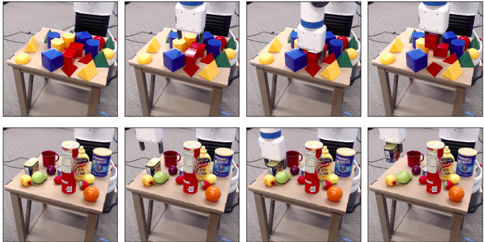
- The pipeline enabled a Fetch robot to detect and pick up the target object in 38 out of 40 trials in increasingly cluttered scenes, and a detector trained on a Spam can succeeded in 9 of 10 trials with previously unseen YCB food distractors.
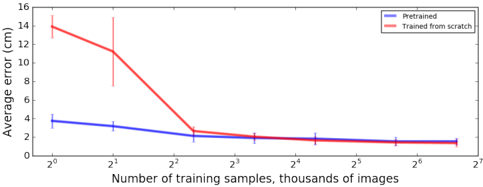
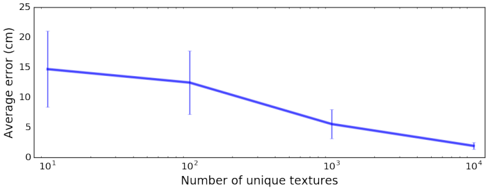
- Ablations found sensitivity to number of training images, number of unique textures, presence of distractors in training, and camera randomization; random noise had negligible effect. Performance improved up to around 50,000 training samples, and degraded significantly with fewer than 1,000 textures.
- ImageNet pretraining was not essential with enough data: random weight initialization achieved nearly the same real-world transfer performance as pretrained initialization, though pretraining helped in the low-data regime.
Methods
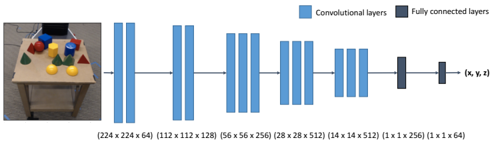
- The authors trained a modified VGG-16 convolutional neural network to map a single 224×224 monocular webcam image to Cartesian coordinates of object(s) of interest, using simulated images rendered by MuJoCo.
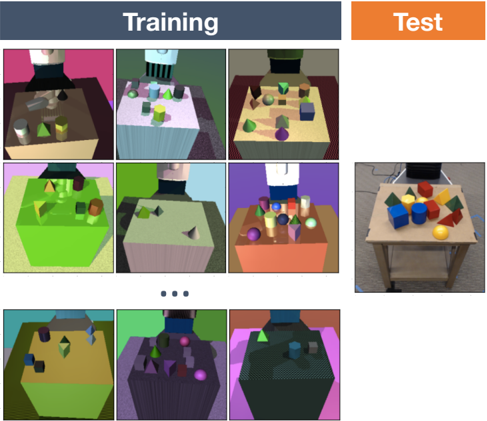
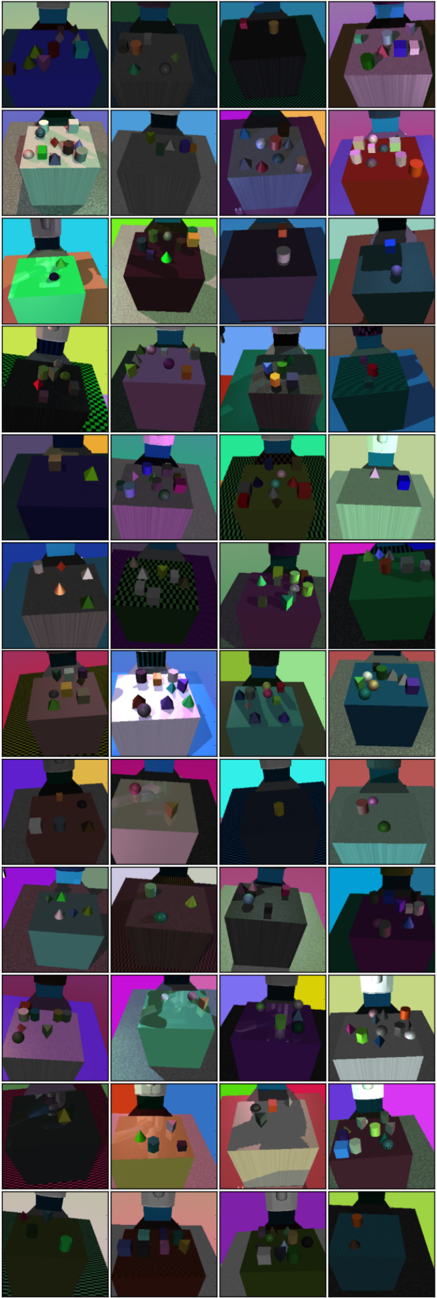
- Domain randomization varied number/shape of distractors, object positions and textures, table/floor/skybox/robot textures, camera position/orientation/field of view, number and properties of lights, and image noise. Textures were random RGB values, gradients, or checker patterns; 0–10 distractor objects were added per scene.
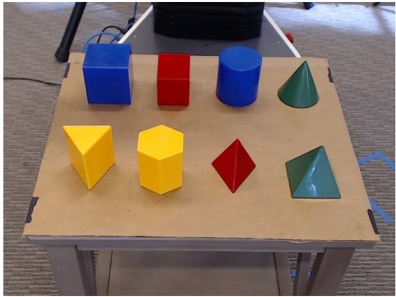
- Training used stochastic gradient descent with Adam on an L2 loss, learning rates around 1e-4, and batch sizes of 25, 50, or 100. Evaluation used 480 webcam images of eight geometric objects at 70–105 cm from a fixed camera, with 60 labeled images per object: 20 alone, 20 with distractors, and 20 partially occluded.
Limitations
- The paper states that the detectors still overfit simulated training data: simulated error was 0.3–0.5 cm versus about 1.5 cm in the real world, and no real-world validation could be done during training because no real data were assumed available.
- The paper states future work is needed for contact-rich manipulation or higher precision, and that the method fixes table height, effectively making the task 2D pose estimation from a single monocular uncalibrated camera.
- Evident from the text: evaluation is limited to eight geometric objects plus one Spam can, the test camera position remains constant across all images, and lighting and surrounding scene were not controlled.
Model-written summary. Check it against the paper before relying on it.
Integrity signals
Registry
Cites
Statistics
Figures
Verification
Claims the paper makes
2 Valid · 8 Not valid · 7 Not checked · 32 Own results and interpretations
The cited sources support only part of this claim — read each source’s verdict below.
In the paper
“Although previous work demonstrated the ability to perform robotic control using a neural network pretrained on ImageNet and fine-tuned on randomized rendered pixels [37], this paper provides the first demonstration that domain randomization can be useful for robotic tasks requiring precision.”
What the sources say
- Partly supportedcites [37] [37] Fereshteh Sadeghi and Sergey Levine. (cad) 2 RL: Real single-image flight without a single real image. arXiv preprint arXiv:1611.04201 , 2016. - sourceExperimental — accuracy not yet measured
The citation [37] is attached to the preceding claim about prior work, not to the citing authors’ claim that their own paper is the first to demonstrate precision robotics. Section 3.1 (p. 4) says LSDA pretrains a CNN on ImageNet classification data and fine-tunes it, but for object detection. It does not report robotic control or fine-tuning on randomized rendered pixels. (LLM, conf=0.84)
boostedstates a cause- Asserted: passes — The authors put it forward as true.
- Checkable: passes — It can be checked against evidence.
- Load-bearing: passes — The paper’s conclusions depend on it.
- Based: passes — The paper gives a reason why it holds.
- Partly supported
The cited sources that could be checked couldn’t confirm or dispute this claim.
In the paper
“Rather than relying on controller robustness, Yu et al. [53] use a model trained on varied physics to perform system identification using online trajectory data, but their approach is not shown to succeed in the real world.”
What the sources say
- Could not verifycites [53] [53] Wenhao Yu, C Karen Liu, and Greg Turk. Preparing for the unknown: Learning a universal policy with online system identification. arXiv preprint arXiv:1702.02453 , 2017. - sourceExperimental — accuracy not yet measured
The cited paper discusses image classification and localisation with convolutional networks (A.1, p. 10; A.2, p. 11), not Yu et al.'s approach. Searches for varied-physics training, online trajectory-based system identification, and real-world success found no passage addressing the claim. Our copy therefore cannot verify it. (LLM, conf=0.78)
plain- Asserted: passes — The authors put it forward as true.
- Checkable: passes — It can be checked against evidence.
- Load-bearing: unclear — It is unclear whether the paper’s conclusions depend on it.
- Based: passes — The paper gives a reason why it holds.
- Could not verify
The cited sources that could be checked couldn’t confirm or dispute this claim.
In the paper
“Though using realistic RGB rendering alone has had limited success for transferring to real robotic tasks [16], incorporating realistic simulation of depth information can allow models trained on rendered images to transfer reasonably well to the real world [32].”
What the sources say
- Could not verifycites [16] [16] Stephen James and Edward Johns. 3d simulation for robot arm control with deep q-learning. arXiv preprint arXiv:1609.03759 , 2016. - sourceExperimental — accuracy not yet measured
The Introduction (§1) and Conclusion (§8) describe Adam as a method for stochastic optimization, while the CNN experiment (§6.3) concerns training on image datasets. Searches for realistic RGB rendering and sim-to-real robotic transfer found no passage addressing whether RGB rendering alone has had limited success on real robotic tasks. (LLM, conf=0.78)
plain- Asserted: passes — The authors put it forward as true.
- Checkable: passes — It can be checked against evidence.
- Load-bearing: passes — The paper’s conclusions depend on it.
- Based: passes — The paper gives a reason why it holds.
- Could not verify
The cited sources that could be checked couldn’t confirm or dispute this claim.
In the paper
“However, their experiments - collision avoidance in hallways and open spaces - do not demonstrate the ability to deal with high-precision tasks.”
What the sources say
- Could not verifycites [37] [37] Fereshteh Sadeghi and Sergey Levine. (cad) 2 RL: Real single-image flight without a single real image. arXiv preprint arXiv:1611.04201 , 2016. - sourceExperimental — accuracy not yet measured
The Experiments section (p. 5) evaluates LSDA on an object-detection dataset, not Sadeghi and Levine’s collision-avoidance experiments. Searches for Sadeghi and Levine, hallway or open-space collision avoidance, and high-precision tasks found no passage addressing the claim. (LLM, conf=0.76)
plain- Asserted: passes — The authors put it forward as true.
- Checkable: passes — It can be checked against evidence.
- Load-bearing: passes — The paper’s conclusions depend on it.
- Based: passes — The paper gives a reason why it holds.
- Could not verify
A result the paper reports from its own data — it cites no other source for it, so there is none to check. The quote shows it is in the paper.
In the paper
“However, using a pre-trained model can significantly improve performance when less training data is used.”
plainstates a cause- Asserted: passes — The authors put it forward as true.
- Checkable: passes — It can be checked against evidence.
- Load-bearing: unclear — It is unclear whether the paper’s conclusions depend on it.
- Based: passes — The paper gives a reason why it holds.
29 more claims
Create a free account to see all 49 claims and to verify the 7 references still open.
- Probably not a substantial claim. 11
- It may state two separate claims as one. 8
Claims other papers make about this one
Each is checked against this paper’s own text: does it say what the citing paper says it does?
The source backs part of the claim, not all of it — or backs it for a different population, condition or comparison.
In the citing paper
“Most policies trained in simulation generalize poorly to the real-world due to agents adapting to specific visual details of the simulator.”
From Language-Based Augmentation to Address Shortcut Learning in Object-Goal Navigation (2023) · cites this paper as [8]
Experimental — accuracy not yet measuredThe source backs part of the claim, not all of it — or backs it for a different population, condition or comparison.
In the citing paper
“In robotic vision tasks including object localization [53], object detection [54], pose estimation [55], and semantic segmentation [56], the training data from simulator always have different textures, lighting, and camera positions from the realistic environments.”
From Sim-to-Real Transfer in Deep Reinforcement Learning for Robotics: a Survey (2020) · cites this paper as [53]
Experimental — accuracy not yet measuredThe source backs part of the claim, not all of it — or backs it for a different population, condition or comparison.
In the citing paper
“These artifacts limit the applicability of generative videos in physics-sensitive domains such as robotics [25,26], autonomous driving [27], simulationbased design, and scientific visualization [28].”
From PhyStruct-Video: Structured Physics State Spaces for Physically Consistent Video Generation (2025) · cites this paper as [25]
Experimental — accuracy not yet measuredThe source backs part of the claim, not all of it — or backs it for a different population, condition or comparison.
In the citing paper
“In domain randomization, the inputs during learning are “randomized” in the sense of being warped or corrupted in particular ways.”
From The overfitted brain: Dreams evolved to assist generalization (2021) · cites this paper as [144]
Experimental — accuracy not yet measuredThe source backs part of the claim, not all of it — or backs it for a different population, condition or comparison.
In the citing paper
“Domain randomization is a domain generalization technique that introduces drastic changes in the training image appearances, which forces the network to learn domain-invariant features between training and target domains [39].”
From A Fully Differentiable Framework for 2D/3D Registration and the Projective Spatial Transformers (2024) · cites this paper as [39]
Experimental — accuracy not yet measured
8 more claims about this paper
Create a free account to see every claim other papers make about this one.
Self-check
Percentages, sums and reported differences re-computed from the paper’s own numbers.
Each contradiction between two passages listed here was confirmed by an independent check.
Rated minor: it would not touch a result — a value no result rests on, a p-value that stays on the same side of the significance level, or a conflict that is clerical, resolved elsewhere in the paper, or outside its own findings.
In the paper
§ A. Experimental Setup · p. 4
“Each training sample consists of (a) a rendered image of the object and one or more distractors (also from among the geometric object set) on a simulated tabletop”
§ A. Domain randomization · p. 4
“Between 0 and 10 distractor objects are added to the table in each scene.”
Citations
Cites
Very Deep Convolutional Networks for Large-Scale Image Recognition
Simonyan, K., & Zisserman, A. (2014) · arXiv · doi:10.48550/arxiv.1409.1556 · Cited by 114,148 · cited 1×
“In particular, we use a modified version the VGG-16 architecture [42] shown in Figure 2.”
MethodAdam: A Method for Stochastic Optimization
Kingma, D. P., & Ba, J. (2014) · arXiv · doi:10.48550/arxiv.1412.6980 · Cited by 98,946 · cited 1×
“We found that using a learning rate of around 1e − 4 (as opposed to the standard 1e − 3 for Adam) improved convergence and helped avoid a common local optimum, mapping all objects to the center of the table.”
MethodLeCun, Y., Bengio, Y., & Hinton, G. (2015) · Nature · doi:10.1038/nature14539 · Cited by 84,126
Human-level control through deep reinforcement learning
Mnih, V., Kavukcuoglu, K., Silver, D., Rusu, A. A., Veness, J., Bellemare, M. G., Graves, A., Riedmiller, M., Fidjeland, A. K., Ostrovski, G., et al. (2015) · Nature · doi:10.1038/nature14236 · Cited by 30,357 · cited 3×
“Learning in simulation is especially promising for building on recent results using deep reinforcement learning to achieve human-level performance on tasks like Atari [27] and robotic control [21], [38].”
BackgroundResultHow transferable are features in deep neural networks?
Yosinski, J., Clune, J., Bengio, Y., & Lipson, H. (2014) · arXiv · doi:10.48550/arxiv.1411.1792 · Cited by 6,061 · cited 1×
“A variety of approaches have been proposed, including re-training the model in the target domain (e.g., [52]), adapting the weights of the model based on the statistics of the source and target domains (e.g., [22]), learning invariant features between domains (e.g., [47]), and learning a mapping…”
BackgroundMuJoCo: A physics engine for model-based control
Todorov, E., Erez, T., & Tassa, Y. (2012) · 2012 IEEE/RSJ International Conference on Intelligent Robots and Systems · doi:10.1109/iros.2012.6386109 · Cited by 4,767 · cited 1×
“We render images using the MuJoCo Physics Engine’s [45] built-in renderer.”
MethodTrust region policy optimization
Schulman, J., Levine, S., Moritz, P., Jordan, M. I., & Abbeel, P. (2015) · arXiv · doi:10.48550/arxiv.1502.05477 · Cited by 4,578 · cited 1×
“Learning in simulation is especially promising for building on recent results using deep reinforcement learning to achieve human-level performance on tasks like Atari [29] and robotic control [26], [41].”
ResultSelf-citationLearning Transferable Features with Deep Adaptation Networks
Long, M., Cao, Y., Wang, J., & Jordan, M. I. (2015) · arXiv · doi:10.48550/arxiv.1502.02791 · Cited by 4,505 · cited 1×
“omputer vision community has devoted significant study to the problem of adapting vision-based models trained in a source domain to a previously unseen target domain (see, e.g., [9], [14], [15], [19], [23], [25], [51]). A variety of approaches have been proposed, including re-training the model in the target domain (e.…”
BackgroundEnd-to-End Training of Deep Visuomotor Policies
Levine, S., Finn, C., Darrell, T., et al. (2015) · Journal of machine learning research · doi:10.5555/2946645.2946684 · Cited by 3,987
Describing Textures in the Wild
Cimpoi, M., Maji, S., Kokkinos, I., Mohamed, S., & Vedaldi, A. (2014) · 2014 IEEE Conference on Computer Vision and Pattern Recognition · doi:10.1109/cvpr.2014.461 · Cited by 2,438 · cited 1×
“To examine how our detectors would perform on objects with complex textures, we created simulated scenes in which the object of interest is given a texture from the Describable Textures Dataset (DTD) [4].”
Method
Research works printed but not linked: 3
- [24] David G Lowe. Three-dimensional object recognition from single two-dimensional images. Artificial intelligence , 31(3):355-395, 1987. -
- [49] Melonee Wise, Michael Ferguson, Derek King, Eric Diehr, and David Dymesich. Fetch and freight: Standard platforms for service robot applications. In Workshop on Autonomous Mobile Service Robots , 2016. -
- sucan, 0, MoveIt!
Cited by
Items 1,801–1,900 of 2,970
Random Shadows and Highlights: A new data augmentation method for extreme lighting conditionsPreprint
Mazhar, O., & Kober, J. (2021) · arXiv (Cornell University) · doi:10.48550/arxiv.2101.05361 · Cited by 11
Class balanced underwater object detection dataset generated by class-wise style augmentationPreprint
Chen, L., Dong, J., & Zhou, H. (2021) · arXiv (Cornell University) · doi:10.48550/arxiv.2101.07959 · Cited by 8
“Tobin et al. [25] synthesize images by randomizing the color, texture, illumination and other aspects of the virtual scene and use the synthetic images to train a deep detector, they discover the detector generalizes well from graphically rendered virtual environments to the real world.”
BackgroundContact Pose Identification for Peg-in-Hole Assembly under UncertaintiesPreprint
Jin, S., Zhu, X., Wang, C., et al. (2021) · arXiv (Cornell University) · doi:10.48550/arxiv.2101.12467 · Cited by 3
“Although there is a huge sim-to-real gap [19] between the simulated environment and the real world in terms of friction coefficient, inertia, stiffness, damping ratio, etc.”
BackgroundTeachMyAgent: a Benchmark for Automatic Curriculum Learning in Deep RLPreprint
Romac, C., Portelas, R., Hofmann, K., & Oudeyer, P. (2021) · arXiv (Cornell University) · doi:10.48550/arxiv.2103.09815 · Cited by 30
“ADR OpenAI et al. (2019) introduced Automatic Domain Randomization (ADR), an ACL method relying on the idea of Domain Randomization (Tobin et al., 2017; Peng et al., 2018).”
MethodCombining Pessimism with Optimism for Robust and Efficient Model-Based Deep Reinforcement LearningPreprint
Curi, S., Bogunovic, I., & Krause, A. (2021) · arXiv (Cornell University) · doi:10.48550/arxiv.2103.10369 · Cited by 20
“Being robust to a fixed parameter is equivalent to considering a stateless adversary policy in the RH-UCRL algorithm (7), i.e., Π̄ : ∅ → A. Common benchmarks in this setting are domain randomization (Peng et al., 2018; Tobin et al., 2017) and EP-OPT (Rajeswaran et al., 2017).”
BackgroundUnsupervised Visual Attention and Invariance for Reinforcement LearningPreprint
Wang, X., Lian, L., & Yu, S. X. (2021) · arXiv (Cornell University) · doi:10.48550/arxiv.2104.02921 · Cited by 3
“all possible variations quickly becomes infeasible; domain randomization methods [50, 55, 44, 45, 59] apply augmentations in a simulated environment and train a domain-agnostic universal policy conditioned on estimated discrepancies between testing and training scenarios.”
BackgroundReinforcement Learning and Control of a Lower Extremity Exoskeleton for Squat AssistancePreprint
Luo, S., Androwis, G. J., Adamovich, S. V., et al. (2021) · arXiv (Cornell University) · doi:10.48550/arxiv.2105.03489 · Cited by 3
“To this end, we adopt dynamics randomization [37, 38] in our training strategy, in which dynamics parameters of the simulation environment are randomly sampled from an uniform distribution for each episode.”
MethodImproving Generalization in Meta-RL with Imaginary Tasks from Latent Dynamics MixturePreprint
Lee, S., & Chung, S.-Y. (2021) · arXiv (Cornell University) · doi:10.48550/arxiv.2105.13524 · Cited by 10
Self-supervised Tumor Segmentation through Layer DecompositionPreprint
Zhang, X., Xie, W., Huang, C., Wang, Y., Zhang, Y., Chen, X., & Tian, Q. (2021) · arXiv (Cornell University) · doi:10.48550/arxiv.2109.03230 · Cited by 3
“To improve the generalisation ability in Sim2Real transfer, Domain Randomization [44, 52] is often adopted.”
MethodLearning Eye-in-Hand Camera Calibration from a Single ImagePreprint
Valassakis, E., Dreczkowski, K., & Johns, E. (2021) · arXiv (Cornell University) · doi:10.48550/arxiv.2111.01245 · Cited by 26
“Moreover, sim-to-real transfer has shown promise in alleviating the large data requirements that hinder the scalability of such methods [4, 21, 22, 23].”
BackgroundMethodUnsupervised Domain Adaptation with Dynamics-Aware Rewards in Reinforcement Learning
Liu, J., Shen, H., Wang, D., Kang, Y., & Tian, Q. (2021) · neural information processing systems · doi:10.48550/arxiv.2110.12997 · Cited by 16
“Domain randomization [35, 50] and system (dynamics) identification [12, 7, 1] are also not compared because they requires the access of the physical parameters of source environment, while we do not assume this access.”
ModEL: A Modularized End-to-end Reinforcement Learning Framework for Autonomous Driving.Preprint
Wang, G., Niu, H., Zhu, D., Hu, J., Zhan, X., & Zhou, G. (2021) · arXiv (Cornell University) · Cited by 3
Deep reinforcement learning for gearshift controllers in automatic transmissionsPreprint
Gaiselmann, G., Altenburg, S., Studer, S., & Peters, S. (2022) · Array · doi:10.2139/ssrn.3985894 · Cited by 23
Deep Reinforcement Learning as Guidance for Aerospace Robotics
Hovell, K. (2022) · Carleton University's Institutional Repository (MacOdrum Library, Carleton University) · doi:10.22215/etd/2022-14922 · Cited by 3
Peres, R. S., Guedes, M., Miranda, F., et al. (2021) · doi:10.36227/techrxiv.14287334 · Cited by 3
Addressing Spurious Correlations in Machine Learning Models: A Comprehensive ReviewPreprint
Srivastava, M. (2023) · doi:10.31219/osf.io/ysdxj · Cited by 3
Machine learning of dissection photographs and surface scanning for quantitative 3D neuropathologyPreprint
Gazula, H., Tregidgo, H. F. J., Billot, B., Balbastre, Y., Williams-Ramirez, J., Herisse, R., Deden-Binder, L. J., Casamitjana, A., Melief, E. J., Latimer, C. S., et al. (2023) · bioRxiv (Cold Spring Harbor Laboratory) · doi:10.1101/2023.06.08.544050 · Cited by 3
“Here, we extend a machine learning approach based on domain randomization (33) that we have successfully applied to segment clinical brain MRI scans with large slice spacing (34, 35).”
MethodDeep Reinforcement Learning in Robotics and Autonomous Systems
Yadav, U., Bondre, S., & Thakre, B. P. (2024) · Wiley eBooks · doi:10.1002/9781394272587.ch10 · Cited by 3
UltimateSynth: MRI Physics for Pan-Contrast AIPreprint
Adams, R., Huynh, K. M., Zhao, W., Hu, S., Lyu, W., Ahmad, S., Ma, D., & Yap, P. (2024) · bioRxiv (Cold Spring Harbor Laboratory) · doi:10.1101/2024.12.05.627056 · Cited by 6
“Domain randomization 14 assigns randomized, label-specific intensities to anatomical structures, producing atypical contrasts unconstrained by MR physics or tissue properties.”
MAESTRO: Open-Ended Environment Design for Multi-Agent Reinforcement Learning
Samvelyan, M., Khan, A., Dennis, M., Jiang, M., Parker-Holder, J., Foerster, J., Raileanu, R., & Rocktäschel, T. (2023) · arXiv · doi:10.48550/arxiv.2303.03376 · Cited by 8
“The simplest UED approach is Domain Randomisation (DR, Jakobi, 1997; Sadeghi & Levine, 2017) which has demonstrated strong empirical performances in domains such as robotics (Tobin et al., 2017; James et al., 2017) and magnetic control of tokamak plasmas (Degrave et al., 2022).”
MethodLanguage-Based Augmentation to Address Shortcut Learning in Object-Goal Navigation
Hoftijzer, D., Burghouts, G., & Spreeuwers, L. (2023) · 2023 Seventh IEEE International Conference on Robotic Computing (IRC) · doi:10.1109/irc59093.2023.00007 · Cited by 2
“We propose augmentations where we use targeted randomization of specific unintended biases, in our case, wall color.”
SaneNet: Training a Fully Convolutional Neural Network Using Synthetic Data for Hand Detection
Dadgar, A., & Brunnett, G. (2020) · IEEE World Symposium on Applied Machine Intelligence and Informatics (SAMI) · doi:10.1109/sami48414.2020.9108749 · Cited by 2
“These works focus on a concept known as domain randomization [6] to mitigate the discrepancies between rendered and real-world images.”
BackgroundInfluentialKoch, P., Schlüter, M., Thill, S., & Krüger, J. (2023) · Procedia CIRP · doi:10.1016/j.procir.2023.08.045 · Cited by 5
Wang, Z., Zhang, Y., Zhang, Z., Jiang, Z., Yu, Y. K., Li, L., & Zhang, L. (2024) · Remote Sensing · doi:10.3390/rs16071239 · Cited by 6
Towards Minimizing Domain Gap When Using Synthetic Data in Automotive Vision Control Applications
Werda, M. S., Taibi, H., Kouiss, K., Chebak, A., Halima, S. B., Decottignies, M., & Dilliott, C. (2024) · IFAC-PapersOnLine · doi:10.1016/j.ifacol.2024.09.265 · Cited by 4
Liao, G., Jogan, M., Koushik, S., Eaton, E., & Hashimoto, D. A. (2025) · IEEE Winter Conference on Applications of Computer Vision · doi:10.1109/wacv61041.2025.00778 · Cited by 6
“Additionally, we demonstrate a further refinement of segmentation generated by using activation maps as prompts for the SAM [18], showcasing a way of generating semantic pseudo-labels.”
Autonomous sailing with sim-to-real reinforcement learning
Bink, K. J. A., Düz, B., & Weymouth, G. D. (2026) · Engineering Applications of Artificial Intelligence · doi:10.1016/j.engappai.2026.115804 · Cited by 5
Synthetic Data Matters: Retraining With Geo-Typical Synthetic Labels for Building Detection
Song, S., Tang, Y., & Qin, R. (2025) · IEEE Transactions on Geoscience and Remote Sensing · doi:10.1109/tgrs.2025.3593864 · Cited by 5
“Typical DR methods in synthetic data generation randomize all objects in the scene to maximize diversity, but this blind randomization can easily increase domain gaps [61], [62].”
Stable Imitation of Multigait and Bipedal Motions for Quadrupedal Robots Over Uneven Terrains
Xiao, E., Dong, Y., Ma, J., & Lu, P. (2025) · Advanced Robotics Research · doi:10.1002/adrr.202500036 · Cited by 5
Yao, Y., Wang, P., Bai, Z., Zhang, H., Xia, P., Liu, C., Geng, F., Du, L., Chen, X., Liu, Y., et al. (2025) · Tsinghua Science & Technology · doi:10.26599/tst.2024.9010203 · Cited by 2
Zhang, N., Zhao, Y., Yang, M., & Dai, S. (2025) · Robotica · doi:10.1017/s026357472510177x · Cited by 3
“Domain randomization is a typical technique for studying invariant representations [29].”
Majumdar, S., Kirkley, S. E., & Mallik, B. B. (2025) · IEEE World AI IoT Congress (AIIoT) · doi:10.1109/aiiot65859.2025.11105239 · Cited by 2
“Differences in gravity, atmospheric composition, and terrain topology require the system to leverage robust domain adaptation techniques, possibly through sim-to-real transfer or fine-tuning on synthetic data [10].”
SPARC - A Simulation Platform for Advanced Rough-cut Control in Wire EDM
Gonzalez-Sanchez, E., & Wegener, K. (2025) · Procedia CIRP · doi:10.1016/j.procir.2025.06.016 · Cited by 2
Visual-Based Forklift Learning System Enabling Zero-Shot Sim2Real Without Real-World Data
Oishi, K., Kato, T., Makino, H., & Ito, S. (2025) · Proceedings - IEEE International Conference on Robotics and Automation/Proceedings · doi:10.1109/icra55743.2025.11127682 · Cited by 6
“Domain randomization is an effective method for addressing the domain gap in sim2real without relying on real-world data, and it has been widely used in many studies [8], [19], [20], [21].”
Multi-Robot Collaboration Through Reinforcement Learning and Abstract Simulation
Labiosa, A., & Hanna, J. P. (2025) · Proceedings - IEEE International Conference on Robotics and Automation/Proceedings · doi:10.1109/icra55743.2025.11127323 · Cited by 3
“Popular methods to bridge this gap include domain randomization [50], and precise simulation-to-reality matching [51]– [53].”
GHIL-Glue: Hierarchical Control with Filtered Subgoal Images
Hatch, K., Balakrishna, A., Mees, O., Nair, S., Park, S., Wulfe, B., Itkina, M., Eysenbach, B., Levine, S., Kollar, T., et al. (2025) · Proceedings - IEEE International Conference on Robotics and Automation/Proceedings · doi:10.1109/icra55743.2025.11128025 · Cited by 20
“Typically, for each training sample, a different value ˆ ϕ is applied during training to make a model robust to any augmentation in the space Φ .”
Masinelli, G., Rajani, C., Hoffmann, P., Wasmer, K., & Atienza, D. (2025) · Proceedings - IEEE International Conference on Robotics and Automation/Proceedings · doi:10.1109/icra55743.2025.11127658 · Cited by 4
VDS-Nav: Volumetric Depth-Based Safe Navigation for Aerial Robots–Bridging the Sim-to-Real Gap
Dang, V. H., Redder, A., Pham, H. X., Sarabakha, A., & Kayacan, E. (2025) · IEEE Robotics and Automation Letters · doi:10.1109/lra.2025.3606806 · Cited by 7
Priya, A., Tiwari, R., Agrawal, P., & Kumar, S. (2025) · Cluster Computing · doi:10.1007/s10586-025-05522-7 · Cited by 2
“The inputs of the DRL network are estimated depth images, which are obtained by a”
Embodied Surgical Intelligence via Digital Twins: Autonomous Trocar Insertion
Ho, D. H., Alanazi, A., AlQarni, S., Lee, C., Sutkin, G., & Lee, Y. (2025) · Lecture notes in computer science · doi:10.1007/978-3-032-06004-4_14 · Cited by 2
Jia, J., Guo, K., Wang, Y., Zhou, S., Zhang, J., Liu, Y., Yu, X. Y., Shi, Y., & Guo, L. (2025) · The International Journal of Robotics Research · doi:10.1177/02783649251364000 · Cited by 11
Yang, S., Belwalkar, A., Li, D., et al. (2025) · Plant Phenomics · doi:10.1016/j.plaphe.2025.100125 · Cited by 2
Realistic Counterfactual Explanations for Machine Learning-Controlled Mobile Robots using 2D LiDAR
Remman, S. B., & Lekkas, A. M. (2025) · European Control Conference (ECC) · doi:10.23919/ecc65951.2025.11186890 · Cited by 3
“To help the agent adapt to new environments, we train the model using domain randomization [17] to generate random environments in the Gazebo simulator [18].”
ViTacGen: Robotic Pushing With Vision-to-Touch Generation
Wu, Z., Lin, Y., Zhao, Y., Zhang, X., Chen, Z., Lepora, N. F., & Luo, S. (2025) · IEEE Robotics and Automation Letters · doi:10.1109/lra.2025.3621941 · Cited by 8
“The cross-modal attention operation A cmi is defined as: where w are learnable projection matrices [28]. f is then processed by a refine encoder E refine , to produce a deeper and more refined visual feature map f .”
Vehicle Dynamics Embedded World Models for Autonomous Driving
Li, H., Pan, W., Zhang, H., Huang, J. H., & Zhong, Z. (2025) · IEEE Transactions on Intelligent Transportation Systems · doi:10.1109/tits.2025.3629083 · Cited by 5
Jiang, Y., Zhou, W., Shi, Y., Feng, M., & Li, H. (2025) · IEEE Transactions on Pattern Analysis and Machine Intelligence · doi:10.1109/tpami.2025.3631231 · Cited by 2
Malmir, M., Josifovski, J., Klarmann, N., & Knoll, A. (2025) · IEEE Transactions on Control Systems Technology · doi:10.1109/tcst.2025.3634677 · Cited by 14
“Hence, a common approach in robot learning is to conduct agent training in a simulated environment that closely mimics the real world [1], [4], [5], [6], [7], [8].”
Ma, Y., Liu, Y., Qu, K., & Hutter, M. (2025) · IEEE/RSJ International Conference on Intelligent Robots and Systems (IROS) · doi:10.1109/iros60139.2025.11246279 · Cited by 10
“Standard sim-to-real techniques including actuator networks [27], domain randomization [28], observation noises, and symmetry augmentation [29] are applied to both training stages to improve policy robustness and visual appeal.”
Miao, Y., Shen, W., & Mitra, S. (2025) · IEEE/RSJ International Conference on Intelligent Robots and Systems (IROS) · doi:10.1109/iros60139.2025.11247178 · Cited by 8
“Traditional methods such as domain randomization [12] and system identification [13] are commonly employed to narrow the gap between simulation and reality.”
DBaS-Log-MPPI: Efficient and Safe Trajectory Optimization via Barrier States
Wang, F., Jiang, H., Tao, C., Wan, W., & Cheng, Y. (2025) · IEEE/RSJ International Conference on Intelligent Robots and Systems (IROS) · doi:10.1109/iros60139.2025.11245991 · Cited by 6
“Other methods such as domain randomization [20] and meta-learning [21] have been utilized to enhance long-term robustness and safety but may lack ability to robustify RL policies instantly without the prior knowledge of the uncertainties.”
Vaddi, R., Narasimha, B. P. K. L., Mitra, S., Mitra, S., Bruzzone, L., & Roy, S. K. (2025) · WIREs Data Mining and Knowledge Discovery · doi:10.1002/widm.70049 · Cited by 3
“Domain randomization (Tobin et al. 2017), on the other hand, enhances the strength of the model by varying spectral properties and noise levels, which ensures improvement in classification performance on various hyperspectral datasets.”
Reinforcement learning for precision grasping and safety-critical coordination in a robotic arm
Khan, F., Feng, W., Huang, T., Wang, Z., Liu, X., Ali, S. A., & Wang, W. (2026) · Intelligent Service Robotics · doi:10.1007/s11370-025-00668-0 · Cited by 2
“Other lines of research pursue large-scale, self-supervised learning [30] or simulation-based training [31, 32], but high-fidelity sim-to-real transfer often demands visual domain adaptation [33].”
BEHAVE-UAV: A Behaviour-Aware Synthetic Data Pipeline for Wildlife Detection from UAV Imagery
Taskina, L. A., Vorobyev, K., Abakumov, L., & Kazarkin, T. (2026) · Drones · doi:10.3390/drones10010029 · Cited by 3
“For generic detection and segmentation, prior studies show that mixing real and synthetic images can improve robustness and reduce labelling effort, particularly when domain randomization is used to vary imaging parameters, object appearance, and overall scene composition [15].”
Application of Generative AI for Robotics Learning and Perceptions
Ravi Raj, K. G., & Demirkol, I. (2025) · International Conference on Control, Mechatronics and Automation (ICCMA) · doi:10.1109/iccma67641.2025.11369531 · Cited by 2
“To address the challenge of data production, certain academics have investigated transfer learning with alternative domains or tasks [25], as well as employing approaches such as randomization of domains to alleviate insufficient data [4].”
Evolve-learn-adjust for seru production system
Zhang, Z., Yu, Y., Li, X., Huang, Y., Wu, Z., & Meng, R. (2026) · International Journal of Production Research · doi:10.1080/00207543.2026.2633591 · Cited by 3
“To mitigate this, we apply the principles of domain randomisation (Tobin et al. 2017).”
Deep Learning-Driven Segmentation of Unseen Objects in Indoor Robotic Environments
Zhang, Y., Yin, M., Zhang, Q., Zhang, C.-H., Yang, S. X., Li, Z., & Hua, C. (2026) · IEEE Transactions on Multimedia · doi:10.1109/tmm.2026.3673587 · Cited by 4
“The resulting synthetic-to-real domain gap manifests in three critical dimensions [71], [77]: (1) appearance discrepancies stemming from simplified rendering that fails to capture real-world texture, lighting, and sensor noise characteristics; (2) geometric biases due to physics simulation…”
Wu, J., Billot, B., Zhao, F., et al. (2026) · Radiology Imaging Cancer · doi:10.1148/rycan.250222 · Cited by 2
UniTracker: Learning Universal Whole-Body Motion Tracker for Humanoid Robots
Yin, K., Zeng, W., Fan, K., Dai, M., Wang, Z., Zhang, Q., Tian, Z., Wang, J., Pang, J., & Zhang, W. (2026) · IEEE Robotics and Automation Letters · doi:10.1109/lra.2026.3692091 · Cited by 84
“The proprioception is defined as s p − oracle t [ p t , q t , θ t , ˙ p t , ˙ q t , ω t , a t − 1 ] , which contains the humanoid rigid-body position p t , orientation θ t , linear velocity ˙ p t , angular velocity ω t , joint position q t , joint velocity ˙ q t and previous action a t − 1 .”
Neural net algorithm for target ID trained on simulated data
Kolb, K. E., Howell, C. L., & Olson, J. T. (2018) · doi:10.1117/12.2305660 · Cited by 2
“There has been research investigating the training of NN algorithms using simulated imagery, across many fields, including robotics [6], geoscience [7], and computer vision [8].”
BackgroundVisually Grounded Language Learning for Robot Navigation
Ünal, E., Can, O. A., & Yemez, Y. (2019) · doi:10.1145/3347450.3357655 · Cited by 4
“Moving from a simulation environment to the real world has already been shown to be a challenging but useful approach [26].”
Background6DoF Pose Estimation with Object Cutout based on a Deep Autoencoder
Liu, X., Zhang, J., He, X., Song, X., & Qin, X. (2019) · IEEE International Symposium on Mixed and Augmented Reality Adjunct (ISMAR-Adjunct) · doi:10.1109/ismar-adjunct.2019.00-11 · Cited by 3
“We used the domain randomization technique [31] in the autoen-coding framework to make the encoding insensitive to insignificant environments and camera changes, rather than trying to make the synthesized data simulate realistic data as much as possible.”
MethodLee, Y., Kim, W. K., Choi, S. H., Yeom, I., & Woo, H. (2021) · IEEE Access · doi:10.1109/access.2021.3125008 · Cited by 2
“[46] exploited domain randomization with manifold data for RL-based object detectors.”
MethodTakeuchi, K., Yanokura, I., Kakiuchi, Y., Okada, K., & Inaba, M. (2021) · IEEE/RSJ International Conference on Intelligent Robots and Systems (IROS) · doi:10.1109/iros51168.2021.9635895 · Cited by 2
“It is based on Domain Randomization [26], which can generalize the network and bridge the gap between simulation and reality.”
BackgroundObject Pose Estimation Using Edge Images Synthesized from Shape Information
Moteki, A., & Saitô, H. (2022) · Sensors · doi:10.3390/s22249610 · Cited by 2
“[18] trained models on simulated images that transfer to real images by randomizing renderings in the simulator.”
Fast Model-based Policy Search for Universal Policy Networks
Semage, B. L., Karimpanal, T. G., Rana, S., & Venkatesh, S. (2022) · Proceedings - International Conference on Pattern Recognition/Proceedings/International Conference on Pattern Recognition · doi:10.1109/icpr56361.2022.9956692 · Cited by 3
“Domain Randomisation [8], [9] proposes to find a task-specific but environment-independent robust policy across a wide range of values of the simulation parameters.”
BackgroundInfluentialData augmentation methods for semantic segmentation-based mobile robot perception system
Jokić, A., Djokic, L., Petrović, M., & Miljković, Z. (2022) · Serbian Journal of Electrical Engineering · doi:10.2298/sjee2203291j · Cited by 4
RARA: Zero-shot Sim2Real Visual Navigation with Following Foreground Cues
Kelchtermans, K., & Tuytelaars, T. (2022) · IEEE/RSJ International Conference on Intelligent Robots and Systems (IROS) · doi:10.1109/iros47612.2022.9982066 · Cited by 2
“In these works, either the simulator looks visually similar to the real world, making the sim2real gap not so large [7], [8], [10], [11].”
BackgroundComparison of Commercial Physics-Based Simulation Environments with a Collision-Rich Benchmark
Holzer, C., Schmidt-Vollus, R., Godrich, A., Helldörfer, B., Jehle, G., & Riedlbauer, D.-R. (2022) · International Conference on Systems and Control (ICSC) · doi:10.1109/icsc57768.2022.9993845 · Cited by 4
“There are already hybrid approaches to teach an AI to automate robots for bin picking [5], [6] including real-word-data to the simulation.”
BackgroundA Configurable Model-Based Reinforcement Learning Framework for Disaggregated Storage Systems
Jeong, S., & Woo, H. (2023) · IEEE Access · doi:10.1109/access.2023.3244388 · Cited by 2
“As specified in Algorithm 4, the meta-training procedure uses domain randomization (DR) [26], [27] by which an agent is trained through model variants M .”
MethodAdi, L. C., & Cheng, T. M. (2022) · IEEE Eurasia Conference on IOT, Communication and Engineering (ECICE) · doi:10.1109/ecice55674.2022.10042887 · Cited by 3
Creating Synthetic Training Data for Machine Vision Quality Gates
Gräßler, I., Hieb, M., Roesmann, D., et al. (2023) · Technologien für die intelligente Automation · doi:10.1007/978-3-662-66769-9_7 · Cited by 2
Hadwiger, S., Lavrik, V., Liao, L. X., & Meisen, T. (2023) · IEEE International Conference on Autonomous Robot Systems and Competitions · doi:10.1109/icarsc58346.2023.10129618 · Cited by 3
“One of the most popular and simplest methods to alleviate the influence of such inaccuracies is the usage of DR [6].”
MethodInria, F., Lecomte, F., Scarponi, V., et al. (2023) · Hamlyn Symposium on Medical Robotics (HSMR) · doi:10.31256/hsmr2023.38 · Cited by 2
On the use of synthetic images in deep learning for defect recognition in industrial infrastructures
Mailhé, C., Ammar, A., & Chinesta, F. (2023) · doi:10.1145/3589572.3589584 · Cited by 2
“This observation is consistent with results presented in [24] also aiming at”
BackgroundResultRobust Navigation with Cross-Modal Fusion and Knowledge Transfer
Cai, W., Cheng, G., Kong, L., Dong, L., & Sun, C. (2023) · Proceedings - IEEE International Conference on Robotics and Automation/Proceedings · doi:10.1109/icra48891.2023.10161405 · Cited by 5
Transferable Curricula through Difficulty Conditioned Generators
Tio, S., & Varakantham, P. R. (2023) · International Joint Conference on Artificial Intelligence · doi:10.24963/ijcai.2023/543 · Cited by 6
Sim-to-real transfer of co-optimized soft robot crawlers
Schaff, C., Sedal, A., Ni, S., & Walter, M. R. (2023) · Autonomous Robots · doi:10.1007/s10514-023-10130-8 · Cited by 13
“In rigid robotics, Tobin et al. (2017) demonstrate that applying domain randomization to a pol-icy’s visual inputs in simulation enables the policy to transfer directly to the real world in a zero-shot fashion.”
BackgroundMethodLearning a simulation-based visual policy for real-world peg in unseen holes
Xie, L., Yu, H., Xu, K., Yang, T., Wang, M., Lu, H., Xiong, R., & Wang, Y. (2023) · Review of Scientific Instruments · doi:10.1063/5.0168544 · Cited by 3
Sim-to-Real Transfer Reinforcement Learning for Position Control of Pneumatic Continuum Manipulator
Cheng, Q., Liu, H., Gao, X., Zhang, Y., & Hao, L. (2023) · IEEE Access · doi:10.1109/access.2023.3330782 · Cited by 4
“If the system parameters in the real world are also in the parameter distribution in simulation, the strategies learned in simulation can be directly applied to the real world [19].”
BackgroundSimStock : Representation Model for Stock Similarities
Hwang, Y., Lee, J., Kim, D., Noh, S., Hong, J., & Lee, Y. (2023) · ACM International Conference on AI in Finance (ICAIF) · doi:10.1145/3604237.3626888 · Cited by 4
ROS-driven Disassembly Planning Framework incorporating Screw Detection
Hoebert, T., Neubauer, D., Merdan, M., Lepuschitz, W., Thalhammer, S., & Vincze, M. (2023) · International Conference on Electrical Engineering, Computing Science and Automatic Control (CCE) · doi:10.1109/cce60043.2023.10332863 · Cited by 2
“In order to robustly handle these challenging conditions we use domain randomization for diversifying object models and image variations [24].”
MethodSun, H., Ni, P., Li, Z., Wang, Y., Zhu, X., & Cao, Q. (2023) · IEEE/RSJ International Conference on Intelligent Robots and Systems (IROS) · doi:10.1109/iros55552.2023.10342304 · Cited by 2
“[10] has proved the importance of parameter randomization when synthetic data is generated.”
BackgroundOn Designing a Learning Robot: Improving Morphology for Enhanced Task Performance and Learning
Sorokin, M., Fu, C., Tan, J., Liu, C. K., Bai, Y., Lu, W., Ha, S., & Khansari, M. (2023) · IEEE/RSJ International Conference on Intelligent Robots and Systems (IROS) · doi:10.1109/iros55552.2023.10341905 · Cited by 4
“In the context of learning, universal controllers are made possible through the exposure of the controller to a diverse set of environments during training [42].”
BackgroundData-driven simulations for training AI-based segmentation of neutron images
Sathe, P. S., Wolf, C. M., Kim, Y., Robinson, S. M., Daugherty, M. C., Murphy, R. P., LaManna, J. M., Huber, M. G., Jacobson, D. L., Kienzle, P., et al. (2024) · Scientific Reports · doi:10.1038/s41598-024-56409-3 · Cited by 2
“Domain randomization 41 is an approach for dealing with this ‘sim2real’ gap via randomization of the properties of each image.”
MethodPerception-Driven Learning of High-Dynamic Jumping Motions for Single-Legged Robots
Sun, N., Meng, F., Gu, S., Liu, B., Chen, X., Yu, Z., & Huang, Q. (2024) · Journal of Bionic Engineering · doi:10.1007/s42235-024-00541-3 · Cited by 3
“Furthermore, the robustness of the controller can be learned by using domain randomization[13], adding environmental noise[14], dynamics randomization[15], etc. during training.”
Augmentation, Mixing, and Consistency Regularization for Domain Generalization
Mehmood, N., & Barner, K. E. (2024) · IEEE International Conference on Computing and Machine Intelligence (ICMI) · doi:10.1109/icmi60790.2024.10585938 · Cited by 3
“Other well-known approaches are Domain Randomization (DR) [21], and image transformations [22].”
BackgroundCuriousRL: Curiosity-Driven Reinforcement Learning for Adaptive Locomotion in Quadruped Robots
Bohara, S., Hanif, M. A., & Shafique, M. (2024) · International Joint Conference on Neural Networks (IJCNN) · doi:10.1109/ijcnn60899.2024.10650715 · Cited by 3
“While using a variety of scenarios (domain randomization) can help make the transition from simulation to real world smoother [19], finding the best way to cover all possible scenarios is still a problem.”
BackgroundTolerance of Reinforcement Learning Controllers Against Deviations in Cyber Physical Systems
Zhang, C., Kapoor, P., Meira-Góes, R., Garlan, D., Kang, E., Ganlath, A., Mishra, S., & Ammar, N. (2024) · Lecture notes in computer science · doi:10.1007/978-3-031-71177-0_17 · Cited by 4
Supervised domain adaptation in prediction of peak shear strength of rock fractures
Chen, J., Zhao, Z., Shen, Y. G., et al. (2024) · International Journal of Rock Mechanics and Mining Sciences · doi:10.1016/j.ijrmms.2024.105921 · Cited by 2
Zhang, Y., Pasch, F., Mirus, F., Scholl, K.-U., Wurll, C., & Hein, B. (2024) · IEEE International Conference on Automation Science and Engineering (CASE) · doi:10.1109/case59546.2024.10711591 · Cited by 4
“As the gap between simulation and the real world remains, the domain randomization is widely used in the field of machine learning to bridge it [28].”
BackgroundRobust Locomotion Policy With Adaptive Lipschitz Constraint for Legged Robots
Zhang, Y., Nie, B., & Gao, Y. (2024) · IEEE Robotics and Automation Letters · doi:10.1109/lra.2024.3506278 · Cited by 12
Mehta, S. A., & Zarrin, R. S. (2024) · IEEE-RAS International Conference on Humanoid Robots (Humanoids) · doi:10.1109/humanoids58906.2024.10769963 · Cited by 5
“…reorientation [3], [24], [25], where the teacher is trained with privileged information (information not available in real world), and the student’s observation space is made sparse while using domain randomization [26] and the teacher’s actions to learn a robust reinforcement learning policy.”
Robust Visual Reinforcement Learning by Prompt Tuning
Tran, T. A., Than, K., & Vargas, D. V. (2024) · Lecture notes in computer science · doi:10.1007/978-981-96-0969-7_23 · Cited by 2
“Consistent with advancements in supervised learning, techniques such as Domain Randomization [40] and Data Augmentation [43] have been extensively utilized to enhance the variability of training data.”
Yang, Y., Dong, M., Zeng, K., & Shen, T. (2024) · The Journal of Supercomputing · doi:10.1007/s11227-024-06797-0 · Cited by 2
“To address the need for adequate training data, Tobin et al. [33] generated simulated real images by random rendering.”
Zero-Shot ML Equalization in Coherent Optical Transmission: A First Experimental Demonstration
Lennard, S., Barbosa, F. A., & Ferreira, F. M. (2025) · Journal of Lightwave Technology · doi:10.1109/jlt.2025.3550277 · Cited by 3
“This technique is known as domain randomization [22], and is a common technique for producing NNs that are capable of effective transfer between domains.”
Haddad, A. G., Boiko, I. M., & Zweiri, Y. (2025) · IEEE Open Journal of the Industrial Electronics Society · doi:10.1109/ojies.2025.3557206 · Cited by 2
“In the latter category, domain randomization (DR), proposed by [30], is a popular direction of research where a strong variability is induced in the simulator that leads to a model that can deal with such variations.”
InfluentialG A D A N N : A Virtual-to-Real knowledge transfer and adaptation method for edge devices
Pandey, S. K., & Nair, S. B. (2025) · Internet of Things · doi:10.1016/j.iot.2025.101615 · Cited by 2
Camus, B., Voillemin, T., Barbu, C. L., Louvigné, J. C., Belloni, C., & Vallée, E. (2024) · International Radar Conference (RADAR) · doi:10.1109/radar58436.2024.10993968 · Cited by 6
Tamás, E., Földi, S., Makk, Á., & Cserey, G. (2025) · Frontiers in Robotics and AI · doi:10.3389/frobt.2025.1537470 · Cited by 4
Unsupervised Class Generation to Expand Semantic Segmentation Datasets
Montalvo, J., García‐Martín, Á., Carballeira, P., & SanMiguel, J. C. (2025) · Journal of Imaging · doi:10.3390/jimaging11060172 · Cited by 3
“Extending the method to enable unsupervised generation of complete synthetic datasets by composing multiple class instances into randomized scenes, following the principles of domain randomization [36].”
Metadata
- Authors
- Tobin, J., Fong, R., Ray, A., Schneider, J., Zaremba, W., & Abbeel, P.
- Affiliations
- University of California, Berkeley (US)
- OpenAI (United States) (US)
- International Computer Science Institute (US)
- ORCID
- Abbeel, Pieter
- Venue
- 2017 IEEE/RSJ International Conference on Intelligent Robots and Systems (IROS)
- Publisher
- IEEE
- Published
- 2017-09
- Pages
- 23-30
- ISSN
- 2153-0858 (ISSN-L)
- OpenAlex
- W2605102758
- Semantic Scholar
- 32ceb28e45a445df4d89df281bb0e3ab5aab1a2a
- Cited by
- 3,124
- References
- 69
- Citations by year
- 2026: 413 · 2025: 433 · 2024: 336 · 2023: 403 · 2022: 374 · 2021: 422 · 2020: 352 · 2019: 256 · 2018: 106 · 2017: 25
- FWCI
- 92.18
- Type
- conference paper
- Language
- en
- Open access
- green
- arxiv.org
- Locations
- IEEE/RSJ International Conference on Intelligent Robots and Systems (IROS) (publishedVersion)
- arXiv (Cornell University) (submittedVersion)
- arXiv (Cornell University)
- Topics
- Physical Sciences › Computer Science › Artificial Intelligence › Reinforcement Learning in Robotics
- Physical Sciences › Engineering › Control and Systems Engineering › Robot Manipulation and Learning
- Physical Sciences › Computer Science › Artificial Intelligence › Domain Adaptation and Few-Shot Learning
- Keywords
- domain randomization, sim-to-real transfer, reality gap, object detection, object localization, robotic grasping, cluttered environments, distractor robustness, partial occlusion, robotic manipulation
About these checks
Registry, retraction, Cites and statistics results are computed, not judged, with one exception: a printed reference that no index lists is read once by a model before it counts as a citation error. Claims are extracted by a model and kept only when their quote appears verbatim in the text; each cited source is then checked, with a model’s help, for whether it says what the claim relies on. Those verdicts can be wrong — read the claim’s quote and the cited source before relying on one.
The claim verdicts this report counts are experimental: their accuracy is not yet measured.
A language model drew the claims from the paper on 2026-10-10, under version 3 of the claim definition (model deepseek-v4.1-flash, prompt extract-v3).
A second model labelled each claim on 2026-10-10 (model jev-1.13-20260917, definition revision gold-guideline-v0.2).
Cited sources are checked with a language model’s help (gpt-6-sol).
Statistics and arithmetic are recomputed, not judged.
Confidence bands are shown only for fields calibrated on our annotated test set. None is calibrated yet, so no band is shown.
What counts as a claim ›How we measure confidence ›How we check this ›
Are you an author, or do you see a problem with this page? Request a review
Data sources
Bibliographic data: Semantic Scholar, OpenAlex, Crossref.
Contains information from the Semantic Scholar Academic Graph Datasets, made available under the ODC Attribution License (ODC-BY 1.0).
Semantic Scholar’s data is described in: Kinney, R., et al. (2023). The Semantic Scholar Open Data Platform. arXiv:2301.10140.
